
2025 SaaS Content Marketing Strategy: Your Ultimate Guide

Section 1: Introduction to SaaS Content Marketing
SaaS content marketing refers to the strategic creation and distribution of content—such as blogs, videos, case studies, and whitepapers—designed to attract, convert, and retain users for subscription-based software platforms [2]. This approach is tailored to address the unique needs of SaaS businesses, which rely on recurring revenue models and require sustained customer engagement [5]. Unlike traditional marketing, SaaS content marketing emphasizes educational value, product demos, and long-term relationship-building to nurture leads through the sales funnel [6]. By aligning content with the customer journey, SaaS companies can position themselves as thought leaders while driving conversions and reducing customer acquisition costs [8].
The Importance of Content Marketing for SaaS Businesses
Content marketing is critical for SaaS companies due to the competitive nature of the software industry and the extended sales cycles typical of B2B SaaS solutions [6]. High-quality content serves as a primary touchpoint for prospects, helping demystify complex products and showcase value propositions through tutorials, webinars, and success stories [2]. For instance, a SaaS firm offering project management tools might publish blogs comparing agile methodologies or host live demos to highlight platform features [5]. Additionally, content marketing supports SEO efforts, ensuring that SaaS brands appear in search results when potential customers research solutions to their pain points [10]. See the [Section 4: SEO Optimization for SaaS Content] section for more details on optimizing visibility in organic search results. By consistently producing relevant content, SaaS businesses can build trust, shorten decision-making timelines, and foster loyalty among existing users [8].
Common Challenges in SaaS Content Marketing
Despite its benefits, SaaS marketers face significant challenges in executing effective content strategies. One major hurdle is aligning content with evolving business goals, such as scaling customer acquisition or improving retention rates [10]. As mentioned in the [Section 10: Implementing a Successful SaaS Content Marketing Strategy] section, defining clear business objectives is essential to guide content creation efforts. For example, a SaaS company transitioning from a freemium to a premium model may need to overhaul its content to emphasize advanced features and ROI [6]. Another challenge is gathering actionable customer insights to create personalized content, as SaaS audiences often span diverse industries with varying use cases [2]. Additionally, maintaining a consistent content output across multiple channels—such as social media, email newsletters, and video platforms—requires substantial time and resources [8]. Competition exacerbates these issues, as SaaS brands must differentiate themselves in crowded markets by producing high-quality, innovative content that resonates with niche audiences [5].
Automated Content Generation and SEO Optimization
To address these challenges, many SaaS marketers leverage automated content generation tools and SEO optimization techniques. Automated tools streamline the creation of blog posts, social media updates, and product documentation, enabling teams to scale their efforts without compromising quality [10]. For instance, AI-driven platforms can generate draft content based on keyword research, which marketers then refine for brand voice and accuracy [6]. Building on concepts from [Section 5: Repurposing Content for Multi-Channel Distribution], automation also facilitates distributing content across platforms while maintaining consistency. SEO optimization remains a cornerstone of SaaS content strategies, as it ensures visibility in organic search results. This involves optimizing meta tags, headers, and internal linking structures while targeting long-tail keywords relevant to SaaS audiences, such as "cloud-based CRM software for small businesses" [5]. By combining automation with data-driven SEO tactics, SaaS companies can maintain a steady flow of high-ranking, audience-focused content that drives traffic and conversions [2].
Key Considerations for Balancing Automation and Creativity
While automation enhances efficiency, SaaS marketers must balance it with human creativity to avoid generic, formulaic content. For example, AI-generated drafts should be reviewed by subject-matter experts to ensure technical accuracy and brand alignment [10]. Additionally, SEO strategies should evolve based on analytics, such as monitoring bounce rates or time-on-page metrics to identify underperforming content [6]. Marketers must also prioritize user intent, creating content that directly addresses specific stages of the buyer’s journey—for example, comparison guides for consideration-phase leads or onboarding tutorials for new subscribers [2].
By understanding the fundamentals of SaaS content marketing and leveraging automation alongside SEO best practices, businesses can build a resilient strategy that adapts to market demands while delivering measurable results [5]. The following sections of this guide will delve deeper into actionable tactics, case studies, and tools to refine your 2025 SaaS content marketing approach.
Section 2: Understanding Your Target Audience
Understanding your target audience is foundational to crafting a 2025 SaaS content marketing strategy that resonates. For B2B marketers, content creators, and growth leaders, this process involves analyzing customer data, building detailed buyer personas, and aligning messaging with audience pain points. Sources [10] and [8] emphasize that audience segmentation begins with gathering customer intelligence through CRM data, website analytics, and direct feedback. This step ensures marketing efforts are focused on high-value segments, such as enterprise decision-makers or mid-market teams adopting cloud solutions. For example, a SaaS company targeting HR software might segment audiences into HR managers, IT administrators, and executives, each with distinct priorities and content preferences [10].
Identifying Primary Audience Segments
To define primary segments, start by categorizing users based on job roles, company size, and industry. Source [10] outlines a framework for this:
- Demographic Segmentation: Use CRM data to identify roles (e.g., C-suite, team leads) and industries (e.g., healthcare, finance).
- Behavioral Segmentation: Analyze product usage patterns, such as frequent users of specific features versus inactive accounts.
- Firmographic Segmentation: Target companies by revenue, employee count, or geographic location.
For instance, a project management SaaS tool might prioritize tech startups (high growth, budget-conscious) and established enterprises (process-driven, high security needs) as separate segments [8]. Tools like HubSpot or Salesforce can automate this clustering by linking demographic data to engagement metrics [10].
Creating Buyer Personas
Buyer personas humanize audience segments by combining qualitative and quantitative insights. Source [10] recommends using surveys, interviews, and social listening to build personas with attributes like:
- Goals: "Reduce onboarding time by 30% within six months."
- Challenges: "Difficulty tracking cross-departmental workflows."
- Preferred Content Channels: LinkedIn articles for executives, YouTube tutorials for end-users.
A persona for a B2B SaaS sales enablement platform might include:
| Persona | Job Role | Pain Points | Content Preferences |
|---|---|---|---|
| Sarah, Sales Lead | Mid-market B2B Sales Manager | Time-consuming client follow-ups | Case studies, automation templates |
| David, IT Director | Enterprise Tech Manager | Security compliance risks | Whitepapers, compliance webinars |
This approach ensures content addresses specific needs, as highlighted in source [8], which stresses the importance of aligning personas with customer journey stages. See the [Section 3: Content Creation Strategies for SaaS] section for more details on how to tailor content formats like case studies and whitepapers to different personas.
Understanding Pain Points and Needs
Audience pain points drive content relevance. Source [10] advises mapping these through customer support logs, user feedback, and competitor analysis. For example:
- Productivity Tools: Users may cite "lack of integration with existing workflows" as a key barrier.
- Cybersecurity SaaS: Pain points might include "complex compliance requirements" for regulated industries.
Quantitative tools like Hotjar or Google Analytics can reveal friction points (e.g., high bounce rates on pricing pages), while qualitative methods like user interviews uncover emotional barriers [8]. A SaaS company offering analytics software might discover that 40% of its users struggle with data visualization, prompting a content series on simplifying dashboards [10]. See the [Section 6: Measuring and Analyzing SaaS Content Performance] section for more details on leveraging analytics tools like Google Analytics.
Developing a Tone Matching Strategy
While source [10] and [8] do not explicitly mention "Persona Engine," they advocate for tailoring tone to audience segments. For instance:
- Executives: Formal, data-driven language in whitepapers and ROI calculators.
- Team Leads: Conversational, solution-focused content like blog posts and webinars.
A tone strategy checklist based on source [10] includes:
- Audit Existing Content: Use tools like Grammarly or Hemingway Editor to assess readability and formality.
- Align with Persona Preferences: Test different tones (e.g., technical vs. casual) with A/B testing. See the [Section 6: Measuring and Analyzing SaaS Content Performance] section for best practices on A/B testing tone variations.
- Maintain Consistency: Use brand guidelines to ensure voice remains cohesive across platforms [8].
Limitations and Next Steps
The provided sources do not explicitly reference "Persona Engine" as a tool or methodology, so its integration into tone strategy remains unverified. However, the principles of persona-driven tone adaptation are well-supported [10]. To address this gap, consider supplementing with tools like Clearbit or Crisp for persona-based audience insights.
By systematically identifying segments, crafting personas, and addressing pain points, 2025 SaaS marketers can ensure their content resonates with the right audiences. This section provides a blueprint for translating audience insights into actionable strategies, leveraging both data-driven analysis and creative storytelling.
Section 3: Content Creation Strategies for SaaS
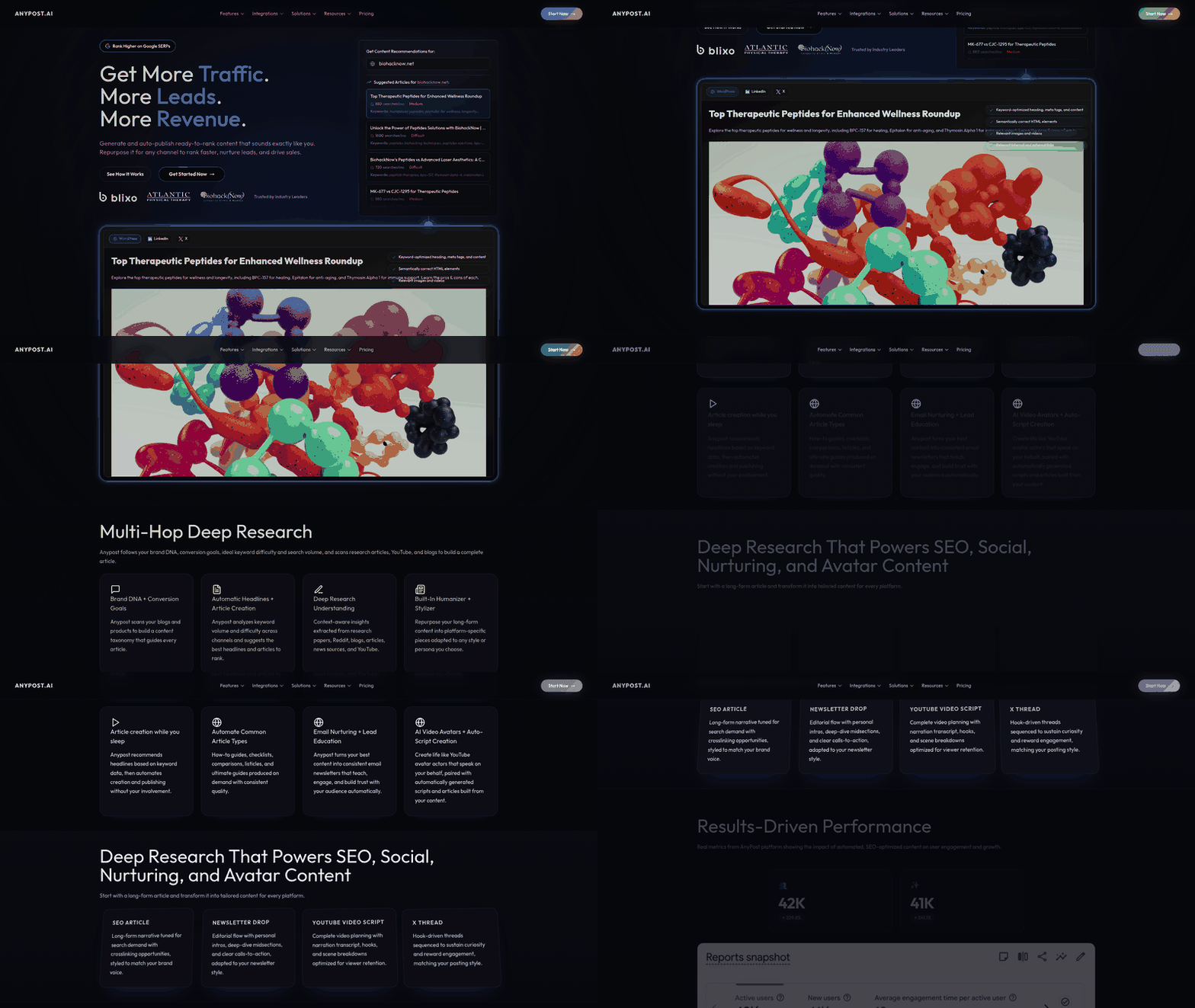
SaaS content creation demands a strategic mix of formats and techniques to engage diverse audiences. Effective types of content for SaaS marketing include blog posts, social media campaigns, video tutorials, case studies, webinars, and whitepapers [2]. Blogs remain foundational for SEO-driven lead generation, while social media platforms like LinkedIn and Twitter enable real-time engagement with B2B audiences [4]. Video content, particularly explainer videos and product demos, is critical for simplifying complex software features [5]. Additionally, case studies and whitepapers cater to decision-makers by showcasing measurable outcomes, such as improved efficiency or cost savings [8]. To maximize impact, prioritize formats that align with user intent at each stage of the funnel—e.g., top-of-funnel content (blogs, social posts) for awareness versus bottom-of-funnel content (e-books, webinars) for conversion [4].
Best Practices for Engaging, Informative Content
Creating compelling SaaS content requires a customer-centric approach grounded in data. Begin by defining clear business goals, such as increasing free trial signups or reducing churn, to ensure alignment with broader marketing objectives [10]. See the [Section 10: Implementing a Successful SaaS Content Marketing Strategy] section for more details on setting business goals. Leverage customer intelligence—gathered via surveys, user feedback, and CRM analytics—to tailor messaging to pain points and preferences [10]. For instance, companies like HubSpot and Slack use surveys to generate thought leadership content that addresses recurring challenges [7]. SEO optimization is non-negotiable: prioritize keyword research for long-tail terms (e.g., “how to automate workflows in [software]”) and structure content with subheadings, bullet points, and internal links to boost search visibility [5]. Building on concepts from [Section 4: SEO Optimization for SaaS Content], ensure technical SEO elements like meta tags and alt text are consistently applied.
A checklist for high-quality SaaS content includes:
- Audience segmentation: Create personas for different user roles (e.g., IT managers vs. end-users).
- Value-first messaging: Focus on solving problems rather than listing features [4].
- Visual storytelling: Use infographics and screenshots to break down technical concepts [2].
- Regular updates: Refresh blogs and resources to reflect product updates and market shifts [8].
The Role of AI in Automated Content Generation
AI tools are revolutionizing SaaS content creation by accelerating workflows and enhancing personalization. Automated platforms can generate blog drafts, social media captions, and even video scripts based on predefined topics and brand guidelines [5]. For example, AI-driven copywriting tools like Jasper and Copy.ai reduce time-to-publish while maintaining consistency in tone [10]. Beyond drafting, AI analyzes engagement metrics in real time to recommend content adjustments—such as optimizing headlines or adjusting posting schedules [5]. See the [Section 6: Measuring and Analyzing SaaS Content Performance] section for insights on leveraging engagement data. Advanced applications include chatbots that deliver personalized content recommendations to website visitors, improving conversion rates [8]. However, human oversight is essential to ensure accuracy and brand alignment, particularly for technical or niche topics [10].
Maintaining a Consistent Brand Voice
A unified brand voice builds trust and reinforces recognition across all content channels. Start by defining a tone-of-voice (TOV) guide that outlines preferred language (e.g., professional vs. casual), key messaging pillars, and examples of approved phrasing [7]. For B2B SaaS brands, this often balances authority with approachability—avoiding jargon while maintaining technical credibility [8]. Training materials for content teams should include style guides, approved terminology lists, and examples of past content to ensure consistency [10]. Regular audits of published content using tools like Hemingway Editor or Grammarly can flag inconsistencies in tone or readability [5]. Finally, align brand voice with customer expectations: for instance, a cybersecurity SaaS provider might adopt a more formal tone, whereas a project management tool could prioritize conversational, upbeat language [2].
By integrating these strategies, SaaS companies can create content that not only attracts but also nurtures leads through the customer journey, driving long-term growth and loyalty.
Section 4: SEO Optimization for SaaS Content
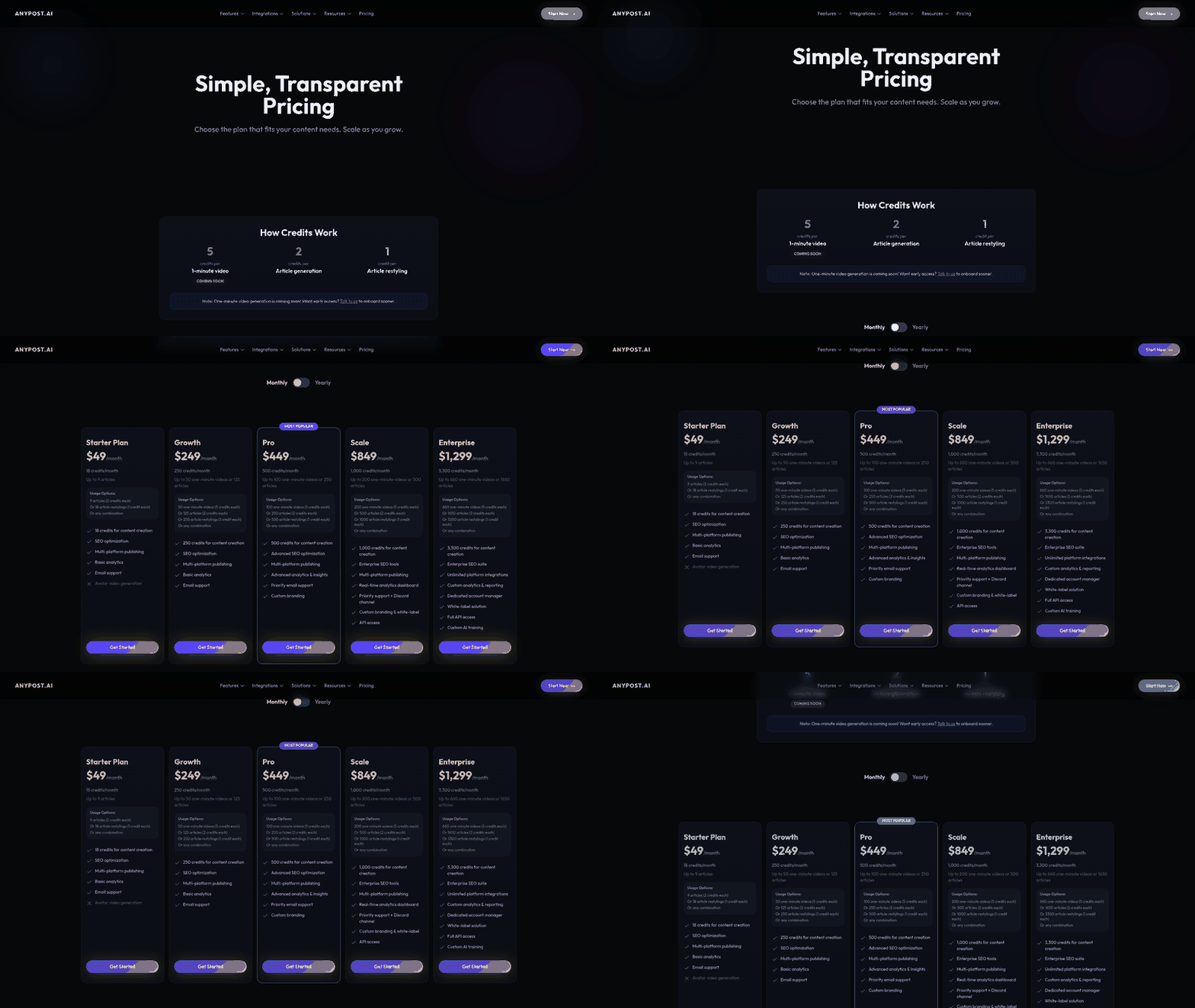
SEO optimization is a cornerstone of SaaS content marketing, ensuring visibility in a competitive digital landscape. For SaaS businesses, SEO is critical because users often search for precise solutions to technical problems, requiring content that aligns with specific intent [5]. Poorly executed SEO strategies—such as those "winged" due to budget constraints—can result in weak organic reach and missed opportunities to dominate niche markets [9]. By prioritizing SEO, SaaS companies can drive targeted traffic, establish authority, and convert leads at scale [10]. This section outlines actionable strategies for keyword research, on-page optimization, and link building tailored to SaaS content.
Keyword Research and Planning
Keyword research forms the foundation of SEO for SaaS content. Start by identifying primary keywords that reflect the core services or pain points your software addresses. As mentioned in the Understanding Your Target Audience section, aligning keywords with audience needs is essential for relevance [2]. For example, a project management tool might target terms like "agile project management software" or "task tracking tools for teams." Tools like Google Keyword Planner or SEMrush can uncover high-volume, low-competition keywords [5].
Long-tail keywords are particularly valuable for SaaS, as they capture specific user intent. A content strategy should include 2–3 long-tail variations per primary keyword, such as "best SaaS tools for remote team collaboration" or "how to automate workflows with no-code software" [10]. Competitor analysis is also essential: audit competitors’ blogs and landing pages to identify gaps in their keyword strategies and opportunities to rank for overlapping terms [9].
On-Page Optimization Techniques
On-page SEO ensures content is structured to maximize search engine rankings while delivering value to users. Key elements include:
-
Title Tags and Meta Descriptions: Craft title tags under 60 characters and meta descriptions under 160 characters, incorporating primary keywords naturally. For instance, a blog post on analytics software might use:
<title>Top 10 SaaS Analytics Tools for 2025 | Data-Driven Insights</title>
<meta name="description" content="Discover the best SaaS analytics tools in 2025 to streamline data analysis and improve decision-making."> -
Header Tags (H1, H2, H3): Use H1 tags for the main title and cascade subheadings (H2, H3) to organize content. Each header should include keywords where relevant, such as "Why SEO Matters for SaaS Companies" (H2) followed by "Keyword Research for SaaS Content" (H3) [5].
-
Content Quality and Length: SaaS content should be comprehensive, typically 1,500–3,000 words for in-depth guides or case studies. See the Content Creation Strategies for SaaS section for more details on balancing depth and engagement [3]. Prioritize solving user problems, integrating FAQs, and adding multimedia (e.g., infographics, video demos) to boost engagement [10].
-
Internal Linking: Link to relevant blog posts, product pages, or case studies within your site. For example, a post on "SaaS Customer Success Strategies" could link to a case study titled "How Company X Reduced Churn by 30%."
-
Technical SEO: Optimize page load speed, mobile responsiveness, and schema markup for rich snippets. Tools like Screaming Frog can audit technical SEO issues [9].
Link Building Strategies for SaaS Businesses
Link building remains a powerful ranking factor, yet many SaaS brands neglect it [9]. A strategic approach includes:
-
Guest Blogging: Publish content on authoritative SaaS or tech blogs (e.g., CIO, TechCrunch) to earn backlinks. For example, a cybersecurity SaaS company might write an article for a blog like Dark Reading [5].
-
Partnerships and Resource Pages: Collaborate with industry influencers to create whitepapers or webinars, then request links from their websites. Additionally, submit your SaaS tool to curated resource pages like "Best SaaS Tools for 2025" [10].
-
Content Promotion: Share blog posts, case studies, or infographics on LinkedIn, Twitter, and SaaS forums (e.g., Product Hunt). Engaged audiences are more likely to share or link to your content organically [9]. Building on concepts from the Repurposing Content for Multi-Channel Distribution section, promoting content across platforms amplifies reach [5].
-
Broken Link Building: Use tools like Ahrefs to find broken links on competitor websites. Offer to replace them with links to your content. For instance, if a broken link points to a webinar on SaaS trends, suggest your own updated guide as a replacement [5].
Checklist for SEO Success
To ensure consistency, follow this checklist for every SaaS content piece:
- Conduct keyword research and plan content around 1 primary + 2–3 long-tail keywords.
- Optimize title tags, meta descriptions, and headers with targeted keywords.
- Include internal links to 3–5 related pages on your site.
- Publish content with a word count of 1,500+ words for maximum authority.
- Promote content through social media and industry forums to generate backlinks [9][10].
By integrating these SEO strategies, SaaS companies can outperform competitors, attract high-intent traffic, and convert leads into loyal customers. The next section will explore content distribution tactics to amplify SEO-driven content.
Section 5: Repurposing Content for Multi-Channel Distribution
Repurposing content is a cornerstone of efficient SaaS marketing in 2025, enabling teams to maximize ROI while reaching diverse audiences across platforms. By transforming a single piece of content—such as a blog post—into multiple formats, SaaS companies reduce production costs, extend content lifespan, and maintain consistent messaging [5]. Key benefits include amplified brand visibility, as each repurposed asset targets different user preferences (e.g., video for visual learners, tweets for quick insights), and data-driven optimization, since cross-channel performance metrics reveal audience engagement patterns [5]. Additionally, repurposing supports SEO by increasing backlink opportunities and content volume, which search engines prioritize [5]. For example, a technical blog post about cybersecurity can become a LinkedIn article, a Twitter thread, and a YouTube explainer video, each tailored to the platform’s audience [5].
Repurposing Blog Posts for Social Media
Blogs are a goldmine for social media content, offering structured data that can be fragmented into platform-specific formats. Begin by extracting key takeaways, statistics, or case studies from the blog to create standalone posts. For Twitter, condense the blog’s core message into a thread, using emojis and hashtags to boost discoverability [5]. Instagram and Facebook benefit from carousel posts that visually break down blog sections, such as step-by-step guides or comparison charts [5]. LinkedIn thrives on longer-form summaries, repurposed as articles or “longreads,” to engage professionals seeking in-depth analysis [5]. Tools like Canva or Adobe Express can automate design aspects, ensuring visual consistency across platforms [5]. A checklist for this process includes:
- Identify 3–5 blog subsections with high engagement potential.
- Adapt tone to match platform norms (e.g., casual for Twitter, formal for LinkedIn). See the [Understanding Your Target Audience] section for more details on tailoring messaging to audience preferences.
- Add platform-specific CTAs, such as “Comment with your thoughts” for Facebook or “Follow for more insights” for Instagram.
Creating YouTube Scripts from Blog Posts
YouTube remains a top channel for SaaS education and product demos, making blog-to-video repurposing essential. Start by outlining the blog’s structure as a video script, allocating 1–2 minutes per section to maintain viewer attention [5]. Use screen recordings to demonstrate software features mentioned in the blog, paired with voiceover narration summarizing key points [5]. For example, a blog post about project management tools can become a 10-minute video showing real-time workflows in a SaaS product. Animations or text overlays can highlight statistics or definitions, catering to visual learners [5]. A multi-hop strategy suggests cross-referencing [8], which emphasizes video’s role in B2B SaaS for building trust through product transparency. See the [Advanced SaaS Content Marketing Strategies] section for more on leveraging advanced tactics like multi-hop strategies. To streamline production, repurpose existing blog images and infographics into slide decks, reducing design time by 40% [5].
Crafting Engaging Newsletter Content
Newsletters remain a high-converting channel for SaaS, with open rates up to 25% higher than other email types [5]. To repurpose blog content effectively, segment the blog into digestible sections, such as a “TL;DR” summary followed by actionable steps [5]. Add a personal touch by including the author’s insights or anecdotes not present in the original post, fostering a connection with subscribers [5]. For example, a blog about AI trends could be transformed into a newsletter with a “Key Takeaways” box, a “Quote of the Week,” and a link to a related YouTube video [5]. A/B testing subject lines—e.g., “3 AI Trends Shaping SaaS in 2025” vs. “Don’t Miss This Breakthrough in Automation”—helps identify what resonates with your audience [5]. Finally, embed CTAs to drive traffic to gated resources (e.g., “Download the full report”) or event sign-ups, aligning with the newsletter’s educational purpose [5].
Cross-Channel Synergy and Analytics
To ensure consistency, create a content map linking each repurposed asset to its source blog post, as outlined in [5]. For instance, tag the same blog in social media posts, YouTube descriptions, and newsletters to centralize traffic. Analytics tools like Google Analytics or HubSpot track cross-channel performance, revealing which formats drive the most conversions [5]. A 2025 best practice is to allocate 30% of content production time to repurposing, balancing new content with optimized assets [5]. By systematically repurposing content, SaaS teams can scale their marketing efforts without proportional increases in resource expenditure [5]. See the [Implementing a Successful SaaS Content Marketing Strategy] section for guidance on balancing resource allocation and strategic planning.
Section 6: Measuring and Analyzing SaaS Content Performance
Measuring and analyzing SaaS content performance is critical to refining strategies and ensuring alignment with business goals. As emphasized in [4], tracking content conversions—such as email signups, whitepaper downloads, or demo requests—provides direct insights into how effectively content drives leads. Additionally, [5] highlights that SaaS content marketing requires iterative adjustments, making performance data essential for refining messaging and distribution tactics. Without systematic measurement, teams risk investing in content that fails to engage target audiences or contribute to revenue. This section outlines key metrics, tools, and real-time techniques to optimize SaaS content performance, leveraging insights from [4] and [5] to align with 2025 best practices.
Key Metrics for Measuring SaaS Content Success
To evaluate content effectiveness, SaaS marketers must track a combination of quantitative and qualitative metrics. According to [4], core metrics include traffic volume, conversion rates, engagement rates (e.g., time on page, shares, comments), and customer retention linked to content. For example, high traffic with low conversions may signal poor alignment between content and audience intent, as discussed in the [Understanding Your Target Audience] section. While sustained engagement indicates valuable, resonant material. [5] adds that revenue attribution—tracking how content directly contributes to sales—is vital for proving ROI.
A structured approach to metrics involves categorizing them by content lifecycle stages:
| Stage | Metrics | Purpose |
|---|---|---|
| Awareness | Traffic, social shares, video views | Assess reach and discovery potential |
| Consideration | Email signups, whitepaper downloads | Measure lead generation and interest |
| Decision | Demo requests, trial signups | Track conversion to paid customers |
| Retention | Blog revisit rate, support content usage | Evaluate long-term customer value and product adoption |
These metrics, as outlined in [4] and [5], enable teams to identify high-performing content and gaps in the customer journey.
Tools and Techniques for Content Analysis
While specific tools are not named in [4] or [5], the sources emphasize the importance of using analytics platforms that integrate with SaaS CRMs and marketing automation systems. [4] notes that tracking content conversions requires seamless data flow between landing pages, email campaigns, and sales pipelines. For instance, embedded tracking in gated content (e.g., case studies) can map user behavior to downstream conversions. [5] further stresses the need for A/B testing tools to compare content variations, such as headlines or CTAs, in real time.
Marketers should prioritize tools that provide:
- Audience segmentation to analyze performance across personas or industries
- Heatmaps to visualize user interaction with content (e.g., scroll depth, click patterns)
- Funnel analytics to identify drop-off points in the conversion process
Although [4] and [5] do not specify vendor names, they align with industry standards like Google Analytics, HubSpot, or Mixpanel for these functions.
Real-Time Analytics for Dynamic Content Decisions
Real-time analytics empower SaaS teams to respond swiftly to audience behavior. [4] advocates for monitoring traffic spikes from social shares or SEO rankings to amplify successful content. For example, if a blog post suddenly drives high traffic but low conversions, teams can adjust CTAs or retarget visitors with personalized email sequences. [5] reinforces this by suggesting real-time dashboards for tracking engagement during live webinars or product launches.
Key practices for leveraging real-time data include:
- Monitoring social media sentiment to pivot messaging during campaigns.
- Testing CTAs hourly using tools that allow rapid A/B testing [5].
- Alerting teams to traffic drops via automated notifications, enabling quick troubleshooting [4].
By integrating these techniques, SaaS marketers can reduce reliance on static reports and adopt a more agile, data-driven approach.
Interpreting Data for Strategic Adjustments
Analyzing performance data requires connecting metrics to broader business objectives. [4] warns against focusing solely on vanity metrics like total page views, instead advocating for alignment with revenue targets. For instance, a video with high views but no lead generation may need repurposing as a lead magnet with a clearer CTA, as discussed in the [Repurposing Content for Multi-Channel Distribution] section. [5] suggests regular content audits to retire underperforming assets and scale high-impact formats (e.g., turning top blog posts into podcasts or infographics).
A checklist for actionable insights includes:
- Weekly: Review traffic sources and conversion paths [4].
- Monthly: Compare content performance against sales pipeline growth [5].
- Quarterly: Reassess content themes based on customer feedback and competitor analysis [5].
This structured analysis ensures that SaaS content strategies evolve in sync with market demands and user needs.
By systematically measuring performance, SaaS companies can transform content from a cost center into a revenue driver. The insights from [4] and [5] underscore that measurement is not a one-time task but an ongoing process of refinement, requiring both historical analysis and real-time responsiveness.
Section 7: Advanced SaaS Content Marketing Strategies
Advanced SaaS content marketing in 2025 demands a shift from generic strategies to hyper-targeted, dynamic approaches. By leveraging account-based marketing (ABM), influencer collaborations, user-generated content (UGC), and AI-driven personalization, SaaS companies can amplify engagement and conversion. Below, we break down each strategy with actionable steps and real-world examples supported by industry insights.
Account-Based Marketing for SaaS Businesses
Account-based marketing (ABM) focuses on creating tailored content for high-value accounts, treating them as individual markets. According to [5], ABM requires identifying key decision-makers within target accounts and developing customized content such as case studies, whitepapers, or demo videos that address their specific pain points. As mentioned in the [Understanding Your Target Audience] section, leveraging CRM and marketing automation data to pinpoint high-potential accounts is foundational to this approach. For example, a SaaS company targeting enterprise clients might create a whitepaper tailored to a CFO’s concerns about cost optimization, while another could design a case study showcasing ROI for a specific industry. [8] emphasizes that ABM thrives on data-driven insights, such as analyzing a prospect’s website activity to refine messaging. Tools like LinkedIn Sales Navigator or HubSpot can help map accounts and personalize outreach.
Action Steps for ABM Success
- Identify 10-20 high-potential accounts using CRM and marketing automation data.
- Audit these accounts’ digital behavior to uncover content preferences.
- Develop 3-5 personalized assets per account (e.g., custom landing pages, industry-specific webinars).
- Track engagement metrics to refine future campaigns.
Partnering with Influencers for Content Promotion
Influencer partnerships amplify reach by tapping into established audiences. [7] highlights that 26 top SaaS companies use influencers to co-create content, such as webinars, podcasts, or social media takeovers. For instance, partnering with a tech influencer to review your product or host a live Q&A can build credibility. See the [Understanding Your Target Audience] section for more details on aligning influencer choices with your Ideal Customer Profile (ICP). [8] adds that micro-influencers (those with 10k–100k followers) often yield higher engagement rates than macro-influencers due to their niche, loyal audiences.
Key Considerations
- Alignment: Choose influencers whose audience overlaps with your ICP.
- Co-Creation: Let influencers shape content to ensure authenticity.
- Metrics: Track referral traffic, conversion rates, and social shares to measure ROI.
Encouraging User-Generated Content
User-generated content (UGC) builds trust and reduces content creation costs. [7] reports that one SaaS company unlocked 20+ thought leadership pieces through a single survey campaign, which users then shared as testimonials. To replicate this:
- Incentivize Sharing: Offer discounts, feature shoutouts, or early access to customers who post reviews or case studies.
- Leverage Testimonials: Highlight customer success stories on your blog, social media, or email campaigns.
- Create UGC Campaigns: Run contests like “Show us how you use [Product]” with a branded hashtag.
See the [Repurposing Content for Multi-Channel Distribution] section for strategies on transforming UGC into scalable content across platforms. [5] notes that UGC also enhances SEO, as fresh content improves search visibility. For example, a SaaS tool for project management might curate user-submitted tips into a “Community Guide.”
Using AI for Personalized Content Recommendations
AI transforms content marketing by delivering real-time, hyper-personalized experiences. [8] explains that AI analyzes user behavior (e.g., pages visited, time spent) to recommend relevant blogs, videos, or product features. For example, a SaaS platform could use AI to suggest a beginner’s tutorial to a new user or an advanced integration guide to a power user.
Implementing AI Recommendations
- Tools: Use AI-powered platforms like Adobe Sensei or Contentful’s AI to automate content curation.
- Dynamic Content Blocks: Embed personalized suggestions on your website or in emails (e.g., “Customers who viewed X also read Y”).
- A/B Testing: Continuously test AI-generated content variations to optimize engagement.
[5] adds that AI can also predict content gaps by analyzing competitor activity and customer feedback, enabling proactive content creation.
Comparing Traditional vs. Advanced Strategies
| Aspect | Traditional Approach | Advanced Approach (2025) |
|---|---|---|
| Content Personalization | Generic blogs, broad email campaigns | AI-driven dynamic content per user |
| Audience Targeting | Mass outreach | Account-specific ABM tactics |
| UGC Utilization | Minimal customer input | Structured campaigns for reviews/ideas |
| Influencer Strategy | One-off ads | Long-term co-creation with micro-influencers |
By integrating these advanced strategies, SaaS companies can foster deeper customer relationships, boost conversion rates, and stay ahead of competitors in a crowded market. Always align tactics with data, iterate based on analytics, and prioritize scalability to maximize ROI. Building on concepts from [Measuring and Analyzing SaaS Content Performance], track and refine these strategies for continuous improvement.
Section 8: Overcoming Common SaaS Content Marketing Challenges
SaaS content marketers in 2025 face unique challenges rooted in rapid technological evolution, budget constraints, and the pressure to maintain high-output, SEO-optimized content. Common obstacles include writer’s block, inconsistent publishing schedules, and the difficulty of balancing technical depth with audience accessibility [5]. Additionally, B2B SaaS brands often struggle with under-resourced SEO strategies due to limited budgets, leading to haphazard content creation that fails to compete in crowded markets [9]. These challenges are compounded by the need to address niche audience pain points while adhering to ever-changing search engine algorithms [8]. Below, we break down actionable solutions to these problems, supported by strategies from industry leaders.
Overcoming Writer’s Block and Content Fatigue
Writer’s block and content fatigue are pervasive issues, particularly for teams managing multiple content formats (blogs, case studies, videos). One effective strategy is repurposing existing content into new formats. For example, turning a long-form blog post into a series of social media snippets or a webinar transcript into a downloadable guide can reduce ideation time while maximizing reach [5]. Collaborative brainstorming sessions, as outlined in the 7-Step SaaS Content Marketing Guide [5], also help teams generate fresh ideas by leveraging diverse perspectives. See the [Section 5] section for more details on repurposing content as a core strategy.
Another technique is adopting a “topic bank” system. By maintaining a centralized repository of potential ideas—derived from customer feedback, competitor analysis, and keyword research—teams can avoid last-minute scrambling [8]. Tools like Notion or Airtable are recommended for organizing these ideas, with tags for priority, format, and target audience. Additionally, outsourcing niche content to subject-matter experts or freelancers ensures quality without overburdening in-house writers [9].
Maintaining a Consistent Content Schedule
Consistency is critical for SaaS brands aiming to build authority and SEO visibility. A content calendar is non-negotiable, but its effectiveness depends on granularity. The 2025 B2B SaaS Content Strategy guide emphasizes mapping content to the buyer’s journey, ensuring each piece addresses specific stages (awareness, consideration, decision) [8]. Building on concepts from [Section 2], this approach ensures alignment with audience needs. For example, a product demo video might target the consideration phase, while a case study serves the decision phase.
Automation plays a key role here. Tools like HubSpot or Content Marketing Hub allow teams to schedule posts in advance, sync with editorial calendars, and track performance metrics [5]. However, automation should not replace creativity—it should streamline repetitive tasks. A hybrid approach works best: use AI tools like Jasper or Copy.ai to draft outlines, then refine with human input to preserve brand voice [5]. Teams should also allocate buffer time in calendars for revisions and unexpected delays, a practice highlighted by Stratabeat as essential for maintaining cadence [8].
Leveraging Automation to Tackle Content Challenges
Automation is a linchpin in modern SaaS content strategies, addressing both efficiency and scalability. For SEO, tools like Surfer SEO or Ahrefs automate keyword research and on-page optimization, ensuring content aligns with search intent [5]. See the [Section 4] section for more details on SEO optimization techniques. These tools also provide real-time suggestions for improving meta tags, headings, and content density.
In workflows, automation reduces manual labor through integrations. For instance, Zapier can link your CRM to a content management system (CMS), triggering personalized email campaigns based on user engagement with blog posts [9]. AI-driven analytics platforms, such as Google Analytics 4 or SEMrush, automate audience segmentation and performance tracking, allowing marketers to pivot strategies quickly [8]. However, sources caution against over-reliance on automation. Human oversight is required to ensure content remains authentic and aligned with brand values [5].
Addressing Budget Constraints and Resource Gaps
Budget limitations often force SaaS brands to adopt reactive content strategies, as noted in RZ’s B2B SaaS guide [9]. To mitigate this, prioritize high-impact, low-effort tactics like user-generated content (UGC) campaigns or repurposing existing assets. For example, customer testimonials can be transformed into video testimonials with minimal cost using tools like Lumen5 [5].
Collaborations with micro-influencers or industry thought leaders can also amplify reach without breaking budgets. Stratabeat recommends identifying influencers who align with your niche and offering them co-branded content opportunities, such as guest blogs or joint webinars [8]. Additionally, free tools like Canva for design and Grammarly for editing help stretch limited budgets while maintaining quality [5].
Conclusion: A Holistic Approach to SaaS Content Challenges
The key to overcoming SaaS content marketing challenges lies in balancing automation with creativity, planning with flexibility, and resourcefulness with strategic prioritization. By adopting topic banks, hybrid automation workflows, and collaborative processes, teams can sustain high-quality output even under pressure [5][8][9]. Regular audits of content performance—using tools like Google Analytics or Hotjar—ensure strategies remain data-driven and adaptable to market shifts [8]. As the 2025 landscape evolves, agility and cross-functional teamwork will remain non-negotiable for staying ahead of competitors.
Section 9: Future of SaaS Content Marketing: Trends and Predictions
The future of SaaS content marketing in 2025 is shaped by rapid technological advancements and shifting user behaviors. Emerging trends highlight a focus on hyper-personalization, interactive content formats, and AI-driven automation. As mentioned in the [Content Creation Strategies for SaaS] section, SaaS companies are prioritizing strategies that deliver "bold, high-impact" content tailored to niche audiences, leveraging data analytics to refine messaging. Interactive content—such as dynamic webinars, AI-powered quizzes, and immersive product demos—is gaining traction as a way to engage users actively [5]. Additionally, video content is predicted to dominate, with companies allocating more resources to explainer videos, customer testimonials, and live-streamed Q&A sessions [10].
The Role of AI and Machine Learning
AI and machine learning are revolutionizing content creation, distribution, and optimization. Automated tools now generate blog outlines, draft social media posts, and even craft personalized email sequences based on user behavior [3]. For instance, predictive analytics algorithms analyze historical engagement data to forecast which topics will resonate most with target audiences, reducing guesswork in content planning [5]. Machine learning also powers dynamic content customization, adjusting headlines, CTAs, and imagery in real time to match individual user preferences [10].
A critical application of AI is in chatbots and virtual assistants, which provide 24/7 support while gathering insights into customer pain points. These tools not only improve user experience but also feed data back into content strategies, enabling marketers to address frequently asked questions proactively [10]. However, as [3] emphasizes, AI should augment—not replace—human creativity, with human oversight ensuring brand voice consistency and emotional nuance. See the [Advanced SaaS Content Marketing Strategies] section for more details on balancing AI with human-centric approaches.
Impact of Voice Search Optimization
Voice search is reshaping SEO strategies for SaaS content marketing. With the rise of smart speakers and voice-activated devices, marketers must optimize for conversational keywords and long-tail queries. For example, instead of targeting "project management software," content might address "best project management tools for remote teams" to align with natural speech patterns [3].
Voice search also prioritizes featured snippets and concise, answer-focused content. As [10] explains, SaaS companies are restructuring blog posts and FAQs to provide direct answers to common questions, ensuring visibility in voice search results. This shift requires a balance between technical SEO (e.g., schema markup) and user-friendly language, as highlighted in [5]. Building on concepts from the [SEO Optimization for SaaS Content] section, voice search optimization demands a deeper integration of SEO best practices with content strategy.
Predictions for the Future of SaaS Content Marketing
By 2025, several key trends are expected to define the SaaS content marketing landscape:
| Prediction | Details | Source |
|---|---|---|
| Rise of Micro-Content | Short-form videos (e.g., TikTok, Instagram Reels) and bite-sized guides will dominate due to declining attention spans. | [5] |
| AI-Generated Content at Scale | Tools like generative AI will enable daily content production without compromising quality, though human editing will remain critical. | [3] |
| Integration with Product Experiences | Interactive content (e.g., in-app tutorials, personalized demos) will merge marketing and product-led growth strategies. | [10] |
| Ethical AI Transparency | Users will demand clarity about AI usage in content creation, pushing SaaS brands to disclose AI-human collaboration. | [5] |
Another prediction is the growing importance of user-generated content (UGC). As trust in peer reviews surpasses traditional advertising, SaaS companies will incentivize customers to share case studies, reviews, and social media posts [5]. Platforms may integrate UGC directly into marketing funnels, using AI to curate and repurpose it for broader audiences [10]. This aligns with the principles of content repurposing discussed in the [Repurposing Content for Multi-Channel Distribution] section.
Preparing for the Future
To stay competitive, SaaS marketers must adopt a hybrid approach that balances technological innovation with human-centric storytelling. This includes:
- Investing in AI tools for content creation and analytics [3].
- Optimizing for voice search by auditing existing content for conversational keywords [10].
- Experimenting with interactive formats like AR-based demos or gamified onboarding tutorials [5].
- Building ethical AI practices to maintain trust while leveraging automation [3].
As the SaaS industry evolves, agility will be key. Marketers who embrace these trends and continuously refine their strategies using data-driven insights will position their brands as leaders in 2025 and beyond.
Section 10: Implementing a Successful SaaS Content Marketing Strategy
Implementing a successful SaaS content marketing strategy requires a structured approach that balances planning, execution, and iterative refinement. Begin by defining clear business goals, such as increasing trial signups or reducing customer churn, as emphasized in [10]. These goals should align with broader organizational objectives and serve as the foundation for all content decisions. Next, gather customer intelligence through surveys, user behavior analytics, and feedback loops to identify pain points and content preferences [10]. This data informs content topics and formats, ensuring relevance to target personas. Once insights are collected, create a content calendar that maps topics to specific stages of the buyer’s journey, leveraging frameworks like the 9-step roadmap in [2], which emphasizes consistency and alignment with audience needs. As mentioned in the [Understanding Your Target Audience] section, this process builds on foundational audience research.
Step 1: Define Business Goals and Audience Insights
Start by setting SMART goals (specific, measurable, achievable, relevant, time-bound) tied to KPIs such as conversion rates, customer acquisition cost (CAC), or lifetime value (LTV) [10]. For example, a SaaS company might aim to reduce CAC by 15% within six months by focusing on educational content for mid-funnel leads. Simultaneously, conduct competitor analysis to identify gaps in the market, as recommended in [9]. Tools like SEMrush or Ahrefs can reveal competitors’ high-performing content and keywords. Combine these insights with customer personas developed through tools like HubSpot or Salesforce to ensure content resonates with specific segments [3].
Step 2: Develop a Content Calendar and Distribution Plan
A content calendar is critical for maintaining consistency and meeting deadlines. Use templates from [2] to organize topics, assign ownership, and schedule publishing dates. Prioritize formats like blog posts, case studies, and video tutorials based on audience preferences identified in Step 1 [4]. For distribution, integrate SEO best practices from [6] to optimize content for search engines, while allocating budget for targeted ads on LinkedIn or Google Ads, as highlighted in [10]. For instance, a B2B SaaS company might allocate 60% of its budget to SEO and 40% to paid ads, balancing organic reach with immediate visibility [3]. See the [Repurposing Content for Multi-Channel Distribution] section for more details on adapting content across formats.
Step 3: Execute with Precision and Agility
Execution demands a balance between consistency and flexibility. Publish content according to the calendar but remain agile to shift focus based on real-time feedback or market changes [5]. For example, if analytics show a blog post about automation tools receives high engagement but low conversions, repurpose it into a webinar or checklist to guide users further down the funnel [4]. Leverage automation tools like Zapier or HubSpot to streamline workflows, such as automatically sharing new blog posts on social media or triggering email campaigns when a user downloads an eBook [10].
Step 4: Measure, Analyze, and Optimize
Continuous measurement ensures your strategy evolves with audience needs. Track KPIs like bounce rate, time on page, and conversion rates using Google Analytics or specialized SaaS tools like Mixpanel [8]. Building on concepts from the [Measuring and Analyzing SaaS Content Performance] section, A/B test headlines, CTAs, and formats to identify high-performing variations, as outlined in [7]. For example, testing a video demo versus a written case study might reveal that video drives 30% more conversions for enterprise clients [2]. Use feedback loops from customer support tickets or product usage data to refine content topics, ensuring they address emerging pain points [3].
Step 5: Harness Automation and AI for Scalability
Automation and AI reduce manual effort while enhancing personalization. Tools like Content at Scale or Jasper can generate draft content based on prompts, which human writers then refine for brand voice [10]. AI-driven analytics platforms like BrightEdge or Searchmetrics provide predictive insights into trending topics, helping teams stay ahead of competitors [3]. For email marketing, use AI to segment audiences dynamically and send hyper-personalized messages based on user behavior, as demonstrated in [5]. Additionally, chatbots powered by AI can answer FAQs and guide users to relevant content, improving retention rates [9].
Final Checklist for Success
- Align content goals with business KPIs [10]
- Map content to the buyer’s journey using audience insights [2]
- Automate distribution and analytics workflows [10]
- Test and optimize based on performance data [8]
- Integrate AI for personalization and scalability [3]
By following this structured approach, SaaS companies can create a content marketing strategy that drives growth, builds trust, and outperforms competitors in 2025 and beyond.
References
[1] My best SaaS content marketing strategy guide for 2025 | Marketer ... - https://www.marketermilk.com/blog/saas-content-marketing
[2] SaaS Content Marketing: The 9-Step Roadmap for Success - https://www.semrush.com/blog/saas-content-marketing/
[3] How to Build Your 2025 B2B SaaS Content Marketing Strategy - https://www.kalungi.com/blog/guide-to-b2b-saas-content-marketing
[4] How to Create a SaaS Content Strategy That Drives Product ... - https://www.growandconvert.com/content-marketing/saas-content-strategy/
[5] 7-Step SaaS Content Marketing Guide for 2025 - SimpleTiger - https://www.simpletiger.com/guide/saas-content-marketing
[6] SaaS Content Marketing: Definition & Importance [2025 Guide] - https://www.omnius.so/blog/what-is-saas-content-marketing
[7] These 26 SaaS companies are THE BEST at content marketing ... - https://www.linkedin.com/posts/timsoulo_these-26-saas-companies-are-the-best-at-content-activity-7273264137302896641-bWMe
[8] Mastering B2B SaaS Content Marketing | Stratabeat - https://stratabeat.com/saas-content-marketing/
[9] B2B SaaS Content Strategy To F**k Up Your Competitors | RZ - https://revenuezen.com/saas-content-strategy/
[10] My best SaaS content marketing strategy guide for 2025 | Marketer ... - https://www.marketermilk.com/blog/saas-content-marketing
Frequently Asked Questions
1. How does SaaS content marketing differ from traditional marketing strategies?
Unlike traditional marketing, SaaS content marketing focuses on long-term customer relationships and educational value rather than one-time sales. It emphasizes nurturing leads through recurring content, such as tutorials, case studies, and product demos, to address the extended sales cycles of SaaS businesses. Traditional marketing often prioritizes broad brand awareness, while SaaS marketing is more targeted, aligning content with the customer journey to drive conversions and retention [2, 5].
2. What are the most effective content types for attracting B2B SaaS leads?
For B2B SaaS, content like in-depth blogs comparing methodologies (e.g., agile vs. waterfall), webinars showcasing platform features, and customer success stories are highly effective. Video tutorials, whitepapers, and interactive demos also work well to demystify complex solutions. For example, a project management SaaS might create a webinar comparing agile workflows while highlighting automation features. These formats build trust and demonstrate ROI, shortening decision-making timelines [5, 8].
3. How can SaaS companies align content with evolving business goals like customer retention?
To align content with retention goals, SaaS brands should focus on educational content that reinforces product value post-purchase, such as onboarding guides, advanced feature tutorials, and customer support resources. For example, a SaaS firm shifting to a premium model might publish case studies on ROI or host live Q&A sessions to address upsell concerns. Regularly auditing content performance and adjusting strategies based on user feedback ensures alignment with retention or acquisition targets [6, 10].
4. What SEO strategies are critical for SaaS content to rank higher in search results?
SaaS SEO requires keyword research targeting both transactional (e.g., “best CRM software for small businesses”) and informational queries (e.g., “how to improve team productivity”). Optimizing for long-tail keywords, structured data (schema markup), and internal linking are key. Additionally, creating pillar content around industry pain points (e.g., “Top 10 SaaS Tools for Remote Teams”) and updating older posts with fresh data boosts visibility. Tools like Ahrefs or SEMrush can help identify gaps in your content’s SEO performance [10, Section 4].
5. How can SaaS brands create personalized content for diverse industry audiences?
Use customer data and surveys to segment audiences by industry, role, or use case. For instance, a project management SaaS might create separate content streams for IT teams (focusing on compliance) and marketing teams (highlighting collaboration tools). Tools like HubSpot or Marketo enable dynamic content customization on landing pages. Additionally, producing industry-specific case studies (e.g., “How Retail X Reduced Costs with Our SaaS Platform”) adds relevance and builds credibility [2, 8].
6. What metrics should SaaS marketers track to measure content ROI?
Track both top-of-funnel metrics (e.g., traffic, bounce rate) and bottom-of-funnel KPIs like conversion rates, MQLs (Marketing Qualified Leads), and customer acquisition cost (CAC). For retention-focused content, monitor engagement metrics like email open rates, time spent on product pages, and upsell conversion rates. Tools like Google Analytics, CRM dashboards, and UTM tracking help correlate content performance with business outcomes, allowing you to refine strategies for maximum ROI [6, 10].
7. How can SaaS companies maintain consistency across multiple content channels?
Use a content calendar to align blogs, social media, email campaigns, and video releases with overarching business goals. Repurpose high-performing blog posts into infographics, social snippets, or webinar topics to maximize efficiency. For example, a blog on “SaaS ROI Calculation” could become a LinkedIn carousel post, a YouTube short, and an email series. Assigning clear roles to team members (e.g., one for video, another for email) and leveraging automation tools like Buffer or Zapier ensures cohesive, timely publishing [5, 10].