
5 Ahrefs Automated Query Workflows That Save SEO Teams Time in 2026

Key Takeaways
- Most SEO teams spend hours cleaning exported spreadsheet data.
- There are five distinct Ahrefs workflow types.
- The Keyword Discovery Pipeline suits teams building content from scratch.
- It filters noise across Ahrefs' 41.9-billion-keyword database.
- Content Gap Automation helps established sites losing ground.
- It surfaces competitor-owned topics they can realistically win.
- Freshness Monitoring flags declining pages before ranking drops.
- The Technical Audit Loop catches crawl-debt issues automatically.
- Brand Radar tracks mentions across Google AI Overviews and ChatGPT.
Quick Summary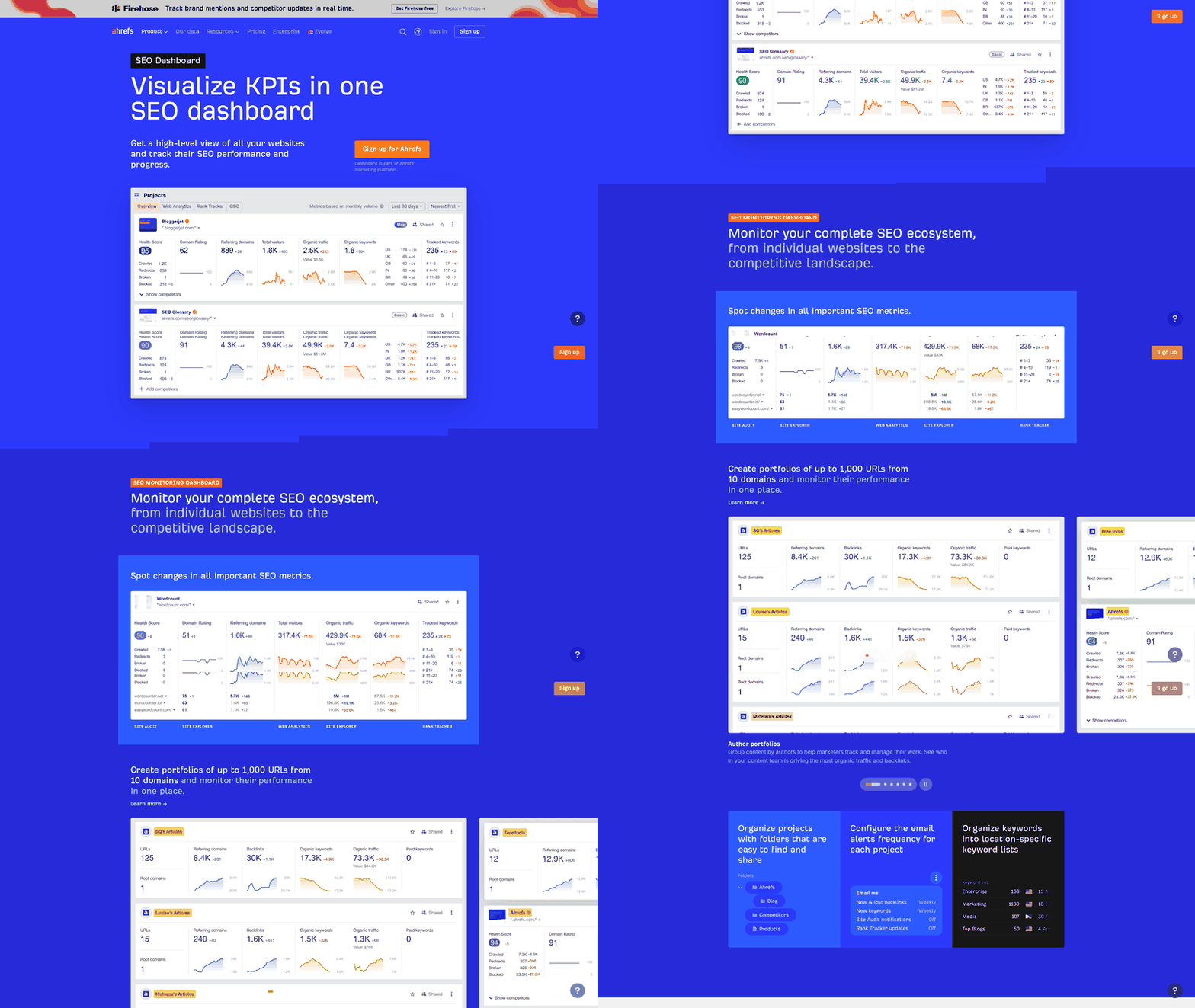
Most SEO teams run Ahrefs automated queries the same way. Pull a report, export a spreadsheet, then spend hours filtering and formatting. This section lays out five workflow types, so you can spot your team's bottleneck.
Which workflow fits your team?
| Workflow | Best For | Core Ahrefs Feature | Starting Point | Key Strength |
|---|---|---|---|---|
| Keyword Discovery Pipeline | Teams scaling content from scratch | Keywords Explorer (Ahrefs' primary keyword index) | Ahrefs paid plan | Filters out noise across a massive keyword index |
| Content Gap Automation | Established sites losing ground to competitors | Site Explorer + Content Gap tool | Ahrefs paid plan | Identifies competitor-owned topics you can win |
| Freshness Monitoring + Refresh | Sites with large existing content libraries | Blog Freshness / Site Explorer | Ahrefs paid plan | Flags declining pages before ranking drops compound |
| Technical Audit Loop | Engineering-light teams with crawl debt | Site Audit | Ahrefs paid plan | Catches technical issues on autopilot |
| Brand + AI Visibility Tracking | B2B teams selling to research-heavy buyers | Brand Radar | Ahrefs paid plan | Tracks mentions across Google AI Overviews and ChatGPT |
Each one is a different entry point into Ahrefs' automation stack. The right choice depends on where your team loses the most hours, not on which one sounds most advanced.
Where these workflows break down
One thing to get straight upfront. Ahrefs positions AI agents as the primary operators of ongoing reporting, running 24/7 with no human kicking off the job. That's true for the data layer. But human review of AI-generated content is still standard practice, and that gap is real.
So here's the honest read on the contradiction. The automation handles collection, clustering, and drafting cues. Human judgment still governs what publishes. These workflows pay off when they shorten the distance between data and a ready-to-review draft, not when they try to cut editorial judgment out of the loop.
The freshness workflow is the one people sleep on. AI-cited content runs roughly 25% more recent than top-ranking Google pages, and pages untouched for over a year are more than twice as likely to lose their citations. For most teams sitting on a big content archive, that makes automated refresh higher ROI per hour than building net-new content.
Skip the Brand Radar workflow entirely if you're a small local business with no awareness goals. It's built for teams tracking AI search visibility across multiple engines, and at that scale the signal-to-noise ratio won't justify the setup time.
Where the export leaves you stranded
Most Ahrefs automation guides stop at the export. They show you how to pull keyword data, then leave you staring at a spreadsheet with no bridge to a finished post. That gap between raw keyword data and a publish-ready draft is exactly the problem AnyPost.ai was built to solve.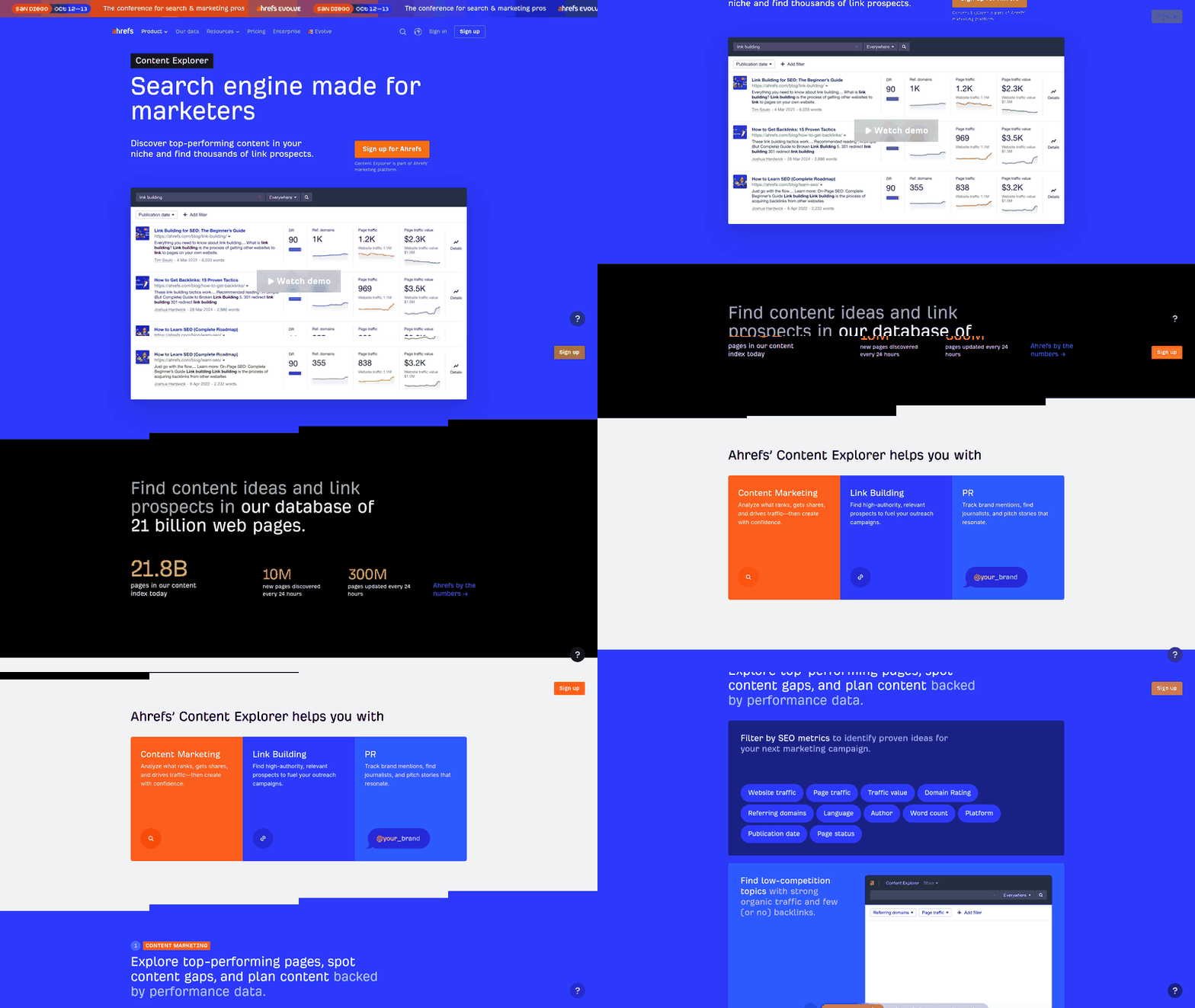
Our approach picks up where research tools leave off: turning keyword opportunities into content that sounds like your brand. Here's how AnyPost.ai fits a modern SEO workflow, where it wins, and when you should skip it.
What AnyPost.ai actually does
AnyPost.ai is a content automation platform that generates brand-voice-aligned, publish-ready posts from your keyword strategy. In minutes, not hours.
Ahrefs is a strong research engine. It tracks search queries across a 170 trillion-page web index, which gives teams a well-filtered signal to start from. That filtering matters. Most keyword data on the market is noise, and starting your content from noise wastes hours.
AnyPost.ai's job starts after that research phase. You bring in the keyword targets, and AnyPost generates drafts that match your tone, structure, and editorial rules. The draft comes out sounding like your team wrote it, not like a template.
Where it beats a standalone setup
The biggest advantage is the handoff. A research tool can surface keyword opportunities, but nothing in a standalone research workflow governs brand voice, tone consistency, or editorial alignment. That's the seam AnyPost.ai closes, using a Persona Engine that crawls your site to capture your brand's DNA so every article reads like you wrote it.
Speed is the second win. Manual drafting still eats the bulk of a content team's week, and surveys routinely put writing and editing at the top of where marketers lose hours. When your keyword targets are already defined, the bottleneck is production, not ideas. AnyPost turns a defined target list into on-brand drafts in one sitting, so a backlog that used to take weeks can clear in an afternoon. Pair a research tool's opportunity signals with AnyPost's fast, on-brand generation and you get the highest ROI per hour saved.
Feature comparison
| Tool | Core Strength | Turns Queries Into Drafts? | Best For | Watch-Out |
|---|---|---|---|---|
| AnyPost.ai | Brand-voice content generation, SEO publishing, multi-channel distribution | Yes | Teams shipping on-brand posts at volume | Works best with a keyword research tool in your stack |
| Ahrefs | Massive keyword database, competitive intelligence | No (research only) | Keyword discovery, rank tracking, audits | Paid plan required; stops at the export |
| AirOps | AI search visibility tied to execution | Yes | LLM/AEO visibility tracking | Free Solo plan capped at 20,000 tasks/month |
Who should skip this?
Skip AnyPost.ai if you don't run a keyword research tool yet. The platform generates and publishes content at scale. It doesn't replace the upstream research step. Buy the research engine first.
Skip it too if your priority is pure AI-citation tracking rather than production. AirOps is built for that surface. Carta saw a 7x increase in AI search citations with it, and Webflow grew AI-sourced signups from 2% to nearly 10% in under a year.
There’s a clear balance to strike. Automated systems can handle continuous data processing, but editorial quality still depends on human judgment at the gate. Both matter. Software drafts and processes; humans decide what publishes. AnyPost.ai keeps that gate in your hands, so the output stays on-brand instead of generic.
For teams with a large existing library and a clear brand voice, this is the best fit. AnyPost.ai's real-time analytics also mean you can see what's working straight from your dashboard, not buried in a third-party report.
Ahrefs itself: how far does the automation carry you?
Ahrefs itself is the second workflow worth a close look. It sits at the front of nearly every Ahrefs automated queries pipeline, and for good reason: no other research engine matches its data scale. The question isn't whether Ahrefs belongs in your stack. It's how far its automation carries you before you need something else.
What Ahrefs does best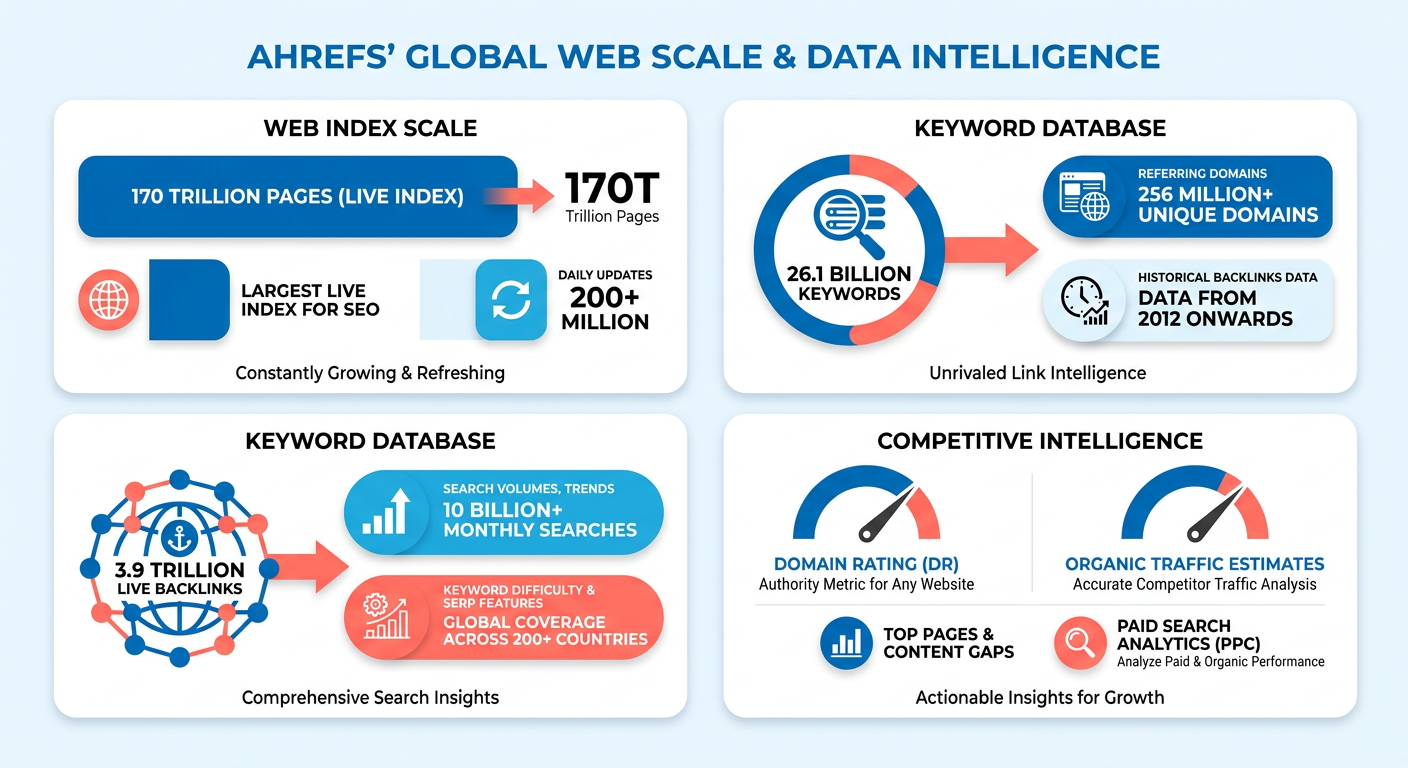
Ahrefs is an AI marketing platform that turns its massive web index into keyword, backlink, and competitive data, then automates reporting through 100+ API endpoints.
The scale is the headline. Ahrefs tracks a vast pool of search terms, and its Keywords Explorer filters that pool down to the opportunities worth your attention. That filtering matters more than the raw number. It means the platform throws out most keyword noise before you ever see a report.
Automation runs deeper than exports. The platform processes 400 million monthly AI prompts, and its AI agents build reports and run workflows on a schedule instead of waiting for you to kick off each job. For a team drowning in weekly rank-tracking updates, that alone recovers hours.
The results back the pitch. Suso Digital hit 21,000 monthly clicks on business-relevant keywords using the platform, and Moving Traffic Media's Jon Clark points to higher efficiency as the core outcome. These aren't content-farm wins. They're operational teams cutting manual query time.
Where Ahrefs falls short
Ahrefs doesn't generate the final content. Its content-marketing pillar suggests intent matches and gap fills, but it doesn't ship brand-voice-aligned posts. Ryan Law, the company's own Director of Content Marketing, argues for comprehensive topic coverage over keyword stuffing. Sound advice, but the platform hands you the coverage map, not the finished article in your voice.
This is a common operational snag. Plenty of teams still require human review before anything publishes, and that instinct is right. Automated systems are great at pulling and processing queries, but they lack the editorial judgment that decides what goes live. The gate belongs after the draft, and Ahrefs doesn't manage that step.
This is exactly the handoff we built AnyPost.ai to close. Ahrefs surfaces the keyword. We turn it into a publish-ready post that sounds like your brand. The two work together, not in competition.
Pricing and ideal user
Ahrefs runs on a paid subscription, so it's not the tool for a solo blogger testing the waters. It earns its cost when you're managing real query volume across multiple sites or clients.
Ideal user: SEO teams and agencies that need deep competitive intelligence and automated rank tracking at scale. Skip it if your only goal is publishing a handful of posts a month. The data depth is overkill for that.
| Tool | Best For | Core Strength | Draft-to-Publish? |
|---|---|---|---|
| Ahrefs | Deep keyword & competitive research | Massive web index, extensive API access | No. Focuses on data |
| AnyPost.ai | Turning keywords into brand-voice posts | Publish-ready drafts in minutes | Yes. Closes the loop |
Our verdict: Ahrefs is the strongest research engine on this list, full stop. Pair it with an execution layer and you've got the complete pipeline. Run it alone and you'll still be staring at that spreadsheet.
AirOps: automating the content freshness loop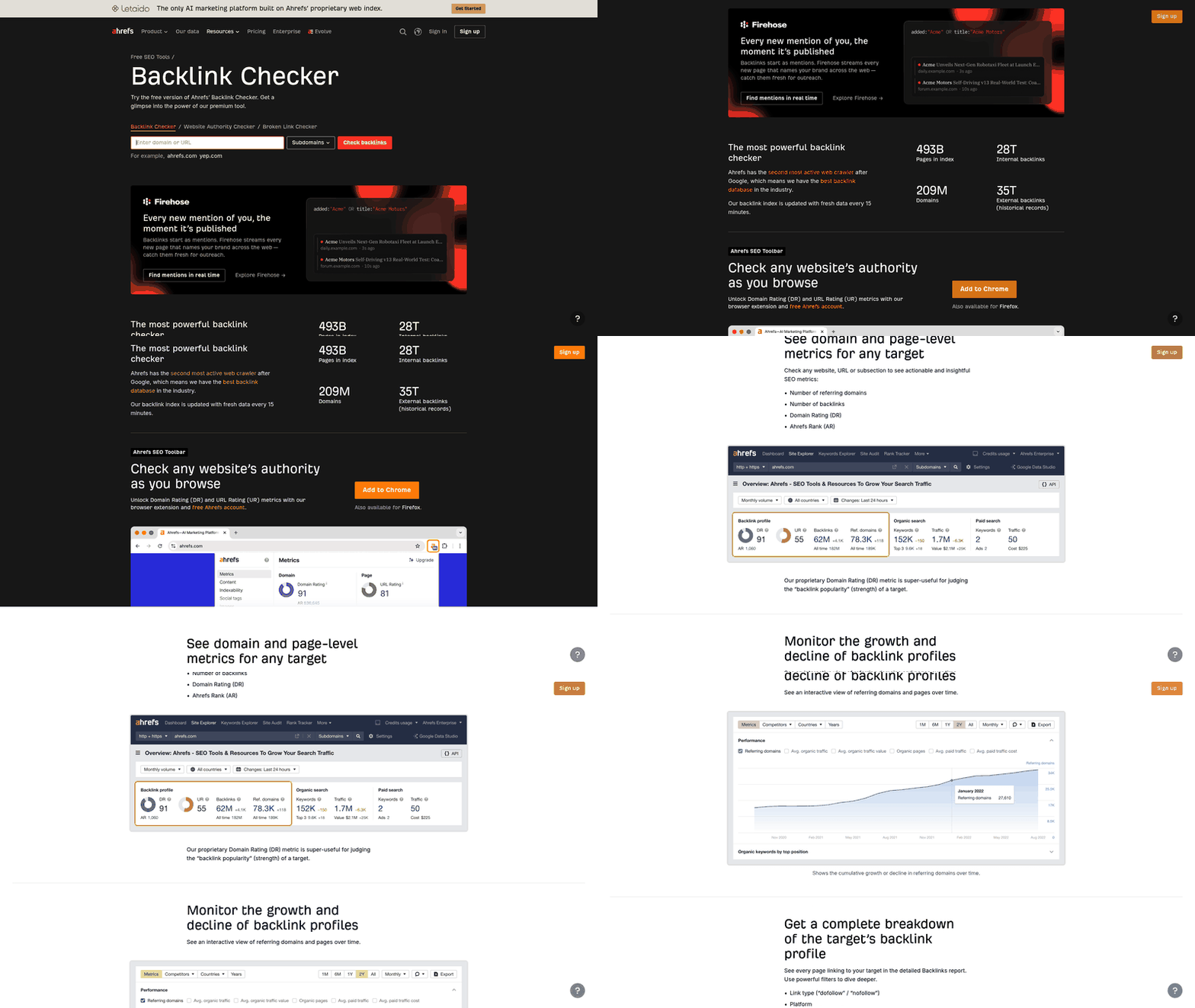
AirOps is an execution platform that connects SEO opportunity data straight to content production. Where most tools surface what needs to be done, AirOps focuses on doing it, turning keyword signals and freshness alerts into published, optimized content without manual handoffs.
Its core strength is handling the refresh cycle. Content decay is a measurable problem: pages that once ranked slide down the results as competitors publish fresher material and search engines reweight recency. The lag between "declining page identified" and "page updated" is exactly where most content teams lose ground. AirOps closes it with automated workflows that move from signal to published draft without anyone opening a spreadsheet.
How AirOps fits an Ahrefs queries stack
AirOps sits downstream from your keyword research layer. You run your Ahrefs automated queries for freshness signals, keyword gaps, and traffic drops. Then AirOps picks up the output and routes it into a production workflow. Ahrefs identifies the problem; AirOps handles the fix.
The freshness angle is where the combination earns its keep. This puts a strategic choice in front of content teams. Some experts argue that comprehensive topic coverage drives search visibility, while AirOps research points to recency as the primary lever for AI citation engines like Perplexity and Google AI Overviews. Our read: both are right, for different surfaces. Topic depth wins traditional rankings; freshness wins AI citations. If your audience increasingly finds you through AI search, the refresh pipeline matters more than the net-new content pipeline. For teams with large existing libraries, that shifts the ROI math toward updates rather than new posts.
The workflow logic reflects that priority. Rather than treating every page the same, AirOps can score a library by citation risk, flagging pages that carry traffic but haven't been touched in months, and queue the highest-value updates first. That triage keeps the pipeline focused on pages where a refresh actually moves rankings, instead of burning cycles on content nobody reads.
Quick comparison
| AirOps | Ahrefs | AnyPost.ai | |
|---|---|---|---|
| Primary job | Content execution and refresh automation | Keyword and competitive research | Brand-voice-aligned content generation and multi-channel publishing |
| Best for | Teams with large content libraries needing automated refresh | Research and monitoring at scale | Teams who want SEO-optimized, publish-ready posts distributed across web and social |
| Where it stops | Doesn't do keyword research; needs a research tool upstream | Focuses on research; does not generate final copy | Focused on generation and distribution, not freshness monitoring |
| Pricing | Free tier available; paid tiers above | Paid subscription | Paid subscription |
| Ahrefs integration | Works alongside Ahrefs output | Native | Operates independently with its own keyword research and content strategy layer |
When to use AirOps (and when to skip it)
AirOps fits when your biggest bottleneck is keeping existing content fresh at scale. If you have a library of hundreds of posts and AI search traffic matters to your acquisition model, the automated refresh workflow delivers clear ROI.
Skip it if your team is still building the library from scratch. AirOps accelerates the refresh cycle, but it needs something to refresh. Teams in the early content-building phase get more value from a tool that generates new, brand-aligned posts from keyword research, which is where we spend most of our time with clients at AnyPost.ai.
The automation-versus-oversight question matters here too. AirOps workflows can run near-autonomously, but most teams still build a review step into the process. Plan for that gate; the speed gains vanish if a review bottleneck just replaces the production bottleneck.
Semrush: the research engine with an execution gap
Semrush sits at the research end of the SEO automation spectrum. For teams running ahrefs automated queries style workflows, keyword pulls, gap analysis, competitive snapshots fed into a production pipeline, Semrush is the most direct alternative to weigh. It covers similar ground: keyword research, rank tracking, technical audits, and competitive intelligence, all in one subscription.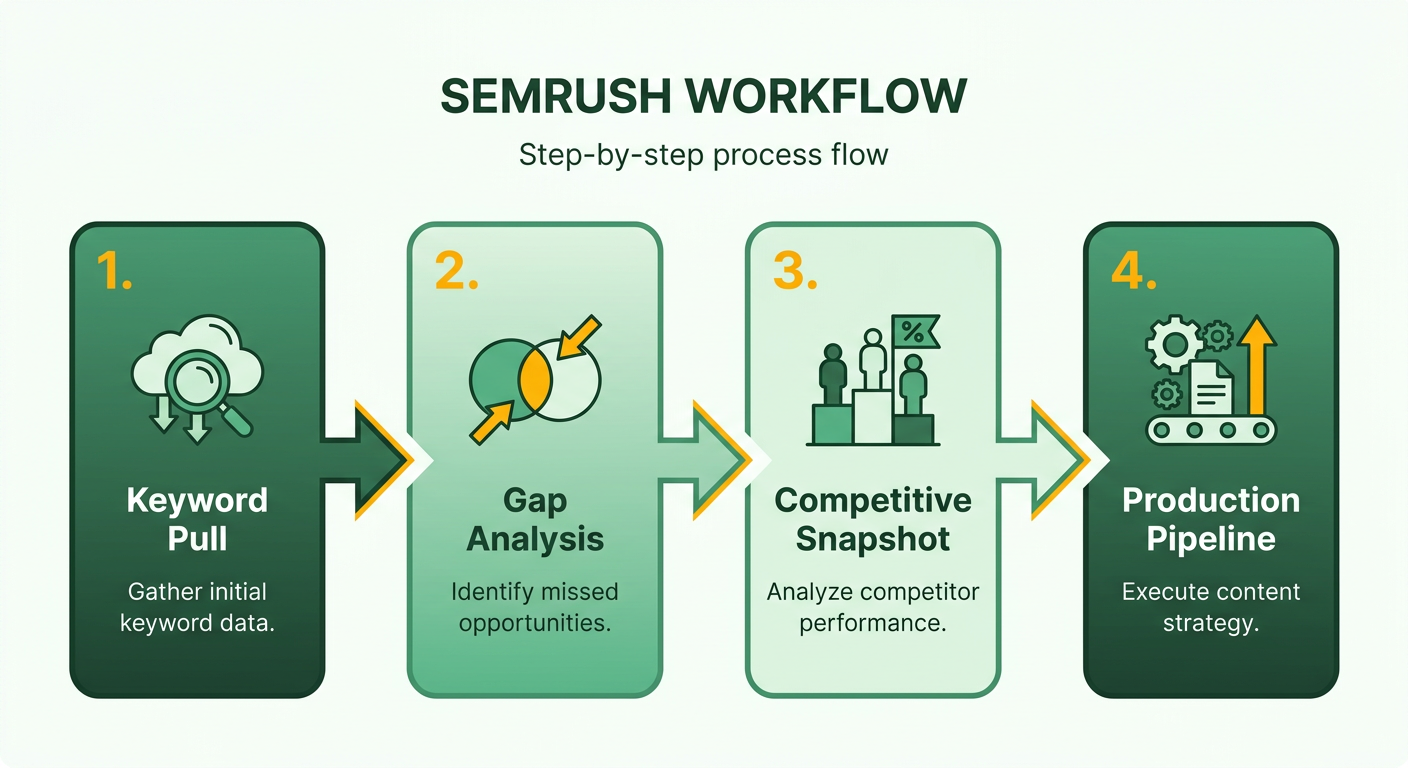
Where it wins is breadth. One platform handles PPC intelligence, social monitoring, and content marketing alongside core SEO. For an agency running multiple client verticals, that consolidation has real value.
What Semrush actually automates
Semrush handles the data layer well. Scheduled reports, automated rank-tracking alerts, and API access mean your team can pull keyword movement and competitive shifts without logging in daily. Position Tracking sends automated alerts when rankings shift, and Site Audit runs on a schedule rather than needing a manual trigger each time.
The API is capable but offers fewer integration options than other enterprise platforms. Teams building custom dashboards or piping data into a content production tool will hit that ceiling faster than they expect.
Where the workflow breaks down
One operational hurdle stays put: Semrush exports data well, but it stops there. The gap between a Semrush keyword export and a published, brand-voice-aligned post is exactly as wide as it is with any research tool. Your team still owns that handoff manually.
This matters more than it used to. AI Overviews now account for over 13% of queries, and those visibility slots reward content depth and freshness, not just keyword targeting. Identifying the right keyword in Semrush is step one. Getting a publish-ready draft that actually covers the topic comprehensively is a separate problem Semrush doesn't address.
Industry standards keep pointing to the same thing: comprehensive topic coverage beats keyword stuffing. That's a production problem, not a research problem. Semrush solves the research side and hands the production problem back to your team.
Our take: if your bottleneck is keyword and competitive data across SEO and paid, Semrush is a strong choice. If your bottleneck is the distance between that data and published content, adding an execution layer (AnyPost.ai's voice-matching, which aligns content with your existing site messaging, or another production tool) is where you'll actually reclaim time.
Quick comparison
| Semrush | Ahrefs | |
|---|---|---|
| Core strength | Breadth: SEO + PPC + social in one platform | Depth: keyword index scale, link data, AI agents |
| Automation | Scheduled reports, rank alerts, site audit scheduling | Extensive API access, automated reporting |
| Content production | Not included | AI Content Helper (scoring, gap filling) |
| Best for | Agencies managing multi-channel clients | SEO teams building custom automated pipelines |
| Execution gap | Yes. Requires manual content creation | Partial. Drafts require brand-voice alignment |
Skip Semrush if your primary workflow is keyword-to-content automation. Its strengths are in research and monitoring, not in closing the distance to a published post.
The refresh loop: why updating old pages beats writing new ones
The freshness refresh workflow is the fifth Ahrefs automated query approach, and for teams sitting on large content libraries it may be the highest-ROI one. Instead of chasing net-new posts, you point automated queries at your existing pages, flag the ones losing ground, and rewrite them before rankings slide. This is where automated Ahrefs queries earn their keep for established sites rather than startups.
Here's why the math favors refresh over net-new. Updating an existing page avoids the slow indexing and trust-building phase new URLs face. Updated content can reclaim lost positions sooner, while a fresh post needs more time to gain traction. Add in the fact that a refresh reuses existing authority, and the read is simple: for teams with a deep archive, an hour spent updating beats an hour spent drafting from scratch.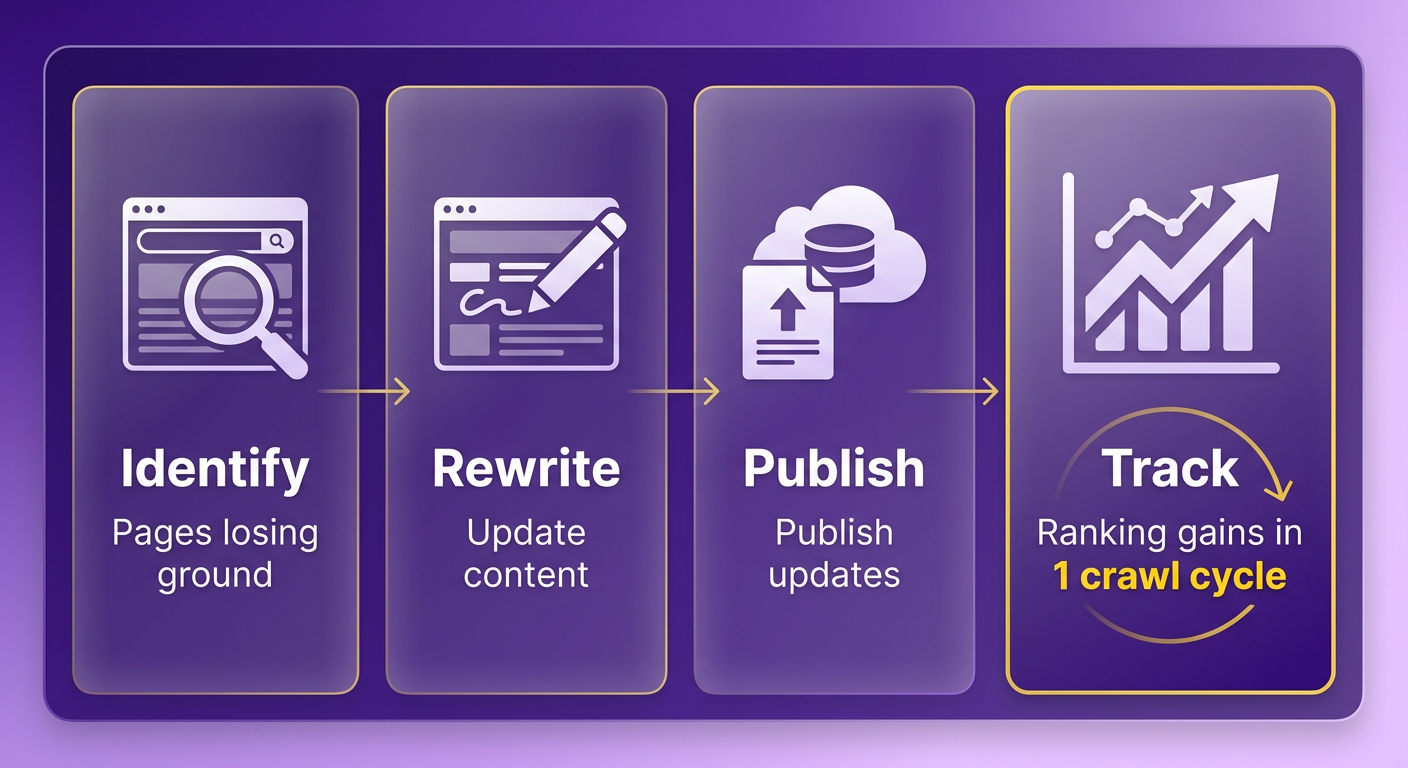
How the freshness refresh loop works
Freshness refresh loop: an automated workflow that queries your published content, identifies declining or aging pages, and routes them into rewrite production before their rankings and AI citations drop.
The query layer is the easy part. Ahrefs surfaces the declining pages; the harder question is what happens next. Aja Frost of HubSpot put the case for automation plainly.
"Freshness decays fast, so automation that flags declining pages lets your team update them before the drop compounds." - Aja Frost, HubSpot
But flagging isn't rewriting. A tool can tell you a page is slipping without telling you how to fix it in your brand's voice. That handoff between "declining page identified" and "publish-ready rewrite" is exactly where most teams stall.
Freshness or depth: which signal wins?
The sources disagree here, and the split is worth understanding. AirOps treats recency as the primary lever for visibility. Some content strategists argue that comprehensive topic coverage matters more than recency or keyword density.
Both are right, just for different surfaces. Freshness dominates AI citation engines like AI Overviews. Depth dominates traditional rankings. Our read: refresh aging pages to hold AI citations, but use each refresh to deepen topic coverage too, so you win both surfaces in one pass.
Where the platform fits this loop is content production. Ahrefs tells you which pages are fading. AnyPost.ai analyzes your existing site to understand your products, messaging, and audience, then generates SEO-optimized, ready-to-rank articles that match your established style, and publishes them directly to your website.
Comparison table
| Tool | Best For | Core Strength | Pricing | Weakness |
|---|---|---|---|---|
| AnyPost.ai | Generating and publishing brand-voice content | Ready-to-rank drafts in your voice, auto-published anywhere | See site | Not a standalone research engine |
| Ahrefs | Flagging declining pages | Vast keyword index, extensive API access | Paid plans | Focuses on data exports |
| AirOps | Connecting freshness data to production | Free tier available | Free tier available | Execution-focused, lighter research |
Skip this workflow if your site is brand-new with under a dozen pages. There's nothing to refresh yet; a discovery pipeline serves you better. But if you're managing a mature library and watching older posts quietly lose traffic, this is the workflow that pays back fastest per hour saved.
Outreach automation: link building without the full-day slog
Most Ahrefs automation guides treat link building as manual grunt work. It isn't anymore. The sixth workflow worth reviewing pairs Ahrefs' outreach data with automation tools to run campaigns that used to eat a full day per week.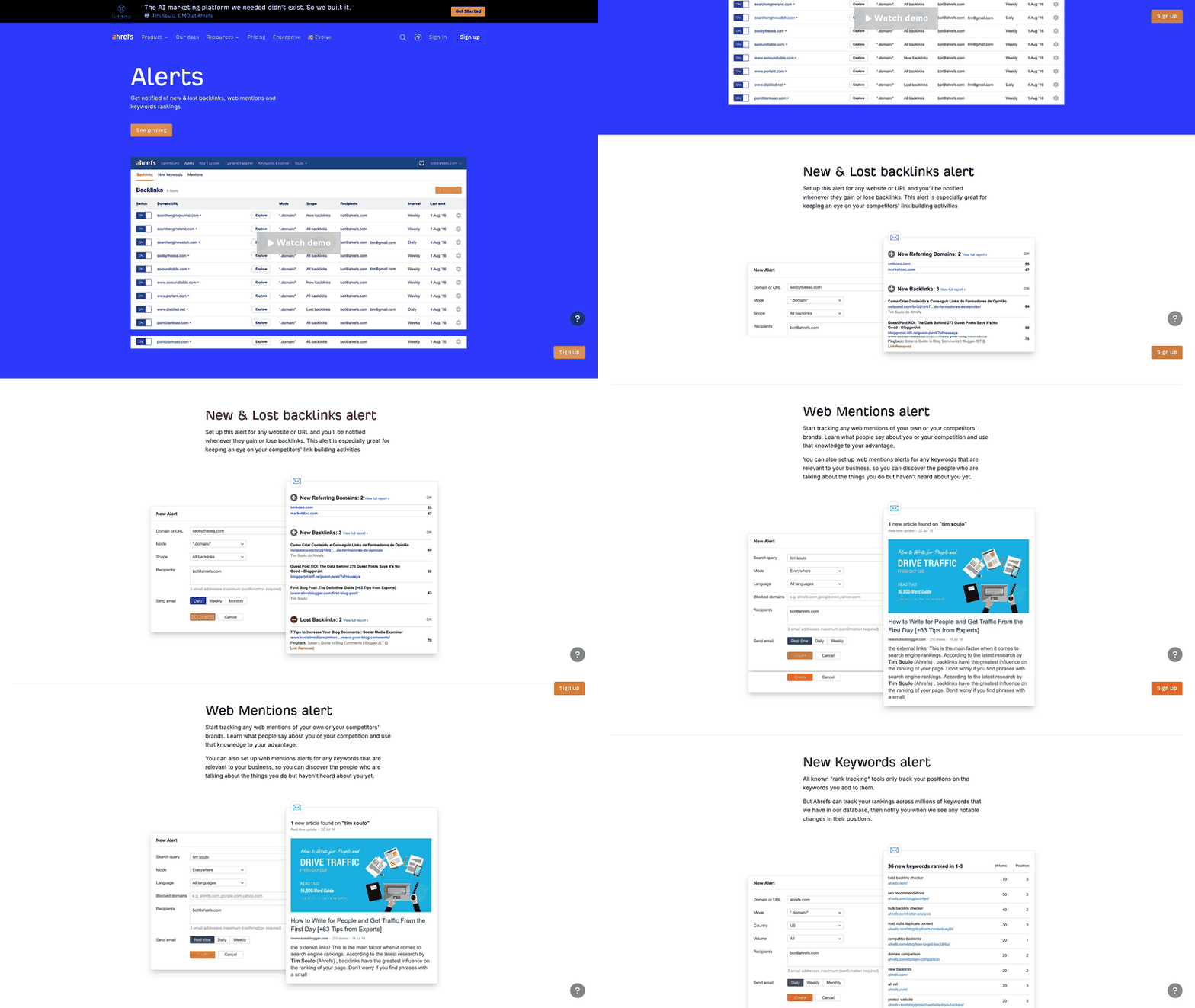
This is the outreach automation pipeline, and it sits at the far end of the Ahrefs automated queries spectrum. Instead of pulling keywords, you pull backlink gaps and prospect lists, then feed them into an outreach engine that handles the sending and follow-ups.
How outreach automation works with Ahrefs queries
Outreach automation: a workflow that uses Ahrefs' backlink and prospect data to trigger email campaigns, follow-ups, and scheduling without manual sending.
Ahrefs' own team documented this exact setup. Their guide describes using Hunter.io and Zapier to automate email outreach for link building, which streamlined the process for quicker, more efficient campaigns. Site Explorer does the front-end work, surfacing low-hanging link opportunities that feed the pipeline.
Ahrefs leans on its massive web index and automated processing to power these workflows. That same data engine builds the prospect lists your outreach tool sends against.
Pros and cons
The upside is time. Automated follow-ups and scheduling remove the most tedious part of link building. Cold outreach for links sees low reply rates, so volume matters, and a pipeline that lets you send 10x more pitches without adding hours is the difference between a stalled campaign and a steady stream of placements.
The downside is the handoff. Ahrefs surfaces prospects and the outreach tool sends mail, but neither writes the pitch in your brand voice. That drafting gap shows up across every automated pipeline. Our take: automation gets the message out the door, but the words still need a human standard, or a tool that enforces one.
That's where AnyPost.ai fits. Our platform aligns every generated article with your brand's specific messaging and audience profile. The result is brand-voice-aligned, ready-to-rank content you can auto-publish across your website and social channels, so the automation doesn't stop dead at drafting.
Which teams should use this workflow?
This suits agencies and in-house teams running active link building at volume. If you send fewer than a handful of pitches a month, skip it. The setup cost outweighs the savings until outreach becomes a repeating weekly task.
| Tool | Best For | Core Feature | Handles Drafting? |
|---|---|---|---|
| AnyPost.ai | Turning keyword data into brand-voice content | Publish-ready content generation | Yes |
| Ahrefs | Sourcing prospects and link gaps | Site Explorer + Keywords Explorer | No |
| Outreach automation stack | Sending and scheduling at volume | Automated follow-ups | No |
Our recommendation: use Ahrefs to find the opportunities, an outreach stack to send, and a content layer to make sure everything you publish actually sounds like you. The pipeline only pays off when all three links hold.
Ahrefs' native automation: the cheapest thing you already own
Ahrefs' own automation layer is the seventh workflow, and it's the one most teams underuse. We see teams treat Ahrefs as a research tool and stop there, when the platform now runs scheduled queries, AI-assisted content scoring, and agent-driven reporting on its own. If you're already paying for Ahrefs, this is the cheapest automation you own.
What Ahrefs automates natively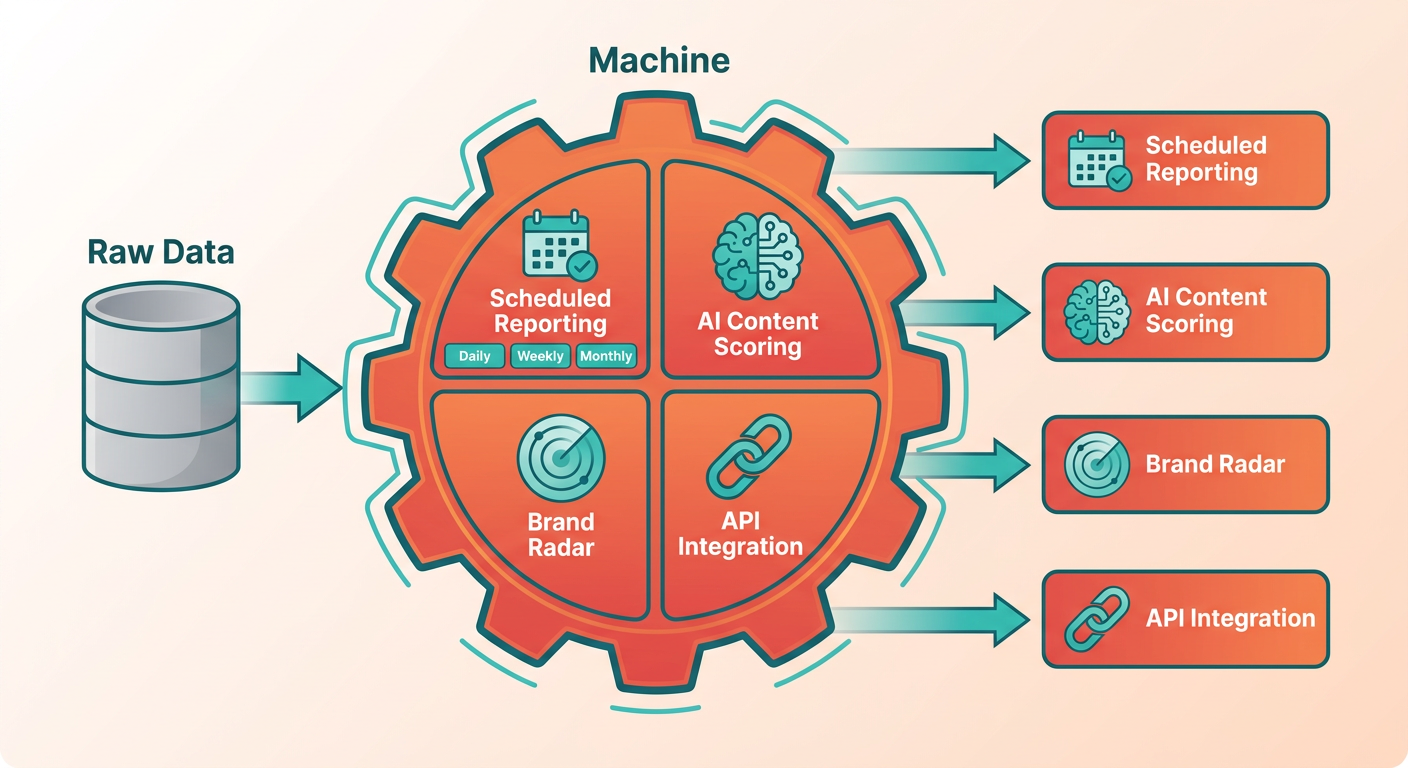
Ahrefs' native automation: scheduled reporting, AI Content Helper scoring, Brand Radar monitoring, and API-driven dashboards that run without manual pulls.
These features work because they run on a fixed schedule rather than waiting for someone to log in. Set a report to refresh daily, weekly, or monthly, and the output lands in your inbox or dashboard with no manual pull. That reliability is what turns a one-off query into a standing process your team can trust.
The practical wins sit in three places. AI Content Helper measures how completely a draft covers a topic, so you know what's missing before you publish. Brand Radar tracks brand mentions and share of voice across search and AI surfaces, so you can see shifts week over week instead of guessing. And extensive API access lets you pipe data into custom dashboards instead of rebuilding exports by hand.
Where the native automation stops
The native features don't generate the final content. Ahrefs tells you which keyword to target and whether your outline covers the topic. It doesn't write the post in your brand voice, and it doesn't publish.
That handoff is the gap we built AnyPost.ai to close. Our platform generates SEO-optimized, ready-to-rank articles in your voice and auto-publishes them to your existing platform. Ahrefs handles the data layer; we handle the voice and publishing layer.
The honest carve-out: if your team already has a strong editorial process and writers who know your tone cold, skip us. Ahrefs' AI Content Helper plus a good writer is genuinely enough. We earn our place when volume outpaces your writing capacity.
Pros, cons, and who it fits
Pros: scheduled reporting that runs unattended, native AI scoring inside your drafts, standing brand monitoring, and deep API access for custom pipelines. Cons: no brand-voice content generation, no publishing layer, and a learning curve on API setup.
| Tool | Best For | Core Strength | Main Limitation | Pricing |
|---|---|---|---|---|
| AnyPost.ai | Teams needing brand-voice drafts and auto-publishing | Ready-to-rank posts in your voice, published anywhere | Not a research engine | Contact for pricing |
| Ahrefs | Research, monitoring, and native reporting | Scheduled reports, extensive API access | Focuses on data and insights | Paid plans |
Best for research and monitoring: Ahrefs, without question. Best for turning research into finished, on-brand posts that publish automatically: that's our lane.
"Many agencies view Ahrefs as an essential component of their scaling strategy."
That's why Ahrefs stays in the stack. Pair it with an execution layer and you close the loop from query to published post.
The brand-voice layer: what happens after the automation finishes
The eighth workflow flips the usual question. Instead of asking what a tool automates, ask what happens after the automation finishes. Every Ahrefs automated query pipeline ends with a draft, and almost none of them address the gap between that draft and a post you'd actually publish under your brand's name.
That handoff is where our team focused. The keyword data from Ahrefs is excellent. The problem we kept seeing was tone. A raw AI draft built from query data reads like it was assembled by a machine, because it was. Turning those automated queries into copy that sounds like you is the step the other seven workflows skip.
What fills the gap between Ahrefs data and a publishable post?
The brand-voice layer: the editing stage that turns a keyword-driven draft into a post matching your tone, structure, and editorial standards before it ships. Ahrefs surfaces the opportunity. This layer decides how the finished piece actually reads.
It's a real operational challenge. You can deploy autonomous systems to build reports and manage workflows continuously, but software that drafts and crunches data still leaves a review gate, and that gate is where brand voice lives. AnyPost analyzes your site's existing content to capture your style, so every article aligns with your established messaging. That's the one step you can't fully hand to a generic autonomous agent.
Our approach automates the voice-matching itself, so the human review becomes a quick check rather than a rewrite. You feed in the keyword targets, and what comes back already sounds on-brand. That's the difference between shipping in minutes and spending an afternoon rewriting robotic prose.
When should you skip this?
Skip a dedicated voice layer if you're publishing internal docs or one-off pages where tone doesn't matter. It also adds little if your entire output is a single author writing by hand. The value shows up at volume, when you're turning many automated queries into many posts and consistency starts to slip.
It earns its place fastest for agencies juggling multiple client voices and for content teams shipping weekly. Inconsistency compounds fast: a team shipping three posts a week produces a large annual body of work, and a single off-brand paragraph in each one adds up to work no reader would recognize as one voice. A voice layer keeps that output coherent no matter how many hands touch the drafts.
Comparison at a glance
| Tool | Core Job | Automates Voice? | Best For | Watch-Out |
|---|---|---|---|---|
| AnyPost.ai | Draft-to-publish content generation | Yes | Teams turning keyword data into on-brand posts fast | Not needed for one-off internal pages |
| Ahrefs | Keyword + backlink research | No | Sourcing the opportunity | Stops at raw data |
| AirOps | Signal-to-draft execution | Partial | Refresh cycles at scale | Voice tuning still manual |
Our take: the platform wins on exactly one category. Turning Ahrefs keyword output into brand-voice-aligned posts without the manual rewrite. It doesn't replace Ahrefs; it finishes what Ahrefs starts. If your bottleneck is research, buy the research tool. If your bottleneck is the pile of half-finished drafts waiting for tone edits, that's the gap this fills.
What I'd actually recommend
The right workflow comes down to one question: where does your team actually lose time? If you're pulling Ahrefs automated queries but still spending hours turning exports into drafts, your bottleneck is the handoff. If you're bleeding rankings on old pages, it's the refresh cycle. Match the tool to the leak, not the hype.
Here's how the five workflows stack up across budget, scale, and specific needs.
Which workflow fits your budget and scale?
| Tool | Best For | Standout Strength | Watch-Out |
|---|---|---|---|
| AnyPost.ai | Turning keyword data into on-brand drafts | Automated content generation in your brand voice, published directly to your site | Not a research engine on its own |
| Ahrefs | Enterprise research + native automation | Vast keyword index, extensive API access, automated reporting | Focuses on data and insights |
| AirOps | High-volume refresh at scale | Free tier available | Execution-first, lighter on research |
| Semrush | Agencies juggling many verticals | Breadth across PPC, social, SEO | Research-heavy, execution gap |
| Native Ahrefs automation | Teams already paying for Ahrefs | Scheduled queries, AI Content Helper | Underused, not plug-and-play |
Best for budget: AirOps. Its free tier gives a small team real runway to test automated refresh workflows before committing.
Best for enterprise: Ahrefs. With 44% of the Fortune 500 already on it and over 100 API endpoints feeding custom dashboards, no other research engine matches the scale. Industry leaders have tied its data depth to significant traffic gains on business-relevant keywords.
What about teams with a specific bottleneck?
Best for the draft-to-publish gap: AnyPost.ai. The other four workflows all end in the same place: a raw draft that reads like a machine wrote it. AnyPost picks up there. Its voice-matching captures your brand voice from your existing site, and its multi-platform publishing pushes finished content directly to your website, LinkedIn, X, Instagram, TikTok, and YouTube. That's the one job it does better than anyone, and the one no research tool touches.
There's an ownership question worth sitting with. When automation runs the full pipeline, accountability blurs. Who signs off when an AI agent schedules a pull, drafts the copy, and queues it for publishing? The practical answer is to split the chain. Let agents handle the data pulls and first drafts, but keep a human checkpoint on what goes live. A single reviewer gate catches off-brand phrasing and factual drift before either reaches your audience. Agents win on speed; people win on judgment.
Scale changes the calculus too. A solo operator refreshing a dozen pages a month can afford manual review on every piece. An agency pushing hundreds of client updates needs sampling instead. Spot-check a percentage, automate the rest, and tighten the gate only where the brand risk is highest. Match your review depth to your publishing volume.
The verdict
Skip AnyPost.ai if you only need research data. Ahrefs or Semrush wins there. Skip a net-new content pipeline if you already sit on a large archive. Point automated queries at your existing pages and refresh instead.
For most teams running Ahrefs queries, the fix isn't more data. It's closing the gap between that data and a post you'd actually publish. Pair a research engine you trust with a brand-voice layer, gate publishing on human review, and you've turned raw queries into finished work without the manual spreadsheet detour.
Frequently Asked Questions
1. Can I use these Ahrefs workflows without a paid subscription?
No. All five workflows require an Ahrefs paid plan, since each relies on core features like Keywords Explorer, Site Explorer, Site Audit, or Brand Radar. A solo blogger publishing a handful of posts monthly will find the data depth is overkill and won't justify the subscription cost.
2. Which workflow should a brand-new site with only a few pages choose?
Start with the Keyword Discovery Pipeline, not the freshness refresh loop. A site with under a dozen pages has nothing to refresh yet, so a discovery pipeline that filters opportunities across Ahrefs' massive keyword index serves you better while you build the initial content library from scratch.
3. Does automation replace human editorial review in these workflows?
No. Automation handles collection, clustering, and drafting cues, but human judgment still governs what publishes. AI agents excel at pulling and processing queries yet remain weak at editorial decisions. Build a review gate after the draft stage, or a review bottleneck simply replaces the production bottleneck you eliminated.
4. Why does refreshing old pages often beat writing new ones?
Updating an existing page avoids the slow indexing and trust-building phase new URLs face. Updated content can reclaim lost positions sooner, while a fresh post needs more time to gain traction. A refresh also reuses existing authority, making an hour spent updating more valuable than an hour drafting from scratch.
5. Should I optimize refreshed content for freshness or topic depth?
Both, in one pass. Freshness dominates AI citation engines like Google AI Overviews, while comprehensive topic coverage dominates traditional search rankings. The strongest approach refreshes aging pages to hold AI citations while simultaneously deepening topic coverage, letting a single rewrite win visibility across both surfaces at once.
6. How do Semrush and Ahrefs differ for automated query workflows?
Semrush wins on breadth, combining SEO, PPC, and social monitoring in one platform, ideal for agencies managing multi-channel clients. Ahrefs wins on depth, offering extensive API access versus Semrush's narrower API. Teams building custom content-production pipelines hit Semrush's ceiling faster than expected.
7. Where does AnyPost.ai fit alongside a research tool like Ahrefs?
AnyPost.ai picks up after research ends, closing the handoff between keyword data and a published post. Its voice-matching technology analyzes your site to capture brand voice, then generates ready-to-rank drafts. It's not a standalone research engine, so pair it with a keyword tool already in your stack.