
5 Signs Your Content Has a Citable Claim Worth Repurposing

5 Signs Your Content Has a Citable Claim Worth Repurposing

Why one citable claim beats your whole content calendar
Catching a citable claim before you hit publish might be the highest-leverage thing you can do in content marketing right now. The reason is simple: AI systems increasingly surface claims, not whole pages. Once you can spot the one sentence in your draft that's genuinely quotable, you know exactly what to feed an AI content repurposing workflow that turns a single insight into a run of linkable assets.
That changes the math. One page built around a proprietary stat and a clean definition tends to outperform a dozen sprawling articles for AI citations. Volume stopped buying visibility. The specific, verifiable claim buys it. So the skill worth building is catching that claim early, then repurposing it across every channel your audience actually searches.
Sign #1 – Proprietary Statistics That Stand Alone
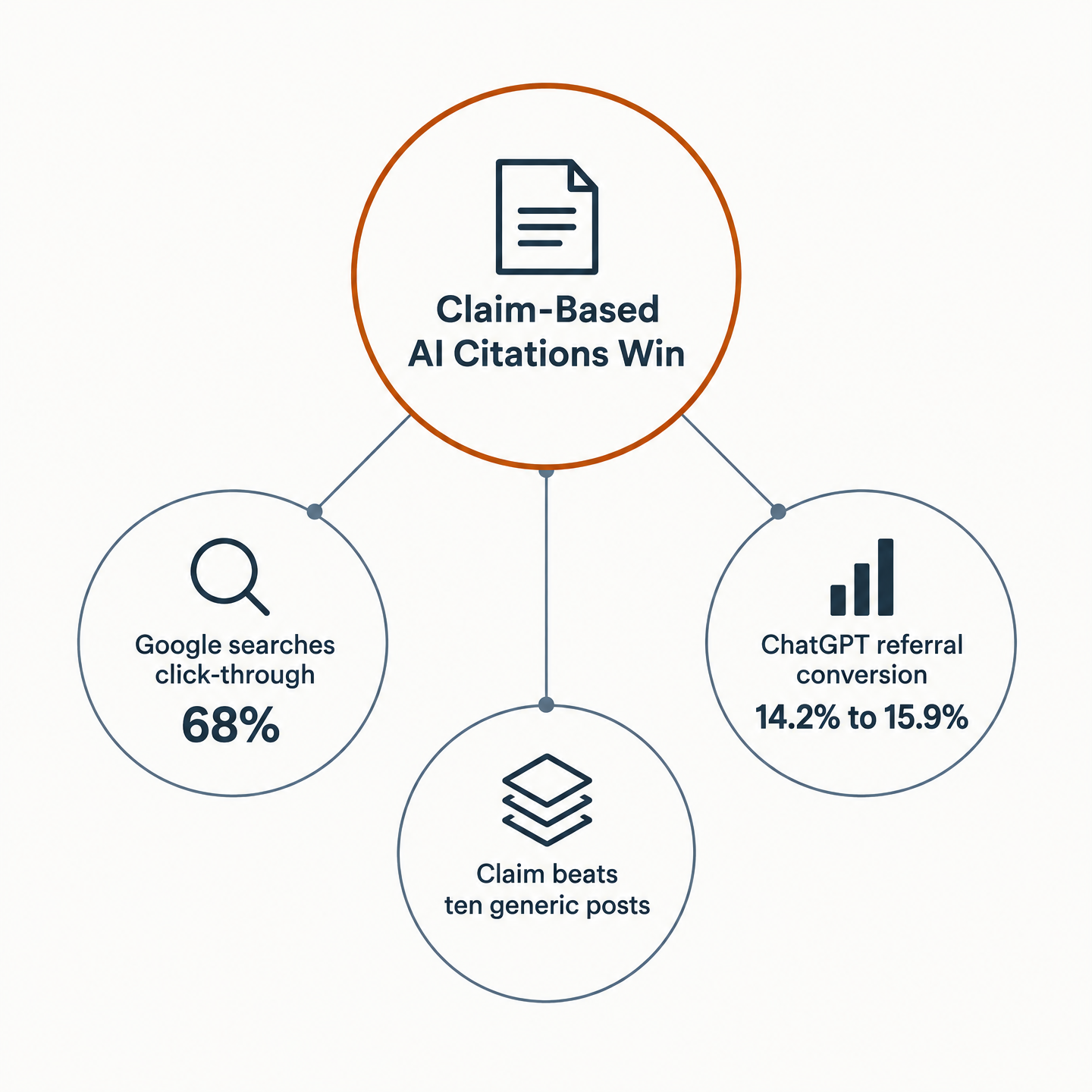
Why does one claim beat ten generic posts?
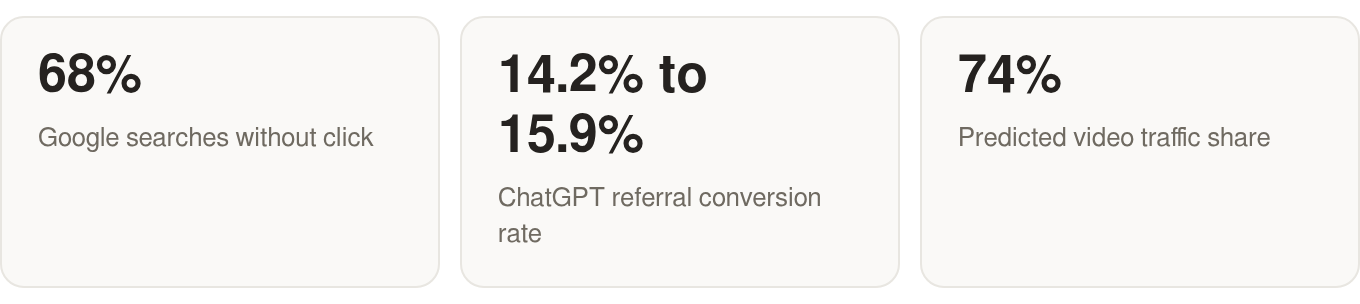
Because a claim is the unit machines reward. Search behavior has shifted toward answer surfaces, where people often get their answer without clicking through to a separate site. Padding the calendar no longer moves the needle.
The traffic that does arrive through AI referrals can be more intent-driven than a broad organic visit. Someone who lands after an AI names your brand is already partway toward a decision. Fewer clicks, but often higher intent.
What turns a claim into a link-building multiplier?
If AI cites discrete claims instead of whole pages, and repurposing spins one piece into many formats, then repurposing a single claim becomes a citation multiplier. Every new format is another surface where the same verifiable fact can be quoted and linked back. That's the engine behind claim-to-backlink.
A practical example: suppose you publish one proprietary statistic on a dated source page. In a platform like AnyPost.ai, you could configure that statistic as a reusable claim and schedule a short series of derivative assets—a LinkedIn carousel, a newsletter tip, a short video script, and a forum response. Each asset would restate the same statistic with a visible date and a link back to the source page. Over time, those dated surfaces give answer engines more chances to cite the same verifiable claim, and each citation can become a backlink to your source page.
Most teams miss the bonus here. Repurpose one original stat into a fresh sequence of formats and you keep that claim visible across channels, which gives models more verifiable surfaces to lift and attribute to you.
One caveat, though. Formatting alone won't get you cited. Trust signals do the work. Author credentials, clear attribution, original data. Those are what turn a claim into a cited claim. Reshaping the content so the claim answers a question cleanly and stands on its own is the part that matters.
| Claim Signal | Verification Time | Ideal Repurposing Channels | SEO Benefit | Example Content Type |
|---|---|---|---|---|
| Proprietary stat from your own data | Minutes (you own it) | Blog, LinkedIn carousel, newsletter | High backlink potential | Annual benchmark report |
| Clear category definition | Under an hour | Blog, video script, social | Strong AI citation pull | Definition-first explainer |
| First-party case result | An hour or two | Case study, podcast talking point | Media mention potential | Customer results post |
Which businesses gain the most?
B2B SaaS and local businesses often see the clearest return. Original research and proprietary data are the highest-value citation magnets because nobody else can source them, so a company that publishes a benchmark from its own customer base hands AI a reason to name it specifically. A competitor's ten generic guides earn nothing.
What signals tell you a claim is worth repurposing?
Run any candidate insight through this quick check before you build a series around it.
- The claim is a specific number or definition, not a vague opinion, so a model can lift it cleanly.
- You can verify it fast, ideally from first-party data you already own.
- It carries clear attribution, since missing sourcing and stale data are the fastest ways to kill repurposing ROI.
- It stands alone without the surrounding paragraph, so each repurposed format still makes sense.
What separates a repurposing candidate from filler
The strongest candidates aren't whole articles. They're compact, verifiable statements that survive outside the original page. Look for proprietary numbers, named frameworks, first-party outcomes, expert-backed assertions, or a counter-intuitive finding with evidence behind it.
Why it works is practical. Every repurposed asset should point back to one source of truth. A blog section, a LinkedIn carousel, a newsletter note, a podcast prompt, a short video, all of them can reuse the same core idea, but the original page stays the home for sourcing, context, and attribution.
Before you turn a claim into a campaign, check three things. Can a reader verify it without guessing where it came from? Does the sentence make sense once you lift it out? Does it add something a competitor can't easily copy? Three yeses and you've probably got a claim worth repurposing.
Sign #2 – Expert Quotes That Earn Their Attribution
A borrowed insight carries more weight than your own assertion, and that's the quiet advantage of a well-attributed expert quote. Put a recognized name behind a claim and you're not just adding color. You're handing answer engines and human readers a verifiable anchor they can trust and repeat. That single quote becomes raw material for AI content repurposing across every format you publish.
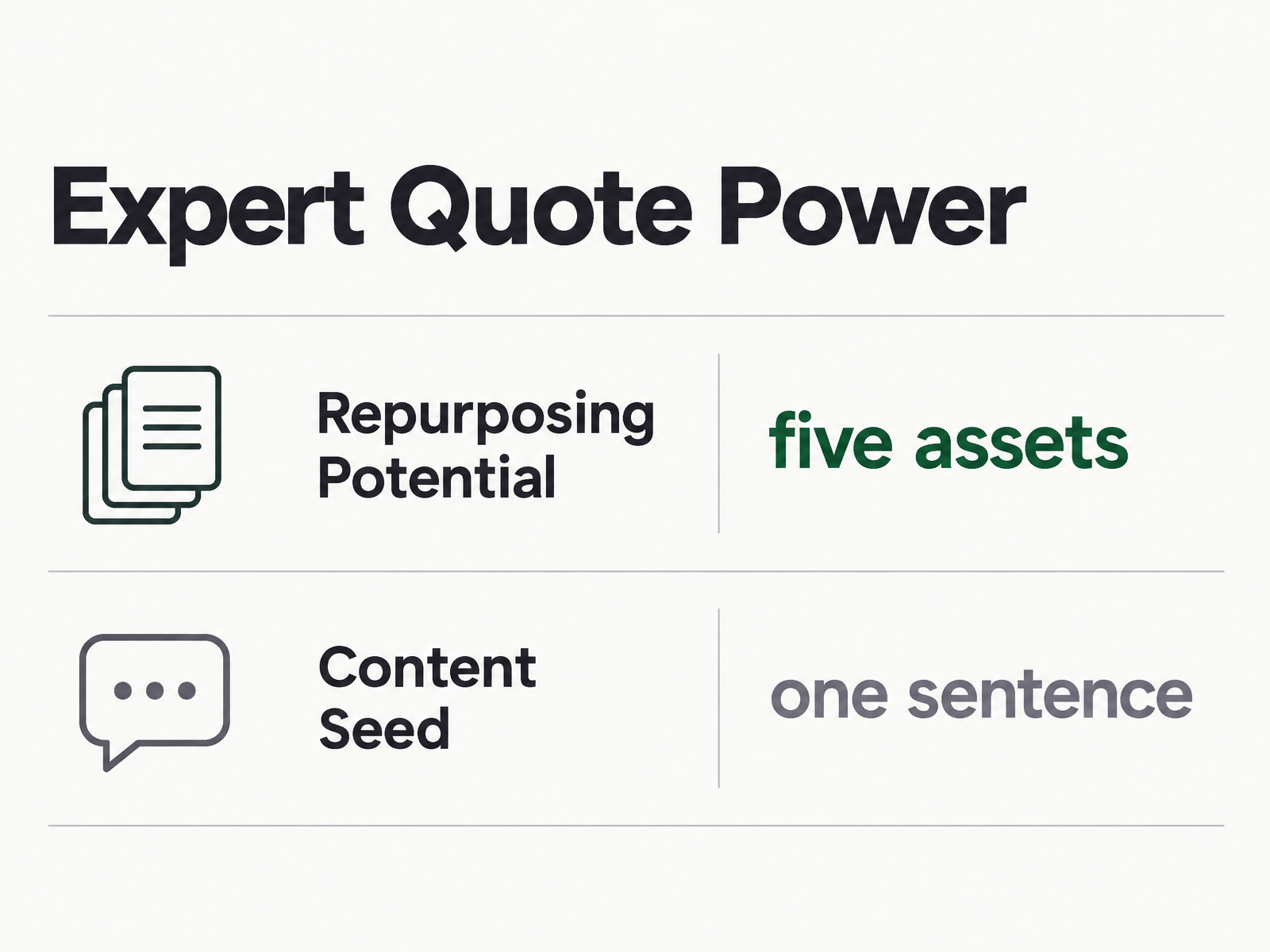
We treat a strong quote the same way we treat a proprietary stat: as a seed for a whole series. Get the attribution right and one sentence can feed a blog paragraph, a social snippet, and a newsletter tip without ever reading as recycled.
A named source beats a faceless claim every time
Answer engines reward specificity. A line like "engagement improves with visuals" gets ignored. A line that names who said it, when, and in what context gives the model something concrete to cite.
Same logic with people. When a claim traces back to a real expert with a public profile, it reads as accountable rather than anonymous. That accountability is what earns the citation, the share, and eventually the backlink.
The attribution details most teams skip
Good attribution isn't just dropping a name. It's giving the reader and the crawler enough to verify the source on their own. Skip these and even a real quote can read as invented.
- Link directly to the expert's public profile or the original source so the quote is verifiable, not just asserted.
- Include the context, meaning where and when it was said, so the claim holds up when someone checks.
- Quote the exact words instead of paraphrasing, since a precise sentence is far easier for AI engines to match and cite.
- Name the expert's role or credential once, briefly, so a first-time reader understands why the voice carries weight.
One quote, many formats
This is where expert sourcing stops being decoration. A single insight rarely needs new research to become a useful asset set. It needs the right packaging for where your audience already pays attention.
Turn the quote into a short audio clip for a podcast segment. Pull it into a LinkedIn carousel where each slide unpacks one part of the point. Drop the exact line into a newsletter as a standalone tip.
- Repurpose the quote into a podcast or video snippet that gives the insight a spoken, shareable form.
- Build a LinkedIn carousel that breaks the single claim into a step-by-step visual, keeping attribution on the first and last slide.
- Seed the quote into forum discussions on Quora and Reddit, where a well-sourced expert point tends to spark organic replies and links back.
Skip this sign if the only "expert" you can cite is anonymous or uncredited. An unverifiable quote does more harm than good. But when the source is real and the attribution is clean, one insight can work every channel your buyers search.
Sign #3 – Case Studies That Prove Instead of Promise
A case study is the rare asset that proves a claim instead of just stating it. It names a real problem, shows the fix, and puts a number on the outcome. That combination is exactly what answer engines look for when they decide what to cite, which makes a well-built case study one of the strongest starting points for AI content repurposing.
We keep seeing the same advantage: a documented result gives you evidence no competitor can rewrite from public sources. It also signals trust, because the claim is tied to an actual change rather than a generic best practice. Content that pairs topical relevance with credible proof tends to be what answer engines reach for when they cite a source. A case study delivers both from one page, which is why we treat it as prime raw material for a series.
What makes a case study worth repurposing?
Not every success story qualifies. The ones that earn citations and feed a series share a few traits. Run your draft through this list before you publish.
- Include a specific, verifiable metric like a conversion lift or traffic gain, because a number is what gets quoted and attributed back to you.
- Document the starting situation clearly, so readers and answer engines can see the before-and-after contrast that makes the result credible.
- Name the action you took in plain steps, which gives you extractable how-to snippets later.
- Check whether any third-party publication has referenced the piece, since outside citations confirm the claim carries weight beyond your own site.
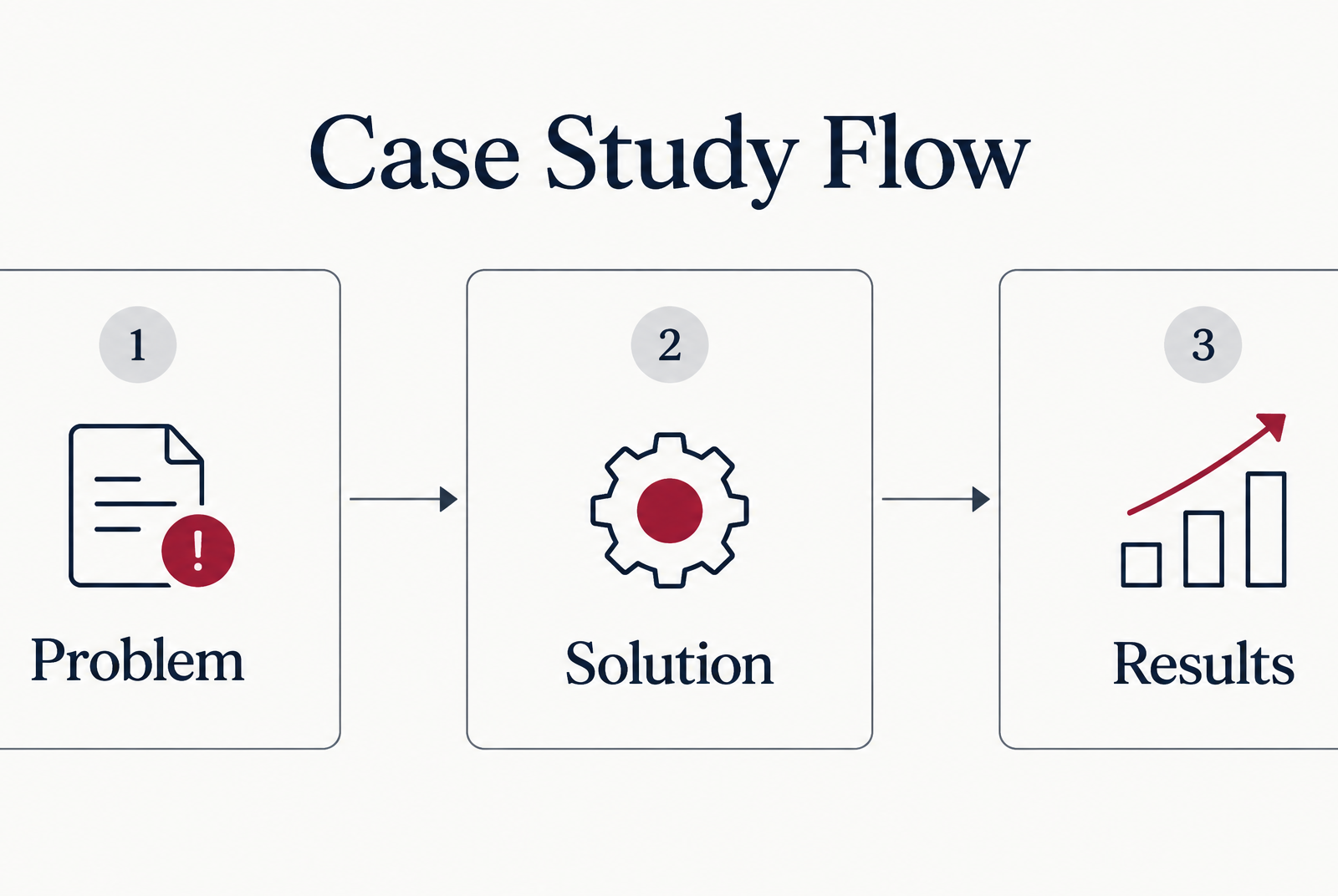
A useful case study doesn't need to sound dramatic. It needs to be traceable. The reader should see the problem, the intervention, and the result without wading through a sales pitch. That clarity is what makes the outcome reusable elsewhere.
Which structure extracts the most snippets?
The format decides how easily one case study breaks into many assets. A loose narrative is hard to slice. A structured one almost repurposes itself.
- Use a Situation-Action-Result structure, because each part maps to a different downstream format without rewriting.
- Pull the Result metric into a social snippet, since a single sharp number carries fine on its own.
- Turn the Action steps into a short video script or a carousel, where sequential steps fit the format naturally.
- Convert the full arc into an email drip, letting each message carry one stage of the story.
One documented result can become a blog section, a clip, a carousel, and a newsletter thread, each pointing back to the source page that holds the original data.
Skip the full case-study treatment for routine updates or thin wins. If you can't attach a real metric to a real change, you've got a testimonial, not a citable claim, and forcing the format wastes the effort. Save the structure for outcomes solid enough that another publication would repeat the number.
Sign #4 – Counter-Intuitive Claims That Invite a Reply
A claim that pushes back on the consensus travels further than one that agrees with it. Agreement gets a nod. Disagreement gets a reply, a share, and sometimes a rebuttal post that links straight back to you. That reaction loop is why a counter-intuitive insight makes such strong fuel for AI content repurposing.
Our position: controversy without proof is a liability, but a contrarian claim backed by hard evidence is one of the most linkable assets you can build. When your data contradicts what everyone assumes is true, other creators cite you to argue with you. Those citations still count. So the seed claim you feed into a repurposing series should be the one that makes a reader stop and think, "wait, is that right?"
A contrarian claim needs evidence, not just nerve
The line between bold and reckless is the source link. A surprising statement with no proof reads as clickbait, and answer engines have learned to skip content that can't back itself up. The same claim with a verifiable number attached becomes something worth quoting.
Before you publish anything that challenges the norm, pressure-test it. A disputed claim invites scrutiny, so your fact-checking has to be tighter than usual.
- Trace your claim back to a primary source and link it directly, so anyone who doubts you can verify in one click.
- State the sample size, timeframe, or method behind your number, because a naked statistic invites easy dismissal.
- Frame the claim as a finding, not an attack, so the debate stays about the data instead of your tone.
Package one contrarian insight into formats that spark debate
A counter-intuitive claim earns its keep when it starts conversations across channels. The same insight that anchors a blog post can open a poll, seed a discussion thread, or become the hook of a short video. Each format pulls in a different audience and a different set of potential links.
You want people arguing about your idea where they already gather, while the evidence stays anchored to the original page.
- Turn the claim into a poll or open question on social so your audience takes a side and adds reach.
- Pull the strongest data point into a standalone graphic that others can embed and credit back to you.
- Write a follow-up that answers the loudest objection, which gives the debate a second wave and a second linkable page.
Plan your response to pushback before you publish
Disagreement is the goal, but hostility can hurt. Decide in advance how you'll handle the reply that says you're wrong.
Respond with data, not defensiveness. When someone disputes the claim, point them to your source and invite the correction if they have better evidence. That posture protects your brand and often turns a critic into a citing party.
- Keep a short reference doc of your supporting evidence so you can answer challenges fast and factually.
- Correct the record publicly if new data proves you wrong, because owning the mistake protects trust more than silence does.
Skip the contrarian angle entirely for routine, well-settled topics. Manufacturing controversy where none exists reads as desperate, and readers catch it every time.
Sign #5 – Evergreen How-To Content Built on a Named Framework
A how-to guide built on a named framework is the most reusable asset you'll ever publish. Its shelf life runs in years, not weeks, because the steps stay valid long after the news cycle moves on. That longevity is what makes a proven framework the ideal seed for AI content repurposing.
We keep coming back to this format because a framework gives you a memorable label, a claim worth citing, and a repeatable structure. Package a process as something like a "3-Phase SEO Sprint" and you've created a citable thing people reference by name. That one asset then feeds a whole repurposing series without ever reading as recycled.
Why does a named framework beat a loose tutorial?
Because it turns a vague process into a quotable claim. Answer engines cite specific, structured methods far more readily than generic advice. When your steps have a label and a clear sequence, both readers and engines can repeat them accurately.
Evergreen how-to content also earns links passively. Repurposing a proven framework can help lift underperforming pieces, build quality backlinks, reach new audiences, and raise your industry profile—benefits many content teams see when they maintain the framework over time.
How do you turn one framework into a multi-format series?
Break the framework into its component steps, then rebuild each one for the format its audience prefers. One master guide can become a blog post, a video walkthrough, a newsletter sequence, and a carousel. Video and podcast formats continue to command large audience attention, so it often makes sense to include at least one spoken or visual version.
The trap to avoid: repurposing isn't shuffling sentences or swapping a headline. Done right, it means deciding what to change and where to publish before you post anything.
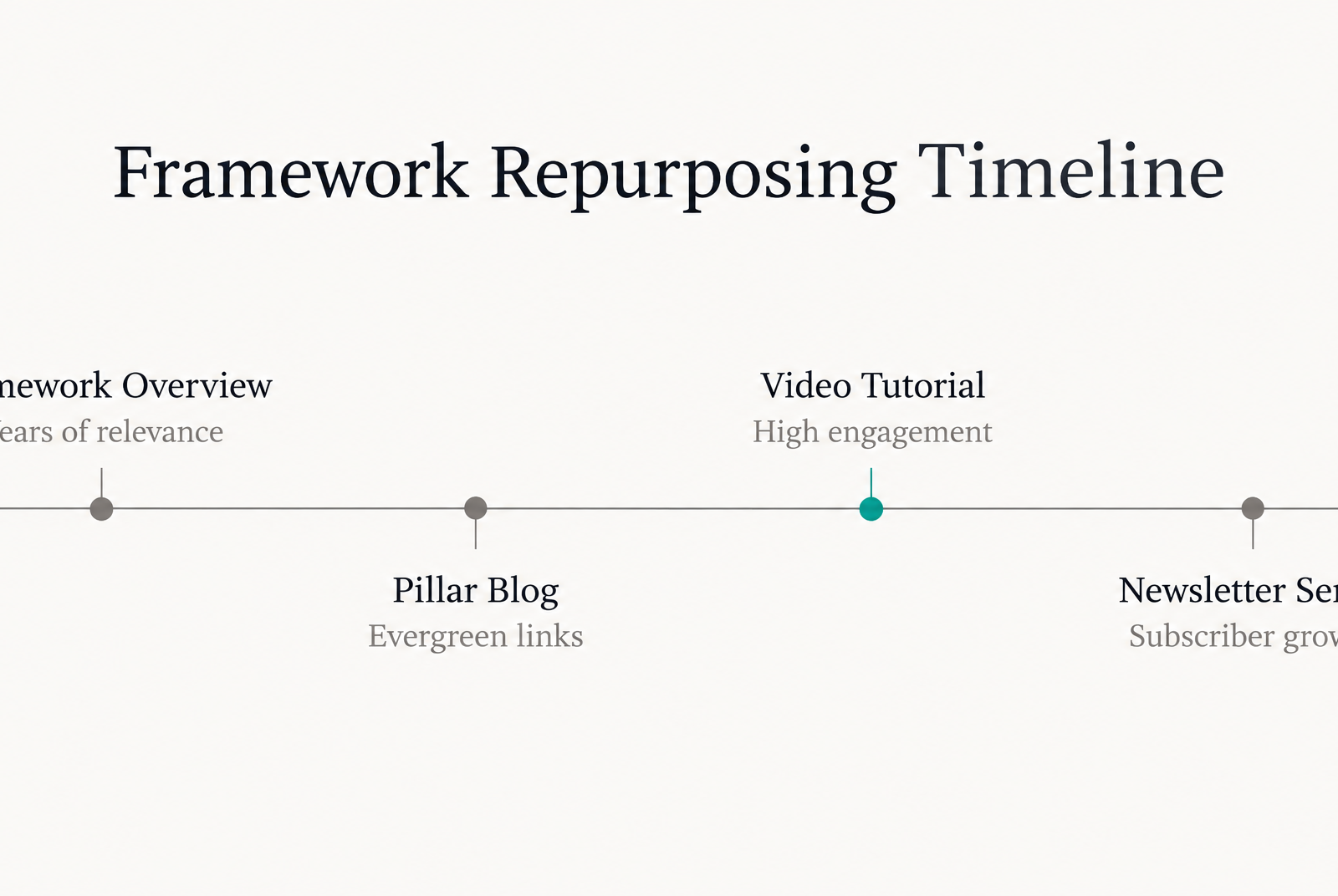
- Turn the framework overview into a pillar blog post with fresh internal links to related guides.
- Record a short video tutorial demonstrating one phase, then publish it where your audience watches.
- Break each step into a newsletter series so subscribers get one actionable phase at a time.
- Summarize the framework as a carousel for social feeds, pulling the most quotable stat to the front.
What should you verify before repurposing?
Before you repurpose anything, confirm the source claim is still accurate, current, and search-ready. The "fresh value" worth adding isn't a new headline. It's concrete data and an updated timestamp. Recency, explicit specifics, and completeness tend to support citations. Reformatting alone doesn't.
- Validate the source behind every statistic so the claim holds up when someone checks it.
- Refresh dates and figures to the current year, since answer engines favor recent, specific numbers.
- Run an SEO audit to confirm the piece targets the right keywords and links to your evergreen assets.
- Add internal links from new posts back to the framework page to concentrate authority on your best asset.
Skip this format for time-sensitive news or one-off announcements. Those age out fast, and no framework will save them.
Frequently Asked Questions
What if my business doesn't have proprietary data to build a citable claim around?
Start with assets that already contain accountability. A named expert can lend authority to a clear point, while a customer outcome can show a before-and-after change your competitors cannot copy. Either option gives you something concrete to quote without launching a formal research project.
Is it worth repurposing a statistic I found from a third-party source rather than my own?
Yes, but treat it as borrowed authority rather than your strongest asset. Use the primary source, preserve the original context, and avoid recycling a figure whose date or methodology is unclear. If the sourcing is weak, do not build a campaign around it.
How is chasing a citable claim different from just targeting the right keywords?
Keyword targeting helps a page get found. A citable claim gives readers, publishers, and answer engines a specific sentence worth repeating. The best content does both: it targets the query and contains a clearly sourced point that can stand on its own.
What should I do when someone challenges a contrarian claim I published?
Treat the challenge as part of the publishing plan, not a crisis. Reply calmly, refer back to the evidence, and update the piece if stronger information changes the conclusion. That approach keeps the debate centered on the claim instead of the personalities around it.
How do I keep an evergreen framework citable years after I first publish it?
Maintain it like a living reference page. Recheck sources, update stale examples, improve internal links, and make sure the framework still matches how your audience describes the problem. A framework stays citable when it remains current and easy to verify.
Which citable claim type gives a local business the best return compared to B2B SaaS?
Local businesses often have strong proof hiding in service outcomes, customer patterns, and market-specific observations. B2B SaaS companies usually have broader product or customer-base benchmarks. In both cases, the best claim is the one tied to evidence only that business can credibly publish.