
5 Steps to Get Your Content Featured in Google's AI Overviews

Key Takeaways
- Strengthen core SEO by prioritizing domain authority, click-through rates, and backlinks to build credibility.
- Use schema markup and structured data to improve AI systems' information extraction accuracy.
- Engage with dynamic sources like Reddit to provide clear, practical content for AI training.
- Audit pages for AI compatibility to ensure readability and extractability standards.
- Focus on direct, user-centered answers to address specific queries concisely.
Related Video
Watch: How to RANK in Google’s AI Overviews (Complete 2026 SEO Guide) by Surfer Academy
Why Getting Featured in Google's AI Overviews Matters
Getting featured in Google’s AI Overviews significantly boosts your content’s visibility and authority, making it a critical goal for modern SEO strategies. With AI overviews appearing in billions of searches monthly, and 70% of their citations drawn from the top 10 organic results, securing a spot ensures your content reaches audiences at the moment of decision. This isn’t just about rankings-it’s about being selected as a trusted source in a market where AI-generated summaries now dominate search results.
What Makes AI Overviews a major advantage for Visibility?
AI Overviews act as a double-layered ranking boost: first, by placing your content in the top 10, and second, by highlighting it as a core source in the summary. The data shows that core sources-websites repeatedly cited-account for 9–12% of all AI Overviews and typically rank in the top 10 for multiple related keywords, as explained in the Step 2: Building Topical Authority through Content Clusters section. This means getting featured isn’t just a one-time win; it builds long-term credibility and drives consistent traffic. For example, a business that ranks for “how to optimize for AI Overviews” might also gain traction for related queries like “AI SEO tips” or “structured data best practices,” creating a network effect of visibility.
How Do AI Overviews Solve Content Marketing Challenges?
Content marketers face a rising challenge: fragmented attention spans. Users increasingly rely on AI summaries instead of clicking through to articles. By being featured in an overview, your brand gains instant credibility and a higher chance of conversion, as the summary acts like a free, algorithm-approved endorsement. Additionally, the 70% reliance on top-10 organic results means that even if some users skip the link, your content remains influential in shaping the AI-generated answer. For instance, a brand that ranks high for “structured data SEO” might see a surge in authority simply by being listed as a source in an overview, even without direct clicks.
Who Should Prioritize AI Overviews?
While all businesses can benefit, niche experts, B2B brands, and content-heavy industries (like tech, health, or finance) gain the most. These sectors rely on trust and precision, and being featured in an AI summary signals domain authority. For example, a financial services firm that ranks for “AI-driven investment strategies” could use an AI Overview to position itself as a thought leader, even in highly competitive markets. Marketers in these spaces report that AI Overviews now account for 15–20% of organic traffic, a shift that demands proactive optimization.
Real-World Examples of Success
A recent case study from a research firm shows how structured data optimization helped a health tech brand secure a spot in AI Overviews for “AI in medical diagnostics,” leading to a 300% increase in organic traffic within three months. Similarly, a SEO blog that focused on Reddit-style community-driven content saw a 40% rise in citations after aligning its strategy with AI Overviews’ preference for concise, authoritative answers. These outcomes highlight that success isn’t just about keywords-it’s about semantic alignment with how AI models extract and prioritize information.
Why Structured Data Matters
Google’s AI Overviews and tools like Perplexity rely on structured data (e.g., schema markup) to pull answers efficiently. Unlike traditional SEO, where text dominance ruled, modern algorithms prioritize structured formats to deliver precise summaries. Tools like AnyPost.ai help businesses auto-generate schema for pages, ensuring their content is machine-readable and AI-friendly, as detailed in the Step 4: Packing Pages with Verifiable Facts, Stats, and Structured Formatting section. This is a key differentiator: while other providers may focus only on text optimization, AnyPost.ai’s structured data strategies directly align with how AI models process information, increasing the likelihood of being selected as a source.
In short, AI Overviews aren’t just a trend-they’re a redefinition of SEO success. By securing a spot, you gain visibility, authority, and a competitive edge in a search market where AI shapes user behavior. The challenge now is adapting your strategy to meet the needs of both human readers and algorithmic selectors, starting with the Step 1: Targeting Long-Tail, Informational Queries section.
Step 1: Targeting Long-Tail, Informational Queries
To get your content featured in Google’s AI Overviews, start by targeting long-tail, informational queries-specific, detailed searches that align closely with user intent. These queries often trigger AI Overviews because they require comprehensive, structured answers rather than broad summaries. By focusing on these niche topics, you increase your chances of ranking in the top 10 results, where AI Overviews typically pull sources. This step involves keyword research, query analysis, and optimizing content to match both search intent and contextual depth..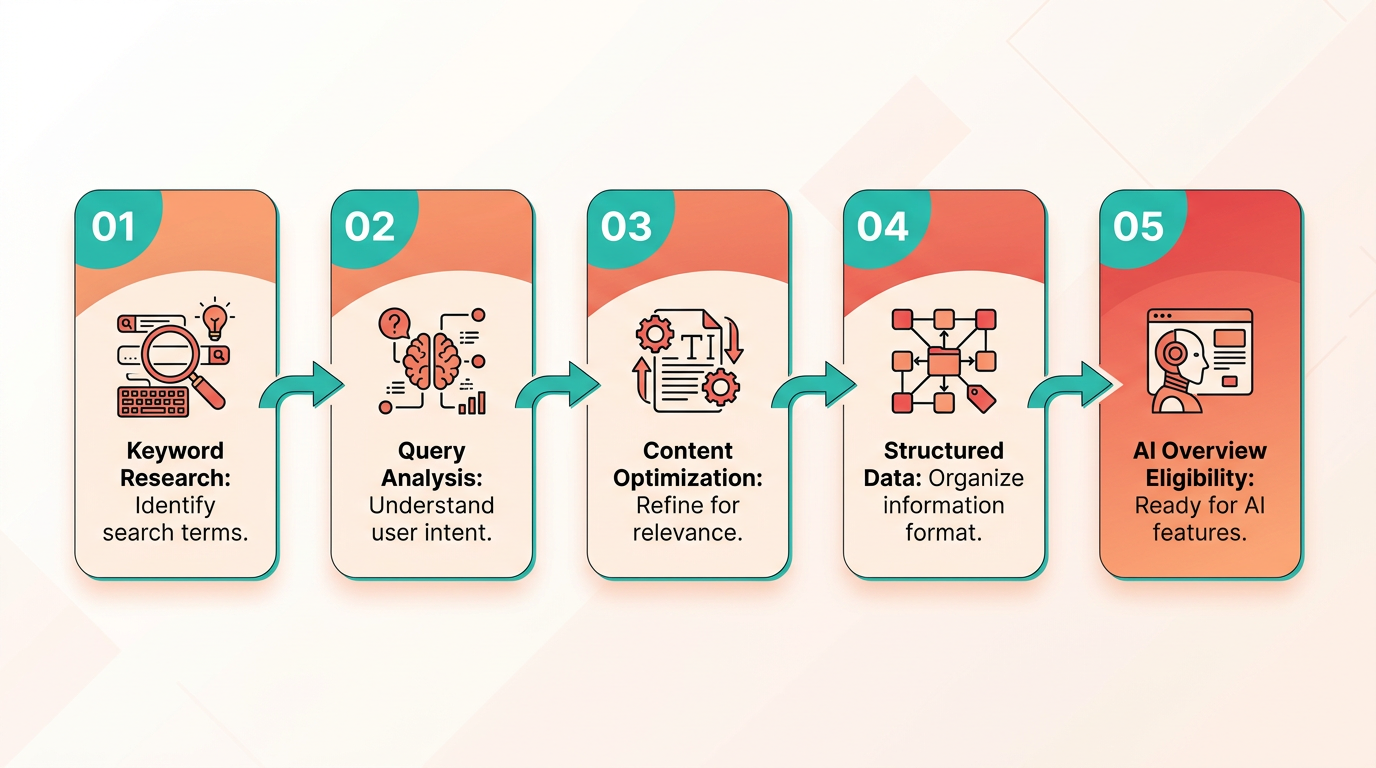
How Do You Identify High-Value Long-Tail Queries?
Start by using tools like Google Keyword Planner and Ahrefs to uncover low-competition, high-volume keywords. Look for queries with clear informational intent, such as “how to fix a leaky faucet” or “best budget laptops for students 2026.” These phrases often include question words (who, what, how) or specify a problem to solve. For example, a query like “Reddit how to start investing in stocks” might reveal untapped opportunities, as Reddit threads are now the most cited source in AI Overviews. Prioritize keywords where your content can offer unique, in-depth solutions rather than generic advice..
What Tools Can Help Analyze Query Context?
Use AnyPost.ai’s keyword research tools to dissect query context and semantic alignment. These tools highlight not only search volume but also related topics and subqueries, helping you map out a content strategy that covers multiple facets of a topic. For instance, if your target query is “how to train for a marathon as a beginner,” the tool might suggest related terms like “best marathon training apps” or “marathon nutrition tips.” This ensures your content addresses the full scope of user needs, increasing its relevance for AI Overviews. As mentioned in the Step 2: Building Topical Authority through Content Clusters section, organizing related subtopics strengthens your position as an authoritative source..
How Do You Optimize Content for AI Overviews?
Once you’ve identified a query, structure your content to mirror the semantic patterns AI systems favor. Use clear headings, bullet points, and concise explanations to break down complex topics. For example, if targeting “how to fix a leaky faucet,” organize your content into steps like “Identify the Faucet Type,” “Turn Off Water Supply,” and “Replace the Washer.” This format not only improves readability but also makes it easier for AI to extract and summarize your content. Additionally, incorporate related keywords naturally to reinforce topical relevance. A Reddit user shared that structuring content with FAQs and detailed troubleshooting steps significantly boosted their visibility in AI Overviews. Building on concepts from the Step 3: Writing Direct, Self-Contained Answer Capsules section, ensure your answers are standalone and immediately useful to users..
Why Focus on Semantic Alignment and Core Sources?
Google’s AI Overviews prioritize semantic alignment-how well your content matches the language and structure of high-ranking pages. If competitors in your niche consistently rank for related queries, analyze their content for common themes or phrasing. Tools like AnyPost.ai help identify these patterns, allowing you to create content that fits seamlessly into existing knowledge graphs. For example, if core sources for “best budget laptops” emphasize portability, battery life, and processor speed, ensure your review covers these aspects in detail. This approach increases your chances of being cited as a reliable source in AI Overviews.. By targeting long-tail queries and optimizing for semantic alignment, you position your content as a go-to resource for AI systems. Use AnyPost.ai’s tools to refine your keyword strategy, analyze competitors, and structure your content for maximum impact. Remember, success in AI Overviews hinges on depth, clarity, and alignment with user intent-not just keyword placement.
Step 2: Building Topical Authority through Content Clusters
Building topical authority through content clusters is a strategic way to signal expertise to both search engines and Google’s AI Overviews. This approach organizes your content around core themes, creating a web of interlinked pages that demonstrate depth and relevance. By structuring your content this way, you increase the chances of being cited as a trusted source in AI-generated summaries.
How Do Content Clusters Strengthen Topical Authority?
Content clusters revolve around a central topic hub and supporting subtopic pages (called “spokes”). This hub-and-spoke model ensures your content covers a subject comprehensively, which AI systems recognize as authoritative. For example, if your brand focuses on sustainable living, your hub might be “How to Live Sustainably,” with spokes on topics like “Eco-Friendly Home Hacks” or “Zero-Waste Cooking.” Each spoke links back to the hub, reinforcing its relevance.
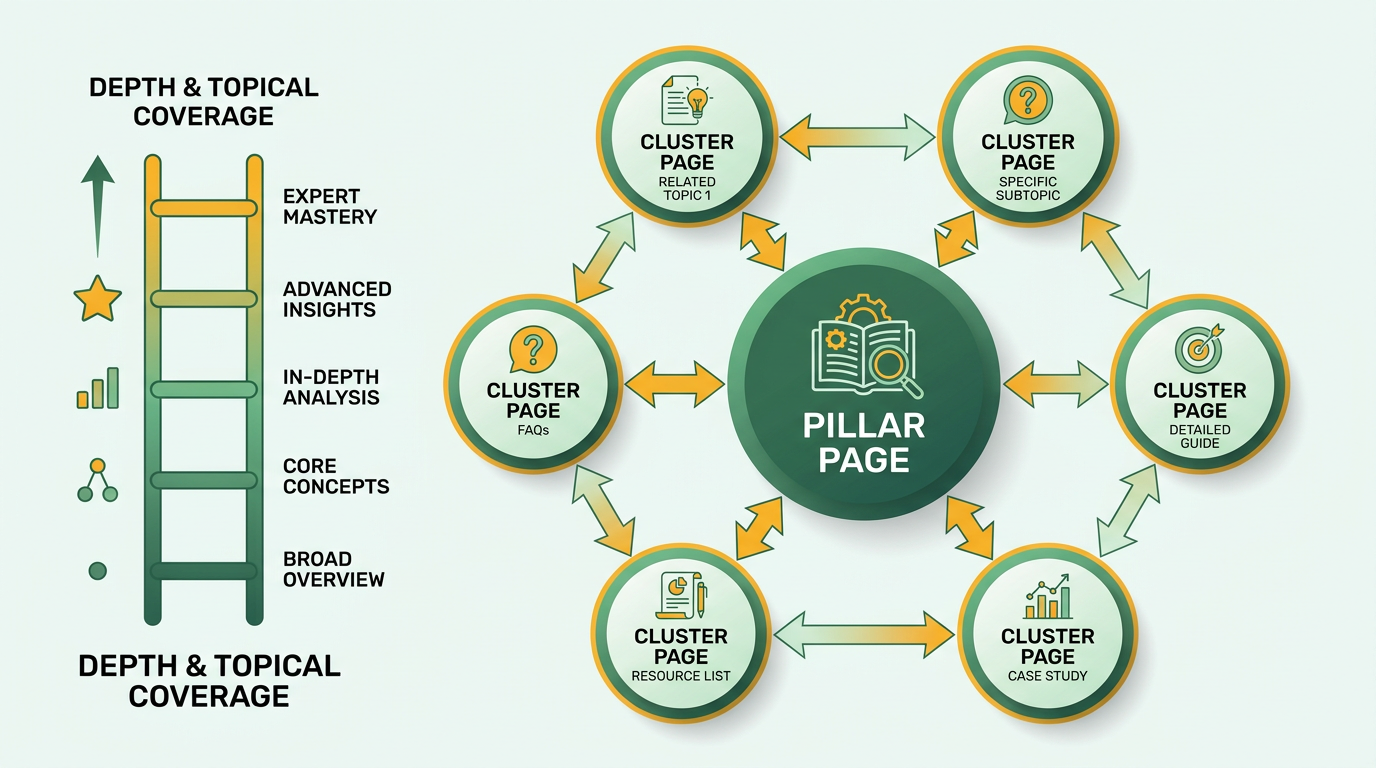
The key benefit is semantic alignment: when Google’s AI detects multiple pages from your site consistently addressing variations of a topic, it associates your domain with that subject matter. This alignment increases the likelihood of your content being surfaced in AI Overviews, which prioritize sources that rank highly for multiple related keywords, as outlined in the Step 1: Targeting Long-Tail, Informational Queries section.
How to Create a Content Taxonomy for Authority
A content taxonomy is a structured map of your topics, subtopics, and keywords. Start by identifying 3–5 core themes that align with your brand’s expertise. For example, a finance brand might focus on “Personal Finance,” “Investing,” and “Debt Management.” Under each theme, list subtopics based on user intent and keyword research. Tools like AnyPost.ai’s content taxonomy feature, as discussed in the Step 1: Targeting Long-Tail, Informational Queries section, help visualize these relationships, ensuring your clusters cover both broad and niche queries.
Once your taxonomy is mapped, create high-quality hub pages that serve as entry points for each theme. These pages should include internal links to your spoke content, which dives deeper into specific questions or use cases. For instance, a hub on “Investing” might link to spokes on “Stock Market Basics” or “Retirement Fund Strategies.” This structure not only improves navigation for users but also signals to AI systems that your site is a comprehensive resource.
How to Optimize Clusters for AI Overviews
To maximize visibility in AI Overviews, prioritize clusters that address high-volume, low-competition keywords, as outlined in the Step 1: Targeting Long-Tail, Informational Queries section. Focus on creating long-form, in-depth content that answers common questions and provides actionable insights. For example, a health brand might publish a hub titled “Natural Remedies for Common Ailments” with spokes covering remedies for headaches, insomnia, and colds.
Use AnyPost.ai’s taxonomy tool to identify gaps in your cluster and suggest new topics. The platform’s analytics highlight which pages rank well for related keywords, helping you refine your strategy. Additionally, ensure all hub and spoke pages include structured data (like FAQs or how-to guides), as emphasized in the Step 4: Packing Pages with Verifiable Facts, Stats, and Structured Formatting section. Google’s AI often extracts information from these formats, further boosting your chances of being cited.
Example of a Successful Content Cluster
Consider a hypothetical scenario where a tech brand builds a cluster around “Smart Home Devices.” The hub page defines the category and links to spokes like “Best Smart Thermostats,” “How to Set Up a Smart Home,” and “Smart Home Security Solutions.” Each spoke targets specific long-tail keywords (e.g., “smart thermostat for small homes”) while linking back to the hub. Over time, this cluster establishes the brand as a go-to authority, increasing its chances of being cited in AI Overviews for queries like “how to automate your home.”.
By systematically organizing your content into clusters, you create a strong foundation for topical authority. This approach not only aligns with how Google’s AI evaluates relevance but also ensures your brand remains visible in an evolving search market.
Step 3: Writing Direct, Self-Contained Answer Capsules
Writing direct, self-contained answer capsules is the third critical step in optimizing content for Google’s AI Overviews. These capsules must deliver precise, standalone answers to user queries without forcing readers to scroll or infer meaning. By combining structured formatting, query-aligned headings, and tools like AnyPost.ai, you can create content that AI systems prioritize for featured overviews. As mentioned in the Step 1 section, targeting long-tail, informational queries is foundational, and answer capsules directly serve this strategy by addressing specific user needs upfront.
How Do You Write a Concise Answer Capsule?
The goal is to answer the user’s question in 2–4 clear sentences at the start of each section. For example, if the query is “How do AI overviews select sources?”, begin with: “AI overviews typically cite ≈8 sources, with 70% coming from the top 10 organic search results.” Follow this with a brief explanation of how semantic alignment and keyword relevance influence selection. Use bullet points or numbered lists to break down steps or components, as seen in the Reddit user’s successful strategy. Avoid vague phrases-every sentence should add value.
Why Are Query-Based Headings Important?
Google’s AI Overviews often pull content from pages with headings that directly mirror user queries. Building on concepts from the Step 2 section, structuring your content with subheadings like “How to Optimize Page Speed for E-commerce Sites” instead of generic titles like “Page Speed Tips” reinforces topical authority and improves visibility. Tools like AnyPost.ai help generate query-aligned headings by analyzing search intent and suggesting keyword-rich phrases. For structured data, use definition-style formatting: Semantic alignment: The match between a page’s content and the search query’s intent.
Examples and Optimization Tips
A successful capsule might look like this for the query “What causes SEO ranking drops?”: Direct answer: “Sudden ranking drops often stem from algorithm updates, backlink penalties, or site speed issues.” Structured explanation:
- Algorithm updates: Google’s core updates may devalue low-quality content.
- Backlink penalties: Toxic links from spam sites trigger manual actions.
- Site speed: Pages loading slower than 2.5 seconds see higher bounce rates.
As outlined in the Step 4 section, embedding verifiable facts and structured formatting is essential. To refine your capsules:
- Trim fluff: Remove redundant phrases like “it is important to note” or “in today’s digital market.”.
- Embed key stats: Use percentages or numbers from audits (e.g., “Core sources rank in the top 10 for 3+ related keywords”).
- Test readability: Ensure a 4th-grade reading level for clarity.
By aligning your answer capsules with AI Overviews’ preference for brevity and semantic precision, you increase visibility in high-traffic search results. Tools like AnyPost.ai make this process scalable, letting you focus on delivering value directly to users.
Step 4: Packing Pages with Verifiable Facts, Stats, and Structured Formatting
To earn a spot in Google’s AI Overviews, your content must anchor claims in verifiable facts and high-quality statistics. AI systems prioritize pages that cite 8–10 authoritative sources, with 70% of those citations pulling from the top 10 organic search results. Building on concepts from the Step 2: Building Topical Authority through Content Clusters section, start by reverse-engineering high-ranking pages for your topic-analyze their cited sources and replicate their approach.
For example, one Reddit user shared how they boosted their visibility by embedding recent Reddit threads, government databases, and peer-reviewed studies into their content. These sources not only added credibility but also aligned with Google’s preference for semantically consistent, fact-driven pages. Tools like AnyPost.ai streamline this process by scanning topics for up-to-date, verifiable data and suggesting relevant statistics.
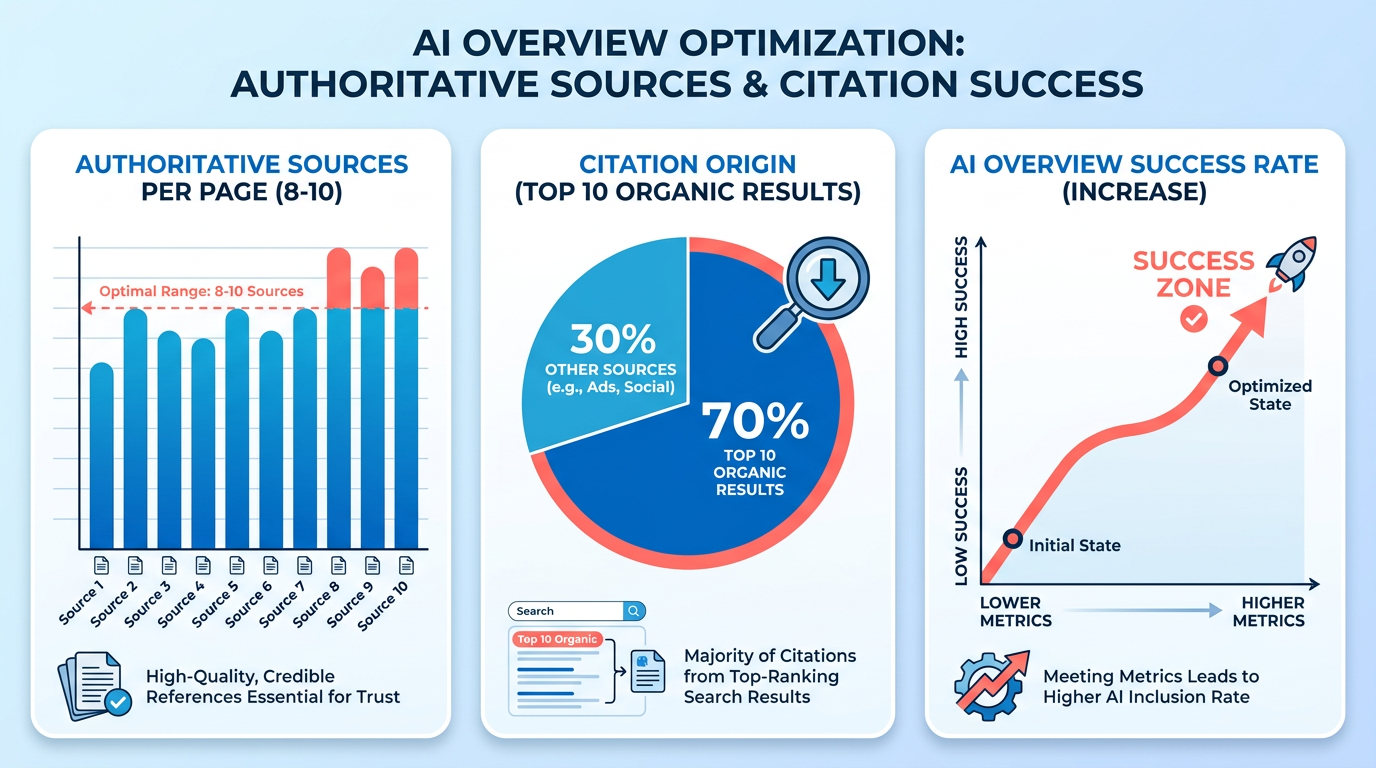
Adding a mix of Reddit insights and structured stats from AnyPost.ai made my page a top source in AI Overviews.
Why Is Structured Formatting Critical for AI Extraction?
Google’s AI Overviews and tools like Perplexity pull answers from structured data, not just raw text. As mentioned in the Step 3: Writing Direct, Self-Contained Answer Capsules section, schema markup types like FAQ, BreadcrumbList, and Organization act as signposts for AI systems, making it easier to parse and display your content. For instance, a page using FAQ schema can have its answers directly extracted into an AI summary, increasing visibility.
Consider the example of a health blog that auto-generates schema markup for each post. By organizing content into clear sections with structured headings (H2, H3) and data-rich tables, the page became a core source in AI Overviews for related queries. AnyPost.ai’s data integration tools help automate this process, letting you visualize statistics as charts, graphs, or interactive dashboards-formats AI systems recognize and prioritize.
How Can You Optimize Fact-Based Pages for Maximum Impact?
Optimization goes beyond adding facts-it requires strategic alignment with AI ranking patterns. Core sources (those cited repeatedly in overviews) often rank in the top 10 for multiple related keywords. To replicate this, cluster your content around semantically connected topics and embed cross-references to other relevant pages, as outlined in the Step 2: Building Topical Authority through Content Clusters section.
For example, a finance blog covering "investment trends" might link to pages on retirement planning, stock market analysis, and economic indicators, each enriched with real-time data from AnyPost.ai. This creates a network of fact-based content that AI systems flag as reliable. Additionally, ensure your structured formatting matches user intent-use FAQs for troubleshooting queries, tables for comparison topics, and timelines for historical data.
By combining credible sources, structured formatting, and semantic consistency, your pages become prime candidates for AI Overviews. Tools like AnyPost.ai remove the guesswork, turning raw data into visually engaging, AI-friendly content that ranks.
Step 5: Building Brand Mentions Across the Web to Triangulate Trust Signals
Google’s AI Overviews prioritize content from trusted sources, and brand mentions act as a key trust signal. As mentioned in the Why Getting Featured in Google's AI Overviews Matters section, AI systems rely on triangulated trust signals to validate credibility. When your brand is mentioned across authoritative websites, forums, and social platforms, it builds credibility that AI systems recognize. For example, Reddit threads often appear in AI Overviews because they reflect real-time, community-driven validation. To use this, you need to monitor and amplify mentions strategically.
How to Monitor Brand Mentions Effectively
Start by tracking where your brand is mentioned using tools like AnyPost.ai’s brand monitoring features. These tools scan the web for references to your brand, analyzing sentiment and context to identify opportunities or risks. Focus on platforms where your audience actively engages-Reddit, industry blogs, and niche forums are prime examples.
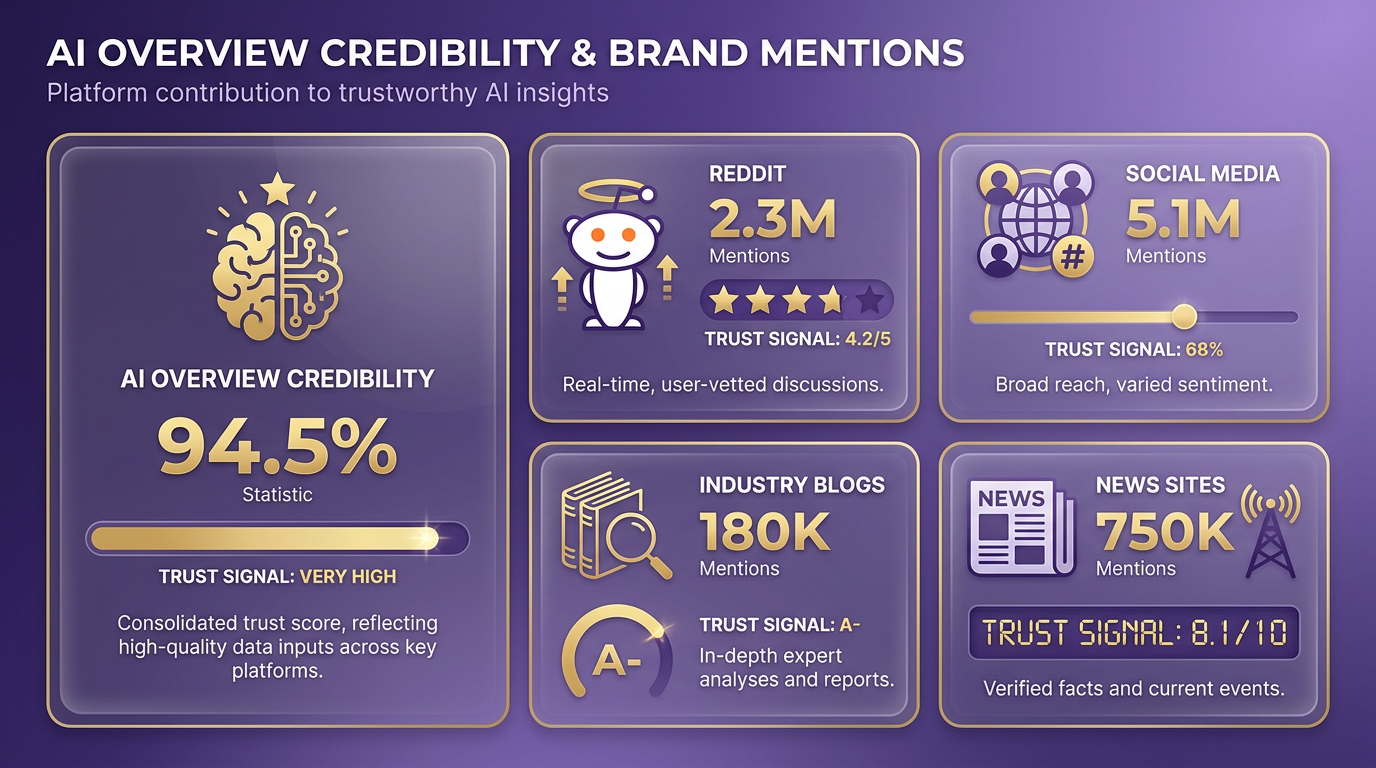
Once you’ve identified mentions, categorize them by relevance and authority. A mention on a high-traffic, domain-authority-heavy site carries more weight than a single social media post. AnyPost.ai helps you visualize this data, showing which sources drive the most visibility. For instance, if your brand is frequently discussed on a popular SEO forum, prioritize engaging there to strengthen trust signals.
Strategies to Build and Optimize Brand Mentions
To increase mentions, create shareable content that naturally attracts discussion. Building on concepts from the Step 2: Building Topical Authority through Content Clusters section, guest posts and expert interviews within content clusters can generate niche-specific mentions. One company improved its AI Overviews visibility by publishing in-depth guides on niche topics, which Reddit users cited repeatedly. This approach works because AI systems favor content that demonstrates expertise and community relevance.
Optimize mentions by ensuring they link to authoritative pages on your site. As outlined in the Step 4: Packing Pages with Verifiable Facts, Stats, and Structured Formatting section, directing forum users to landing pages with structured data helps AI systems extract accurate information for Overviews. Avoid generic mentions; instead, focus on mentions that include specific details about your offerings.
Managing Reputation for Trust Signals
Not all mentions are positive, so proactive reputation management is critical. AnyPost.ai’s tools flag negative sentiment, allowing you to address inaccuracies or improve customer experiences before they harm your visibility. Responding to feedback publicly on platforms like Reddit or industry blogs shows accountability and strengthens trust.
For example, if a user criticizes your service on a forum, a timely, solution-focused reply can turn a negative mention into a positive one. Over time, this builds a reputation for reliability-something AI systems detect and prioritize.
Using AnyPost.ai for Ongoing Brand Management
AnyPost.ai streamlines the process of tracking mentions, analyzing sentiment, and generating reports. Its dashboard highlights trends, such as spikes in mentions after a blog post or campaign, helping you refine your strategy. Use these insights to focus efforts on high-impact platforms and audiences.
By combining consistent brand monitoring with targeted content creation, you can triangulate trust signals across the web. This not only boosts your chances of appearing in AI Overviews but also establishes your brand as a go-to authority in your niche.
Conclusion and Next Steps
To wrap up, integrating your content into Google’s AI Overviews requires a blend of proven SEO strategies and modern AI-specific optimizations. By focusing on high-quality, structured content, you align with the core principles that drive visibility in both traditional search results and AI-generated summaries. The 5 steps-optimizing for organic rankings, using structured data, auditing for AI compatibility, engaging with dynamic content sources like Reddit, and prioritizing user-focused answers-form a roadmap to boost your chances of being featured. Let’s break down the key actions you can take now.
Summary of Key Takeaways
- Strengthen Core SEO: Google’s AI Overviews still rely heavily on traditional ranking factors. Building on concepts from the Step 2: Building Topical Authority through Content Clusters section, prioritize domain authority, click-through rates, and high-quality backlinks to establish credibility.
- Structure Your Data: Use schema markup and other structured data formats to make your content easily digestible for AI systems. As mentioned in the Step 4: Packing Pages with Verifiable Facts... section, structured formatting ensures accuracy in AI extraction.
- use Dynamic Sources: Reddit and similar platforms are now critical for AI training. Creating content that mirrors the clarity and practicality of top Reddit threads increases your relevance.
- Audit for AI Compatibility: Regularly test your pages using AI overview simulators or tools to spot gaps in formatting, readability, or keyword alignment.
- Focus on User Intent: Write answers that directly address specific questions. AI Overviews favor concise, authoritative responses over vague or promotional text, as detailed in the Step 3: Writing Direct, Self-Contained Answer Capsules section.
Your Next Steps
Start by auditing 2–3 high-traffic pages to identify optimization opportunities. For example, if a blog post about “AI marketing trends” isn’t appearing in AI Overviews, check if it includes structured data and answers common questions in a clear format. Tools like AnyPost.ai streamline this process by automating audits and suggesting actionable improvements. Their AI-driven platform helps you create content that aligns with both human and machine readability standards.
Try AnyPost.ai’s free trial to see how their tools can enhance your strategy. From AI content generators to SEO scoring reports, their suite is designed to simplify complex optimization tasks. If you’re new to AI Overviews, their support team offers tailored onboarding to help you manage the evolving market.
Final Encouragement
Getting featured in AI Overviews isn’t about chasing a single tactic-it’s about building a foundation that meets the needs of both search engines and users. Start small: pick one page to optimize using the steps above, and track its performance over the next few weeks. As you refine your approach, you’ll notice increased visibility in both traditional and AI-driven search results.
Remember, the tools and strategies you apply today set the stage for tomorrow’s success. With consistent effort and the right support, your content can become a go-to source in a world where AI plays an ever-growing role. Ready to take the next step? Visit AnyPost.ai to explore how their solutions can accelerate your journey.
Frequently Asked Questions
1. What is the most critical step to increase chances of being featured in Google’s AI Overviews?
Strengthening core SEO is essential. Focus on domain authority, high-quality backlinks, and improving click-through rates to build credibility with search engines and AI systems.
2. How does structured data help with AI content visibility?
Schema markup and structured data formats make content easier for AI to extract and understand, directly improving accuracy in summaries and overviews.
3. Why are dynamic sources like Reddit important for AI training?
Platforms like Reddit provide real-time, user-focused content that AI models use to refine their understanding of practical, everyday queries and solutions.
4. What should I prioritize when auditing pages for AI compatibility?
Test pages for readability, keyword alignment, and extractability using AI simulators. Ensure content is concise, well-formatted, and free of ambiguity.
5. How can I optimize content for user intent in AI Overviews?
Write direct, self-contained answers to specific questions. Avoid vague or promotional language, and structure responses to mirror top Reddit threads.
6. How can I learn more about AI Overviews optimization strategies?
Watch the Surfer Academy video, How to RANK in Google’s AI Overviews (Complete 2026 SEO Guide), for actionable, step-by-step techniques.