Ahrefs Content Explorer vs Search Atlas: Research and Create Content Faster

Key Takeaways
- Ahrefs Content Explorer searches a 21.5-billion-page index. It finds topics that already perform. Search Atlas is an AI-driven SEO suite. Different jobs.
- Neither tool closes the loop to publishing. You still write and post the finished article yourself.
- Search Atlas holds a 4.7 on G2 and 4.9 on Capterra. Reviewers still flag a steep initial learning curve.
- Both tools assume you already know how to read SEO data. That works with a specialist on staff. It falls apart without one.
- Content Explorer has a moderate, metric-heavy learning curve. It is built for finding proven topics, not running campaigns.
- Search Atlas launched in 2022. It bundles OTTO SEO and Content Genius for teams with SEO staff.
- Smaller teams often choose simpler platforms. SE Ranking says Search Atlas can be tricky to manage at first.
The short version
Ahrefs Content Explorer and Search Atlas solve different problems. Content Explorer searches a massive web database. It shows you what content already performs. Search Atlas is an AI-driven SEO platform. It helps optimize and manage entire campaigns. Neither tool writes or publishes the finished article.
That creates the same bottleneck for lean marketing teams. Both tools assume you can already read the data. That works with an SEO specialist. It does not work if you're the whole department.
Content Explorer vs. Search Atlas, side by side
Content Explorer is a research engine. Search Atlas is a full optimization suite. Each has a different price and learning curve. Search Atlas has strong reviews from its users. The people who master it are happy. Getting there is the harder part.
| Factor | Ahrefs Content Explorer | Search Atlas | AnyPost.ai |
|---|---|---|---|
| Primary job | Content research & idea discovery | AI SEO optimization suite | Automated content generation & publishing |
| Index / scope | Massive web database | AI platform (OTTO SEO, Content Genius) | Uses your site + research inputs |
| Learning curve | Moderate, metric-heavy | Steep for smaller teams | Low, built for non-specialists |
| Closes loop to publishing? | No | No | Yes |
| Best for | Finding proven topics | Teams with SEO staff | Marketers without an SEO team |
What the difference means for a two-person team
It comes down to complexity. Search Atlas is powerful. Its reviews also flag a steep initial curve. Industry comparisons say users often find the interface overwhelming at first. That pushes smaller teams toward simpler options.
High ratings do not tell the whole story. Strong scores reflect power-user satisfaction. They do not measure how fast a two-person team gets value. They also do not show how the platform feels on day one.
Content Explorer has the same problem in reverse. You get access to a mountain of data. You still have to interpret the performance metrics yourself. Then you need writers, or you draft the content yourself.
Where the pricing lands
Pricing follows the same line. Ahrefs and Search Atlas both price for teams treating SEO as full-time work. Ahrefs plans start higher than Search Atlas. That changes quickly when nobody runs the tools daily.
Our take: use Content Explorer to find what wins. Skip a heavy optimization suite if nobody can operate it. The missing piece is the layer that turns research into finished, voice-matched articles. It also pushes them live. That is what AnyPost.ai automates. It generates SEO-optimized articles in your brand voice. Then it publishes them straight to your site, with no SEO specialist required.
Why these two are even on the shortlist
Choosing between Content Explorer and Search Atlas comes down to one question. What does your team already know how to do? Content Explorer is built for marketers who can read performance data across a massive index. Search Atlas serves teams ready to run full optimization campaigns.
Neither assumption fits a lean team without a dedicated SEO specialist. That is the selection factor most comparison guides skip. The ratings look great on paper. They measure power-user satisfaction, not how the platform feels when you're the only person doing SEO.
What to actually weigh before you pick
Four factors matter: team SEO maturity, budget, learning curve, and whether the tool ends at data or published content. Get those right, and the choice becomes clearer.
Search Atlas has strong feedback on major review sites. That tells you power users like it. Those same reviews say it takes real time to master. That complexity becomes a barrier for smaller teams.
Ahrefs sits slightly lower in average ratings. Its pricing also starts higher than Search Atlas. It is very strong at interpreting metrics across a vast web index. It is less friendly when nobody on staff speaks fluent SEO.
When each tool actually fits
Match the tool to your team, not the other way around. Here's how the three compare across the needs we see most.
| Need | Ahrefs Content Explorer | Search Atlas | AnyPost.ai |
|---|---|---|---|
| Finding proven content ideas | Excellent | Good | Surfaces winnable keywords |
| Full campaign optimization | Limited | Excellent | Not the focus |
| Works without an SEO specialist | No | No | Yes |
| Turns research into published content | No | No | Yes |
| Voice-aligned output | No | No | Yes |
Content Explorer is the pick when you need to know what already performs. Search Atlas wins when you have the expertise to run OTTO SEO, Content Genius, and campaign-level optimization end to end.
Skip both as standalone solutions if your team has no SEO staff. If you need finished articles, not dashboards, these tools stop short. That is the usability gap neither platform closes alone.
The research-to-publishing loop is the part nobody finishes
Content Explorer tells you what proven content to make. Search Atlas helps you optimize it. Neither writes and publishes the voice-aligned article.
That missing layer is where an automation platform fits. We built ours around a Taxonomy Researcher. It analyzes your business context to surface low-difficulty, high-intent keywords. Then it feeds them into automated publishing workflows. Marketers without an SEO team get output, not homework.
Call it the connective tissue between discovery and a live post. Our SERP Competitor Analyzer studies the top-ranking articles. It builds a winning structure. Our Business Context Graph keeps every article sounding like you wrote it. You stop needing a specialist to translate research into content. For teams weighing Content Explorer as part of an SEO automation stack, that closed loop is usually the deciding factor.
Feature Comparison
Ahrefs and Search Atlas split cleanly along one line: research versus optimization. One shows you what content already wins across a vast database. The other helps you tune and manage campaigns with AI. Neither writes the finished piece.
That split matters most when you compare features directly. Below, we've put both against an automation layer. You can see where the data ends and where publishing begins.

What each tool actually does
| Feature | Ahrefs Content Explorer | Search Atlas | AnyPost.ai |
|---|---|---|---|
| Core job | Content research across a massive web database | AI-driven SEO optimization suite | Turns your business context into published, voice-aligned content |
| Standout features | Topic discovery, performance filters, competitor content gaps | OTTO SEO, Content Genius v3, Quest Tool for AI search | Automated context mapping, competitor analysis, multi-channel publishing |
| G2 rating | Highly rated | Highly rated | N/A |
| Learning curve | Steep for non-SEO staff | Steep, per reviewers | Built for teams without an SEO specialist |
| Ends at | Data | Optimization | Published article |
The ratings show these are strong tools. Search Atlas holds top-tier scores on major review platforms. Ahrefs is also well regarded. But ratings measure how happy power users are. They do not show how quickly a solo marketer gets to a published post.
Where these tools leave you stuck
Both platforms assume you can already read the data. That breaks for lean teams. Industry comparisons flag that Search Atlas can feel overwhelming during onboarding. That complexity pushes smaller teams toward simpler options.
Ahrefs has the same friction from the other direction. Its database is deep. Reading performance signals across millions of search results is a skill. If nobody on your team owns SEO, the richness works against you.
The honest carve-out: if you have an SEO specialist, skip the automation layer. Search Atlas's power is real. Content Explorer's index is unmatched for finding proven angles. You will get more from driving them directly.
How automation closes the loop
Research and optimization both stop before a finished article exists. That is where an automation tool fits.
We built our workflow to sit exactly there. AnyPost crawls your entire site to map your products, messaging, and audience. Then it surfaces low-difficulty, high-intent keywords and studies the top-ranking articles. From there it generates drafted, voice-aligned content ready to publish. No specialist is needed to interpret the numbers first.
That is the practical difference. Content Explorer tells you what to make. Search Atlas helps you tune it. The automation step actually produces and ships it in your brand voice.
For teams weighing whether to add this layer, our breakdown of Ahrefs Content Explorer for SEO automation walks through how the research-to-publish handoff works in practice.
Performance Comparison
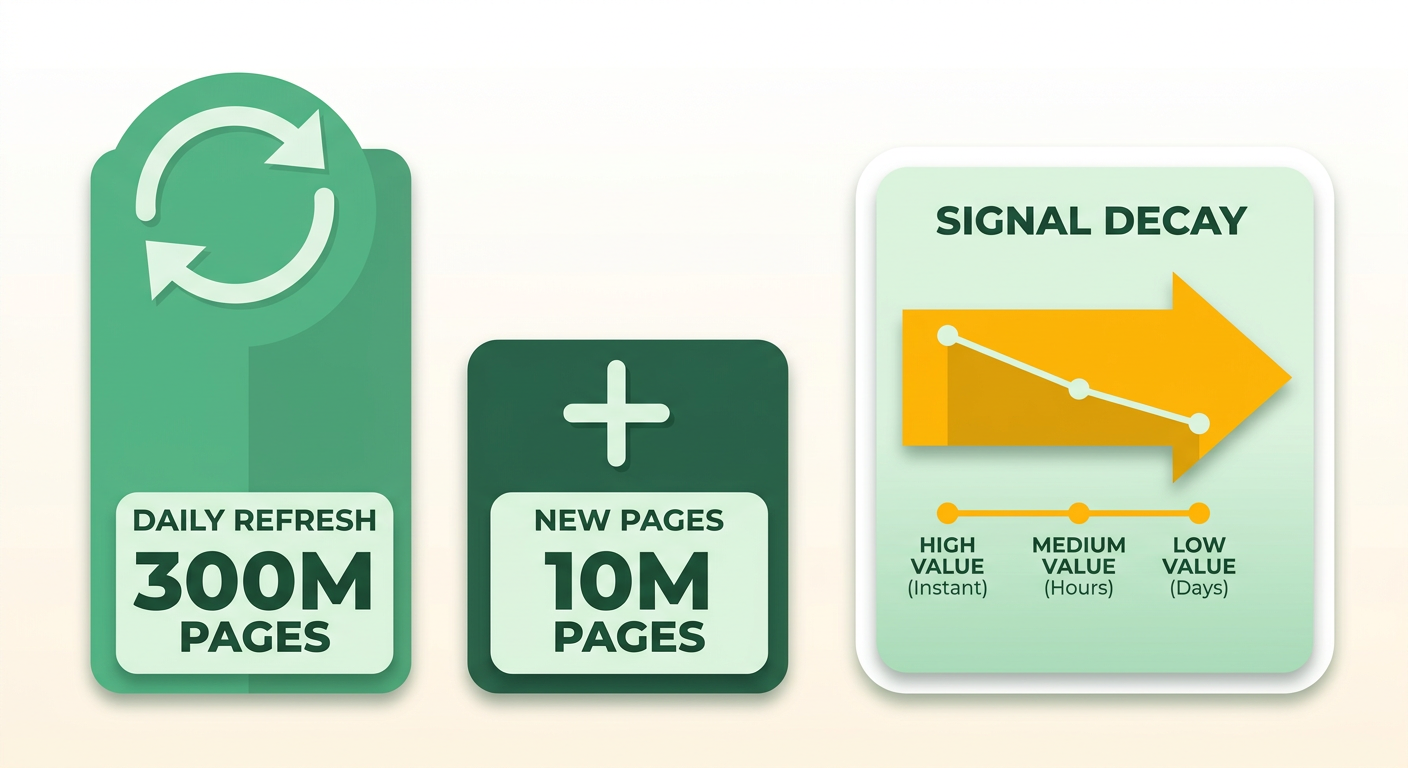
Performance here is not about raw query speed. It is about how fast the research signal decays. It also depends on whether your workflow can keep up. Content Explorer refreshes 300 million pages daily and adds 10 million new ones. That means the "what's winning right now" picture shifts constantly.
That refresh rate is the whole performance story. A manual writing process cannot keep pace with data that fresh. By the time one person reads the index, drafts a piece, and publishes it, the signal has moved. The real throughput of a research tool depends on what sits downstream of it.
How fast does each tool move you from data to a published post?
The honest answer: neither one moves you to published content at all. Content Explorer surfaces ideas across its index. Search Atlas runs AI-driven optimization across campaigns. Both stop at analysis. For a lean team, the speed bottleneck is the gap between insight and a live, voice-aligned article.
Search Atlas scales well for teams already running full campaigns. Its optimization engine handles volume once you know how to drive it. That is a real strength when SEO maturity is high. If it is not, the learning curve becomes the throttle. No amount of platform speed fixes a workflow stuck at drafting.
Which tool scales without adding headcount?
For a small team, scalability means output that does not require another hire. Research tools scale their data, not your writing capacity. That distinction decides whether fast data turns into more published pieces or just more browser tabs.
Here is where an automation layer changes the math. AnyPost crawls your entire site to build a map of your brand's positioning. Then it turns that context into finished, voice-aligned content and auto-publishes it anywhere. It is built around the gap between insight and a live page. So you get ready-to-rank articles instead of another dashboard to interpret.
| Performance Factor | Ahrefs Content Explorer | Search Atlas | AnyPost.ai |
|---|---|---|---|
| Data freshness | Rapid daily index updates | Continuous campaign data | Pulls fresh research into each draft |
| Scales by adding | More data, more filters | Campaign volume | Published output, no new hires |
| Ends at | Research insight | Optimization analysis | Live, voice-aligned article |
| Best fit | Teams who can read index data | High SEO-maturity campaigns | Lean teams |
Where the real cost lands
The real resource cost is human attention, not compute. Both research platforms are light on your machine and heavy on your time. Reading a massive index and acting on it takes hours of specialist focus. Most small teams do not have that to spare.
That is the trade competitors gloss over. A powerful tool that needs a skilled operator is not cheap. It just moves the cost from software to salary. AnyPost recreates the professional SEO workflow in a single dashboard, with no specialized SEO expertise required. That sends the expensive resource, your team's time, back into strategy.
Skip a full automation layer if you already have a specialist who reads this data daily and enjoys it. For everyone else, the performance winner is whichever setup gets fresh data onto a published page before it goes stale.
Pros and Cons
Every tool here has trade-offs. The right pick depends on one thing: whether your team can read SEO data and act on it fast. Ahrefs wins on research depth. Search Atlas wins on optimization power. Neither closes the loop to published content.
That gap is where most lean teams get stuck. You buy the tool, you get the data, and turning it into finished, voice-aligned articles still lands on one person. Below are the honest strengths and weaknesses of each.
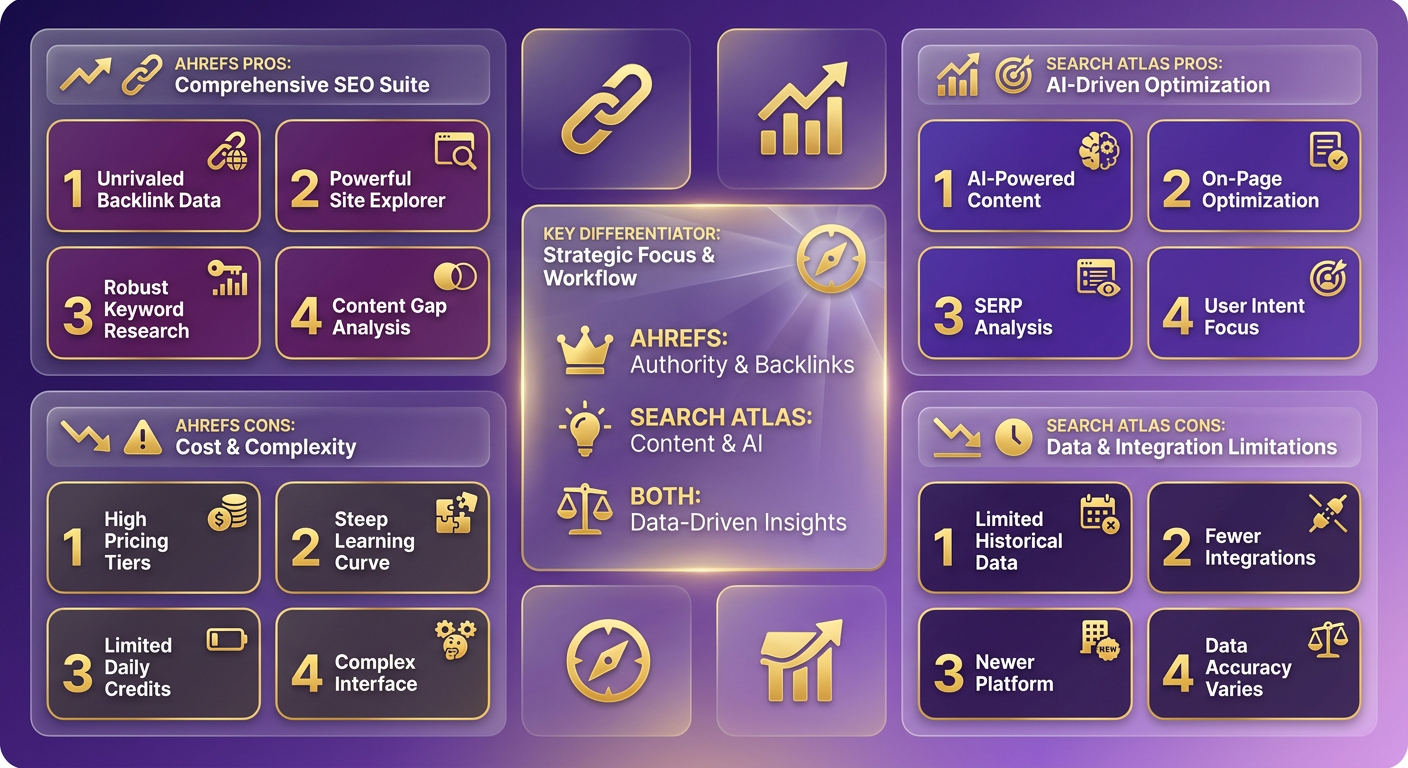
The honest strengths and weaknesses
| Tool | Biggest Strength | Biggest Weakness |
|---|---|---|
| Ahrefs Content Explorer | Massive research index for finding proven content | Data ends at discovery; you still write everything yourself |
| Search Atlas | AI optimization suite with OTTO SEO and Content Genius v3 | Steep learning curve; requires dedicated management |
| AnyPost.ai | Turns research into published, voice-aligned content | Not a standalone research index or backlink tool |
Why Search Atlas splits opinion
Search Atlas is powerful. Its power is also the problem. It holds strong ratings across major review sites. Industry testing still flags that users can find it hard to navigate. Some switch to simpler tools for that reason.
About those ratings: high scores measure how happy power users are. They do not measure how accessible the platform feels when you're the only person doing SEO. Other platforms sometimes outrank both Ahrefs and Semrush on G2 partly because they are easier to pick up.
So the trade-off is real. If your team has SEO expertise, Search Atlas's advanced optimization pays off. If you do not, the complexity is reason enough to skip it. Both statements are true. The deciding factor is your team's maturity, not the feature list.
Where the automation layer fits
The strength of an automation layer is simple: it starts where research tools stop. Ahrefs shows you what proven content exists. Search Atlas helps optimize it. Neither writes the piece and hits publish.
That is the job AnyPost.ai does well. It takes the research signal and produces finished, voice-aligned content without a dedicated SEO specialist reading every metric first. Because the platform maps your products, messaging, and audience straight from your site, every article sounds like you wrote it. If you already have that specialist and want granular control over every optimization dial, it will not replace those tools.
Skip the automation approach if your goal is raw backlink analysis or a full campaign audit. Those are specialized tasks. But if the bottleneck is going from data to published article with a small team, that is the gap AnyPost fills. It brings context extraction, competitor analysis, and multi-channel production into a single dashboard.
Use Cases and Ideal Users
The right tool depends on one thing: what your team already knows how to do. Ahrefs fits marketers who can read performance data. Search Atlas fits teams ready to run full AI-driven optimization. Neither fits a lean team without dedicated staff.
That last group is the one most comparison guides ignore. If you're handling content, SEO, and social on your own, the value of a research engine like Content Explorer depends on whether you can turn its output into published work. Data richness does not close that gap on its own.
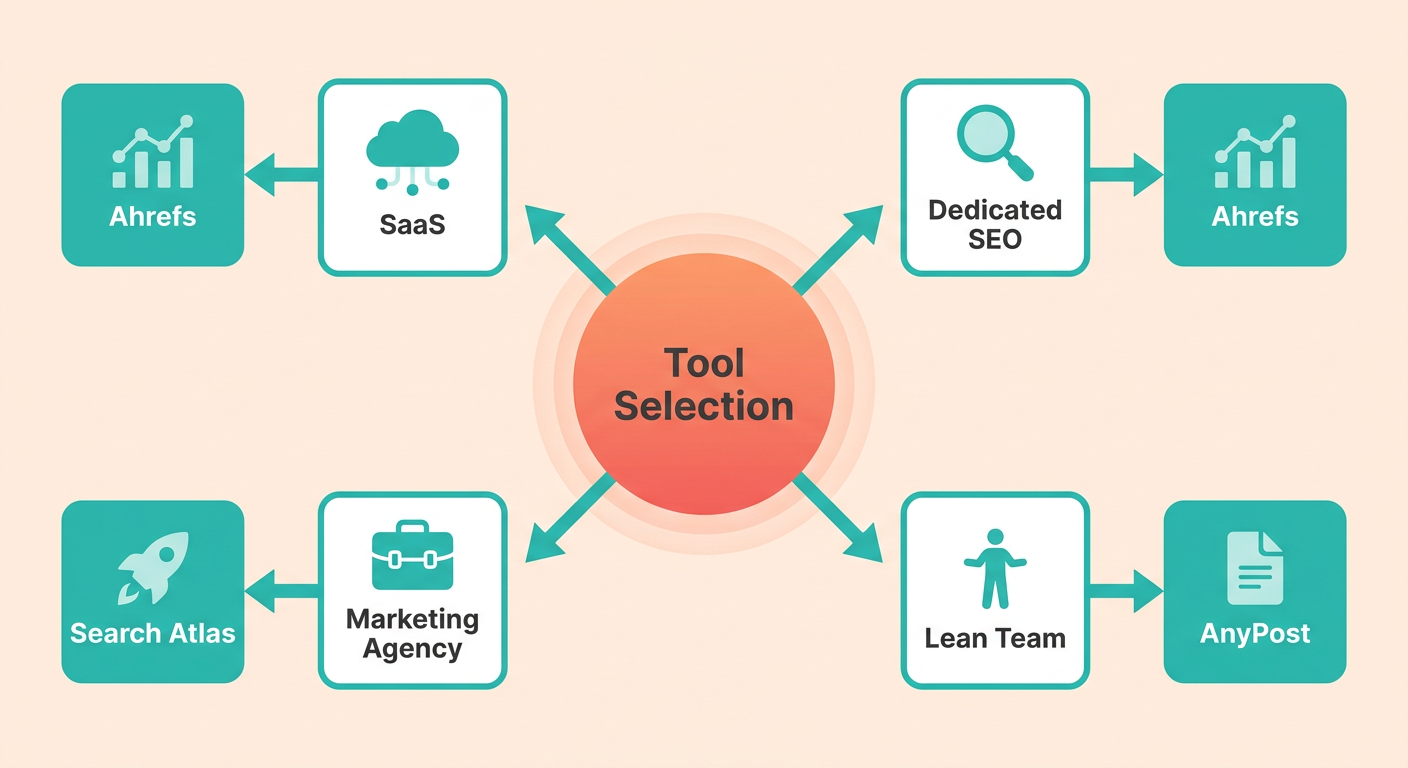
Who should use Ahrefs Content Explorer
Content Explorer is best for teams with the SEO skill to interpret performance data at scale. If you can scan a huge index, spot patterns in what wins, and translate that into a content brief, it is a strong research engine. The tool assumes you can read the signal.
Skip it as your only tool if reading SEO metrics is not a core skill on your team. The index will show you what is proven, but you will still face a blank page. You will also have no clear route from insight to publish.
Who should use Search Atlas
Search Atlas is best for teams with SEO expertise ready to run full optimization campaigns. Its OTTO SEO, Content Genius, and Quest tools reward users who can drive them. The reviews back this up. It holds high satisfaction scores on major software directories.
But those ratings measure power-user satisfaction, not accessibility. Testers note the interface can be hard to navigate at first. That pushes some users toward simpler options. One SEO reviewer flagged the complexity as a real barrier for lean teams.
If that sounds like you, the power is not the problem. The learning curve is.
When an automation layer makes more sense
Choose an automation layer when your bottleneck is production, not research. If you can find winning topics but cannot turn them into finished, on-brand articles fast enough, the missing piece sits between discovery and output. That is where AnyPost.ai fits.
Our approach takes the research signal and produces voice-aligned, published content without a dedicated SEO hire. We built it for the marketer who has the data but not the time or the specialist to act on it.
| Ideal for | Ahrefs Content Explorer | Search Atlas | AnyPost.ai |
|---|---|---|---|
| Best-fit user | Teams who can read performance data | Teams running full optimization campaigns | Lean teams |
| Requires SEO expertise | Yes | Yes | No |
| Ends at | Research ideas | Optimized campaigns | Published, voice-aligned content |
| Learning curve | Moderate | Steep | Low |
Honest carve-out: if you already have a specialist who loves the data and can ship articles weekly, you may not need an automation layer at all. Buy the research tool and run with it.
But if you're one person covering everything, the tool that ends at data leaves the hardest part on your desk. For a closer look at pairing research with output, see our guide on SEO automation.
What I'd actually recommend
The choice between Content Explorer and Search Atlas comes down to one honest question: can your team read SEO data fast? If yes, either tool earns its price. If you're a lean team without a dedicated SEO specialist, neither one finishes the job on its own.
That is the gap we keep pointing at. One shows wins across its massive index. The other helps you optimize campaigns with AI. Both stop at data. The work of turning that data into published, voice-aligned articles still lands on someone.
Which one you should actually pick
Match the tool to your team's SEO maturity, not to its G2 score. Ratings reflect how happy power users are, not how accessible the platform is for daily work.
Think about who actually logs in each day. A tool built for full-time analysts assumes someone has hours to spend reading keyword clusters and backlink profiles. A solo marketer juggling three roles does not have that time. A steep onboarding curve turns a promising platform into a subscription nobody opens after week two. Pick for the person who owns the login, not the feature list.
| Scenario | Best Pick | Why |
|---|---|---|
| You have a specialist who reads data at scale | Ahrefs Content Explorer | Deepest research reach for skilled interpreters |
| You want full AI-driven campaign optimization | Search Atlas | Purpose-built suite, strong ratings |
| You're a lean team with no SEO staff who needs to publish | AnyPost.ai | Turns research into finished, voice-aligned content |
When to skip both and automate instead
Skip the standalone research tools if your bottleneck is production, not information. You already know you need more content. Buying another data source does not help when one person still has to draft and publish everything.
That is where an automation layer earns its keep. It sits between discovery and output. It converts the research signal into published articles that sound like your brand. We built AnyPost.ai for this spot, so marketers without a specialist can act on data instead of drowning in it.
One caveat, stated plainly: if you have SEO experts who enjoy living inside dashboards and tuning every metric by hand, an automation layer will feel like it takes the wheel from you. That is a fair reason to stick with the raw tools.
Our final take
Buy Content Explorer for research depth. Buy Search Atlas for AI-driven optimization. Add automation when your real problem is getting finished content out the door consistently.
High ratings and a huge index are necessary but not enough. They tell you what to make. They do not make it. For teams stretched across content, SEO, and social with no specialist to lean on, closing that last gap matters more than any single feature score. AnyPost handles the research-to-publish handoff by crawling your site to learn your brand voice. Then it generates and auto-publishes SEO-ready articles that sound like you wrote them.
Frequently Asked Questions
1. Can I use Ahrefs Content Explorer and Search Atlas together?
Pairing both tools works if you have SEO expertise on staff. Use Content Explorer's massive web database to find proven topics. Then run Search Atlas's OTTO SEO and Content Genius to optimize campaigns. Neither tool writes or publishes finished articles, so production still falls on your team afterward.
2. Why does Search Atlas have high ratings but still get criticized?
Search Atlas holds near-perfect scores on major software directories. Those scores measure power-user satisfaction, not accessibility. Reviewers repeatedly flag a steep initial learning curve. A high rating reflects how happy skilled operators are, not how quickly a solo marketer reaches a published post.
3. Is Ahrefs Content Explorer worth it if I don't have an SEO specialist?
Content Explorer's value depends on your ability to interpret performance metrics across a massive database. Without an SEO specialist, the deep index works against you. You will see what content wins, but you will still face a blank page. You will also have no clear route from research insight to a published article.
4. How often does Content Explorer's data update, and why does that matter?
Content Explorer updates hundreds of millions of pages and indexes millions of new ones every single day. So the "what's winning now" picture shifts constantly. That freshness only helps if your workflow keeps pace. A manual writing process cannot, since the signal moves before one person drafts and publishes.
5. Which tool fits a two-person marketing team best?
Neither Content Explorer nor Search Atlas fits a lean team well. Both assume you already read SEO data fluently. Smaller teams often gravitate toward simpler platforms. If your bottleneck is production rather than research, an automation layer like AnyPost.ai turns discovery into published, voice-aligned content instead.
6. What does "closing the loop to publishing" actually mean?
Closing the loop means moving from research and optimization to a finished, live article. Content Explorer tells you what to make. Search Atlas helps tune it. Neither writes and publishes it. AnyPost.ai fills that gap by generating voice-aligned content and posting it directly to your existing website.
7. When should I skip automation and stick with the raw tools?
Skip an automation layer if you have SEO experts who enjoy living inside dashboards and tuning every metric by hand. For raw backlink analysis or full campaign audits, Content Explorer and Search Atlas serve better directly. Automation fits when production, not information, is your genuine bottleneck.