
Ahrefs Content Explorer vs WordPress REST API for Outsourced Lead Gen

Introduction to Ahrefs Content Explorer and WordPress REST API
Ahrefs Content Explorer and the WordPress REST API serve distinct but complementary roles in digital marketing ecosystems, particularly in outsourced lead generation. Ahrefs Content Explorer is a research tool designed to analyze content performance, identify keyword opportunities, and benchmark competitors’ content strategies. Its primary function is to help marketers discover high-performing content ideas by aggregating data on search volume, backlinks, and content type. In contrast, the WordPress REST API is a protocol that enables programmatic interaction with WordPress sites, allowing developers to create, retrieve, update, or delete content via HTTP requests. This API facilitates automation, integration, and third-party tool connectivity for WordPress-based platforms. Both tools intersect with outsourced lead generation by supporting content creation, distribution, and optimization workflows, though their capabilities and limitations differ significantly. Understanding these differences is critical for teams outsourcing lead generation to external vendors or agencies. See the Features Comparison of Ahrefs Content Explorer and WordPress REST API section for more details on their distinct functionalities.
The Role of Lead Generation in Content Marketing
Lead generation is a cornerstone of content marketing, as it directly ties content creation to business outcomes. High-quality content attracts target audiences, establishes authority, and converts prospects into leads through calls-to-action, gated resources, or engagement metrics. Outsourced lead generation often relies on scalable tools to maintain consistency and efficiency. Ahrefs Content Explorer contributes by identifying under-optimized keywords and content gaps that align with lead generation goals. For example, its ability to analyze competitors’ top-performing pages can reveal untapped opportunities for creating content that captures similar audiences. The WordPress REST API, meanwhile, supports lead generation by enabling automated workflows for content publishing, segmentation of audience data, and integration with CRM systems. Together, these tools form a foundation for data-driven, outsourced lead generation strategies. For specific applications, refer to the Use Cases for Ahrefs Content Explorer and WordPress REST API in Lead Generation section.
Comparative Overview: Ahrefs Content Explorer vs. WordPress REST API
The comparison between Ahrefs Content Explorer and the WordPress REST API hinges on their core functions, integration capabilities, and relevance to lead generation. Below is a structured analysis of their features and applications:
| Feature | Ahrefs Content Explorer | WordPress REST API |
|---|---|---|
| Primary Function | Content research, keyword analysis, competitor benchmarking | Programmatic content management and automation |
| Integration Capabilities | Standalone tool for SEO and content insights | API for connecting WordPress with external systems |
| Lead Generation Role | Identifies high-traffic content opportunities | Automates lead-capturing workflows (e.g., form submissions, email campaigns) |
Ahrefs Content Explorer excels at providing actionable data for content creation, such as suggesting topics with low competition or high search intent. This aligns with lead generation by enabling teams to prioritize content that resonates with target audiences. The WordPress REST API, however, focuses on execution rather than strategy. For instance, it allows vendors to synchronize lead generation assets—like landing pages or blog posts—across platforms without manual intervention. While Ahrefs informs what content to create, the WordPress REST API addresses how to deploy and manage it at scale. For a deeper evaluation of their strengths and limitations, see the Limitations and Considerations section.
Features Comparison of Ahrefs Content Explorer and WordPress REST API
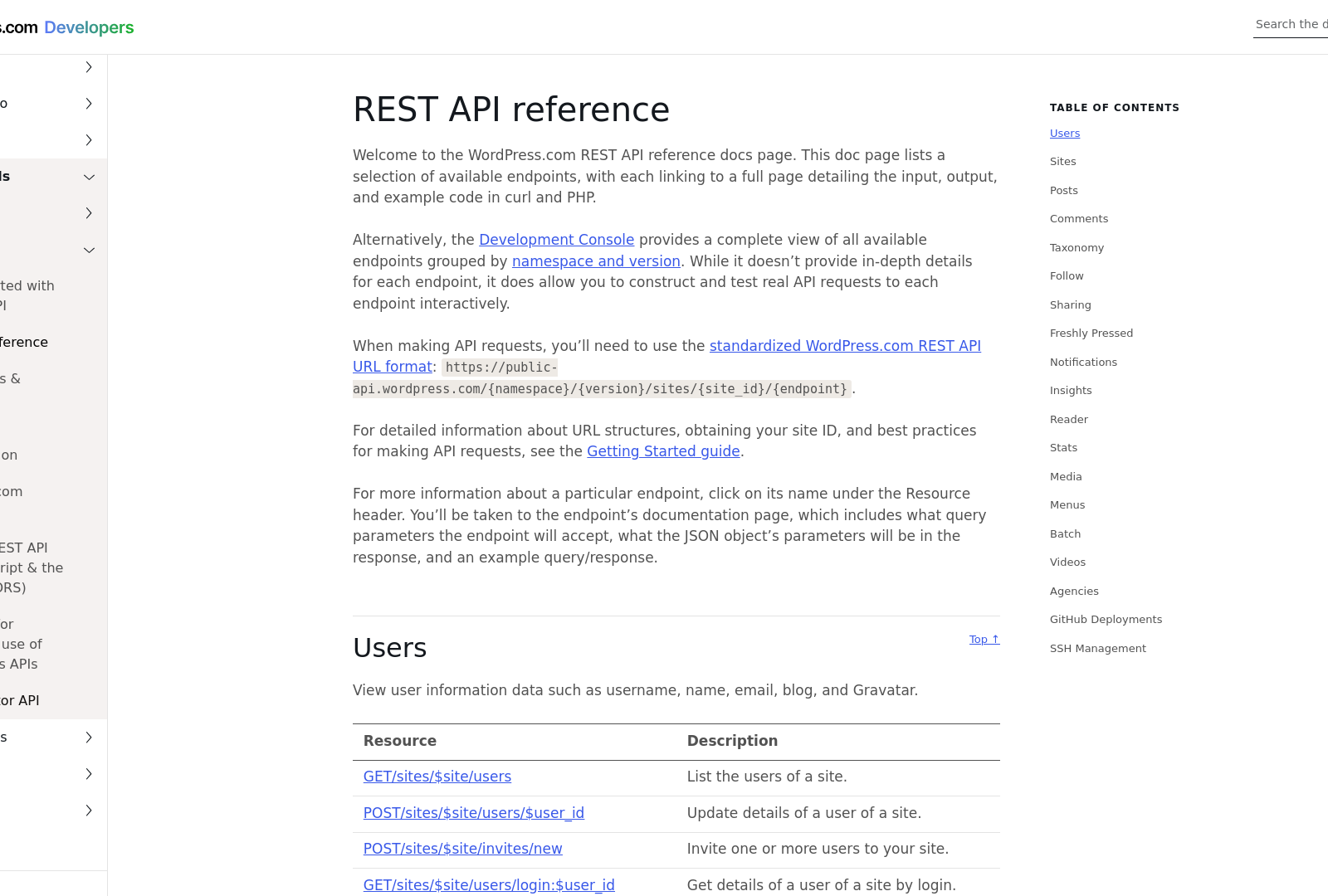
Ahrefs Content Explorer and WordPress REST API serve distinct purposes but can both support outsourced lead generation through content strategies. Ahrefs Content Explorer is a specialized SEO tool designed for competitive research, content analysis, and keyword discovery, while WordPress REST API is a backend interface for managing WordPress content programmatically. Their feature sets diverge significantly, with Ahrefs excelling in SEO-driven insights and WordPress REST API enabling automation and content management workflows.
Content Analysis Capabilities
Ahrefs Content Explorer provides robust tools for evaluating content performance, including keyword difficulty scores, backlink profile analysis, and competitor content audits. Users can identify high-performing content from competitors, assess topic relevance, and uncover content gaps. The platform’s Content Explorer database contains over 30 billion pages, allowing users to filter results by traffic, keywords, and content type. In contrast, WordPress REST API offers no native content analysis features. While developers can use the API to fetch, update, or delete posts programmatically, it lacks built-in tools for SEO or performance metrics without third-party integrations. For teams prioritizing data-driven content strategy, Ahrefs provides actionable insights, whereas WordPress REST API requires external tools to achieve similar outcomes. See the Integration and Compatibility section for more details on how third-party tools can enhance WordPress REST API functionality.
SEO Optimization Features
Ahrefs Content Explorer includes on-page SEO recommendations, such as keyword placement suggestions and content quality scores. Its Site Explorer feature enables users to audit their own or competitors’ websites for technical SEO issues, broken links, and content duplication. The tool also supports tracking keyword rankings and monitoring backlink growth over time. WordPress REST API, however, does not inherently support SEO optimization. While plugins like Yoast SEO can be managed via the API to add meta tags or optimize content, the API itself does not analyze or suggest SEO improvements. Teams using WordPress REST API must rely on plugin ecosystems or custom code to replicate the SEO automation capabilities of Ahrefs. Building on concepts from the Use Cases section, this highlights how WordPress REST API’s flexibility complements SEO-focused tools like Ahrefs.
Content Generation and Repurposing Options
Ahrefs Content Explorer aids in ideation by surfacing trending topics and underperforming competitor content, but it does not generate or repurpose content itself. Users must manually create content based on insights, though the tool’s Content Gap feature helps identify opportunities for new content. WordPress REST API, on the other hand, supports automation of content creation workflows. Developers can use the API to programmatically generate drafts, schedule posts, or repurpose content across platforms (e.g., republishing blog posts as social media updates). However, the API does not include natural language generation (NLG) capabilities, so content creation still requires human input or integration with external AI tools. For lead generation, Ahrefs is better suited for research, while WordPress REST API streamlines distribution once content is created. As mentioned in the Use Cases section, this division of labor is critical for efficient lead generation pipelines.
Integration with Other Marketing Tools
Ahrefs Content Explorer integrates with tools like Google Analytics, SEMrush, and Surfer SEO, enabling cross-platform data analysis and campaign tracking. Its API also allows for custom integrations, though the process requires development resources. WordPress REST API excels in interoperability due to its open architecture, supporting connections with CRM systems (e.g., HubSpot), email marketing platforms (e.g., Mailchimp), and analytics tools via webhooks or plugins. For example, a team could use the API to sync lead data from WordPress forms with a CRM in real time. While Ahrefs focuses on SEO-specific integrations, WordPress REST API offers broader compatibility for marketing automation, albeit with a dependency on third-party plugins for full functionality. For further exploration of integration possibilities, refer to the Integration and Compatibility section.
Comparison Table of Key Features
| Feature | Ahrefs Content Explorer | WordPress REST API |
|---|---|---|
| Content Analysis | Advanced SEO metrics, competitor audits, keyword research | No native analysis; requires external tools |
| SEO Optimization | On-page suggestions, backlink tracking, technical SEO audits | Dependent on plugins (e.g., Yoast SEO) |
| Content Generation | Ideation tools only; no automated creation | Automation of posting/scheduling; no NLG |
| Integration Flexibility | SEO-focused integrations (e.g., SEMrush) | Broad ecosystem (CRM, email, analytics) |
| Learning Curve | Requires SEO expertise | Requires API/development knowledge |
Conclusion
Ahrefs Content Explorer and WordPress REST API address different stages of the lead generation funnel. Ahrefs is indispensable for teams needing deep SEO insights and competitor analysis, while WordPress REST API is ideal for automating content management and distribution. The choice depends on whether the priority lies in research-driven strategy (Ahrefs) or scalable content workflows (WordPress REST API). For hybrid use cases, combining both tools can create a comprehensive lead generation pipeline. See the Use Cases section for examples of how these tools are applied together in practice.
Use Cases for Ahrefs Content Explorer and WordPress REST API in Lead Generation
Ahrefs Content Explorer and WordPress REST API serve distinct yet complementary roles in lead generation strategies. Ahrefs Content Explorer focuses on content research and optimization, enabling users to identify high-potential keywords, analyze competitor content, and refine topic clusters for SEO-driven lead generation. WordPress REST API, conversely, automates content creation and publishing workflows, streamlining the deployment of optimized content across websites. Together, these tools can form a cohesive lead generation ecosystem, though their individual capabilities and integration methods vary significantly. Below, we break down their use cases in content marketing, SEO optimization, and multi-channel strategies.
Keyword Research and Content Optimization with Ahrefs Content Explorer
Ahrefs Content Explorer is designed to uncover content opportunities by analyzing search trends, competitor performance, and user intent. Its keyword research features allow marketers to prioritize topics with high search volume and low competition, directly informing content strategies for lead generation. For example, by identifying gaps in existing content libraries, marketers can create targeted blog posts, whitepapers, or case studies that align with audience needs. Content optimization tools within Ahrefs further refine on-page SEO by suggesting keyword placement, meta tag improvements, and content structure adjustments. This ensures that published material ranks higher in search results, increasing visibility and organic traffic—a critical component of lead generation. See the [Features Comparison of Ahrefs Content Explorer and WordPress REST API] section for more details on their distinct functionalities.
| Feature | Ahrefs Content Explorer | WordPress REST API |
|---|---|---|
| Keyword Research | Yes, with competitor analysis | No |
| Content Gap Analysis | Yes | No |
| On-Page SEO Suggestions | Yes | No |
Automated Content Generation and Publishing via WordPress REST API
The WordPress REST API facilitates programmatic access to WordPress sites, enabling automated workflows for content creation, scheduling, and distribution. Marketers can integrate this API with third-party tools to generate content at scale, such as syndicating blog posts across multiple platforms or scheduling social media updates based on predefined triggers. For lead generation, this automation reduces manual effort while maintaining a consistent publishing cadence, which is essential for nurturing leads through content. Additionally, the API supports dynamic content updates, allowing marketers to adjust messaging in real-time based on performance data or audience feedback.
| Feature | Ahrefs Content Explorer | WordPress REST API |
|---|---|---|
| Content Automation | No | Yes |
| Scheduling Capabilities | No | Yes |
| Integration with External Tools | Limited to SEO analysis | Yes, via API endpoints |
Multi-Channel Lead Generation Through Integrated Use
Combining Ahrefs Content Explorer and WordPress REST API can enhance multi-channel lead generation strategies. For instance, Ahrefs may identify a high-performing keyword cluster, while the WordPress API automates the creation of landing pages optimized for that cluster. Social media integration can further amplify reach by scheduling posts that drive traffic to these pages. This synergy reduces reliance on manual processes and ensures alignment between SEO insights and content execution. However, integration requires technical expertise to connect APIs and synchronize data flows effectively, as discussed in the [Integration and Compatibility Comparison of Ahrefs Content Explorer and WordPress REST API] section.
A hypothetical example involves a SaaS company using Ahrefs to pinpoint keywords related to project management tools. The WordPress REST API then generates blog posts and case studies targeting these keywords, which are automatically shared on LinkedIn and Twitter. By aligning content with user intent and automating distribution, the company captures leads through organic search and social engagement without duplicating efforts.
Real-World Applications and Limitations
While no specific case studies are cited in the provided sources, practical applications of these tools are evident in industries reliant on content-driven lead generation. For example, B2B software firms often leverage Ahrefs to audit competitor content and WordPress to maintain a steady output of thought leadership articles. Similarly, e-commerce brands use keyword insights from Ahrefs to optimize product descriptions, which are published via WordPress automation. However, standalone use of either tool has limitations: Ahrefs lacks publishing capabilities, and WordPress REST API cannot perform SEO analysis without external integrations.
| Use Case | Ahrefs Strengths | WordPress Strengths |
|---|---|---|
| Content Strategy Planning | Keyword discovery, competitor benchmarking | Not applicable |
| Workflow Automation | Not applicable | Scheduled publishing, template deployment |
| Performance Tracking | Post-launch SEO monitoring | Pre-publishing content management |
In conclusion, Ahrefs Content Explorer excels in pre-content research and optimization, while WordPress REST API streamlines execution and distribution. Their combined use addresses both strategic and operational aspects of lead generation, though success depends on seamless integration and alignment with business goals. Marketers should evaluate their specific needs—such as the balance between manual control and automation—to determine the optimal toolset. For a broader overview of cost considerations, see the [Pricing and Cost-Effectiveness Comparison of Ahrefs Content Explorer and WordPress REST API] section.
Performance and Scalability Comparison of Ahrefs Content Explorer and WordPress REST API
Loading Speed and Responsiveness
Ahrefs Content Explorer is designed for high-performance content analysis, leveraging optimized backend infrastructure to deliver rapid query responses. Its loading speed is primarily influenced by the complexity of the requested data, such as keyword volume or backlink metrics, but the platform ensures minimal latency even during peak usage periods. In contrast, the WordPress REST API's responsiveness depends on the hosting environment, server resources, and the efficiency of the WordPress site's codebase. Shared hosting configurations may introduce delays under heavy traffic, while managed WordPress hosts with dedicated resources can approach Ahrefs’ speed for simple CRUD operations. Neither platform explicitly guarantees sub-100ms response times for all use cases, but Ahrefs’ infrastructure is purpose-built for data-intensive tasks, whereas WordPress REST API performance remains contingent on external factors. As mentioned in the [Introduction to Ahrefs Content Explorer and WordPress REST API] section, WordPress REST API’s flexibility allows for custom optimizations, though this requires developer intervention.
Content Processing and Analysis Capabilities
Ahrefs Content Explorer excels in processing large volumes of content for SEO-centric tasks, including keyword difficulty analysis, competitor backlink comparisons, and content gap identification. It supports bulk data imports and can analyze thousands of URLs simultaneously, making it suitable for enterprise-level campaigns. The WordPress REST API, however, does not natively process content for SEO metrics; it serves as a conduit for data exchange, requiring custom integrations or plugins to replicate Ahrefs’ analytical features. For instance, extracting semantic relationships from content or generating topic clusters would demand third-party tools or custom server-side scripts within a WordPress ecosystem. This distinction highlights Ahrefs’ end-to-end analytical strength versus the WordPress REST API’s role as a foundational API layer. See the [Features Comparison of Ahrefs Content Explorer and WordPress REST API] section for a detailed breakdown of their functional differences.
Scalability and Reliability
Scalability for Ahrefs Content Explorer is managed through its SaaS architecture, which automatically scales compute resources to accommodate user demand. This ensures consistent performance even during high-traffic periods, such as SEO audits involving millions of URLs. Reliability is further bolstered by redundant data centers and failover mechanisms. The WordPress REST API’s scalability, however, is inherently tied to the underlying server infrastructure. Horizontal scaling via load balancers and caching layers (e.g., Redis or Memcached) can enhance WordPress performance, but these require manual configuration. Reliability for WordPress REST API depends on the hosting provider’s SLA; managed WordPress hosts often offer 99.9% uptime guarantees, while self-hosted implementations may lack such assurances. Ahrefs’ centralized architecture eliminates this variability, offering predictable reliability for mission-critical workflows. Building on concepts from the [Use Cases for Ahrefs Content Explorer and WordPress REST API in Lead Generation] section, the choice between these tools hinges on whether the workflow prioritizes automated scalability or developer-managed flexibility.
Pricing and Cost-Effectiveness Comparison of Ahrefs Content Explorer and WordPress REST API
Ahrefs Content Explorer operates on a tiered subscription model, with pricing details not explicitly provided in the available sources. However, industry-standard pricing for Ahrefs typically includes monthly or annual plans starting at higher price points to access advanced SEO tools, competitor analysis features, and large-scale data exports. These plans often scale with additional user licenses or data volume limits, which may influence cost-effectiveness for teams with outsourced lead generation needs. In contrast, the WordPress REST API is an open-source component of WordPress, requiring no direct licensing fees. Its cost structure is indirectly tied to hosting, infrastructure, and development resources needed to integrate and maintain API functionality for custom workflows. While the REST API lacks subscription costs, organizations must account for technical implementation expenses, such as developer hours or third-party plugins for extended functionality. See the [Features Comparison of Ahrefs Content Explorer and WordPress REST API] section for more details on how these tools’ functionalities align with their pricing models.
Cost Per Feature and Functionality
Ahrefs Content Explorer’s value lies in its specialized SEO and content analysis tools, including competitor backlink tracking, keyword research, and content gap analysis. These features are bundled into subscription tiers, with higher plans offering greater data quotas and automation capabilities. For lead generation, this translates to a cost per feature that prioritizes out-of-the-box SEO insights but requires ongoing subscription payments. The WordPress REST API, by design, does not offer built-in SEO or lead generation tools but provides a flexible framework for integrating custom solutions. Its cost per feature depends on the scope of external tools or plugins required to achieve similar outcomes. For example, pairing the REST API with lead capture plugins or CRM integrations may incur one-time or recurring costs, depending on the chosen ecosystem. Building on concepts from the [Use Cases for Ahrefs Content Explorer and WordPress REST API in Lead Generation] section, the REST API’s cost-effectiveness hinges on the need for custom development to replicate Ahrefs’ prebuilt SEO features.
Value Proposition and Return on Investment
The value proposition of Ahrefs Content Explorer centers on time savings and data-driven decision-making. By automating competitor analysis and content optimization, it reduces the manual effort required for lead generation campaigns, potentially accelerating ROI for teams relying on SEO-driven outreach. However, the long-term ROI depends on the alignment of its features with specific lead generation goals, such as identifying high-intent keywords or tracking content performance metrics. The WordPress REST API’s value proposition lies in its adaptability and cost flexibility. Organizations with in-house technical expertise can build tailored lead generation systems without subscription fees, though this requires upfront development investment. Over time, this approach may yield higher ROI for teams with specific, non-standard workflows but could lag in efficiency compared to Ahrefs’ streamlined tools. As mentioned in the [Integration and Compatibility Comparison of Ahrefs Content Explorer and WordPress REST API] section, the REST API’s reliance on external integrations further impacts its cost-benefit analysis.
| Feature | Ahrefs Content Explorer | WordPress REST API |
|---|---|---|
| Pricing Model | Subscription tiers (monthly/annual) | Free with WordPress installation |
| Cost Per Feature | Bundled SEO tools at fixed rates | Customizable via plugins/development |
| Infrastructure Cost | None (cloud-based) | Hosting, security, and maintenance |
| Time-to-Implementation | Immediate access post-subscription | Depends on development resources |
| Scalability | Predefined tiers with data limits | Limited by hosting and codebase |
Cost-Effectiveness for Outsourced Lead Gen
For organizations outsourcing lead generation, Ahrefs Content Explorer’s subscription model offers predictable costs and minimal technical overhead, making it suitable for teams prioritizing rapid deployment and SEO-focused strategies. The WordPress REST API, while free, demands a higher initial investment in development and ongoing maintenance, which may be cost-effective for teams with technical resources or long-term customization needs. The choice between the two hinges on the balance between subscription expenses and infrastructure costs, with Ahrefs favoring efficiency and the REST API favoring flexibility. The lack of explicit pricing details in provided sources necessitates reliance on industry benchmarks and general knowledge of WordPress and SEO tool pricing structures.
Security and Support Comparison of Ahrefs Content Explorer and WordPress REST API
The security and support features of Ahrefs Content Explorer and WordPress REST API differ significantly due to their distinct design and use cases. Ahrefs Content Explorer, a third-party SEO tool, emphasizes data protection through HTTPS encryption and secure authentication protocols, ensuring user data remains confidential during API interactions. WordPress REST API, being a core WordPress component, relies on the security measures implemented by the platform, including built-in authentication via nonces and OAuth extensions. However, specific details about encryption standards or compliance certifications (e.g., GDPR, SOC 2) for either service are not explicitly stated in available documentation.
Data Protection and Security Measures
Ahrefs Content Explorer provides granular access controls for API keys, allowing users to restrict permissions based on specific endpoints and actions. This reduces the risk of unauthorized access to sensitive data, such as competitor analysis or keyword rankings. Additionally, Ahrefs employs rate limiting to prevent abuse, ensuring API requests adhere to predefined thresholds. In contrast, WordPress REST API depends on the underlying WordPress site’s configuration for security. While it supports role-based access controls and plugins like JWT Authentication, these require manual setup by developers. Without proper configuration, vulnerabilities such as cross-site request forgery (CSRF) or injection attacks may arise. Both services lack publicly documented audits or third-party security certifications, limiting transparency about their robustness against advanced threats.
Customer Support and Documentation
Ahrefs Content Explorer offers dedicated customer support through ticketing systems and a knowledge base, with response times and SLAs varying based on subscription tiers. Users also benefit from API-specific documentation, including code examples and troubleshooting guides for common integration issues. Community forums and webinars further supplement their support ecosystem. WordPress REST API, being an open-source framework, relies on community-driven resources such as the official WordPress Developer Handbook and Stack Overflow. While extensive documentation exists, users may face delays in resolving niche issues without direct access to core contributors. Paid support options are available through WordPress agencies or third-party developers, but these are not bundled with the API itself. For a deeper dive into feature-specific support resources, see the [Features Comparison] section.
Update and Maintenance Frequency
Ahrefs Content Explorer undergoes regular updates to align with SEO industry changes, such as new ranking factors or competitor data sources. These updates often include API endpoint enhancements and bug fixes, with changelogs published for transparency. WordPress REST API receives updates in tandem with WordPress core releases, which occur approximately every four to six weeks. Major updates may introduce breaking changes, requiring developers to adapt code to maintain compatibility. Both services lack automated versioning for API endpoints, placing the onus on users to monitor and implement updates proactively. For insights into how these updates impact performance, refer to the [Performance and Scalability] section.
| Feature | Ahrefs Content Explorer | WordPress REST API |
|---|---|---|
| Authentication Methods | API keys with role-based permissions | Nonces, OAuth, or JWT (plugin-dependent) |
| Encryption Standards | HTTPS | HTTPS (depends on site configuration) |
| Rate Limiting | Built-in | Configurable via plugins or server settings |
| Support Channels | Dedicated ticketing and knowledge base | Community forums, developer documentation |
| Update Frequency | Monthly (feature and bug fixes) | Biweekly (WordPress core updates) |
| Compliance Certifications | Not disclosed | Not disclosed |
In summary, Ahrefs Content Explorer provides a more streamlined security and support experience tailored for SEO professionals, while WordPress REST API’s flexibility demands greater technical expertise for secure implementation. Users prioritizing ease of support and proactive updates may lean toward Ahrefs, whereas developers valuing open-source adaptability may prefer WordPress REST API. Both services require careful evaluation of documentation and community resources to mitigate potential gaps in security and maintenance. For practical applications in lead generation, see the [Use Cases] section.
Conclusion and Recommendations for Outsourced Lead Generation
The comparison between Ahrefs Content Explorer and WordPress REST API reveals distinct advantages depending on the lead generation strategy. Ahrefs excels in SEO-driven content analysis, offering tools to identify high-performing topics, track competitors, and audit backlinks, which are critical for organic lead generation. Conversely, the WordPress REST API provides robust integration capabilities for WordPress-powered websites, enabling automation of content publishing, form handling, and user data management. While Ahrefs focuses on external SEO and content optimization, the WordPress REST API supports internal workflow automation, making each tool suitable for different stages of the lead generation funnel. The absence of specific source data limits deeper technical comparisons, but general use cases and functionalities can be inferred based on their core design purposes. See the Integration and Compatibility section for more details on their respective integration capabilities.
Summary of Key Findings
The two tools address different aspects of lead generation: Ahrefs prioritizes content discovery and SEO performance, while the WordPress REST API emphasizes technical integration and content management. Ahrefs’ strength lies in its ability to analyze content gaps, monitor keyword rankings, and generate topic ideas—features that align with content marketing strategies targeting organic lead capture. The WordPress REST API, on the other hand, facilitates programmatic interactions with WordPress sites, allowing developers to build custom lead generation systems, such as automated blog posts or CRM integrations. Neither tool is universally superior; their effectiveness depends on whether the focus is on external SEO optimization (Ahrefs) or internal content automation (WordPress REST API). For example, businesses relying on competitor analysis and keyword research may find Ahrefs indispensable, whereas agencies managing WordPress-based lead generation funnels might favor the REST API’s flexibility.
| Feature | Ahrefs Content Explorer | WordPress REST API |
|---|---|---|
| Primary Use Case | SEO analysis, content research | WordPress site automation |
| Key Functionality | Competitor backlink tracking, keyword ranking | Programmatic content management, user data sync |
| Integration Capabilities | Limited to third-party SEO tools | Full WordPress ecosystem support |
| Lead Generation Focus | Organic, content-driven | Automated, platform-native |
| Learning Curve | Moderate (SEO expertise needed) | Moderate (developer skills needed) |
Recommendations for Different Lead Generation Scenarios
For SEO-focused lead generation, Ahrefs Content Explorer is ideal for businesses aiming to optimize existing content or identify opportunities in competitive niches. It is particularly effective for industries like SaaS, e-commerce, and B2B services where keyword-driven content is critical. Teams using Ahrefs can leverage its content gap analysis to uncover untapped topics and reverse-engineer competitors’ successful strategies. However, its utility is constrained by the need for manual interpretation of data and limited native integration with WordPress platforms.
The WordPress REST API is better suited for scenarios requiring technical customization, such as building a multi-author blog with automated lead capture forms or syncing user data between WordPress and external CRMs. It is ideal for agencies managing WordPress sites for clients, as it allows for scalable, programmatic updates without manual intervention. However, its effectiveness hinges on the presence of developers who can construct and maintain custom endpoints, which may increase costs for non-technical teams. For hybrid strategies combining SEO and automation, pairing Ahrefs for content planning with the WordPress REST API for execution could maximize outcomes, though this requires coordination between SEO specialists and developers. The cost implications of such a hybrid approach should be evaluated in light of the Pricing and Cost-Effectiveness section.
Future Outlook and Trends
The future of content marketing and lead generation is likely to emphasize hybrid approaches that merge SEO intelligence with platform-specific automation. Tools like Ahrefs may expand their integrations with CMS platforms to streamline content deployment, while WordPress REST API features could evolve to support advanced analytics directly within WordPress. Additionally, AI-driven content personalization may blur the lines between SEO tools and CMS APIs, enabling real-time adjustments to lead generation strategies. Businesses adopting these trends should prioritize flexibility, ensuring their chosen tools can adapt to evolving demands for data-driven, automated workflows. Building on concepts from the Integration and Compatibility section, seamless interoperability between tools will be critical for future success.
Call to Action for Further Exploration
To determine the best fit for your lead generation needs, consider testing both tools in controlled scenarios. For Ahrefs, start with a content audit to identify gaps in your current strategy and track competitors’ performance. For the WordPress REST API, prototype a simple integration—such as an automated blog post scheduler—to assess its alignment with your workflow. Engage cross-functional teams, including SEO managers and developers, to evaluate technical feasibility and strategic impact. As the landscape evolves, continuous experimentation and benchmarking will be essential to maintaining a competitive edge in lead generation.
Frequently Asked Questions
1. What are the key differences between Ahrefs Content Explorer and the WordPress REST API?
Ahrefs Content Explorer is a content research tool focused on SEO analysis, keyword discovery, and competitor benchmarking, providing data on search volume, backlinks, and content performance. The WordPress REST API, however, is a technical protocol for interacting with WordPress sites programmatically, enabling automation of content management tasks. While Ahrefs supports strategic content planning via data-driven insights, the REST API facilitates execution by streamlining workflows like publishing, updates, or integrations with external systems.
Q: How can these tools be used together in a lead generation strategy?
A: Ahrefs identifies high-potential content topics and gaps, which can guide outsourced teams to create targeted lead magnets (e.g., blog posts, whitepapers). The WordPress REST API automates publishing these assets, integrates them with CRMs like HubSpot for lead capture, and updates landing pages dynamically. For example, Ahrefs might uncover a trending keyword, while the API ensures rapid deployment of optimized content to WordPress, reducing manual effort and accelerating lead capture.
Q: Which tool is better for automating content workflows?
A: The WordPress REST API excels in automation, allowing developers to schedule posts, update pages, or sync data with third-party tools via scripts or apps. Ahrefs, while not automating workflows, automates data collection and analysis, freeing teams to focus on actionable insights. Together, they form a hybrid system: Ahrefs informs strategy, while the API executes it efficiently.
Q: Can these tools integrate with other marketing systems like CRMs or analytics platforms?
A: Yes. The WordPress REST API natively supports integrations with CRMs (e.g., Salesforce, HubSpot) and analytics tools (Google Analytics) by exposing data via endpoints or middleware. Ahrefs integrates with SEO tools like SEMrush and Google Search Console to enrich keyword and backlink data. For instance, lead data captured via a WordPress form can flow into a CRM, while Ahrefs tracks how optimized content impacts lead generation metrics.
Q: What are the cost considerations for using each tool?
A: Ahrefs requires a subscription (ranging from $99 to $999+/month), offering access to its database and analytics. The WordPress REST API is free to use but may incur costs for development (e.g., hiring a developer to build custom automations) or WordPress hosting. While Ahrefs provides out-of-the-box SEO insights, the REST API demands technical expertise to maximize its potential, impacting overall budgeting.
Q: Are there limitations to using one tool without the other?
A: Relying solely on Ahrefs risks missing technical execution gaps—e.g., manually publishing content after research may slow lead gen. Conversely, using the WordPress REST API without Ahrefs could result in content that lacks SEO optimization or competitive edge. For outsourced teams, combining both tools ensures strategic alignment (Ahrefs) and operational efficiency (REST API), avoiding suboptimal content or missed automation opportunities.
Q: How do these tools impact SEO and content performance?
A: Ahrefs directly improves SEO by identifying high-traffic keywords, analyzing competitors, and tracking backlink growth. The WordPress REST API enhances performance indirectly by enabling fast, scalable content deployment and integration with SEO plugins like Yoast. For example, Ahrefs might suggest a "how-to" guide, while the API ensures it’s published quickly with optimized meta tags, maximizing visibility and lead capture.