AI Content Generation Tool: 4 Checks Before You Let It Auto-Publish

Key Takeaways
- Roughly 42% of companies walked away from most generative AI projects last year.
- Only 23% of marketers feed brand voice guidelines into AI tools.
- 64% of high-performing marketers keep those guidelines documented.
- Teams using structured governance report approval cycles 40–60% faster.
- Fewer than a third of companies say their AI content tools stay consistent.
- Autonomous agents can compress content review to an hour or two.
- That speed becomes a liability when errors publish at scale.
- Brand voice drift is a core risk.
- AI defaults to generic phrasing without checked voice guidelines.
- The four checks each target a different risk before content ships.
Why the four checks matter
Auto-publishing is spreading fast. The failure rate tells the quieter story. When quality and governance gaps catch up, the whole initiative stalls. Writing is not usually the problem. The missing piece is systematic gates before content goes live. Letting an AI content generation tool ship without oversight brings real risk.
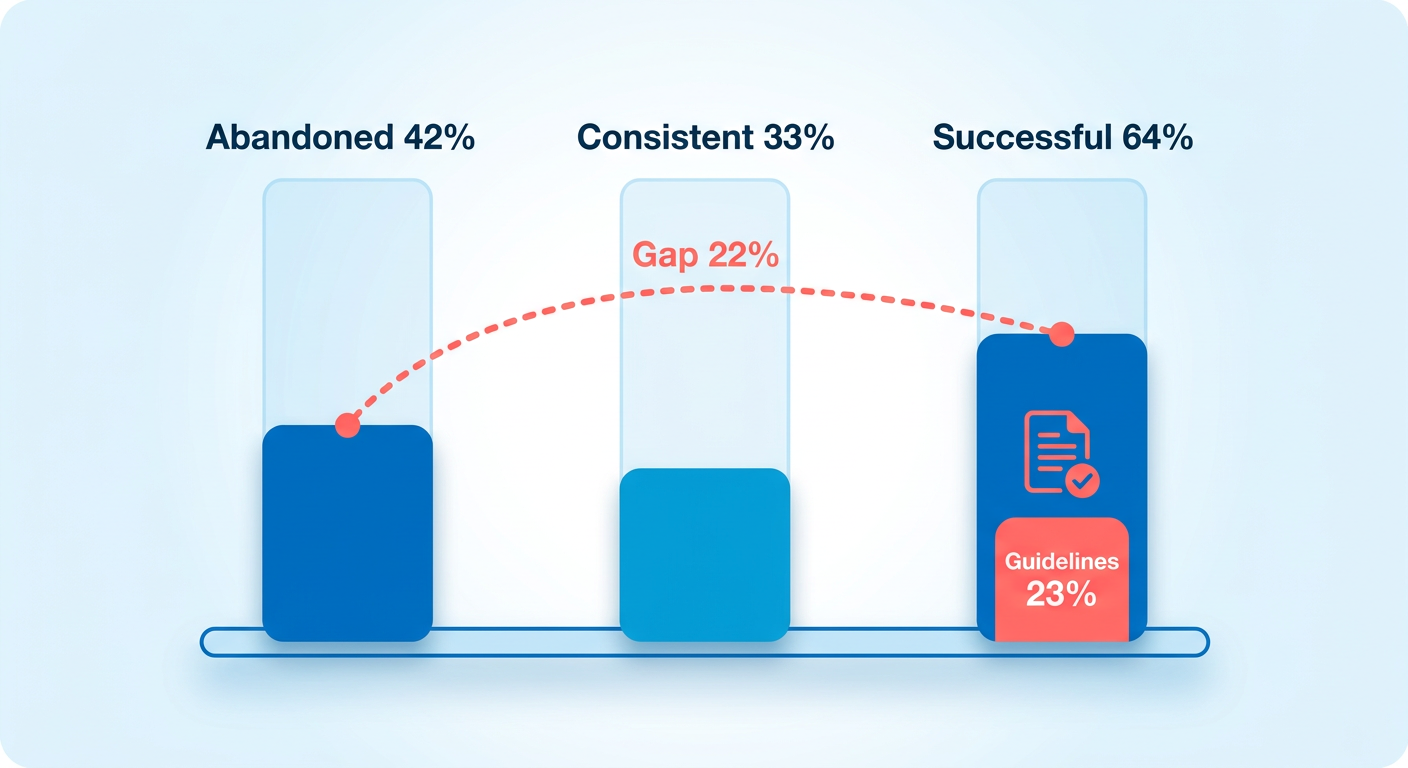
There's a gap between strategy and execution. Most successful marketing teams keep documented brand voice guidelines. Only a small fraction wire those guidelines into AI tools. Most teams already have the raw material that prevents voice drift. They just never connect it to the live workflow. The four checks close that gap before anything publishes.
Why unchecked automation costs more than it saves
Speed without governance quietly bleeds budget. Automate the drafting, skip the review, and early time savings turn into liability once errors publish at volume. Structured governance frameworks speed approvals up. Systematic checks do not slow production. They build the trust needed for automated systems to run on their own.
The four risk categories you're guarding against
Four categories, each with real stakes:
- Brand voice drift. Validate drafts so the model doesn't default to generic phrasing.
- Factual accuracy. Flag missing citations and unsupported claims. One wrong fact on a live page chips away at trust.
- Legal and compliance exposure. Screen for defamation, false endorsement, and copyright issues. Your business carries the responsibility, not the model.
- SEO and structural integrity. Catch thin content and structural gaps before search engines do.
The legal point is worth sitting with. Content produced by automated methods still carries full responsibility for advertising-standards compliance. AI does not move liability off your desk. Passing-off claims can come from content that merely implies an endorsement you never secured, even without a false statement.
Copyright is the sharper edge. In GEMA v. OpenAI, the Munich District Court ruled against OpenAI after finding the model had memorized copyrighted lyrics. Output from major models can still create infringement risk, and fair-use protections are under active scrutiny.
Two bars, not one
Most auto-publish setups miss this distinction. Content can be "high-quality and useful" enough to clear Google's search-quality bar and still fail the legal bar completely. Two independent gates.
Building checks into the workflow, rather than leaning on manual review, makes automation hold up at scale. When agents make publishing decisions on their own, a manual review step you keep forgetting is not a safety net. Automated validation is the only version that survives real volume.
The four checks turn AI from a generic-draft machine into a dependable part of your operation. That is the point of validating voice, facts, compliance, and SEO before anything reaches your audience.
Check 2 – Fact-check and source verification
Facts are where automated systems quietly rack up costs. A model writes a confident sentence citing a study that does not exist, and without a gate, that error goes live immediately. This check makes sure every claim, statistic, and reference gets verified before publication.
Factual accuracy needs its own validation. A draft can read well, match search intent, and still be wrong. A platform that validates drafts against your brand's reference material closes that gap early.
What your fact-check should cover
Every AI draft needs its claims traced back to a real source before going live. Grounded inputs beat generic training data. When the tool pulls from your style guides, product docs, and approved data, hallucinated statistics have less room to appear.
- Trace every statistic, date, and named reference back to a real, checkable source. Unsourced numbers are the most common hallucination and the easiest to catch.
- Flag missing citations automatically, so unverified statements route to a human before publish, not after. This is the step that keeps a bad claim off your page.
- Confirm quotes and endorsements are real and authorized. In 2013, Rihanna sued Topshop successfully over a T-shirt that implied she'd endorsed it. That shows how an unauthorized association alone can land you in court.
Who owns the legal risk when AI gets it wrong
The publisher does. Automated generation does not shift liability off your business, which makes compliance an operational step, not a nice-to-have.
The risk climbs with autonomous publishing. Systems running without a human gate can multiply exposure fast. So fact and compliance checks belong inside the publishing pipeline itself.
- Screen for defamatory or misleading statements about people or competitors. False claims are expensive to defend and hard to walk back.
- Check for copyrighted or third-party material the model may have reproduced.
- Route high-stakes content, claims, comparisons, regulated topics to deeper human review by risk level. Not every post needs the same scrutiny.
Does verification slow you down?
The opposite, when it is structured. For most teams, the bottleneck is not the checking. It is reviewers rereading the same draft because they cannot tell what is already confirmed. A tiered system fixes that. Low-risk drafts clear on automated checks alone, and a small share of high-stakes pieces gets the full human read. Editorial-workflow studies put manual fact-checking at hours per long-form article, so front-loading routine verification is where you win time back.
- Set a documented verification standard so reviewers are not guessing. Consistency is what makes fast approvals safe.
- Log which claims were auto-verified versus human-checked. That audit trail protects you if a claim is challenged.
Skip the deep legal review for low-risk internal drafts. Save it for anything public-facing that names a person, a competitor, or a hard number.
Check 3 – SEO and technical compliance review
Technical SEO is the step automated tools love to skip. Before a page goes live, check that keyword placement, schema, canonical tags, internal links, and page speed meet standard requirements. Search engines weigh these technical elements right alongside content quality.

The common failure: a platform generates readable prose but publishes a page with a missing meta description, no canonical tag, or duplicate body copy. Search engines spot those gaps immediately. This check clears them before publication.
What technical SEO you can safely automate
Automate the deterministic checks. Rule-based, pass or fail, no human judgment needed. AI agents already integrate with tools like Google Search and Semrush, so wiring these validations into the publish step is realistic, not aspirational.
- Meta tags present and unique. Every page needs a title and meta description that do not repeat across your site. Missing or duplicate meta is the most common auto-generated error.
- Schema markup validates. Structured data for articles, local business, or FAQ should parse without errors before publish, not after.
- Canonical tags point correctly. A wrong canonical tells Google to ignore the page entirely. Automate this check so multi-channel repurposing never cannibalizes your rankings.
- Mobile-friendly and page speed pass. Run a rendering and speed check on every draft. Slow, layout-broken pages lose ranking no matter how good the content is.
Which items still need a human eye
Some checks need judgment, not rules. A validator confirms a keyword exists on the page. It cannot tell you the keyword sits in a sentence that makes sense to a reader. That gap is where auto-publishing quietly hurts you.
- Keyword placement reads naturally. Confirm target terms land in the title, first paragraph, and a heading without stuffing. Forced repetition triggers the exact low-quality signal Google warns against.
- Internal links are relevant, not random. Automated linking often connects unrelated pages. A person confirms each link genuinely helps the reader and reinforces topic clusters.
- Content clears the thin-content bar. Check the page says something the top results do not already cover. Thin, derivative copy is the fastest route to a ranking drop.
Why pair the SEO engine with a final audit
Speed and compliance can live together. Automate the routine technical checks, and reviewers can spend time on qualitative improvements and strategic alignment instead of manual verification.
An automated SEO engine handles deterministic rules, which frees human editors for high-value judgment calls. That split lets teams publish faster by heading off repetitive technical errors. AnyPost carries a single draft into multi-platform publishing across LinkedIn, X, Instagram, TikTok, YouTube, and your own site, so a strong audit up front pays off everywhere the content lands.
Check 4 – Legal, ethical, and compliance review
Legal exposure is where fast production gets expensive. Compliance runs on its own standards, separate from SEO. A draft can perform well in search and still be a legal problem if it carries unverified claims or unauthorized material.
Publishers carry full responsibility for everything they publish. Automated tools do not move that liability elsewhere, so every claim needs vetting before it goes live.
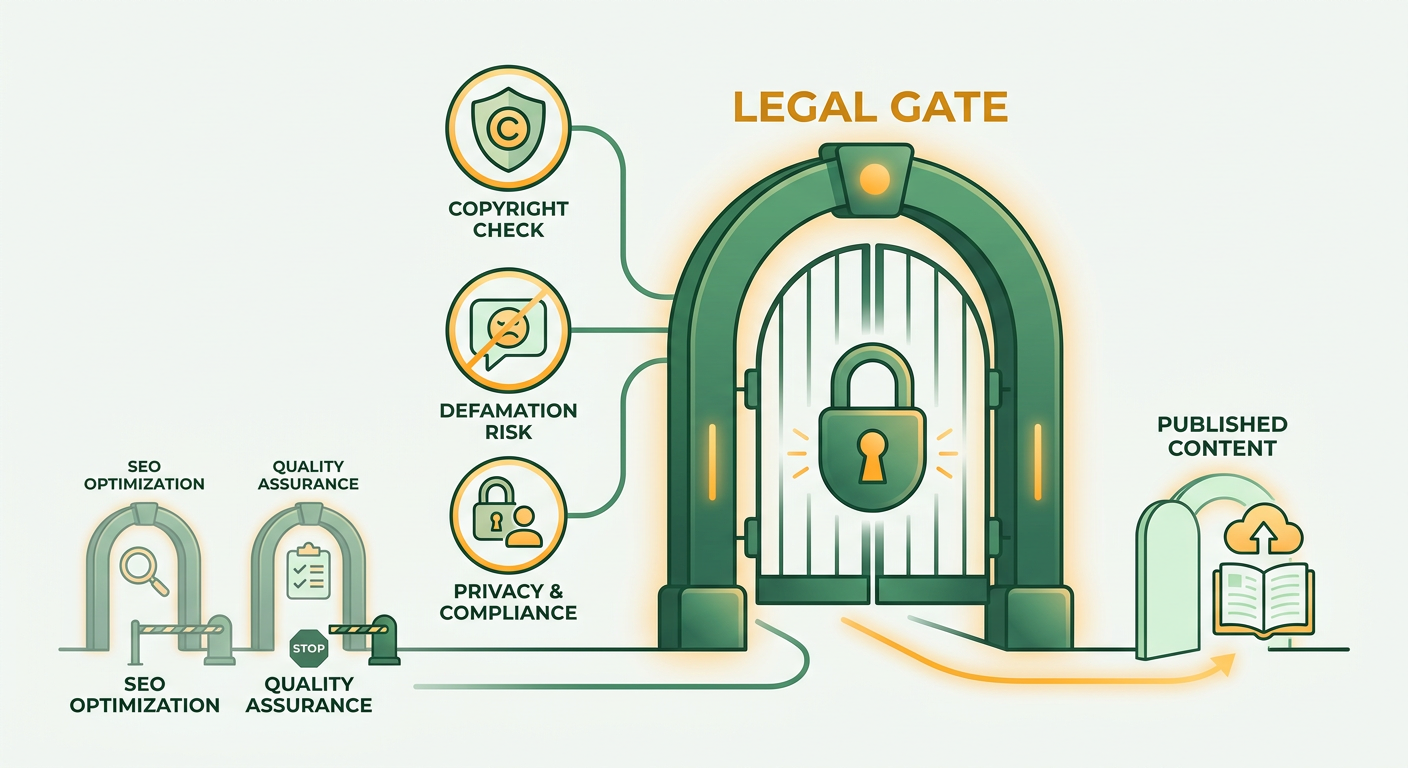
The copyright risks that come with AI-generated content
AI-generated text and images can carry infringement risk even when the output looks original. Generative models train on huge datasets of existing work, and the legal boundaries of what they produce are still being drawn in the courts.
Ongoing litigation makes the point. In Concord Music Group v. Anthropic, publishers claimed infringement based on AI training on copyrighted material. The common assumption of broad fair-use cover is under active legal scrutiny.
Compliance at the developer level does not automatically protect the publisher. You still need internal checks to flag potentially reproduced phrasing before it publishes.
When you need legal sign-off
Match review depth to channel risk, not a uniform gate. A social post that name-drops a public figure carries different exposure than a newsletter or a local SEO page. Scale scrutiny to where the endorsement and defamation risk actually sits.
Unauthorized affiliations can trigger real liability even without an explicit false statement. In Irvine v Talksport (2002), racing driver Eddie Irvine won a false endorsement claim after a broadcaster used a doctored photo suggesting he'd backed them. A model that composites a recognizable face or logo into a promotional graphic reproduces that exact risk at scale.
- Flag any named person, brand, or logo before publish. Implied endorsements are the quiet trap, and they clear search-quality checks without issue.
- Route regulated-industry content to counsel. Health (HIPAA) and finance (FINRA) claims need a human sign-off no automated gate replaces.
- Verify no reproduced phrasing from training data survives in the draft, especially in image captions and taglines.
- Confirm advertising claims are truthful and not misleading on every channel. Automated generation does not excuse the standard.
Why automation multiplies the risk
When autonomous systems publish directly, the missing human gate compounds compliance risk. The business keeps full liability, so legal and ethical checks belong in the workflow, not tacked on as an afterthought.
This is where editorial control earns its keep. Platforms can generate and draft content efficiently, but keeping the ability to review and approve drafts before they go live is what keeps you safe. Fold these checks into your approval process and automated publishing stays a driver of growth rather than a source of liability.
Building a structured review workflow
Four checks only work if they run consistently, in a defined order, with clear ownership at each gate. A structured workflow turns them into a repeatable pipeline that protects your publishing process without killing efficiency.

This is the core tension in modern content ops. Automated drafting promises real time savings, and organizations keep abandoning the initiatives when quality and governance issues surface. Both are true at once. Automation delivers durable speed only when it is paired with structured review. Run the pipeline without gates and you are taking on risk for no reason.
Who owns each check
Assign one clear owner per gate before you automate anything. A workflow with shared accountability is a workflow where nobody catches the miss. Map each of the four checks to a named role so nothing slips through.
- Content creator owns brand voice. They validate output against your documented voice guidelines before anything moves downstream.
- SEO specialist owns technical compliance. They confirm meta tags, schema, canonicals, and internal links pass before publish.
- Legal or compliance reviewer owns risk. They gate copyright, defamation, and endorsement claims.
- A workflow owner sets and enforces SLAs. Someone tracks whether each stage clears in its window.
How to automate the gates without losing control
Automate the checks machines do reliably, and reserve human review for the judgment calls. Rules-based issues like missing citations or structural gaps get flagged automatically. Voice nuance and legal exposure route to editors.
- Connect your generation tool to your project-management platform. Automation connectors can fire a review task the moment a draft is created, which keeps the handoffs clean.
- Set automated triggers for the objective checks. Missing meta descriptions, absent source citations, and thin body copy should block publishing automatically.
- Keep manual gates on voice and legal. These need human eyes to protect brand reputation and manage liability.
A lot of brand voice inconsistency happens because the style guide lives in a static document, separate from where drafting actually happens. Validate drafts against those guidelines right inside the creation process and that disconnect goes away. That keeps multi-channel publishing consistent and safe.
What to measure
Track two numbers and you'll know whether the workflow is working: time-to-publish and revisions per piece. Rising revision counts mean your inputs are wrong, not your reviewers. Falling time-to-publish with stable error rates means the structure is paying off.
- Measure time-to-publish per stage. Set an SLA for each gate and flag anything that stalls.
- Count revisions per piece. A spike signals voice drift or bad grounding inputs at the source.
- Track error escape rate. Count how many issues slip past a gate and reach live content, then fix the gate that missed them.
Continuous feedback loop and ongoing optimization
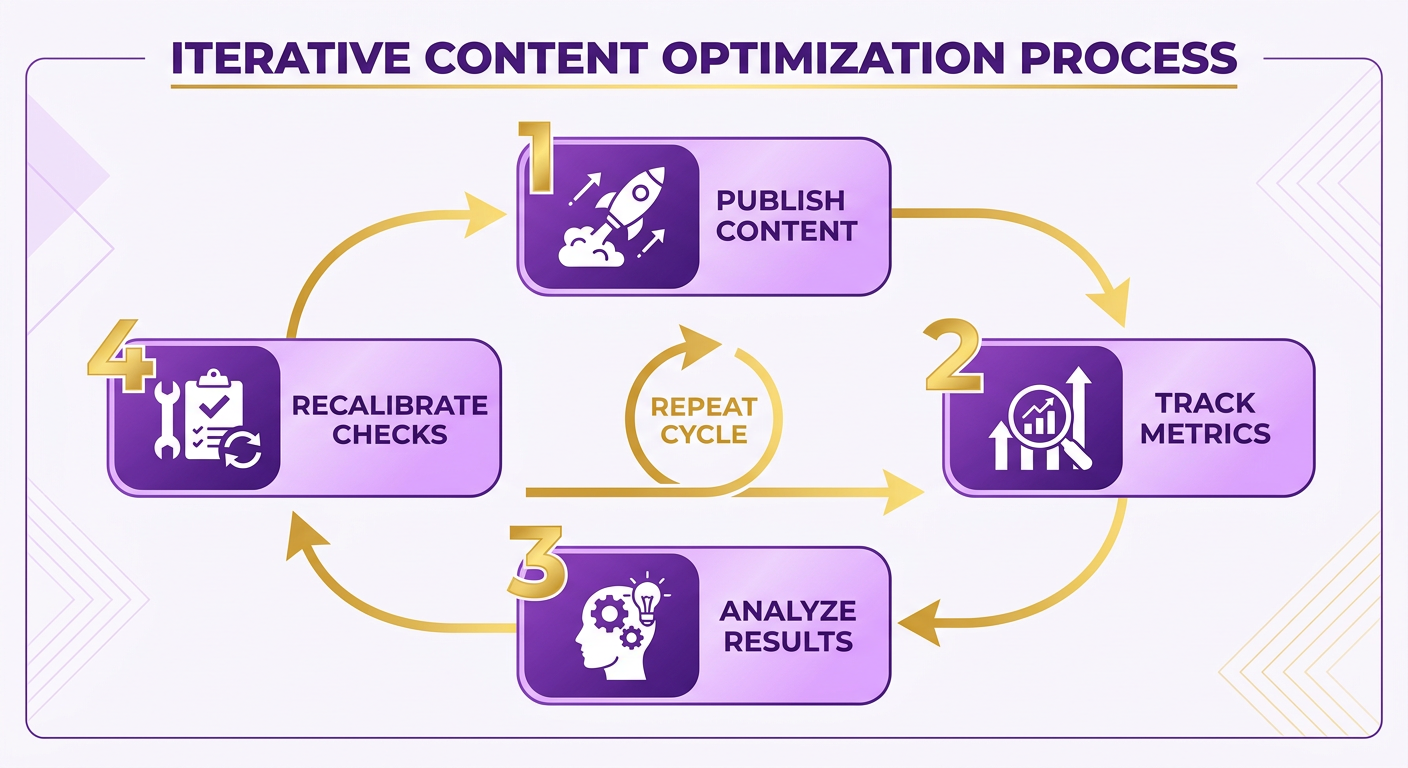
Publishing is the starting line, not the finish. Once content is live, the work shifts to tracking performance and using what you learn to refine the pre-publish workflow. The feedback loop keeps your four checks, brand voice, fact verification, SEO compliance, and legal review evolving on real-world data.
Analyzing post-publish outcomes is the step that makes it work. Did readers engage? How did it rank? Did any platform issues come up? That data tells you where to tighten the checks. A mature content operation runs on these metrics to keep improving output quality.
What post-publish metrics tell you about your pre-publish checks
Start with the metrics that map directly to the four gates. Bounce rate and time-on-page tell you whether brand voice held attention. If readers bail in under thirty seconds, the tone probably missed, even if the draft passed your internal voice rubric. Click-through from search and average SERP position reveal whether your SEO compliance check actually matched what Google rewards. A page that technically follows best practices but ranks on page four is your signal to revisit keyword intent or competitor gaps in the pre-publish SEO review.
Social engagement, likes, shares, comment sentiment, surfaces whether your content reads as authentic or algorithmic. Legal flags from platforms, like content removal notices or restricted reach, tell you the compliance check wasn't strict enough for that channel's evolving policies. Each metric is a proxy for one of your four checks. When performance drops, trace it back to the gate that should have caught it.
Automated alerts for voice drift and SEO drops
Manually reviewing dashboards doesn't scale. You need automated alerts that trigger when content strays from baseline. Configure alerts for sudden organic-traffic drops on specific pages, which often signal a ranking penalty or a technical issue your SEO check missed. Set thresholds for bounce-rate spikes on new posts. If three articles in a row exceed your site's median by 20%, your brand voice validation probably needs tighter parameters.
For voice consistency, track flagged terminology across published content. If your style guide bans jargon like "utilize" or "synergy" and those terms start appearing in live posts, your AI content generation tool either isn't reading the updated guide or the guardrails are too loose. Alerts should fire when prohibited patterns hit a monthly threshold, not after the damage compounds over weeks.
On the SEO side, watch keyword cannibalization and duplicate title tags after publish. Your pre-publish technical review should catch these. If they're still slipping through, the alert tells you the compliance step is missing a scan, or the tool's internal SEO validator needs reconfiguring.
Tying performance data back to specific pre-publish gates
The feedback loop only works if you can trace each performance gap to a decision point in the workflow. When a newsletter open rate drops 40%, ask: did the subject line pass brand voice review, or did the tool auto-generate it with no human eyes on it? When a local SEO page ranks but does not convert, check whether the fact-verification step validated the service descriptions against your actual offerings or waved generic claims through.
A/B testing your voice settings is the cleanest way to close this loop. Run two versions of the same article, one with strict adherence to your documented tone, one with looser guardrails, and measure engagement. If the stricter version holds readers longer, tighten your brand voice check. If the looser version wins, your style guide might be constraining readability. Use the data to update the rubric, not to justify skipping the check.
For compliance, track the ratio of posts flagged post-publish versus pre-publish. If your legal review catches ten risky phrases before publish but platforms still remove content at the same rate, your review criteria are not aligned with real-world enforcement. Quarterly audits of removed or restricted content should feed straight into updated compliance checklists.
Quarterly reviews: when to tighten, when to loosen
Performance data accumulates noise. A single bounce-rate spike does not mean your brand voice check failed. It might be a topic mismatch or a seasonal dip. Quarterly reviews let you separate signal from variance. Pull three months of post-publish metrics, segment by content type (local SEO, newsletter, social), and look for patterns across the four checks.
- Compare bounce rate and time-on-page for content published before and after brand voice guideline updates, to confirm whether tighter voice validation actually improved retention.
- Audit ranking performance for pages that passed your SEO compliance review. If specific keyword clusters keep underperforming, revisit the competitor analysis step in your pre-publish workflow.
- Review every platform-issued content flag or legal inquiry from the past quarter and map it back to the compliance check that should have caught it. Update your legal review criteria to cover the gaps.
- Track how often your team overrides automated pre-publish flags, voice, fact, SEO, legal, and whether those overrides correlate with performance drops. If overrides keep leading to problems, tighten the gates.
The quarterly cadence also catches shifts in channel-specific standards. Social platforms update community guidelines. Google tweaks its helpful content criteria. Your compliance and SEO checks have to absorb those changes, and quarterly reviews force the update cycle.
Build a way to capture team feedback
Analytics tell you what happened. Your content team tells you why. After each publish cycle, ask the people who ran the four checks: what pattern did the tool miss that you had to fix by hand? If fact-checkers keep correcting the same kind of unsourced claim, your verification step needs a stricter citation requirement. If legal reviewers keep catching implied endorsements the tool did not, add endorsement language to your automated pre-publish scan.
A simple feedback form does the job. Three questions, filled out by whoever ran each check:
- What did the automated check miss that you had to correct?
- What false positive did the check flag that wasn't actually a problem?
- What would make this check faster or more accurate next time?
False positives matter as much as misses. If your brand voice validator flags acceptable phrasing as off-tone, reviewers start ignoring the alerts entirely. Calibration goes both ways. Tighten where the tool under-flags, loosen where it over-flags.
The loop only closes when you act on the feedback. Update the tool's configuration, retrain its voice model on recent approved content, refresh your fact-check source library, and push the revised checks live. Then measure again next quarter. This is the part where quality compounds instead of drifting.
Frequently Asked Questions
1. Can I let AI auto-publish some content but not all of it?
Yes, a tiered approach is highly recommended. You can establish automated rules that allow low-risk internal drafts to publish directly once they pass basic programmatic checks. Meanwhile, high-stakes public-facing assets should automatically route to human editors for qualitative review. This balances speed with safety.
2. Does using an AI content tool shift legal liability to the AI provider?
No. Legal responsibility remains entirely with the publishing organization. While developers must comply with emerging regulatory frameworks, these requirements do not absolve the publisher of liability for the accuracy, compliance, or copyright status of the content they distribute.
3. Can content pass Google's quality bar and still be legally risky?
Yes. Search engine algorithms evaluate content based on relevance, structure, and user engagement, which are entirely separate from legal standards. A piece of content can rank highly while still violating copyright laws, containing defamatory statements, or creating unauthorized associations.
4. What's the difference between checks a machine can run and checks a human must do?
Machines excel at deterministic, rules-based checks such as verifying structured data, checking for broken links, and scanning for missing metadata. Humans are required for qualitative assessments, such as evaluating whether the tone is appropriate, ensuring the writing flows naturally, and assessing complex legal risks.
5. How do I know if my AI content workflow is actually working?
Monitor operational metrics such as the time required to move a draft from creation to publication, and the frequency of edits required during review. Consistent publishing times combined with low post-publish error rates indicate a healthy workflow. If the volume of required revisions increases, it typically suggests that the initial prompts or source materials need adjustment.
6. Why does brand voice drift happen even when we have documented guidelines?
Drift occurs when there is an operational disconnect between strategy and execution. If style guides remain in static files rather than being integrated directly into the generation environment, the tool defaults to generic training patterns. To prevent this, the guidelines must be actively applied during the drafting phase.
7. What copyright risks come with AI-generated images and captions specifically?
AI-generated visual assets can inadvertently incorporate protected brand elements or likenesses, creating risks of unauthorized association. Additionally, generated text like captions or slogans may closely mirror copyrighted training materials. Organizations must verify that all generated creative assets are legally clear before publication.
