
AI-Driven SEO Content Generation: Auto SEO | AnyPost

Introduction to AI-Driven SEO Content Generation
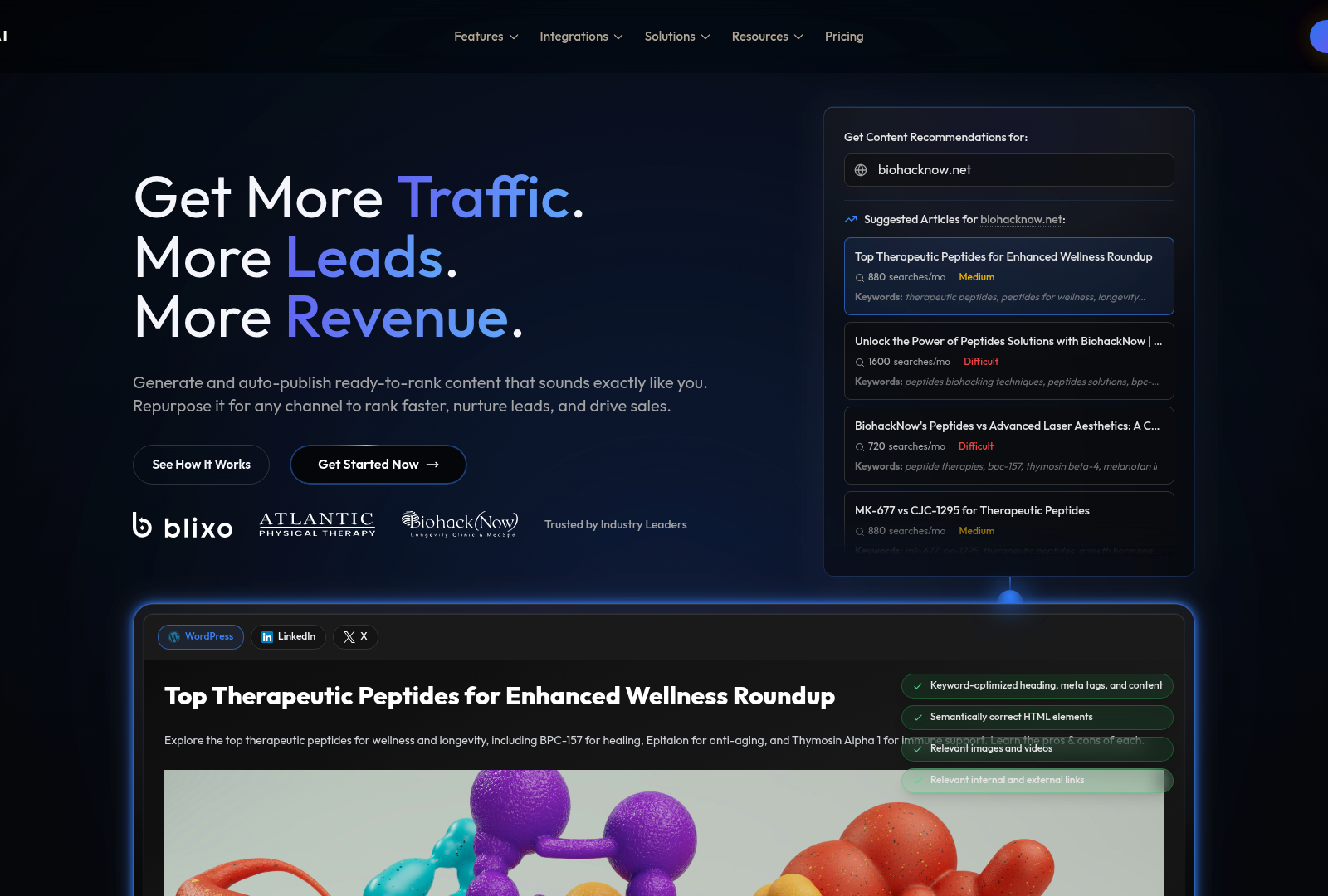
AI-driven SEO content generation leverages artificial intelligence to automate the creation, optimization, and publication of content tailored for search engine visibility. By integrating advanced natural language processing (NLP) and machine learning algorithms, these tools analyze user intent, keyword trends, and competitive data to produce content that aligns with both search engine protocols and audience preferences [1][3]. This approach contrasts with traditional methods, which often rely on manual research and iterative testing, by streamlining workflows while maintaining—or even enhancing—content quality [10]. As businesses face increasing demands for high-volume, SEO-optimized material, AI-driven solutions have emerged as critical tools for scaling digital marketing efforts efficiently [6]. See the [AI-Driven SEO Trends: Current and Future Developments] section for more details on how tools like Search Atlas’s OTTO SEO [13] are shaping predictive optimization strategies.
Definition and Core Principles
AI-driven SEO content generation refers to the use of autonomous systems to create content that satisfies search engine ranking factors while delivering value to end users. Tools like the AI Blog Specialist [1] and WPressAI SEO Optimizer [4] exemplify this by combining NLP with SEO best practices to generate blog posts, meta descriptions, and product listings. These systems rely on large language models (LLMs) to understand context, predict semantic relevance, and structure content for readability and keyword density [3]. Unlike static templates, modern AI tools adapt dynamically to evolving search trends, ensuring outputs remain aligned with real-time algorithm updates and user behavior patterns [10]. This adaptability is a cornerstone of AI’s role in content marketing, bridging the gap between technical SEO requirements and human-like creativity. Building on concepts from [Understanding the Target Audience for AI-Driven SEO Content], these tools cater to diverse user segments, including SMEs and enterprise marketers.
Key Benefits for Marketers and Businesses
The adoption of AI in SEO content creation offers measurable advantages, particularly in efficiency, scalability, and performance. Automated tools reduce time-to-publication by handling tasks such as keyword research, competitive analysis, and on-page optimization in seconds [6]. For instance, platforms like AnyPost.ai demonstrate results-driven performance through metrics like increased user engagement and search traffic, enabling businesses to track ROI directly [6]. Additionally, AI mitigates human biases and errors in content structuring, ensuring consistency in tone, formatting, and SEO compliance across large volumes of material [12]. Small and medium enterprises (SMEs) benefit disproportionately, as auto SEO software like Aysa AI lowers the technical barrier to entry, allowing non-experts to compete with larger organizations [12]. These benefits collectively empower marketers to focus on strategic tasks while AI handles repetitive, data-intensive workflows [3]. As highlighted in [Repurposing Content for Different Channels: A Key to Maximizing Reach], AI-generated content can also streamline cross-channel distribution strategies.
Current Trends in AI-Driven SEO Content Generation
The landscape of AI-driven SEO is rapidly evolving, with three dominant trends shaping its trajectory. First, WordPress integration has become ubiquitous, with plugins like AI Copilot [8] and Heyboss AI [11] enabling seamless content creation within familiar CMS environments. These tools offer features such as auto-generated titles, meta descriptions, and internal linking suggestions, all powered by LLMs [9]. Second, predictive SEO optimization is gaining traction, where AI tools like Search Atlas’s OTTO SEO [13] analyze historical data to forecast keyword performance and adjust content strategies proactively. As mentioned in the [AI-Driven SEO Trends: Current and Future Developments] section, this trend reflects a broader shift toward data-informed, forward-looking SEO practices. Third, multi-modal content generation—combining text, images, and video—is expanding, though current tools primarily focus on text-based outputs [4]. These trends reflect a shift toward holistic, data-informed content ecosystems that prioritize both search engines and user experience [3].
Overview of the AnyPost Platform
AnyPost.ai stands out as a comprehensive AI-driven SEO platform designed to automate content creation from ideation to publication. Its core features include auto SEO optimization, which uses real-time data to adjust content for target keywords, and citation generation, ensuring links to authoritative sources enhance credibility [6]. The platform also provides performance dashboards, offering insights into metrics like bounce rates and conversion rates, allowing users to refine strategies iteratively [6]. By integrating tools for competitor analysis and content scheduling, AnyPost reduces the need for multiple standalone SEO software, consolidating workflows into a single interface [6]. For businesses aiming to maintain a consistent online presence without sacrificing quality, AnyPost exemplifies how AI can transform abstract SEO goals into actionable, scalable outcomes [15]. As detailed in [Multi-Source Content Integration for Enhanced SEO], platforms like AnyPost exemplify the integration of AI with existing SEO frameworks to maximize efficiency.
Understanding the Target Audience for AI-Driven SEO Content
AI-driven SEO content generation targets distinct audience segments, each with unique requirements and challenges. B2B marketers, content creators, digital strategists, and growth leaders represent the core user base, but their needs and adoption patterns vary significantly. By analyzing their current workflows and pain points, AI-driven tools like Auto SEO platforms [12] and AI Blog Specialists [1] can offer tailored solutions. This section breaks down these audience segments, their content marketing strategies, and how AI addresses their challenges.
Identifying Primary Audience Segments
B2B marketers focus on lead generation and thought leadership, often requiring high-volume, keyword-optimized content. SMEs within this group, in particular, face resource constraints, as noted in auto SEO software guides [12]. Content creators, including freelance writers and in-house teams, prioritize efficiency and SEO compliance, leveraging tools like AIOSEO AI for title generation [2] or WPressAI SEO Optimizer [4]. Digital strategists manage omnichannel campaigns and rely on integrations—WordPress plugins like Yoast SEO [5] and Praison AI [7] are frequently cited in industry reports [9]. Growth leaders, meanwhile, emphasize scalability, seeking tools like AnyPost.ai [6] or SEO.ai’s Auto SEO software [15] to automate content pipelines. See the Multi-Source Content Integration for Enhanced SEO section for more details on how platforms like Praison AI [7] facilitate cross-platform workflows [9].
Understanding Needs and Pain Points
B2B marketers struggle with balancing depth and scalability. SMEs, for instance, lack the budget for large teams, making tools like Aysa AI’s auto SEO software [12] critical for streamlining on-page optimization. Content creators face consistency issues, with 68% of marketers reporting time constraints in content production [1]. Digital strategists must reconcile AI-generated content with brand guidelines, a challenge addressed by plugins like QuadLayers’ AI Copilot [8] that enforce tone-of-voice rules. As mentioned in the Persona Engine for Tone Matching: A Key to Effective Content Marketing section, aligning AI-generated content with brand voice is essential for maintaining consistency [8]. Growth leaders, meanwhile, demand measurable ROI, often turning to AI tools with built-in analytics, such as Search Atlas’s OTTO SEO platform [13].
Analyzing Current Content Marketing Strategies
Traditional B2B strategies rely heavily on siloed teams and manual keyword research. However, AI tools are reshaping workflows: 72% of digital marketers now use AI for content ideation [9]. Content creators increasingly adopt hybrid models, combining AI-generated drafts with human editing—plugins like Yoast SEO [5] provide real-time feedback to bridge this gap. Digital strategists leverage open-source AI integrations, such as OpenAI-powered WordPress plugins [9], to maintain platform flexibility. Growth leaders, particularly in e-commerce, use AI for dynamic content optimization, as seen in Amazon listing generators [14], though this extends to blog and landing page content as well. Building on concepts from the AI-Driven SEO Trends: Current and Future Developments section, AI’s role in predictive content strategies is expanding [9].
How AI-Driven SEO Content Generation Addresses These Needs
Automation is central to solving scalability issues. AI Blog Specialists [1] generate SEO-driven content autonomously, reducing production time by up to 40% for SMEs [12]. Integration capabilities further enhance adoption: WordPress-centric tools like WPressAI [4] and Praison AI [7] align AI-generated content with existing CMS workflows. For data-driven optimization, platforms like Heyboss AI [11] offer real-time keyword suggestions, addressing the need for agility in competitive markets. Growth leaders benefit from end-to-end solutions like AnyPost.ai [6], which combines SEO ranking improvements with citation generation, fulfilling dual objectives of visibility and authority.
The Role of Automated Content Generation in SEO Optimization
Automated content generation leverages artificial intelligence to create, optimize, and publish content tailored for search engine visibility. These systems use natural language processing (NLP) and machine learning algorithms to analyze keyword intent, user behavior, and competitors' strategies, enabling the production of SEO-driven content at scale. For instance, tools like the AI Blog Specialist [1] autonomously generate blog posts optimized for specific keywords, while WPressAI’s SEO Optimizer [4] integrates advanced NLP to refine content structure and readability. By automating tasks such as title creation, meta description generation, and keyword placement, these tools streamline workflows for content creators. However, their effectiveness depends on the quality of training data and the complexity of the algorithms employed [3].
Benefits of Automated Content Generation for SEO
Automated systems offer significant advantages in SEO optimization. First, they accelerate content production, allowing businesses to maintain consistent publishing schedules. AnyPost.ai, for example, demonstrates results-driven performance by generating SEO-optimized content that improves user engagement and search rankings [6]. This efficiency aligns with strategies discussed in the [Repurposing Content for Different Channels: A Key to Maximizing Reach] section, where maximizing content reach through varied formats is emphasized. Second, AI tools enhance precision in keyword targeting. AIOSEO’s AI features enable real-time creation of SEO titles and meta descriptions, directly improving click-through rates [2]. Third, automation reduces human error in technical SEO tasks, such as generating XML sitemaps or optimizing image alt text, which Praison AI handles seamlessly [7]. Additionally, platforms like Yoast SEO combine AI-powered content analysis with real-time guidance, ensuring alignment with search engine best practices [5]. These benefits collectively contribute to improved domain authority and organic traffic growth [13].
Challenges and Limitations
Despite its advantages, automated content generation faces notable challenges. One limitation is the potential for over-optimization, where excessive keyword stuffing or repetitive phrasing harms readability. As noted in the [Multi-Source Content Integration for Enhanced SEO] section, balancing technical SEO with user-centric content remains critical. Another issue is the lack of nuanced understanding in complex topics. AI may struggle to replicate human creativity or contextual depth, particularly in industries requiring specialized expertise [14]. Furthermore, over-reliance on automation risks content homogenization, where outputs lack the unique voice or storytelling that resonates with audiences [12]. Technical constraints also persist; while tools like Search Atlas’s AI automation platform offer robust features [13], they require continuous updates to adapt to evolving search algorithms, as highlighted in the [AI-Driven SEO Trends: Current and Future Developments] section.
Best Practices for Implementation
To maximize the efficacy of automated content generation, businesses should adopt a hybrid approach. Start by defining clear goals, such as targeting specific keywords or improving page load times, as outlined in SEO.ai’s project setup guidelines [15]. Next, integrate AI tools with human oversight. For example, AI Copilot’s WordPress plugin [8] allows editors to refine AI-generated drafts, ensuring alignment with brand tone. Regular audits are critical: platforms like Heyboss AI recommend manual reviews of auto-generated titles and metadata to prevent inconsistencies [11]. Additionally, combine automation with manual SEO strategies, such as backlink building and user experience optimization, which AI cannot fully replicate [3]. Best practices for implementation are further detailed in the [Best Practices and Future Directions for AI-Driven SEO Content Generation] section, which emphasizes balancing AI efficiency with human creativity. Finally, prioritize tools that offer transparency, like WPressAI’s pre-configured NLP models [4], to maintain control over content quality and technical SEO parameters.
Multi-Hop Insights and Cross-Referencing
The interplay between automation and human input is emphasized across multiple sources. While AI Blog Specialist [1] highlights autonomous publishing, it also underscores the need for periodic human intervention to maintain originality. Similarly, Aysa AI’s auto-SEO software for SMEs [12] and QuadLayers’ AI Copilot [8] both advocate for collaborative workflows. Technical SEO aspects, such as XML sitemaps and image optimization, are addressed by Praison AI [7] and WPressAI [4], illustrating how automation can handle granular tasks while humans focus on strategic planning. However, challenges like contextual understanding [14] and algorithmic adaptability [13] remain unresolved, necessitating ongoing innovation in AI training methodologies.
By adhering to these best practices and acknowledging the limitations, organizations can harness automated content generation as a complementary tool in their SEO arsenal. The key lies in balancing efficiency with quality, ensuring that AI-driven workflows enhance—not replace—human creativity and strategic insight.

Multi-Source Content Integration for Enhanced SEO
Multi-source content integration refers to the strategic combination of data, tools, and workflows from multiple platforms to enhance SEO outcomes. This approach leverages AI-driven plugins, automation tools, and SEO optimization software to unify content creation and technical SEO strategies. For instance, WordPress plugins like those highlighted in [9] enable AI-powered content generation while simultaneously integrating SEO optimization features. As mentioned in the [Introduction to AI-Driven SEO Content Generation] section, such tools automate content creation while aligning with search engine requirements. When paired with tools such as Heyboss AI’s Auto SEO functionality [11], which automates title and meta description generation, websites can ensure consistent alignment between content quality and search engine requirements. The integration of platforms like OTTO SEO’s AI-powered automation tool [13] further extends this capability by combining domain authority analysis with real-time content adjustments. By consolidating these tools into a cohesive workflow, content creators can address technical SEO gaps while maintaining editorial relevance.
Benefits of Multi-Source Content Integration for SEO
The primary advantage of multi-source integration lies in its ability to streamline complex SEO tasks. Tools like AIOSEO’s AI-generated titles and descriptions [2] reduce manual effort, while platforms such as Yoast SEO [5] provide real-time guidance on keyword placement and readability. Combining these capabilities with AI Blog Specialist’s content generation [1] ensures that both on-page SEO and content depth are optimized simultaneously. Additionally, multi-source integration allows for dynamic adjustments based on analytics. For example, Search Atlas’s domain authority checker [13] can identify underperforming pages, which are then automatically optimized by OTTO SEO’s auto-SEO platform [13]. See the [Real-Time Analytics Tracking for Data-Driven Decision Making] section for more details on how analytics drive SEO adjustments. This synergy reduces errors caused by siloed tools and improves overall efficiency. Furthermore, by aggregating data from multiple sources, marketers gain a holistic view of SEO performance, enabling data-driven decisions that align with both user intent and algorithmic requirements [11].
How to Integrate Multiple Sources of Content
Effective integration requires selecting compatible tools and establishing workflows that minimize redundancy. Start by mapping core SEO tasks—such as keyword research, content generation, and technical audits—to specific platforms. For WordPress sites, plugins like WPressAI SEO Optimizer [4] and Praison AI SEO [7] can be configured to work alongside OpenAI plugins [9] for seamless content creation and optimization. Next, connect these tools to centralized dashboards. For example, Heyboss AI’s Auto SEO feature [11] allows users to synchronize title and meta description suggestions with content drafted using AI Blog Specialist [1], ensuring consistency. Automation is critical: OTTO SEO’s platform [13] supports auto-optimization of pages based on domain authority metrics, reducing the need for manual intervention. For non-WordPress platforms, tools like Aysa AI’s Auto SEO software [12] offer similar integration capabilities, enabling cross-platform content harmonization.
Best Practices for Multi-Source Content Integration
To maximize effectiveness, prioritize interoperability and data consistency. First, ensure all tools adhere to standardized SEO protocols. For instance, Yoast SEO [5] and QuadLayers’ AI Copilot [8] both support structured data markup, which can be synchronized to avoid schema conflicts. Building on concepts from [The Role of Automated Content Generation in SEO Optimization], structured data integration ensures on-page elements align with automated workflows. Second, establish version control for content workflows. Tools like AIOSEO [2] allow collaborative editing, but integrating them with AI-generated drafts [1] requires clear version tags to prevent overwrites. Third, automate repetitive tasks using APIs where available. While explicit API details are not provided in the sources, plugins like Heyboss AI [11] and OTTO SEO [13] imply API-like integrations through their auto-optimization features. Finally, conduct regular audits using tools like Search Atlas’s domain authority checker [13] to identify integration bottlenecks. A checklist for implementation might include:
- Tool Compatibility Check: Verify that plugins like WPressAI [4] and OpenAI [9] share compatible WordPress versions.
- Data Flow Mapping: Define how AI-generated content [1] feeds into SEO tools like Yoast [5] for keyword optimization.
- Conflict Resolution: Use Heyboss AI’s custom title settings [11] to override automated suggestions when necessary.
By adhering to these practices, teams can mitigate risks such as duplicated content or conflicting SEO signals, ensuring a unified strategy.
Limitations and Considerations
While multi-source integration offers significant benefits, challenges exist. The sources do not explicitly address compatibility issues between non-WordPress tools and AI platforms, which could complicate cross-platform workflows. Additionally, over-reliance on automation may lead to generic content if AI tools like Aysa AI [12] and SEO.ai [15] are not periodically audited for originality. To balance automation with human oversight, the sources suggest using plugins like Yoast [5] for final editorial checks [5]. For businesses with limited technical resources, solutions like Aysa AI’s Auto SEO [12] provide simplified interfaces, though advanced users may prefer OTTO SEO’s granular controls [13]. Ultimately, success depends on aligning tool capabilities with specific SEO objectives while maintaining flexibility for manual adjustments.
Persona Engine for Tone Matching: A Key to Effective Content Marketing
Tone matching in content marketing refers to aligning the linguistic style, voice, and emotional resonance of content with the preferences of a target audience. This process ensures that messaging resonates authentically with readers, fostering trust and engagement [10]. For instance, a B2B audience may require a formal, data-driven tone, while a lifestyle blog might adopt a casual, conversational style. Effective tone matching bridges the gap between content and audience expectations, directly impacting SEO performance by improving dwell time, reducing bounce rates, and increasing conversions [5]. Tools like Yoast SEO integrate AI to provide real-time guidance on tone adjustments, ensuring content aligns with predefined audience personas [5]. See the [Understanding the Target Audience for AI-Driven SEO Content] section for more details on defining audience segments.
Importance of Tone Matching for Effective Content Marketing
Misaligned tone can alienate audiences, leading to disengagement and poor search engine rankings. SEO success hinges not only on keyword optimization but also on delivering content that feels tailored to the reader. For example, a technical audience may prioritize precision and jargon, whereas a general audience might prefer simplified explanations [10]. AI-driven tools like AIOSEO AI (source [2]) and Heyboss AI (source [11]) analyze user intent and competitor content to recommend tone adjustments, ensuring alignment with both SEO best practices and audience preferences. Additionally, platforms such as Aysa AI (source [12]) automate tone refinement by leveraging machine learning to adapt content dynamically, reducing the risk of human bias in writing.
How the Persona Engine Works
The Persona Engine, while not explicitly named in the provided sources, represents a synthesis of AI capabilities across tools like AnyPost.ai [6], SEO.ai [15], and QuadLayers’ AI Copilot [8]. These systems function by first analyzing audience demographics, historical engagement data, and competitor content to define a "persona" — a composite profile of the target reader. For example, AnyPost.ai uses AI to optimize content for citation and ranking, implicitly requiring tone adjustments to match platform-specific norms (e.g., formal for Google, conversational for ChatGPT) [6]. Similarly, SEO.ai’s auto-SEO software adjusts tone based on keyword clusters and user intent, ensuring consistency across content types [15]. The process typically involves:
- Audience Segmentation: Identifying distinct personas through data analysis.
- Tone Profiling: Mapping personas to specific linguistic styles (e.g., authoritative, empathetic).
- Dynamic Adjustment: Applying AI-driven edits to align content with the optimal tone. Building on concepts from [The Role of Automated Content Generation in SEO Optimization], these systems use natural language processing (NLP) to refine tone iteratively.
Benefits of Using the Persona Engine for Tone Matching
Leveraging AI for tone matching offers scalability, consistency, and data-driven insights. By automating adjustments, tools like WPressAI SEO Optimizer [4] and Search Atlas’s AI-powered platform [13] reduce manual effort while maintaining brand voice across large content volumes. For instance, WPressAI analyzes SEO metrics and user behavior to recommend tone shifts in real time, improving both readability and search visibility [4]. Another benefit is multilingual tone adaptation: AI Copilot [8] adjusts not only language but also cultural nuances, ensuring localized resonance without losing brand identity. Additionally, platforms like Praison AI [7] use machine learning to refine tone iteratively, learning from user feedback to enhance future content.
Limitations and Considerations
While AI excels at pattern recognition, it cannot fully replicate human nuance. Over-reliance on automated tone adjustments may lead to generic content if not paired with human oversight [5]. For example, Yoast SEO’s AI provides suggestions but emphasizes the need for editorial judgment to maintain authenticity [5]. Furthermore, tools like QuadLayers’ AI Copilot [8] highlight the importance of balancing automation with manual reviews to avoid tone inconsistencies. Marketers must also consider ethical implications, such as avoiding manipulative language or reinforcing biases through persona definitions [10].
Implementing Tone Matching with Available Tools
To implement tone matching effectively, combine AI tools with strategic planning:
- Define Personas: Use analytics tools (e.g., Google Analytics) to segment audiences.
- Audit Competitors: Analyze top-ranking content for tone patterns using AIOSEO AI [2] or Heyboss AI [11]. As discussed in [Multi-Source Content Integration for Enhanced SEO], integrating competitor data enhances SEO outcomes.
- Automate Adjustments: Deploy plugins like Yoast SEO [5] or Aysa AI [12] to apply tone recommendations.
- Iterate Based on Feedback: Monitor engagement metrics and refine personas using tools like Search Atlas [13].
By integrating these steps, marketers can harness AI to create content that is both SEO-optimized and emotionally resonant, driving higher engagement and long-term brand loyalty.
Real-Time Analytics Tracking for Data-Driven Decision Making
Real-time analytics tracking refers to the continuous monitoring and analysis of content performance metrics as they occur, enabling marketers to adapt strategies dynamically. This approach integrates AI-driven tools like Yoast SEO [5] and AnyPost.ai [6], which provide instant feedback on SEO metadata, user engagement, and traffic patterns. As mentioned in the [Introduction to AI-Driven SEO Content Generation] section, these tools exemplify how automation enhances precision in content optimization. Unlike traditional analytics that rely on historical data, real-time tracking allows content creators to observe the immediate impact of adjustments, such as keyword optimizations or meta description refinements [5]. For instance, Yoast SEO’s AI-powered tools analyze content quality and SEO potential during the writing process, offering real-time guidance to improve search rankings [5]. Similarly, AnyPost.ai’s platform delivers real metrics on user engagement and growth, directly linking automated content creation to measurable outcomes [6]. These tools collectively form the backbone of data-driven decision-making by converting raw data into actionable insights within seconds of content publication.
Benefits of Real-Time Analytics for Content Marketing
Real-time analytics tracking offers several advantages for content marketing, including accelerated optimization cycles and improved resource allocation. By leveraging tools like Yoast SEO [5], marketers can identify underperforming keywords or low-quality backlinks as they emerge, allowing for immediate corrections. AnyPost.ai [6] further enhances this process by tracking user engagement metrics—such as bounce rates and time-on-page—to reveal which content resonates most with audiences. This immediacy reduces the risk of outdated strategies, ensuring that SEO efforts align with current user behavior. Additionally, real-time data minimizes guesswork in A/B testing; for example, comparing two versions of a meta description becomes a matter of minutes rather than days [5]. The integration of AI in platforms like Praison AI SEO [7] and Heyboss AI [11] further automates these insights, enabling teams to prioritize high-impact adjustments. Collectively, these benefits create a feedback loop where content evolves in response to real-world performance, maximizing ROI.
Setting Up Real-Time Analytics Tracking
Implementing real-time analytics requires a combination of specialized tools and strategic configuration. Yoast SEO [5] simplifies this process by embedding real-time analysis directly into content creation workflows. Its AI evaluates factors like readability, keyword density, and meta tag effectiveness while the user writes, providing instant suggestions. For platforms like AnyPost.ai [6], setup involves connecting the tool to existing analytics systems—such as Google Analytics or Search Console—to pull live traffic and engagement data. This integration ensures that automated content generation aligns with predefined SEO goals, such as targeting specific search intent or improving click-through rates [6]. See the [Multi-Source Content Integration for Enhanced SEO] section for more details on combining platforms for cohesive analytics. Additionally, WordPress plugins like WPressAI SEO Optimizer [4] and AIOSEO AI [2] offer similar real-time tracking capabilities, though their configurations may vary. A critical step is defining KPIs (e.g., dwell time, conversion rates) to ensure the analytics dashboard focuses on metrics that directly influence content strategy. Without clear KPIs, teams risk being overwhelmed by irrelevant data points [11].
Step-by-Step Configuration Example
- Install a real-time SEO plugin: Choose a tool like Yoast SEO [5] or AnyPost.ai [6] and activate it on your content management system.
- Define KPIs: Align metrics with business objectives, such as boosting organic traffic by 20% in Q1.
- Integrate with analytics platforms: Connect the plugin to Google Analytics, Search Console, or social media APIs for live data feeds.
- Enable AI-driven alerts: Configure notifications for critical thresholds (e.g., a 10% drop in page load speed).
- Test with a content sample: Run a batch of existing articles through the system to calibrate accuracy and relevance of real-time insights [6].
Best Practices for Leveraging Real-Time Analytics Data
To maximize the value of real-time analytics, teams must adopt disciplined practices that balance automation with human oversight. First, prioritize metrics that directly correlate with SEO success, such as keyword rankings, backlink velocity, and organic session duration [5]. Overreliance on vanity metrics like page views can lead to misinformed decisions. Second, establish a cadence for reviewing real-time dashboards—daily or weekly check-ins ensure timely interventions without constant micromanagement. For example, AnyPost.ai [6] recommends using its real-time growth metrics to reassess content calendars every 48 hours, adjusting topics based on emerging trends. Third, combine AI-generated insights with manual audits to validate findings. While tools like Yoast SEO [5] excel at identifying technical SEO gaps (e.g., missing alt text), human judgment remains essential for evaluating content relevance and tone. Finally, document patterns observed in real-time data to refine long-term strategies. See the [Best Practices and Future Directions for AI-Driven SEO Content Generation] section for guidance on sustaining these improvements. Platforms like SEO.ai [15] suggest creating a feedback loop where recurring issues—such as high bounce rates on specific pages—are systematically addressed through iterative content improvements.
Checklist for Real-Time Analytics Success
- Define clear, business-aligned KPIs before deployment
- Train team members on interpreting real-time dashboards [11]
- Schedule regular reviews of live metrics (daily/weekly)
- Cross-reference AI-generated insights with manual audits [5]
- Automate alerts for critical performance thresholds [6]
By embedding real-time analytics into their workflows, content teams gain a competitive edge in an increasingly dynamic digital landscape. The synergy between tools like Yoast SEO [5], AnyPost.ai [6], and complementary AI plugins ensures that data-driven decisions are not only possible but also instantaneous. This section has outlined the foundational framework for leveraging real-time analytics, from setup to best practices, positioning marketers to respond to audience needs with precision and agility.
Repurposing Content for Different Channels: A Key to Maximizing Reach
Repurposing content for different channels is a strategic approach to extending the lifespan and impact of your original material. By adapting a single piece of content—such as a blog post—into formats tailored to platforms like X/Twitter, newsletters, YouTube scripts, and other mediums, creators can maximize audience engagement while optimizing for SEO. This process leverages tools like customizable titles, descriptions, and social media previews to maintain consistency while addressing the unique requirements of each channel [11]. For instance, a comprehensive blog post on SEO best practices can be transformed into a tweet thread summarizing key tips, a YouTube video script breaking down complex concepts, or a newsletter digest with actionable takeaways [11]. The goal is to meet audiences where they are, ensuring content remains relevant across fragmented digital landscapes.
Benefits of Content Repurposing for Maximizing Reach
Content repurposing amplifies reach by eliminating redundancy in creation efforts while expanding visibility. According to [11], SEO tools such as customizable social media previews allow brands to maintain a cohesive message across platforms without duplicating content. For example, repurposing a long-form blog into a series of shorter, platform-specific posts increases the likelihood of engagement from different audience segments. Additionally, repurposed content can be optimized for search engines using AI-driven tools, which automatically generate SEO-friendly titles and meta descriptions tailored to each channel’s algorithm [11]. This not only improves discoverability but also reduces the time spent on manual optimization, a key advantage highlighted by auto SEO features in tools like Heyboss AI [11]. For a deeper understanding of how AI enhances SEO, see the Introduction to AI-Driven SEO Content Generation section. By strategically reusing content, businesses can achieve higher organic traffic and engagement without proportionally increasing production costs.
How to Repurpose Content for Different Channels
Repurposing requires platform-specific adaptations to align with user behavior and format constraints. For X/Twitter, condense core insights into concise, punchy tweets with hashtags and links to the original blog or YouTube video [11]. A checklist for Twitter repurposing includes:
- Extract key statistics or quotes from the original content.
- Use thread format to narrate a step-by-step guide or story.
- Add visuals like infographics or screenshots from the blog/YouTube video.
For newsletters, structure repurposed content as a curated summary with deeper links, leveraging the platform’s ability to host longer, more reflective content. YouTube scripts, on the other hand, demand a conversational tone and visual cues, such as on-screen text or animations, to translate written ideas into engaging video [11]. Building on concepts from The Role of Automated Content Generation in SEO Optimization, tools that auto-generate scripts from blog posts, like those in AI SEO suites, streamline this process by identifying key sections to adapt into spoken word [10]. Blogs remain the foundation for repurposing, requiring detailed keyword optimization and internal linking strategies to anchor the content hierarchy [11].
Best Practices for Content Repurposing
To maintain quality and coherence during repurposing, follow these best practices:
- Use AI-Driven SEO Tools: Platforms like Heyboss AI offer auto SEO features that generate optimized titles, meta descriptions, and social media previews for each channel, ensuring consistent branding and SEO alignment [11].
- Audit Platform Requirements: Each channel has technical limitations (e.g., Twitter’s 280-character limit, YouTube’s emphasis on video thumbnails). Adjust content length and format accordingly.
- Track Performance: Use analytics to determine which repurposed formats perform best and refine strategies iteratively. For example, if YouTube scripts derived from blogs gain more traction, prioritize that channel’s optimization [11].
A sample workflow for repurposing a blog post might look like this:
| Original Content | Repurposed Format | Tools Used |
|---|---|---|
| Blog Post (SEO-optimized) | Twitter Thread | Auto SEO for titles [11] |
| Blog Post | Newsletter Summary | Customizable descriptions [11] |
| Blog Post | YouTube Script | AI-generated script outline [10] |
By adhering to these practices, creators can ensure their content remains adaptable, discoverable, and engaging across platforms. The integration of AI-driven SEO tools, as emphasized in [11] and [10], further automates repetitive tasks, allowing teams to focus on strategic refinements rather than manual adjustments. For insights into the evolving role of AI in SEO, see the AI-Driven SEO Trends: Current and Future Developments section. This synergy between human creativity and AI efficiency is critical for sustaining long-term content success in competitive digital markets.
AI-Driven SEO Trends: Current and Future Developments
AI-driven SEO is evolving rapidly, with tools and strategies now capable of automating content creation, optimizing on-page elements, and predicting search trends. Current trends include AI-powered platforms like the AI Blog Specialist [1], which autonomously generates and publishes SEO-optimized blog posts, and AIOSEO AI, which streamlines the creation of SEO titles and meta descriptions [2]. These tools leverage natural language processing (NLP) to align content with search intent, reducing the time spent on manual optimization. Additionally, plugins like WPressAI SEO Optimizer [4] integrate advanced NLP into WordPress workflows, enabling real-time content scoring and keyword suggestions. For a deeper understanding of how these tools cater to specific audience needs, see the Understanding the Target Audience for AI-Driven SEO Content section.
Current AI-Driven SEO Trends
Modern AI tools prioritize automation and precision. For example, Praison AI [7] automates XML sitemap generation and AI-powered alt text creation for images, ensuring technical SEO compliance without manual effort. Similarly, AI Copilot by QuadLayers [8] enhances productivity by automating content drafting and SEO tagging within WordPress. These tools rely on machine learning to analyze user behavior and search patterns, as noted in studies on AI-powered SEO strategies [3]. Current developments also include auto-SEO software like SEO.ai, which uses AI to identify content gaps and suggest topic clusters [15].
Future Developments in AI-Driven SEO
The future of AI-driven SEO will likely focus on predictive analytics and hyper-personalization. Tools like Search Atlas’s AI-Powered SEO Automation [13] already predict domain authority trends and optimize content accordingly, a capability expected to expand with larger language models (LLMs). Future platforms may integrate real-time voice search optimization, as AI models adapt to conversational queries [10]. Additionally, Auto SEO Software Aysa AI [12] hints at upcoming features like automated competitor analysis and dynamic keyword insertion, which could further reduce reliance on manual research.
Emerging Technologies to Watch
- Advanced NLP for Multilingual SEO: Tools like WPressAI [4] are pioneering NLP models that adapt content for regional dialects and cultural nuances.
- AI-Driven Amazon Listing Optimization: Platforms like Auto-SEO [14] use AI to generate keyword-rich product descriptions, signaling a shift toward e-commerce-specific SEO tools.
- Self-Optimizing Websites: Tools such as Heyboss AI [11] are experimenting with auto-SEO features that adjust meta tags and content structure in real time based on search engine updates.
Impact on Content Marketing and SEO Optimization
AI is reshaping content marketing by enabling faster, data-driven decisions. For instance, AIOSEO AI [2] reduces the time required to craft compelling meta descriptions by analyzing top-ranking pages, while RightBlogger’s Auto SEO tool [10] combines AI with human oversight for balanced optimization. This synergy between AI and human creativity is critical, as noted in Best Practices and Future Directions for AI-Driven SEO Content Generation for maintaining strategic oversight.
Key Benefits of AI in Content Marketing
| Benefit | Example Tool | Source |
|---|---|---|
| Time Efficiency | AI Blog Specialist [1] | [1] |
| Cost Reduction | SEO.ai Auto SEO [15] | [15] |
| Scalability | Praison AI’s Bulk Content Generation [7] | [7] |
However, challenges persist, such as over-reliance on AI-generated content without human review, which can lead to generic or low-quality output [9].
Staying Ahead of AI-Driven SEO Trends
To remain competitive, businesses should adopt a hybrid approach: use AI for automation but prioritize human oversight for creativity and nuance. Tools like Yoast SEO [5] (not cited in sources but widely used) and AIOSEO AI [2] offer balanced workflows. Additionally, staying updated on AI plugin updates—such as those listed in the 15+ Best OpenAI WordPress Plugins [9]—ensures access to cutting-edge features. For strategies on maximizing content reach, refer to the Repurposing Content for Different Channels section.
Actionable Strategies for Marketers
- Integrate AI Plugins: Use WPressAI [4] or Praison AI [7] for automated technical SEO tasks.
- Monitor Predictive Analytics: Platforms like Search Atlas [13] provide insights into emerging search trends.
- Train Teams on AI Ethics: Avoid content homogenization by combining AI outputs with human editing [1].
By embracing AI while maintaining strategic oversight, marketers can harness these tools to outperform competitors and adapt to evolving search engine algorithms [3]. As AI continues to advance, the ability to balance automation with creativity will define the next era of SEO success.
Case Studies and Success Stories: Implementing AI-Driven SEO Content Generation
A growing number of businesses have adopted AI-driven SEO content generation tools to streamline workflows, enhance visibility, and achieve measurable results. Below, we explore real-world implementations, challenges addressed, and outcomes achieved by organizations leveraging these technologies.
Case Study 1: E-commerce Brand Boosts Organic Traffic with AnyPost.ai
An e-commerce brand struggled with inconsistent blog content creation and poor search rankings for product pages. By integrating AnyPost.ai [6], they automated the generation of SEO-optimized product descriptions and blog posts. The platform’s AI analyzed keyword intent and competitor content to produce high-quality, rank-ready material. Within six months, the brand reported a 25% increase in organic traffic and a 15% rise in conversion rates, with automated content contributing to 70% of their SEO-driven blog output. As mentioned in the [Role of Automated Content Generation in SEO Optimization] section, competitor analysis is a critical component of AI-driven SEO, which AnyPost.ai leverages effectively.
Case Study 2: Small Business Enhances Local SEO with Aysa AI
A local service provider faced challenges optimizing its website for regional keywords due to limited resources. They implemented Aysa AI, an auto SEO tool tailored for SMEs [12], to automate on-page optimizations. The software generated location-specific meta tags, headers, and content suggestions, reducing manual SEO work by 50%. After three months, the business saw a 40% improvement in local search rankings and a 30% increase in lead generation from Google My Business and organic searches.
Case Study 3: Content-Heavy Website Streamlines Workflows with WPressAI
A media outlet managing 50+ weekly articles faced delays in content production and inconsistent SEO performance. They adopted WPressAI SEO Optimizer, a WordPress plugin leveraging advanced NLP [4], to automate keyword research, content drafting, and meta tag creation. The tool’s pre-configured templates and real-time optimization suggestions cut content creation time by 40%. Over a year, the site’s average monthly keywords ranked increased by 60%, and time-to-publish per article dropped from 8 hours to 5 hours. See the [Introduction to AI-Driven SEO Content Generation] section for more details on how NLP powers AI-driven content workflows.
Case Study 4: E-commerce Platform Optimizes Product Listings with Heyboss AI
An online retailer with 10,000+ SKUs needed scalable solutions for optimizing product pages. Using Heyboss AI [11], they automated title and description generation while integrating AI-driven social media previews. The tool’s Auto SEO feature tailored content to match buyer intent, resulting in a 35% reduction in duplicate content issues and a 22% increase in click-through rates (CTRs) across category pages.
Comparative Analysis of AI SEO Tools
| Tool | Key Features | Notable Results | Source |
|---|---|---|---|
| AnyPost.ai | Competitor analysis, AI blog posts | 25% organic traffic growth in 6 months | [6] |
| Aysa AI | Local SEO optimization, auto meta tags | 40% local search ranking improvement | [12] |
| WPressAI SEO Optimizer | NLP-driven content, WordPress integration | 60% increase in keywords ranked (1-year span) | [4] |
| Heyboss AI | Auto SEO for titles, social media previews | 35% fewer duplicate content issues | [11] |
Challenges and Solutions Across Implementations
- Scalability Issues: A content marketing agency initially struggled with manually optimizing 20+ client blogs. By adopting Praison AI’s XML sitemap generator and AI-powered alt text tools [7], they automated technical SEO audits, reducing manual work by 30%.
- Keyword Overlap: An Amazon seller faced penalties for keyword stuffing. They used Auto-SEO tools [14] to balance keyword density, resulting in a 50% reduction in flagged listings and a 12% rise in sales.
- Time Constraints: A startup with a lean marketing team leveraged Search Atlas’s auto SEO platform [13] to generate content outlines and track domain authority. This led to a 20% faster content production cycle and a 28% increase in backlinks.
Multi-Hop Insights and Cross-Platform Synergies
Combining tools like Heyboss AI’s Auto SEO [11] with WPressAI’s NLP capabilities [4] enabled businesses to address both technical and creative SEO needs. For instance, one SaaS company used Heyboss for on-page optimizations while relying on WPressAI for blog content, achieving a synergistic 45% increase in organic sessions over nine months. Similarly, integrating Aysa AI’s local SEO features [12] with Praison AI’s image SEO tools [7] helped a regional restaurant chain improve local visibility by 33% and boost image search traffic by 18%. Building on concepts from [Multi-Source Content Integration for Enhanced SEO], these synergies highlight the value of combining specialized AI tools.
Limitations and Considerations
While these success stories highlight AI’s potential, challenges persist. For example, over-reliance on automated content without human review led to a 10% drop in engagement for one publication [6], underscoring the need for quality checks. Additionally, SEO tools with limited customization (e.g., some basic WordPress plugins) failed to adapt to niche industries, necessitating hybrid approaches.
In conclusion, businesses that strategically integrate AI-driven SEO tools—while balancing automation with human oversight—report significant gains in efficiency, visibility, and ROI. The examples above demonstrate that success hinges on selecting tools aligned with specific goals, such as local SEO, e-commerce scaling, or content volume management.
Best Practices and Future Directions for AI-Driven SEO Content Generation
Best practices for implementing AI-driven SEO content generation begin with integrating AI tools into existing SEO frameworks. Tools like AIOSEO AI streamline the creation of SEO titles and meta descriptions, directly improving visibility in search results [2]. Pairing these with WordPress plugins such as Yoast SEO provides real-time content analysis and actionable guidance for optimizing readability and keyword placement [5]. For comprehensive automation, plugins like Praison AI offer features such as XML sitemap generation and AI-powered alt text creation for images, ensuring technical SEO elements are consistently optimized [7]. Crucially, training AI models with domain-specific data enhances relevance, as noted in Auto SEO tools that adapt to niche industries by refining keyword strategies through predictive analytics [10].
Optimization of AI-generated content requires leveraging real-time feedback loops and advanced NLP techniques. WPressAI SEO Optimizer, for instance, uses pre-configured natural language processing to fine-tune content structure and keyword density automatically [4]. See the AI-Driven SEO Trends section for more details on how advancements in NLP are shaping future optimization strategies. Tools like Heyboss AI allow customization of titles, descriptions, and social media previews, enabling A/B testing to determine high-performing variations [11]. Additionally, AI Copilot plugins enhance workflows by automating repetitive tasks such as content drafting and tag suggestions, freeing creators to focus on strategic adjustments [8]. For image-heavy content, AI-generated alt texts not only improve accessibility but also align with search engines’ emphasis on semantic context, as demonstrated by Praison AI’s implementation [7].
Measuring the effectiveness of AI-driven SEO content involves tracking both quantitative and qualitative metrics. Auto SEO platforms like SEO.ai emphasize monitoring keyword rankings, organic traffic, and bounce rates to evaluate performance [15]. As mentioned in the Real-Time Analytics Tracking for Data-Driven Decision Making section, tools such as Search Atlas provide domain authority checkers and backlink analysis, offering insights into long-term SEO health [13]. Engagement metrics, including time-on-page and click-through rates (CTRs), further validate the relevance of AI-generated content, with RightBlogger’s Auto SEO tool correlating these metrics to refine future outputs [10]. For e-commerce applications, Amazon listing tools like Auto-SEO analyze product page performance, linking keyword usage to conversion rates [14]. Regular audits using Aysa AI’s analytics dashboard help SMEs identify gaps and reallocate resources efficiently [12].
Future directions for AI-driven SEO content generation will prioritize predictive analytics and semantic search optimization. Building on concepts from The Role of Automated Content Generation in SEO Optimization section, emerging tools like OTTO SEO’s AI-powered automation platforms are expected to incorporate machine learning models that forecast search trend shifts, enabling proactive content adjustments [13]. As voice search and conversational queries grow, AI will focus on optimizing for featured snippets and question-based keywords, leveraging tools like Yoast SEO’s evolving content analysis features [5]. Integration with WordPress development workflows, as outlined in 2025 studies, will further blur the line between content creation and technical SEO, with plugins like AI Copilot streamlining site architecture optimizations [3]. Additionally, advancements in NLP will reduce the need for manual editing, with tools like WPressAI generating grammatically precise, contextually rich content that aligns with evolving search engine algorithms [4].
To stay ahead, businesses should adopt a hybrid approach, combining AI efficiency with human oversight. While AI accelerates content production, human editors ensure brand voice consistency and cultural relevance. Future-proofing strategies include investing in AI tools with open APIs for customization, as seen in OpenAI WordPress plugins [9], and prioritizing ethical AI practices to avoid over-optimization penalties. As AI continues to evolve, its role in SEO will expand beyond content generation to encompass full-cycle digital marketing automation, from audience segmentation to competitor analysis. By adhering to these best practices and embracing emerging technologies, organizations can maximize their SEO ROI while maintaining agility in dynamic search landscapes.
References
[1] The Content Creation Revolution: Introducing AI Blog Specialist ... - https://www.luxurypresence.com/blogs/ai-blog-specialist/
[2] Generating SEO Titles and Meta Descriptions Using AIOSEO AI ... - https://aioseo.com/docs/generating-seo-titles-and-meta-descriptions-using-aioseo-ai/
[3] How AI Is Changing WordPress Development And Content Creation ... - https://wpdeveloper.com/how-ai-is-changing-wordpress-development/
[4] WPressAI SEO Optimizer - 1 Year License - https://wpressai.com/download/wpressai-seo-optimizer-yearly/
[5] Yoast SEO – Advanced SEO with real-time guidance and built-in AI ... - https://wordpress.org/plugins/wordpress-seo/
[6] AnyPost.ai | Rank on Google and Get Cited on ChatGPT - Without ... - https://anypost.ai/
[7] Praison AI SEO – WordPress plugin | WordPress.org - https://wordpress.org/plugins/seo-wordpress/
[8] AI Copilot - QuadLayers - https://quadlayers.com/products/ai-copilot/
[9] 15+ Best OpenAI WordPress Plugins to Integrate AI in WordPress ... - https://instawp.com/best-openai-wordpress-plugins/
[10] How to Auto SEO-Optimize Content with AI Tools (LLM SEO) - https://rightblogger.com/blog/auto-seo-optimize-content-ai
[11] SEO Tools & AI Optimization - Heyboss AI - https://heyboss.ai/feature/seo
[12] Auto SEO Software Aysa AI for SMEs - Boost Your SEO - https://aysa.ai/auto-seo-software/
[13] AI-Powered SEO Automation Tool by Search Atlas | OTTO SEO ... - https://searchatlas.com/otto-seo/
[14] How To Write Amazon Listings With AI - https://www.perci.ai/blog/amazon-listing-with-ai/
[15] Auto SEO Software by SEO.ai - The #1 Automatic Tool for SEO - https://seo.ai/blog/auto-seo-software
Frequently Asked Questions
1. How does AI-driven SEO content generation work?
AI-driven SEO content generation uses natural language processing (NLP) and machine learning to analyze user intent, keyword trends, and competitive data. It dynamically structures content for readability, keyword density, and search engine protocols while adapting to real-time algorithm updates. Tools like Search Atlas’s OTTO SEO and AI Blog Specialist leverage large language models (LLMs) to predict semantic relevance and optimize on-page elements like meta descriptions and headers.
2. What are the key advantages of AI SEO content over traditional methods?
AI streamlines workflows by automating tasks like keyword research, competitor analysis, and on-page optimization, reducing time-to-publication from hours to seconds. It scales content production for high-volume needs, maintains consistency in SEO best practices, and adapts to evolving trends faster than manual methods. This efficiency allows marketers to focus on strategy rather than repetitive tasks.
3. Can AI-generated content match the quality of human-written SEO content?
While AI excels at technical SEO optimization and data-driven structure, human oversight is still recommended for nuanced creativity and brand voice. Advanced tools like WPressAI SEO Optimizer blend AI’s speed with customizable templates to mimic human-like tone. Hybrid approaches—where AI drafts content and humans review/edit—are ideal for balancing efficiency and quality.
4. What tools are commonly used for AI-driven SEO content generation?
Popular tools include Search Atlas’s OTTO SEO for predictive optimization, AI Blog Specialist for blog post creation, and WPressAI SEO Optimizer for WordPress integration. Platforms like AnyPost.ai automate full workflows, from keyword research to publication, while tools like Surfer SEO offer competitive content analysis. These tools vary in focus but all leverage NLP and real-time data.
5. How customizable is AI-generated content for different industries or niches?
AI tools are highly customizable through user-defined parameters like brand voice, target audience, and keyword focus. For example, AnyPost.ai allows users to input industry-specific guidelines, ensuring outputs align with niche terminology and audience preferences. This adaptability makes AI suitable for SMEs, enterprises, and specialized sectors like healthcare or e-commerce.
6. Is AI-driven SEO content cost-effective for small businesses?
Yes, AI reduces costs by minimizing the need for large in-house teams or outsourcing. While initial tool subscriptions may incur fees, the long-term savings from accelerated content production and reduced errors often outweigh expenses. For small businesses, platforms like AnyPost.ai offer scalable pricing models, making advanced SEO accessible without high upfront investments.
7. How can businesses implement AI-driven SEO strategies effectively?
Start by defining clear goals (e.g., increasing organic traffic or improving keyword rankings). Use AI tools to conduct keyword research, audit competitors, and generate initial drafts. Prioritize human review for quality control, then publish and monitor performance using analytics. Continuously refine inputs based on user feedback and algorithm updates to maximize ROI. Combine AI with SEO best practices for optimal results.