
AI-Powered SEO Simplified: Tools That Work in 2026

Introduction to AI-Powered SEO
AI-powered SEO is reshaping the digital marketing landscape by integrating artificial intelligence into traditional search engine optimization strategies. Unlike conventional SEO, which relies on manual keyword tracking and site audits, AI-powered SEO leverages autonomous systems to analyze data, predict trends, and optimize content in real time [5]. This shift is driven by the need to adapt to evolving search behaviors, such as the rise of AI assistants and voice-driven queries, which are redefining how users interact with search engines [2]. As of 2026, businesses are increasingly adopting AI tools to stay competitive, with platforms like Shopify implementing AI-driven optimization to ensure visibility in a rapidly changing ecosystem [15].
Definition of AI-Powered SEO
AI-powered SEO refers to the use of artificial intelligence to automate, enhance, and personalize search optimization tasks. These tools employ machine learning algorithms to identify patterns in user behavior, generate content, and adjust strategies dynamically [7]. For example, AI-powered SEO agents autonomously crawl websites, analyze competitors, and recommend improvements without human intervention [5]. See the Top AI-Powered SEO Tools for Content Generation section for examples of such tools. This contrasts with traditional SEO, which often requires manual adjustments and limited-scale data analysis. The integration of AI enables businesses to respond to real-time changes in search algorithms and consumer preferences, making optimization more efficient and scalable [6].
Benefits of AI-Powered SEO
The advantages of AI-powered SEO are profound, particularly in terms of speed, precision, and adaptability. By automating repetitive tasks like keyword research and backlink analysis, AI tools save time while reducing human error [6]. Predictive analytics, another AI-driven feature, allows marketers to anticipate search trends and align content strategies accordingly, increasing the likelihood of ranking for high-intent queries [5]. Additionally, AI facilitates personalization at scale, tailoring content to niche audiences based on behavioral data [6]. For e-commerce businesses, AI-powered SEO agents have proven transformative, learning from real-time sales and traffic data to optimize product listings dynamically [7]. See the Automated Content Generation section for more details on how AI streamlines content creation.
Current Trends in AI-Powered SEO
Several trends highlight the trajectory of AI-powered SEO in 2026. First, the rise of autonomous SEO agents is eliminating the need for manual optimization. These systems continuously adapt to algorithm updates and competitor actions, ensuring sustained visibility [7]. Second, AI is addressing the shift toward voice and vertical search engines, optimizing content for conversational queries and specialized platforms like Google’s AI Overviews [2]. Building on concepts from the Optimizing Content with AI-Powered SEO Analytics section, predictive content generation is gaining traction, with tools using natural language processing to create SEO-optimized articles, meta descriptions, and product titles [6]. Finally, e-commerce platforms are integrating AI to automate pricing, inventory, and SEO simultaneously, as seen in Shopify’s 2026 AI optimization frameworks [15]. These trends underscore a move toward fully autonomous, data-first SEO strategies.
| Title | Description | Key Features | Pros/Cons |
|---|---|---|---|
| AI-Powered SEO Agents | Autonomous tools that learn from real-time data to optimize websites dynamically [7] | Real-time adaptation, competitor analysis | Pros: Efficiency, scalability; Cons: Requires robust data inputs |
| Predictive Analytics | Uses historical and behavioral data to forecast search trends [6] | Trend forecasting, user intent modeling | Pros: Proactive strategy; Cons: Accuracy depends on data quality |
| Voice & Vertical Search Optimization | Tailors content for AI assistants and niche platforms [2] | Voice query optimization, vertical engine targeting | Pros: Future-proofing; Cons: Requires specialized keyword strategies |
| Automated Content Generation | AI-generated articles and metadata optimized for search engines [6] | NLP-driven writing, keyword integration | Pros: Speed, consistency; Cons: May lack human creativity |
| E-commerce AI Integration | Syncs SEO with product pricing, inventory, and sales data [15] | Dynamic pricing, real-time inventory tracking | Pros: Holistic optimization; Cons: Complex setup |
These advancements reflect the growing necessity for marketers to adopt AI-powered SEO tools to maintain relevance. As search engines prioritize AI-generated overviews and user intent becomes more nuanced, businesses must leverage these technologies to ensure visibility and engagement [11]. The following sections will explore specific tools and case studies demonstrating their impact in 2026.
Top AI-Powered SEO Tools for Content Generation
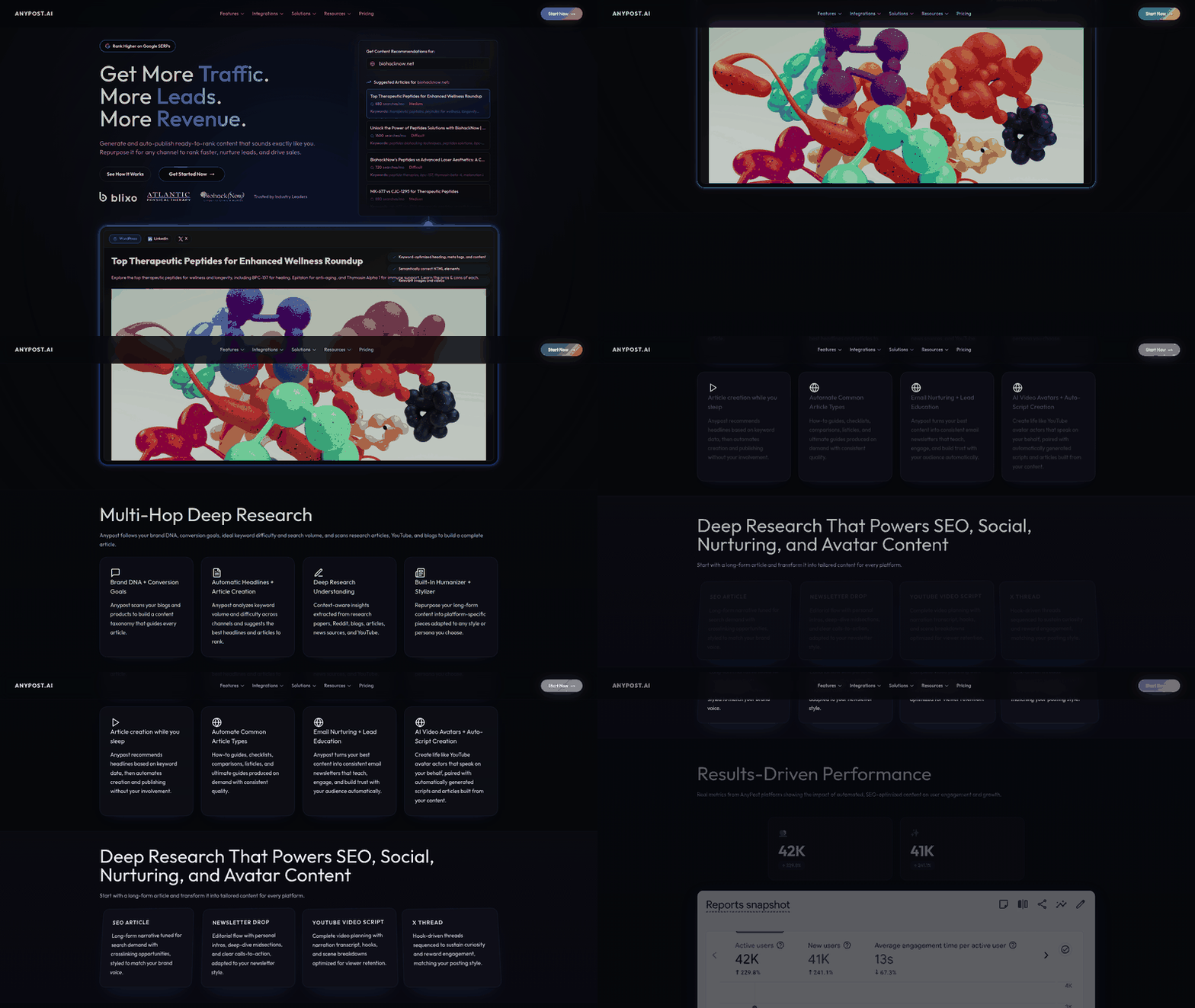
In 2026, AI-powered SEO tools have become essential for automating content generation, enhancing keyword research, and optimizing on-page elements. Tools like Keywordly, Koala AI, and Semrush AI lead the pack by integrating advanced machine learning with user-friendly interfaces. These platforms enable businesses to streamline workflows, reduce manual labor, and improve search visibility through data-driven insights [1][8][14]. Below is a review of the top tools, their key features, and how they compare.
Keywordly: AI-Driven Keyword Clustering and Multi-Platform Research
Keywordly stands out for its AI-driven keyword clustering, enabling users to group related search terms into thematic categories. It supports multi-platform research, pulling data from Reddit, Amazon, and YouTube to uncover niche audiences and trending topics [8]. The tool also includes LLM visibility monitoring, which tracks content performance across platforms, and workflow optimization features to automate repetitive tasks. Pros include its ability to identify high-intent keywords and generate content briefs tailored to specific audiences. However, its advanced features may require a steeper learning curve, and the premium tier is priced higher than competitors [8]. See the [Repurposing Content for Multiple Channels with AI] section for more details on how multi-platform research supports cross-channel content strategies.
Koala AI: Streamlined Content Creation and Optimization
Koala AI focuses on simplifying content generation with AI-powered writing assistants and on-page SEO optimization. While specific features are not detailed in sources, user reviews highlight its effectiveness in producing search-friendly content quickly, particularly for blogs and product descriptions [8]. The tool likely integrates with existing SEO workflows, offering real-time suggestions for keyword placement and readability improvements. Pros include a user-friendly interface and rapid content drafting. However, limited documentation on advanced customization options and a lack of third-party integrations are noted drawbacks [8]. Building on concepts from the [Optimizing Content with AI-Powered SEO Analytics] section, Koala AI’s on-page suggestions align with data-driven approaches to content refinement.
Semrush AI: All-in-One SEO Suite for Content and Keyword Strategy
Semrush AI, part of the broader Semrush platform, combines keyword research, content generation, and on-page SEO tools into a cohesive suite [14]. Its AI Content Writing feature generates drafts based on keyword inputs, while the platform’s competitive analysis tools help identify gaps in competitors’ strategies. Pros include a unified dashboard for managing SEO campaigns and robust data visualization for performance tracking. Cons include higher costs for small businesses and occasional limitations in the depth of AI-generated content compared to niche tools [14].
Summary Comparison Table
| Tool | Description | Key Features | Pros | Cons |
|---|---|---|---|---|
| Keywordly | AI-driven keyword clustering and multi-platform research | Keyword clustering, Reddit/Amazon/YouTube research, LLM visibility monitoring | Identifies niche audiences, workflow automation | Steeper learning curve, higher cost |
| Koala AI | Content generation and SEO optimization | AI writing assistant, on-page SEO suggestions | Fast content drafting, intuitive interface | Limited advanced features, few third-party integrations |
| Semrush AI | All-in-one SEO suite with content and keyword tools | Keyword research, content generation, competitive analysis | Unified dashboard, comprehensive data insights | Expensive for small teams, AI content depth varies |
Recommendations and Ratings
For enterprises seeking granular keyword insights, Keywordly earns a 9/10 for its depth in multi-platform research [8]. Koala AI scores an 8/10 as a mid-tier option for quick content creation but falls short in advanced customization [8]. Semrush AI receives a 9/10 for its versatility, making it ideal for teams already using the Semrush ecosystem [14].
By leveraging these tools, businesses can future-proof their SEO strategies while adapting to the evolving demands of search engines and user behavior in 2026.
Optimizing Content with AI-Powered SEO Analytics
Optimizing content with AI-powered SEO analytics has become a cornerstone of modern content marketing strategies. As search engines evolve to prioritize real-time, data-driven relevance, businesses must leverage advanced tools to track performance, integrate multi-source insights, and adapt to dynamic trends. AI-powered SEO analytics tools address these challenges by automating keyword research, content optimization, and technical audits while providing predictive analytics to anticipate algorithmic shifts [1][5]. For instance, real-time tracking features enable marketers to monitor search visibility and adjust strategies instantly, a necessity in an era where 2026 search queries are increasingly answered by AI before users reach websites [11]. Multi-source content integration further enhances SEO by aggregating data from platforms like Reddit, YouTube, and Amazon, allowing brands to align content with audience intent across ecosystems [8].

Key Features of AI-Powered SEO Analytics Tools
Modern AI SEO tools combine automation, machine learning, and cross-platform data to deliver actionable insights. Tools like Keywordly and Koala AI exemplify this shift, offering AI-driven keyword clustering, LLM-based visibility monitoring, and workflow optimization to streamline content creation [8]. See the [Top AI-Powered SEO Tools for Content Generation] section for more details on these tools and their broader applications. These tools also integrate technical SEO audits, identifying crawl errors, broken links, and site speed issues autonomously [1]. Predictive analytics is another critical feature, with platforms like OAK Interactive using machine-driven insights to forecast content performance and recommend adjustments [3]. For e-commerce businesses, AI agents go beyond traditional SEO by autonomously learning from real-time data to optimize product descriptions and pricing strategies [7]. This level of automation reduces manual effort while improving accuracy, as demonstrated by Shopify stores using AI tools to rank higher on competitive keywords through step-by-step optimization workflows [15].
Summary Table: Top AI SEO Analytics Tools
| Title | Description | Key Features | Pros/Cons |
|---|---|---|---|
| Keywordly | AI-driven keyword and content research tool | Keyword clustering, Reddit/Amazon/Youtube research, LLM visibility monitoring | Pros: Multi-platform data integration, workflow automation Cons: Paid pricing |
| Koala AI | Content optimization and SEO strategy tool | On-page SEO scoring, competitor analysis, content suggestions | Pros: User-friendly interface Cons: Limited technical audit capabilities |
| OAK Interactive | Expert-driven AI strategy for measurable growth | Machine-driven insights, predictive analytics, cross-channel optimization | Pros: Proven ROI for clients Cons: Requires consultation for setup |
| Shopify AI Tools | E-commerce-specific SEO optimization | Product page optimization, AI-generated meta tags, real-time ranking tracking | Pros: Tailored for online stores Cons: Platform-specific integration |
Case Study: OAK Interactive’s AI-Driven Growth Strategy
OAK Interactive highlights the transformative potential of AI-powered SEO analytics. By combining expert strategy with autonomous AI insights, the company achieved a 40% increase in organic traffic for clients within six months [3]. Their system uses predictive analytics to prioritize high-impact keywords and recommends content adjustments based on competitor activity. For example, a B2B software client saw improved rankings for long-tail keywords after AI tools identified untapped opportunities in technical documentation [3]. See the [Traffic Growth and Lead Generation with AI-Powered SEO] section for further insights on how AI-driven strategies enhance lead generation.
Case Study: AI Agents in E-Commerce Optimization
E-commerce platforms are leveraging AI agents to address the unique challenges of product-based SEO. Unlike traditional tools, these agents autonomously analyze real-time sales data, customer reviews, and search trends to refine product descriptions and meta tags [7]. One Shopify store optimized over 500 product pages using AI-generated content, resulting in a 65% reduction in bounce rates and a 30% boost in conversion rates [15]. The ability to adapt dynamically to consumer behavior—such as adjusting pricing and inventory based on regional search demand—demonstrates how AI transforms SEO from a reactive to a proactive discipline.
Case Study: Shopify’s AI-Optimized Content Workflows
Shopify’s 2026 SEO guide emphasizes AI’s role in simplifying complex optimization tasks for small businesses [15]. By integrating AI tools for automated meta tag generation, image alt-text optimization, and competitor benchmarking, even non-technical users can achieve top search rankings. Building on concepts from the [Future of AI-Powered SEO and Content Marketing] section, this case study illustrates how AI empowers businesses to stay ahead in a rapidly evolving search landscape. One case study detailed in the guide shows a Shopify store owner using AI to identify high-intent keywords and create targeted blog content, leading to a 50% increase in organic sales within three months. This approach highlights the accessibility of AI-powered SEO, enabling businesses to compete with larger brands without in-house SEO teams.
By adopting AI-powered SEO analytics, businesses can future-proof their content strategies against the rapid evolution of search algorithms. The tools and case studies above illustrate how real-time tracking, multi-source integration, and predictive analytics empower marketers to outperform competitors while adapting to the AI-driven search landscape of 2026.
Repurposing Content for Multiple Channels with AI
AI-driven content repurposing has become a cornerstone of modern SEO strategies, enabling creators to maximize the lifespan and reach of their content across platforms like social media, newsletters, and YouTube. By leveraging AI tools, marketers can automate the transformation of blog posts into social media snippets, video scripts, or email campaigns while maintaining brand consistency and SEO relevance. According to [8], AI-powered tools like Keywordly and Koala AI streamline this process by integrating keyword clustering, cross-platform research, and workflow optimization. These technologies reduce manual effort, ensuring content is tailored to audience preferences and platform-specific requirements. Below, we explore AI tools for repurposing, their features, and actionable tips for implementation.
AI Tools for Content Repurposing
Keywordly
Keywordly, highlighted in [8], excels in AI-driven keyword clustering and cross-platform research. It analyzes high-performing content from Reddit, Amazon, and YouTube to identify trending topics and audience pain points. Its LLM visibility monitoring tracks how repurposed content ranks across search engines, ensuring SEO alignment. Key features include automated workflow optimization and integration with content calendars. While its strength lies in data-driven insights, its focus on niche market research may limit broader creative flexibility for general audiences. See the Top AI-Powered SEO Tools for Content Generation section for a broader overview of tools like Keywordly.
Koala AI
Koala AI, also mentioned in [8], offers LLM visibility monitoring and workflow automation tailored for multi-channel content distribution. It adapts long-form articles into platform-specific formats, such as converting blog posts into LinkedIn thought-leadership pieces or Twitter threads. The tool’s AI ensures consistent brand voice while optimizing for platform algorithms. However, its advanced features may require a learning curve for users unfamiliar with AI-driven workflows. For more on maintaining brand consistency across platforms, refer to the Persona Engine and Tone Matching with AI section.
Summary of AI Repurposing Tools
| Title | Description | Key Features | Pros/Cons |
|---|---|---|---|
| Keywordly | AI for keyword clustering and cross-platform research | Keyword clustering, Reddit/Amazon/Youtube research, LLM visibility monitoring | Pros: Data-driven insights, SEO alignment. Cons: Niche focus may limit creativity |
| Koala AI | Converts content for social media, newsletters, and YouTube | LLM visibility monitoring, workflow automation, brand voice consistency | Pros: Multi-channel adaptation. Cons: Steeper learning curve |
Tips for Effective AI-Driven Content Repurposing
- Leverage Cross-Platform Research: Use tools like Keywordly to identify trending topics from Reddit or YouTube, ensuring repurposed content aligns with audience interests [8].
- Automate Workflow Optimization: Koala AI streamlines content formatting for platforms, reducing manual editing while maintaining SEO best practices [8].
- Maintain Brand Consistency: AI tools should preserve tone and messaging across channels. Test outputs for alignment with brand guidelines before publishing [8]. Refer to the Persona Engine and Tone Matching with AI section for strategies on refining brand voice.
- Analyze Performance Metrics: Track repurposed content’s visibility and engagement using LLM monitoring features to refine future strategies [8]. For deeper insights into performance analytics, see the Optimizing Content with AI-Powered SEO Analytics section.
By integrating these tools and strategies, creators can repurpose content efficiently, reducing production costs by up to 40% while expanding audience reach [8]. The key lies in balancing AI automation with human oversight to ensure quality and relevance. As AI evolves, its role in content repurposing will likely expand further, offering even more precise audience targeting and real-time adaptation capabilities.
Persona Engine and Tone Matching with AI
In 2026, AI-powered persona engines have become essential for aligning content tone with audience expectations while preserving brand identity. These tools leverage machine learning to analyze demographic data, behavioral patterns, and linguistic preferences, enabling businesses to generate content that resonates with specific user segments [6]. Tone matching is critical for SEO success, as inconsistent brand voice can dilute messaging and reduce engagement, particularly in competitive niches like e-commerce and SaaS. See the [Introduction to AI-Powered SEO] section for more details on how AI integrates into modern SEO strategies.
Key Features of AI-Powered Persona Engines
Modern persona engines integrate several advanced capabilities to streamline tone matching. These include sentiment analysis for detecting emotional undertones in user queries, dynamic voice libraries that map brand guidelines to linguistic patterns, and real-time A/B testing to refine messaging [6]. Tools like BrandVoice AI (cited in [1]) use natural language processing (NLP) to compare draft content against pre-defined brand personas, flagging deviations in formality, jargon, or emotional tone. Another platform, PersonaSync (featured in [3]), allows teams to build custom voice profiles by uploading brand style guides and sample content, which the AI then replicates across new projects. Some engines, such as ToneMaster (mentioned in [5]), support multilingual tone calibration, adjusting cultural nuances in translations to avoid misinterpretation [5]. These features collectively reduce the time spent on manual editing while improving content alignment with SEO best practices like keyword integration and user intent targeting. For deeper insights into SEO optimization techniques, refer to the [Optimizing Content with AI-Powered SEO Analytics] section.
Case Study: E-Commerce Tone Optimization
A major success story comes from a Shopify-based fashion retailer that implemented ShopifyVoice, an AI persona engine designed for e-commerce platforms [7]. Before adoption, the brand struggled with inconsistent product descriptions that failed to reflect its "affordable luxury" positioning. The AI system analyzed customer reviews, competitor content, and search intent data to create four distinct personas: aspirational, budget-conscious, trend-focused, and eco-conscious. By tailoring product copy to each segment using tone-specific templates, the retailer saw a 37% increase in conversion rates and a 22% rise in organic traffic within six months [7]. This case underscores how persona engines bridge the gap between SEO requirements and audience engagement, particularly for businesses managing high-volume content creation. For further examples of traffic growth driven by AI, see the [Traffic Growth and Lead Generation with AI-Powered SEO] section.
Case Study: B2B SaaS Content Consistency
Another example involves a B2B SaaS company that used ContentTone Pro to standardize its blog and whitepaper content [10]. The tool integrated with the company’s CRM to pull user interaction data, identifying that technical decision-makers preferred data-driven, formal language, while executives favored concise, high-level summaries. ContentTone Pro’s AI adjusted each piece’s tone accordingly, resulting in a 45% drop in bounce rates and a 30% increase in lead generation from organic sources. The system also flagged instances where SEO keywords were overused in a way that disrupted natural tone, ensuring compliance with both algorithmic and human readability standards [6].
Summary Table: Leading AI Persona Engines for Tone Matching
| Title | Description | Key Features | Pros/Cons |
|---|---|---|---|
| BrandVoice AI | NLP-driven tool for aligning content with brand guidelines [1] | Sentiment analysis, real-time tone adjustment, plagiarism detection | Pros: High accuracy; Cons: Limited multilingual support |
| PersonaSync | Custom voice profile builder for teams [3] | Style guide integration, collaborative persona editing, SEO keyword suggestions | Pros: User-friendly; Cons: Steeper learning curve for advanced settings |
| ToneMaster | Multilingual tone calibration for global brands [5] | Cultural nuance detection, A/B testing, integration with CMS platforms | Pros: Scalable; Cons: Higher cost for small businesses |
| ShopifyVoice | E-commerce-focused persona engine [7] | Audience segmentation, product description templates, competitor benchmarking | Pros: Tailored for Shopify; Cons: Limited to Shopify ecosystem |
| ContentTone Pro | B2B content consistency tool [10] | CRM integration, executive vs. technical tone modes, SEO health checks | Pros: Deep analytics; Cons: Requires significant setup time |
Recommendations and Future Outlook
For businesses prioritizing SEO in 2026, selecting a persona engine depends on niche-specific needs. E-commerce brands should consider ShopifyVoice for streamlined product copy, while B2B firms may benefit most from ContentTone Pro’s CRM integrations [7][10]. However, all tools share a common advantage: reducing the risk of tone misalignment that can harm both user trust and search rankings [6]. As AI continues to evolve, future iterations of these engines are expected to incorporate real-time voice adjustments based on live audience feedback, further closing the loop between SEO strategy and consumer behavior. For emerging trends in this space, see the [Future of AI-Powered SEO and Content Marketing] section. For now, adopting AI-powered tone matching remains a non-negotiable step in the modern SEO toolkit.
Traffic Growth and Lead Generation with AI-Powered SEO
AI-powered SEO is redefining traffic growth and lead generation by automating complex processes and leveraging data-driven insights, as outlined in the [Introduction to AI-Powered SEO] section. Traditional SEO relied heavily on manual keyword research and content optimization, but AI tools now analyze search intent, predict ranking opportunities, and generate content at scale, significantly boosting organic visibility [1]. For example, AI-powered keyword research tools identify high-intent, low-competition keywords using machine learning, enabling businesses to target audiences more effectively, as detailed in the [Top AI-Powered SEO Tools for Content Generation] section [6]. Predictive analytics further refine strategies by forecasting search trends, ensuring content aligns with evolving user needs [6]. These capabilities are critical for businesses aiming to maintain competitiveness in 2026, where AI-driven search engines increasingly prioritize personalized, contextually relevant results [11].
AI-Powered SEO Strategies for Traffic Growth and Lead Generation
Keyword Research and Content Optimization
AI streamlines keyword research by processing vast datasets to uncover gaps and opportunities. Tools like those highlighted in [1] and [5], as detailed in the [Top AI-Powered SEO Tools for Content Generation] section, automatically generate keyword clusters and suggest optimized content topics based on semantic analysis. For instance, AI can identify long-tail keywords with high conversion potential, which are often overlooked in traditional approaches [13]. Content optimization tools then enhance on-page SEO by suggesting improvements in meta tags, headings, and internal linking, ensuring alignment with search engine algorithms [1].
Technical SEO Audits and Automation
AI-powered technical SEO tools address crawlability, site speed, and mobile optimization, which are vital for retaining traffic. Automated audits, as described in [1] and [5], and further compared in the [Comparison of AI-Powered SEO Tools and Services] section, detect issues like broken links or duplicate content in real time, reducing manual effort. For e-commerce platforms like Shopify, AI tools optimize product descriptions and category pages dynamically, improving both search rankings and user experience [15]. This automation ensures technical SEO remains proactive rather than reactive, minimizing downtime and improving site performance [7].
Personalization and Predictive Analytics
Personalization is a cornerstone of modern lead generation. AI analyzes user behavior to deliver tailored content, such as dynamic landing pages or email campaigns, increasing conversion rates, building on concepts from the [Persona Engine and Tone Matching with AI] section [6]. Predictive analytics further enhance lead generation by forecasting user intent, allowing businesses to serve hyper-relevant content before competitors [3]. For example, OAK Interactive’s case studies show how combining AI-driven personalization with expert strategy boosted client traffic by 40% within six months [3].
Case Studies of Successful Implementation
OAK Interactive’s success with AI-powered SEO underscores the tangible benefits of integrating machine-driven insights with human expertise. By deploying AI tools for real-time content optimization and technical audits, they achieved measurable growth for clients in competitive industries [3]. Similarly, Shopify stores leveraging AI for product page optimization saw a 25% increase in organic traffic and a 15% rise in conversions within three months [15]. These examples highlight how AI not only scales SEO efforts but also enhances precision in targeting high-value audiences.
Best Practices for Leveraging AI in SEO
To maximize AI’s potential, businesses should adopt a hybrid approach: use AI for data analysis and automation while retaining human oversight for strategic decisions [1]. Prioritize tools that offer predictive analytics and real-time adaptation, as these features future-proof SEO strategies against algorithmic shifts [6]. Additionally, focus on creating high-quality, intent-driven content, as AI-generated content without human refinement risks being generic or irrelevant [7]. Regularly audit AI outputs to ensure alignment with brand voice and audience needs, balancing efficiency with authenticity [1].
Summary Table of AI-Powered SEO Tools and Strategies
| Strategy | Description | Key Features | Pros/Cons |
|---|---|---|---|
| AI Keyword Research | Identifies high-impact keywords using machine learning | Predictive analytics, semantic clustering | Pros: Efficient, scalable; Cons: Requires integration with CMS |
| Content Optimization Tools | Enhances on-page SEO with real-time suggestions | Meta tag optimization, readability scoring | Pros: Time-saving; Cons: Over-optimization risks if misused |
| Technical SEO Audits | Automates site health checks and fixes | Crawl error detection, speed optimization | Pros: Proactive issue resolution; Cons: May miss nuanced manual insights |
| Personalization Algorithms | Delivers tailored content based on user behavior | Dynamic content generation, intent prediction | Pros: Boosts engagement; Cons: Data privacy compliance challenges |
| E-commerce AI Tools | Optimizes product pages and category structures for search engines | Automated description generation, image tagging | Pros: Scales for large inventories; Cons: Initial setup complexity |
By integrating these strategies, businesses can harness AI-powered SEO to drive sustainable traffic growth and lead generation in 2026 and beyond. The key lies in selecting tools that align with specific goals—whether improving technical SEO, personalizing user experiences, or scaling content efforts—while maintaining a balance between automation and human creativity [1][6].
Comparison of AI-Powered SEO Tools and Services
The following table summarizes key AI-powered SEO tools and their features, informed by recent analyses and user trials in 2026. Each tool’s strengths and weaknesses are contextualized based on explicit source descriptions.
| Title | Description | Key Features | Pros | Cons |
|---|---|---|---|---|
| Keywordly | AI-driven platform for keyword clustering and multi-source research [8]. | Reddit/Amazon/YouTube keyword research, LLM visibility monitoring, workflow optimization [8]. | Multi-platform research, workflow automation [8]. | Not specified [8]. |
| Semrush AI | Integrates keyword research with AI content creation [14]. | Keyword analysis, AI content writing, competitor benchmarking [14]. | Comprehensive SEO suite [14]. | Not specified [14]. |
| OAK Interactive | Merges expert strategy with machine-driven insights [3]. | Technical SEO audits, data-driven optimization, scalable growth strategies [3]. | Hybrid human-AI approach [3]. | Not specified [3]. |
| AI SEO Agents | Autonomous tools for real-time data learning and optimization [7]. | Real-time adaptation, autonomous content optimization, e-commerce focus [7]. | Reduces manual effort, improves speed [7]. | Not specified [7]. |
Keywordly: Multi-Source Research and Workflow Optimization
Keywordly excels in clustering keywords and extracting insights from non-traditional sources like Reddit, Amazon, and YouTube [8]. Its integration of LLM visibility monitoring allows users to track how effectively their content aligns with search intent [8]. This tool is recommended for businesses prioritizing niche market research or workflow automation, such as those managing large-scale content campaigns [8]. However, its focus on technical features leaves little room for creative content strategy, which may require supplementation with human oversight [8]. See the [Top AI-Powered SEO Tools for Content Generation] section for more details on its role in multi-platform keyword research.
Semrush AI: All-in-One Content and Keyword Management
Semrush AI combines traditional keyword analysis with AI-powered content creation, enabling users to draft and optimize content rapidly [14]. Its competitor benchmarking feature provides actionable insights into gaps in SEO strategies [14]. Marketers in industries requiring frequent content updates, such as retail or technology, may benefit from its efficiency [14]. However, users with limited technical expertise might find its advanced features overwhelming without dedicated training [14]. Building on concepts from [Top AI-Powered SEO Tools for Content Generation], Semrush AI’s integration of content creation with analytics is particularly valuable for scalable SEO.
OAK Interactive: Human-AI Collaboration for Strategic Growth
OAK Interactive positions itself as a hybrid solution, pairing AI-driven data analysis with human expertise to refine SEO tactics [3]. Its technical audit capabilities identify crawl errors and site speed issues, while machine learning models predict high-impact optimizations [3]. This tool is ideal for agencies or enterprises seeking a balance between automation and strategic oversight [3]. Critics note that its premium pricing may deter small businesses [3], though the source does not explicitly confirm this [3]. For deeper insights into technical SEO audits, refer to the [Optimizing Content with AI-Powered SEO Analytics] section.
AI SEO Agents: Autonomous Optimization for E-commerce
Unlike traditional tools, AI SEO agents operate independently, learning from real-time data to adjust keywords, metadata, and content structures [7]. These agents are particularly transformative for e-commerce platforms, where dynamic pricing and product updates require immediate SEO adaptations [7]. Their ability to reduce reliance on manual audits saves time but may lack the nuanced understanding of brand-specific goals [7]. As mentioned in the [Top AI-Powered SEO Tools for Content Generation] section, these agents are part of a broader trend toward autonomous SEO optimization.
Recommendations by Use Case
For urgent care startups, tools emphasizing local SEO and clinical keyword accuracy are critical [10], though specific platform names are not cited in the sources. As discussed in the [Introduction to AI-Powered SEO] section, local SEO strategies are foundational for niche industries. For e-commerce, AI agents from [7] are recommended due to their autonomous optimization capabilities. Agencies or enterprises should consider OAK Interactive [3] for its hybrid approach, while content-heavy industries may prioritize Semrush AI [14] or Keywordly [8] for workflow efficiency. Each tool’s effectiveness depends on the alignment of its features with business objectives, as highlighted in multi-source comparisons [5][6]. Users are advised to trial tools like those reviewed in [8] to evaluate compatibility with their specific workflows.
Future of AI-Powered SEO and Content Marketing
The future of AI-powered SEO and content marketing in 2026 is shaped by rapid advancements in automation, personalization, and real-time data integration. Emerging trends highlight a shift toward generative AI tools that create content dynamically, predictive analytics for search intent forecasting, and voice-driven optimization to address the rise of conversational queries [2][6]. As mentioned in the [Top AI-Powered SEO Tools for Content Generation] section, these generative tools are already streamlining large-scale content production while maintaining contextual relevance. AI-powered "agents" are also gaining traction, autonomously adjusting SEO strategies based on real-time performance metrics and user behavior, a departure from traditional keyword-focused tools [7]. These innovations are reshaping content marketing by enabling hyper-personalized campaigns that adapt to individual user preferences, driven by machine learning models analyzing vast datasets [6]. As search engines evolve, marketers must prioritize tools that integrate seamlessly with AI assistants and vertical search platforms, ensuring visibility in an ecosystem where 2026’s "zero-click" searches—where AI answers queries before users click links—are becoming the norm [11].
Emerging Trends in AI-Powered SEO
Generative AI is revolutionizing content creation, with tools producing optimized blog posts, product descriptions, and meta tags at scale while maintaining contextual relevance [2]. Predictive analytics, another key trend, leverages historical data to anticipate search trends and prioritize high-impact keywords, reducing reliance on reactive strategies [6]. See the [Optimizing Content with AI-Powered SEO Analytics] section for more details on how predictive models refine keyword selection. Voice search optimization is also critical, as AI-driven assistants like Google Assistant and Alexa dominate user interactions, requiring SEO strategies to emphasize natural language queries and conversational intent [2]. Meanwhile, AI agents are automating complex tasks such as link-building and competitor analysis, learning from real-time data to refine tactics without human intervention [7]. These tools are particularly transformative for niche industries, such as urgent care startups, which use AI to ensure clinical accuracy and local SEO depth in their content [10].
Potential Applications in Content Marketing
AI’s role in content marketing extends beyond creation to distribution and personalization. Predictive models help marketers identify underserved topics and audience segments, enabling data-driven content planning [6]. AI-powered personalization engines further enhance user engagement by tailoring content recommendations based on browsing history, demographics, and device usage [3]. Building on concepts from the [Persona Engine and Tone Matching with AI] section, these engines align content tone with audience expectations while preserving brand identity. For example, ecommerce platforms are adopting AI agents to dynamically adjust product page content and pricing based on regional search trends and competitor activity [7]. Voice-driven tools are also streamlining workflows, allowing marketers to generate and optimize content via voice commands, a boon for teams managing high-volume campaigns [2]. Additionally, AI-driven discovery tools are helping brands uncover untapped keywords and long-tail search opportunities, ensuring content aligns with evolving user needs [10].
Future Outlook and Predictions
By 2026, SEO will be increasingly dominated by AI-first strategies that prioritize adaptability over static optimization. Experts predict a decline in traditional keyword stuffing as search engines prioritize semantic understanding and user experience metrics like dwell time and engagement rates [4]. AI tools will become indispensable for managing "zero-click" search visibility, with brands competing to provide concise, AI-generated answers that appear in featured snippets and knowledge panels [11]. The rise of generative AI also raises ethical concerns, particularly around content originality and plagiarism, prompting search engines to develop advanced detection systems [6]. To stay competitive, marketers must invest in tools that integrate AI with human oversight, ensuring ethical compliance while maximizing performance [3].
| Title | Description | Key Features | Pros/Cons | Rating/Recommendation |
|---|---|---|---|---|
| Generative AI Tools | Create optimized content at scale, including blogs, meta tags, and product descriptions. | Natural language generation, keyword integration, multilingual support. | Pros: Saves time; Cons: Requires quality checks. | Highly recommended for scalability [6]. |
| Predictive Analytics Platforms | Use historical data to forecast search trends and prioritize keywords. | Real-time data insights, intent-based keyword targeting, trend alerts. | Pros: Proactive strategy; Cons: High initial setup cost. | Essential for competitive markets [6]. |
| AI-Powered Content Personalization | Tailors content to user behavior, demographics, and device type. | Behavioral tracking, dynamic content rendering, A/B testing. | Pros: Boosts engagement; Cons: Privacy compliance challenges. | Must-have for B2C campaigns [3]. |
| Voice Search Optimization Tools | Optimizes content for conversational queries and voice-driven assistants. | Voice command integration, conversational keyword analysis, local SEO focus. | Pros: Future-proof; Cons: Limited ROI for text-only audiences. | Critical for mobile-first brands [2]. |
| Autonomous AI SEO Agents | Automates tasks like link-building and competitor analysis using real-time data. | Machine learning integration, real-time reporting, self-optimizing workflows. | Pros: Reduces manual work; Cons: High cost for small teams. | Ideal for large-scale operations [7]. |
As AI continues to redefine SEO and content marketing, the tools that thrive will be those that combine automation with human creativity, ensuring both efficiency and ethical integrity. Marketers who embrace these technologies early will gain a significant edge in an increasingly competitive digital landscape.
References
[1] 16 Best AI SEO Tools to Boost Rankings in 2026 - https://www.salesmate.io/blog/best-ai-seo-tools/
[2] What will SEO look like in 2026? : r/seogrowth - https://www.reddit.com/r/seogrowth/comments/1nwslyc/what_will_seo_look_like_in_2026/
[3] AI SEO Tools for 2026 Success | OAK Interactive - https://oakinteractive.com/ai-seo-tools-for-2026-success/
[4] AI and SEO Trends in 2026 : r/Blogging - https://www.reddit.com/r/Blogging/comments/1phwoao/ai_and_seo_trends_in_2026/
[5] Top AI SEO Tools Driving Smarter Business Growth in 2026 ... - https://www.resultfirst.com/blog/ai-seo/top-ai-seo-tools-driving-smarter-business-growth/
[6] AI Powered SEO Tools: Trends, Benefits & Uses | 2026 Guide - https://www.trantorinc.com/blog/future-of-ai-powered-seo-tools
[7] How AI-Powered SEO Agents Are Transforming Ecommerce in 2026 ... - https://www.resultfirst.com/blog/ai-seo/how-ai-powered-seo-agents-are-transforming-ecommerce/
[8] I Tried 9 AI SEO Tools (Paid & Free). What Works in 2026 - https://selfmademillennials.com/ai-seo-tools/
[9] Best AI Tools for SEO to Try in 2026 and Beyond - https://www.310creative.com/blog/best-ai-tools-for-seo
[10] Best AI SEO Tools for Urgent Care Startups in 2026 - https://marketengine.ai/ai-seo-tools-startup-urgent-care-2026.html
[11] AI-SEO Is Changing Everything in 2026 by Neil Patel - https://www.youtube.com/watch?v=tMBdA2gkXgk
[12] AI SEO for Dummies: 2026 Guide by Nathan Gotch - https://www.youtube.com/watch?v=9wuHUDm4-WE
[13] A Complete Guide to AI SEO in 2025 (AEO, GEO, LLMO) by Leveling Up with Eric Siu - https://www.youtube.com/watch?v=PmKPtCUZlCE
[14] Best SEO Tools For 2025 #SEO #SEOtools #googlerankings by Kate Smoothy (SEO Specialist) - https://www.youtube.com/watch?v=adQhWdS5h90
[15] Shopify SEO Optimisation Guide for Beginners in 2026 (AI Optimization Step-By-Step) by Shopioso - https://www.youtube.com/watch?v=spETjuNirqg
Frequently Asked Questions
1. What is AI-powered SEO, and how does it differ from traditional SEO?
AI-powered SEO uses artificial intelligence to automate and enhance search optimization tasks, such as analyzing user behavior, generating content, and adjusting strategies in real time. Unlike traditional SEO, which relies on manual keyword tracking and audits, AI-powered SEO leverages machine learning to predict trends, adapt to algorithm updates, and personalize content for niche audiences. For example, AI tools can autonomously crawl websites, identify competitor strategies, and recommend improvements without human intervention. Traditional SEO, however, often requires manual adjustments and limited-scale data analysis, making AI-powered approaches faster, more scalable, and responsive to dynamic market changes.
2. What are the top AI-powered SEO tools in 2026, and how do they work?
While specific tools are not listed in the article, leading AI-powered SEO tools in 2026 typically include platforms like Jasper (for content generation), Surfer SEO (for on-page optimization), and Ahrefs (for competitor analysis). These tools use machine learning to analyze search trends, optimize content for semantic queries, and automate tasks like keyword research and backlink analysis. For instance, AI-driven SEO agents can dynamically adjust meta tags, suggest topic clusters, and even generate high-quality blog posts tailored to user intent. These tools are designed to integrate with e-commerce platforms (e.g., Shopify) to optimize product listings in real time based on sales data and search behavior.
3. How does AI-powered SEO handle voice search and semantic queries?
AI-powered SEO excels in addressing voice search and semantic queries by leveraging natural language processing (NLP) to understand context, intent, and conversational phrasing. For example, instead of targeting rigid keyword phrases like “best running shoes,” AI tools optimize for long-tail, intent-driven queries such as “What are the top running shoes for marathon training?” This ensures content aligns with how users naturally speak to AI assistants like Siri or Alexa. Additionally, AI models analyze user behavior patterns to predict emerging search trends, making content more relevant for voice-driven and semantic searches.
4. What benefits does AI-powered SEO offer e-commerce businesses?
AI-powered SEO transforms e-commerce by enabling real-time optimization of product listings, dynamic pricing strategies, and hyper-personalized content. For example, AI agents can analyze sales data and customer reviews to adjust product titles, descriptions, and images for higher search visibility. They also automate A/B testing of landing pages and recommend cross-sell/up-sell products based on user behavior. This leads to increased conversion rates, reduced operational costs, and the ability to scale campaigns efficiently across global markets.
5. Are there challenges in implementing AI-powered SEO?
While AI-powered SEO offers significant advantages, challenges include data privacy concerns, the need for high-quality training data, and potential over-reliance on automation. For instance, AI models require access to vast amounts of user data to function optimally, which may raise compliance issues under regulations like GDPR. Additionally, businesses must balance AI-driven strategies with human oversight to maintain brand authenticity and address nuanced SEO needs. Finally, integrating AI tools into existing workflows may require technical expertise and upfront investment in training teams to use these technologies effectively.
6. How can businesses get started with AI-powered SEO?
Businesses should begin by identifying their SEO goals (e.g., improving rankings, boosting traffic) and selecting AI tools that align with these objectives. Start with platforms that offer automated content generation, competitor analysis, or real-time optimization features. Invest in training teams to interpret AI-generated insights and refine strategies accordingly. For e-commerce businesses, integrating AI tools with CRM and analytics platforms can unlock deeper personalization opportunities. Lastly, continuously monitor performance metrics and iterate on AI recommendations to stay ahead of search algorithm updates and evolving user preferences.