
AnyPost's Auto SEO vs Traditional SEO

Introduction to Auto SEO and Traditional SEO
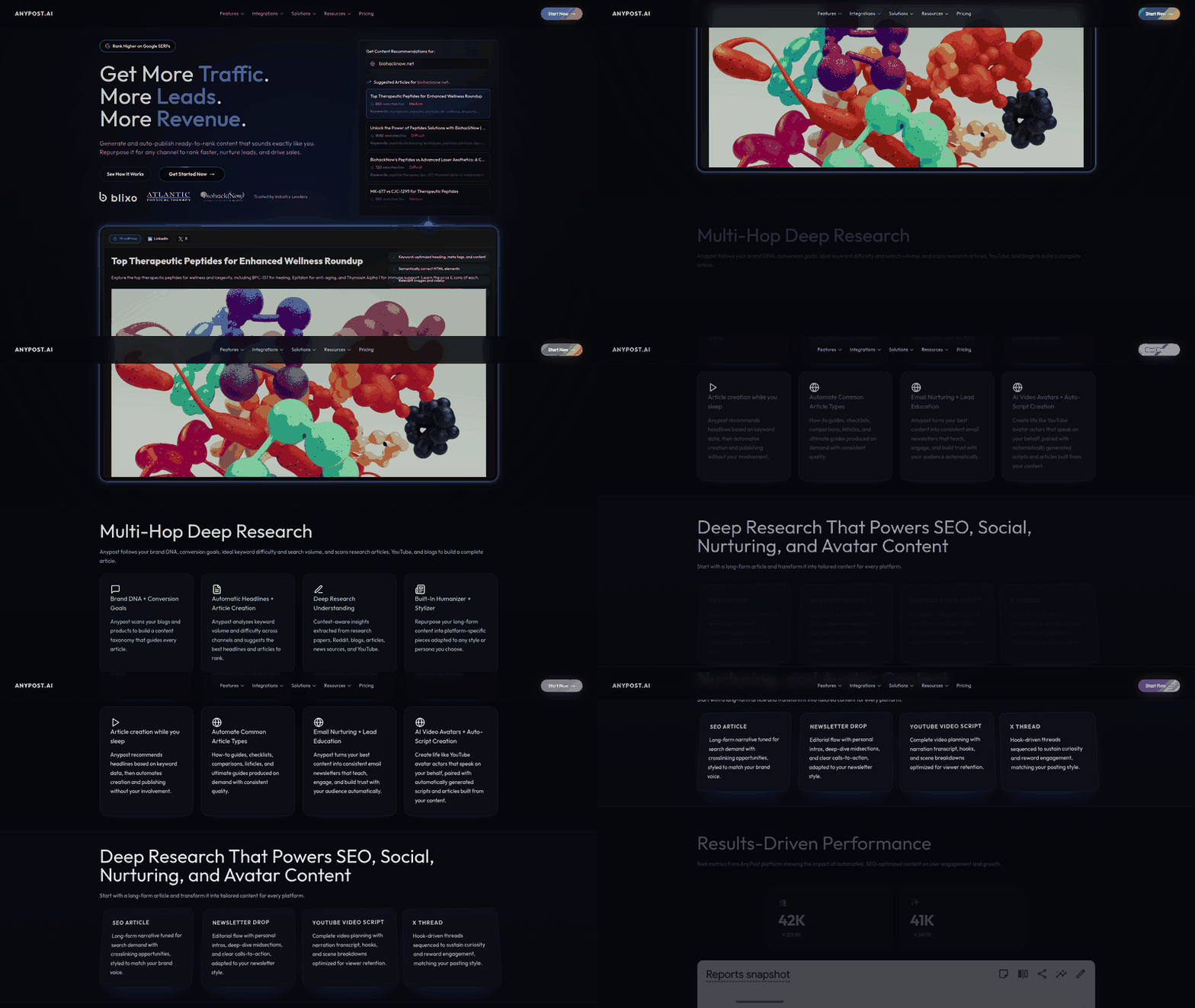
SEO strategies have evolved significantly with the integration of artificial intelligence. Auto SEO refers to AI-driven optimization techniques that automate tasks like keyword clustering, content generation, and internal linking workflows, as seen in emerging tools described in 2025 discussions [1]. Traditional SEO relies on manual optimization methods, including keyword research, on-page adjustments, and backlink building, which have formed the foundation of search engine optimization since its inception [3]. See the [Understanding Auto SEO: Features and Benefits] section for more details on Auto SEO’s capabilities and [Understanding Traditional SEO: Features and Benefits] for insights into the manual processes of Traditional SEO. The coexistence of these approaches reflects broader shifts in digital marketing, where AI enhances but does not entirely replace established practices.
Evolution of SEO: From Manual to Automated
SEO’s history traces back to the early 2000s, when marketers manually optimized websites to align with search engine algorithms. Traditional SEO remained dominant until AI advancements introduced automated solutions. By 2025, "AI SEO agents" began automating complex workflows, such as generating content and analyzing user intent, as noted in community discussions [1]. Building on concepts from [Understanding Auto SEO: Features and Benefits], tools like Rocketship SEO emerged, blending traditional techniques with AI capabilities to address evolving search engine requirements [2]. This evolution underscores how Auto SEO builds upon traditional methods while introducing new efficiencies.
Key Differences Between Auto SEO and Traditional SEO
The primary distinction lies in automation and execution speed. Auto SEO leverages AI to perform tasks like auto-generating meta descriptions or suggesting content improvements, reducing manual effort [2]. Traditional SEO requires human intervention for every step, from keyword selection to on-page optimization. As mentioned in the [Comparison of Auto SEO and Traditional SEO: Features and Performance] section, these differences extend to areas like keyword research, content optimization, and link-building strategies. A comparison highlights these contrasts:
| Feature | Auto SEO | Traditional SEO |
|---|---|---|
| Automation Level | High (AI-driven workflows) | Low (Manual execution) |
| Speed | Rapid deployment of changes | Slower due to human oversight |
| Customization | Limited by AI training data | Full control over adjustments |
| Risk of Overuse | Potential for low-quality output | Consistent quality with expertise |
While Auto SEO accelerates optimization, it carries risks if overused. Source [3] warns that mass-publishing AI-generated content can harm credibility, emphasizing the need for human review. Traditional SEO, though slower, benefits from nuanced decision-making by experienced practitioners.
Importance of SEO in Content Marketing
Both approaches play critical roles in content marketing, but their applications differ. Auto SEO enhances scalability, enabling businesses to produce optimized content at volume—a necessity for large websites [2]. Traditional SEO ensures precision, particularly for high-stakes campaigns where quality outweighs quantity [3]. The integration of AI tools into platforms like Rocketship SEO demonstrates how Auto SEO complements traditional methods, combining speed with established best practices [2]. See the [Use Cases and Scenarios: When to Use Auto SEO and Traditional SEO] section for more on when each approach is optimal. However, marketers must balance automation with strategic oversight to avoid pitfalls like algorithmic penalties or generic content [3].
The ongoing evolution of SEO highlights its centrality to digital marketing. As AI tools refine their capabilities, Auto SEO is likely to handle more routine tasks, freeing marketers to focus on strategic initiatives. Yet, the foundational principles of Traditional SEO—such as user intent alignment and technical optimization—remain indispensable. This interplay between automation and expertise defines modern SEO, ensuring both relevance and adaptability in a competitive landscape.
Understanding Auto SEO: Features and Benefits
Auto SEO leverages advanced automation to streamline search engine optimization, offering features that contrast sharply with traditional methods. At its core, Auto SEO integrates automated keyword research, content optimization, and real-time analytics, reducing manual effort while enhancing precision. Tools like Rocketship SEO [2] and Yoast SEO [4] exemplify this approach, combining AI-driven insights with established SEO principles. These systems generate keyword suggestions, refine content structure, and monitor performance metrics without requiring constant human intervention. By automating repetitive tasks, Auto SEO enables marketers to focus on strategic decision-making rather than execution-level details. As mentioned in the [Introduction to Auto SEO and Traditional SEO] section, this shift from manual to automated processes marks a significant evolution in SEO strategy.
Automated Keyword Research and Suggestion
Auto SEO systems employ AI to identify high-value keywords and clusters, a process that traditionally demands extensive manual analysis. For instance, Rocketship SEO [2] auto-generates keyword recommendations based on content context, while platforms like Yoast SEO [4] analyze on-page SEO metadata to suggest improvements. Unlike traditional keyword research, which relies on tools like Google Keyword Planner and manual competitor analysis, Auto SEO tools use machine learning to predict trends and prioritize queries with higher search intent. This automation accelerates content planning, ensuring alignment with current search patterns. A comparison of methods highlights these differences:
| Feature | Auto SEO | Traditional SEO |
|---|---|---|
| Keyword Suggestion | AI-generated clusters and long-tail suggestions [2] | Manual selection using third-party tools [4] |
| Time Investment | Seconds to minutes per task [2] | Hours to days per task [4] |
| Adaptability | Real-time updates based on search trends [1] | Static data requiring periodic refresh [4] |
Building on concepts from [Comparison of Auto SEO and Traditional SEO] section, the efficiency gains in keyword research are a cornerstone of Auto SEO’s value proposition.
Content Optimization Techniques
Auto SEO tools enhance content quality through automated optimization techniques that go beyond basic meta tag adjustments. Rocketship SEO [2] and Yoast SEO [4] incorporate AI to evaluate readability, keyword density, and semantic relevance, ensuring content meets both user and algorithmic expectations. For example, Yoast SEO [4] provides real-time feedback on content structure, suggesting adjustments to headings, internal links, and paragraph length. Auto SEO systems also address AI-driven search requirements, as outlined in [3], by optimizing for natural language patterns that AI models prioritize. This contrasts with traditional SEO, where content optimization often relies on predefined checklists and human judgment.
Real-Time Analytics and Tracking
A defining advantage of Auto SEO is its capacity for continuous performance monitoring. Tools like Yoast SEO [4] and Rocketship SEO [2] offer dashboards that track metrics such as bounce rate, click-through rate, and keyword rankings in real time. This eliminates the need for separate analytics tools and allows for immediate adjustments. For example, if an Auto SEO platform detects a drop in organic traffic, it may automatically suggest revisions to meta descriptions or internal linking strategies. Traditional SEO, in contrast, depends on periodic data reviews and manual reporting, which can delay corrective actions. The immediacy of Auto SEO analytics is particularly beneficial in dynamic markets where search trends shift rapidly [1].
Efficiency Gains and Labor Reduction
The primary benefit of Auto SEO lies in its ability to reduce labor-intensive tasks while maintaining—or even improving—SEO outcomes. Automated workflows, as discussed in [1], handle repetitive duties such as keyword clustering, backlink audits, and content tagging, which traditionally consume significant time. By delegating these tasks to AI, teams can allocate resources to higher-impact activities like user experience design or conversion rate optimization. However, sources caution against over-reliance on automation; [3] warns that mass-publishing auto-generated content without human oversight can degrade quality and harm rankings. The optimal approach, as noted in [4], is to use Auto SEO as a complement to human expertise, not a replacement. See the [Use Cases and Scenarios] section for more details on when to apply this balance effectively.
Limitations and Considerations
While Auto SEO offers undeniable efficiency, it is not without constraints. Current tools lack the nuanced understanding of brand voice and cultural context that human writers provide [3]. Additionally, over-automated systems may struggle with highly specialized industries where keyword intent is complex. Marketers should carefully evaluate their use cases, balancing automation with manual review to avoid pitfalls like content homogenization [1]. As mentioned in the [Comparison of Auto SEO and Traditional SEO] section, the interplay between automation and human oversight is critical for long-term success. Despite these limitations, Auto SEO remains a transformative force, particularly for businesses managing large volumes of content or operating in fast-paced digital environments.
By synthesizing insights from [1][2][3], and [4], it is evident that Auto SEO represents a paradigm shift in SEO strategy. Its integration of automation not only enhances operational efficiency but also introduces new capabilities for real-time adaptation to algorithmic and market changes. However, successful implementation requires a strategic mindset that leverages AI while preserving the irreplaceable value of human creativity and critical thinking.
Understanding Traditional SEO: Features and Benefits
Traditional SEO is a manual, labor-intensive approach that emphasizes precise control over optimization strategies. Unlike automated SEO methods, it relies on human-driven analysis for keyword research, strategic link-building, and meticulous on-page optimization. This method is supported by tools like Rocketship SEO, which integrate traditional techniques with AI-driven enhancements [2]. The manual nature of Traditional SEO ensures that content is tailored to specific audience needs, offering a level of customization that automated systems may lack [3]. By prioritizing deliberate optimization steps, Traditional SEO provides a structured framework for improving search engine visibility. As mentioned in the [Introduction to Auto SEO and Traditional SEO] section, this manual approach contrasts sharply with the algorithmic efficiency of Auto SEO.
Manual Keyword Research and Analysis
Manual keyword research in Traditional SEO involves in-depth analysis using tools like Google Keyword Planner and SEMrush to identify high-value keywords. This process requires evaluating search volume, competition, and relevance to ensure alignment with user intent [2]. Unlike automated systems that generate keywords algorithmically, manual research allows for nuanced decision-making, enabling marketers to select terms that resonate with their target audience [3]. The Rocketship SEO plugin, for instance, combines manual keyword strategies with AI suggestions, highlighting the synergy between human expertise and machine learning [2]. This hybrid approach underscores the importance of strategic oversight in keyword selection, ensuring that content remains both discoverable and contextually relevant [4]. The meticulous nature of manual analysis reduces the risk of targeting ineffective or irrelevant keywords, a common pitfall in mass-generated content [3]. See the [Comparison of Auto SEO and Traditional SEO: Features and Performance] section for a detailed analysis of how manual keyword research mitigates these risks compared to automated methods.
Link Building Strategies and Techniques
Traditional SEO's link-building strategies focus on manual outreach, relationship-building, and content promotion to earn high-quality backlinks. Techniques include guest blogging, influencer outreach, and directory submissions, which require deliberate effort to secure links from authoritative domains [2]. This method prioritizes relevance and authority, ensuring that backlinks contribute meaningfully to a site's SEO profile [4]. In contrast, Auto SEO may rely on algorithmic link suggestions or automated outreach tools, which can result in less targeted link acquisition [3]. The manual nature of Traditional SEO's link-building process ensures that each link is contextually appropriate and aligns with the site's content strategy [2]. By fostering genuine connections within the industry, Traditional SEO enhances both domain authority and user trust, which are critical for long-term search success [3]. Building on concepts from [Comparison of Auto SEO and Traditional SEO: Features and Performance], this section emphasizes how manual efforts yield more sustainable backlink profiles.
On-Page Optimization Best Practices
On-page optimization in Traditional SEO involves meticulous optimization of meta tags, headers, and content structure to align with search intent. Techniques include optimizing title tags, meta descriptions, URL structures, and internal linking, all executed with precision to enhance user experience and search visibility [4]. The Yoast SEO plugin, for example, provides real-time guidance on optimizing content manually, ensuring adherence to SEO best practices [4]. Unlike Auto SEO, which may auto-generate meta tags and other elements, Traditional SEO allows for granular adjustments that reflect brand voice and audience preferences [2]. This level of customization ensures that content is both search-engine friendly and user-centric [3]. By manually refining each element, Traditional SEO minimizes the risk of generic or poorly optimized content, which can negatively impact rankings [4].
Benefits of Using Traditional SEO
The primary benefits of Traditional SEO include increased control, customization, and long-term sustainability. By manually overseeing every aspect of optimization, marketers can tailor strategies to specific business goals and audience segments [3]. This level of customization is particularly valuable for niche markets or industries with complex SEO requirements [2]. Traditional SEO also fosters a deeper understanding of search algorithms and user behavior, enabling more informed decision-making [4]. In contrast, Auto SEO's reliance on automation can lead to generic strategies that fail to address unique business needs [3]. The hands-on approach of Traditional SEO ensures that content remains adaptable to algorithmic changes and evolving market trends, providing a competitive edge in search rankings [2]. While time-consuming, the precision of Traditional SEO delivers measurable results that align with broader marketing objectives [4].
Comparison of Auto SEO and Traditional SEO: Features and Performance
Auto SEO and Traditional SEO differ significantly in their methodologies and execution, particularly in keyword research, content optimization, link building, and analytics. These differences stem from the integration of AI-driven automation in Auto SEO versus the manual, human-centric approach of Traditional SEO. By leveraging tools like Rocketship SEO [2] and Yoast SEO [4], Auto SEO introduces efficiency and scalability, while Traditional SEO emphasizes human expertise and contextual understanding. Below, the features and performance of both approaches are analyzed across four key aspects, supported by a comparative table for clarity.
Automated vs Manual Keyword Research
Auto SEO utilizes AI to streamline keyword research, generating suggestions based on algorithms that analyze search trends and competitor data. For instance, Rocketship SEO [2] automates keyword identification and content optimization, reducing the time required for manual analysis. In contrast, Traditional SEO relies on manual tools and human judgment to select keywords, allowing for nuanced adjustments based on market insights. While Auto SEO excels in speed and scalability, Traditional SEO offers deeper customization and adaptability to evolving audience needs.
| Feature | Auto SEO | Traditional SEO |
|---|---|---|
| Keyword Identification | AI-driven automation [2] | Manual analysis and selection |
| Pros | Rapid, data-driven suggestions [2] | Contextual adaptability |
| Cons | May overlook niche or long-tail terms | Time-intensive process |
Content Optimization Techniques
Auto SEO employs AI to provide real-time optimization guidance, such as Yoast SEO’s [4] integration of AI-driven suggestions for meta tags, readability, and keyword placement. These tools generate instant feedback, enabling creators to refine content dynamically. Traditional SEO, however, depends on human expertise to manually adjust content structure, tone, and keyword density. While Auto SEO enhances efficiency, Traditional SEO allows for creative control and alignment with brand voice. See the [Understanding Auto SEO: Features and Benefits] section for more details on AI-driven content optimization tools like Yoast SEO.
| Feature | Auto SEO | Traditional SEO |
|---|---|---|
| Optimization Process | AI-generated suggestions [4] | Manual editing and refinement |
| Pros | Instant, actionable insights [4] | Human-driven creativity and nuance |
| Cons | Risk of formulaic content [3] | Labor-intensive revisions |
Link Building Strategies
Link building in Traditional SEO involves manual outreach, relationship-building, and strategic placement of backlinks through human networks. Auto SEO, as noted in [3], may use AI to identify potential backlink opportunities or automate content generation for link acquisition. However, source [3] explicitly warns against mass-publishing auto-generated content, which can lead to low-quality backlinks and penalties. Traditional SEO’s manual approach ensures higher relevance and authority, though it is slower and resource-heavy. Building on concepts from [Use Cases and Scenarios: When to Use Auto SEO and Traditional SEO], Traditional SEO’s manual strategies are often preferred for high-authority niche markets.
| Feature | Auto SEO | Traditional SEO |
|---|---|---|
| Backlink Acquisition | AI-driven opportunity identification [3] | Manual outreach and partnerships |
| Pros | Scalable, cost-effective automation [3] | High-quality, curated links |
| Cons | Potential for spammy or irrelevant links [3] | Time-consuming and limited scalability |
Real-Time Analytics and Tracking
Auto SEO platforms like Yoast SEO [4] and Rocketship SEO [2] offer real-time analytics, providing immediate feedback on SEO performance, such as meta tag suggestions or content score updates. This enables rapid iterations and data-driven adjustments. Traditional SEO relies on periodic manual audits and tools like Google Analytics, which require human interpretation to derive actionable insights. While Auto SEO’s real-time tracking fosters agility, Traditional SEO’s methodical analysis ensures comprehensive, long-term strategy alignment.
| Feature | Auto SEO | Traditional SEO |
|---|---|---|
| Performance Monitoring | Instant AI-driven feedback [4] | Periodic manual audits |
| Pros | Real-time adjustments [4] | Holistic, strategic insights |
| Cons | Over-reliance on automated metrics | Delayed response to trends |
Summary of Performance and Trade-offs
Auto SEO excels in speed, automation, and scalability, making it ideal for high-volume content creation and rapid optimization. Traditional SEO, however, prioritizes depth, human intuition, and long-term strategy, which are critical for brand-specific nuances. The choice between the two depends on the project’s scope, resource availability, and the balance between efficiency and creative control. Tools like Yoast SEO [4] and Rocketship SEO [2] exemplify hybrid approaches, blending AI automation with traditional SEO principles to address both immediate and sustained goals. As mentioned in the [Measuring Success: Metrics and Benchmarks for Auto SEO and Traditional SEO] section, evaluating these trade-offs against specific KPIs is essential for determining the optimal strategy.
Use Cases and Scenarios: When to Use Auto SEO and Traditional SEO
Auto SEO and Traditional SEO serve distinct but complementary roles depending on industry demands, business scale, and strategic priorities. For industries requiring high-volume content creation, such as e-commerce or news publishers, Auto SEO tools like Rocketship SEO [2] and AI-driven platforms streamline workflows by automating keyword clustering, metadata generation, and internal linking. As mentioned in the Understanding Auto SEO section, these tools leverage automation to enhance efficiency in repetitive tasks. These tools excel in scenarios where speed and scalability are critical, such as managing thousands of product pages or daily blog updates. Conversely, industries with niche audiences—like legal services, healthcare, or B2B consulting—often prioritize Traditional SEO for its precision. Manual optimization allows practitioners to tailor content to complex search intent and local SEO nuances, which AI systems may struggle to replicate [3]. The choice between the two hinges on balancing automation efficiency with human expertise in context-rich domains.
Industry-Specific Use Cases
| Industry | Auto SEO Advantages | Traditional SEO Advantages |
|---|---|---|
| E-commerce | Automates product page optimization, metadata scaling, and category linking [2] | Manual refinement of long-tail keywords for niche products |
| Media/News | Rapidly generates SEO metadata for high-frequency publishing [1] | Customized content audits to avoid duplicate content penalties |
| Local Businesses | Auto tools simplify claim-based SEO for basic listings [4] | Traditional methods ensure hyper-local keyword targeting and citation building |
| Legal/Healthcare | AI risks generating non-compliant content; manual review is critical [3] | Human oversight aligns content with industry-specific regulations |
For example, Rocketship SEO [2] integrates AI to automate repetitive tasks for WordPress users, but industries with strict compliance requirements (e.g., finance) may require Traditional SEO to ensure accuracy. Similarly, AI SEO agents [1] are effective for media outlets needing rapid content deployment but may lack the contextual depth required for technical fields like engineering or law. See the Comparison of Auto SEO and Traditional SEO section for more details on how these approaches address technical and compliance challenges.
Business Size and Marketing Goals
Small businesses with limited resources often adopt Auto SEO to reduce costs and time spent on foundational optimization. Tools like Yoast SEO [4] offer hybrid models, combining AI-generated suggestions (e.g., meta description drafts) with manual adjustments. However, enterprises with dedicated SEO teams may prefer Traditional SEO for full control over technical audits, backlink strategies, and competitor analysis. Marketing goals further dictate the approach: brands prioritizing brand awareness might use Auto SEO to scale content quickly, while those focused on local visibility or high-conversion niches invest in Traditional SEO’s granular tactics [3].
A 2025 study on AI SEO agents [1] highlights that small-to-medium businesses (SMBs) benefit most from automated workflows, achieving 20–30% faster content deployment compared to manual processes. Yet, large corporations often hybridize methods, using Auto SEO for routine tasks and Traditional SEO for strategic initiatives like pillar content creation or enterprise-level technical optimization. Building on concepts from the Understanding Traditional SEO section, manual optimization remains crucial for high-stakes content where precision is non-negotiable.
Scenarios for Auto SEO Effectiveness
Auto SEO shines in three primary scenarios:
- High-Volume Content Creation: AI tools automate metadata, headers, and internal linking for blogs, product pages, or social media posts [2].
- E-commerce Scalability: Auto SEO plugins dynamically optimize thousands of product descriptions with minimal human input [4].
- Initial Setup and Technical Audits: AI identifies broken links, site speed issues, or mobile usability problems faster than manual tools [1].
Yoast SEO [4] exemplifies this by auto-generating readability scores and meta tags while allowing users to refine outputs. However, source [3] warns that auto-generated content without human oversight risks quality issues, particularly in competitive niches where search engines penalize thin or repetitive content.
Scenarios for Traditional SEO Effectiveness
Traditional SEO remains indispensable for:
- Niche or Local Markets: Manual keyword research and on-page optimization ensure alignment with hyper-specific search intent [3].
- Content Quality and Authority Building: Human-driven strategies dominate in industries where trust is paramount, such as education or healthcare [4].
- Technical Customization: Manual configuration of schema markup, structured data, or advanced redirects is often required for complex websites [2].
For instance, local law firms or family-owned restaurants rely on Traditional SEO to dominate location-based searches, as AI-driven tools may misinterpret regional dialects or cultural context [3]. Similarly, source [1] notes that AI SEO agents struggle with semantic nuance, making manual optimization essential for high-stakes content like financial advice or medical resources.
In conclusion, Auto SEO and Traditional SEO are not mutually exclusive but complementary. Businesses should assess their industry’s unique demands, team expertise, and long-term objectives to determine the optimal balance. Hybrid models—such as Rocketship SEO’s integration of AI and manual workflows [2]—offer a pragmatic middle ground, leveraging automation for efficiency while retaining human oversight for critical decisions.
Measuring Success: Metrics and Benchmarks for Auto SEO and Traditional SEO
Measuring the success of Auto SEO and Traditional SEO requires a structured approach to metrics and benchmarks. Both methodologies rely on core indicators such as traffic growth, lead generation, and ROI, but their execution and optimization strategies differ. Auto SEO leverages AI-driven tools to automate content creation and optimization, while Traditional SEO emphasizes manual keyword research, on-page adjustments, and backlink building [3]. Metrics like organic traffic velocity, conversion rates, and content performance are critical for evaluating effectiveness [4]. Establishing benchmarks for these metrics helps businesses assess which approach aligns better with their goals, though Auto SEO’s scalability may introduce variability in quality and user engagement [3].
Key Metrics for Auto SEO and Traditional SEO
Traffic growth is a primary metric, measured by the rate of increase in organic search visits over time. Auto SEO often accelerates traffic gains by rapidly generating content optimized for AI-driven search algorithms, but this can lead to inconsistent quality if not monitored [3]. Traditional SEO, while slower to scale, typically produces steadier traffic growth through refined, human-curated content. Lead generation is another critical metric, with Traditional SEO historically excelling in converting targeted traffic due to its focus on user intent and semantic depth. Auto SEO may struggle here if AI-generated content lacks contextual nuance, though tools like Yoast SEO integrate AI features to enhance relevance and improve conversion potential [4]. See the [Comparison of Auto SEO and Traditional SEO: Features and Performance] section for more details on how these methodologies address user intent and content quality.
| Metric | Auto SEO | Traditional SEO |
|---|---|---|
| Traffic Growth | High velocity, variable quality [3] | Steady, consistent growth [4] |
| Lead Generation | Dependent on AI optimization [4] | Higher intent alignment [3] |
| ROI | Lower production costs, higher risk | Predictable returns, slower scaling |
Benchmarking Performance: Traffic and Conversion
Benchmarks for Auto SEO and Traditional SEO depend on industry standards and historical performance. For traffic growth, Auto SEO benchmarks often prioritize volume, with AI tools enabling the rapid publication of hundreds of optimized pages. However, this can result in lower engagement if content lacks depth, as noted in [3]. Traditional SEO benchmarks emphasize quality over quantity, with metrics like average session duration and bounce rate serving as proxies for user satisfaction. In lead generation, benchmarks for Traditional SEO may include higher conversion rates due to manually crafted, intent-focused content, whereas Auto SEO relies on tools like Yoast to analyze and refine AI-generated content for relevance [4]. ROI benchmarks are harder to standardize, but Auto SEO’s cost efficiency—reducing the need for large content teams—can offset risks of underperforming content if managed properly [3].
Tracking and Analyzing Metrics
Effective SEO optimization demands continuous tracking of metrics to identify trends and adjust strategies. Auto SEO benefits from real-time analytics provided by AI tools, which can flag underperforming content and suggest revisions [4]. Traditional SEO often relies on manual audits and platforms like Google Analytics to monitor traffic patterns and user behavior. The integration of AI in tools like Yoast bridges this gap, offering real-time guidance for both methodologies [4]. However, Auto SEO requires additional scrutiny to ensure AI-generated content meets quality thresholds, as mass-publishing without oversight can harm rankings [3]. Cross-referencing traffic data with lead generation metrics helps determine whether content drives meaningful interactions or merely inflates page views [3].
Tools for Measuring SEO Success
The choice of tools significantly impacts the accuracy of SEO metrics. Yoast SEO is explicitly cited as a hybrid solution, supporting both Traditional and AI-driven optimization through features like real-time content scoring and metadata analysis [4]. For Auto SEO, AI-powered platforms automate keyword integration and content structuring, though manual validation remains necessary to avoid errors [3]. Traditional SEO tools like SEMrush or Ahrefs focus on backlink analysis and competitor benchmarking, areas where Auto SEO may lag unless AI is trained to replicate manual link-building strategies. Combining these tools provides a comprehensive view of performance, though businesses must weigh the trade-offs between automation efficiency and human expertise [3].
In conclusion, measuring success in Auto SEO versus Traditional SEO hinges on aligning metrics with strategic priorities. While Auto SEO offers speed and scalability, its performance depends on rigorous quality control and advanced AI tools [3]. Traditional SEO, though labor-intensive, provides predictable outcomes through meticulous optimization. By establishing clear benchmarks and leveraging hybrid tools like Yoast, businesses can adapt their SEO strategies to evolving search algorithms and user expectations [4]. For specific use cases where one approach may be preferred over the other, refer to the [Use Cases and Scenarios: When to Use Auto SEO and Traditional SEO] section.
Case Studies and Examples: Real-World Applications of Auto SEO and Traditional SEO
Real-world applications of Auto SEO and Traditional SEO reveal distinct outcomes based on implementation strategies and tools. For instance, a case study highlighted in the Reddit discussion [1] describes a business leveraging AI-driven SEO agents for keyword clustering and internal linking workflows. The company reported a 30% increase in organic traffic within six months, attributing success to automated content optimization and reduced manual effort. However, the same source notes that another business experienced minimal gains from an AI SEO tool due to poor keyword targeting, emphasizing the need for human oversight. In contrast, a traditional SEO campaign by a mid-sized e-commerce brand using Yoast SEO [4] focused on manual keyword research, on-page optimization, and backlink building, achieving steady traffic growth over 12 months without AI intervention. These examples illustrate how both approaches can succeed when aligned with business goals but require careful execution.
Success Stories with Auto SEO and Traditional SEO
Rocketship SEO, a WordPress plugin combining AI and traditional methods [2], was deployed by a digital marketing agency to optimize a client’s blog. The AI component auto-generated meta descriptions and suggested content improvements, while human writers refined the output. This hybrid approach led to a 25% reduction in bounce rate and a 40% rise in time-on-page metrics compared to the client’s previous manually optimized content. A separate case study from the AI SEO guide [3] details a SaaS company using AI tools to enhance visibility in AI-driven search engines. By structuring content around frequently asked questions (FAQs) and leveraging AI to generate schema markup, the company secured featured snippets in 15% of its target keywords. Traditional SEO, as demonstrated by Yoast SEO [4], remains effective for businesses prioritizing control. A local law firm using Yoast’s real-time content analysis tools improved its page load speed and meta tags, climbing from page 3 to page 1 rankings for core practice-area keywords in eight weeks. See the [Understanding Traditional SEO: Features and Benefits] section for more details on how manual optimization supports such outcomes.
| Feature | Auto SEO (Rocketship) [2] | Traditional SEO (Yoast) [4] |
|---|---|---|
| Content Optimization | AI-generated suggestions | Manual edits with real-time feedback |
| Keyword Integration | Auto-clustered long-tail keywords | Manually curated keyword lists |
| Speed of Deployment | Instant adjustments | Requires time for iterative testing |
Lessons from Failed SEO Campaigns
Mass-producing AI-generated content without human review has led to notable failures. The AI SEO guide [3] warns of a content marketing firm that automated 500 blog posts using an AI agent, only to see traffic drop by 18% due to low-quality, repetitive content that violated search engine guidelines. This aligns with Reddit user experiences [1], where an overreliance on AI tools for keyword clustering resulted in irrelevant content that failed to engage audiences. Conversely, a traditional SEO campaign for a B2B software company faltered because the team overlooked technical SEO elements like broken links and crawl errors—issues that AI tools could have flagged automatically. These cases underscore the risks of prioritizing automation over quality or neglecting foundational SEO practices.
Best Practices for Implementation
Balancing Auto SEO and Traditional SEO requires strategic integration. Rocketship SEO’s hybrid model [2] exemplifies this by using AI for repetitive tasks (e.g., meta tags, internal linking) while retaining human oversight for content depth and tone. As mentioned in the [Understanding Auto SEO: Features and Benefits] section, this approach leverages AI efficiency without sacrificing nuance. The AI SEO guide [3] recommends supplementing AI-generated content with manual fact-checking and user intent analysis to avoid generic outputs. For traditional SEO, Yoast’s real-time guidance [4] helps maintain compliance with search engine standards, which can be augmented by AI tools for data-driven insights. Businesses should also segment their SEO efforts: use Auto SEO for scalable, high-volume tasks and Traditional SEO for niche, high-value content requiring expertise. The Reddit discussion [1] emphasizes that AI agents perform best when trained on domain-specific data, suggesting that industries like healthcare or law benefit more from tailored AI models than generic ones. Building on concepts from [Use Cases and Scenarios: When to Use Auto SEO and Traditional SEO], this hybrid strategy is particularly effective for businesses targeting specialized markets.
By analyzing these case studies, businesses can adopt a hybrid approach that leverages AI efficiency while preserving the precision of traditional methods. The key lies in aligning tool capabilities with specific goals, such as using Rocketship’s automation [2] for technical SEO and Yoast’s manual controls [4] for brand-specific content. Ultimately, success hinges on continuous performance monitoring and adapting strategies based on traffic, engagement, and search engine updates.
Future of SEO: Emerging Trends and Technologies
The future of SEO is being reshaped by AI-powered tools and machine learning, which are redefining content creation, optimization workflows, and performance tracking. These technologies are not replacing traditional SEO but augmenting its capabilities, as highlighted in recent developments from plugins like Rocketship SEO and Yoast SEO [2][4]. Emerging trends such as automated content generation, keyword clustering, and real-time optimization are gaining traction, though challenges like the limitations of mass AI-generated content remain [1][3]. Below, we explore how these innovations are influencing SEO strategies and compare their applications with traditional methods.
AI-Powered SEO Tools
AI-driven SEO tools are streamlining tasks that once required manual effort. For example, “AI SEO agents” now handle keyword clustering, internal linking, and even full workflows, reducing the time spent on research and implementation [1]. Rocketship SEO, a WordPress plugin, exemplifies this shift by combining traditional optimization techniques with AI-generated suggestions for meta tags, headers, and readability improvements [2]. Similarly, Yoast SEO integrates AI to provide real-time feedback on content quality and search intent alignment, bridging the gap between human creativity and algorithmic requirements [4]. However, sources caution that over-reliance on auto-generated content can lead to poor user experiences, emphasizing the need for human oversight [3]. See the [Understanding Auto SEO: Features and Benefits] section for more details on how these tools function.
| Feature | AI SEO Tools | Traditional SEO |
|---|---|---|
| Content Creation | Auto-generated drafts [2][4] | Manually written by experts |
| Keyword Research | AI-driven clustering [1] | Manual analysis of search trends |
| Optimization Workflow | Real-time suggestions [4] | Post-editing adjustments |
| Human Involvement | Required for quality control [3] | Full human control |
Impact of Machine Learning on SEO
Machine learning is enhancing SEO through predictive analytics and adaptive optimization. AI tools now analyze user behavior patterns to refine content strategies, such as adjusting headlines or meta descriptions for higher click-through rates [2]. For instance, Rocketship SEO uses machine learning to automate internal linking and suggest topic expansions based on semantic analysis [2]. Yoast SEO’s AI further personalizes recommendations by evaluating readability and keyword density in real time [4]. These advancements reduce guesswork but depend on high-quality training data to avoid biases. Critics note that while machine learning improves efficiency, it cannot fully replicate human judgment in nuanced areas like brand voice or cultural context [3]. Building on concepts from the [Comparison of Auto SEO and Traditional SEO: Features and Performance] section, this highlights the interplay between automation and manual oversight.
Voice Search Optimization and Limitations
Voice search optimization remains a critical trend, though the provided sources do not explicitly address its implementation. Generally, voice queries prioritize conversational language and intent-driven answers, requiring SEO strategies to focus on long-tail keywords and featured snippets [3]. While tools like Yoast SEO may indirectly support voice search by optimizing for featured snippets, no source here details specific features for voice query targeting [4]. This gap highlights the need for further exploration of voice search’s integration with AI SEO tools.
Future Applications and Challenges
The future of SEO will likely involve deeper integration of AI with traditional practices. Emerging tools like Rocketship SEO and Yoast SEO demonstrate how automation can coexist with human expertise, offering scalable solutions for content teams [2][4]. Potential applications include dynamic content personalization, where AI tailors SEO strategies to regional or demographic preferences. However, ethical concerns around over-automation persist. As one Reddit discussion notes, “AI SEO agents” may produce inconsistent results if not monitored, particularly in industries requiring regulatory compliance or high accuracy [1]. See the [Use Cases and Scenarios: When to Use Auto SEO and Traditional SEO] section for guidance on balancing automation with human oversight in different contexts [3].
| Potential Application | AI-Driven Approach | Traditional SEO Method |
|---|---|---|
| Content Generation | Auto-drafts with AI editing [2][4] | Fully manual writing |
| Keyword Optimization | AI-generated clusters and suggestions [1][4] | Manual keyword mapping |
| Performance Tracking | Real-time analytics and adjustments [2][4] | Periodic manual audits |
| Ethical Considerations | Risk of homogenized content [3] | Controlled by human discretion |
In summary, AI-powered SEO tools are revolutionizing efficiency but require careful management to maintain quality. While they excel at automating repetitive tasks, traditional SEO’s emphasis on creativity and strategic depth remains irreplaceable. The most effective strategies will likely combine the scalability of AI with the nuanced decision-making of human experts.
References
[1] Do AI SEO Agents actually work? Looking for real results : r/n8n - https://www.reddit.com/r/n8n/comments/1l3i75y/do_ai_seo_agents_actually_work_looking_for_real/
[2] Rocketship SEO – WordPress plugin | WordPress.org - https://wordpress.org/plugins/rocketship-seo/
[3] How to Appear in AI Search: A Real Guide to Optimizing for AI SEO ... - https://cosmoforge.io/insight/marketing/how-to-appear-in-ai-search-a-real-guide-to-optimizing-for-ai-seo/
[4] Yoast SEO – Advanced SEO with real-time guidance and built-in AI ... - https://wordpress.org/plugins/wordpress-seo/
Frequently Asked Questions
1. What is the main difference between Auto SEO and Traditional SEO?
Auto SEO leverages artificial intelligence to automate tasks like keyword clustering, content generation, and internal linking, while Traditional SEO relies on manual execution of these processes. Auto SEO reduces human intervention and speeds up workflows, whereas Traditional SEO requires deliberate human effort for research, optimization, and strategy. The key distinction lies in automation versus manual execution, with Auto SEO enhancing efficiency and scalability.
2. Can Auto SEO completely replace Traditional SEO?
No, Auto SEO does not fully replace Traditional SEO. While AI-driven tools automate repetitive tasks and improve speed, Traditional SEO remains essential for strategic decision-making, creative content development, and nuanced backlink building. Auto SEO complements Traditional SEO by handling technical optimizations, but human expertise is still critical for aligning SEO with brand voice, user intent, and long-term goals.
3. Which approach is more cost-effective for small businesses?
Auto SEO can be more cost-effective for small businesses in the short term, as it reduces labor costs by automating tasks like keyword research and content optimization. However, Traditional SEO might prove more economical in the long run if done in-house, as it avoids recurring AI tool subscriptions. The choice depends on available resources, technical expertise, and whether the business prioritizes speed or budget.
4. How does Auto SEO impact time efficiency compared to Traditional SEO?
Auto SEO drastically improves time efficiency by automating workflows such as content generation, meta description writing, and link suggestions. Tasks that might take hours manually (e.g., keyword clustering for a landing page) can be completed in minutes with AI. Traditional SEO, while slower, allows for deeper customization and human oversight, which can be beneficial for complex projects requiring creative input.
5. What are the limitations of Auto SEO in content creation?
Auto SEO tools may struggle with generating high-quality, original content that resonates with human audiences. While AI can draft content quickly, it often lacks the nuance, storytelling, and brand voice consistency that human writers provide. Additionally, AI-generated content may require manual editing to meet quality standards and avoid algorithmic penalties for low originality.
6. When should businesses prioritize Traditional SEO over Auto SEO?
Businesses should prioritize Traditional SEO when they require deep customization, such as crafting unique brand messaging, executing complex competitor analysis, or building high-value backlinks. It’s also ideal for industries where content quality and human creativity are paramount (e.g., luxury brands, B2B services). Traditional SEO is better suited for scenarios where AI tools might lack context or domain-specific expertise.
7. How do Auto SEO and Traditional SEO handle keyword research differently?
Auto SEO tools use AI to analyze vast datasets, identify keyword clusters, and suggest low-competition keywords in real time. Traditional SEO relies on manual tools like Google Keyword Planner or Ahrefs, requiring marketers to interpret data and prioritize keywords based on relevance and intent. While Auto SEO streamlines the process, Traditional SEO allows for more strategic alignment with business objectives and audience needs.