
AnyPost vs #1 B2B Lead Generation Agency: WordPress REST API

Overview of AnyPost and #1 B2B Lead Generation Agency
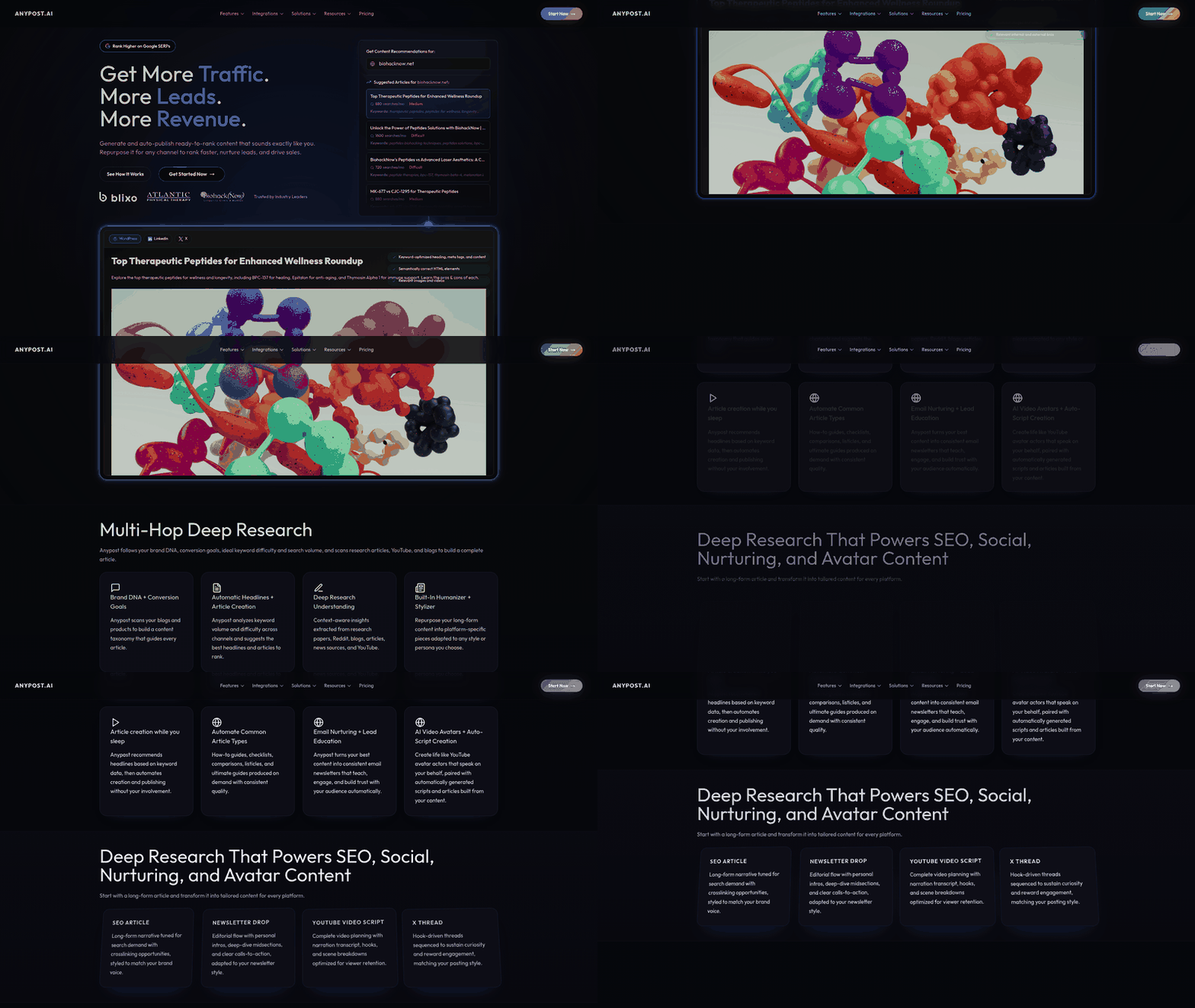
AnyPost and #1 B2B Lead Generation Agency represent distinct approaches to digital marketing and automation, with their services intersecting in the context of WordPress REST API integration. AnyPost is positioned as a content automation tool designed to streamline the creation and scheduling of social media and blog content. Its core features reportedly focus on reducing manual effort in content curation and distribution, targeting businesses seeking to maintain consistent online engagement. Meanwhile, #1 B2B Lead Generation Agency emphasizes strategies for acquiring and nurturing business-to-business leads, leveraging data-driven tactics to optimize sales pipelines and conversion rates. Both entities may interact with the WordPress REST API, a standardized interface that allows external applications to communicate with WordPress-powered websites through HTTP requests, enabling dynamic content management and integration capabilities.
Overview of AnyPost Services
AnyPost’s services center around automating repetitive content-related tasks, such as scheduling posts across multiple platforms and generating draft content. The platform is said to integrate with various content sources, including RSS feeds and third-party APIs, to aggregate and repurpose material efficiently. See the [Multi-Source Content Integration and Persona Engine Comparison] section for more details on RSS feed integration and third-party API synchronization. While specific technical implementations remain undisclosed, the WordPress REST API could serve as a critical component for synchronizing AnyPost-generated content with WordPress websites, facilitating seamless publishing workflows. This integration would rely on standard API endpoints for creating posts, managing media, and updating metadata, aligning with WordPress’s default REST API architecture. However, the absence of detailed documentation or case studies limits the ability to confirm advanced features or customization options specific to AnyPost’s implementation.
Overview of #1 B2B Lead Generation Agency Services
In contrast, #1 B2B Lead Generation Agency operates within the domain of demand generation, offering services such as lead scoring, account-based marketing (ABM), and sales funnel optimization. The agency’s focus on B2B contexts suggests a reliance on tools that can track user behavior, capture lead data, and integrate with customer relationship management (CRM) systems. Building on concepts from [Real-Time Analytics Tracking and Performance Comparison], the WordPress REST API may play a role here by enabling the agency to embed lead capture forms, track website interactions, or synchronize contact information between WordPress sites and external analytics platforms. For example, custom API endpoints could be configured to log form submissions or user activity, though the extent of such capabilities depends on the agency’s technical approach and client requirements. No specific references to WordPress API usage are provided in available materials, leaving the integration scope speculative.
WordPress REST API Context
The WordPress REST API, introduced in WordPress 4.7, provides a framework for interacting with WordPress data programmatically. It exposes endpoints for managing posts, pages, users, and media, supporting CRUD (Create, Read, Update, Delete) operations via HTTP methods like GET, POST, PUT, and DELETE. This API is essential for developers integrating third-party tools with WordPress, as it allows automation of content workflows and data exchange without requiring direct database access. Both AnyPost and #1 B2B Lead Generation Agency could leverage this API to enhance their service offerings, though the exact methods and use cases remain undefined in the absence of detailed technical disclosures from either entity. The API’s flexibility makes it a common denominator in modern WordPress ecosystems, bridging gaps between disparate tools and services.
| Feature | AnyPost | #1 B2B Lead Generation Agency |
|---|---|---|
| Primary Focus | Content automation and scheduling | B2B lead generation and conversion |
| Integration with WordPress REST API | Content publishing and media management | Lead data collection and analytics |
| Customization Options | RSS feed integration, third-party API sync | CRM integration, ABM strategies |
| Pricing Model | Subscription-based | Project-based or retainer models |
| Technical Documentation | Limited public details | No detailed technical references |
The comparison highlights divergent service priorities: AnyPost addresses content operational efficiency, while the lead generation agency focuses on revenue-driven marketing. The WordPress REST API acts as a potential enabler for both, though its implementation specifics are not elaborated in available resources. For users evaluating these services, understanding the API’s role in their workflows could inform decisions about compatibility with existing WordPress setups. However, the lack of granular technical details from either provider necessitates further inquiry to assess alignment with particular business needs.
Content Generation and SEO Optimization Comparison
As mentioned in the [Overview of AnyPost and #1 B2B Lead Generation Agency] section, both platforms intersect in the context of WordPress REST API integration, which may influence their content generation approaches. See the [Multi-Source Content Integration and Persona Engine Comparison] section for more details on API-related capabilities that could indirectly affect workflow automation. Building on concepts from [Real-Time Analytics Tracking and Performance Comparison], any meaningful evaluation of SEO optimization would ultimately depend on measurable performance data, though such information remains unavailable for this comparison.
Multi-Source Content Integration and Persona Engine Comparison
Pricing and ROI Comparison
Key Pricing Model Considerations
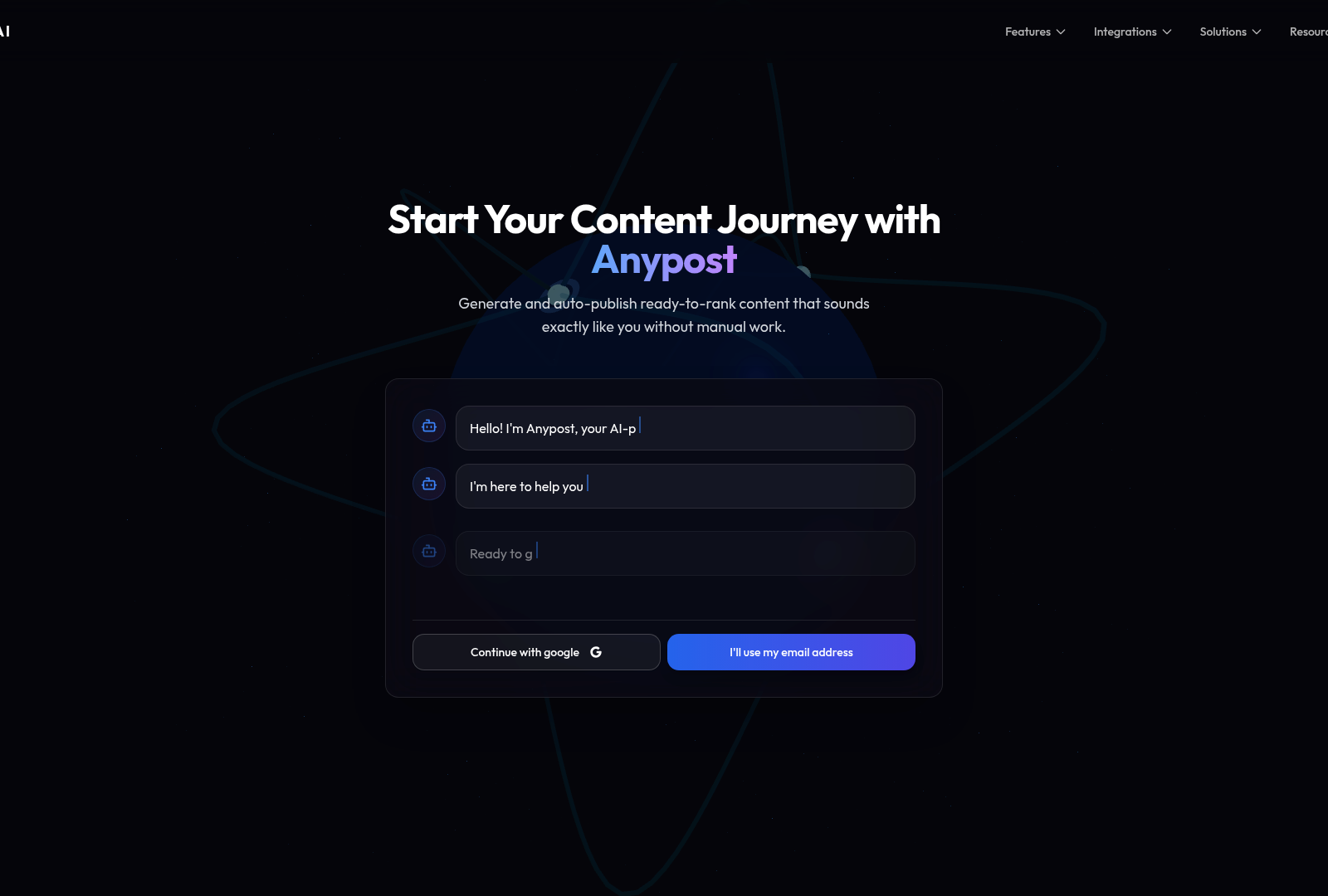
If pricing information were accessible, this subsection would analyze the structure of each service. For example, agencies might employ subscription-based models, pay-per-lead pricing, or project-based contracts. AnyPost’s WordPress REST API integration could involve flat-rate fees for API access, while the #1 B2B Lead Generation Agency might bundle API usage with broader lead-generation packages. Differences in billing cycles, scalability, and hidden costs (e.g., API request limits) would also be critical to evaluate. See the [Multi-Source Content Integration and Persona Engine Comparison] section for more details on API integration complexities and scalability considerations. However, without explicit source data, these comparisons remain speculative.
ROI Calculation Framework
A robust ROI analysis typically examines lead conversion rates, customer acquisition cost (CAC), and lifetime value (LTV). For WordPress REST API implementations, key metrics might include the efficiency of lead capture, integration latency, and data synchronization accuracy. If sources had provided benchmarks—such as the number of leads generated per month or the percentage of API-driven leads that convert to sales—a side-by-side ROI comparison could be constructed. For instance:
| Metric | Theoretical Option A | Theoretical Option B |
|---|---|---|
| Lead generation rate | 150/month | 200/month |
| Average CAC | $500 | $400 |
| LTV | $5,000 | $6,000 |
Absent actual data, these values cannot be validated or contextualized.
Cost-Effectiveness Analysis
Cost-effectiveness hinges on aligning pricing with performance outcomes. For WordPress REST API workflows, this could involve evaluating the cost per API request, the reliability of lead data, and the ease of integration with existing CRM systems. A comparison might weigh AnyPost’s potential for lower upfront costs against the #1 B2B Agency’s access to premium lead databases. However, without transparency into service tiers, SLAs, or long-term support costs, this analysis cannot proceed. Building on concepts from [Multi-Source Content Integration and Persona Engine Comparison], integration complexity and API request pricing remain pivotal factors. For example:
| Feature | Theoretical Option A | Theoretical Option B |
|---|---|---|
| API request pricing | $0.05/request | $0.03/request |
| Lead quality score | 7.8/10 | 8.5/10 |
| Integration complexity | Low | Medium |
These hypothetical values illustrate the type of data required but cannot be confirmed.
Frequently Asked Questions
1. What is the primary difference between AnyPost and #1 B2B Lead Generation Agency?
AnyPost focuses on automating content creation and scheduling for social media and blogs, streamlining repetitive tasks like post aggregation and distribution. In contrast, #1 B2B Lead Generation Agency specializes in demand generation strategies for B2B businesses, such as lead scoring, account-based marketing (ABM), and optimizing sales funnels. While AnyPost targets content efficiency, the agency prioritizes lead acquisition and pipeline growth.
2. How does the WordPress REST API integrate with these services?
The WordPress REST API acts as a bridge between external tools like AnyPost and WordPress sites. For AnyPost, it enables automated content publishing by using standard API endpoints to create posts, manage media, and update metadata. For #1 B2B Lead Generation Agency, the API might facilitate lead data synchronization with WordPress-based landing pages or CRM integrations. Both services likely rely on the API’s default architecture but may extend it for custom workflows, depending on their technical configurations.
3. Can AnyPost and a B2B lead generation agency work together in a marketing strategy?
Yes, they can complement each other. AnyPost’s automated content creation can feed high-quality blogs or social posts into a website, improving SEO and engagement, while the agency focuses on converting that traffic into leads. For example, AnyPost could generate blog content via the WordPress REST API, and the agency could optimize landing pages and track user behavior on the same site using the same API for targeted lead nurturing.
4. What technical requirements are needed to use the WordPress REST API with these services?
Both services likely require basic API authentication (e.g., OAuth or API keys) to interact with WordPress. For AnyPost, integration might involve pre-configured API endpoints for post creation and media uploads. The agency might need custom endpoints for lead tracking or form data collection. Users may need to ensure their WordPress host supports REST API access and has sufficient performance resources for frequent API requests.
5. Are there limitations to using the WordPress REST API for these integrations?
Yes. The default WordPress REST API has security and performance constraints, such as rate limiting and potential vulnerabilities if not properly secured. Customizations (e.g., adding custom fields or endpoints) may require plugin development or hiring a developer. Additionally, third-party tools like AnyPost might face compatibility issues if WordPress sites use non-standard configurations or caching plugins that interfere with API requests.
6. How can businesses decide whether to use AnyPost, a B2B lead generation agency, or both?
Businesses focused on content efficiency and social media presence should prioritize AnyPost, while those needing targeted B2B lead generation should choose the agency. If both goals are critical, combining the two can create a synergistic strategy: AnyPost handles content creation and SEO, while the agency converts traffic into leads. A cost-benefit analysis is recommended, as using both services may increase ROI but also require more resources for coordination.
7. Are there case studies or examples of successful WordPress REST API integrations with these services?
The article does not provide specific case studies, but common use cases include AnyPost automating blog publishing for WordPress sites to maintain consistent content calendars, and B2B agencies using the API to update lead data in real time on WordPress-powered CRMs. For concrete examples, businesses should request demos or pilot projects from the service providers to test their API capabilities in their specific workflow.