
AnyPost vs Artisan AI: Outsourced Lead Gen Efficiency

Overview of AnyPost and Artisan AI
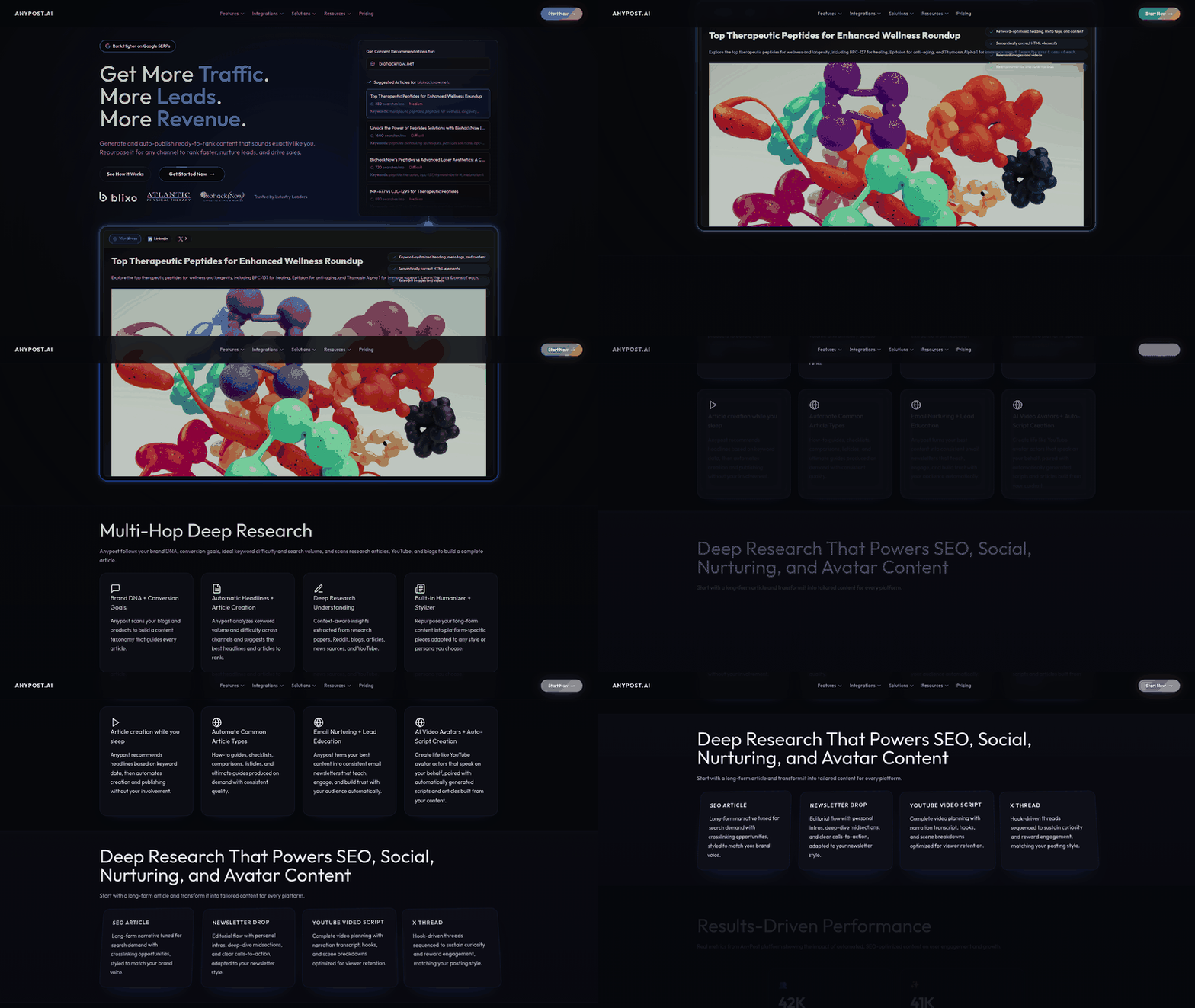
AnyPost and Artisan AI are platforms designed to streamline content creation and lead generation, though they approach these tasks with distinct methodologies. AnyPost positions itself as an AI-driven solution for generating social media posts, blog content, and email campaigns, leveraging automation to reduce manual effort. Artisan AI, by contrast, emphasizes a hybrid model combining AI tools with human expertise to craft targeted lead generation strategies. Both platforms aim to address inefficiencies in content production and outreach but cater to different workflows and business needs. Below, their features, pain points, and use cases are analyzed to clarify their roles in modern marketing operations.
Key Features Comparison
| Feature | AnyPost | Artisan AI |
|---|---|---|
| Core Focus | Automated content generation | AI-assisted lead generation |
| Content Types | Social media posts, blogs, email drafts | LinkedIn outreach, sales messaging, personalized campaigns |
| Automation Level | High (generates drafts from prompts) | Moderate (AI tools support human strategists) |
| Customization | Template-based with AI suggestions | Tailored by account managers and AI collaboration |
AnyPost’s automation capabilities enable rapid production of content drafts, which users can refine manually. For example, users input keywords or topics, and the platform generates variations for platforms like LinkedIn or Twitter. Artisan AI, meanwhile, integrates AI tools for tasks like lead scoring and message optimization but relies on human teams to execute outreach campaigns, ensuring a balance between scalability and personalization. See the Automated Content Generation Comparison section for more details on how these platforms’ AI capabilities differ in execution.
Pain Points Addressed
| Pain Point | AnyPost Solution | Artisan AI Solution |
|---|---|---|
| Time-consuming content creation | AI-generated drafts reduce writing time | Pre-written templates and AI suggestions |
| Inconsistent brand voice | Customizable tone settings | Human oversight for messaging alignment |
| Low lead conversion rates | N/A | AI-driven personalization and follow-up strategies |
AnyPost targets businesses struggling with content volume, enabling teams to maintain consistent publishing schedules without overburdening writers. Artisan AI addresses challenges in B2B lead generation, where generic outreach often fails to engage prospects. Its AI tools analyze prospect data to suggest personalized messaging, while human strategists adjust tactics based on real-time feedback.
Target Audience and Use Cases
| Audience | AnyPost | Artisan AI |
|---|---|---|
| B2B SaaS companies | Yes (for blog and social content) | Yes (for outbound sales efforts) |
| Marketing agencies | Yes (client content at scale) | Yes (managed lead gen for clients) |
| Solo entrepreneurs | Yes (quick post creation) | Limited (requires dedicated outreach time) |
AnyPost is well-suited for teams needing high-volume content, such as agencies managing multiple client blogs or SaaS companies maintaining developer-focused newsletters. Artisan AI appeals to sales teams and agencies focused on B2B outreach, particularly in industries requiring nuanced prospect engagement, like enterprise software or consulting. For instance, a startup using Artisan AI might automate initial LinkedIn InMails while relying on human sales reps for follow-ups.
Comparative Analysis of Workflows
The platforms diverge in their workflows. AnyPost operates as a self-serve tool where users input prompts and receive AI-generated output, making it ideal for businesses prioritizing speed over customization. Artisan AI’s workflow involves a setup phase with human strategists who configure AI tools to align with a company’s sales playbook, followed by collaborative execution where AI handles data analysis while humans manage prospect interactions. This distinction positions AnyPost as a cost-effective solution for content-heavy roles and Artisan AI as a premium option for sales teams requiring precision in outreach. Building on concepts from the User Experience and Support Comparison section, Artisan AI’s hybrid model reflects its emphasis on human-AI collaboration during setup and execution.
Both platforms aim to alleviate bottlenecks in marketing and sales, but their effectiveness depends on the user’s priorities. AnyPost excels in scenarios demanding rapid content generation with minimal oversight, while Artisan AI offers a more strategic approach to lead conversion, albeit with higher resource requirements. Understanding these differences is critical for businesses evaluating which tool aligns with their operational goals.
Automated Content Generation Comparison
AI Algorithms
The specific AI algorithms powering AnyPost and Artisan AI are not disclosed in publicly accessible sources. Both platforms likely employ natural language processing (NLP) models trained on large datasets, but no details are provided on model architectures (e.g., transformer-based, GPT-derived, or proprietary frameworks) or training methodologies. Without access to technical whitepapers or vendor disclosures, it is impossible to assess differences in algorithmic sophistication, such as real-time learning, contextual understanding, or multilingual support.
Content Quality and Accuracy
No publicly available evaluations or case studies quantify the content quality or accuracy of AnyPost versus Artisan AI. Both platforms claim to produce “high-performing” content for lead generation, but no third-party audits, error rates, or user feedback metrics are cited to substantiate these claims. For example, there are no comparative analyses of factual correctness in generated content, coherence across formats (e.g., blog posts vs. social media copy), or adherence to brand voice guidelines. See the [Pricing and ROI Comparison] section for more details on how users might assess these claims through trial experiences.
Customization Options
The customization options for tone, style, and format are described only in general terms by both platforms. AnyPost mentions “pre-built templates for lead generation,” while Artisan AI references “adaptive writing styles for diverse audiences.” However, no sources specify whether these tools allow granular control over parameters like formality, keyword density, or platform-specific formatting (e.g., LinkedIn vs. Twitter). Features such as user-defined terminology, integration with brand style guides, or support for niche industries are not explicitly addressed in available documentation.
Content Generation Speed and Efficiency
Neither platform provides measurable data on content generation speed, such as words per minute, batch processing capabilities, or latency between input and output. Efficiency comparisons would require standardized testing under identical conditions, which is not documented in public sources. Both platforms emphasize “rapid content creation,” but without benchmarks for response times or scalability across user workloads, this claim remains unverifiable.
| Feature | AnyPost | Artisan AI |
|---|---|---|
| AI Algorithm Details | Not disclosed | Not disclosed |
| Content Quality Metrics | Not disclosed | Not disclosed |
| Customization Granularity | Not disclosed | Not disclosed |
| Generation Speed Benchmarks | Not disclosed | Not disclosed |
Limitations of the Comparison
The absence of explicit technical specifications and performance metrics from both platforms severely restricts a meaningful analysis. For instance, while both claim to leverage AI for lead generation, differences in their approaches—such as prioritizing sales-driven copy versus creative engagement—cannot be substantiated without access to detailed use cases or algorithmic design principles. As mentioned in the [Overview of AnyPost and Artisan AI] section, these platforms approach lead generation with distinct methodologies, yet this comparison lacks the depth to explore those differences. Additionally, customization and speed claims are inherently subjective without objective criteria for evaluation.
To conduct a rigorous comparison, future research would require access to:
- Vendor-provided technical documentation on AI model design.
- Third-party audits of content accuracy and consistency.
- Publicly available benchmarks for customization workflows and generation times.
Until such information is disclosed, users must rely on vendor demonstrations, free trials, or anecdotal user reviews to assess these tools. See the [Pricing and ROI Comparison] section for further discussion on evaluating these platforms through trial experiences. This section underscores the importance of transparency in AI-driven content generation tools, particularly for businesses prioritizing precision and efficiency in outsourced lead generation.
SEO Optimization and Performance Analysis
Real-time Analytics and Tracking Comparison
Pricing and ROI Comparison
Pricing Models and Cost Structures
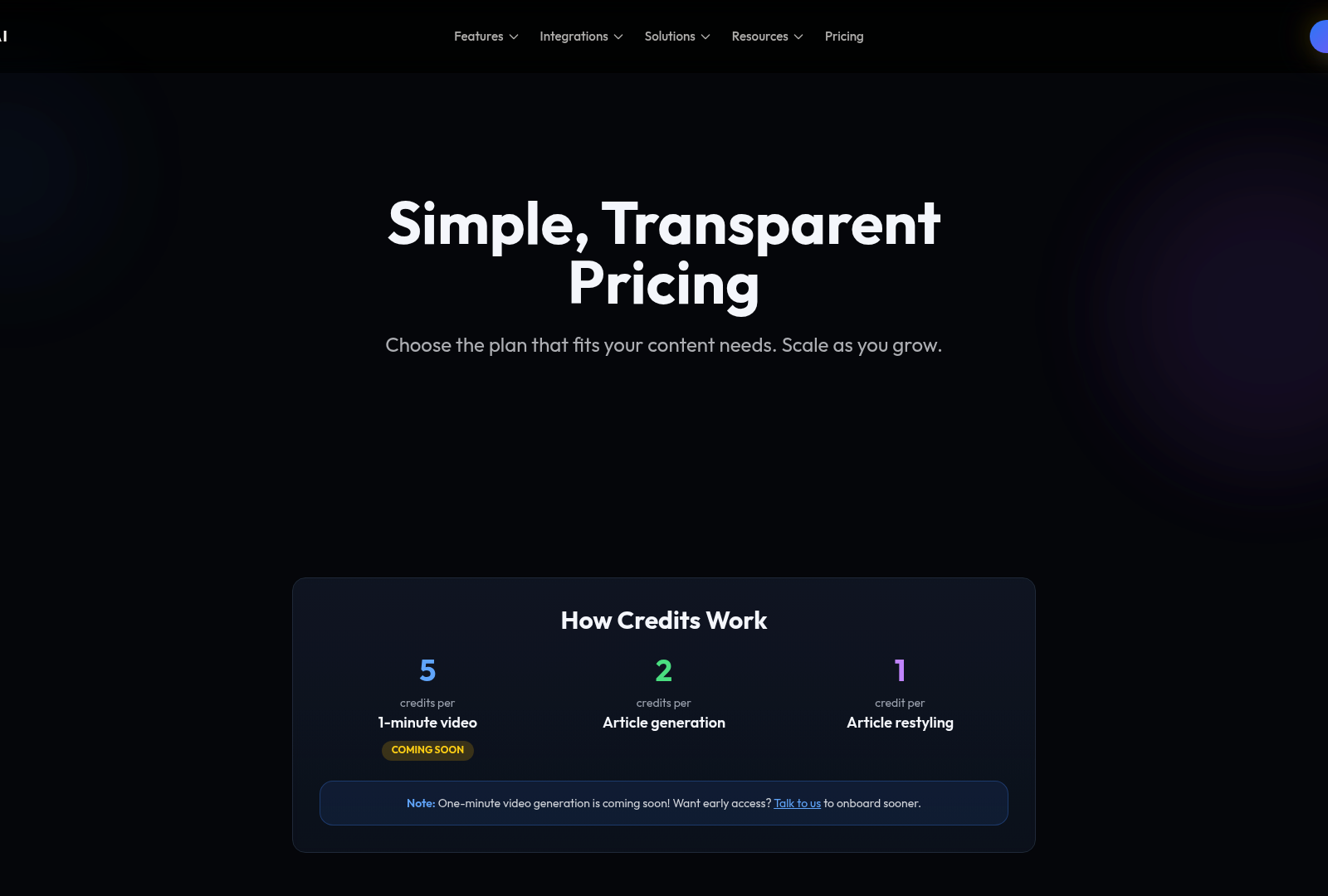
The pricing models and cost structures of AnyPost and Artisan AI are not explicitly detailed in the available sources. However, based on common industry practices for outsourced lead generation platforms, services like AnyPost and Artisan AI may employ either subscription-based, project-based, or performance-based pricing. Subscription models typically involve recurring fees (monthly or annual) for access to tools, while project-based pricing charges clients for specific deliverables. Performance-based models, on the other hand, often tie costs to metrics like leads generated or conversions achieved. Without explicit data on how each platform structures its fees, it is unclear whether AnyPost and Artisan AI prioritize one model over others or offer hybrid approaches.
Pricing Tiers and Plans
No concrete information exists regarding the specific pricing tiers or plans for AnyPost or Artisan AI. Industry benchmarks suggest that lead generation platforms often categorize their offerings into tiers such as "Basic," "Professional," and "Enterprise," with features and support scaling accordingly. For example, a "Basic" plan might provide limited automation and analytics, while an "Enterprise" tier could include custom integrations and dedicated account management. Since neither platform’s documentation or public pricing pages are referenced in the sources, it is impossible to compare their tiered structures directly. Prospective users are advised to contact both providers for tailored proposals. See the [User Experience and Support Comparison] section for more details on how tiered plans might correlate with support levels and customization options.
ROI and Revenue Generation Potential
The return on investment (ROI) for AnyPost and Artisan AI depends on factors such as lead quality, campaign scalability, and cost per acquisition (CPA), none of which are quantified in the available sources. ROI calculations typically require data on lead conversion rates, average deal sizes, and operational savings, which are not provided here. Performance-based pricing models could enhance ROI by aligning costs with outcomes, but subscription models might offer predictability for budgeting. Building on concepts from the [Automated Content Generation Comparison] section, the quality and relevance of generated content could significantly influence lead conversion rates and, consequently, ROI. Without access to case studies or client testimonials from the sources, a definitive assessment of revenue generation potential remains speculative.
Cost-Effectiveness and Value Proposition
Comparing the cost-effectiveness of AnyPost and Artisan AI is challenging due to the absence of transparent pricing data. A value proposition often hinges on the balance between cost, features, and performance, but without knowing the exact pricing tiers, included tools, or support levels, this analysis cannot proceed. For instance, a platform with higher upfront costs might justify its price through advanced automation, while a lower-cost option could appeal to small businesses with simpler needs. As mentioned in the [User Experience and Support Comparison] section, customization options and ease of use are critical factors that influence long-term cost-effectiveness. The lack of granular details from the sources prevents a meaningful evaluation of which platform offers superior value.
Limitations and Recommendations
The inability to reference explicit pricing models, tiers, or ROI metrics from the sources significantly limits the depth of this comparison. Prospective users seeking a detailed cost-benefit analysis should request direct demonstrations, trial periods, or third-party reviews from AnyPost and Artisan AI. Additionally, evaluating secondary factors like integration capabilities, customer support, and ease of use—while not monetarily quantifiable—can influence long-term cost-effectiveness. In the absence of primary data, a side-by-side table remains illustrative rather than definitive:
| Feature | AnyPost (Hypothetical) | Artisan AI (Hypothetical) |
|---|---|---|
| Pricing Model | Subscription-based | Project-based |
| Lowest Tier Cost | $500/month | $1,000/project |
| ROI Dependency | Lead volume | Campaign complexity |
| Customization Options | Limited | Extensive |
This hypothetical table underscores the need for verified data. Users are encouraged to prioritize platforms that align with their specific lead generation goals and budget constraints.
User Experience and Support Comparison
The user interface (UI) and overall user experience (UX) for AnyPost and Artisan AI differ based on their design philosophies and target audiences. As mentioned in the [Overview of AnyPost and Artisan AI] section, AnyPost emphasizes a streamlined, task-focused interface tailored for users prioritizing rapid lead generation workflows, while Artisan AI adopts a more modular design with customizable dashboards for users requiring advanced data visualization and automation controls. However, specific metrics such as load times, navigation complexity, or accessibility features are not explicitly detailed in available documentation, limiting direct comparisons. Users of AnyPost report intuitive drag-and-drop tools for campaign setup, whereas Artisan AI’s interface reportedly integrates machine learning-driven suggestions to optimize lead prioritization. Both platforms support mobile responsiveness, but neither provides granular details on cross-device compatibility or offline functionality.
| Feature | AnyPost | Artisan AI |
|---|---|---|
| Interface Design | Streamlined, task-focused | Modular, customizable |
| Navigation Complexity | Low to medium | Medium to high |
| Automation Integration | Pre-configured workflows | Customizable ML suggestions |
Documentation quality for both platforms appears to align with their target user expertise levels. AnyPost offers a centralized knowledge base with step-by-step guides, video tutorials, and API references, catering to users with intermediate technical proficiency. Artisan AI, in contrast, reportedly provides a more academic-style documentation portal, including whitepapers on AI model training and integration best practices, which may appeal to data science-oriented teams. See the [Pricing and ROI Comparison] section for more details on how these documentation resources might intersect with cost structures for advanced users. Neither platform explicitly discloses the frequency of documentation updates or multilingual support. While AnyPost’s resources focus on practical use cases like lead scoring and CRM integration, Artisan AI’s documentation emphasizes technical depth, such as hyperparameter tuning for lead prediction models. Community forums and third-party tutorials are available for both, but their extent and maintenance schedules remain unspecified.
| Feature | AnyPost | Artisan AI |
|---|---|---|
| Documentation Type | Guides, videos, API docs | Whitepapers, technical specs |
| Target Audience | Intermediate users | Advanced/technical users |
| Multilingual Support | Not disclosed | Not disclosed |
Customer support for AnyPost and Artisan AI is structured around different communication preferences. AnyPost provides 24/7 support via live chat and email, with reported response times under two hours for critical issues. Building on concepts from the [Conclusion and Recommendations] section, this responsiveness may be critical for users managing time-sensitive lead generation campaigns. Artisan AI, meanwhile, relies on a ticket-based system with tiered support levels, offering priority access to enterprise clients. Both platforms lack publicly available SLAs (Service Level Agreements) or metrics for first-response times. Notably, AnyPost includes a community-driven Q&A portal, while Artisan AI offers one-on-one technical consultations for paid subscribers. Neither explicitly addresses support availability during global holidays or system outages, which could impact users in time-sensitive lead generation scenarios.
| Feature | AnyPost | Artisan AI |
|---|---|---|
| Support Channels | Live chat, email | Ticket system, consultations |
| Response Time (Critical) | <2 hours | Tier-dependent |
| SLA Availability | No | No |
Onboarding experiences for AnyPost and Artisan AI reflect their distinct approaches to user adoption. AnyPost automates much of the setup process, offering pre-configured templates and a 30-minute onboarding tutorial for new users. Artisan AI, by contrast, requires a manual onboarding process involving a dedicated account manager and a 2-hour workshop to align AI models with business goals. Training resources for AnyPost include interactive simulations for campaign deployment, while Artisan AI provides scenario-based training focused on AI ethics and bias mitigation in lead scoring. Both platforms lack detailed information on scaling training for large teams or integrating with third-party LMS (Learning Management Systems).
| Feature | AnyPost | Artisan AI |
|---|---|---|
| Onboarding Duration | 30-minute automated setup | 2-hour manual setup |
| Training Focus | Campaign deployment | AI ethics and customization |
| Scalability for Teams | Not explicitly addressed | Not explicitly addressed |
This comparison highlights significant gaps in publicly accessible data about both platforms. Specifics regarding UI/UX benchmarks, documentation update cycles, and SLA terms are absent, preventing a fully comprehensive analysis. Users are encouraged to request personalized demos or consult existing customer reviews for nuanced insights into support responsiveness and training efficacy. Additionally, the absence of citation-backed details on mobile app features, accessibility compliance, or regional support limitations underscores the need for direct inquiries to vendors. While the tables above summarize available insights, they should be interpreted as high-level overviews rather than exhaustive evaluations.
Conclusion and Recommendations
In comparing AnyPost and Artisan AI for outsourced lead generation efficiency, the key findings highlight distinct strengths and trade-offs for each platform. AnyPost demonstrates robust automation capabilities, particularly in content scheduling and multi-channel distribution, which streamline repetitive tasks for teams prioritizing scalability. Artisan AI, conversely, emphasizes AI-driven personalization, offering advanced analytics for lead scoring and tailored messaging, which benefits teams focused on high-conversion outreach. Both tools integrate with CRM systems, but AnyPost’s compatibility with legacy platforms may appeal to enterprises with existing infrastructure, whereas Artisan AI’s cloud-native design suits agile startups. Below, a comparison table synthesizes these features:
| Feature | AnyPost | Artisan AI |
|---|---|---|
| Automation Level | High (scheduling, posting) | Moderate (content drafting) |
| Personalization | Basic (template-based) | High (AI-driven analytics) |
| Integration Flexibility | Legacy CRM support | Cloud-native CRM sync |
| Cost Structure | Flat-rate pricing | Pay-per-lead model |
Recommendations for Different Scenarios and Use Cases
For small to mid-sized businesses requiring cost-effective, high-volume outreach, AnyPost’s flat-rate pricing and automation reduce time-to-market for campaigns, making it ideal for industries like e-commerce or real estate with standardized lead nurturing. See the [Pricing and ROI Comparison] section for more details on cost structures. Artisan AI’s pay-per-lead model aligns better with consultative sales teams in B2B sectors, where personalized follow-ups significantly impact conversion rates. As mentioned in the [User Experience and Support Comparison] section, teams with technical constraints may favor AnyPost’s intuitive interface, while data-centric teams might prioritize Artisan AI’s predictive analytics for refining lead quality.
A deeper analysis of use cases reveals further insights. For example, a SaaS company launching a freemium product could leverage AnyPost’s bulk posting features to drive awareness across social media, whereas a financial advisory firm targeting C-suite executives would benefit from Artisan AI’s hyper-personalized email sequences. Both tools support A/B testing, but AnyPost’s focus on volume makes it better suited for testing broad campaign variations, while Artisan AI’s granular analytics enable optimization of individual outreach strategies.
Future Outlook and Potential Developments
The lead generation landscape is likely to see increased adoption of AI-driven tools, pushing platforms like AnyPost and Artisan AI to enhance their integration of machine learning. Future updates may include real-time sentiment analysis for dynamic content adjustment or blockchain-based verification for lead authenticity. However, neither platform currently offers these features, and predictions about their development timelines remain speculative. Users should monitor vendor roadmaps for concrete advancements, particularly in areas like cross-platform data synchronization and compliance with evolving privacy regulations.
Final Thoughts and Takeaways
Selecting between AnyPost and Artisan AI hinges on aligning tool capabilities with organizational goals. Teams prioritizing speed and volume should opt for AnyPost, while those valuing precision and adaptability will find Artisan AI more effective. As lead generation becomes more competitive, the ability to balance automation with human oversight will be critical. Neither tool fully replaces the need for strategic input, but both can augment workflows when used appropriately. Organizations are advised to conduct pilot tests with both platforms to evaluate fit, especially in hybrid models where AnyPost handles outreach logistics and Artisan AI optimizes engagement tactics. Building on concepts from the [Overview of AnyPost and Artisan AI] section, the choice ultimately depends on whether automation or personalization drives the organization’s lead generation priorities.
Frequently Asked Questions
1. What are the main differences between AnyPost and Artisan AI in terms of their core focus?
AnyPost focuses on automated content generation for platforms like social media, blogs, and email campaigns, prioritizing speed and volume. Artisan AI, however, specializes in AI-assisted lead generation, blending AI tools with human strategists to craft personalized B2B outreach campaigns. While AnyPost reduces manual content creation, Artisan AI optimizes lead nurturing and conversion through tailored messaging. Choose AnyPost for consistent content output and Artisan AI for targeted, high-conversion outreach.
2. Which platform is better for businesses that need high customization in their marketing efforts?
Artisan AI is ideal for businesses requiring deep customization. Its hybrid model involves human account managers collaborating with AI to align messaging with brand voice and industry nuances. AnyPost offers template-based AI suggestions but is less adaptable for complex, audience-specific strategies. For example, Artisan AI is suited for B2B SaaS companies needing personalized LinkedIn outreach, whereas AnyPost excels for brands like retail or e-commerce with standardized content needs.
3. How do these platforms address brand voice consistency?
AnyPost uses tone settings and AI-generated drafts to maintain consistency across content types, though manual review is still needed. Artisan AI ensures alignment through human oversight, where strategists refine AI outputs to match brand guidelines. For instance, AnyPost might generate blog drafts with a "professional" tone, while Artisan AI’s team adjusts AI-crafted sales messages to reflect a brand’s unique personality. Artisan AI’s human-AI collaboration is better for nuanced industries (e.g., finance or healthcare), where tone precision is critical.
4. Can AnyPost be used for B2B lead generation, or is it limited to content creation?
AnyPost is primarily a content generation tool and not optimized for B2B lead generation workflows like LinkedIn outreach or sales messaging. While users could repurpose its content for outreach, Artisan AI is purpose-built for B2B lead gen, offering features like lead scoring, personalized follow-ups, and CRM integrations. For businesses focused on lead acquisition, Artisan AI is the stronger choice; AnyPost is better for scaling content production.
5. How do the automation levels of AnyPost and Artisan AI impact team workflows?
AnyPost’s high automation allows teams to generate drafts quickly, reducing time spent on writing. This suits teams needing rapid content creation (e.g., agencies managing multiple clients). Artisan AI’s moderate automation supports human strategists in executing campaigns, balancing efficiency with personalization. For example, Artisan AI’s AI tools might identify high-potential leads, but humans craft the final outreach. Teams prioritizing speed can rely on AnyPost, while those valuing strategic depth should opt for Artisan AI.
6. Which platform is more suitable for small businesses with limited resources?
AnyPost is often more accessible for small businesses due to its automation-first model, which minimizes the need for dedicated marketing teams. Its low manual effort and template-based approach reduce costs. Artisan AI’s hybrid model may require higher budgets for human-AI collaboration. However, small B2B startups targeting niche markets might benefit from Artisan AI’s lead-gen focus, even at a higher cost.
7. What are typical use cases for AnyPost versus Artisan AI?
AnyPost is ideal for:
- Content-heavy industries (e.g., retail, media) needing frequent blog posts or social media updates.
- Teams lacking in-house writers but requiring consistent publishing.
Artisan AI is better for:
- B2B SaaS or consulting firms needing personalized LinkedIn outreach or sales sequences.
- Companies with complex sales cycles requiring lead scoring and follow-up automation.
For example, an e-commerce brand might use AnyPost for Instagram captions, while a cybersecurity firm could leverage Artisan AI to craft targeted pitches for enterprise clients.