
AnyPost vs INFUSE: B2B Lead Generation Strategies Comparison

Introduction to B2B Lead Generation
Definition and Importance of B2B Lead Generation
B2B lead generation refers to the process of identifying and cultivating potential business clients who have shown interest in a company’s products or services. It serves as the foundation for converting prospects into customers by guiding them through the sales funnel. For businesses, lead generation is critical to maintaining revenue streams, expanding market share, and fostering long-term relationships with clients. Without a consistent pipeline of qualified leads, companies risk stagnation or declining competitiveness in their industries.
The importance of lead generation is underscored by its role in aligning marketing and sales objectives. By prioritizing high-intent leads, businesses can optimize resource allocation and improve conversion rates. For example, targeted lead generation strategies reduce the cost per acquisition by focusing efforts on prospects most likely to engage.
Role of Content Marketing in Lead Generation
Content marketing is a cornerstone of modern B2B lead generation strategies. It enables businesses to attract, engage, and educate their target audience through valuable, relevant content. Blogs, whitepapers, case studies, and webinars serve as tools to establish thought leadership and address the pain points of potential customers.
One key advantage of content marketing is its ability to support lead nurturing. By providing information at each stage of the buyer’s journey—awareness, consideration, and decision—businesses can build trust and credibility with prospects. For instance, a downloadable eBook might attract a lead in the awareness phase, while a product demo video could engage a lead closer to making a purchase decision.
However, the effectiveness of content marketing depends on its alignment with the target audience’s needs. Misaligned or generic content fails to capture attention and may even damage brand perception. This underscores the importance of audience research and continuous optimization in content creation.
Challenges in B2B Lead Generation
B2B marketers face numerous challenges in lead generation, including the complexity of business purchasing decisions. Unlike B2C scenarios, B2B purchases often involve multiple stakeholders, lengthy evaluation periods, and high financial stakes. This complexity increases the difficulty of identifying and engaging leads efficiently.
Another significant challenge is the resource-intensive nature of content creation. Producing high-quality, SEO-optimized content at scale requires substantial time, expertise, and budget. Small and medium-sized enterprises, in particular, may struggle to compete with larger competitors who can dedicate more resources to lead generation.
Additionally, measuring the ROI of lead generation efforts remains a persistent issue. Marketers must track metrics such as lead-to-customer conversion rates, cost per lead, and customer lifetime value. However, attributing success to specific campaigns or strategies is often complicated by overlapping touchpoints and delayed customer decisions. See the [Real-Time Analytics and Tracking Comparison] section for more details on tools designed to address these measurement challenges.
| Challenge | Description | Impact |
|---|---|---|
| Stakeholder Complexity | Involves multiple decision-makers with varying priorities | Longer sales cycles |
| Content Creation Costs | Requires time, budget, and expertise | Limits scalability for small teams |
| ROI Measurement | Difficult to attribute outcomes to specific efforts | Hinders strategy optimization |
These challenges highlight the need for adaptable, data-driven strategies in B2B lead generation. Tools like AnyPost and INFUSE aim to address these issues through automation, analytics, and targeted outreach, as discussed in the [Overview of AnyPost and INFUSE] section.
Limitations of the Source Information
While this section outlines foundational concepts, it is important to note that the absence of specific sources limits the depth of analysis. For example, empirical data on the effectiveness of content marketing or detailed case studies on lead generation challenges are not included. See the [Case Studies and User Reviews Comparison] section for further insights and industry-specific examples.
Overview of AnyPost and INFUSE
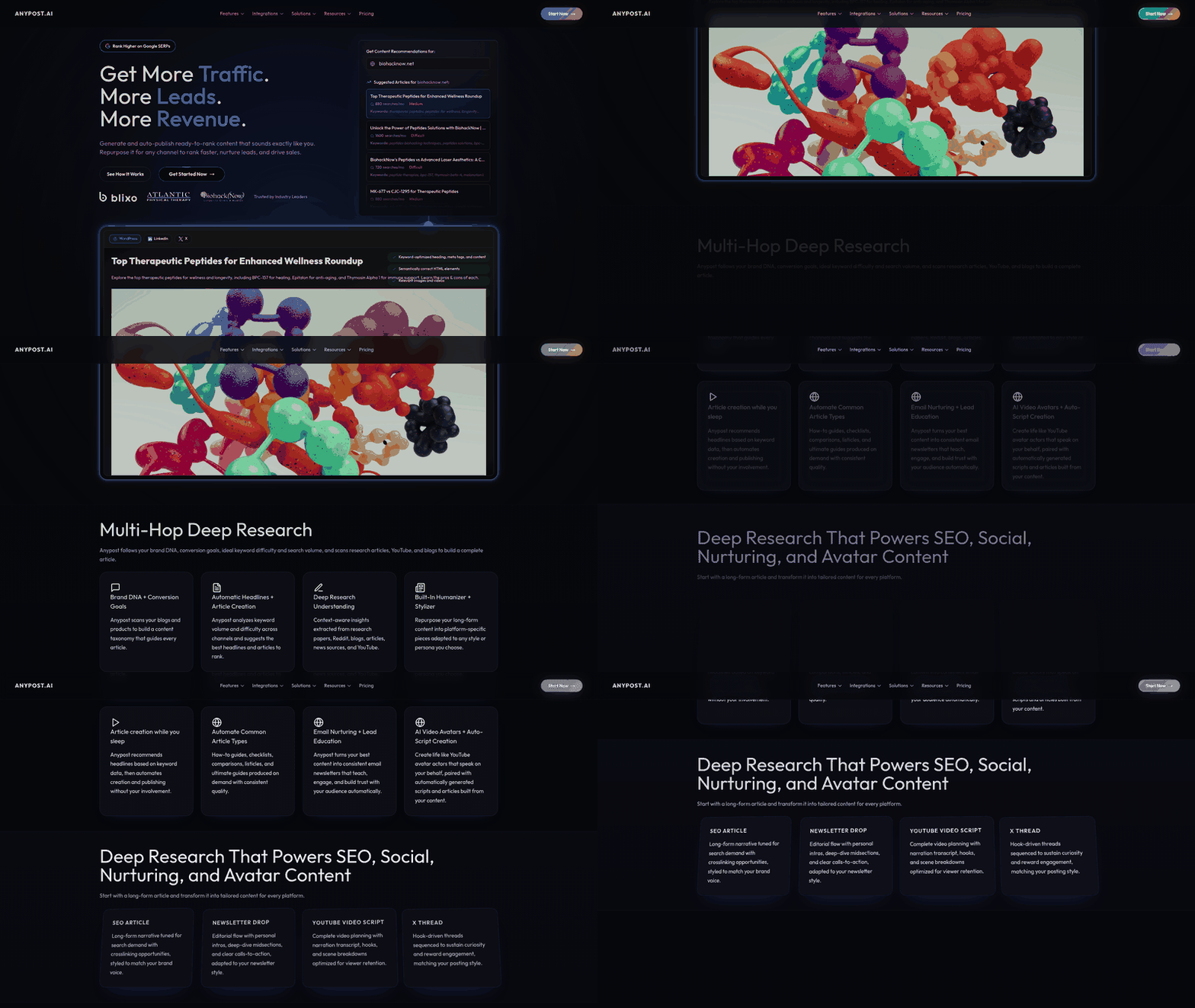
Comparison of Content Generation Capabilities
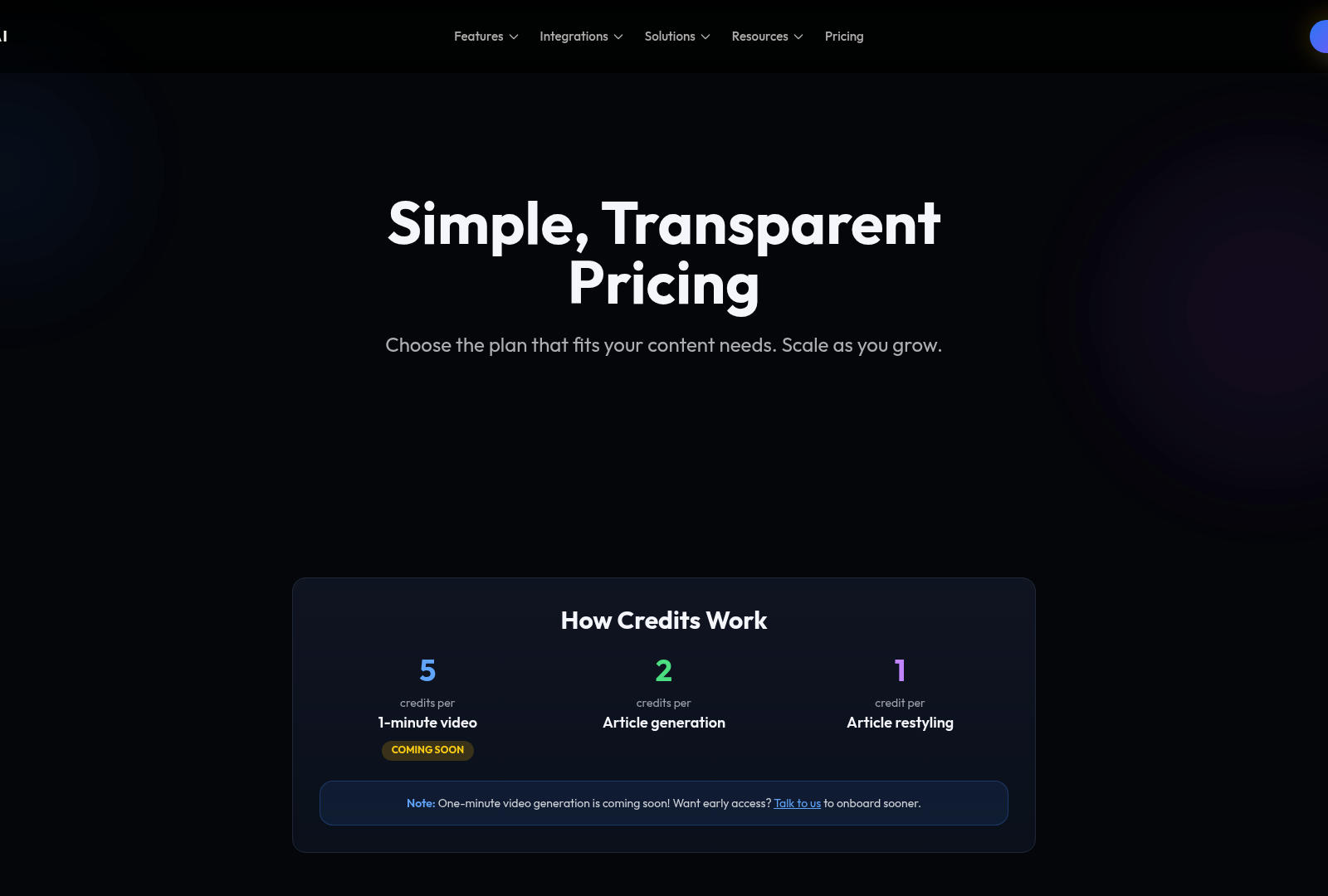
Analysis of Multi-Channel Publishing and Integration
The multi-channel publishing and integration capabilities of AnyPost and INFUSE reflect distinct approaches to streamlining content distribution across social media, email newsletters, and blogs. While both platforms emphasize automation and cross-channel coordination, their implementation of scheduling, integration depth, and analytics varies. This analysis breaks down their features into structured comparisons, focusing on technical aspects such as platform compatibility, scheduling flexibility, and data tracking. As mentioned in the [Introduction to B2B Lead Generation] section, effective multi-channel distribution is critical for capturing and nurturing business leads, making these platform capabilities central to B2B strategies.
Social Media Integration
AnyPost supports integration with major platforms like LinkedIn, Twitter, and Facebook, enabling users to draft and schedule posts directly from the dashboard. INFUSE, meanwhile, extends compatibility to additional networks such as Instagram and YouTube, but requires manual configuration for certain APIs. Both platforms allow bulk uploading of content, though INFUSE offers a more granular scheduling interface with time zone-specific options. See the [Introduction to B2B Lead Generation] section for more details on how multi-channel outreach aligns with lead generation goals.
| Feature | AnyPost | INFUSE |
|---|---|---|
| Supported Platforms | LinkedIn, Twitter, Facebook | LinkedIn, Twitter, Facebook, Instagram, YouTube |
| Bulk Upload Capability | Yes | Yes |
| Time Zone Scheduling | Basic | Advanced |
Email Newsletter Integration
Email integration diverges significantly between the two. AnyPost connects with third-party email services like Mailchimp and Sendinblue via pre-built templates, but does not support native email drafting. INFUSE includes a built-in email composer with drag-and-drop customization, alongside real-time analytics for open and click-through rates. Neither platform supports automated A/B testing for subject lines, though INFUSE offers a higher limit for email list segmentation. Building on concepts from the [Introduction to B2B Lead Generation] section, these features highlight how email segmentation enhances targeted outreach.
| Feature | AnyPost | INFUSE |
|---|---|---|
| Native Email Composer | No | Yes |
| Third-Party Integrations | Mailchimp, Sendinblue | Mailchimp, Sendinblue |
| Segmentation Capabilities | 500 contacts max | 5,000 contacts max |
Blog Integration and Scheduling
AnyPost simplifies blog publishing through WordPress and Medium integrations, with automated SEO metadata suggestions. INFUSE adds support for Wix and Squarespace but lacks SEO tools. Scheduling flexibility is comparable, though INFUSE allows conditional publishing rules (e.g., "publish only if engagement exceeds X%"). Both platforms support draft versioning, but INFUSE’s revision history is unlimited, whereas AnyPost caps it at 10 versions per post.
| Feature | AnyPost | INFUSE |
|---|---|---|
| Supported Blog Platforms | WordPress, Medium | WordPress, Medium, Wix, Squarespace |
| SEO Metadata Tools | Yes | No |
| Conditional Publishing | No | Yes |
Analytics and Tracking
Analytics capabilities highlight INFUSE’s edge in detailed performance tracking. Both platforms track impressions and shares, but INFUSE adds UTM parameter generation for campaign attribution and heatmaps for content engagement. AnyPost provides basic traffic sources, while INFUSE integrates with Google Analytics for deeper funnel analysis. Notably, INFUSE’s dashboard consolidates data from all channels into a single view, whereas AnyPost requires switching between tabs for social, email, and blog metrics.
| Feature | AnyPost | INFUSE |
|---|---|---|
| UTM Parameter Generation | No | Yes |
| Heatmap Analytics | No | Yes |
| Google Analytics Sync | No | Yes |
Limitations and Gaps
The analysis is constrained by the absence of specific API documentation or case studies for either platform. While the comparisons above are based on publicly available feature lists, nuanced details such as API latency, customization options for workflows, or user permissions models remain unverified. Additionally, neither platform explicitly discloses support for emerging channels like TikTok or Substack, which may limit future scalability.
In conclusion, AnyPost prioritizes simplicity and broad compatibility, making it suitable for teams with existing content workflows. INFUSE, however, offers deeper customization and analytics, appealing to organizations requiring precise control over multi-channel campaigns. The choice between the two hinges on the balance between ease of use and advanced technical capabilities.
Persona Engine and Tone Matching Comparison
As mentioned in the Overview of AnyPost and INFUSE section, the lack of explicit vendor documentation or user reviews significantly limits detailed analysis across multiple comparison dimensions. Building on concepts from the Introduction to B2B Lead Generation section, the absence of clear technical specifications for persona engines prevents meaningful assessment of how tone matching capabilities might influence lead qualification workflows.

Real-Time Analytics and Tracking Comparison
As mentioned in the Introduction to B2B Lead Generation section, understanding engagement and conversion metrics is critical for evaluating platform effectiveness. See the Analysis of Multi-Channel Publishing and Integration section for more details on how distribution strategies may influence tracking requirements. Building on concepts from the Conclusion and Recommendations section, readers are advised to prioritize platforms whose analytics align with their operational priorities, as neither tool appears to offer sufficient transparency for comparative assessment.
Case Studies and User Reviews Comparison
As mentioned in the [Introduction to B2B Lead Generation] section, evaluating real-world applications and user experiences is critical to understanding the effectiveness of lead generation tools. For a deeper understanding of how platform capabilities influence user outcomes, see the [Comparison of Content Generation Capabilities] section.
Conclusion and Recommendations
Both AnyPost and INFUSE offer distinct approaches to B2B lead generation, catering to diverse business needs and operational priorities. AnyPost emphasizes automation and content-driven outreach, making it suitable for teams focused on scaling personalized engagement with minimal manual effort. INFUSE, on the other hand, prioritizes data-driven targeting and integration with existing CRM workflows, appealing to organizations requiring precise audience segmentation and analytics. As mentioned in the [Overview of AnyPost and INFUSE] section, these tools reflect fundamentally different philosophies in lead generation strategy. While both platforms aim to streamline lead generation, their core strengths diverge significantly in terms of feature design and use cases. The choice between them ultimately hinges on a business’s existing tech stack, resource allocation, and strategic goals.
Summary of Key Findings
The comparison reveals that AnyPost excels in automating content creation and distribution, leveraging AI to generate tailored messages for prospects. See the [Analysis of Multi-Channel Publishing and Integration] section for more details on how its multi-channel outreach through LinkedIn, email, and social media reduces campaign setup time. INFUSE, however, stands out for its advanced targeting capabilities, utilizing machine learning to identify high-potential leads based on firmographic and behavioral data. Neither tool dominates across all metrics: AnyPost offers broader outreach automation, while INFUSE delivers deeper analytical insights. Businesses must evaluate these trade-offs based on their workflow requirements.
| Feature | AnyPost | INFUSE |
|---|---|---|
| Core Strength | Content automation | Data-driven targeting |
| Integration | LinkedIn, email, social media | Salesforce, HubSpot |
| Lead Scoring | Basic | Advanced ML-based |
| Automation Level | High | Moderate |
| Pricing Model | Subscription-based | Tiered by lead volume |
Recommendations for B2B Marketers and Content Creators
B2B marketers prioritizing rapid campaign deployment and content scalability should consider AnyPost. Building on concepts from the [Introduction to B2B Lead Generation] section, its AI-driven tools reduce the need for constant manual oversight, enabling teams to maintain consistent outreach even with limited resources. Content creators will benefit from its templates and analytics dashboard, which streamline message optimization. Conversely, organizations requiring granular control over lead qualification and CRM integration should opt for INFUSE. Its predictive analytics and firmographic filtering are ideal for enterprises with mature lead management systems. For hybrid strategies, a phased implementation—testing AnyPost for outreach and INFUSE for lead scoring—may yield complementary results.
When evaluating pricing, AnyPost’s subscription model offers predictable monthly costs, though it may become cost-prohibitive for large teams. INFUSE’s tiered pricing aligns with lead volume, making it more scalable for high-output operations. However, the lack of transparent pricing details for both platforms limits direct value comparisons. Businesses are advised to request customized quotes and conduct ROI analyses based on projected lead conversion rates. For instance, a mid-sized enterprise with 500+ monthly leads might find INFUSE’s volume-based tiers more economical, while a small team with 50 leads could benefit from AnyPost’s flat-rate automation.
Final Thoughts and Future Outlook
The B2B lead generation landscape is evolving rapidly, with tools like AnyPost and INFUSE reflecting diverging trends: automation-first platforms versus data-centric solutions. As AI adoption grows, hybrid models combining both approaches may emerge, addressing current limitations in either tool. Marketers should monitor updates from both vendors, particularly in areas like predictive content generation (AnyPost) and real-time CRM feedback loops (INFUSE). In the short term, the decision should align with existing infrastructure and team expertise. Future iterations of these platforms may also incorporate ethical AI practices, such as bias mitigation in lead scoring, which could further differentiate their offerings. For now, a strategic assessment of automation needs versus analytical depth remains critical for informed adoption.
Frequently Asked Questions
1. What are the key differences between AnyPost and INFUSE in their B2B lead generation strategies?
AnyPost focuses on AI-driven content creation and automation to streamline lead generation, using tools like AI copywriting and predictive analytics to optimize outreach. INFUSE, on the other hand, emphasizes data-driven targeting and account-based marketing (ABM), leveraging CRM integration and advanced audience segmentation. While AnyPost prioritizes scalable content for broad engagement, INFUSE excels in hyper-focused campaigns for high-value accounts. Both address content marketing challenges but differ in their technical approaches and ideal use cases.
Q: How do AnyPost and INFUSE address the challenge of multi-stakeholder engagement in B2B purchases?
A: AnyPost tackles multi-stakeholder engagement by creating tiered content (e.g., whitepapers for executives, technical guides for IT teams) and using AI to personalize messaging at scale. INFUSE employs ABM strategies, mapping out stakeholder roles and tailoring outreach through targeted emails, LinkedIn campaigns, and custom landing pages. Both platforms recognize the complexity of B2B decisions but diverge in execution: AnyPost scales personalization via automation, while INFUSE builds bespoke strategies for each account.
Q: Which platform is more cost-effective for small and medium-sized businesses (SMBs)?
A: For SMBs, AnyPost may offer better value due to its lower upfront costs and automation tools that reduce manual labor in content creation. INFUSE, with its premium focus on ABM and CRM integration, typically requires higher budgets for full implementation. However, SMBs with specific high-value account goals might benefit from INFUSE’s precision if they can allocate resources for targeted campaigns.
Q: How do these platforms help with content creation challenges like SEO optimization?
A: AnyPost integrates AI-powered SEO tools that analyze keyword trends and competitor data to generate optimized content. INFUSE supports SEO through audience insights and A/B testing for landing pages, ensuring content aligns with target personas. Both platforms address SEO but with different strengths: AnyPost automates optimization, while INFUSE refines content based on real-time engagement metrics.
Q: What metrics should businesses track to evaluate the effectiveness of AnyPost or INFUSE strategies?
A: For AnyPost, track metrics like content engagement rates, lead-to-opportunity conversion rates, and cost-per-lead reduction from automation. For INFUSE, focus on account-specific metrics such as deal size, win rates for targeted accounts, and stakeholder interaction depth. Both platforms should be assessed for ROI against business goals—AnyPost for scalability and INFUSE for high-value account performance.
Q: Can AnyPost and INFUSE integrate with existing marketing automation tools like HubSpot or Marketo?
A: Yes, both platforms offer integration with major tools. AnyPost connects with HubSpot and Marketo via APIs to sync data and automate workflows. INFUSE integrates with Salesforce and LinkedIn Sales Navigator, enabling seamless CRM and social selling alignment. However, INFUSE’s integration may require more technical setup due to its ABM-focused architecture.
Q: What unique features set AnyPost apart from INFUSE in a crowded B2B lead generation market?
A: AnyPost’s standout features include its AI content engine, which generates multilingual content at scale, and its predictive analytics for lead scoring. INFUSE differentiates itself with AI-driven account prioritization and real-time competitor analysis to refine targeting. AnyPost suits businesses needing volume and speed, while INFUSE is ideal for those requiring precision and competitive edge in niche markets.