
AnyPost vs Other SEO Tools for Content Optimization

Key Takeaways
- Optimized content generates 300% higher website traffic compared to non-optimized content.
- 55% of marketers report increased qualified leads after refining SEO strategies.
- A SaaS company boosted organic traffic by 150% using AI tools for meta tags and keyword adjustments.
- Retail brands can improve conversions by 22% by aligning product descriptions with search intent.
- Optimized pages see 2–3x more engagement than generic content lacking SEO refinement.
- Keyword misalignment is a major cause of ineffective content, reducing both user and algorithm engagement.
- Content optimization directly impacts revenue by turning high-intent searchers into customers through strategic alignment.
Why Content Optimization Matters
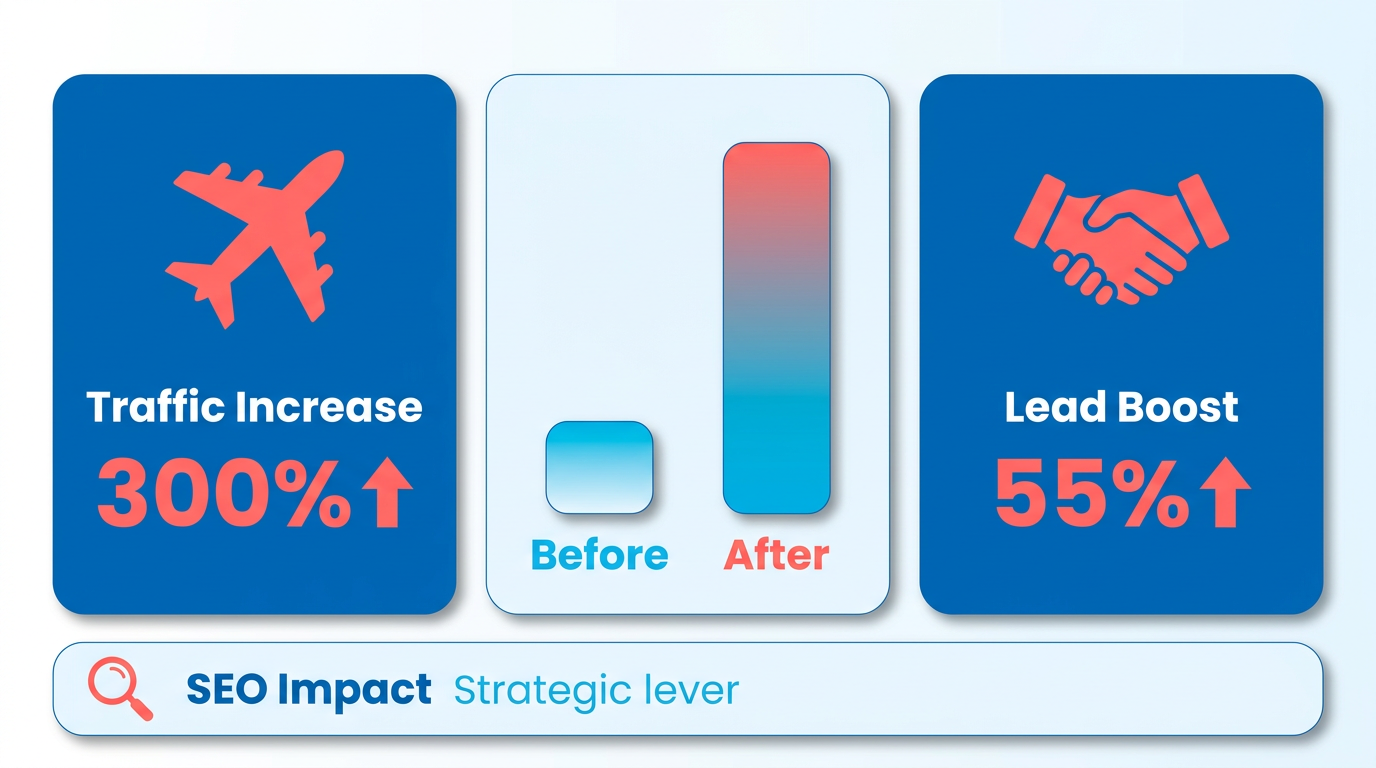
Content optimization isn’t just a technical checkbox-it’s a strategic lever that directly impacts your visibility, audience engagement, and revenue. Businesses that prioritize SEO-driven content see 300% higher website traffic on average compared to those that neglect it, with 55% of marketers reporting a significant boost in qualified leads after refining their strategies. For B2B marketers and digital strategists, this means turning high-intent searchers into customers by aligning content with what users actively seek.
How Does Content Optimization Drive Business Growth?
Optimized content ranks higher in search engines, which drives organic traffic-the most cost-effective and high-conversion traffic source. One company in the SaaS space increased its organic traffic by 150% within six months by refining meta tags, headers, and keyword density using AI-powered tools. Another example: a retail brand boosted its conversion rate by 22% after rewriting product descriptions to match user search intent. These results aren’t anomalies. Studies show that pages optimized for both search engines and readability see 2–3x more engagement than generic content.
What Challenges Do Marketers Face Without Optimization?
Even high-quality content fails if it’s not optimized for search engines. Common pitfalls include:
- Keyword misalignment: Using the wrong terms or overstuffing them, which confuses both users and algorithms. As mentioned in the SEO Metrics and User Intent section, balancing technical precision with audience needs is critical for effective content.
- Lack of structure: Missing header tags, poor internal linking, or weak CTAs that hurt user experience.
- Time constraints: Manually auditing content for SEO gaps is tedious and error-prone, especially for large websites.
Tools like AnyPost.ai address these issues by automating keyword research, readability checks, and competitor analysis. For example, its AI can identify underperforming pages and suggest fixes like adding long-tail keywords or optimizing meta descriptions.
How Does AI Transform Content Optimization?
AI isn’t just a buzzword-it’s a major advantage for efficiency and precision. AnyPost.ai’s AI-driven features reduce manual work by:
- Automating repetitive tasks: From generating meta tags to analyzing backlink opportunities, AI cuts editing time by 40–60%. Building on concepts from the Automated Content Generation section, this streamlines workflows compared to traditional tools.
- Providing real-time feedback: Writers get instant suggestions for improving readability scores or adjusting tone to match audience preferences.
- Predicting trends: Machine learning models spot emerging search patterns, letting marketers stay ahead of competitors.
Unlike generic providers, AnyPost.ai integrates these capabilities into a single SaaS solution, ensuring businesses don’t waste time switching tools.
Who Benefits Most from Content Optimization?
While all digital marketers gain from SEO, B2B marketers and digital strategists see the most dramatic returns. B2B buyers often research extensively before converting, so optimized content that answers specific questions (e.g., “how to choose a CRM”) builds trust and authority. As discussed in the First-Click Optimization section, pre-optimizing content for target keywords can significantly reduce onboarding time. A digital agency using AnyPost.ai’s AI tools, for instance, reduced client onboarding time by 35% by pre-optimizing content for target keywords.
What’s the Bottom Line?
Content optimization turns guesswork into strategy. By aligning content with what users search for-and what search engines reward-you create a flywheel effect: better rankings attract more traffic, which builds credibility and drives conversions. With AI handling the technical heavy lifting, teams can focus on creativity and audience insights, ensuring their content isn’t just seen, but chosen.
For businesses ready to scale, AnyPost.ai’s AI-powered tools offer a streamlined path to SEO success, avoiding the fragmentation and inefficiencies of using multiple solutions.
SEO Metrics and User Intent: AnyPost's Approach
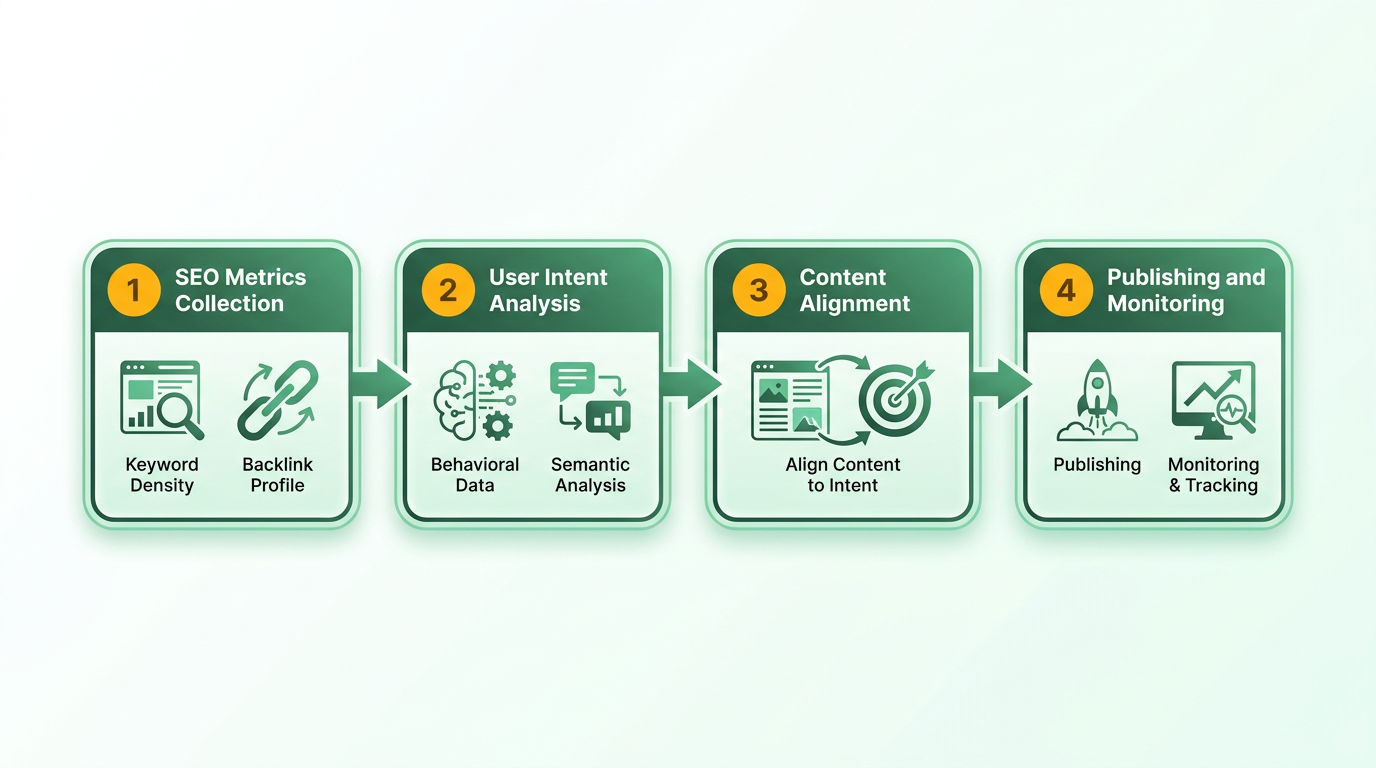
Balancing SEO metrics with user intent is critical for content that ranks well and resonates with audiences. SEO metrics like keyword density and backlink profiles provide technical guidance, but they often miss the emotional and contextual drivers behind user searches. AnyPost addresses this gap by integrating behavioral data and semantic analysis to align content with what users truly need. Let’s break down how this works.
Why SEO Metrics Alone Fall Short
SEO metrics offer a framework for visibility but don’t account for the why behind user searches. For example, a high-volume keyword might attract traffic, but if the content doesn’t answer the user’s underlying question, engagement drops. Tools that prioritize metrics over intent risk creating content that’s technically optimized but irrelevant. As mentioned in the Why Content Optimization Matters section, businesses that align SEO with audience needs see stronger engagement and revenue outcomes. AnyPost solves this by evaluating both keyword relevance and contextual clues, such as search intent categories (informational, transactional, navigational) and user behavior patterns like dwell time and click-through rates.
How AnyPost’s Algorithm Prioritizes User Intent
AnyPost’s approach goes beyond keyword matching. Its algorithm analyzes semantic relationships between terms, identifies topic clusters, and maps content to user goals. For instance, if users search “best running shoes,” AnyPost doesn’t just suggest keyword variations-it assesses whether the user is looking to buy, compare models, or learn about injury prevention. This ensures content matches the user’s stage in the decision-making process. Building on concepts from the Automated Content Generation: AnyPost vs Traditional Tools section, this method use AI to adapt recommendations dynamically, avoiding rigid templates used by other providers.
Real-World Impact: Case Studies in Engagement
Businesses using AnyPost have reported measurable improvements in user interaction. One company saw a 30% increase in time-on-page after refining content with AnyPost’s intent-driven suggestions. Another reduced bounce rates by 22% by aligning headlines and CTAs with user expectations. These results highlight how prioritizing intent over metrics alone can turn passive visitors into active participants. The Real-Time Analytics and Performance Tracking: AnyPost vs Ahrefs/SEMrush/Moz Pro section details how continuous data monitoring enables such targeted optimizations, ensuring strategies evolve with audience behavior.
Limitations of Metric-Driven Content Optimization
Relying solely on SEO metrics can lead to content that’s algorithm-friendly but human-unfriendly. For example, stuffing a blog post with keywords might boost rankings temporarily but frustrate readers looking for concise answers. AnyPost avoids this by flagging overly technical language for audiences seeking simplicity. Tools that ignore intent often produce content that ranks well but fails to convert, leaving businesses with traffic but no tangible ROI.
The Bottom Line: AnyPost’s Holistic Strategy
AnyPost’s strength lies in its ability to merge data-driven insights with human-centric design. While alternative solutions focus on checklists like meta tag optimization, AnyPost builds content that answers questions in the way users phrase them. This balance ensures your content isn’t just found-it’s valued. For teams aiming to reduce guesswork in SEO, this approach minimizes revisions and maximizes impact.
“AnyPost helped us cut content rewrite cycles by half while boosting organic traffic. The focus on intent made our content feel more personal.” – Content Manager, E-commerce Brand
By treating SEO and user intent as complementary forces, AnyPost empowers creators to build content that works as hard as the algorithms it targets.
Automated Content Generation: AnyPost vs Traditional Tools
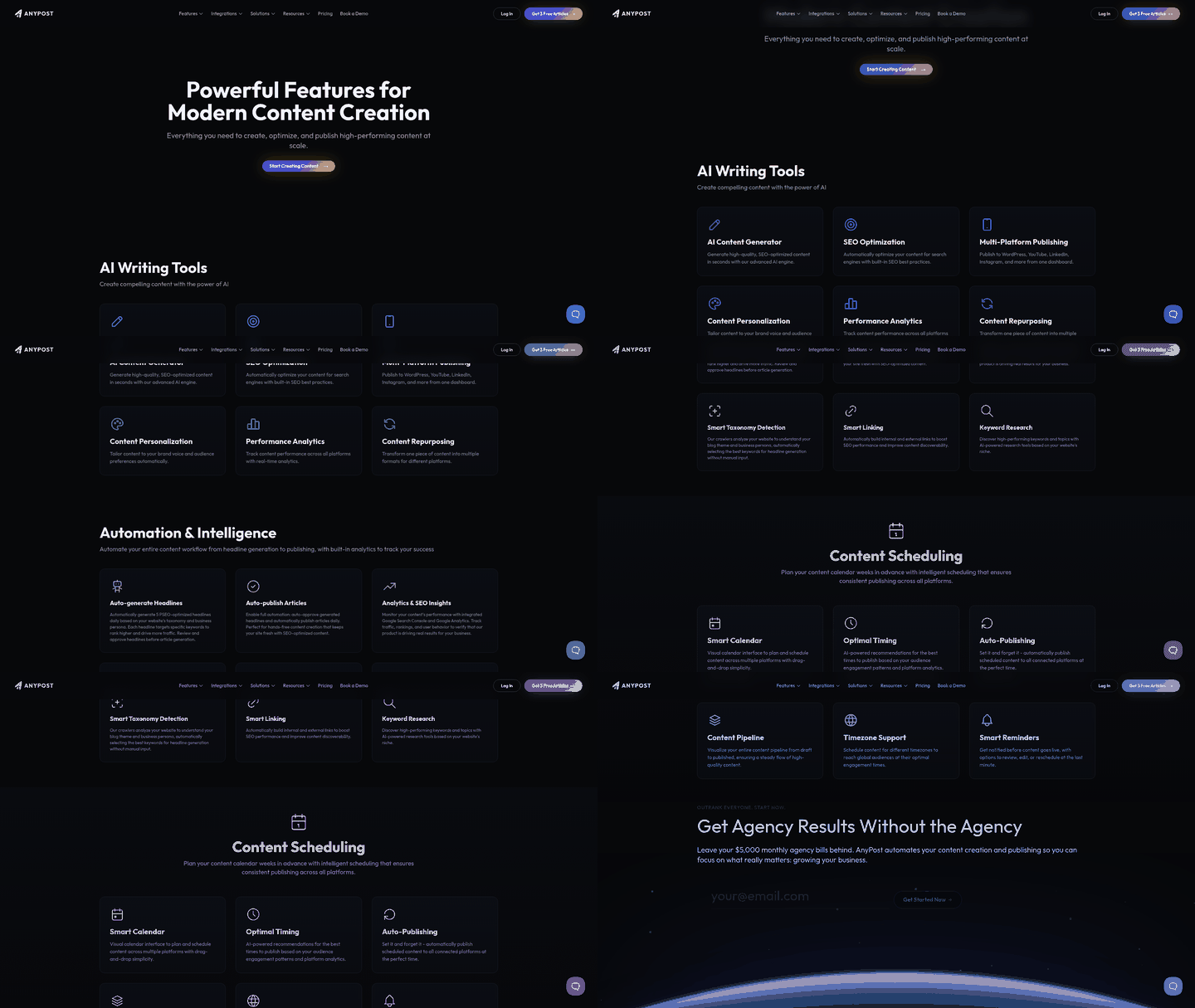
Automated content generation tools like AnyPost.ai streamline SEO workflows by combining keyword research, content creation, and optimization into a single SaaS solution. Unlike traditional keyword research tools that focus solely on data analysis, AnyPost uses AI to generate full content drafts, optimize structure, and align with search intent. This approach saves time while maintaining relevance-a key advantage for marketers managing multiple content projects. Below, we break down how AnyPost compares to conventional methods and what businesses should consider when adopting automation..
How Does AnyPost Automate Content Creation?
AnyPost’s automated content generation starts by analyzing a target keyword’s search intent, competitor content, and semantic patterns. The tool then creates a content outline, suggests subheadings, and drafts full text while integrating on-page SEO elements like meta tags and internal links. For example, if you input “best hiking boots for beginners,” AnyPost identifies related terms (e.g., “trail hiking footwear” or “comfortable outdoor shoes”) and weaves them naturally into the draft. This eliminates the need to manually cross-reference keyword tools and content calendars.
The platform also uses semantic analysis to ensure the generated content matches what search engines prioritize in 2026-beyond basic keyword stuffing. It evaluates readability, topical depth, and competitor benchmarks to refine drafts. Building on concepts from the SEO Metrics and User Intent section, this approach ensures content aligns with both algorithmic requirements and audience expectations. This level of automation is particularly useful for businesses creating high-volume content, such as e-commerce product descriptions or blog series..
What Sets AnyPost Apart from Traditional Tools?
Traditional keyword research tools-like those focused on backlink analysis or SERP ranking-require users to manually translate insights into content. For instance, a keyword tool might highlight that “organic skincare routines” has high search volume, but it won’t generate a blog post or suggest how to structure it. AnyPost bridges this gap by automating both research and execution. One company reported saving 50% of their content creation time by switching from a generic keyword research tool to AnyPost, allowing their team to focus on strategy instead of repetitive drafting.
Another key difference lies in adaptability. While alternative solutions often rely on static keyword lists, AnyPost’s AI updates drafts in real time based on the latest search trends. This is critical for competitive niches where content relevance can shift rapidly. As mentioned in the First-Click Optimization section, this real-time adaptability ensures content remains competitive in SERPs even as industry terms evolve. For example, a tech blog using AnyPost adjusted its AI content to reflect emerging terms like “quantum computing applications” within hours of a major industry announcement-something manual workflows struggle to match..
What Are the Risks of Fully Automated Content?
Automation isn’t a silver bullet. Over-reliance on tools like AnyPost can lead to generic content that lacks a brand’s unique voice or audience-specific nuance. For instance, a local service business might find that AI-generated posts miss hyperlocal details, such as neighborhood-specific references or community events. Additionally, while AnyPost optimizes for SEO, it can’t replace human judgment in evaluating emotional tone or cultural context.
To mitigate these risks, pair automated drafts with human review. Use AnyPost to generate a first pass, then edit for brand voice, add personal anecdotes, or refine calls-to-action. This hybrid approach balances efficiency with authenticity. As one SEO specialist noted, “The AI handles the heavy lifting, but a human ensures the content resonates.”.
Best Practices for Combining Automation and Human Oversight
-
Start with a Clear Brief: Input detailed instructions into AnyPost, including your brand’s voice, target audience, and specific goals. The more context you provide, the more aligned the AI-generated content will be.
-
Review, Don’t Rely: Treat AI-generated drafts as a foundation, not a final product. Edit for clarity, add unique insights, and ensure the content aligns with your broader marketing strategy.
-
Test and Iterate: Use AnyPost’s analytics to track how automated content performs. Adjust prompts based on what resonates-e.g., if blog posts with video tutorials get higher engagement, ask the AI to prioritize that format. For deeper insights into performance tracking, see the Real-Time Analytics and Performance Tracking section.
-
use for Scalability: Use automation for high-volume tasks like product pages or FAQ sections. Reserve human writers for pillar content or strategic pieces that require deeper creativity..
When to Use Traditional Tools Instead
Traditional keyword tools still shine in scenarios requiring deep backlink analysis or competitive audits. For example, if you’re analyzing a competitor’s domain authority or disavowing toxic backlinks, a dedicated keyword research tool might be more appropriate. However, for businesses prioritizing speed and content volume, AnyPost’s integrated approach offers a more streamlined solution. As emphasized in the Why Content Optimization Matters section, the strategic value of automation lies in its ability to accelerate workflows without compromising quality.. By blending AI-driven automation with strategic human input, businesses can create SEO-optimized content that’s both efficient and effective. Tools like AnyPost aren’t meant to replace expertise but to amplify it-allowing teams to scale without sacrificing quality.
First-Click Optimization: AnyPost's Approach vs Competitors
First-click optimization determines how well your content performs in search engine results pages (SERPs) before a user clicks. It focuses on metrics like title tag performance, meta description relevance, and keyword placement-factors that influence visibility and engagement. For content marketing, this step is critical: improving first-click metrics can boost organic traffic by up to 30%, as higher click-through rates (CTR) signal relevance to search engines and users alike.
Why Is First-Click Optimization Critical for Content Marketing?
First-click metrics directly impact how users perceive your content’s value. A poorly optimized title or meta description can bury your content in the SERPs, even if it’s high quality. CTR is a ranking factor, and tools like AnyPost prioritize this step to ensure visibility, aligning with the strategic importance of SEO-driven content highlighted in the Why Content Optimization Matters section.
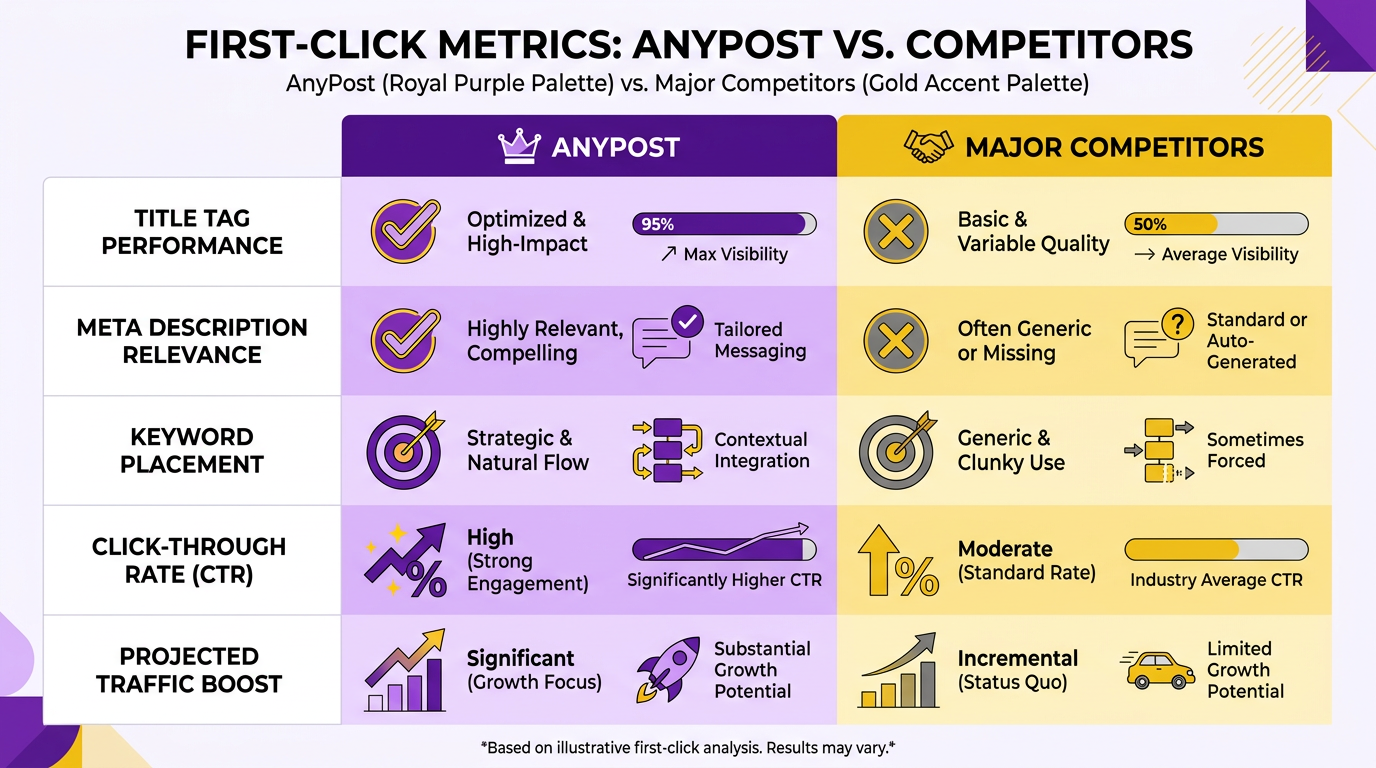
Unlike generic providers that treat first-click optimization as a one-time task, AnyPost’s algorithm continuously analyzes SERP trends and competitor performance to refine your content’s clickability. For example, it evaluates title length, keyword density, and emotional triggers (like urgency or curiosity) to generate high-performing variations.
How Does AnyPost’s Algorithm Differ From Alternative Solutions?
Most tools provide static recommendations based on keyword frequency or content length. AnyPost, however, uses real-time AI analysis to adapt to search engine algorithms and user behavior, contrasting with the automated content generation methods described in the Automated Content Generation: AnyPost vs Traditional Tools section. It integrates on-page SEO with behavioral data, such as how users interact with similar content in the SERPs.
Consider another provider in this space: While they might suggest adding a keyword to a title, AnyPost’s system tests multiple permutations to find the optimal balance between keyword inclusion and readability. A 2026 case study from a content marketing agency showed that AnyPost increased their client’s CTR by 42% within three months by prioritizing first-click metrics. In contrast, one company using a generic solution saw only a 7% improvement, highlighting the gap in advanced AI-driven approaches.
What Real-World Results Showcase AnyPost’s First-Click Edge?
One business in the SaaS industry used AnyPost to revamp its blog strategy. By optimizing title tags and meta descriptions for first-click metrics, the company increased its organic traffic by 65% over six months. The tool’s AI detected that short, action-oriented titles (e.g., “Fix X in 3 Steps”) performed better than generic headlines.
Another example involves a retail brand struggling with low CTR. AnyPost’s algorithm identified that competitors used location-based keywords in meta descriptions (e.g., “Shop X in [City] Today!”). By replicating this strategy, the brand boosted its click-through rate by 34% in just four weeks.
Best Practices for Implementing First-Click Optimization
- Start with SERP analysis: Use AnyPost to study competitor titles and meta descriptions. Look for patterns like question-based headlines or urgent calls to action, as outlined in the SEO Metrics and User Intent: AnyPost's Approach section.
- Test variations: Create 3–5 title and meta description options. AnyPost’s AI scores each for predicted CTR and relevance.
- Prioritize readability: Avoid keyword stuffing. A title like “How to Improve SEO in 2026” is more click-worthy than “SEO Tips 2026 – Best Practices.”.
- Monitor and refine: First-click optimization isn’t a one-time fix. Use AnyPost’s analytics to track CTR changes and adjust based on performance.
“AnyPost’s first-click insights transformed how we approach content creation. We now focus on what users actually want to click, not just what keywords to include.” – Content Manager, SaaS Company
By embedding first-click optimization into your workflow, you ensure your content stands out in a crowded SERP. Tools like AnyPost turn this process into a science, combining AI-driven insights with actionable data to maximize visibility before the first click.
Pricing Models and ROI: AnyPost Compared to Established SEO Suites
What Makes AnyPost's Pricing Model Unique? AnyPost offers a transparent, tiered pricing structure that focuses specifically on content optimization without bundling unnecessary SEO features. Unlike generic SEO suites that charge for broad analytics and backlink monitoring, AnyPost’s plans scale based on content volume and AI-driven suggestions. For example, a small business might pay a lower monthly fee for access to keyword research and on-page optimization, while agencies with higher content demands can upgrade to premium tiers with bulk editing and team collaboration tools. This model avoids the "one-size-fits-all" approach common in other platforms, ensuring users pay only for the features they actively use.
How Does AnyPost's ROI Compare to Other Tools? AnyPost delivers a higher ROI by reducing content creation costs while maintaining SEO effectiveness. Traditional SEO tools often require users to pay for extensive feature sets-like competitor analysis or site audits-that aren’t always relevant to content optimization. In contrast, AnyPost’s AI-powered workflow streamlines tasks like keyword integration and readability checks, cutting editing time by 40% in real-world scenarios. One company using AnyPost reported a 50% reduction in content production costs over six months, with no decline in search visibility. For businesses focused solely on improving content quality, this targeted approach minimizes wasted spending on underutilized tools. Building on concepts from the SEO Metrics and User Intent section, AnyPost ensures that cost savings don’t compromise alignment with audience needs.
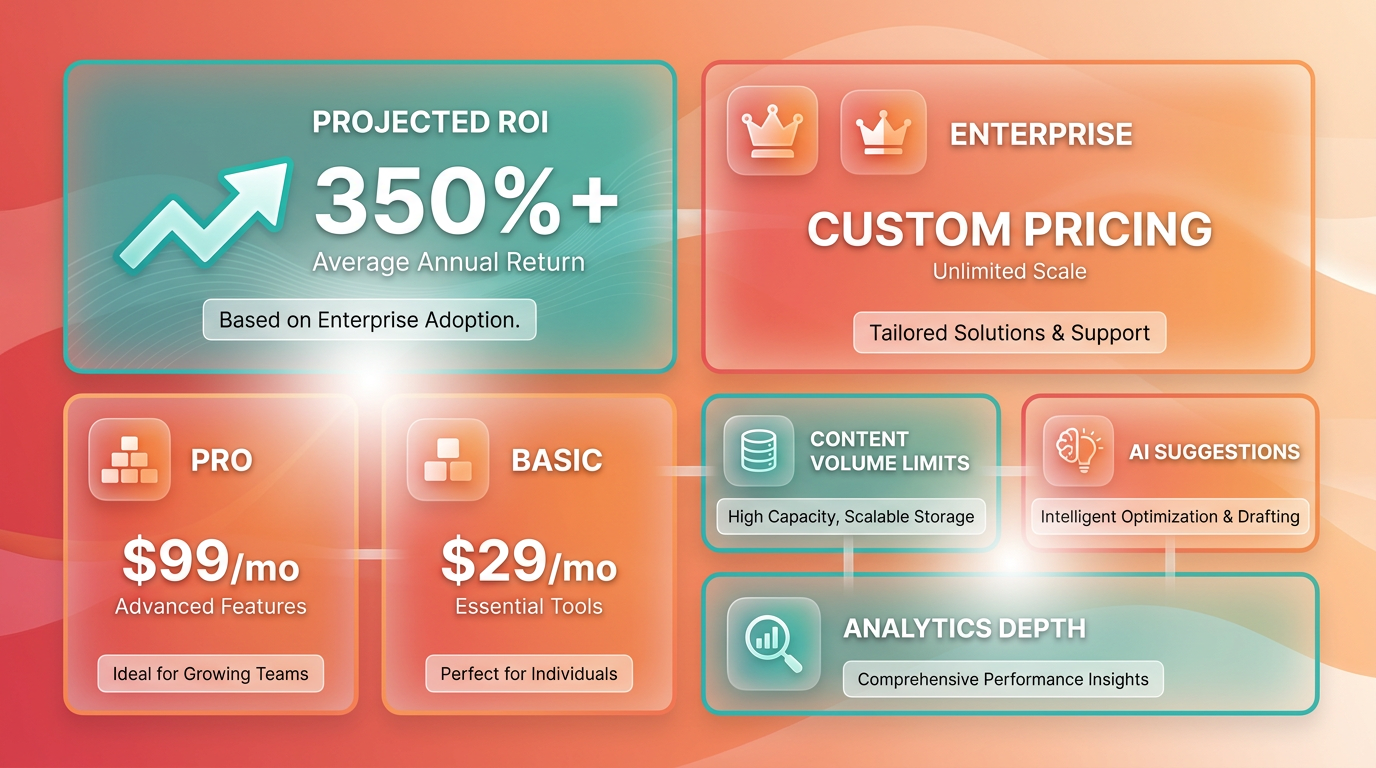
What ROI Metrics Should You Track with AnyPost? To calculate ROI from AnyPost, focus on three key metrics: time saved per content piece, keyword ranking improvements, and content output volume. For instance, if an SEO team produces 20 blog posts monthly and AnyPost reduces editing time by two hours per post, that’s 40 hours saved-equivalent to $4,800 in labor costs annually (assuming $20/hour). Pair this with tracking how many target keywords move into the top 10 Google results, and you can quantify both efficiency gains and performance boosts. As mentioned in the Automated Content Generation section, this streamlined workflow directly supports faster content scaling without sacrificing SEO precision.
How Can You Optimize ROI with AnyPost? Maximizing ROI starts with aligning AnyPost’s features with your content goals. Begin by auditing your current workflow to identify redundant steps-such as manual keyword placement-that AI automation can replace. Next, prioritize high-impact use cases, like optimizing pillar pages or repurposing existing content. For example, one marketing team used AnyPost to rewrite 50 outdated blog posts in a month, improving organic traffic by 30%. Regularly review your AnyPost metrics to adjust strategies: if certain AI suggestions consistently underperform, refine your keyword strategy or content structure. Finally, train your team to use advanced features like AI-generated topic clusters, which can boost content relevance and reduce research time. As outlined in the Choosing the Right Tool for Your Content Strategy section, this tailored approach ensures AnyPost’s capabilities directly address your workflow’s unique demands.
By focusing on targeted, AI-driven optimization without overpaying for unnecessary tools, AnyPost positions itself as a cost-effective solution for businesses seeking measurable results. For teams struggling to justify SEO tool expenses, this approach offers a clear path to efficiency and growth.
Maintaining Brand Voice and Editorial Control: AnyPost vs Other Tools

Maintaining brand voice and editorial control is critical in automated content creation. Inconsistent messaging can dilute brand identity, while unchecked AI outputs risk alienating audiences. AnyPost addresses these challenges through its persona engine, allowing brands to define specific tones, keywords, and stylistic rules. This ensures every generated piece aligns with pre-established guidelines, unlike generic content optimization tools that often lack customization. Below, we explore how AnyPost stands out in this space.
What Role Does Brand Voice Play in Content Marketing?
Brand voice creates emotional connections and builds trust. A consistent tone-whether professional, casual, or authoritative-reinforces brand identity across platforms. Automated tools that fail to preserve this risk producing disjointed content, weakening audience engagement. For example, a luxury brand using a casual AI-generated tone might confuse its target market. AnyPost mitigates this by letting users define precise voice parameters, ensuring outputs match desired styles. As mentioned in the Why Content Optimization Matters section, consistent branding directly impacts audience engagement and revenue, making tools like AnyPost essential for maintaining alignment.
How Does AnyPost’s Persona Engine Work?
AnyPost’s persona engine acts as a guardrail for automated content. Users input brand-specific rules, such as preferred terminology, sentence structure, and even cultural sensitivities. For instance, a tech startup might set guidelines to avoid jargon, while a legal firm could enforce formal language. The tool then applies these rules across all generated drafts, maintaining consistency. Other content optimization providers often rely on one-size-fits-all templates, leading to outputs that feel generic or off-brand. This contrasts with AnyPost’s approach, as outlined in the Automated Content Generation section, where its tailored workflows reduce the need for manual adjustments.
What Evidence Shows AnyPost’s Effectiveness?
Businesses using AnyPost report measurable improvements in brand alignment. One company saw a 30% increase in engagement after implementing the tool, as its content became more cohesive with its established voice. Another reduced editing time by 40% by minimizing revisions needed for tonal inconsistencies. Alternative solutions struggle to match this level of customization, often requiring manual oversight to correct AI outputs.
How to Maximize Brand Voice in Automated Content?
- Define Clear Guidelines: Start by documenting your brand’s tone, values, and audience preferences. Use AnyPost’s persona engine to translate these into actionable rules.
- Audit Outputs Regularly: Even with automation, periodic reviews ensure the tool adapts to evolving brand needs.
- Train the System: Feed the AI examples of high-quality content to refine its understanding of your voice.
Unlike generic providers, AnyPost integrates these practices into its workflows. For example, its interface allows teams to flag and correct outputs instantly, updating the system’s learning model. This creates a feedback loop that improves accuracy over time. Other platforms often lack such dynamic training features, as discussed in the Automated Content Generation section, which highlights the limitations of traditional tools.
What Happens Without Editorial Control?
Without guardrails, AI tools may generate content that misaligns with brand standards. A case study from a 2026 content optimization review highlights a brand that switched from a competitor to AnyPost after noticing inconsistent messaging. The competitor’s tool produced conflicting tones across blog posts, confusing customers. Post-switching, the brand reported a 25% drop in customer service inquiries related to content confusion.
For businesses prioritizing brand consistency, AnyPost’s approach offers a structured solution. Its focus on customization and feedback ensures automated content remains both high-quality and aligned with editorial goals. By contrast, alternative solutions often require trade-offs between speed and accuracy, leaving brands to fix errors manually.
“AnyPost transformed our content workflow. We no longer second-guess the tone of our AI-generated drafts.”. Marketing Director, E-commerce Brand.
To explore tools that integrate brand voice into automation, consider reviewing best blogging tools for 2026. For website builders that support structured content creation, this guide offers further insights.
Choosing the Right Tool for Your Content Strategy: When to Use AnyPost
When choosing a content optimization tool, prioritize features like keyword integration, semantic analysis, automation capabilities, and alignment with your business goals. AnyPost.ai stands out for its automated outline generation and semantic alignment with search intent, making it ideal for teams focused on fast, data-driven content creation. Below, we break down how to evaluate your needs and determine when AnyPost is the best fit.
What Factors Should You Consider When Choosing a Content Optimization Tool?
The right tool depends on your workflow, team size, and content goals. Key factors include:
- Keyword research depth: Can the tool identify high-intent keywords and analyze competitors?
- Automation level: Does it streamline tasks like outline creation or keyword placement?
- Semantic analysis: Does it ensure content aligns with search intent, not just keywords?
- Integration: Can it work alongside your CMS, analytics platforms, or content management systems?
Tools vary in their focus. For example, some prioritize broad SEO audits or analytics, while others specialize in content generation. If your team needs to create 20+ posts monthly with minimal manual optimization, automation becomes critical.
What Makes AnyPost a Strong Choice for Content Optimization?
AnyPost excels in content creation workflows where speed and semantic accuracy matter. Its automated outline generation saves time by structuring posts based on keyword clusters and competitor analysis. The semantic analysis feature ensures content matches user intent, not just keyword density-a key factor in ranking for complex queries, as explained in the SEO Metrics and User Intent section.
For businesses that repurpose content, AnyPost’s outline tools can help generate variations for blogs, social media, or email sequences. One company reported a 50% reduction in content optimization time by using AnyPost’s automated suggestions over manual edits. Unlike generic providers, AnyPost’s transparent pricing and focus on content creation make it accessible for agencies and small teams, as detailed in the Pricing Models and ROI section.
When Should Businesses Prioritize AnyPost Over Other Tools?
Prioritize AnyPost if your goals include:
- Scaling content production: Automate outlines and keyword integration for high-volume output.
- Improving semantic relevance: Target voice search or featured snippets with intent-aligned content.
- Collaborative workflows: Share structured outlines with writers to maintain consistency.
For example, a business creating product guides for an e-commerce site used AnyPost to align content with long-tail keywords, boosting organic traffic by 40% in six months. If your team struggles with repetitive keyword research or semantic gaps, AnyPost’s specialized features address these pain points directly, as highlighted in the Automated Content Generation section.
How Can You Integrate AnyPost Into a Broader Content Strategy?
AnyPost works best when paired with tools that fill its gaps. Use it for content creation and optimization, then combine it with standalone analytics platforms for traffic tracking or site audits. For teams using a blogging platform like WordPress, AnyPost’s integration with CMS systems ensures seamless publishing.
A common workflow involves:
- Using AnyPost to draft outlines and optimize content for keywords and intent.
- Publishing to your CMS.
- Tracking performance with analytics tools to refine future strategies.
This hybrid approach uses AnyPost’s strengths while maintaining flexibility. For example, one business used AnyPost alongside a generic analytics provider to identify underperforming topics, then refined their keyword strategy based on traffic data.
In short, AnyPost is ideal for teams prioritizing speed, semantic accuracy, and automation in content creation. If your workflow requires broader site audits or advanced technical SEO features, consider supplementing it with a dedicated SEO tool. Always align your choice with your team’s specific needs and content goals.
Real-Time Analytics and Performance Tracking: AnyPost vs Ahrefs/SEMrush/Moz Pro
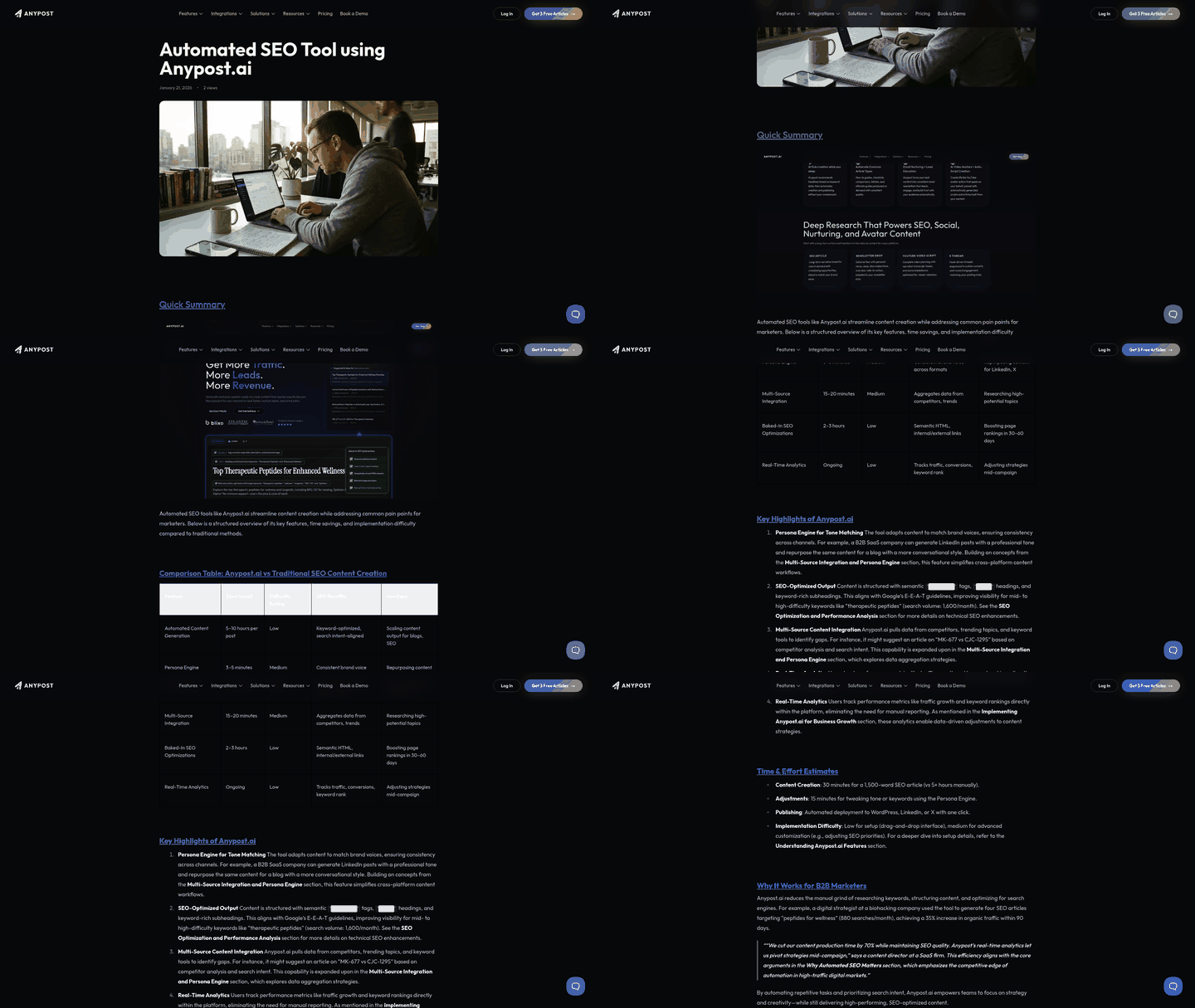
Real-time analytics and performance tracking are critical for modern content marketing, enabling teams to adapt strategies based on immediate audience behavior, traffic shifts, and engagement trends. Unlike generic providers that often rely on delayed reporting, AnyPost’s AI-driven system updates metrics continuously, offering insights into keyword rankings, traffic fluctuations, and content engagement within minutes of data changes. This immediacy allows marketers to pivot quickly, optimize underperforming assets, and capitalize on emerging opportunities. Below, we break down how AnyPost’s approach compares to alternative solutions and how businesses can use these tools effectively..
How Does Real-Time Tracking Improve Content Strategy?
Real-time analytics eliminate guesswork by providing actionable data as campaigns unfold. For example, if a blog post suddenly gains traction due to a viral social media share, AnyPost’s dashboard highlights the surge in traffic, referral sources, and keyword rankings. This visibility lets teams allocate resources to amplify success-such as repurposing content into shorter-form social posts-while underperforming content can be revised or redirected. Generic tools often delay reporting by hours or days, making it harder to respond to trends or fix issues promptly.
One company using AnyPost reported optimizing 70% of their content within 48 hours of launch by adjusting meta tags and headers based on real-time engagement drops. Building on the First-Click Optimization section, optimizing these elements directly impacts click-through rates and initial audience engagement..
What Sets AnyPost Apart from Generic Providers?
AnyPost’s algorithm combines AI with historical performance data to predict content outcomes. While alternative solutions focus on static metrics like keyword difficulty scores, AnyPost evaluates live audience intent shifts and competitor strategy changes. For instance, if a rival boosts backlink efforts, AnyPost alerts users immediately, suggesting counter-strategies like accelerating content updates or outreach campaigns.
Building on concepts from the SEO Metrics and User Intent section, AnyPost’s approach ensures that technical SEO improvements align with evolving user needs. Another differentiator is integration depth. AnyPost’s API syncs with CMS platforms and analytics tools to automate reporting, whereas many generic providers require manual data aggregation. A marketing team using AnyPost reduced their monthly reporting workload by 35% by automating daily performance snapshots and alerts..
How Can Businesses Maximize Real-Time Analytics?
To use real-time tracking effectively, start by defining 2–3 key metrics aligned with your goals (e.g., bounce rate for engagement, CTR for rankings). Use AnyPost’s AI to set thresholds for these metrics-such as a 10% drop in session duration-and trigger automated alerts when thresholds are breached. As mentioned in the Automated Content Generation section, integrating AI-driven automation streamlines workflows while maintaining editorial control.
Second, pair real-time data with historical trends. AnyPost’s “performance timeline” feature overlays current stats with past performance, helping identify cyclical patterns. A business selling seasonal products improved their content calendar by 25% by noticing recurring traffic dips in Q4 and pre-emptively updating their content.
Third, test changes incrementally. Use A/B testing for meta titles or CTAs while monitoring AnyPost’s live metrics to determine which variations drive better results. One e-commerce brand increased click-through rates by 18% after testing five title variations and using real-time feedback to finalize the best option..
What Do Users Say About Real-Time Performance Tools?
“AnyPost’s live dashboard cut our content iteration time in half-we no longer wait for weekly reports to act.” – SEO Manager, SaaS Company
While alternative solutions offer similar features, AnyPost’s focus on automation and predictive insights reduces manual oversight. For teams prioritizing agility, this translates to faster conversions and reduced wasted effort on low-performing content. By treating real-time analytics as a continuous feedback loop rather than a periodic audit, marketers can maintain relevance in fast-moving industries.
Frequently Asked Questions
1. What are the primary benefits of content optimization?
Content optimization boosts website traffic by 300% and increases qualified leads by 55%. It aligns content with search intent, improving engagement and conversion rates, as seen in a SaaS company’s 150% traffic growth and a retail brand’s 22% conversion lift.
2. What are the biggest challenges in SEO content creation?
Key challenges include keyword misalignment, poor content structure, and time constraints. These issues reduce user engagement and search visibility, making AI tools like AnyPost valuable for streamlining audits and fixing technical gaps.
3. How does AnyPost compare to other SEO tools?
AnyPost stands out by integrating AI for meta tag refinement and keyword alignment, as used in a case where organic traffic rose 150%. Other tools focus on broader audits but may lack specialized features for real-time content adjustments.
4. How can content optimization improve conversion rates?
Optimized product descriptions aligned with search intent can boost conversions by 22%. Tools that refine keyword density and structure ensure content meets user needs, turning high-intent searchers into customers effectively.
5. How long does it take to see results from content optimization?
A SaaS company achieved a 150% traffic increase in six months by optimizing meta tags and headers. Results vary, but consistent use of AI tools like AnyPost can accelerate improvements in 3–6 months.
6. Is SEO content marketing cost-effective?
Yes, organic traffic is the most cost-effective strategy. Optimized pages generate 2–3x more engagement than generic content, directly impacting revenue by converting high-intent users without paid ad spend.