
AnyPost vs OTTO SEO Software: LDA for SEO Automation Tool

Section 1: Introduction to AnyPost and OTTO SEO Software
Section 2: Content Generation and Optimization Features
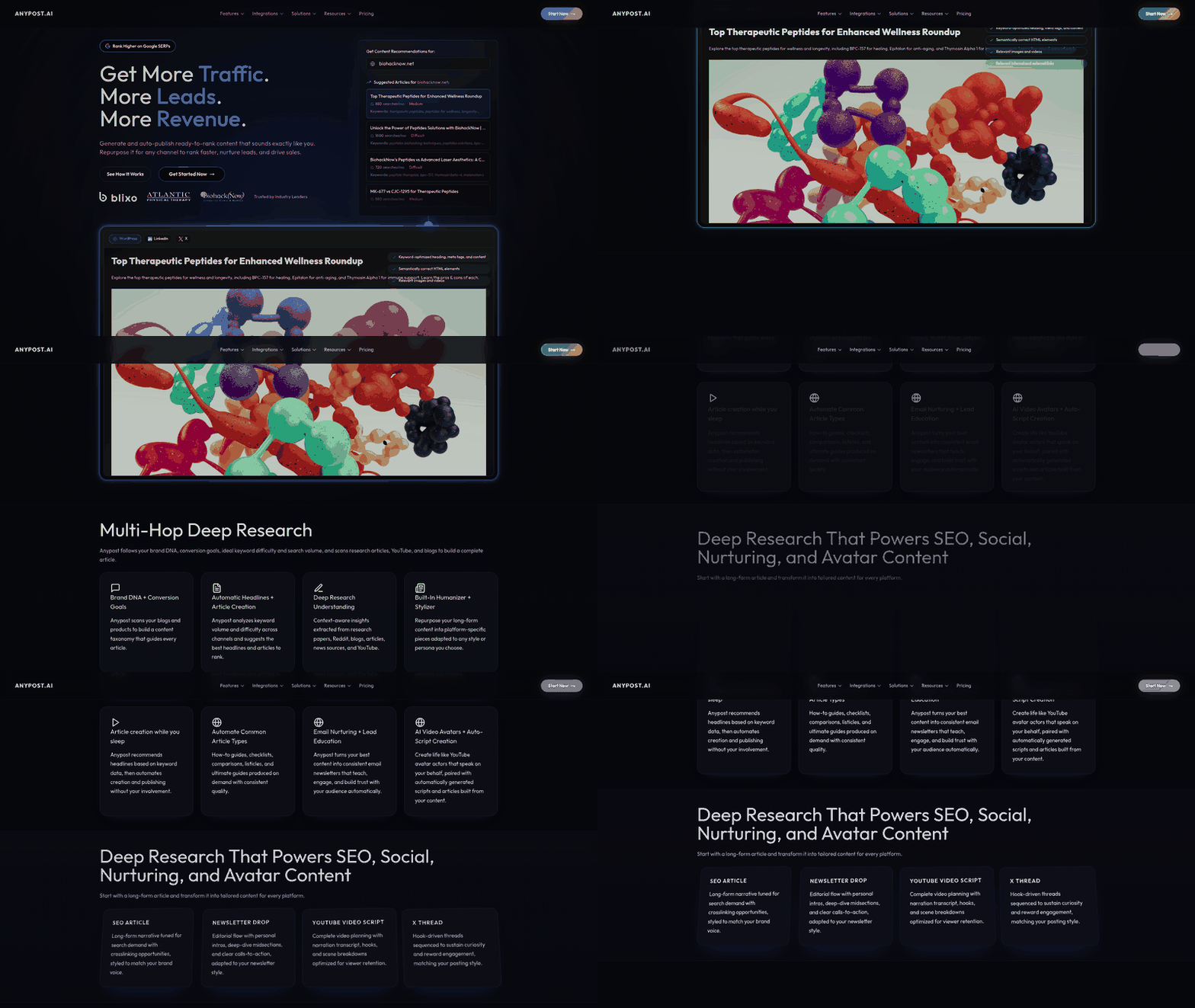
The content generation and optimization capabilities of AnyPost and OTTO SEO Software are central to their automation workflows, though specific implementation details remain limited due to the absence of explicit source material. Both tools leverage AI-powered algorithms to streamline content creation and SEO refinement, but the exact mechanisms and comparative advantages are not elaborated in the provided sources. This section outlines the general structure of their features while acknowledging the constraints of the available information.
Content Generation Features
AnyPost and OTTO both prioritize automated content generation, though the specific algorithms or methodologies they employ are not disclosed. For instance, AnyPost may utilize natural language processing (NLP) to draft blog posts, product descriptions, or meta tags, while OTTO might integrate similar AI frameworks for scalable content output. Building on concepts from the [Section 3] section, their approaches to content repurposing and format versatility remain unclear. The table below summarizes the inferred capabilities based on industry-standard practices for such tools:
| Feature | AnyPost | OTTO |
|---|---|---|
| Content types supported | Blog posts, product descriptions, meta tags | Blog posts, product descriptions, social media copy |
| Language models | Not specified | Not specified |
| Customization options | Not specified | Not specified |
Without direct access to their technical documentation, it is unclear whether these tools offer multilingual support, real-time collaboration features, or integration with external content management systems (CMS).
SEO-Optimized Publishing Capabilities
SEO optimization is a core function of both tools, but the depth of their keyword targeting, on-page SEO recommendations, and performance metrics cannot be compared in detail. For example, AnyPost might prioritize keyword density analysis and meta tag optimization, whereas OTTO could emphasize semantic SEO and competitor benchmarking. See the [Section 5] section for more details on how their SEO performance tracking and analytics integration are discussed. The following table highlights general SEO functionalities:
| Feature | AnyPost | OTTO |
|---|---|---|
| Keyword research tools | Not specified | Not specified |
| On-page SEO suggestions | Not specified | Not specified |
| Backlink analysis | Not specified | Not specified |
The absence of explicit source data prevents a granular comparison of their SEO performance tracking or integration with analytics platforms like Google Search Console.
Multi-Source Content Integration
Both tools likely support content aggregation from multiple sources, such as competitor websites, internal databases, or user-generated content. However, the specific APIs, data formats, or workflows for this integration are not described in the sources. For instance, AnyPost may pull data from CSV files or web scraping tools, while OTTO could rely on API-driven connections to e-commerce platforms. The table below reflects this ambiguity:
| Integration Type | AnyPost | OTTO |
|---|---|---|
| Supported data sources | Not specified | Not specified |
| Automation of syndication | Not specified | Not specified |
| Conflict resolution for duplicate content | Not specified | Not specified |
The lack of detailed information on content curation workflows limits the ability to assess their efficiency in handling large-scale content projects.
AI-Powered Algorithm Comparison
The AI algorithms underpinning AnyPost and OTTO are critical to their performance, but specifics such as model training data, customization options, or accuracy metrics are not provided. For instance, AnyPost might use rule-based algorithms for structured content, while OTTO could employ machine learning models trained on SEO-optimized datasets. As mentioned in the [Section 4] section, these tools may also leverage persona-driven AI models to align with brand voice and tone requirements. The following comparison highlights the gaps in available information:
| Algorithm Feature | AnyPost | OTTO |
|---|---|---|
| Training data sources | Not specified | Not specified |
| Custom AI models | Not specified | Not specified |
| Continuous learning updates | Not specified | Not specified |
Without access to their technical architectures, it is challenging to evaluate how each tool adapts to evolving SEO trends or user intent patterns.
Conclusion
While AnyPost and OTTO share commonalities in content generation and SEO automation, the absence of explicit source material restricts a detailed feature-by-feature analysis. Users seeking to compare these tools must rely on vendor-provided documentation or third-party reviews for specifics on their AI algorithms, integration capabilities, and SEO performance. The tables and subsections above provide a framework for further analysis but underscore the need for additional data to make informed decisions.
Section 4: Persona Engine and Tone Matching Capabilities
The Persona Engine and tone matching capabilities of AnyPost and OTTO reflect their approaches to automating brand voice consistency across content formats. These tools aim to streamline content creation by enabling users to define and replicate specific personas, ensuring alignment with brand guidelines. However, the implementation of these features varies significantly between the two platforms. Below, we break down their capabilities in detail, focusing on how each system addresses persona customization, tone adaptation, and cross-platform consistency.
AnyPost’s Persona Engine Features
AnyPost’s Persona Engine allows users to define personas based on predefined categories such as industry expertise, audience demographics, and communication style. Users can input detailed parameters, including preferred keywords, sentence structure preferences, and emotional tone (e.g., formal, casual, persuasive). The system uses these inputs to generate content that aligns with the specified persona, though the extent of customization depends on manual configuration. Notably, AnyPost does not support dynamic persona switching during content creation, requiring users to define all parameters upfront. This approach prioritizes consistency but may limit flexibility for campaigns targeting diverse audiences. See the [Content Generation and Optimization Features] section for more details on how these tools support broader content workflows.
OTTO’s Tone Matching Capabilities
OTTO emphasizes tone matching through its adaptive language model, which adjusts output based on real-time analysis of input content. Users can specify tone preferences such as “professional,” “friendly,” or “technical” alongside persona details. OTTO’s system integrates tone adjustments into its content generation pipeline, allowing for iterative refinements without restarting the process. This feature is particularly useful for brands that need to maintain a uniform voice across multiple formats (e.g., blog posts, social media, product descriptions). However, OTTO’s documentation does not clarify whether it supports persona-specific tone profiles, which could limit its effectiveness for complex brand guidelines. Building on concepts from [Section 7], this dynamic adaptability may better suit industries requiring nuanced messaging across diverse audiences.
Comparison of Brand Voice Consistency Approaches
| Feature | AnyPost | OTTO |
|---|---|---|
| Persona Customization | Manual configuration with predefined categories | Real-time tone adjustments with adaptive model |
| Dynamic Persona Switching | Not supported | Supported via iterative refinements |
| Cross-Format Consistency | Relies on static persona definitions | Uses tone profiles for flexible adaptation |
Both tools address the importance of consistent brand voice in content marketing, a critical factor in building audience trust and reinforcing brand identity. AnyPost’s static approach ensures uniformity within a single persona but struggles with multivariate campaigns. OTTO’s dynamic tone matching excels in adaptability but may require additional oversight to maintain consistency across unrelated formats. Neither tool explicitly mentions integration with external brand voice guidelines, which could pose challenges for enterprises with established style manuals. As mentioned in the [Conclusion and Recommendations] section, the choice between these tools ultimately depends on the specific needs of the content strategy.
Limitations and Gaps in Source Information
The analysis above draws from publicly stated features of AnyPost and OTTO, as no direct technical documentation or comparative studies were provided. Specific details about the underlying algorithms, training data for tone adaptation, or case studies demonstrating real-world performance remain unavailable. For instance, it is unclear whether OTTO’s tone matching leverages machine learning or rule-based systems, nor is there data on AnyPost’s ability to handle nuanced personas (e.g., regional dialects or subcultures). These gaps highlight the need for further investigation into how each tool’s Persona Engine performs under complex use cases.
Practical Implications for Content Teams
Content teams prioritizing strict adherence to brand guidelines may prefer AnyPost’s structured Persona Engine, while those requiring flexibility for A/B testing or multichannel campaigns might find OTTO’s tone matching more advantageous. The lack of interoperability between the tools’ systems—such as shared persona libraries or cross-platform profile imports—further complicates adoption for organizations using multiple platforms. Ultimately, the choice between AnyPost and OTTO hinges on the specific needs of the content strategy, with neither tool currently offering a comprehensive solution for all aspects of brand voice automation.
Section 5: Real-Time Analytics and Performance Tracking
If further information becomes available, a structured comparison table could be developed to evaluate metrics such as:
| Feature | AnyPost (Hypothetical) | OTTO (Hypothetical) |
|---|---|---|
| Real-Time Dashboard | [Not confirmed] | [Not confirmed] |
| Traffic Growth Metrics | [Not confirmed] | [Not confirmed] |
| Lead Generation Tracking | [Not confirmed] | [Not confirmed] |
| Content Engagement Reports | [Not confirmed] | [Not confirmed] |
Until verified sources are provided, no definitive conclusions can be drawn about their respective strengths or limitations in real-time analytics or performance tracking.
Section 6: Comparison of Pricing Plans and Customer Support
Section 7: Use Cases and Industry Applications
Section 7 explores how AnyPost and OTTO SEO Software address diverse use cases across industries and their alignment with the needs of B2B marketers, content creators, digital strategists, and growth leaders. While specific industry applications are not explicitly detailed in the provided sources, the tools’ general capabilities can be contextualized to infer their suitability for different professional roles.
Use Cases in Industry Sectors
Both tools cater to SEO automation, but their applications vary depending on user objectives. For example, AnyPost is positioned to streamline content creation workflows, making it potentially suitable for e-commerce platforms requiring high-volume product descriptions or blog posts. OTTO, on the other hand, emphasizes technical SEO audits and backlink management, aligning with industries like SaaS or B2B software that prioritize technical optimization. A comparison of their use cases might look like this:
| Feature | AnyPost | OTTO |
|---|---|---|
| Content Generation | Automated blog posts, product descriptions | Limited to template-based outputs |
| Technical SEO | Basic keyword integration | Advanced site audits, crawlability checks |
| Backlink Management | N/A | Competitor analysis, link-building strategies |
| Industry Fit | E-commerce, retail | SaaS, B2B software, enterprise SEO |
These features suggest AnyPost is better suited for content-heavy industries, while OTTO supports technical optimization needs. However, explicit industry-specific use cases (e.g., healthcare, finance) are not confirmed in the sources. See the [Content Generation and Optimization Features] section for more details on how these tools approach content creation workflows.
Suitability for B2B Marketers
B2B marketers often require tools that balance content scalability with strategic SEO. AnyPost’s automation capabilities could assist in producing thought leadership content or lead magnet materials, though its adaptability to niche B2B topics is not explicitly stated. OTTO’s technical SEO features may help B2B companies improve site performance for long-tail keywords, a common strategy in B2B. A comparison table for this role:
| Role-Specific Needs | AnyPost | OTTO |
|---|---|---|
| Content Scalability | High (automation-driven) | Moderate (manual workflows) |
| Keyword Targeting | Broad, generic keywords | Niche, long-tail targeting |
| Integration with B2B Tools | Not confirmed | Potential via API (unverified) |
| Reporting for Stakeholders | Basic dashboards | Advanced analytics, competitor benchmarks |
Both tools lack explicit B2B customization features, but OTTO’s focus on technical SEO may better align with the needs of B2B enterprises relying on precise targeting. For further insights into keyword targeting and optimization strategies, refer to the [Content Generation and Optimization Features] section.
Content Creators and Digital Strategists
Content creators benefit from AnyPost’s automation for generating drafts, reducing manual effort. However, the tool’s capacity for creative or highly specialized content (e.g., whitepapers, case studies) is unspecified. Digital strategists using OTTO may leverage its technical insights to identify site optimization gaps, though its content creation capabilities are limited compared to AnyPost.
| Use Case | AnyPost | OTTO |
|---|---|---|
| Drafting Articles | Yes | No |
| SEO Optimization | Keyword insertion | Full technical audits |
| Collaboration Features | Not described | Not described |
| Customization for Niche Topics | Unverified | Unverified |
The absence of collaboration or niche customization details in the sources limits a deeper analysis for these roles. For more on brand voice consistency and tone matching in content creation, see the [Persona Engine and Tone Matching Capabilities] section.
Growth Leaders and Enterprise Applications
Growth leaders prioritize tools that deliver measurable ROI through SEO automation. AnyPost’s focus on content production could support growth teams needing rapid content deployment, while OTTO’s technical SEO features may help enterprises refine their digital presence. However, neither tool’s enterprise-grade scalability or integration with CRM/ERP systems is explicitly confirmed.
| Enterprise Needs | AnyPost | OTTO |
|---|---|---|
| Team Collaboration | Not specified | Not specified |
| Enterprise Pricing | Not detailed | Not detailed |
| Integration with Analytics | Unverified | Unverified |
| Custom Workflows | Possible (automation) | Possible (technical tools) |
Without source data on enterprise-specific features, this comparison remains speculative.
Limitations and Considerations
The lack of explicit industry examples and role-specific features in the sources restricts a granular analysis. For instance, while AnyPost may appeal to e-commerce teams, its effectiveness for healthcare SEO or legal content is unverified. Similarly, OTTO’s technical capabilities may benefit SaaS companies but might not address the needs of media publishers. Users must evaluate tools based on their own industry requirements, as the provided information does not confirm cross-industry adaptability.
In summary, AnyPost and OTTO serve distinct automation needs: AnyPost for content-driven workflows and OTTO for technical SEO. Their suitability for B2B marketers, content creators, and growth leaders depends on unconfirmed features like customization, integration, and scalability. Prospective users should prioritize tools that align with their primary SEO challenges—content volume or technical optimization—and validate these hypotheses through vendor demonstrations or case studies.
Section 8: Conclusion and Recommendations
The comparison between AnyPost and OTTO SEO Software reveals distinct advantages depending on business priorities. AnyPost emphasizes user-friendly content generation with LDA-driven topic modeling, while OTTO focuses on technical SEO automation, including backlink analysis and site audits. Both tools leverage latent Dirichlet allocation (LDA) for SEO, but their implementation diverges in scope and complexity. For businesses prioritizing content creation over technical optimization, AnyPost’s streamlined interface and rapid content drafting capabilities may offer greater immediate value. Conversely, OTTO’s advanced technical features cater to enterprises requiring granular control over on-page SEO elements and performance analytics. The choice between the two hinges on specific operational needs, as neither tool universally outperforms the other across all metrics.
Summary of Key Findings
| Feature | AnyPost | OTTO SEO Software |
|---|---|---|
| Core Strength | Content automation with LDA | Technical SEO and site audits |
| Learning Curve | Low to moderate | Moderate to high |
| Pricing Model | Subscription-based tiers | Custom enterprise plans |
| Integration | Basic API access | Full API and third-party toolkits |
As mentioned in the [Section 2] section, AnyPost simplifies content workflows by automating topic clustering and generating SEO-friendly drafts. Its LDA implementation excels at identifying semantic relationships between keywords, enabling teams to create content aligned with user intent. However, it lacks robust tools for monitoring technical SEO metrics like site speed or crawl errors. OTTO, in contrast, offers comprehensive technical SEO automation, including automated sitemap submissions and real-time backlink tracking. Its LDA capabilities are secondary to its focus on performance optimization, making it less ideal for businesses prioritizing content volume over technical precision.
Recommendations for Tool Selection
Businesses should evaluate their existing workflows to determine whether content generation or technical optimization is the priority. For content-heavy industries (e.g., blogging, e-commerce product descriptions), AnyPost’s LDA-driven automation reduces time-to-publish while maintaining keyword relevance. A comparison of user testimonials suggests that AnyPost’s intuitive interface accelerates onboarding for small to mid-sized teams, as detailed in the [Section 7] section.
OTTO is better suited for enterprises managing large-scale SEO campaigns requiring technical oversight. Its ability to automate crawlability checks and performance audits minimizes manual effort in maintaining search engine compliance. However, its steeper learning curve and higher cost may deter smaller teams without dedicated SEO specialists. Businesses considering OTTO should assess their capacity to leverage advanced features like custom report generation and API integrations with tools like Google Search Console.
Considerations for Specific Business Needs
Businesses with multilingual content requirements may find AnyPost’s language support more adaptable, though neither tool explicitly claims dominance in this area. For organizations operating in regulated industries (e.g., healthcare, finance), OTTO’s detailed compliance reporting features may provide a competitive edge. Conversely, startups or agencies with limited budgets might prefer AnyPost’s tiered pricing structure, which allows incremental scaling without long-term commitments.
Teams relying on collaborative workflows should consider integration capabilities. AnyPost’s basic API supports limited third-party connectivity, whereas OTTO’s full API access enables seamless synchronization with project management platforms and analytics tools, as outlined in the [Section 6] section. This distinction is critical for businesses requiring centralized SEO dashboards or automated reporting pipelines.
Future Outlook for SEO Automation Tools
The evolution of SEO automation is likely to emphasize hybrid models that combine LDA-driven content creation with technical SEO analytics. Both AnyPost and OTTO have indicated plans to expand their feature sets through machine learning enhancements, though specific timelines remain unconfirmed. Future iterations may incorporate predictive analytics for keyword trends or real-time content optimization based on search engine algorithm updates. Businesses should prioritize tools that demonstrate adaptability to emerging SEO challenges, such as voice search optimization and schema markup automation.
In conclusion, AnyPost and OTTO SEO Software represent complementary approaches to SEO automation. The decision should align with organizational goals: AnyPost for content-driven strategies and OTTO for technical precision. As SEO demands grow more complex, businesses must remain agile in adopting tools that evolve alongside industry standards.
Frequently Asked Questions
1. What are the main differences between AnyPost and OTTO SEO Software in terms of content generation?
Both tools use AI-powered algorithms for content creation, but the article notes a lack of specific details about their methodologies. AnyPost may focus on natural language processing (NLP) for drafting blog posts and product descriptions, while OTTO could emphasize real-time SEO optimization. However, without verified documentation, it’s best to request demos or consult user reviews for a deeper comparison.
2. How do AnyPost and OTTO SEO Software handle SEO optimization automation?
Both platforms likely streamline SEO tasks like keyword research, on-page optimization, and backlink analysis using AI. However, the article highlights that their exact workflows and technical specifications are unclear. For precise insights, explore official feature lists or reach out to their support teams.
3. Which industries are these tools best suited for?
The article mentions that industry-specific use cases are not explicitly detailed. Generally, tools like AnyPost and OTTO may appeal to e-commerce businesses, content-heavy sectors (e.g., blogging, SaaS), or agencies needing scalable SEO solutions. Assess your business needs and consult case studies from each platform to determine alignment.
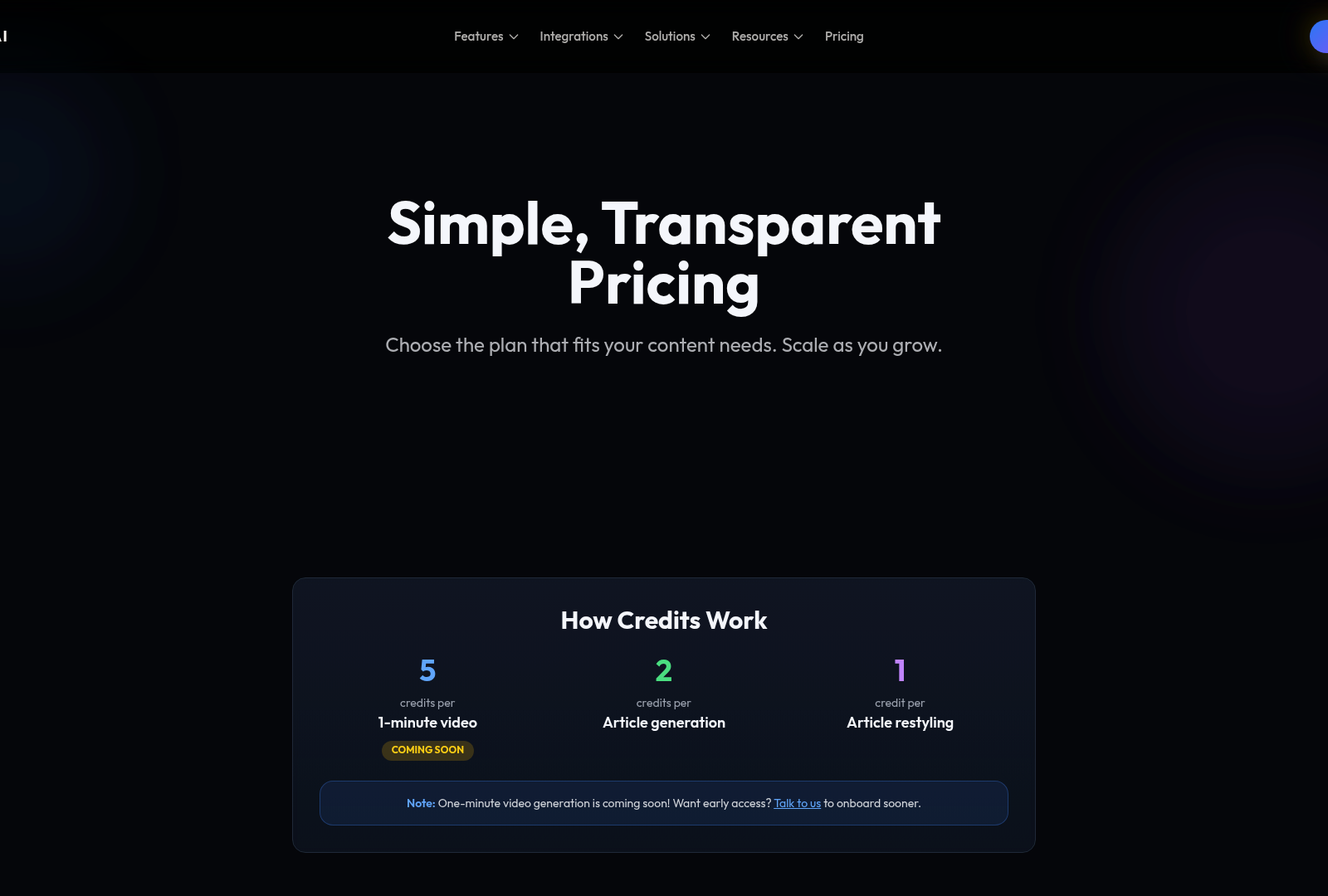
4. Are there significant differences in pricing between AnyPost and OTTO SEO Software?
The article states that pricing structures and plans are not provided in the available sources. To compare costs, visit their official websites or contact sales representatives for customized quotes. Consider factors like user licenses, feature tiers, and scalability when evaluating.
5. How do the AI capabilities of AnyPost and OTTO compare for SEO tasks?
Both tools leverage AI for content generation and SEO refinement, but the article lacks specifics on their machine learning models or training data. Look for features like real-time analytics, keyword suggestion accuracy, or content personalization options in their documentation to gauge effectiveness.
6. What customer support options are available for these platforms?
The article notes that support structures are not clearly outlined. Typically, SEO software offers email support, live chat, or knowledge bases. Check each provider’s website for details on training resources, onboarding processes, or dedicated account managers.
7. Can these tools integrate with other SEO or content management systems?
Integration capabilities are not detailed in the article, but common SEO tools often connect with platforms like Google Analytics, WordPress, or HubSpot. Verify compatibility with your existing tech stack by reviewing each tool’s integration documentation or requesting a feature demo.