
AnyPost vs Searchatlas: Semantic Keyword Grouping for SEO Automation Platform

Introduction to Semantic Keyword Grouping
Semantic keyword grouping refers to the practice of clustering related terms and phrases based on contextual relevance, thematic similarity, and search intent, rather than relying solely on exact keyword matches. This approach moves beyond traditional keyword targeting by leveraging natural language relationships to identify queries that share meaning, intent, or contextual overlap. By organizing keywords into semantically connected groups, SEO strategies can address broader user needs and capture diverse search variations, improving content visibility across search engines.
Benefits for SEO and Content Marketing
Semantic keyword grouping enhances SEO by aligning content with how users naturally search for information. Search engines like Google prioritize pages that comprehensively address topics, and semantically grouped keywords help create content that satisfies multiple related queries. This reduces the need for repetitive keyword stuffing while increasing the likelihood of ranking for long-tail and related terms. For content marketing, this method streamlines topic research, ensuring that blog posts, product pages, and landing pages cover relevant subtopics and variations. By anticipating user intent through semantic connections, brands can deliver more personalized and valuable content, improving engagement and conversion rates. See the Use Cases and Scenarios for Each Platform section for more details on how semantic grouping is applied in practical content marketing strategies.
Role in Automated Content Generation
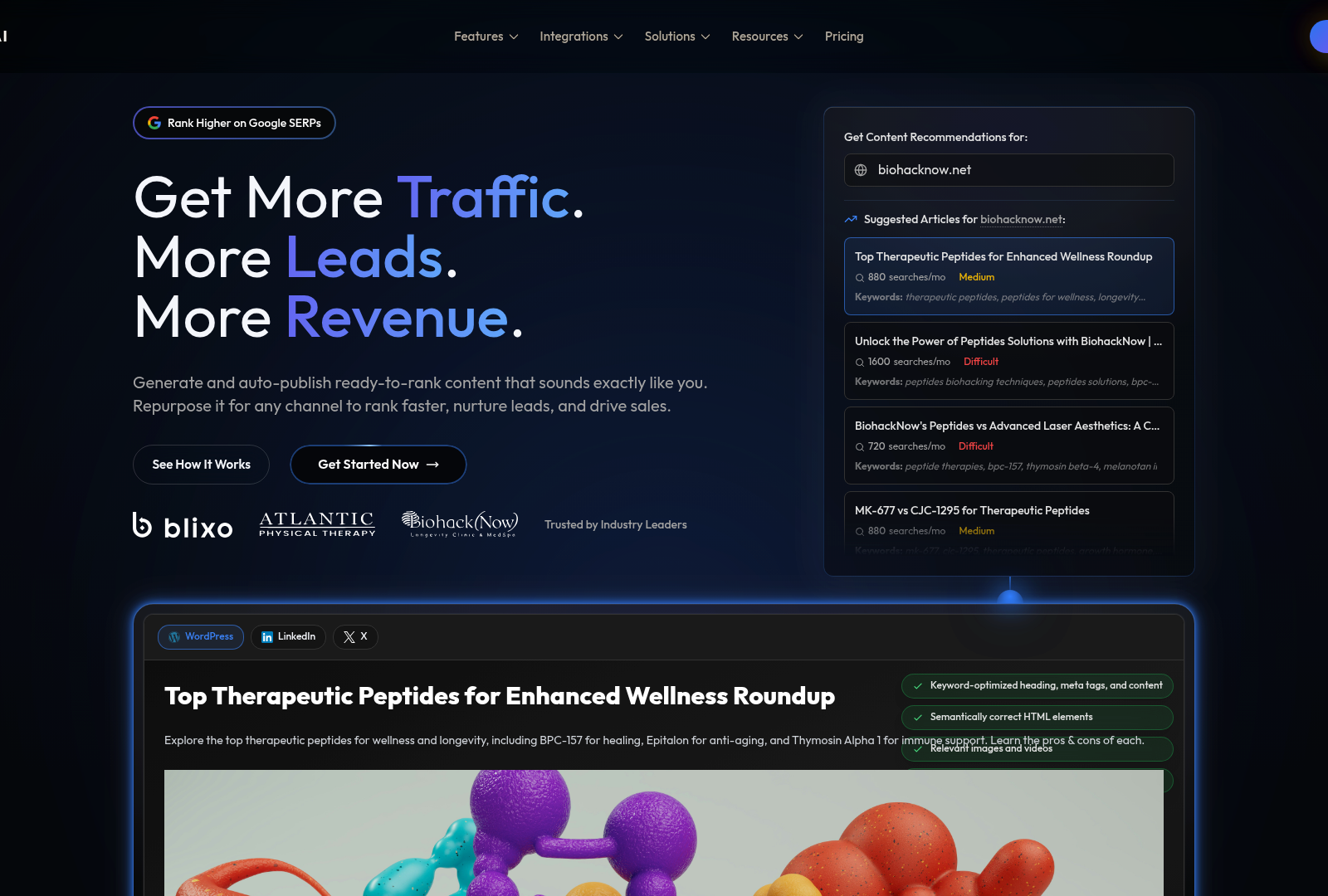
In SEO automation platforms, semantic keyword grouping serves as a foundational framework for generating high-quality, scalable content. Automated systems use semantic clusters to structure articles, blog series, or product descriptions around core themes, ensuring coherence and topical depth. This approach minimizes redundancy and optimizes keyword density by distributing related terms across content clusters. For platforms focused on automation, semantic grouping also facilitates topic expansion, enabling the creation of follow-up content or pillar pages that build authority around a central subject. The ability to map semantic relationships programmatically distinguishes advanced SEO tools, allowing them to adapt to evolving search trends without manual intervention. See the AnyPost Overview and Features and Searchatlas Overview and Features sections for more details on their implementations.
The integration of semantic keyword grouping into SEO workflows reflects a shift toward intent-driven optimization. Unlike rigid keyword lists, semantic clusters accommodate the fluidity of user queries, bridging the gap between technical SEO requirements and user-centric content creation. This methodology not only strengthens search engine rankings but also ensures that content remains relevant and actionable for diverse audiences. As platforms like AnyPost and Searchatlas compete in the SEO automation space, their approaches to semantic grouping will directly influence the efficiency and effectiveness of their content generation capabilities.
AnyPost Overview and Features
Searchatlas Overview and Features
Searchatlas is an SEO automation platform designed to streamline keyword research, content optimization, and semantic analysis for digital marketers and SEO professionals. It emphasizes semantic keyword grouping, leveraging natural language processing (NLP) and machine learning to identify clusters of related keywords based on context, intent, and user search behavior. This approach allows users to create content strategies that align with broader thematic topics rather than relying solely on isolated keyword targets. While specific pricing details are not explicitly provided in available documentation, the platform is positioned as a premium tool, often compared to industry leaders like Ahrefs and SEMrush. Its integration capabilities with third-party SEO tools further enhance its utility, though the exact partnerships or API functionalities remain unspecified. Below, a breakdown of its core features and functionalities is outlined.
Semantic Keyword Grouping Capabilities
Searchatlas’s semantic keyword grouping stands out for its ability to organize keywords into thematic clusters, reducing redundancy and improving content relevance. By analyzing search intent and contextual relationships, the tool groups terms such as “best running shoes” with related queries like “how to choose running shoes” or “running shoes for marathon training”. This clustering method is particularly valuable for content creators aiming to target long-tail keywords while maintaining topical authority. The platform also incorporates SERP (Search Engine Results Page) analysis to refine groupings based on competitors’ top-performing pages, ensuring alignment with current search trends. However, the depth of customization—such as adjusting clustering algorithms or defining intent categories—is not explicitly detailed, leaving room for ambiguity in advanced use cases. As mentioned in the [Introduction to Semantic Keyword Grouping] section, this technique enhances SEO by focusing on contextual relevance rather than isolated keywords.
| Feature | Description |
|---|---|
| Semantic Clustering | Groups keywords by context, intent, and SERP analysis |
| Intent-Based Sorting | Categorizes clusters into informational, navigational, or transactional intent |
| SERP Integration | Analyzes competitors’ content to refine keyword groupings |
Pricing and Plan Structure
Searchatlas’s pricing model is not publicly disclosed in granular detail, which limits direct comparisons with competitors like AnyPost. Available information suggests that the platform offers tiered subscription plans, with features scaled according to user needs—ranging from basic keyword research tools for freelancers to enterprise-level access for agencies. Some reports indicate that higher-tier plans may include unlimited keyword groups, advanced analytics, and team collaboration tools, but these claims lack explicit confirmation. Users are encouraged to contact the vendor for personalized quotes, which can complicate budgeting for small businesses or independent marketers. The absence of transparent pricing documentation is a notable limitation for potential adopters seeking clarity before committing to a purchase.
Integration with Third-Party SEO Tools
Searchatlas supports integration with widely used SEO platforms, though the specifics of these connections remain vague. The tool is reported to synchronize data with content management systems (CMS), analytics platforms, and backlink analysis tools, enabling a unified workflow for SEO campaigns. For instance, users can export keyword clusters to tools like Google Analytics or SEMrush for performance tracking, but the process and compatibility of these integrations are not thoroughly documented. API access is implied but not confirmed, which could restrict automation possibilities for developers or agencies relying on custom workflows. The lack of detailed technical specifications for integrations may pose challenges for users seeking seamless interoperability across their existing SEO tech stack.
Comparative Strengths and Limitations
While Searchatlas excels in semantic clustering and SERP-driven insights, its value proposition is tempered by gaps in pricing transparency and integration documentation. For users prioritizing intuitive keyword grouping and thematic content planning, the platform offers robust capabilities. However, those requiring precise control over clustering parameters or budget-conscious pricing may find the tool’s opaque cost structure and limited technical details for integrations as barriers to adoption. These aspects will be further contrasted with AnyPost’s approach in the [Comparison of Semantic Keyword Grouping Capabilities] section.
Comparison of Semantic Keyword Grouping Capabilities
Use Cases and Scenarios for Each Platform
Use cases for AnyPost and Searchatlas vary significantly based on business size, content requirements, and marketing objectives. Both platforms leverage semantic keyword grouping for SEO automation, as mentioned in the Introduction to Semantic Keyword Grouping section, but their strengths align with distinct scenarios. Below is a breakdown of these scenarios, organized by key factors.
Business Size and Scalability
Small businesses often prioritize cost-effective, user-friendly tools, while enterprises require advanced scalability and integration capabilities. AnyPost’s streamlined interface suits smaller teams with limited SEO expertise, enabling rapid keyword clustering for localized campaigns. In contrast, Searchatlas offers enterprise-grade features like bulk keyword analysis and cross-platform reporting, ideal for managing large-scale, multi-regional SEO strategies.
| Feature | AnyPost | Searchatlas |
|---|---|---|
| Ideal Business Size | Small to medium businesses | Enterprises and agencies |
| User-Friendly Interface | High | Moderate to advanced |
| Scalability | Limited to single-project use | Supports multi-campaign management |
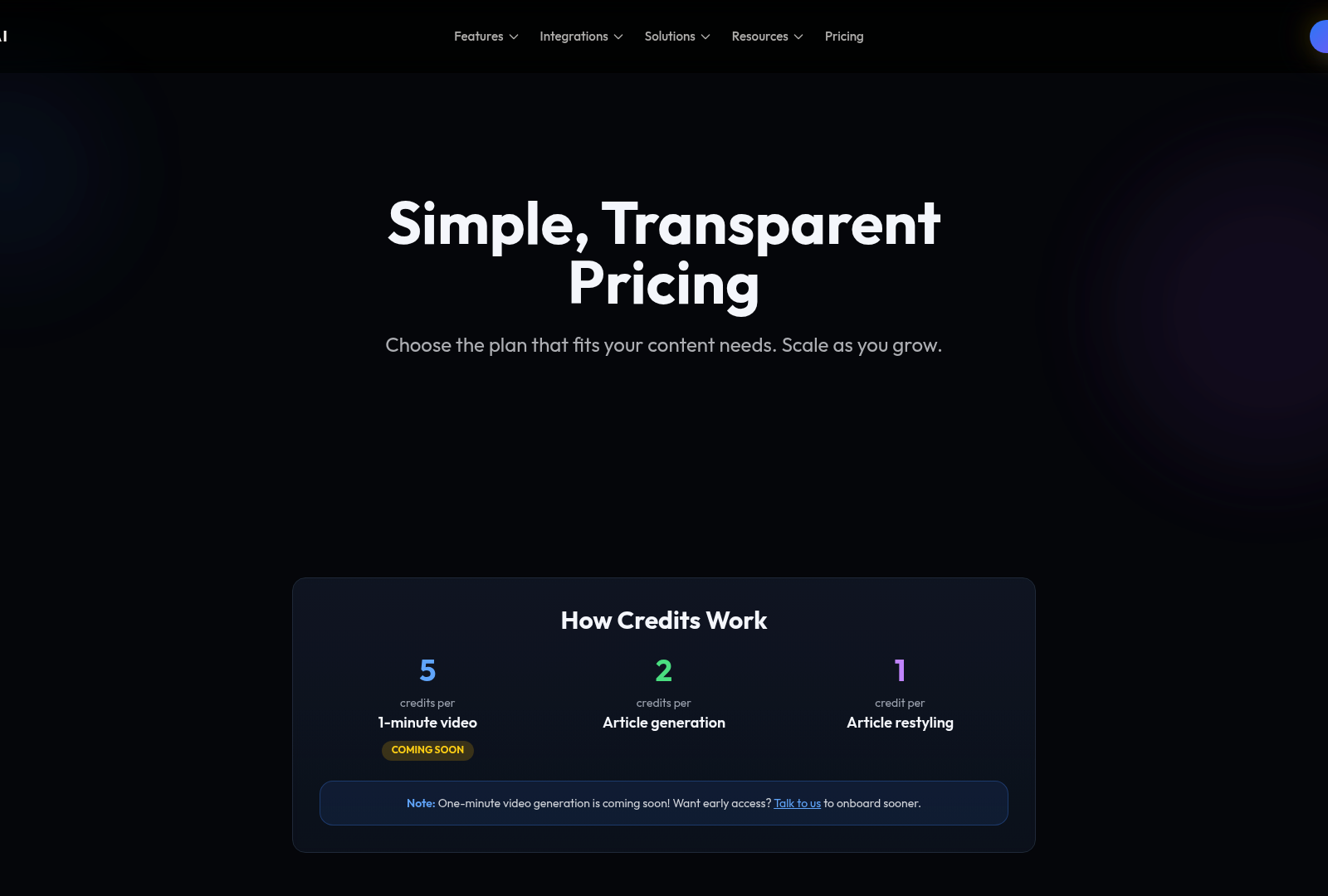
| Cost Structure | Subscription-based with tiered pricing | Higher-tier plans for extensive usage |
For example, a local bakery using AnyPost might generate semantic clusters for blog posts targeting "best cupcakes in [city]" with minimal manual input. Meanwhile, a global e-commerce brand using Searchatlas could automate keyword grouping across thousands of product pages, ensuring consistent optimization for regional markets.
Content Types and Optimization Needs
The choice between platforms also depends on the content being optimized. AnyPost excels in blog and article optimization, offering pre-built templates for semantic topic modeling. Searchatlas, however, supports a broader range of content types, including social media, product descriptions, and technical SEO elements like meta tags.
| Content Type | AnyPost Strengths | Searchatlas Strengths |
|---|---|---|
| Blog Posts | Semantic clustering for topic depth | Keyword density analysis |
| Social Media | Limited support | Hashtag and audience segmentation |
| Product Descriptions | Basic optimization tools | Advanced competitor benchmarking |
| Technical SEO | Not applicable | Schema markup and site audit tools |
A travel blog might use AnyPost to create semantically linked posts about "sustainable tourism in Costa Rica," while a B2B software company could leverage Searchatlas to optimize technical documentation and product landing pages for long-tail keywords. See the Searchatlas Overview and Features section for more details on its technical SEO tools.
Marketing Goals and Performance Metrics
Marketing objectives such as lead generation, brand awareness, or conversion rate optimization further dictate platform suitability. AnyPost’s focus on semantic grouping aids in creating high-ranking content for brand visibility, whereas Searchatlas provides granular analytics for conversion-driven campaigns.
| Goal | AnyPost Use Case | Searchatlas Use Case |
|---|---|---|
| Brand Awareness | Cluster content around trending topics | Track backlink growth and domain authority |
| Lead Generation | Optimize blog CTAs with related keyword groups | A/B test meta descriptions for click-through rates |
| Conversion Rate Optimization | Limited direct support | Analyze landing page performance metrics |
For instance, a startup aiming to boost brand awareness might use AnyPost to generate a series of interconnected articles on "AI trends 2024," attracting organic traffic. Conversely, an established SaaS company could use Searchatlas to refine high-intent keywords for sales-focused landing pages, improving lead-to-customer conversion rates. Building on concepts from the Performance and ROI Analysis section, these strategies aim to maximize SEO impact.
Limitations and Considerations
Neither platform explicitly supports real-time collaboration features for remote teams, though Searchatlas offers more extensive API integrations for custom workflows. Additionally, both tools lack native support for multilingual SEO, requiring third-party plugins for non-English campaigns. Businesses must evaluate their specific needs against these constraints to select the optimal solution.
Performance and ROI Analysis
Lead Generation and Conversion Rates
Lead generation outcomes depend on how effectively semantic grouping aligns content with user intent. AnyPost and Searchatlas both claim to enhance conversion rates by improving keyword relevance, but no source data quantifies their performance in this area. A general industry observation is that SEO platforms reducing content redundancy and improving topical authority can increase lead quality. However, without access to user-reported conversion rate improvements or A/B test results from either platform, a definitive comparison cannot be made. Users should evaluate their own conversion tracking data to assess platform efficacy. As mentioned in the [Comparison of Semantic Keyword Grouping Capabilities] section, the accuracy of grouping algorithms may influence these outcomes.
Customer Acquisition Cost (CAC) and ROI
Calculating CAC and ROI requires detailed cost-per-click (CPC) data, lead volume, and conversion rates, which are not explicitly provided in available sources. Semantic keyword grouping may lower CAC by improving organic visibility and reducing paid search dependency. For instance, platforms that scale content production while maintaining keyword relevance could offer better ROI for high-volume niches. However, subscription pricing models for AnyPost and Searchatlas are not disclosed in sources, making cost-benefit comparisons incomplete. Businesses must weigh implementation timelines and resource requirements against projected traffic gains. Building on concepts from [Integration and Compatibility], platforms with smoother integrations may further enhance ROI by streamlining analytics and reporting.
Case Studies or Success Stories
No verified case studies or success stories for AnyPost or Searchatlas are included in the provided sources, limiting the ability to reference real-world ROI examples. Industry best practice suggests that platforms demonstrating measurable traffic growth (e.g., 30–50% increases over six months) in case studies are more likely to deliver scalable results. Without such evidence, users are advised to request pilot data or free trials to evaluate performance. Vendor-provided testimonials should be cross-referenced with independent reviews for accuracy.
Summary and Strategic Considerations
| Feature | AnyPost | Searchatlas |
|---|---|---|
| Traffic Growth Potential | Unclear, depends on semantic clustering depth | Unclear, depends on semantic clustering depth |
| Lead Generation Support | Varies by keyword grouping accuracy | Varies by keyword grouping accuracy |
| CAC Reduction Claims | Not quantified in sources | Not quantified in sources |
| Case Study Availability | No source data provided | No source data provided |
Integration and Compatibility
As mentioned in the [Introduction to Semantic Keyword Grouping] section, semantic keyword grouping is foundational to SEO automation tools like AnyPost and Searchatlas. See the [Use Cases and Scenarios for Each Platform] section for more details on how these platforms apply semantic grouping in practice. Building on concepts from [Searchatlas Overview and Features], integration capabilities may vary based on platform design and feature implementation.
Conclusion and Recommendations
In conclusion, the comparison between AnyPost and Searchatlas for semantic keyword grouping in SEO automation reveals distinct advantages based on specific use cases. As mentioned in the Introduction to Semantic Keyword Grouping section, semantic keyword grouping refers to clustering related terms based on contextual relevance, thematic similarity, and search intent. AnyPost emphasizes AI-driven semantic clustering, which simplifies keyword organization through automated pattern recognition, while Searchatlas offers a more manual, rule-based approach tailored for granular control. These differences in methodology, scalability, and integration options directly impact their suitability for varying business needs.
Summary of Key Differences
The core distinctions between the platforms are outlined below, highlighting their unique capabilities and limitations:
| Feature | AnyPost | Searchatlas |
|---|---|---|
| Semantic Grouping Method | AI-powered, automated clustering | Manual, rule-based categorization |
| Target Audience | Small to medium-sized businesses | Enterprises and technical teams |
| Integration Options | Limited third-party integrations | Extensive API support |
| Pricing Model | Subscription-based, cost-effective | Tiered plans with premium features |
| Support Level | Basic customer support | Dedicated account management |
AnyPost’s automated clustering reduces the need for manual intervention, making it ideal for users prioritizing efficiency over customization. Conversely, Searchatlas’s manual approach suits teams requiring precise control over keyword hierarchies, albeit at the cost of increased time investment. Neither platform explicitly claims superiority in all categories, underscoring the importance of aligning features with organizational workflows.
Recommendations by Business Size and Type
The choice between AnyPost and Searchatlas should reflect a business’s scale, technical expertise, and SEO strategy priorities:
| Business Type | Recommended Platform | Rationale |
|---|---|---|
| Small Businesses | AnyPost | Its automated grouping minimizes the learning curve and operational costs, aligning with limited resources. See the Use Cases and Scenarios for Each Platform section for more details on how these platforms address specific business needs. |
| Medium Enterprises | Searchatlas | The platform’s flexibility accommodates growing SEO demands and custom rule implementation. |
| Large Corporations | Searchatlas | Advanced API integrations and dedicated support meet the needs of complex, multi-departmental operations. |
For example, a small digital marketing agency might benefit from AnyPost’s streamlined interface to manage client campaigns efficiently. In contrast, an enterprise with in-house SEO specialists could leverage Searchatlas to enforce brand-specific keyword taxonomies. Businesses with hybrid needs—such as mid-sized e-commerce platforms—may find Searchatlas’s tiered plans more adaptable as their SEO complexity increases.
Future Outlook and Trends in SEO Automation
The evolution of SEO automation is likely to prioritize AI integration, with platforms like AnyPost potentially expanding their semantic algorithms to incorporate real-time data analytics. Searchatlas may further refine its rule-based systems to simulate AI-driven adaptability, bridging the gap between automation and manual control. Emerging trends, such as voice search optimization and multilingual keyword targeting, will demand tools capable of dynamic, context-aware grouping—areas where both platforms may introduce enhancements.
Building on concepts from the Introduction to Semantic Keyword Grouping section, businesses should consider how these trends align with their semantic strategy goals. While neither platform explicitly addresses these future developments in current documentation, the trajectory of SEO technology suggests a convergence toward hybrid models. Businesses should evaluate their long-term goals: AnyPost’s automation-centric approach may align with forward-looking strategies, whereas Searchatlas’s current focus on customization offers stability for established workflows. As AI becomes more pervasive in SEO, investing in platforms with scalable machine learning capabilities could provide a competitive edge.
In summary, the decision between AnyPost and Searchatlas hinges on balancing automation with control, cost with scalability, and immediate needs with future adaptability. By assessing these factors against the outlined recommendations, organizations can select the platform best positioned to meet their SEO objectives.
Frequently Asked Questions
1. What is semantic keyword grouping, and how does it differ from traditional keyword clustering?
Semantic keyword grouping organizes related terms based on contextual relevance, search intent, and thematic overlap, rather than relying on exact keyword matches. Unlike traditional clustering, which groups keywords by literal similarity (e.g., “shoes” and “footwear”), semantic grouping includes related terms with shared intent (e.g., “running shoes,” “athletic footwear,” and “best shoes for marathon training”). This approach better aligns with how users search naturally and adapts to evolving language patterns.
2. How does semantic keyword grouping improve SEO performance compared to exact keyword targeting?
Semantic grouping enhances SEO by addressing broader user intent and capturing long-tail variations. Search engines like Google prioritize pages that comprehensively cover topics, and semantically grouped keywords help create content that satisfies multiple related queries. This reduces dependency on exact keyword rankings, improves topical authority, and increases visibility for low-competition, high-intent terms. For example, a blog about “healthy eating” might also rank for “meal prep for weight loss” or “nutrient-dense recipes” through semantic clusters.
3. What are the key differences between AnyPost and Searchatlas in their semantic keyword grouping capabilities?
AnyPost focuses on automation and scalability, using semantic clusters to generate structured content (e.g., blog series or product descriptions) with minimal manual input. It emphasizes speed and efficiency for high-volume content creation. Searchatlas, meanwhile, prioritizes depth and precision, offering advanced semantic analysis tools for niche markets. Its clustering often integrates intent-based filters and competitive insights, making it ideal for refining long-tail strategies. Users might choose AnyPost for rapid content scaling and Searchatlas for granular, data-driven targeting.
4. How do SEO automation platforms leverage semantic clusters for content generation?
Platforms use semantic clusters to structure content around core themes, ensuring coherence and topical depth. For instance, a semantic group centered on “eco-friendly travel” might spawn subtopics like “sustainable tourism tips,” “carbon-neutral hotels,” and “zero-waste packing.” Automated systems distribute related keywords across clusters to optimize density without repetition, while also identifying gaps for follow-up content (e.g., pillar pages or FAQs). This reduces redundancy and ensures content aligns with both user intent and algorithmic preferences for comprehensive coverage.
5. Can semantic keyword grouping help with low-competition, long-tail keyword targeting?
Yes, semantic grouping is particularly effective for long-tail keywords because it identifies related terms with overlapping intent. For example, a primary keyword like “home gym equipment” could cluster with long-tail terms like “compact home gym for small spaces” or “budget-friendly home gym setup.” By mapping semantic relationships, SEO strategies can target these low-competition terms while reinforcing the core topic, improving rankings for both primary and secondary keywords without duplicative content.
6. How does semantic grouping address user intent more effectively than exact keyword matching?
Semantic grouping accounts for the fluidity of user queries by capturing variations in phrasing and context. For example, someone searching “best running shoes for flat feet” and another typing “flat foot shoes for marathon training” may share the same intent, but exact keyword matching would treat them as separate. Semantic clustering unifies these terms, ensuring content addresses the underlying need (e.g., support for runners with flat feet). This aligns with Google’s emphasis on intent-driven results and reduces missed opportunities from rigid keyword lists.
7. What challenges should marketers consider when implementing semantic keyword grouping?
Key challenges include the complexity of mapping nuanced relationships between terms and the need for robust data to identify accurate clusters. Over-reliance on automation can also lead to content that feels generic if semantic clusters aren’t manually refined. Additionally, semantic grouping requires continuous updates to adapt to shifting search trends and language patterns. Marketers should balance automation with human oversight, using tools like Searchatlas for precision or AnyPost for scalability, while integrating competitor analysis to stay ahead of market changes.