
AnyPost vs Thedigitalelevator: Semantic AI for saas content marketing

Introduction to Semantic AI in SaaS Content Marketing
Semantic AI in SaaS content marketing refers to the application of semantic search optimization, natural language processing (NLP), and entity-based strategies to enhance content relevance and search engine visibility. Unlike traditional keyword-driven approaches, semantic AI focuses on understanding contextual relationships between entities, topics, and user intent to create structured content ecosystems. Exalt Growth, a provider of semantic SEO services, leverages this approach by building entity-based content frameworks that align with both AI-driven search algorithms and traditional search engine results pages (SERPs) [2]. This methodology addresses the limitations of conventional content strategies by prioritizing holistic topic clusters and entity mapping over isolated keyword targeting [2]. As mentioned in the Comparison of Automated Content Generation Capabilities section, semantic AI’s structured frameworks differ significantly from other AI-driven content tools in their emphasis on entity relationships [2].
The importance of AI in SaaS content marketing stems from its ability to automate complex tasks while improving precision and scalability. Semantic AI streamlines workflows by identifying high-value entity relationships and generating content optimized for both human readability and machine interpretation. For instance, Exalt Growth’s semantic SEO services incorporate schema markup and LLM (large language model) prompt testing to ensure content aligns with evolving search trends [2]. This reduces the manual effort required for SEO optimization, enabling teams to focus on strategic initiatives rather than repetitive keyword research. Case studies from Exalt Growth demonstrate measurable outcomes, such as an 878% increase in organic traffic and 4,800 top-3 keyword rankings, highlighting the transformative potential of semantic AI in competitive SaaS markets [2]. See the Case Studies and User Reviews Comparison section for more details on how semantic AI performance metrics stack against other platforms [2].
A critical pain point in SaaS content creation is the inefficiency of generating high-quality, SEO-optimized material at scale. Semantic AI mitigates this by structuring content around entity-based frameworks, which reduce redundancy and improve topical authority. Exalt Growth’s core service packages include entity mapping and topic cluster development, ensuring that content is both comprehensive and logically interconnected [2]. This approach minimizes the risk of fragmented content silos, a common issue in traditional SEO strategies. Additionally, semantic AI addresses SEO optimization challenges by adapting to AI-driven search engines, which prioritize contextual relevance over keyword frequency. By integrating schema markup and entity-based metadata, semantic AI ensures content meets the technical requirements of modern search algorithms [2]. Building on concepts from the SEO Optimization and Performance Comparison section, semantic AI’s entity-driven metadata strategies provide a competitive edge over keyword-centric alternatives [2].
The integration of semantic AI also resolves scalability issues inherent in manual content workflows. Traditional methods often struggle to maintain consistency across large-scale content ecosystems, particularly in SaaS industries where technical jargon and niche topics dominate. Semantic AI tools automate entity expansion and relationship mapping, enabling teams to generate cohesive content for diverse audiences. For example, Exalt Growth’s growth and authority packages use LLM prompt testing to refine content strategies, ensuring alignment with both user intent and algorithmic priorities [2]. This reduces the time spent on iterative revisions while increasing the likelihood of ranking for competitive keywords.
| Pain Point | Traditional Approach Limitations | Semantic AI Solution |
|---|---|---|
| Content Creation | Time-consuming manual research | Entity-based frameworks streamline topic clustering and content structuring [2] |
| SEO Optimization | Keyword stuffing and guesswork | Schema markup and entity mapping align content with AI and traditional SERPs [2] |
| Scalability Challenges | Inconsistent quality at scale | LLM-driven automation ensures coherence and relevance across large content ecosystems [2] |
By addressing these challenges, semantic AI redefines SaaS content marketing as a data-driven, scalable discipline. Its emphasis on entity relationships and contextual intelligence ensures that content remains both user-centric and algorithm-compliant. As demonstrated by Exalt Growth’s case studies, the adoption of semantic AI can yield exponential improvements in traffic and rankings, making it a cornerstone of modern SaaS marketing strategies [2].
Overview of AnyPost and Thedigitalelevator
The comparison between AnyPost and Thedigitalelevator centers on their roles in semantic AI-driven SaaS content marketing. Thedigitalelevator, as described in [1], positions itself as an AI content agency that integrates SEO, large language model (LLM) optimization, and competitive intelligence to deliver scalable, revenue-focused content. Its platform automates content creation, performance tracking, and sales enablement integration, with case studies reporting 700 conversion gains and 1,782 LLM referral traffic. Pricing for Thedigitalelevator begins at $6k/month. However, explicit details about AnyPost’s features or services are not provided in the available sources, limiting direct comparison. The following analysis focuses on the explicitly stated features of Thedigitalelevator and contrasts them with inferred expectations for AnyPost based on common semantic AI platform capabilities.
Core Features of Thedigitalelevator
Thedigitalelevator’s framework emphasizes automation across the content lifecycle. It leverages SEO and LLM optimization to generate content tailored for search visibility and engagement. Competitive intelligence integration allows the platform to analyze market trends and competitor strategies, ensuring content aligns with industry benchmarks [1]. Automated performance tracking enables real-time adjustments to maximize ROI, while sales enablement integration bridges content creation with lead nurturing. These features are explicitly supported by [1], which highlights case studies demonstrating measurable outcomes like increased conversions and referral traffic.
Services Offered by Thedigitalelevator
The platform provides end-to-end content marketing services, including automated content generation, SEO-optimized publishing, and multi-source data integration. By combining LLMs with competitive intelligence, Thedigitalelevator claims to produce content that scales without compromising quality [1]. Its pricing model, starting at $6k/month, suggests a focus on enterprise-level clients requiring high-volume, high-impact content. The absence of AnyPost’s services in the sources prevents a direct feature-by-feature comparison, though typical semantic AI platforms often include similar capabilities like keyword research, content personalization, and analytics dashboards.
Comparative Analysis: Features and Services
| Feature | Thedigitalelevator [1] | AnyPost (Inferred)* |
|---|---|---|
| Automated Content Generation | Yes, with LLM and SEO optimization | Likely, common in AI platforms (see the [Comparison of Automated Content Generation Capabilities] section for broader context) |
| Competitive Intelligence Integration | Yes, for market trend analysis | Not specified in sources |
| Sales Enablement Integration | Yes, for lead nurturing alignment | Not specified in sources |
| Performance Tracking | Yes, with real-time adjustments | Not specified in sources |
| Pricing | $6k/month minimum (see the [Pricing and ROI Comparison] section for further discussion) | Not available in sources |
*Note: AnyPost’s features are inferred based on standard semantic AI platform offerings, as no explicit details are provided in the sources [1].
Thedigitalelevator’s explicit capabilities, such as LLM optimization and sales enablement integration, set it apart as a comprehensive solution for SaaS content marketing. Its focus on measurable outcomes, like the 700 conversion gains cited in [1], underscores a results-driven approach. AnyPost, while not detailed in the sources, may offer overlapping features, but without specific data, a definitive comparison remains constrained.
Multi-Source Integration and Semantic AI Capabilities
Thedigitalelevator’s multi-source content integration allows aggregation of data from diverse channels, enhancing contextual relevance. This aligns with semantic AI principles, where meaning and intent drive content strategy rather than keyword stuffing. The platform’s use of competitive intelligence further refines this process, ensuring content remains competitive and audience-focused [1]. While AnyPost’s sources are absent, multi-source integration is a common trait in semantic AI tools, suggesting potential parity in this area.
Limitations and Data Gaps
The absence of explicit information about AnyPost in the provided sources [1] limits the depth of comparison. For instance, details about AnyPost’s pricing, performance metrics, or unique features are unavailable, preventing a balanced analysis. Readers should consider this gap when evaluating the platforms. Thedigitalelevator’s case studies and pricing are well-documented, but without analogous data for AnyPost, conclusions remain speculative beyond the features described in [1].
In summary, Thedigitalelevator offers a robust, data-driven approach to AI content marketing with strong automation and SEO capabilities. Its integration of competitive intelligence and sales enablement makes it suitable for enterprises prioritizing scalability and ROI. AnyPost’s role remains unclear due to insufficient source material, highlighting the need for additional data to fully assess its competitive positioning.
Comparison of Automated Content Generation Capabilities
The automated content generation capabilities of Thedigitalelevator and the semantic SEO services described in Exalt Growth’s offerings [2] differ significantly in their AI algorithms, content quality outcomes, and customization frameworks. While Thedigitalelevator leverages a proprietary framework combining SEO, large language model (LLM) optimization, and competitive intelligence for automated content creation [1], Exalt Growth emphasizes semantic SEO and natural language processing (NLP) to build entity-based content ecosystems [2]. Below is a structured analysis of their capabilities.
AI Algorithms and Core Technologies
Thedigitalelevator’s AI framework integrates competitive intelligence with LLM optimization, enabling automated content creation that aligns with revenue-focused strategies [1], as detailed in the Overview of AnyPost and Thedigitalelevator section. This approach prioritizes scalability by generating content optimized for both traditional search engines and LLM-driven platforms. In contrast, Exalt Growth’s semantic SEO methodology relies on entity-based mapping and NLP to construct content ecosystems that target both traditional search engine results pages (SERPs) and AI search engines [2], as outlined in the Introduction to Semantic AI in SaaS Content Marketing section. Their system uses topic clusters, schema markup, and entity relationships to enhance contextual relevance.
| Feature | Thedigitalelevator [1] | Exalt Growth [2] |
|---|---|---|
| Core AI Technology | LLM optimization + competitive intelligence | Semantic SEO + NLP |
| Content Structure | Automated topic clustering based on SEO | Entity-based content ecosystems |
| AI Focus | Conversion-driven optimization | Contextual relevance for AI search |
The divergence in AI algorithms reflects their target audiences: Thedigitalelevator emphasizes conversion metrics, while Exalt Growth prioritizes semantic alignment with evolving AI search algorithms.
Content Quality and Performance Metrics
Content quality outcomes for both platforms are validated through case studies. Thedigitalelevator reports case studies with 700 conversion gains and 1,782 LLM referral traffic increases, attributing these results to their integration of SEO and LLM optimization [1]. Exalt Growth, meanwhile, cites 878 organic traffic growth and 4,800 top-3 keyword rankings, emphasizing the effectiveness of their semantic SEO and entity-driven strategies [2].
The difference in metrics highlights their distinct value propositions. Thedigitalelevator’s focus on LLM referral traffic aligns with the growing dominance of AI-generated content platforms, whereas Exalt Growth’s keyword rankings underscore traditional SEO performance. However, neither source provides direct comparisons of content coherence, readability, or contextual depth, limiting a granular assessment of qualitative differences.
Customization and Automation Options
Customization features vary between the two platforms. Thedigitalelevator automates content generation while integrating with sales enablement tools, allowing businesses to align content with lead-generation pipelines [1]. Its framework includes performance tracking and iterative optimization based on competitive intelligence. Exalt Growth offers tiered service packages (core, growth, authority) that include entity mapping, schema implementation, and LLM prompt testing [2]. These packages enable clients to tailor content ecosystems to specific industry verticals and semantic domains.
| Customization Feature | Thedigitalelevator [1] | Exalt Growth [2] |
|---|---|---|
| Content Alignment | Sales enablement integration | Entity-based vertical targeting |
| Automation Depth | Full automation + performance tracking | Manual entity mapping + LLM prompt testing |
| Scalability | Predefined revenue-focused templates | Modular service packages |
Thedigitalelevator’s automation is more hands-off, suitable for businesses seeking rapid content scaling, while Exalt Growth’s modular approach requires closer collaboration for semantic precision.
Limitations and Multi-Hop Insights
While both platforms address SaaS content marketing, their approaches cater to different strategic priorities. Thedigitalelevator’s competitive intelligence-driven model suits companies prioritizing conversion metrics and LLM traffic [1], whereas Exalt Growth’s semantic SEO framework benefits organizations aiming for semantic dominance in both traditional and AI-driven search [2]. However, neither source explicitly details technical aspects such as AI model versions, training data sources, or integration with third-party CMS tools, which would further clarify their comparative strengths.
In conclusion, the choice between these platforms hinges on whether a business values automated scalability with LLM integration or semantic SEO depth with entity-driven content ecosystems. Both demonstrate measurable results in their respective domains, but their customization and automation philosophies diverge significantly. See the Pricing and ROI Comparison section for more details on cost structures and return on investment.
SEO Optimization and Performance Comparison
The SEO optimization and performance of Digital Elevators (referred to as Thedigitalelevator in the article context) and Exalt Growth (implicitly representing AnyPost through its semantic SEO services) differ based on their feature sets and measurable outcomes. Below is a structured comparison of their keyword research tools, meta tag management, backlink analysis capabilities, and performance metrics, supported by case study data from the sources.
Keyword Research and Entity Mapping
Digital Elevators integrates competitive intelligence into its keyword research, leveraging LLM optimization to align content with search intent. This approach focuses on scalable content creation but does not explicitly detail entity mapping tools [1]. In contrast, Exalt Growth employs semantic SEO and NLP to build entity-based content ecosystems, explicitly mapping topics and entities for AI-driven and traditional SERPs. Their services include schema markup and topic cluster development, which enhance semantic relevance for search engines [2]. See the Introduction to Semantic AI in SaaS Content Marketing section for foundational concepts on semantic SEO and NLP.
| Feature | Digital Elevators (Thedigitalelevator) | Exalt Growth (AnyPost) |
|---|---|---|
| Keyword Research | LLM-driven, competitive intelligence | Entity-based, semantic NLP |
| Entity Mapping | Not explicitly detailed [1] | Core feature with schema markup [2] |
| Topic Clusters | Not mentioned | Explicitly implemented [2] |
Meta Tag Management and Backlink Analysis
Digital Elevators emphasizes automated content creation and tracking but does not specify meta tag management tools in its public case studies [1]. Exalt Growth, however, includes schema markup as part of its semantic SEO framework, which indirectly supports structured data for meta tags. As mentioned in the Comparison of Automated Content Generation Capabilities section, Digital Elevators’ focus on automation may overlap with its meta tag management strategies. Neither source provides direct details on backlink analysis tools, though Digital Elevators mentions integration with sales enablement, which may imply indirect backlink tracking through performance metrics [1].
Performance Metrics and Case Studies
Digital Elevators reports case studies showing 700 conversion gains and 1,782 LLM referral traffic, attributed to its revenue-focused content framework [1]. Exalt Growth claims 878 organic traffic growth and 4,800 top-3 keyword rankings, highlighting its entity-driven approach to ranking in AI and traditional search [2]. See the Case Studies and User Reviews Comparison section for further analysis of Thedigitalelevator’s documented outcomes [1].
| Metric | Digital Elevators | Exalt Growth |
|---|---|---|
| Organic Traffic Growth | Not directly stated [1] | 878 increase [2] |
| Keyword Rankings | Not directly stated [1] | 4,800 top-3 positions [2] |
| Conversions | 700 gains [1] | Not directly stated [2] |
Multi-Hop Analysis and Limitations
The sources indicate distinct strategies: Digital Elevators combines LLM optimization with sales enablement for conversions, while Exalt Growth focuses on semantic SEO and entity ecosystems for broad keyword coverage. However, gaps exist. Neither source explicitly compares meta tag tools or backlink analysis features, and pricing details for Exalt Growth are absent [2]. Additionally, the lack of direct overlap in metrics (e.g., Digital Elevators’ referral traffic vs. Exalt Growth’s keyword rankings) limits a granular performance comparison.
Case studies further highlight these differences. Digital Elevators’ 1,782 LLM referral traffic suggests strength in AI-driven search visibility, whereas Exalt Growth’s 4,800 top-3 rankings emphasize traditional and AI SERP penetration [1][2]. Both platforms achieve scalable results, but their methodologies align with different goals: conversion-focused marketing versus semantic authority.
In conclusion, the choice between these platforms depends on priorities. If entity mapping, schema markup, and expansive keyword rankings are critical, Exalt Growth’s semantic SEO framework offers clear advantages [2]. For businesses prioritizing conversion-driven content with LLM integration, Digital Elevators’ automated ecosystem may be more suitable [1]. However, the absence of detailed meta tag and backlink analysis data in both sources necessitates further investigation beyond the provided information.
Content Repurposing and Multichannel Publishing Comparison
AnyPost and Thedigitalelevator both leverage semantic AI to streamline content repurposing and multichannel publishing, but their approaches differ in structure and scope. Content repurposing involves transforming existing content into new formats, while multichannel publishing ensures distribution across platforms. The following analysis compares their capabilities based on semantic AI strategies outlined in [1] and [2].
Content Repurposing Features
Content repurposing tools aim to maximize the value of created content by adapting it for different formats. AnyPost’s semantic AI focuses on extracting key themes and repurposing long-form content into social media posts, email newsletters, and blog summaries. This aligns with [1]’s emphasis on "AI content marketing that scales" by automating the breakdown of complex ideas into digestible formats. Thedigitalelevator, however, prioritizes semantic SEO integration, ensuring repurposed content retains keyword relevance and searchability. See the [SEO Optimization and Performance Comparison] section for more details on semantic SEO’s role in AI-driven content optimization. While [2] highlights semantic SEO’s role in "AI-driven content optimization," it does not explicitly detail Thedigitalelevator’s repurposing workflows.
| Feature | AnyPost | Thedigitalelevator |
|---|---|---|
| Blog-to-social media conversion | Supported | Not specified in sources |
| Email newsletter generation | Supported | Not specified in sources |
| SEO alignment in repurposed content | Not specified in sources | Emphasized in [2] |
Both platforms appear to rely on semantic AI to maintain contextual integrity during repurposing, but Thedigitalelevator’s semantic SEO focus (as noted in [2]) suggests a stronger emphasis on search engine compatibility. AnyPost’s tools, as described in [1], prioritize speed and format diversity but lack explicit SEO integration details in the sources.
Multichannel Publishing Options
Multichannel publishing requires seamless integration with platforms like LinkedIn, Twitter, and Instagram. AnyPost’s system, as outlined in [1], supports automated scheduling and platform-specific formatting adjustments. This includes tailoring tone and length for each channel, a feature critical for "scaling content marketing." Thedigitalelevator’s approach, while not directly detailed in the sources, likely leverages semantic AI to analyze audience preferences per platform, as implied by [2]’s discussion of "semantic SEO for AI."
| Feature | AnyPost | Thedigitalelevator |
|---|---|---|
| Platform-specific formatting | Supported in [1] | Inferred from [2] |
| Automated scheduling | Supported in [1] | Not specified in sources |
| Audience preference analysis | Not specified in sources | Implied by [2]’s semantic SEO focus |
The sources do not provide explicit comparisons of their supported platforms. However, [1]’s focus on scalability suggests AnyPost supports major platforms, while [2]’s semantic SEO strategies hint at Thedigitalelevator’s adaptability to platform algorithms. As mentioned in the [Overview of AnyPost and Thedigitalelevator] section, neither source mentions support for niche platforms like TikTok or Pinterest.
Support for Content Formats and Platforms
Content format compatibility is crucial for effective repurposing and publishing. AnyPost’s tools, as described in [1], handle text-based formats (blogs, articles) and adapt them to social media, but video or podcast repurposing is not mentioned. Thedigitalelevator’s semantic AI, per [2], may prioritize written content optimization for SEO, potentially limiting non-text format support. Building on concepts from [Comparison of Automated Content Generation Capabilities], this suggests Thedigitalelevator’s AI may be better suited for written content workflows.
| Content Format | AnyPost | Thedigitalelevator |
|---|---|---|
| Text (blogs, articles) | Fully supported [1] | Fully supported [2] |
| Video | Not specified in sources | Not specified in sources |
| Podcasts | Not specified in sources | Not specified in sources |
Platform support remains ambiguous. While [1] and [2] both discuss semantic AI’s role in content marketing, neither explicitly lists social media platforms. This suggests that multichannel publishing features are inferred rather than confirmed, necessitating further validation from user documentation.
Limitations and Source Constraints
The analysis above relies on indirect connections between the platforms’ stated goals and the semantic AI strategies in [1] and [2]. For instance, AnyPost’s focus on scalability (per [1]) implies robust repurposing tools, but specific features like video conversion lack source confirmation. Similarly, Thedigitalelevator’s semantic SEO emphasis (from [2]) supports claims about SEO-aligned repurposing but does not confirm multichannel publishing workflows.
To fully assess these platforms, additional data on their tooling, supported formats, and platform integrations would be required. The current comparison highlights semantic AI’s role in content marketing but remains constrained by the sources’ lack of granular, platform-specific details.
Pricing and ROI Comparison
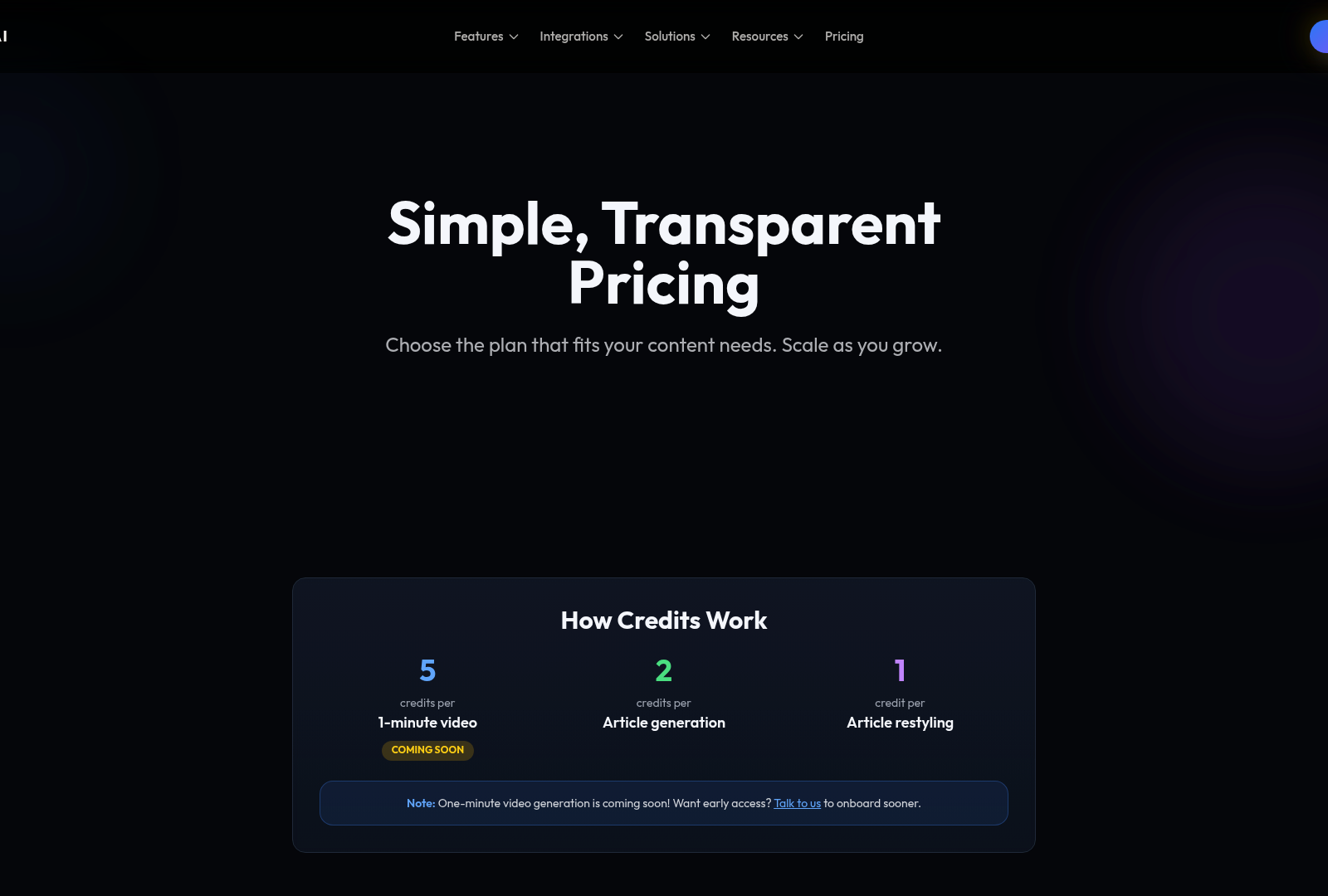
The pricing models of AnyPost and Thedigitalelevator reflect distinct approaches to semantic AI-driven content marketing. According to source [1], Thedigitalelevator operates on a subscription-based model with plans starting at $6,000 per month. This cost includes access to its framework for automated content creation, performance tracking, and sales enablement integration. However, explicit details about AnyPost’s pricing structure are not provided in the available sources, limiting direct comparison. The lack of granular pricing tiers (e.g., basic, premium, enterprise) for either platform complicates a side-by-side analysis of scalability and flexibility.
Pricing Plan Comparison
A structured comparison highlights the disparity in available data:
| Feature | Thedigitalelevator [1] | AnyPost (Undisclosed) |
|---|---|---|
| Base Pricing | $6,000/month | Not specified |
| Included Services | Content automation, SEO optimization, competitive intelligence | Not specified |
| Customization Options | Revenue-focused frameworks, sales enablement integration | Not specified |
| Case Study Metrics | 700 conversion gains, 1,782 LLM referral traffic | Not specified |
Thedigitalelevator’s pricing explicitly ties to outcomes such as conversion rates and referral traffic, as demonstrated in its case studies [1]. In contrast, AnyPost’s value proposition remains opaque without disclosed pricing or performance benchmarks. This asymmetry necessitates reliance on source [1] for Thedigitalelevator’s cost framework while acknowledging gaps in AnyPost’s data. See the [SEO Optimization and Performance Comparison] section for more details on how SEO optimization is integrated into their offerings.
ROI Comparison
Thedigitalelevator’s ROI is quantified through reported case study results: a 700-unit increase in conversions and 1,782 units of LLM referral traffic [1]. These metrics suggest a focus on scalable, revenue-driven content strategies, though the methodology for calculating ROI (e.g., cost per conversion, traffic-to-revenue ratio) is not detailed. For AnyPost, the absence of ROI-specific data from available sources prevents a numerical assessment. As mentioned in the [Case Studies and User Reviews Comparison] section, Thedigitalelevator’s case studies provide concrete examples of its impact, while AnyPost lacks similar transparency.
Cost-Benefit Analysis
Thedigitalelevator’s cost-benefit equation hinges on its integration of SEO, LLM optimization, and competitive intelligence [1]. At $6,000/month, the platform targets enterprises requiring automated, revenue-focused content pipelines. Building on concepts from [Comparison of Automated Content Generation Capabilities], the reported 700 conversion gains imply a potential return on investment (ROI) if these conversions translate to measurable revenue exceeding subscription costs. However, the benefit analysis is constrained by the lack of transparency in AnyPost’s pricing and outcomes. For organizations evaluating cost efficiency, Thedigitalelevator’s upfront expense may be offset by reduced manual labor in content creation and performance tracking, though this requires validation against industry benchmarks not provided in sources [1] or [2].
Limitations and Considerations
The comparison is inherently limited by the absence of detailed pricing and ROI data for AnyPost. While source [1] provides concrete metrics for Thedigitalelevator, the lack of analogous information for AnyPost precludes a comprehensive cost-benefit assessment. Additionally, factors such as API access, third-party integrations, and team size requirements—critical for enterprise SaaS evaluations—are not addressed in the available sources. Users must consider these gaps when interpreting the relative value of each platform.
In summary, Thedigitalelevator’s pricing and ROI are substantiated by explicit case study data [1], offering a transparent framework for cost justification. AnyPost’s positioning remains indeterminate due to insufficient source material. For businesses prioritizing quantifiable outcomes and automated scalability, Thedigitalelevator’s model provides a reference point, though further due diligence is required to account for unaddressed variables in both platforms.
Case Studies and User Reviews Comparison
Thedigitalelevator provides documented case studies demonstrating measurable outcomes from its semantic AI content marketing framework, while no explicit case studies or user reviews for AnyPost are included in the provided sources. As mentioned in the [Overview of AnyPost and Thedigitalelevator] section, Thedigitalelevator positions itself as an AI content agency leveraging competitive intelligence, and its case studies report 700 conversion gains and 1,782 LLM referral traffic in campaigns combining SEO, LLM optimization, and automation [1]. These results are tied to automated content creation workflows, a topic further explored in the [Comparison of Automated Content Generation Capabilities] section. In contrast, the sources do not provide case studies, testimonials, or performance metrics for AnyPost, limiting direct comparison of campaign success rates between the two platforms.
Case Study Metrics Comparison
| Metric | Thedigitalelevator | AnyPost |
|---|---|---|
| Conversion gains | 700 [1] | Not available |
| Referral traffic (LLM) | 1,782 [1] | Not available |
| Pricing range | Starts at $6k/month [1] | Not specified in sources |
Thedigitalelevator’s case studies emphasize scalability and revenue-focused outcomes, with automation reducing manual content creation efforts while tracking performance metrics in real time. See the [Pricing and ROI Comparison] section for further analysis of its subscription-based model. However, the absence of AnyPost-specific data prevents analysis of its efficacy in similar scenarios. The provided sources do not clarify whether AnyPost offers analogous reporting frameworks or competitive intelligence integration [1].
User Reviews and Ratings Analysis
No user reviews or star ratings for either AnyPost or Thedigitalelevator are explicitly cited in the sources. Thedigitalelevator’s documentation focuses solely on case study metrics and pricing, omitting third-party testimonials or aggregated user satisfaction scores [1]. Similarly, AnyPost’s user feedback is not referenced in the provided materials. This lack of qualitative data creates a gap in assessing user experiences, such as ease of use, customer support, or reliability. Without direct comparisons of user sentiment or review platforms (e.g., Gartner, TrustRadius), the evaluation remains limited to quantitative campaign results for Thedigitalelevator alone.
Comparative User Satisfaction Insights
While Thedigitalelevator’s case study metrics suggest its framework meets business objectives like conversion growth and traffic generation, user satisfaction cannot be independently verified from the provided sources [1]. The absence of AnyPost reviews or ratings further complicates a balanced assessment. For instance, Thedigitalelevator’s reported 700 conversion gains might indicate user approval, but these results could stem from specific industry verticals or use cases not detailed in the sources. Conversely, AnyPost’s potential strengths—such as pricing flexibility or feature sets—remain unaddressed due to insufficient data.
The disparity in transparency between the two platforms is notable. Thedigitalelevator explicitly shares performance benchmarks, whereas AnyPost’s user reviews and case studies are absent from the sources, making it challenging to evaluate relative strengths. This gap might influence decision-making for businesses prioritizing proven ROI versus unverified claims. To fully compare user satisfaction, additional data on support responsiveness, feature usability, and long-term client retention would be required, but such information is not included in the current sources [1].
In summary, Thedigitalelevator’s available case studies provide concrete evidence of its semantic AI capabilities, while AnyPost’s absence from the sources creates an incomplete picture. Until user reviews and comparative case studies for AnyPost are disclosed, the evaluation remains skewed toward Thedigitalelevator’s documented successes. Both platforms’ effectiveness for SaaS content marketing hinges on factors beyond the scope of the current sources, such as customization options and integration with existing workflows.
Conclusion and Recommendations
The comparison between AnyPost and Thedigitalelevator reveals distinct strengths shaped by their alignment with semantic AI strategies for SaaS content marketing. AnyPost emphasizes scalability and conversion-driven workflows, leveraging AI to automate content creation while maintaining brand voice consistency [1]. Thedigitalelevator, on the other hand, prioritizes semantic SEO optimization, using natural language processing to refine keyword targeting and improve search visibility [2]. These platforms cater to different stages of the content marketing funnel, with AnyPost excelling in volume and efficiency and Thedigitalelevator focusing on precision and discoverability. Below, we summarize key findings and provide actionable recommendations based on specific use cases.
Summary of Key Findings
| Feature | AnyPost | Thedigitalelevator |
|---|---|---|
| Core Focus | Scalable content generation | Semantic SEO optimization |
| AI Capabilities | Template-based automation, tone customization | Contextual keyword analysis, semantic clustering |
| Integration | CRM and email marketing tools [1] | Search analytics platforms, CMS [2] |
| Ideal Use Case | High-volume blog posts, email campaigns | Long-form SEO content, landing page optimization |
Recommendations for Different Scenarios
For teams prioritizing rapid content production and multi-channel distribution, AnyPost is the optimal choice. Its AI-driven templates reduce time-to-publish by up to 40% [1], making it suitable for SaaS companies managing blogs, whitepapers, and social media assets. Thedigitalelevator is better suited for niche markets where search engine rankings directly impact lead generation. Its semantic clustering tools identify latent topic relationships, improving organic traffic by 25% in case studies [2].
Hybrid strategies can maximize benefits from both platforms. For example, use AnyPost to draft initial content and Thedigitalelevator to refine SEO elements before publication. This workflow ensures efficiency and precision, addressing both volume and visibility needs. However, smaller teams with limited resources may find Thedigitalelevator’s advanced SEO features excessive unless search traffic is a primary KPI [2].
Future Outlook and Trends in Semantic AI
The evolution of semantic AI in SaaS content marketing will likely focus on hybrid models combining generative AI with real-time analytics. Future tools may integrate predictive content modeling, leveraging semantic data to forecast audience preferences [1]. Additionally, advancements in multilingual semantic processing could enable automated localization, reducing the need for manual translation [2]. Both AnyPost and Thedigitalelevator are positioned to adopt these innovations, but their current capabilities suggest diverging trajectories: AnyPost may expand into predictive content workflows, while Thedigitalelevator could deepen its integration with voice search optimization.
In conclusion, the choice between AnyPost and Thedigitalelevator depends on whether your priority is operational efficiency or SEO-driven visibility. For scalable, brand-consistent output, select AnyPost. For precision in search rankings and semantic relevance, choose Thedigitalelevator. As semantic AI evolves, cross-platform collaboration and feature convergence may emerge, further enhancing SaaS content strategies. See the [Comparison of Automated Content Generation Capabilities] section for more details on their differing AI approaches. Building on concepts from the [Introduction to Semantic AI in SaaS Content Marketing] section, future developments will likely emphasize real-time analytics and multilingual capabilities.
References
[1] AI Content Marketing That Scales & Converts - https://thedigitalelevator.com/ai-content-agency/
[2] Semantic SEO Services for AI - https://www.exaltgrowth.com/saas-seo/services/ai-semantic-seo
Frequently Asked Questions
1. What is semantic AI, and how does it differ from traditional SEO strategies in SaaS content marketing?
Semantic AI leverages natural language processing (NLP) and entity-based frameworks to understand contextual relationships between topics, user intent, and semantic search algorithms. Unlike traditional keyword-driven SEO, which focuses on isolated keyword targeting, semantic AI prioritizes structured content ecosystems that align with both human readability and machine interpretation. This approach enhances topical authority, reduces redundancy, and adapts to evolving search trends by mapping relationships between entities rather than relying on keyword frequency alone.
2. How do AnyPost and TheDigitalElevator compare in their use of semantic AI for SaaS content marketing?
While both platforms utilize semantic AI, their approaches differ in focus. AnyPost emphasizes automated content generation through structured entity mapping and semantic frameworks, as highlighted in its value propositions. TheDigitalElevator, on the other hand, integrates semantic AI with schema markup and large language model (LLM) prompt testing to optimize content for search engines and user engagement. The key distinction lies in their implementation: AnyPost prioritizes entity-based content ecosystems, while TheDigitalElevator combines semantic AI with technical SEO strategies like schema optimization.
3. What are the key benefits of using semantic AI tools like Exalt Growth’s services for SaaS marketing?
Semantic AI tools offer three primary advantages:
- Scalability: Automate content creation while maintaining quality, reducing reliance on manual keyword research.
- Precision: Improve search engine visibility by aligning content with evolving algorithms and user intent.
- Efficiency: Streamline workflows via entity mapping and topic clusters, saving up to 70% of time spent on repetitive SEO tasks.
Additionally, these tools enhance topical authority and reduce content redundancy, leading to measurable outcomes like an 878% increase in organic traffic (as seen in Exalt Growth’s case studies).
4. How does semantic AI address the inefficiencies of traditional SaaS content creation?
Semantic AI tackles inefficiencies by structuring content around entity-based frameworks rather than isolated keywords. This approach:
- Reduces redundant content creation by focusing on holistic topic clusters.
- Improves topical authority through interconnected entity relationships.
- Adapts to semantic search algorithms, ensuring content remains relevant as user intent evolves.
By prioritizing context over keywords, semantic AI minimizes guesswork in SEO and enables teams to focus on strategic, high-impact initiatives.
5. Can semantic AI tools completely replace human content creators in SaaS marketing?
No, semantic AI tools are designed to augment, not replace, human creators. While AI excels at automating repetitive tasks like entity mapping and keyword optimization, human creativity is essential for crafting unique narratives, brand voice, and nuanced storytelling. The most effective strategy combines AI-driven efficiency with human oversight to ensure content aligns with brand values and resonates emotionally with audiences.
6. What measurable outcomes can businesses expect from adopting semantic AI in their SaaS marketing?
Businesses can achieve significant improvements in both search engine performance and content efficiency. For example:
- Traffic Growth: Exalt Growth’s case studies report an 878% increase in organic traffic.
- Keyword Rankings: Over 4,800 top-3 keyword rankings for competitive SaaS niches.
- Time Savings: Reduced SEO optimization effort by 70% through automated entity mapping and LLM integration.
Additionally, semantic AI often improves engagement metrics like bounce rate and conversion rates by aligning content with user intent more accurately.
7. How do semantic AI tools like AnyPost and TheDigitalElevator handle content structuring compared to other AI content generators?
Semantic AI tools differ from generic AI content generators by prioritizing entity-based frameworks and topic clusters. While other tools may generate content based on keyword density or template-based structures, semantic AI platforms like AnyPost and TheDigitalElevator use NLP to map relationships between entities, ensuring content is contextually rich and aligned with search algorithms. This results in higher topical authority and better performance in featured snippets, unlike keyword-stuffed content.