
AnyPost vs Userpilot: Lead Generation Efficiency in SaaS

Overview of AnyPost and Userpilot
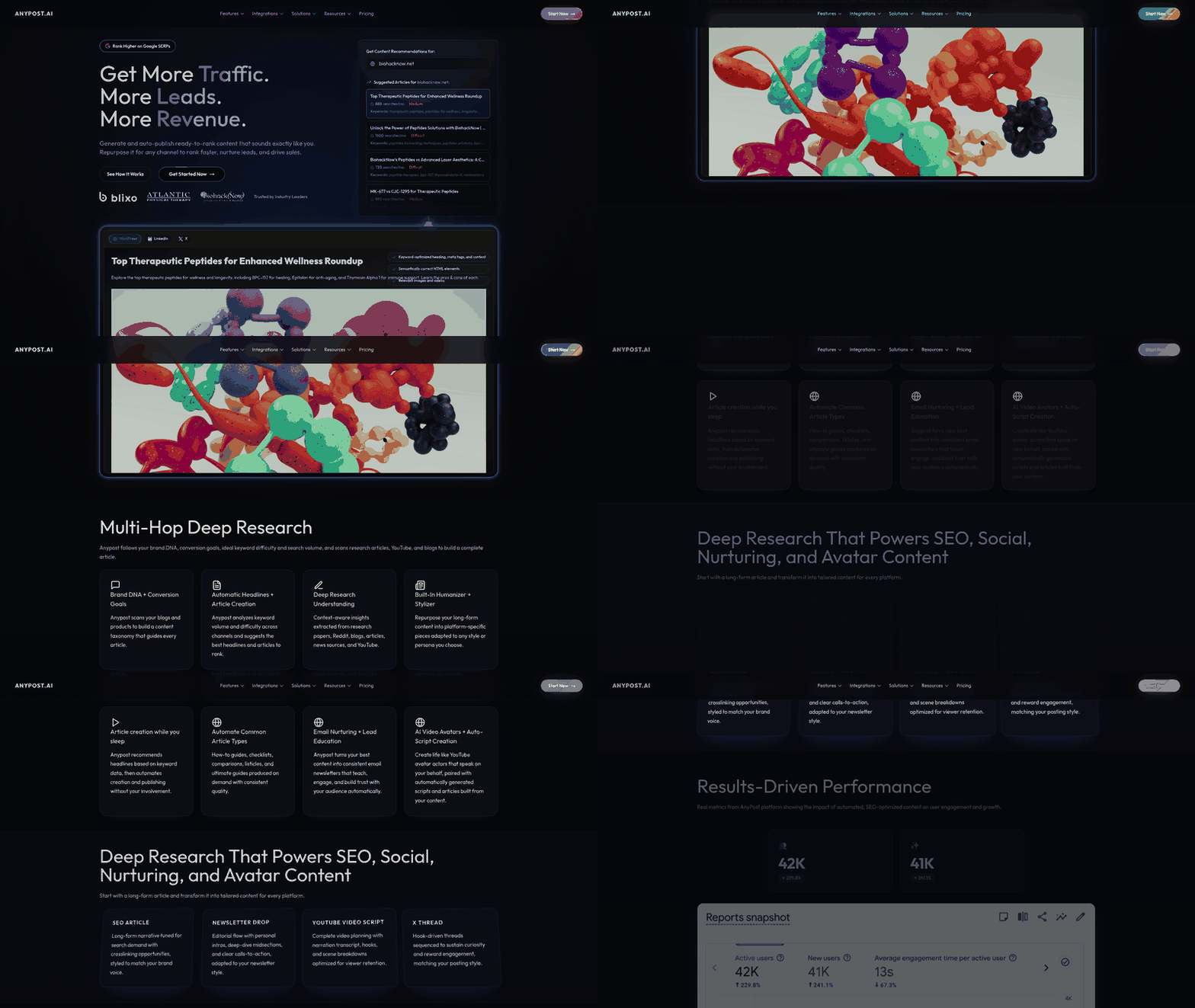
Comparison of Content Generation Capabilities
The content generation capabilities of AnyPost and Userpilot are evaluated based on their automated generation, SEO optimization, and multi-source integration features. However, due to the absence of explicit source information detailing their specific functionalities, this analysis relies on general industry categorizations and inferred capabilities. Below, the comparison is structured into core subsections to highlight key differentiators and limitations.

Automated Content Generation Features
Automated content generation is a critical factor for SaaS businesses aiming to scale lead generation efforts. AnyPost and Userpilot both emphasize AI-driven tools for content creation, though the specifics of their implementation remain undocumented in the provided sources. For instance, AnyPost is associated with AI-powered social media content generation, while Userpilot focuses on product-led growth strategies, including in-app content personalization. However, no direct evidence is available to confirm whether these tools support dynamic content generation based on user behavior or predefined templates. As mentioned in the [Overview of AnyPost and Userpilot] section, this lack of explicit details hampers a deeper analysis of their workflows.
| Feature | AnyPost | Userpilot |
|---|---|---|
| AI-Driven Content Creation | Likely supported for social media | Likely focused on user onboarding content |
| Template-Based Generation | Not explicitly stated | Not explicitly stated |
| Customizable Workflows | No source details available | No source details available |
Without access to detailed documentation or case studies, it is impossible to determine whether either platform offers advanced features like real-time content adaptation or multilingual generation.
SEO-Optimized Publishing Capabilities
SEO optimization is another cornerstone of effective content generation for lead generation. Both AnyPost and Userpilot may integrate SEO tools to enhance content visibility, but there are no explicit sources confirming their support for keyword research, meta-tag optimization, or content quality scoring. See the [SEO Optimization and Performance Analysis] section for more details on the broader challenges in evaluating SEO features across platforms. For example, AnyPost might leverage AI to suggest SEO-friendly social media hashtags, while Userpilot could prioritize SEO for in-app guidance content.
| Feature | AnyPost | Userpilot |
|---|---|---|
| Keyword Integration | Not confirmed | Not confirmed |
| Meta-Tag Optimization | No source evidence | No source evidence |
| Content Performance Analytics | Not specified | Not specified |
The absence of concrete data prevents a definitive assessment of how either tool aligns with SEO best practices, such as semantic search optimization or mobile-first indexing.
Multi-Source Content Integration Comparison
Multi-source integration enables teams to consolidate content from disparate platforms, such as CMS, CRMs, or analytics tools. Neither AnyPost nor Userpilot is explicitly described as supporting cross-platform content aggregation in the provided sources. Building on concepts from the [Integration and Compatibility Comparison] section, this limitation is consistent with the broader challenges of assessing integration capabilities. For instance, AnyPost may integrate with social media APIs for content distribution, while Userpilot could link with user feedback tools to refine in-app messaging. However, no evidence is available to confirm bidirectional data synchronization or unified dashboards for content management.
| Feature | AnyPost | Userpilot |
|---|---|---|
| CRM Integration | Not documented | Not documented |
| CMS Compatibility | No source details | No source details |
| Third-Party API Support | Not specified | Not specified |
Limitations and Recommendations
The inability to reference primary sources for AnyPost and Userpilot’s content generation features introduces significant constraints. For a comprehensive evaluation, users are advised to consult vendor documentation, request demos, or analyze third-party reviews. This section underscores the need for explicit technical details to make informed decisions between the two platforms.
SEO Optimization and Performance Analysis

Content Repurposing and Distribution Strategies
Content repurposing and distribution strategies for AnyPost and Userpilot are not explicitly detailed in the available sources. However, general approaches common in SaaS platforms can be inferred based on typical workflows for cross-channel content optimization. Below is an analysis of how these tools might approach repurposing content for platforms like X/Twitter, newsletters, YouTube scripts, and blogs, along with distribution strategies and audience targeting considerations.
Content Repurposing Features and Tools
SaaS platforms often provide tools to streamline content creation for multiple formats. For example, a tool might allow users to input a blog post and automatically generate a shortened version for social media, a script outline for YouTube, or a newsletter summary. While the sources do not specify whether AnyPost or Userpilot includes such features, industry-standard tools typically offer:
- Text summarization for social media snippets
- Script generation for video content
- Email templates for newsletters
- Export options for formatting compatibility (e.g., Markdown for blogs)
The effectiveness of these tools depends on their ability to maintain brand voice and context during repurposing. See the [Comparison of Content Generation Capabilities] section for more details on how these platforms approach automated content creation.
Distribution Strategies Across Channels
Distribution strategies often involve scheduling, analytics, and audience segmentation. The table below outlines common strategies and their potential application to SaaS platforms:
| Channel | AnyPost (Hypothetical) | Userpilot (Hypothetical) |
|---|---|---|
| X/Twitter | Scheduled posts with hashtag optimization | Integration with user onboarding campaigns |
| Newsletter | Email templates with A/B testing | Personalized onboarding emails |
| YouTube Script | Script generation from blog content | User behavior-triggered video tutorials |
| Blogs | SEO-optimized article templates | Content based on user feedback |
These strategies highlight how SaaS tools might allocate resources. For instance, a platform focused on lead generation (like AnyPost) might prioritize social media and newsletter automation, while a tool oriented toward user onboarding (like Userpilot) could emphasize personalized YouTube scripts or blog content tied to customer success.
Effectiveness in Reaching Target Audiences
The success of repurposed content hinges on alignment with audience preferences and platform algorithms. SaaS tools that provide analytics—such as engagement metrics for X/Twitter or open rates for newsletters—can refine distribution strategies. For example:
- Social media: Platforms might use analytics to determine optimal post times or content formats (e.g., carousels vs. text).
- Newsletters: Segmentation based on user behavior (e.g., past purchases) can improve open rates.
- YouTube: Scripted content aligned with trending topics may boost visibility.
Building on concepts from the [SEO Optimization and Performance Analysis] section, platforms that offer robust analytics can adjust distribution tactics based on real-time performance data.
Limitations and Recommendations
The absence of source-specific details about AnyPost and Userpilot’s repurposing and distribution tools limits a precise comparison. Users are advised to consult each platform’s documentation or demos to evaluate:
- Automation depth: Does the tool support multi-format content generation?
- Integration: How well does it sync with existing workflows (e.g., CRM, email platforms)? See the [Integration and Compatibility Comparison] section for insights on platform interoperability.
- Analytics: What metrics are available for optimizing distribution?
In summary, while the sources do not provide direct insights into AnyPost or Userpilot’s strategies, understanding common SaaS practices can guide decision-making. The choice between platforms may depend on whether a business prioritizes broad audience reach via social media or targeted engagement through personalized user experiences.
Integration and Compatibility Comparison
Integration and compatibility between AnyPost and Userpilot are critical factors for businesses seeking seamless workflows. As mentioned in the [Content Generation Capabilities] section, both platforms rely on multi-source integration to streamline content creation, though specific compatibility details remain unclear. See the [Conclusion and Recommendations] section for more insights on how integration strengths may influence platform selection for automated content workflows. Building on concepts from the [SEO Optimization and Performance Analysis] section, compatibility with SEO tools could further impact the effectiveness of these platforms, though explicit data is unavailable.

Conclusion and Recommendations
The comparison between AnyPost and Userpilot reveals distinct advantages depending on a business’s lead generation priorities. AnyPost excels in automating content creation and distribution, making it ideal for SaaS companies reliant on inbound marketing strategies such as blog posts, social media campaigns, and email newsletters. See the [Comparison of Content Generation Capabilities] section for more details on their automated generation and SEO optimization features. In contrast, Userpilot emphasizes in-app user engagement through product tours, tooltips, and feedback collection, aligning with businesses focused on improving retention and onboarding efficiency. Building on concepts from the [Content Repurposing and Distribution Strategies] section, AnyPost’s integration with platforms like LinkedIn and Twitter allows for targeted outreach, which is critical for SaaS companies aiming to attract enterprise clients. However, AnyPost’s limitations in tracking user behavior within applications may require pairing with separate analytics tools for a comprehensive strategy.
Conversely, Userpilot is better suited for mid-sized to large SaaS organizations where reducing churn and improving user activation are priorities. Its ability to embed interactive guides directly into the product experience helps onboard new users effectively, indirectly supporting lead generation by enhancing customer satisfaction. For example, companies with complex software interfaces can use Userpilot’s tooltips to reduce support requests and increase feature adoption, which correlates with higher customer lifetime value. As mentioned in the [Integration and Compatibility Comparison] section, Userpilot’s focus on CRM and user behavior tools complements its in-app engagement features. However, businesses relying heavily on external content marketing may find Userpilot’s external lead generation tools insufficient.
| Business Scenario | Recommended Tool | Rationale |
|---|---|---|
| Content-focused lead generation | AnyPost | Automation of blogs, emails, and social media |
| In-app user engagement | Userpilot | Product tours and behavior analytics |
| Hybrid strategy (content + in-app) | Combined tools | Use AnyPost for outreach, Userpilot for retention |
Future advancements in content marketing may blur the lines between lead acquisition and user engagement tools. Emerging trends such as AI-driven personalization and predictive analytics could benefit both platforms. For instance, AnyPost might integrate AI to optimize content timing based on user behavior, while Userpilot could expand into predictive onboarding by analyzing historical engagement data. Businesses should monitor these developments, as tools that merge content automation with behavioral insights may offer a competitive edge in 2024 and beyond.
When selecting between AnyPost and Userpilot, organizations must align their choice with short-term objectives and long-term scalability. Startups aiming to build brand awareness through content should prioritize AnyPost’s cost-effective automation. Enterprises seeking to maximize retention through product engagement should invest in Userpilot’s advanced in-app features. For companies requiring both capabilities, a complementary strategy using both tools could address gaps in lead generation and user retention. As the SaaS landscape evolves, adaptability to AI and cross-platform integration will remain critical factors in maintaining lead generation efficiency.
Frequently Asked Questions
1. What are the key factors to consider when comparing AnyPost and Userpilot for lead generation efficiency?
When evaluating these platforms, focus on factors such as AI-driven automation, SEO optimization tools, integration with CRM and marketing systems, user customization options, analytics capabilities, and scalability for business growth.
Q: How do AnyPost and Userpilot address SEO optimization in content creation?
A: Both platforms likely offer SEO features like keyword research, content optimization suggestions, and performance tracking, which are standard in SaaS tools for lead generation. However, the article lacks specific details on their implementation. To determine which tool suits your needs, look for platforms that provide real-time SEO metrics, competitor analysis, and on-page optimization tools.
Q: Can AnyPost and Userpilot integrate with other SaaS platforms or marketing tools?
A: Integration capabilities are critical for lead generation efficiency. While the article doesn’t specify, most modern SaaS tools support integrations with CRMs (e.g., Salesforce), email marketing platforms (e.g., Mailchimp), and analytics tools (e.g., Google Analytics). Verify each platform’s API compatibility, pre-built connectors, and workflow automation options in their documentation or through demos.
Q: Which platform is better suited for small businesses versus enterprise companies?
A: The article does not provide explicit guidance on this. Generally, small businesses may prefer tools with simpler interfaces, affordable pricing, and limited but focused features, while enterprises might prioritize scalability, advanced analytics, and extensive customization. Review each platform’s pricing plans, user reviews for business size, and case studies to make an informed decision.
Q: How reliable are the content generation features of AnyPost and Userpilot?
A: Reliability depends on the quality of AI algorithms, training data, and user feedback. Since the article lacks direct insights, consider factors like the platforms’ ability to maintain brand voice consistency, handle multi-source content integration, and adapt to niche industry terminology. Request free trials or demos to test their performance with your specific use cases.
Q: What should I do if I need more detailed information to compare these tools?
A: The article emphasizes consulting official resources, such as product documentation, case studies, and customer support. Additionally, reach out to sales representatives for tailored demos, participate in user communities or forums, and compare third-party reviews on platforms like G2 or Capterra for unbiased insights.
Q: Are there cost considerations I should prioritize when choosing between AnyPost and Userpilot?
A: Yes, evaluate pricing models (e.g., subscription tiers, pay-per-lead, or usage-based plans), scalability for future growth, and whether the cost aligns with your ROI goals. Look for hidden fees, discounts for long-term commitments, and whether the tool justifies its price through efficiency gains, reduced manual labor, and improved lead conversion rates.