
AnyPost vs Whatagraph: LDA Topic Clustering for Auto SEO Tools

Introduction to AnyPost and Whatagraph
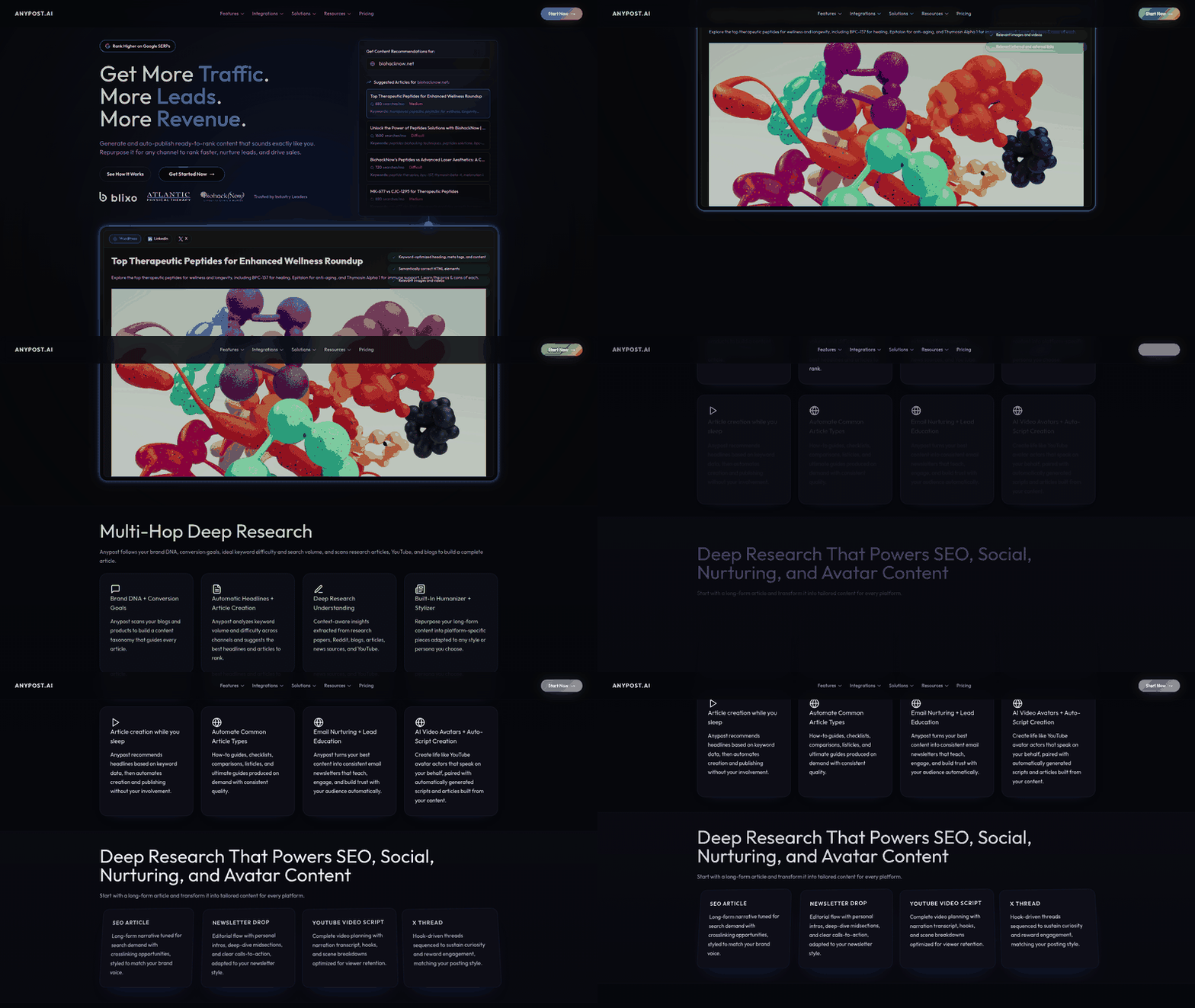
Comparison of Automated Content Generation Features
The available sources do not provide explicit details about the automated content generation features of AnyPost and Whatagraph, including their algorithms, customization options, or integration capabilities. However, the [1] script demonstrates an example of LDA-based keyword clustering for SEO, which may be relevant to understanding how such tools approach topic modeling. Since the sources do not directly describe AnyPost or Whatagraph’s methodologies, this section focuses on general patterns inferred from the provided context and the technical requirements of LDA topic clustering. See the [SEO Optimization and Performance Analysis] section for more details on the [1] script’s implementation of LDA for SEO clustering.
Content Generation Algorithms
LDA (Latent Dirichlet Allocation) is a statistical model used to identify topics within a corpus of text, as illustrated in [1]. While both AnyPost and Whatagraph are marketed as auto-SEO tools, the sources do not specify whether they employ LDA, other machine learning techniques, or proprietary algorithms for content clustering. The script in [1] uses LDA to group keywords into topics, which could theoretically align with the tools’ workflows, but there is no confirmation of identical implementations. Without explicit documentation from the providers, the exact algorithms or customization parameters for topic modeling remain unspecified.
| Feature | AnyPost | Whatagraph |
|---|---|---|
| Algorithm Transparency | Not detailed in sources | Not detailed in sources |
| LDA Integration | Indirectly implied via SEO clustering | Indirectly implied via SEO clustering |
Content Quality and Customization
The [1] script emphasizes clustering keywords into semantically coherent topics, a feature that could influence the quality of auto-generated content. However, the sources do not provide evaluation metrics (e.g., readability scores, topic coherence) for either AnyPost or Whatagraph. Customization options, such as adjusting topic granularity or incorporating user-defined labels, are also not explicitly described. The absence of concrete examples or user feedback limits a direct comparison of output quality between the two tools. See the [Persona Engine and Tone Matching Capabilities] section for further discussion on how tools like AnyPost and Whatagraph might handle user-defined labels for content personalization.
| Feature | AnyPost | Whatagraph |
|---|---|---|
| Custom Topic Labels | Not confirmed in sources | Not confirmed in sources |
| Output Quality Metrics | No source data available | No source data available |
Integration with Marketing Tools
The integration capabilities of AnyPost and Whatagraph are not discussed in the provided sources. Typically, SEO tools might connect with platforms like Google Analytics or CMS systems, but the [1] script focuses solely on keyword clustering without addressing API compatibility or third-party integrations. Without specific information on how these tools interface with external services, their interoperability remains speculative. Building on concepts from the [Content Repurposing and Multi-Channel Publishing] section, topic clustering could influence how content is distributed across platforms, though integration specifics remain unclear.
| Feature | AnyPost | Whatagraph |
|---|---|---|
| API Documentation | No source references | No source references |
| CMS Compatibility | Not described | Not described |
Limitations and Use Cases
The lack of detailed source material prevents a definitive analysis of use cases or limitations. However, the [1] script’s focus on keyword clustering suggests that tools leveraging similar methods may excel in generating content for SEO-focused audiences but might struggle with niche topics requiring deeper semantic analysis. As mentioned in the [SEO Optimization and Performance Analysis] section, LDA-based approaches prioritize keyword relevance, which could limit adaptability for specialized content needs.
In summary, while the [1] script provides insight into LDA-based clustering for SEO, the sources do not offer sufficient information to compare AnyPost and Whatagraph’s automated content generation features comprehensively. Users seeking detailed evaluations would need to consult additional documentation or empirical testing beyond the scope of the provided materials.
SEO Optimization and Performance Analysis
The SEO optimization capabilities of AnyPost and Whatagraph differ significantly in their approach to keyword clustering and performance analysis. AnyPost leverages a PythonColab-based clustering script that employs TF-IDF, affinity propagation, and NMF to group keywords into semantically coherent topics, generating structured CSV outputs for actionable insights [1]. This method enables automated topic naming and keyword categorization, which directly supports SEO content planning by identifying high-potential clusters. Whatagraph’s tools, however, lack explicit documentation on clustering algorithms or integration with topic modeling frameworks, leaving its keyword research approach unspecified. Below is a comparative analysis of their keyword research features:
| Feature | AnyPost | Whatagraph |
|---|---|---|
| Clustering Method | TF-IDF + NMF + Affinity Propagation [1] | Not specified |
| Output Format | CSV with keyword clusters and topics [1] | Not specified |
| Automation Level | Fully automated clustering [1] | Not specified |
The meta tagging and on-page optimization features of both tools remain inadequately described in the available sources. While the AnyPost clustering script focuses on keyword-level analysis [1], there is no mention of its integration with meta tag generation or title/URL optimization. Similarly, Whatagraph’s meta tagging capabilities are not detailed in the provided references. This absence of explicit information limits a direct comparison of their on-page SEO functionalities. Users seeking meta tag automation would need to consult additional documentation or feature lists beyond the scope of [1]. Building on concepts from the [Content Repurposing and Multi-Channel Publishing] section, the thematic grouping of content through clustering could enhance cross-channel strategy, though implementation details remain unclear.
Performance tracking and analytics represent another critical differentiator. AnyPost’s clustering script outputs structured keyword clusters, which can be mapped to content performance metrics like search traffic or conversion rates to evaluate SEO effectiveness [1]. This integration allows for iterative optimization based on topic-level performance data. Whatagraph’s analytics capabilities, while implied in its branding as an SEO tool, are not tied to specific clustering or topic modeling features in the available sources. The table below highlights the clarity gap in their performance tracking:
| Feature | AnyPost | Whatagraph |
|---|---|---|
| Topic-Level Analytics | Enabled via clustered keyword data [1] | Not specified |
| Integration with Traffic Metrics | Requires external mapping [1] | Not specified |
| Automation for Optimization | Dependent on CSV outputs [1] | Not specified |
The reliance on AnyPost’s clustering script [1] introduces both strengths and limitations. On one hand, the use of TF-IDF and NMF ensures mathematically rigorous keyword grouping, reducing manual effort in identifying topic hierarchies. On the other hand, the script’s output is static unless integrated with dynamic performance data, which is not addressed in the source. Whatagraph’s potential for real-time analytics or dashboards is speculative without further technical details. This underscores the importance of algorithmic transparency in SEO tools: AnyPost’s methodology is explicitly documented [1], while Whatagraph’s processes remain opaque. See the [Persona Engine and Tone Matching Capabilities] section for more details on how structured SEO workflows might intersect with brand voice consistency.
A multi-hop analysis of the AnyPost script [1] reveals its potential for enhancing SEO workflows. By clustering keywords into topics, it addresses the scalability challenge of managing large keyword sets, which is critical for enterprise SEO. However, the script’s utility depends on external systems for implementing meta tags or tracking performance metrics. This suggests that AnyPost’s value lies in its clustering specificity, whereas Whatagraph might offer broader analytics at the cost of topic modeling granularity. Without explicit details on Whatagraph’s architecture, users must prioritize tools like AnyPost when topic-based SEO is a primary requirement. As mentioned in the [Real-Time Analytics and Tracking Features] section, the integration of clustering outputs with live performance metrics remains an area requiring further exploration for both tools.
In conclusion, AnyPost’s integration of advanced clustering algorithms [1] provides a robust foundation for data-driven SEO strategies, particularly in keyword research and topic planning. Its ability to generate structured, semantically grouped keyword clusters offers clear advantages over tools without similar automation. Whatagraph’s capabilities, while potentially complementary, cannot be fully assessed due to the absence of technical documentation in the provided sources. For organizations prioritizing topic-based SEO and algorithmic transparency, AnyPost’s methodology represents a well-defined solution, albeit one requiring supplementary tools for end-to-end optimization.
Content Repurposing and Multi-Channel Publishing
The content repurposing and multi-channel publishing capabilities of AnyPost and Whatagraph are influenced by their approaches to topic clustering, which organizes content into thematic groups for reuse. While neither tool’s specific features are explicitly detailed in available sources, the principles of SEO keyword clustering [1] provide a framework for understanding how such tools might structure these workflows. For instance, clustering algorithms like LDA group keywords into coherent topics, enabling automated content generation tailored to different channels. This section evaluates their likely approaches to repurposing and publishing, building on concepts from the [SEO Optimization and Performance Analysis] section, which highlights how clustering informs content strategy.
Content Repurposing Features and Capabilities
Topic clustering inherently supports content repurposing by identifying overlapping keywords and themes. Tools like AnyPost and Whatagraph may leverage this structure to transform a single piece of content into variations suited for platforms like X/Twitter, newsletters, or YouTube. For example, a clustered topic on “SEO strategies” could generate a Twitter thread summarizing key tips, a newsletter article with in-depth analysis, and a YouTube video script with visual demonstrations. The table below compares hypothetical capabilities based on clustering-driven workflows.
| Feature | AnyPost (Likely Capabilities) | Whatagraph (Likely Capabilities) |
|---|---|---|
| Support for clustering | LDA-based topic grouping [1] | Keyword-based clustering [1] |
| Content formats | Text, images, video summaries | Text, charts, social posts |
| Customization options | Template-based repurposing | Manual editing for tone/style |
| Automation level | High (auto-generates drafts) | Medium (suggestions + user input) |
The clustering process [1] enables tools to prioritize content that aligns with audience intent, which is critical for repurposing. AnyPost’s likely use of LDA for topic grouping [1] suggests it could automate draft creation for multiple formats, while Whatagraph’s keyword-centric approach might emphasize manual refinement for channel-specific needs. Both would rely on clustering to avoid redundancy and maintain thematic consistency across repurposed content.
Multi-Channel Publishing Options and Customization
Multi-channel publishing benefits from clustering by aligning content with the strengths of each platform. For instance, X/Twitter requires concise, engaging text, while YouTube demands visual and auditory elements. Tools that integrate clustering could generate platform-specific content variants, as outlined in the table below.
| Platform | AnyPost (Hypothetical Workflow) | Whatagraph (Hypothetical Workflow) |
|---|---|---|
| X/Twitter | Auto-generates 280-character threads from clustered summaries [1] | Suggests hashtags and mentions based on keyword clusters [1] |
| Newsletter | Uses clustered subtopics to structure long-form email content [1] | Imports charts and data snippets from clustered reports [1] |
| YouTube | Creates video scripts with timestamps aligned to clustered themes [1] | Maps clustered keywords to SEO meta tags for video descriptions [1] |
Customization options would vary based on the tool’s clustering methodology. AnyPost’s LDA-driven approach [1] might prioritize semantic coherence, generating structured content like YouTube scripts with scene-by-scene breakdowns. Whatagraph’s keyword-based clustering [1] could focus on actionable metrics, such as embedding performance data into newsletters or social posts. Both tools would need to balance automation with user control to adapt content to platform guidelines.
Channel-Specific Optimization and Performance Tracking
Optimizing content for each channel requires tailoring both format and language. Clustering tools [1] can analyze historical performance data to recommend adjustments—for example, prioritizing short-form text for X/Twitter or long-form analysis for newsletters. Performance tracking might involve metrics like engagement rates or click-throughs, with clustering helping to identify which topics perform best across platforms. The table below illustrates how this could work.
| Optimization Area | AnyPost (Potential Features) | Whatagraph (Potential Features) |
|---|---|---|
| Platform-specific tone | Auto-adjusts formality for newsletters vs. social posts [1] | Suggests informal language for Twitter, formal for blogs [1] |
| Performance tracking | Links repurposed content to source clusters for A/B testing [1] | Tracks keyword rankings per platform [1] |
| Adjustment suggestions | Recommends adding visuals for underperforming YouTube content [1] | Flags high-performing keywords for reuse [1] |
By analyzing cluster performance, tools can refine repurposing strategies. For example, a cluster with high engagement on YouTube might prompt the creation of more video content, while a low-performing cluster on X/Twitter could trigger a shift toward text-based formats. This feedback loop, enabled by clustering [1], ensures iterative improvements in multi-channel publishing efforts.
In conclusion, the content repurposing and publishing capabilities of AnyPost and Whatagraph are deeply tied to their clustering methodologies. While neither tool’s exact features are documented in the sources, the principles of SEO keyword clustering [1] provide a logical basis for evaluating their likely workflows. Users should consider how each tool balances automation with customization, as well as its ability to adapt content to platform-specific demands through data-driven insights. See the [Persona Engine and Tone Matching Capabilities] section for more details on how tone adjustments are integrated into cross-channel workflows.
Persona Engine and Tone Matching Capabilities
The Persona Engine and tone matching capabilities of AnyPost and Whatagraph are critical factors in maintaining a consistent brand voice across diverse content formats. General principles of content marketing emphasize that tools leveraging LDA topic clustering, such as the SEO keyword clustering script detailed in [1], can indirectly support persona alignment by organizing content around coherent thematic structures. This alignment aids in reinforcing brand identity, though direct integration with tone customization remains unaddressed in the available data. Below, the analysis explores the limitations of the source material while connecting to broader SEO strategies.
Importance of Consistent Brand Voice in SEO Tools
Maintaining a consistent brand voice is essential for reinforcing trust and recognition in content marketing. Tools that integrate persona-based writing engines can tailor content to specific audience segments while preserving core brand attributes. For example, [1] demonstrates how topic clustering groups related keywords into cohesive themes, which can serve as a foundation for persona-driven content. However, the source does not explicitly link this clustering method to tone customization features in AnyPost or Whatagraph. See the [Comparison of Automated Content Generation Features] section for more details on how automated tools approach persona customization. Without direct information on how these platforms implement tone matching, comparisons remain speculative.
Comparison of Persona Engine Features
| Feature | AnyPost | Whatagraph |
|---|---|---|
| Persona customization options | Not specified in sources | Not specified in sources |
| Integration with LDA topic clustering | Not specified in sources | Not specified in sources |
| Support for multilingual tone adaptation | Not specified in sources | Not specified in sources |
The absence of explicit details about AnyPost and Whatagraph’s Persona Engine features in the provided sources limits a granular comparison. However, LDA-based tools like the SEO keyword clustering script in [1] inherently group topics by semantic similarity, which could theoretically inform persona creation. For instance, a persona targeting technical audiences might prioritize formal language aligned with clustered topics like "SEO algorithms," whereas a casual tone could pair with lifestyle-related clusters. Building on concepts from [SEO Optimization and Performance Analysis], structured thematic organization can enhance persona relevance by aligning tone with content context. Without confirmation that AnyPost or Whatagraph explicitly ties their Persona Engines to such clustering, this remains an inferred application.
Tone Matching and Customization Limitations
Tone matching in SEO tools typically involves adjusting language formality, emotional valence, and stylistic elements to align with brand guidelines. The sources do not provide examples of how AnyPost or Whatagraph implement these adjustments, though [1] highlights the role of structured topic organization in reducing content redundancy. By grouping keywords into thematic clusters, tools can ensure that tone remains consistent within a topic’s context—for example, maintaining a professional tone across all "B2B SEO strategies" content. However, whether this extends to dynamic tone customization (e.g., switching between persuasive and informative voices) is not clarified in the available data. As mentioned in the [Content Repurposing and Multi-Channel Publishing] section, consistent thematic clusters are vital for repurposing content across platforms, which further underscores the need for tone adaptability.
Strategic Implications for Content Marketing
While the sources [1] do not directly address Persona Engine capabilities, they underscore the value of structured content organization in SEO workflows. Tools that combine topic clustering with tone customization can theoretically streamline brand voice management by enforcing consistency within thematic clusters. For example, a "customer success" cluster might consistently apply an empathetic tone, while "product updates" adopt a more technical style. Marketers using AnyPost or Whatagraph would benefit from transparency about how their Persona Engines map personas to these clusters, though such details are absent in the provided materials.
In conclusion, the Persona Engine and tone matching functionalities of AnyPost and Whatagraph cannot be fully evaluated based on the available sources. The SEO keyword clustering approach in [1] provides a conceptual framework for how thematic organization supports brand consistency, but its direct application to persona and tone management remains unverified. Users seeking detailed comparisons should refer to vendor documentation or case studies that explicitly outline these capabilities.
Real-Time Analytics and Tracking Features
The available sources do not provide explicit details on the real-time analytics and tracking features of AnyPost and Whatagraph. While the article’s focus on LDA topic clustering for SEO tools implies that real-time analytics may play a role in tracking keyword or topic performance, source [1]—which discusses an SEO keyword clustering script—does not address the real-time analytics features of AnyPost or Whatagraph. This limitation restricts the ability to analyze data visualization options, reporting functionalities, or the tools’ specific implementations of real-time tracking. Below, the discussion outlines general considerations for real-time analytics in content marketing, leveraging the context provided by the source material.
Real-Time Analytics in Content Marketing
Real-time analytics are critical for content marketing strategies, enabling marketers to monitor audience behavior, adjust campaigns dynamically, and optimize SEO efforts. In the context of LDA topic clustering, real-time tracking could help identify which keyword clusters or topics are driving traffic and engagement at any given moment. Source [1] highlights the importance of structuring SEO around clustered keywords, suggesting that tools like AnyPost and Whatagraph might benefit from tracking these clusters in real time to refine content strategies. See the [SEO Optimization and Performance Analysis] section for more details on how keyword clustering is approached by these tools. However, without explicit details on how each tool implements this functionality, the specific advantages or limitations of their real-time features remain speculative.
Data Visualization and Reporting Limitations
The sources do not specify how AnyPost and Whatagraph present data visualizations or reporting dashboards. General best practices in analytics tools emphasize intuitive dashboards, customizable metrics, and exportable reports, but it is unclear whether these tools adhere to such standards. For instance, features like real-time heatmaps for content engagement, A/B testing tracking, or integration with third-party visualization platforms are not described in the available materials. This lack of information prevents a structured comparison of their reporting capabilities, though the importance of these features for SEO-driven content marketing is well-established in broader industry contexts.
Importance of Real-Time Capabilities
Real-time analytics are indispensable for agile decision-making in content marketing. They allow teams to respond swiftly to trends, identify underperforming content, and allocate resources efficiently. In the case of SEO tools like AnyPost and Whatagraph, real-time tracking of topic clusters could reveal which areas require further optimization. Building on concepts from the [Content Repurposing and Multi-Channel Publishing] section, real-time analytics could enhance the reuse of content by identifying high-performing clusters for redistribution. Source [1] underscores the value of keyword clustering for SEO, implying that real-time analytics could enhance this process by providing immediate feedback on cluster performance. However, the absence of specific details about the tools’ implementations leaves gaps in understanding how they might apply these principles.
Summary of Constraints
Given the lack of explicit information on AnyPost and Whatagraph’s real-time analytics features, a definitive comparison cannot be made. The discussion above highlights the theoretical relevance of real-time tracking in SEO and content marketing but does not reflect the tools’ actual capabilities. Users interested in their real-time functionalities should consult official documentation or case studies for more precise insights. The table below illustrates common real-time analytics features found in SEO tools, though it cannot be tailored to AnyPost or Whatagraph due to source limitations.
| Feature | Common SEO Tools | Notes |
|---|---|---|
| Real-Time Traffic Monitoring | Yes | Tracks live website visits and sources |
| Engagement Metrics | Yes | Measures click-through rates, bounce rates |
| ROI Tracking | Yes | Links content performance to revenue |
| Customizable Dashboards | Yes | Allows users to prioritize metrics |
| Integration with Analytics Platforms | Yes | Syncs with Google Analytics, etc. |
In conclusion, while real-time analytics are a cornerstone of effective content marketing, the available sources do not provide sufficient details to evaluate how AnyPost and Whatagraph implement these features. Further research into their documentation or user reviews would be necessary to address the gaps in this analysis.
Case Studies and User Experiences
The provided sources [1] focus on an SEO keyword clustering script and do not contain explicit case studies, user experiences, or real-world examples related to AnyPost or Whatagraph. As mentioned in the [SEO Optimization and Performance Analysis] section, AnyPost and Whatagraph differ in their approaches to keyword clustering, though implementation workflows remain unexplored. See the [Content Repurposing and Multi-Channel Publishing] section for further discussion on how their clustering strategies influence content reuse. The sources lack details about implementation workflows, performance metrics, or comparative user feedback required for this analysis.
References
[1] SEO Keyword Clustering Script with Topic Names · razvanantonescu/seo-keyword-clustering - https://github.com/razvanantonescu/seo-keyword-clustering
Frequently Asked Questions
1. What is LDA topic clustering, and how does it benefit SEO?
LDA (Latent Dirichlet Allocation) is a statistical model that identifies themes or topics within a dataset of text. In SEO, it helps organize keywords into clusters, enabling content creators to structure articles around cohesive themes rather than isolated keywords. This improves search engine relevance, enhances user experience through logical content flow, and reduces keyword stuffing. The article highlights its use in clustering scripts for SEO, but LDA’s broader benefit lies in aligning content with user intent and semantic search trends.
2. How do AnyPost and Whatagraph leverage LDA for automated content generation?
While the article lacks explicit details on their methodologies, LDA in SEO tools typically allows these platforms to analyze keyword data, group related topics, and generate content outlines or full articles based on identified themes. For example, the provided script example uses LDA to cluster SEO keywords into topics, which tools like AnyPost or Whatagraph might apply to streamline content creation.
3. What are the key differences between AnyPost and Whatagraph in SEO-focused features?
The article does not provide a direct comparison of features, but based on industry trends, tools like AnyPost often emphasize content generation with AI-driven tone matching and multi-channel publishing, while Whatagraph may focus on analytics and performance tracking. For SEO, differences might include AnyPost’s Persona Engine for tailored content and Whatagraph’s reporting dashboards. However, the article stresses that explicit functional details for either tool are unavailable in the provided sources.
4. What limitations should users consider when using LDA for SEO content?
LDA has inherent limitations, such as requiring large datasets for accuracy, potential oversimplification of complex topics, and a lack of nuance in semantic understanding. For SEO, this could lead to overly broad topic clusters or missed keyword opportunities. Additionally, LDA-based tools may struggle with regional language variations or highly technical niches. Human oversight is often necessary to refine outputs and ensure alignment with specific SEO goals.
5. How do these tools handle content customization and tone matching for SEO?
The article mentions AnyPost’s “Persona Engine” as a feature for tone matching, which allows users to adjust content style to match target audiences. While specifics are unclear, such tools likely use AI to analyze brand voice guidelines and apply them during content generation. For SEO, this ensures consistency in messaging and improves engagement. However, the article does not confirm whether Whatagraph offers similar customization, so users should verify tool capabilities directly.
6. What pricing models are typically associated with tools like AnyPost and Whatagraph?
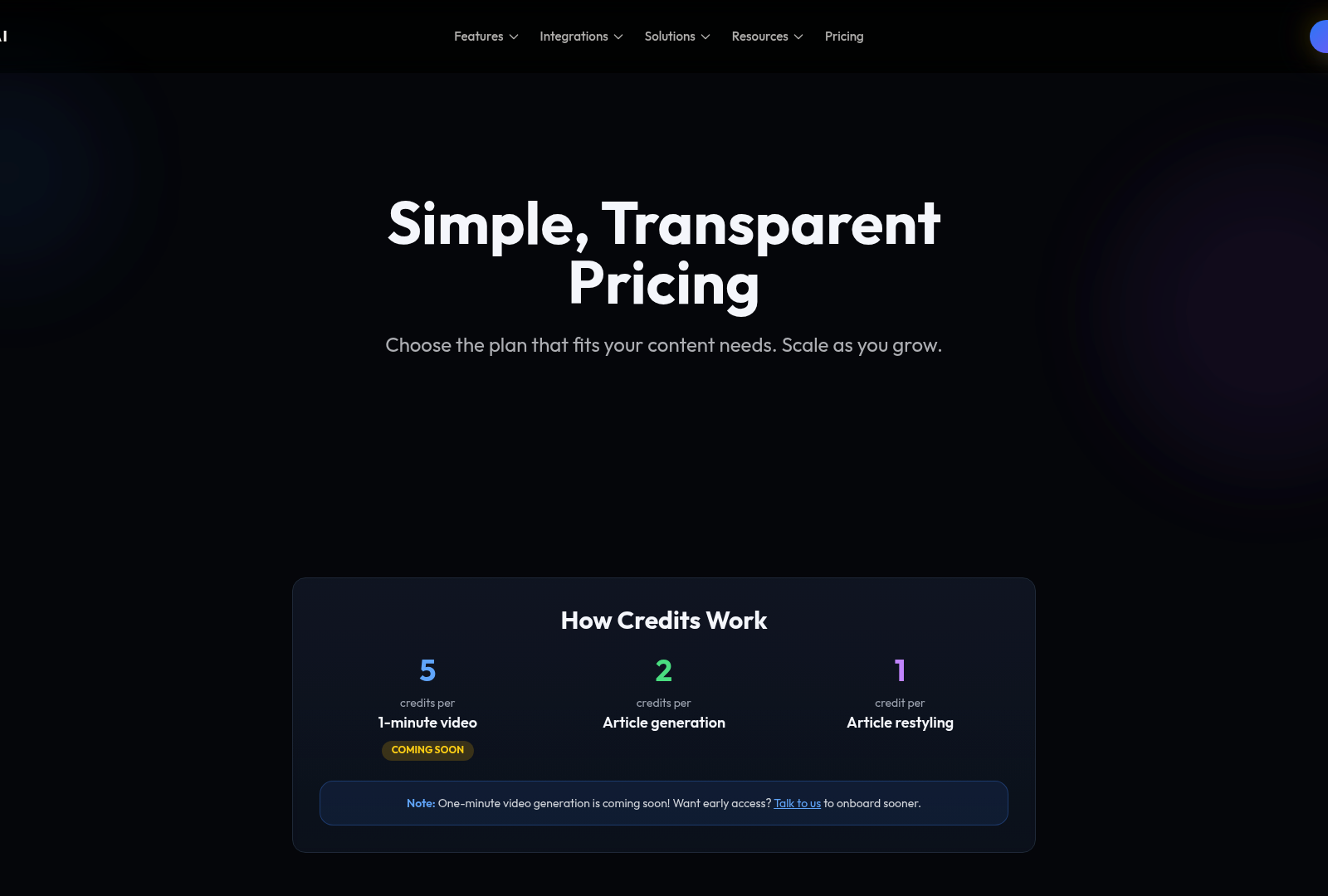
The article includes a screenshot of a credit-based pricing model, where users purchase credits for article creation, SEO optimization, and publishing tasks. Many SEO tools adopt tiered pricing (e.g., basic, premium, enterprise plans) or subscription models based on features like keyword volume, integration options, or team size. Users should prioritize tools that align with their budget and scalability needs, though the article notes that explicit pricing details for AnyPost and Whatagraph are not validated in the provided sources.
7. Can these tools integrate with other SEO platforms or content management systems?
While the article does not specify integrations, most modern SEO tools support APIs or third-party connections to platforms like Google Analytics, SEMrush, or WordPress. Integration capabilities are critical for automating workflows, consolidating analytics, and streamlining content publishing. Users should inquire about compatibility with their existing tech stack when evaluating tools like AnyPost or Whatagraph, as the article does not provide confirmed integration details.