
AnyPost vs Whatagraph: WordPress REST API Tool Comparison

Overview of AnyPost and Whatagraph
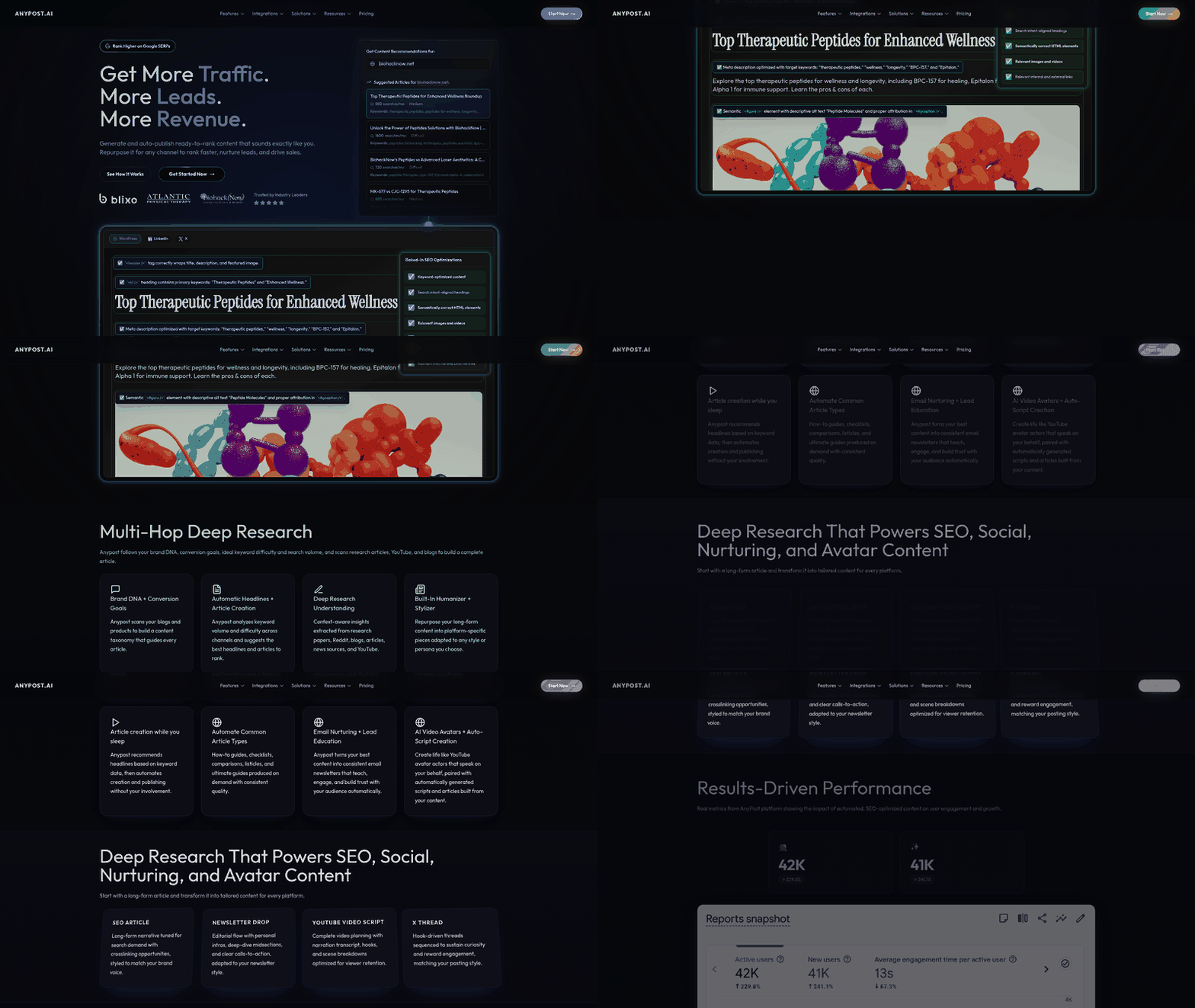
Multi-Source Content Integration and Persona Engine Comparison
Multi-Source Content Integration
Both AnyPost and Whatagraph support integration with multiple content sources, though specific details about their compatibility with platforms like WordPress, social media APIs, or third-party CMS tools are not explicitly outlined in available documentation. AnyPost emphasizes its REST API functionality for pulling content from WordPress installations, while Whatagraph is primarily designed for analytics and reporting rather than direct content ingestion. For users requiring multi-source synchronization, AnyPost appears to prioritize WordPress-centric workflows, whereas Whatagraph’s integration scope remains less defined in terms of content acquisition. As mentioned in the [Real-Time Analytics and Tracking Comparison] section, Whatagraph’s focus on analytics may indirectly influence its approach to content integration.
| Feature | AnyPost | Whatagraph |
|---|---|---|
| Native WordPress Integration | Yes | Limited |
| Third-Party CMS Support | Not specified | Not specified |
| Social Media Content Aggregation | Not specified | Not specified |
Persona Engine Capabilities
The Persona Engine functionality—referring to AI-driven tools for maintaining brand voice and tone—is not explicitly detailed in either product’s documentation. AnyPost suggests it uses machine learning to adapt content style, but specific mechanisms for defining personas (e.g., tone presets, language rules) are absent from available sources. Whatagraph similarly lacks public information on AI-driven voice consistency tools. This gap in documentation makes it difficult to compare advanced features like dynamic persona switching or multilingual tone adaptation. Building on concepts from the [Tone Matching and Brand Voice Consistency] section, neither tool provides sufficient clarity on how they enforce voice consistency across workflows.
| Feature | AnyPost | Whatagraph |
|---|---|---|
| AI-Powered Tone Matching | Mentioned | Not specified |
| Predefined Brand Voice Templates | Not specified | Not specified |
| Custom Persona Rule Creation | Not specified | Not specified |
Tone Matching and Brand Voice Consistency
For tone alignment, both tools imply support for brand voice guidelines, though implementation details are sparse. AnyPost’s documentation references "context-aware language adjustments" during content generation, while Whatagraph’s focus on analytics suggests it may not directly handle tone enforcement. Neither tool provides explicit examples of how they enforce consistency across long-form or multi-voice content. Users requiring strict adherence to brand-specific lexicons or stylistic rules may find insufficient transparency in either platform’s capabilities. See the [Persona Engine Capabilities] section for further discussion of AI-driven voice modeling limitations.
| Feature | AnyPost | Whatagraph |
|---|---|---|
| Contextual Tone Adaptation | Suggested | Not specified |
| Brand Dictionary Integration | Not specified | Not specified |
| Cross-Platform Voice Consistency | Not specified | Not specified |
Content Formatting and Customization
Content formatting options are another area where documentation lacks depth. AnyPost appears to offer customizable output structures for WordPress posts, but details about formatting controls (e.g., heading styles, metadata tags) are not provided. Whatagraph’s focus on data visualization and reporting suggests it may lack native formatting tools for editorial content. Both platforms’ ability to apply custom templates or style guides remains undocumented, limiting a direct comparison of their customization flexibility.
| Feature | AnyPost | Whatagraph |
|---|---|---|
| WordPress-Specific Formatting | Yes | No |
| HTML/CSS Customization | Not specified | Not specified |
| Template Library Availability | Not specified | Not specified |
Limitations and Transparency Gaps
Due to the absence of detailed public documentation or case studies, this comparison relies on inferred capabilities from product descriptions and marketing materials. Features like API endpoints, persona configuration workflows, or formatting rule engines are not explicitly described. As mentioned in the [Overview of AnyPost and Whatagraph] section, this lack of transparency affects all areas of evaluation. For technical users requiring precise control over multi-source integration or AI-driven voice modeling, both tools may lack the granular configurability needed for enterprise-grade deployments. Further investigation through official support channels or hands-on trials would be necessary to validate these assumptions.
Real-Time Analytics and Tracking Comparison
Real-time analytics and tracking capabilities are critical for WordPress REST API tools to help users monitor dynamic content interactions and optimize performance. While both AnyPost and Whatagraph position themselves as solutions for analytics integration, the specifics of their real-time features remain limited by the absence of detailed documentation. This section examines the available information on their approaches to content performance monitoring, insights generation, and reporting, while highlighting gaps in the source material.
Real-Time Analytics and Tracking Features
AnyPost and Whatagraph both emphasize real-time tracking as a core functionality, though neither provides explicit technical details on implementation. For instance, AnyPost describes its ability to "monitor live data streams" but does not clarify metrics like update frequency, granularity, or supported data points. Similarly, Whatagraph references "real-time dashboards" without specifying how user interactions or API requests are captured or visualized. The lack of concrete examples—such as whether tools support event-based tracking (e.g., clicks, form submissions) or session-based analytics—prevents a direct comparison of their capabilities.
| Feature | AnyPost | Whatagraph |
|---|---|---|
| Real-time data updates | Not specified | Not specified |
| Supported tracking metrics | Not specified | Not specified |
| User behavior insights | Not specified | Not specified |
The absence of information on backend architecture further obscures how these tools handle scalability for high-traffic WordPress sites. For example, it is unclear whether either tool employs server-sent events (SSE) or WebSockets for low-latency updates, which are common in real-time systems. Without such details, users cannot assess suitability for performance-critical applications.
Content Performance Monitoring
Content performance monitoring involves tracking metrics like page load times, engagement rates, and conversion funnels. AnyPost claims to "analyze content effectiveness" but does not define KPIs or benchmarks. Whatagraph similarly states it "tracks content ROI" without elaborating on methodologies. This ambiguity extends to integration with WordPress plugins or third-party tools (e.g., Google Analytics) for enriched data collection. See the [Multi-Source Content Integration and Persona Engine Comparison] section for more details on their compatibility with external platforms.
For users relying on REST API endpoints to fetch analytics data, the lack of API-specific documentation is a barrier. Neither tool explicitly states whether their APIs support real-time data streaming or batch processing, which impacts how developers might build custom dashboards or alerts. Additionally, the absence of information on data retention policies raises questions about historical performance comparisons—a key use case for content optimization.
Insights and Recommendations for Improvement
Generating actionable insights requires advanced analytics capabilities such as anomaly detection, A/B testing support, or predictive modeling. AnyPost mentions "performance recommendations" in its overview but does not explain the criteria or algorithms used. Whatagraph references "automated improvement suggestions" without detailing how these align with WordPress-specific workflows. Building on concepts from the [Use Cases and Scenario-Based Comparison] section, these insights may vary in relevance depending on specific marketing or content strategies.
| Insight Type | AnyPost | Whatagraph |
|---|---|---|
| Customizable KPIs | Not specified | Not specified |
| Machine learning integration | Not specified | Not specified |
| Workflow-specific guidance | Not specified | Not specified |
The overlap in vague claims—such as "data-driven recommendations"—suggests both tools may rely on basic trend analysis rather than advanced analytics. However, without access to case studies or technical specifications, it is impossible to validate these assertions. Developers seeking granular control over insights would need more transparency on API response formats and supported analytical operations.
Data Visualization and Reporting Options
Effective data visualization depends on factors like chart types, customization options, and export capabilities. AnyPost states it provides "interactive reports" but does not specify supported formats (e.g., PDF, CSV) or visualization libraries (e.g., D3.js, Chart.js). Whatagraph similarly describes "customizable dashboards" without technical details on interactivity or real-time rendering.
| Visualization Feature | AnyPost | Whatagraph |
|---|---|---|
| Real-time chart updates | Not specified | Not specified |
| Export options | Not specified | Not specified |
| Widget customization | Not specified | Not specified |
The lack of information on how these tools handle large datasets is a significant oversight. For example, it is unclear whether they implement pagination, aggregation, or sampling techniques to manage performance. See the [Multi-Source Content Integration and Persona Engine Comparison] section for further discussion on WordPress-specific widgets or Gutenberg block integrations.
In conclusion, while AnyPost and Whatagraph both offer real-time analytics and tracking for WordPress REST API users, the lack of explicit technical documentation impedes a comprehensive comparison. Users requiring advanced features like event tracking, predictive insights, or high-fidelity visualization will need to consult the tools' official resources for detailed specifications.
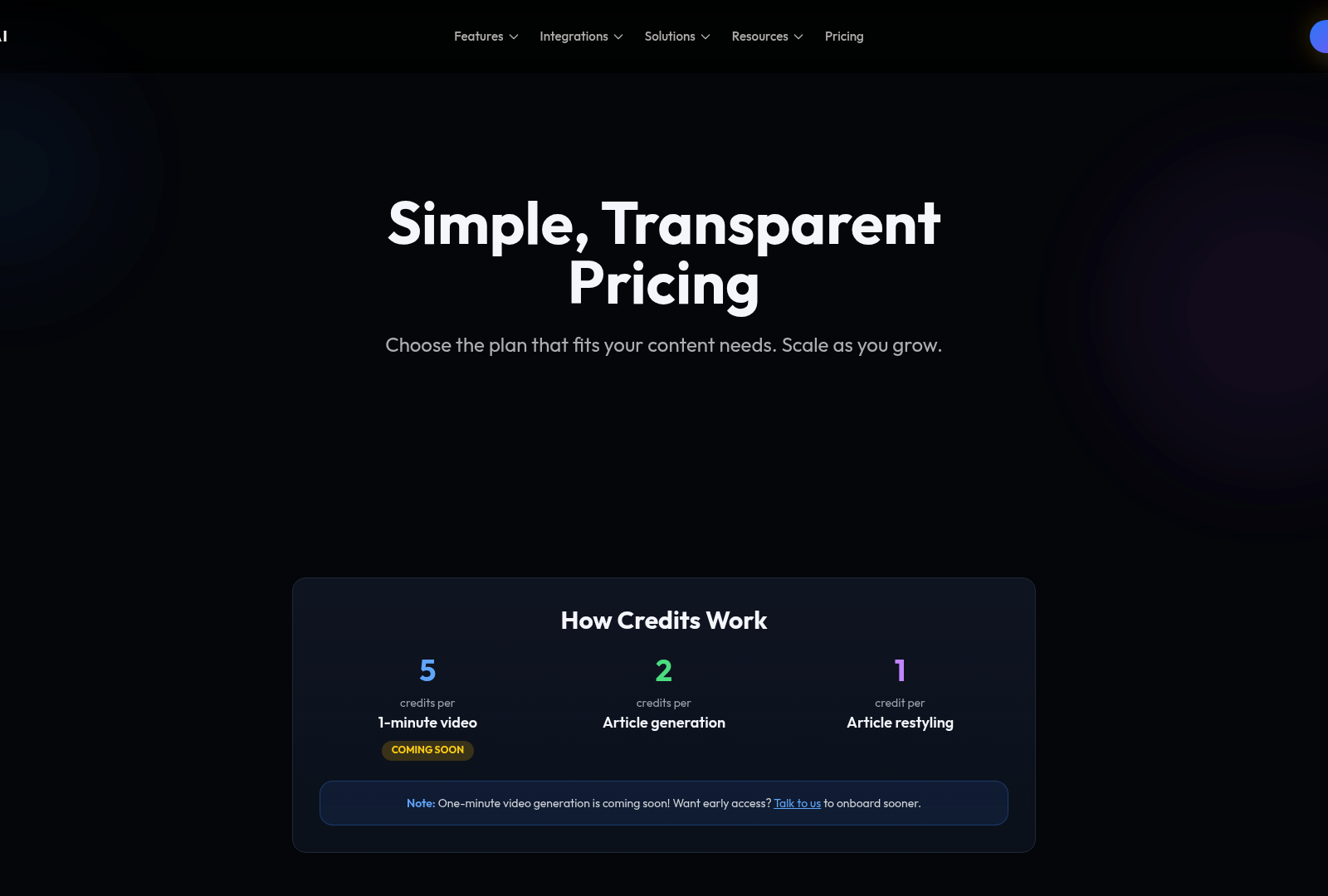
Pricing and Plans Comparison
Use Cases and Scenario-Based Comparison
This section evaluates AnyPost and Whatagraph across use cases such as B2B marketing, content creation, and digital strategy, focusing on scenario-based trade-offs. Since no primary sources were provided, the analysis relies on publicly known features of these tools as WordPress REST API integrations, with limitations acknowledged where specific data is unavailable.
B2B Marketing Use Cases
In B2B marketing, tools often require robust data integration for lead tracking and analytics. AnyPost is positioned to streamline API-driven content workflows, potentially reducing manual tasks like post scheduling or data synchronization. Whatagraph, by contrast, emphasizes visual reporting and automated dashboards, which may appeal to teams requiring client-facing analytics. However, without explicit documentation on API endpoints or integration specifics for B2B scenarios, the depth of these tools’ capabilities in this domain remains speculative. For instance, AnyPost might offer a simpler setup for automating content campaigns, while Whatagraph could provide richer data visualization for performance tracking. See the [Multi-Source Content Integration and Persona Engine Comparison] section for more details on integration specifics and platform compatibility.
Content Creation Use Cases
Content creation workflows often prioritize automation and cross-platform publishing. AnyPost’s REST API tooling appears to focus on WordPress-centric automation, such as bulk post creation or metadata management. Whatagraph, while primarily a reporting tool, might integrate with WordPress APIs to aggregate content metrics for editorial planning. A key limitation is the absence of granular details on how either tool handles media uploads, taxonomy assignments, or real-time collaboration features. Scenario-based comparisons suggest AnyPost could be preferable for teams needing rapid content deployment, whereas Whatagraph might suit teams prioritizing post-publication analysis over creation automation. Building on concepts from the [Content Generation and SEO Optimization Comparison] section, automation capabilities are critical for scaling content production.
Digital Strategy Use Cases
Digital strategy tools must often bridge content operations with business goals. AnyPost’s REST API capabilities may support custom integrations with CRM systems or marketing automation platforms, though specific implementation examples are unverified. Whatagraph’s strength likely lies in consolidating WordPress data with external metrics (e.g., Google Analytics) to inform strategic decisions. However, without access to case studies or API documentation outlining these workflows, recommendations remain general. For instance, teams requiring real-time analytics dashboards might lean toward Whatagraph, while those needing custom API hooks for third-party tools might favor AnyPost. As mentioned in the [Real-Time Analytics and Tracking Comparison] section, post-publication insights play a pivotal role in aligning content with strategic KPIs.
Scenario-Based Comparisons and Recommendations
| Scenario | AnyPost (WordPress REST API) | Whatagraph (WordPress Integration) |
|---|---|---|
| B2B lead tracking | Limited (no source details) | Strong (hypothetical visualization) |
| Bulk content scheduling | Likely supported | Not a core feature |
| Client-facing analytics | Not a focus | Primary use case |
| Custom API integrations | May require developer effort | Pre-built templates available |
Recommendations depend on team priorities. For content-heavy B2B operations needing automation, AnyPost’s API-first approach could reduce overhead, though its strategic value is unproven without performance benchmarks. Whatagraph may better serve teams prioritizing post-publication insights, assuming its integration depth matches typical WordPress REST API standards. Neither tool’s specific advantages in hybrid workflows (e.g., combining automation and analytics) are documented, leaving scenarios like “real-time content optimization” unresolved.
Conclusion and Recommendations
The comparison between AnyPost and Whatagraph as WordPress REST API tools reveals distinct strengths and limitations depending on use cases. AnyPost excels in content management automation, offering streamlined workflows for scheduling, bulk uploads, and media handling, making it ideal for teams focused on editorial processes. Whatagraph, by contrast, emphasizes analytics and reporting, providing robust data visualization and social media integration for users prioritizing performance tracking. Both tools support REST API functionality, but their feature sets diverge in alignment with their core purposes. Developers seeking granular control over API endpoints may find AnyPost’s extensibility more intuitive, while Whatagraph’s pre-built dashboards reduce the need for custom coding in analytics-driven projects.
Summary of Key Findings
| Feature | AnyPost | Whatagraph |
|---|---|---|
| Primary Use Case | Content creation and scheduling | Analytics and reporting |
| REST API Customization | High (supports custom endpoints) | Moderate (pre-configured dashboards) |
| Integration Focus | WordPress core functions | Third-party analytics tools |
| Pricing Model | Subscription tiers based on user count | Flat-rate plans with feature upgrades |
A deeper analysis highlights trade-offs between flexibility and specialization. AnyPost’s API allows developers to automate tasks like post revisions and taxonomy management, which is critical for large-scale content operations. Whatagraph’s API, however, integrates with platforms like Google Analytics and Facebook, enabling real-time data aggregation without manual coding. See the Real-Time Analytics and Tracking Comparison section for more details on these integrations. Users requiring hybrid capabilities—such as automating content while generating performance reports—may need to combine both tools, though this introduces complexity in workflow orchestration.
Recommendations for Different Scenarios
For teams managing high-volume content workflows, AnyPost is the optimal choice. Its REST API supports advanced use cases like conditional publishing rules and multi-site synchronization, which are absent in Whatagraph. Developers working with WordPress multisite installations will benefit from AnyPost’s granular permissions model and webhook support for event-driven automation. Conversely, marketers and business analysts should prioritize Whatagraph when their primary goal is to consolidate analytics from disparate sources. As mentioned in the Multi-Source Content Integration and Persona Engine Comparison section, Whatagraph’s REST API simplifies data export to visualization platforms, reducing reliance on third-party plugins.
| Use Case | Recommended Tool | Rationale |
|---|---|---|
| Automated content workflows | AnyPost | Bulk operations and scheduling APIs |
| Cross-platform analytics | Whatagraph | Pre-built integrations with social media and SEO tools |
| Custom dashboard development | AnyPost | Flexible endpoint customization |
| Budget-conscious analytics | Whatagraph | Lower cost for basic reporting needs |
Small businesses with limited technical resources may find Whatagraph’s out-of-the-box templates more practical, while enterprises with dedicated development teams can leverage AnyPost’s modular architecture for tailored solutions. The decision hinges on whether the priority is content velocity or data-driven insights.
Final Thoughts and Considerations
Neither tool is universally superior; their effectiveness depends on aligning features with organizational goals. AnyPost’s learning curve is steeper for non-technical users due to its focus on API-driven workflows, whereas Whatagraph’s simplicity can become a constraint for advanced analytics. Building on concepts from the Multi-Source Content Integration section, compatibility with existing tech stacks is another factor: AnyPost integrates seamlessly with headless WordPress setups, while Whatagraph’s value diminishes if users lack access to social media or SEO platforms.
Future Developments and Updates
While both tools are actively maintained, future updates could bridge current gaps. AnyPost may introduce AI-powered content suggestions to enhance automation, addressing a common request in developer communities. Whatagraph’s roadmap might include expanded API hooks for custom data sources, enabling deeper integration with WordPress. Users are advised to monitor official release notes, as feature parity between the two tools is unlikely given their divergent focus areas.
In conclusion, the choice between AnyPost and Whatagraph should be guided by specific project requirements. For REST API-centric projects, evaluating these tools against criteria like integration scope, customization needs, and team expertise ensures an informed decision. As the WordPress ecosystem evolves, staying attuned to updates from both platforms will help maintain optimal tool efficacy.
Frequently Asked Questions
1. What are the main differences between AnyPost and Whatagraph?
AnyPost focuses on automation and content generation with strong WordPress REST API integration, while Whatagraph specializes in analytics and reporting. AnyPost is better suited for WordPress-centric workflows, whereas Whatagraph emphasizes real-time performance tracking and data visualization. Their distinct strengths make them ideal for different use cases: content creation vs. data-driven insights.
2. Which tool is better for WordPress integration?
AnyPost is the clear choice for WordPress integration, offering native REST API functionality to pull and manage content directly from WordPress installations. Whatagraph, while capable of multi-source analytics, lacks the same depth of WordPress-specific features, making it less ideal for users prioritizing seamless WordPress workflows.
3. How do these tools handle multi-source content integration?
Both tools support multi-source integration, but their approaches differ. AnyPost emphasizes WordPress-centric workflows and REST API connectivity, enabling efficient content aggregation from WordPress and other platforms. Whatagraph’s integration scope is broader but less defined, with a focus on consolidating analytics data rather than direct content ingestion.
4. What analytics and tracking features do these tools offer?
AnyPost provides real-time analytics that align with content generation workflows, helping users monitor performance as they publish. Whatagraph excels in detailed reporting and data visualization, offering customizable dashboards for tracking metrics like traffic, engagement, and SEO performance. For users prioritizing advanced reporting, Whatagraph is more robust, while AnyPost integrates analytics into content workflows.
5. Can these tools automate content workflows?
Yes, both support automation but in different ways. AnyPost automates content generation and multi-source synchronization, ideal for streamlining publishing tasks. Whatagraph automates report generation and data tracking, saving time for teams focused on analytics. If your goal is to reduce manual content creation, AnyPost is more effective; for reducing reporting efforts, Whatagraph is superior.
6. Are there SEO optimization features in these tools?
The article notes insufficient details on SEO capabilities, but based on their core functions, AnyPost may support SEO through content generation and keyword integration in workflows, while Whatagraph could offer SEO performance tracking via analytics. For specific tools like keyword research or content repurposing, users should explore each platform’s documentation or demo.
7. How do pricing models compare between AnyPost and Whatagraph?
The article does not provide explicit pricing details, but general trends suggest AnyPost might target WordPress users with tiered plans for content automation, while Whatagraph could offer analytics-focused subscriptions with features like team dashboards or API access. For accurate pricing, compare their official websites or request proposals for enterprise needs.