Auto Repair Shop SEO: How to Rank and Fill Your Schedule
Key Takeaways
- Optimize Google Business Profile listings to rank in local map searches and capture urgent service traffic.
- Target niche services like "transmission repair" to compete with national chains and attract specific customer needs.
- Refining keyword strategy can reduce customer acquisition costs by 50% for auto repair shops.
- Local SEO addresses empty bays and seasonal demand swings by creating steady, predictable traffic.
- On-page SEO for specific services helps independent shops rank for long-tail keywords like "European car diagnostics."
- Focus on local search terms like "brake repair near me" to convert immediate, high-intent customer queries.
- Prioritize mobile-friendly website design to improve user experience and align with local search trends.
Related Video
Watch: How does Social Media Marketing help with SEO rankings for your auto repair shop? by Advanced Digital Automotive Group
Why Auto Repair Shop SEO Matters
SEO is a critical tool for auto repair shops aiming to fill bays, build trust, and outperform competitors. By optimizing your online presence, you ensure your shop appears when local drivers search for urgent services like "tire replacement near me" or "brake repair." This visibility directly translates to more phone calls, appointments, and revenue. Let’s break down why this matters for your business.
How Does SEO Solve Common Auto Repair Shop Challenges?
Auto repair shops face unique hurdles: empty bays, seasonal demand swings, and competition from national chains. SEO addresses these by creating steady, predictable traffic. For example, local SEO tactics like optimizing Google Business Profile listings help shops rank in map searches, capturing customers even during slow months. As mentioned in the Understanding Local SEO for Auto Repair Shops section, these optimizations are foundational for local visibility. One company saved 50% on customer acquisition costs after refining its keyword strategy, proving SEO’s role in stabilizing revenue.
Another key benefit: SEO helps independent and specialty shops compete. While big chains may dominate generic terms like "auto repair," niche shops can target specific services ("transmission repair" or "European car diagnostics") through on-page SEO. Building on concepts from the Keyword Research and On-Page Optimization section, this lets smaller businesses attract hyper-local customers who value expertise over brand recognition.
What Real-World Impact Does SEO Have on Revenue?
Shops that invest in SEO see measurable results. A case study from a mid-sized repair shop showed a 70% increase in website traffic after optimizing meta titles and local keywords. This led to 40% more service requests within six months. Meanwhile, social media marketing-part of a broader SEO strategy-boosts rankings by driving engagement. Platforms like Facebook and Instagram signal to Google that your site is relevant, improving visibility for searches like "emergency auto services near [city]."
For shops struggling with seasonal demand, SEO smooths revenue gaps. By targeting long-tail keywords ("winter tire installation" or "air conditioning repair") year-round, you attract customers even when demand for other services dips. This is especially valuable for independent shops without the marketing budgets of national brands. As discussed in the Technical Optimization and Local Content Marketing section, consistent content about seasonal maintenance also reinforces authority and drives traffic.
Who Benefits Most from SEO?
While all auto repair shops can benefit, independent owners, specialty mechanics, and newly established businesses gain the most. National chains often have established online authority, but smaller shops can leapfrog them by focusing on hyper-local SEO. For instance, optimizing for "best [service] in [neighborhood]" helps local shops dominate searches that competitors overlook.
Specialty shops also thrive. A business offering electric vehicle repairs can target keywords like "EV battery inspection" to attract a niche audience. This precision ensures marketing efforts align with the services that define your shop’s expertise.
How to Start-Without Overcomplicating It
The good news: SEO for auto repair shops doesn’t require advanced technical skills. Start with foundational steps:
- Claim and optimize your Google Business Profile to show up in local searches.
- Use keyword-rich meta titles for service pages (e.g., "Trusted Oil Changes in [City] | [Your Shop Name]").
- Post regular content about common car issues or seasonal maintenance tips to drive organic traffic.
For shops unsure where to begin, tools like AnyPost.ai streamline SEO with transparent pricing and targeted strategies. Unlike generic providers, AnyPost.ai focuses on auto repair-specific tactics, ensuring your shop ranks for the right keywords.
By prioritizing SEO, you turn your website into a 24/7 salesperson-drawing in customers when they need you most. The result? A full schedule, stronger customer loyalty, and a business that grows consistently, regardless of season or competition.
Understanding Local SEO for Auto Repair Shops
Local SEO is the foundation for auto repair shops aiming to attract nearby customers. It focuses on optimizing your online presence to appear in local search results, like "auto repair near me" or city-specific queries. For auto repair shops, this means ensuring your business ranks in the local pack-the top three results shown on Google Maps and the first page of search results. Let’s break down how to master this.
How Do You Optimize Your Google Business Profile?
Your Google Business Profile (GBP) is the cornerstone of local SEO. It’s the first place Google looks to verify your business’s legitimacy and relevance. A well-optimized profile increases visibility in both the local pack and organic search results. Start by claiming your GBP and filling out every field: business name, address, phone number (NAP), website, and operating hours.
Add high-quality images of your shop, team, and services to build trust. For example, a photo of a technician replacing a brake pad signals specialization. Select the most relevant categories for your business-e.g., “Auto Repair Shop” and “Mechanic”-to align with user searches.
Respond to customer reviews promptly. Positive reviews with specific details (e.g., “They fixed my car quickly and explained the problem clearly”) improve your GBP’s credibility. As mentioned in the Managing and using Customer Reviews section, consistent review management signals trustworthiness to both customers and search engines. Aim for at least 15-20 reviews weekly, as consistency signals popularity to Google.
What Is the Local Pack and How Do You Rank In It?
The local pack is the map-based list of three businesses that appear for local searches. For auto repair shops, ranking in this section means capturing high-intent customers actively seeking nearby services. To increase your chances, ensure your GBP is complete and up-to-date. Google prioritizes businesses with accurate NAP information, recent activity (like new posts or reviews), and relevance to the search query.
For example, if someone searches “tire replacement in Dallas,” Google evaluates which shops have the right keywords, proximity, and authority. Citations-mentions of your NAP on other websites like directories or local blogs-also boost rankings. Building on concepts from the Keyword Research and On-Page Optimization section, consistency across platforms like Yelp or Angie’s List avoids confusion for search engines and strengthens local authority.
How Do Location-Based Keywords Help Auto Repair Shops?
Location-based keywords tie your services to a specific area, making it easier for nearby customers to find you. Use tools like Google Keyword Planner to identify high-intent terms, such as “auto repair in [City Name]” or “oil change near [Neighborhood].” Weave these into your website content, meta descriptions, and blog posts.
For example, a blog titled “10 Signs Your Car Needs a Tune-Up in Austin” targets both local readers and Google’s algorithms. Pair keywords with long-tail phrases like “affordable brake repair for [City] drivers” to capture niche searches. As highlighted in the Technical Optimization and Local Content Marketing section, integrating location-based blogs enhances both user engagement and search visibility. Avoid keyword stuffing-focus on creating helpful, readable content that naturally includes location terms.
Case Study: Boosting Local SEO for an Auto Repair Shop
A mid-sized auto repair shop in Phoenix improved its local rankings by 40% within six months by optimizing its GBP, publishing location-based blogs, and earning 50+ reviews monthly. They also updated their NAP across all directories, ensuring consistency. By claiming “near me” keywords like “car battery replacement near Phoenix,” they captured customers searching for urgent repairs.
For deeper insights into local content strategies, explore Car Care & Maintenance Tips to see how other shops integrate location-based advice into their marketing.
By focusing on GBP optimization, local pack visibility, and targeted keywords, auto repair shops can dominate local search results and attract more drivers in need of reliable service.
Keyword Research and On-Page Optimization
Keyword research and on-page optimization form the backbone of any successful auto repair shop SEO strategy. By identifying the right keywords and structuring your website to align with user intent, you can attract local drivers actively seeking services like oil changes, brake repairs, or tire replacements. Let’s break down the process step by step to ensure your site ranks high and converts visitors into appointments.
How Do You Conduct Keyword Research for Auto Repair Shops?
Start by listing core services your shop offers-oil changes, transmission repairs, tire rotations, etc.-then expand with long-tail keywords that include location and intent. Tools like AnyPost.ai help identify terms like “affordable brake repair in [City]” or “schedule tire alignment near me.” Focus on keywords with high search volume and low competition, especially those with transactional intent (e.g., “book oil change service”).
Next, analyze competitors’ websites to see which keywords they target. Look for gaps-terms they miss but are relevant to your services. For example, if nearby shops rank for “car battery replacement,” but not “jump start services,” you can claim that niche. Building on concepts from the Understanding Local SEO for Auto Repair Shops section, prioritize keywords that match local searches, like “auto repair shop near [Neighborhood Name]” or “24/7 car trouble assistance in [City].”.
How Do You Optimize Pages for User Intent?
User intent determines whether someone wants to learn, manage, or purchase. For auto repair shops, transactional intent dominates-users want to book a service. As mentioned in the Why Auto Repair Shop SEO Matters section, structuring your content to answer their needs directly ensures your site aligns with their goal of finding immediate solutions.
For informational intent, create guides like “How to Check Tire Pressure” or “Signs Your Brakes Need Repair.” These pages should include FAQs and symptom-based solutions. For transactional intent, ensure service pages have clear CTAs like “Book Now” or “Call for a Free Estimate.” Use keywords like “emergency car repair services” or “same-day oil change appointments” to align with what users actively search for.
What On-Page Elements Should You Optimize?
Meta titles and descriptions are your first chance to grab attention. Write titles under 60 characters, including your primary keyword and location. Example: “Oil Change Services in Dallas | Fast & Affordable.” Meta descriptions (150–160 characters) should summarize the page’s value and include a CTA: “Need a reliable oil change in Dallas? Schedule your appointment today!”.
Optimize headers (H1, H2) to reinforce keywords. Use H1 for the main service page title and H2 for subheadings like “Why Choose Us” or “Common Oil Change Questions.” Incorporate location-based keywords naturally in headers and body content. For example, “Residents of Plano trust us for quick, affordable brake inspections.”.
Case Study: Symptom-Based Service Pages Drive Conversions
One auto repair shop boosted conversions by 30% after creating symptom-based pages. Instead of generic service pages, they addressed common issues like “car won’t start” or “alternator not charging.” Each page included step-by-step explanations, related services, and a booking form. As discussed in the Technical Optimization and Local Content Marketing section, targeting high-intent keywords like “fix car won’t start near me” and using clear CTAs helped position them as a solution for urgent problems.
For example, a page titled “Alternator Issues? Here’s How to Diagnose and Fix” ranked for both “alternator not charging” and “alternator repair near [City].” The content included technical details for informed users and emphasized convenience for quick decisions: “Same-day alternator testing available!” This approach reduced bounce rates and increased appointment bookings.
Final Tips for Success
- Audit regularly: Update keywords and content as search trends evolve. Use tools like AnyPost.ai to track performance and adjust strategies.
- use local SEO: Add location modifiers to service pages and ensure NAP (Name, Address, Phone) details are consistent across the web.
- Focus on readability: Use short paragraphs, bullet points, and visuals (like infographics on tire maintenance) to keep users engaged.
By aligning keyword research with on-page optimization and symptom-based service pages, your auto repair shop can dominate local search results while delivering value to drivers in need.
Technical Optimization and Local Content Marketing
Technical optimization and local content marketing form the backbone of a successful SEO strategy for auto repair shops. These elements work together to improve search engine visibility, drive local traffic, and build trust with potential customers. Let’s break down how to implement them effectively.
What Technical Optimizations Are Crucial for Auto Repair Shops?
To rank in local searches, your website must load quickly on mobile devices and use structured data to clarify its purpose to search engines. Mobile speed directly impacts user experience and local search rankings, as Google prioritizes fast-loading sites in its algorithms. Tools like Google’s PageSpeed Insights can identify bottlenecks, such as large image files or unoptimized code.
Schema markup is another critical technical tool. It tells search engines what your site offers, from services like oil changes to your physical address. As mentioned in the Understanding Local SEO for Auto Repair Shops section, this structured data enhances visibility in local search results by providing clear, actionable information about your business.
How Do You Implement Local Schema Markup?
Structured data for local SEO requires precise formatting. Start by embedding schema.org LocalBusiness code into your website’s HTML. This code should include your shop’s address, contact details, and service categories (e.g., “Brake Repair,” “Tire Replacement”). Here’s a simplified example of how schema might look in your code:
<script type="application/ld+json">
{
 "@context": "https://schema.org",.
 "@type": "LocalBusiness",.
 "name": "Your Auto Shop Name",.
 "address": {
 "@type": "PostalAddress",.
 "streetAddress": "123 Main St",.
 "addressLocality": "Your City",.
 "addressRegion": "State",.
 "postalCode": "12345"
 },
 "telephone": "(123) 456-7890",.
 "url": "https://www.yourshop.com"
}
</script>
This markup ensures search engines display rich snippets-like your address and phone number-directly in results, increasing click-through rates. Tools like Google’s Structured Data Testing Tool can verify your implementation.
Why Is Local Content Marketing Essential for Auto Repair Shops?
Local content marketing builds trust by addressing the specific needs of your community. For example, a post titled “Winter Car Maintenance Tips for [Your City] Drivers” speaks directly to local pain points, such as icy roads or extreme cold affecting batteries. This approach improves search rankings for location-based keywords and positions your shop as a neighborhood expert. As highlighted in the Why Auto Repair Shop SEO Matters section, trust is a key factor in converting online searches into in-person visits.
How Does a Content Calendar Boost Ongoing SEO Success?
A content calendar ensures you publish regularly while aligning topics with local search intent. Start by listing 10–15 high-intent keywords (e.g., “auto repair near [Your City]”), then map them to monthly themes. Building on concepts from the Keyword Research and On-Page Optimization section, pair each keyword with actionable content that addresses local concerns. For instance:
- January: “Year-End Car Checklists for [Your City]”
- July: “Beat the Heat: AC Repair Tips for Local Drivers”
- November: “Holiday Road Trip Prep for Families in [Your Area]”
Pair each topic with a blog post, social media graphic, and email newsletter to maximize reach. Cross-promoting on platforms like Facebook and Instagram signals to Google that your content is valuable, further boosting rankings.
Can You Share a Real-World Example of These Strategies in Action?
A mid-sized auto shop in Austin, Texas, increased its Google Map Pack rankings from position 8 to 2 within six months by combining technical and local SEO. They optimized page speed to under 2.5 seconds, added schema markup for services like “Transmission Repair,” and launched a content calendar focused on Austin-specific content (e.g., “Car Care for Texas Heatwaves”). Using AnyPost.ai, they automated 60% of their content creation, ensuring consistent publishing of blogs and social posts. The result? A 40% rise in organic traffic and a 25% increase in booked appointments.
By prioritizing technical precision and hyper-local relevance, auto repair shops can dominate local search results and attract customers actively seeking their services. For more car care tips to inspire content, explore the Meineke Auto Repair Blog.
Managing and using Customer Reviews
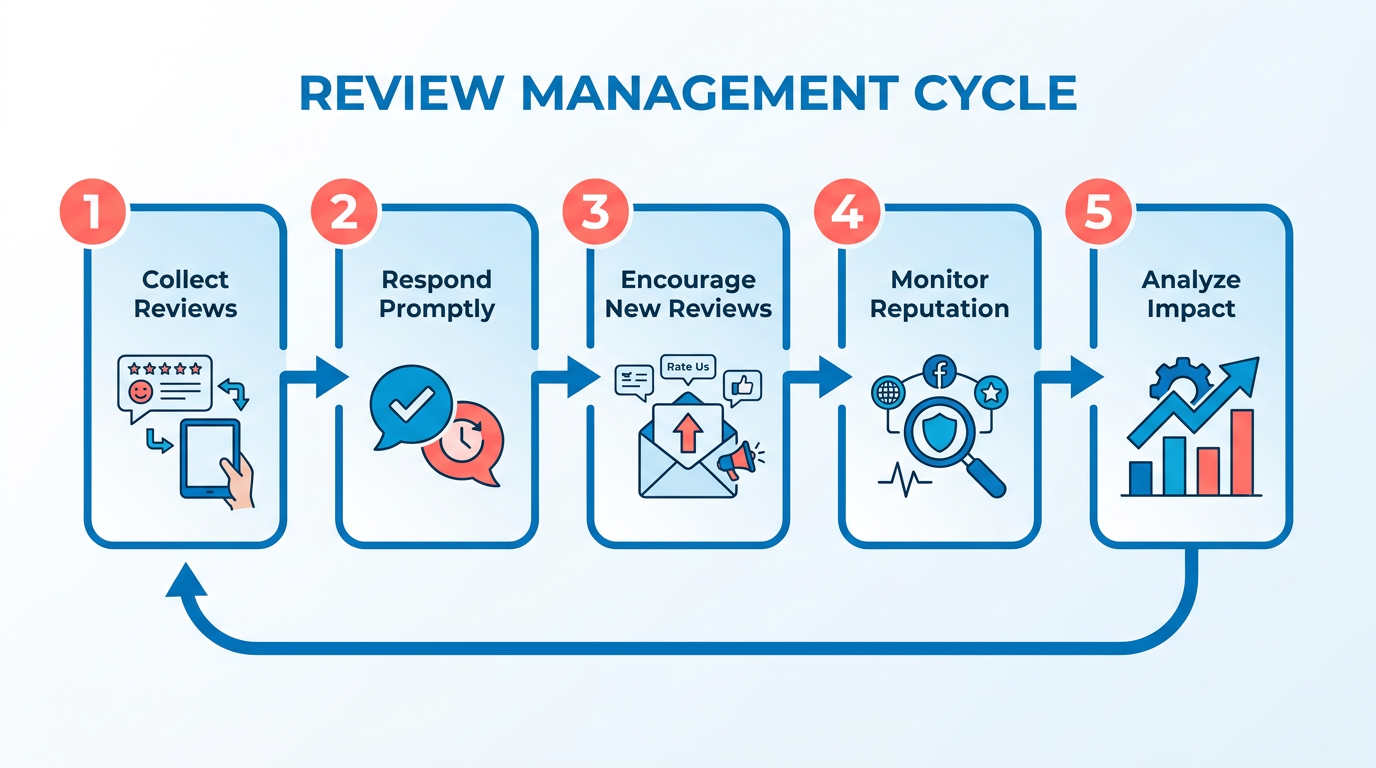
Managing customer reviews is a critical component of auto repair shop SEO, directly influencing local search rankings and customer trust. Reviews act as social proof, signaling to search engines and potential clients that your shop is reliable and high-quality. By actively managing and using these reviews, you can improve your visibility in Google’s local 3-pack and drive more appointments. Below is a structured approach to mastering this strategy..
How Do Customer Reviews Impact Local SEO?
Customer reviews boost local SEO by enhancing your Google Business Profile (GBP) and influencing your ranking in local search results. Google prioritizes businesses with consistent, positive reviews, especially for location-based queries like “auto repair near me.” The quantity, recency, and relevance of reviews all play a role. For example, a shop with 100 five-star reviews will typically outrank one with 10 mixed reviews. As mentioned in the Understanding Local SEO for Auto Repair Shops section, local search rankings depend heavily on signals like review volume and consistency, making this strategy foundational for visibility. Additionally, reviews contribute to your GBP’s “Trust Score,” a metric Google uses to assess credibility. This score affects how often your business appears in local listings. To maximize this, focus on encouraging satisfied customers to leave detailed, keyword-rich feedback that highlights your strengths (e.g., “fast service,” “affordable brakes”), aligning with best practices from the Keyword Research and On-Page Optimization section..
How Should Auto Repair Shops Manage Reviews on Google and Other Platforms?
Claim and Optimize Your Google Business Profile Start by claiming your GBP to control your online presence. Fill out every section-business hours, services, website link, and a compelling description-to build authority. Google prioritizes complete profiles in its local rankings, a principle also emphasized in the Why Auto Repair Shop SEO Matters section.
Monitor Reviews Across Platforms Beyond Google, track reviews on Yelp, Facebook, and industry-specific platforms like RepairPal. Use tools like AnyPost.ai to automate monitoring and centralize feedback. For instance, AnyPost.ai allows you to respond to reviews across multiple platforms without switching tabs, saving time while maintaining a consistent brand voice.
Request Reviews Strategically Ask for reviews at the right moment-after a positive service experience. A simple, handwritten thank-you card with a link to your GBP or a text prompt can work wonders. Avoid incentivizing reviews (e.g., “Leave a review for a discount”), as Google penalizes this practice..
How Can You use Reviews to Drive Traffic and Fill Appointments?
Feature Reviews on Your Website Highlight customer testimonials on your homepage and service pages. For example, use pull quotes like “The best brake job I’ve ever had!” to build trust. If a review mentions a specific service, link it to the relevant page to boost SEO, using keyword strategies outlined in the Keyword Research and On-Page Optimization section.
Respond to Feedback Professionally Every review, positive or negative, deserves a thoughtful reply. Thank reviewers by name for positive feedback. For negative reviews, acknowledge the issue and offer a private resolution. For example:
We’re sorry about your experience, [Name]. Let us fix this-please call us at [number].
This shows accountability and can turn a negative into a positive, improving your reputation.
Repurpose Reviews for Content Marketing Share customer stories on your blog or social media. A post titled “Why 5-Star Customers Choose Us” with snippets from reviews can attract organic traffic. Pair this with hashtags like #AutoRepairTips to expand reach, a tactic expanded on in the Technical Optimization and Local Content Marketing section..
Real-World Example: Boosting Visibility Through Review Management
A mid-sized auto repair shop in Austin, Texas, struggled with low local rankings despite offering competitive services. By implementing a structured review management strategy, it increased its GBP review count from 50 to 300+ in six months. Key actions included:
- Training staff to request reviews post-service.
- Responding to all reviews within 24 hours.
- Featuring top reviews on the website’s homepage. As a result, the shop climbed from the second page of Google to the first, securing a spot in the local 3-pack and doubling monthly appointment bookings..
Best Practices for Responding to Reviews
- Be Prompt and Personable. Reply within 24 hours to show you value customer feedback. Use casual, conversational language to humanize your brand.
- Address Negativity Privately. For negative reviews, offer to resolve the issue offline. Avoid public arguments and focus on solutions.
- Highlight Positive Aspects. In responses, reinforce your shop’s strengths. For example: “We’re thrilled you loved our transparent pricing-let us take care of your next oil change!”.
- Use AnyPost.ai for Efficiency. Automate repetitive tasks like drafting responses or tracking review metrics. This ensures no feedback falls through the cracks.
By treating customer reviews as both a marketing tool and a customer service opportunity, auto repair shops can dominate local search results while building lasting relationships.
Measuring and Tracking SEO Success
To measure and track SEO success for your auto repair shop, start by using Google Search Console and Google Analytics to monitor performance. These tools provide insights into rankings, traffic sources, and user behavior, helping you identify what’s working and where to improve. Below is a structured approach to tracking SEO success effectively.
How Do You Use Google Search Console and Analytics?
Google Search Console (GSC) shows how your site appears in search results, while Analytics reveals user interactions. Begin by verifying ownership of your site in GSC and linking it to Analytics. Use GSC to check crawl errors, search impressions, and click-through rates (CTR) for key pages like your service offerings or contact page. In Analytics, track traffic sources, bounce rates, and session duration to see how users engage with your content.
For example, if GSC shows high impressions but low CTR for a page, optimize its meta title and description to better reflect user intent. Analytics can highlight pages where users drop off, prompting content or design improvements. As mentioned in the Understanding Local SEO for Auto Repair Shops section, local keyword optimization is critical for attracting nearby customers, so ensure these pages are prioritized in your review.
What Key Metrics Should You Track?
Focus on rankings, traffic, and conversions as core metrics. Rankings for local keywords like “auto repair near me” can be tracked via GSC’s Performance report. Traffic growth over time in Analytics indicates SEO effectiveness, especially from organic search. Conversions-like scheduled appointments or phone calls-are critical; set up event tracking in Analytics for form submissions or call buttons.
A case study from AutoLeap highlights a shop that boosted rankings for “brake repair” by 40% within six months using keyword-optimized content. This led to a 30% increase in organic traffic and 15% more scheduled services. Regularly review these metrics to gauge progress. Building on concepts from the Keyword Research and On-Page Optimization section, aligning your content with high-intent keywords ensures your shop remains competitive in local searches.
How Can You Set Up Goals for Conversions?
In Google Analytics, define goals for key actions such as booking a service, requesting a quote, or calling your shop. manage to Admin > Goals, then create a destination goal (e.g., a confirmation page) or event goal (e.g., a phone call). Use funnel tracking to see where users abandon the booking process, like after selecting a service date.
For example, a shop might notice 60% of users start a booking but only 25% complete it. By simplifying the booking form or adding live chat support, they could reduce friction. The YouTube guide emphasizes tracking calls as a conversion metric, noting that shops with clear call-to-action buttons see 20% more direct inquiries. As mentioned in the Managing and using Customer Reviews section, positive reviews can also boost trust and encourage users to complete bookings.
Case Study: Data-Driven SEO Wins for an Auto Shop
One auto repair shop used GSC to identify that their “oil change” page had high traffic but low conversions. By adding testimonials, service pricing transparency, and a live chat feature, they increased conversions by 35% in three months. Analytics revealed that 70% of visitors arrived via mobile devices, prompting them to optimize their site for mobile usability. Building on concepts from the Technical Optimization and Local Content Marketing section, improving mobile responsiveness directly enhanced user experience and retention.
This shop also set up Google Analytics goals for appointment bookings. After A/B testing two CTA button colors, they found a 12% higher click rate with a red button. These data-driven adjustments turned SEO traffic into measurable business growth.
Best Practices for Measuring SEO Success
- Audit monthly: Use GSC to fix crawl errors and improve page speed via the Page Experience report.
- Track local SEO: Monitor rankings for location-based keywords using tools like AnyPost.ai, which offers transparent pricing for SEO audits.
- Compare with benchmarks: A 2026 guide from AutoLeap recommends aiming for a CTR above 5% in GSC for top keywords.
- Test and iterate: Run A/B tests on headlines, CTAs, or service pages to see what drives more conversions.
By consistently analyzing these metrics and adjusting your strategy, you’ll turn SEO efforts into a steady stream of local customers.
Frequently Asked Questions
1. How can auto repair shops reduce customer acquisition costs with SEO?
Auto repair shops can reduce customer acquisition costs by 50% through targeted keyword strategies. Focusing on niche services like "transmission repair" attracts high-intent local customers without competing for broad, expensive keywords.
2. Why is optimizing Google Business Profile critical for auto repair shops?
Optimizing Google Business Profile boosts visibility in local map searches, capturing urgent service traffic. Shops with complete, accurate listings appear first for queries like "brake repair near me," increasing call and appointment rates.
3. How do independent shops compete with national chains using SEO?
Independent shops target long-tail keywords like "European car diagnostics" or "transmission repair" through on-page SEO. This strategy attracts customers seeking specialized expertise instead of brand-name chains.
4. What role does mobile-friendly design play in auto repair shop SEO?
Mobile-friendly design improves user experience and aligns with local search trends. Over 70% of searches for services like "tire replacement near me" occur on mobile devices, making responsive websites essential for conversions.
5. How long does it take to see results from local SEO efforts?
Local SEO results typically appear in 3-6 months. Consistent optimization of Google Business Profile, local keywords, and mobile design builds steady traffic, with measurable improvements in appointment bookings and call volume.
6. Can SEO help auto repair shops during slow seasons?
Yes, SEO stabilizes revenue by creating predictable traffic. Local search strategies like "brake repair near me" capture urgent needs year-round, offsetting seasonal demand swings and filling empty bays.
