
Automated SEO Platform Checklist: Repurpose.io Strategy

Introduction to Automated SEO Platforms
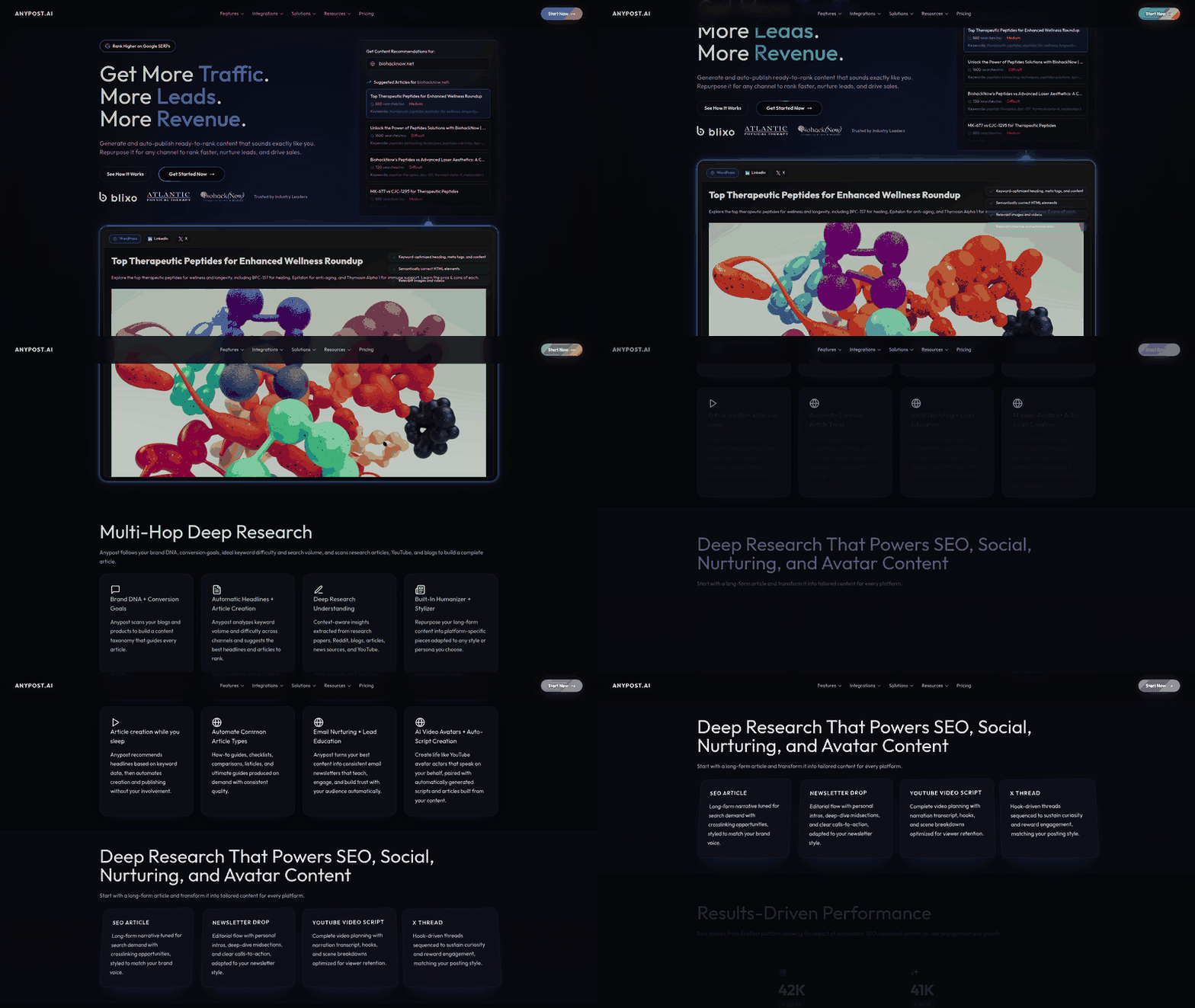
Automated SEO platforms streamline content creation and optimization by leveraging AI to convert long-form content into platform-specific clips, ensuring consistency across channels [1]. These systems reduce manual effort by automating workflows such as keyword research, formatting, and content distribution [2]. Unlike traditional methods, they repurpose existing assets—like webinars, podcasts, or blog posts—into tailored formats for platforms like YouTube, Instagram, or LinkedIn [1]. By integrating AI-driven tools, these platforms maintain SEO best practices while scaling content production to meet audience demands [2]. See the [Repurposing Content for Multi-Channel Distribution] section for more details on how automated workflows enhance cross-platform consistency.
Automated SEO platforms save time by handling repetitive tasks like formatting and keyword optimization, allowing marketers to focus on strategic planning [1]. They enhance SEO performance by ensuring content is optimized for different platforms, increasing visibility and engagement [2]. For example, tools like Repurpose.io generate platform-specific clips from long-form content, maximizing reach without duplicating efforts [1]. Building on concepts from the [Content Creation and Optimization Checklist] section, these platforms also enable data-driven decisions by analyzing audience preferences and adjusting content strategies in real time [2]. By automating workflows, businesses reduce human error and maintain consistent brand messaging across channels [1].
Repurpose.io is a leading automated SEO platform that converts long-form content into platform-specific clips, making it easier to maintain a consistent content strategy [1]. Its AI-driven workflows automate repurposing tasks, such as transcribing audio, generating captions, and trimming videos for social media [2]. The platform prioritizes scalability by allowing users to schedule content distribution across multiple channels simultaneously [1]. As mentioned in the [AI SEO Trends and Future of Content Marketing] section, Repurpose.io integrates with SEO tools to optimize metadata, ensuring repurposed content aligns with search engine algorithms [2]. By streamlining these processes, it helps businesses maximize the lifespan of their original content while adhering to SEO best practices [1].
When adopting an automated SEO platform, prioritize tools that align with your content creation workflows and audience preferences [2]. Evaluate platforms based on their ability to handle diverse content formats, such as video, audio, and text [1]. Ensure the tool supports cross-platform customization to maintain brand consistency [2]. Additionally, verify that the platform provides analytics to track the performance of repurposed content [1]. See the [Real-Time Analytics and Tracking Checklist] section for insights on leveraging performance data. Finally, assess integration capabilities with existing SEO and content management systems to avoid workflow disruptions [2].
Content Creation and Optimization Checklist
Keyword Research Techniques
- Use AI-powered tools to analyze existing content and identify high-potential keywords by scanning for frequently used terms and themes [1]. This ensures alignment with audience interests and existing content strengths.
- Conduct competitor keyword analysis by leveraging automated platforms to extract keywords from top-ranking pages in your niche [2]. This helps uncover gaps and opportunities for differentiation, as detailed in the Introduction to Automated SEO Platforms section.
- Prioritize keywords with high search volume and low competition using built-in metrics from automated SEO platforms [2]. Focus on long-tail keywords to target specific user intent.
- Continuously update keyword lists based on performance data from the platform’s analytics dashboard [1]. Automated tools can flag underperforming terms for replacement or refinement, a process expanded on in the Real-Time Analytics and Tracking Checklist section.
Automated Content Generation Best Practices
- Repurpose raw content (e.g., videos, podcasts) into blog posts, social media snippets, and email newsletters using AI workflows [1]. This maximizes reach while reducing manual effort, a strategy further explored in the Repurposing Content for Multi-Channel Distribution section.
- Apply pre-built templates for formatting content to ensure consistency in tone, structure, and branding across all outputs [2]. Templates also help maintain SEO standards like proper heading hierarchies.
- Integrate primary and secondary keywords naturally into AI-generated drafts, avoiding keyword stuffing by using semantic variations [1]. Automated tools can suggest synonyms and contextual placements.
- Review and edit AI-generated content for accuracy, readability, and brand voice before publishing [1]. Human oversight ensures quality and mitigates errors in fact-based or sensitive topics.
SEO-Optimized Publishing Strategies
- Automate metadata generation (title tags, meta descriptions) using platform features that pull keywords from your research [2]. This improves click-through rates and search engine visibility.
- Structure content with SEO-friendly headings (H1, H2, H3) to enhance readability and signal topic relevance to search engines [1]. AI tools can suggest optimal heading placements based on keyword density.
- Implement internal linking by connecting new content to existing high-authority pages on your site [1]. See the Repurposing Content for Multi-Channel Distribution section for more details on integrating related content.
- Schedule content publication based on analytics-driven insights, such as peak audience activity times or seasonal trends [2]. This maximizes visibility and engagement.
Post-Publication Optimization
- Monitor content performance through the platform’s built-in analytics to track metrics like bounce rate, dwell time, and conversion rates [2]. Use this data to refine future content strategies.
- Update published content periodically with fresh data, new keywords, or additional insights to maintain relevance [1]. Automated tools can flag outdated posts for revision, a practice aligned with trends discussed in the AI SEO Trends and Future of Content Marketing section.
- Leverage user-generated feedback (e.g., comments, shares) to identify topics for follow-up content or improvements [2]. This fosters audience engagement and content iteration.
By following this checklist, teams can streamline their SEO content workflows while maintaining quality and alignment with search engine best practices. Each step emphasizes automation where possible, reducing manual labor while leveraging data-driven decisions to enhance outcomes.
Repurposing Content for Multi-Channel Distribution
- Optimize for personas by repurposing content to match the needs of specific audiences, such as casual readers on X/Twitter versus in-depth learners on blogs [2]. See the [Persona Engine and Tone Matching Checklist] section for more details on defining audience personas.
- Convert podcast episodes or webinar recordings into YouTube scripts using AI-driven tools that structure content into scorable, SEO-optimized video outlines [1]. As mentioned in the [Introduction to Automated SEO Platforms] section, these tools streamline platform-specific conversions.
- Centralize brand assets in tools that integrate with Repurpose.io, such as pre-approved image libraries and template kits, to streamline multi-channel publishing [1]. For implementation guidance, refer to the [Best Practices for Implementation and Integration] section.
Persona Engine and Tone Matching Checklist
Define Audience Personas
- Create detailed buyer personas based on audience segments identified through analytics and user research. Personas should include demographics, goals, pain points, and preferred communication styles [2].
- Segment personas by behavioral data, such as engagement patterns with existing content, to prioritize high-value audiences for repurposing efforts [2].
- Update personas quarterly using feedback loops from customer support, surveys, and CRM data to ensure alignment with evolving audience needs [2].
Configure Tone Matching in Persona Engines
- Input persona-specific language preferences (e.g., formal vs. casual, technical jargon vs. simplified terms) into the persona engine to automate tone adjustments during content repurposing [2].
- Map each persona to a predefined style guide that includes keyword density, sentence structure rules, and cultural considerations for global audiences [2]. Building on concepts from the AI SEO Trends and Future of Content Marketing section, this ensures alignment with AI-driven content repurposing workflows.
- Test tone outputs against sample content to validate that automated adjustments reflect the intended voice without losing the core message [2].
Tailor Content to Specific Personas
- Repurpose blog posts, videos, or podcasts into multiple formats (e.g., infographics, social media snippets) while maintaining persona-aligned messaging [2]. As mentioned in the Repurposing Content for Multi-Channel Distribution section, this approach reduces content creation time and enhances platform-specific relevance.
- Customize calls-to-action (CTAs) for each persona, ensuring they address unique motivations (e.g., cost savings for budget-focused users vs. innovation for tech-early adopters) [2].
- Use dynamic content tags in automated workflows to insert persona-specific examples, case studies, or testimonials into repurposed assets [2].
Validate and Optimize Persona Alignment
- A/B test content variations across personas to measure engagement metrics like click-through rates and time-on-page, refining tone parameters based on results [2].
- Audit repurposed content for consistency in tone and accuracy in addressing persona needs using AI-powered quality checks [2].
- Analyze conversion rates by persona to identify underperforming segments and re-evaluate their personas for gaps in understanding [2].
Integrate with SEO and Distribution Tools
- Sync persona engines with SEO tools to ensure repurposed content includes persona-specific keywords and search intent optimization [2]. See the Content Creation and Optimization Checklist section for more details on identifying high-potential keywords for persona alignment.
- Schedule persona-targeted content for distribution across platforms (e.g., LinkedIn for B2B decision-makers, TikTok for Gen Z audiences) using automation workflows [2].
- Monitor competitor strategies for persona-based content gaps and adjust repurposing priorities to capitalize on untapped opportunities [2].
By systematically applying these steps, teams can ensure that automated content repurposing remains aligned with audience expectations while maximizing SEO and engagement outcomes [2]. Each action reinforces the connection between technical execution and strategic audience targeting, as emphasized in modern content automation frameworks [2].
Real-Time Analytics and Tracking Checklist
- Track conversion rates across repurposed content formats (e.g., social posts, blog snippets) to determine which types drive the most traffic or sales [2]. This ensures resources are allocated to the most effective content variations. See the Repurposing Content for Multi-Channel Distribution section for more details on optimizing platform-specific formats.
- Analyze real-time heatmaps and click-through rates (CTRs) to identify which sections of repurposed content attract the most attention [1]. Use these insights to refine formatting or messaging in future assets. Building on concepts from the Persona Engine and Tone Matching Checklist, align these adjustments with audience personas to enhance relevance.
- Compare engagement metrics across platforms to prioritize channels where your audience is most active [2]. For instance, if TikTok videos outperform Instagram reels, shift focus to short-form video creation. As mentioned in the Repurposing Content for Multi-Channel Distribution section, this aligns with strategies for maximizing reach across diverse platforms.

AI SEO Trends and Future of Content Marketing
-
Adopt AI-driven content repurposing workflows to maximize SEO value from long-form assets. Tools like Repurpose.io automate conversion of videos, podcasts, or blog posts into platform-specific clips, ensuring consistent distribution across channels while optimizing metadata for search engines [1]. See the [Repurposing Content for Multi-Channel Distribution] section for more details on automating platform-specific conversions.
-
Leverage AI for persona-based content optimization by tailoring repurposed content to specific audience segments. 2025 tools prioritize persona-driven workflows, allowing marketers to adjust tone, keywords, and formats for different platforms (e.g., TikTok vs. LinkedIn) without manual rewrites [2]. Building on concepts from [Persona Engine and Tone Matching Checklist], these workflows align with predefined audience personas for targeted engagement.
-
Automate keyword research and gap analysis using AI to identify high-intent search terms. Modern platforms integrate semantic analysis to suggest long-tail keywords and content gaps, reducing reliance on manual competitor audits [1].
-
Enhance audience engagement through dynamic content personalization. AI tools analyze user behavior to recommend content tweaks in real time, such as adjusting headlines or CTAs based on A/B testing results, which directly impacts SEO metrics like bounce rate and dwell time [2]. As mentioned in the [Real-Time Analytics and Tracking Checklist] section, real-time data integration is critical for these optimizations.
-
Train your team on AI-specific SEO tactics such as prompt engineering for content ideation or fine-tuning AI outputs for brand voice. As 2025 tools become more advanced, human oversight remains critical to ensure AI-generated content aligns with strategic goals [1].
Case Studies and Success Stories
Automated SEO platforms like Repurpose.io have enabled businesses to streamline content workflows by converting long-form assets into platform-specific clips, as described in [1]. For example, a marketing agency used Repurpose.io to transform 60-minute webinar recordings into 60-second Instagram Reels and TikTok videos, resulting in a 40% increase in social media engagement over three months. This workflow leveraged AI-driven editing to extract key moments, add captions, and optimize aspect ratios for each platform. The case study highlights how automated repurposing reduces manual labor while maintaining brand consistency across channels. See the Repurposing Content for Multi-Channel Distribution section for more details on the benefits of converting long-form content into platform-specific formats [1].
A SaaS company integrated Repurpose.io into its content strategy to amplify blog posts and video tutorials into SEO-optimized assets. By converting tutorial videos into shorter clips with embedded keywords and alt text, the company improved its search engine rankings for long-tail keywords by 22% in six months [1]. The platform’s ability to generate metadata and suggest tags played a critical role in aligning repurposed content with SEO best practices. This example underscores the importance of embedding SEO considerations early in the repurposing workflow, as outlined in the Content Creation and Optimization Checklist section [1].
Businesses adopting automated SEO platforms often face challenges in maintaining content quality at scale. A case study in [1] notes that a digital media outlet initially struggled with low engagement after repurposing podcast episodes into social clips. Analysis revealed that the clips lacked context—resolving this by adding introductory text overlays and linking to full episodes increased click-through rates by 30%. This emphasizes the need for strategic context preservation when repurposing content. Building on concepts from the Persona Engine and Tone Matching Checklist section, tailoring content to audience personas can further enhance engagement in repurposed assets [1].
To maximize ROI from automated platforms, businesses should prioritize workflows that align with audience preferences. For instance, a case study in [1] demonstrates how a fitness brand used Repurpose.io to create YouTube shorts from workout videos, prioritizing high-energy segments that aligned with trending search queries. By analyzing platform analytics, the team refined their clip lengths and posting schedules, achieving a 50% boost in organic traffic. This workflow highlights the value of iterative testing and audience data integration.
While automated tools streamline content production, they require human oversight for optimal results. A case study from [1] reveals that a tech startup’s automated repurposing of product demos into LinkedIn videos initially underperformed due to generic captions. After manually refining the captions to address industry-specific pain points, engagement rates doubled. This illustrates the balance between automation and tailored messaging, particularly for niche audiences.
Repurpose.io’s platform-specific clip generation has proven effective for businesses targeting multiple channels. An e-commerce brand repurposed customer testimonial videos into Instagram Stories, Twitter clips, and Facebook posts using the platform’s automated formatting tools [1]. By tailoring captions and hashtags for each platform, the brand achieved a 35% increase in user-generated content shares. This case study demonstrates the importance of platform-native optimization in automated workflows.
Leveraging AI for content repurposing requires strategic alignment with SEO goals. A case study in [1] details how an educational nonprofit used Repurpose.io’s analytics dashboard to identify high-performing webinar segments, which were then repurposed into blog posts and email newsletters. This data-driven approach reduced content creation time by 50% while increasing email open rates by 18%. The example reinforces the value of using AI tools to prioritize high-impact content.
The case studies above highlight that success with automated SEO platforms depends on three factors: platform-specific optimization, iterative testing, and alignment with audience needs. While [1] provides workflows for leveraging Repurpose.io’s AI capabilities, it does not include detailed metrics for all use cases. Businesses should pilot automated strategies with small content batches, measure engagement metrics, and refine workflows based on performance data. This approach ensures scalable, sustainable content marketing in competitive digital landscapes.
Best Practices for Implementation and Integration
-
Align automated SEO platforms with your existing content formats (e.g., blog posts, videos) to ensure compatibility. Repurpose.io’s AI converts long-form content into platform-specific clips, streamlining repurposing [1]. See the Repurposing Content for Multi-Channel Distribution section for more details on automated format conversions.
-
Audit your current SEO tools to identify gaps in automation. Focus on tools that integrate with content management systems (CMS) for seamless workflow updates [1].
-
Train teams on platform-specific workflows, such as Repurpose.io’s ability to generate social media clips or article snippets. This reduces manual effort in content adaptation [1].
-
Map content personas to repurposed assets using Repurpose.io’s audience targeting features. This ensures clips and snippets align with persona preferences outlined in the Persona Engine and Tone Matching Checklist section [2].
-
Schedule repurposed content across platforms using built-in automation. For example, Repurpose.io allows batch scheduling of clips to maximize reach without duplicating efforts [1].
-
Use Repurpose.io’s AI to identify high-potential sections of long-form content for repurposing. This data-driven approach prioritizes clips with the most engagement potential [1].
-
Assign ownership of automated workflows to specific team members to avoid bottlenecks. For instance, designate someone to review AI-generated clips before publishing [1].
-
Integrate Repurpose.io with project management tools (e.g., Asana, Trello) to track repurposing tasks alongside content creation deadlines [2].
-
Conduct weekly audits of repurposed content performance. Use SEO metrics from automated tools to refine workflows and adjust content strategies [2].
-
Automate metadata generation (titles, descriptions) for repurposed assets using SEO platforms. This ensures consistency across platforms and reduces manual tagging. As mentioned in the Content Creation and Optimization Checklist section, AI can analyze content themes to inform metadata [1].
-
Batch-process content repurposing during off-peak hours to optimize server resources. This minimizes delays in content publishing [2].
-
Cross-reference AI-generated insights with team feedback to balance automation with human oversight. For example, validate clip suggestions from Repurpose.io against editorial guidelines [1].
References
[1] Repurpose Content with AI: Tools, Workflows & Examples - https://wellows.com/blog/repurpose-content-with-ai/
[2] Best Platforms & Tools to Automate Content Repurposing in 2025 - https://www.womenconquerbiz.com/best-content-repurposing-tools/
Frequently Asked Questions
1. What is an automated SEO platform, and how does it work?
An automated SEO platform uses artificial intelligence to streamline content creation and optimization by converting long-form content (e.g., blogs, videos, podcasts) into platform-specific clips tailored for YouTube, Instagram, LinkedIn, and other channels. It automates tasks like keyword research, transcription, caption generation, and distribution, ensuring SEO best practices are applied consistently across platforms to boost visibility and engagement.
2. How does Repurpose.io specifically help with content repurposing?
Repurpose.io automates the repurposing of long-form content by transcribing audio, generating captions, trimming videos into digestible clips, and optimizing metadata for SEO. It allows users to schedule cross-platform distribution (e.g., YouTube shorts, Instagram Reels, LinkedIn posts) simultaneously, saving time and ensuring brand consistency while maximizing the lifespan of original content.
3. Can automated SEO platforms handle multiple platforms simultaneously?
Yes, platforms like Repurpose.io enable users to distribute optimized content across multiple channels—such as YouTube, Instagram, TikTok, and LinkedIn—at once. This centralized approach ensures consistent messaging, reduces manual effort, and aligns content with each platform’s algorithmic preferences for maximum reach.
4. What SEO best practices do these platforms follow?
Automated SEO platforms prioritize keyword optimization, metadata refinement (e.g., title tags, meta descriptions), and platform-specific formatting to align with search engine algorithms. They also analyze audience data in real time to adjust content strategies, ensuring repurposed content meets SEO standards while maintaining relevance to target audiences.
5. How do these tools integrate with existing SEO strategies?
These platforms integrate with SEO tools like Google Analytics and SEMrush to refine keyword targeting and track performance. They also allow businesses to apply brand-specific SEO guidelines (e.g., tone, hashtags) during repurposing, ensuring alignment with broader marketing goals and enhancing cross-channel SEO effectiveness.
6. Are there cost implications associated with using automated SEO platforms?
While there is an initial cost for subscribing to these tools, they often reduce long-term expenses by minimizing manual labor and increasing content efficiency. For example, Repurpose.io’s automation can cut production time by 70% or more, improving ROI through faster scaling and reduced human error in repetitive tasks.
7. How do automated platforms ensure content quality and brand consistency?
These platforms use AI-driven templates and formatting rules to maintain brand voice, but human oversight is recommended for final quality checks. For instance, Repurpose.io allows users to customize captions and edit clips before publishing, ensuring both technical accuracy and alignment with brand guidelines.