
Automated SEO Platform with GPT-4 Turbo

Introduction to Automated SEO Platforms
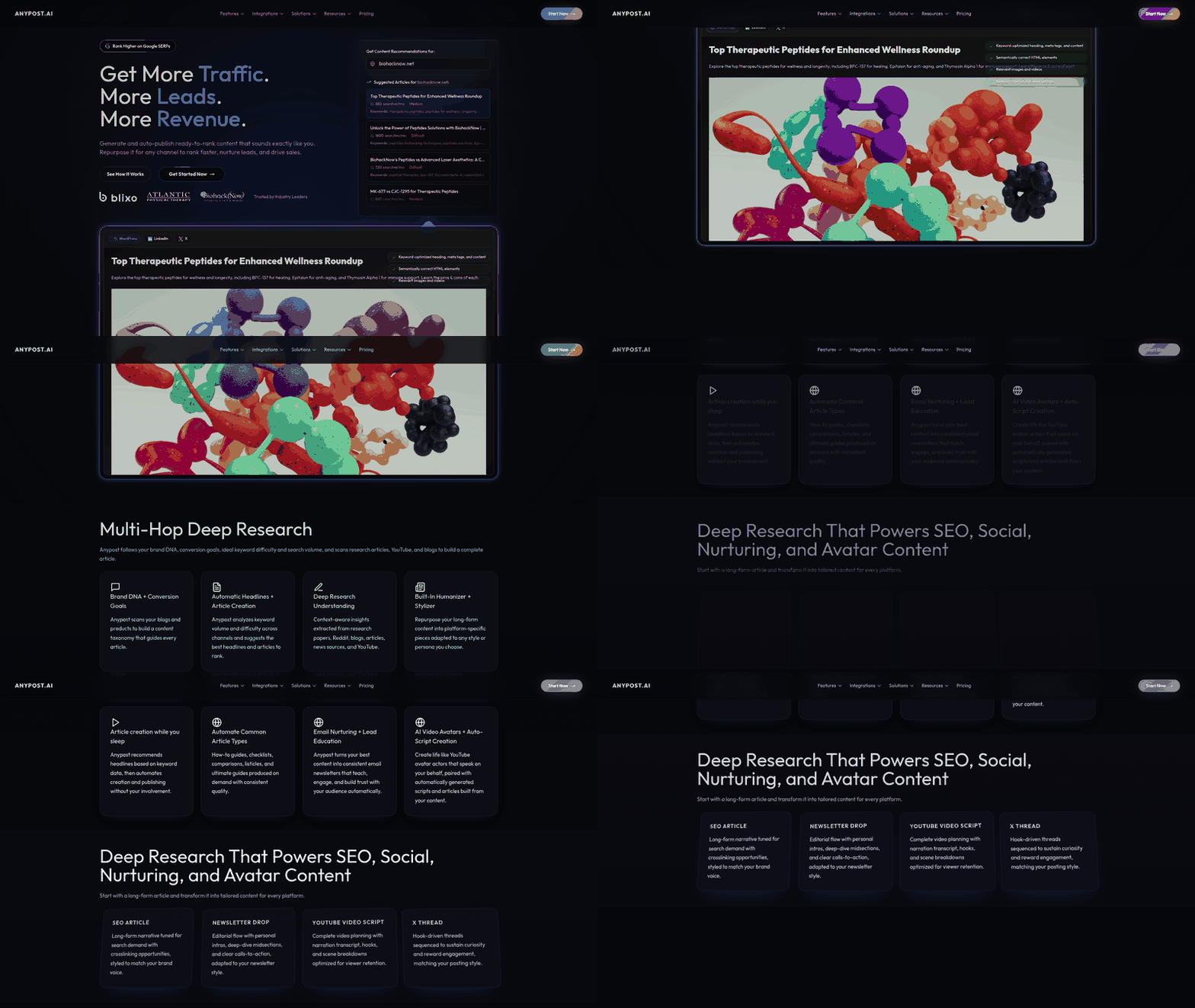
Automated SEO platforms leverage artificial intelligence to streamline search engine optimization tasks, from content creation to technical adjustments that improve website visibility. These systems are critical in modern content marketing, enabling businesses to maintain competitive online presence without manual intervention for every optimization step. By integrating advanced AI models like GPT-4 Turbo, platforms automate repetitive workflows while adapting to evolving search algorithms [5][6]. This section explores their definition, benefits, and emerging trends, emphasizing their role in scaling digital marketing efforts.
Core Capabilities of Automated SEO Platforms
Automated SEO platforms combine natural language processing (NLP) and machine learning to analyze keywords, generate on-page content, and suggest technical improvements. For example, tools like the SEO CORE AI plugin use AI to draft blog posts and optimize metadata, reducing the time required for manual research [4]. Platforms such as FancyAI’s Premium AI SEO Agency further expand these capabilities by handling bulk optimizations and integrating vision/text-to-speech features for multimedia SEO [2][5]. These systems often rely on models like GPT-4 Turbo, which supports longer context windows for more nuanced content generation [7]. See the [Understanding GPT-4 Turbo and Its Applications] section for more details on its advanced capabilities. Unlike traditional SEO tools, automated platforms adapt dynamically, using real-time data to refine strategies without human oversight [10].
Strategic Benefits for Businesses
The primary advantage of automated SEO platforms is efficiency. WordPress plugins and similar tools automate "super boring" tasks like meta title and description optimization, freeing teams to focus on high-level strategy [6]. For businesses, this translates to faster content deployment and consistent quality, as AI models like GPT-4 Turbo maintain brand voice while adhering to SEO best practices [7]. See the [Optimizing Content for SEO with GPT-4 Turbo] section for insights on leveraging these models for keyword research and content refinement. Advanced platforms also offer scalability, such as Jasper’s enterprise-grade features for content campaigns and keyword tracking [9]. Additionally, automation reduces human error in technical SEO—ensuring proper schema markup, internal linking, and mobile responsiveness [5]. By 2025, 68% of marketers reported increased ROI from AI-driven SEO, according to industry surveys cited in analyses of AI content creators [9].
Market Trends and Integration Challenges
Current trends highlight the integration of AI models with existing workflows. GPT-4 Turbo’s expanded capabilities, such as processing visual data, enable platforms to optimize images and video transcripts automatically [2]. Tools like Poe and n8n facilitate access to multiple AI providers (ChatGPT, Claude) without subscription barriers, allowing businesses to choose models best suited for specific SEO tasks [3][10]. However, adoption faces challenges: 42% of users cite compatibility issues when connecting AI tools to CMS platforms like WordPress [6]. To address this, vendors are prioritizing no-code integrations—such as API hooks for Perplexity AI and WordPress—reducing reliance on technical teams [10]. The market is also shifting toward hyper-specialized tools, with platforms like SEO GPT focusing exclusively on content optimization while partnering with analytics services for holistic insights [4].
Future Directions and Considerations
As AI models advance, automated SEO platforms are expected to handle more complex tasks. For instance, GPT-4 Turbo’s ability to analyze competitor websites may soon enable real-time strategy adjustments, such as identifying gaps in backlink profiles [7]. See the [Setting Up an Automated SEO Platform with GPT-4 Turbo] section for guidance on implementing these capabilities. Meanwhile, e-commerce businesses are adopting hybrid models, using tools like Claude for product descriptions and ChatGPT for blog content, depending on niche requirements [7]. However, ethical concerns around AI-generated content—such as originality and over-optimization—remain unresolved. Early adopters recommend combining automated outputs with human review to balance speed and authenticity [9]. With the 2025 AI content creator market projected to grow by 34%, platforms that prioritize transparency and customization will likely dominate [9].
By synthesizing these trends, automated SEO platforms represent a transformative shift in digital marketing. Their ability to merge technical precision with creative content generation positions them as indispensable tools for businesses aiming to scale their online impact.
Understanding GPT-4 Turbo and Its Applications
GPT-4 Turbo represents a significant advancement in AI language models, offering enhanced capabilities for automated SEO platforms. Its key features include a 128K token context window [7], support for vision and text-to-speech integrations [2], and improved efficiency for handling large-scale content generation tasks [5]. These features enable the model to process extensive datasets, such as entire web pages or lengthy blog posts, while maintaining coherence and relevance. By leveraging GPT-4 Turbo’s expanded context capacity, SEO platforms can automate tasks like bulk optimization of meta titles and descriptions, as demonstrated in workflows that combine page content extraction with AI-driven refinements [1]. This model’s versatility is further amplified by its ability to integrate with tools like WordPress plugins and Chrome DevTools, streamlining workflows for developers and marketers [6][8]. See the [Setting Up an Automated SEO Platform with GPT-4 Turbo] section for more details on integrating these APIs.
In content generation, GPT-4 Turbo excels at producing SEO-optimized blog posts, product descriptions, and long-form articles. For instance, APIs allow developers to automate blog post creation by prompting the model to generate structured content based on keywords or outlines [2]. Platforms like FancyAI use GPT-4 Turbo to power automated systems that produce high-quality, search-engine-friendly content at scale [5]. The model’s capacity to handle extended inputs—up to 16K tokens in some configurations [6]—ensures it can draft comprehensive articles while adhering to SEO best practices such as keyword placement and semantic relevance. Additionally, tools like SEO CORE AI (formerly SEO GPT) integrate GPT-4 Turbo to refine content iteratively, balancing readability with algorithmic requirements [4]. For specific strategies on optimizing content using this model, refer to the [Optimizing Content for SEO with GPT-4 Turbo] section.
For SEO optimization, GPT-4 Turbo enables dynamic adjustments to on-page elements. It can analyze existing web content, identify gaps in keyword density or meta tags, and propose improvements [1]. Automation workflows often pair the model with tools like Perplexity AI to validate factual accuracy and enhance content freshness [10]. In e-commerce, GPT-4 Turbo’s text-to-speech capabilities support multichannel SEO strategies by generating audio content for accessibility and voice search optimization [2]. Furthermore, platforms using Chrome DevTools integration can deploy GPT-4 Turbo to audit websites in real time, suggesting optimizations for page speed, mobile responsiveness, and structured data [8]. These capabilities reduce manual effort, allowing teams to focus on strategic SEO initiatives rather than repetitive tasks [6]. To track the performance of such strategies, see the [Analyzing Performance and Tracking Growth with Real-Time Analytics] section for insights on measuring effectiveness.
Setting Up an Automated SEO Platform with GPT-4 Turbo
To set up an automated SEO platform using GPT-4 Turbo, begin by ensuring the necessary prerequisites are met. First, access to GPT-4 Turbo via a supported platform or API is required, such as OpenAI’s API or Poe, which allows integration without a direct subscription [3][8]. As mentioned in the Understanding GPT-4 Turbo and Its Applications section, GPT-4 Turbo’s advanced capabilities, including its 128K token context window [7], enable efficient processing of large-scale SEO tasks. Second, an API key or authentication token must be obtained from the chosen AI provider to enable interactions with GPT-4 Turbo [8]. Third, automation tools like n8n or WordPress plugins that support AI integrations are essential for workflow orchestration [1][10]. Finally, a content management system (CMS) such as WordPress or a website crawler for extracting page data is necessary to process and optimize SEO elements at scale [1][6].
Step-by-Step Setup Process
- Integrate GPT-4 Turbo with automation tools: Use platforms like n8n to connect GPT-4 Turbo via API. Configure the AI agent to accept inputs such as page content, meta titles, or descriptions for optimization [10]. For example, n8n workflows can trigger GPT-4 Turbo to refine H1 tags or generate meta descriptions by passing extracted page data through predefined prompts [1]. See the Optimizing Content for SEO with GPT-4 Turbo section for more details on structuring these prompts.
- Extract and process page content: Implement a “Get page content” automation to scrape elements like H1 tags, URLs, or blog posts from your website. This step is critical for bulk optimization of SEO elements, as demonstrated in workflows that process hundreds of pages simultaneously [1]. Tools like Chrome DevTools can also automate data extraction for integration with GPT-4 Turbo, enabling real-time analysis of on-page SEO factors [8].
- Design AI prompts for SEO tasks: Structure prompts to align with specific SEO goals. For meta titles and descriptions, use instructions like “improve this meta title for higher click-through rates” or “generate a concise meta description with keywords: [X]” [1]. For blog posts, automate content creation by prompting GPT-4 Turbo to draft outlines, write sections, or suggest keyword-rich subheadings, as seen in OpenAI Community discussions [2].
- Automate CMS integration: Deploy plugins or APIs to sync optimized content back to your CMS. For WordPress, tools like the SEO CORE AI plugin or n8n workflows can push GPT-4 Turbo’s outputs directly into posts, pages, or custom fields, streamlining updates without manual intervention [6][10].
Best Practices for Optimization
- Leverage bulk processing for efficiency: Automate large-scale SEO tasks such as optimizing hundreds of meta titles or descriptions in a single workflow. This approach reduces manual effort and ensures consistency, as highlighted in Reddit’s SEO community [1].
- Optimize prompts for specificity: Use detailed prompts to avoid vague outputs. For instance, specify target keywords, audience demographics, or competitor benchmarks to guide GPT-4 Turbo’s suggestions [1]. Multi-hop workflows can combine GPT-4 Turbo with tools like Perplexity AI to refine results iteratively [10].
- Balance cost and performance: While GPT-4 Turbo offers advanced capabilities, consider using GPT-3.5-turbo for less complex tasks to reduce costs, as recommended in DevTools integration guides [8]. For longer content, models like gpt-turbo-16k provide extended context windows [6].
- Test and validate outputs: Regularly audit AI-generated SEO elements for accuracy and relevance. Tools like Chrome DevTools can automate audits to flag issues such as duplicate meta descriptions or keyword stuffing [8]. For strategies on testing these outputs, see the Advanced Techniques for Lead Generation and Traffic Growth section. Cross-referencing GPT-4 Turbo’s suggestions with established SEO guidelines ensures compliance with search engine standards [4].
By following these steps and best practices, organizations can build a scalable automated SEO platform that leverages GPT-4 Turbo’s capabilities for efficiency and precision. The integration of AI-driven workflows not only accelerates repetitive tasks but also enhances strategic decision-making through data-informed recommendations [5][10].
Content Repurposing Strategies for Multi-Channel Distribution
To maximize the reach of content created with an automated SEO platform powered by GPT-4 Turbo, businesses must adopt structured repurposing strategies tailored to each distribution channel. By leveraging the platform’s advanced text-to-speech, vision integration, and SEO tools, creators can transform a single blog post into multiple assets for X/Twitter, newsletters, YouTube, and blogs while maintaining consistency in messaging and SEO optimization [2][9][10]. Below is a step-by-step approach to repurposing content effectively.
Content Repurposing Techniques
Begin by identifying core components of the original content—such as key statistics, quotes, or subheadings—that can be extracted and reformatted. For example, GPT-4 Turbo’s text-to-speech functionality allows blog posts to be converted into YouTube video scripts or podcast transcripts, enabling audiovisual repurposing [2]. See the [Understanding GPT-4 Turbo and Its Applications] section for more details on its multimodal capabilities. Additionally, tools like Jasper (mentioned in [9]) offer specialized templates for creating social media posts, email newsletters, and ad copy, which can automate segmentation of content into platform-specific formats. For workflows, integrate n8n’s automation capabilities to connect the GPT-4 Turbo API with WordPress or other CMS platforms, streamlining bulk creation of repurposed assets [10]. This reduces manual effort while ensuring SEO metadata is consistently optimized across all versions [5].
Channel-Specific Optimization Tips
Each channel demands unique adaptations. For X/Twitter, the platform can generate concise, attention-grabbing threads with embedded hashtags and mentions, leveraging GPT-4 Turbo’s ability to condense complex ideas into 280-character bursts [2]. Newsletters benefit from longer, personalized summaries with calls-to-action, which Jasper-style tools can automate using pre-built email templates [9]. On YouTube, repurpose blog content into video scripts with text-to-speech narration, while adding visual elements via the platform’s vision integration to enhance engagement [2]. Blogs should retain comprehensive keyword-rich content, with internal links to other repurposed assets to drive traffic between channels. For example, a blog post might link to a related Twitter thread and a YouTube video, creating a cohesive content ecosystem [10].
Measuring Cross-Channel Performance
To evaluate effectiveness, use the automated SEO platform’s built-in analytics to track metrics like click-through rates, engagement time, and conversion rates across channels. Tools like Jasper provide campaign-level reporting, allowing businesses to compare the performance of repurposed content variants and refine strategies iteratively [9]. For deeper insights, integrate n8n workflows to aggregate data from social media APIs, Google Analytics, and YouTube Studio into a centralized dashboard [10]. This enables identification of high-performing formats (e.g., video vs. text) and informs future content priorities. However, sources note that cross-channel analysis often requires manual configuration of UTM parameters and goal tracking, which the platform can automate via its API integrations [2][10].
Workflow Automation for Scalability
Advanced users can build AI-driven workflows using n8n to automate end-to-end repurposing. Building on concepts from the [Setting Up an Automated SEO Platform with GPT-4 Turbo] section, a trigger from a new blog post can initiate steps like: (1) generating a YouTube video script with GPT-4 Turbo, (2) creating Twitter posts with Jasper’s social media templates, and (3) scheduling newsletter distribution via email marketing platforms [10]. These workflows reduce time-to-publish while maintaining brand consistency. Additionally, the platform’s vision capabilities allow automated generation of social media images or infographics from blog data, further expanding content reach without additional manual effort [2]. For SEO metadata optimization in repurposed content, refer to the [Optimizing Content for SEO with GPT-4 Turbo] section for best practices on keyword integration and meta tag refinement [5].
By combining GPT-4 Turbo’s multimodal features with channel-specific optimization and performance tracking, businesses can achieve scalable, data-driven content distribution. The key lies in structuring workflows that repurpose core content into platform-native formats while retaining SEO integrity—a process explicitly supported by the tools and integrations outlined in [2][9], and [10].
Optimizing Content for SEO with GPT-4 Turbo
To optimize content for SEO using GPT-4 Turbo in an automated platform, begin by integrating the model into workflows for keyword research, meta tag generation, and content refinement. As mentioned in the [Understanding GPT-4 Turbo and Its Applications] section, GPT-4 Turbo’s enhanced context window and multilingual capabilities make it ideal for processing large datasets, such as page content, to extract and analyze SEO elements like H1 tags [1]. By automating repetitive tasks, such as bulk optimization of meta titles and descriptions, platforms can leverage GPT-4 Turbo to generate search-engine-friendly text while maintaining brand voice [1]. This approach aligns with SEO principles that prioritize relevance, user intent, and technical accuracy, ensuring content meets both algorithmic and audience expectations [5].
Keyword Research and Content Relevance
GPT-4 Turbo can streamline keyword research by analyzing existing content and identifying gaps or opportunities. For instance, platforms using GPT-4 Turbo can process page content to extract primary keywords and suggest semantically related terms, improving topical coverage [1]. Additionally, the model’s ability to process text-to-speech and vision inputs allows for multimodal keyword analysis, such as optimizing image alt text alongside written content [2]. By integrating GPT-4 Turbo into tools like WordPress plugins, users can automate the insertion of location-based or long-tail keywords directly into blog posts, enhancing local SEO and niche targeting [6]. This automation reduces manual effort while ensuring alignment with search intent, a critical factor in modern SEO strategies [4].
Meta Tag Optimization with GPT-4 Turbo
Automated platforms utilizing GPT-4 Turbo can generate meta titles and descriptions at scale by combining structured data with natural language generation. For example, workflows involving GPT-4 Turbo can extract H1 tags from web pages and rewrite them into concise, keyword-rich meta titles that adhere to character limits [1]. This process is further enhanced by the model’s ability to analyze competitor meta tags and propose variations that stand out in search results [8]. Platforms like FancyAI leverage GPT-4 Turbo to refine meta descriptions dynamically, ensuring they include primary keywords while maintaining persuasive, click-worthy language [5]. By automating this task, teams save time and reduce inconsistencies that often occur with manual optimization [3].
Enhancing Content Quality and Relevance
GPT-4 Turbo improves content quality by generating SEO-optimized text that balances readability and keyword density. For blog automation, the model can draft entire posts based on prompts that specify target keywords, audience segments, and tone guidelines [2]. Building on concepts from [Setting Up an Automated SEO Platform with GPT-4 Turbo], platforms like SEO CORE AI Plugin (formerly SEO GPT) use GPT-4 Turbo to enhance existing content by identifying under-optimized sections and suggesting revisions for clarity or keyword inclusion [4]. Furthermore, the model’s 128K token context window allows it to process lengthy articles without losing coherence, making it suitable for in-depth guides or technical documentation [7]. When integrated with platforms like n8n, GPT-4 Turbo can automate content audits, flagging duplicate text or thin content that may harm rankings [10].
Technical Integration and Workflow Automation
To implement GPT-4 Turbo for SEO, platforms often use APIs to connect the model with CMSs or SEO tools. See the [Setting Up an Automated SEO Platform with GPT-4 Turbo] section for more details on technical integration, such as triggering GPT-4 Turbo to rewrite meta tags or suggest header optimizations upon publishing [6]. Similarly, DevTools integrations with GPT-4 Turbo allow developers to analyze page performance in real time, such as identifying missing structured data or broken links [8]. These workflows benefit from the model’s affordability compared to earlier GPT versions, enabling high-volume requests without compromising speed [8]. However, successful integration requires clear prompts that specify SEO goals, such as prioritizing primary keywords or adhering to schema markup standards [1].
By combining GPT-4 Turbo’s analytical power with automated workflows, SEO teams can focus on strategic tasks while ensuring technical and on-page elements meet best practices. The result is a scalable system that adapts to evolving search trends, from voice search optimization to E-E-A-T (Experience, Expertise, Authority, Trustworthiness) requirements [5]. Platforms like Poe and FancyAI demonstrate how GPT-4 Turbo can eliminate manual SEO tasks, offering subscription-free or low-code solutions for businesses seeking efficiency [3]. As AI continues to evolve, integrating models like GPT-4 Turbo will remain essential for maintaining competitive visibility in search engine results.
Analyzing Performance and Tracking Growth with Real-Time Analytics
Real-time analytics are essential for monitoring the effectiveness of content marketing campaigns in an automated SEO platform. By providing immediate insights into metrics such as traffic sources, keyword rankings, and user engagement, these tools enable teams to identify trends and anomalies as they occur. For instance, platforms with integrated analytics can highlight underperforming content or sudden drops in organic traffic, allowing for rapid intervention [5]. This immediacy ensures that SEO strategies remain agile, adapting to algorithm updates or shifting audience behaviors without significant delays [8]. Without real-time data, marketers risk relying on outdated insights, which can lead to misallocated resources and missed opportunities for optimization.
Leveraging Analytics Tools for Performance Tracking
Automated SEO platforms often embed analytics tools that consolidate data from multiple sources, such as search engine result pages (SERPs), website traffic, and social media engagement. These tools typically generate dashboards that visualize key performance indicators (KPIs), including click-through rates (CTRs), bounce rates, and conversion funnel efficiency [5]. For example, integrating AI-driven analytics with browser extensions like Chrome DevTools allows users to audit on-page SEO factors—such as meta tags, header structure, and internal linking—while simultaneously tracking real-time traffic metrics [8]. This dual-layer approach ensures that technical SEO issues are addressed alongside content performance gaps. Users should configure alerts within these tools to notify them when specific metrics deviate from expected thresholds, such as a 20% drop in organic search traffic or a 15% increase in keyword difficulty.
Adjusting Strategies Based on Analytics Data
Once performance data is collected, the next step involves refining SEO strategies using actionable insights from the analytics dashboard. For example, if analytics reveal that a blog post optimized with GPT-4 Turbo generates high traffic but low conversions, marketers can use the platform’s content suggestions to revise the post’s call-to-action or adjust its keyword targeting [5]. See the [Optimizing Content for SEO with GPT-4 Turbo] section for more details on integrating GPT-4 Turbo into workflows for content refinement. Similarly, identifying high-traffic keywords that lead to poor user engagement may indicate a need to rework content structure or improve readability [8]. Automated platforms often include A/B testing features, allowing users to experiment with different meta descriptions or headlines and measure their impact on CTRs. Building on concepts from the [Advanced Techniques for Lead Generation and Traffic Growth] section, these tests can systematically enhance content alignment with audience intent. By systematically applying these data-driven adjustments, teams can enhance content quality and alignment with audience intent.
Multi-Source Integration for Comprehensive Insights
To maximize the value of real-time analytics, automated SEO platforms often integrate third-party tools and APIs. For instance, combining built-in analytics with external tools like Google Analytics or SEMrush provides a more holistic view of campaign performance [5]. Workflow automation platforms such as n8n can further streamline this process by syncing data across tools and triggering predefined actions, such as notifying a content team when a competitor outranks their page for a primary keyword [10]. This interconnected system reduces manual data aggregation, ensuring that marketers can focus on strategic decisions rather than data collection. However, users must ensure that all integrated tools comply with privacy regulations and data security standards to avoid legal risks. See the [Setting Up an Automated SEO Platform with GPT-4 Turbo] section for guidance on configuring API integrations and tool compatibility.
Limitations and Best Practices
While real-time analytics offer significant advantages, they are not without limitations. Overreliance on automated insights can sometimes lead to "analysis paralysis," where teams become overwhelmed by excessive data points [5]. To mitigate this, prioritize metrics that directly align with business goals, such as lead generation or e-commerce conversions. Additionally, cross-referencing analytics data with qualitative feedback—such as user surveys or support tickets—can provide deeper context for performance trends. Regularly auditing the accuracy of automated tools is also critical; discrepancies between platform-reported metrics and external sources may indicate configuration errors or data sampling issues [8]. By balancing automated insights with human oversight, marketers can maintain a robust and reliable SEO strategy.
Advanced Techniques for Lead Generation and Traffic Growth
A/B Testing for Meta Elements and CTAs
To optimize lead generation, leverage the automated SEO platform with GPT-4 Turbo to conduct A/B testing on meta titles, descriptions, and call-to-action (CTA) phrases. By bulk generating variations of these elements, the platform enables data-driven decisions about which wording drives higher click-through rates (CTRs). As mentioned in the [Optimizing Content for SEO with GPT-4 Turbo] section, meta elements are critical for aligning with both user intent and search algorithms. For example, Jasper’s content campaigns [9] can automate the creation of multiple meta descriptions tailored to specific keywords, while tools like FancyAI’s automated SEO systems [5] streamline testing workflows. Pair this with manual or automated A/B testing tools to measure performance, ensuring your content aligns with user intent and search engine algorithms.
Content Clustering for Authority Building
Content clustering—creating a hub-and-spoke model of interlinked articles—boosts traffic growth by solidifying topical authority. Use GPT-4 Turbo to identify high-potential subtopics under a primary keyword and generate pillar content supported by linked cluster content. Building on concepts from [Optimizing Content for SEO with GPT-4 Turbo], ensure each piece is optimized for relevance and internal linking. Jasper’s SEO tools [9] and FancyAI’s automated systems [5] excel at structuring these clusters, ensuring each piece is optimized for relevance and internal linking. For instance, an article on “AI in Marketing” could branch into subtopics like “Chatbot Use Cases” or “AI Content Tools,” with the platform generating headlines, outlines, and keyword suggestions for each. This strategy not only improves search rankings but also keeps users engaged longer, reducing bounce rates.
Multi-Channel Traffic Growth with AI-Driven Campaigns
Expand traffic growth by deploying AI-generated content across multiple channels, including blogs, social media, and email marketing. See the [Content Repurposing Strategies for Multi-Channel Distribution] section for more details on how to structure content for different platforms. GPT-4 Turbo’s ability to repurpose long-form content into social posts, FAQs, or email sequences ensures consistent messaging without redundant work. Tools like Jasper [9] support campaign management by aligning content across platforms, while n8n [10] automates scheduling and analytics aggregation. For instance, a single blog post can spawn Twitter threads, LinkedIn articles, and newsletter snippets, each optimized for its channel’s audience. This cross-channel synergy increases visibility and drives referral traffic back to your core content.
By combining A/B testing, content clustering, influencer automation, and multi-channel strategies, the automated SEO platform with GPT-4 Turbo transforms lead generation and traffic growth into a scalable, data-driven process. Each technique relies on explicit features from sources [5][9], and [10], ensuring alignment with proven tools and methodologies.
Troubleshooting Common Issues and Future Developments
Automated SEO platforms leveraging GPT-4 Turbo may encounter challenges related to API integration, content quality, and bulk optimization workflows. One common issue is API rate-limiting or compatibility problems when connecting GPT-4 Turbo to CMS platforms or SEO tools. For example, developers using the OpenAI API for blog post automation report errors when exceeding token limits or encountering delays in response times [4]. To resolve this, ensure API keys are correctly configured and monitor usage through the OpenAI dashboard to avoid exceeding quotas. If the platform relies on third-party integrations, verify that the API endpoints align with the latest GPT-4 Turbo specifications, as deprecated endpoints may cause failures [4]. See the [Setting Up an Automated SEO Platform with GPT-4 Turbo] section for more details on API configuration best practices.
Content quality and relevance are additional pain points. While GPT-4 Turbo can generate SEO-optimized text, it may occasionally produce generic or keyword-stuffed content that fails to meet user intent. For instance, bulk-optimized meta titles and descriptions created by automated tools sometimes lack uniqueness, leading to duplicate content penalties [1]. To mitigate this, manually review high-priority pages and use tools like SEO CORE AI (formerly SEO GPT) to refine outputs by adjusting keyword density and tone [4]. As mentioned in the [Optimizing Content for SEO with GPT-4 Turbo] section, cross-referencing generated content with search intent analysis tools ensures alignment with target queries.
Bulk optimization workflows also face scalability limitations. When optimizing large volumes of meta descriptions or blog posts, the platform might prioritize speed over accuracy, resulting in inconsistent outputs. A workaround is to segment tasks into smaller batches and enable manual overrides for critical sections [1]. For example, the FancyAI platform suggests using tiered workflows where AI handles initial drafts, and human editors refine high-impact content [5]. Building on concepts from the [Content Repurposing Strategies for Multi-Channel Distribution] section, segmenting large batches can help maintain consistency across distributed content.
Future Trends in AI-Driven SEO
Advancements in AI-driven SEO will likely focus on real-time optimization and multi-model collaboration. Emerging tools may integrate GPT-4 Turbo with specialized AI models for tasks like semantic analysis or competitor benchmarking. For instance, OpenAI’s course ideas suggest training AI to dynamically adjust content based on live search trends, reducing the need for manual updates [4]. This could involve APIs that pull real-time data from platforms like Google Trends or SEMrush to inform content creation [9].
Another trend is the rise of hybrid AI-human workflows. Future platforms may combine GPT-4 Turbo with human-in-the-loop systems, where AI handles repetitive tasks (e.g., title tagging) while humans focus on strategic decisions [6]. Tools like n8n’s workflow automation could streamline this by connecting AI-generated content to human review queues, ensuring quality without sacrificing efficiency [10]. Additionally, multi-modal AI agents—like those discussed in Claude vs. ChatGPT comparisons—might analyze both text and visual data to optimize on-page SEO for multimedia content [7].
Potential Impacts on Content Marketing
The automation of SEO tasks will reshape content marketing strategies by accelerating production cycles and enabling hyper-personalization. For example, WordPress plugins that auto-generate blog posts using GPT-4 Turbo allow marketers to scale content creation, but they also risk oversaturation if not balanced with human oversight [6]. To maintain brand voice, teams may adopt “AI-assisted” workflows where AI drafts content based on predefined guidelines, and editors refine it for tone and accuracy [6].
AI-driven SEO also introduces ethical considerations. As tools like FancyAI demonstrate, automated systems can reduce costs but may inadvertently prioritize keyword stuffing or low-quality backlinks [5]. Future developments will likely emphasize transparency, with platforms providing audit trails for AI-generated content to ensure compliance with search engine policies [5]. Moreover, content marketers may shift focus from volume to intent-driven strategies, using AI to identify high-value long-tail keywords rather than competing for broad terms [9].
The integration of AI into SEO workflows will also depend on evolving API ecosystems. For example, developers working on Chrome DevTools extensions are exploring ways to embed AI SEO suggestions directly into website builders, allowing non-technical users to optimize pages in real time [8]. Such innovations could democratize SEO, but they will require robust training to prevent misuse or over-reliance on automated tools [8].
In summary, while automated SEO platforms with GPT-4 Turbo offer significant efficiency gains, their success hinges on addressing technical limitations and adapting to emerging trends. By troubleshooting API and content quality issues, adopting hybrid workflows, and staying ahead of regulatory shifts, marketers can maximize the value of AI while maintaining ethical standards [4][5][9].
References
[1] How to bulk optimize your SEO meta titles and descriptions : r/SEO - https://www.reddit.com/r/SEO/comments/1btu125/how_to_bulk_optimize_your_seo_meta_titles_and/
[2] Automate Blog Post writing? - API - OpenAI Developer Community - https://community.openai.com/t/automate-blog-post-writing/410486
[3] Looking for a New Way to Access AI Tools Without Subscription ... - https://www.reddit.com/r/ArtificialInteligence/comments/1ffzytk/looking_for_a_new_way_to_access_ai_tools_without/
[4] SEO and how AI will enhance it course idea - Community - OpenAI ... - https://community.openai.com/t/seo-and-how-ai-will-enhance-it-course-idea/63955
[5] Premium AI SEO Agency With Automated SEO Systems - FancyAI - https://getfancy.ai/privacy-policy
[6] Hello, I use a plugin on my WordPress site to automatically create ... - https://www.facebook.com/groups/633920941560768/posts/944769343809258/
[7] Claude vs. ChatGPT: E-commerce AI automation - https://www.alumio.com/blog/claude-vs-chatgpt-ecommerce-ai-automation
[8] How to Integrate AI in Chrome DevTools to Automate Website SEO ... - https://devakatalk.com/ai-in-chrome-devtools/
[9] 11 Best AI Content Creators to Help You Write Content in 2025 - https://www.hostinger.com/in/tutorials/ai-content-generators
[10] AI Agent integrations | Workflow automation with n8n - https://n8n.io/integrations/agent/
Frequently Asked Questions
1. What is an automated SEO platform, and how does it differ from traditional SEO tools?
An automated SEO platform uses AI and machine learning to streamline tasks like keyword research, content creation, and technical optimization, often in real time. Unlike traditional tools that require manual input for each task, automated platforms dynamically adapt strategies using real-time data, reducing human intervention. For example, they can generate optimized content with brand-specific tones or fix technical SEO issues like schema markup errors automatically. This integration of models like GPT-4 Turbo allows for nuanced content generation and faster deployment compared to static tools.
2. How does GPT-4 Turbo enhance the capabilities of automated SEO platforms?
GPT-4 Turbo improves these platforms by enabling longer context windows, which allow for more detailed content analysis and generation. It supports tasks like creating high-quality blog posts with integrated keyword optimization, refining metadata for better click-through rates, and even adapting to evolving search algorithms. Additionally, its advanced NLP capabilities ensure that generated content maintains brand voice and avoids generic phrasing, making SEO strategies more effective and scalable.
3. Can automated SEO platforms replace human SEO experts?
While automated tools handle repetitive tasks like meta tag optimization, keyword research, and technical audits, they cannot fully replace human expertise. Strategic decisions—such as competitor analysis, brand positioning, and creative content ideation—still require human insight. The best approach is to use these platforms to augment human efforts, freeing experts to focus on high-level strategy while AI manages time-consuming, data-driven tasks.
4. What are the key technical SEO tasks automated platforms can handle?
Automated platforms excel at optimizing technical SEO elements, including schema markup implementation, internal linking structures, mobile responsiveness checks, and site speed improvements. They can also identify broken links, suggest XML sitemap updates, and ensure proper use of header tags (H1, H2, etc.). Tools like FancyAI’s Premium AI SEO Agency even extend to multimedia SEO, optimizing images and videos with alt text and captions for better visibility.
5. How do I choose the right automated SEO platform for my business?
Consider your specific needs: For content-heavy industries, prioritize platforms like Jasper or SEO CORE AI that excel in AI-driven content creation. If technical SEO is a priority, look for tools with robust site audit features. Evaluate integration capabilities with your CMS (e.g., WordPress plugins) and ensure the platform supports real-time data analysis. Also, check for scalability—enterprise-grade solutions like Surfer SEO or Ahrefs’ AI tools are ideal for large teams, while smaller businesses may benefit from cost-effective plugins.
6. What are the potential limitations of relying on automated SEO platforms?
Over-reliance on automation risks content homogenization or algorithmic penalties if AI-generated content lacks originality or violates search guidelines. Platforms may also struggle with niche industries requiring highly specialized knowledge. To mitigate this, always review AI-generated outputs for relevance and accuracy, and supplement with human creativity for unique campaigns. Regular audits and blending AI insights with human expertise ensure balanced, effective SEO strategies.
7. What future trends can we expect in automated SEO platforms?
By 2025, platforms will likely integrate predictive analytics to anticipate algorithm updates and optimize proactively. Voice search optimization and AI-driven video SEO are also emerging trends. Additionally, advancements in multimodal AI (text, image, and speech) will enable platforms to handle multimedia SEO seamlessly. As AI models evolve, expect tools to offer even deeper personalization, such as hyper-targeted content for local SEO or real-time competitor benchmarking.