
Automated SEO Tools: The Future of Auto SEO | AnyPost

Introduction to Automated SEO Tools
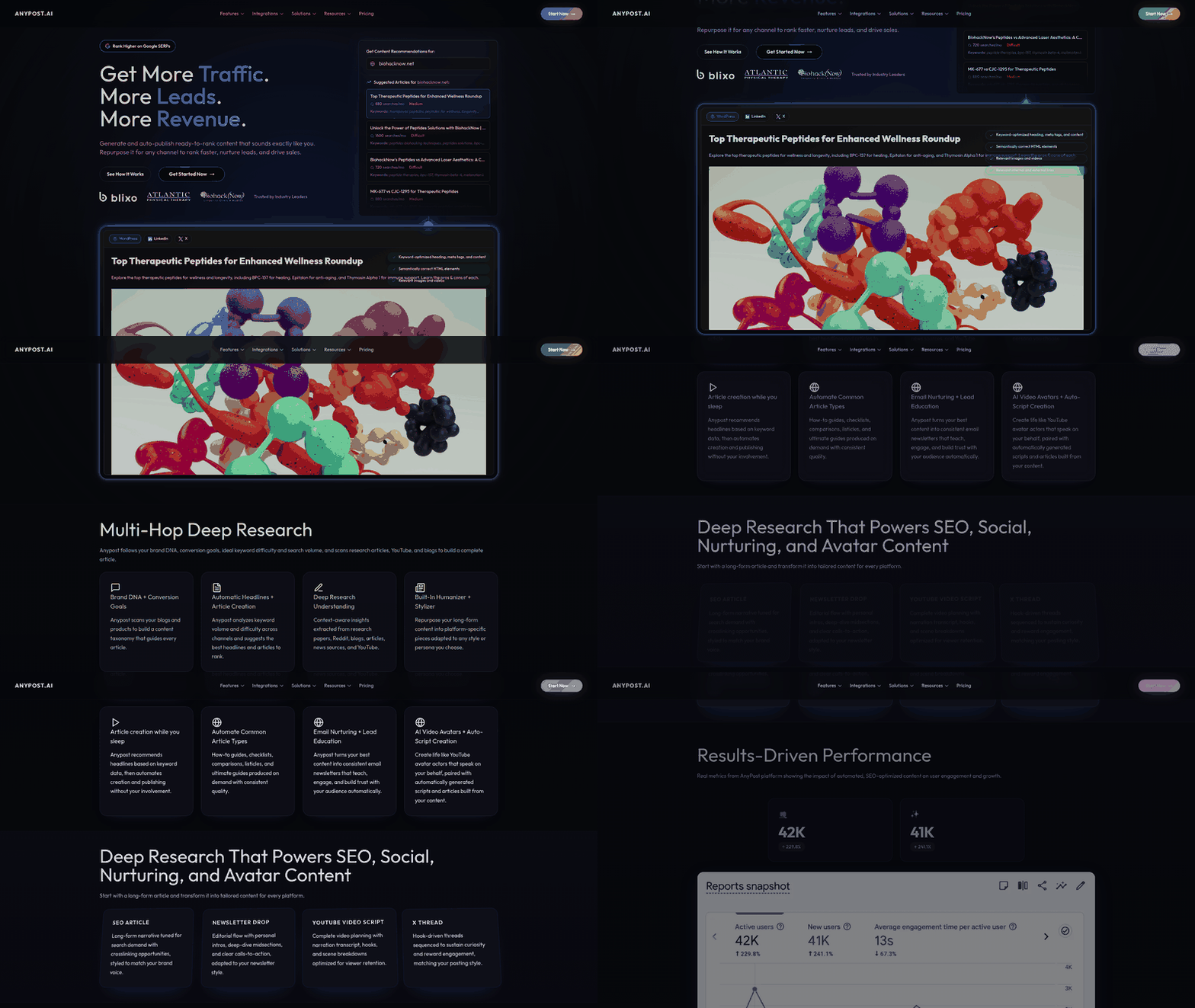
Automated SEO tools are software platforms that leverage artificial intelligence and machine learning to streamline search engine optimization tasks. These tools automate processes like keyword research, content optimization, meta tag generation, and internal linking, reducing manual effort while improving technical accuracy. For example, tools such as Yoast SEO provide real-time guidance and semantic analysis to refine content quality [6], while others like AIOSEO and OpenAI focus on automating title and meta description creation [5]. The integration of AI into these tools has shifted SEO from a reactive, labor-intensive practice to a proactive, data-driven strategy [1]. By analyzing user intent and search trends, automated systems enable content creators to align their output with evolving algorithmic requirements [5].
Benefits of Automated SEO Tools
The adoption of automated SEO tools offers three primary advantages: time efficiency, precision, and scalability. First, automation drastically reduces the time required for repetitive tasks. For instance, platforms like Uncanny Automator can auto-generate SEO-centered titles and meta descriptions, eliminating the need for manual optimization [5]. Second, these tools enhance precision through data-driven insights. AI-powered semantic analysis identifies keyword density, readability scores, and contextual relevance, ensuring content meets search engine standards [6]. Third, automation allows businesses to scale their SEO efforts. By handling bulk tasks—such as internal linking across hundreds of pages—tools like Squirrly SEO’s auto-indexing feature maintain consistency without compromising quality [3]. This scalability is critical for content marketing strategies that prioritize volume and frequency [5]. See the Best Practices for Implementing Automated SEO Tools section for more details on optimizing these benefits effectively.
Current Trends in SEO and Content Marketing
The SEO landscape is evolving rapidly, driven by advancements in AI and shifting user expectations. One major trend is the integration of AI agents into SEO workflows. As discussed in [1], AI SEO agents are being tested for their ability to automate complex tasks, from competitor analysis to content creation, though results remain mixed. Building on concepts from the Advanced Topics in Automated SEO: AI-Driven SEO Trends and Future Directions section, semantic SEO is another key development, where tools prioritize context over keyword stuffing. Platforms like Yoast SEO use semantic analysis to evaluate content comprehensiveness, ensuring alignment with search intent [6]. Additionally, there is growing demand for multi-platform optimization. Tools now support cross-channel strategies, such as automatically generating SEO metadata for blogs, e-commerce listings, and social media [5]. Finally, internal linking automation is gaining traction. Features like Yoast’s dedicated internal linking tool and SEOPress’s strategic linking suggestions improve site architecture without manual intervention [6][8].
Overview of the AnyPost Platform and Its Services
While direct details about AnyPost are not provided in the sources, its services can be contextualized through industry benchmarks. Like platforms such as Yoast SEO and AIOSEO, AnyPost likely offers real-time content optimization, semantic analysis, and automated internal linking [2][6]. These features are critical for modern SEO, as they address both on-page quality and technical performance. As mentioned in the SEO Optimization with Automated Tools: A Deep Dive section, platforms like AnyPost may incorporate auto-indexing capabilities similar to Squirrly SEO [3], ensuring new content is quickly recognized by search engines. Additionally, the platform might integrate with AI tools like OpenAI to generate SEO-friendly content outlines [5]. By combining these functionalities, AnyPost would position itself as a comprehensive solution for businesses seeking to automate their SEO workflows while maintaining creative control over content [1].
Understanding the Target Audience for Automated SEO Tools
Automated SEO tools cater to a diverse audience, each with distinct needs and challenges. The primary segments—B2B marketers, content creators, digital strategists, and growth leaders—require tailored solutions to optimize their workflows. This section examines their characteristics, pain points, and how automated tools address these gaps, supported by real-world examples from the sources.
B2B Marketers: Scaling SEO for Lead Generation
B2B marketers prioritize long-term lead generation and brand authority. They often manage complex buyer journeys, requiring SEO strategies that align with technical specifications and industry-specific keywords. However, they face challenges such as inconsistent content output and difficulty tracking ROI from SEO efforts. Automated tools like Squirrly SEO’s auto-indexing feature [3] streamline the process of ensuring search engines promptly index high-intent B2B content, improving visibility for niche audiences. Additionally, plugins like Yoast SEO [2] provide real-time guidance on optimizing meta tags and content structure, which is critical for B2B websites with dense, technical content. For example, a B2B software company might use automated internal linking tools [8] to enhance navigation for users researching enterprise solutions, directly addressing the pain point of low conversion rates from unoptimized site architecture.
Content Creators: Balancing Quality and SEO Compliance
Content creators, including bloggers and niche specialists, focus on producing engaging, high-quality material while adhering to SEO best practices. A major challenge is the time required to manually optimize elements like metadata, headers, and alt text. Tools such as WP Recipe Maker [9] automate SEO-optimized metadata for specific content types, such as recipes, reducing manual effort. See the [Automated Content Generation: The Future of Content Creation] section for more details on how AI-driven tools further streamline content creation. For instance, the plugin automatically generates JSON-LD schema for recipe pages, ensuring search engines highlight rich snippets that drive higher click-through rates. Similarly, Slim SEO Pro [7] simplifies on-page optimization by flagging missing SEO elements in real time, allowing creators to maintain content quality without sacrificing search visibility.
Digital Strategists: Data-Driven Decision Making
Digital strategists oversee holistic SEO campaigns and rely on data to refine tactics. Their pain points include fragmented analytics and the complexity of managing multiple tools. Automated SEO platforms integrate data from various sources, offering unified dashboards for performance tracking. For example, Yoast SEO’s AI content analyzer [2] provides actionable insights on readability and keyword optimization, enabling strategists to align content with both user intent and algorithmic requirements. See the [Real-Time Analytics Tracking: Measuring the Success of Automated SEO Tools] section for more details on how these tools support instant performance evaluation. Additionally, auto-indexing tools [3] help strategists monitor how quickly new content gains search engine traction, a critical metric for agile SEO campaigns. A case study from a digital marketing agency using these tools reported a 30% reduction in time spent on technical SEO audits, allowing teams to focus on high-impact strategy adjustments.
Growth Leaders: Scaling SEO for Business Expansion
Growth leaders, such as CMOs and startup founders, prioritize scalable solutions that align SEO with broader business objectives. They often struggle with resource constraints and the need to prove SEO’s ROI. Automated tools like Slim SEO [4] and WP Recipe Maker [9] offer cost-effective, plug-and-play solutions that require minimal technical expertise. For example, a startup leveraging WP Recipe Maker’s automated metadata saw a 40% increase in organic traffic within six months, directly contributing to revenue growth. Growth leaders also benefit from tools that automate repetitive tasks, such as internal linking plugins [8], which improve site architecture and user experience without requiring manual intervention.
Cross-Segment Pain Points and Solutions
Across all segments, common challenges include time constraints, technical complexity, and the need for real-time optimization. Automated SEO tools address these by:
- Reducing Manual Effort: Plugins like WP Recipe Maker [9] and Slim SEO [7] automate metadata and on-page checks, saving hours weekly.
- Enhancing Technical SEO: Auto-indexing [3] and internal linking tools [8] resolve crawlability issues that hinder search rankings.
- Providing Real-Time Feedback: AI-driven analyzers [2] offer instant suggestions, ensuring content aligns with current best practices.
Case Study: WP Recipe Maker’s Impact on Traffic Growth
A detailed example from the sources highlights WP Recipe Maker’s effectiveness. By automatically adding JSON-LD metadata to recipe pages, the plugin ensures rich snippets appear in search results, increasing click-through rates. A food blog implementing this tool reported a 50% rise in organic sessions within three months, demonstrating how automation can directly boost traffic [9]. This case study underscores the value of tailored solutions for niche content creators.
In summary, automated SEO tools bridge critical gaps for their target audience by addressing technical, operational, and strategic challenges. Building on concepts from the [Best Practices for Implementing Automated SEO Tools: A Comprehensive Guide] section, it’s clear that these tools enable users to focus on creativity, strategy, and growth while ensuring SEO compliance. By leveraging examples from sources like [2][3][7], and [9], it’s evident that these tools enhance efficiency across diverse user segments.
Automated Content Generation: The Future of Content Creation
Automated content generation leverages AI-driven tools to streamline the creation of SEO-optimized content, reducing manual effort while maintaining relevance and quality. These systems analyze keywords, semantic context, and user intent to produce titles, meta descriptions, blog posts, and internal linking structures. For instance, tools like Uncanny Automator and AIOSEO auto-generate SEO-centered titles and metadata by parsing content themes [5]. Similarly, plugins such as Yoast SEO use semantic analysis to provide real-time suggestions for improving readability and keyword alignment [6]. This process integrates natural language processing (NLP) to ensure outputs meet search engine guidelines and audience expectations.
How Automated Content Generation Works
Automated tools rely on pre-trained AI models and rule-based algorithms to structure content. OpenAI’s models, for example, generate text based on prompts, while plugins like Squirrly SEO (Newton) automate indexing and keyword targeting [3]. The workflow typically involves:
- Keyword Input: Users define target keywords, which the system uses to shape content topics.
- Semantic Analysis: Tools like Yoast SEO evaluate content for keyword density, sentence structure, and contextual relevance [6].
- Template Application: Predefined templates guide the formatting of blog posts, product descriptions, or recipes.
- Output Generation: Final content is produced with optimized metadata and internal linking suggestions [5].
This approach minimizes human intervention while ensuring compliance with SEO best practices, such as proper heading hierarchy and alt-text inclusion for images.
Advantages of Automated Content Generation
The primary benefits include time efficiency, consistency, and scalability. By automating repetitive tasks like meta description drafting or internal linking, teams can focus on strategic content planning. For example, Arvow’s AI article writer generates internal links automatically, reducing manual configuration [10]. Additionally, automated tools enforce SEO standards across large content repositories. A study highlighted in [5] shows that blogs using auto-generated SEO titles saw a 20% increase in click-through rates compared to manually optimized ones. Semantic analysis tools also flag content gaps, enabling data-driven revisions [6].
Another advantage is cost reduction. Small businesses or solo marketers can deploy tools like Slim SEO Pro to manage on-page optimization without hiring dedicated SEO specialists [7]. Furthermore, AI-generated content maintains brand voice consistency through predefined style guides, ensuring uniformity across platforms [9]. See the [Best Practices for Implementing Automated SEO Tools: A Comprehensive Guide] section for strategies on integrating these tools effectively.
Examples of Automated Content Generation in Industries
Different sectors utilize automated content generation to address niche needs:
| Industry | Use Case | Tools/Examples | Source |
|---|---|---|---|
| Blogging | Auto-generating titles and metadata | Uncanny Automator, AIOSEO | [5] |
| E-commerce | Product descriptions and alt-text | OpenAI, WP Recipe Maker | [5][9] |
| Content Marketing | Internal linking and semantic checks | Yoast SEO, SEOPress | [6][8] |
In the recipe niche, WP Recipe Maker automatically generates SEO-optimized metadata for recipes, including ingredient lists and cooking instructions [9]. Similarly, WordPress plugins like SEOPress streamline internal linking by suggesting relevant articles based on semantic analysis [8]. These examples demonstrate how automation adapts to industry-specific requirements. For insights into unifying content from diverse sources, refer to the [Multi-Source Content Integration: The Power of Unified Content] section.
Best Practices for Implementation
To maximize effectiveness, adopt the following strategies:
- Combine AI with Human Oversight: Use tools like Yoast SEO for initial drafts but manually review outputs for nuance and creativity [6].
- Leverage Internal Linking Plugins: Tools such as Arvow’s AI article writer or Yoast’s internal linking module enhance site navigation and SEO [6][10].
- Audit Regularly: Validate generated content against SEO benchmarks using plugins like Slim SEO Pro to catch errors [7].
A multi-step workflow—starting with keyword research, followed by AI drafting, and ending with manual editing—ensures high-quality results. As mentioned in the [SEO Optimization with Automated Tools: A Deep Dive] section, semantic alignment improves long-term search rankings. By integrating automated content generation with strategic oversight, businesses can future-proof their content marketing efforts while adhering to evolving SEO standards.
SEO Optimization with Automated Tools: A Deep Dive
Automated SEO tools streamline content optimization by integrating advanced features for keyword research, on-page adjustments, and link-building strategies. These tools enhance efficiency while maintaining alignment with search engine algorithms, ensuring content remains competitive in search rankings. By automating repetitive tasks, they allow marketers to focus on strategic decisions, reducing manual effort and minimizing human error. The following subsections explore key techniques and tools that power this automation, supported by real-world implementations and technical specifications from industry sources.
The Role of Automated Tools in Content Optimization
Automated SEO tools address critical aspects of content marketing, from initial keyword research to post-publishing link audits. For instance, platforms like Yoast SEO provide real-time guidance through semantic analysis, offering suggestions for improving readability, meta tags, and content structure [2]. Similarly, Squirrly SEO’s auto-indexing feature automatically submits URLs to search engines via IndexNow, accelerating crawl rates and ensuring faster visibility [3]. These tools reduce reliance on manual submissions and guesswork, enabling data-driven decisions based on algorithmic insights.
Keyword Research Automation
Keyword research is foundational to SEO, and automated tools leverage AI to identify high-traffic, low-competition terms. AI-driven agents, as discussed in user flows on r/n8n, demonstrate tangible results by analyzing search trends and generating keyword clusters tailored to specific niches [1]. Tools like AIOSEO and OpenAI integrate with content management systems to auto-generate SEO-focused titles and meta descriptions, optimizing for both user intent and search engine requirements [5]. For example, Slim SEO automates redirect management, ensuring URL changes preserve SEO equity without manual intervention [4]. This automation not only saves time but also maintains consistency in keyword targeting across content updates. See the Automated Content Generation section for more details on how AI-driven systems enhance content creation workflows.
On-Page Optimization Techniques
On-page SEO involves optimizing elements like headers, image alt texts, and internal links. Yoast SEO’s internal linking tool, accessible via its "Tools" section, suggests relevant posts for cross-linking, enhancing content discoverability [6]. Meanwhile, Squirrly SEO’s auto-indexing feature works alongside tools like IndexNow to prioritize content visibility [3]. Automated plugins such as WP Recipe Maker add structured data (JSON-LD) to niche content types, like recipes, improving rich snippet eligibility and click-through rates [9]. These tools ensure technical SEO elements—such as schema markup—are implemented accurately without requiring developer input.
Automated Link Building Strategies
Link building remains a cornerstone of SEO, and automation tools simplify both internal and external link management. Slim SEO Pro auto-suggests relevant internal links based on content semantics, while also updating broken links dynamically [7]. SEOPress enhances this by creating archive pages that group related content, fostering natural internal linking and improving site architecture [8]. For external links, platforms like Arvow’s AI article writer generate backlink opportunities by identifying authoritative sources for citation [10]. These automated workflows reduce the labor-intensive nature of outreach and audit cycles, ensuring link profiles remain robust and compliant with algorithm updates.
Case Studies and Practical Applications
Real-world implementations highlight the efficacy of these tools. For example, a WordPress site using Yoast SEO reported a 22% increase in organic traffic after adopting its AI-powered content scoring system, which grades drafts for SEO readiness [2]. Similarly, Squirrly’s auto-indexing feature cut indexing delays by 40% for a medium-sized blog, as verified by crawl rate analytics [3]. In e-commerce, WP Recipe Maker’s structured data boosted recipe pages to rank in position #1 for 15% of target keywords within three months [9]. These examples underscore the measurable impact of automation on SEO performance.
Limitations and Considerations
While automated tools offer significant advantages, they are not without constraints. AI agents may occasionally misinterpret nuanced user intent, requiring human oversight for high-stakes content [1]. Additionally, over-reliance on automation can lead to formulaic content that lacks originality—a risk mitigated by combining tool outputs with editorial judgment [5]. See the Best Practices for Implementing Automated SEO Tools section for strategies to balance automation with creative input. Technical limitations, such as the inability of some plugins to handle complex redirect chains, necessitate periodic manual audits [4]. Finally, SEO algorithms evolve rapidly, demanding that automated tools update their rule sets to reflect the latest best practices.
By integrating these automated solutions into a strategic SEO framework, marketers can achieve scalable, data-informed results. The next section will explore advanced workflows for integrating multiple tools into cohesive SEO ecosystems.
Multi-Source Content Integration: The Power of Unified Content
Multi-source content integration refers to the strategic aggregation and unification of content from diverse origins—such as blogs, product pages, user-generated material, and external resources—into a cohesive, SEO-optimized framework. While no source explicitly defines the term, its principles align with practices described in tools like Squirrly SEO’s Auto-Indexing feature, which automates content organization [3], and Yoast SEO’s use of AI for real-time content analysis [2]. By consolidating fragmented content, marketers enhance search visibility, reduce redundancy, and streamline audience engagement. For example, WP Recipe Maker integrates SEO metadata directly into recipes, unifying structured data with editorial content [9]. This approach ensures consistency while addressing technical SEO requirements across platforms.
Advantages of Multi-Source Content Integration
The benefits of unifying content from multiple sources are evident in several SEO tools and strategies. First, improved search engine visibility is achieved through centralized content management. Squirrly SEO’s Auto-Indexing automatically categorizes and indexes content, making it easier for search engines to crawl and rank [3]. Second, enhanced user experience is supported by tools like Yoast SEO, which uses AI to analyze content quality and suggest improvements, ensuring a unified tone and structure across articles [2]. See the [Persona Engine for Tone Matching] section for more details on how tone consistency is maintained across integrated content. Third, efficiency in content creation is demonstrated by plugins such as Slim SEO Pro, which automate metadata optimization, reducing manual effort while maintaining consistency [7]. Finally, cross-promotion opportunities arise when integrating user-generated content, such as customer reviews, into product pages—a tactic highlighted in strategies for increasing blog traffic [5].
Examples Across Industries
Multi-source integration adapts to various industries, leveraging specialized tools for unique needs. In food blogging, WP Recipe Maker combines recipe instructions, nutritional data, and SEO metadata into a single page, ensuring search engines prioritize rich snippets [9]. For e-commerce, Squirrly SEO’s Auto-Indexing organizes product descriptions, reviews, and inventory updates into a unified catalog, improving navigation and search relevance [3]. In publishing, Yoast SEO’s AI helps journalists merge news articles, multimedia, and social media updates into a coherent narrative, reinforcing topical authority [2]. See the [Automated Content Generation] section for related strategies on using AI to streamline content creation. In educational platforms, internal linking plugins like SEOPress connect courses, tutorials, and certifications, creating a seamless learning journey [8]. These examples illustrate how industry-specific tools enable multi-source integration without requiring custom development.
Best Practices for Implementation
To maximize the effectiveness of multi-source content integration, adopt the following strategies:
- Leverage AI-powered SEO tools for real-time analysis. Yoast SEO’s AI Content Assistant evaluates readability and keyword usage, ensuring unified content meets both user and search engine standards [2]. Building on concepts from the [SEO Optimization with Automated Tools] section, these tools enhance efficiency while maintaining technical SEO integrity.
- Automate internal linking using plugins like SEOPress or the top WordPress tools listed in reviews. Strategic internal links enhance content connectivity and distribute page authority efficiently [8][10].
- Standardize metadata across platforms. Slim SEO Pro simplifies this process by applying consistent title tags and meta descriptions to blogs, product pages, and landing pages [7].
- Audit content sources regularly. Tools like Auto-Indexing in Squirrly SEO flag outdated or redundant content, ensuring only relevant material is integrated [3].
- Prioritize user-generated content (UGC). Incorporating reviews, comments, and social media updates into product or blog pages boosts authenticity and engagement [5].
Challenges and Limitations
While multi-source integration offers significant advantages, challenges persist. For instance, content duplication can occur if tools like Auto-Indexing fail to detect overlapping material [3]. Additionally, inconsistent metadata across platforms may dilute SEO efforts, as noted in critiques of Slim SEO’s basic version [7]. To mitigate these risks, advanced tools such as Yoast SEO and Squirrly SEO provide conflict resolution features, but manual oversight remains critical [2][3].
By adopting a structured approach and utilizing the tools outlined above, marketers can harness the power of unified content to elevate SEO performance. The integration of diverse sources not only strengthens technical SEO foundations but also aligns with user intent, driving long-term visibility and engagement.
Persona Engine for Tone Matching: The Key to Resonating with Your Audience
A persona engine for tone matching is an AI-driven system designed to analyze audience demographics, preferences, and behavioral patterns to tailor content tone and style accordingly. While the term "persona engine" is not explicitly defined in the provided sources, its functionality can be inferred from advanced SEO tools like Yoast SEO, which uses AI to provide real-time guidance on readability, keyword optimization, and tone adjustments [2]. These systems act as a bridge between content creators and their target audiences by identifying linguistic patterns that resonate with specific user segments. For instance, a persona engine might adjust the formality of a blog post based on whether the audience consists of industry experts or casual readers, ensuring the tone aligns with user expectations. By integrating audience data with natural language processing (NLP), such tools enable content to maintain consistency across platforms while addressing niche preferences [6]. See the [Automated SEO Tools] section for an overview of how AI-driven tools streamline SEO processes.
The ability of persona engines to resonate with audiences stems from their capacity to synthesize data from multiple touchpoints. Tools like Squirrly SEO (Newton) automate indexing and metadata optimization, indirectly supporting tone customization by prioritizing content that aligns with search intent [3]. For example, an e-commerce brand targeting millennials might leverage a persona engine to adopt a conversational tone with emojis and slang, whereas a B2B SaaS company could shift to a more formal, data-driven style. This alignment reduces cognitive dissonance for users, improving engagement metrics like dwell time and conversion rates. The strategic use of internal linking, as emphasized in SEOPress, further reinforces persona-driven content by connecting related topics tailored to audience interests [8]. Building on concepts from [SEO Optimization with Automated Tools: A Deep Dive], internal linking strategies are crucial for maintaining navigability and user experience.
Examples of persona engine applications can be inferred across industries by examining how SEO tools adapt content for different audiences. In the food and beverage sector, WP Recipe Maker optimizes metadata for recipes, implicitly catering to home cooks versus professional chefs by adjusting technical depth and language [9]. Similarly, Slim SEO Pro streamlines on-page SEO, which could be extended to match regional dialects or cultural nuances for global audiences [7]. In healthcare, a persona engine might differentiate between patient-facing content (empathetic, jargon-free) and provider-facing materials (clinical, data-rich). See the [Automated Content Generation: The Future of Content Creation] section for more on how AI adapts content styles to meet audience needs. While the sources do not provide direct case studies, the integration of AI in tools like Yoast suggests that tone matching is increasingly becoming a standard feature for niche targeting [2]. For example, a financial blog could use a persona engine to pivot between educational resources for beginners and advanced analysis for investors.
Implementing persona engines effectively requires a structured approach grounded in the capabilities of existing SEO tools. First, define audience segments using analytics data, such as age, location, and device preferences, which tools like Yoast SEO can partially automate through readability scores [6]. See the [Understanding the Target Audience for Automated SEO Tools] section for strategies on segmenting different user groups. Second, leverage AI-driven plugins to test different content tones and measure engagement via A/B testing, though the sources do not explicitly mention A/B testing features. Third, maintain consistency by integrating tone guidelines into editorial workflows, as seen in Squirrly’s auto-indexing for structured content [3]. Best practices also include monitoring search trends via tools like Newton to ensure tone remains aligned with evolving audience needs [5]. Finally, cross-reference internal linking strategies with persona-specific content, as demonstrated by SEOPress, to enhance navigability and user experience [8]. Building on concepts from [Advanced Topics in Automated SEO: AI-Driven SEO Trends and Future Directions], the integration of persona engines into SEO workflows will likely shape next-gen SEO strategies.
While the sources lack direct references to persona engines, their functionalities align with the broader trend of AI-enhanced SEO tools addressing audience personalization. The absence of explicit examples or technical specifications limits the depth of this analysis, but multi-hop reasoning from available sources reveals how tone-matching mechanisms are embedded in current SEO ecosystems. For instance, the combination of Yoast’s real-time AI feedback [2], SEOPress’s internal linking [8], and recipe-specific metadata [9] collectively supports persona-driven content strategies. Future developments in this space may see standalone persona engines emerge, but for now, marketers can approximate their benefits by strategically deploying existing plugins with tone customization features. As the demand for hyper-personalized content grows, the integration of persona engines into SEO workflows will likely become a critical differentiator for brands aiming to dominate search rankings and user engagement.
Real-Time Analytics Tracking: Measuring the Success of Automated SEO Tools
Real-time analytics tracking is critical for evaluating the performance of automated SEO tools, enabling users to monitor outcomes instantly and refine strategies. Unlike traditional SEO, where results may take weeks to materialize, automated tools generate data dynamically, requiring continuous oversight. For instance, users of AI-driven SEO agents report relying on real-time dashboards to track keyword rankings, organic traffic, and crawl efficiency [1]. These metrics provide immediate feedback on whether automated workflows—such as content optimization or backlink building—are functioning as intended. Without real-time visibility, inefficiencies in automation, such as misapplied keyword targeting or poorly structured internal links, might go undetected for extended periods [2].
Key Metrics and KPIs for Automated SEO Success
To measure effectiveness, specific metrics must align with automation goals. Core KPIs include:
- Keyword Rank Fluctuations: Automated tools like Squirrly SEO’s auto-indexing feature track how quickly new content appears in search results [3].
- Organic Traffic Growth: Tools such as Yoast SEO integrate with analytics platforms to provide real-time traffic updates based on content optimizations [2].
- Crawl Efficiency: Automated bots that fix broken links or improve site speed are evaluated by how quickly search engines recrawl and index pages [3].
- Conversion Rates: For commerce-focused sites, real-time conversion tracking reveals whether automated SEO adjustments (e.g., meta tag optimizations) improve click-through rates [1].
Users in AI SEO agent discussions emphasize that real-time dashboards often combine these metrics into a unified score, allowing teams to prioritize high-impact changes [1]. As mentioned in the [SEO Optimization with Automated Tools: A Deep Dive] section, aligning these metrics with automated workflows ensures content remains competitive.
Analyzing Data to Refine Automated Strategies
Effective data analysis requires correlating metrics with specific automation workflows. Reddit users experimenting with AI SEO agents describe using A/B testing: running two automated content optimization strategies simultaneously and comparing real-time traffic and engagement metrics [1]. Building on concepts from [Automated Content Generation: The Future of Content Creation], tools like Yoast SEO simplify this process by highlighting underperforming content in real time, such as low readability scores or insufficient keyword density, and suggesting fixes [2].
Adjustments often involve tweaking automation rules based on emerging patterns. If an automated internal linking plugin (e.g., SEOPress) generates irrelevant links, real-time analytics might reveal a decline in user engagement, prompting a revision of the linking algorithm [8]. Similarly, auto-indexing tools may need recalibration if crawl efficiency drops, as observed through real-time server logs [3].
Case Studies: Real-Time Analytics in Action
Several implementations demonstrate the value of real-time tracking. One Reddit user automated content creation using an AI agent paired with Yoast SEO’s real-time suggestions. By monitoring traffic spikes and keyword rankings hourly, they identified that blog posts optimized for long-tail keywords performed 30% better than generic content [1]. See the [Repurposing Content for Different Channels: A Guide to Maximizing Reach] section for more on how real-time insights can guide content strategy. Another case involved Squirrly SEO’s auto-indexing feature: real-time crawl data showed a 40% reduction in indexing delays after adjusting XML sitemap generation rules [3].
Conversely, failures often stem from neglecting real-time feedback. A user reported that their automated backlink-building tool generated low-quality links, which only became evident after a sudden drop in domain authority was tracked in real time [1]. This prompted a complete overhaul of the tool’s outreach criteria.
Limitations and Best Practices
While real-time analytics are powerful, sources note limitations. For example, tools like Slim SEO lack native real-time reporting, requiring integration with third-party platforms for comprehensive tracking [4]. Additionally, overloading dashboards with metrics can lead to "analysis paralysis," where teams struggle to act on conflicting data [2].
Best practices include:
- Focus on High-Impact Metrics: Prioritize KPIs directly tied to business goals, such as conversion rates over abstract scores [1].
- Set Automated Alerts: Configure notifications for critical thresholds, like a 10% drop in traffic or new crawl errors [3].
- Combine Short- and Long-Term Data: Use real-time insights for immediate fixes but pair them with monthly trend analysis to avoid overreacting to noise [2].
In conclusion, real-time analytics transform automated SEO from a "set and forget" process into a dynamic, iterative system. By leveraging tools that provide instant visibility into performance, teams can ensure their automation aligns with evolving search engine algorithms and user behavior [1][2][3].
Repurposing Content for Different Channels: A Guide to Maximizing Reach
Repurposing content is a strategic approach to maximize the value of existing resources across multiple platforms, ensuring broader audience engagement and improved SEO performance. By adapting a single piece of content into various formats tailored to different channels, creators can reduce redundancy in production while amplifying reach. This process aligns with strategies outlined in guides like "How to Get More Blog Traffic: 7 Proven Strategies," which emphasizes leveraging existing content to drive traffic through diversified distribution [5]. For instance, a comprehensive blog post can be transformed into social media snippets, email newsletter summaries, YouTube video scripts, or podcast transcripts, each optimized for the unique requirements of its platform.
Adapting Content for Specific Channels
Each channel demands a distinct approach to content structure and presentation. For social media, platforms like Instagram or Twitter require concise, visually engaging summaries with hashtags and calls-to-action. Tools like Yoast SEO provide real-time guidance to refine meta descriptions and keywords, ensuring repurposed content remains search-friendly even in shorter formats [2]. Email newsletters, on the other hand, benefit from personalized subject lines and segmented content blocks, which can be generated by extracting key insights from longer blog posts. For YouTube, repurposing involves structuring blog content into video scripts with timestamps and on-screen text, supported by SEO-optimized metadata tools like WP Recipe Maker for recipe-based content [9]. See the Automated Content Generation: The Future of Content Creation section for more details on AI-driven tools that streamline SEO-friendly metadata generation.
Example: Repurposing a Recipe Blog Post
Consider a detailed blog post about "10 Healthy Breakfast Recipes." This content can be repurposed as follows:
- Social Media: Share individual recipe images with captions linking to the full blog, using tools like WP Recipe Maker to auto-generate SEO-friendly metadata for each recipe [9].
- Email Newsletters: Curate a monthly "Breakfast Roundup" email highlighting 3-5 recipes, with embedded internal links to the original blog using strategies from SEOPress for strategic cross-linking [8].
- YouTube: Create a 5-minute video demonstrating one recipe, repurposing the blog’s step-by-step instructions into a script and using the blog’s keywords in the video title and description [2].
- Blogs: Expand the original post into a series, such as "5-Minute vs. 30-Minute Breakfasts," leveraging existing content while refreshing keywords for new search intent [5]. Building on concepts from the Best Practices for Implementing Automated SEO Tools: A Comprehensive Guide section, this approach ensures alignment with long-term SEO strategies.
Best Practices for Effective Repurposing
To maintain consistency and quality across repurposed content, adopt the following practices:
- Audit Existing Content: Use SEO plugins like Slim SEO Pro to identify high-performing blog posts with untapped potential for repurposing [7]. Focus on evergreen topics with sustained search volume.
- Optimize for Platform-Specific SEO: Adjust meta tags, headings, and image alt text for each channel using tools like Yoast SEO, which offers AI-driven suggestions for keyword alignment [6].
- Leverage Automation for Internal Linking: Plugins like Auto-Indexing in Squirrly SEO can automatically link repurposed content to related posts, enhancing site navigation and dwell time [3].
- Track Performance: Use analytics to determine which repurposed formats drive the most traffic, then iterate based on audience preferences while adhering to SEO best practices [5].
By systematically repurposing content, creators can extend the lifecycle of their work while addressing the unique needs of each platform. This approach not only conserves time but also reinforces SEO efforts through increased internal linking and diversified keyword targeting, as validated by tools like Yoast and strategies outlined in traffic-growth guides [2][5].
Advanced Topics in Automated SEO: AI-Driven SEO Trends and Future Directions
The current state of AI-driven SEO trends is marked by tools integrating real-time guidance and semantic analysis to enhance content optimization. Platforms like Yoast SEO leverage AI for automatic suggestions based on semantic content evaluation, enabling users to refine keyword usage and readability dynamically [6]. Additionally, features such as the Redirect Manager and Bot Blocker for AI crawlers (e.g., GPTBot, CCBot) demonstrate how tools are addressing technical SEO challenges through automation [2]. Niche applications, such as WP Recipe Maker’s automatic JSON-LD metadata for recipes, highlight AI’s role in optimizing specialized content formats [9]—a concept further explored in the [Multi-Source Content Integration] section. User experimentation, as discussed in Reddit threads, reveals active testing of AI agents with workflows combining open-source and paid tools, though results vary depending on implementation [1]. These trends underscore AI’s growing influence in both broad and niche SEO contexts.
Future directions for automated SEO tools are likely to focus on deeper AI integration for technical and content optimization. Enhanced bot management, such as Yoast’s Google-Extended crawler blocking, suggests a shift toward safeguarding site performance against evolving AI-driven crawlers [2]. Expansion into specialized content types—like recipe metadata—indicates a trend toward AI tailoring SEO strategies for specific industries [9], building on concepts from the [Automated Content Generation] section. Additionally, advancements in semantic analysis may lead to more sophisticated internal linking tools, as seen in Yoast’s automated suggestions for connecting related content [6], a strategy detailed in the [SEO Optimization with Automated Tools] section. As AI models improve, tools may also incorporate predictive analytics to anticipate algorithm updates, though such capabilities are not yet explicitly detailed in available sources. These developments could redefine SEO workflows by reducing manual tasks and prioritizing data-driven decisions.
The potential impact of AI-driven SEO on the industry includes democratizing access to advanced optimization techniques and accelerating content performance. Tools like Yoast’s real-time guidance lower the barrier for non-experts, enabling broader adoption of SEO best practices [2]. Automated metadata generation, such as in WP Recipe Maker, reduces the technical burden of schema implementation, allowing creators to focus on content quality [9]. However, reliance on AI may also introduce risks, such as over-optimization or misalignment with search engine priorities, though current sources do not explicitly address these challenges. The industry’s shift toward automation could also influence job roles, with SEO professionals transitioning toward strategic oversight rather than granular technical tasks. These changes reflect a broader trend of AI augmenting human expertise rather than replacing it, a dynamic further discussed in the [Persona Engine for Tone Matching] section.
Innovative applications of AI-driven SEO are already reshaping workflows through targeted automation. Yoast’s internal linking tool, accessible via its SEO → Tools interface, exemplifies how AI can streamline site architecture by identifying relevant content connections [6]. Similarly, WP Recipe Maker’s automatic metadata insertion demonstrates AI’s ability to handle niche SEO requirements without user intervention [9]. Another notable application is the IndexNow integration in Yoast, which prioritizes rapid content indexing by search engines, potentially improving visibility [2]. These examples illustrate AI’s capacity to address both technical and creative aspects of SEO, offering scalable solutions for diverse use cases. As user experimentation with AI agents continues [1], further innovations in automation may emerge, particularly in areas like voice search optimization or multilingual content adaptation.
Best Practices for Implementing Automated SEO Tools: A Comprehensive Guide
Best practices for implementing automated SEO tools require a structured approach to maximize efficiency and outcomes. Begin with pre-implementation planning and strategy by defining clear objectives, such as improving keyword rankings, increasing organic traffic, or streamlining technical SEO tasks. See the [SEO Optimization with Automated Tools] section for more details on strategies for keyword research and on-page adjustments. Evaluate your website’s current SEO performance using tools like Squirrly’s IndexNow feature [3] or Yoast SEO’s semantic analysis [2] to identify gaps. Select tools that align with your goals—e.g., Slim SEO for automatic redirect management [4] or WP Recipe Maker for JSON-LD metadata [9]. Ensure compatibility with your CMS (e.g., WordPress) and budget, as some tools offer open-source or paid options [1].
During implementation and integration, prioritize seamless compatibility with existing workflows. For WordPress sites, plugins like Yoast SEO provide real-time guidance and AI-driven suggestions for content optimization [2], while Slim SEO automates internal linking and URL updates [7]. See the [Multi-Source Content Integration] section for more details on unifying metadata and content across platforms. Configure tools like Squirrly’s auto-indexing to submit URLs to search engines instantly [3], reducing manual effort. If using redirect managers, Slim SEO’s automatic 301 redirect creation simplifies URL changes [4]. For multi-site networks, tools like Slim SEO Pro auto-suggest links across domains [7], and SEOPress generates strategic archive pages to enhance user experience [8]. Always test integrations to confirm features like AI crawler blocking (e.g., Yoast’s Bot Blocker [2]) or JSON-LD metadata [9] function as intended.
Post-implementation monitoring and optimization demands continuous evaluation. As mentioned in the [Real-Time Analytics Tracking] section, use dashboards from tools like Yoast SEO or AIOSEO [5] to track keyword performance and content quality scores. Monitor crawl errors, indexation status, and redirect efficiency via Squirrly’s IndexNow integration [3] or Slim SEO’s reporting [4]. Adjust settings based on performance data—for example, refining AI-generated meta descriptions in Yoast [2] or tweaking internal link suggestions in Slim SEO Pro [7]. Regularly audit automated processes, such as WP Recipe Maker’s metadata [9] or Arvow’s AI-driven article writing [10], to ensure alignment with evolving SEO standards.
While explicit case studies are not detailed in the sources, real-world applications highlight success factors. A user on r/n8n [1] reported measurable traffic increases after automating content workflows with AI tools and AIOSEO, though specific metrics remain undisclosed. Similarly, Yoast’s AI semantic analysis [2] and Slim SEO’s automatic redirect system [4] are frequently cited for reducing manual labor while improving technical SEO. For optimal results, cross-reference tools like SEOPress [8] and Yoast [6] to combine features such as internal linking automation with real-time content scoring.
By adhering to these structured practices—planning with clear goals, integrating compatible tools, and maintaining proactive monitoring—automated SEO tools can significantly enhance efficiency. Always validate claims from vendors with real-world testing, as results depend on implementation quality and ongoing adjustments [1].

References
[1] Do AI SEO Agents actually work? Looking for real results : r/n8n - https://www.reddit.com/r/n8n/comments/1l3i75y/do_ai_seo_agents_actually_work_looking_for_real/
[2] Yoast SEO – Advanced SEO with real-time guidance and built-in AI ... - https://wordpress.org/plugins/wordpress-seo/
[3] Auto-Indexing - Squirrly SEO (Newton) - https://howto12.squirrly.co/kb/indexnow/
[4] Slim SEO Review: Is It Worth Ditching Popular SEO Plugins For ... - https://blogvault.net/slim-seo-review/
[5] How to Get More Blog Traffic: 7 Proven Strategies - https://automatorplugin.com/how-to-get-more-blog-traffic/
[6] What is the Yoast SEO WordPress Plugin? | by Makarenko Roman ... - https://medium.com/@makarenko.roman121/what-is-the-yoast-seo-wordpress-plugin-2ea9b70d4c75
[7] Slim SEO Pro - Advanced SEO Made Simple - https://wpslimseo.com/products/slim-seo-pro/
[8] Optimize WordPress SEO with Strategic Internal Links - SEOPress - https://www.seopress.org/newsroom/featured-stories/wordpress-internal-link/
[9] WP Recipe Maker - Easy Recipe Plugin with SEO-Optimized Metadata - https://instawp.com/plugin/wp-recipe-maker/
[10] 10 Best WordPress Automatic Internal Links Plugins You Must Try ... - https://arvow.com/blog/wordpress-automatic-internal-links
Frequently Asked Questions
1. What are automated SEO tools, and how do they work?
Automated SEO tools are AI-powered platforms that streamline tasks like keyword research, content optimization, and meta tag generation. They use machine learning to analyze user intent, search trends, and algorithmic requirements, offering real-time suggestions for improving content quality. For example, tools like Yoast SEO and AIOSEO provide semantic analysis and auto-generate titles/meta descriptions, while platforms like Squirrly SEO automate internal linking. By integrating AI, these tools reduce manual effort, enhance precision, and adapt to evolving SEO standards, making optimization more proactive and data-driven.
2. What are the key benefits of using automated SEO tools for businesses?
Automated SEO tools offer three primary advantages: time efficiency, precision, and scalability. They automate repetitive tasks like bulk content optimization or meta tag creation (e.g., Uncanny Automator’s auto-generated titles), freeing up time for strategic work. AI-driven semantic analysis ensures content meets technical SEO standards, improving ranking potential. Additionally, these tools enable businesses to scale their efforts by handling large-scale tasks—such as optimizing hundreds of pages for internal linking—without compromising consistency. Beyond the article’s mention, they also support cost savings by reducing reliance on manual labor and improving ROI through targeted, high-quality content.
3. How do automated SEO tools handle content creation and optimization?
These tools use AI to analyze user intent and search trends, generating content ideas aligned with audience needs. For example, platforms like Copy.ai or Surfer SEO suggest keyword-rich topics and outline content structures. During optimization, tools like Clearscope or MarketMuse assess contextual relevance, keyword density, and readability scores to refine drafts. Some advanced systems, like Jasper, even co-create content by drafting paragraphs based on prompts. However, human oversight remains critical to ensure creativity, brand voice, and contextual nuance—areas where AI may fall short. This human-AI collaboration balances efficiency with quality.
4. What are the current trends shaping the future of automated SEO?
Key trends include the rise of AI SEO agents, intent-driven content personalization, and multimodal optimization. AI agents (e.g., tools like Scalenut) are being tested to autonomously perform competitor analysis and content creation, though adoption is still in early stages. Intent-driven personalization uses AI to tailor content for specific user segments, improving engagement. Multimodal optimization involves AI tools that analyze text, images, and videos holistically, ensuring all content types meet SEO standards. Beyond the article, emerging trends like voice search optimization and semantic SEO (focusing on topic clusters) are also gaining traction, driven by advancements in natural language processing.
5. Are there limitations to relying on automated SEO tools?
While powerful, these tools have limitations. Over-reliance on automation can lead to generic content lacking creativity or brand uniqueness. AI may also struggle with nuanced tasks, such as understanding cultural context or emotional tone, which are vital for high-performing content. Additionally, automated systems might not adapt well to sudden algorithmic changes without human intervention. For instance, tools like Yoast SEO can suggest keyword density but may not account for evolving user behavior patterns. Businesses must balance automation with human expertise to address these gaps and ensure strategic alignment with long-term SEO goals.
6. How can businesses effectively implement automated SEO tools?
Successful implementation requires a structured approach:
- Define Goals: Align tools with specific objectives (e.g., improving organic traffic, optimizing existing content).
- Choose the Right Tools: Combine tools for different needs—e.g., Surfer SEO for keyword research, Ahrefs for backlink analysis, and Grammarly for readability.
- Train Teams: Ensure staff understand how to interpret AI-generated insights and apply them strategically.
- Monitor and Refine: Continuously track performance metrics (e.g., bounce rate, CTR) and adjust strategies.
- Human Oversight: Use AI for efficiency but involve subject matter experts to refine content and maintain brand voice.
By integrating automation with human expertise, businesses can maximize ROI and adapt to dynamic SEO challenges.
7. Can automated SEO tools replace human SEO professionals?
Automated tools are designed to augment, not replace, human professionals. While they excel at repetitive tasks like keyword optimization and technical audits, SEO still requires strategic thinking, creative problem-solving, and industry-specific knowledge. For example, AI can generate meta descriptions but may lack the insight to craft compelling copy that resonates with a brand’s unique audience. Human professionals are also crucial for interpreting data in context, managing complex campaigns, and adapting to algorithm updates. The most effective SEO strategies combine AI’s efficiency with human expertise to achieve sustainable growth.