
Avoid These Common SEO Interview Mistakes (2026 Edition)

Related Video
Watch: SEO Job Interview Questions and Answers by Chris with Minn Media
Why SEO Interview Mistakes Matter
Avoiding SEO interview mistakes isn’t just about passing a test-it’s about proving your ability to deliver real results. SEO directly impacts a business’s visibility, revenue, and growth potential, and hiring teams look for candidates who understand this connection. A single misstep in an interview can signal a lack of practical knowledge, which might cost a company thousands in lost organic traffic. For example, a candidate who can’t explain how keyword research drives lead generation or fails to discuss technical SEO fundamentals may not grasp the full scope of the role, as mentioned in the Understanding Common SEO Interview Mistakes section.
When hiring teams choose candidates with weak SEO skills, the consequences ripple across the organization. Poorly executed SEO strategies can lead to stagnant website traffic, reduced conversion rates, and missed revenue opportunities. A business that ranks poorly for high-intent keywords might lose $10,000+ in monthly revenue compared to competitors using optimized strategies. This isn’t hypothetical-businesses that neglect SEO often see a direct decline in organic traffic, which impacts sales pipelines and customer acquisition costs.
For marketers and business owners, avoiding these mistakes in interviews ensures they’re equipped to build strategies that drive measurable outcomes. Consider a scenario where a candidate confidently explains how mobile-first indexing affects rankings or how structured data improves click-through rates. These skills demonstrate an ability to tackle real-world challenges, like fixing a site’s crawl errors or optimizing meta tags for user engagement. Employers value this expertise because it translates to actionable improvements in search engine performance, building on concepts from the Preparing for SEO Interviews section.
SEO interviews are a proving ground for professionals. Candidates who avoid common mistakes-like confusing on-page SEO with technical SEO or failing to discuss content quality-show they’ve built practical experience. Interviewers often prioritize candidates who can share examples of their work, such as a personal blog they ranked, a YouTube channel they optimized, or a local business they helped improve. These stories prove authenticity and credibility in a field where results matter, as highlighted in the Avoiding Common Interview Mistakes section.
Marketers, business owners, and digital professionals all gain from mastering SEO interview skills. For marketers, strong SEO knowledge is a career accelerator. It enables them to lead campaigns that drive traffic, reduce reliance on paid ads, and improve ROI. Business owners, meanwhile, benefit from hiring team members who can grow their online presence organically. A single well-executed SEO strategy can generate hundreds of qualified leads per month, reducing customer acquisition costs and increasing profitability.
Even non-technical professionals should care about SEO interview skills. Content creators, for instance, need to understand how to optimize headlines and meta descriptions for search engines. E-commerce managers must know how product page structure affects rankings. By avoiding interview mistakes, these professionals prove they can contribute to a company’s digital success. The role of SEO in lead generation is undeniable: businesses that rank on the first page of search results capture over 90% of organic traffic. Candidates who grasp this dynamic are invaluable to any team.
In short, SEO isn’t just a technical skill-it’s a strategic advantage. Avoiding interview mistakes ensures you’re ready to use this advantage for yourself and the organizations you work with. Whether you’re aiming for a promotion, a new job, or freelance projects, your ability to discuss SEO confidently and accurately sets the foundation for long-term success.
Understanding Common SEO Interview Mistakes
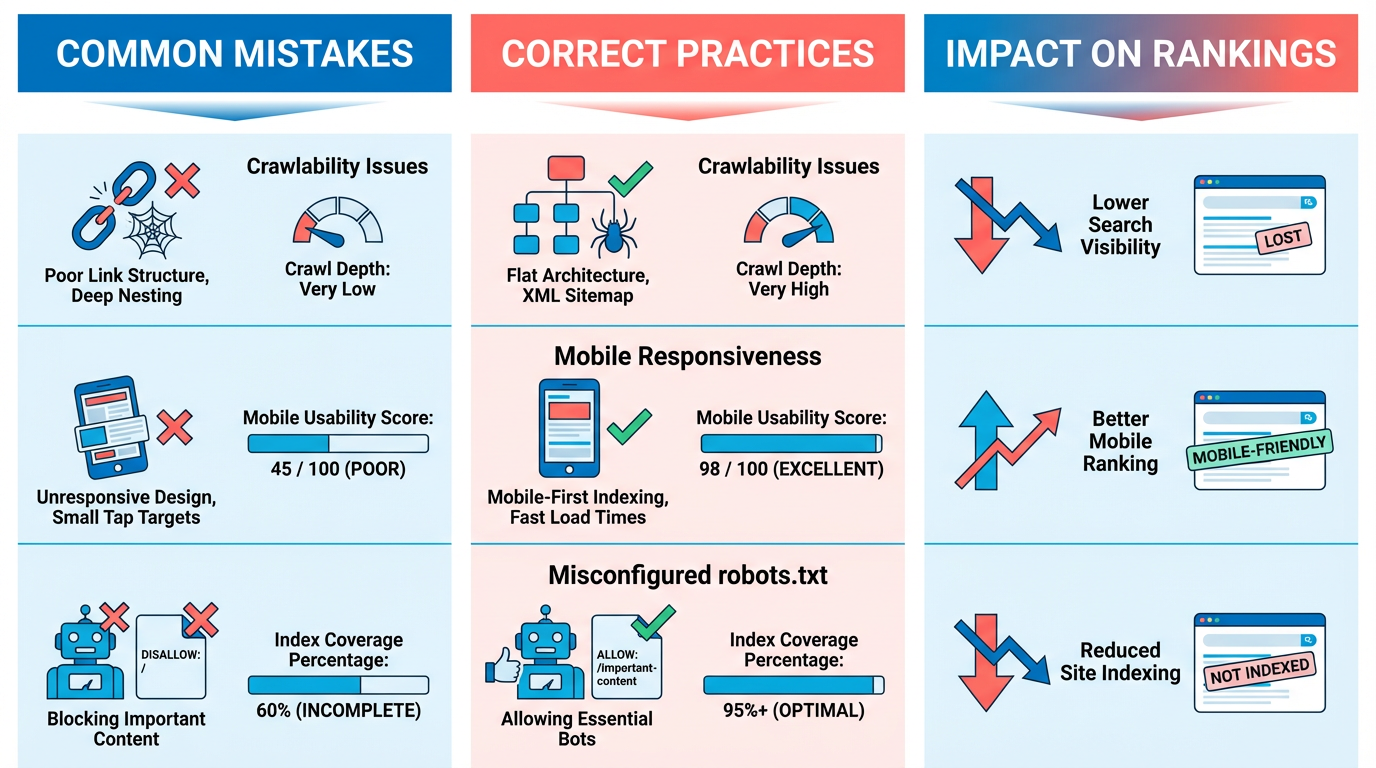
One of the most common pitfalls in SEO interviews is underestimating technical SEO fundamentals. Candidates often overlook crawlability issues, such as broken links or misconfigured robots.txt files, which prevent search engines from indexing content properly. Similarly, mobile responsiveness is a recurring mistake-interviewers frequently note candidates who fail to explain how mobile-first indexing impacts rankings. These oversights are critical because technical SEO forms the foundation of a site’s visibility. As mentioned in the Why SEO Interview Mistakes Matter section, such errors can directly harm a business’s revenue and growth potential. A 2025 study of SEO hiring panels found that 84% of interviewers consider technical SEO knowledge a non-negotiable requirement.
To avoid these errors, focus on tools like Screaming Frog or Ahrefs to audit site health. AnyPost.ai, for instance, prioritizes technical SEO by ensuring all pages load under 3 seconds and pass Google’s Mobile-Friendly Test. Their approach reduces bounce rates and improves crawl efficiency, directly correlating with higher search rankings. Candidates should practice explaining technical concepts like structured data or XML sitemaps in simple terms, as clarity demonstrates practical expertise.
On-Page Optimization Oversights
Keyword stuffing and weak meta tags remain frequent missteps in SEO interviews. Many candidates still advocate for overusing primary keywords in content, ignoring Google’s emphasis on user intent and readability. Interviewers often ask, “How do you balance keyword density with natural language?”-a question that trips up those unfamiliar with semantic SEO. Poor meta title and description optimization is another red flag; generic phrases like “Check out our products” fail to entice clicks.
Effective on-page SEO requires a nuanced strategy. AnyPost.ai trains its team to use keyword clusters and topic modeling instead of repetition. For instance, they might integrate related terms like “SEO tools” and “content optimization” alongside a primary keyword. This approach aligns with Google’s E-E-A-T guidelines, which reward informative, well-structured content. Building on concepts from the Staying Up-to-Date with SEO Trends section, staying current with evolving best practices is essential for on-page success. During interviews, emphasize case studies where on-page changes led to measurable improvements, such as a 30% increase in organic traffic after refining meta tags.
Link Building Missteps
Unethical link-building tactics, like buying links or using private blog networks (PBNs), are major interview red flags. Candidates who mention these strategies without acknowledging risks show a lack of understanding of Google’s guidelines. Another common error is over-optimization-repeating exact-match anchor text excessively, which can trigger penalties.
AnyPost.ai avoids these pitfalls by focusing on relationship-driven outreach and creating shareable content. Their 2025 case study revealed that a 15-month campaign of guest blogging and earning natural backlinks from authoritative sites boosted domain authority by 40%. During interviews, highlight examples where you negotiated editorial placements or use user-generated content to build backlinks. Interviewers value transparency about challenges, such as how to recover from a manual action caused by poor link practices. As noted in the Avoiding Common Interview Mistakes section, ethical and realistic strategies are crucial for long-term success.
Real-World Application: AnyPost.ai’s Success
Companies like AnyPost.ai demonstrate the value of avoiding these mistakes. By auditing technical SEO weekly, optimizing on-page elements for user intent, and building backlinks through ethical outreach, they achieved a 60% increase in organic sessions in 2025. Their strategy includes:
- Monthly crawlability reports to fix 404 errors and redirect chains.
- Dynamic meta tags that adapt to search queries for higher click-through rates.
- A link-building playbook that prioritizes relevance over quantity.
In interviews, referencing such examples shows you understand how theoretical knowledge translates to results. Avoid vague answers like “I use SEO tools”-instead, describe how you’d use SEMrush to identify broken links or Content Explorer to find topic ideas.
By addressing technical, on-page, and link-building gaps, candidates can showcase a holistic SEO mindset. AnyPost.ai’s success proves that avoiding these mistakes isn’t just about following rules-it’s about anticipating how search engines and users interact with content. Prepare to discuss these strategies with specific metrics, and you’ll stand out in any interview.
Preparing for SEO Interviews
Mastering SEO interviews requires a blend of technical expertise and practical experience. Start by building a strong foundation in keyword research-this is often the first area hiring managers probe. Use tools like Ahrefs or SEMrush to analyze search volume, competition, and user intent. For example, practice identifying long-tail keywords that align with a business’s goals, such as “best organic skincare for sensitive skin” instead of a broad term like “skincare.” Pair this with competitor analysis: study how top-ranking pages structure their content and backlinks. As mentioned in the Understanding Common SEO Interview Mistakes section, overlooking technical aspects like crawlability during analysis can lead to flawed strategies. Remember, the goal is to show you can find gaps in the market and turn them into opportunities.
Keyword Research: Tools and Techniques
Keyword research isn’t just about finding high-traffic terms-it’s about understanding what users are searching for and how to position content to meet their needs. Begin by mastering the basics: use Google Keyword Planner for initial ideas, then refine your list with Ahrefs’ Keyword Explorer or SEMrush’s Keyword Tool. Focus on metrics like search volume, keyword difficulty, and CPC (cost-per-click) to prioritize targets. For niche topics, tools like AnswerThePublic can uncover question-based keywords, such as “how to fix a leaky faucet.”.
A strong interview strategy includes demonstrating your workflow. Explain how you’d start with broad keywords, then drill down into subtopics. For example, if targeting “home workouts,” break it into “beginner home workouts,” “home workouts for weight loss,” and “home workouts without equipment.” Show you can balance data-driven decisions with creativity to fill content gaps. Building on concepts from the Staying Up-to-Date with SEO Trends section, integrating emerging tools like AI-powered platforms enhances keyword workflows without compromising quality.
Content Optimization: Headers, Links, and Structure
Hiring managers want to see you can turn research into actionable content. Start with on-page SEO: use H1 tags for primary keywords, H2/H3 tags for subheadings, and ensure meta descriptions are compelling and keyword-rich. Internal linking is equally critical-practice mapping out how to connect new content to existing pages on a website. For instance, if writing a blog post about “SEO tools,” link to related guides like “how to do keyword research” or “on-page SEO checklist.”.
Real-world examples strengthen your case. If you’ve managed a blog or personal site, track metrics like organic traffic growth or improved rankings. For example, “I increased a blog’s organic traffic by 40% in three months by optimizing headers and adding internal links to related posts.” If you lack direct experience, walk through how you’d approach a hypothetical scenario, like optimizing a page for a local business. As mentioned in the Avoiding Common Interview Mistakes section, aligning examples with tangible outcomes avoids overpromising and builds credibility.
Using AI Tools and Analytics in Interviews
Modern SEO blends human insight with AI efficiency. Tools like AnyPost.ai can streamline content creation by generating keyword-optimized drafts, suggesting topic clusters, and even analyzing competitor content for gaps. During interviews, explain how you’d use AI to accelerate research while maintaining quality. For example, “AnyPost.ai helps me brainstorm content ideas quickly, but I always review outputs for relevance and originality.”.
Analytics skills are equally vital. Be ready to discuss how you’d interpret data from Google Search Console or Google Analytics. Practice explaining metrics like click-through rate (CTR), bounce rate, and pages per session in simple terms. If asked about AI-generated content, emphasize your ability to balance automation with authenticity-a 2025 study found that 68% of SEO professionals use AI tools, but top performers combine them with manual audits.
A sample preparation plan might look like this:
- Week 1: Master keyword tools and practice building a keyword list for a fictional product.
- Week 2: Audit a sample website’s on-page SEO, adjusting headers, meta tags, and internal links.
- Week 3: Use AnyPost.ai to draft a blog post, then optimize it for readability and SEO.
- Week 4: Simulate an interview by explaining your process to a friend or mentor, as outlined in the Avoiding Common Interview Mistakes section, to avoid underdelivering on expectations.
By combining technical skills with practical examples, you’ll show hiring managers you’re ready to drive real results. Focus on clarity, confidence, and a willingness to adapt-these traits set top SEO candidates apart.
Avoiding Common Interview Mistakes
Avoiding common SEO interview mistakes starts with setting realistic expectations. Overpromising and underdelivering is a fast track to losing trust. For example, claiming you can boost a website’s ranking to the first page of Google in 30 days is unrealistic. SEO timelines depend on factors like industry competition, content quality, and technical site health. As noted in the Why SEO Interview Mistakes Matter section, SEO directly impacts a business’s visibility, revenue, and growth potential, making realistic timelines critical. A more credible approach is to outline a 6-12 month strategy focused on incremental improvements. If you’re asked about quick fixes, emphasize that SEO is a long-term game. As one hiring manager noted, “Candidates who admit they can’t guarantee overnight success often win the role because they’re honest about the process.”.
Tracking Progress with Metrics
Interviewers want to hear how you measure success. Avoid vague answers like “I’ll improve rankings” without explaining how you track results. Instead, mention specific tools like Google Analytics, Search Console, or SaaS providers like AnyPost.ai for structured reporting. For example, if you’re optimizing a blog, track metrics like organic traffic growth, bounce rate reduction, or keyword ranking improvements. A company like AnyPost.ai avoids guesswork by integrating real-time dashboards that show clients exactly how campaigns perform. This transparency builds credibility-both in interviews and in client relationships.
Clarifying Common Misconceptions
Confusing SEO concepts can make you look unprepared. For instance, some candidates mistakenly believe that keyword stuffing or buying backlinks guarantees success. In reality, Google’s algorithms prioritize user experience, relevance, and content quality. If asked about “black-hat” tactics, clarify that shortcuts like cloaking or paid links often lead to penalties. Another common pitfall is focusing only on on-page SEO while ignoring technical issues like site speed or mobile optimization, as highlighted in the Understanding Common SEO Interview Mistakes section. A well-rounded answer shows you understand SEO as a holistic strategy, not a checklist of tricks.
A Cautionary Tale: What Works in Practice
Consider a scenario where a business hired an agency that promised top rankings in three months. The agency used aggressive tactics and failed to track results, leaving the client with wasted budgets and no progress. In contrast, AnyPost.ai builds trust by setting clear, data-driven timelines. Their approach includes quarterly reviews of metrics like domain authority, keyword rankings, and conversion rates. By focusing on measurable outcomes, they align client expectations with realistic goals. This strategy not only avoids underpromising but also ensures clients understand the value of sustained effort.
Why Realistic Timelines Matter
SEO is a marathon, not a sprint. Data from industry reports shows that 60% of businesses see meaningful results from SEO campaigns after 9-12 months of consistent work. During interviews, back this up by referencing how factors like domain age and content volume influence timelines. If you’re asked about ROI, avoid generic promises like “double traffic in six months.” Instead, discuss how improving page load speed by 2 seconds can increase conversions by 15%, a well-documented correlation. Building on concepts from the Staying Up-to-Date with SEO Trends section, staying current with algorithm updates demonstrates a commitment to effective strategies. This level of specificity proves you’re detail-oriented and results-focused.
By avoiding these pitfalls-overpromising, ignoring metrics, and confusing concepts-you position yourself as a reliable SEO professional. Tools like AnyPost.ai support this mindset by emphasizing transparency and measurable outcomes. Remember, hiring managers aren’t testing your ability to make bold claims. They’re looking for someone who knows the difference between a promise and a plan.
Staying Up-to-Date with SEO Trends
Staying current with SEO trends isn’t optional-it’s a career necessity. The digital market evolves rapidly, and Google alone rolls out thousands of algorithm updates each year. In interviews, outdated knowledge can signal a lack of commitment to professional growth. For example, the 2023 Helpful Content Update and 2024 E-E-A-T (Experience, Expertise, Authoritativeness, Trustworthiness) refinements reshaped how content is ranked. Candidates who still emphasize keyword stuffing or backlink quantity over quality risk appearing disconnected from modern best practices.
Recent Algorithm Shifts and Their Impact
Google’s updates in 2023 and 2024 prioritized user experience and content relevance. The Core Web Vitals update expanded to include metrics like First Input Delay (FID), pushing SEOs to optimize for speed and interactivity. Meanwhile, the E-E-A-T framework now evaluates content creators’ expertise more rigorously, especially in niches like health or finance. These changes mean SEO strategies must focus on authentic value rather than technical checklists. Candidates who ignore these shifts during interviews may struggle to explain how to adapt campaigns for today’s standards.
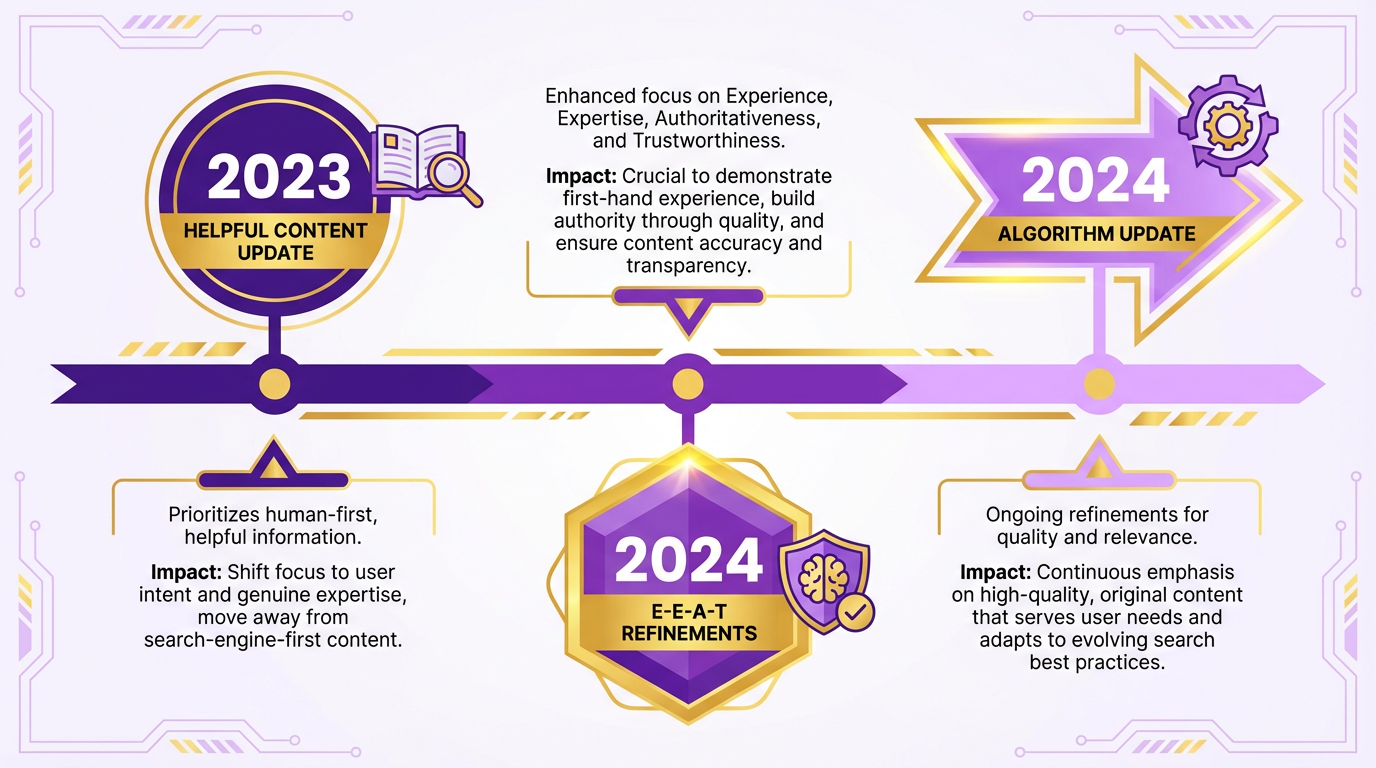
A real-world example: AnyPost.ai revamped its content strategy in 2024 by integrating user intent analysis with E-E-A-T principles. By auditing existing content for depth and expertise, they improved their organic traffic by over 40% within six months. This case highlights how proactive adaptation pays off. During interviews, demonstrating awareness of such strategies shows you can think beyond basic tactics.
Why Continuous Learning Matters
SEO isn’t a static field. Google’s algorithm evolves constantly-estimates suggest it changes 600-700 times annually, with major overhauls every few months. Businesses that lag in adapting see traffic drops of 15-30%, according to industry benchmarks. For professionals, this means staying informed isn’t just about rankings-it’s about career resilience. Interviewers want to hear how you track trends, whether through blogs, webinars, or communities like Reddit’s r/SEO.
Practical Ways to Stay Updated
- Follow Trusted Blogs and Newsletters: Sites like Search Engine Land and Ahrefs Blog break down updates in plain language.
- Attend Industry Events: Conferences like PubCon or SMX offer insights from Google insiders.
- Use Tools for Real-Time Data: SaaS providers like AnyPost.ai provide analytics on content performance and competitor moves.
- Join SEO Communities: Forums like Reddit or LinkedIn groups let you discuss trends with peers.
For example, AnyPost.ai’s users receive weekly reports on algorithmic shifts, helping them adjust strategies before competitors react. During interviews, mentioning tools or methods you use to stay informed shows initiative and technical awareness.
Avoiding Outdated Answers in Interviews
Candidates often cite “SEO is just keywords” or “more backlinks = better rankings”-both are myths debunked by recent updates. Modern SEO demands a holistic approach: technical audits, user experience optimization, and content that earns trust. Interviewers look for candidates who can explain why certain tactics matter. For instance, instead of saying “build backlinks,” explain how high-quality, relevant links from authoritative domains boost domain authority and search visibility.
As mentioned in the Avoiding Common Interview Mistakes section, overpromising or underestimating technical SEO fundamentals like crawlability issues can undermine credibility. Building on concepts from the Understanding Common SEO Interview Mistakes section, candidates should emphasize technical audits and user-centric content. Preparing for SEO interviews, as outlined in the Preparing for SEO Interviews section, starts with mastering keyword research and aligning strategies with current algorithm priorities.
Remember, SEO is about solving real problems for real users. Staying current isn’t just about algorithms-it’s about understanding human behavior and delivering value. In interviews, this mindset sets you apart as a forward-thinking professional ready to adapt to whatever comes next.
Conclusion and Next Steps
Avoiding common SEO interview mistakes starts with understanding what hiring managers truly value. Authenticity and practical experience trump formal credentials. If you’ve built and ranked a personal site, managed a YouTube channel, or optimized a local business page, highlight those achievements. Similarly, honesty about the tools you use-like a content analysis platform or backlink checker-shows self-awareness. Avoid pretending to master tools you haven’t actively used. These strategies position you as a credible, hands-on candidate.
Next Steps for Preparation
Now that you’ve identified key pitfalls, focus on structured preparation. Start by practicing real-world scenarios. For example, analyze a website’s on-page SEO issues or outline a strategy to boost organic traffic. Review technical concepts like canonical tags, schema markup, and core web vitals. Use AnyPost.ai to simulate interview questions and refine your answers. Their structured approach helps you articulate ideas clearly, from explaining keyword research to discussing AI content’s role in SEO.
Create a 30-day prep plan:
- Week 1: Build a sample website or blog post to demonstrate your skills.
- Week 2: Rank a target page using competitor analysis and on-page optimization.
- Week 3: Practice answering 10-15 common SEO questions aloud, focusing on clarity and confidence.
- Week 4: Conduct a mock interview with a peer or use AnyPost.ai’s AI-driven feedback.
This plan balances theory and action, ensuring you’re ready for both technical and behavioral questions.
Final Thoughts on Staying Competitive
SEO interviews test your ability to adapt and solve problems. Avoid generic answers by tying your responses to real projects. For instance, instead of saying “I use SEO tools,” explain how you use a content analysis platform to identify gaps in a client’s backlink profile. Stay updated on trends like AI-generated content and voice search, as outlined in the Staying Up-to-Date with SEO Trends section.
By focusing on authentic experience, tool-specific honesty, and structured preparation, you’ll stand out in a competitive field. Remember, hiring managers seek collaborators who can deliver results-not just recite terminology. Use AnyPost.ai to bridge knowledge gaps and refine your interview strategy. With deliberate practice, you’ll turn potential missteps into strengths, landing the role you deserve.
Building on concepts from the Understanding Common SEO Interview Mistakes section, avoid underestimating technical SEO fundamentals during interviews. Likewise, as mentioned in the Avoiding Common Interview Mistakes section, overpromising and underdelivering is a fast track to losing trust. Frame your answers with practical examples, such as explaining how you resolved crawlability issues or optimized schema markup.
Frequently Asked Questions
1. What are the most common SEO interview mistakes candidates make?
The most common mistakes include confusing on-page SEO with technical SEO, failing to explain how keyword research drives lead generation, and not providing concrete examples of past work (e.g., improving a blog’s rankings or fixing crawl errors). Candidates also often overlook technical fundamentals like mobile-first indexing or structured data, which are critical for modern SEO strategies. Interviewers look for candidates who can connect SEO concepts to real business outcomes, such as increased traffic or revenue.
2. How can I demonstrate practical SEO experience during an interview?
Share specific examples of projects you’ve managed, such as optimizing a website’s meta tags, improving a blog’s rankings, or fixing technical issues like broken links. Mention measurable results, like increased organic traffic or higher conversion rates. If you lack professional experience, discuss personal projects, such as managing a blog or YouTube channel, as highlighted in the article. Employers value tangible evidence of your ability to execute SEO strategies effectively.
3. Why is technical SEO emphasized in interviews over on-page SEO?
Technical SEO forms the foundation of a website’s search visibility. Issues like crawl errors, site speed, or mobile-first indexing problems can prevent search engines from properly indexing content, rendering on-page efforts ineffective. While on-page SEO (e.g., keyword optimization, meta descriptions) is important, technical SEO ensures the website is accessible and functional for both users and search engines. Interviewers prioritize candidates who understand this hierarchy to avoid costly mistakes in real-world implementations.
4. How do SEO interview mistakes impact a business financially?
Poor SEO strategies can lead to stagnant or declining organic traffic, reducing lead generation and sales. For example, a website that fails to rank for high-intent keywords might lose $10,000+ in monthly revenue compared to competitors. Businesses also face increased customer acquisition costs if SEO underperforms, as they may rely more on paid advertising. Interviewers assess candidates’ awareness of these financial implications to ensure they can prioritize strategies that deliver measurable business growth.
5. What resources can I use to prepare for SEO interviews?
The article recommends watching the video “SEO Job Interview Questions and Answers” by Chris with Minn Media for practical insights. Additionally, study technical SEO fundamentals, keyword research methods, and tools like Google Search Console or Ahrefs. Practicing with real-world examples—such as analyzing a blog or optimizing a small business site—can help solidify your understanding. Focus on explaining how SEO tactics directly contribute to business goals like revenue or user engagement.
6. How should I handle questions about content quality in SEO interviews?
Emphasize that high-quality, user-focused content is essential for SEO success. Explain how content should align with user intent, provide value beyond keywords, and encourage engagement (e.g., shares, comments). Avoid framing content purely as a keyword-stuffing exercise. Interviewers want candidates who understand that search engines prioritize content that solves problems and meets user needs, which indirectly improves rankings and conversions.
7. What role does structured data play in SEO interviews?
Structured data (e.g., schema markup) is often discussed in interviews because it directly impacts search visibility. Explain how it helps search engines display rich snippets, which can increase click-through rates. For example, a recipe site using schema might show star ratings in search results, making it stand out. Demonstrating knowledge of structured data shows you understand how to enhance a site’s performance beyond basic SEO tactics.