
B2B Corporate Lead Generation Checklist: Using Ahrefs Content Explorer

Related Video
Watch: Using Ahrefs to Uncover B2B Lead Opportunities by SalesHive
Section 1: Introduction to Ahrefs Content Explorer
Ahrefs Content Explorer is a data-driven tool designed to analyze content performance across the web, offering insights that extend beyond traditional SEO applications. It functions as a sales intelligence platform by enabling users to uncover competitor strategies, identify high-performing content, and discover keyword opportunities [1]. For B2B corporate lead generation, this tool provides a structured approach to understanding audience intent, mapping content gaps, and prioritizing topics that align with target buyer personas [3]. By integrating Ahrefs into lead generation workflows, teams can leverage real-time data to refine their content strategies and focus on topics that drive measurable engagement [4]. As outlined in the [Section 2: Setting Up Ahrefs Content Explorer for Lead Generation] section, defining target domains and competitors is a critical first step in this process.
Key Features and Benefits
Ahrefs Content Explorer’s core features include Site Explorer, Content Explorer, and keyword gap analysis tools. Site Explorer allows users to dissect competitors’ backlink profiles and content strategies, revealing which pages drive the most traffic and conversions [1]. Content Explorer filters content by metrics like backlinks, keywords, and traffic estimates, enabling teams to benchmark their content against industry leaders [3]. For B2B lead generation, these features help identify underutilized content topics and optimize existing assets for higher visibility [4].
The keyword gap analysis feature is particularly valuable for uncovering untapped opportunities. By comparing competitors’ top-performing keywords with those of your own content, teams can pinpoint gaps in their SEO strategy and prioritize content creation efforts [1]. This data-driven approach ensures resources are allocated to topics with high search volume and low competition, increasing the likelihood of attracting qualified leads [3]. As discussed in the [Section 3: Content Research and Planning with Ahrefs] section, leveraging these insights during the planning phase can streamline content development. Additionally, Ahrefs’ ability to track content performance over time helps teams refine their messaging and adjust tactics based on real-world results [4].
Relevance to B2B Lead Generation
In B2B lead generation, content must resonate with decision-makers who often conduct extensive research before engaging with a brand. Ahrefs Content Explorer supports this process by identifying high-intent keywords and content formats that appeal to target audiences. For example, analyzing competitors’ blog posts and whitepapers can reveal which topics generate the most backlinks and social shares, guiding teams to replicate or improve upon successful strategies [1]. This reduces guesswork in content planning and aligns efforts with proven best practices [3].
The tool also aids in prospecting by highlighting companies that are actively engaging with competitor content. By extracting contact information from these leads and mapping their interests to your content library, sales teams can craft personalized outreach campaigns [1]. For instance, if a prospect frequently interacts with content about cloud infrastructure, a tailored email referencing their activity increases the chances of conversion [4]. This level of personalization is critical in B2B scenarios where relationships and trust are foundational to closing deals [3].
Moreover, Ahrefs Content Explorer supports the creation of content that directly addresses audience pain points. By analyzing search queries and content gaps, teams can develop resources that answer specific questions or solve industry challenges, positioning their brand as an authority [1]. For example, identifying a surge in searches for “B2B software implementation costs” might lead to a case study or calculator tool that addresses this concern, converting website visitors into leads [3]. This proactive approach ensures content remains relevant and valuable to potential customers [4].
By combining competitor analysis, keyword research, and audience insights, Ahrefs Content Explorer transforms B2B lead generation from a reactive process into a strategic, data-driven initiative. Its emphasis on actionable intelligence ensures that teams can continuously optimize their content and outreach efforts, maximizing ROI and reducing time spent on low-potential leads [1][3][4]. Building on concepts from [Section 5: Lead Generation Strategies with Ahrefs Content Explorer], the next section will explore specific steps for integrating Ahrefs into your lead generation workflow.
Section 2: Setting Up Ahrefs Content Explorer for Lead Generation
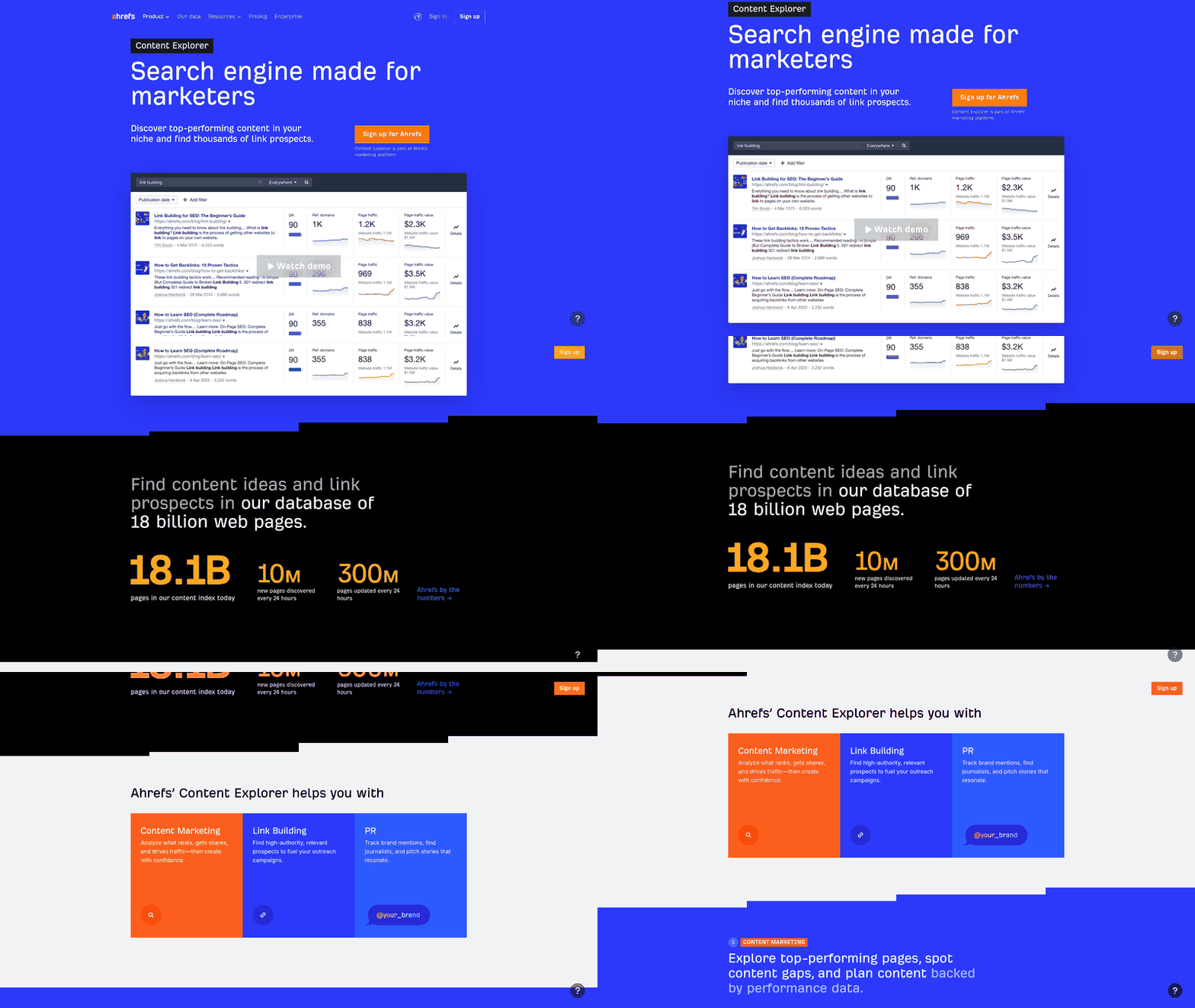
Creating a Project in Ahrefs
- Define your target domain or competitor in Ahrefs Content Explorer by entering their website URL. This identifies the scope of content analysis for lead generation opportunities [3]. As mentioned in the [Section 1: Introduction to Ahrefs Content Explorer] section, Ahrefs functions as a sales intelligence tool, enabling deeper competitive analysis.
- Select relevant content types (e.g., blog posts, case studies, whitepapers) to focus on B2B audiences. Prioritize formats that align with lead generation goals, such as in-depth guides or industry reports [2].
- Set up alerts for new content to monitor competitors or industry leaders. This ensures timely identification of trending topics and gaps in your content strategy [1].
Configuring Settings for Lead Generation
- Filter by keyword difficulty and traffic potential to prioritize content that balances search volume with achievable rankings. High-traffic, low-difficulty keywords are ideal for B2B lead generation [2].
- Enable competitor analysis tools to benchmark against industry rivals. Use Ahrefs’ Content Explorer to identify competitors’ high-performing pages and replicate their successful strategies [3].
- Customize content freshness settings to prioritize recent publications. Fresh content is more likely to capture current user intent and improve SEO visibility for lead generation [1].
Optimizing Content for SEO
- Analyze top-performing keywords using Ahrefs’ Keyword Explorer to align content with user intent. Focus on long-tail keywords that reflect B2B decision-making queries, such as “enterprise software ROI analysis” [2]. See the [Section 3: Content Research and Planning with Ahrefs] section for more details on leveraging keyword data for topic ideation.
- Audit on-page SEO elements (meta titles, headers, internal links) for existing content. Optimize these elements to improve search rankings and drive targeted traffic to lead capture pages [3].
- Identify content gaps by comparing your content inventory with competitors’. Target topics where competitors rank but you do not to capture untapped leads [1].
Leveraging Ahrefs for Inbound Lead Strategies
- Export high-potential keyword lists for content creation. Use Ahrefs’ Content Explorer to generate topic ideas based on competitors’ successful content, ensuring alignment with SEO best practices [3].
- Track backlink profiles of top-ranking content to understand authority-building strategies. Acquiring similar backlinks can enhance your content’s credibility and lead-generation potential [2]. Building on concepts from [Section 5: Lead Generation Strategies with Ahrefs Content Explorer], this step directly ties backlink analysis to lead generation outcomes.
- Monitor content performance metrics (e.g., organic traffic, bounce rate) to refine lead generation tactics. Adjust underperforming content based on data-driven insights from Ahrefs [1].
Section 3: Content Research and Planning with Ahrefs
Finding Content Topics with Ahrefs Content Explorer
- As mentioned in the [Section 1] section, use Ahrefs Content Explorer to search for keywords related to your B2B niche by entering primary terms and filtering by metrics like traffic potential, content type, and backlinks [1]. This helps identify high-performing topics already driving traffic to competitors or industry leaders.
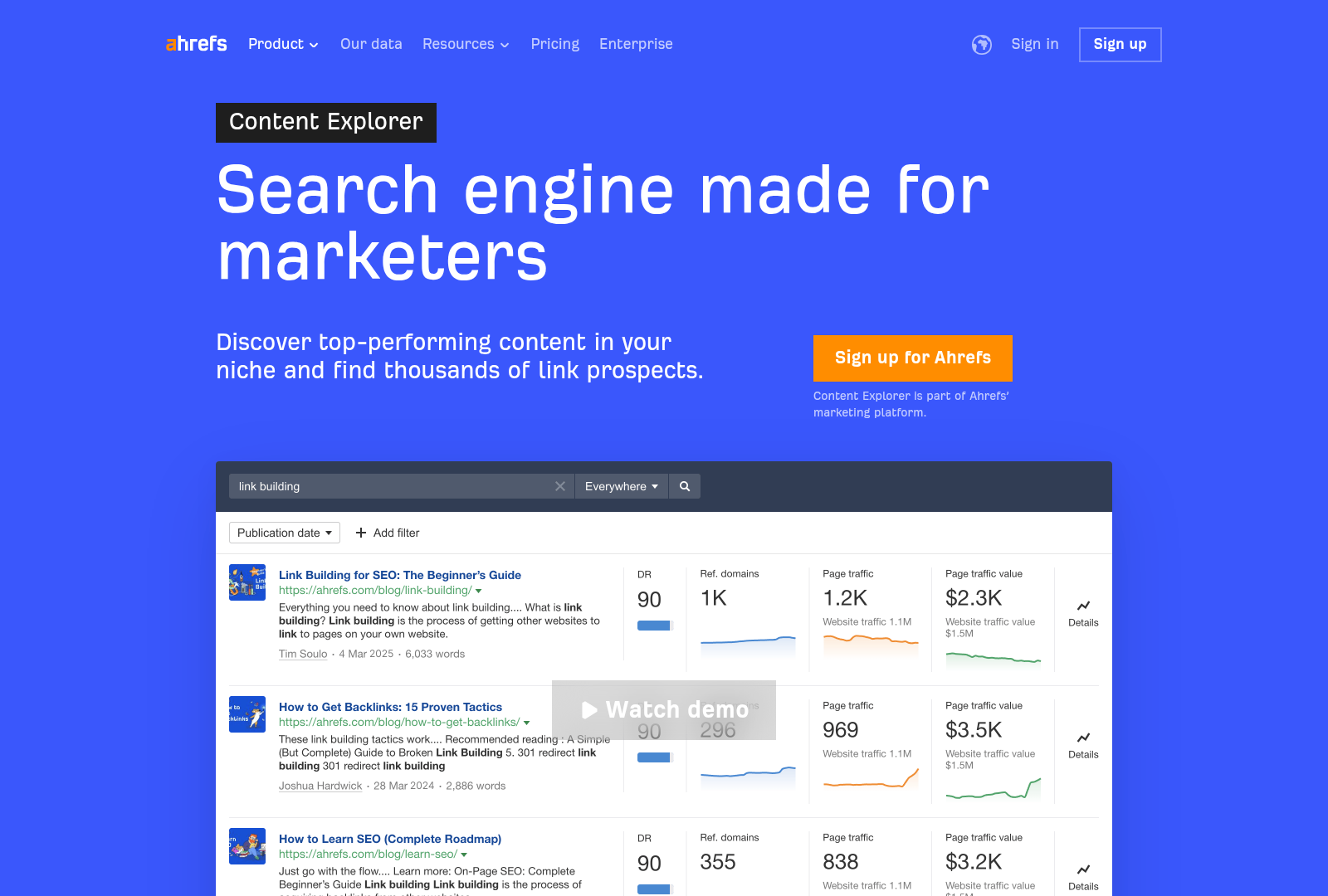
Analyzing Competitors and Identifying Gaps
- Compare competitors’ backlink profiles using Ahrefs Site Explorer to uncover gaps in your own strategy. See the [Section 2] section for more details on defining competitor domains before analyzing their backlink profiles [1]. Focus on domains linking to competitors but not to your site, as these represent opportunities for outreach or content creation [1].
Creating a Content Calendar Based on Research
- Organize identified topics and keyword opportunities into a content calendar, aligning publish dates with competitor gaps and seasonal search trends [1]. Building on concepts from [Section 5], this ensures consistency and maximizes visibility during peak interest periods [3].
Streamlining Execution with Ahrefs Data
- Monitor competitors’ content updates in Ahrefs to adjust your calendar dynamically. If a competitor publishes a high-performing piece, consider creating supplementary content or optimizing existing assets [1]. Use Ahrefs’ traffic and keyword data to set realistic goals for each content piece, such as targeting a specific number of backlinks or organic visits within three months [3]. Validate your calendar’s effectiveness by tracking metrics like traffic growth and lead conversions using Ahrefs’ historical data. Adjust underperforming topics based on real-time analytics [2].
By systematically using Ahrefs Content Explorer to research topics, analyze competitors, and plan content, B2B teams can align their strategies with proven high-performing data while capitalizing on untapped opportunities. Each step ensures content efforts are data-driven, reducing guesswork in lead generation [1][2][3].
Section 4: Creating and Optimizing Content with Ahrefs
- Use Ahrefs Content Explorer to identify high-traffic keywords and topics relevant to your B2B audience. This tool helps analyze competitors’ content and uncover gaps in your own strategy [2]. As mentioned in the [Content Research and Planning with Ahrefs] section, this aligns with foundational keyword research strategies.
- Convert long-form blog posts into shorter, platform-specific content such as LinkedIn articles, Twitter threads, or SlideShare presentations. This approach extends reach without requiring new content creation [3]. See the [Measuring and Tracking Lead Generation Success with Ahrefs] section for metrics to evaluate the effectiveness of repurposed content.
- Analyze competitors’ backlink profiles using Ahrefs to identify opportunities for improving your own content’s authority. Targeting similar backlink sources can boost visibility in competitive B2B markets [1]. Building on concepts from [Setting Up Ahrefs Content Explorer for Lead Generation], this step requires defining competitor domains first.
- Use Ahrefs’ site audit feature to flag technical SEO issues such as broken links or duplicate content. Resolving these issues enhances user experience and supports lead generation efforts [3]. For advanced audit techniques, refer to the [Advanced Ahrefs Content Explorer Techniques for Lead Generation] section.
Section 5: Lead Generation Strategies with Ahrefs Content Explorer
-
Use Ahrefs Site Explorer to analyze competitors’ domains and identify content that drives traffic and leads [1]. See the [Section 2: Setting Up Ahrefs Content Explorer for Lead Generation] section for more details on defining target domains.
-
Apply Keyword Gap analysis to discover keywords competitors rank for but your business can target [1]. Building on concepts from [Section 3: Content Research and Planning with Ahrefs], this technique helps uncover untapped niches.
-
Use Content Explorer metrics like backlinks and social shares to prioritize topics with proven engagement potential [3]. For guidance on integrating these insights into content creation, refer to [Section 4: Creating and Optimizing Content with Ahrefs].
-
Analyze backlink profiles of high-performing content to identify potential partnership opportunities with industry influencers [4]. Advanced techniques for this are covered in [Section 7: Advanced Ahrefs Content Explorer Techniques for Lead Generation].
-
Audit landing pages with Ahrefs On-Page SEO Checker to improve keyword optimization and user experience [3]. For foundational steps on setting up these audits, see [Section 4: Creating and Optimizing Content with Ahrefs].
Section 6: Measuring and Tracking Lead Generation Success with Ahrefs
Measuring and tracking lead generation success with Ahrefs Content Explorer requires a focus on specific metrics and actionable insights derived from competitor analysis, content performance, and keyword data. By leveraging Ahrefs’ tools, B2B marketers can quantify the impact of their content strategies, identify gaps, and refine approaches to improve lead generation outcomes. Below is a structured checklist to guide this process, organized into subsections for clarity and focus.
Tracking Lead Generation Metrics
- Monitor keyword rankings for target leads. Use Ahrefs Content Explorer to track how your content ranks for keywords associated with your ideal customer profile (ICP). This helps assess visibility in search results and alignment with buyer intent [2]. See the [Section 3] section for more details on identifying relevant keywords and topics.
- Track backlink growth from lead-generating content. Analyze the backlink profiles of pages that drive high-quality leads to identify which assets are most effective at attracting authority links. Ahrefs’ Backlink Checker can highlight trends in referral traffic and domain rating [1].
- Measure traffic estimates for lead-centric content. Use Ahrefs’ Traffic Analytics to compare the performance of your lead-generation content (e.g., whitepapers, case studies) against competitors’ similar assets. This metric reveals how well your content captures audience attention [4].
Using Ahrefs Analytics for Insights
- Analyze competitors’ content gaps. Use Ahrefs Content Explorer to search for competitors’ high-ranking content and identify topics they cover but you do not. This uncovers opportunities to create content that addresses unmet needs in your niche [1].
- Identify high-performing content formats. Filter Ahrefs’ Content Explorer by metrics like traffic, backlinks, and social shares to determine which content types (e.g., blog posts, webinars) resonate most with your target audience. Prioritize formats with proven engagement [4].
- Assess the authority of referral sources. Examine the domains linking to your lead-generation pages using Ahrefs’ Backlink Profile report. High-authority referral sources correlate with higher lead quality, so focus on amplifying relationships with these sites [1].
Adjusting Strategies Based on Data
- Optimize underperforming content. Use Ahrefs’ Content Gap tool to compare your content’s keyword coverage with competitors’ and identify areas for improvement. Updating underperforming pages with targeted keywords can boost rankings and lead generation [2]. Building on concepts from [Section 4], this step emphasizes SEO-optimized content refinement.
- Repurpose high-performing content. If Ahrefs data shows certain topics drive significant traffic or leads, create variations of that content (e.g., turning a blog post into an infographic) to maximize reach and engagement [4].
- Test new lead-generation angles. If competitors’ content ranks well for long-tail keywords related to your offerings, use Ahrefs’ Keywords Explorer to brainstorm and test similar phrases. This helps capture niche audiences further along the buying journey [2].
Limitations and Considerations
While Ahrefs provides robust tools for analyzing content and backlink performance, it does not directly track conversion rates or CRM-integrated lead data. Marketers must combine Ahrefs insights with tools like Google Analytics or CRM platforms to correlate traffic metrics with actual lead conversions [3]. See the [Section 5] section for strategies on integrating Ahrefs insights with broader lead generation tactics. Additionally, Ahrefs’ traffic and backlink estimates are based on algorithmic models, so they should be interpreted as directional indicators rather than exact figures.
By systematically applying Ahrefs Content Explorer to track metrics, uncover competitor insights, and refine content strategies, B2B marketers can create a data-driven lead generation framework. Regularly revisiting these analytics ensures adaptability to market shifts and evolving buyer preferences, ultimately improving the efficiency of lead generation efforts.
Section 7: Advanced Ahrefs Content Explorer Techniques for Lead Generation
Advanced Ahrefs Features for Lead Generation
- Use Ahrefs Content Explorer’s
content:search operator to identify high-performing content in your niche, filtering by metrics like traffic, backlinks, or keyword difficulty to prioritize leads with proven engagement potential [1]. This technique helps uncover gaps in competitors’ content strategies, allowing you to target audiences actively seeking solutions in your industry. See the [Section 3] section for more details on using thecontent:operator for finding content topics. - Leverage Site Explorer to analyze competitors’ backlink profiles and identify potential lead sources by cross-referencing domains with high domain ratings and relevant content. For example, if a competitor’s article on "B2B SaaS onboarding" has 500 backlinks, prioritize similar topics for your lead generation campaigns [1]. This method ensures alignment with content already validated by authority sites.
- Conduct keyword gap analysis between your domain and competitors to discover untapped keywords with commercial intent. Focus on keywords with monthly search volumes above 1,000 and low keyword difficulty scores, as these indicate high-value opportunities for lead generation [1].
Scaling Lead Generation Efforts
- Export Content Explorer results to CSV or Excel to segment leads based on custom criteria (e.g., industry, company size, or geographic location). This allows bulk outreach campaigns tailored to specific buyer personas, improving conversion rates [1]. As mentioned in the [Section 2] section, exporting data is a foundational step in organizing lead generation workflows.
- Combine Ahrefs data with CRM tools like HubSpot or Salesforce to automate lead scoring. For example, assign higher scores to domains with high traffic or backlink counts, signaling stronger purchasing intent [1]. This integration reduces manual effort while prioritizing high-quality prospects.
- Use Ahrefs’ “Top Pages” report to identify competitors’ most linked-to pages, then create targeted content that addresses gaps or improves upon their offerings. Repurposing this data at scale ensures consistent lead generation without duplicating competitors’ efforts [1].
Automating Content Creation and Optimization
- Set up Content Explorer alerts for new content from competitors or industry influencers. These alerts notify you when fresh content is published, enabling rapid creation of optimized, competing content that captures the same audience [1].
- Repurpose high-performing content ideas from Ahrefs’ Content Explorer into multiple formats (e.g., blog posts, infographics, or social media snippets). This reduces time spent on ideation while maximizing reach across channels [1].
- Automate on-page SEO by using Ahrefs’ SEO Checker to analyze competitors’ top pages and replicate their meta tags, header structures, and internal linking strategies. This ensures your content is optimized for the same keywords and user intent [1]. Building on concepts from [Section 4], this approach streamlines content optimization for lead generation.
Multi-Tool Integration for Enhanced Efficiency
- Cross-reference Ahrefs data with tools like LinkedIn Sales Navigator to validate lead relevance. For instance, use Ahrefs to identify domains with high authority and then search LinkedIn for decision-makers at those companies, streamlining outreach [3].
- Automate data workflows by integrating Ahrefs with Zapier or Make.com to sync content performance metrics with project management platforms like Asana or Trello. This ensures teams stay aligned on lead generation priorities without manual data entry [3].
By combining these advanced techniques, B2B marketers can systematically uncover, validate, and scale lead generation opportunities while minimizing manual effort. Always validate findings with real-world data and adjust strategies based on performance metrics tracked through Ahrefs and complementary tools [1].
Section 8: Best Practices and Common Mistakes to Avoid
Best Practices for Using Ahrefs Content Explorer
- Focus on high-authority domains when identifying lead opportunities, as these are more likely to attract qualified B2B buyers [1]. Prioritizing domains with strong domain ratings ensures credibility and relevance in competitive markets. As mentioned in the [Section 2] section, defining target domains is the first step in setting up Ahrefs for lead generation.
- Use Ahrefs’ competitor analysis features to uncover content gaps, such as topics competitors rank for but you do not. This helps refine your content strategy to target underserved audiences [1]. Pair this with keyword clustering to group related topics effectively [2].
- Regularly update your keyword lists to reflect evolving buyer intent and industry trends. Stale keywords may lead to outdated content that fails to attract leads [2]. Tools like Ahrefs’ Content Explorer can automate this process by highlighting rising search terms [4].
Common Mistakes to Avoid
- Ignoring keyword intent during searches can result in irrelevant content ideas. For example, targeting transactional keywords (e.g., “buy SaaS tools”) without aligning your content to conversion-focused messaging may waste resources [1]. Always validate intent using Ahrefs’ keyword difficulty and search volume metrics [2].
- Failing to refine search filters in Content Explorer often leads to overwhelming or low-quality results. Narrow searches by content type (e.g., blog posts vs. case studies) and publication date to prioritize actionable insights [4].
- Overlooking technical SEO aspects, such as site speed or mobile optimization, can undermine even the best content strategies. Use Ahrefs in conjunction with tools from [3] to audit technical barriers that might hinder lead generation efforts [3].
Troubleshooting Tips
- If Content Explorer returns inconsistent results, verify that your search queries are specific enough. Broad terms like “software solutions” may yield too many irrelevant leads, while overly narrow terms may return none [4]. Test variations using Ahrefs’ keyword suggestions.
- Address integration issues with other lead generation tools by cross-referencing data sources. For example, if Ahrefs identifies a high-potential domain but your CRM lacks engagement data, investigate alignment gaps in your workflow [3]. See the [Section 5] section for more details on leveraging Ahrefs for lead generation in conjunction with external tools.
- When troubleshooting low lead conversion rates, audit your content’s backlink profile using Ahrefs. Low-quality backlinks may signal poor authority to prospects, reducing trust in your brand [1]. Disavow harmful links and focus on building relationships with high-DA domains instead [2].
Avoiding Over-Reliance on Ahrefs
- While Ahrefs is powerful, combining it with tools like Google Analytics or LinkedIn Sales Navigator provides a more holistic view of buyer behavior [3]. Building on concepts from [Section 7], advanced users should explore Ahrefs’
content:operator to uncover nuanced lead generation opportunities. - Avoid treating Ahrefs’ data as static. Continuously iterate on your lead generation strategy by comparing Ahrefs insights with real-world sales feedback. For instance, if a top-ranked piece of content isn’t generating leads, reassess its alignment with your ideal customer profile [2].
Final Recommendations
- Document your Ahrefs workflow to ensure consistency across teams. Share best practices for using filters, interpreting metrics, and validating leads [4]. This reduces the risk of misinterpretation during collaborative efforts.
- Train your team to recognize common pitfalls, such as chasing low-volume keywords or neglecting on-page SEO elements like meta descriptions. Pair Ahrefs training with resources from [2] to reinforce actionable techniques [2]. See the [Section 4] section for more details on optimizing content with on-page SEO.
- Schedule monthly reviews of your Ahrefs data to identify trends, such as declining engagement from specific industries or rising competition in key markets. Proactive adjustments based on these insights can prevent stagnation in lead generation [1].
References
[1] Using Ahrefs to Uncover B2B Lead Opportunities | SalesHive Blog - https://saleshive.com/blog/b2b-lead-using-ahrefs-uncover-opportunities/
[2] 5-Step Guide to Using SEO for B2B Software Lead Generation - https://blog.crozdesk.com/b2b-software-lead-generation/
[3] 20+ Lead Generation Tools to Help You Generate More Leads - https://salesintel.io/blog/best-lead-generation-tools/
[4] Using Ahrefs to Uncover B2B Lead Opportunities by SalesHive - https://www.youtube.com/watch?v=CQQp_8nuLMM
Frequently Asked Questions
1. How do I set up Ahrefs Content Explorer specifically for B2B lead generation?
To set up Ahrefs for B2B lead generation, start by defining your target domains (your own and competitors') and industry keywords. Use Content Explorer to filter competitors’ content by metrics like backlinks, traffic, and keyword difficulty. Focus on content types (e.g., blog posts, whitepapers) that align with your buyer personas. Export competitor data for further analysis and create a content calendar addressing gaps in your strategy. For example, prioritize topics competitors rank for but lack in-depth coverage.
2. How can I identify competitors’ high-performing content using Ahrefs?
Use Site Explorer to analyze competitors’ domains and filter their content by metrics such as traffic, backlinks, and keyword rankings. Look for pages with high traffic but low competition, as these are easier to outrank. For instance, search for competitors’ top blog posts using filters like “Content Type: Blog” and “Traffic: 10k–50k.” Then, extract their most linked-to content or high-performing keywords to replicate or improve upon.
3. What metrics should I prioritize when analyzing content with Ahrefs for B2B lead generation?
Focus on backlinks (quality and quantity), traffic estimates (page and domain-level), keyword difficulty, and content type (e.g., blogs, case studies). For B2B leads, engagement metrics like form fills or downloads (if tracked) are also critical. Prioritize content with high traffic but low competition keywords, as these offer faster ROI. Avoid chasing high-traffic pages with overly competitive keywords unless your resources allow.
4. How does Ahrefs help uncover content gaps in my B2B strategy?
Ahrefs’ keyword gap analysis compares your content to competitors’, revealing keywords they rank for but you don’t. Use this to identify topics or long-tail keywords you’ve overlooked. For example, if competitors frequently publish content about “cloud migration ROI” but you haven’t, create a targeted blog post or webinar on that topic. Also, use the Content Explorer to find trending questions or pain points in your industry that haven’t been addressed.
5. Can Ahrefs track the performance of my own content over time?
Yes. Use Ahrefs’ Content Monitoring feature to track metrics like traffic, backlinks, and keyword rankings for your pages. Set up alerts for significant changes (e.g., a drop in traffic or new competitors outperforming you). For B2B lead generation, combine this with CRM data to correlate content performance with lead conversions, helping you refine what content drives the most qualified leads.
6. How does Ahrefs compare to other SEO tools for B2B lead generation?
Ahrefs excels in competitor analysis and keyword gap insights, offering granular data on backlinks and content performance. Tools like SEMrush or Moz may provide broader SEO metrics, but Ahrefs’ focus on content and keyword research makes it ideal for B2B lead generation. Its ability to track competitors’ content strategies in real-time and identify underutilized topics gives it an edge for data-driven B2B teams.
7. What’s the best way to use Ahrefs for prioritizing topics in a B2B content strategy?
Start by using Content Explorer to filter competitors’ high-traffic, low-competition content. Cross-reference this with your buyer personas’ pain points to identify overlapping topics. Prioritize keywords with high search volume and low difficulty, and map them to your sales funnel (e.g., awareness, consideration, decision stages). For example, if competitors rank for “B2B SaaS onboarding challenges” but lack solutions, create a guide addressing that gap. Regularly audit your own content’s performance to refine priorities.