
B2B Demand Gen Agency Checklist: Ahrefs Content Explorer Tool

Introduction to Ahrefs Content Explorer Tool
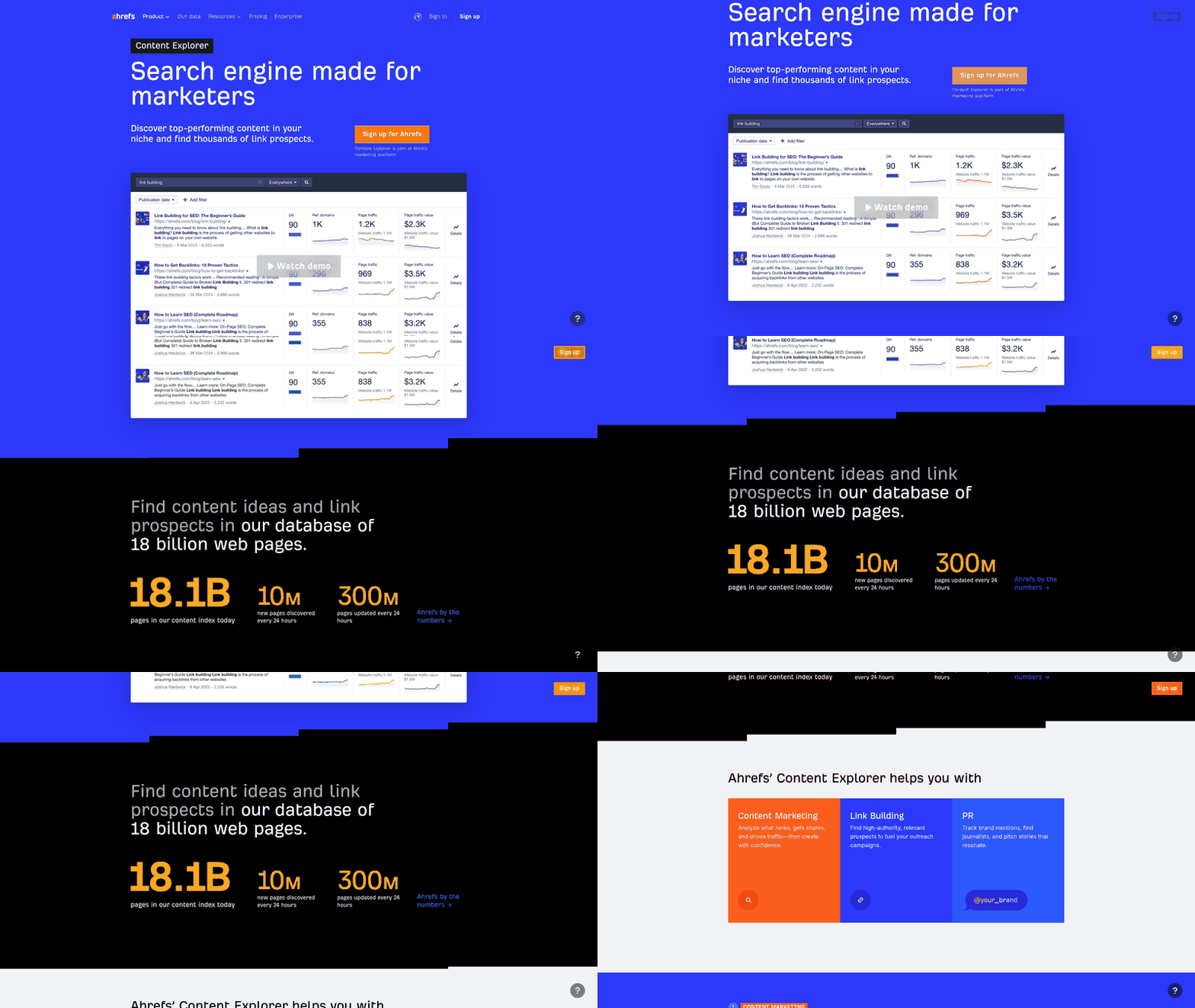
Ahrefs Content Explorer is a critical tool for B2B demand generation agencies, offering capabilities to analyze content trends, identify keyword opportunities, and refine SEO strategies. As a leading SEO platform, Ahrefs empowers agencies to manage B2B content and inbound strategies effectively, aligning with the growing need for data-driven marketing in 2025 [1]. Its Content Explorer tool specifically enables users to explore topics, track trends, and uncover content gaps by inputting keywords or themes, making it indispensable for crafting competitive B2B campaigns [2]. This functionality supports demand generation by helping marketers prioritize high-impact topics and optimize content to attract qualified leads [7].
Core Features and Capabilities
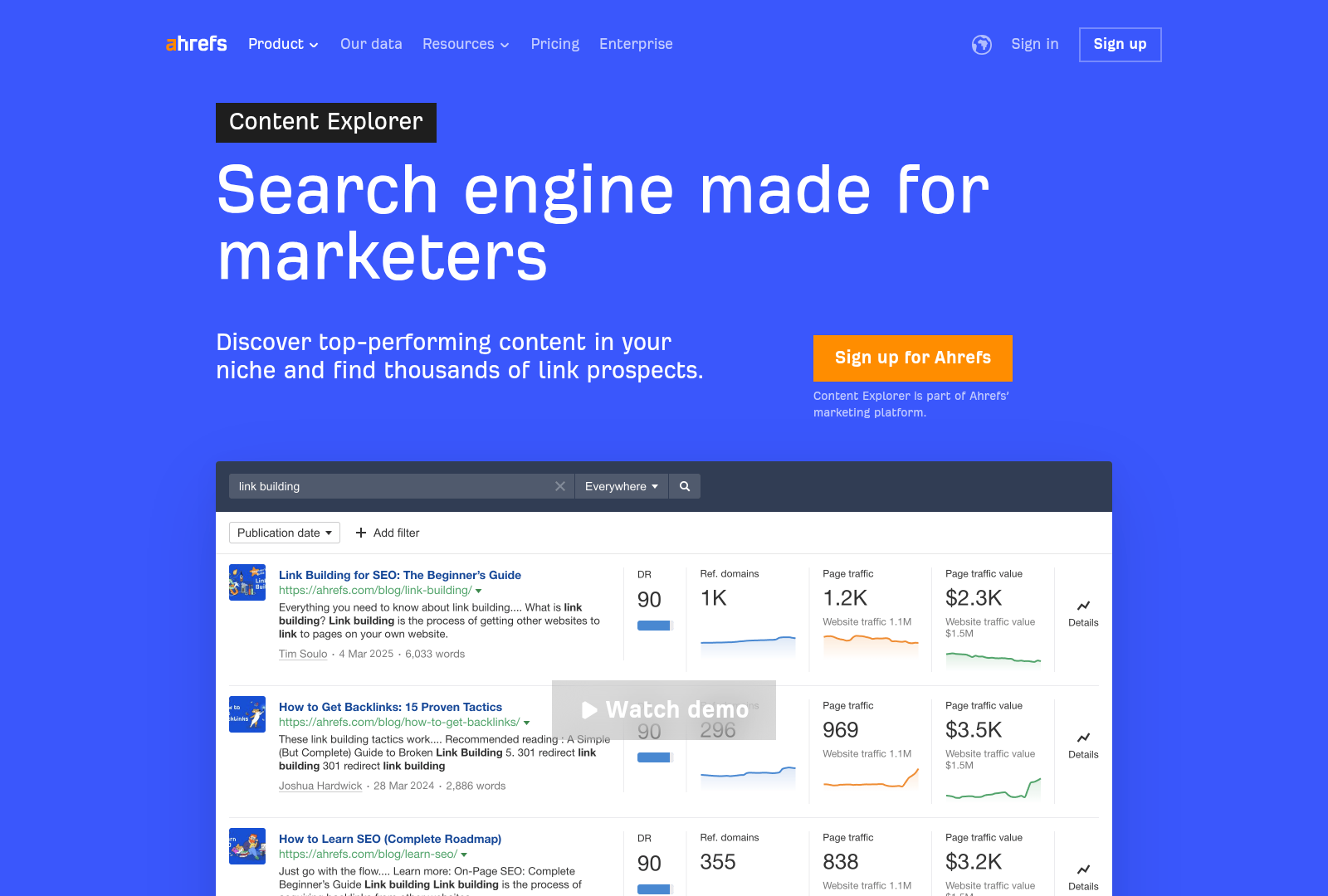
Ahrefs Content Explorer’s primary strength lies in its ability to surface actionable insights from vast datasets. By entering a keyword or topic, the tool scans Ahrefs’ database to reveal trending content, related keywords, and competitor strategies [2]. For example, agencies can use it to identify topics with high search volume but low competition, enabling them to create targeted content that ranks well and drives organic traffic [7]. Additionally, the tool provides metadata such as content length, backlink profiles, and social shares, helping marketers benchmark their work against industry standards [8]. See the [SEO Optimization with Ahrefs Content Explorer] section for more details on analyzing competitors’ organic keywords and identifying gaps. These features collectively streamline content ideation and optimization, reducing the guesswork in B2B SEO strategies [1].
Relevance to B2B Demand Generation
In the context of B2B demand generation, Ahrefs Content Explorer bridges the gap between SEO and lead generation. By analyzing competitors’ content strategies, agencies can uncover gaps in their own offerings and tailor content to address specific audience pain points [3]. For instance, if a competitor’s blog post about “B2B SaaS onboarding strategies” garners significant traffic, the tool can highlight related subtopics or long-tail keywords to target [7]. This data-driven approach ensures that content efforts align with buyer intent, increasing the likelihood of converting organic traffic into leads [1]. Furthermore, the tool’s ability to track content performance over time allows agencies to refine their strategies iteratively, maximizing ROI for B2B clients [8].
Integration with Broader SEO and Content Strategies
Ahrefs Content Explorer does not operate in isolation; it integrates seamlessly with other Ahrefs tools like Keywords Explorer and Site Explorer to form a comprehensive SEO ecosystem [6]. For B2B agencies, this integration is vital for tasks such as competitor analysis, where identifying high-performing pages in the industry informs content creation and link-building efforts [2]. By combining Content Explorer’s topic research with Keywords Explorer’s granular keyword data, marketers can develop content that balances search volume, relevance, and feasibility [8]. See the [Best Practices for Scaling B2B Demand Generation Efforts] section for more details on bulk keyword research to identify high-intent keywords. This synergy ensures that B2B demand generation campaigns are both strategically aligned and technically optimized [3].
While the tool is powerful, its effectiveness hinges on how agencies apply its insights. For example, simply identifying trending topics is insufficient without a plan to repurpose or expand on them through blog posts, whitepapers, or case studies [7]. Agencies must also balance quantity and quality, ensuring that content produced via Ahrefs’ suggestions meets the nuanced needs of B2B audiences, such as in-depth technical explanations or industry-specific use cases [1]. Building on concepts from [SEO Optimization with Ahrefs Content Explorer], agencies can embed Ahrefs Content Explorer into their workflow to transform raw data into actionable strategies that drive sustained growth.
Setting Up Content Marketing with Ahrefs
- Define clear content marketing objectives aligned with demand generation goals, such as lead acquisition or brand authority, to ensure Ahrefs data directly supports business outcomes [7]. As mentioned in the Introduction to Ahrefs Content Explorer Tool section, Ahrefs’ capabilities are critical for B2B demand generation strategies.
- Conduct keyword research using Ahrefs Keywords Explorer to bulk search terms relevant to your niche, leveraging keyword volume and competition metrics to prioritize high-impact topics [5].
- Analyze competitors with Ahrefs Site Explorer to identify their top-performing content, uncover gaps in your strategy, and benchmark performance against industry benchmarks [6]. See the SEO Optimization with Ahrefs Content Explorer section for more details on using Site Explorer to refine SEO strategies.
- Prioritize topics based on keyword relevance and search intent, combining Ahrefs’ keyword data with Exploding Topics (referenced in [7]) to focus on trending, high-value themes.
Configuring Ahrefs for Content Optimization
- Set up custom filters in Ahrefs Content Explorer to segment competitors’ content by traffic, backlinks, or content type, enabling data-driven decisions for your own editorial calendar [7]. As mentioned in the Introduction to Ahrefs Content Explorer Tool section, this functionality is central to analyzing content trends.
- Download competitor keywords in bulk using Ahrefs’ export functionality to analyze their keyword strategies and identify opportunities for content improvements or gaps [8].
- Monitor keyword performance regularly by revisiting Ahrefs’ Keywords Explorer to adjust your content strategy based on shifting search volumes or competitor tactics [5].
- Optimize on-page SEO using Ahrefs’ content suggestions, such as incorporating related keywords or improving meta tags, to enhance visibility in search results [8].
Integrating Ahrefs with Existing Content Workflows
- Sync Ahrefs data with editorial calendars to align content creation with strategic keyword targets and competitor activity, ensuring consistency in topic planning [7].
- Automate keyword tracking for published content by exporting Ahrefs reports and integrating them with CMS or project management tools for ongoing performance analysis [8].
- Collaborate across teams using Ahrefs’ shared dashboards, allowing marketers, writers, and SEO specialists to access unified data for faster decision-making [6]. Building on concepts from the Advanced Strategies for B2B Demand Generation with Ahrefs section, this collaboration enhances strategic alignment.
- Audit content performance quarterly by cross-referencing Ahrefs’ traffic reports with internal analytics tools to refine workflows and eliminate underperforming content [5].
Multi-Hop Strategic Alignment
- Use Ahrefs to validate experimentation-led GTM strategies, such as testing new content formats or topics, by comparing pre- and post-launch traffic metrics [7].
- Combine competitor analysis with keyword downloads to reverse-engineer successful content patterns, such as word count or backlink sources, for replication in your strategy [6][8]. See the Best Practices for Scaling B2B Demand Generation Efforts section for more on leveraging Ahrefs for bulk keyword research and scaling.
- Integrate Ahrefs’ content gap analysis with your SEO strategy to systematically address missing keywords, as outlined in B2B SEO tool guides [2], while avoiding redundant content [7].
- Scale traffic without overproducing content by reusing high-performing Ahrefs-identified keywords across repurposed assets (e.g., blogs to infographics), reducing resource strain [7].
SEO Optimization with Ahrefs Content Explorer
- Use Ahrefs Site Explorer to analyze competitors’ organic keywords and identify gaps in your own content strategy. This tool reveals which keywords competitors rank for, enabling you to target similar or overlapping terms [4]. See the [Introduction to Ahrefs Content Explorer Tool] section for more details on its foundational capabilities.
- Leverage Keywords Explorer to assess keyword metrics like search volume, keyword difficulty (KD), and click-through rate (CTR). High-volume, low-KD keywords are ideal for content targeting, as they balance traffic potential with achievability [5]. As mentioned in the [Setting Up Content Marketing with Ahrefs] section, aligning keyword research with demand generation goals ensures strategic focus.
- Utilize Content Explorer to discover trending topics by entering seed keywords. The tool surfaces content ideas based on real-time search trends, ensuring your content aligns with current audience interests [2]. Building on concepts from the [Repurposing Content for Multi-Channel Distribution] section, these trends can inform content repurposing strategies.
-
Perform content gap analysis by comparing your keyword rankings to competitors’. Focus on keywords competitors rank for but you don’t, and create content to target those terms [4]. See the [Measuring and Tracking Content Performance with Ahrefs] section for more details on identifying high-performing pages.
-
Apply bulk keyword research to validate content ideas at scale. Use Ahrefs’ bulk search feature to evaluate multiple keywords simultaneously, prioritizing those with high search intent and low competition [5]. Building on concepts from the [Best Practices for Scaling B2B Demand Generation Efforts] section, bulk research streamlines topic planning for large content operations.
-
Optimize on-page elements using Ahrefs’ content suggestions. The tool provides recommendations for title tags, meta descriptions, and content structure to improve click-through rates and readability [7]. As discussed in the [Advanced Strategies for B2B Demand Generation with Ahrefs] section, tone alignment with competitors further enhances these optimizations.
-
Monitor keyword ranking progress with Ahrefs’ automated reports. Track changes in your keyword positions over time to measure the impact of content updates or new campaigns [1]. See the [Measuring and Tracking Content Performance with Ahrefs] section for more details on tracking organic traffic growth.
-
Benchmark against competitors using Ahrefs’ competitive analysis tools. Compare organic traffic, backlink growth, and keyword rankings to identify areas for improvement [6]. Building on concepts from the [Advanced Strategies for B2B Demand Generation with Ahrefs] section, competitor benchmarking informs personalized content approaches.
-
Generate custom SEO dashboards to visualize key metrics like traffic trends, top-performing content, and backlink acquisition. Export data for stakeholder reporting or further analysis [8].
-
Combine Ahrefs Content Explorer with B2B reporting tools to align SEO efforts with broader demand generation goals. For example, integrate keyword data with lead generation dashboards to prioritize content that drives high-intent traffic [1]. As mentioned in the [Best Practices for Scaling B2B Demand Generation Efforts] section, this integration supports data-driven scaling.
-
Use topic cluster modeling to structure content around pillar pages and subtopics. Ahrefs’ keyword data helps identify authoritative seed topics and supporting content for comprehensive coverage [7]. Building on concepts from the [Setting Up Content Marketing with Ahrefs] section, this strategy ensures content aligns with defined marketing objectives.
Repurposing Content for Multi-Channel Distribution
Benefits of Content Repurposing
Content repurposing allows B2B marketers to maximize the value of existing assets while reducing the need to create entirely new content, a critical factor in scaling organic traffic efficiently [7]. By transforming a single piece of content—such as a blog post—into social media snippets, email newsletters, or case study summaries, teams can reach diverse audiences across multiple touchpoints without duplicating effort [7]. This strategy also reinforces SEO efforts by keeping high-performing keywords active across platforms, improving visibility in search engine results [7]. Additionally, repurposing saves time and resources, enabling demand generation teams to focus on experimentation and data-driven adjustments rather than content creation at scale [7].
Strategies for Repurposing Content with Ahrefs
Ahrefs’ Content Explorer is a key tool for identifying content gaps and opportunities for repurposing by analyzing competitors’ high-performing pages [7]. As mentioned in the [Introduction to Ahrefs Content Explorer Tool] section, this tool helps uncover trends and keyword opportunities that inform content strategy. Start by using the tool to discover which topics generate the most traffic or engagement in your niche, then map those themes to underutilized formats like infographics, video scripts, or LinkedIn articles [7]. For example, a lengthy blog post on B2B SEO strategies can be segmented into shorter, platform-specific posts for Twitter threads or Instagram carousels, leveraging the same core keywords identified via Ahrefs [7]. Bulk keyword searches in Ahrefs’ Keywords Explorer [5] can further refine repurposing efforts by highlighting low-competition terms to target in new content variations.
Best Practices for Multi-Channel Content Distribution
To optimize repurposed content for different channels, tailor messaging and formatting to audience preferences. For instance, social media audiences respond well to concise, visually engaging posts, while email newsletters require more detailed explanations and clear CTAs [7]. See the [Best Practices for Scaling B2B Demand Generation Efforts] section for more details on aligning content formats with audience behavior. Use Ahrefs to audit competitors’ content distribution strategies, identifying which platforms drive the most backlinks or shares for specific topics [7]. Schedule repurposed assets using a content calendar that aligns with audience behavior—e.g., publishing in-depth blog posts during weekdays and shorter updates on weekends [7]. Track performance metrics like click-through rates and time-on-page across channels to refine future repurposing efforts [7].
Checklist for Repurposing Workflow
- Audit existing content using Ahrefs’ Content Explorer to identify high-performing assets for repurposing [7].
- Segment long-form content into modular components (e.g., turning blog sections into social media posts) to maintain consistency while adapting to platform requirements [7].
- Leverage competitor analysis in Ahrefs to uncover underutilized topics or formats that could enhance your multi-channel strategy [7].
- Optimize metadata for repurposed content, ensuring keywords and titles align with SEO goals identified through Ahrefs’ Keywords Explorer [5].
- Test distribution timing by analyzing competitor performance data in Ahrefs to determine optimal posting schedules [7].
- Monitor cross-channel engagement metrics to prioritize formats and topics that generate the highest demand signals [7].
Limitations and Considerations
While Ahrefs provides robust tools for content discovery and keyword analysis, it does not offer built-in workflows for repurposing or scheduling content across channels [7]. Teams must integrate Ahrefs insights with other tools like Canva for design, Buffer for social media scheduling, or Mailchimp for newsletters. Additionally, sources do not explicitly outline automation techniques for bulk repurposing, requiring manual adaptation of content to maintain quality across platforms [7]. Finally, repurposing should not compromise originality—each version must add value for its specific audience to avoid diluting brand authority [7].
Leveraging AI for Automated Content Generation

Introduction to AI-Powered Content Generation
AI-powered content generation leverages algorithms to automate tasks like ideation, drafting, and optimization, reducing manual effort while maintaining relevance. While standalone AI tools like ChatGPT generate text, platforms such as Ahrefs integrate AI capabilities into data-driven workflows. Ahrefs Content Explorer, for instance, uses AI to analyze content performance metrics and identify gaps in competitors’ strategies, enabling teams to prioritize topics with high potential for traffic growth [7]. This synergy between AI and SEO tools allows marketers to scale content creation by focusing on data-backed opportunities rather than guesswork. However, the effectiveness of AI-generated content ultimately depends on the quality of input data and alignment with audience intent—factors Ahrefs helps quantify through keyword and content analysis [5]. See the [Introduction to Ahrefs Content Explorer Tool] section for more details on how this tool identifies competitive gaps.
Ahrefs Capabilities for Automated Content Creation
Keyword Research and Bulk Analysis
- Bulk search keywords using Ahrefs Keywords Explorer to identify high-volume, low-competition terms. This streamlines topic selection by highlighting keywords with actionable search intent, ensuring generated content aligns with user needs [5]. As mentioned in the [Setting Up Content Marketing with Ahrefs] section, defining clear objectives is critical to align keyword strategies with demand generation goals.
- Export downloaded keywords for batch processing in content planning tools. By exporting keyword lists via Ahrefs’ interface, teams can automate the creation of editorial calendars or feed AI writing tools with structured data, reducing redundant research [8].
- Leverage Content Explorer to audit competitors’ content and uncover underperforming topics. The tool’s AI-driven analysis surfaces gaps in competitors’ content strategies, such as outdated posts or missed long-tail opportunities, which can be repurposed or optimized [7].
Content Strategy Optimization
- Map keywords to content gaps by cross-referencing Ahrefs’ keyword data with existing content inventories. This ensures AI-generated content targets unaddressed queries rather than duplicating existing material, improving SEO value [5]. Building on concepts from the [SEO Optimization with Ahrefs Content Explorer] section, this process leverages competitive keyword analysis to refine topic prioritization.
- Automate content updates by using Ahrefs’ traffic and backlink reports to identify posts needing optimization. AI can then rewrite or expand these underperforming pages based on updated keyword relevance and user engagement signals [8].
- Scale traffic without excessive manual writing by reusing high-performing content structures. Ahrefs’ Content Explorer reveals which formats (e.g., listicles, guides) drive the most traffic, allowing AI tools to replicate successful frameworks while adding new insights [7].
Ethical Considerations for AI-Generated Content
Data Accuracy and Transparency
- Validate AI-generated content against Ahrefs’ keyword data to ensure alignment with search intent. Relying solely on AI without cross-checking metrics like keyword difficulty or click-through rates can lead to irrelevant or low-performing content [5]. See the [Measuring and Tracking Content Performance with Ahrefs] section for insights on using Ahrefs to validate content effectiveness.
- Disclose AI authorship where required by industry standards or platform policies. While Ahrefs tools focus on data input rather than content generation, ethical use demands transparency about the role of automation in content workflows [7].
Quality Control and Originality
- Audit AI outputs for plagiarism risks using Ahrefs’ content explorer to compare against existing web content. This step prevents unintentional duplication and ensures uniqueness, a critical factor for SEO performance [8].
- Balance automation with human oversight to maintain brand voice and contextual nuance. Ahrefs provides the data to guide content direction, but final edits should ensure the output reflects organizational expertise and avoids generic phrasing [7].
Multi-Hop Integration with Ahrefs Tools
By combining Ahrefs’ bulk keyword export [8] with Content Explorer’s gap analysis [7], teams can create semi-automated workflows where AI drafts content based on prioritized topics. For example, exporting a keyword list [5] and feeding it into an AI writer ensures generated content addresses specific search queries while leveraging Ahrefs’ competitive insights. However, this process requires iterative validation—using Ahrefs’ traffic reports to assess post-launch performance and refine AI inputs accordingly. This closed-loop system minimizes reliance on guesswork, aligning automated content creation with measurable SEO outcomes.
Ethical and effective use of AI in content generation hinges on integrating Ahrefs’ data-centric approach with human judgment. While the toolset provides the infrastructure to identify opportunities and validate outputs, ethical considerations like originality and transparency must remain central to automation strategies. By adhering to these principles, B2B demand gen teams can scale content production without compromising quality or trust.
Measuring and Tracking Content Performance with Ahrefs
- Track organic traffic growth using Ahrefs’ Site Audit and Content Explorer to identify high-performing pages and underperforming content gaps [1]. Organic traffic is a core KPI for B2B demand generation, as it reflects the effectiveness of SEO and content strategy in attracting targeted audiences [3]. See the [SEO Optimization with Ahrefs Content Explorer] section for more details on analyzing competitors’ organic keywords.
- Monitor backlink acquisition and quality through Ahrefs’ Backlink Checker to assess content authority and identify toxic links that could harm SEO performance [1]. High-quality backlinks from relevant domains are critical for improving search rankings and driving referral traffic [3].
- Measure content engagement metrics, such as bounce rate and time on page, via Ahrefs’ integration with Google Analytics to evaluate user interaction with blog posts, case studies, and landing pages [7]. Engagement data highlights content that resonates with B2B audiences and signals opportunities for optimization [1].
- Analyze conversion rates for content-driven campaigns using Ahrefs’ keyword difficulty scores to prioritize topics with high commercial intent [3]. Aligning content with high-converting keywords ensures demand generation efforts target audiences closer to the purchasing stage [7]. Building on concepts from [Best Practices for Scaling B2B Demand Generation Efforts], prioritize high-intent keywords with low competition for efficient scaling.
Using Ahrefs to Track Content Performance
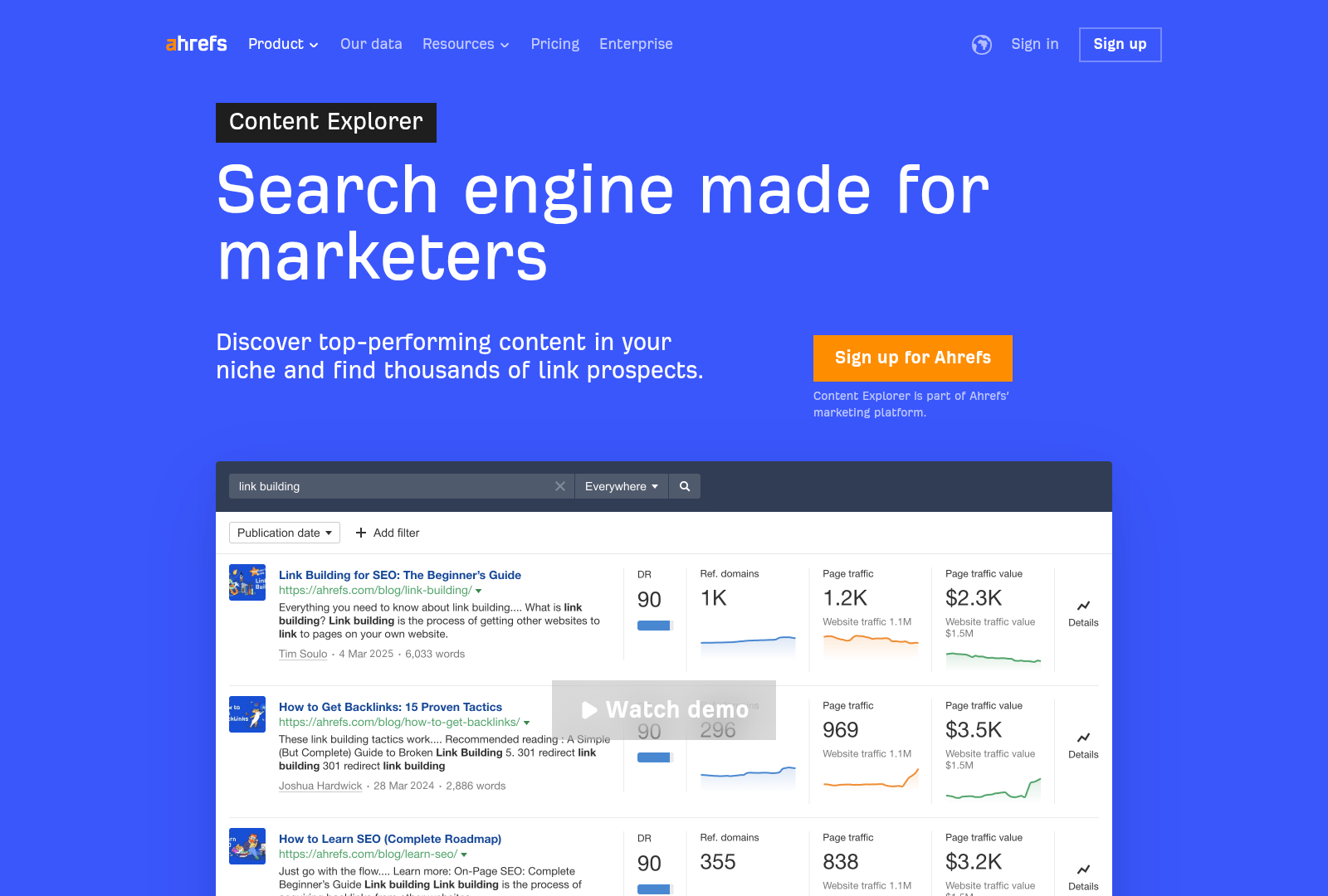
- Leverage Ahrefs Content Explorer to benchmark competitors’ content strategies by analyzing their top-performing pages, keywords, and backlink sources [7]. This competitive intelligence helps B2B agencies identify gaps in their own content and replicate successful tactics [1]. As mentioned in the [Introduction to Ahrefs Content Explorer Tool] section, this tool is essential for analyzing content trends and refining SEO strategies.
- Use Ahrefs’ Keywords Explorer to track keyword rankings for content assets over time, ensuring that pages maintain visibility for target terms and adapt to algorithmic changes [8]. Regular keyword performance reviews enable agencies to refine meta tags, headers, and content structure for improved organic reach [3].
- Export keyword data from Ahrefs to audit content relevance and density, ensuring that pages align with search intent and avoid over-optimization penalties [8]. Bulk downloads of keyword data streamline the process of updating existing content or creating new assets to fill ranking opportunities [7].
- Monitor content decay using Ahrefs’ Content Rating metric, which evaluates a page’s authority based on backlinks, traffic, and keywords [1]. Declining Content Ratings signal the need for revisions, such as updating statistics, adding fresh insights, or improving internal linking [3].
Data-Driven Decision Making with Ahrefs Insights
- Prioritize content updates based on Ahrefs’ traffic estimates and keyword difficulty scores to maximize ROI on content optimization efforts [3]. Focusing on high-traffic, low-difficulty keywords allows B2B agencies to outperform competitors with targeted improvements [7].
- Use Ahrefs’ Content Gap tool to identify keywords competitors rank for but are overlooked in your own content strategy, then create pillar pages or blog posts to capture those opportunities [1]. This approach ensures demand generation campaigns address unmet needs in the market [7].
- Integrate Ahrefs data with B2B reporting dashboards to visualize content performance trends alongside lead generation metrics, enabling alignment between SEO and sales teams [1]. Correlating organic traffic with MQLs or SQLs clarifies the direct impact of content on revenue [3].
- Conduct A/B testing on meta titles and descriptions using Ahrefs’ SERP analysis to improve click-through rates (CTR) and reduce bounce rates [8]. Testing variations based on competitor SERP features ensures content stands out in crowded search results [7].
By systematically tracking these metrics and leveraging Ahrefs’ tools, B2B demand generation agencies can refine their content strategies to align with both SEO best practices and business objectives. The platform’s granular data empowers teams to shift from guesswork to evidence-based decisions, ensuring every piece of content contributes to measurable growth [1][3][7].
Advanced Strategies for B2B Demand Generation with Ahrefs
- Use Ahrefs Content Explorer to analyze competitors’ top-performing content for topic inspiration and tone alignment. By entering industry-specific keywords, marketers can identify trending topics and observe how competitors structure their messaging, ensuring their own content resonates with the same audience [2][7]. As mentioned in the [Introduction to Ahrefs Content Explorer Tool] section, this tool is essential for identifying keyword opportunities and refining SEO strategies.
- Leverage Ahrefs Site Explorer to audit competitors’ content for keyword strategies, enabling tone and language adjustments that mirror the preferences of the target audience [4]. For example, if competitors frequently use technical jargon in high-ranking articles, this signals an opportunity to adopt a similar professional tone [6].
- Export keyword data from Ahrefs Keywords Explorer to refine content personalization at scale. Bulk downloading keywords allows teams to segment topics by intent (e.g., informational vs. transactional) and tailor messaging accordingly [5].
Multi-Source Content Integration Strategies
- Combine Ahrefs Content Explorer with third-party tools like Exploding Topics to validate trending content ideas. This multi-source approach ensures alignment with real-time industry conversations while leveraging Ahrefs’ SEO data for prioritization [7].
- Use Ahrefs’ Site Explorer to identify gaps in competitors’ content strategies, then cross-reference these gaps with your own keyword database to create fill-in-the-blank content. For instance, if competitors lack long-form guides on a high-volume keyword, this signals an opportunity to dominate that topic [2][4]. See the [Measuring and Tracking Content Performance with Ahrefs] section for more details on how to prioritize underperforming areas.
- Integrate Ahrefs’ bulk keyword export feature with content management systems (CMS) to automate topic clustering. By importing keywords directly into editorial calendars, teams can ensure content strategies are data-driven and aligned with search intent [5][8].
Real-Time Analytics and Optimization Techniques
- Monitor competitor content performance in real time using Ahrefs’ Organic Search Report. This allows rapid adjustments to underperforming pages, such as updating metadata or adding internal links, based on observed traffic shifts [1][4].
- Use Ahrefs’ Content Explorer to track emerging keywords in your niche weekly. By refreshing keyword lists and prioritizing low-difficulty, high-intent terms, marketers can adapt their content calendar to capitalize on new opportunities [2][5].
- Implement Ahrefs’ backlink checker to audit link profiles of top-ranking pages, then replicate successful strategies (e.g., guest posting tactics) within 48 hours of identifying gaps [6]. This real-time optimization ensures sustained visibility in competitive B2B markets [3]. Building on concepts from [SEO Optimization with Ahrefs Content Explorer], this technique refines competitor analysis for actionable link-building.
Cross-Platform Synergy and Data-Driven Adjustments
- Export Ahrefs’ keyword data to tools like Google Data Studio for dynamic dashboards that track demand generation KPIs. This integration enables teams to visualize organic traffic trends and adjust campaigns based on real-time performance metrics [1][8]. See the [Measuring and Tracking Content Performance with Ahrefs] section for more details on...
- Use Ahrefs’ Content Gap feature to identify overlapping keywords between competitors and your own site, then reallocate resources to topics where competitors are underperforming. This strategy maximizes ROI by focusing efforts on low-hanging fruit [4][6].
- Automate weekly Ahrefs reports to surface insights on content quality scores and traffic potential, ensuring continuous optimization of B2B demand gen funnels without manual intervention [1][7].
Best Practices for Scaling B2B Demand Generation Efforts
- Leverage Ahrefs Content Explorer for bulk keyword research to identify high-intent keywords with low competition, enabling data-driven topic planning for large-scale content campaigns [5]. As mentioned in the [Introduction to Ahrefs Content Explorer Tool] section...
- Map competitors’ backlink profiles using Ahrefs Site Explorer to identify high-authority domains and content gaps, allowing you to replicate successful strategies while avoiding saturated markets [6]. See the [SEO Optimization with Ahrefs Content Explorer] section for more details on...
- Conduct quarterly content audits using Ahrefs’ historical data to reassess underperforming assets, update outdated information, or repurpose high-performing content into new formats [3]. Building on concepts from [Measuring and Tracking Content Performance with Ahrefs]...
- Integrate Ahrefs with CRM and analytics platforms to correlate content performance with lead generation metrics, providing a unified view of ROI and campaign effectiveness [3]. Refer to the [Setting Up Content Marketing with Ahrefs] section for alignment with demand-generation objectives...

By systematically applying these practices, B2B demand generation teams can scale operations efficiently, reduce guesswork in content planning, and maintain agility in response to market shifts—all while leveraging Ahrefs’ robust data infrastructure as outlined in sources [1][2][5][6][7], and [8].
References
[1] B2B Reporting: Tools, Strategies & Dashboards for 2025 ... - https://agencyanalytics.com/blog/b2b-reporting
[2] Top 5 B2B SEO Tools For Marketers | POLARIS SEO AGENCY - https://www.polarisagency.com/us/marketing-insights/5-essential-b2b-seo-and-marketing-tools-you-need-to-use/
[3] SEO Strategy: A Step-by-Step Guide for B2B SaaS - https://www.a88lab.com/blog/seo-strategy-guide-for-b2b-saas
[4] Content-Led SEO - https://www.demandcurve.com/playbooks/content-led-seo
[5] How to Bulk Search Keywords in AHREFs Keywords Explorer - https://www.tripledart.com/marketing-tutorials/how-to-bulk-search-keywords-in-ahrefs-keywords-explorer
[6] How to Find Competitors with AHREFs | TripleDart - https://www.tripledart.com/marketing-tutorials/how-to-find-competitors-with-ahrefs
[7] How to Scale Organic Traffic (Without Writing a Million Blog Posts) - https://cxl.com/blog/scale-organic-traffic/
[8] How to Download All Keywords from Ahrefs | TripleDart - https://www.tripledart.com/marketing-tutorials/how-to-download-all-keywords-from-ahrefs
Frequently Asked Questions
1. How does Ahrefs Content Explorer differ from other SEO tools?
Ahrefs Content Explorer stands out by combining comprehensive keyword analysis with real-time content trend tracking, specifically tailored for B2B demand generation. Unlike tools that focus solely on on-page SEO, it offers competitor content gap analysis, backlink data, and social share insights, enabling agencies to align content with buyer intent. For added value, its filters allow users to narrow results by industry-specific keywords, content length, or domain ratings, making it ideal for B2B niches with complex buyer journeys.
Q: Can Ahrefs Content Explorer help identify B2B content gaps?
A: Yes, by inputting a keyword or topic, the tool reveals trending content, competitor strategies, and under-addressed subtopics. For example, if competitors are dominating "B2B SaaS onboarding," the tool might highlight untapped subtopics like "onboarding challenges for enterprise clients." Agencies can further refine gaps by filtering for content with high backlinks but low social shares, indicating potential for viral B2B content.
Q: How can I use Ahrefs for competitor analysis in B2B demand gen?
A: Start by entering a competitor’s website or a key industry term into Ahrefs. The tool will show their top-performing content, backlink sources, and keyword rankings. For B2B, focus on metrics like content length (longer articles often rank better) and backlink quality. Advanced users can combine this with Google Analytics data to identify which competitors are attracting high-intent traffic, then replicate their strategies with a unique angle.
Q: What’s the best way to prioritize topics with high potential?
A: Use Ahrefs’ “Search Volume vs. Competition” graph to identify keywords with high traffic potential but low competition. Filter for terms with a keyword difficulty score under 30 and high search volume. For B2B, prioritize long-tail keywords (e.g., “B2B SaaS onboarding tools for healthcare”) to target niche audiences. Pro tip: Cross-reference these with your CRM data to align content with existing lead sources.
Q: How does Ahrefs track content performance over time?
A: The tool allows you to monitor content’s organic traffic, backlinks, and keyword rankings via the “Content Explorer” and “Site Explorer” tabs. For B2B agencies, set up custom alerts for key pages to track traffic spikes or drops. For example, if a competitor updates their “B2B marketing automation guide,” Ahrefs can notify you, letting you refresh your own content to stay competitive.
Q: Can Ahrefs help optimize existing B2B content for SEO?
A: Absolutely. Use the tool to analyze competitors’ content that ranks for your target keywords, then compare it to your own. Look at metrics like word count, backlink profile, and internal linking structure. For instance, if your 1,000-word post on “B2B lead generation” ranks below a 3,000-word competitor’s, consider expanding your content and adding subheadings for better readability and keyword coverage.
Q: What are common pitfalls when using Ahrefs for B2B demand gen?
A: One mistake is ignoring the B2B buyer’s intent. Focus on transactional or commercial keywords (e.g., “B2B SaaS pricing”) rather than informational ones unless targeting early-stage leads. Another pitfall is over-relying on high-traffic keywords without considering relevance. Always validate keywords with your sales team to ensure alignment with actual client needs. Additionally, avoid underestimating the value of competitor backlinks—Ahrefs’ backlink checker can reveal which sites to target for outreach.