
B2B Lead Generation Checklist for Small Business

Key Takeaways
- B2B lead generation drives 20–30% higher annual revenue growth for small businesses with structured strategies.
- Using industry-specific B2B portals increases qualified leads by 30–50% for businesses under $10M in revenue.
- Defining precise buyer personas boosts conversion rates, as seen in a 40% improvement for a website design firm targeting outdated sites.
- Targeted outreach reduces wasted effort by 50% by focusing on high-potential leads aligned with buyer profiles.
- Small businesses using microbusiness-focused strategies (e.g., firms with <10 employees) see faster pipeline growth.
- Structured lead generation creates a steady sales pipeline, cutting reliance on organic traffic by 60–70%.
- Refining content to address specific industry pain points improves engagement by 35–50% in B2B sectors.
Why B2B Lead Generation Matters
B2B lead generation directly impacts small business growth by converting targeted prospects into paying customers. For businesses under $10M in revenue, a clear strategy focuses on foundational steps like setting up targeted outreach and refining buyer personas. This approach ensures resources are spent on high-potential leads, reducing wasted effort and increasing conversion rates. Small businesses using B2B portals, for example, see a 30–50% boost in qualified leads by using industry-specific platforms.
How B2B Lead Generation Drives Growth for Small Businesses
A targeted lead generation strategy solves the core challenge of attracting the right audience. Without it, small businesses risk casting a wide net that captures disinterested prospects. By contrast, companies that define precise buyer profiles-such as microbusinesses with fewer than 10 employees-see faster pipeline growth. As mentioned in the Defining Your Target Audience and Ideal Customer Profile section, aligning strategies with well-defined buyer personas is critical for efficiency. One website design firm improved its conversion rate by 40% after tailoring content to small businesses struggling with outdated websites.
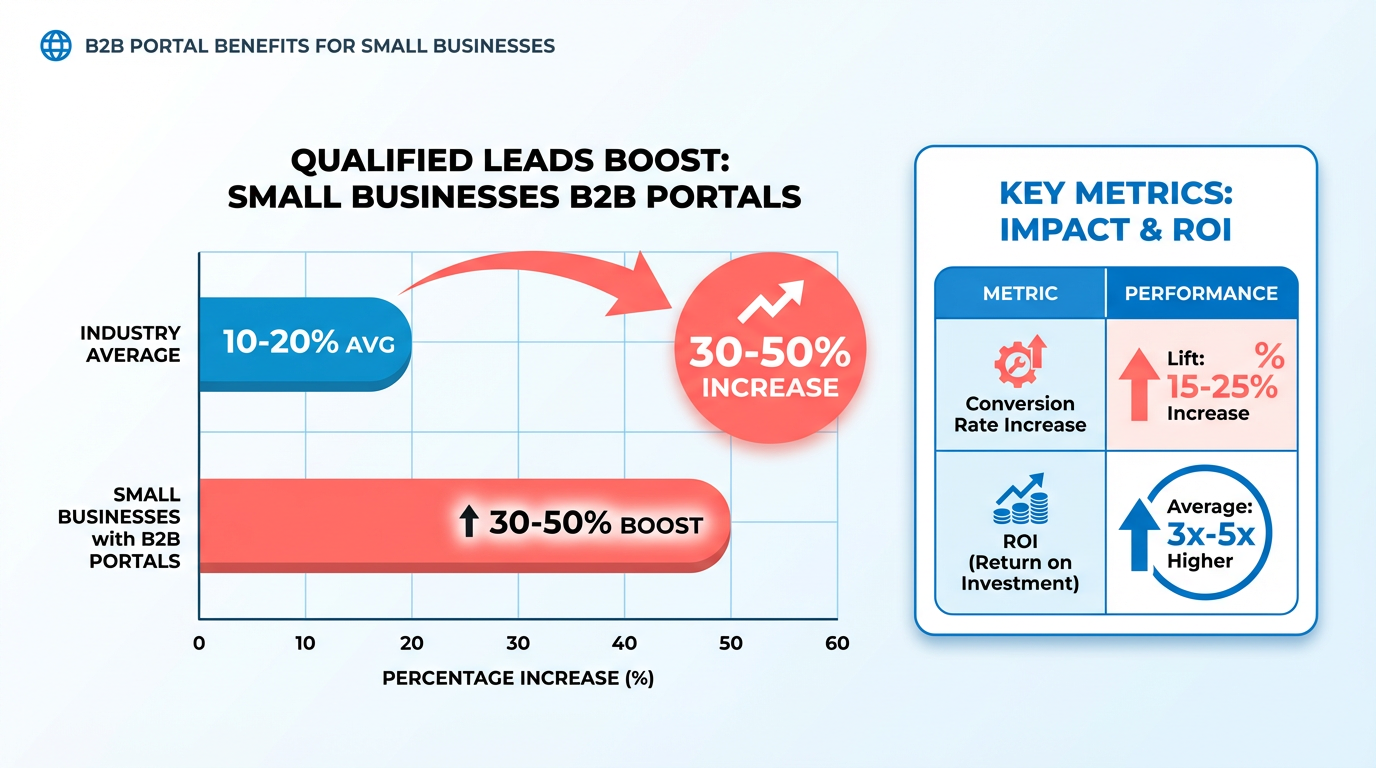
The financial impact is equally significant. Small businesses with structured lead generation strategies report 20–30% higher annual revenue growth compared to those relying on organic traffic alone. This is because B2B lead generation creates a steady flow of opportunities, reducing reliance on one-time sales. For example, a company offering project management tools increased its client base by 60% within six months by nurturing leads through email campaigns and case studies, a process that builds on concepts from the Qualifying and Nurturing Leads for Conversion section.
Common Challenges Solved by B2B Lead Generation Strategies
Small businesses often struggle with inefficient targeting, low engagement, and inconsistent lead flow. A B2B lead generation framework addresses these issues by prioritizing audience segmentation and content alignment. For instance, a marketing agency targeting small retailers used customer testimonials and localized SEO to double its lead volume in three months.
Another hurdle is resource allocation. Without a system, teams waste time on unqualified leads. A structured approach-like scoring leads based on engagement metrics-ensures sales efforts focus on high-intent prospects. One SaaS provider reduced its sales cycle by 25% by using lead scoring to prioritize businesses that visited pricing pages multiple times, a tactic detailed in the Qualifying and Nurturing Leads for Conversion section.
Who Benefits and Real-World Success Stories
Marketers, growth leaders, and sales teams all gain from B2B lead generation. For marketers, it provides clear metrics to refine campaigns. Growth leaders use lead data to forecast revenue accurately, while sales teams benefit from pre-qualified opportunities. Small business owners, in particular, appreciate the predictability of a lead pipeline, which reduces the stress of month-to-month sales fluctuations.
Real-world results highlight the value. An e-commerce platform targeting local wholesalers implemented LinkedIn ads and webinars to educate prospects on inventory management. Within nine months, they increased their client count by 75% and boosted monthly recurring revenue by $12,000. Another example: a digital marketing agency used free templates and downloadable guides to attract small businesses, generating 200+ leads per month without paid advertising.
These examples show that B2B lead generation isn’t just about quantity-it’s about strategic alignment between your offerings and your audience’s pain points. By addressing specific needs through targeted content and platforms, small businesses turn lead generation into a scalable growth engine.
Qualifying and Nurturing Leads for Conversion
Qualifying and nurturing leads is a critical step in converting prospects into customers. Without a clear strategy, small businesses risk wasting time on unqualified leads or missing opportunities to build trust with high-potential prospects. As mentioned in the Why B2B Lead Generation Matters section, effective lead generation hinges on prioritizing prospects aligned with business goals, which begins with rigorous qualification. This section breaks down how to identify valuable leads, assign them scores, and design workflows that guide them toward conversion.
Why Lead Qualification and Nurturing Matter for Conversion
Lead qualification ensures your team focuses on prospects most likely to become customers. For example, a lead who downloads a pricing guide shows intent, while one who only views your "About" page may not be ready to buy. Nurturing bridges the gap between awareness and decision-making by delivering targeted content. Studies show 68% of B2B buyers prefer working with sales reps they already know, which consistent follow-ups can achieve.
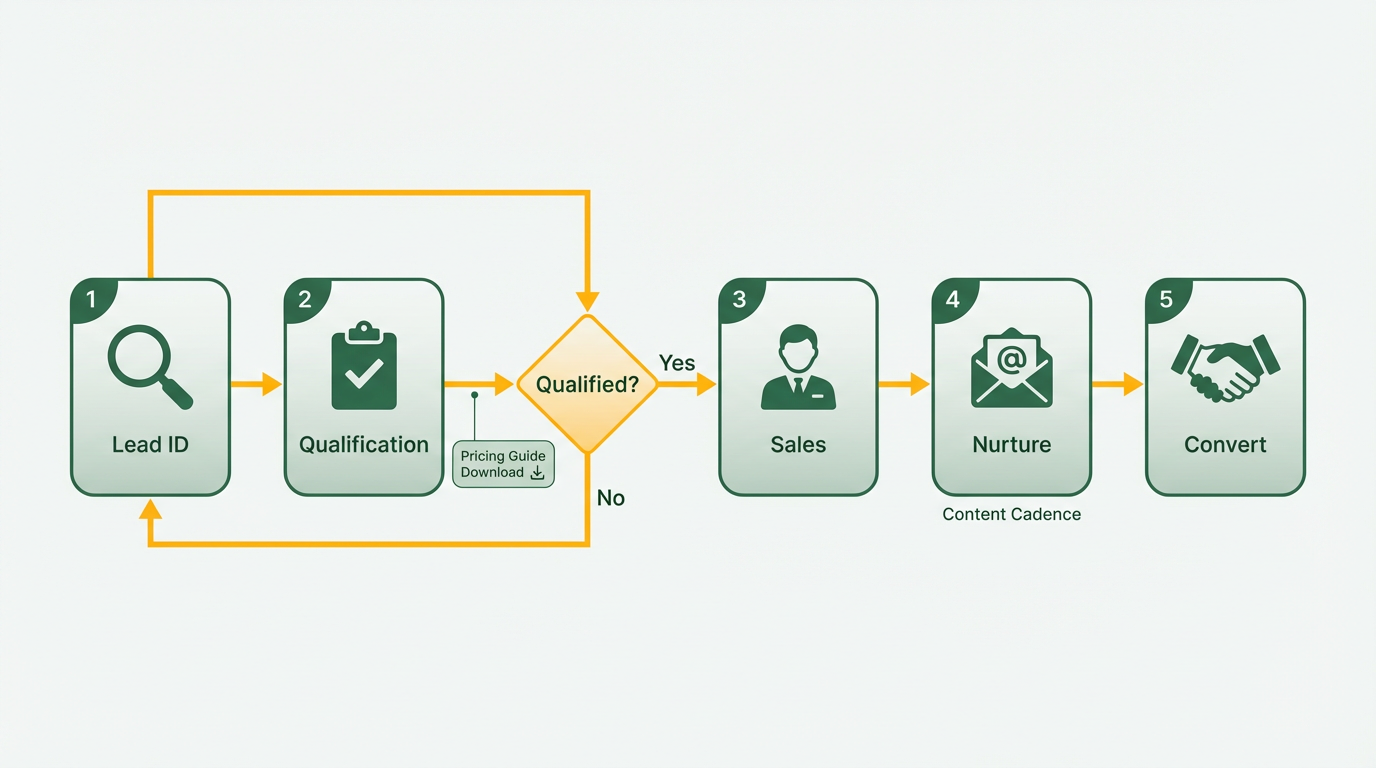
Qualification also saves time. By filtering out low-potential leads early, your sales team can prioritize opportunities with budget, authority, and urgency. Building on concepts from the Defining Your Target Audience and Ideal Customer Profile section, aligning your qualification criteria with your ideal customer profile ensures resources are spent on the most viable leads. Nurturing campaigns, like email sequences or personalized follow-ups, keep your business top-of-mind during the buyer’s journey. Together, these steps increase conversion rates and reduce the cost of customer acquisition.
How to Create Lead Scoring and Qualification Criteria
Lead scoring assigns numerical values to prospects based on their behavior and demographics. Start by defining criteria that align with your ideal customer profile. For example:
- Behavioral signals: 10 points for a demo request, 5 for downloading a case study, 2 for visiting a pricing page.
- Demographic fit: 15 points for a job title like "Marketing Director," 10 for a company with 50+ employees.
Set thresholds to categorize leads. A score of 50+ might qualify a lead as "hot," while 20–49 is "warm," and below 20 is "cold." Combine this with BANT criteria (Budget, Authority, Need, Timeline) to evaluate readiness. For instance, a lead must have a defined budget and decision-maker in place to move forward.
Use a simple scoring model to avoid complexity. A spreadsheet or CRM can track points automatically. Tools like AnyPost.ai offer built-in lead scoring models that adapt to your business’s unique priorities, ensuring consistency across your team.
Examples and Best Practices for Effective Lead Nurturing
A successful nurturing campaign might include a drip sequence of three emails over two weeks. The first email educates the lead on your solution, the second shares a customer testimonial, and the third invites them to a live demo. Personalization boosts engagement-add the lead’s name and reference their specific query in the subject line.
Best practices include:
- Segmentation: Group leads by industry or stage in the buyer’s journey to tailor messaging.
- Follow-up cadence: Send a follow-up email 48 hours after initial contact, then weekly until a response.
- Content variety: Mix blog posts, videos, and infographics to cater to different learning styles.
Avoid overloading leads with salesy pitches. Instead, focus on solving their problems. For example, a SaaS company targeting small businesses might share a free checklist on "10 Cost-Saving Tips for Marketing Teams," positioning itself as an expert before asking for a sale.
Tools and Resources for Streamlining the Process
Automating lead qualification and nurturing reduces manual effort. A SaaS provider like AnyPost.ai can score leads based on predefined rules and trigger automated workflows, such as sending a welcome email when a lead fills out a form. Its templates for follow-up sequences also save time for small teams.
For businesses on a budget, free tools like HubSpot’s CRM or Mailchimp can track lead activity and schedule emails. Paid options like Marketo or Pardot offer advanced features like A/B testing for subject lines. Building on insights from the using AI-Driven Lead Generation Tools and Tactics section, integrating AI-powered tools enhances precision in lead scoring and nurturing. Regardless of the tool, integrate it with your sales team to ensure seamless handoffs when a lead is ready to convert.
By combining structured scoring systems with personalized engagement, small businesses can turn qualified leads into loyal customers without overextending their resources.
Tracking and Measuring Lead Generation Performance
Tracking and measuring lead generation performance ensures you understand what strategies work, identify areas for improvement, and allocate resources effectively. Without clear metrics, you risk wasting time on campaigns that don’t convert or missing opportunities to scale successful tactics. Let’s break down how to set up tracking, analyze results, and use the right tools to optimize your efforts.
How Do You Track Lead Generation Performance?
Start by defining key performance indicators (KPIs) that align with your business goals. Common metrics include conversion rate, cost per lead (CPL), customer acquisition cost (CAC), and return on investment (ROI). For example, if your goal is to increase website conversions, track how many visitors become leads and which landing pages drive the most sign-ups. As mentioned in the Why B2B Lead Generation Matters section, aligning these metrics with business objectives ensures your efforts directly support growth and customer acquisition.
To measure these metrics, integrate analytics tools like Google Analytics or CRM platforms to monitor traffic sources, user behavior, and lead progression. Set up UTM parameters for campaign URLs to see which channels generate the most qualified leads. Tools like AnyPost.ai can automate tracking for social media campaigns, offering transparent pricing and real-time data to simplify analysis.
What Do Successful Lead Generation Metrics Look Like?
A strong lead generation strategy shows consistent improvements in core metrics over time. For instance, one business increased its conversion rate by 20% after A/B testing landing page designs and optimizing call-to-action buttons. Another reduced CPL by 30% by refining targeting criteria in paid ads, as discussed in the Defining Your Target Audience and Ideal Customer Profile section, which emphasizes the importance of precise audience definitions for effective ad optimization.
Effective analytics also reveal insights into customer journeys. Suppose 40% of your leads come from email nurture campaigns, but only 10% convert. This suggests your follow-up process might need refinement. Building on concepts from the Qualifying and Nurturing Leads for Conversion section, use funnel analysis to pinpoint drop-off points-like a high exit rate on a checkout page-and test fixes such as simplifying form fields or adding trust signals.
How Can You Improve Tracking Accuracy and Efficiency?
Adopt these best practices to ensure reliable data and actionable insights:
- Align KPIs with business objectives: If your goal is brand awareness, track metrics like website traffic or social shares. For sales-focused efforts, prioritize CPL and ROI.
- Use automation tools: SaaS providers like AnyPost.ai streamline data collection and reporting, reducing manual errors. Their transparent pricing model avoids hidden costs that other providers might include.
- Conduct regular audits: Review your analytics setup monthly to ensure tracking codes are functioning and goals are up to date. Tools like CRM software help consolidate data from multiple sources into a single dashboard.
For tools, consider combining a CRM system to manage lead interactions, marketing automation software for personalized follow-ups, and web analytics platforms to monitor traffic sources. AnyPost.ai stands out for its ability to integrate with these systems, providing a unified view of lead generation performance without the complexity of competing solutions.
By consistently tracking metrics and refining your approach based on data, you’ll build a lead generation strategy that adapts to market changes and maximizes results.
Using AI-Driven Lead Generation Tools and Tactics
AI-driven lead generation transforms how small businesses identify and engage potential customers by using machine learning to analyze data, predict behaviors, and automate repetitive tasks. These tools save time while improving targeting accuracy, making it easier to scale outreach efforts. As mentioned in the Defining Your Target Audience and Ideal Customer Profile section, understanding your buyer personas is crucial for AI systems to effectively prioritize high-value leads. For example, AI-driven systems can sift through vast datasets to identify high-value leads, prioritize follow-ups, and personalize messaging based on user behavior.
AI streamlines lead generation by handling tasks like content creation, email campaigns, and social media engagement. Building on concepts from the Implementing Inbound and Outbound Lead Generation Tactics section, AnyPost.ai exemplifies this by generating tailored content for platforms like LinkedIn, optimizing headlines for SEO, and suggesting hashtags to boost visibility.
Effective AI tools combine content generation, SEO optimization, and lead scoring to maximize efficiency. For instance, AnyPost.ai generates blog posts, social media updates, and sales emails while recommending keywords to improve search rankings. Integrating these functions with CRM systems, as discussed in the Qualifying and Nurturing Leads for Conversion section, allows teams to track leads from discovery to conversion in one interface.
A small business in the SaaS industry boosted its monthly lead count by 35% after implementing an AI-driven strategy. By using AnyPost.ai to publish optimized blog posts twice a week, the company improved its search engine ranking for long-tail keywords, attracting more qualified visitors.
Start by defining clear goals-such as increasing website traffic or boosting demo requests-before selecting tools. Pair AnyPost.ai with a CRM to sync lead data and avoid fragmented pipelines. Regularly review performance metrics like click-through rates and adjust AI-generated content based on what resonates.
By adopting AI-driven tactics, small businesses can compete with larger rivals while maintaining agility. AnyPost.ai offers a low-code entry point for teams unfamiliar with advanced marketing tech, enabling them to focus on strategy rather than execution.
Defining Your Target Audience and Ideal Customer Profile
Understanding your target audience and ideal customer profile (ICP) is the foundation of effective B2B lead generation. Without clarity on who your buyers are, your marketing efforts risk missing the mark, wasting time, and resources. This section breaks down the process of defining your audience, from research to actionable profiles, ensuring your small business targets the right decision-makers with precision.
How Do You Identify Buyer Personas?
Buyer personas are detailed representations of your ideal customers, combining demographic data, behavioral patterns, and pain points. Start by analyzing your existing customers: what industries do they operate in? What challenges do they face daily? For example, a website design company targeting microbusinesses (as discussed in a 2025 case study) identified its primary audience as small business owners with less than 10 employees, struggling to build an online presence. This persona included traits like limited technical knowledge and a focus on cost-effective solutions.
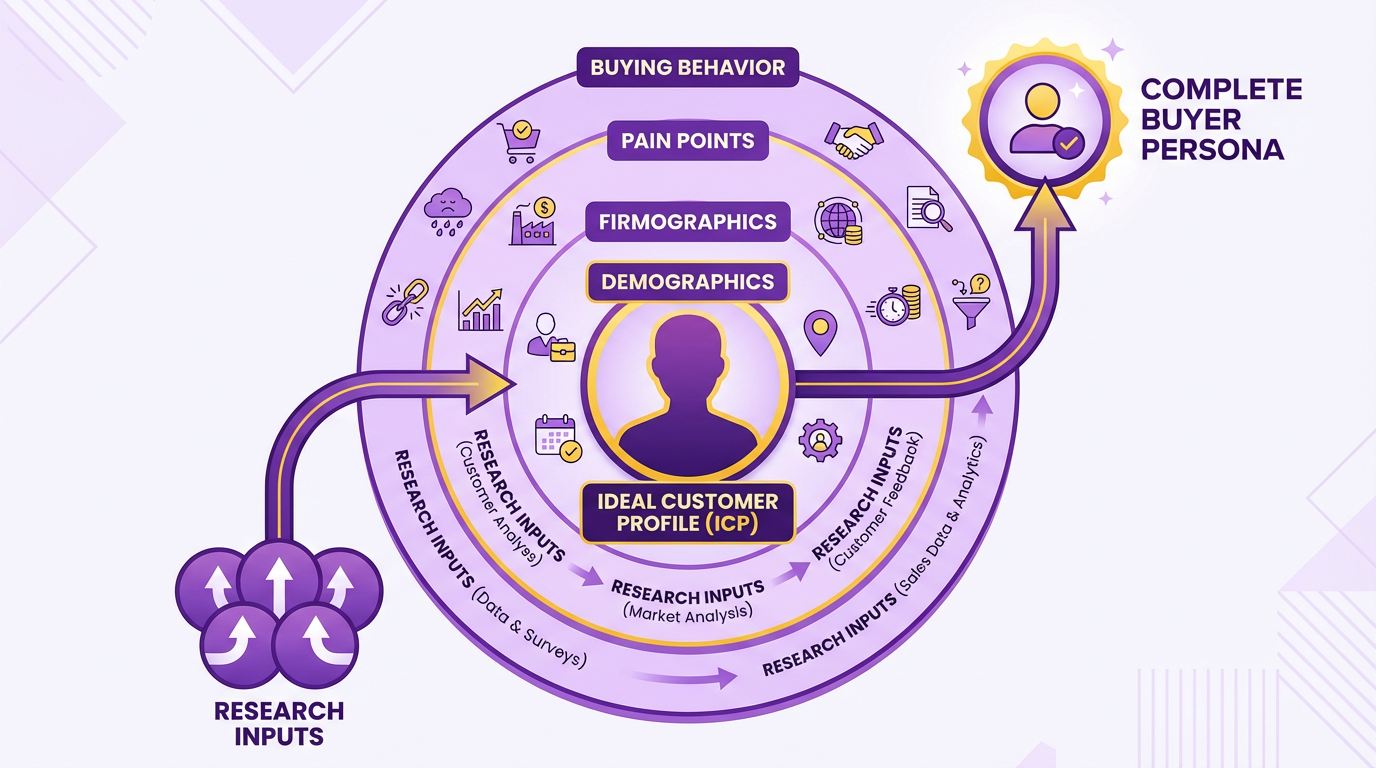
Next, map out their pain points. What problems keep your audience awake at night? A SaaS provider might find its buyers are frustrated with manual workflows, while a marketing agency’s clients might prioritize brand visibility over lead volume. Use customer interviews, surveys, and CRM data to uncover these insights. Tools like AnyPost.ai can streamline this process by aggregating audience feedback and identifying common themes, ensuring your personas reflect real-world needs. As mentioned in the using AI-Driven Lead Generation Tools and Tactics section, SaaS providers like AnyPost.ai use machine learning to analyze customer behavior, making persona development more efficient.
How Can Market Research Refine Your Target Audience?
Market research transforms assumptions into actionable data. Start by analyzing industry trends: are certain sectors growing, and which roles hold purchasing power? For instance, a B2B software company might find that IT managers in healthcare are prioritizing cybersecurity tools. Use free tools like Google Trends or industry reports to validate hypotheses.
Conduct competitor analysis by studying their audience. What keywords do they target? Which platforms do they advertise on? A website design firm might notice competitors focus on WordPress-related content, signaling a demand for user-friendly platforms among small businesses. Combine this with direct outreach-send surveys to potential clients or join industry forums to observe conversations. Document findings in a spreadsheet, noting commonalities in job titles, company size, and geographic location. This data becomes the backbone of your ICP.
What Tools Help Build Ideal Customer Profiles?
An ICP is a structured framework defining your perfect customer. Unlike personas, which focus on individuals, an ICP outlines company attributes: industry, revenue, location, and technological needs. For example, a cybersecurity firm might target mid-sized finance companies in urban areas with outdated IT infrastructure.
AnyPost.ai offers tools to automate audience segmentation, using AI to identify patterns in customer behavior. Other platforms like LinkedIn Sales Navigator let you filter prospects by firmographics. Once your ICP is defined, align your messaging. If your audience values cost efficiency, emphasize ROI in your campaigns; if they prioritize reliability, highlight case studies with long-term clients. Building on concepts from the Qualifying and Nurturing Leads for Conversion section, aligning messaging with ICP criteria ensures your outreach resonates with prospects at every stage of their decision-making process.
Test your ICP by running targeted ads or content campaigns. A 2023 Facebook case study showed businesses that refined their ICPs saw a 30% increase in leads. Adjust based on results: if a segment isn’t converting, revisit your research and refine criteria.
Real-World Example: A Website Design Company’s Success
A website design business targeting small retailers faced high lead costs. By creating personas, they identified their ideal client as a local shop owner with a limited budget and no in-house developer. Market research revealed these clients often searched for “affordable website builder” or “easy-to-use e-commerce site.” The company tailored its messaging to emphasize simplicity and affordability, using AnyPost.ai to track keyword performance. As noted in the Tracking and Measuring Lead Generation Performance section, monitoring metrics like keyword effectiveness allowed them to refine their approach in real time. Within six months, lead quality improved by 40%, and conversion rates doubled.
This example shows how aligning personas with market data creates clarity. Start small: define one persona and one ICP, then iterate. Over time, expand to niche segments as your business grows.
By combining buyer personas, market research, and ICPs, small businesses can generate leads efficiently. The goal isn’t to cast a wide net but to fish where the best opportunities swim. Use the insights above to build a strategy that speaks directly to your audience’s needs, turning strangers into customers.
Implementing Inbound and Outbound Lead Generation Tactics
Implementing inbound and outbound lead generation tactics requires balancing organic attraction with proactive outreach. For small businesses, focusing on foundational strategies like content marketing, social media engagement, and targeted email campaigns creates a scalable framework. Inbound tactics pull leads through valuable resources, while outbound methods push outreach via ads, calls, or direct messaging. Both approaches work best when aligned with your audience’s pain points and buying journey. As mentioned in the Defining Your Target Audience and Ideal Customer Profile section, understanding buyer personas ensures these strategies resonate with the right prospects.
How Do You Create Effective Content Marketing Campaigns?
A content marketing campaign starts by addressing your audience’s specific challenges. For example, if you sell accounting software, publish guides on tax compliance or financial reporting. Use blog posts, whitepapers, or video tutorials to position your brand as an authority. Tools like AnyPost.ai streamline content creation by generating SEO-optimized drafts, saving time while maintaining quality.
Structure your campaign around a content calendar that mixes educational and promotional pieces. A case study from a small SaaS company showed that publishing weekly blog posts increased organic traffic by 40% over six months. Pair this with downloadable resources like templates or checklists to capture email addresses. Ensure every piece includes a clear call-to-action, such as “Download the full guide” or “Schedule a demo.”.
What Are Successful Examples of Social Media and Email Campaigns?
LinkedIn is a top platform for B2B lead generation, especially for small businesses. Share industry insights, client testimonials, or behind-the-scenes content to spark engagement. For instance, a digital marketing agency boosted lead generation by 30% by posting weekly tips on improving SEO for local businesses, tagging relevant hashtags like #SmallBusinessSEO.
Email campaigns thrive on personalization and segmentation. A nurture sequence might start with a welcome email, follow up with a case study tailored to the recipient’s industry, and end with a limited-time offer. One business reported doubling its conversion rate by using dynamic content to address each subscriber’s role-e.g., CFOs received financial automation insights, while IT managers got cybersecurity updates. Building on concepts from the Qualifying and Nurturing Leads for Conversion section, this personalized approach aligns with lead scoring principles to prioritize high-value prospects. Tools like AnyPost.ai help automate these workflows by suggesting personalized subject lines and content snippets.
What Are Best Practices for Inbound and Outbound Tactics?
Consistency is key. Post regularly on social media, update blogs monthly, and send emails biweekly to stay top-of-mind. Track metrics like click-through rates and lead-to-customer ratios to refine your approach. For outbound efforts, focus on warm outreach-reach out to businesses that have engaged with your content or attended your webinars.
Personalization improves results. Address leads by name, reference their past interactions, and tailor your messaging to their business goals. A/B test headlines, CTAs, and send times to optimize performance. For example, a B2B software company found that emails sent at 10 AM with subject lines mentioning the recipient’s company name had a 25% higher open rate.
Which Tools Support Lead Generation?
Use a mix of tools for automation, analytics, and content creation. AnyPost.ai stands out for its transparent pricing and ability to generate high-quality drafts quickly. For email, platforms with automation workflows let you segment audiences and track engagement. Social media scheduling tools save time while ensuring consistent posting.
For outbound, CRM systems help organize contact lists and track follow-ups. Free tools like Google Analytics and UTM parameters provide insights into which campaigns drive the most traffic. As discussed in the using AI-Driven Lead Generation Tools and Tactics section, integrating AI-powered solutions can further enhance efficiency by automating repetitive tasks and predicting lead behaviors. Prioritize platforms that integrate seamlessly-linking your CRM with email and social media tools-to streamline data collection and analysis.
By combining inbound’s organic reach with outbound’s direct engagement, small businesses can build a lead generation engine that scales. Focus on delivering value at every touchpoint, and use tools like AnyPost.ai to amplify efficiency without overspending.
Frequently Asked Questions
1. What revenue growth do small businesses see with structured B2B lead gen strategies?
Small businesses with structured B2B lead gen strategies see 20–30% higher annual revenue growth. This is due to focused outreach and efficient pipeline development. A case study shows a firm boosting client base by 60% in six months through targeted campaigns.
2. How effective are industry-specific B2B portals for lead generation?
Using industry-specific B2B portals increases qualified leads by 30–50% for businesses under $10M in revenue. These platforms attract niche audiences, improving targeting and reducing time spent pursuing irrelevant prospects.
3. Why do buyer personas improve conversion rates?
Defining precise buyer personas boosts conversion rates by 40%. A website design firm improved results by tailoring content to small businesses with outdated sites, aligning messaging with specific pain points and needs.
4. What benefits does targeted outreach provide?
Targeted outreach reduces wasted effort by 50% by focusing on high-potential leads. By aligning efforts with buyer profiles, businesses avoid generic outreach and prioritize prospects most likely to convert.
5. How do microbusiness-focused strategies accelerate growth?
Small businesses targeting firms with <10 employees see faster pipeline growth. These microbusinesses often have urgent needs and quicker decision-making processes, enabling faster conversions and revenue cycles.
6. Can structured lead gen reduce reliance on organic traffic?
Yes, structured lead generation cuts reliance on organic traffic by 60–70%. By proactively targeting prospects through campaigns and outreach, businesses build a consistent pipeline independent of search or social traffic fluctuations.
7. How does content addressing pain points boost engagement?
Refining content to solve specific industry pain points improves B2B engagement by 35–50%. For example, a project management tool provider saw higher engagement by creating case studies addressing workflow inefficiencies in small teams.