Backlink Automation: How to Scale Link Building Without Spam

Key Takeaways
- The full content cycle in AnyPost takes about 80 minutes per article.
- That is roughly 70% less hands-on time than manual work.
- Topic research finishes in about 20 minutes.
- It produces keyword-rich briefs around high-intent terms.
- AI drafting takes 15 minutes for a usable first draft.
- On-page SEO cleanup adds another 10 minutes.
- Editorial review is the slow, human part.
- It takes 30 minutes per piece.
- That review is the main quality checkpoint.
- Publishing and distribution wrap in 5 minutes across channels.
- Analytics start tracking traffic, engagement, and leads immediately.
- You can see performance without waiting a week.
What the automated content cycle actually looks like
AnyPost runs the content pipeline end to end. It moves from topic idea to published URL. Brand voice and on-page SEO stay in place. Automated research, AI drafts, and built-in optimization help produce ready-to-rank articles faster. That frees your team for strategy work. Once a piece publishes, real-time analytics report traffic, engagement, and lead signals right away.
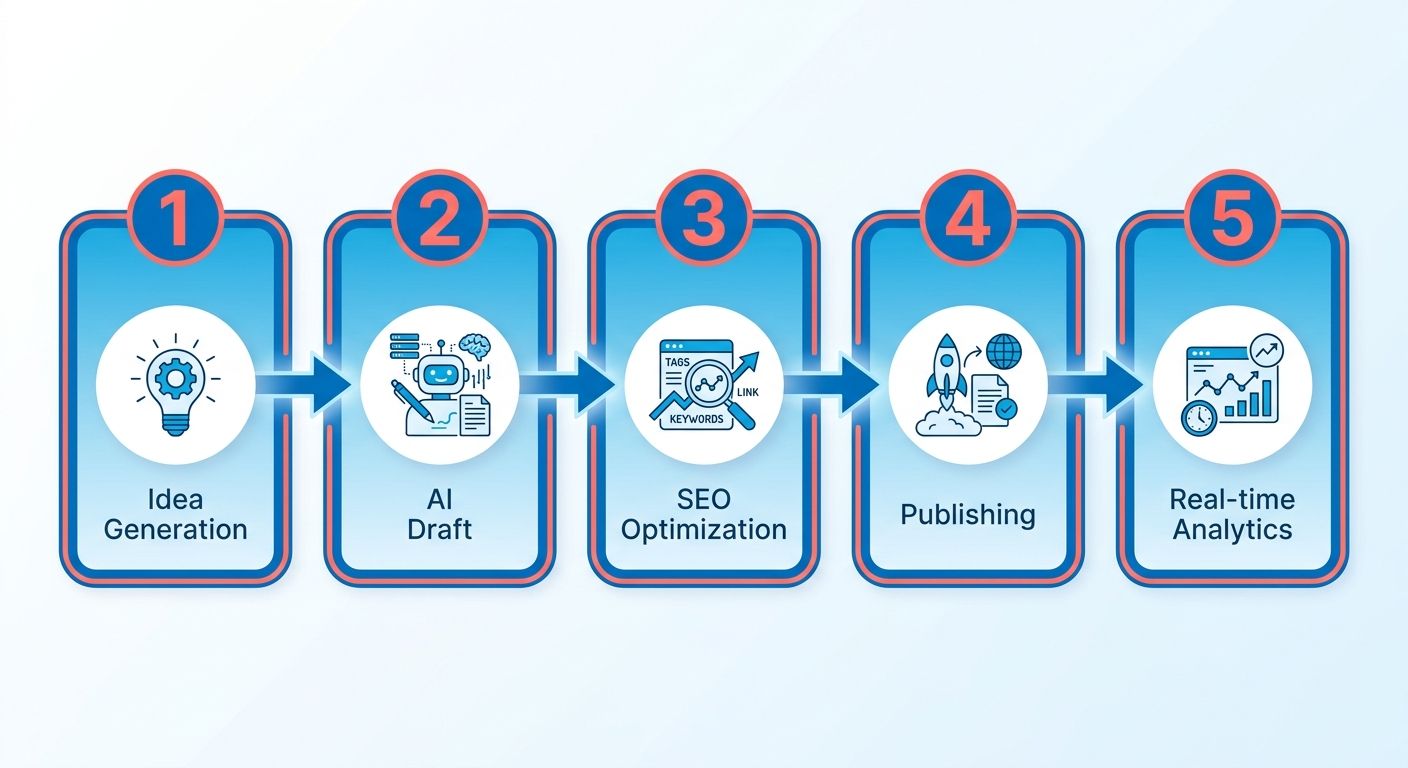
Here is a snapshot of the metrics to track. It shows typical time spent, stage difficulty, and AI versus human work.
| Stage | Avg. Time per Cycle | Difficulty (1‑5) | Primary KPI | AI‑Content Role | Risk Flag |
|---|---|---|---|---|---|
| Topic research | 20 min (automation) | 2 | # of high‑intent keywords identified | Generates keyword‑rich briefs and outlines | Low |
| Draft generation | 15 min (AI) | 2 | Draft readiness score | Produces SEO‑optimized articles in your brand voice | Low |
| SEO fine‑tuning | 10 min (automation) | 1 | On‑page SEO score | Inserts target keywords, meta data, and semantic headings | Low |
| Human review | 30 min (editor) | 3 | Editorial quality rating | Allows final tone and fact checks | Medium |
| Publishing & distribution | 5 min (automation) | 1 | Publication speed | Auto‑publishes to selected platforms (WordPress, LinkedIn, X) | Low |
The six steps, start to finish
- Topic discovery – The platform scans your site and industry signals. It then suggests low-competition, high-intent keywords.
- Brief creation – A brief lays out the target reader, key points, and SEO goal.
- Draft generation – The Persona Engine writes a full article in your established tone.
- SEO enrichment – Built-in optimization adds keyword-focused headings, semantic HTML, and relevant internal links.
- Editorial check – A quick human review confirms facts and brand fit.
- One-click publishing – The article ships to your CMS or social channels. The numbers show up in the dashboard.
What to automate, and what to keep in human hands
Automate repeatable tasks: keyword research, brief generation, first drafts, on-page tagging, and multi-channel publishing. These benefit from speed and consistency. They do not need a human touch for every step.
Keep manual tasks human: final fact-checking, nuanced brand storytelling, and the strategic call on what to publish and why. That oversight keeps quality high. It also keeps the work tied to marketing goals.
How to read ROI and risk on automated content
The analytics dashboard helps weigh production cost against results that matter. Track organic traffic, engagement, and qualified leads. Also track session duration, conversion rate, and ranking movement. Then you can put a real number on what each AI-generated piece returns.
Risk gets watched too. Alerts fire on sudden ranking drops or bounce-rate spikes. That triggers a manual review of the affected article. Automation for speed, human judgment for guardrails.
Why bother automating backlinks at all
Backlink automation turns each AI-drafted, on-brand piece into two things. It becomes a publishable asset and material for personalized outreach. Run content creation and link prospecting in one workflow. That helps you grow relevant backlinks without triggering spam signals. Teams also trade hours of manual copywriting for a process that publishes, enriches, and pitches faster.
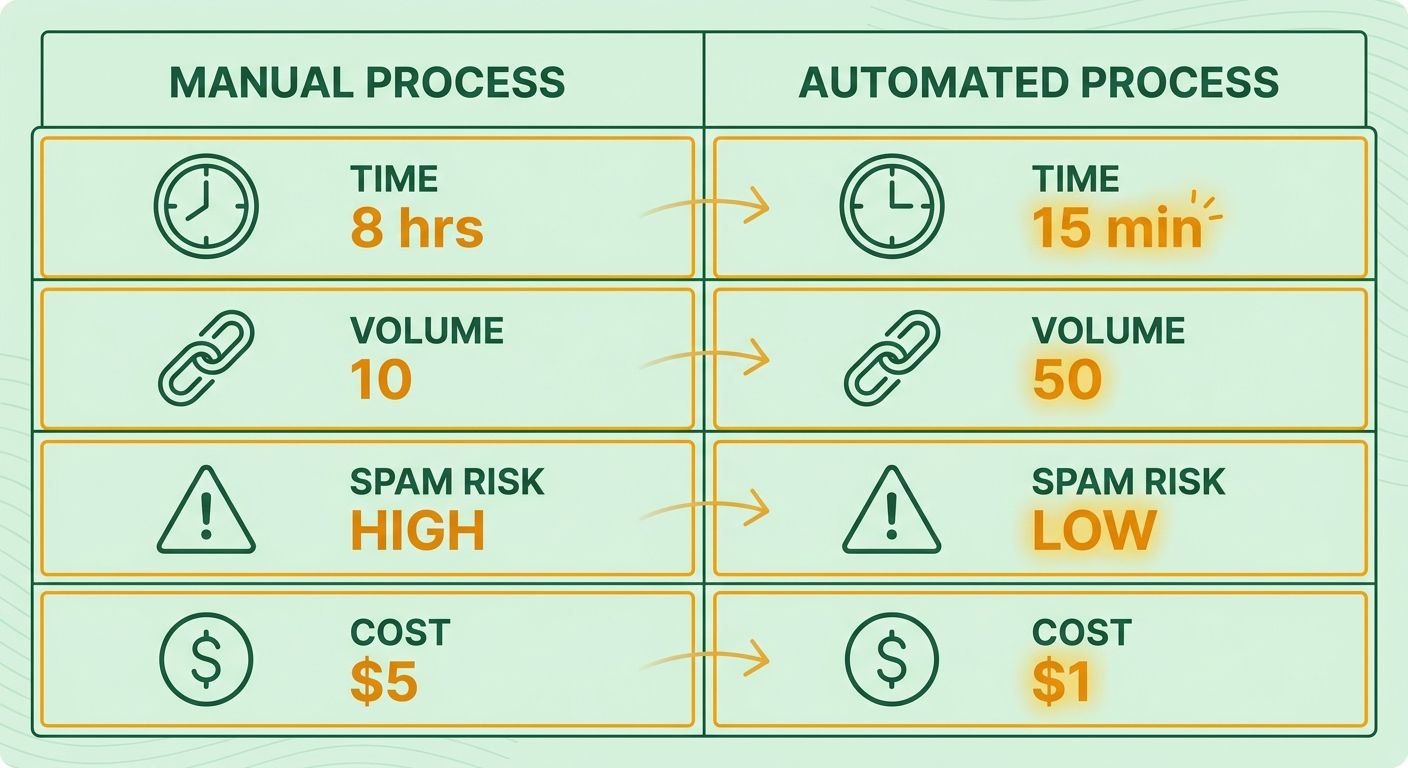
Most link building still burns time on repetitive chores. Teams scrape prospects, score relevance, draft outreach, and chase replies. That work inflates cost and slows growth. Automate the operational layer. Keep human eyes on the final copy. You get efficiency without losing relevance.
Where the manual overhead actually goes
Automating operational tasks lets your team spend time on strategy and quality control instead of busywork.
- Prospect discovery runs on AI queries that surface sites matching your tone and content gaps. No more hours lost to manual Googling.
- Enrichment pulls in contact details and context automatically, so an outreach draft already has the right name, title, and a recent-content reference without extra research.
- Publishing pushes the article to your CMS, applies SEO metadata, and schedules social signals in one click.
With those steps handled, your writers can focus on angles that earn editorial links.
The risks worth guarding against
Even a sophisticated pipeline can create spammy signals if quality thresholds slip. A few to watch:
- Link-scheme patterns trip Google's anti-spam filters. Enforce a strict relevance score and keep outreach cadence measured.
- Over-automated placement, where links get dropped into any article automatically, carries the highest penalty risk. Limit automation to internal linking, where context is controlled and the ROI is proven.
- Generic outreach erodes trust fast. AI copy should be reviewed and customized per prospect, keeping your voice and addressing a real problem for the reader.
If your team cannot vet every outreach piece, start with internal linking. It has strong ROI and lower penalty exposure.
Building a spam-free engine that scales
The workflow connects content creation, internal-link automation, and personalized outreach.
- Set the content foundation – Draft with the generation tools, run an editorial check for accuracy, then publish with SEO tags pre-configured.
- Run internal-link automation to connect the new piece to existing high-authority pages. This lifts on-page SEO and builds an anchor foundation before external outreach.
- Launch AI-personalized outreach against the enriched prospect list. Each email pulls a custom hook from the article's key insights, includes a natural call-to-action, and stays within a safe sending cadence.
Stack those layers and you get a steady engine. Fresh on-brand content feeds internal link equity. That equity strengthens authority signals that help external pitches land. It is a practical way to scale link acquisition without the spam fallout that hurts pure-volume tactics.
Safe automation practices for link building
A clean link profile comes down to three things: solid content generation, style that matches your brand, and a release schedule that does not look automated.
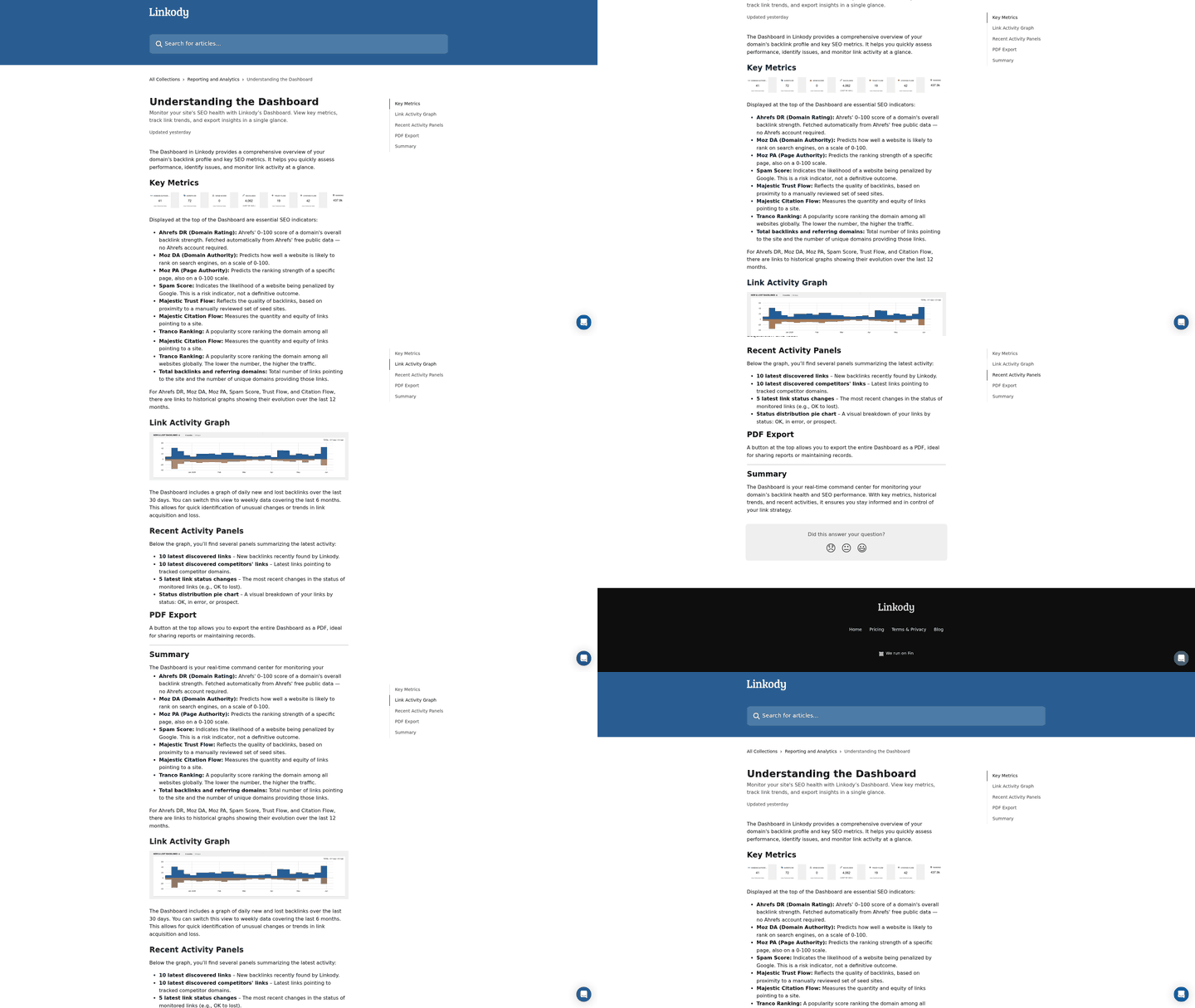
- Search-optimized structure – Drafts come organized with logical header hierarchies and schema-ready formatting that matches search intent.
- Tone alignment – The system adapts vocabulary and style to your existing editorial guidelines, which cuts down on manual rework.
- Pre-publish verification – Editors edit drafts directly in the interface, confirming facts and references before anything gets scheduled.
What human review is really for
An editor's job here is not to fix typos. It is to make sure every piece serves your strategy before it goes live.
- Editorial audit – A team member checks technical accuracy and stylistic consistency.
- Strategic alignment – A planner confirms the content answers the intended queries and reader needs.
- Final approval – The manager schedules the post and hands off the live URL for promotion.
When to skip placement automation entirely
Some situations call for a fully manual approach to protect your reputation:
- New domains – Younger than six months? Do the outreach by hand.
- Topic mismatch – When your content's niche drifts from the prospect's focus, write a custom pitch.
- High-risk link farms – Any network with rapid, unnatural link spikes stays out of your automated runs.
Closing the loop with AI-generated content
Line up content production with your outreach strategy. You get a continuous cycle of creating assets and promoting them.
Once a new asset is live, its URL can go straight into manual outreach or guest-post pitches. Watching post-launch performance tells you which topics pull the strongest organic traction. That points you toward the next topic to write.
For more on setting up safe publishing schedules, our practical guide on backlink automation for blogs goes deeper.
Scaling link building with precision
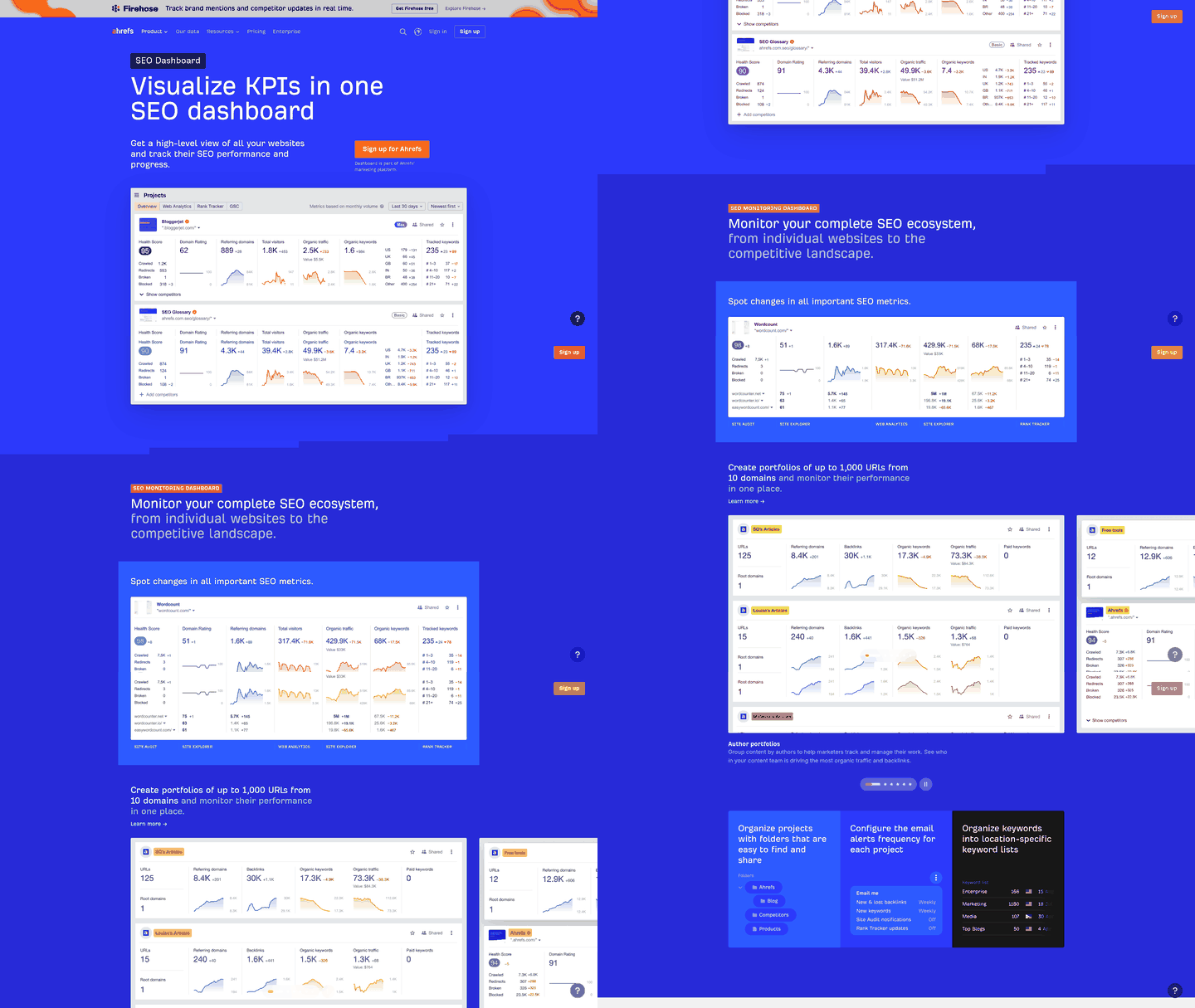
The Taxonomy Researcher reads your existing content and business context. It then surfaces relevant, low-competition keywords and topic ideas. Feed those into the article generator, and you can build new pages that target search queries nobody else is covering. Those pages can pull inbound links on their own.
- Research – Use the built-in keyword and SERP competitor analyzer to find high-intent terms.
- Plan – Run content gap analysis to prioritize topics your audience actually needs.
- Create – Generate full drafts with structured layouts, internal link recommendations, and supporting media.
An editorial check keeps every published asset at your quality bar.
Turning generated content into outreach
Published, high-quality articles can support a personalized digital PR campaign. Once a piece exists, adapt its core insights for a specific target. Add a tailored intro that references their recent coverage. A cadence that works:
- Day 0 – A short intro that flags a relevant piece of the prospect's content.
- Day 3 – A follow-up with a data point or quick tip pulled from the article's research.
- Day 7 – Offer the finished, SEO-optimized article as a ready-to-publish guest post or resource link.
Because the content already matches your brand, the outreach reads as authentic. It also adds something to the conversation.
How internal linking gets handled
The platform finds contextual spots to spread link equity across your domain.
- Insertion – It flags natural anchor text opportunities pointing to your core pillar pages.
- Optimization – Structured section tags and clean code make the pages easier for search engines to crawl.
- Monitoring – Performance tracking shows which internal pathways drive the most engagement.
Pair AI content creation with built-in internal linking, and you strengthen on-page SEO without adding manual work.
Measuring ROI and wiring in your tools
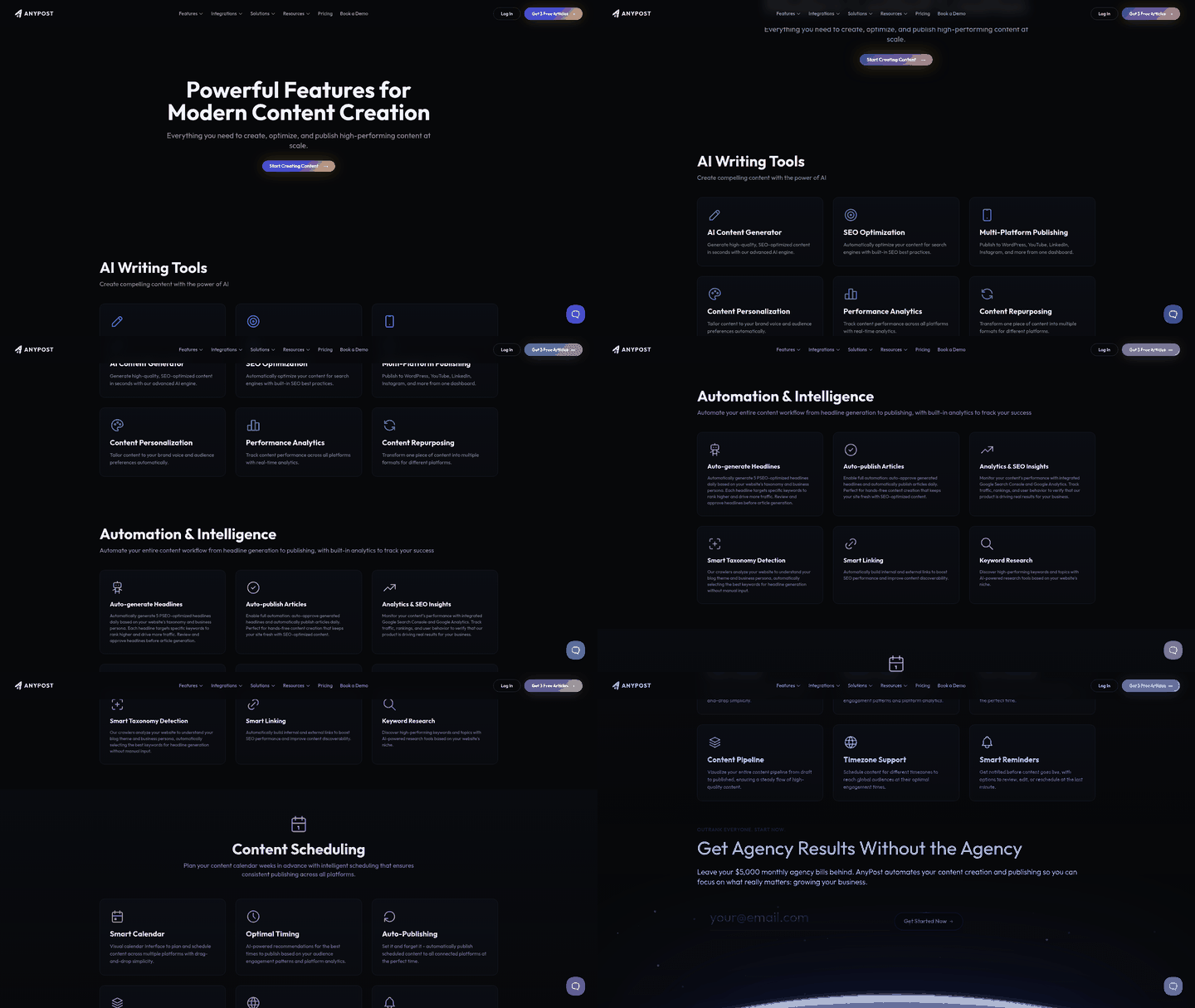
ROI here comes from three metrics: incremental organic traffic, cost per generated article, and time saved per article. Normalize each to a common unit, either hours or dollars. Then the return becomes a single number you can explain to a stakeholder.
Start with a baseline traffic snapshot before the first AI-generated publish. After the piece goes live, track organic sessions landing on the new URL. Watch the engagement signals too: average time on page and bounce rate. That lift, divided by total spend on the automation stack, gives you a cost-per-article figure you can benchmark against industry averages.
Then capture the minutes your team would have spent on research, drafting, and editing. The analytics log publishing timestamps and performance data, so you can total the labor hours saved. Subtract those from your baseline labor cost and you get a time-saved value to add on top of the financial return. Now the efficiency gain is a number, not a feeling.
Which features fit your workflow
A good setup balances automated execution with human editorial control. Use the style-matching to hold tone, the automated on-page formatting for search visibility, and the instant performance tracking to read post-launch engagement. Editors review each draft before scheduling, so you keep quality and relevance without giving up speed.
Distributing content without triggering spam flags
Safe distribution runs on secure API connections to your main publishing channels. Each one is verified and follows that site's editorial guidelines. Customize snippets and metadata per destination so the content fits the audience and the platform's policies. A final editorial sign-off before publishing keeps every piece standard and away from spam-like behavior.
If you want the step-by-step, our post "Automated Content Publishing: A Practical How-To Guide" covers platform integrations, publishing schedules, and how to measure the traffic and engagement that follow.
Ground every automated action in a measurable outcome and a human check. Then AI-generated content becomes a scalable workflow that delivers clear ROI while protecting your site's reputation.
Frequently Asked Questions
1. How can I prevent Google penalties when using backlink automation?
Preventing Google penalties means limiting automation to relevance-based actions and keeping link patterns natural. Use AnyPost’s relevance score to filter prospects and keep outreach measured. Include a personalized hook every time. Reserve manual review for high-authority sites and avoid inserting links into unrelated content.
2. What is the ideal ratio of internal to external links in AI‑generated articles?
An optimal internal-to-external link ratio sits around 3:1 for most SEO-focused posts. For a 1,200-word article, embed three to four contextual internal links and limit external citations to one or two highly relevant sources. This balance preserves link equity while signaling credibility to search engines.
3. Can I rely solely on AI for topic research in a niche industry?
Relying exclusively on AI for niche topic research is risky because data sets may miss deeper industry signals. Combine AnyPost’s automated brief with at least one manual competitor audit to capture emerging sub-topics. This hybrid approach typically uncovers 15-20% more long-tail opportunities than AI alone.
4. How does AnyPost’s real‑time analytics differ from standard Google Analytics for backlink tracking?
AnyPost’s real-time analytics surface backlink-specific metrics quickly, unlike Google Analytics, which aggregates data after 24-48 hours. It flags sudden ranking drops, shows each AI-generated URL’s inbound link count, and ties traffic spikes to outreach events. That gives marketers immediate feedback for adjustments.
5. What are the cost implications of scaling backlink automation versus hiring a freelance outreach specialist?
Scaling backlink automation can reduce per-link cost after the platform subscription. A freelance specialist charges $30-$80 per outreach hour. For a campaign targeting 200 links, automation can save labor costs, though initial software fees still matter in the budget.
6. Is it safe to automate outreach emails for guest posts without human personalization?
Automating guest-post outreach without personalization raises spam rates and lowers response ratios. Use AnyPost’s template engine to insert the prospect’s name, recent article title, and a custom data point. Then let a human reviewer approve each email. This hybrid step can improve reply rates by 20-30%.
