
Best No-Code Social Title Generator: SocialBu vs FeedHive for SEO Teams

Key Takeaways
- The SocialBu vs FeedHive call comes down to volume. FeedHive writes sharper AI copy; SocialBu gives you more scheduling room and content recycling.
- SocialBu holds up to 150 scheduled posts, five times FeedHive's 30-post cap. If you're running keyword tests at scale, that gap is the whole decision.
- FeedHive nudges ahead on ease of use, 9.4 to 9.2, but both land at 9.9 for support.
- Neither tool resolves the real tension: titles tuned for SEO keywords versus titles built to earn a click in the feed.
- Both cap you at 4 connected accounts, which pinches teams juggling a broad multi-channel presence.
- AnyPost.ai plays a different game: keyword-optimized titles in your brand voice, where SocialBu leans on scheduling and FeedHive leans on engagement copy.
- FeedHive ships a dedicated hashtag generator alongside AI title suggestions. SocialBu's title generation is thinner by comparison.
Quick Summary
You're choosing a no-code tool to generate and optimize social titles, descriptions, and hashtags. The short answer: it depends on volume. FeedHive wins on AI copy that reads well. SocialBu wins on scheduling headroom and recycling. Neither one closes the gap between the SEO title and the social hook on its own.
That gap is the story here. A title tuned for a keyword tends to read flat in a feed. A title built for clicks tends to bury the term you're trying to rank for. Whichever tool you pick quietly pushes you toward one side.
SocialBu vs FeedHive vs AnyPost.ai at a glance
The fast version for teams weighing title generation against publishing at scale.
| Feature | AnyPost.ai | SocialBu | FeedHive |
|---|---|---|---|
| Best for | SEO-optimized content in your brand voice | High-volume scheduling and recycling | AI-generated, engagement-first copy |
| AI title/hashtag generation | Yes, keyword-optimized titles and descriptions in your voice | Limited | Yes, AI suggestions plus hashtag generator |
| Scheduling capacity | Auto-publish across channels | 150 posts | 30 posts |
| Accounts supported | Multi-channel | 4 | 4 |
| Ease of use | Dashboard-driven, low setup | 9.2/10 | 9.4/10 |
| Support rating | . | 9.9/10 | 9.9/10 |
| Free entry | 3 free articles | Free plan | More limited free plan |
The scores hide as much as they show. FeedHive edges SocialBu on ease of use, 9.4 versus 9.2, and both sit at 9.9 for support. On paper, FeedHive feels smoother. Then you hit the ceiling: 30 posts against SocialBu's 150.
Which tool fits a team publishing at scale?
For high-volume keyword work, queue capacity beats a marginal UX win. A slightly nicer editor does not matter much when your actual job is pushing dozens of title variations live every week.
That's where the bottleneck shows up. Template-driven generation helps you draft engaging copy, but a tight queue limit means anyone running extensive keyword tests burns through their publishing runway fast. The platform built for creative drafting starts to choke on large-scale distribution.
SocialBu goes the other direction and optimizes for distribution. History and recycling let you keep winning variations in rotation and read performance trends over weeks, not days. One marketing team using the platform reported a 30% engagement lift from those scheduling and analytics tools. Creative teams on other platforms, meanwhile, pointed to real time savings in the drafting phase.
The practical read
Match the tool to your bottleneck. Skip FeedHive if throughput is your constraint. Skip SocialBu if you're stuck generating fresh, engaging copy in the first place.
If your bottleneck is producing SEO-optimized titles and descriptions in a consistent brand voice, that's a separate job from scheduling. AnyPost.ai works that side, generating keyword-aligned content and publishing it across channels. The sections below dig into each tool's setup effort, workflow, and where each one earns its keep.
Tool Overview: SocialBu
If you want a no-code tool to generate and optimize social titles, descriptions, and hashtags at volume, SocialBu earns its spot on scheduling headroom, not flashy AI copy. It's built for teams that publish a lot and keep iterating on what works.
That focus shapes how it treats titles. SocialBu leans toward testing and recycling keyword-optimized copy over time rather than spinning up fresh, engagement-first hooks on demand. For an SEO team cycling through many keyword variations, that bias matters more than a slick generator.
What SocialBu does well for SEO teams
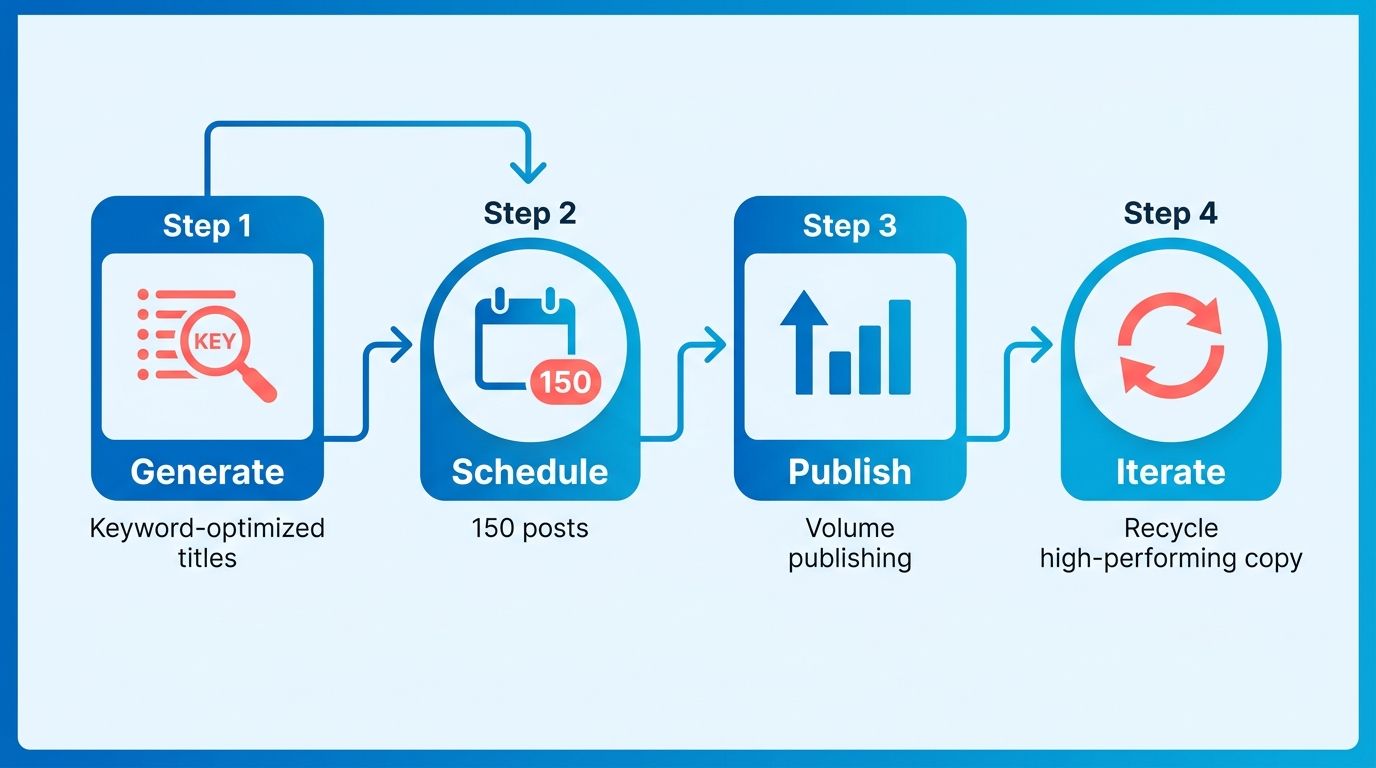
SocialBu is a no-code social management platform built around high-volume scheduling, analytics, and content recycling. Its edge is queue depth. A larger scheduling buffer is what lets a tool sustain complex, multi-variant campaigns without you babysitting the queue.
The automated recycling does the heavy lifting on long-term testing. Re-queue your top performers automatically, and you can watch how small tweaks to keyword placement move click-through rates across several weeks.
It also connects to 8+ networks, so a single title test can run across Twitter, LinkedIn, Facebook, and Instagram at once. That breadth pairs with the queue depth: set your variants, spread them across channels, and let the analytics say which phrasing holds. Post, measure, refine, repost.
How SocialBu holds up on usability and support
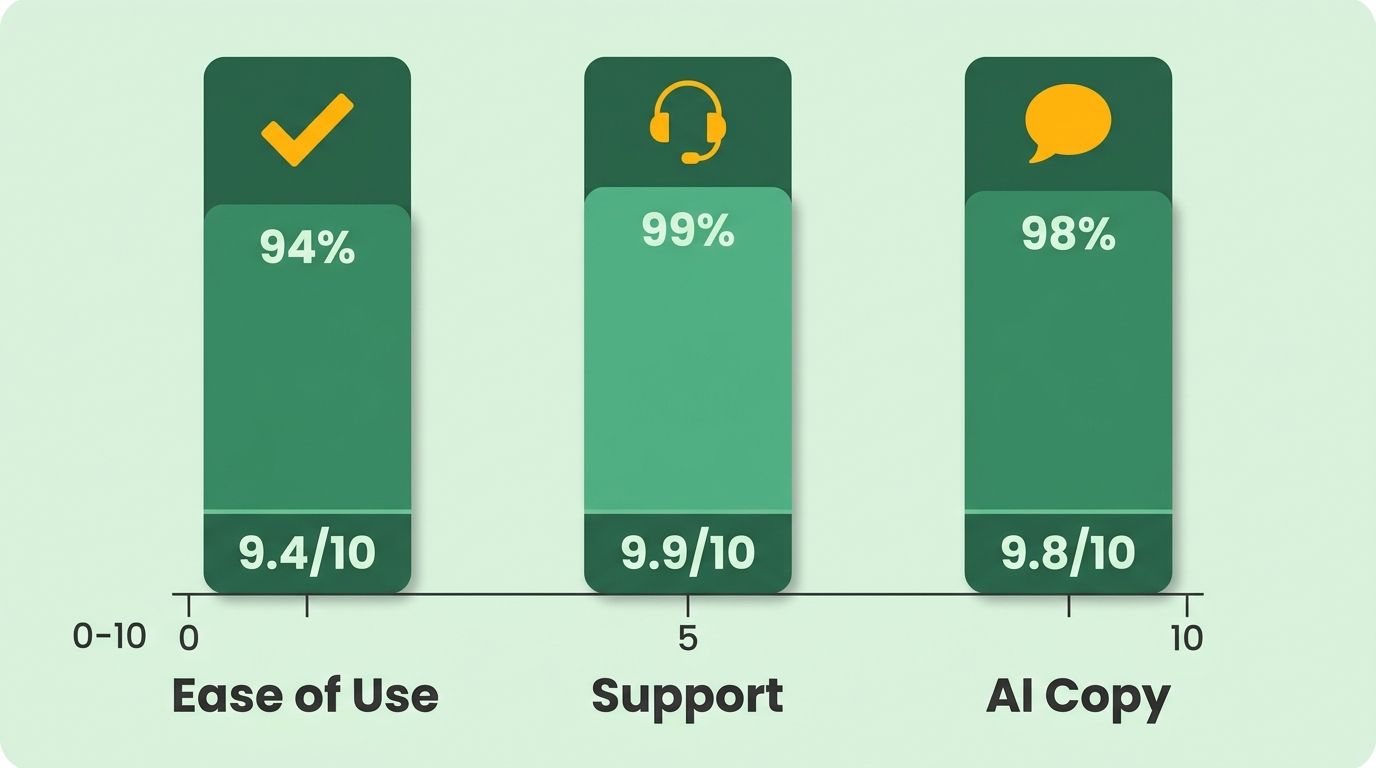
The two platforms score close but split on strengths. FeedHive has the slightly more polished interface; both pull identical marks for support. Account limits match at 4. The entry-level plans differ.
A cleaner interface isn't the same as operational efficiency, though. A streamlined editor does you little good if the publishing queue is always full. Low-volume creators will feel the polish. Teams running large campaigns feel the ceiling instead.
| Feature | AnyPost.ai | SocialBu | FeedHive |
|---|---|---|---|
| Ease of use | Streamlined | 9.2/10 | 9.4/10 |
| Support | Included | 9.9/10 | 9.9/10 |
| Scheduled posts | High-volume | 150 | 30 |
| Accounts | Multi | 4 | 4 |
| AI title generation | Yes | Limited | Strong |
| Auto-publishing | Yes | Yes | Template-driven |
Where SocialBu falls short
SocialBu skimps on creative utilities. No native image editing, no built-in link shortening, and its automated copywriting is less sophisticated. Teams that struggle to generate hooks will lean on an outside writing assistant.
So it's a distribution engine, not a creative partner. That moves the optimization problem from copywriting to queue management. It fits teams that have already locked their keyword strategy and need a stable pipeline to push it out.
If what you need most is copywriting help, other platforms serve you better. If what you need is a high-volume schedule that doesn't slam into queue limits, this is the logical pick.
Tool Overview: FeedHive
FeedHive is built around the creative side. The AI assistant is tuned to generate engaging copy, backed by an interface that keeps setup friction low and a support team that answers fast. That combination makes it a go-to for breaking through creative blocks.
The creative focus comes with a catch. FeedHive is optimized for producing individual, high-impact hooks, not for managing large batches of keyword-focused variations. That shapes how SEO teams have to structure their workflow.
What makes FeedHive good at no-code title generation
FeedHive is an AI-first social tool built around content suggestions, hashtag generation, and template-driven copy. Its core strength is turning a rough idea into a polished, feed-ready title fast. One content creator reported that the AI templates cut their content creation time significantly.
The feature set backs the claim. FeedHive includes AI content suggestions, automatic hashtag generation, an image editor, and link shortening. Those last two matter more than they read. When a title needs a visual hook and a clean tracked link, you're not bouncing across three tabs to ship one post.
Event-driven posting rounds it out. Trigger posts on conditions instead of fixed times, which suits reactive, trend-chasing content. That's the click-through side of the tradeoff, turned up.
Where FeedHive falls short for SEO teams at scale
The real limitation is queue capacity and plan restrictions. Fine for an individual creator. But teams running extensive keyword tests will spend their days clearing and reloading queues.
This is the split between interface design and operational capacity again. An intuitive editor saves time on drafting, but those savings evaporate if the architecture caps how many active campaigns you can run at once.
So the tool that helps most with copywriting hands you the tightest limits on distribution. You can generate high-quality hooks quickly, then have to ration your publishing schedule to stay under the cap.
FeedHive vs SocialBu: quick feature comparison
| Feature | FeedHive | SocialBu |
|---|---|---|
| Ease of use | 9.4/10 | 9.2/10 |
| Support | 9.9/10 | 9.9/10 |
| Scheduled posts | 30 | Higher capacity |
| Connected accounts | 4 | 4 |
| Image editor | Yes | No |
| Link shortening | Yes | No |
| AI content suggestions | Yes | Focused on scheduling |
For campaigns that demand serious volume, the overhead of managing tight queue limits can get prohibitive fast. If your main challenge is drafting engaging copy and your schedule is relatively light, though, the creative tools are a clean solution.
Core Features Comparison
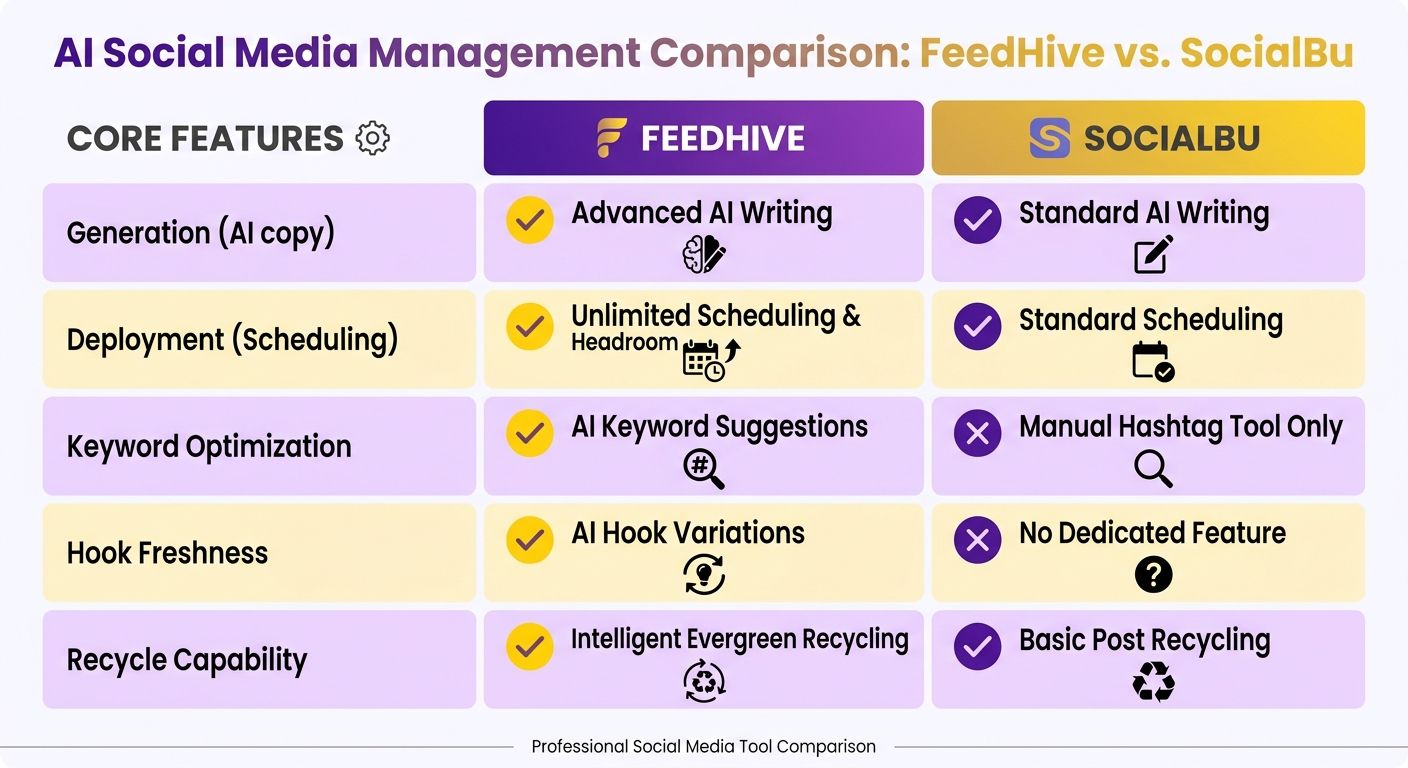
Compare no-code tools for social titles, descriptions, and hashtags and the features split along one line: generation versus deployment. FeedHive is built to write. SocialBu is built to publish at volume. That split is the whole story.
Here's the tension our angle keeps surfacing. The tool that spins the click-worthy title is the weakest at pushing dozens of keyword variations live, and the tool with the scheduling headroom leans on recycling over fresh hooks. Feature parity on paper hides a real workflow fork.
How the core features stack up side by side
The platforms divide along function: one prioritizes user experience and creative generation, the other focuses on distribution capacity. Neither fully bridges search optimization and social engagement out of the box.
| Feature | SocialBu | FeedHive | AnyPost.ai |
|---|---|---|---|
| Ease of use | 9.2/10 | 9.4/10 | Not disclosed |
| Support rating | 9.9/10 | 9.9/10 | Not disclosed |
| Scheduling capacity | 150 posts | 30 posts | Not disclosed |
| Accounts supported | 4 | 4 | Not disclosed |
| AI content generation | Limited | Strong | SEO article generation in your voice |
| Content recycling / history | Yes | Template-driven | Not disclosed |
| Image editor | No | Yes | Not disclosed |
| Link shortening | No | Yes | Not disclosed |
We won't fill cells we can't source. AnyPost.ai's strength sits in generating SEO-optimized articles in your voice and auto-publishing them anywhere, which is the engine an SEO team wants when it needs ready-to-rank content without manual effort. Read the blank cells as "verify on the plan you're evaluating," not as gaps in capability.
Which tool optimizes titles for search versus clicks?
The two systems come at optimization from opposite ends. One uses template libraries to generate high-engagement hooks; the other uses historical performance data to help you refine existing keyword-focused titles. That's the fork between creative assistance and iterative testing.
Ratings favor the more intuitive interface, but you have to weigh that against scheduling constraints. A polished editor makes single posts easier. It does not solve the logistics of large-scale testing. For teams running complex keyword campaigns, distribution capacity is still the deciding factor.
So the choice tracks your workflow. If you need to test many title variations over an extended stretch, a larger queue and solid recycling give you a more practical foundation than creative writing tools alone.
What real results have teams seen?
User feedback lines up with these two paths. Teams on the distribution-focused platform point to keeping a consistent publishing schedule across multiple profiles without manual work. Teams on the creative-focused platform point to how fast they can generate and format new drafts.
Same distinction, different words: one platform is about publishing consistency, the other is about drafting speed. Picking well means naming your primary bottleneck first, content creation or distribution management.
Recommendation and Final Verdict
The right platform depends on your primary constraint. If your team struggles to generate engaging copy, a creative-first tool pays off. If your challenge is managing a high volume of posts, a distribution-focused platform fits better.
SEO teams live with a clear trade-off: the platform with the most sophisticated copywriting help imposes the tightest scheduling limits, while the platform built for high-volume distribution asks you to bring your own creative. You're choosing which limitation to manage, not escaping it.
Which tool wins for your use case?
Here's our read, mapped to how SEO teams actually work.
| Use case | Best pick | Why |
|---|---|---|
| Fresh, engagement-first hooks | FeedHive | AI templates beat the blank page for click-worthy copy |
| High-volume keyword testing | SocialBu | Scheduling headroom and history-based recycling |
| Ready-to-rank content in your brand voice | AnyPost.ai | Generates SEO-optimized articles in your voice and auto-publishes them anywhere |
FeedHive is the pick for creators and small teams who want a smoother interface and want the AI to break writer's block. Its edge is real when you're shipping a handful of standout posts, not grinding through dozens of variants.
SocialBu is the pick for teams publishing at scale. Recycling and history let you re-test keyword-optimized titles over weeks instead of writing each one cold. That iterative loop is where SEO titles actually improve.
Does the ease-of-use score actually matter?
Not in isolation. An intuitive interface does little for you if queue limits block you from running your full campaign strategy.
Interface design and publishing capacity solve different problems. A streamlined workflow helps individual creators. Teams running extensive keyword tests need enough scheduling capacity to distribute the work in the first place.
Where AnyPost.ai fits
We built the platform around the exact gap this comparison keeps exposing. FeedHive optimizes for the hook. SocialBu optimizes for volume. Neither is designed to turn search intent into ready-to-rank content that still sounds like you, which is where SEO teams lose hours.
Our approach: generate SEO-optimized, ready-to-rank content in your own brand voice, then auto-publish it across platforms. Our Taxonomy Researcher surfaces low-difficulty, high-intent keywords for your niche, and our SERP Competitor Analyzer studies the top-ranking articles to build a structure that can win. If your team lives at the intersection of search and social, that's the workflow we'd point you to. For teams whose only job is high-volume scheduling or pure creative generation, the two specialists above still earn their place.
Try the tool that matches your bottleneck. Run a keyword-heavy campaign against an engagement-first one and see which constraint bites first. If you want to see how the same principles play out at the article level, AnyPost crawls your entire site to build a Business Context Graph, so every piece it generates reflects your products, messaging, and audience.
Frequently Asked Questions
1. Can I use SocialBu and FeedHive together instead of choosing one?
Using both tools in tandem allows you to leverage their individual strengths. You can use one platform's AI templates to draft engaging copy, then export those drafts into the other platform to take advantage of its larger scheduling capacity and recycling features. This approach combines creative assistance with high-volume distribution.
2. What's the difference between connected accounts and supported networks on SocialBu?
Supported networks refer to the various social media platforms the software can integrate with, whereas connected accounts represent the actual number of active profiles you can link to the dashboard. Even if a tool supports a wide range of platforms, your plan may limit the total number of active profiles you can manage simultaneously.
3. Are the free plans enough to evaluate either tool properly?
Free tiers are useful for testing user interfaces and basic features, though they typically come with strict usage limits. To determine if a platform fits your workflow, you should verify the specific queue and account restrictions of each free plan during your trial period.
4. Which tool suits a solo creator versus a larger SEO team?
Individual creators often prefer platforms that offer strong copywriting assistance and intuitive design to speed up the drafting process. In contrast, larger teams focused on search optimization require platforms that support high-volume scheduling and automated recycling to manage complex, multi-variant campaigns over time.
5. Why doesn't FeedHive's higher ease-of-use score make it the automatic winner?
A slightly higher usability rating indicates a more intuitive interface, but it does not reflect the platform's operational limits. For campaigns that require publishing a large volume of keyword variations, scheduling capacity and queue depth are far more critical to success than minor differences in interface design.
6. Where does AnyPost.ai fit if I already have scheduling or copy generation covered?
Our platform is designed for teams that need to scale their organic search footprint. Instead of focusing solely on social media scheduling or short-form copywriting, it automates the process of identifying search opportunities, analyzing competitor structures, and generating full-length, brand-aligned articles that are ready for publication.