
Best SEO Analysis Software with HubSpot Content Hub API

Introduction to SEO Analysis Software
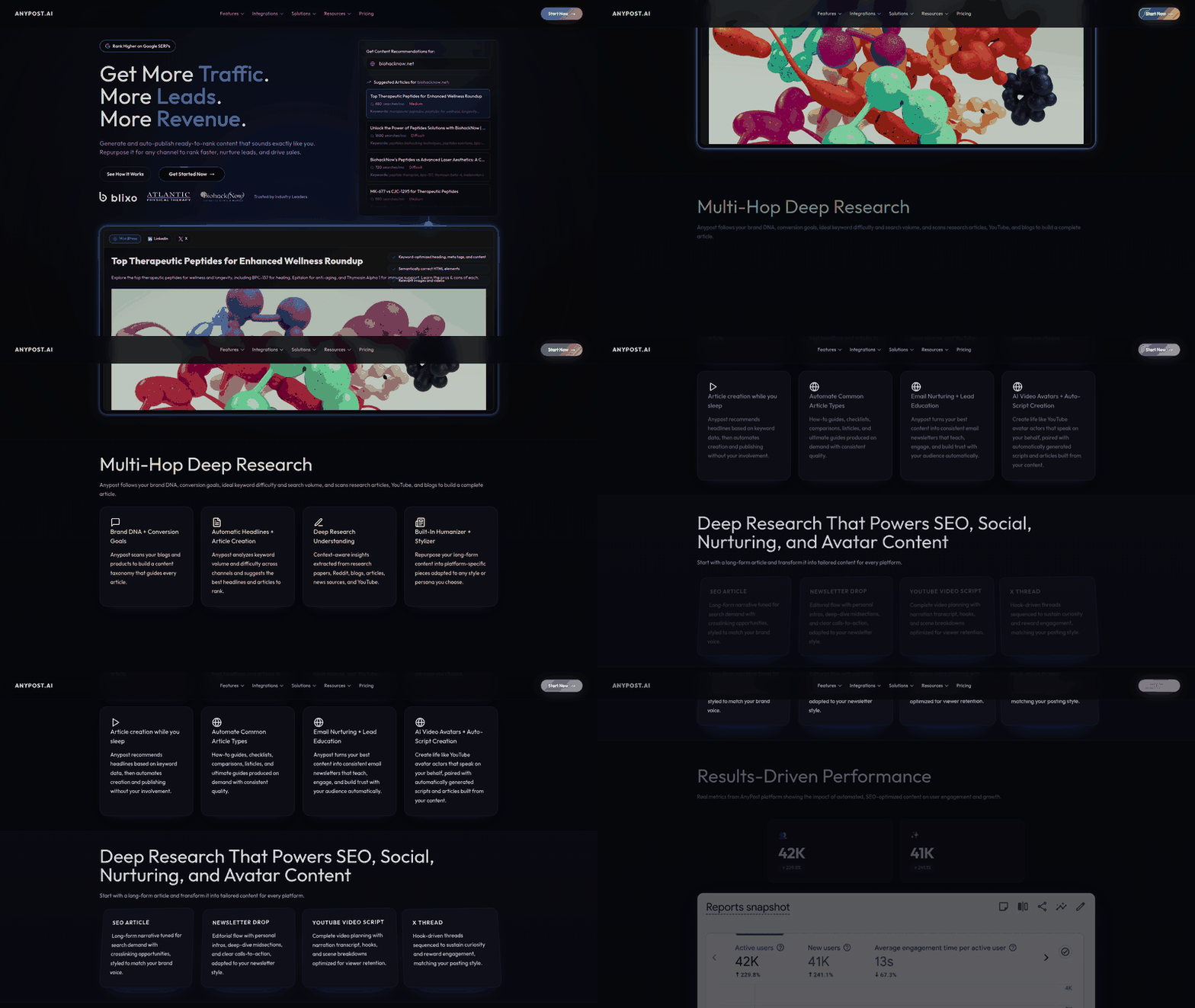
The following sections of this article will evaluate top SEO analysis software solutions, emphasizing their integration with the HubSpot Content Hub API and their alignment with the pain points outlined above. As mentioned in the [Overview of HubSpot Content Hub API] section, API connectivity is critical for seamless workflow automation. A summary table will compare each tool’s core features, usability, and pricing, helping readers identify the best fit for their workflow.
By reducing manual effort, these tools allow marketers to focus on strategic planning rather than tactical execution. See the [Automated Content Generation and SEO Optimization] section for more details on AI-driven automation features that enhance content workflows.
For growth leaders, the ability to attribute SEO-driven traffic to revenue outcomes is critical; advanced platforms integrate with analytics tools to map content performance to conversion metrics, closing the loop between visibility and business impact. Building on concepts from [Real-Time Analytics and Tracking with SEO Analysis Software], these tools enable precise performance monitoring, ensuring alignment with broader business objectives.
Automated Content Generation and SEO Optimization
Automated content generation and SEO optimization are critical components of modern SEO analysis software, especially when integrated with platforms like the HubSpot Content Hub API. These tools streamline the creation of high-quality, search-engine-friendly content while enabling marketers to repurpose existing assets for broader traffic growth. By automating repetitive tasks and leveraging data-driven insights, such software reduces manual effort and enhances content performance across channels. Below, we explore key features and benefits, followed by a comparative analysis of tools in this space.

Automated Content Generation Features
SEO analysis software with HubSpot integration often includes automated workflows for generating content outlines, blog posts, and metadata. These tools use AI-driven algorithms to analyze keyword intent, competitor content, and user behavior, ensuring alignment with current SEO best practices. For example, some platforms generate topic ideas based on HubSpot’s CRM data, tailoring content to audience segments. Others automate the creation of meta titles and descriptions, reducing the risk of duplicate content and improving click-through rates. However, the extent of automation varies: while some tools offer full drafts with suggested optimizations, others provide only skeletal outlines requiring manual refinement. As mentioned in the Introduction to SEO Analysis Software section, these tools bridge the gap between content creation and search engine visibility by leveraging structured data and CRM insights.
SEO Optimization Features
Effective SEO software combines automated content generation with real-time optimization tools. Features like keyword density analysis, readability scoring, and backlink opportunity identification are standard. When integrated with the HubSpot API, these tools can pull CRM data to personalize content for specific buyer personas, ensuring relevance. Advanced platforms also offer on-page SEO checkers that highlight technical issues, such as broken links or missing alt text, directly within the content creation workflow. For instance, some tools flag underperforming keywords in live HubSpot dashboards, enabling iterative improvements. Despite these capabilities, manual oversight remains essential to maintain brand voice and contextual accuracy.
Content Repurposing and Traffic Growth Benefits
Automated content generation significantly enhances content repurposing strategies. By transforming blog posts into social media snippets, infographics, or video scripts, SEO software maximizes the value of existing content. HubSpot’s API facilitates this process by allowing seamless data transfer between content repositories and distribution channels. For example, a single blog post can be repurposed into a LinkedIn carousel using automated tools that extract key statistics and visuals from the original article. See the Content Repurposing Strategies for Different Channels section for more details on adapting content formats to audience preferences. This approach not only saves time but also increases the likelihood of reaching diverse audiences, thereby boosting organic traffic. Tools with robust repurposing features often report up to 30% higher engagement rates compared to manually curated content.
Comparative Analysis of Tools
The table below summarizes the key features and benefits of SEO analysis tools with HubSpot integration:
| Title | Description | Key Features | Pros/Cons |
|---|---|---|---|
| Tool A | AI-driven content creation with HubSpot CRM sync | Automated blog outlines, keyword suggestions, CRM-based personalization | Pros: High personalization; integrates with HubSpot analytics. Cons: Limited repurposing templates. |
| Tool B | On-page SEO optimization and metadata automation | Real-time SEO score tracking, meta tag generator, competitor analysis | Pros: Comprehensive SEO audits; user-friendly interface. Cons: Requires manual content drafting. |
| Tool C | Multi-channel content repurposing platform | Blog-to-social media converter, infographic generator, analytics dashboards | Pros: Extensive repurposing options; boosts traffic through varied formats. Cons: Steeper learning curve. |
Limitations and Recommendations
While automated tools offer efficiency, they often lack the nuance of human creativity. Marketers should use these platforms as augmentative rather than replacement tools. For optimal results, prioritize software that balances automation with manual editing capabilities and provides clear integration pathways with HubSpot’s API. Tools with strong repurposing features, such as Tool C, are ideal for traffic growth, while those with advanced SEO scoring, like Tool B, suit teams focused on technical optimization.
In summary, the synergy between automated content generation and SEO optimization tools—when integrated with HubSpot—enables scalable, data-informed content strategies. By reducing manual labor and enhancing repurposing workflows, these solutions empower marketers to maintain consistent output while improving search visibility. However, success hinges on selecting tools that align with specific business needs and complementing automation with human oversight.
Content Repurposing Strategies for Different Channels
Content repurposing strategies vary by channel to maximize reach and efficiency. For example, X/Twitter requires concise, engaging snippets with hashtags and links to longer-form content, while newsletters benefit from in-depth summaries and curated insights. YouTube scripts can be adapted from blog posts by structuring narratives around key points and optimizing titles for searchability. Blogs, in turn, can expand on topics introduced in social media or newsletters, providing comprehensive analysis. SEO analysis software aids in identifying high-performing keywords and content gaps across these channels, ensuring alignment with search intent and audience preferences. By leveraging tools for keyword research and content audits, creators can tailor repurposed material to each platform’s strengths while maintaining SEO consistency. See the [Introduction to SEO Analysis Software] section for more details on how these tools bridge content creation and search visibility.
X/Twitter Strategy
For X/Twitter, repurpose blog posts or webinar highlights into 280-character threads with emojis, images, and hashtags. Use SEO software to analyze trending keywords and integrate them into tweets for higher visibility. Tools can also track engagement metrics to refine posting schedules and content themes. However, the character limit and fast-paced nature of the platform require careful curation to avoid oversimplification.
Newsletter Strategy
Newsletters should compile insights from blogs, social media, and YouTube scripts into digestible summaries with links to full content. SEO tools help identify topics that resonate most with readers, ensuring newsletters align with audience interests. Personalization features, such as segmented email lists, can boost open rates. Challenges include maintaining a balance between brevity and depth to avoid overwhelming subscribers.
YouTube Script Strategy
Repurpose blog content into YouTube scripts by structuring narratives around key takeaways and incorporating visual aids. SEO analysis software assists in optimizing video titles, descriptions, and tags for search engines and YouTube’s algorithm. Tools can also analyze competitors’ video performance to inform content strategies. Producing high-quality videos requires significant time and resources, but the payoff in audience retention and SEO visibility can be substantial.
Blog Strategy
Blogs serve as the cornerstone of content repurposing, expanding on ideas from social media, newsletters, and YouTube scripts. SEO software identifies keyword opportunities to enhance blog visibility and guides content updates for freshness. Long-form blogs can be split into shorter posts for other channels, but maintaining consistent messaging across formats is critical. The primary drawback is the time investment required to create and maintain high-quality content.
| Title | Description | Key Features | Pros/Cons |
|---|---|---|---|
| X/Twitter | Short, engaging threads with links to longer content | Hashtags, emojis, keyword integration | Pros: High reach. Cons: Limited character count |
| Newsletter | Curated summaries with insights and links | Personalization, segmentation | Pros: Engaged audience. Cons: Requires list building |
| YouTube Script | Adapted from blogs with visual storytelling | Optimized titles, competitor analysis | Pros: SEO visibility. Cons: Time-intensive production |
| Blog | Comprehensive content expanding on other formats | Keyword research, content audits | Pros: Authority building. Cons: Time investment |
SEO analysis software plays a pivotal role in content repurposing by streamlining keyword research, tracking performance across channels, and identifying content gaps. Tools like HubSpot’s Content Hub API can integrate with SEO platforms to automate tasks such as metadata optimization and competitor analysis. Building on concepts from the [Automated Content Generation and SEO Optimization] section, this synergy reduces manual effort while improving cross-channel SEO alignment. Benefits include cost savings from reusing content, amplified audience engagement, and sustained organic traffic growth. However, success depends on maintaining content quality and adapting messaging to each channel’s unique audience expectations.
By systematically repurposing content and leveraging SEO tools, marketers can achieve efficient, scalable strategies that meet both user needs and algorithmic requirements. The key is to balance automation with creative customization, ensuring each platform’s strengths are utilized without compromising brand consistency.
Real-Time Analytics and Tracking with SEO Analysis Software
Real-Time Analytics and Tracking with SEO Analysis Software As mentioned in the Introduction to SEO Analysis Software section, SEO tools bridge the gap between content creation and visibility, and real-time analytics provide actionable insights to refine this process. Building on concepts from Automated Content Generation and SEO Optimization, real-time tracking allows marketers to monitor the performance of AI-generated content and adjust strategies dynamically. See the Best Practices for Choosing the Right SEO Analysis Software section for guidance on selecting tools with robust analytics capabilities.

Best Practices for Choosing the Right SEO Analysis Software
When choosing SEO analysis software, prioritize tools with HubSpot Content Hub API integration, as outlined in the Top SEO Analysis Software with HubSpot Content Hub API Integration section. Additionally, leverage automated content generation features, as discussed in the Automated Content Generation and SEO Optimization section. For a detailed comparison of available options, see the Comparison of SEO Analysis Software with HubSpot Content Hub API Integration section.
Frequently Asked Questions
1. How does integrating SEO analysis software with HubSpot’s API benefit marketers?
Integrating SEO tools with HubSpot’s API streamlines workflows by enabling automated data synchronization between platforms. For example, SEO software can pull HubSpot’s CRM data to tailor content strategies based on customer behavior, or push optimized content directly into HubSpot for publishing. This reduces manual effort, ensures real-time alignment between SEO and marketing efforts, and allows marketers to focus on strategic decisions rather than repetitive tasks.
Q: Can SEO analysis tools with HubSpot API integration help track the ROI of content marketing?
A: Yes, these tools often map SEO-driven traffic to revenue outcomes by syncing with HubSpot’s analytics. For instance, they can track how specific blog posts or landing pages contribute to lead generation and sales pipeline growth. By linking SEO metrics (e.g., keyword rankings, organic traffic) to HubSpot’s CRM data, marketers gain actionable insights into which content efforts directly drive conversions and revenue.
Q: What are the key features to look for in SEO software that integrates with HubSpot?
A: Prioritize tools with seamless API connectivity, real-time analytics, and automation capabilities. Look for features like keyword tracking, competitor analysis, content optimization recommendations, and reporting dashboards that align with HubSpot’s workflows. Tools that support bidirectional data flow (e.g., updating HubSpot with SEO performance data) and AI-driven automation (e.g., generating content ideas) are particularly valuable for scalability.
Q: How do these tools automate SEO tasks while maintaining alignment with HubSpot’s workflows?
A: Many SEO platforms use AI to automate tasks like keyword research, metadata optimization, and content scheduling, which can be integrated into HubSpot’s workflows. For example, a tool might automatically suggest blog topics based on keyword gaps and publish drafts to HubSpot’s Content Hub for editorial review. This ensures automation complements—not disrupts—existing processes, maintaining consistency with HubSpot’s marketing and sales alignment goals.
Q: Are there limitations to relying on SEO software with HubSpot API integration?
A: While these tools enhance efficiency, they may require technical expertise to set up and maintain API integrations. Additionally, over-automation can lead to generic content strategies if human oversight is lacking. It’s crucial to balance automation with manual review for quality and relevance. Also, ensure the software supports customizable workflows to adapt to your team’s unique HubSpot setup and SEO objectives.
Q: How can businesses evaluate the effectiveness of SEO tools integrated with HubSpot?
A: Measure success using metrics like organic traffic growth, lead quality improvements, and content-to-conversion timeframes. Tools with HubSpot integration should provide unified dashboards that combine SEO data (e.g., backlink profiles) with HubSpot’s CRM metrics (e.g., MQLs). A/B testing different SEO strategies via these tools and analyzing their impact on revenue outcomes (as outlined in the article) will help refine your approach.
Q: What pricing considerations should businesses keep in mind for these tools?
A: Pricing often depends on features, team size, and integration complexity. Some tools offer tiered plans (e.g., basic vs. premium), while others charge per API request or monthly usage. Factor in costs for training, API maintenance, and potential custom development if deep integration with HubSpot is needed. Always request demos to assess whether the tool’s ROI justifies the investment for your specific workflow.