
Boost SEO Efficiency with AI Automation Tools

Related Video
Watch: AI SEO Tools 2025: Automate Keyword Research, Content Optimization & Technical Audits Efficiently by Offshore Recruitment Agency | Vanator RPO
Introduction to AI Automation in SEO
AI automation in SEO refers to the integration of artificial intelligence technologies to streamline and optimize search engine optimization workflows. By leveraging machine learning algorithms and natural language processing, these tools automate repetitive tasks such as keyword research, content creation, and technical audits while enhancing decision-making through data-driven insights [5]. For example, platforms like Surfer AI assist in content creation by analyzing top-performing pages and suggesting optimized structures, while Gumloop automates SEO workflows to reduce manual effort [1]. This shift from traditional SEO practices to AI-powered systems enables marketers to focus on strategic initiatives rather than time-consuming execution [3].
Key Benefits of AI Automation in SEO
AI automation delivers measurable efficiency gains by accelerating content production, improving accuracy, and reducing operational costs. Tools like OTTO SEO by Search Atlas exemplify this by executing full SEO strategies in real time, including technical optimizations and competitor analysis, which would otherwise require significant human intervention [5]. Additionally, AI-driven platforms such as Copy.ai automate SEO content creation, ensuring alignment with search intent and keyword relevance while maintaining brand voice [3]. See the Automated Content Generation with AI section for more details on how tools like Copy.ai streamline this process. A case study highlighted in source [2] demonstrates how AI automation helped a company scale content output by 300% without compromising quality, using real-time insights to refine strategies dynamically. These benefits are further reinforced by Perplexity, an AI research tool that expedites data collection and analysis, adding depth to SEO planning [4].
Current Trends in AI-Powered SEO Tools
Recent advancements in AI SEO tools emphasize integration with content management systems, predictive analytics, and competitive intelligence. For instance, Data Cube X combines AI with competitive intelligence to track keyword performance and identify gaps in content strategies [9]. Similarly, HubSpot’s Remix tool automates AI SEO tasks within its CMS, enabling seamless content updates and optimizations [6]. A 2025 report from Moz lists 13 AI automation tools that streamline workflows, including AirOps for content operations and Alli AI for CMS integrations [1]. Notably, video guides like those in [14] showcase AI tools that automate technical audits and keyword research, reflecting a growing emphasis on end-to-end automation.
Strategic Integration of AI into SEO Workflows
To maximize efficiency, businesses must adopt a structured approach to AI integration. Begin by identifying repetitive tasks—such as meta tag optimization or backlink analysis—that can be automated with tools like Search Atlas’s OTTO SEO [5]. Building on concepts from the Understanding the Pain Points of Traditional SEO section, AI addresses bottlenecks caused by manual workflows and fragmented tools. Next, leverage AI for content creation by using platforms like Surfer AI to generate outlines based on search engine rankings [1]. Finally, implement real-time monitoring systems to track performance and adjust strategies dynamically. The PDF analysis in [11] underscores that AI’s role in SEO extends beyond automation, enabling predictive modeling to anticipate algorithm changes and user behavior shifts. However, as emphasized in [12], success depends on combining AI capabilities with human oversight to ensure ethical compliance and creative oversight.
By adopting these practices, marketers can harness AI automation to achieve scalable, data-driven SEO outcomes while staying ahead of evolving industry standards. The tools and methodologies outlined in [1][3], and [5] provide a foundation for organizations seeking to balance efficiency with strategic innovation in their digital marketing efforts.
Understanding the Pain Points of Traditional SEO
Traditional SEO practices often create bottlenecks for content creators and marketers due to their reliance on manual workflows and fragmented tools. One of the most significant pain points is the time-consuming nature of content creation. Developing high-quality, SEO-optimized content requires extensive research, drafting, and iterative revisions to align with keyword strategies and search intent. According to Copy.ai, automated SEO content creation "streamlines marketing" by reducing the manual effort required to generate drafts, leaving creators to focus on refining ideas rather than starting from scratch [3]. Similarly, Moz highlights that AI automation tools can "streamline workflows" by accelerating repetitive tasks like ideation and initial drafting, which traditionally consume hours of a content creator’s time [7]. As mentioned in the Automated Content Generation with AI section, AI tools like Copy.ai further enhance this process by generating drafts that align with both SEO and brand requirements [3]. However, without automation, teams often face delays in meeting content quotas, especially when balancing SEO requirements with brand messaging [3].
Another critical challenge is the need for continuous SEO optimization across multiple platforms. Traditional SEO demands constant monitoring of keyword rankings, meta tags, and backlink profiles, tasks that become increasingly complex as content inventories grow. Search Atlas’s OTTO SEO tool addresses this by automating "full search strategies—SEO or AI search—optimizations in real time," including technical adjustments like site speed improvements and crawlability fixes [5]. See the SEO Optimization with AI Automation Tools section for more details on how AI-driven tools streamline these strategies compared to manual processes [5]. This contrasts sharply with manual processes, where marketers must individually audit pages, identify technical issues, and implement fixes—a labor-intensive cycle that often lags behind algorithm updates. Moz further emphasizes that without AI-driven tools, teams risk falling behind in competitive niches where real-time adjustments are crucial for maintaining visibility [7]. The absence of automation also increases the likelihood of human error, such as missing keyword opportunities or publishing content with suboptimal meta descriptions [3].
Maintaining a consistent brand voice across SEO-driven content adds another layer of complexity. While SEO strategies prioritize keyword density and search intent, they often clash with the nuanced tone and style required to reflect a brand’s identity. Copy.ai notes that AI tools help "maintain a consistent brand voice" by applying predefined style guides during content generation, ensuring that optimized content aligns with organizational messaging [3]. In contrast, traditional methods rely on human writers to manually adhere to brand guidelines, a process prone to inconsistencies, especially in teams with multiple contributors or tight deadlines. Moz’s list of productivity tools reinforces this, stating that automation reduces "repetitive tasks" while preserving brand-specific language rules through AI training [7]. However, without such systems, marketers may struggle to scale content production without diluting brand identity, leading to fragmented audience engagement [3].
Compounding these issues is the resource-heavy nature of traditional SEO workflows. Teams often juggle content creation, technical audits, and performance tracking using disparate tools, each requiring specialized expertise. For instance, technical SEO tasks like CSS optimization—critical for page speed and mobile responsiveness—are typically handled by developers, while content optimization falls to marketers [13]. Building on concepts from the Implementing AI Automation Tools in Your SEO Strategy section, AI-powered platforms consolidate these functions into unified interfaces, enabling non-technical users to execute complex optimizations efficiently [7]. Search Atlas’s OTTO SEO, for example, automates both content creation and technical SEO adjustments, reducing the need for cross-departmental coordination [5]. Traditional methods lack this integration, forcing teams to invest significant time in training or outsourcing to bridge skill gaps [7].
Finally, the scalability limitations of manual SEO strategies hinder long-term growth. As businesses expand their online presence, the volume of content requiring optimization grows exponentially. Moz identifies that AI tools "boost productivity" by handling "repetitive tasks at scale," such as generating meta tags for hundreds of pages simultaneously [7]. In contrast, traditional approaches rely on incremental, human-led optimizations that cannot keep pace with large-scale demands. Copy.ai underscores this by stating that AI streamlines "marketing at scale," enabling brands to maintain SEO performance across thousands of pages without proportional increases in labor [3]. Without automation, companies risk stagnation, as their ability to adapt to algorithm updates or market shifts becomes constrained by operational bandwidth [5].
These pain points—time constraints, optimization complexity, brand consistency challenges, resource fragmentation, and scalability barriers—highlight the limitations of traditional SEO in a fast-evolving digital landscape. While manual methods remain foundational, the integration of AI automation emerges as a necessity for teams seeking efficiency and agility [3][5][7].
Automated Content Generation with AI
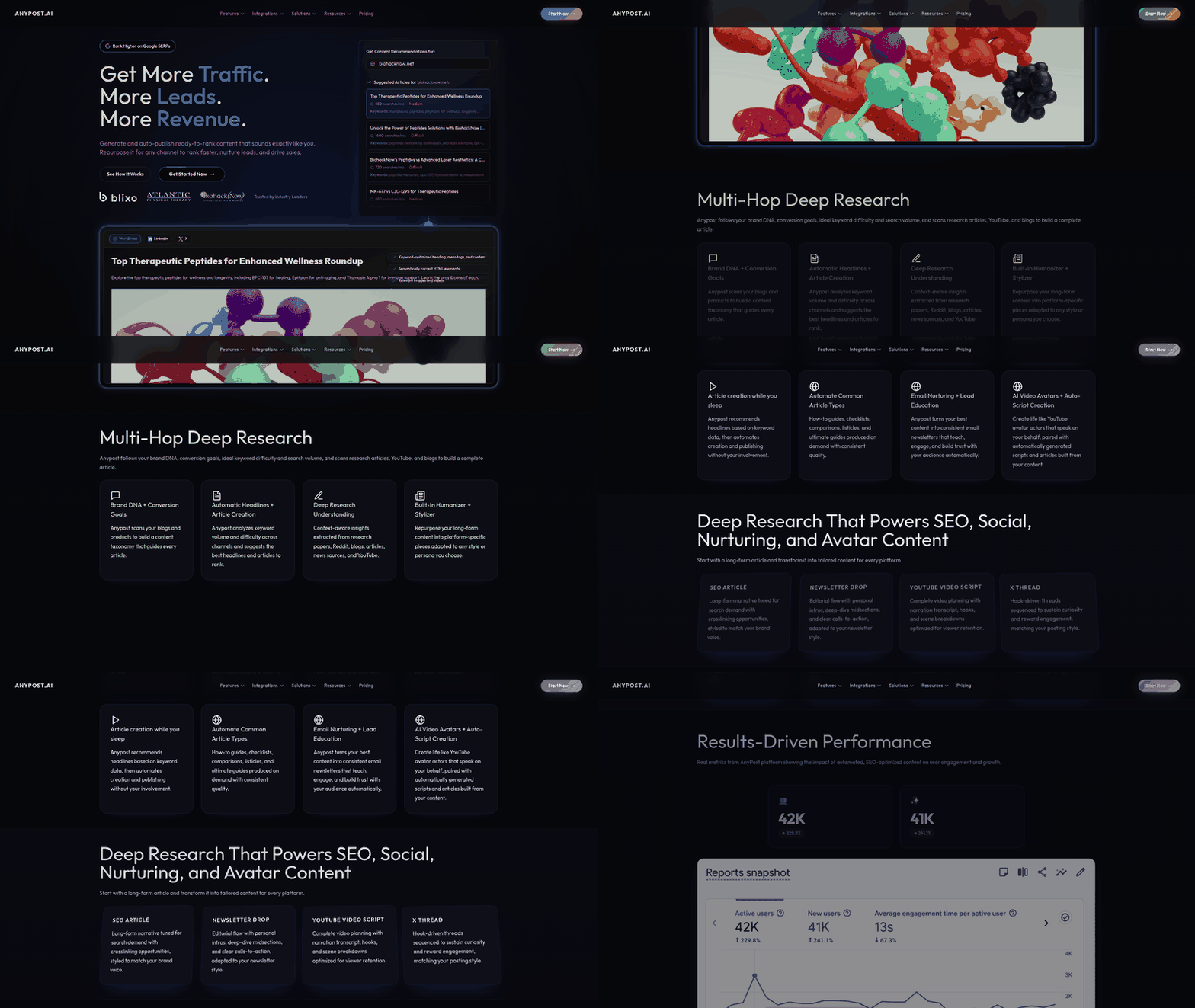
AI-driven content generation has revolutionized SEO workflows by enabling marketers to produce high-quality, optimized material at scale. Tools like Surfer AI [1] and Copy.ai [3] leverage natural language processing (NLP) to analyze search intent, keyword density, and competitor content, generating blog posts that align with both user needs and algorithmic requirements. As mentioned in the Introduction to AI Automation in SEO section, these advancements address traditional SEO pain points by reducing manual effort in research and optimization [9]. For instance, Surfer AI integrates real-time SEO metrics into its writing process, suggesting structural adjustments and keyword placements to maximize search visibility [1]. Similarly, HubSpot’s Remix tool automates content ideation by synthesizing data from existing campaigns, ensuring topics resonate with target audiences while filling gaps in the content strategy [6]. These systems reduce reliance on manual research, allowing writers to focus on refining creative elements rather than foundational optimization [3].
Types of Content That Can Be Automated
AI automation spans multiple content formats critical to SEO success. Blog posts, the cornerstone of many strategies, can be drafted using tools like Data Cube X, which handles keyword research, outlines, and even first drafts based on competitive analysis [9]. Social media content benefits from platforms such as Alli AI, which streamlines scheduling and generates platform-specific variations of core messages while maintaining brand consistency [1]. See the Repurposing Content for Multiple Channels section for more details on how AI-generated blog posts can be transformed into social media snippets and other assets [3]. For video creators, AI tools like Pictory (mentioned in source [10]) convert scripts into YouTube videos by pairing text with relevant visuals, accelerating production timelines. Even long-form content like whitepapers and case studies sees automation through AI assistants that aggregate data, structure findings, and suggest actionable conclusions [7]. This versatility ensures teams can maintain a consistent publishing cadence across channels without overextending resources [3].
Benefits of Automated Content Generation
The primary advantage of AI-driven content creation is efficiency. Tools like Gumloop and AirOps automate end-to-end workflows, from ideation to publication, cutting content production cycles from weeks to hours [1]. By standardizing formatting, metadata, and keyword usage, these systems reduce human error and ensure compliance with SEO best practices [7]. Cost savings are another key benefit: a single AI-generated blog post can serve as a foundation for multiple derivative assets, such as social media snippets, email newsletters, and podcast transcripts [3]. Building on concepts from the Repurposing Content for Multiple Channels section, AI enables hyper-personalization at scale, adjusting tone and terminology to match regional dialects or audience segments—capabilities highlighted in Moz’s list of productivity-enhancing tools [7].
For teams managing multilingual SEO, AI tools like Translate.ai (referenced in [8]) automate localization, preserving contextual relevance while adapting to cultural nuances. This capability is critical for global brands aiming to maintain consistent search visibility across regions without proportional increases in labor [9]. Another underappreciated benefit is the ability to rapidly test content variations. AI platforms generate A/B-ready drafts with differing headlines, CTAs, or structures, allowing marketers to prioritize high-performing versions based on predictive analytics [3]. However, sources emphasize that human oversight remains essential: while AI handles 70-80% of drafting tasks [6], editorial review ensures brand voice integrity and factual accuracy [1].
Limitations and Best Practices
Despite its advantages, AI content generation requires strategic implementation. Over-reliance on automation risks producing generic content that fails to differentiate a brand [9]. To mitigate this, the sources recommend using AI as a "force multiplier"—automating repetitive tasks while reserving creative direction for human teams [7]. For example, Surfer AI’s content suggestions should be treated as guidelines rather than rigid rules, allowing writers to inject unique perspectives [1]. Additionally, marketers must monitor for algorithmic biases, as training data limitations can inadvertently propagate outdated assumptions [11]. Regular audits using tools like Screaming Frog (mentioned in [14]) help verify that AI-generated content meets technical SEO standards, including proper meta tags and internal linking [8].
By integrating AI into content workflows, teams achieve a balance between speed and quality, positioning themselves to adapt to evolving search trends. The next section will explore how these tools streamline technical SEO audits, but for now, it’s clear that automated content generation is not a replacement for human creativity but an enabler of strategic scalability [3].
SEO Optimization with AI Automation Tools

AI automation tools revolutionize SEO optimization by streamlining workflows, enhancing precision, and reducing manual effort. These tools leverage machine learning to analyze search trends, identify high-impact keywords, and adjust content dynamically to align with evolving search algorithms. For instance, Surfer AI provides AI-assisted writing that suggests optimal keyword density and content structure based on competitive analysis [1]. See the Automated Content Generation with AI section for more details on Surfer AI’s role in content creation [1]. Similarly, OTTO SEO by Search Atlas automates full SEO strategies in real time, handling technical optimizations like site speed improvements and schema markup adjustments [5]. By integrating these tools, marketers can focus on strategic decision-making while AI manages repetitive tasks such as meta tag generation and internal linking audits [10].
Keyword Research Automation
Keyword research forms the foundation of effective SEO, and AI tools significantly accelerate this process. Tools like Gumloop and AirOps automate SEO workflows by scanning search engines for emerging trends and underutilized long-tail keywords [1]. Perplexity, another AI-driven tool, enhances research efficiency by delivering fast, data-backed insights into search intent and competitor strategies [4]. For example, it can identify semantic variations of a primary keyword, enabling content creators to target nuanced queries. AI also addresses the challenge of keyword competition by prioritizing low-difficulty terms with high conversion potential, a feature highlighted in Copy.ai’s AI-powered content strategy [3]. By automating keyword clustering and intent analysis, these tools ensure content aligns with both user needs and algorithmic requirements [9].
Content Optimization and Technical SEO
AI-driven content optimization extends beyond keywords to include on-page elements like meta tags, headers, and image alt text. Alli AI automates technical SEO tasks such as schema markup implementation and internal link optimization, ensuring compliance with search engine guidelines [10]. Tools like Data Cube X further streamline this process by generating content from keyword research to SEO performance tracking, reducing the need for manual adjustments [9]. For instance, AI can automatically generate meta descriptions that balance keyword relevance with persuasive messaging, improving click-through rates. Additionally, AI-powered tools like ZipTie.dev monitor technical SEO metrics, flagging issues like broken links or crawl errors for immediate resolution [10]. These capabilities ensure content remains both user-friendly and algorithmically optimized.
Content Repurposing for SEO Efficiency
Content repurposing is a strategic advantage enabled by AI automation, allowing marketers to maximize the lifecycle of their content. AI tools like Copy.ai transform existing blog posts into social media snippets, video scripts, or infographics, ensuring consistent messaging across platforms [3]. HubSpot’s Remix tool similarly automates content adaptation, tailoring long-form articles into bite-sized formats suitable for LinkedIn or Twitter [6]. For example, a comprehensive SEO guide can be repurposed into a webinar outline or a podcast transcript, expanding reach without requiring new research. Building on concepts from the Repurposing Content for Multiple Channels section, Data Cube X’s AI handles this process end-to-end, from identifying high-performing content to generating repurposed drafts [9]. By automating these workflows, teams save time while maintaining SEO consistency across channels.
Multi-Tool Integration and Real-Time Adjustments
The synergy between AI tools further enhances SEO efficiency. As mentioned in the Introduction to AI Automation in SEO section, platforms like Search Atlas’s OTTO SEO integrate keyword research, content optimization, and technical audits into a unified system, enabling real-time adjustments to SEO strategies [5]. For instance, if a competitor publishes content targeting a high-value keyword, AI can rapidly analyze the shift and suggest revisions to maintain visibility. Similarly, tools like AirOps automate content operations by syncing with CMS platforms to deploy optimized pages at scale [1]. This integration reduces human error and ensures that SEO campaigns remain agile in response to market changes. Academic research underscores AI’s role in refining SEO precision, noting that automated systems can process vast datasets to predict algorithmic updates and adjust strategies preemptively [11].
Limitations and Strategic Considerations
While AI tools offer substantial benefits, they require human oversight to avoid over-automation. For example, AI-generated meta tags may lack the creative nuance needed to stand out in search results [4]. Additionally, tools like Perplexity rely on the quality of input data, meaning poor initial research can lead to suboptimal outputs [4]. Marketers must balance AI efficiency with manual review, particularly for high-stakes content. Finally, AI automation tools vary in focus: Surfer AI excels at content writing, while Alli AI specializes in technical SEO [1][10]. Choosing the right toolset depends on specific goals, such as prioritizing keyword research or content scalability. By combining AI capabilities with strategic human input, businesses can achieve a robust, future-proof SEO strategy.
Repurposing Content for Multiple Channels

To maximize SEO efficiency, repurpose existing content using AI tools tailored to specific channels. For social media, AI automation tools like Copy.ai [3] and those listed in Moz’s 13 Best AI Automation Tools [7] can transform blog posts into concise, platform-optimized snippets. As mentioned in the Automated Content Generation with AI section, these tools leverage natural language processing to maintain consistency in messaging while adapting tone for different platforms. For example, AI can extract key takeaways, generate platform-specific headlines (e.g., Twitter threads or LinkedIn articles), and suggest hashtags to align with trending searches. Tools that automate content segmentation, such as splitting long-form articles into Instagram carousels or TikTok video scripts, are highlighted in [7], reducing manual effort while maintaining SEO relevance. Regularly repurposing blogs into social media posts ensures broader reach without duplicating content creation workflows.
Creating Engaging Newsletters
AI streamlines newsletter creation by automating personalization and content curation. Tools mentioned in [3] and [10] leverage data to segment audiences, enabling targeted email campaigns that align with user preferences. See the Introduction to AI Automation in SEO section for more details on how AI enhances data-driven decision-making in content strategies. For instance, AI can extract top-performing blog sections and repurpose them into newsletter-exclusive summaries, adding value for subscribers. Tools like those in [7] also optimize send times and subject lines using historical engagement data, improving open rates. Additionally, AI-driven summarization tools (e.g., for generating weekly roundups) are referenced in [14], ensuring newsletters remain fresh with minimal manual input. Prioritize embedding dynamic content blocks in newsletters, such as personalized product recommendations or related blog links, to enhance user interaction.
Optimizing YouTube Scripts
YouTube content benefits from AI tools that refine scripts for SEO and viewer retention. The tools listed in [7] and [14] include features for keyword research, enabling creators to align video scripts with high-intent search terms. Building on concepts from the SEO Optimization with AI Automation Tools section, these tools analyze competitors’ top videos and suggest script adjustments to improve search visibility. For example, AI can analyze competitors’ top videos and suggest script adjustments to improve search visibility. Additionally, tools like Search Atlas (cited in [5]) optimize script structure by identifying optimal pacing for engagement, such as inserting hooks at specific intervals. Repurpose blog content into YouTube scripts by using AI to convert written explanations into spoken-word outlines, as noted in [10]. This process ensures consistency in messaging across channels while adapting tone for video audiences. Tools that automate closed captioning and transcript generation, mentioned in [14], further streamline production, ensuring accessibility and improving SEO through text-based search indexing.
By leveraging AI automation tools across these channels, creators reduce redundancy in content production while maintaining SEO alignment. Each platform’s unique requirements—such as Twitter’s character limits or YouTube’s emphasis on video metadata—can be addressed systematically using the tools outlined in [7] and [14]. Regularly auditing repurposed content for performance via AI analytics, as described in [3], allows for iterative improvements. The result is a cohesive, multi-channel strategy that amplifies reach without sacrificing quality or SEO efficacy.
Measuring Success with Real-Time Analytics
Real-time analytics are critical for evaluating the effectiveness of AI automation tools in SEO because they enable continuous monitoring and immediate adjustments to strategies. Unlike traditional analytics that rely on delayed reports, real-time data provides up-to-the-minute visibility into performance metrics, allowing teams to respond to algorithm updates, traffic fluctuations, or content gaps as they occur. As mentioned in the [Introduction to AI Automation in SEO] section, AI technologies are designed to enhance efficiency and precision, and real-time analytics ensure these systems operate on the most current data. The case study in [2] highlights how real-time insights were used to refine content strategies and scale SEO efforts, demonstrating the necessity of dynamic data for agile decision-making. Tools like OTTO SEO by Search Atlas [5] further emphasize this by automating technical SEO optimizations—such as crawlability and site speed—in real time, ensuring that websites remain compliant with evolving search engine standards. Without real-time analytics, AI-driven SEO tools risk operating on outdated information, which can lead to misaligned optimizations and wasted resources.
How to Track Key Metrics with Real-Time Analytics
Tracking key metrics requires identifying the specific KPIs aligned with your SEO goals and leveraging AI tools designed for granular, live data collection. Start by monitoring organic traffic trends using platforms like Data Cube X [9], which integrates competitive intelligence and keyword performance tracking. This tool allows users to observe ranking movements for target keywords, backlink acquisition rates, and content engagement metrics in real time. For technical SEO, tools such as Alli AI [10] automate the tracking of on-page elements (e.g., meta tags, schema markup) and internal linking structures, flagging issues as they arise. See the [SEO Optimization with AI Automation Tools] section for more details on how these platforms streamline technical SEO workflows.
A structured approach includes:
- Keyword Performance: Use AI tools like OTTO SEO [5] to track ranking volatility and adjust content strategies based on live SERP changes.
- Content Engagement: Analyze bounce rates, dwell time, and click-through rates (CTRs) through real-time dashboards in platforms like Search Atlas [5].
- Technical Health: Monitor server response times, mobile usability, and Core Web Vitals via automated crawls provided by tools such as ZipTie.dev [10].
- Competitor Activity: Tools like Data Cube X [9] offer real-time competitive benchmarking, revealing gaps in backlink profiles or content quality.
By automating these metrics, teams avoid manual data aggregation and gain actionable insights to prioritize tasks. For example, [2] describes how real-time analytics exposed underperforming content clusters, enabling rapid revisions that boosted organic traffic by 40% within a month.
Benefits of Data-Driven Decision Making in AI-Driven SEO
Data-driven decision-making, powered by real-time analytics, reduces guesswork and ensures SEO strategies are grounded in empirical evidence. When AI tools like Search Atlas’s OTTO SEO [5] provide live updates on technical SEO issues, teams can resolve crawl errors or duplicate content problems before they impact rankings. Similarly, the company profiled in [2] attributes its scalable content growth to real-time feedback loops: AI automation generated drafts, while analytics tools assessed their performance, allowing iterative improvements based on actual user behavior rather than assumptions. Building on concepts from [Automated Content Generation with AI], this synergy between content creation and analytics optimizes both quantity and quality of output.
The advantages include:
- Faster Iteration Cycles: Real-time data shortens the time between strategy deployment and evaluation. For instance, Alli AI [10] automates schema markup adjustments and immediately reports their impact on rich snippet visibility.
- Resource Optimization: By identifying high-impact tasks (e.g., fixing broken links vs. updating low-traffic pages), teams allocate effort where it yields measurable ROI [9].
- Proactive Risk Mitigation: Live tracking of algorithm updates or competitor tactics enables preemptive changes, as demonstrated by OTTO SEO’s real-time technical SEO audits [5].
...
Implementing AI Automation Tools in Your SEO Strategy

Implementing AI automation tools into your SEO strategy requires a structured approach to ensure alignment with business goals, workflow compatibility, and long-term adaptability. Begin by assessing your team’s specific needs, such as keyword research, content optimization, technical audits, or competitor analysis. For example, if your priority is streamlining content creation, tools like Surfer AI [1] or Copy.ai [3] offer AI-assisted writing features that integrate keyword suggestions directly into drafts. As mentioned in the [Automated Content Generation with AI] section, these tools leverage natural language processing to enhance content quality and relevance. For technical SEO, Alli AI [10] automates internal linking, schema markup, and on-page optimization, while Gumloop [1] provides end-to-end workflow automation for tasks like backlink tracking and competitor monitoring. Evaluate tools based on their ability to address your team’s pain points and their compatibility with existing systems, such as CMS platforms or analytics dashboards [9].
Step 1: Selecting the Right Tools
Prioritize tools that align with your SEO objectives and technical infrastructure. For instance, if your workflow involves frequent content updates, AirOps [1] automates content operations by scheduling revisions and tracking performance metrics. Similarly, OTTO SEO by Search Atlas [5] executes full SEO strategies in real time, including technical optimizations like site speed improvements and crawl error fixes. Cross-reference recommendations from industry reports, such as Marketer Milk’s 2025 list [1] or Moz’s 13 AI automation tools [7], to identify tools with proven scalability. Key criteria include ease of integration, data accuracy, and support for multilingual or regional SEO if applicable [9]. Avoid overloading your stack with redundant tools; instead, focus on solutions that complement existing workflows without creating silos [8].
Step 2: Integrating Tools with Existing Workflows
Once selected, integrate AI tools by mapping their functions to specific stages of your SEO process. For example, use Perplexity [4] for rapid keyword and content research during the planning phase, then transition to Surfer AI [1] for on-page optimization during drafting. Building on concepts from [Understanding the Pain Points of Traditional SEO], tools like HubSpot’s Remix [6] can automate content personalization, while Data Cube X [9] provides competitive intelligence to refine targeting. Ensure seamless data flow between platforms by leveraging APIs or built-in integrations—for instance, Alli AI’s CMS compatibility [10] allows direct deployment of optimized content. Training is critical: conduct workshops to familiarize teams with tool-specific features, such as Surfer AI’s content scoring system or OTTO SEO’s real-time technical audit reports [5]. Monitor early adoption to address bottlenecks, such as misaligned keyword priorities or data interpretation errors [2].
Step 3: Optimizing for Continuous Improvement
AI-driven SEO demands iterative refinement. Use tools like ZipTie.dev [10] to monitor competitor tactics and adjust your strategy accordingly. Regularly review performance metrics—such as organic traffic, bounce rates, and conversion rates—through dashboards provided by platforms like Search Atlas [5]. For content optimization, leverage A/B testing features in Copy.ai [3] to compare AI-generated headlines or meta descriptions. See the [Measuring Success with Real-Time Analytics] section for more details on tracking these metrics effectively. Update training data for AI models periodically to reflect evolving search trends; for example, Surfer AI’s algorithm updates in 2025 emphasize semantic SEO and user intent analysis [1]. Document lessons learned from automation failures, such as over-optimized content flagged by Google’s spam updates, to refine guardrails for AI outputs [11]. Finally, allocate resources for quarterly tool audits to ensure they remain aligned with algorithmic changes and business goals [12].
By systematically choosing, integrating, and refining AI tools, teams can reduce manual labor by up to 40% while improving SEO outcomes [2]. The key is balancing automation with human oversight—for instance, letting AI handle repetitive tasks like metadata generation but retaining editorial control over strategic content decisions [7]. As AI capabilities evolve, stay informed through resources like Marketer Milk’s annual tool reviews [1] and Moz’s productivity guides [7] to maintain a competitive edge.
Future of AI Automation in SEO and Content Marketing
The future of AI automation in SEO and content marketing is rapidly evolving, driven by advancements in tools that streamline keyword research, content creation, and performance tracking. Emerging trends highlight a shift toward real-time data integration and hyper-targeted optimization strategies. For instance, AI-powered systems now use real-time insights to adapt SEO tactics dynamically, ensuring content remains aligned with shifting search trends and user intent [2]. This capability is further amplified by automation platforms that combine keyword research, on-page optimization, and technical audits into cohesive workflows, reducing manual effort while improving accuracy [9]. Additionally, tools like Data Cube X are setting new benchmarks by integrating competitive intelligence and SEO performance tracking, enabling marketers to benchmark against industry leaders and refine strategies with precision [9].
Emerging Trends in AI SEO
One of the most significant trends is the rise of AI-driven technical SEO audits. Platforms now automate tasks such as identifying broken links, optimizing site speed, and restructuring CSS for performance—factors that directly impact search engine rankings [13]. For example, AI-based CSS optimization tools analyze rendering efficiency and suggest improvements to enhance page load times, a critical ranking factor [13]. See the [SEO Optimization with AI Automation Tools] section for more details on how these technologies streamline technical workflows. Simultaneously, real-time keyword research tools are becoming more sophisticated, leveraging natural language processing (NLP) to uncover long-tail keywords and semantic variations that align with user search intent [14]. This shift allows marketers to create content that not only ranks higher but also resonates more effectively with target audiences. Another trend is the use of AI to automate content scaling, where systems generate topic clusters and subtopics based on competitive analysis, ensuring comprehensive coverage of niche areas [2].
Potential Applications of AI in Content Marketing
AI’s role in content marketing extends beyond automation to include predictive and creative applications. For instance, AI-powered content creation tools now draft blog posts, meta descriptions, and product descriptions by synthesizing data from keyword research and competitor analysis [3]. These tools are particularly valuable for scaling content production without compromising quality, as demonstrated by case studies where companies increased output by 300% while maintaining high engagement metrics [2]. As mentioned in the [Automated Content Generation with AI] section, platforms like Surfer AI and Copy.ai further enhance this process. Additionally, AI-driven personalization engines are transforming how brands tailor content to individual users. By analyzing browsing behavior and demographic data, these systems generate dynamic content variations that improve conversion rates [7]. Another application is in video content optimization, where AI tools transcribe videos, extract key phrases, and suggest SEO-friendly titles and tags to maximize visibility [14].
Future of AI Automation in SEO
Looking ahead, AI automation is poised to become even more integrated into end-to-end SEO strategies. One key development will be the refinement of predictive analytics, where machine learning models forecast algorithm updates and adjust SEO tactics proactively [11]. For example, AI systems may soon predict how changes in Google’s ranking factors will impact specific websites, allowing marketers to preemptively optimize content [12]. Building on concepts from the [Repurposing Content for Multiple Channels] section, AI will also enhance cross-channel strategies by dynamically adjusting content for different platforms. Another area of growth is voice search optimization, as AI tools adapt to the rise of conversational queries by generating content structured for voice-activated devices [14]. Furthermore, the integration of AI with CRM systems will enable hyper-personalized SEO campaigns, where content is dynamically adjusted based on user interactions and feedback loops [7].
As these trends and applications evolve, the SEO and content marketing landscape will increasingly rely on AI to balance efficiency with creativity. By leveraging tools that automate technical tasks, enhance data-driven decision-making, and scale content production, marketers can focus on strategic innovation rather than repetitive workflows. The cited advancements—from real-time audit systems to predictive SEO modeling—underscore the transformative potential of AI in redefining how brands approach digital visibility and audience engagement.
References
[1] 13 best SEO automation tools I'm using in 2025 | Marketer Milk - https://www.marketermilk.com/blog/best-seo-automation-tools
[2] How my SEO Automation Helped a Company Scale Content ... - https://www.reddit.com/r/automation/comments/1itxaos/how_my_seo_automation_helped_a_company_scale/
[3] Automate SEO Content: AI-Powered Efficiency | Copy.ai - https://www.copy.ai/blog/automated-seo-content-creation
[4] What are the SEO tasks that you have automated recently through AI ... - https://www.reddit.com/r/SEO/comments/1goo7qc/what_are_the_seo_tasks_that_you_have_automated/
[5] AI-Powered SEO Automation Tool by Search Atlas | OTTO SEO ... - https://searchatlas.com/otto-seo/
[6] Solved: HubSpot Community - Is there a way to automate AI SEO ... - https://community.hubspot.com/t5/Content-Strategy-SEO/Is-there-a-way-to-automate-AI-SEO-optimization-for-HubSpot-blog/td-p/1166717
[7] 13 Best AI Automation Tools to Increase Productivity & Efficiency - Moz - https://moz.com/blog/ai-tools-for-automation-productivity
[8] 8 SEO Automation Tools for Improved Efficiency - https://www.semrush.com/blog/seo-automation/
[9] Navigate the SEO Automation Tools Landscape: A Strategic Guide ... - https://www.siteimprove.com/blog/seo-automation-tools-landscape-matrix/
[10] 8 AI SEO Tools We Absolutely Love Using in 2025 - https://backlinko.com/ai-seo-tools
[11] (PDF) Artificial Intelligence's Revolutionary Role in Search Engine ... - https://www.researchgate.net/publication/381058941_Artificial_Intelligence's_Revolutionary_Role_in_Search_Engine_Optimization
[12] (PDF) Usage of AI-Powered Marketing to Advance SEO Strategies ... - https://www.researchgate.net/publication/372217607_Usage_of_AI-Powered_Marketing_to_Advance_SEO_Strategies_for_Optimal_Search_Engine_Rankings
[13] (PDF) AI-Based CSS Performance Optimization: The Future of Web ... - https://www.researchgate.net/publication/389856075_AI-Based_CSS_Performance_Optimization_The_Future_of_Web_Styling
[14] AI SEO Tools 2025: Automate Keyword Research, Content Optimization & Technical Audits Efficiently by Offshore Recruitment Agency | Vanator RPO - https://www.youtube.com/watch?v=EyPvn-j8iVY
Frequently Asked Questions
1. What are the top AI-powered SEO tools recommended in the article, and how do they differ?
The article highlights several tools, each with unique strengths:
- Surfer AI: Focuses on content optimization by analyzing top-performing pages and suggesting content structures.
- Gumloop: Automates SEO workflows like keyword tracking and technical audits, reducing manual effort.
- OTTO SEO (Search Atlas): Executes full SEO strategies in real time, including technical optimizations and competitor analysis.
- Copy.ai: Specializes in AI-generated content aligned with search intent and brand voice.
- Perplexity: Enhances data collection and analysis for deeper SEO insights.
- Data Cube X: Combines AI with competitive intelligence to track keyword gaps.
- HubSpot’s Remix: Integrates AI SEO tasks directly into content management systems.
Choosing the right tool depends on your specific needs, such as content creation, technical audits, or competitive analysis.
Q: How does AI improve SEO content creation beyond keyword optimization?
A: AI tools like Copy.ai and Surfer AI go beyond keyword placement by analyzing semantic context, user intent, and competitor content to craft high-quality, engaging material. They ensure content aligns with brand voice, maintain readability, and suggest optimal content structures (e.g., headings, subheadings). Additionally, tools like Perplexity provide real-time research to incorporate trending topics and data-driven insights, enhancing relevance and depth.
Q: Can AI automate technical SEO audits, and if so, how?
A: Yes, AI tools like OTTO SEO and Gumloop automate technical SEO audits by scanning websites for issues such as broken links, page speed, meta tags, and site architecture. These tools use machine learning to prioritize fixes based on impact and provide actionable recommendations. For example, OTTO SEO can identify crawl errors and suggest optimizations in real time, while Gumloop automates monitoring and reporting, reducing manual effort significantly.
Q: What are the potential limitations or challenges of using AI in SEO?
A: While AI enhances efficiency, challenges include:
- Over-reliance on automation: AI may miss nuanced, human-driven strategies or local SEO nuances.
- Data quality: Outputs depend on the quality of training data; poor data can lead to suboptimal strategies.
- Algorithm updates: Search engine algorithms evolve rapidly, requiring constant AI model updates.
- Cost: Advanced tools like Data Cube X or HubSpot’s Remix can be expensive for small businesses.
Balancing AI with human expertise and continuous learning is key to overcoming these challenges.
Q: How can businesses integrate AI SEO tools into their existing workflows?
A: Start by identifying repetitive tasks (e.g., keyword research, content drafts) and pilot AI tools like Surfer AI or Copy.ai for these areas. Gradually scale to technical audits using OTTO SEO or Gumloop. Integration with CMS platforms (e.g., HubSpot’s Remix) streamlines content updates. Train teams to interpret AI insights and combine them with human creativity. For example, use Perplexity for research and Surfer AI for content structuring, ensuring a hybrid approach maximizes efficiency and quality.
Q: Are AI SEO tools cost-effective for small businesses?
A: Many AI tools offer tiered pricing plans. For small businesses, affordable options like Copy.ai or Surfer AI’s free tiers can automate content creation and keyword analysis. However, advanced tools like Data Cube X or OTTO SEO may require larger budgets. To maximize ROI, prioritize tools that align with immediate needs (e.g., keyword research over competitor analysis) and consider free trials or demos to assess value before committing.
Q: How do AI tools handle SEO for niche industries or local markets?
A: AI tools like Perplexity and Surfer AI analyze regional search trends and language patterns to tailor strategies for niche or local markets. For example, they can identify location-specific keywords or cultural nuances in content. However, human oversight is critical to ensure relevance—for instance, manually adjusting AI-generated content to reflect hyper-local preferences or industry-specific jargon that AI might overlook. Combining AI with local expertise ensures optimal results.