
Boost Your B2B Tech Sales with Lead Generation Strategies

Related Video
Watch: 7 Keys to Lead Generation & Sales Prospecting for Business Development and B2B Sales by Patrick Dang
Understanding B2B Tech Sales and Lead Generation
B2B tech sales involve complex decision-making processes driven by multiple stakeholders, including technical teams, procurement officers, and executive sponsors [10]. Unlike B2C models, B2B transactions require sales teams to navigate extended buying cycles, often spanning months or years, as organizations evaluate solutions against specific business needs [4]. Lead generation serves as the foundation of this process, ensuring a steady pipeline of prospects who align with a company’s ideal customer profile (ICP). Effective lead generation in B2B tech sales hinges on strategies that combine targeted outreach, content marketing, and data-driven insights to engage high-intent buyers [2].
The Role of Lead Generation in B2B Tech Sales
Lead generation acts as the bridge between brand awareness and sales conversion, particularly in competitive tech markets where differentiation is critical [5]. High-quality leads are generated through a mix of inbound and outbound tactics, such as SEO-optimized content, account-based marketing (ABM), and paid advertising [6]. For example, SaaS companies often leverage free tools or downloadable resources to capture contact information from prospects actively researching solutions [5]. These strategies create opportunities for sales teams to engage with buyers at various stages of the decision-making journey [11]. However, the challenge lies in filtering unqualified leads—such as those who download content but lack purchasing authority—from actionable sales opportunities [3]. See the [Content Marketing Strategies for Lead Generation] section for more details on creating targeted resources like whitepapers and case studies.
Challenges in B2B Tech Lead Generation
B2B tech companies face unique hurdles in lead generation, including the anonymity of buyers during early research phases [3]. Prospects often avoid direct engagement until late in the buying cycle, making it difficult to track interest or intervene with personalized outreach [10]. Additionally, the high cost of lead generation services—ranging from a few hundred to tens of thousands of dollars—requires careful budget allocation to ensure ROI [7]. Another barrier is the saturation of traditional channels like LinkedIn and Google Ads, where standing out demands innovative approaches, such as leveraging AI-driven tools for predictive lead scoring [11]. Building on concepts from [Leveraging AI and SEO Trends for Enhanced Lead Generation], AI-powered analytics help identify which content drives the most qualified leads, enabling teams to refine their strategies in real time [11].
Alignment with Platform Services
To address these challenges, platforms offering automated content generation and SEO optimization provide scalable solutions for B2B tech companies. Automated tools streamline the creation of targeted blog posts, case studies, and whitepapers that align with buyer personas, reducing time-to-market for high-quality content [11]. For instance, generative AI can produce tailored email sequences for ABM campaigns, improving engagement rates with key accounts [6]. Simultaneously, SEO optimization ensures that this content ranks for high-intent keywords, increasing visibility among decision-makers [11]. These capabilities directly support lead generation by attracting organic traffic and nurturing leads through educational resources [4]. As mentioned in the [Repurposing Content for Multi-Channel Lead Generation] section, adapting content across platforms like Twitter and LinkedIn further amplifies reach and reinforces messaging.
By integrating these platform services, B2B tech firms can overcome common bottlenecks in lead generation. For example, AI-powered analytics tools help identify which content drives the most qualified leads, enabling teams to refine their strategies in real time [11]. Furthermore, automated lead scoring systems prioritize prospects based on behavior, such as website visits or resource downloads, ensuring sales teams focus on the most promising opportunities [5]. This alignment between platform capabilities and lead generation goals reduces manual effort while increasing the accuracy of prospecting [2].
In summary, B2B tech sales success depends on a robust lead generation strategy that leverages automation, data insights, and targeted content. By addressing challenges like buyer anonymity and channel saturation, platforms equipped with AI-driven tools empower companies to generate higher-quality leads efficiently [3][6]. The following section will explore actionable tactics to implement these strategies effectively.
Identifying and Understanding Your Target Audience
-
Characteristics of the Target Audience
B2B tech sales strategies must address professionals in four key roles: B2B marketers, content creators, digital strategists, and growth leaders. These individuals operate within complex sales cycles where decision-making often involves multiple stakeholders rather than a single buyer [10]. As mentioned in the Understanding B2B Tech Sales and Lead Generation section, B2B tech sales involve complex decision-making processes driven by multiple stakeholders, including technical teams, procurement officers, and executive sponsors [10]. B2B marketers prioritize scalable methods to attract technically savvy audiences, while content creators focus on producing educational resources that align with buyer intent [13]. Digital strategists emphasize data-driven approaches to optimize lead flow, and growth leaders seek to align sales and marketing efforts for pipeline expansion [10]. A critical trait across all segments is their reliance on anonymity during the early stages of the buying process, as buyers typically avoid direct engagement until late in the decision cycle [3]. This necessitates lead generation tactics that build trust through indirect touchpoints, such as thought leadership content or account-based marketing [13]. -
Pain Points of the Target Audience
Primary challenges include the difficulty of identifying qualified leads in a landscape where buyers remain anonymous for most of the purchasing journey [3]. Marketers and growth leaders report struggles with low engagement from traditional outreach methods, such as cold calls or generic email campaigns, which fail to resonate with technically informed audiences [10]. Building on concepts from Leveraging AI and SEO Trends for Enhanced Lead Generation, AI-driven personalization can address these engagement issues by tailoring content to specific buyer needs [3]. Content creators face pressure to produce high-value resources without clear visibility into how prospects consume information, while digital strategists grapple with fragmented data across channels that complicates attribution [13]. Additionally, the extended decision-making process in B2B tech sales—often involving cross-functional teams—requires strategies that nurture leads over months rather than weeks, yet many platforms lack tools for sustained engagement [10]. These pain points highlight the need for solutions that prioritize intent data, personalized content delivery, and multi-touch nurturing sequences [3]. -
How the Platform Addresses These Pain Points
Effective platforms tackle these challenges by integrating intent data to identify accounts actively researching solutions, enabling targeted outreach even when buyers avoid direct contact [3]. For example, tools that analyze website behavior or content consumption patterns allow marketers to prioritize leads showing high engagement with technical use cases or product comparisons [10]. Platforms also address fragmentation by unifying data from LinkedIn, SEO, and content marketing into centralized dashboards, giving digital strategists real-time insights into lead progression [13]. See the Repurposing Content for Multi-Channel Lead Generation section for strategies on adapting content across platforms to enhance engagement [13]. To combat low engagement, solutions emphasize account-based content strategies, where personalized whitepapers, case studies, or demo videos are automatically delivered based on role-specific interests [10]. For growth leaders, these platforms provide analytics to align sales and marketing teams on shared KPIs, such as lead-to-close ratios or cost-per-acquisition, ensuring both departments optimize for pipeline quality [13].
Content Marketing Strategies for Lead Generation
Content marketing is a cornerstone of B2B tech lead generation, requiring a strategic approach to content creation, distribution, and optimization. Effective content types include whitepapers, case studies, and webinars, which provide in-depth value to technically informed audiences while establishing thought leadership [4]. These formats align with the needs of B2B buyers researching complex solutions, as they allow for detailed exploration of use cases and ROI metrics [12]. LinkedIn also emerges as a critical platform, where optimized profiles and targeted content—such as industry insights and product demos—can drive engagement from decision-makers [12]. By prioritizing educational and solution-oriented content, B2B tech companies address the research-heavy nature of their buyers’ journeys [4]. See the Case Studies and Success Stories in B2B Tech Lead Generation section for more details on how case studies contribute to lead generation [7].
Content Repurposing Strategies Across Channels
Repurposing content maximizes reach and efficiency by adapting core assets for different platforms. For example, blog posts can be transformed into LinkedIn articles, slide decks for webinars, or short-form videos for TikTok or YouTube [2]. This approach ensures consistent messaging while tailoring content to audience preferences, such as using Twitter threads for concise updates or podcast interviews for deeper dives [9]. A single case study might serve as the foundation for an email newsletter, a client-facing presentation, and a downloadable guide, each optimized for its specific channel [2]. Tools like Only B2B emphasize campaign execution that leverages cross-channel consistency, reducing redundant efforts while expanding visibility [9]. Building on concepts from the Repurposing Content for Multi-Channel Lead Generation section, systematic repurposing supports a scalable lead generation strategy [5].
SEO Optimization Techniques for Content
SEO remains critical for ensuring content discovery by target audiences. Keyword research focused on intent-driven terms—such as “cloud migration tools” or “AI-driven analytics platforms”—helps align content with what buyers actively search for [4]. On-page optimization techniques, including meta tags, header hierarchies, and internal linking, improve search engine rankings and user navigation [1]. For LinkedIn, profile optimization with relevant keywords and a clear value proposition enhances visibility in search results, directly supporting lead generation [12]. Technical SEO, such as mobile responsiveness and page load speed, further ensures that content is accessible to users across devices, a necessity given the fragmented attention spans of B2B tech buyers [4]. As mentioned in the Leveraging AI and SEO Trends for Enhanced Lead Generation section, ongoing audits and competitor analysis refine SEO efforts to maintain relevance [4].
Role of Automated Content Generation
Automated content generation leverages AI to streamline creation while maintaining quality and relevance. Tools like generative AI can draft blog outlines, social media posts, and even personalized email sequences, reducing the time required for manual writing [11]. This automation is particularly valuable for scaling content production to meet the demands of lead nurturing campaigns, where volume and frequency are key [6]. For instance, AI can analyze customer data to produce tailored content suggestions, ensuring messaging resonates with specific buyer personas [11]. However, automation should complement—not replace—human creativity, as B2B tech audiences often require nuanced explanations of technical concepts [6]. As highlighted in the Leveraging AI and SEO Trends for Enhanced Lead Generation section, integrating AI with strategic oversight balances efficiency and authenticity [11].
Leveraging AI and SEO Trends for Enhanced Lead Generation
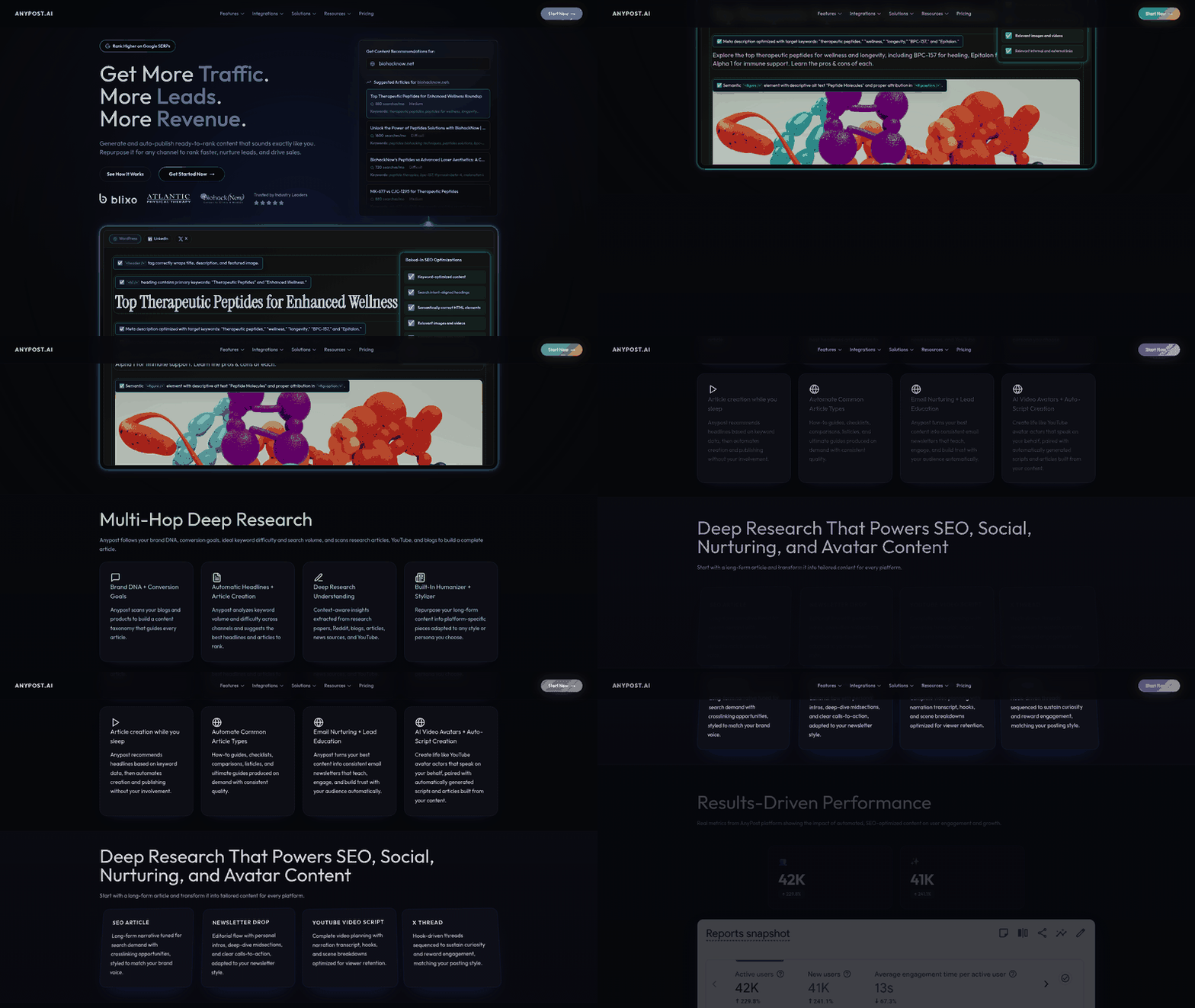
Current AI trends in content generation and SEO are reshaping B2B lead generation by enabling hyper-personalized, data-driven strategies. Generative AI tools are now widely used to create tailored content at scale, from blog posts to email campaigns, ensuring alignment with buyer personas [6]. These tools analyze historical engagement metrics and search intent to optimize content structure, improving relevance for target audiences [11]. Additionally, AI-powered SEO platforms automate keyword research and competitor analysis, identifying high-impact topics that drive organic traffic [4]. By integrating AI with SEO, companies can dynamically adjust content to match evolving search trends, such as semantic queries and voice search patterns, which are increasingly critical in B2B decision-making [9].
Enhancing Content Quality and Relevance with AI
AI enhances content quality by reducing manual effort while elevating precision. For instance, natural language processing (NLP) algorithms refine content tone and terminology to match industry-specific jargon, improving credibility with technical audiences [11]. Tools like AI-driven A/B testing platforms allow marketers to experiment with multiple content variations, selecting the highest-performing options based on real-time engagement data [6]. This data-centric approach minimizes guesswork in content creation, ensuring messaging resonates with B2B buyers at different stages of the sales funnel [9]. Furthermore, AI can repurpose existing content—such as turning webinar transcripts into blog posts—expediting production without compromising quality [4]. See the [Repurposing Content for Multi-Channel Lead Generation] section for more details on cross-channel content adaptation.
Latest SEO Trends Impacting Lead Generation
Recent SEO advancements prioritize technical optimization and user experience (UX), both critical for B2B lead generation. Core Web Vitals, a Google ranking factor, now demand faster page load times and mobile responsiveness, which AI tools can audit and optimize automatically [9]. Voice search optimization is another key trend, as B2B buyers increasingly use voice-activated devices for initial research; AI helps structure content around long-tail keywords and conversational queries [4]. Semantic SEO, which focuses on context over exact keyword matches, is also gaining traction. AI-powered tools analyze search intent to ensure content addresses specific problems, such as "how to implement AI in SaaS sales," rather than just targeting generic terms like "AI tools" [11].
Strategies for Integrating AI and SEO into Lead Generation
To leverage AI and SEO effectively, B2B tech companies should adopt a multichannel approach. Start by deploying AI-driven SEO tools to identify content gaps and prioritize topics with high lead-generation potential [8]. For example, platforms like Ahrefs or SEMrush can highlight underperforming pages, while AI suggests revisions to boost rankings [4]. See the [Content Marketing Strategies for Lead Generation] section for foundational insights on content prioritization. Next, integrate AI chatbots into websites to capture leads by answering real-time queries with personalized recommendations, a tactic proven to increase conversion rates [6]. Building on concepts from [Identifying and Understanding Your Target Audience], chatbots can be tailored to address the needs of technical teams and decision-makers.
A second strategy involves using predictive analytics to anticipate market shifts. AI models trained on historical lead data can forecast which industries or roles are most likely to engage with your solutions, allowing for targeted SEO campaigns [11]. For instance, if data shows a surge in interest from healthcare tech buyers, content can be optimized around use cases specific to that sector [9]. Finally, combine AI-generated content with SEO best practices for email marketing. AI can segment contact lists based on behavior, while SEO insights ensure subject lines and email copy align with high-ranking keywords, maximizing open and conversion rates [8].
By systematically applying AI and SEO innovations, B2B tech companies can streamline lead generation while maintaining agility in a competitive landscape.
Repurposing Content for Multi-Channel Lead Generation
Repurposing content across multiple channels is a strategic approach to amplify reach, reinforce messaging, and generate leads efficiently. By adapting a single piece of content for platforms like Twitter, newsletters, YouTube, and blogs, B2B tech companies can maximize engagement while minimizing redundant creation efforts [4]. For example, a detailed whitepaper can become a series of Twitter threads, a newsletter deep dive, or a YouTube video script. This method ensures consistent branding and reduces the time-to-lead generation by meeting prospects where they are [8]. Research highlights that 72% of B2B buyers prefer consuming content in varied formats, making cross-channel repurposing critical for nurturing leads at different stages of the funnel [12]. As mentioned in the [Understanding B2B Tech Sales and Lead Generation] section, B2B tech sales involve complex decision-making processes driven by multiple stakeholders, and repurposing content helps address these diverse needs by tailoring messaging to each platform.
Benefits of Content Repurposing for Lead Generation
Content repurposing allows B2B tech teams to extend the lifecycle of high-performing assets while targeting diverse audience segments. For instance, a webinar recording can be transformed into a blog post, social media snippets, and a downloadable summary for email campaigns [4]. This approach reduces creation costs by up to 50% compared to producing entirely new content, as noted in studies on multichannel lead generation strategies [8]. Additionally, repurposed content maintains topical relevance across platforms, ensuring that leads encounter consistent messaging as they move from initial awareness to decision-making stages [12]. By leveraging analytics from one channel to optimize content on another, teams can refine their lead generation tactics iteratively [4]. See the [Measuring and Optimizing Lead Generation Efforts] section for more details on how analytics drive these optimizations.
Strategies for Repurposing Content for Twitter
Twitter demands concise, high-impact messaging to capture attention in crowded feeds. To repurpose longer-form content like blogs or case studies, break key insights into 280-character threads with embedded visuals or polls [12]. For example, a case study on AI-driven sales tools can be distilled into a series of tweets highlighting challenges, solutions, and outcomes, each tagged with industry-specific hashtags [4]. Including CTAs like “Download the full report” or “Join our live Q&A” directs users to lead magnets hosted on the company’s website [8]. Real-time engagement through replies and retweets further amplifies reach, as demonstrated by B2B lead generation agencies leveraging Twitter for AI and SaaS companies [8]. Building on concepts from [Content Marketing Strategies for Lead Generation], these CTAs are rooted in the types of lead magnets discussed, such as whitepapers and case studies.
Techniques for Adapting Content for Newsletters and YouTube
Newsletters require a balance of depth and brevity to maintain reader interest. Repurpose blog posts or webinar transcripts into structured newsletter sections, such as “Key Takeaways” or “Expert Insights,” paired with embedded video previews or podcast snippets [4]. For YouTube, transform technical blog content into explainer videos by scripting narrations from existing text and adding animations or screen recordings [12]. A 2025 guide on B2B lead generation emphasizes using YouTube’s end screens to link to related blog posts or product pages, creating a feedback loop between video and written content [4]. Additionally, transcribing YouTube videos into blog posts improves SEO and provides another touchpoint for email marketing campaigns [8]. Leveraging AI and SEO Trends for Enhanced Lead Generation] highlights how SEO strategies can be integrated with repurposed content to boost visibility.
Best Practices for Repurposing Content for Blogs
Blogs serve as the foundation for SEO-driven lead generation, making them a central hub for repurposed content. Update older blog posts with data or insights from newer webinars, case studies, or social media trends to maintain freshness [4]. For example, a blog post on “Top B2B Lead Generation Strategies” can be expanded using statistics from LinkedIn marketing studies [12]. Cross-linking repurposed content—such as linking a Twitter thread to a related blog post—creates a seamless user journey and increases time-on-site metrics [8]. Tools like AI-driven analytics can identify high-performing blog topics to prioritize for repurposing, ensuring alignment with audience interests [4]. Finally, embedding lead capture forms or downloadable resources within blogs turns passive readers into qualified leads [8]. See the [Case Studies and Success Stories in B2B Tech Lead Generation] section for real-world examples of how repurposed content has driven lead generation success.
Measuring and Optimizing Lead Generation Efforts
Effective lead generation in B2B tech sales relies on consistent tracking and measurement to identify what strategies are driving results and where improvements are needed. Without clear metrics, businesses risk wasting resources on underperforming campaigns while missing opportunities to scale successful ones [4]. For example, companies struggling with lead generation often fail to correlate their marketing efforts with actual sales outcomes, creating gaps in their understanding of customer behavior [1]. By establishing a framework for tracking—such as mapping leads through the sales funnel—organizations can align their marketing and sales teams around shared goals, as emphasized in the [Implementing a Comprehensive Lead Generation Strategy] section [9]. This alignment ensures that both teams are working with accurate data to prioritize high-quality leads and refine messaging for target audiences [13].
Real-time analytics tools enable businesses to monitor lead generation performance as campaigns unfold, allowing for rapid adjustments to maximize ROI. Platforms like Only B2B emphasize the use of analytics to track engagement metrics, such as website traffic, email open rates, and content downloads, which provide immediate feedback on campaign effectiveness [9]. For instance, if a LinkedIn ad campaign shows a sudden drop in click-through rates, teams can pause or revise the ad creative within hours rather than waiting for monthly reports [4]. These tools also help identify seasonal trends or shifts in buyer intent, which are critical in competitive tech markets where customer preferences evolve quickly [1]. By integrating real-time data with CRM systems, sales teams can prioritize leads based on demonstrated interest, improving conversion rates and reducing response times, as discussed in the [Identifying and Understanding Your Target Audience] section [13].
To measure lead generation efforts accurately, businesses must track specific metrics that reflect both quantity and quality of leads. Conversion rates—measuring how many leads progress from initial contact to qualified opportunity—are essential for evaluating campaign effectiveness [4]. Additionally, tracking cost per acquisition (CPA) and customer lifetime value (CLV) helps balance short-term spending with long-term profitability [9]. For example, a high CPA may signal inefficiencies in targeting, while a low CLV could indicate poor alignment between lead generation tactics and product-market fit [1]. Other critical metrics include lead-to-close time, which reveals bottlenecks in the sales process, and engagement scores, which quantify how actively prospects interact with content, such as the strategies outlined in the [Content Marketing Strategies for Lead Generation] section [13]. By combining these metrics, teams can pinpoint underperforming channels and reallocate resources to higher-yield strategies [4].
Case Studies and Success Stories in B2B Tech Lead Generation
Case Study 1: AI-Driven Lead Generation for a SaaS Company
A SaaS company in the cloud infrastructure space partnered with Callbox [8] to implement a multichannel lead generation strategy. By leveraging AI-driven targeting and automated outreach, the company optimized its lead qualification process, resulting in a 30% increase in qualified leads within six months. The campaign combined personalized email sequences, LinkedIn prospecting, and account-based marketing (ABM) to engage decision-makers in target industries. Automated content generation tools, such as dynamic landing pages tailored to user behavior, were used to improve conversion rates. This case highlights the value of integrating AI into lead generation workflows, as outlined in the 2025 B2B lead generation strategies [4].
The role of SEO optimization was critical in this success. The company’s blog and product pages were optimized for long-tail keywords related to cloud infrastructure challenges, driving organic traffic and improving lead quality. As mentioned in the [Leveraging AI and SEO Trends for Enhanced Lead Generation] section, AI-driven SEO strategies are crucial for optimizing content and improving lead quality. This aligns with findings from the study by Charllo BV and Kathiriya S [11], which emphasizes that generative AI tools can enhance SEO by analyzing search trends and generating content that resonates with target audiences.
Case Study 2: Strategic Campaign Execution for a Cybersecurity Firm
Only B2B [9] collaborated with a cybersecurity firm to design a lead generation campaign focused on enterprise clients. The platform’s services included strategic planning, execution of LinkedIn and Google Ads campaigns, and analytics-driven optimization. Over three months, the campaign generated a 40% increase in qualified leads compared to previous efforts. Key tactics included:
- Automated content generation: Creating case studies and whitepapers tailored to industry-specific pain points. See the [Content Marketing Strategies for Lead Generation] section for more details on how tailored content can address industry-specific pain points.
- SEO-optimized blog content: Targeting high-intent keywords like “cybersecurity compliance solutions” to attract decision-makers.
- Retargeting ads: Re-engaging website visitors with personalized messaging based on their browsing behavior.
The campaign’s success underscores the importance of combining strategic campaign design with data-driven adjustments. As noted in the 2025 guide [4], B2B tech companies must prioritize campaigns that align with the buyer’s journey, using automation to scale personalized outreach.
Lessons Learned from B2B Tech Lead Generation Success Stories
- AI and automation are game-changers: Both case studies demonstrated the power of AI-driven tools in reducing manual effort while improving lead quality. Generative AI can automate content creation, optimize ad copy, and even predict high-value prospects [11].
- SEO is foundational for B2B tech: High-quality, SEO-optimized content consistently drove organic traffic and lead generation. The cybersecurity firm’s focus on keyword research and on-page SEO aligned with recommendations from Only B2B’s services [9].
- Multichannel campaigns yield better results: The SaaS company’s use of LinkedIn, email, and ABM campaigns showed that diversifying touchpoints increases the likelihood of engagement. Building on concepts from the [Repurposing Content for Multi-Channel Lead Generation] section, diversifying touchpoints across multiple channels enhances engagement by reinforcing messaging and expanding reach. The 2025 guide [4] explicitly recommends this approach for B2B tech firms.
Applying These Lessons to Your Lead Generation Strategy
To replicate these successes, consider the following steps:
- Adopt AI tools for content and targeting: Use platforms like Callbox [8] to automate lead scoring, generate personalized outreach content, and analyze campaign performance.
- Invest in SEO for long-term lead generation: Follow Only B2B’s [9] approach by auditing your content for keyword gaps and creating industry-specific resources that address buyer pain points.
- Combine automation with strategic planning: Balance AI-driven efficiency with human expertise. For example, use automated tools for initial outreach but involve sales teams in closing high-potential leads [11].
By integrating these strategies, B2B tech companies can build scalable lead generation pipelines that align with modern buyer behaviors. The key takeaway is to treat lead generation as a dynamic process—continuously refine tactics using data and emerging technologies like generative AI [4].
Implementing a Comprehensive Lead Generation Strategy
To implement a comprehensive lead generation strategy, begin by establishing a foundation that integrates content marketing, AI-driven tools, and SEO. Start by creating high-quality, educational content tailored to your audience’s pain points, such as whitepapers, case studies, and blog posts, as emphasized in [2] and [4]. As mentioned in the Content Marketing Strategies for Lead Generation section, this approach ensures alignment with your audience’s needs while establishing credibility. Pair this with a robust tech stack that includes AI-powered tools for personalized engagement, like chatbots or recommendation engines, to automate initial interactions and qualify leads efficiently [6]. For tech companies, offering a free tool or resource—such as a SaaS product demo or lead scoring calculator—can attract prospects while establishing authority, a strategy highlighted in [5].
Integrating Content Marketing and SEO
Leverage content marketing by aligning it with SEO best practices to maximize visibility. Optimize blog posts, LinkedIn profiles, and landing pages with keywords relevant to your target audience’s search intent, as outlined in [2] and [12]. For example, LinkedIn strategies like profile optimization and thought leadership articles can drive B2B leads by positioning your team as industry experts [12]. See the Repurposing Content for Multi-Channel Lead Generation section for more details on how to extend your content’s reach through platforms like Twitter or LinkedIn. Repurpose content across channels: turn blog posts into social media snippets, webinar recordings into on-demand resources, or infographics for visual platforms [4]. This approach ensures consistent messaging while extending reach, a tactic validated by [7] for IT sales lead generation.
Incorporating AI and Automation
AI enhances lead generation by enabling hyper-personalization and predictive analytics. Use AI-driven tools to analyze website behavior, identify high-intent leads, and automate follow-up sequences, as described in [6] and [11]. For instance, generative AI can craft tailored email campaigns or sales outreach messages based on prospect data, improving response rates [11]. Additionally, chatbots powered by AI can qualify leads in real time by addressing common queries and routing complex cases to sales teams [6]. These technologies reduce manual effort while maintaining engagement, critical for B2B tech companies facing intense competition [1].
Setting Up Metrics and Tracking Success
Define clear KPIs to measure the effectiveness of your strategy, such as click-through rates (CTR), conversion rates, and cost per lead (CPL). Tools like Google Analytics, CRM platforms, and LinkedIn Insights provide data on campaign performance, as noted in [7] and [9]. See the Measuring and Optimizing Lead Generation Efforts section for frameworks on refining your strategy based on performance data. Track metrics across touchpoints to identify bottlenecks—for example, monitoring which content types generate the most qualified leads [4]. Establish a feedback loop by reviewing sales team input on lead quality and adjusting content or outreach tactics accordingly [13].
Continuous Optimization and Feedback
Refine your strategy iteratively using data and stakeholder feedback. A/B test variations of landing pages, email subject lines, or ad copy to determine what resonates most with your audience, a practice endorsed in [2] and [9]. Regularly audit SEO performance to adapt to algorithm updates or shifting keyword trends [12]. For AI-driven campaigns, analyze predictive models to improve lead scoring accuracy over time [11]. Finally, remain agile by reallocating budget and resources to high-performing channels, ensuring your strategy evolves with market demands [5].
By combining these steps—strategic content creation, AI integration, SEO alignment, rigorous tracking, and continuous refinement—you can build a scalable lead generation system tailored to B2B tech sales. Each component reinforces the others, creating a cycle of attraction, engagement, and conversion that aligns with the competitive landscape described in [1] and [10].
References
[1] We're struggling with our B2B lead generation strategies. We've tried ... - https://www.reddit.com/r/LeadGeneration/comments/1foblv8/were_struggling_with_our_b2b_lead_generation/
[2] 9 Tips to Boost B2B Lead Generation in 2026 - https://www.dealfront.com/blog/tips-to-generate-b2b-leads
[3] Favorite B2B lead generation strategies? : r/SEO - https://www.reddit.com/r/SEO/comments/176nrrh/favorite_b2b_lead_generation_strategies/
[4] B2B Lead Generation Strategies for 2025 - Ultimate Guide - https://www.callboxinc.com/lead-generation/b2b-lead-generation-strategies-guide/
[5] B2B Sales Strategy: A 2026 Top Guide to Success | Leadfeeder - https://www.leadfeeder.com/blog/b2b-lead-generation-strategies-and-tactics/
[6] 7 Lead Generation Strategies for AI Tech Companies - https://www.callboxinc.com/lead-generation/how-to-generate-ai-tech-leads/
[7] How to Generate Information Technology Sales Leads [Complete ... - https://martal.ca/learn-how-to-generate-information-technology-sales-leads/
[8] Callbox: Top B2B Lead Generation Agency Worldwide - https://www.callboxinc.com/
[9] Only B2B: B2B Lead Generation Services to Fuel Your Sales Pipeline - https://www.only-b2b.com/
[10] Why Lead Generation Matters for Tech Companies Today - https://www.callboxinc.com/lead-generation/how-to-generate-leads-for-technology-companies/
[11] (PDF) The Future of B2B Sales: How Generative AI-Driven Tools are ... - https://www.researchgate.net/publication/381924489_The_Future_of_B2B_Sales_How_Generative_AI-Driven_Tools_are_Changing_the_Game
[12] (PDF) Digital Marketing on LinkedIn: In-Depth Strategies for Lead ... - https://www.researchgate.net/publication/380433146_Digital_Marketing_on_LinkedIn_In-Depth_Strategies_for_Lead_Generation
[13] 7 Keys to Lead Generation & Sales Prospecting for Business Development and B2B Sales by Patrick Dang - https://www.youtube.com/watch?v=fFzJ-cq5VOg
Frequently Asked Questions
1. What is the difference between inbound and outbound lead generation in B2B tech sales, and when should each be used?
Inbound lead generation attracts prospects through content marketing (e.g., blogs, whitepapers, webinars) and SEO strategies, positioning your brand as a thought leader. Outbound strategies, like targeted LinkedIn outreach or cold emailing, proactively engage leads. Inbound is ideal for nurturing early-stage buyers seeking educational resources, while outbound works best for high-intent prospects already in the decision phase. A balanced approach ensures coverage across the buyer journey.
Q: How can SaaS companies effectively use free tools for lead generation without overwhelming their sales teams?
A: Offer free tools (e.g., calculators, demo platforms) that solve specific pain points, such as a "ROI Estimator" for cloud migration. Pair these with lead capture forms and automated follow-ups to qualify users based on engagement depth. Use scoring models to prioritize leads who spend significant time on the tool or request additional resources, ensuring sales teams focus on high-intent prospects.
Q: What are the most effective ways to qualify leads in B2B tech to avoid wasting time on unqualified opportunities?
A: Implement BANT (Budget, Authority, Need, Timeline) and CLV (Customer Lifetime Value) frameworks. Ask qualifying questions during initial outreach (e.g., "Do you have budget allocated for this solution?"). Use CRM data to track engagement patterns—e.g., repeated visits to pricing pages may indicate budget authority. Prioritize leads who demonstrate urgency or align with your ideal customer profile (ICP).
Q: How can B2B tech firms stand out in crowded channels like LinkedIn and Google Ads?
A: Focus on hyper-specific targeting: use LinkedIn’s Skills and Company Size filters to reach decision-makers. For Google Ads, create long-tail keyword campaigns around niche pain points (e.g., "IT infrastructure optimization for mid-sized SaaS"). Add unique value propositions in ad copy, such as free audits or ROI guarantees, to differentiate from competitors.
Q: What are some budget-friendly lead generation tactics for small B2B tech companies with limited resources?
A: Leverage SEO by publishing evergreen content (e.g., "Top 5 Cloud Security Mistakes to Avoid") and repurposing it into social media posts or podcasts. Use LinkedIn’s free tools to engage with groups and comment on industry discussions. Host free webinars with industry experts to build credibility and capture leads through registration.
Q: How can B2B tech sales teams track anonymous buyers who remain hidden during the research phase?
A: Use marketing automation platforms (e.g., HubSpot) to track anonymous website behavior, such as page visits or time spent on case studies. Set up retargeting campaigns to serve personalized ads to these visitors. Combine data with CRM insights to identify patterns—e.g., repeated visits to a pricing page may signal a shortlisted buyer.
Q: What role does account-based marketing (ABM) play in B2B tech lead generation, and how to execute it effectively?
A: ABM targets high-value accounts with personalized campaigns, such as customized email sequences or tailored LinkedIn ads. Start by identifying accounts that match your ICP and map decision-makers to their roles. Create account-specific content (e.g., a case study showing success with a similar company) and align sales and marketing teams to ensure consistent messaging. Measure success through engagement metrics and pipeline growth.