
Boost Your Marketing Strategy: AnyPost's Checklist for Automatic SEO Optimization


Section 1: Introduction to Automatic SEO Optimization
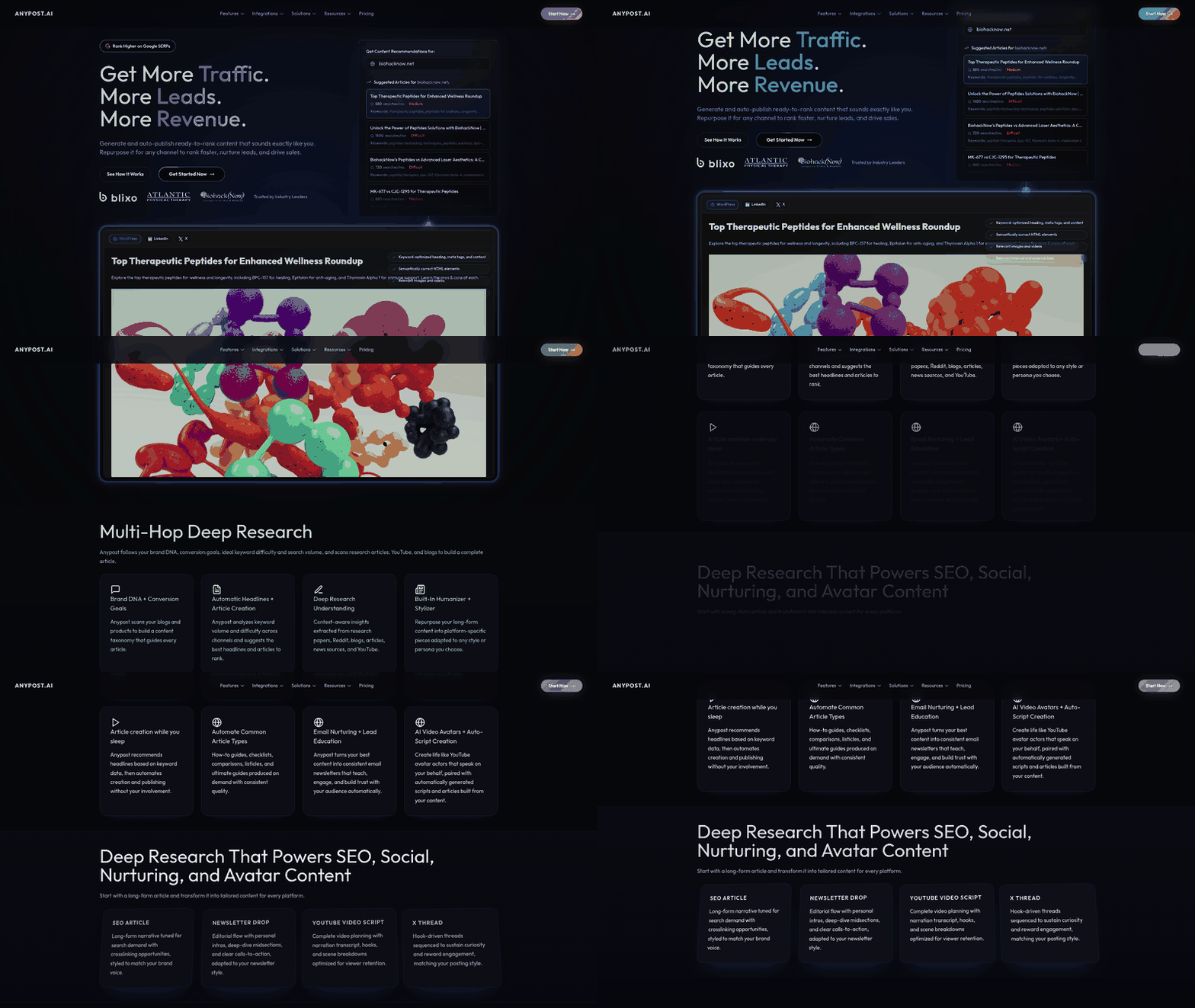
Automatic SEO optimization refers to the use of artificial intelligence and automation tools to streamline and enhance search engine optimization processes. This approach enables businesses to analyze data, optimize content, and improve website performance with minimal manual intervention. By leveraging AI-driven platforms, companies can address technical SEO requirements, refine keyword strategies, and ensure content aligns with search engine algorithms [1]. The rise of tools like AnyPost.ai demonstrates how automated systems can deliver measurable results, such as increased user engagement and growth metrics, by systematically optimizing content for both search engines and audiences [2]. As digital marketing evolves, integrating automation into SEO workflows has become essential for maintaining competitiveness and scalability [9].
Core Benefits of Automatic SEO Optimization
- Efficiency and Time Savings: Automated tools reduce the need for manual content tweaking, allowing teams to focus on strategic planning. Slim SEO, for instance, fast-tracks optimization without constant adjustments, saving hours previously spent on granular SEO edits [3]. As mentioned in the [Section 2: Setting Up for Success - Understanding Your Target Audience] section, understanding audience needs is critical to aligning automated strategies with user intent.
- Data-Driven Decision Making: AI-powered platforms analyze vast datasets to identify trends, such as high-performing keywords or content gaps, enabling precise optimizations [1]. This eliminates guesswork and aligns strategies with real-time analytics.
- Scalability for Content Marketing: Businesses can produce and optimize large volumes of content consistently, ensuring every piece meets SEO standards. AnyPost’s automated workflows, for example, correlate with a 229.8% growth in active users, showcasing the impact of scalable SEO [2].
- Improved Technical SEO Compliance: Automated tools handle technical tasks like meta tag optimization, schema implementation, and site speed improvements, which are critical for search engine rankings [8]. See the [Section 5: Technical Aspects of Automatic SEO Optimization] section for more details on on-page and technical optimization techniques.
The Role of AI in Modern SEO Optimization
AI is transforming SEO by handling repetitive tasks and providing actionable insights previously requiring extensive expertise. Platforms like Yoast SEO use built-in AI to offer real-time content optimization suggestions, ensuring alignment with search intent and keyword relevance [4]. Similarly, AI-driven "SEO agents" automate data analysis, content generation, and performance tracking, though real-world effectiveness varies depending on implementation quality [1]. For businesses, this means faster adaptation to algorithm updates and reduced reliance on manual audits.
- Automated Content Creation and Refinement: AI tools generate draft content optimized for keywords and readability, while also suggesting revisions to enhance engagement. This reduces the time spent on initial content drafting [7].
- Predictive Analytics for Keyword Strategy: AI models forecast emerging search trends, allowing marketers to prioritize keywords with high growth potential. This proactive approach ensures content remains relevant in competitive niches [1].
- Real-Time Performance Monitoring: Automated systems continuously track metrics like bounce rates and click-through rates, flagging issues for immediate correction. This agility minimizes the risk of ranking drops due to overlooked errors [5].
Challenges and Considerations
While automatic SEO optimization offers significant advantages, it is not a standalone solution. Tools like Slim SEO emphasize that they complement—not replace—content optimization strategies, requiring human oversight for nuanced decisions [3]. Additionally, over-reliance on automation without understanding core SEO principles can lead to suboptimal results. For example, AI may struggle with context-specific optimizations, such as local SEO or industry-specific jargon, which demand human expertise [1].
To maximize effectiveness, businesses should combine automated tools with strategic planning. The SEO Framework (TSF), for instance, automates technical optimizations while still requiring manual input for content quality and user experience enhancements [8]. Building on concepts from [Section 8: Advanced Strategies for Automatic SEO Optimization], this hybrid approach ensures technical SEO is flawless while maintaining the creativity and relevance needed for audience engagement [9].
By integrating AI-driven automation into their workflows, businesses can achieve a balance between efficiency and precision. However, success hinges on selecting tools that align with specific goals, such as AnyPost’s focus on citation-building or Yoast’s emphasis on content guidance [2][4]. As the digital landscape grows more competitive, automatic SEO optimization is no longer optional but a foundational element of any robust marketing strategy.
Section 2: Setting Up for Success - Understanding Your Target Audience
Understanding your target audience is foundational to any effective SEO strategy, especially when leveraging automated tools like AnyPost. Automated SEO platforms often rely on data-driven insights to optimize content, but these systems require clear guidance about audience preferences, behaviors, and pain points to function effectively. Without a defined understanding of who you’re targeting, tools like AnyPost may generate content that fails to align with user intent, leading to lower engagement and rankings [2]. This section outlines how to build actionable buyer personas and integrate them into your automated SEO workflows to ensure relevance and performance.
Define Audience Demographics and Psychographics
- Identify core demographics such as age, location, occupation, and income level. These factors influence search behavior and content consumption patterns [2].
- Analyze psychographic traits like interests, values, and challenges. For example, a recipe blog targeting busy professionals may prioritize quick meal ideas over detailed cooking techniques [6].
- Use AI tools to validate assumptions about your audience. Platforms like AnyPost can analyze competitors’ high-performing content to reveal gaps and opportunities [2]. See the [Keyword Research and Planning for Automatic SEO Optimization] section for more details on leveraging AI tools for competitive analysis.
Build Detailed Buyer Personas
- Create 2–4 personas representing distinct segments of your audience. Each persona should include goals, pain points, and preferred content formats (e.g., videos, blog posts, or infographics) [9].
- Map personas to search intent. For instance, a persona seeking “how-to guides” may require optimized content with step-by-step schema markup, while a persona researching products might need comparison tables [6]. Building on concepts from [Technical Aspects of Automatic SEO Optimization], aligning personas with on-page optimization techniques enhances content relevance.
- Leverage automation to refine personas. AI-driven SEO tools can track keyword performance and update personas based on evolving trends, ensuring your strategies remain aligned with audience needs [1].
Align Personas with Automated SEO Tactics
- Assign keywords to specific personas. Tools like Yoast SEO or Squirrly SEO allow you to tag content with persona-specific keywords, improving relevance and search visibility [4][5]. As mentioned in the [Technical Aspects of Automatic SEO Optimization] section, AI-powered tools like Yoast SEO provide real-time guidance for keyword integration.
- Tailor content structure using persona insights. A buyer persona focused on technical specifications may require in-depth product pages with structured data, while casual browsers might engage better with shorter, conversational posts [8].
- Automate content updates based on persona feedback. Platforms like AnyPost can reschedule or rewrite underperforming posts if analytics indicate a mismatch between content and audience expectations [2].
Validate and Iterate Using Performance Data
- Audit persona effectiveness quarterly. Compare traffic, bounce rates, and conversion metrics across personas to identify which segments require deeper optimization [3].
- Test persona-driven content variations. Use A/B testing features in SEO tools to compare headlines, meta descriptions, or CTAs tailored to different personas [7].
- Integrate persona data with citation strategies. For example, AnyPost’s citation-building features can prioritize platforms frequented by your target audience, such as industry forums or social media groups [2].
By embedding buyer personas into your automated SEO workflows, you ensure that tools like AnyPost generate content that resonates with specific audience segments. This approach not only improves search rankings but also enhances user engagement, as content becomes more targeted and actionable. The synergy between audience insights and automation allows marketers to scale their efforts while maintaining a personalized touch—a critical advantage in competitive digital landscapes [2][4].
Section 3: Keyword Research and Planning for Automatic SEO Optimization
Keyword Research Techniques
- Use AI-driven tools like AnyPost to analyze search trends and identify high-traffic keywords for content optimization [2]. This ensures alignment with user intent and current market demands. As mentioned in the [AnyPost's Checklist for Automatic SEO Optimization] section, enabling automated features can further enhance keyword research efficiency.
Keyword Planning Tools
- Integrate Yoast SEO’s AI features to validate keyword relevance and optimize on-page elements like meta tags and headers [4]. Its real-time feedback ensures technical accuracy during content creation, a process detailed in the [Technical Aspects of Automatic SEO Optimization] section.
- Utilize Squirrly SEO’s Newton system for automatic indexing, which maps keywords to content themes and suggests strategic placements [5]. This reduces manual effort in aligning content with search intent.
Integrating Keywords into Content
- Embed keywords naturally using AI tools such as The SEO Framework, which provides guidance on optimal density and placement [8]. Overloading content with keywords can lead to penalties, so precision is critical. See the [Measuring Success - Analytics and Tracking for Automatic SEO Optimization] section for strategies on balancing automation with manual oversight.
Section 4: Content Repurposing for Multi-Channel Distribution
Benefits of Content Repurposing
Repurposing content maximizes the value of existing resources by extending reach across platforms while maintaining SEO efficiency [2]. This strategy reduces creation time by reusing core messaging and assets, allowing marketers to focus on optimization rather than duplication [9]. By adapting a single piece of content for multiple formats, teams can maintain consistency in branding and messaging while targeting diverse audience segments [7]. Additionally, repurposed content often improves search visibility, as repeated use of keywords and themes across platforms reinforces topical relevance [2]. For example, a blog post can become a newsletter summary, a YouTube script, or a series of social media posts, each optimized for its channel’s audience [9]. See the [Keyword Research and Planning for Automatic SEO Optimization] section for more details on aligning repurposed content with user intent and search behavior [2].
Strategies for Repurposing Content
To repurpose effectively, begin by identifying high-performing content with broad thematic relevance, such as tutorials, case studies, or listicles [9]. Extract key data points, quotes, or insights from the original content to form the foundation of new formats, ensuring alignment with SEO goals [2]. For instance, a long-form blog post can be segmented into shorter social media updates or transformed into a video script with visual aids [9]. Tools like AnyPost’s automatic SEO optimization can streamline this process by suggesting keyword adjustments and formatting improvements tailored to each platform [2]. As mentioned in the [Introduction to Automatic SEO Optimization] section, automation enhances efficiency by reducing manual effort while maintaining quality [2]. Prioritize content that lends itself to multimedia adaptation, such as step-by-step guides or data-driven reports, to broaden engagement [7].
Channel-Specific Repurposing Techniques
X/Twitter
Condense blog insights into 280-character takeaways, using hashtags and mentions to amplify reach [9]. Embed links to the original content to drive traffic while leveraging Twitter’s algorithm for increased visibility [2]. For example, a recipe blog post can become a series of posts highlighting ingredients, cooking tips, or user testimonials [9].
Newsletter
Summarize blog articles into digestible email formats, adding personalized CTAs and links to the full content [9]. Newsletters benefit from structured formatting, such as bullet points for quick scanning and embedded multimedia like images or videos repurposed from existing assets [7].
YouTube
Convert blog tutorials or interviews into video scripts, incorporating screen recordings or animations to enhance explanations [9]. Use timestamps and chapter markers to improve watch time, and include closed captions for accessibility and search indexing [2]. Long-form content can also be split into shorter clips for platforms like TikTok or Instagram Reels [9].
Blogs
Expand on existing social media posts or webinar transcripts to create in-depth articles, adding SEO-optimized headers and internal links to related content [2]. Blogs serve as a central hub for repurposed material, consolidating insights from other channels to reinforce authority and backlink potential [9].
Optimization for Multi-Channel SEO
When repurposing, adjust metadata and keywords for each platform’s search behavior. For example, YouTube prioritizes video titles and descriptions with action verbs, while blogs benefit from structured schema markup for rich snippets [6]. Tools like AnyPost automate these adjustments by analyzing platform-specific ranking factors and suggesting improvements [2]. Building on concepts from the [Technical Aspects of Automatic SEO Optimization] section, on-page optimization techniques like schema markup further enhance visibility [4]. Consistently repurposing content also builds topical authority, as search engines recognize the depth of coverage across related subjects [2].
Limitations and Considerations
While repurposing saves time, it requires careful adaptation to avoid content duplication penalties. Each version should offer unique value, such as additional examples, updated data, or platform-specific formatting [9]. Sources do not provide explicit guidelines on automation limits for repurposing, so manual review remains critical for quality assurance [7]. Finally, prioritize audience preferences—metrics like engagement rates and bounce analysis can inform which content formats perform best [9].
Section 5: Technical Aspects of Automatic SEO Optimization
- Leverage AI-powered tools like Yoast SEO for real-time content guidance and suggestions to improve readability and keyword placement [4]. These tools analyze content structure, ensuring alignment with search intent while avoiding over-optimization. For detailed insights on keyword research that informs such optimization, see the [Keyword Research and Planning for Automatic SEO Optimization] section.
- Use Squirrly SEO’s auto-indexing feature to push optimized content to Google via the Google Indexing API immediately after publication [5]. This accelerates crawl rates, ensuring new pages appear in search results faster than with passive submission methods. For metrics on how such optimizations impact growth, refer to the [Measuring Success - Analytics and Tracking for Automatic SEO Optimization] section.
- Combine tools like Yoast (meta tags), SEOPress (schema markup), and The SEO Framework (technical automation) to cover overlapping SEO needs [4][6][8]. For a practical guide on configuring automated SEO workflows, see the [AnyPost's Checklist for Automatic SEO Optimization] section.
Section 6: Measuring Success - Analytics and Tracking for Automatic SEO Optimization
Tracking the effectiveness of automatic SEO optimization is critical to understanding what strategies drive growth. Real metrics from the AnyPost platform demonstrate that automated, SEO-optimized content can boost active users by 229.8% [2], highlighting the tangible benefits of measurable efforts. As mentioned in the [Section 7] section, enabling AnyPost’s automated SEO features is a key step in leveraging such growth metrics. Without consistent tracking, businesses risk implementing ineffective optimizations that fail to improve rankings or engagement. Measuring success also allows teams to refine their automated workflows, ensuring resources are allocated to high-performing tactics. For example, tools like AnyPost provide granular data on user engagement, enabling marketers to identify which content types resonate most with audiences [2].
Automated SEO tools simplify the process of gathering and interpreting data, though they vary in functionality. AnyPost integrates real-time metrics to track the impact of SEO-optimized content, such as user growth and engagement trends [2]. Slim SEO, another tool, emphasizes speed and automation, reducing the need for manual adjustments in content optimization [3]. As discussed in the [Section 5] section, Yoast SEO provides real-time on-page SEO guidance, including keyword placement and readability scores [4]. These tools collectively address different facets of SEO analytics, from content quality to technical performance. However, no single tool replaces comprehensive SEO suites, as noted in Slim SEO’s review [3], which underscores the need for multi-tool integration to cover all optimization aspects.
Monitoring specific KPIs ensures automated SEO strategies align with business goals. Organic traffic growth is a primary metric, as demonstrated by AnyPost’s 229.8% increase in active users [2]. See the [Section 3] section for more details on how AI-driven tools analyze search trends to identify high-traffic keywords for content optimization [2]. Keyword rankings also serve as a benchmark, showing whether content appears in relevant search results. Bounce rate and time-on-page metrics, tracked via tools like Yoast, indicate content quality and user satisfaction [4]. Conversion rates further validate SEO success, measuring how effectively traffic translates into desired actions, such as sign-ups or purchases. Another critical KPI is indexing speed, which Squirrly SEO addresses through auto-indexing features to ensure new content is quickly recognized by search engines [5].
Automated SEO optimization thrives on iterative adjustments based on data. Cross-referencing tools like AnyPost and Yoast allows teams to validate both user engagement and technical SEO health [2][4]. For instance, while AnyPost tracks growth metrics, Yoast’s real-time feedback can refine content structure to improve readability and keyword alignment [4]. Slim SEO’s focus on fast automation complements these tools by streamlining repetitive tasks, such as meta tag optimization [3]. However, as noted in Slim SEO’s review, these tools should not replace manual content optimization entirely [3]. Instead, they should augment human oversight to ensure strategic alignment with business objectives.
While analytics tools provide valuable insights, they have limitations. Automated systems may overlook nuanced user intent or regional search trends, requiring manual intervention. For example, AnyPost’s metrics highlight user engagement but do not explain why certain content outperforms others [2]. Similarly, Slim SEO’s speed-focused automation might neglect in-depth keyword research [3]. To mitigate these gaps, marketers should combine automated tools with periodic audits using platforms like SEOPress, which supports schema optimization for specific content types [6]. Regularly reviewing KPIs against business goals ensures that automated strategies remain adaptable and aligned with evolving market demands.
By leveraging a mix of analytics tools and KPIs, businesses can create a feedback loop that continuously improves their automated SEO efforts. The synergy between platforms like AnyPost, Slim SEO, and Yoast enables comprehensive tracking of both technical and creative elements, ensuring SEO optimization remains data-driven and results-oriented.
Section 7: AnyPost's Checklist for Automatic SEO Optimization

- Enable AnyPost’s automated SEO features to leverage real-time metrics and growth tracking, which have shown user engagement increases of up to 229.8% [2]. This includes configuring the platform to generate SEO-optimized content aligned with ChatGPT citation trends. See the [Keyword Research and Planning for Automatic SEO Optimization] section for more details on aligning content with search trends.
- Install and configure a dedicated SEO plugin like Yoast SEO for automated meta tag optimization, canonical URL setup, and XML sitemap generation, ensuring technical SEO foundations are solid [4]. Building on concepts from the [Technical Aspects of Automatic SEO Optimization] section, these plugins streamline on-page optimization workflows.
- Monitor AnyPost’s engagement metrics weekly to identify high-performing content patterns and adjust strategies based on user interaction trends [2]. As mentioned in the [Measuring Success - Analytics and Tracking for Automatic SEO Optimization] section, consistent data analysis is critical to refining automation strategies.
Section 8: Advanced Strategies for Automatic SEO Optimization
Advanced Techniques for Automatic SEO Optimization
Advanced strategies leverage AI, machine learning, and NLP to refine SEO workflows beyond basic automation. These techniques focus on optimizing content creation, technical SEO, and indexing processes while adapting to evolving search algorithms.
AI-Driven Content Optimization
- Integrate AI tools for real-time content analysis to refine keywords, readability, and structure. Tools like Yoast SEO provide built-in AI guidance for optimizing meta tags, headings, and content flow [4]. This ensures alignment with search intent and user experience requirements, as discussed in the [Technical Aspects of Automatic SEO Optimization] section [5].
- Automate content generation and personalization using AI-driven frameworks. Autoblogging platforms generate and schedule posts while allowing manual review for SEO adjustments before publication [7]. This balances scalability with human oversight for quality control, building on concepts from the [Keyword Research and Planning for Automatic SEO Optimization] section [3].
Machine Learning for Data Analysis and Task Automation
- Deploy machine learning models to analyze SEO performance data. AI SEO agents automate tasks like backlink monitoring, keyword tracking, and competitor analysis, reducing manual effort while identifying trends [1]. These models improve accuracy in predicting high-impact optimizations, a process further explored in the [Measuring Success - Analytics and Tracking for Automatic SEO Optimization] section [6].
- Use predictive analytics for technical SEO audits. Machine learning algorithms detect crawl errors, broken links, and site speed issues faster than manual methods, enabling proactive fixes [1]. This minimizes technical barriers to search engine visibility.
NLP for Semantic SEO and Contextual Relevance
- Apply NLP to enhance semantic SEO by analyzing user intent and contextual keywords. Tools like Yoast SEO use NLP to evaluate content depth and suggest topic expansions, ensuring alignment with both search queries and reader needs [4].
- Optimize content structure with NLP-powered readability checks. Automated tools assess sentence complexity, keyword density, and entity relevance, providing actionable feedback to improve engagement and search rankings [4].
Advanced Technical SEO Automation
- Enable auto-indexing via API integrations. Platforms like Squirrly SEO use Google’s Indexing API to submit URLs for immediate crawling, accelerating content visibility post-publication [5]. This reduces the time between publishing and search engine recognition.
- Automate canonical URL management to prevent duplicate content issues. AI tools identify and apply canonical tags dynamically, ensuring search engines prioritize the correct page versions [4].
Future Directions for Automatic SEO Optimization
- Adopt self-learning SEO systems. Emerging AI agents combine machine learning and NLP to adapt strategies in real-time, such as adjusting content tone or metadata based on shifting search trends [1]. This reduces reliance on manual updates for sustained performance.
- Expand integration with structured data (schema) automation. While not explicitly covered in primary sources, combining AI with schema markup tools (e.g., SEOPress [6]) could enhance rich snippet generation, though current focus remains on foundational automation [4].
By implementing these advanced strategies, marketers can streamline SEO operations while maintaining compliance with search engine guidelines. The synergy of AI, machine learning, and NLP ensures adaptability in an increasingly dynamic digital landscape.
References
[1] Do AI SEO Agents actually work? Looking for real results : r/n8n - https://www.reddit.com/r/n8n/comments/1l3i75y/do_ai_seo_agents_actually_work_looking_for_real/
[2] AnyPost.ai | Rank on Google and Get Cited on ChatGPT - Without ... - https://anypost.ai/
[3] Slim SEO Review: Is It Worth Ditching Popular SEO Plugins For ... - https://blogvault.net/slim-seo-review/
[4] Yoast SEO – Advanced SEO with real-time guidance and built-in AI ... - https://wordpress.org/plugins/wordpress-seo/
[5] Auto-Indexing - Squirrly SEO (Newton) - https://howto12.squirrly.co/kb/indexnow/
[6] Optimizing a Blog's Recipe Pages with Schema - SEOPress - https://www.seopress.org/newsroom/case-studies/optimizing-a-blogs-recipe-pages-with-schema/
[7] Autoblogging with AI - Schedule & Auto-Publish Blog Posts - https://rightblogger.com/autoblogging
[8] How to improve your pages with The SEO Framework - https://theseoframework.com/docs/improve-your-pages/
[9] Content Marketing, Video Marketing, Facebook Marketing and more ... - https://www.magnificent.com/magnificent-stuff
Frequently Asked Questions
1. What is automatic SEO optimization, and how does it differ from traditional SEO practices?
Automatic SEO optimization leverages AI and automation tools to streamline tasks like keyword analysis, content refinement, and technical adjustments, minimizing manual effort. Unlike traditional SEO, which relies heavily on human intervention for research and implementation, automated systems use algorithms to analyze data, optimize content in real-time, and adapt to algorithm updates. For example, tools like AnyPost.ai or Slim SEO handle repetitive tasks (e.g., meta tag optimization) and scale strategies across large content volumes, ensuring consistency and efficiency.
2. How do AI-driven platforms like AnyPost.ai enhance content optimization for search engines?
AI platforms enhance content optimization by analyzing user intent, identifying high-performing keywords, and structuring content to align with search engine algorithms. For instance, AnyPost.ai uses natural language processing (NLP) to refine content readability and relevance while ensuring technical elements like schema markup are correctly implemented. These tools also automate A/B testing of headlines and meta descriptions, enabling businesses to adapt to trends and user preferences without constant manual adjustments.
3. What are the most significant benefits of adopting automated SEO strategies for businesses?
Automated SEO offers three key advantages:
- Time savings: Tools like Slim SEO reduce hours spent on manual edits, allowing teams to focus on strategic planning.
- Data-driven precision: AI analyzes vast datasets to uncover keyword gaps and optimize content for user intent, improving click-through rates.
- Scalability: Businesses can produce and optimize large volumes of content consistently, ensuring SEO best practices are applied uniformly across all platforms. This scalability is critical for enterprises managing extensive content libraries or e-commerce sites with thousands of pages.
4. Can automatic SEO optimization fully replace manual SEO efforts, or should they be used in tandem?
While automated tools handle repetitive and technical tasks efficiently, manual SEO efforts remain crucial for nuanced strategies. For example, AI can optimize meta tags and internal linking, but human expertise is needed for creative content ideation, competitor analysis, and brand-specific positioning. A hybrid approach—using automation for technical compliance (e.g., site speed, schema markup) and manual oversight for strategic decisions—yields the best results.
5. What technical SEO aspects can be automated, and why are they vital for rankings?
Automation can streamline:
- Technical audits: Tools identify broken links, crawl errors, and site speed issues.
- Schema markup implementation: Structured data improves rich snippet visibility in search results.
- Mobile optimization: Ensures responsive design for mobile-first indexing.
These elements are critical because search engines prioritize technical health alongside content quality. For instance, a site with optimized schema markup may gain featured snippets, increasing organic traffic by 30-50% in competitive niches.
6. How can businesses measure the success of their automated SEO strategies, and what metrics matter most?
Success is measured through:
- Organic traffic growth: Tools like Google Analytics track increases in session numbers and user engagement.
- Keyword rankings: Platforms like Ahrefs or SEMrush monitor improvements in targeted keyword positions.
- Conversion rates: Enhanced SEO should correlate with higher lead generation or sales.
For example, AnyPost’s users reported a 229.8% growth in active users, demonstrating how automated workflows directly impact scalability and user acquisition.
7. Are there risks or limitations to relying heavily on AI for SEO optimization?
Yes, over-reliance on automation can lead to:
- Generic content: AI may prioritize keyword stuffing over originality, harming user experience.
- Algorithm dependency: Changes in search engine algorithms (e.g., Google’s core updates) can reduce the effectiveness of automated strategies.
- Lack of brand voice: Human oversight is needed to ensure content aligns with brand identity. To mitigate these risks, businesses should combine AI tools with periodic manual audits and creative input from SEO specialists.