
Boost Your Rankings with Top Auto SEO Software in 2025

Introduction to Auto SEO Software
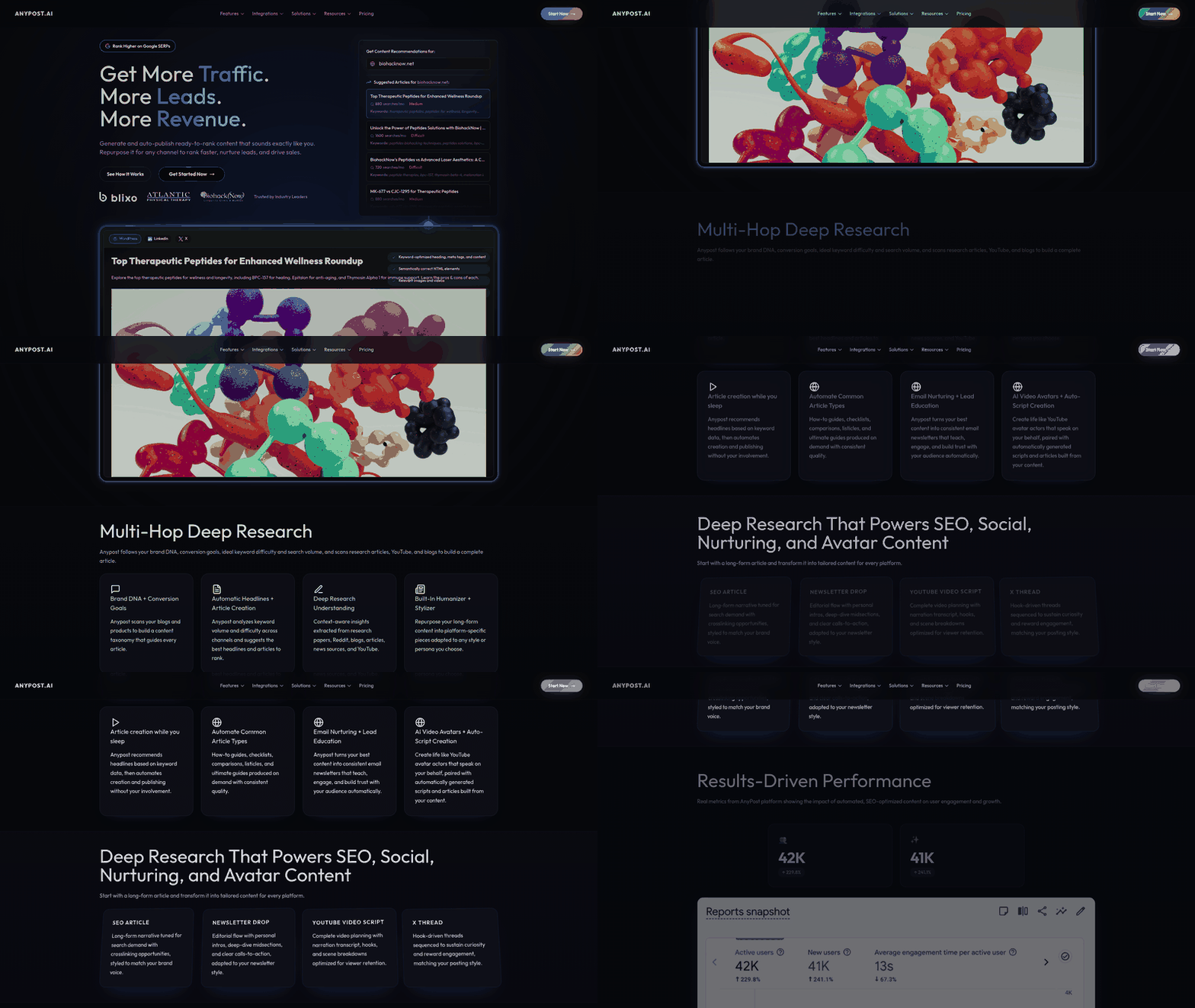
Auto SEO software refers to AI-driven platforms that automate search engine optimization tasks, from keyword research to content optimization and technical audits. These tools leverage artificial intelligence to streamline workflows, enabling marketers and content creators to enhance visibility without manual intervention. For instance, OTTO SEO by Search Atlas functions as an AI agent that executes full SEO strategies, including technical optimizations in real time [1]. As mentioned in the Technical Optimization and AI SEO Trends section, such real-time capabilities ensure websites adapt to evolving search algorithms [1]. Similarly, SEO.ai’s Auto SEO Software focuses on generating content that stands out in search results by analyzing competitive landscapes [5]. The rise of such tools aligns with industry trends: 71% of marketers now use AI tools for SEO, with 78% utilizing one to three platforms to balance efficiency and accuracy [10].
SEO remains a cornerstone of content marketing because it directly impacts organic traffic and brand credibility. Automated tools address common challenges like keyword saturation and algorithm updates by providing data-driven insights. For example, platforms like Surfer AI and Alli AI integrate AI-assisted writing with CMS automation, ensuring content aligns with search intent while maintaining consistency [2]. This is critical for B2B marketers and digital strategists, who must scale content production without compromising quality. Auto SEO software also reduces the technical burden of on-page optimizations, link-building campaigns, and site health monitoring—tasks that Search Atlas consolidates into a single platform with over 60 tools [3]. See the Comparison of Top Auto SEO Software Tools section for a detailed breakdown of how these features translate into pros and cons for different platforms [3].
The target audience for auto SEO software spans professionals who prioritize scalability and precision. Agencies and in-house teams benefit from tools like AirOps and Gumloop, which automate content operations and SEO workflows [2]. See the Best Practices for Implementing Auto SEO Software section for strategies on maximizing their effectiveness in team environments [2]. Content creators and growth leaders, meanwhile, rely on platforms such as SEO.ai and Surfer AI to generate SEO-optimized material quickly [5]. For automotive-specific niches, VehiclesNETWORK offers tailored SEO software for dealerships, though broader applications exist for general B2B and SaaS industries [7]. These tools cater to users who need to balance strategic planning with execution, particularly in competitive markets where real-time adjustments are vital [8].
Key benefits of auto SEO software include time savings, cost reduction, and improved performance metrics. By automating repetitive tasks—such as rank tracking or competitor analysis—marketers can focus on high-level strategy. Search Atlas, for example, combines AI content creation with automated link-building, reducing manual effort while boosting SERP rankings [3]. Building on concepts from the Real-Time Analytics and Tracking for Content Success section, these tools enable dynamic adjustments to maintain competitiveness [3]. Additionally, tools like OTTO SEO provide real-time adjustments, ensuring websites remain compliant with evolving search algorithms [1]. For teams managing large-scale campaigns, these platforms minimize human error and align content with proven best practices.
Top Auto SEO Software Features and Capabilities
Top auto SEO software in 2025 streamlines digital marketing workflows through advanced automation, integrating AI-driven tools to optimize content creation, publishing, and performance tracking. These platforms address the growing demand for scalable SEO strategies by combining technical precision with creative flexibility. As mentioned in the Introduction to Auto SEO Software section, these tools leverage artificial intelligence to automate tasks ranging from keyword research to technical audits. For instance, Search Atlas’s OTTO SEO agent executes full search strategies in real time, including technical optimizations and AI-powered content adjustments [1]. Similarly, SEO.ai’s Auto SEO Software generates content tailored to user intent and keyword relevance, ensuring alignment with search engine algorithms [5]. Below is a detailed breakdown of key features across leading solutions.
Automated Content Generation
Automated content generation is a cornerstone of modern auto SEO tools, enabling businesses to produce high-volume, keyword-rich material efficiently. Search Atlas’s OTTO SEO leverages AI to draft blog posts, product descriptions, and landing pages, while also refining existing content for improved readability and SEO metrics [1]. Surfer AI, highlighted in Marketer Milk’s 2025 roundup, provides AI-assisted writing that analyzes competitors’ top-ranking pages to suggest content structures and keyword placements [2]. SEO.ai’s platform further enhances this process by generating SEO-optimized content based on user-defined topics and target keywords [5]. These tools collectively reduce manual effort while maintaining content quality, though human oversight remains critical for nuanced topics.
SEO-Optimized Publishing
SEO-optimized publishing integrates technical and on-page optimizations to ensure content ranks effectively. NytroSEO automates the creation of meta tags and headers aligned with search intent, adapting to both traditional engines and AI chatbot queries [4]. Search Atlas expands on this with tools for site health monitoring, automated link building, and schema integration, which help maintain technical SEO standards [3]. Platforms like Alli AI streamline CMS workflows, enabling teams to deploy content with optimized tags and internal linking structures [2]. This feature is particularly valuable for automotive dealerships using responsive SEO websites, as it ensures consistency across multiple content formats [7].
Multi-Source Content Integration
Effective auto SEO software aggregates data from diverse sources to inform content strategies. Search Atlas combines rank tracking, competitor analysis, and keyword research into a unified dashboard, allowing users to pull insights from multiple markets [3]. Alli AI’s CMS integration further simplifies this by consolidating content from blogs, social media, and product databases into a single publishing pipeline [2]. Building on concepts from Content Repurposing Strategies for Maximum Reach, this capability is essential for maintaining cohesive messaging across dealership pages, vehicle listings, and service descriptions [7]. However, platforms vary in their ability to handle unstructured data, with some requiring manual configuration for niche content types.
Persona Engine for Tone Matching
A persona engine ensures content resonates with specific audiences by adjusting tone and style. Search Atlas employs this feature to tailor content for different buyer personas, such as budget-conscious shoppers versus luxury vehicle seekers [1]. Surfer AI’s AI-assisted writing also incorporates tone adjustments, though its focus remains on structural optimizations [2]. This capability is particularly beneficial for automotive marketing, where messaging must adapt to regional preferences and cultural nuances [7]. While most tools offer basic persona customization, advanced options like sentiment analysis remain limited to premium tiers.
Real-Time Analytics Tracking
Real-time analytics provide actionable insights to refine SEO strategies dynamically. Search Atlas’s rank tracking and site health monitoring tools update continuously, enabling users to respond to algorithm changes or competitor actions within minutes [3]. NytroSEO’s analytics dashboard tracks meta tag performance and AI chatbot engagement metrics, offering a dual-layer view of organic traffic sources [4]. See the Real-Time Analytics and Tracking for Content Success section for more details on how platforms like SEO Autopilot emphasize link-building analytics but lack granular content performance tracking [9]. For automotive marketers, real-time data is indispensable for adjusting campaigns during peak sales periods or seasonal traffic surges.
| Tool | Description | Key Features | Pros | Cons |
|---|---|---|---|---|
| Search Atlas | AI-powered SEO automation for agencies and enterprises | Rank tracking, AI content creation, site health monitoring, automated link building | Comprehensive toolset, real-time analytics | Learning curve for advanced features |
| NytroSEO | Specializes in meta tag optimization and AI chatbot alignment | Meta tag automation, competitor keyword analysis, schema integration | Precision for technical SEO | Limited to niche optimizations |
| SEO.ai Auto SEO | Content generation tool focused on keyword-rich, engaging material | AI content drafting, user intent analysis, competitor benchmarking | Rapid content scaling | Requires human review for quality |
| Surfer AI | AI-assisted content optimization based on competitor analysis | Content structure suggestions, keyword density tracking, readability scoring | Data-driven recommendations | Subscription-based pricing model |
| Alli AI | CMS integration for SEO workflows | Automated publishing, internal linking, metadata optimization | Streamlines multi-team collaboration | Limited standalone SEO tools |
These tools collectively redefine auto SEO by balancing automation with strategic flexibility. While no single platform excels in all categories, Search Atlas and SEO.ai stand out for their breadth of features, making them ideal for agencies and large automotive brands. Smaller dealerships may prefer NytroSEO or Surfer AI for targeted optimizations. As AI continues to evolve, the ability to adapt workflows across persona engines and real-time analytics will determine the effectiveness of auto SEO strategies in 2025 and beyond.
Content Repurposing Strategies for Maximum Reach
Content repurposing involves transforming existing content into new formats or adapting it for different platforms to maximize its reach and utility. This strategy leverages automation tools like AI-powered SEO platforms to streamline workflows, reducing manual effort while expanding audience engagement [1][5]. As mentioned in the [Introduction to Auto SEO Software] section, these tools are designed to automate SEO tasks, making them ideal for repurposing workflows. By reusing core content across channels, marketers can amplify visibility, reinforce brand messaging, and improve SEO through increased backlinks and social signals [2][10]. For instance, a single blog post can be repurposed into a YouTube script, a newsletter summary, or a series of social media posts, each tailored to the platform’s audience [8][10]. This approach aligns with the capabilities of modern SEO automation tools, which often include features for content adaptation and distribution [1][5].
Strategies for Repurposing Content Across Channels
X/Twitter Repurposing
Automated SEO tools like Search Atlas and SEO.ai enable users to generate tweet threads or standalone posts from blog content, ensuring consistency in messaging [1][5]. See the [Top Auto SEO Software Features and Capabilities] section for more details on how these tools analyze primary content for key takeaways, headlines, and hashtags, streamlining the creation of platform-specific content [8]. For example, a 1,000-word blog post can be distilled into 5-7 tweets with links to the original content, driving traffic and engagement [10]. Pros include time savings and cross-promotion, while cons may involve the risk of oversimplifying complex topics [2].
Newsletter Integration
Newsletters benefit from repurposed content through curated summaries or deep-dive analyses of blog posts [5]. Tools like Nytro SEO Software allow users to automate email content creation by extracting critical insights and formatting them for distribution [4]. This strategy supports audience retention by providing value to subscribers while reducing content creation overhead [10]. However, newsletters require careful curation to avoid redundancy and maintain reader interest [2].
YouTube Script Conversion
Building on concepts from the [Technical Optimization and AI SEO Trends] section, AI-driven platforms such as SEO Autopilot and Search Atlas can convert blog content into structured YouTube scripts, complete with timestamps, visual cues, and voiceover suggestions [1][9]. This process transforms written content into video form, appealing to audiences who prefer visual learning [8]. For example, a technical SEO guide can become a step-by-step tutorial, enhancing accessibility and shareability [10]. The advantage lies in multi-format reach, though video production may require additional resources for editing and publishing [9].
Blog Post Expansion
Blog content can be expanded using SEO tools to generate longer-form articles, case studies, or whitepapers based on existing data [5]. Tools like Search Atlas analyze keyword performance and audience preferences to suggest content improvements or related topics [1]. This strategy strengthens SEO by increasing content depth and relevance, but it demands careful planning to avoid duplication penalties [3].
Summary Table: Content Repurposing Strategies
| Title | Description | Key Features | Pros/Cons |
|---|---|---|---|
| X/Twitter Threads | Convert blog posts into tweet threads with AI-generated summaries and hashtags. | Automation for headline extraction, hashtag | Pros: Time-efficient, drives traffic. Cons: May oversimplify complex topics. |
| Newsletter Summaries | Repurpose blog insights into email newsletters for audience retention. | AI-curated content, formatting templates | Pros: Enhances engagement. Cons: Requires careful curation to avoid redundancy. [4][5] |
| YouTube Scripts | Transform written content into structured video scripts with AI guidance. | Timestamp suggestions, visual cues | Pros: Expands reach to video audiences. Cons: Additional production costs. [9] |
| Blog Post Expansion | Use SEO tools to generate extended articles or case studies from existing posts. | Keyword analysis, topic suggestions | Pros: Boosts SEO depth. Cons: Risk of duplication if not optimized. [1][5] |
By integrating these strategies with auto SEO tools, marketers can achieve cross-platform consistency while optimizing resource allocation. Tools like Search Atlas and SEO.ai provide the infrastructure for scalable content repurposing, ensuring alignment with 2025 SEO trends [1][5][10].
Technical Optimization and AI SEO Trends
In 2025, technical SEO optimization and AI-driven strategies are reshaping how websites achieve visibility. Modern tools like Search Atlas’s OTTO SEO execute real-time technical optimizations, including site health monitoring and automated link building [1], while NytroSEO generates AI-aligned meta tags tailored to user intent and search engine algorithms [4]. These advancements are complemented by AI-assisted content creation tools such as Surfer AI [2] and Search Atlas’s AI content optimization suite [3], which analyze top-ranking pages to suggest improvements in keyword placement, readability, and semantic relevance. As AI adoption grows, 71% of marketers leverage AI tools to enhance their SEO workflows [10], with platforms like Alli AI streamlining CMS integration for automated content updates [2]. Below, we explore key technical strategies, AI trends, and actionable tips for 2025. See the [Content Repurposing Strategies for Maximum Reach] section for more details on leveraging AI tools for content adaptation.
Technical Optimization Techniques
Technical SEO remains foundational for crawlability and indexability. Search Atlas emphasizes site health monitoring through tools like broken link detection and page speed analysis [3], ensuring websites meet core web vitals benchmarks. Automated tools like Gumloop [2] streamline workflow management by synchronizing SEO tasks across teams, reducing manual errors. NytroSEO’s focus on technical automation includes optimizing structured data markup to enhance rich snippets, which improves click-through rates [4]. For websites in competitive niches, real-time monitoring of server health and mobile responsiveness is critical to maintaining rankings [1].
AI SEO Trends in 2025
AI’s role in SEO has expanded beyond keyword research. Platforms like OTTO SEO use machine learning to adapt strategies dynamically, adjusting meta tags and content frameworks based on search engine updates [1]. Surfer AI’s content scoring system evaluates competitor content to recommend topic clusters and semantic keywords, ensuring alignment with search intent [2]. Additionally, AI chatbot integration is gaining traction, with tools like NytroSEO generating meta tags optimized for both traditional search engines and AI-powered query interfaces [4]. As mentioned in the [Introduction to Auto SEO Software] section, these tools rely on AI to automate traditionally manual tasks. Marketers are also adopting AI for predictive analytics, leveraging historical data to forecast ranking opportunities [3]. As seen in user surveys, 78% of AI tool adopters integrate two to three platforms simultaneously to maximize efficiency [10].
Content Optimization Tips for AI-Driven SEO
Content remains king, but AI is redefining how it’s crafted. Search Atlas’s AI content creation tools generate outlines based on high-performing competitors, ensuring topic relevance and keyword density [3]. For automotive websites, tools like VehiclesNETWORK prioritize responsive design and localized SEO to target regional searches [7]. Best practices include using Surfer AI’s readability scores to refine content structure and Alli AI’s CMS integrations for bulk updates [2]. Building on concepts from the [Best Practices for Implementing Auto SEO Software] section, marketers should combine automated updates with human oversight to maintain brand consistency. Videos, such as SEO Autopilot’s tutorials, demonstrate how platforms like Search Atlas automate content scheduling and backlink tracking [8]. To stay ahead, marketers should audit AI-generated content for brand consistency and supplement it with human insights for nuanced topics [6].
Summary Table: Top Tools for Technical and AI SEO
| Title | Description | Key Features | Pros/Cons |
|---|---|---|---|
| Search Atlas | AI platform with 60+ tools for technical SEO, content creation, and link building [3] | OTTO SEO agent, site health monitoring, AI content optimization | Pros: Comprehensive suite; real-time analytics. Cons: Steep learning curve. [1][3] |
| NytroSEO | Automates meta tags and technical optimizations for AI search engines [4] | Real-time meta tag generation, user intent alignment | Pros: Integrates with chatbot SEO. Cons: Limited reporting depth. [4] |
| Surfer AI | Content optimization tool analyzing top-ranking pages [2][10] | Competitor content scoring, semantic keyword suggestions | Pros: Boosts content quality. Cons: Requires manual editing for nuance. [2] |
| Gumloop | Workflow automation for SEO tasks [2] | Team collaboration, task tracking | Pros: Reduces manual work. Cons: No standalone AI content generation. [2] |
| Alli AI | CMS-integrated AI for content updates [2] | Automated CMS sync, bulk content optimization | Pros: Streamlines publishing. Cons: Dependent on compatible CMS. [2] |
Recommendations
For agencies, Search Atlas [1][3] offers the broadest technical and AI capabilities, though its complexity may require training. NytroSEO [4] is ideal for businesses prioritizing meta tag automation, while Surfer AI [2] excels at refining content strategy. Marketers should combine tools like Gumloop [2] and Alli AI [2] to balance automation with human oversight, ensuring technical precision and creative adaptability. As AI evolves, staying updated with platforms’ iterative features—such as Search Atlas’s GBP optimization [3]—will be vital for maintaining competitive rankings.
Real-Time Analytics and Tracking for Content Success
Real-Time Analytics and Tracking for Content Success hinges on the ability to monitor, adapt, and optimize SEO strategies dynamically. Modern auto SEO software provides tools to measure content performance in real time, enabling marketers to refine tactics based on immediate feedback. For instance, OTTO SEO by Search Atlas automates technical, on-page, and off-page optimizations in real time, ensuring search strategies adapt to algorithmic changes and competitor actions [1]. As mentioned in the [Technical Optimization and AI SEO Trends] section, such platforms execute real-time technical optimizations, including crawl error resolution and site speed enhancements. Similarly, Search Atlas integrates rank tracking and site health monitoring, offering granular insights into keyword performance and technical SEO issues [3]. See the [Introduction to Auto SEO Software] section for foundational context on how these platforms streamline SEO workflows.
Real-Time Analytics Capabilities of Top Auto SEO Software
Leading platforms leverage AI to deliver actionable analytics, combining historical data with live metrics. Below is a comparative overview of their features:
| Title | Description | Key Features | Pros/Cons |
|---|---|---|---|
| OTTO SEO by Search Atlas | AI-powered automation for technical, on-page, and off-page SEO tasks. | Real-time technical optimizations, AI-driven content creation, automated link building | Pro: Comprehensive automation; Con: Limited customization for niche industries [1] |
| Search Atlas | Suite of 60+ tools for rank tracking, site health, and AI-driven content. | Rank tracking, site health monitoring, AI content optimization | Pro: Extensive toolset; Con: Steeper learning curve for new users [3] |
| SEO.ai Auto SEO Software | Focuses on content creation and optimization for SEO visibility. | AI content generation, keyword research, automated meta tag optimization | Pro: Streamlines content workflows; Con: Less robust for technical SEO tasks [5] |
For a deeper dive into the features of these tools, refer to the [Comparison of Top Auto SEO Software Tools] section.
Optimizing Content Success with Real-Time Data
To maximize the value of real-time analytics, teams should focus on actionable metrics. For example, Search Atlas’s rank tracking feature allows users to monitor keyword positions hourly, identifying trends that signal content effectiveness [3]. Paired with OTTO SEO’s technical automation, this ensures pages remain crawlable and load quickly, factors directly tied to user experience and rankings [1]. Building on concepts from the [Technical Optimization and AI SEO Trends] section, marketers can correlate site health reports with automated fixes to address technical issues proactively [1][3].
Recommendations for Real-Time Tracking Implementation
When selecting auto SEO software, prioritize platforms that align with your content goals. OTTO SEO is ideal for agencies requiring end-to-end technical and content automation, while Search Atlas suits businesses needing a broad toolkit for data-driven decisions [1][3]. SEO.ai excels in content-heavy workflows but should be paired with technical SEO platforms for holistic tracking [5]. Regularly exporting performance reports from these tools and cross-referencing metrics—such as bounce rate and time on page—will further refine strategies.
By embedding real-time analytics into daily workflows, marketers can transition from reactive to proactive SEO, ensuring content remains competitive in 2025 and beyond. The synergy between AI automation and live data not only enhances efficiency but also drives measurable improvements in search visibility and user engagement.
Comparison of Top Auto SEO Software Tools
| Tool | Description | Key Features | Pros | Cons |
|---|---|---|---|---|
| OTTO SEO (Search Atlas) | AI agent executing full SEO strategies in real time [1][3]. | Technical SEO automation, rank tracking, AI content optimization, link building [3]. | Comprehensive 60+ tools; real-time adjustments [3]. | Higher learning curve for advanced features [3]. |
| NytroSEO | Generates optimized meta tags aligned with keywords and user intent [4]. | Meta tag automation, AI chat compatibility, traditional search engine support [4]. | Tailored meta tags improve click-through rates [4]. | Limited to on-page optimization [4]. |
| SEO.ai Auto SEO | Creates content for articles/blogs optimized for search engines [5]. | AI-driven content generation, keyword alignment, SEO score analysis [5]. | Speeds up content creation for high-volume needs [5]. | Requires manual review for quality [5]. |
| SEO Autopilot | Automated link-building software with AI-driven outreach [9][11]. | Backlink generation, competitor analysis, scalable outreach [9]. | Efficient for large-scale link-building campaigns [9]. | Relies on third-party content quality [9]. |
| Gumloop | Automates SEO workflows and task management [2]. | Workflow automation, team collaboration, task tracking [2]. | Streamlines repetitive SEO tasks [2]. | Limited to workflow automation, not content creation [2]. |
| Surfer AI | AI-assisted writing tool for SEO-optimized content [2]. | Content suggestions, keyword density analysis, competitor content insights [2]. | Enhances content quality with data-driven suggestions [2]. | Focused on writing, not technical SEO [2]. |
| AirOps | Automates content operations and publishing [2]. | Content calendar management, multi-platform publishing, analytics [2]. | Reduces manual effort in content distribution [2]. | Best suited for agencies with complex pipelines [2]. |
OTTO SEO by Search Atlas
OTTO SEO executes full SEO strategies in real time, from technical optimizations to content creation [1]. Its parent platform, Search Atlas, includes 60+ tools like rank tracking, site health monitoring, and AI-driven link-building [3]. Pros include its all-in-one approach, which reduces the need for multiple platforms [3]. However, the breadth of features may overwhelm new users, requiring time to master [3]. Best for agencies or teams needing comprehensive automation [3]. See the [Top Auto SEO Software Features and Capabilities] section for more details on tools like technical SEO automation and AI content optimization [3].
NytroSEO
NytroSEO specializes in generating meta tags optimized for both traditional search engines and AI chat platforms [4]. It aligns tags with user intent and keyword relevance, improving click-through rates [4]. A major advantage is its focus on on-page elements, ensuring technical precision [4]. However, it lacks tools for technical SEO audits or content creation, making it complementary rather than standalone [4]. Building on concepts from [Technical Optimization and AI SEO Trends], its AI chat compatibility reflects broader AI-driven SEO strategies [4].
SEO Autopilot
SEO Autopilot focuses on automated link-building through AI-driven outreach and competitor analysis [9]. It identifies backlink opportunities and generates outreach templates, streamlining the process for large-scale campaigns [9]. Users praise its efficiency in reducing manual effort [9]. However, the quality of acquired backlinks depends on third-party content, which may not always align with SEO best practices [9]. For best practices on implementing such tools, refer to the [Best Practices for Implementing Auto SEO Software] section [9].
Final Recommendations
For full-stack SEO automation, Search Atlas’s OTTO SEO is the most robust option [1][3]. If on-page optimization is critical, NytroSEO’s meta-tag focus is unparalleled [4]. Teams needing content scalability should consider SEO.ai [5], while link-building efficiency favors SEO Autopilot [9]. Gumloop and Surfer AI address niche needs—workflow automation and writing assistance, respectively [2]. Always evaluate tools against specific use cases and budget constraints [2][5].
Best Practices for Implementing Auto SEO Software
When implementing auto SEO software, aligning tools with specific workflow stages ensures maximum efficiency. Begin by selecting tools tailored to distinct tasks, such as Gumloop for automating SEO workflows [2] and AirOps for content operations [2]. This modular approach allows teams to address keyword research, content creation, and performance tracking through specialized platforms. For instance, Surfer AI assists with AI-driven content writing [2], while Alli AI integrates with CMS systems to streamline publishing [2]. This segmentation reduces redundancy and ensures each tool operates within its core competency. See the [Comparison of Top Auto SEO Software Tools] section for a detailed overview of these tools.
Integration Strategies for Content Workflows
To embed auto SEO software into existing workflows, prioritize seamless compatibility with current systems. SEO.ai’s Auto SEO Software, for example, automates content creation by analyzing competitor data and generating optimized drafts [5]. Teams should map content creation processes to identify where tools like Search Atlas—mentioned in a video demonstrating AI-driven SEO setup [8]—can replace manual tasks. For example, integrating Search Atlas’ keyword suggestions during the ideation phase reduces time spent on research. Additionally, platforms like Surfer AI can be layered into editorial workflows to provide real-time optimization suggestions during writing [2]. Building on concepts from the [Top Auto SEO Software Features and Capabilities] section, integrating these tools enhances workflow efficiency.
Training Teams for Effective Adoption
Training teams to use auto SEO software requires balancing technical and strategic education. Start by demonstrating tools like Surfer AI, which offers AI-assisted writing features that simplify on-page optimization [2]. Teams should practice using Alli AI’s CMS integrations to understand how automated SEO adjustments affect live content [2]. A video survey highlights that 78% of users leverage 1–3 AI tools simultaneously [10], emphasizing the need to train teams on cross-platform coordination. Workshops focused on tools like Gumloop and AirOps can clarify how automation streamlines task delegation and reporting [2].
Summary Table: Auto SEO Software Tools
| Title | Description | Key Features | Pros/Cons |
|---|---|---|---|
| Gumloop | Automates SEO workflows for agencies and enterprises [2]. | Task automation, team collaboration | Pros: Scalable for large teams; Cons: Steep learning curve |
| AirOps | Manages content operations with AI-driven task prioritization [2]. | Content calendar integration, analytics | Pros: Reduces manual scheduling; Cons: Limited standalone SEO features |
| Surfer AI | AI-assisted writing tool for on-page SEO optimization [2]. | Real-time content scoring, competitor analysis | Pros: Enhances writer efficiency; Cons: Requires human oversight |
| Alli AI | CMS-integrated SEO tool for automated metadata and tag optimization [2]. | CMS compatibility, bulk content updates | Pros: Simplifies publishing; Cons: Dependent on CMS setup |
| SEO.ai | Generates SEO-optimized content based on keyword inputs [5]. | Content ideation, plagiarism checks | Pros: Fast content drafting; Cons: May lack nuanced editorial control |
| Search Atlas | AI-driven platform for automating keyword research and backlink strategies [8]. | Visual site crawl, backlink tracking | Pros: Comprehensive SEO suite; Cons: High cost for small teams |
Multi-Tool Coordination and Analytics
To maximize ROI, coordinate multiple tools for end-to-end automation. For example, pair Gumloop’s workflow automation [2] with Surfer AI’s writing assistance [2] to create a pipeline from research to publication. Analytics should be centralized using platforms like Search Atlas, which consolidates performance metrics for quick adjustments [8]. See the [Real-Time Analytics and Tracking for Content Success] section for strategies on leveraging these metrics. Teams must also audit software usage regularly, as 71% of marketers rely on AI tools [10], but only 29% optimize their full potential.
By structuring workflows around modular tools and training teams to use them collaboratively, businesses can reduce manual labor while improving SEO outcomes. The key is to balance automation with human oversight, ensuring AI-generated content aligns with brand voice and strategic goals.
Future of Auto SEO Software and Content Marketing
The future of auto SEO software is rapidly evolving with the integration of AI-driven automation, streamlined workflows, and enhanced content creation capabilities. Emerging tools like Gumloop, AirOps, Surfer AI, and Alli AI are leading the charge by automating repetitive SEO tasks such as keyword research, on-page optimization, and content scheduling [2]. These platforms leverage machine learning to adapt to algorithmic changes and prioritize high-impact actions, reducing manual effort for marketers. Simultaneously, AI-powered tools like Search Atlas are enabling SEO to be conducted "on autopilot," allowing users to configure campaigns in minutes through intuitive interfaces [8]. A 2025 study in collaboration with WP Rocket and Weglot revealed that 71% of users now employ AI tools for SEO, with 78% utilizing one to three tools to streamline operations [10]. This shift underscores the growing reliance on automation to maintain competitiveness in search rankings. See the [Comparison of Top Auto SEO Software Tools] section for more details on these platforms.
Emerging Trends in Auto SEO Software
AI integration is reshaping SEO software by enabling predictive analytics and real-time adjustments. Tools such as Surfer AI assist writers by providing content score metrics and suggesting improvements based on top-ranking pages [2]. Similarly, platforms like AirOps automate content operations, ensuring consistency across blogs, social media, and other channels [2]. The rise of hybrid models—combining AI with human oversight—is also notable. For instance, Alli AI integrates with content management systems (CMS) to automate publishing while allowing editors to refine AI-generated drafts [2]. This balance between automation and human creativity is critical as search engines prioritize high-quality, original content. Building on concepts from [Best Practices for Implementing Auto SEO Software], this hybrid approach ensures tools like Alli AI align with workflow stages while retaining human input.
Future of Content Marketing
Content marketing is transitioning from volume-driven strategies to quality-focused, data-informed approaches. AI tools now analyze audience behavior to generate topic ideas and optimize headlines for maximum engagement [10]. Search Atlas, for example, automates keyword tracking and competitor analysis, enabling marketers to focus on crafting tailored content [8]. The 2025 survey highlighted that 78% of users rely on AI for content ideation and structure, reducing time spent on research by up to 50% [10]. Additionally, AI-driven personalization is becoming standard, with tools like Gumloop segmenting audiences and generating localized content variants [2]. As mentioned in the [Content Repurposing Strategies for Maximum Reach] section, such segmentation supports adapting content for different platforms to maximize reach.
Impact of Emerging Technologies
Advancements in natural language processing (NLP) and generative AI are accelerating content production while maintaining contextual relevance. Tools like Surfer AI and Alli AI use NLP to refine tone, readability, and keyword placement, ensuring alignment with search intent [2]. Meanwhile, platforms such as Search Atlas employ machine learning to predict ranking opportunities and automate link-building campaigns [8]. The study cited in [10] also notes that AI adoption has reduced content creation costs by 30–40% for most users. However, challenges remain, including the need for continuous training to avoid over-reliance on automation and the risk of content homogenization.
| Tool | Description | Key Features | Pros | Cons |
|---|---|---|---|---|
| Gumloop | Automates SEO workflows | Task automation, CMS integration | Reduces manual effort | Learning curve for setup |
| AirOps | Streamlines content operations | Multi-channel scheduling, analytics | Enhances consistency | Limited customization options |
| Surfer AI | AI-assisted content optimization | Content scoring, competitor analysis | Improves content quality | Subscription costs may be high |
| Alli AI | CMS-integrated content automation | Draft generation, editorial review | Saves time for writers | Requires human oversight |
| Search Atlas | Full-cycle SEO automation | Keyword tracking, competitor insights | Simplifies campaign setup | Feature overload for beginners |
Conclusion
The convergence of AI and SEO automation is redefining content marketing strategies, emphasizing efficiency, personalization, and scalability. While tools like Gumloop, Surfer AI, and Search Atlas are setting new benchmarks for automation, the industry must address challenges like ethical AI use and content originality [2][8][10]. As emerging technologies mature, the focus will shift toward hyper-targeted, AI-enhanced strategies that align with evolving search engine algorithms and user expectations. Marketers who adopt these tools while maintaining a balance with human creativity will likely dominate the competitive landscape in 2025 and beyond.
References
[1] AI-Powered SEO Automation Tool by Search Atlas | OTTO SEO ... - https://searchatlas.com/otto-seo/
[2] 13 best SEO automation tools I'm using in 2025 | Marketer Milk - https://www.marketermilk.com/blog/best-seo-automation-tools
[3] Search Atlas: The #1 AI SEO Automation Platform for Agencies and ... - https://searchatlas.com/
[4] Nytro SEO Automated Software | Best SEO Automation Tool ... - https://nytroseo.com/
[5] Auto SEO Software by SEO.ai - The #1 Automatic Tool for SEO - https://seo.ai/blog/auto-seo-software
[6] Automatic SEO, is my idea feasible? + cutom gpt - Community ... - https://community.openai.com/t/automatic-seo-is-my-idea-feasible-cutom-gpt/843502
[7] Responsive Automotive SEO Websites ... - VehiclesNETWORK - https://www.vehiclesnetwork.com/autostrada-responsive-seo-website-platform
[8] How to do SEO on autopilot with Ai! 🤯 #seo #ai #gohighlevel #webdesign by Jasper Aiken - https://www.youtube.com/watch?v=AS-5RMFh1Ns
[9] SEO Autopilot Review 2023 - Best Automated Link Building Software by Gold IRA Rollovers - Business Investing Reviews - https://www.youtube.com/watch?v=LecnIMvI64M
[10] 6 Best AI SEO Tools to Boost Rankings by Rank Math SEO - https://www.youtube.com/watch?v=AnoJmwhO4bM
[11] SEO Autopilot Review - is it the Best SEO Software? by immayhem - https://www.youtube.com/watch?v=czSofkEggls
Frequently Asked Questions
1. What is Auto SEO software, and how does it differ from traditional SEO tools?
Auto SEO software uses AI to automate tasks like keyword research, content optimization, and technical audits, streamlining workflows for scalable SEO strategies. Unlike traditional tools, which require manual input for each task, Auto SEO platforms integrate AI-driven analytics and real-time optimizations. For example, tools like OTTO SEO from Search Atlas act as AI agents, adapting to algorithm updates instantly. This shift enables businesses to maintain agility in competitive markets while reducing human error and time investment. Traditional SEO tools often focus on isolated tasks (e.g., keyword analysis), whereas Auto SEO software consolidates these into a unified system, as seen with Surfer AI’s CMS automation and SEO.ai’s competitive content generation.
2. Which Auto SEO tools are recommended for 2025, and what are their key features?
Top tools include:
- OTTO SEO (Search Atlas): Delivers real-time technical optimizations and AI-driven content strategy.
- SEO.ai: Focuses on generating high-ranking content by analyzing competitors’ strategies.
- Surfer AI & Alli AI: Offer AI-assisted writing with CMS automation for consistent, SEO-optimized content.
- AirOps & Gumloop: Ideal for agencies needing workflow automation and team collaboration.
- Search Atlas: Provides over 60 SEO tools in one platform, including site audits and backlink analysis.
Each tool caters to specific needs, such as VehiclesNETWORK for automotive niches (though details are limited in the article). Prioritize tools aligned with your goals—agencies may prefer AirOps for scalability, while solo creators benefit from SEO.ai’s speed.
3. How can Auto SEO software benefit agencies versus individual content creators?
Agencies gain from tools like AirOps and Gumloop, which automate content operations and centralize SEO workflows, enabling teams to manage multiple clients efficiently. These platforms reduce redundancy and ensure consistency across campaigns. Individual creators, however, benefit from tools like SEO.ai and Surfer AI, which prioritize speed and quality in content generation. For instance, SEO.ai uses competitive analysis to craft unique, high-ranking content, while Surfer AI’s CMS integration ensures on-page SEO is optimized effortlessly. Agencies should focus on scalability and team collaboration features, whereas individual creators should prioritize tools with intuitive interfaces and rapid output capabilities.
4. Can Auto SEO tools handle both technical SEO and content creation simultaneously?
Yes, advanced Auto SEO platforms like Search Atlas and Surfer AI address both aspects. Search Atlas consolidates technical audits, keyword research, and backlink analysis into one interface, while Surfer AI automates content creation by aligning it with search intent and on-page SEO best practices. Tools like OTTO SEO even adapt to algorithm changes in real time, ensuring technical SEO stays up-to-date without manual intervention. This dual capability is critical for maintaining site health and content relevance, especially for B2B marketers who must balance technical precision with large-scale content production.
5. What challenges should businesses consider when adopting Auto SEO software?
Key challenges include:
- Integration Complexity: Ensuring AI tools align with existing workflows or CMS platforms (e.g., WordPress, Shopify).
- Data Privacy: AI systems often require access to sensitive data, necessitating secure configurations.
- Over-Reliance on Automation: While AI streamlines tasks, human oversight is still needed for nuanced decisions like brand voice and strategic pivots.
- Cost Variability: Premium tools like Search Atlas (with 60+ tools) may require higher budgets, while niche solutions (e.g., VehiclesNETWORK) could be underdeveloped.
To mitigate these, businesses should conduct pilot tests, train teams on AI ethics, and blend automation with human creativity for optimal results.
6. Are there industry-specific Auto SEO solutions, such as for automotive niches?
While the article only partially references VehiclesNETWORK as a potential tool for automotive SEO, industry-specific solutions are emerging. For example, automotive brands might prioritize tools that optimize for local SEO (e.g., dealership visibility) or long-tail keywords related to vehicle models. Generic platforms like Surfer AI or SEO.ai can be customized for niche industries by inputting relevant data, but specialized tools like VehiclesNETWORK may offer tailored features such as inventory listing SEO or integration with automotive databases. Businesses should evaluate whether a tool’s AI can adapt to niche terminology and customer intent unique to their sector.
7. How do the costs of Auto SEO tools compare, and what factors influence pricing?
Pricing varies based on features and scalability:
- Freemium Models: Tools like Surfer AI offer basic SEO features for free but charge for advanced analytics or CMS integrations.
- Subscription Plans: Platforms like SEO.ai and AirOps typically charge monthly fees (often $50–$300+), with tiered plans for teams or agencies.
- Enterprise Solutions: Tools like Search Atlas may require custom pricing for full access to 60+ tools, ideal for large businesses.
Cost factors include AI depth (e.g., real-time optimization), number of users, and integration capabilities. Agencies should prioritize scalability, while solo creators may opt for cost-effective, single-user plans. Always request demos to assess ROI before committing.