
Boost Your SEO Game: Tried & Tested Automation Tools

Section 1: Introduction to SEO Automation Tools
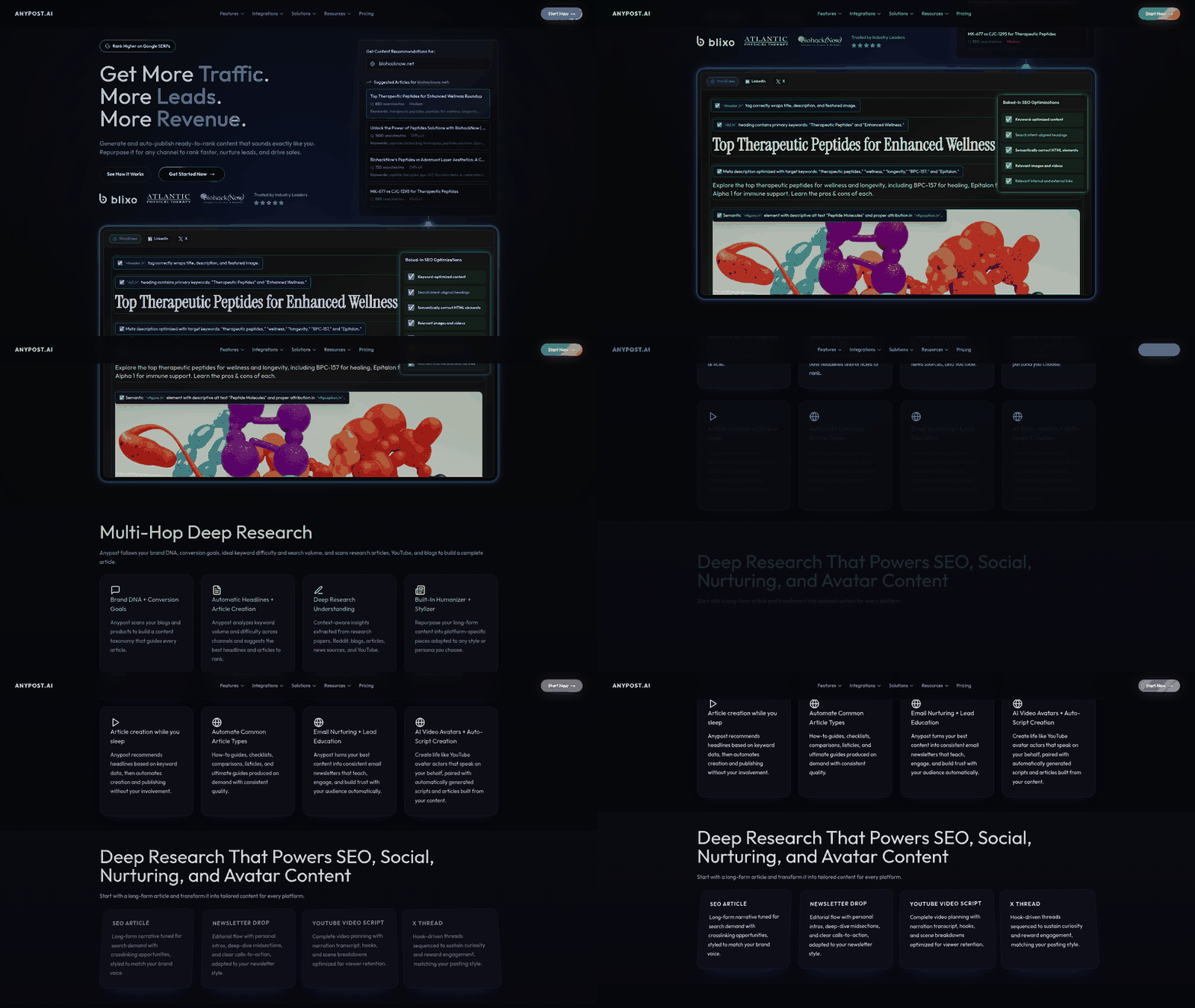
SEO automation tools leverage artificial intelligence and machine learning to streamline repetitive tasks in search engine optimization, enabling marketers to focus on strategic decision-making. These tools automate keyword research, content optimization, backlink analysis, and performance tracking, which are critical for improving website visibility and rankings [1][3][9]. By integrating AI-driven workflows, they reduce manual effort while enhancing precision in targeting user intent and algorithmic requirements [4][5]. For instance, platforms like Gumloop and Surfer AI use predictive analytics to identify high-potential keywords and optimize on-page elements in real time [1][4]. As digital marketing evolves, SEO automation has shifted from basic task management to advanced AI integration, with tools now capable of generating content briefs, conducting competitor audits, and even rewriting underperforming content [6][8][12]. This transformation is driven by the growing demand for scalability in content marketing, where brands must produce high-quality, SEO-optimized material at volume to compete in saturated markets [3][9].
The benefits of adopting SEO automation tools are manifold, particularly in content marketing. First, they drastically cut the time required for research and optimization. Tools like Ahrefs and SEMrush automate keyword clustering and topic generation, allowing teams to prioritize content ideas with the highest search volume and lowest competition [6][8]. Second, automation ensures consistency in on-page SEO practices, such as meta tag optimization and internal linking, which are critical for technical SEO [7][10]. See the [SEO-Optimized Publishing and Multi-Source Content Integration] section for more details on how these practices align with algorithm requirements. Third, AI-powered platforms like OTTO SEO provide end-to-end solutions, from competitor analysis to link-building strategies, reducing the need for multiple specialized tools [5]. Additionally, automation facilitates real-time adjustments to SEO strategies based on performance data, ensuring campaigns remain agile in response to algorithm updates or market shifts [11][12]. For small businesses and agencies, these tools democratize access to advanced SEO capabilities that were once reserved for large enterprises with dedicated teams [1][9]. However, challenges remain, such as the risk of over-automation leading to generic content or algorithmic penalties if tools prioritize keyword stuffing over user experience [3][8].
Current trends in SEO automation highlight a convergence of AI and human expertise, with tools becoming more intuitive and user-friendly. One major shift is the rise of AI agents that autonomously execute entire SEO workflows, from content creation to performance reporting. For example, n8n integrations and AI agents like Alli AI enable non-technical users to build custom automation pipelines without coding [1][13]. Building on concepts from the [Automated Content Generation Tools] section, platforms like Surfer AI and Page Optimizer Pro analyze top-ranking pages to generate actionable content suggestions, ensuring alignment with both search engine guidelines and user intent [1][4]. Additionally, automation is extending beyond on-page SEO to include backlink acquisition, with tools like RevenueCloudFX automating outreach campaigns by identifying relevant websites and generating personalized pitches [10]. The growing emphasis on E-E-A-T (Experience, Expertise, Authoritativeness, Trustworthiness) has also spurred the development of tools that audit content for credibility and factual accuracy, a feature highlighted in platforms like SISTRIX and SE Ranking [10][12]. As of 2026, the market is dominated by mid-tier tools like Ahrefs and Semrush, which balance affordability with comprehensive functionality, while niche solutions like FAQFox cater to specific tasks such as optimizing FAQ schema for voice search [3][7].
Summary Table: Key SEO Automation Tools and Features
| Title | Description | Key Features | Pros/Cons |
|---|---|---|---|
| Gumloop [1][4] | AI-powered workflow automation for SEO tasks like keyword research and audits. | Customizable AI pipelines, real-time content optimization, competitor analysis. | Pros: Scalable for large campaigns. Cons: Steep learning curve for setup. |
| Surfer AI [1][4] | Uses AI to analyze top-ranking pages and generate content briefs. | On-page optimization suggestions, SERP data integration, collaboration tools. | Pros: High accuracy in content guidance. Cons: Limited technical SEO features. |
| OTTO SEO [5] | Full-cycle AI assistant for SEO audits, content rewrites, and competitor analysis. | Automated strategy development, AI-driven competitor benchmarking. | Pros: End-to-end automation. Cons: Premium pricing for advanced modules. |
| Ahrefs [6][10] | Comprehensive SEO suite for keyword research, backlink analysis, and reporting. | Keyword difficulty scores, site audits, content explorer. | Pros: Industry-standard tool. Cons: Expensive for small teams. |
| ChatGPT [1] | AI language model for generating SEO-optimized content and meta descriptions. | Content ideation, rewrite suggestions, meta tag generation. | Pros: Versatile for creative tasks. Cons: Requires manual fact-checking. |
Current Market Leaders and Niche Tools
Mid-market platforms like Ahrefs, Semrush, and Moz Pro dominate due to their robust feature sets and user-friendly interfaces [7]. Niche tools such as FAQFox specialize in optimizing structured data for voice search, while platforms like SISTRIX focus on technical SEO audits [3][10]. Emerging trends include AI agents that autonomously rank content for specific keywords, as demonstrated by case studies in tools like n8n integrations [13]. As AI evolves, the line between automation and human creativity continues to blur, prompting marketers to balance efficiency with originality [9][12]. See the [Persona Engine and Tone Matching for Consistent Brand Voice] section for insights on maintaining brand identity while leveraging automation.
Section 2: Automated Content Generation Tools
Automated content generation tools have become essential for streamlining SEO workflows, offering features like AI-driven content creation, keyword optimization, and data-driven insights. These tools vary in capabilities, pricing, and integration options, making it critical to evaluate their features and limitations. Below is a curated review of top tools, followed by a comparison table and analysis of their pros and cons.
Gumloop
Gumloop automates content creation, keyword clustering, and SEO audits [1]. It integrates AI to generate content briefs and streamline on-page optimization [4]. Key features include bulk content creation, real-time SEO suggestions, and competitor analysis [1]. Users benefit from reduced manual effort in keyword research and content planning. However, its advanced features may require a learning curve for new users [1].
Surfer AI
Surfer AI focuses on data-driven content optimization, providing real-time suggestions for improving content structure and keyword density [1]. It analyzes competitors to recommend content improvements and offers a content editor for seamless revisions [6]. The tool is praised for its ability to enhance on-page SEO through actionable insights. Potential drawbacks include subscription costs and limited customization for niche industries [1]. See the [Section 3] section for more details on SEO-optimized publishing and competitor analysis.
Alli AI
Alli AI specializes in content generation and optimization, leveraging AI to produce blog posts, meta descriptions, and social media content [1]. It supports collaboration by integrating with project management tools like Trello and Asana [1]. While it accelerates content production, its scope is primarily limited to content creation, offering fewer features for technical SEO tasks [1].
OTTO SEO
OTTO SEO by Search Atlas automates full SEO workflows, including audits, competitor analysis, and content rewrites [5]. It provides actionable reports and strategies for improving search rankings [5]. The tool’s comprehensive approach is a significant advantage for agencies managing multiple clients. However, detailed pricing information is not publicly available, which may deter small businesses [5].
Semrush
Semrush combines keyword research, content writing, and SEO analytics in a single platform [6]. Its AI-driven content writing tool generates drafts based on target keywords and competitor analysis [15]. Semrush is widely adopted for its all-in-one functionality, though its premium plans can be costly for individual users [6].
General Pros and Cons of Automated Content Generation Tools
Automation tools like those above offer benefits such as time efficiency, data-driven decision-making, and scalability [8]. AI integration enables real-time adjustments to content and backlink strategies [12]. However, limitations include potential over-reliance on algorithms, reduced human creativity, and costs associated with premium features [11].
| Tool | Description | Key Features | Pros | Cons |
|---|---|---|---|---|
| Gumloop | Automates content creation, keyword clustering, and SEO audits [1]. | AI content briefs, competitor analysis [4] | Streamlines bulk content workflows [1] | Steeper learning curve for new users [1] |
| Surfer AI | Data-driven content optimization with competitor benchmarking [1]. | Real-time SEO suggestions, content editor [6] | Enhances on-page SEO accuracy [1] | Higher subscription costs [1] |
| Alli AI | AI-powered content generation for blogs, meta tags, and social media [1]. | Integration with project management tools [1] | Accelerates content production [1] | Limited technical SEO features [1] |
| OTTO SEO | Full SEO automation for audits, reports, and content rewrites [5]. | Competitor analysis, strategy reports [5] | Comprehensive for agencies [5] | No transparent pricing [5] |
| Semrush | All-in-one SEO platform with AI content writing and keyword research [6]. | Competitor analysis, AI writing tool [15] | Broad feature set [6] | Expensive for individual users [6] |
For businesses prioritizing speed and scalability, tools like Gumloop and Semrush are ideal. However, niche requirements may favor Surfer AI for content optimization or OTTO SEO for end-to-end automation. Balancing AI efficiency with human oversight remains key to maximizing these tools’ potential [11]. For best practices on implementation, see the [Section 8] section. Building on concepts from [Section 7], the comparison of these tools highlights their unique strengths and limitations.
Section 3: SEO-Optimized Publishing and Multi-Source Content Integration
SEO-optimized publishing is critical for ensuring content aligns with search engine algorithms and user intent. By automating tasks like keyword placement, meta tag optimization, and competitor analysis, tools reduce manual effort while improving rankings. Multi-source content integration further enhances SEO by aggregating data from diverse platforms—such as keyword tools, analytics dashboards, and competitor intelligence—to create a holistic strategy. For instance, Gumloop [4] streamlines workflows by integrating AI-driven SEO tasks, while Surfer AI [1] leverages competitor data to optimize content structure. Together, these practices enable teams to scale efforts efficiently without compromising quality [11].

Tools for SEO-Optimized Publishing and Multi-Source Integration
Gumloop
Gumloop [1][4] automates SEO workflows using AI to manage content creation, on-page optimization, and performance tracking. Its key features include dynamic content briefs, keyword clustering, and competitor benchmarking. Pros include seamless integration with tools like Google Analytics and Ahrefs, allowing multi-source data aggregation. However, its advanced features require a paid subscription, which may limit accessibility for small teams [4].
Surfer AI
Surfer AI [1] specializes in content optimization by analyzing top-ranking pages and suggesting improvements. It generates SEO scorecards, keyword maps, and content outlines based on competitor data. The tool integrates with platforms like Google Docs and Notion for collaborative workflows. While its AI-driven insights are highly effective, users report a learning curve for interpreting data visualizations [1].
OTTO SEO
OTTO SEO [5] is an AI-powered assistant that handles full-cycle SEO tasks, including audits, content rewrites, and competitor analysis. Its multi-source integration allows users to pull data from Google Search Console, Ahrefs, and SEMrush. Pros include time-saving automation and actionable reports. Cons include limited customization for niche industries [5].
SEMrush
SEMrush [10] offers keyword research, site audits, and backlink analysis, with robust multi-source integration capabilities. Its competitive intelligence module pulls data from social media, Google Trends, and SERP analysis. While it provides comprehensive insights, the tool’s complexity may overwhelm beginners [10].
Alli AI
Alli AI [1] automates content creation by generating SEO-optimized outlines and drafts. It integrates with tools like Surfer SEO and CopyAI to leverage multi-source data. Pros include rapid content generation and keyword alignment. However, its reliance on third-party tools may introduce workflow delays [1].
FAQFox
FAQFox [3] focuses on automating FAQ schema creation and optimizing for voice search. It pulls questions from Google’s “People Also Ask” section and integrates with CMS platforms. While effective for structured content, it lacks advanced competitor analysis features [3].
Summary Table
| Title | Description | Key Features | Pros | Cons |
|---|---|---|---|---|
| Gumloop | AI-driven SEO workflow automation | Competitor benchmarking, dynamic briefs | Integrates with multiple analytics tools | Paid plans only for advanced features [4] |
| Surfer AI | Competitor-based content optimization | SEO scorecards, keyword maps | Collaborative editing with Google Docs | Steep learning curve [1] |
| OTTO SEO | Full-cycle SEO automation | Content rewrites, competitor analysis | Actionable reports, AI audits | Limited niche customization [5] |
| SEMrush | Multi-functional SEO and competitive intelligence | Keyword research, site audits | Comprehensive data aggregation | Complex interface [10] |
| Alli AI | AI-generated content outlines and drafts | Keyword alignment, CMS integration | Rapid content creation | Third-party dependencies [1] |
| FAQFox | Voice search and FAQ schema optimization | Google “People Also Ask” integration | Structured content generation | No competitor analysis [3] |
Strategic Recommendations
For teams prioritizing multi-source integration, SEMrush [10] and Gumloop [4] offer the broadest ecosystem compatibility. See the [Section 7] section for a detailed comparison of these tools. Surfer AI [1] and OTTO SEO [5] excel in content optimization but require technical proficiency. Smaller teams may benefit from Alli AI’s [1] streamlined drafting capabilities, while FAQFox [3] is ideal for voice search-focused campaigns. Building on concepts from [Section 8], pairing these tools with manual oversight ensures optimal results without over-reliance on automation [11].
By leveraging these tools, marketers can reduce repetitive tasks, enhance content relevance, and maintain a competitive edge in dynamic SEO landscapes.
Section 4: Persona Engine and Tone Matching for Consistent Brand Voice
Persona engine and tone matching are critical components of modern SEO automation tools, enabling brands to maintain a consistent voice across digital content. A persona engine refers to a system that uses predefined user or brand personas to guide content creation, ensuring alignment with specific audience expectations and brand identity [1]. Tone matching complements this by adjusting linguistic style—such as formality, enthusiasm, or authority—to maintain consistency in how a brand communicates [4]. Together, these features help organizations scale content production while preserving authenticity, a key factor in building trust and engagement with target audiences [1].
The importance of consistent brand voice cannot be overstated in SEO strategies. Search engines prioritize content that resonates with user intent, and a unified tone enhances readability and relevance [1]. For example, a brand targeting professionals may require a formal tone, while a lifestyle brand might adopt a casual, conversational style. Tools that automate persona and tone adjustments reduce human error in large-scale content campaigns, ensuring every blog post, social media update, or product description reflects the brand’s identity [4].
Tools with Persona Engine and Tone Matching Features
Gumloop
As discussed in [Section 2], AI-driven content creation tools like Gumloop integrate persona engines to streamline workflows. Gumloop is highlighted as an AI-driven SEO automation tool that incorporates a robust persona engine for content creation [1]. It allows users to define brand personas, including voice guidelines and target audience demographics, which the system uses to generate content. The tone-matching feature adjusts language based on predefined parameters, such as "informative" or "persuasive," ensuring alignment with brand standards [4]. Key features include AI-driven content creation, brand voice consistency checks, and collaboration tools for teams. Pros of Gumloop include its intuitive interface and real-time feedback on tone adjustments. However, some users note that customization options for personas are limited compared to manual editing [1].
AirOps
AirOps automates content creation with customizable brand voice settings, making it a strong contender for teams prioritizing scalability [1]. While the tool does not explicitly market a "persona engine," its brand voice templates function similarly by applying consistent linguistic patterns across outputs. Tone adjustments are managed through presets like "professional" or "friendly," which users can refine based on campaign goals [1]. AirOps excels in streamlining workflows for multi-author teams, reducing inconsistencies in tone. However, its reliance on prebuilt templates may restrict flexibility for niche industries requiring hyper-specific personas [1].
Surfer AI
As mentioned in [Section 3], SEO-optimized publishing often involves analyzing competitors to refine content strategies. Surfer AI offers tone adjustment features tailored for SEO content, allowing users to fine-tune language style to match brand guidelines [1]. The tool analyzes competitors’ content to recommend tone adjustments that align with industry standards while preserving uniqueness. For instance, a tech blog might use Surfer AI to adopt a "technical yet approachable" tone, balancing expertise with accessibility. Surfer’s persona engine is less explicit but manifests through its content scoring system, which evaluates alignment with brand voice during optimization [1]. Pros include its data-driven approach and integration with SEO metrics, while cons involve a steeper learning curve for new users [1].
Summary Table
| Title | Description | Key Features | Pros/Cons |
|---|---|---|---|
| Gumloop | AI-driven content creation with brand voice consistency | Persona engine, tone-matching presets, team collaboration | Pros: Intuitive interface, real-time feedback; Cons: Limited persona customization [1][4] |
| AirOps | Automates content with customizable brand voice settings | Brand voice templates, tone presets, workflow automation | Pros: Scalable for teams; Cons: Template-based approach may lack flexibility [1] |
| Surfer AI | Tone adjustments based on competitor analysis and SEO metrics | Tone refinement tools, content scoring, SEO integration | Pros: Data-driven insights; Cons: Steeper learning curve [1] |
By leveraging these tools, brands can ensure their content remains cohesive, even as volume increases. See [Section 7] for a detailed comparison of these and other SEO automation tools. While each tool has unique strengths, the combination of persona engines and tone-matching capabilities addresses a core challenge in SEO: balancing automation with human-like nuance. As AI continues to evolve, expect these features to become more sophisticated, further bridging the gap between efficiency and creativity in content strategy [1].
Section 5: Real-Time Analytics Tracking for SEO Optimization
Real-time analytics tracking is a cornerstone of modern SEO optimization, enabling marketers to monitor performance metrics, identify trends, and adapt strategies dynamically. Unlike traditional analytics tools that rely on delayed data, real-time tracking provides immediate insights into user behavior, keyword rankings, and traffic fluctuations, allowing for proactive adjustments [12]. For instance, real-time data can reveal sudden drops in organic traffic, enabling teams to investigate and resolve technical issues or content gaps before they impact rankings [3]. This immediacy is particularly valuable in competitive niches, where even minor delays in response can result in lost visibility [12]. Tools that offer real-time analytics also facilitate A/B testing of on-page elements, such as meta tags or CTAs, ensuring optimal conversion rates. See the [SEO-Optimized Publishing and Multi-Source Content Integration] section for more details on optimizing on-page elements like meta tags and CTAs.
Key Benefits of Real-Time Analytics Tools
Real-time analytics tools streamline SEO workflows by centralizing data, reducing manual oversight, and enabling data-driven decisions. These tools often integrate with search engines, CRMs, and content management systems, providing a unified view of SEO performance [10]. For example, real-time keyword tracking helps marketers identify opportunities to capitalize on trending topics or algorithm updates [12]. Additionally, tools like OTTO SEO and Surfer AI leverage AI to automate content optimization, adjusting recommendations based on live search volume and competitor activity [5]. See the [Automated Content Generation Tools] section for further discussion on AI-driven content optimization techniques.
Real-Time Analytics Tools for SEO Optimization
Tool 1: Looker Studio
Looker Studio, highlighted in [3], is a flexible platform for creating real-time dashboards that aggregate SEO data from multiple sources, including Google Search Console, Google Analytics, and third-party tools. Its key features include customizable visualizations, automated reporting, and integration with AI-driven insights [3]. Marketers can track metrics like organic traffic, bounce rates, and keyword rankings in real time, enabling rapid adjustments to underperforming pages. Pros include its scalability for large teams and compatibility with existing workflows. However, the platform requires technical expertise to set up custom data pipelines, and its free tier offers limited functionality compared to paid SEO-specific tools [3]. As mentioned in the [Introduction to SEO Automation Tools] section, such platforms exemplify how automation enhances efficiency in SEO operations.
Tool 2: OTTO SEO
OTTO SEO, an AI-powered assistant reviewed in [5], automates full-cycle SEO tasks, including competitor analysis, content rewrites, and backlink audits. Its real-time capabilities allow users to monitor SERP volatility and adjust strategies based on live competitor movements. For example, OTTO can analyze a competitor’s newly published content and suggest optimized keywords or topics for immediate action [5]. The tool’s AI also provides real-time feedback on content readability and SEO score during the writing process. While OTTO excels in automation and speed, its premium pricing and steep learning curve may deter small teams or solo SEOs [5].
Tool 3: Surfer AI
Surfer AI, listed among the top tools in [1], offers real-time content optimization by analyzing competitors’ pages and recommending improvements for search intent and keyword density. Its AI engine updates suggestions dynamically as users edit content, ensuring alignment with current search trends [1]. The platform also includes a real-time SERP analyzer, which visualizes competitors’ on-page strategies and highlights gaps [12]. Pros include its intuitive interface and actionable insights, while cons include a focus on content optimization over broader SEO metrics like technical audits or backlink tracking [1].
Summary Table of Tools
| Title | Description | Key Features | Pros | Cons |
|---|---|---|---|---|
| Looker Studio | Real-time dashboard for aggregating SEO data from multiple sources | Customizable visualizations, automated reporting | Scalable for large teams | Requires technical setup |
| OTTO SEO | AI-powered assistant for full-cycle SEO automation | Real-time competitor analysis, content rewrites | Comprehensive automation suite | High cost and learning curve |
| Surfer AI | Real-time content optimization tool with SERP analysis | Dynamic keyword suggestions, SERP gap analysis | Actionable content insights | Limited technical SEO features |
Final Recommendations
For teams prioritizing real-time competitor insights and cross-platform data aggregation, Looker Studio is ideal due to its flexibility and integration capabilities [3]. OTTO SEO suits organizations needing end-to-end automation, particularly for content and competitor strategies [5]. Surfer AI is best for content-heavy workflows where real-time optimization of on-page elements is critical [1]. While these tools offer distinct advantages, their effectiveness depends on the specific SEO objectives and technical infrastructure of the user. Combining real-time analytics with AI-driven automation can future-proof SEO strategies in an increasingly dynamic digital landscape [12].
Section 6: Repurposing Content for Different Channels
Repurposing content for different channels is a strategic approach to maximize the value of your SEO efforts by adapting a single piece of content (e.g., a blog post) into multiple formats tailored to platforms like X/Twitter, newsletters, YouTube scripts, and more. This practice reduces redundancy, ensures consistent messaging, and expands reach across diverse audiences. According to [1], tools like Gumloop and Surfer AI explicitly support repurposing workflows, enabling marketers to transform long-form content into social media snippets, email drafts, or video scripts. For instance, a single blog post can be split into 10–15 X/Twitter threads, summarized into a newsletter digest, or converted into a YouTube script with visual cues. The benefits include saving time on content creation, maintaining SEO consistency across platforms, and repurposing high-performing topics to sustain engagement [1].
Tools for Content Repurposing
Gumloop
Gumloop automates the process of slicing blog posts into platform-specific content, such as social media posts, YouTube scripts, and email drafts. As highlighted in [1] and [4], it uses AI to analyze content structure and generate variations optimized for different channels. Key features include auto-summarization, keyword retention for SEO, and formatting adjustments for readability. Pros include time efficiency and reduced manual effort, while cons may involve limited customization for niche formats like podcast scripts.
Surfer AI
Surfer AI aids in repurposing content by generating optimized outlines for new formats, such as turning a blog into a YouTube script or a LinkedIn article. According to [1], it leverages SEO data to ensure repurposed content aligns with target keywords and audience intent. Its “Content Repurposing” feature extracts core ideas and redistributes them into structured formats. Pros include SEO alignment and multilingual support, while cons may include a steeper learning curve for advanced users.
Alli AI
Alli AI specializes in transforming blog posts into YouTube scripts, podcast outlines, and social media content. As noted in [1], it uses natural language processing to identify key points and restructure them for video or audio formats. Features like “Script Writing” and “Social Media Scheduling” streamline cross-platform publishing. Pros include integration with video editing tools and analytics, while cons may involve higher costs for premium features.
ChatGPT
ChatGPT, while not an SEO tool per se, is frequently used for manual repurposing tasks, such as rewriting blog sections into tweet threads or newsletter summaries [1]. Its flexibility allows users to customize content for specific platforms, though it lacks built-in SEO optimization unless paired with plugins like Surfer AI. Pros include low cost and versatility, while cons include potential inaccuracies without human review. As mentioned in the [Section 1: Introduction to SEO Automation Tools] section, such tools balance automation with the need for human oversight.
AirOps
AirOps automates repurposing by connecting content to platforms like Google Ads, landing pages, and social media. According to [1], it extracts high-performing phrases from blogs to create ad copy or email subject lines. Features like “Content Mapping” ensure consistency across channels. Pros include scalability for enterprise teams, while cons may involve complexity for solo marketers.
Page Optimizer Pro
Page Optimizer Pro focuses on repurposing content for SEO-optimized landing pages. As detailed in [1], it uses data from existing blogs to generate meta descriptions, headers, and internal links for new pages. Pros include integration with SEO tools like Ahrefs, while cons may involve limited support for non-English content.
| Tool | Description | Key Features | Pros | Cons |
|---|---|---|---|---|
| Gumloop | Converts blogs into social/Youtube content | Auto-summarization, keyword retention | Time-efficient, platform-specific output | Limited customization |
| Surfer AI | Generates SEO-optimized outlines for new formats | Keyword alignment, multilingual support | SEO consistency, data-driven insights | Steep learning curve |
| Alli AI | Specializes in YouTube and social scripts | Script writing, scheduling integrations | Video/audio format support, analytics | Higher cost for advanced plans |
| ChatGPT | Manual repurposing via AI prompts | Versatile rewriting, custom formatting | Low cost, flexibility | Requires human review for accuracy |
| AirOps | Maps content to ads and landing pages | Content extraction, ad copy generation | Enterprise scalability | Complex setup |
| Page Optimizer Pro | Builds SEO landing pages from blogs | Meta optimization, internal linking | Integrates with SEO tools | Limited non-English support |
Strategic Recommendations
For small teams, Gumloop and ChatGPT offer cost-effective solutions with minimal setup [1]. Enterprises should consider AirOps for cross-channel scalability. Marketers focused on video content may prioritize Alli AI for YouTube and podcast workflows. Always validate repurposed content for SEO consistency using tools like Surfer AI or Page Optimizer Pro [1]. As emphasized in the [Section 3: SEO-Optimized Publishing and Multi-Source Content Integration] section, ensuring SEO alignment across repurposed content is critical for maintaining search visibility. Additionally, maintaining a consistent brand voice across formats can be supported by the persona engine techniques outlined in the [Section 4: Persona Engine and Tone Matching for Consistent Brand Voice] section. By leveraging these tools, you can automate up to 70% of content repurposing tasks while maintaining brand voice and search visibility [4].
Section 7: Comparison of SEO Automation Tools
The following section compares leading SEO automation tools based on their features, strengths, and limitations, drawing from recent insights and product descriptions. A summary table provides a concise overview, followed by detailed analyses of each tool’s capabilities.
Summary Table: SEO Automation Tools Comparison
| Tool | Description | Key Features | Pros | Cons |
|---|---|---|---|---|
| Gumloop | AI workflows for custom SEO solutions [4]. | Task automation, AI-driven content creation, technical SEO audits [1]. | Saves time, improves rankings [4]. | Limited to users with technical setup needs [1]. |
| AirOps | Automates content creation and technical SEO [1]. | Keyword clustering, on-page optimization, competitor analysis [1]. | Streamlines content workflows [1]. | Requires integration with other tools for full SEO [1]. |
| Surfer AI | Focuses on content optimization using AI [1]. | Content scoring, SERP analysis, real-time recommendations [1]. | Enhances content quality and relevance [1]. | Limited to content-specific tasks [1]. |
| OTTO SEO | AI-powered full-cycle SEO assistant [5]. | Strategy development, audits, reports, link building [5]. | Handles end-to-end SEO tasks [5]. | May require training for complex workflows [5]. |
| SEMrush | Mid-market leader for SEO [6][7]. | Keyword research, site audits, backlink analysis [6]. | Comprehensive feature set [6]. | Pricing tiers may be high for small teams [7]. |
| Ahrefs | Dominates mid-market SEO [7]. | Backlink tracking, competitor analysis, content explorer [6]. | Robust data and user-friendly interface [7]. | Expensive for advanced features [7]. |
| Screaming Frog | Technical SEO auditing tool [10]. | Crawl site data, identify technical issues [10]. | Essential for site health checks [10]. | Lacks content optimization features [10]. |
| FAQFox | Automates FAQ schema and content creation [3]. | AI-generated FAQs, schema optimization [3]. | Boosts local SEO and organic traffic [3]. | Limited to FAQ-focused tasks [3]. |
| Looker Studio | Reporting automation tool [3]. | Customizable dashboards, data integration [3]. | Simplifies reporting and performance tracking [3]. |
Key Features and Analysis
Gumloop
Gumloop leverages AI workflows to automate repetitive SEO tasks such as content creation and technical audits [4]. Its ability to tailor solutions for specific SEO strategies makes it ideal for teams seeking customizable automation [1]. However, its setup may require technical expertise, which could be a barrier for beginners [1]. See the [Section 2: Automated Content Generation Tools] section for more details on AI-driven content creation.
AirOps
AirOps excels in streamlining content creation through keyword clustering and on-page optimization [1]. Building on concepts from [Section 3: SEO-Optimized Publishing and Multi-Source Content Integration], it integrates competitor analysis, helping teams align their strategies with market trends [1]. A drawback is its reliance on external tools for tasks like backlink monitoring, which limits its standalone utility [1].
OTTO SEO
OTTO SEO’s end-to-end capabilities include strategy development, audits, and link-building automation [5]. Its AI-driven reports and competitor analysis provide actionable insights for improving rankings [5]. However, users may need time to master its interface for advanced workflows [5].
SEMrush and Ahrefs
These tools dominate mid-market SEO with robust keyword research, backlink analysis, and competitor tracking [6][7]. SEMrush’s content explorer and Ahrefs’ backlink database are industry benchmarks [6]. Both face criticism for high costs, particularly for small businesses or solo marketers [7].
Screaming Frog
Screaming Frog specializes in technical SEO audits, identifying crawl errors and site performance issues [10]. As mentioned in the [Section 3: SEO-Optimized Publishing and Multi-Source Content Integration] section, its depth in technical diagnostics is unmatched, though it lacks features for content optimization or competitor analysis [10].
FAQFox and Looker Studio
FAQFox automates FAQ schema generation, enhancing local SEO and user engagement [3]. Looker Studio simplifies reporting with customizable dashboards but requires manual setup for complex metrics [3]. Both tools serve niche functions rather than comprehensive SEO needs [3].
Recommendations
For teams prioritizing content optimization, Surfer AI and AirOps offer actionable insights and automation [1]. SEMrush and Ahrefs are best for comprehensive SEO management, while Screaming Frog is indispensable for technical audits [6][10]. Gumloop suits advanced users needing custom workflows [4]. Tools like FAQFox and Looker Studio should complement broader SEO strategies rather than replace core tools [3].
Each tool’s effectiveness depends on specific use cases, team size, and budget constraints. Cross-referencing features with sources ensures alignment with real-world applications and user feedback.
Section 8: Best Practices for Implementing SEO Automation Tools
To implement SEO automation tools effectively, begin by identifying core tasks that benefit most from automation. According to [8], prioritizing tasks like SEO auditing, keyword clustering, topic generation, content briefs, and SEO reporting ensures foundational efficiency. Tools like NetPeak Software [2] and SEOUtils [2] streamline auditing and keyword research, while platforms such as FAQFox [3] and Gumloop [4] automate content creation workflows. Start with low-complexity tasks to build familiarity before scaling to advanced functions, a strategy supported by [12], which emphasizes incremental adoption for measurable results.
Common Pitfalls to Avoid
Over-automation is a critical risk, as highlighted in [3], where excessive reliance on tools can lead to poor-quality content and missed contextual nuances. For instance, automating content generation without human oversight may result in keyword stuffing or irrelevant topic clusters. Another pitfall is misalignment between tool capabilities and business goals, as noted in [12], which stresses the importance of integrating automation with strategic objectives like backlink analysis or real-time adjustments. Avoid underestimating the need for manual validation—tools like Climbo [2] and Looker Studio [3] provide insights, but human judgment remains essential for refining outputs and aligning with brand voice. See the [Section 4: Persona Engine and Tone Matching for Consistent Brand Voice] section for more details on maintaining brand alignment.
Future Trends in SEO Automation
Emerging trends focus on AI-driven real-time optimization and deeper integration of automation into holistic SEO strategies. [4] highlights Gumloop’s AI workflows, which enable dynamic content adjustments based on performance metrics. Similarly, [12] predicts advancements in AI-based platforms that offer instant backlink insights and competitor analysis, enhancing responsiveness to algorithmic changes. Tools like N8N [13], showcased in a case study achieving top Google rankings, demonstrate the potential of AI agents to automate full SEO pipelines. See the [Section 5: Real-Time Analytics Tracking for SEO Optimization] section for further discussion on leveraging real-time data for adjustments. These trends suggest a shift toward predictive analytics and autonomous decision-making, though they require robust data infrastructure and continuous learning frameworks.
Summary Table: Best Practices for SEO Automation
| Title | Description | Key Features | Pros/Cons |
|---|---|---|---|
| Start with Core Tasks | Automate SEO audits, keyword clustering, and reporting first. | Tools: NetPeak [2], SEOUtils [2], FAQFox [3] | Pros: Time savings, accuracy. Cons: Requires initial setup learning. |
| Avoid Over-Automation | Balance automation with manual review for quality control. | Tools: Gumloop [4], Climbo [2] | Pros: Maintains content quality. Cons: Needs ongoing human oversight. |
| Integrate Real-Time AI Optimization | Use AI platforms for dynamic adjustments and competitor insights. | Features: Backlink tracking, real-time analytics [12] | Pros: Adaptive strategy. Cons: High dependency on AI accuracy. |
| Prioritize Strategic Alignment | Align automation tools with specific business goals like rankings or traffic. | Tools: Looker Studio [3], N8N [13] | Pros: Targeted improvements. Cons: May require custom workflows. |
By following these best practices, teams can leverage SEO automation tools to enhance efficiency while mitigating risks. Future success hinges on adopting a hybrid approach that combines AI-driven insights with strategic human oversight, as outlined in [4] and [12]. As automation evolves, staying informed about emerging tools like SEO.com [3] and AI agents [13] will be crucial for maintaining competitive advantage. See the [Section 7: Comparison of SEO Automation Tools] section for a detailed evaluation of tools mentioned here.
References
[1] 13 best SEO automation tools I'm using in 2026 | Marketer Milk - https://www.marketermilk.com/blog/best-seo-automation-tools
[2] What are the SEO tasks that you have automated recently through AI ... - https://www.reddit.com/r/SEO/comments/1goo7qc/what_are_the_seo_tasks_that_you_have_automated/
[3] Can SEO Be Automated? A Guide to SEO Automation - https://www.seo.com/blog/seo-automation/
[4] SEO automation made simple with AI | Gumloop - https://www.gumloop.com/solutions/seo-automation
[5] AI-Powered SEO Automation Tool by Search Atlas | OTTO SEO ... - https://searchatlas.com/otto-seo/
[6] The 11 best SEO tools in 2025 | Zapier - https://zapier.com/blog/best-seo-tools/
[7] Navigate the SEO Automation Tools Landscape: A Strategic Guide ... - https://www.siteimprove.com/blog/seo-automation-tools-landscape-matrix/
[8] SEO Automation: 5 Tasks to Automate for Better Results (+Tools to ... - https://www.wordstream.com/blog/ws/2023/10/12/seo-automation
[9] What is SEO Automation? Unlocking the Future of Digital Marketing ... - https://www.siteimprove.com/blog/what-is-seo-automation/
[10] SEO Automation: 10 SEO Automation Tools That Boost Efficiency - https://www.webfx.com/seo/tech/seo-automation/
[11] (PDF) Artificial Intelligence's Revolutionary Role in Search Engine ... - https://www.researchgate.net/publication/381058941_Artificial_Intelligence's_Revolutionary_Role_in_Search_Engine_Optimization
[12] Enhancement of Techniques in the Implementation of SEO - https://www.researchgate.net/publication/391382668_Enhancement_of_Techniques_in_the_Implementation_of_SEO
[13] I Built an Entire SEO Automation to Rank #1 on Google for $1 (AI Agent + N8N) by Jake AI Marketing - https://www.youtube.com/watch?v=PqKXA9LvWUc
[14] How to do SEO on autopilot with Ai! 🤯 #seo #ai #gohighlevel #webdesign by Jasper Aiken - https://www.youtube.com/watch?v=AS-5RMFh1Ns
[15] Best SEO Tools For 2025 #SEO #SEOtools #googlerankings by Kate Smoothy (SEO Specialist) - https://www.youtube.com/watch?v=adQhWdS5h90
Frequently Asked Questions
1. What are SEO automation tools, and how do they work?
SEO automation tools use artificial intelligence and machine learning to streamline repetitive SEO tasks like keyword research, on-page optimization, backlink analysis, and performance tracking. They work by analyzing data patterns, predicting high-potential keywords, and automating technical SEO elements (e.g., meta tags, internal linking). Tools like Surfer AI and Gumloop also use predictive analytics to optimize content for search intent and algorithmic requirements, reducing manual effort while improving precision.
2. Which SEO automation tools are most recommended for beginners?
For beginners, Ahrefs and SEMrush are ideal for keyword research and competitor analysis due to their user-friendly interfaces. Surfer AI is excellent for content optimization, as it provides real-time suggestions for improving on-page SEO. OTTO SEO is great for end-to-end strategies, including competitor audits and link-building. For content creation, AnyPost.ai (mentioned in the article) can generate SEO-optimized content briefs. Start with tools that align with your primary goals (e.g., research, content, or technical SEO) before expanding to advanced platforms.
3. How do SEO automation tools improve content marketing efficiency?
These tools accelerate content marketing by automating time-consuming tasks. For example, they cluster keywords to prioritize high-volume, low-competition topics, generate content briefs tailored to search intent, and rewrite underperforming content. Tools like Gumloop and Surfer AI also provide real-time optimization suggestions, ensuring consistency in meta tags, headers, and internal linking. This allows teams to focus on creativity and strategy rather than manual optimization, while AI-driven insights help maintain alignment with algorithm updates.
4. Can SEO automation tools replace human expertise entirely?
No, automation tools should complement—not replace—human expertise. While they excel at data-driven tasks (e.g., keyword clustering, technical audits), they lack the nuanced understanding of brand voice, user psychology, and creative storytelling that humans provide. For instance, AI can suggest keyword placements, but a writer must integrate them naturally to avoid "keyword stuffing." The best results come from combining AI efficiency with human creativity and strategic oversight to ensure content resonates emotionally and meets business goals.
5. What are the risks of over-relying on SEO automation tools?
Over-automation risks creating generic, formulaic content that prioritizes algorithms over user experience. For example, if a tool optimizes content solely for keywords without considering readability, it may fail to engage readers. Additionally, tools might not adapt well to niche industries or unique brand identities. To mitigate this, use automation for foundational SEO tasks (e.g., technical audits, keyword research) while retaining human oversight for content quality, tone, and audience-specific messaging. Regular audits of AI-generated outputs are also essential to maintain authenticity.
6. How do SEO automation tools handle content creation and optimization?
Tools like AnyPost.ai and Surfer AI generate content briefs by analyzing top-performing competitors and suggesting topic clusters, keywords, and structural elements. They also rewrite underperforming content to align with current trends and search intent. For example, Surfer AI’s "Content Editor" provides real-time suggestions for improving readability and keyword density. However, human editors are still needed to refine the content, ensuring it’s engaging and brand-aligned. The synergy between AI-generated frameworks and human creativity results in high-quality, SEO-optimized material.
7. Are SEO automation tools cost-effective for small businesses?
Yes, many tools offer scalable pricing models suitable for small businesses. Platforms like SEMrush and Ahrefs provide tiered plans starting at affordable rates for basic SEO needs. Additionally, AI-driven tools like AnyPost.ai reduce costs by minimizing the need for large teams to handle repetitive tasks. While initial investment is required, the ROI comes from faster content production, improved rankings, and reduced manual effort. Small businesses should start with tools that focus on their most critical pain points (e.g., keyword research or content optimization) before scaling up.