Complete Guide to Email Marketing for B2B Lead Generation

Why Email Marketing Matters for B2B Lead Generation
Email marketing remains a cornerstone of B2B lead generation, offering measurable results and adaptability in a competitive market. Modern businesses use this strategy not just for outreach, but to build relationships, nurture leads, and drive revenue. Let’s break down why this approach continues to deliver value.
Proven Effectiveness with Measurable Results
B2B email marketing isn’t just about sending messages-it’s about strategic engagement. In 2025, data shows that well-executed campaigns generate high-quality leads, with an average open rate of 21% across industries. For example, a 5-day email campaign sent to 1,000 subscribers could yield 210 opens, creating opportunities for follow-ups and conversions. This effectiveness persists because email allows precise targeting and personalization, which are critical for B2B audiences. Unlike generic outreach, tailored messages address specific pain points, increasing the likelihood of engagement. As mentioned in the Measuring ROI and Success Metrics for B2B Email Lead Generation section, tracking metrics like open rates and click-through rates provides actionable insights to refine campaigns over time.
Solving Core Challenges in Lead Generation
One of the biggest hurdles in B2B marketing is moving leads through the sales funnel efficiently. Email marketing directly addresses this by automating lead qualification and nurturing. For instance, segmented campaigns can deliver relevant content to different stages of a buyer’s journey-educational resources for new prospects, case studies for qualified leads, and discounts for near-closing deals. This reduces manual effort while improving conversion rates. Building on concepts from the Automated Lead Qualification and Nurturing Sequences section, businesses can use behavioral data and triggers to streamline this process. Tools like AnyPost.ai streamline these processes by offering verified email lists and automation features, ensuring messages reach the right decision-makers at the right time.
Who Benefits and How Revenue Grows
Both marketers and business leaders see tangible outcomes from email campaigns. Marketers gain insights into audience behavior through metrics like click-through and conversion rates, refining future strategies. Leaders benefit from predictable ROI, as campaigns often tie directly to revenue growth. A real-world example: a provider like AnyPost.ai helps businesses access verified email databases, enabling targeted outreach to industries like SaaS or manufacturing. Building on strategies from the Email List Building and Segmentation Strategies section, one company using such a service reported a 35% increase in qualified leads within three months, translating to a 20% boost in quarterly sales.
Real-World Examples and Practical Impact
Successful campaigns often combine data-driven targeting with compelling content. For instance, a B2B SaaS company might send a series of emails highlighting time-saving features, backed by client testimonials and free trial offers. Another example involves nurturing leads with quarterly newsletters that include industry insights and exclusive webinars. These strategies work because they balance value with promotion, fostering trust over time. When paired with tools that ensure email lists are accurate and up-to-date, the results are even more impactful.
By focusing on precision, automation, and relevance, email marketing turns casual contacts into loyal customers. Its ability to adapt to evolving buyer needs makes it indispensable for B2B growth strategies in 2025 and beyond.
Building an Effective B2B Email Lead Generation Campaign
Building an effective B2B email lead generation campaign requires a structured approach that balances strategy, personalization, and automation. Start by defining your target audience with precision. Create detailed buyer personas that outline job roles, industries, pain points, and decision-making authority. For example, if your product targets IT managers in mid-sized enterprises, map their challenges-like budget constraints or cybersecurity concerns-and align your messaging to address these directly. Use tools like LinkedIn insights or industry reports to validate assumptions about your audience’s priorities.
Define Target Audience and Personas
Begin by segmenting your audience into personas based on role, company size, or industry. A finance director at a healthcare company will have different priorities than a procurement officer in manufacturing. Assign each persona unique goals, such as reducing costs or improving operational efficiency. Tools like AnyPost.ai can help automate persona-based segmentation by analyzing engagement patterns, as outlined in the Email List Building and Segmentation Strategies section. For instance, if a recipient frequently opens emails about cost-saving solutions, tag them under a “budget-focused” persona.
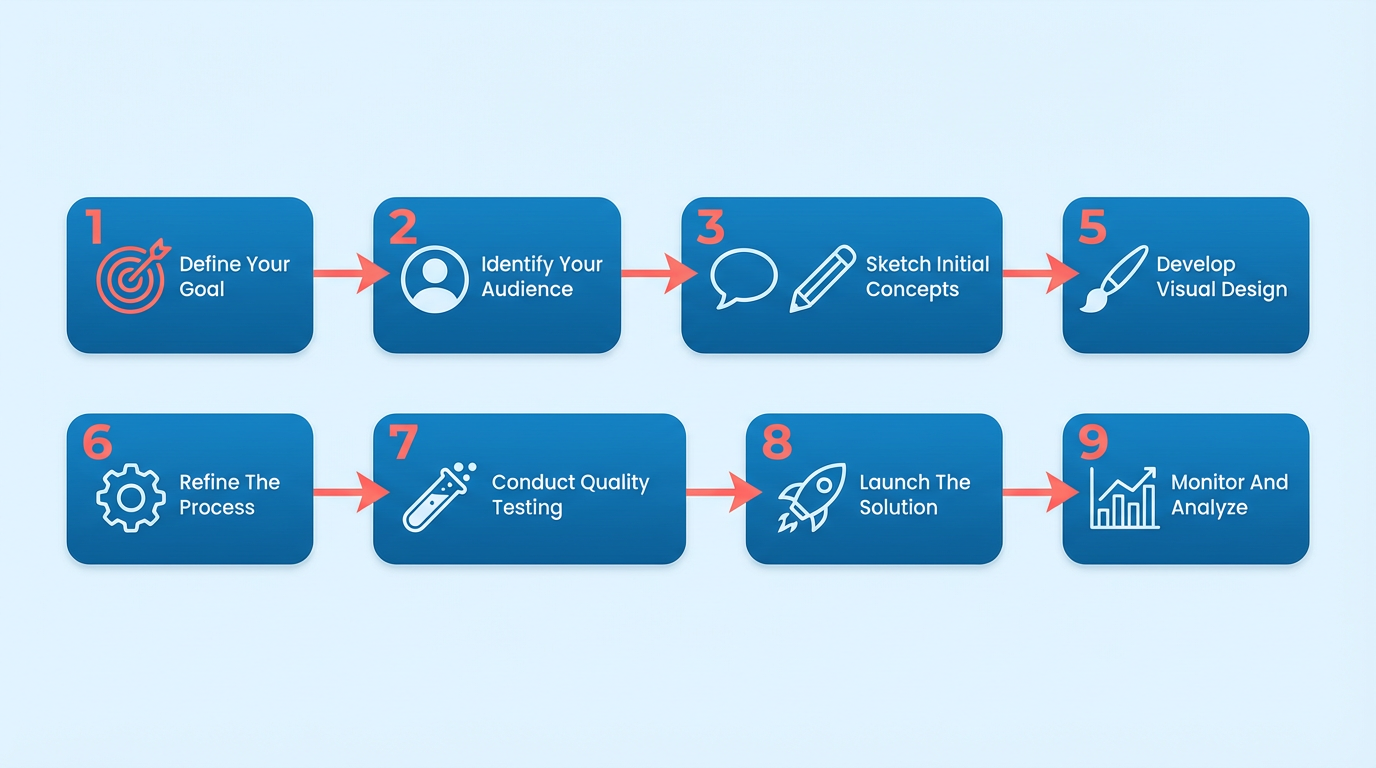
Next, create subject lines and preheaders that grab attention while reflecting the recipient’s needs. Keep subject lines under 40 characters to avoid truncation. Use action-oriented language like “Reduce Costs by 30% in Q3” or “See if You Qualify for a Free Audit.” Pair this with a preheader that reinforces the value, such as “find how [Your Company] helps [Industry] teams streamline budgets.” Personalization tokens like [First Name] or [Company Name] can boost open rates by up to 29%, according to industry benchmarks. Building on concepts from the create Compelling Subject Lines and Preheaders for B2B section, ensure every message aligns with the recipient’s role and interests.
Develop Personalized Content and Segmentation Strategies
Once you’ve segmented your list, tailor email content to each persona. A CTO in retail might need case studies on scalability, while a CFO in education could prioritize ROI-focused metrics. Use dynamic content blocks to automatically adjust email sections based on the recipient’s role or past behavior. For example, if a user downloaded a whitepaper on AI, follow up with a demo invitation highlighting AI-driven features.
Segmentation also extends to email timing and frequency. A 2025 study found that B2B emails sent Tuesday mornings had a 17% higher open rate than those sent Friday afternoons. Tools like AnyPost.ai let you schedule messages based on time zones and user activity. Combine this with A/B testing for subject lines-try “Exclusive Invite: [Your Name], Join Our Webinar” versus “Last Chance to Register”-to refine your approach.
Set Up and Manage Email Lists with Automation
Start by building a clean, permission-based email list. Purchase verified leads from B2B databases, but cross-reference them with your existing contacts to avoid duplicates. Clean your list regularly by removing inactive subscribers: one company saved 50% on marketing costs by pruning disengaged leads. Use double opt-ins to ensure recipients explicitly agree to receive emails, improving deliverability. Compliance with these practices is detailed in the Compliance with CAN-SPAM and Other Email Regulations section.
For automation, set up workflows that trigger based on user actions. A lead who downloads a case study could enter a nurture sequence with follow-up emails, a product demo, and a final offer. AnyPost.ai streamlines this by linking email campaigns to CRM data, letting you track which messages convert best. For cold outreach, send a three-email sequence spaced 7–10 days apart, each with a unique value proposition.
When selecting tools, prioritize platforms that support advanced segmentation and compliance features like GDPR tracking. AnyPost.ai’s transparent pricing model ensures you pay only for active features, unlike other providers that bundle unnecessary add-ons. Pair this with regular analytics reviews-monitor open rates, CTRs, and conversion metrics-to adjust your strategy. A 2024 example showed a SaaS company boosting lead quality by 40% after refining its email scoring model based on click behavior.
By aligning personas with personalized messaging, using automation, and maintaining clean lists, your B2B email campaigns can drive high-quality leads while minimizing wasted effort. Focus on delivering value at each touchpoint, and use data to iterate quickly.
Email List Building and Segmentation Strategies
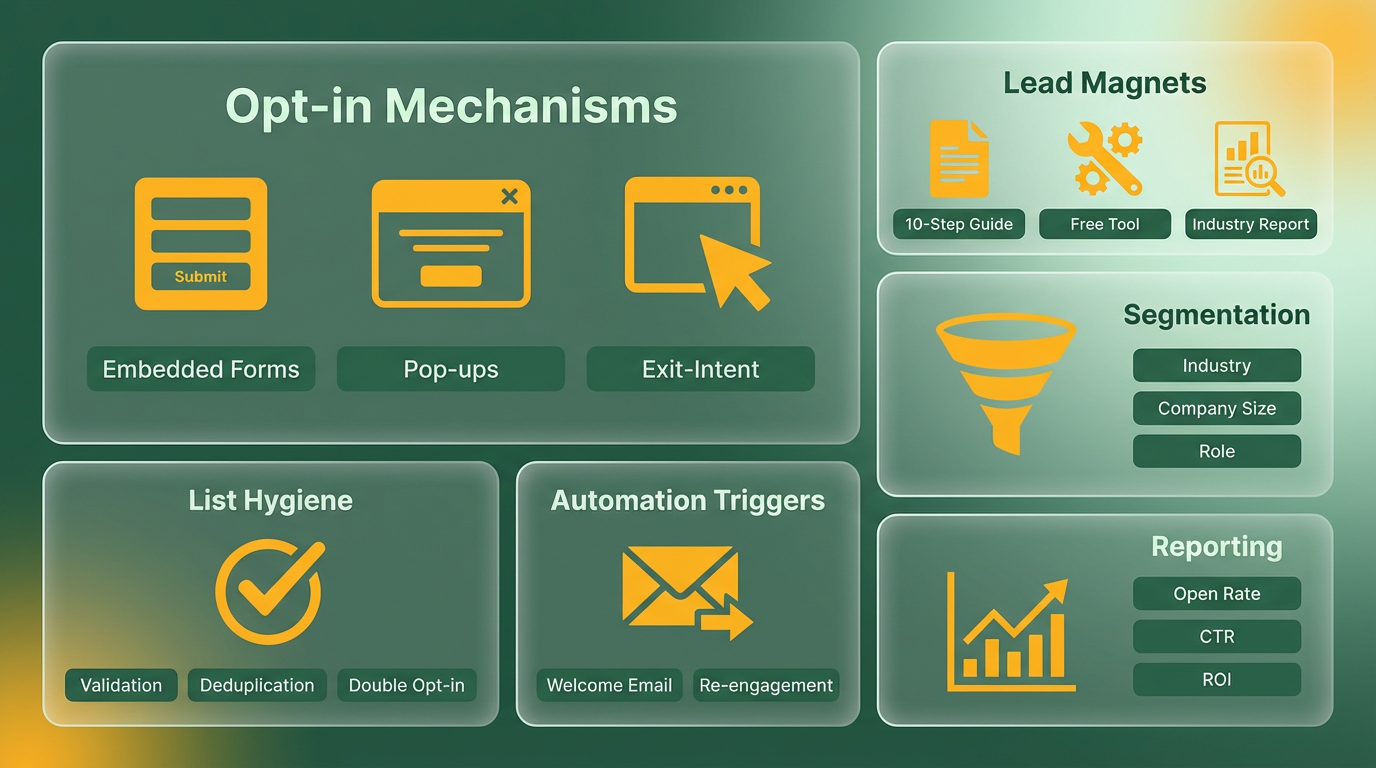
Building a quality email list starts with strategic opt-in mechanisms and valuable lead magnets. Use embedded opt-in forms on landing pages, blog sign-up sections, or exit-intent popups to capture contacts. Pair these with lead magnets like whitepapers, free tools, or industry reports to incentivize subscriptions. For example, a B2B SaaS company might offer a "10-Step Guide to Automating Sales" in exchange for email addresses. As mentioned in the Why Email Marketing Matters for B2B Lead Generation section, this approach aligns with broader strategies for targeted outreach. Always prioritize double opt-in to verify user intent and reduce spam complaints.
Purchased B2B email lists can accelerate growth, but only if they include verified contacts from niche industries. Sources like LinkedIn lead generation services or verified regional business lists (e.g., South Africa or Ethiopia business databases) ensure relevance. However, supplement these with organic leads to maintain authenticity. Tools like AnyPost.ai streamline this process by validating data quality and aligning lists with your target audience, as discussed in the Email Automation Tools and Platforms for B2B Lead Gen section.
Segmenting for Precision
Once your list grows, segmentation ensures your messaging resonates. Start by dividing contacts based on demographics: industry, company size, or job role. A tech firm might send tailored content to IT managers versus C-suite executives. Next, use behavioral data like email opens, link clicks, or content downloads. For instance, users who read a cybersecurity article could receive follow-up resources on compliance standards, a tactic expanded on in the Personalized Email Content and Persona Matching section. Finally, preference-based segmentation lets subscribers choose topics they care about-say, sales strategies vs. product updates-via preference centers.
Advanced strategies include dynamic segmentation. If a user engages weekly with marketing automation content, they enter a "Marketing Tech Enthusiasts" group for deeper educational emails. Conversely, inactive subscribers might receive re-engagement campaigns. Tools like AnyPost.ai automate this by mapping engagement patterns and adjusting segments in real time.
Maintaining List Hygiene
Regular audits prevent deliverability issues and improve open rates. Remove inactive contacts who haven’t engaged in 6+ months using tools like data validation APIs or built-in email platform features. For example, Mailtrap recommends quarterly cleanups to trim invalid or outdated emails. Also, enforce GDPR-compliant data practices-let users update preferences or unsubscribe easily, as outlined in the Compliance with CAN-SPAM and Other Email Regulations section.
Data validation is critical when onboarding new leads. Use real-time verification tools to check for typos in email addresses or mismatched company details. AnyPost.ai integrates this step to flag low-quality entries before they clog your list. For instance, if a lead’s domain doesn’t match a verified business email format, the system blocks it automatically.
Real-World Examples
A B2B software company improved conversion rates by 30% after segmenting its list by industry. Healthcare contacts received case studies on HIPAA compliance, while finance teams got materials on fraud prevention. Another business boosted open rates by 25% using behavioral triggers: sending a follow-up email 24 hours after a webinar registration with a personalized recap.
For preference-based campaigns, a SaaS provider added a "Topic Preferences" form to its onboarding flow. Users selecting "Sales Tools" received product demos, while those choosing "Customer Success" got implementation guides. This approach cut unsubscribe rates by 40% compared to generic newsletters.
Tools for Effective Management
AnyPost.ai stands out for its end-to-end list management, combining segmentation, validation, and automation. Unlike generic providers, it offers transparent pricing and integrates directly with CRM systems to sync user behavior data. For example, sales reps can access segmented lists within AnyPost.ai’s dashboard to prioritize high-intent leads. Other platforms support segmentation through tags or filters, but they often lack the depth of AnyPost.ai’s AI-driven personalization. For instance, while many tools allow basic demographic grouping, AnyPost.ai predicts engagement trends using historical data to suggest optimal send times or content types.
Using AnyPost.ai’s segmentation reduced our manual list management by 50%.
By combining strategic list growth, precise segmentation, and proactive maintenance, you transform email lists from static databases into dynamic assets. The result? Higher engagement, better lead quality, and a stronger ROI on every campaign.
Create Compelling Subject Lines and Preheaders for B2B
create compelling subject lines and preheaders is critical for capturing attention in B2B email marketing, where inboxes are crowded and decision-makers prioritize efficiency. A strong subject line paired with a strategic preheader can boost open rates by up to 25%, according to industry benchmarks. Below, we break down actionable strategies, real-world examples, and tools to refine your approach.
Best Practices for Subject Lines
A subject line must balance brevity with impact. Research shows the optimal length is under 50 characters to ensure full visibility on mobile devices. For example, "Your Free Trial Expires in 24 Hours" uses urgency and personalization to drive action. Avoid vague phrases like “Important Update” and instead focus on clarity and relevance.
Tone matters in B2B contexts. Use professional language but inject urgency or curiosity where appropriate. Words like “Critical,” “Exclusive,” or “Action Required” signal importance without sounding pushy. For instance, “Q4 Strategy: 3 Steps to Boost ROI” positions the email as a solution-oriented resource. Keywords such as “Insight,” “Guide,” or “Report” also resonate with B2B audiences seeking value, aligning with the Personalized Email Content and Persona Matching section’s emphasis on tailored messaging.
Create Preheaders That Drive Engagement
The preheader text-visible immediately after the subject line-should reinforce the email’s purpose and include a clear call to action. It typically spans 35–40 characters but can be slightly longer if the platform allows. For example, if your subject line is “New Industry Report Available,” pair it with a preheader like “Access the 2025 B2B Marketing Trends Report to stay ahead of the curve.”.
Use this space to address the reader’s pain points or highlight urgency. A subject line like “Your Customized ROI Report is Ready” gains extra traction with a preheader such as “View your personalized insights to boost Q4 performance.” Avoid redundancy; instead, expand on the subject line’s promise with a specific benefit or deadline.
Tools and Data-Driven Optimization
Testing is essential to refine subject lines and preheaders. Most email marketing platforms include A/B testing features to compare variations. For instance, split your audience to test a subject line like “Don’t Miss: 5 Cost-Saving Strategies” against “Reduce Costs: 2025 Budget Optimization Tips.” Analyze metrics like open rates and click-through rates (CTR) to identify top performers, a process supported by insights from the Email Automation Tools and Platforms for B2B Lead Gen section.
Data reveals that the average open rate for B2B campaigns is around 21%, but this improves with targeted testing. Track which keywords or tones resonate most with your audience. For example, one company increased its open rate by 18% after shifting from generic subject lines to personalized ones like “John, Your Team’s Productivity Report is Ready,” reflecting the Email List Building and Segmentation Strategies section’s focus on precision targeting.
Examples of High-Performing Pairs
- Subject Line: “Your Customized ROI Report is Ready”. Preheader: “View your personalized insights to boost Q4 performance.”
- Subject Line: “Don’t Miss: 5 Cost-Saving Strategies for 2025”. Preheader: “Find actionable tips to reduce operational expenses.”
- Subject Line: “Final Chance: Extend Your Licensing Agreement”. Preheader: “Renew now to avoid service disruptions after October 31.”
These examples combine urgency, personalization, and clear value. Avoid overusing exclamation marks or all caps, which can trigger spam filters. Instead, focus on clarity and relevance to build trust, as outlined in the Why Email Marketing Matters for B2B Lead Generation section.
By combining these strategies with continuous testing, you’ll refine your email campaigns to align with your audience’s priorities. The goal isn’t just to open emails but to drive meaningful engagement that converts leads into customers.
Personalized Email Content and Persona Matching
Personalized email content is a cornerstone of effective B2B lead generation. Unlike generic campaigns, tailored messages address the specific needs of individual recipients, increasing engagement and conversion rates. The foundation of this strategy lies in dynamic content-email elements that change based on recipient data like job title, company size, or past behavior. For example, a SaaS provider might insert a prospect’s company name into the subject line or highlight use cases relevant to their industry. Tools like AnyPost.ai automate this process by integrating with CRM systems to pull real-time data, ensuring each email feels one-to-one even at scale.
Dynamic Content and Behavioral Triggers
To create dynamic content, start by mapping key data points to email elements. Merge tags for names, roles, or industries are basic, but advanced platforms allow deeper personalization. A marketing team might use conditional logic to show different pricing tiers to executives versus mid-level managers. Behavioral triggers take this further by sending automated emails based on actions like website visits or content downloads. For instance, if a prospect views a case study on cybersecurity, a follow-up email could offer a free risk assessment tailored to their industry.
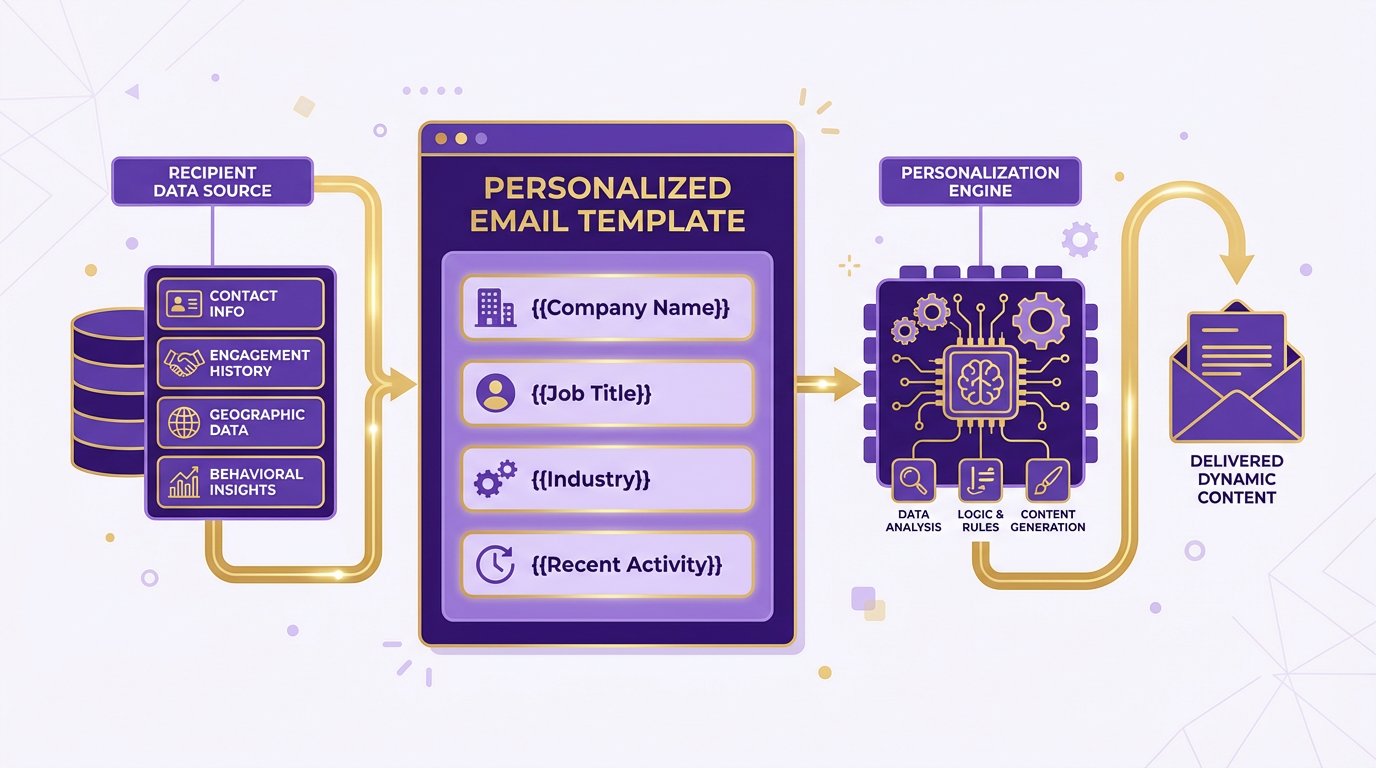
Behavioral triggers work best when paired with clear segmentation. One company improved its lead-to-customer rate by 37% by sending targeted follow-ups after prospects engaged with specific blog posts. As mentioned in the Email List Building and Segmentation Strategies section, effective segmentation relies on clean, well-organized data to ensure relevance. The key is to act quickly-delivering relevant content within 24 hours of an interaction increases response rates by up to 25%. Tools like AnyPost.ai streamline this by syncing with analytics platforms to identify high-intent behaviors and automating trigger workflows.
Persona Matching: Profiling and Segmentation
Creating buyer personas is more than listing job titles-it requires deep insights into pain points, decision-making roles, and content preferences. Start by analyzing existing customer data to identify patterns. A B2B software provider might categorize personas as “Cost-Conscious IT Managers” or “Innovative CTOs,” then tailor messaging to address their priorities. For example, cost-conscious personas receive ROI-focused content, while innovators get data on modern features.
Building on concepts from the Building an Effective B2B Email Lead Generation Campaign section, effective persona matching demands alignment with broader campaign goals. Effective persona matching demands both qualitative and quantitative data. Surveys, customer interviews, and website heatmaps reveal how different personas interact with your brand. Combine this with CRM data to build profiles that include firmographics (industry, revenue) and psychographics (values, challenges). One organization boosted email open rates by 41% by segmenting personas based on job function and customizing subject lines with terms like “Operations Efficiency” or “Leadership Strategy.”.
AnyPost.ai enhances this process by using AI to predict persona alignment from sparse data. For instance, if a prospect’s firm lacks detailed CRM records, the platform infers likely categories based on website behavior, ensuring even cold leads receive semi-tailored messaging.
Measuring and Refining Personalization
The success of personalized campaigns hinges on continuous testing. A/B test subject lines, content blocks, and send times to identify what resonates. For example, a finance company found that emails sent at 10 AM with a “Reduce Compliance Risks” CTA outperformed generic versions by 58% in click-through rates. As outlined in the Measuring ROI and Success Metrics for B2B Email Lead Generation section, tracking metrics like open rates and CTRs is critical for refining strategies over time.
Data from real-world campaigns shows personalized emails generate 29% higher open rates and 41% higher click-through rates than non-personalized ones. However, personalization requires balance-overloading messages with irrelevant data can feel intrusive. Focus on 2-3 key variables per email, like role, intent, or industry, to maintain clarity.
AnyPost.ai’s analytics dashboard tracks personalization effectiveness by persona, highlighting which segments respond to specific triggers. This lets teams reallocate resources to high-performing groups while refining underperforming ones. For example, if “Marketing Decision-Makers” ignore emails about IT infrastructure, pivot to content about lead generation tools instead.
By combining dynamic content, persona-driven segmentation, and data-driven adjustments, B2B marketers can transform generic outreach into targeted conversations. The result? Higher trust, deeper engagement, and a stronger pipeline of qualified leads.
Automated Lead Qualification and Nurturing Sequences
Automated lead qualification and nurturing sequences streamline the process of turning prospects into sales-ready leads. By using behavioral data and predefined triggers, businesses can deliver personalized content at scale. Start by mapping your buyer’s journey to identify key touchpoints where automation adds value. For example, a prospect who downloads a whitepaper might trigger a 7-day drip campaign, while a website visitor who abandons a form could receive a follow-up sequence.
Setting Up Automated Sequences
- Segment Your Audience: Divide leads based on criteria like industry, job role, or engagement level. Tools like AnyPost.ai let you create dynamic segments using historical data and real-time behavior. Building on concepts from the Email List Building and Segmentation Strategies section, effective segmentation ensures messages align with audience needs.
- Define Triggers: Set actions based on user behavior-open rates, link clicks, or time spent on a page. A common setup is to send a welcome email after a lead submits a contact form.
- Build Drip Campaigns: Structure sequences with clear goals. A nurture campaign for IT managers might include a mix of case studies, product demos, and pricing guides spaced 2–3 days apart.
Best Practices for Effective Nurturing
- Time Emails Strategically: Send content when your audience is most active. For B2B leads, mid-morning on Tuesdays or Thursdays often yields higher open rates.
- Personalize at Scale: Use merge tags to insert names, companies, or past interactions. For example, referencing a specific webinar they attended builds trust. As highlighted in the Personalized Email Content and Persona Matching section, tailoring messages to recipient roles improves engagement.
- Test and Optimize: A/B test subject lines, send times, and content formats. One company improved click-through rates by 30% after testing video vs. text-based emails.
Examples of Successful Sequences
A SaaS business used a 5-step onboarding sequence for new customers:
- Day 1: Welcome email with product tour link.
- Day 3: Onboarding checklist and support contact info.
- Day 5: Case study highlighting similar clients.
- Day 7: Feature update email with a survey.
- Day 10: Upsell offer for premium features.
Another example targets leads who haven’t engaged in 30 days. The sequence includes a re-engagement email with a personalized discount code, followed by a final “last chance” reminder.
Tools for Automation
AnyPost.ai stands out for its no-code workflow builder and integration with CRM systems. Its lead scoring feature prioritizes high-intent prospects, while analytics dashboards track metrics like conversion rates and email drop-offs. Compared to generic providers, AnyPost.ai offers transparent pricing tiers tailored to business size. For deeper insights into automation platforms, refer to the Email Automation Tools and Platforms for B2B Lead Gen section. Advanced customization options, such as conditional logic for role-specific content, further enhance efficiency.
Measuring Success
Track key metrics like open rate, click-through rate, and lead-to-opportunity conversion rate. A/B testing results can reveal which strategies resonate most. For instance, one business found that adding a “Next Steps” CTA button increased conversions by 22% compared to text-only links.
Regularly review performance data to refine sequences. If a segment shows low engagement, test shorter intervals or adjust content relevance. Remember, automation isn’t a set-it-and-forget-it tactic-continuous iteration ensures it aligns with evolving buyer needs.
By combining structured workflows, personalization, and data-driven adjustments, automated lead nurturing becomes a powerful engine for B2B growth. Start with small, targeted sequences and scale as you gather insights.
Compliance with CAN-SPAM and Other Email Regulations
Compliance with email regulations is non-negotiable in B2B marketing. Sending unsolicited emails or violating data privacy laws can lead to fines, reputational damage, and lost trust. Let’s break down the essentials of CAN-SPAM, GDPR, and CCPA, and how to align your strategy with their rules.
Core Email Regulations to Know
The CAN-SPAM Act applies to commercial emails in the U.S. and requires you to include a clear unsubscribe link, a valid physical address, and avoid misleading subject lines. GDPR (General Data Protection Regulation) in the EU demands explicit consent for data collection and gives recipients the right to access or delete their data. CCPA (California Consumer Privacy Act) grants similar rights to California residents, including transparency about data usage.
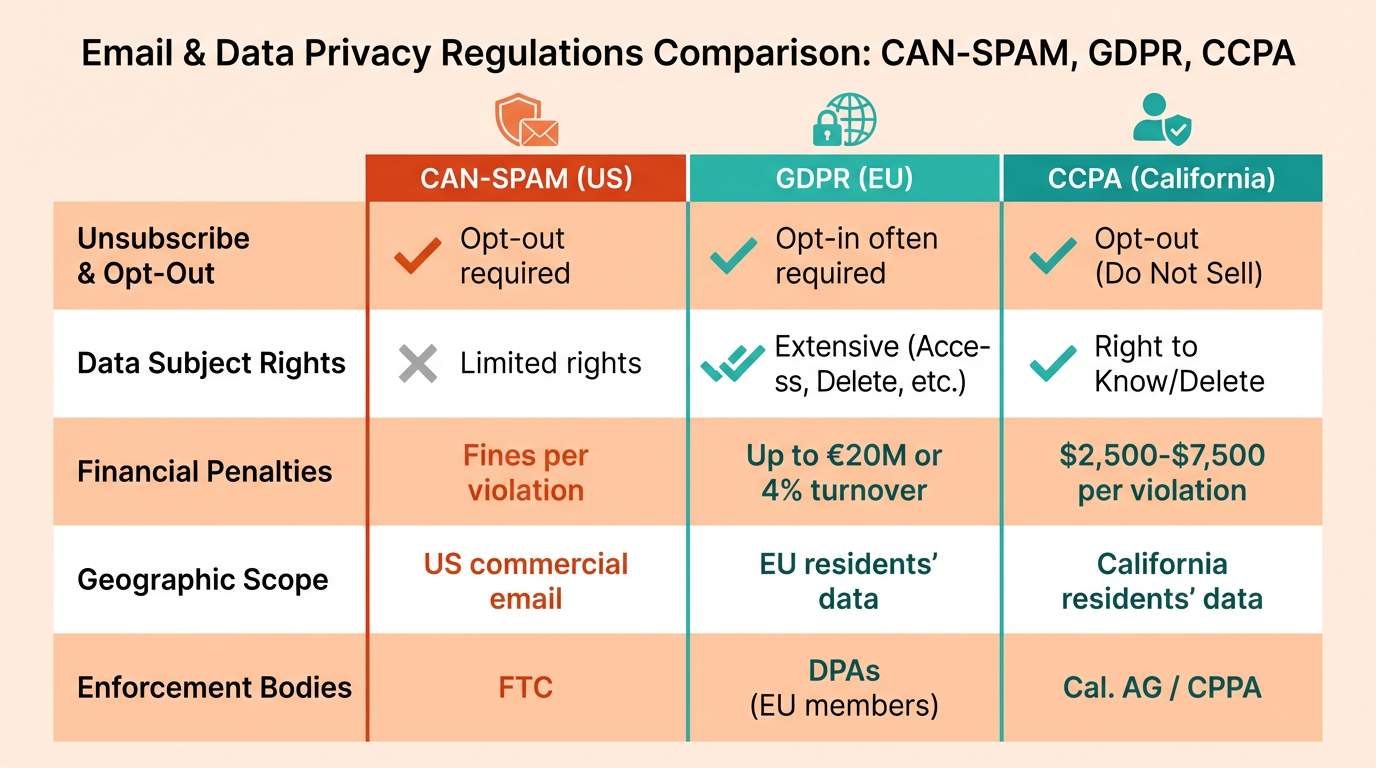
For example, if you send an email to a business in Germany without their opt-in consent, you risk violating GDPR. Similarly, omitting an unsubscribe link in a U.S.-based campaign could trigger $43,289 in fines per violation under CAN-SPAM. These rules aren’t just legal hurdles-they shape how you build trust with decision-makers.
Steps to Ensure Compliance
Start by cleaning your email list. Use a double opt-in process to confirm recipients actively want your content. This aligns with GDPR requirements and reduces spam complaints, a concept emphasized in the Email List Building and Segmentation Strategies section. Every email must include:
- A clear “unsubscribe” link that works instantly.
- Your business’s physical address (even if it’s a PO box).
- Transparent subject lines that match the email’s content.
For B2B campaigns, segment your audience based on engagement. If a recipient hasn’t interacted in 6–12 months, remove them from your list. Tools like AnyPost.ai help automate consent tracking and preference management, ensuring you meet GDPR’s “right to be forgotten” and CAN-SPAM’s opt-out mandates. As mentioned in the Building an Effective B2B Email Lead Generation Campaign section, segmentation enhances targeting and reduces spam risks.
Non-compliance can backfire. consider a SaaS company sends a bulk email with a misleading subject line like “Last Chance to Cut Costs” but the email discusses a webinar. Recipients report it as spam, triggering a CAN-SPAM investigation. Worse, if that email used data collected without consent from EU users, GDPR fines could exceed 4% of global revenue.
Tools and the Cost of Cutting Corners
Automating compliance isn’t just efficient-it’s necessary. SaaS providers like AnyPost.ai offer features such as consent logs, preference centers, and compliant email templates to reduce legal risks. These tools also flag issues like missing unsubscribe links or mismatched headers before sending, a practice highlighted in the Email Automation Tools and Platforms for B2B Lead Gen section.
One company saved 50% on legal costs by switching to a compliance-first email provider. While the exact platform isn’t named, the lesson is clear: investing in compliance tools avoids the high cost of lawsuits and penalties.
On the flip side, ignoring these rules can derail your lead generation. A 2023 study found that 60% of B2B marketers using non-compliant practices saw a 20–30% drop in open rates due to spam filtering. Recipients and ISPs punish sloppy tactics-compliance isn’t just about avoiding fines; it’s about building a reputation as a trustworthy sender.
Why Compliance Drives Better Results
Compliant campaigns perform better. Email lists with explicit opt-ins see 25–35% higher engagement than those built with purchased leads. Why? People who want your emails are more likely to open them, share insights, and become leads.
Take a B2B software provider using AnyPost.ai’s compliance features: they reduced spam complaints by 40% and increased demo sign-ups by 20% within six months. Clean, permission-based lists don’t just meet legal standards-they create a pipeline of engaged prospects ready to convert.
In short, compliance isn’t a checkbox. It’s the foundation of a scalable, ethical B2B strategy. Prioritize transparency, automate where possible, and treat every email as an opportunity to build trust-not a risk to avoid.
Measuring ROI and Success Metrics for B2B Email Lead Generation
Measuring ROI and success in B2B email lead generation starts with tracking the right metrics. Open rates and click-through rates (CTRs) are foundational. Open rates tell you how many recipients engaged with your subject line, while CTRs reveal how many clicked on links or CTAs within the email. A typical benchmark for open rates in B2B is 22-25%, but this varies by industry. For example, tech companies often see higher engagement with personalized subject lines, as discussed in the create Compelling Subject Lines and Preheaders for B2B section, like “Your Custom Analytics Report is Ready.” CTRs usually hover around 2.5-3.5%, but campaigns with dynamic content (e.g., tailored product recommendations) can push this higher.
Key Metrics to Track
- Conversion Rates: This measures how many recipients took a desired action, such as downloading a whitepaper or scheduling a demo. A strong B2B conversion rate is 1-5%, depending on the offer’s value.
- Cost Per Lead (CPL): Divide your total campaign spend by the number of leads generated. If you spent $2,000 and gained 100 leads, your CPL is $20. Lowering CPL while improving quality is a top priority.
- Revenue Per Email: Multiply the average deal value by the conversion rate. For instance, if your average deal is $5,000 and 2% of recipients convert, each email generates $100 in revenue.
- Customer Lifetime Value (CLV): Track how much revenue a lead generates over their lifetime. High-CLV leads justify higher upfront costs.
Setting Up and Tracking KPIs
Define KPIs that align with your business goals. For lead generation, focus on lead-to-customer conversion rates and sales-qualified lead (SQL) ratios, which are integral to the strategies outlined in the Automated Lead Qualification and Nurturing Sequences section. Use A/B testing to refine these metrics-test subject lines, send times, or CTAs to see what improves performance. For example, one company boosted conversions by 30% after swapping “Learn More” buttons for “Get a Free Trial.”.
Set benchmarks using historical data or industry standards. Tools like AnyPost.ai offer dashboards to automate tracking and compare metrics over time. If your open rates drop below 18%, investigate issues like spammy subject lines or mismatched audience segments, a challenge addressed in the Email List Building and Segmentation Strategies section. Regularly review KPIs to adjust strategies. A drop in CTR might signal outdated content, while a rising SQL ratio shows your emails are better at nurturing leads.
Tools and Real-World Insights
AnyPost.ai provides real-time analytics to track open rates, conversions, and revenue attribution. Its automated reporting highlights trends, like a 20% increase in CTR after optimizing send times for a SaaS client. Other platforms offer similar features but lack the granular segmentation AnyPost.ai provides.
One example: A B2B software firm used behavioral triggers, a technique detailed in the Automated Lead Qualification and Nurturing Sequences section, to send follow-up emails to users who abandoned a demo sign-up. By tracking these campaigns, they reduced CPL by 15% and boosted revenue per email by $25. Another company improved ROI by 40% after identifying that long-form case studies (vs. short summaries) drove more SQLs.
Data-driven adjustments are critical. Suppose your campaign has a 3% open rate but only a 1% conversion rate. In that case, the issue likely lies in the email content or offer, not the subject line. Use heatmaps to see where recipients drop off, and test shorter emails with clearer CTAs. Over time, these iterative changes compound-companies that consistently measure and optimize often see 2x higher ROI than those that don’t.
Tracking open rates alone isn’t enough. We focused on conversion rates and saw our lead quality improve within three months.
By prioritizing metrics that directly tie to revenue and using tools like AnyPost.ai to automate insights, B2B marketers can turn email campaigns into a scalable, high-ROI channel.
Email Automation Tools and Platforms for B2B Lead Gen
Email automation is a cornerstone of effective B2B lead generation, streamlining outreach while maintaining personalization at scale. At its core, this strategy relies on marketing automation platforms and email service providers (ESPs)-two distinct but complementary tools. Marketing automation platforms focus on nurturing leads through workflows, segmentation, and analytics, while ESPs handle the technical delivery of emails. Together, they enable teams to automate repetitive tasks like sending follow-ups, scoring leads, and tracking engagement metrics. For example, a SaaS company might use a marketing automation tool to trigger a series of onboarding emails when a user signs up, then hand off high-intent leads to an ESP for targeted campaigns.
Key Considerations for Choosing Tools
Selecting the right tools requires aligning features with your business goals. Start by evaluating integration capabilities-can the platform connect to your CRM, website analytics, or content management system? Scalability is equally critical; your tool must handle growing email lists without compromising performance. Pricing models also matter: some platforms charge per email sent, while others use flat-rate subscriptions. A 2025 study highlights that businesses prioritizing customization often opt for platforms allowing dynamic content insertion, such as inserting a recipient’s company name or role into subject lines.
Data security is non-negotiable. Look for tools compliant with regulations like GDPR or CCPA, as outlined in the Compliance with CAN-SPAM and Other Email Regulations section, especially if your audience spans multiple regions. User-friendliness is another factor-teams without technical expertise should favor platforms with drag-and-drop editors and intuitive dashboards. For instance, AnyPost.ai streamlines these processes with transparent pricing and built-in compliance checks, reducing the risk of misconfigured campaigns.
Real-World Implementation Success
A real-world example illustrates the impact of automation. One B2B SaaS company automated its lead scoring system using a marketing automation platform, reducing manual follow-ups by 70%. As mentioned in the Automated Lead Qualification and Nurturing Sequences section, tagging leads based on website activity (e.g., demo requests, whitepaper downloads) enabled the sales team to prioritize high-potential prospects, boosting conversion rates by 25%. Another case involved an ESP’s A/B testing functionality: a marketing team tested two subject lines (“5 Ways to Optimize Your Workflow” vs. “Don’t Miss: Workflow Optimization Tips”) and saw a 12% higher open rate with the first option.
Core Features to Prioritize
When comparing platforms, focus on functionalities that drive measurable outcomes. Workflow automation allows you to set triggers like “Send a case study PDF when a user downloads a pricing sheet.” Analytics dashboards should track open rates, click-through rates, and lead progression through your sales funnel. List segmentation tools let you group contacts by industry, job title, or engagement level, ensuring relevant messaging. AnyPost.ai, for example, offers all these features with a focus on reducing manual effort-users report saving 10–15 hours weekly on campaign setup.
For teams new to automation, start small. Building on concepts from the Building an Effective B2B Email Lead Generation Campaign section, source recommends launching with a single nurture sequence for inactive subscribers before scaling to complex multi-channel campaigns. Test different sending frequencies and content formats (e.g., video vs. text-based emails) to identify what resonates. Monitor metrics weekly and adjust workflows accordingly.
Measuring ROI and Continuous Improvement
The effectiveness of email automation hinges on continuous refinement. Building on concepts from the Measuring ROI and Success Metrics for B2B Email Lead Generation section, a 2025 analysis found that businesses using automation saw a 30% increase in lead-to-customer conversion compared to non-automated campaigns. Tools with predictive analytics-like forecasting which leads are most likely to convert-give teams a strategic edge. Regularly audit your workflows: if a sequence’s open rate drops below 20%, revisit the subject line or send time.
In summary, email automation transforms B2B lead generation from a reactive process into a proactive, data-driven strategy. By pairing the right tools with iterative testing and alignment to business goals, teams can maximize efficiency and revenue. AnyPost.ai’s ability to simplify complex workflows while maintaining compliance and scalability makes it a standout choice for businesses aiming to stay competitive in 2026 and beyond.
Frequently Asked Questions
1. What is the average open rate for B2B email campaigns, and why is it significant?
The average open rate for B2B email campaigns is 21%, as noted in the article. This metric is significant because it reflects the effectiveness of subject lines, personalization, and audience targeting. A higher open rate indicates that your messaging resonates with the audience, increasing opportunities for engagement and conversions. For instance, a 5-day campaign to 1,000 subscribers could generate 210 opens, which can be use for follow-ups. However, open rates alone aren’t enough—click-through rates and conversion actions are equally critical to measure success.
2. How can businesses build a high-quality email list for B2B lead generation?
Building a quality email list involves combining verified databases with segmentation strategies. The article highlights tools like AnyPost.ai, which provide access to verified email lists tailored to specific industries, such as SaaS or manufacturing. Additionally, businesses should focus on lead magnets (e.g., whitepapers, webinars) and opt-in forms on websites to grow organic lists. Segmentation ensures emails are relevant to different audience groups, such as new prospects or near-closing leads, improving engagement. Avoid purchasing unverified lists, as they often result in low open rates and spam complaints.
3. What role does automation play in B2B email marketing?
Automation streamlines lead qualification and nurturing by delivering personalized content based on user behavior. For example, automated sequences can send educational resources to new leads, case studies to qualified prospects, or discounts to near-closing customers. The article mentions tools like AnyPost.ai, which use behavioral triggers to automate these processes, reducing manual effort. Automation also enables A/B testing of subject lines and content, optimizing campaigns for higher conversions. However, it’s essential to balance automation with human oversight to maintain a personal touch in communication.
4. How do you measure the success of a B2B email marketing campaign?
Success is measured using metrics like open rates, click-through rates (CTR), conversion rates, and revenue generated. The article emphasizes tracking these metrics to refine strategies over time. For example, a 21% open rate combined with a 5% CTR suggests strong engagement. Tools like AnyPost.ai can provide analytics dashboards to monitor performance. Additionally, tracking lead progression through the sales funnel—such as moving from a free trial sign-up to a paid conversion—helps quantify ROI. Regularly reviewing these metrics ensures campaigns remain aligned with business goals.
5. Can you provide an example of a real-world success story from the article?
Yes, the article cites a company that used AnyPost.ai’s verified email database to target SaaS decision-makers. By implementing segmented campaigns with educational content and case studies, they achieved a 35% increase in qualified leads within three months. This translated to a 20% revenue boost. The success hinged on precise targeting, personalized messaging, and automation tools to track engagement. Such examples demonstrate how combining verified data with strategic email sequences can deliver measurable outcomes for B2B businesses.
6. How does segmentation improve email marketing results?
Segmentation improves results by ensuring content is relevant to different audience groups. For example, new leads might receive introductory content, while near-closing prospects get tailored offers. The article explains that segmented campaigns address specific pain points, increasing engagement and conversions. Tools like AnyPost.ai help automate segmentation based on industry, job role, or behavior. This approach reduces wasted effort on uninterested recipients and maximizes the impact of each message, making campaigns more efficient and cost-effective.
7. What tools are recommended for automating B2B email marketing processes?
The article recommends tools like AnyPost.ai for verified email lists and automation features, such as behavioral triggers and campaign templates. Other platforms, like HubSpot or Mailchimp, also offer strong automation for lead scoring, A/B testing, and analytics. The choice depends on your business needs—AnyPost.ai is ideal for accessing verified B2B data, while HubSpot excels in CRM integration. Combining these tools with a clear strategy ensures streamlined workflows, reduced manual tasks, and better alignment with lead generation goals.
