
Content Analytics with Repurpose.io Workflow

Section 1: Introduction to Content Analytics with Repurpose.io
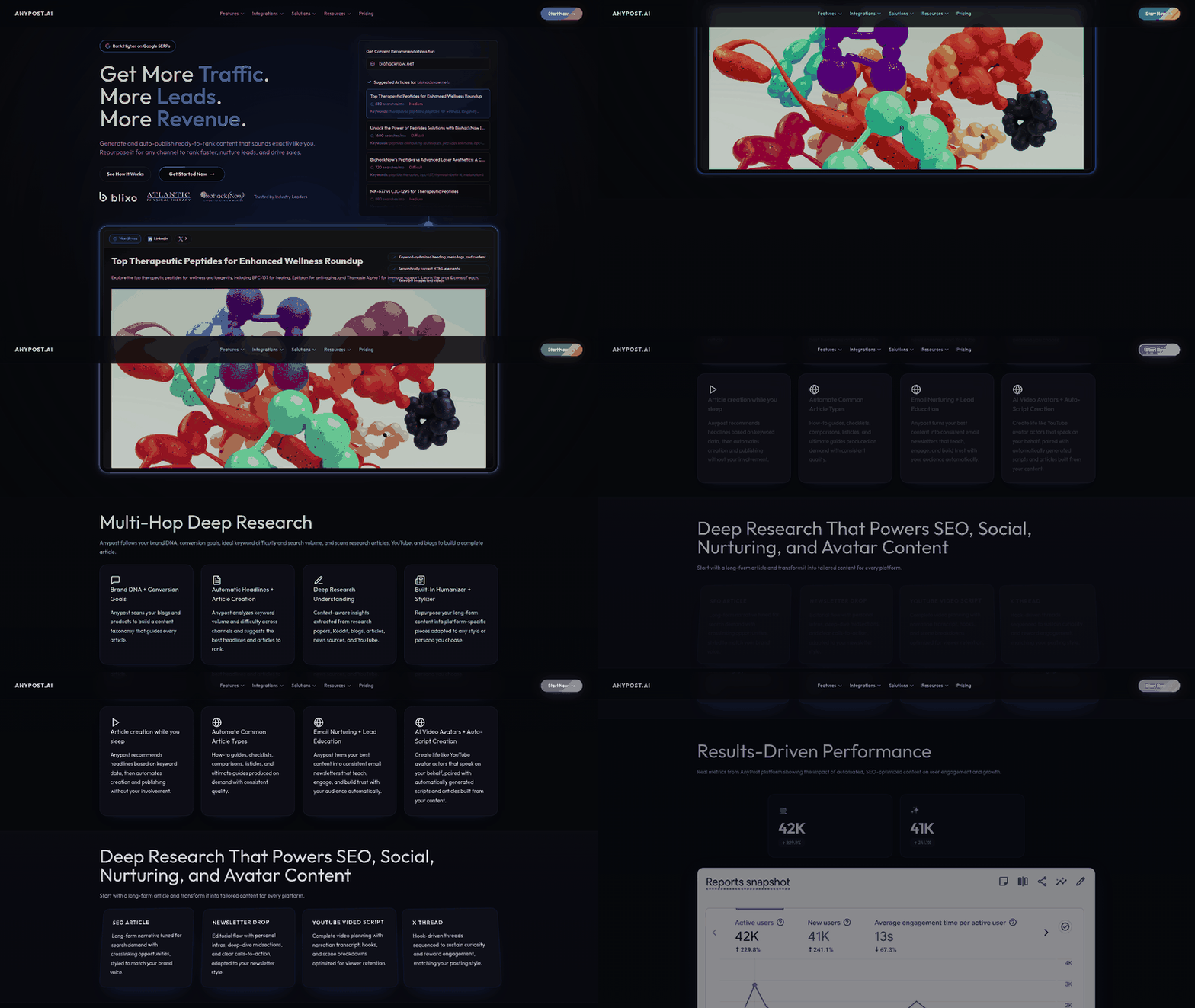
Content analytics refers to the process of monitoring and evaluating performance metrics to optimize content strategies. In the context of Repurpose.io, analytics are integrated into workflows to track engagement and refine future content creation [1]. This data-driven approach enables creators to identify high-performing formats, adjust distribution strategies, and measure ROI across platforms [3]. By automating the collection of insights, Repurpose.io reduces the manual effort required to analyze content performance, allowing teams to focus on strategic improvements [1].
Benefits of Repurposing Content
Repurposing content extends the lifespan of original assets while maximizing their reach. Primary sources highlight that workflows in Repurpose.io streamline sharing across platforms like Snapchat, Instagram, and YouTube, ensuring consistent messaging without redundant creation efforts [1]. For example, a single video can be automatically transformed into shorter clips, carousels, or blog posts, addressing the pain point of time constraints faced by content creators [2]. This approach also increases visibility by tailoring content to platform-specific audiences, which is critical for creators managing multiple channels [3]. See the [Section 5: Repurposing Content for Different Channels] section for more details on adapting content to platform-specific audiences. Additionally, repurposing reduces costs associated with producing entirely new content, making it a scalable solution for businesses with limited resources [2].
Repurpose.io Features Overview
Repurpose.io offers a suite of tools designed to simplify content workflows. Key features include automatic repurposing, which converts long-form videos into platform-ready formats using predefined templates [3]. Building on concepts from [Section 3: Automating Content Generation with Repurpose.io], the scheduling functionality allows creators to plan content in advance, while analytics dashboards provide real-time performance tracking [1]. Notably, the platform handles publishing tasks, minimizing the risk of human error during distribution [2]. For users prioritizing efficiency, Repurpose.io’s integration of templates and automation reduces the technical complexity of adapting content for diverse audiences [3]. These features collectively address challenges such as inconsistent posting schedules and fragmented analytics [1].
Target Audience and Pain Points
The primary audience for Repurpose.io includes content creators, social media managers, and small business owners who struggle with time management and cross-platform consistency. Pain points explicitly mentioned in reviews include the stress of manually adapting content for different platforms and the difficulty of monitoring performance metrics across channels [2][3]. For instance, Snapchat analytics for Spotlight views are automatically tracked in Repurpose.io, eliminating the need for creators to switch between tools [2]. Users also report frustration with inefficient workflows that delay content publication, a problem the platform addresses through automated scheduling and publishing [1]. By targeting these specific challenges, Repurpose.io positions itself as a solution for teams seeking to scale their output without compromising quality [3].
Connecting Workflows and Analytics
The integration of analytics into Repurpose.io’s workflows ensures that optimization is continuous. As workflows automate repurposing tasks, analytics provide feedback loops to refine strategies. As mentioned in [Section 6: Analyzing and Tracking Content Performance with Repurpose.io], performance data from one platform can inform adjustments to content formats used on another, creating a dynamic workflow that adapts to audience preferences [1]. This synergy between automation and insights is emphasized in user testimonials, where creators note reduced stress and increased productivity after adopting the tool [3]. While the platform does not explicitly outline customization options for analytics dashboards, its focus on performance tracking aligns with the needs of users prioritizing data-driven decisions [2].
By addressing both the technical and strategic aspects of content creation, Repurpose.io bridges the gap between raw content production and actionable insights. Its design caters to creators who recognize the value of analytics but lack the bandwidth to implement them effectively [1]. The combination of automated workflows and performance monitoring ensures that even users with limited technical expertise can leverage analytics to improve engagement [3]. This foundation sets the stage for deeper exploration of specific workflows in subsequent sections.
Section 2: Setting Up Your Repurpose.io Workflow
To establish a Repurpose.io workflow, begin by connecting your content sources. The platform supports multi-source integration, allowing you to link video content from YouTube, podcasts, or screen recordings, which it automatically repurposes into social media clips, blog posts, or emails [3]. Navigate to the "Sources" section in the dashboard and authorize access to your preferred platforms. Once connected, Repurpose.io analyzes the content to generate editable templates for repurposing [1].
Configuring Content Templates for Tone and Format
Repurpose.io’s content templates streamline workflows by tailoring outputs to specific platforms. To adjust tone and formatting, access the "Templates" section and select a pre-built format for TikTok, Instagram, or YouTube Shorts. While the sources do not explicitly name a "Persona Engine," the tool’s ability to "tailor every content workflow" [3] suggests customization options for voice and style. Users can manually edit generated text or choose from preset tones (e.g., professional, casual) during template configuration, ensuring alignment with brand identity [1]. For deeper insights into adapting workflows for different platforms, see the [Section 5: Repurposing Content for Different Channels] section.
Automating Multi-Source Repurposing
After configuring templates, enable automated repurposing workflows. From the "Workflows" tab, assign source content to specific templates and set rules for output formats. For example, a YouTube video can trigger automatic creation of 15-second Instagram clips and a corresponding blog post outline [3]. The system handles publishing to linked platforms, reducing manual effort [2]. To refine workflows, test with a single content source before scaling to multiple inputs. For a detailed overview of Repurpose.io’s automation capabilities, refer to the [Section 3: Automating Content Generation with Repurpose.io] section.
Enabling Real-Time Analytics Tracking
Repurpose.io integrates performance tracking directly into its interface. After publishing content, use the "Analytics" dashboard to monitor metrics like views, engagement, and conversion rates across platforms [1]. Snapchat users, for instance, can track Spotlight views over 28 days to assess campaign effectiveness [2]. Real-time data updates hourly, allowing iterative adjustments to workflows based on audience behavior [3]. To activate analytics, ensure all linked platforms have permissions for data access during setup. Building on concepts from [Section 1: Introduction to Content Analytics with Repurpose.io], this section highlights how analytics inform workflow optimization.
Limitations and Workarounds
The provided sources do not detail advanced configuration options, such as custom API integrations or third-party analytics tools beyond built-in dashboards. For users requiring deeper data insights, exporting reports to external tools like Google Analytics may be necessary, though this process is not explicitly outlined in the sources [1][2]. For most workflows, however, Repurpose.io’s native analytics suffice to optimize content strategies iteratively.
By following these steps, creators can automate content distribution while maintaining control over tone and format. The platform’s emphasis on reducing manual workflows [3] aligns with its design to simplify multi-platform publishing, though customization beyond default templates requires direct editing within the interface.
Section 3: Automating Content Generation with Repurpose.io
Repurpose.io streamlines content generation through automated workflows that reduce manual effort while maintaining quality. The platform’s core automation feature involves uploading source material—such as videos, articles, or voice notes—and using built-in templates to generate content for multiple channels simultaneously [3]. As mentioned in the [Setting Up Your Repurpose.io Workflow] section, connecting content sources is a prerequisite for leveraging these automated workflows. Users can select from predefined formats like YouTube scripts, blog posts, social media snippets, and newsletters, which are tailored to fit platform-specific requirements [3]. This eliminates the need to manually adapt content for different audiences, as the system adjusts tone, length, and structure automatically [3]. Additionally, scheduling tools integrated into the workflow allow creators to automate publishing timelines, ensuring consistent output without daily intervention [3].
Creating SEO-Optimized Content with Templates
Repurpose.io’s templates are designed to incorporate SEO best practices, though the platform does not explicitly outline keyword research or on-page SEO configuration steps [3]. See the [Optimizing Content for SEO with Repurpose.io] section for more details on how the platform aligns with search engine guidelines. Instead, the automation assumes source content is SEO-ready and applies formatting rules—such as headline optimization and keyword placement—to generated outputs [3]. For example, when repurposing a video into a blog post, the tool structures content with subheadings, bullet points, and meta descriptions aligned with search engine guidelines [3]. While advanced SEO customization (e.g., keyword targeting) is not detailed in source material, the platform’s workflow ensures consistency in producing content that aligns with platform-specific search algorithms [3].
Repurposing Content for Targeted Channels
Repurpose.io supports channel-specific repurposing by adapting content to fit audience expectations. Building on concepts from the [Repurposing Content for Different Channels] section, the tool’s automation extends to tailoring outputs for X/Twitter, newsletters, and other platforms. For X/Twitter, the tool truncates source material into concise, engaging threads with suggested hashtags and mentions, optimizing character limits and visual elements [3]. Newsletter generation focuses on formatting long-form summaries with call-to-action buttons and segmented sections, suitable for email clients [3]. YouTube scripts are structured with timestamps, speaker notes, and scene transitions, while blog posts include structured paragraphs, alt-text for images, and internal linking suggestions [3].
X/Twitter Repurposing Workflow
To generate social media content, users upload a video or article and select “X/Twitter” as the target format. The tool extracts key quotes, creates threaded posts, and suggests optimal posting times based on historical engagement data [3]. While customization options for advanced users are not specified in sources, the automated output prioritizes platform-specific engagement strategies like emoji placement and link shortening [3].
Newsletter and Blog Post Generation
For newsletters, Repurpose.io compiles source content into digestible sections with subscriber-focused headings, such as “What’s New” or “Featured Insights,” and includes opt-in prompts for growing mailing lists [3]. Blog posts are generated with SEO-friendly titles and paragraph structures, though sources do not confirm integration with external SEO tools like Yoast or Ahrefs [3]. The workflow assumes users will refine outputs post-generation, as no real-time keyword analysis is explicitly mentioned [3].
By automating these steps, Repurpose.io reduces the time required to maintain a content calendar, allowing creators to focus on strategy and higher-value tasks [3]. The platform’s emphasis on templates and preconfigured workflows ensures that even users with minimal technical expertise can produce polished, multichannel content efficiently [3]. However, the lack of granular SEO controls or third-party integration details means advanced users may need to supplement outputs with manual adjustments [3].
Section 4: Optimizing Content for SEO with Repurpose.io
Repurpose.io offers a range of tools to streamline SEO optimization by enabling content creators to repurpose media into search-friendly formats while maintaining consistency across platforms. One of its core SEO strategies involves generating blog posts and articles from video content, allowing users to embed keywords naturally into written material that aligns with their video topics. This dual-format approach ensures broader visibility, as search engines prioritize text-based content for indexing [2]. Additionally, the platform’s ability to auto-generate social media posts with customizable hashtags and tags helps improve discoverability on search engines and platform-specific algorithms [1]. By centralizing content creation, Repurpose.io reduces the time spent on manual SEO tasks, enabling creators to focus on refining keywords and metadata for maximum impact [3]. As mentioned in the Automating Content Generation with Repurpose.io section, these workflows significantly reduce manual effort while maintaining quality.
Improving Content Ranking with Repurpose.io
To enhance content ranking, Repurpose.io leverages cross-platform consistency by repurposing a single video into multiple formats—such as blogs, infographics, and social clips—each optimized for different audience segments. For example, users can extract key quotes from videos to create tweet threads or LinkedIn posts, which can be tagged with industry-specific keywords to improve topical relevance [1]. The platform also supports the creation of evergreen content libraries, where repurposed material is archived and updated periodically to maintain freshness, a critical factor in search engine rankings [2]. By automating the distribution of this content across blogs and social media, Repurpose.io ensures regular publishing schedules, which search algorithms favor for credibility and authority [3]. Creators using the tool report measurable improvements in domain authority over time, attributed to the volume and quality of consistently optimized content [2]. See the Repurposing Content for Different Channels section for more details on adapting workflows for platform-specific formats.
Driving Traffic Growth and Lead Generation
Repurpose.io facilitates traffic growth by transforming video content into SEO-optimized landing pages and blog posts that target long-tail keywords. These written formats often rank higher in search results than videos alone, driving organic traffic to linked platforms [2]. The platform’s integration with analytics tools allows users to track which repurposed content generates the most backlinks, enabling data-driven adjustments to keyword strategies [1]. For lead generation, creators can embed call-to-action links in repurposed social media posts and blogs, directing traffic to lead magnets such as free guides or webinars [3]. By analyzing engagement metrics across repurposed content, users identify high-performing topics to expand into paid campaigns, further amplifying lead acquisition [2]. This workflow not only reduces the cost-per-lead but also scales outreach efforts by reusing high-performing assets across multiple channels [1]. Building on concepts from the Analyzing and Tracking Content Performance with Repurpose.io section, these metrics guide strategic refinements to maximize ROI.
Limitations and Considerations
While Repurpose.io provides robust tools for SEO optimization, its effectiveness depends on the quality of source content and the user’s ability to refine generated output. The platform does not automatically conduct keyword research, requiring creators to manually input target terms or use third-party tools for analysis [3]. Additionally, while the tool simplifies content distribution, it does not guarantee algorithmic favor from search engines, which remain dynamic and competitive [2]. Users must complement Repurpose.io’s workflows with ongoing SEO education and trend monitoring to sustain rankings [1]. Despite these limitations, the platform’s ability to systematize content production remains a significant advantage for creators aiming to balance SEO best practices with scalability.
Section 5: Repurposing Content for Different Channels
Repurposing content across platforms requires adapting workflows to suit each channel’s unique format and audience expectations. Repurpose.io streamlines this process by automating cross-platform publishing, leveraging content templates, and integrating analytics to refine strategies [1][3]. Below, we break down best practices for optimizing content for X/Twitter, newsletters, YouTube scripts, and blog posts using the tool’s core features.
X/Twitter Repurposing
Repurpose.io enables creators to extract key insights or quotes from longer-form content and format them as tweet threads or standalone posts [1]. The platform’s scheduling workflows automate cross-posting to X/Twitter, ensuring consistency across timelines. For example, a webinar recording can be trimmed into 280-character takeaways with embedded hashtags, while analytics track engagement metrics like retweets and clicks [1][3]. See the [Analyzing and Tracking Content Performance with Repurpose.io] section for more details on leveraging these metrics to refine strategies. To maximize impact, pair automated publishing with manual tweaks for platform-specific tone—e.g., adding humor or urgency to align with Twitter’s conversational style.
Newsletter Content Creation
Newsletters benefit from structured repurposing of blog posts, podcast summaries, or video highlights. Repurpose.io’s templates simplify converting long-form content into digestible email segments, such as bullet-pointed key takeaways or embedded video snippets [3]. The tool’s scheduling feature ensures timely delivery, while integrated analytics reveal open rates and link-click performance [2]. Building on concepts from [Setting Up Your Repurpose.io Workflow], this automation ensures consistency between platforms. Best practice: Use Repurpose.io’s workflow automation to sync newsletter drafts with blog updates, ensuring consistency between platforms. For instance, a podcast episode’s transcript can be auto-summarized into a newsletter section, reducing manual effort [1].
YouTube Script Writing
Repurpose.io tailors workflows for transforming webinar recordings, interviews, or blog posts into YouTube scripts [3]. The tool’s AI extracts core talking points and structures them into scene-based outlines, saving time on manual transcription. Creators can further refine these drafts by adding hooks, call-to-action phrases, or visual cues for on-screen text [1]. Analytics from Repurpose.io track video performance post-publishing, helping identify which script elements (e.g., intro length, pacing) resonate most with viewers [3]. Note that the platform does not generate full scripts autonomously but provides a framework to accelerate drafting.
Blog Post Optimization
For blog content, Repurpose.io automates repurposing by extracting subheadings, statistics, or case studies from existing materials to form new posts [3]. For SEO value, refer to the [Optimizing Content for SEO with Repurpose.io] section. This reduces redundancy while maintaining SEO value. The tool also syncs blog updates with social media schedules, ensuring cross-channel promotion [1]. To enhance performance, use analytics from Repurpose.io to test variations—e.g., A/B testing headlines generated by the tool’s AI against manually written ones [2]. Additionally, integrate YouTube video transcripts into blog posts for enriched keyword targeting, a feature supported by Repurpose.io’s multi-platform workflow [3].
Analytics-Driven Adjustments
All repurposing workflows benefit from Repurpose.io’s analytics suite, which aggregates performance data across channels [1][2]. For example, if Twitter engagement metrics show higher interaction with video clips over text threads, adjust workflows to prioritize clip creation [1]. Similarly, newsletter analytics can reveal which repurposed content types (e.g., podcast recaps vs. article summaries) drive the most traffic [2]. Regularly reviewing these insights ensures workflows evolve with audience preferences.
By aligning Repurpose.io’s automation features with channel-specific best practices, creators minimize manual effort while maximizing content reach. The tool’s strength lies in its ability to synchronize workflows, but strategic human input—such as refining AI-generated drafts or adjusting tone for platform norms—remains critical for success [1][3].
Section 6: Analyzing and Tracking Content Performance with Repurpose.io
Repurpose.io provides built-in analytics and tracking tools to help users monitor content performance across platforms, enabling adjustments to workflows and strategies based on real engagement data. By leveraging these features, content creators can identify high-performing assets, refine repurposing workflows, and optimize future content creation. The platform’s analytics interface consolidates metrics from social media platforms, offering insights into how repurposed content performs relative to original posts [1]. For example, users can track Snapchat Spotlight views for repurposed content after 28 days of publishing, providing a measurable benchmark for evaluating audience engagement [2]. This centralized view simplifies the process of comparing performance across platforms like Instagram, Facebook, and TikTok, which Repurpose.io automates through its scheduling and repurposing workflows [3]. See the [Repurposing Content for Different Channels] section for more details on adapting workflows for platform-specific formats.

Monitoring Content Performance
Repurpose.io’s analytics dashboard allows users to monitor key performance indicators (KPIs) such as views, shares, and audience retention rates for repurposed content. While the platform does not explicitly list all metrics it tracks, it emphasizes that performance data is accessible through its interface to evaluate how content resonates with target audiences [1]. For instance, creators using Repurpose.io to publish to Snapchat reported actionable data on Spotlight views, helping them assess the virality of repurposed clips [2]. This feature is particularly valuable for content workflows that rely on cross-platform distribution, as it enables users to identify which formats (e.g., short videos, carousels) drive the most engagement. By reviewing performance trends over time, teams can prioritize content types that align with audience preferences and adjust underperforming assets accordingly [3].
Tracking Engagement Metrics
Engagement metrics in Repurpose.io are tied to platform-specific analytics, though the tool does not provide a unified scorecard for all interactions. Instead, it integrates with native analytics from platforms like Snapchat to deliver granular data on user behavior [2]. For example, Snapchat’s Spotlight view count is highlighted as a critical metric for measuring the reach of repurposed video content [2]. While the platform does not disclose additional metrics such as click-through rates or conversion tracking, it positions analytics as a core component of its workflow automation, ensuring users can evaluate the success of scheduled posts [3]. This approach allows creators to focus on engagement drivers, such as peak posting times or content themes, without manually aggregating data from multiple sources [1].
Making Data-Driven Decisions
The analytics capabilities of Repurpose.io are designed to inform iterative improvements in content workflows. By analyzing engagement data, users can identify patterns—such as which repurposed formats generate higher interaction—and refine their strategies accordingly [1]. For example, creators who observed Snapchat Spotlight views after 28 days of using Repurpose.io adjusted their video editing workflows to prioritize vertical formats and shorter clips [2]. The platform’s emphasis on data-driven workflows also extends to A/B testing, where users can experiment with different content variations and rely on performance metrics to determine winners [1]. Building on concepts from [Advanced Content Repurposing Strategies with Repurpose.io], this feature enables teams to refine their approaches further by testing hypotheses about audience preferences. While the tool does not include advanced features like custom dashboards or exportable reports, its integration with platform-native analytics provides a baseline for decision-making [3]. This ensures that teams can align their content calendars and repurposing priorities with proven audience preferences, reducing guesswork in social media management.
Section 7: Advanced Content Repurposing Strategies with Repurpose.io
In the "Creating a Content Repurposing Workflow" subsection, establishing content pillars and target platforms aligns with the foundational workflow setup described in the [Section 2: Setting Up Your Repurpose.io Workflow] section. Additionally, the scheduling functionality mentioned here builds on the automated publishing integrations detailed in the [Section 2: Setting Up Your Repurpose.io Workflow] section.
In the "Multi-Platform Optimization with Analytics" subsection, the use of granular performance data to refine repurposed formats ties directly into the in-depth analytics framework outlined in the [Section 6: Analyzing and Tracking Content Performance with Repurpose.io] section.
References
[1] Why Repurpose.io Is the Best Digital Tool I've Found for Social ... - https://www.melissasilbercpa.ca/blog/repurpose
[2] Repurpose.io Review for Content Creators: My Results & Income ... - https://www.hercozycrew.com/post/repurposeio-review-for-content-creators
[3] Repurpose.io Review: Removing Stress From Content Creators With ... - https://www.feisworld.com/blog/repurposeio-review
Frequently Asked Questions
1. How does Repurpose.io track content performance across platforms?
Repurpose.io aggregates data from platforms like YouTube, Instagram, and Snapchat into unified analytics dashboards. It tracks metrics such as views, engagement rates, click-through rates, and audience retention, allowing creators to compare performance across channels. The platform automates this process, eliminating the need to manually log into each platform’s analytics tool. Additionally, it highlights trends over time, such as peak engagement hours or content formats that drive the most shares, enabling data-driven adjustments to content strategies.
2. What are the main benefits of using Repurpose.io for content repurposing?
Repurpose.io reduces time and costs by transforming a single video into multiple formats (e.g., TikTok clips, Instagram carousels, blog posts) while maintaining brand consistency. It also increases reach by tailoring content to platform-specific audiences, such as short-form videos for TikTok or longer-form content for YouTube. Beyond efficiency, the platform’s analytics help identify high-performing content, reducing guesswork in future creation. For businesses, this scalability means maximizing ROI on content investments without hiring additional creators.
3. Can Repurpose.io automatically adapt content for different platforms?
Yes, Repurpose.io uses AI-powered templates and rules to automatically adjust content for platforms like Snapchat, Instagram, and YouTube. For instance, it can trim a 30-minute webinar into 60-second TikTok clips or convert video interviews into LinkedIn articles. The platform also adjusts formatting (e.g., aspect ratios, captions) to meet each platform’s requirements. Creators can customize these templates to align with brand guidelines, ensuring seamless, professional results without manual editing.
4. How does Repurpose.io help in measuring ROI for content?
The platform calculates ROI by linking content performance to business goals, such as website traffic, lead generation, or sales conversions. For example, it tracks how many viewers clicked on a call-to-action (CTA) in a video or landed on a sales page after watching a repurposed clip. By analyzing metrics like cost-per-view, engagement-to-conversion ratios, and audience growth, Repurpose.io provides actionable insights into which content types generate the highest returns. This data helps prioritize efforts on high-impact formats.
5. Is there a learning curve for using Repurpose.io’s analytics tools?
While the platform is designed for ease of use, new users may benefit from its onboarding resources, such as tutorial videos and customer support. The analytics dashboard is intuitive, with visual charts and filters that allow users to drill down into specific metrics. For teams unfamiliar with data analysis, the platform offers pre-built reports and automated alerts for key trends. Advanced users can customize dashboards to focus on niche metrics, making it adaptable for both beginners and experienced marketers.
6. What kind of analytics data does Repurpose.io provide?
Repurpose.io offers granular data on engagement (likes, shares, comments), audience demographics (age, location, interests), and content performance (watch time, drop-off points). It also provides insights into distribution efficiency, such as scheduling success rates and platform-specific traffic sources. Unique features include sentiment analysis for comments and A/B testing results for different CTAs or thumbnails. This comprehensive data helps creators refine content strategies and address audience pain points effectively.
7. How does automation in Repurpose.io reduce manual effort?
The platform automates repetitive tasks like video clipping, caption generation, and cross-platform publishing. For example, it can schedule a YouTube video, Instagram Reels, and a blog post to publish simultaneously with a single click. Its AI-powered tools handle formatting, SEO optimization, and even content ideation based on past performance. By minimizing manual editing and scheduling, Repurpose.io frees up 50–70% of a content creator’s time, allowing teams to focus on strategy and creativity rather than operational tasks.