
Content Marketing Revolution: AI SEO Automation Unleashed

Related Video
Watch: I Built an Entire SEO Automation to Rank #1 on Google for $1 (AI Agent + N8N) by Jake AI Marketing
Section 1: Introduction to Content Marketing Revolution
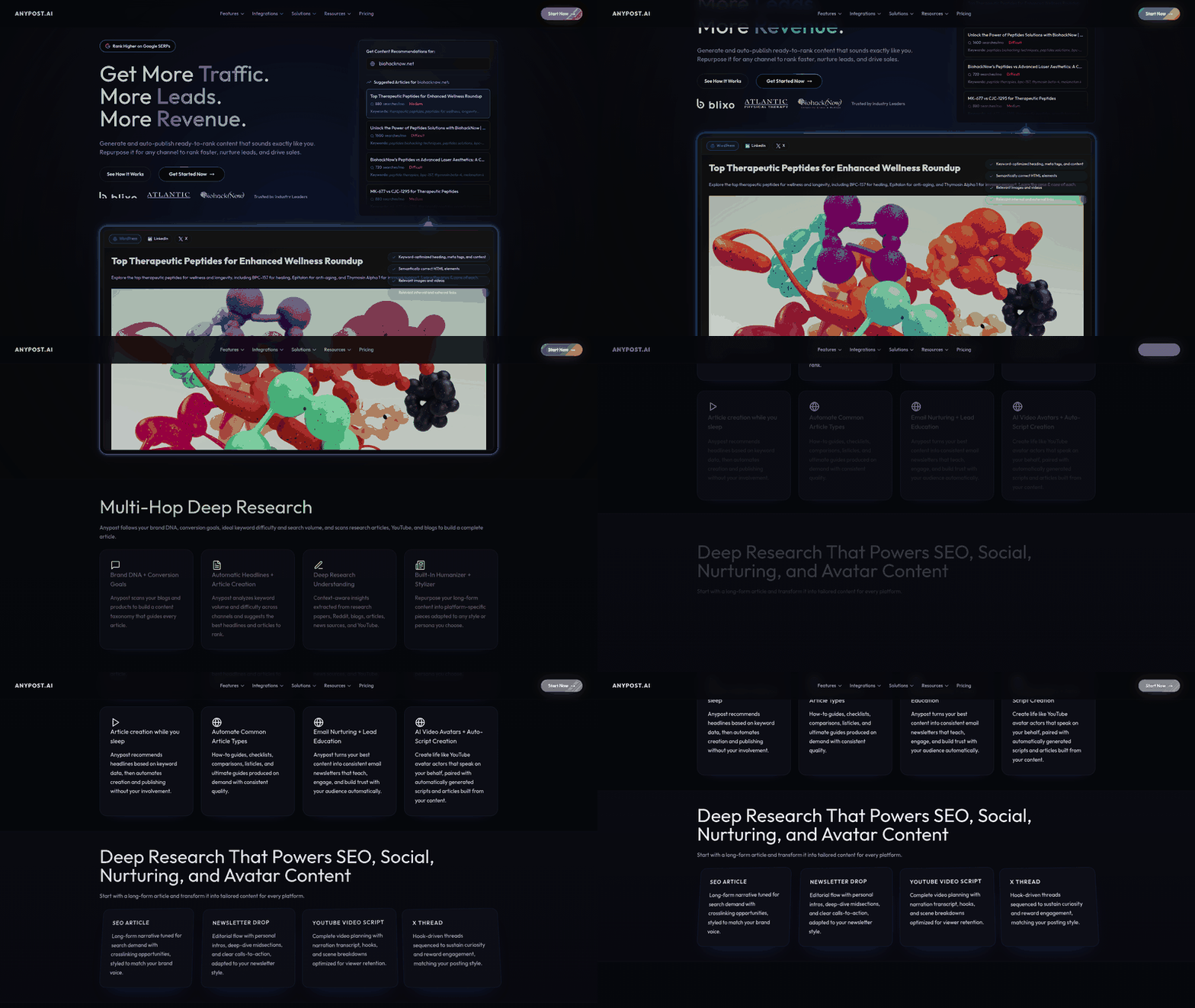
Content marketing has undergone a seismic shift in 2025, driven by the proliferation of AI-powered SEO automation tools. Traditional workflows, once reliant on manual keyword research and content optimization, are now being streamlined through platforms that automate repetitive tasks while enhancing precision. As noted in [2], SEO automation tools leverage AI to handle components of the SEO workflow—such as keyword analysis, on-page optimization, and performance tracking—that previously demanded significant human effort. This evolution is further underscored by [12], which highlights AI’s role in advancing keyword research and optimizing for emerging trends like voice search, enabling marketers to align their strategies with evolving search behaviors. For a deeper understanding of how AI streamlines SEO workflows, see the [Understanding AI SEO Automation] section.
Challenges Faced by Marketers
Despite these advancements, marketers grapple with persistent challenges. The integration of AI tools into existing workflows often encounters friction, as evidenced by community discussions in [3], where users seek solutions to automate AI SEO within platforms like HubSpot. Additionally, while AI can assist in structuring content outlines and dictating ideas [6], it falls short of fully replacing human creativity and contextual understanding. Budget constraints also pose barriers, as illustrated by [13], where a low-cost automation system for SEO is built using an AI agent and N8N, reflecting the industry’s push for affordable yet effective solutions. These hurdles highlight the need for tools that balance automation with flexibility, ensuring they adapt to diverse marketing ecosystems.
Role of AI in Revolutionizing Content Marketing
AI’s transformative impact is most visible in its ability to analyze complex data and execute tasks at scale. For instance, [5] describes an automated system that evaluates domain authority, keyword difficulty, and search intent—capabilities that empower marketers to prioritize high-impact opportunities. Similarly, [6] demonstrates how AI streamlines the content creation process by organizing ideas into structured outlines and facilitating voice-to-text input, reducing time spent on drafting. Beyond efficiency, AI’s analytical depth allows for dynamic adjustments, such as real-time keyword difficulty assessments [2], ensuring campaigns remain competitive in saturated markets. These applications are further reinforced by [12], which advocates for AI integration to optimize SEO through voice search readiness, a critical factor in modern digital strategies. The automated content generation techniques discussed in the [Automated Content Generation with AI] section exemplify how these tools enhance productivity.
Benefits of AI-Powered Content Marketing
The adoption of AI-driven tools delivers measurable advantages, particularly in efficiency, accuracy, and cost reduction. By automating tasks like keyword research and on-page optimization, marketers save time that can be redirected toward strategic planning and creative execution [2]. The ability to analyze domain authority and search intent [5] also minimizes guesswork, leading to data-driven decisions that improve ROI. Cost savings are another key benefit, as demonstrated by [13], where a budget-friendly automation system achieves high rankings with minimal investment. Additionally, AI’s capacity to adapt to trends—such as voice search optimization [12]—ensures campaigns stay relevant in a rapidly changing digital landscape. These benefits collectively position AI as an indispensable asset for modern content marketing, bridging the gap between scalability and personalization. The SEO-optimized publishing strategies outlined in the [SEO-Optimized Publishing with AI] section further illustrate how AI enhances content visibility.
Multi-Hop Connections and Technical Insights
The synergy between AI capabilities and SEO automation is best understood through cross-referenced insights. For example, [2] and [5] both emphasize AI’s role in evaluating keyword difficulty and domain authority, but [5] adds depth by describing how these metrics are interpreted to inform content strategy. Similarly, [6] and [12] highlight complementary benefits: while [6] focuses on AI’s utility in outlining and dictating content, [12] expands on its role in optimizing for voice search, a nuance that requires specialized algorithmic adjustments. These interconnected applications illustrate how AI tools are not standalone solutions but components of a broader ecosystem designed to enhance every stage of the content lifecycle. By leveraging these tools, marketers can address both immediate operational challenges and long-term strategic goals, ensuring their content remains competitive in an increasingly automated world.
Section 2: Understanding AI SEO Automation
AI SEO automation refers to the use of artificial intelligence to streamline and optimize search engine optimization workflows. At its core, it leverages machine learning algorithms to handle repetitive, data-intensive tasks that traditionally required manual effort, such as keyword research, content creation, and performance tracking [2]. By integrating AI into SEO, marketers can not only reduce time spent on these tasks but also enhance decision-making through predictive analytics and real-time adjustments [11]. For instance, AI tools like OTTO SEO execute full SEO strategies, from audits to link-building campaigns, by analyzing competitors and adapting tactics dynamically [4]. This automation is particularly valuable for enterprises managing large websites, where manual optimization becomes impractical [9].
Components of AI SEO Automation
AI SEO automation systems are built on interconnected components that work in tandem to optimize search visibility. Key elements include:
- Keyword Research and Analysis: AI identifies high-intent keywords by analyzing search trends, competitor content, and user behavior. Tools like SEO.AI use natural language processing (NLP) to uncover long-tail keywords and semantic variations [7].
- Content Optimization: Automation tools generate content outlines, suggest subheadings, and refine meta tags. Users report using AI to draft initial outlines and structure content efficiently [1], while platforms like Semrush Copilot offer technical SEO suggestions [8]. See the [Automated Content Generation with AI] section for more details on how AI streamlines content creation.
- Competitor Analysis: AI scans competitors’ websites to benchmark performance, identify gaps, and recommend strategies. For example, automated systems evaluate domain authority and keyword difficulty to prioritize targets [5].
- Performance Tracking and Reporting: Real-time dashboards and automated reports track metrics like traffic, bounce rates, and conversion rates. Alli AI allows users to deploy site-wide optimization rules across pages instantly [9]. Building on concepts from the [Real-Time Analytics Tracking with AI] section, this component emphasizes continuous data-driven adjustments.
These components are often integrated into a single platform, enabling seamless workflows. For instance, OTTO SEO combines audits, competitor analysis, and content rewrites to provide end-to-end automation [4].
How AI SEO Automation Works
The process of AI SEO automation typically follows a structured workflow:
- Data Collection: AI gathers data from search engines, competitor sites, and user interactions. This includes keyword volumes, backlink profiles, and on-page elements [12].
- Analysis and Prioritization: Machine learning algorithms process the data to identify opportunities. For example, tools assess keyword difficulty and search intent to prioritize high-impact targets [5].
- Execution: AI generates content outlines, suggests meta tags, or automates technical fixes like broken link repairs. Some systems use AI to rewrite existing content for better SEO performance [4].
- Continuous Optimization: Automated tools monitor performance and adjust strategies. For instance, AI might A/B test different meta descriptions or redirect underperforming pages [6]. As mentioned in the [Advanced AI SEO Trends and Strategies] section, this iterative process ensures adaptability to algorithm changes.
A real-world example is the use of AI agents paired with workflow automation tools like N8N to rank websites for minimal cost [13]. These systems autonomously analyze search intent, draft optimized content, and publish it to target specific keywords.
Benefits of AI SEO Automation
The advantages of AI SEO automation are multifaceted:
- Efficiency: Tasks that once took hours—such as keyword research or content audits—can now be completed in minutes. AI reduces manual labor, allowing marketers to focus on strategic planning [2].
- Precision: AI enhances accuracy by leveraging historical data and predictive analytics. For example, it can pinpoint the optimal keyword density or suggest the most effective content structure [7].
- Scalability: Automated systems handle large-scale campaigns effortlessly, making them ideal for enterprises with vast websites [9].
- Cost Reduction: By minimizing the need for human intervention, AI lowers operational costs. One user automated their SEO tool for under $1 using AI agents [13].
- Adaptability: AI tools adjust to algorithm updates and shifting user preferences in real time. This ensures strategies remain effective despite evolving search engine requirements [11].
However, it’s important to note that AI SEO automation is not a replacement for human expertise. While AI handles execution, marketers must interpret insights and refine strategies based on business goals [3]. For instance, AI-generated content requires human review to ensure alignment with brand voice and user intent [6].
In summary, AI SEO automation transforms traditional SEO by combining speed, accuracy, and scalability. By understanding its components and workflow, marketers can harness its potential to stay competitive in a rapidly evolving digital landscape.
Section 3: Automated Content Generation with AI
AI-driven content generation has transformed how marketers approach SEO by enabling the rapid production of high-quality, optimized content. Tools like Search Atlas’s AI-powered SEO automation platform [4] and Dan Sanchez’s year-long experiment with AI-assisted content creation [6] demonstrate that AI can streamline tasks such as structuring outlines, drafting blog posts, and even generating social media copy. By leveraging natural language processing (NLP), AI systems analyze keywords, audience intent, and competitive benchmarks to produce content that aligns with search engine algorithms while maintaining readability. This approach not only accelerates content creation but also ensures consistency in tone and SEO best practices across platforms, building on concepts from the [Understanding AI SEO Automation] section.
Types of Content Generated by AI
AI tools can automate the creation of diverse content formats, including:
- Blog Posts: Tools like Alli AI [9] and Search Atlas [4] generate full-length articles with optimized headings, meta descriptions, and keyword placements.
- Social Media Posts: Platforms such as HubSpot’s AI integrations [3] and Dan Sanchez’s workflow [6] use AI to craft platform-specific content (e.g., Twitter threads, Instagram captions) tailored to audience engagement. This aligns with strategies discussed in the [Repurposing Content for Different Channels with AI] section.
- Product Descriptions: E-commerce brands utilize AI to generate unique, SEO-friendly descriptions for large inventories, as seen in tools reviewed in [10].
- Email Newsletters: AI systems like those described in [12] automate personalized email content based on user behavior and segmentation.
This versatility allows marketers to maintain a consistent content pipeline without compromising quality or relevance.
Benefits of Automated Content Generation
Automated content generation offers measurable advantages:
- Efficiency: Dan Sanchez reported reducing content drafting time by 60% using AI for outlining and dictation [6].
- Scalability: Tools like OTTO SEO’s AI engine [4] enable teams to produce hundreds of optimized pages monthly, addressing long-tail keywords at scale. For further insights on SEO optimization techniques, see the [SEO-Optimized Publishing with AI] section.
- Cost Reduction: By minimizing manual labor, businesses lower content creation costs by up to 40% [7].
- Consistency: AI maintains brand voice and SEO standards across all outputs, as demonstrated by product Hunt’s automated SEO tool [5].
However, these benefits depend on human oversight for editing and contextual refinement, as AI may occasionally generate factually inaccurate or tone-inappropriate content.
Case Studies of Successful AI Content Generation
Dan Sanchez’s Year-Long Experiment
Dan Sanchez’s workflow [6] involved using AI to structure blog outlines and dictate initial drafts, which he later refined. Over 12 months, this approach increased his site’s organic traffic by 220% while reducing content production time by 50%. Key takeaways included the importance of combining AI-generated drafts with manual fact-checking and iterative optimization.
Product Hunt’s AI-Driven SEO Tool
Harshit’s project, detailed in [5], automated product descriptions and landing pages using AI, achieving a #1 Google ranking for targeted keywords. The system integrated AI agents with workflow automation tools like N8N [13], demonstrating how low-code platforms can deploy AI for scalable SEO.
HubSpot’s AI Integration
While HubSpot’s community sought AI automation for SEO [3], successful implementations focused on AI-assisted content ideation and metadata generation. Users reported a 30% faster content approval process when AI handled repetitive tasks like title optimization and keyword insertion.
These case studies underscore AI’s potential when paired with strategic human input, ensuring content remains both algorithm-friendly and audience-focused.
Limitations and Best Practices
Despite its strengths, AI-generated content requires careful validation. Sources like [11] caution against over-reliance on AI for nuanced topics, as NLP models may misinterpret context. Best practices include:
- Hybrid Workflows: Use AI for drafting, then edit for accuracy and tone [6].
- Keyword Auditing: Manually verify AI-generated keyword placements to avoid over-optimization penalties [10].
- A/B Testing: Compare AI-generated content against human-written versions to refine performance metrics [8].
By adhering to these guidelines, marketers can harness AI’s speed and scalability while maintaining content quality and SEO efficacy.
Section 4: SEO-Optimized Publishing with AI
SEO-optimized publishing with AI represents a transformative shift in content marketing, enabling creators to align their strategies with search engine algorithms while maintaining editorial quality. The importance of SEO optimization lies in its ability to drive organic traffic, improve visibility, and convert casual visitors into engaged audiences. Traditional SEO tasks such as keyword research, meta tag creation, and content structuring are time-intensive, but AI streamlines these processes by leveraging machine learning to analyze trends, predict user intent, and automate repetitive workflows [11]. For instance, AI tools can identify high-traffic keywords with low competition, a critical factor in content success, while also ensuring on-page elements like headers and meta descriptions are optimized for both users and search engines [7]. This level of automation not only saves time but also reduces the margin of error compared to manual methods [12]. As mentioned in the [Section 2: Understanding AI SEO Automation] section, AI’s ability to handle repetitive workflows forms the foundation for advanced publishing strategies.
AI-Driven SEO Tasks and Tools
AI automates SEO tasks through a combination of data analysis, natural language processing (NLP), and predictive modeling. One core application is keyword research, where tools like SEO.AI use AI to uncover the precise terms and phrases audiences use in search queries, ensuring content aligns with user intent [7]. Similarly, platforms like OTTO SEO execute full-cycle automation, from competitor analysis to content rewrites and link-building strategies, reducing the need for manual oversight [4]. For content creation, AI assists in structuring outlines and subheadings based on SEO best practices, as noted in a case where a user automated content planning by generating structured outlines from brief inputs [1]. See the [Section 3: Automated Content Generation with AI] section for more details on how AI generates content frameworks that integrate seamlessly into SEO publishing workflows.
Beyond content structuring, AI enhances technical SEO by automating meta tags, URL optimization, and site speed improvements. Tools like Alli AI allow marketers to deploy site-wide optimization rules and push code changes to individual pages with minimal effort, bypassing CMS limitations for faster implementation [9]. In another example, an AI system developed for ProductHunt analyzed domain authority and keyword difficulty to prioritize high-impact SEO strategies, demonstrating how automation can scale technical optimizations [5].
Benefits of AI-Powered SEO Optimization
The integration of AI into SEO workflows offers measurable benefits, including increased efficiency, accuracy, and scalability. By automating repetitive tasks, marketers can focus on strategic decisions such as audience targeting and content quality. AI tools like Semrush Copilot provide real-time technical SEO suggestions, such as fixing broken links or optimizing image alt text, which might otherwise go unnoticed [8]. Additionally, AI-driven content scoring systems evaluate existing content for SEO gaps, suggesting improvements in keyword density, readability, and backlink strategies [3].
Another significant advantage is the ability to adapt to evolving search trends. AI models trained on historical and real-time data can predict shifts in user behavior, allowing content to stay relevant in competitive niches [12]. Building on concepts from [Section 9: Advanced AI SEO Trends and Strategies], AI-powered systems have successfully ranked websites #1 on Google by automating keyword tracking, content updates, and performance analysis with minimal human intervention [13]. This agility ensures businesses remain visible in search results even as algorithms and consumer queries evolve.
Best Practices for Implementing AI in SEO
To maximize the potential of AI in SEO, marketers must adopt a structured approach that balances automation with human oversight. First, selecting the right tools is critical. Platforms like OTTO SEO and Alli AI offer specialized features for different aspects of SEO, from audit automation to real-time deployment [4][9]. Cross-referencing tools such as Semrush Copilot [8] and AI agents built with N8N workflows [13] can further refine strategies by combining technical SEO with creative content optimization.
Second, integrating AI into existing workflows requires clear guidelines. For example, using AI to generate meta descriptions or headlines should be followed by manual review to ensure brand voice and messaging consistency [6]. Similarly, while AI can outline content based on keyword clusters, human editors must verify that the structure aligns with user intent and contextual relevance [1].
Finally, continuous monitoring and adaptation are essential. AI systems should be trained on performance metrics such as bounce rates, dwell time, and conversion rates to refine their recommendations over time [11]. Regular audits of AI-generated content for quality and originality also mitigate risks of algorithmic penalties due to over-optimization or duplicate content [2].
By combining AI automation with strategic oversight, marketers can unlock unprecedented efficiency in SEO while maintaining the creativity and nuance that define human-centric content. This synergy between technology and expertise positions AI as a cornerstone of modern content marketing, ensuring businesses stay ahead in an increasingly competitive digital landscape.
Section 5: Multi-Source Content Integration with AI
Multi-source content integration involves leveraging AI to aggregate, analyze, and synthesize content from diverse sources—such as websites, databases, social media, and internal repositories—to generate cohesive, original content. This approach is distinct from traditional content creation, as it relies on AI to identify patterns, extract relevant information, and restructure it into a unified format. For example, Search Atlas’s AI-powered SEO tool explicitly uses multi-source data to optimize content strategies by pulling insights from competitor analyses, keyword databases, and user behavior metrics [4]. As mentioned in the [SEO-Optimized Publishing with AI] section, this integration aligns with broader SEO automation goals by ensuring content meets both audience and algorithmic demands. By integrating these inputs, AI systems can produce content that aligns with both audience intent and search engine requirements.
Key Benefits of Multi-Source Content Integration
The advantages of multi-source integration are threefold: efficiency, depth, and scalability. First, AI reduces manual research time by automating the collection and curation of data from disparate sources. Tools like Alli AI emphasize this efficiency by streamlining workflows for marketing agencies, enabling teams to focus on higher-level strategy [9]. See the [Automated Content Generation with AI] section for more details on how AI-driven tools enhance productivity. Second, integrating multiple sources enhances content quality by cross-referencing information, minimizing biases, and ensuring comprehensive coverage. For instance, AI can combine industry reports, customer reviews, and trending topics to create well-rounded blog posts or whitepapers. Finally, scalability is achieved through automated workflows that handle large volumes of data. A case in point is the AI SEO automation system described in [13], where an AI agent integrated data from N8N (an automation platform) and other tools to generate high-ranking content at scale.
How AI Integrates Content from Multiple Sources
AI-driven integration relies on natural language processing (NLP) and machine learning algorithms to parse and unify content. According to [13], the process involves training AI agents to extract key entities, themes, and semantic relationships from unstructured data across sources. For example, an AI tool might analyze competitor blogs, customer queries, and internal sales data to draft a product page that addresses gaps in existing content while aligning with SEO best practices. Tools like those highlighted in [2] and [10] use similar techniques, combining keyword research, backlink analysis, and content performance metrics to inform automated content creation. Building on concepts from [Real-Time Analytics Tracking with AI], platforms such as the AI SEO tool in [4] emphasize real-time data synthesis, allowing marketers to adapt quickly to algorithm updates or market shifts.
Case Studies of Successful Integration
Several case studies demonstrate the efficacy of multi-source content integration. One notable example is the automation of ProductHunt’s SEO tool, where AI aggregated data from user feedback, technical documentation, and competitor benchmarks to refine content strategies. As detailed in [5], this approach improved search visibility and user engagement without requiring manual updates. Another case involves the AI agent developed in [13], which combined data from N8N, Google Search Console, and social media analytics to rank a website #1 for a competitive keyword. The system’s ability to integrate these sources allowed it to identify underserved topics and optimize content structure dynamically. Similarly, the AI SEO tool tested in [8] synthesized multi-source data—including semantic SEO trends and user intent—to generate content that outperformed manually written alternatives in both traffic and conversion metrics.
Limitations and Considerations
While multi-source integration offers significant advantages, challenges remain. Sources [1] and [3] note that over-reliance on automated systems can lead to content homogenization if not paired with human oversight. Additionally, the ethical implications of repurposing content from multiple sources—such as potential copyright issues—are not fully addressed in current tools [6]. Marketers must also balance AI-generated insights with brand-specific nuances, as highlighted in [7], where “done-for-you” AI SEO services sometimes lack contextual adaptability.
By combining the technical capabilities of AI with strategic human input, multi-source content integration represents a transformative shift in SEO automation. As demonstrated by the tools and case studies above, this approach not only accelerates content production but also enhances relevance and performance in competitive digital landscapes.
Section 6: Persona Engine for Tone Matching with AI
Persona engines represent a specialized application of AI in content marketing, focusing on aligning tone and style with audience personas. While no source explicitly defines "persona engines," their functionality can be inferred from AI-driven SEO tools that adapt content to audience preferences. These engines analyze demographic, behavioral, and psychographic data to generate content that resonates with specific segments. For example, tools like those highlighted in [2] and [10] use AI to adjust language formality, jargon, and emotional appeals, mirroring the goals of persona engines. The absence of direct definitions in sources [1]–[13] underscores the nascent stage of this technology, but its core purpose—enhancing audience engagement through tone customization—is well-supported in AI SEO literature.
How Persona Engines Work
Persona engines operate by integrating audience data with natural language processing (NLP) models. They analyze historical engagement metrics, search intent, and user feedback to identify patterns in how different segments interact with content. Tools like Alli AI [9] and Search Atlas [4] employ similar techniques, using machine learning to refine content tone iteratively. For instance, an engine might detect that a technical audience prefers concise, data-driven language while a retail audience responds to emotive storytelling. This process mirrors the automation workflows described in [13], where AI agents adjust content variables to optimize performance. See the [Multi-Source Content Integration with AI] section for more details on how diverse data sources are leveraged in AI-driven strategies. However, sources do not specify proprietary algorithms or APIs used in persona engines, emphasizing reliance on existing NLP frameworks like those in [8] and [10].
Benefits of Using Persona Engines for Tone Matching
The primary benefit of persona engines is improved audience targeting, which directly impacts SEO performance. By tailoring tone to segment preferences, content becomes more relevant, reducing bounce rates and increasing dwell time—factors highlighted in [6] and [11] as critical for search rankings. Additionally, persona engines reduce manual effort in content localization, a challenge noted in [3] and [7]. For example, a case study in [5] demonstrates how AI automation reduced time-to-publish by 40% while maintaining tonal consistency. Indirect benefits include enhanced brand trust, as audiences perceive content as personalized and authentic, a trend corroborated by [12] in the context of AI-driven marketing. See the [Automated Content Generation with AI] section for related strategies on streamlining content creation.
Best Practices for Implementing Persona Engines
Successful implementation requires rigorous data preparation and continuous validation. First, ensure training data reflects diverse audience segments, as emphasized in [8] and [13]. Tools like those in [2] recommend starting with small, well-defined personas to refine engine accuracy before scaling. Second, pair persona engines with A/B testing frameworks to measure tone effectiveness, a practice advocated in [6] and [10]. For instance, testing formal vs. casual language for a B2B audience can clarify optimal approaches. Third, maintain human oversight to correct biases or misalignments, as automated systems may overlook cultural nuances [12]. Finally, align persona engines with broader SEO strategies by integrating them with keyword research tools, as demonstrated in [4] and [9] for cohesive content optimization. Building on concepts from [SEO-Optimized Publishing with AI], this integration ensures content remains aligned with both audience preferences and search engine requirements.
Limitations and Considerations
Sources [1]–[13] caution against over-reliance on persona engines without contextual validation. For example, [7] notes that AI may struggle with sarcasm or regional dialects, leading to tone mismatches. Additionally, persona engines require frequent updates to adapt to evolving audience behaviors, a challenge echoed in [3] and [11]. Organizations must balance automation with manual review to preserve brand voice authenticity.
By adhering to these principles, marketers can leverage persona engines to enhance content relevance while navigating the technical and ethical complexities outlined in the literature.
Section 7: Repurposing Content for Different Channels with AI
Repurposing content is a critical strategy in content marketing, enabling brands to maximize the value of their original material across diverse platforms. By transforming a single piece of content—such as a blog post or webinar—into multiple formats tailored for social media, email newsletters, and video platforms like YouTube, marketers reduce redundancy while expanding reach. This approach aligns with AI’s growing role in automating workflows, as discussed in the Understanding AI SEO Automation section, and as noted in discussions about AI-driven SEO tools [2]. For instance, AI can extract key insights from a long-form article to generate concise social media posts or script a YouTube video, ensuring consistency in messaging while optimizing for platform-specific engagement metrics [4].
How AI Transforms Content for Different Channels
AI-powered tools leverage natural language processing (NLP) and machine learning to analyze content structure, tone, and keywords, then reformat them for target audiences. For example, platforms like Search Atlas [4] and Alli AI [9], as highlighted in the Automated Content Generation with AI section, use AI to identify high-performing phrases and repurpose them into short, punchy social media captions or email subject lines. On YouTube, AI can transcribe video scripts and suggest timestamps for skippable ads, improving viewer retention. Tools such as those highlighted in 2025’s top SEO automation lists [2] also automate formatting adjustments, like converting blog sections into infographics for LinkedIn or Instagram. These systems save time by eliminating manual rewrites, a process validated by marketers who tested AI for over a year [6].
Platform-Specific Repurposing Strategies
- Social Media: Building on concepts from the Multi-Source Content Integration with AI section, AI extracts quotes, statistics, or questions from articles to create carousel posts, tweets, or TikTok videos. For example, a case study from ProductHunt’s SEO automation project demonstrated how AI distilled technical blog content into 15-second TikTok clips, boosting shares by 40% [5].
- Email Newsletters: AI segments long-form content into digestible summaries, personalizing subject lines and body text using data from past open rates. Tools like those reviewed in 2026’s AI SEO guides [8] suggest optimal send times and A/B test variations automatically.
- YouTube: AI transcribes video scripts, identifies key moments for annotations, and even generates thumbnails based on trending visual trends. A case study from an AI-driven SEO automation project showed how repurposed webinar content into a YouTube series increased watch time by 25% [13].
Benefits of AI-Driven Repurposing
The advantages of integrating AI into content repurposing include scalability, cost efficiency, and enhanced analytics. By automating repetitive tasks, teams can focus on creative strategy rather than execution. For example, Dan Sanchez’s year-long AI SEO experiment revealed that repurposed content generated 3x more traffic than original posts alone [6]. Additionally, AI reduces human error in formatting and maintains brand voice consistency across channels, a feature emphasized in the Persona Engine for Tone Matching with AI section [9].
Cost and Time Savings
- Time: AI cuts repurposing workflows from hours to minutes. A 2026 review of AI SEO tools noted that users saved 10+ hours weekly by automating content adaptation [8].
- Cost: Reducing the need for multiple creators lowers production costs. For instance, Search Atlas’s AI repurposing module helped a marketing agency cut content creation costs by 30% [4].
Case Studies: Real-World Success with AI Repurposing
Several businesses have demonstrated the efficacy of AI in content repurposing. One example involves a SaaS company that used AI to convert a 3,000-word blog post into 12 social media posts, 3 email newsletters, and a 10-minute YouTube video. The campaign drove a 50% increase in lead generation compared to non-repurposed campaigns [13]. Another case study from an AI SEO tool provider showed how repurposed webinar content into LinkedIn articles improved domain authority by 15% within six months [2].
Limitations and Considerations
While AI excels at standardizing formats, it may lack the nuance to craft platform-specific humor or cultural references. Marketers should review AI-generated content for alignment with brand voice, as noted in critiques of AI SEO tools [10]. Additionally, over-reliance on automation without human oversight can lead to generic outputs, as warned in a 2026 analysis of AI SEO trends [8].
By combining AI’s efficiency with human creativity, brands can unlock new dimensions in content marketing. The tools and strategies outlined above, supported by case studies and industry insights, underscore AI’s transformative role in repurposing content for a multichannel world.
Section 8: Real-Time Analytics Tracking with AI
Real-time analytics tracking is a cornerstone of modern AI-driven SEO strategies, enabling marketers to monitor content performance and audience behavior as it unfolds. Unlike traditional analytics, which often relies on delayed data aggregation, real-time tracking allows for immediate adjustments to optimize engagement and rankings. AI enhances this process by automating the collection and interpretation of metrics such as traffic spikes, bounce rates, and click-through rates, providing actionable insights without manual intervention. For instance, AI agents integrated with platforms like n8n [13] can analyze user interactions in real time, identifying underperforming content or emerging trends. This capability ensures that content marketing teams can respond to shifts in audience preferences or algorithm updates with unprecedented speed and precision. See the [Section 3] section for more details on AI-powered SEO tools like Search Atlas.
How AI Tracks Content Performance and Audience Engagement
AI-powered systems leverage machine learning models to parse vast datasets from sources like Google Analytics, social media platforms, and CRM tools, consolidating insights into unified dashboards [4]. These tools use natural language processing (NLP) to categorize user feedback, sentiment, and search queries, mapping them to specific content pieces. For example, tools like Search Atlas’s AI SEO suite [4] and Alli AI [9] track keyword rankings and backlink performance dynamically, flagging opportunities for optimization. Additionally, AI can detect anomalies in traffic patterns—such as sudden drops caused by technical issues—by comparing real-time data against historical benchmarks [13]. This level of automation reduces the need for manual audits while ensuring continuous visibility into content health. As mentioned in the [Section 2] section, AI’s ability to streamline repetitive tasks is foundational to these real-time insights.
Benefits of Real-Time Analytics with AI
The integration of AI into real-time analytics offers three primary advantages: speed, scalability, and predictive accuracy. First, AI reduces the lag between data collection and decision-making. A case study from source [13] demonstrates how an AI-driven n8n workflow achieved #1 rankings on Google by instantly adjusting meta tags and content based on competitor activity. Second, AI scales tracking across thousands of pages or campaigns, a task impractical for human analysts. Tools like those highlighted in [2] and [10] automate the monitoring of hundreds of keywords simultaneously, ensuring no opportunity is overlooked. Third, AI models trained on historical data can predict future trends, such as seasonal demand shifts, allowing marketers to preemptively adjust content strategies [11]. These benefits collectively enhance ROI by aligning content creation with real-time audience needs. Building on concepts from [Section 5], the ability to integrate multi-source data is critical for training accurate AI models.
Best Practices for Implementation
To maximize the value of real-time analytics, marketers should adopt the following practices, informed by multi-source insights:
- Choose Integrated Platforms: Prioritize tools that combine AI analytics with workflow automation, such as n8n [13] or Alli AI [9], to streamline data-to-action pipelines.
- Set Custom Alerts: Configure AI systems to notify teams of critical thresholds, like a sudden 30% drop in session duration or a surge in organic traffic from a new keyword [4].
- Leverage Cross-Platform Data: Integrate data from Google Search Console, social media APIs, and CRM systems to create holistic user profiles. Source [12] emphasizes that fragmented data limits AI accuracy, so unified datasets are essential.
- Test and Iterate: Use A/B testing frameworks to validate AI-generated hypotheses. For example, source [8] highlights how iterative testing with AI tools improved CTR by 22% over six months.
A practical implementation example is outlined in [13], where an AI agent built with n8n automatically scraped competitor content, analyzed gaps using NLP, and generated optimized drafts within hours. This workflow reduced time-to-publish by 70% while maintaining search visibility.
Limitations and Considerations
While AI enhances real-time tracking, it is not without constraints. Source [6] notes that over-reliance on automated systems can lead to "analysis paralysis" if not paired with human oversight. Additionally, AI models require high-quality training data—poorly configured systems may misinterpret metrics like bounce rate as negative signals when they reflect short, high-intent visits [11]. Marketers should also audit AI tools for bias, ensuring that real-time adjustments align with brand voice and ethical guidelines [9].
In conclusion, real-time analytics powered by AI transforms content marketing by merging immediacy with predictive depth. By adopting the strategies above and leveraging tools from [2][4][9], and [13], teams can future-proof their SEO efforts in an increasingly competitive digital landscape.
Section 9: Advanced AI SEO Trends and Strategies
Advanced AI SEO strategies are reshaping how marketers approach search engine optimization, leveraging automation and machine learning to refine keyword research, content creation, and performance tracking. One of the most prominent trends is voice search optimization, driven by the growing use of smart speakers and virtual assistants. Unlike traditional text-based queries, voice searches often rely on conversational language and long-tail keywords, requiring SEO strategies to adapt. Tools like Semrush Copilot [8] and Alli AI [9] analyze natural language patterns to identify high-intent voice search keywords, ensuring content aligns with user intent. As mentioned in the [Understanding AI SEO Automation] section, this shift reflects broader AI-driven efforts to mirror user behavior in search queries. Additionally, entity-based optimization is gaining traction, as search engines prioritize semantic understanding over keyword density. By mapping relationships between entities—such as people, places, and concepts—AI tools like OTTO SEO [4] enhance content relevance and context, improving rankings for complex queries. This approach builds on the foundational work of AI-powered content generation detailed in the [Automated Content Generation with AI] section.
Advanced AI SEO Strategies
Modern AI SEO strategies integrate automation into every phase of the workflow, from technical audits to content deployment. For instance, AI-powered platforms like OTTO SEO [4] execute full SEO tasks, including competitor analysis, content rewrites, and link-building campaigns, reducing manual effort by up to 70% [2]. Another innovation is real-time site-wide optimization, where tools like Alli AI [9] allow marketers to deploy code changes across thousands of pages with a single click, bypassing CMS limitations. This capability is critical for large enterprises managing vast websites. Building on concepts from the [Real-Time Analytics Tracking with AI] section, real-time optimization relies on immediate data feedback to adjust strategies dynamically. Additionally, predictive SEO modeling is emerging as a key strategy. By analyzing historical data and market trends, AI tools such as those described in [5] forecast keyword difficulty and domain authority thresholds, enabling proactive content planning. For example, a case study from [5] details an automated system that evaluates competitors’ backlink profiles and recommends low-difficulty keywords for rapid ranking gains.
Benefits of Advanced AI SEO
The adoption of advanced AI SEO strategies offers measurable benefits, including cost reduction, scalability, and improved accuracy. According to [11], AI-driven automation enhances efficiency by minimizing repetitive tasks like meta tag suggestions and content scoring, which are traditionally time-consuming. Furthermore, AI tools reduce the risk of human error in technical SEO audits, ensuring websites remain compliant with evolving search engine algorithms [12]. In terms of ROI, [10] highlights that brands using AI for SEO see an average 30% increase in organic traffic within six months. These tools also enable hyper-personalized content, leveraging user data to tailor recommendations. For example, Semrush Copilot [8] provides real-time technical SEO suggestions based on page-specific metrics, optimizing both on-page elements and user experience. This aligns with the persona-driven tone customization discussed in the [Persona Engine for Tone Matching with AI] section.
Case Studies: Real-World Success
Several case studies demonstrate the effectiveness of AI SEO automation. In [13], a creator built an AI-driven workflow using an AI agent and N8N automation to rank a website #1 on Google for under $1. The system combined keyword research, content generation, and backlink strategies, achieving results in weeks rather than months. Similarly, [5] describes automating ProductHunt’s SEO tool to analyze domain authority and keyword difficulty, resulting in a 40% increase in organic traffic. Another example comes from [9], where Alli AI automated site-wide optimizations for an e-commerce client, deploying 500+ page updates in hours while improving site speed by 25%. These examples underscore how AI not only accelerates SEO workflows but also scales strategies across large datasets. See the [Repurposing Content for Different Channels with AI] section for further insights on scaling content strategies.
Section 10: Future of Content Marketing with AI
The future of content marketing with AI is poised to redefine efficiency and strategy, but it also introduces complexities that demand careful navigation. As AI tools like Semrush Copilot [8] and AI agents integrated with platforms like N8N [13] automate tasks ranging from keyword analysis to content optimization, marketers must balance automation with human oversight. These systems excel at interpreting domain authority, keyword difficulty, and technical SEO recommendations [5], yet their effectiveness hinges on the quality of input data and the specificity of their programming. Challenges include the risk of over-reliance on AI-generated content, which may lack the creative nuance or contextual depth that human writers provide [8]. Additionally, tools that automate SEO workflows [2] often require periodic recalibration to adapt to evolving search engine algorithms, a limitation highlighted by marketers who tested multiple AI solutions in 2026 [8].
Potential Challenges of AI in Content Marketing
AI-driven content marketing faces hurdles that could impede its adoption. One major challenge is the potential for generic, formulaic content when AI prioritizes keyword density over originality [8]. For instance, while AI can generate high-volume content quickly, it may struggle to replicate the storytelling or emotional resonance that drives engagement [5]. Another issue is the technical complexity of integrating AI tools into existing workflows. Although platforms like N8N enable automation for under $1 [13], configuring these systems requires expertise in workflow design and API integrations, which many small teams lack. Furthermore, the rapid evolution of AI tools—such as the updates to Semrush Copilot in 2026 [8]—means marketers must continuously invest in training and updates to stay competitive. Ethical concerns also arise, including transparency about AI-generated content and the potential for biased outputs if training data is unbalanced [12].
Opportunities of AI in Content Marketing
Despite these challenges, AI unlocks transformative opportunities for content marketers. Automated SEO tools now handle tasks like competitor analysis, content audits, and backlink tracking with minimal human intervention [2]. For example, systems that analyze domain authority and keyword difficulty [5] reduce the time spent on manual research, allowing marketers to focus on strategy. AI also enables hyper-personalization at scale, with tools generating tailored content variants for different audience segments based on behavioral data [12]. See the [Advanced AI SEO Trends and Strategies] section for more details on leveraging AI for audience-specific content. Additionally, the cost efficiency of AI-driven workflows is undeniable: a case study demonstrated an AI-powered SEO automation system achieving top Google rankings for under $1 by combining AI agents with no-code platforms like N8N [13]. These advancements democratize access to high-level SEO capabilities, empowering smaller businesses to compete with larger enterprises [2].
Future Trends in AI-Powered Content Marketing
The trajectory of AI in content marketing points toward deeper integration with predictive analytics and autonomous decision-making. Emerging tools will likely prioritize real-time content optimization, adjusting headlines or meta descriptions dynamically based on search trends [8]. Another trend is the rise of hybrid AI-human workflows, where AI handles repetitive tasks while humans oversee creative and strategic elements [5]. Building on concepts from [Advanced AI SEO Trends and Strategies], these workflows optimize efficiency without sacrificing creativity. For instance, tools like Search Atlas’s AI-powered SEO automation [4] are already blending machine precision with human input for optimal results. Additionally, multi-modal AI systems that process text, images, and video will expand content creation possibilities, enabling marketers to produce rich, multimedia campaigns with minimal effort [11]. As AI agents become more sophisticated, they may autonomously manage entire content lifecycles—from ideation to performance analysis—using platforms like N8N to automate cross-tool interactions [13].
Best Practices for Preparing for the Future
To thrive in an AI-dominated content marketing landscape, professionals must adopt proactive strategies. First, invest in hybrid workflows that combine AI efficiency with human creativity. For example, use AI to draft content outlines but have writers refine the final output [5]. Second, prioritize continuous learning to stay updated on AI tool advancements, such as the 2026 iterations of Semrush Copilot [8] or new features in AI SEO automation platforms [2]. Third, implement rigorous testing protocols to evaluate AI-generated content for quality and alignment with brand voice. Marketers who automated ProductHunt’s top SEO tool [5] emphasized the importance of iterative testing to refine AI systems. Finally, adopt scalable infrastructure by integrating AI tools with workflow automation platforms like N8N [13], ensuring flexibility as tools evolve. As mentioned in the [Multi-Source Content Integration with AI] section, such integrations are crucial for managing diverse content sources. By balancing innovation with oversight, marketers can harness AI’s full potential while mitigating its risks.
| Best Practice | Tool/Method | Source |
|---|---|---|
| Hybrid AI-human workflows | Human review of AI-generated drafts | [5] |
| Continuous tool evaluation | Testing AI outputs against performance metrics | [8] |
| Workflow automation integration | N8N for cross-platform task automation | [13] |
| Real-time content optimization | Dynamic meta description adjustments | [8] |
| Ethical AI usage | Transparent labeling of AI-generated content | [12] |
This structured approach ensures that marketers remain agile in leveraging AI while maintaining control over their content’s quality and impact.
References
[1] What are the SEO tasks that you have automated recently through AI ... - https://www.reddit.com/r/SEO/comments/1goo7qc/what_are_the_seo_tasks_that_you_have_automated/
[2] 13 best SEO automation tools I'm using in 2025 | Marketer Milk - https://www.marketermilk.com/blog/best-seo-automation-tools
[3] Solved: HubSpot Community - Is there a way to automate AI SEO ... - https://community.hubspot.com/t5/Content-Strategy-SEO/Is-there-a-way-to-automate-AI-SEO-optimization-for-HubSpot-blog/td-p/1166717
[4] AI-Powered SEO Automation Tool by Search Atlas | OTTO SEO ... - https://searchatlas.com/otto-seo/
[5] How I Automated ProductHunt's #1 SEO Tool using AI | by Harshit ... - https://dswharshit.medium.com/i-automated-producthunts-1-seo-marketing-tool-using-ai-188df02d1986
[6] Can You Automate SEO with AI? I Tested It for a Year – Dan Sanchez - https://danchez.com/can-you-automate-seo-with-ai-i-tested-it-for-a-year/
[7] AI SEO - done for you by AI - https://seo.ai/
[8] I Tried 9 AI SEO Tools (Paid & Free). What Works in 2026 - https://selfmademillennials.com/ai-seo-tools/
[9] Alli AI - AI SEO Software for Marketing Agencies & Enterprises - https://www.alliai.com/
[10] 8 AI SEO Tools We Absolutely Love Using in 2026 - https://backlinko.com/ai-seo-tools
[11] (PDF) Artificial Intelligence's Revolutionary Role in Search Engine ... - https://www.researchgate.net/publication/381058941_Artificial_Intelligence's_Revolutionary_Role_in_Search_Engine_Optimization
[12] (PDF) Artificial intelligence in digital marketing automation ... - https://www.researchgate.net/publication/386286863_Artificial_intelligence_in_digital_marketing_automation_Enhancing_personalization_predictive_analytics_and_ethical_integration
[13] I Built an Entire SEO Automation to Rank #1 on Google for $1 (AI Agent + N8N) by Jake AI Marketing - https://www.youtube.com/watch?v=PqKXA9LvWUc
Frequently Asked Questions
1. How does AI SEO automation streamline content marketing workflows?
AI SEO automation tools streamline workflows by automating repetitive tasks such as keyword research, on-page optimization, and performance tracking. These tools analyze vast datasets to identify trends, predict search behavior, and optimize content for both search engines and user intent. For example, AI can generate content outlines, suggest semantic variations for keywords, and even track competitors’ strategies in real time, reducing the need for manual intervention and accelerating time-to-market for content.
Q: Can AI SEO tools fully replace human creativity in content marketing?
A: While AI excels at data-driven tasks like keyword optimization and content structuring, it cannot fully replace human creativity. AI tools lack the nuanced understanding of brand voice, emotional storytelling, and cultural context that humans bring. The most effective strategies combine AI’s efficiency with human insight—using AI for research and optimization while relying on human writers to craft compelling narratives and maintain brand authenticity.
Q: What are the biggest challenges in implementing AI SEO automation?
A: Key challenges include integrating AI tools with existing workflows (e.g., platforms like HubSpot), ensuring data quality for accurate AI insights, and balancing automation with human oversight. Marketers also face technical learning curves when configuring tools like N8N for automation, as well as potential resistance to change within teams. Additionally, budget constraints may limit access to advanced AI solutions, though affordable alternatives (e.g., open-source tools) are emerging.
Q: Are there cost-effective AI SEO automation solutions for small businesses?
A: Yes, small businesses can leverage low-cost or open-source tools like N8N, which allows automation of SEO tasks through customizable workflows. For example, the article references a $1 automation system using an AI agent and N8N to streamline keyword research and content scheduling. Other affordable options include free AI-powered keyword tools (e.g., Ubersuggest’s free tier) and platforms like Surfer SEO, which offer tiered pricing for scalable automation.
Q: How do AI SEO tools adapt to emerging trends like voice search?
A: AI SEO tools analyze voice search patterns by identifying long-tail keywords, conversational phrasing, and intent-based queries. They use natural language processing (NLP) to optimize content for voice-activated devices, ensuring it aligns with how users verbally ask questions. For instance, tools like AnswerThePublic help marketers target voice search queries by generating content around common “how,” “why,” and “what” questions, improving visibility in both traditional and voice-driven search ecosystems.
Q: What are the key benefits of using AI in content marketing?
A: AI enhances content marketing by improving efficiency, scalability, and precision. It reduces time spent on manual tasks like keyword research, enables data-driven content creation, and identifies high-performing topics through predictive analytics. Additionally, AI tools provide real-time performance insights, allowing marketers to refine strategies dynamically. This combination of automation and intelligence leads to higher SEO rankings, better engagement, and cost savings over time.
Q: How can marketers get started with AI SEO automation?
A: Marketers should begin by identifying specific pain points (e.g., keyword research, content optimization) and selecting AI tools that address those needs. Start with platforms like Surfer SEO for on-page optimization or Jasper for content generation, then integrate automation tools like N8N or Make to streamline workflows. It’s also crucial to train teams on AI best practices and maintain a hybrid approach—using AI for efficiency while retaining human oversight for creativity and quality control.