
Decoding Content Analytics: A Practical Guide

Related Video
Watch: Qualitative Content Analysis 101: The What, Why & How (With Examples) by Grad Coach
Understanding Content Analytics
Content analytics is the process of measuring and analyzing how users interact and engage with digital content, as defined by TechTarget [3]. It leverages tools and methodologies to extract actionable insights from user behavior, enabling content creators to refine their strategies. According to Adobe, content analytics employs AI and machine learning (ML) to identify engagement drivers, such as tone, imagery, or color, allowing optimization at scale [1]. This field, often termed "content intelligence," bridges the gap between raw user data and strategic decision-making, as outlined in academic literature [12]. By systematically evaluating interactions—like clicks, shares, or video views—content analytics transforms guesswork into data-driven workflows [2].
Key Benefits of Content Analytics
The primary benefit of content analytics is its ability to quantify engagement, providing clarity on what resonates with audiences. Adobe highlights that its Customer Journey Analytics tool eliminates guesswork by revealing how specific content elements influence user behavior [2]. Parse.ly further emphasizes that content analytics fosters a results-driven culture, enabling teams to align their output with measurable goals [9]. Additionally, platforms like YuJa’s Lumina track detailed metrics such as audience retention rates and device usage patterns, helping marketers adjust delivery methods for maximum impact [4]. By identifying underperforming content, analytics also reduces wasted resources, ensuring that efforts are redirected toward high-performing assets [1].
Common Metrics in Content Analytics
Content analytics relies on a range of metrics to assess performance. Lumina’s system, for instance, monitors viewership duration, interaction rates (e.g., pauses, rewinds), and device-specific behavior to evaluate video content [4]. TechTarget notes that engagement levels—measured through likes, shares, or comments—are critical indicators of content effectiveness [3]. Adobe’s tools analyze traffic sources, bounce rates, and conversion funnels to map user journeys [1]. For written content, metrics like time-on-page and scroll depth reveal how thoroughly users consume material [12]. However, Contentful warns that traditional metrics often fail to capture nuanced user intent, advocating for AI-integrated tools to decode deeper behavioral patterns [8].
Role in SEO Optimization
Content analytics plays a pivotal role in refining SEO strategies by linking user engagement to search visibility. As mentioned in the Decoding SEO Optimization Metrics section, Adobe’s AI-driven analytics identify which content attributes—such as keyword density or readability—correlate with higher search rankings [1]. By tracking how users interact with search-driven traffic (e.g., exit points or click-through rates), marketers can adjust meta tags, headers, and content structure to better align with search intent [2]. For example, WavePulse uses real-time analytics to correlate local content trends with national SEO patterns, optimizing regional visibility [11]. Additionally, tools like Parse.ly enable teams to prioritize topics that drive both engagement and organic traffic, ensuring SEO efforts are data-backed [9].
Limitations and Evolving Practices
While content analytics offers significant advantages, its effectiveness depends on the quality of data and tools. Contentful critiques traditional analytics for their inability to adapt to dynamic user preferences, suggesting a shift toward composable, API-first platforms that integrate AI for predictive insights [8]. Qualitative methods, such as those described in educational research [13], complement quantitative metrics by analyzing thematic patterns in user feedback. As content ecosystems grow complex, multi-platform analytics—combining SEO data with social media and video metrics—become essential for holistic optimization [4]. See the Overcoming Common Challenges in Content Analytics section for more details on fragmentation and integration issues [8].
By grounding strategies in content analytics, marketers can move beyond intuition to make precise, scalable decisions. The integration of AI and cross-channel data analysis is reshaping how teams approach content creation, ensuring alignment with both audience preferences and business objectives [1][2].
Setting Up a Content Analytics Framework
Step 1: Choose Content Analytics Tools Aligned With Your Objectives
Selecting the right tools depends on your content goals, such as measuring engagement, optimizing sales pipelines, or analyzing educational content performance. Adobe Content Analytics [1] leverages AI and machine learning to identify engagement drivers, making it suitable for scaling optimization efforts. For video-centric workflows, YuJa’s Lumina offers insights into audience viewership and device data [4], while Parse.ly specializes in real-time analytics for newsrooms and content marketers [9]. Evaluate tools based on features like UTM parameter tracking [3], integration with CRM systems [6], and support for specific content types (e.g., documents, videos). The 2025 roundup of 21 tools [5] provides a benchmark for comparing capabilities, including sales content analysis [7] and educational use cases [10]. Prioritize platforms that align with your existing tech stack, such as HubSpot for sales teams [7] or Contentful for API-first, composable analytics [8]. See the [Decoding SEO Optimization Metrics] section for more details on how UTM parameters [3] contribute to SEO tracking and campaign analysis.
Step 2: Integrate Analytics Into Existing Marketing Workflows
Integration requires mapping analytics tools to your content creation, distribution, and evaluation processes. For example, Adobe’s Customer Journey Analytics [2] connects content performance to user behavior across touchpoints, enabling seamless workflow alignment. If using HubSpot, sales content analytics tools can track document interactions and sequence effectiveness [7]. YuJa Lumina’s device and interaction data [4] should be synchronized with video publishing schedules to measure real-time engagement. Document workflows in content management systems (CMS) to ensure metadata tagging and event tracking are consistent [3]. For teams using Parse.ly [9], integration with editorial calendars ensures content performance is tied to publishing strategies. Avoid fragmented workflows by centralizing data in a single platform or using APIs (if supported) to aggregate metrics from multiple tools [5]. Building on concepts from the [Repurposing Content for Multi-Channel Distribution] section, align analytics integration with cross-platform content schedules to maintain consistency.
Step 3: Configure Tracking and Measurement Systems
Set up tracking mechanisms to capture user interactions, such as page views, click-through rates, and time-on-page. Adobe Content Analytics [1] recommends embedding tracking codes to monitor engagement drivers like headline performance or multimedia interactions. For video content, Lumina’s analytics [4] require configuring event triggers for pauses, rewatches, and quiz completions. Use UTM parameters [3] to attribute traffic sources and segment audiences based on campaigns or channels. Sales teams should track document downloads and sequence completions via HubSpot’s analytics tools [7], while educational platforms may adopt SPARFA-Trace’s time-varying models [10] to analyze learner progress. Ensure tracking aligns with KPIs such as conversion rates or customer retention [5], and validate data collection with tools like Google Tag Manager or native platform diagnostics.
Step 4: Establish Best Practices for Data Analysis
Focus on actionable insights by defining clear KPIs, such as bounce rates, content virality scores, or sales pipeline contributions [6]. Adobe’s AI-driven analytics [1] and Parse.ly’s real-time dashboards [9] simplify identifying high-performing content patterns. Cross-reference quantitative metrics with qualitative feedback (e.g., user surveys) to contextualize performance [13]. For teams using Contentful [8], adopt a composable analytics approach to combine data from multiple sources without relying on monolithic platforms. Regularly audit data for anomalies, such as spikes in bot traffic, and use machine learning models like SPARFA-Trace [10] to detect trends over time. Finally, document analysis workflows and share findings with stakeholders through automated reports or visualization tools [5], ensuring alignment between content strategy and business goals. As mentioned in the [Measuring Lead Generation from Content Marketing Efforts] section, aligning qualitative feedback with lead generation KPIs can refine content strategies for better conversions.
Final Considerations
Successful implementation requires continuous refinement. Monitor tool updates, such as Adobe’s advancements in ML-driven optimization [1], and adjust workflows to incorporate new features. For teams lacking in-house analytics expertise, consider platforms like WavePulse [11] that offer intuitive dashboards for non-technical users. Validate your framework against benchmarks from industry reports [5] and iterate based on feedback from cross-functional teams. By aligning tools with objectives, integrating them into workflows, and adhering to structured analysis practices, organizations can transform raw data into strategic content decisions.
Decoding SEO Optimization Metrics
Decoding SEO optimization metrics begins with understanding keyword ranking dynamics. Keyword rankings are measured using tools like those listed in [5], which track position changes over time and correlate them with content performance. Analytics platforms such as Adobe’s system [1] emphasize monitoring keyword visibility and identifying high-impact terms that drive organic traffic. To improve rankings, content creators should prioritize keywords with high search volume and low competition, as suggested by SEO frameworks in [6], while addressing gaps in existing content through topic clustering or pillar pages. Regular audits of keyword performance ensure alignment with evolving user intent and search engine algorithms [12].
Measuring website traffic and engagement metrics requires a combination of quantitative and qualitative data. Tools like those reviewed in [5] and [9] analyze session duration, bounce rates, and conversion actions to evaluate user behavior. For instance, a high bounce rate may signal poor content relevance, while extended session times correlate with engaging, in-depth material [7]. Engagement metrics such as social shares and comments, discussed in [6], further indicate content resonance. Cross-referencing traffic data with keyword rankings [3] helps identify which terms drive the most valuable audiences. Adobe’s Customer Journey Analytics [2] also highlights the importance of segmenting traffic by device type and geographic location to tailor optimization strategies. See the [Understanding Content Analytics] section for more details on how engagement metrics inform broader content strategies.
Leveraging AI-driven SEO trends involves adopting predictive analytics and content automation tools. The 2025 software roundup in [5] notes that AI-powered platforms can forecast keyword popularity and suggest content adjustments in real time. These systems analyze competitors’ strategies and user search patterns to recommend optimizations, reducing manual guesswork [12]. For example, AI can identify semantic variations of primary keywords, enabling content to rank for long-tail queries [9]. However, AI should complement—not replace—human oversight, as nuanced topics may require contextual expertise not captured by algorithms [8]. Building on concepts from [Leveraging Automated Content Generation for Traffic Growth], integrating AI with traditional SEO audits ensures a balanced approach to content creation and refinement.
Technical SEO optimization demands attention to infrastructure-level factors that influence search engine crawling and indexing. Best practices include optimizing site speed, ensuring mobile responsiveness, and implementing structured data markup, as outlined in [4] and [12]. Tools like Google’s PageSpeed Insights, referenced indirectly in [1], help diagnose performance bottlenecks such as unoptimized images or excessive script loading. Additionally, monitoring crawl errors and XML sitemap validity through technical audits [4] prevents content from being overlooked by search bots. Structured data, as emphasized in [12], enhances rich snippet visibility, increasing click-through rates for competitive keywords.
To implement these strategies effectively, organizations must align technical and content teams around shared KPIs. For example, improving page load times (a technical metric) directly impacts bounce rates (an engagement metric) [7]. Similarly, refining meta tags and URL structures—technical SEO elements—can elevate keyword rankings and traffic [5]. Cross-referencing analytics from platforms like Parse.ly [9] and Adobe [1] provides a holistic view of SEO health. By systematically addressing each layer of SEO—from technical foundations to AI-driven content—the optimization process becomes both measurable and scalable.
In cases where source material lacks specificity, such as detailed technical audit steps or AI implementation workflows, it is critical to consult primary tools and vendor documentation. The sources provided [1][5][12] acknowledge limitations in prescribing exact technical configurations, emphasizing instead the need for continuous testing and adaptation. For instance, while [12] defines content analytics broadly, it does not specify coding practices for structured data, leaving room for further exploration in vendor guides. This iterative approach ensures SEO strategies remain agile in response to algorithm updates and market shifts.
Repurposing Content for Multi-Channel Distribution
Repurposing content for multi-channel distribution requires a strategic approach to adapt core messages for the unique requirements of platforms like social media, email newsletters, YouTube, and blogs. Adobe’s Content Analytics emphasizes that effective content hinges on elements such as tone, imagery, and color, which must be tailored to each channel’s audience and format [2]. For example, social media demands concise, visually engaging snippets, while blogs allow for in-depth exploration of topics. This section outlines actionable steps to maximize reach and engagement without redundant creation efforts.
Strategies for Repurposing Content
To repurpose effectively, begin by auditing existing content to identify high-performing themes or topics. Tools like Adobe Customer Journey Analytics can highlight which content resonates most based on engagement metrics [2]. Once priorities are set, adapt formats: convert blog posts into social media carousels, extract key takeaways for email newsletters, or transform tutorials into YouTube shorts. For instance, a detailed whitepaper can be broken into short, platform-specific segments—LinkedIn articles for professionals, Instagram infographics for casual audiences, and Twitter threads for bite-sized insights. The key is to maintain the core message while optimizing for each channel’s strengths [2].
Best Practices for Channel-Specific Content
Each platform necessitates adjustments to tone, structure, and media. Email newsletters benefit from personalized subject lines and segmented content, whereas YouTube prioritizes video thumbnails and concise descriptions to drive clicks [2]. For social media, Adobe’s analytics suggest leveraging platform-specific imagery—square or vertical formats for Instagram, and horizontal videos for Facebook—to avoid distortion [2]. Blogs, on the other hand, require SEO-optimized headings and keyword integration to improve search visibility. Cross-referencing analytics from tools like those listed in [5] can reveal platform-specific trends, such as peak engagement times or preferred content types, ensuring alignment with audience behavior. See the [Decoding SEO Optimization Metrics] section for more details on keyword tracking and SEO integration.
Using Automated Content Generation Tools
Automation streamlines repurposing by accelerating format conversion and maintaining consistency. While specific tools are not detailed in the provided sources, references to content analytics software [5] indicate that platforms exist to generate variations of content based on predefined parameters. Building on concepts from [Leveraging Automated Content Generation for Traffic Growth], an automated tool might extract quotes from a blog post to create Twitter posts or generate image captions using predefined templates. Adobe’s analytics can integrate with these tools to ensure repurposed content adheres to proven effective styles, such as color schemes or font choices identified through historical performance data [2]. However, automation should be paired with manual review to preserve brand voice and contextual relevance.
Measuring the Effectiveness of Repurposed Content
Tracking performance is critical to refine repurposing strategies. Metrics such as click-through rates, time spent on page, and social shares provide insights into how well repurposed content aligns with audience expectations [2]. For instance, A/B testing variations of an email newsletter subject line can reveal which phrasing drives higher open rates. Similarly, YouTube analytics can compare watch times for videos created from the same source content but edited differently [11]. Sales content analytics tools [7] further enable businesses to trace repurposed content’s impact on lead generation, linking social media engagement or blog traffic to pipeline growth. See the [Measuring Lead Generation from Content Marketing Efforts] section for more details on KPIs and conversion tracking. Regularly reviewing these metrics ensures adjustments are made to optimize future repurposing efforts.
By combining strategic repurposing, channel-specific customization, automation, and rigorous measurement, organizations can amplify their content’s reach without proportionally increasing creation costs. The integration of analytics tools, as outlined in [2] and [5], provides a data-driven foundation to ensure repurposed content remains both efficient and effective across platforms.
Leveraging Automated Content Generation for Traffic Growth

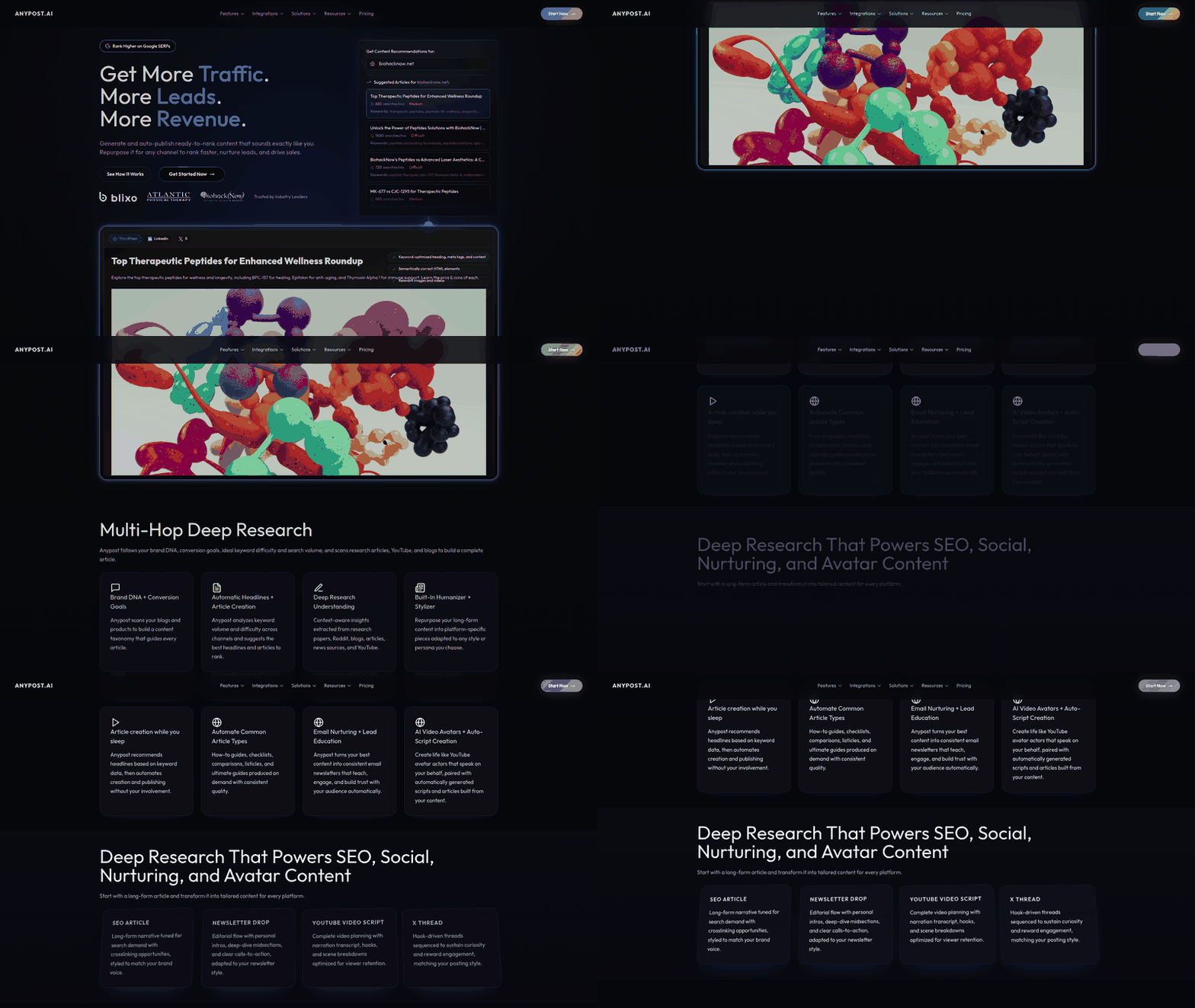
Automated content generation leverages AI and machine learning to streamline the creation of content while aligning it with audience preferences and SEO requirements. By analyzing engagement patterns, tools like Adobe Content Analytics identify characteristics that drive audience interaction, enabling teams to optimize content at scale [1]. As mentioned in the Understanding Content Analytics section, this process relies on measuring user behavior to refine outputs. This approach contrasts with traditional content analytics, which often fail to adapt to dynamic user behavior or integrate seamlessly with modern content workflows [8]. AI-powered systems address these gaps by generating data-driven content variations, reducing manual effort, and accelerating time-to-publication without compromising quality.
Benefits of Automated Content Generation for Traffic Growth
Automated tools enhance traffic growth by producing high-volume, SEO-optimized content tailored to audience intent. Adobe’s AI-driven analytics, for instance, decode engagement drivers such as keyword relevance and topic popularity, which can be directly applied to content creation workflows [1]. See the Decoding SEO Optimization Metrics section for more details on how keyword relevance impacts content performance. This reduces guesswork in selecting topics and ensures alignment with search engine algorithms. Additionally, AI minimizes redundancy in content production by identifying underperforming themes and reallocating resources to high-impact areas [8]. For teams managing multi-channel strategies, automation scales output across platforms while maintaining brand consistency, a critical factor in sustaining audience trust and repeat visits. Building on concepts from Repurposing Content for Multi-Channel Distribution, automated systems can adapt content formats for different channels efficiently.
Best Practices for Using AI-Powered Content Generation Tools
To maximize effectiveness, integrate AI tools with existing analytics frameworks to close the feedback loop between content creation and performance tracking. Adobe’s approach emphasizes using machine learning to iteratively refine content based on real-time engagement metrics, ensuring outputs evolve with audience preferences [1]. Contentful recommends adopting a composable, API-first architecture to combine AI-generated content with human oversight, balancing efficiency with creative nuance [8]. Key steps include:
- Training AI models on historical content performance data to prioritize high-engagement topics.
- Implementing modular workflows where AI handles drafting, while human editors refine tone and accuracy.
- Validating SEO compliance through built-in tools that audit keyword density and meta tags.
Avoid over-reliance on automation by setting thresholds for human intervention, particularly for sensitive or brand-critical content. Cross-referencing AI outputs with manual audits ensures alignment with strategic goals and mitigates risks of factual inaccuracies [8].
Measuring the Effectiveness of Automated Content Generation
Effectiveness is quantified through metrics tied to traffic growth, engagement, and SEO performance. Adobe’s analytics framework tracks post-publication engagement to identify which AI-generated content variants drive the highest click-through rates and conversions [1]. Tools like Parse.ly [9] and WavePulse [11] provide real-time dashboards to monitor audience behavior, though these are not explicitly integrated with AI generation workflows in the cited sources. To evaluate ROI, compare traffic metrics before and after implementing automation, focusing on increases in organic search volume and reductions in content production costs.
A critical limitation of current tools is their reliance on historical data, which may not account for emerging trends or sudden shifts in user intent [8]. To address this, pair automated content generation with agile analytics platforms that adapt to time-varying patterns, as described in sparse factor models for content analytics [10]. Regularly audit AI outputs for freshness and relevance, using A/B testing to validate assumptions about audience preferences.
By combining automated generation with robust measurement frameworks, organizations can iteratively improve their content strategies while maintaining alignment with business objectives. However, the sources note that no single tool fully resolves the challenges of fragmented content analytics ecosystems [8], underscoring the need for integrated, API-driven solutions to unify automation and insights.
Measuring Lead Generation from Content Marketing Efforts
To measure lead generation from content marketing efforts, organizations must first identify and track key performance indicators (KPIs) that directly correlate with lead conversion. Lead generation metrics include conversion rates, cost per lead (CPL), click-through rates (CTR), and engagement rates (e.g., time spent on content, form submissions, or downloads). Tools like YuJa’s Lumina Content Analytics provide granular data on video audience interactions, such as drop-off points, device usage, and engagement patterns, which help identify high-performing content segments [4]. Dreamdata’s platform explicitly links content views to pipeline generation, enabling teams to quantify how specific assets contribute to lead qualification and pipeline growth [6]. For instance, by analyzing which videos or documents drive the most form submissions, marketers can prioritize content that directly fuels lead capture [5]. See the [Setting Up a Content Analytics Framework] section for more details on selecting tools aligned with lead generation objectives.
Setting Up Lead Tracking and Measurement Systems
Effective lead tracking requires integrating analytics tools with customer relationship management (CRM) systems and marketing automation platforms. UTM parameters and tracking pixels are essential for attributing website traffic to specific content campaigns [5]. For example, HubSpot’s sales content analytics tool allows teams to monitor how documents, email sequences, and templates influence lead behavior by tracking opens, downloads, and next steps [7]. Similarly, platforms like those highlighted in the 2025 roundup of best content analytics software enable marketers to set up custom dashboards that aggregate data from multiple channels, such as social media, email campaigns, and gated content, into unified lead generation reports [5]. YuJa’s Lumina system further supports this by embedding analytics directly into video content, capturing user interactions like pauses, rewatches, and quiz responses to refine lead scoring models [4].
Analyzing Lead Generation Data for Insights
Analyzing lead generation data involves correlating content performance with business outcomes. Dreamdata’s Content Analytics explicitly measures how content impacts pipeline growth by tracking views, shares, and conversions across teams and regions [6]. Marketers can use this data to identify underperforming assets and reallocate resources to high-impact content. For example, if a webinar generates a high volume of leads but a low conversion rate, further analysis might reveal that the follow-up process lacks alignment with the content’s messaging. YuJa’s platform complements this by revealing device-specific trends, such as mobile users being more likely to engage with short-form video content, which can inform format optimization [4]. Cross-referencing these insights with CRM data—such as how many leads progress to sales qualified status—enables teams to quantify the return on investment (ROI) of individual content assets [5]. Building on concepts from [Overcoming Common Challenges in Content Analytics], ensuring consistent data quality and tool integration is critical for accurate analysis.
Best Practices for Optimizing Lead Generation
Optimizing lead generation from content marketing requires iterative testing and alignment with audience needs. One best practice is to repurpose high-performing content into targeted campaigns. For example, a popular blog post might be transformed into a downloadable guide with a lead capture form or a series of social media posts with tracked links [5]. A/B testing different headlines, CTAs, or formats—supported by tools like HubSpot’s analytics—helps determine which variations maximize conversions [7]. Additionally, leveraging sparse factor models or real-time analytics tools (as described in academic literature [10] and commercial platforms [11]) can uncover hidden patterns in user behavior, such as seasonal preferences or content fatigue. See the [Repurposing Content for Multi-Channel Distribution] section for strategies on adapting content for different platforms. Finally, ensuring that analytics systems track both top-of-funnel metrics (e.g., views) and bottom-of-funnel metrics (e.g., closed deals) provides a holistic view of how content contributes to the sales cycle [6].
By systematically applying these strategies, organizations can move beyond guesswork and use data-driven insights to refine their content marketing efforts. Tools like YuJa’s Lumina, Dreamdata, and HubSpot’s analytics suite provide the infrastructure to measure, analyze, and optimize lead generation, ensuring that content investments align with business goals [4][6][7]. Regularly reviewing these metrics and adjusting tactics based on empirical evidence is critical to maintaining a competitive edge in content-driven lead generation.
Advanced Content Analytics Strategies for Growth Leaders
Leveraging Content Analytics for Product Development
Advanced content analytics enables growth leaders to identify user preferences and behaviors that directly inform product development. By leveraging AI and machine learning (ML), platforms like Adobe Content Analytics [1] analyze engagement patterns to reveal which content elements—such as format, tone, or topic—drive the highest interaction. See the [Setting Up a Content Analytics Framework] section for more details on selecting the right tools for your objectives. These insights can be translated into product roadmap decisions, such as prioritizing features or services that address gaps highlighted by underperforming content. For example, if analytics show a consistent demand for tutorial-style videos over whitepapers, product teams might invest in interactive learning tools or video-based onboarding systems [6]. This approach ensures product development aligns with real-time user needs rather than assumptions.
Integrating Content Analytics with Customer Experience Initiatives
To create a seamless customer experience (CX), growth leaders must connect content analytics data with broader CX strategies. YuJa’s Lumina platform demonstrates this by tracking audience interactions, device usage, and viewership trends for video content [4], which can be cross-referenced with support ticket data or survey feedback to identify friction points. For instance, if analytics reveal high drop-off rates during a specific section of an onboarding video, CX teams can adjust the content or provide targeted assistance. Similarly, WavePulse’s real-time analysis of radio livestreams shows how local and national trends influence engagement [11], offering a model for contextualizing content within dynamic customer journeys. Integrating these insights into CX workflows ensures that content evolves alongside customer expectations.
Advanced Strategies for Measuring Content Marketing ROI
Traditional metrics like page views or click-through rates often fail to capture the full ROI of content marketing. Instead, growth leaders should adopt multi-channel attribution models that link content performance to business outcomes such as lead generation, pipeline growth, and customer retention [5]. Building on concepts from [Repurposing Content for Multi-Channel Distribution], multi-channel strategies can enhance content visibility and engagement. Dreamdata’s Content Analytics tool exemplifies this by tracking how content across channels converts views into measurable business results [6]. Additionally, composable analytics platforms—advocated by Contentful [8]—allow teams to build custom KPIs, such as "engagement-to-conversion ratios" or "content-driven account activation rates," using APIs and integrated AI tools. For example, combining Parse.ly’s audience behavior tracking [9] with sales pipeline data can reveal which blog posts or case studies most effectively nurture prospects through the buyer’s journey.
Best Practices for Presenting Content Analytics Insights to Stakeholders
Effective communication of analytics insights requires tailoring data narratives to stakeholder priorities. Parse.ly emphasizes simplifying complex metrics into actionable takeaways, such as highlighting top-performing content themes for executives or showcasing user engagement trends for marketing teams [9]. When presenting, prioritize visual storytelling using dashboards that contrast time-based performance (e.g., monthly viewership vs. quarterly conversions) and segment data by audience demographics or device types [4]. For instance, SPARFA-Trace’s machine learning framework [10] can illustrate how engagement patterns shift over time, offering stakeholders a predictive view of content efficacy. Avoid overwhelming audiences with raw data; instead, focus on how insights address specific business challenges, such as reducing customer acquisition costs or improving retention rates [6].
Cross-Functional Collaboration for Sustained Growth
To maximize impact, growth leaders should establish feedback loops between analytics teams, product managers, and customer success groups. Building on concepts from [Setting Up a Content Analytics Framework], regularly auditing analytics tools ensures your strategy remains agile. For example, qualitative content analysis techniques—like those outlined in educational research [13]—can uncover nuanced user sentiments from support interactions or social media, which quantitative analytics might miss. By integrating these findings with platforms like Adobe’s Customer Journey Analytics [2], teams can map content interactions to broader customer lifecycle stages. Ultimately, fostering a culture where data drives decisions—from content creation to product iteration—positions organizations to scale sustainably in competitive markets.
Overcoming Common Challenges in Content Analytics
To address data quality challenges, prioritize tools that leverage AI and machine learning (ML) to identify patterns in user engagement. Adobe Content Analytics, for example, uses AI to pinpoint the characteristics driving content performance, enabling data-driven optimizations at scale [1]. Pair this with a consistent data governance strategy, ensuring all tracking mechanisms (e.g., UTM parameters, event tracking) align across platforms [5]. See the Setting Up a Content Analytics Framework section for more details on aligning tracking mechanisms. Avoid relying on siloed tools that produce conflicting metrics; instead, adopt platforms like Parse.ly, which centralize content analytics and reduce data fragmentation [9]. Regularly audit your data sources to identify gaps, such as untracked content or inconsistent tagging, and implement fixes to improve accuracy [8].
A composable, API-first approach is critical for seamless tool integration, as highlighted in [8]. Modern content analytics platforms should support interoperability with CRM systems, CMSs, and marketing automation tools via APIs. For instance, Parse.ly integrates with sales and marketing platforms to provide a unified view of content’s impact on pipeline growth [9]. Building on concepts from Repurposing Content for Multi-Channel Distribution, ensure tools support cross-platform consistency to streamline analytics workflows. When selecting tools, prioritize solutions that offer modular components, allowing you to build a tailored analytics stack without relying on legacy systems [5]. Additionally, ensure all tools adhere to the same data definitions and reporting standards to avoid misinterpretation of metrics [3].
To secure stakeholder support, focus on demonstrating the business value of content analytics. Use tools like those listed in [5] to quantify content’s role in customer retention and revenue generation, presenting these insights in stakeholder-friendly dashboards. As mentioned in the Measuring Lead Generation from Content Marketing Efforts section, aligning analytics goals with organizational KPIs is essential for demonstrating ROI. For example, content analytics software that tracks pipeline impact [6] can show executives how specific content drives leads and conversions. Share case studies, such as those from Parse.ly [9], to illustrate how data-driven content strategies improve ROI. Finally, align analytics goals with organizational KPIs, such as reducing customer acquisition costs or increasing engagement rates, to ensure stakeholders see direct relevance [8].
References
[1] Adobe Content Analytics | Unlock Insights to Grow Content ... - https://business.adobe.com/products/adobe-analytics/content-analytics.html
[2] Introduction to Content Analytics | Adobe Customer Journey Analytics - https://experienceleague.adobe.com/en/docs/customer-journey-analytics-learn/tutorials/content-analytics/introduction-to-content-analytics
[3] What is content analytics? | Definition from TechTarget - https://www.techtarget.com/searchcontentmanagement/definition/content-analytics
[4] Reviewing Content Analytics in Lumina – YuJa Help Center - https://support.yuja.com/hc/en-us/articles/360043303554-Reviewing-Content-Analytics-in-Lumina
[5] 21 Best Content Analytics Software In 2025 - https://thecmo.com/tools/best-content-analytics-software/
[6] Content Analytics - Learn how your content impacts pipeline and ... - https://dreamdata.io/content-analytics
[7] Analyze your sales content with the sales content analytics tool - https://knowledge.hubspot.com/reports/analyze-your-sales-content-with-the-sales-content-analytics-tool
[8] Content analytics are broken: What's the solution? | Contentful - https://www.contentful.com/blog/content-analytics/
[9] Parse.ly: Content Analytics Made Easy - https://www.parse.ly/
[10] Time-varying Learning and Content Analytics via Sparse Factor ... - https://arxiv.org/abs/1312.5734
[11] WavePulse: Real-time Content Analytics of Radio Livestreams - https://arxiv.org/abs/2412.17998
[12] (PDF) Content Analytics: the definition, scope, and an overview of ... - https://www.researchgate.net/publication/283462803_Content_Analytics_the_definition_scope_and_an_overview_of_published_research
[13] Qualitative Content Analysis 101: The What, Why & How (With Examples) by Grad Coach - https://www.youtube.com/watch?v=i_5Isz9t8Hc
Frequently Asked Questions
1. What is content analytics and how does it support digital marketing strategies?
Content analytics is the process of measuring and analyzing user interactions with digital content to derive actionable insights. It supports digital marketing by identifying what content resonates with audiences, optimizing engagement strategies, and reducing guesswork. For example, tools like Adobe Customer Journey Analytics track user behavior across touchpoints, enabling marketers to refine campaigns based on real-time data. Unlike traditional methods, it combines quantitative metrics (e.g., clicks, shares) with AI-driven insights to predict trends and personalize content at scale.
Q: What are the most critical metrics to track in content analytics?
A: Key metrics include engagement rates (likes, shares, comments), audience retention (video watch time, scroll depth), traffic sources (organic vs. referral), and conversion funnels (click-through rates to purchases). Advanced tools like YuJa’s Lumina also track device-specific behavior and interaction patterns (e.g., pauses, rewinds in videos). However, it’s essential to balance these with qualitative data, such as sentiment analysis or user feedback, to understand nuanced audience intent beyond surface-level numbers.
Q: How do AI and machine learning enhance content analytics?
A: AI and ML analyze vast datasets to uncover patterns humans might miss. For instance, Adobe’s tools use AI to assess how tone or imagery affects engagement, while Parse.ly applies ML to predict which content will perform best. These technologies enable real-time A/B testing, automated content tagging, and personalized recommendations. Additionally, AI can identify underperforming content early, allowing teams to adjust strategies proactively rather than retroactively.
Q: What tools are recommended for beginners in content analytics?
A: Beginners should start with free or low-cost platforms like Google Analytics, which offers insights into traffic sources, bounce rates, and user behavior. For video content, tools like YouTube Analytics or Wistia provide detailed viewership metrics. Paid options like HubSpot or SEMrush integrate SEO and content performance tracking. Advanced users might explore AI-driven platforms like Adobe Analytics or Contentful for predictive analytics and workflow automation.
Q: How can content analytics reduce wasted resources in content creation?
A: By identifying underperforming content early, analytics prevent time and budget waste on ineffective campaigns. For example, tools like Parse.ly highlight low-engagement topics, allowing teams to pivot strategies. A/B testing metrics also ensure resources are allocated to high-performing formats (e.g., blog posts vs. videos). Additionally, audience retention data (e.g., drop-off points in videos) helps refine content structure, maximizing ROI on existing assets.
Q: What’s the difference between quantitative and qualitative content analysis?
A: Quantitative analysis focuses on numerical data like page views or shares, measured through tools like Google Analytics. Qualitative analysis, as explored in the related video, delves into user intent through methods like sentiment analysis or thematic coding of comments. While quantitative data reveals what is happening, qualitative insights explain why, enabling a holistic understanding of audience preferences. Tools like NLP (Natural Language Processing) bridge both by extracting themes from textual feedback.
Q: How can I start implementing content analytics for my business?
A: Begin by defining clear goals (e.g., boosting engagement or conversions). Use free tools like Google Analytics to track basic metrics and identify high-performing content. Gradually integrate AI-powered tools (e.g., HubSpot or Adobe) for deeper insights. Regularly audit analytics reports to spot trends, conduct A/B tests, and refine your strategy. For example, if data shows mobile users engage more with short-form videos, prioritize creating mobile-optimized content. Start small, then scale as your team gains expertise.