
Definitive Guide to Successful B2B Lead Generation

Related Video
Watch: Top 5 B2B Lead Generation Tools by Lead Gen Jay
Section 1: Introduction to B2B Lead Generation
B2B lead generation is the process of identifying ideal customers for a product or service and attracting them to take action toward a purchase decision. As defined by Cognism, this process is "an essential activity" for businesses aiming to align their offerings with the needs of other businesses [2]. Unlike B2C models, B2B lead generation focuses on building relationships with decision-makers in organizations, often requiring tailored strategies to address complex buying journeys [5]. For example, agencies like Belkins emphasize "tailored omnichannel strategies" to deliver 100–400+ qualified appointments annually, highlighting the need for precision in targeting [3]. See the [Section 3: Content Marketing Strategies for B2B Lead Generation] section for more details on how agencies design these strategies. At its core, B2B lead generation bridges the gap between a company’s value proposition and the specific demands of its business clientele.
The importance of lead generation in B2B marketing lies in its direct impact on sales pipeline efficiency and revenue growth. High-quality leads, as noted by B2B lead generation service providers, reduce the time spent nurturing unproductive prospects, allowing sales teams to focus on actionable opportunities [4]. Martal, a global agency, underscores this by stating that effective lead generation helps organizations "manage and accelerate the various stages of their" sales processes, from startups to Fortune 500 companies [7]. Furthermore, research on value-driven marketing techniques reveals that aligning lead generation with perceived value enhances customer acquisition in competitive markets [12]. This alignment ensures that marketing efforts are not only quantity-focused but also resonate with the decision-makers’ priorities, such as cost efficiency or ROI.
Despite its significance, B2B lead generation presents unique challenges that require strategic adaptation. One major hurdle is balancing lead volume with quality. While some agencies prioritize generating large numbers of leads, sources stress that "both volume and quality are highly important" to avoid wasting resources on unproductive prospects [4]. Another challenge is navigating the digital landscape, where platforms like LinkedIn demand specialized strategies to stand out. Digital marketing studies highlight LinkedIn’s role in lead generation but caution that success depends on "in-depth strategies" to engage decision-makers effectively [11]. Building on concepts from [Section 5: SEO Optimization for B2B Lead Generation], these strategies often involve optimizing content for search engines to increase visibility. Additionally, the complexity of B2B buying committees—where multiple stakeholders influence a decision—requires marketers to create content and campaigns that address diverse pain points simultaneously [9]. This multi-step process often involves educating leads through thought leadership, case studies, and targeted content, as recommended by B2B content marketing guides [14].
To address these challenges, businesses must adopt a mix of proven methodologies and tools. For instance, value-driven marketing techniques emphasize creating content that solves specific problems for target audiences, thereby improving lead qualification [12]. Agencies like Martal and Belkins leverage omnichannel approaches, combining email, social media, and direct outreach to maximize reach while maintaining personalization [3][7]. However, even with these strategies, marketers face the ongoing challenge of measuring ROI. While some sources mention the need for "qualified appointments" as a metric [3], others note that quantifying the long-term impact of lead generation on customer retention remains underexplored [12]. See the [Section 7: Measuring and Analyzing B2B Lead Generation Efforts] section for frameworks to evaluate campaign effectiveness and refine metrics. This gap underscores the need for continuous optimization and data-driven adjustments in B2B marketing campaigns.
In summary, B2B lead generation is a critical function that demands a strategic balance of targeting, engagement, and analytical rigor. By understanding the definition, appreciating its role in driving sales, and addressing inherent challenges through specialized strategies, businesses can build sustainable pipelines. The next sections of this guide will delve into actionable tactics, tools, and metrics to refine this process further.
Key Takeaways from This Section
- Definition: B2B lead generation involves identifying and attracting business customers through targeted strategies [2].
- Importance: High-quality leads reduce sales friction and accelerate revenue cycles [4].
- Challenges: Balancing volume and quality, engaging multi-stakeholder audiences, and measuring ROI require advanced tactics [11][12].
Checklist for Evaluating B2B Lead Generation Strategies
- Define ideal customer profiles based on industry, role, and pain points [3].
- Use omnichannel tactics (email, LinkedIn, content marketing) to maximize reach [7][11].
- Prioritize lead quality by aligning content with value-driven marketing principles [12].
- Track metrics like conversion rates and appointment bookings to assess success [3][4].
Section 2: Understanding Your Target Audience
Understanding your target audience is the cornerstone of effective B2B lead generation. Without a clear grasp of who your ideal customers are, their decision-making processes, and the challenges they face, even the most sophisticated marketing strategies risk falling flat. Research emphasizes that value-driven marketing techniques, which prioritize addressing specific customer needs, significantly enhance lead generation outcomes in B2B markets [12]. This section explores how to build buyer personas, identify pain points, and align content strategies to resonate with your audience.
The Role of Buyer Personas in B2B Marketing
Buyer personas are detailed representations of your ideal customers, grounded in data and research. They go beyond basic demographics to capture behavioral patterns, motivations, and challenges. According to Brafton’s guide on B2B content marketing, creating buyer personas enables businesses to tailor content to the specific needs of different audience segments, fostering trust and engagement [9]. For instance, a persona for a procurement manager at a manufacturing firm might prioritize cost-efficiency and supplier reliability, while a CTO might focus on scalability and technical integration.
To create effective personas, start by analyzing existing customer data, conducting interviews, and leveraging LinkedIn insights to understand professional roles and priorities [11]. A checklist for persona development includes:
- Demographics: Industry, job title, company size, and location.
- Goals and Challenges: Short- and long-term objectives, common obstacles.
- Content Preferences: Preferred content formats (e.g., whitepapers, webinars) and channels (e.g., LinkedIn, email).
- Decision-Making Influence: How much authority they hold in purchasing decisions. By systematically addressing these elements, marketers can craft hyper-relevant messaging that aligns with audience expectations [9]. See the [Content Marketing Strategies for B2B Lead Generation] section for more details on how to leverage these personas in content creation.
Identifying and Prioritizing Pain Points
Pain points are the specific problems or frustrations your audience faces that your product or service can solve. LinkedIn’s in-depth strategies for lead generation highlight the importance of using social listening tools to uncover real-time pain points discussed in industry forums and comments [11]. For example, a recurring complaint about inefficient supply chain management among logistics professionals could signal an opportunity for targeted content on automation solutions.
Value-driven marketing, as outlined in academic studies, requires a deep understanding of perceived value in B2B contexts [12]. This means distinguishing between surface-level issues and root causes. A sales manager might express dissatisfaction with lead quality, but the underlying issue could be a misalignment between marketing and sales teams. Techniques to identify pain points include:
- Surveys and Interviews: Direct feedback from existing and potential customers.
- Competitor Analysis: Observing gaps in competitors’ offerings that your audience critiques.
- Social Media Monitoring: Tracking industry-specific hashtags and discussions. Prioritize pain points based on their frequency, severity, and alignment with your business capabilities [12]. As mentioned in the [SEO Optimization for B2B Lead Generation] section, understanding these pain points also informs keyword and content strategies aligned with buyer intent.
Aligning Content to Address Pain Points
Once pain points are identified, content must be designed to provide actionable solutions. Social CRM strategies emphasize building trust through consistent, value-driven interactions, which is critical for converting leads in B2B contexts [13]. For example, if your research reveals that IT decision-makers struggle with cybersecurity threats, a series of webinars on threat detection and mitigation could position your brand as an authoritative resource.
Content alignment involves matching formats and delivery channels to audience preferences. A technical director might engage more with in-depth case studies, while a VP-level executive may prefer concise infographics summarizing ROI metrics [9]. The impact of this alignment is measurable: studies show that B2B content addressing specific pain points increases engagement by up to 70% compared to generic messaging [12]. Building on concepts from the [Repurposing Content for Multiple Channels] section, this approach also ensures that solutions are delivered through the most effective platforms for each audience segment.
Validating and Refining Audience Insights
Audience understanding is not a one-time task but an ongoing process. Social CRM tools, as discussed in academic literature, allow businesses to track evolving customer needs and adjust personas accordingly [13]. Regularly revisit survey data, A/B test content variations, and analyze engagement metrics to refine your approach. For instance, declining open rates on email campaigns might indicate a shift in your audience’s preferred communication style, prompting a pivot to video-based content [11].
In summary, a data-driven approach to buyer personas and pain points ensures that B2B lead generation efforts are both targeted and adaptable. By integrating insights from LinkedIn strategies, value-driven marketing frameworks, and social CRM practices, businesses can create content that resonates deeply with their audience, fostering trust and accelerating the sales cycle [9][11][12].
Section 3: Content Marketing Strategies for B2B Lead Generation
Content marketing is a cornerstone of B2B lead generation, leveraging diverse formats to engage decision-makers and drive conversions. The primary types of content strategies include blog posts, videos, whitepapers, case studies, and e-books. Blog posts remain a foundational tool for establishing thought leadership and addressing audience pain points [9]. For example, in-depth articles optimizing for long-tail keywords (e.g., “B2B SaaS implementation challenges”) can attract highly targeted traffic [5]. Videos, such as product demos or customer testimonials, enhance engagement by reducing cognitive load for complex B2B solutions [9]. Whitepapers and case studies provide in-depth value, positioning companies as experts while capturing leads through gated downloads [5]. E-books and industry guides further serve as lead magnets, particularly when aligned with the buyer’s journey stage [9].
SEO Optimization for Content Effectiveness
Search engine optimization (SEO) ensures content reaches the right audience organically. Keyword research is critical, as 75% of B2B buyers use search engines to evaluate solutions [5]. Tools like Google Keyword Planner or SEMrush help identify high-intent terms, such as “enterprise cybersecurity solutions,” to structure blog posts or landing pages [9]. On-page SEO techniques—meta tags, header optimization, and internal linking—improve visibility, while mobile responsiveness and page load speed impact rankings [5]. Content freshness is equally vital; updating older posts with new data or trends maintains relevance and retains search traffic [9]. For instance, a 2023 blog post on cloud migration can be refreshed in 2025 with insights on AI-driven cloud tools to sustain SEO value [5]. See the SEO Optimization for B2B Lead Generation section for more details on advanced keyword strategies and technical SEO best practices.
Social Media’s Role in B2B Lead Generation
Social media platforms, particularly LinkedIn, are pivotal for B2B lead generation. LinkedIn’s dominance stems from its professional user base and features like Sponsored Content and InMail, which enable precise targeting of decision-makers [8]. A 2024 study underscores LinkedIn’s ability to generate 80% of B2B leads compared to other channels [14]. Strategies include sharing thought leadership articles, hosting live Q&A sessions, and leveraging employee advocacy to amplify reach [8]. As mentioned in the Understanding Your Target Audience section, aligning content with audience personas enhances engagement. For example, a SaaS company might publish a LinkedIn video explaining ROI metrics for enterprise clients, paired with a call-to-action directing viewers to a whitepaper [14].
Integrating Value-Driven Content with Social CRM
Social CRM (Customer Relationship Management) enhances lead generation by fostering trust through personalized interactions. Platforms like LinkedIn allow brands to track engagement metrics (e.g., profile views, content shares) to refine targeting [13]. A value-driven approach, as outlined in [12], emphasizes delivering actionable insights over promotional messaging. For instance, a B2B marketing agency might publish a series of “B2B Lead Generation Checklist” posts on LinkedIn, offering practical steps while subtly promoting their services [12]. This strategy aligns with perceived value theory, where leads are more likely to convert when content addresses their specific challenges [12].
Multi-Channel Content Distribution and Lead Capture
Distributing content across blogs, social media, and email newsletters maximizes exposure. A checklist for effective distribution includes:
- Blog + SEO: Publish long-form guides optimized for keywords like “B2B sales automation tools” [5].
- Social Media: Share snippets or infographics from blog posts on LinkedIn, Twitter/X, and Facebook [8]. See the Repurposing Content for Multiple Channels section for strategies on adapting content for different platforms.
- Email Campaigns: Use segmented lists to deliver tailored content, such as case studies to past webinar attendees [9].
- Lead Capture: Gate premium content (e.g., whitepapers) behind lead forms to collect contact details [5].
For example, a B2B fintech firm could publish a blog on “Regulatory Compliance for Financial Institutions,” share key takeaways on LinkedIn, and send a follow-up email to subscribers with a link to download the full guide [9]. This multi-touch approach increases the likelihood of lead qualification by engaging prospects at multiple points in their decision-making process [5].
By combining SEO-optimized, value-driven content with strategic social media distribution, B2B marketers can systematically generate and nurture leads. Each strategy must align with the audience’s needs, ensuring that content not only attracts attention but also fosters trust and drives actionable outcomes [9][12][14].
Section 4: Automated Content Generation and its Role in B2B Lead Generation
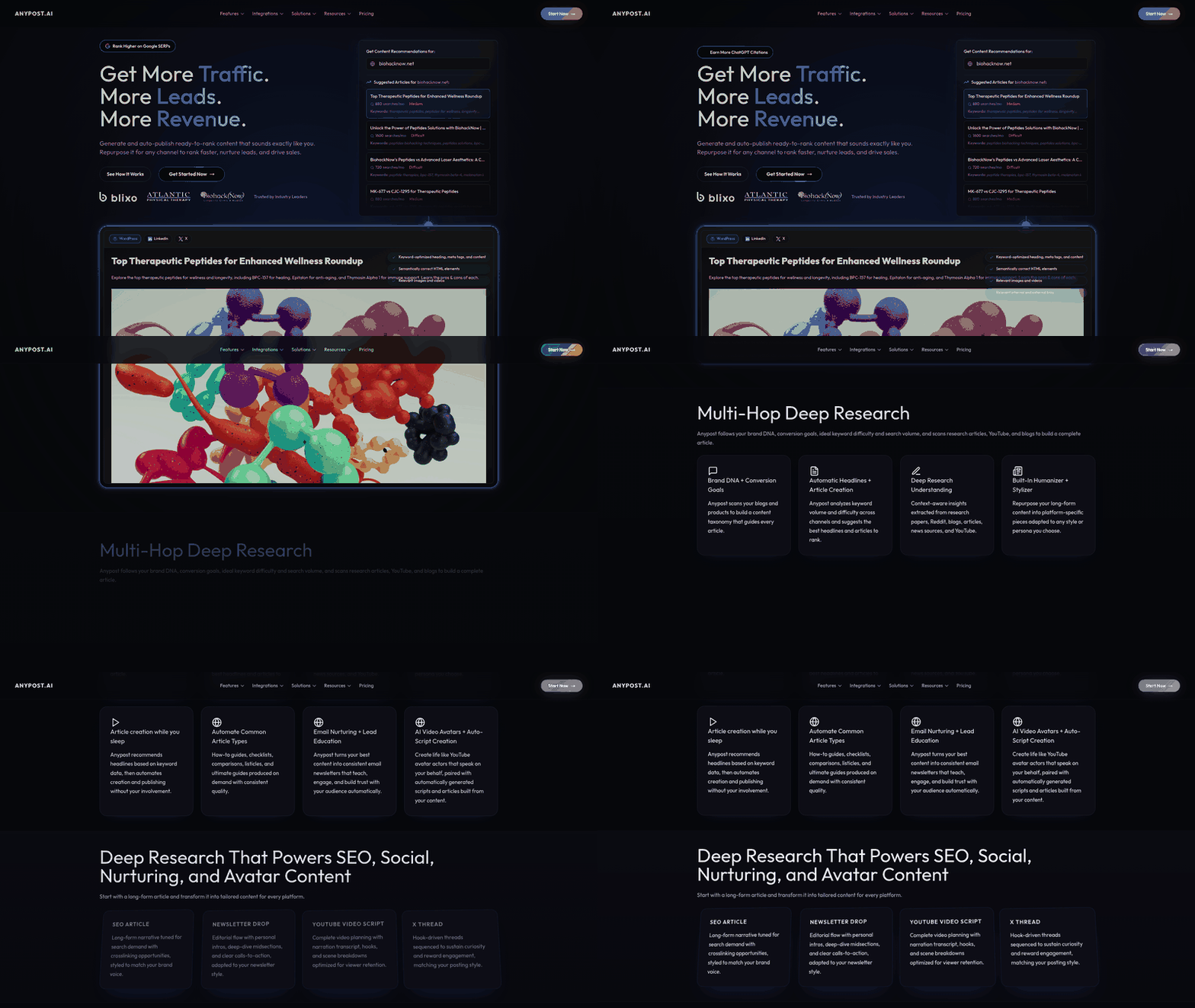
Automated content generation refers to the use of AI-powered tools and technologies to create, optimize, or enhance marketing content at scale. In B2B lead generation, this process leverages algorithms to produce blog posts, whitepapers, social media copy, and other materials tailored to target audiences. For example, agencies like CIENCE integrate AI-powered tools with human research to identify and engage potential customers efficiently [6]. This approach reduces manual effort while maintaining strategic alignment with business goals, as outlined in Brafton’s guide to B2B content marketing [9]. See the [Content Marketing Strategies for B2B Lead Generation] section for more details on the types of content used in B2B lead generation.
Key Benefits of Automated Content Generation
Automated content generation offers three primary advantages for B2B marketers:
- Efficiency and Time Savings: AI tools streamline repetitive tasks such as drafting email sequences or generating data-driven reports. By automating these processes, teams can focus on high-value activities like strategy development and client engagement [9].
- Scalability: Automated systems can produce large volumes of content across multiple channels simultaneously. This is critical for B2B companies targeting niche markets, where personalized messaging at scale is required [15].
- Data-Driven Personalization: AI analyzes audience behavior and preferences to tailor content dynamically. For instance, tools highlighted in the Top 5 B2B Lead Generation Tools [15] use automation to segment leads and deliver hyper-relevant content, improving conversion rates.
Implementing Automated Content Generation in B2B Marketing
To integrate automation effectively, B2B marketers should follow a structured approach:
Step 1: Select the Right Tools
Choose tools that align with your content goals. The Top 5 B2B Lead Generation Tools [15] recommends platforms that combine AI with human oversight, ensuring both creativity and precision. For example, agencies like CIENCE use hybrid models to balance machine efficiency with human expertise [6].
Step 2: Define Content Workflows
Map out which tasks can be automated. Common use cases include:
- Generating blog outlines based on keyword research
- Automating social media scheduling
- Creating lead magnet templates (e.g., case studies, infographics) [9]
Step 3: Align with Human Research
Automation should complement—not replace—human insights. Agencies like CIENCE emphasize using AI to enhance human-led research, ensuring content addresses real pain points identified through market analysis [6]. Building on concepts from [Understanding Your Target Audience], this approach ensures content is tailored to audience needs.
Step 4: Monitor and Optimize
Continuously track performance metrics such as lead conversion rates and engagement. Brafton’s guide [9] highlights the importance of A/B testing automated content to refine messaging and improve outcomes.
Challenges and Considerations
While automation offers significant benefits, it requires careful implementation:
- Quality Control: Over-reliance on AI may lead to generic content. Human review is essential to maintain brand voice and accuracy [9].
- Integration Complexity: Tools must align with existing CRM and marketing automation platforms. The Top 5 B2B Lead Generation Tools [15] advises evaluating integration capabilities before adoption.
- Audience Relevance: Automated content must avoid “spray and pray” tactics. Personalization requires robust data inputs, as noted in Brafton’s strategies [9].
Best Practices for Success
To maximize ROI from automated content generation, B2B marketers should:
- Start Small: Pilot automation on low-risk projects (e.g., social media posts) before scaling to high-stakes content like sales proposals.
- Leverage Hybrid Models: Combine AI-generated drafts with human editing, as demonstrated by agencies like CIENCE [6]. For strategies on repurposing content across channels, see the [Repurposing Content for Multiple Channels] section.
- Audit Regularly: Review automated outputs for consistency and relevance, using feedback loops to refine AI parameters [15].
By adopting these strategies, B2B organizations can harness automation to generate high-quality leads while maintaining the strategic depth required for complex sales cycles. The key lies in balancing technological efficiency with human creativity—a synergy emphasized across B2B content marketing frameworks [9] and lead generation tool recommendations [15].
Section 5: SEO Optimization for B2B Lead Generation
SEO optimization is a foundational element of B2B lead generation, as it drives targeted traffic to content that aligns with buyer intent. According to Brafton’s comprehensive guide on B2B content marketing, SEO helps establish authority and trust, two critical factors in converting prospects into leads [9]. By optimizing for relevant keywords and improving search engine rankings, businesses increase visibility during the research phase of the buyer’s journey, where 61% of B2B buyers begin their search [9]. This visibility directly impacts lead generation by ensuring content appears in front of decision-makers actively seeking solutions. Additionally, SEO complements other lead generation tools, such as those highlighted in the Top 5 B2B Lead Generation Tools [15], by amplifying their reach through organic search.
Keyword Research and Planning
Effective SEO begins with strategic keyword research tailored to B2B audiences. Unlike consumer-focused keywords, B2B terms often emphasize problem-solving, industry-specific challenges, and long-term value. Brafton’s guide emphasizes identifying long-tail keywords—phrases with lower competition and higher intent, such as “enterprise software solutions for supply chain management” [9]. Tools like Google Keyword Planner or SEMrush can uncover these terms, but B2B marketers should prioritize keywords that reflect the decision-making process, such as “ROI of SaaS implementation” or “best practices for IT procurement” [9].
A structured keyword plan involves mapping terms to specific buyer personas and stages of the sales funnel. For example:
| Sales Funnel Stage | Keyword Type | Example Keywords |
|---|---|---|
| Top of Funnel (TOFU) | Educational, broad | “B2B lead generation strategies” |
| Middle of Funnel (MOFU) | Comparative, solution-focused | “ERP software comparison for manufacturing” |
| Bottom of Funnel (BOFU) | Transactional, brand-specific | “request a quote for CRM software” |
This approach ensures content addresses the right audience at the right time, improving conversion rates. See the [Understanding Your Target Audience] section for more details on buyer personas and decision-making stages. Cross-referencing with tools listed in [15] can further refine keyword targeting by analyzing competitor strategies and identifying gaps.
Link Building Strategies
Link building remains a cornerstone of SEO, particularly in B2B where credibility is paramount. Brafton highlights the importance of earning backlinks from authoritative industry websites, such as trade publications or thought leadership platforms, to signal trustworthiness to search engines [9]. Guest blogging is a proven tactic: By contributing expert insights to reputable sites, businesses gain exposure while earning high-quality links.
Another strategy is leveraging partnerships for co-created content. For instance, collaborating with complementary B2B brands on whitepapers or webinars generates shareable assets that attract backlinks from both partners’ networks [9]. See the [Advanced B2B Lead Generation Strategies] section for more on leveraging partnerships for targeted outreach. Tools like Ahrefs or Moz, referenced indirectly in [15], can audit competitors’ backlink profiles to identify opportunities for similar outreach.
A checklist for effective link building includes:
- 1. Audit existing content for link potential.
- 2. Identify 5-10 industry influencers or publications for outreach.
- 3. Create data-driven, original research to attract citations.
- 4. Monitor and disavow low-quality or spammy backlinks.
Localizing SEO efforts is also critical. B2B companies with regional operations should optimize for location-based keywords (e.g., “cloud services in Chicago”) and claim Google My Business listings to capture local intent [9]. This tactic is particularly effective for industries like construction, healthcare, or logistics, where geographic proximity influences purchasing decisions.
Measuring SEO Success in B2B
To evaluate the impact of SEO on lead generation, track metrics such as organic traffic growth, keyword ranking improvements, and conversion rates from search-driven visits. Brafton recommends using UTM parameters to tag SEO campaigns, enabling granular analysis of which content drives the most qualified leads [9]. Tools like Google Analytics and Search Console provide insights into user behavior, such as bounce rates and time on page, which indicate content relevance [15]. See the [Measuring and Analyzing B2B Lead Generation Efforts] section for a deeper dive into tracking and optimizing performance.
For B2B marketers, SEO is not a one-time task but an ongoing process of adaptation. Regularly updating content to reflect industry trends, algorithm changes, and evolving buyer needs ensures sustained visibility. By integrating SEO with other lead generation tools—such as LinkedIn campaigns [8] or CRM systems—businesses create a cohesive strategy that maximizes ROI. As emphasized in [9] and [15], the synergy between SEO and targeted tools is essential for scaling B2B lead generation efforts in competitive markets.
Section 6: Repurposing Content for Multiple Channels
Repurposing content for multiple channels is a critical strategy in B2B lead generation, enabling marketers to maximize the value of their content while reaching diverse audiences across platforms. By adapting a single piece of content—such as a blog post, whitepaper, or webinar—into formats tailored to social media, email newsletters, and YouTube, businesses can amplify their message, reduce production costs, and maintain consistent engagement with prospects. This approach aligns with the principles of value-driven marketing, which emphasizes efficiency and audience relevance [9], as discussed in the [Content Marketing Strategies for B2B Lead Generation] section. For example, LinkedIn’s role as a B2B lead generation powerhouse is amplified when content is strategically repurposed to align with its professional audience, leveraging the platform’s unique ability to connect with decision-makers [8], a concept introduced in the [Introduction to B2B Lead Generation] section. Below, we explore the benefits, methods, and best practices for effective content repurposing.
Benefits of Repurposing Content
Repurposing content offers three primary advantages: efficiency, audience expansion, and ROI optimization. First, creating one core piece of content and adapting it for multiple channels reduces the time and resources required to produce new material from scratch. This is particularly valuable in B2B marketing, where in-depth content like case studies or industry reports requires significant investment [9]. For instance, automated content generation tools can streamline the repurposing process, as highlighted in the [Automated Content Generation and its Role in B2B Lead Generation] section. Second, repurposing allows brands to meet audiences where they are. For instance, LinkedIn users may prefer professional articles and thought leadership posts, while YouTube viewers might engage more with video explainer clips or interview-style content [11]. Third, by consistently reinforcing key messages across platforms, marketers strengthen brand recall and trust, both of which are critical for lead nurturing [14].
How to Repurpose Content for Different Channels
Social Media: Shorten, Visualize, and Engage
Social media platforms like LinkedIn require content to be concise and visually engaging. A long-form blog post on industry trends can be transformed into a series of shorter posts with actionable takeaways, accompanied by infographics or carousels. For example, a webinar on supply chain challenges can be segmented into 60-second LinkedIn videos highlighting key insights [8]. Additionally, repurposed content should include clear calls-to-action (CTAs) to drive traffic to lead magnets like gated whitepapers or demo requests [11].
Email Newsletters: Personalize and Deepen
Email marketing thrives on personalized, value-driven content. A case study published on a company’s blog can be adapted into a targeted email newsletter, using subject lines that reference the recipient’s role or industry [9]. For example, a manufacturing-focused case study might be sent to past attendees of a LinkedIn event on industrial automation. Including links to related resources—such as a downloadable checklist or a YouTube video—encourages further engagement [14].
YouTube: Educate and Demonstrate
YouTube is ideal for repurposing content into educational or demonstrative formats. Webinars can be edited into shorter video clips, while whitepapers can be transformed into animated explainers. For B2B audiences, hosting a series of “behind-the-scenes” videos that showcase how a product solves specific industry problems can build credibility [11]. LinkedIn itself can cross-promote YouTube content by embedding videos in posts or sharing links in relevant groups [8].
Best Practices for Content Repurposing
1. Audit Content for Reuse Opportunities
Before repurposing, conduct an audit of existing content to identify high-performing pieces. Tools like LinkedIn Analytics can reveal which topics resonate most with your audience [14]. For example, a blog post with a high time-on-page metric might be ideal for repurposing into a podcast or video [9].
2. Adapt Tone and Format to the Platform
Each channel demands a unique tone and structure. LinkedIn content should maintain a professional yet approachable voice, while YouTube videos benefit from a conversational, on-camera style. A checklist for repurposing could include:
- Social Media: Use hashtags, emojis, and short paragraphs.
- Email: Focus on personalization and clear CTAs.
- YouTube: Prioritize visual storytelling and concise explanations [8].
3. Leverage Analytics for Iteration
Track performance metrics across channels to refine repurposing strategies. For instance, if LinkedIn posts repurposed from blogs generate higher engagement than those from whitepapers, prioritize blog-based content for social media [11]. Tools like Google Analytics and LinkedIn’s Lead Gen Forms can help measure conversions from repurposed content [14].
4. Maintain Consistent Branding
Repurposed content must align with your brand’s visual identity and messaging. Use consistent color schemes, fonts, and logos across all platforms. For B2B audiences, this consistency reinforces professionalism and trust [9].
By systematically repurposing content, B2B marketers can create a cohesive, cost-effective lead generation strategy that leverages the strengths of each channel. The key is to balance efficiency with platform-specific customization, ensuring that every repurposed piece serves a clear purpose in the buyer’s journey [8].
Section 7: Measuring and Analyzing B2B Lead Generation Efforts
Measuring and analyzing B2B lead generation efforts is critical to refining strategies and ensuring alignment with business objectives. Without systematic tracking, companies risk investing in ineffective tactics or overlooking opportunities to optimize resource allocation. Belkins, a top B2B lead generation agency, emphasizes the need for tailored omnichannel strategies, delivering 100–400+ qualified appointments annually by leveraging analytics to identify high-performing channels [3]. Similarly, Brafton’s guide on B2B content marketing underscores that data-driven insights enable businesses to build trust and generate leads effectively, as content performance metrics reveal what resonates with target audiences [9]. The competitive nature of B2B markets, as highlighted in LinkedIn’s in-depth strategies for lead generation, further stresses the importance of tracking engagement metrics to refine LinkedIn campaigns, a platform where 85% of B2B leads originate [11]. See the [Advanced B2B Lead Generation Strategies] section for more details on hyper-targeted approaches that benefit from such data.
Key Metrics for B2B Lead Generation
To evaluate success, organizations must focus on specific metrics that align with their lead generation goals. Conversion rates—measuring the percentage of leads that progress through the sales funnel—are central to assessing campaign efficiency. Belkins notes that tracking qualified appointments, such as scheduling meetings or demo requests, provides a direct indicator of sales readiness [3]. Engagement metrics, including website traffic, email open rates, and social media interactions, also offer insights into audience interest and content effectiveness [9]. LinkedIn’s strategies emphasize monitoring lead magnet performance, such as whitepaper downloads or webinar sign-ups, to gauge interest in specific offerings [11]. These lead magnets are further explored in the [Content Marketing Strategies for B2B Lead Generation] section [9]. Additionally, cost-per-lead (CPL) metrics help quantify the financial efficiency of campaigns, ensuring budgets are allocated to high-ROI channels [15].
Analytics Tools for Optimization
Analytics tools are essential for collecting, processing, and interpreting lead generation data. LinkedIn’s platform provides native analytics to track campaign performance, including click-through rates (CTRs) and demographic insights, enabling businesses to adjust targeting strategies [11]. Brafton recommends integrating CRM systems with marketing automation platforms to unify lead data, offering a holistic view of customer journeys [9]. For example, tools like HubSpot or Marketo (cited in [15]) allow teams to automate lead scoring, identify patterns in buyer behavior, and trigger personalized follow-ups. Belkins’ approach further highlights the use of A/B testing tools to compare the effectiveness of different content formats, CTAs, or landing pages, ensuring iterative improvements [3].
Actionable Steps to Improve Lead Generation
Once data is collected, businesses must act on insights to enhance performance. A structured approach includes:
- Auditing Top-Performing Channels: Allocate more resources to channels with the highest conversion rates, as identified through tools like Google Analytics or LinkedIn Ads Manager [9][11].
- Refining Lead Scoring Models: Adjust criteria for qualifying leads based on engagement data, ensuring sales teams prioritize high-intent prospects [3].
- Optimizing Content Strategies: Use heatmaps and session recordings (via tools like Hotjar) to identify friction points in lead capture forms or landing pages [15]. See the [Repurposing Content for Multiple Channels] section for strategies on maximizing content utility across platforms.
- Conducting Regular ROI Analysis: Compare CPL across campaigns to eliminate underperforming initiatives and reinvest in scalable strategies [11].
Limitations and Considerations
While analytics provide valuable insights, limitations exist. For instance, tracking qualified appointments (as Belkins does) requires clear definitions of “qualified” leads, which may vary by industry or company stage [3]. Additionally, metrics like website traffic may not directly correlate with revenue if the site lacks conversion-focused design [9]. To mitigate these challenges, businesses should combine quantitative data with qualitative feedback from sales teams, ensuring alignment between marketing efforts and buyer readiness.
By systematically measuring outcomes, leveraging analytics tools, and iterating on performance data, B2B organizations can transform lead generation into a predictable, scalable process. The integration of insights from sources like Belkins’ omnichannel strategies [3], LinkedIn’s engagement-focused tactics [11], and Brafton’s content marketing frameworks [9] provides a roadmap for sustained success. Ultimately, the goal is to create a feedback loop where data informs strategy, and strategy drives measurable growth.
Section 8: Advanced B2B Lead Generation Strategies
Advanced B2B lead generation strategies demand a shift from broad outreach to hyper-targeted, relationship-driven approaches. Two pillars of this evolution are account-based marketing (ABM) and personalized marketing, both of which leverage data, alignment between sales and marketing, and tailored content to generate high-quality leads. Below, we dissect these strategies with actionable insights and real-world examples.
Account-Based Marketing (ABM): A Strategic Deep Dive
What Is Account-Based Marketing?
Account-based marketing is a targeted approach where sales and marketing teams collaborate to focus on high-value accounts rather than individual leads. This strategy involves identifying priority accounts, creating customized campaigns, and engaging stakeholders with relevant content. As noted by Belkins, a top B2B lead generation agency, ABM relies on “tailored omnichannel strategies” to deliver 100–400+ qualified appointments annually [3].
Benefits of ABM in B2B Lead Generation
ABM offers measurable advantages over traditional lead generation methods:
- Higher conversion rates: By aligning with sales teams, ABM ensures efforts are concentrated on accounts with the highest revenue potential [10].
- Improved efficiency: Resources are allocated to accounts already deemed viable, reducing wasted effort on low-potential leads [3].
- Deeper client relationships: Personalized engagement fosters trust, a critical factor in B2B decision-making [9]. A 2025 study on value-driven marketing techniques further highlights ABM’s role in enhancing perceived value for B2B clients, directly impacting lead conversion [12].
Implementing ABM: Key Steps
- Identify priority accounts: Use CRM data and sales input to select accounts that align with ideal customer profiles. See the [Section 2: Understanding Your Target Audience] section for more details on identifying ideal customer profiles.
- Develop account-specific content: Create whitepapers, case studies, or LinkedIn ads tailored to the account’s industry challenges [8].
- Engage stakeholders: Deploy multi-channel outreach (email, social media, direct mail) to decision-makers within the target account [10].
- Measure ROI: Track metrics like engagement rates and pipeline velocity to refine strategies [3].
Personalized Marketing: Scaling Human Connection
Why Personalization Matters in B2B
Personalized marketing goes beyond generic messaging by adapting content to the specific needs, behaviors, and preferences of leads. According to a 2024 LinkedIn study, B2B marketers using personalized social media campaigns see a 2x higher lead conversion rate compared to non-personalized efforts [11]. This aligns with value-driven marketing principles, where perceived value drives client acquisition [12].
Techniques for Personalized B2B Lead Generation
- Leverage data-driven insights: Use tools like LinkedIn Marketing Solutions to analyze prospect behavior and tailor ad targeting [8]. Building on concepts from [Section 4: Automated Content Generation and its Role in B2B Lead Generation], AI tools enhance data-driven targeting.
- Dynamic content customization: Adjust email subject lines, CTAs, and landing pages based on the lead’s role or industry [9].
- Social CRM integration: Combine social media interactions with CRM data to create holistic customer profiles, enhancing relationship marketing efforts [13].
- Video and interactive content: Platforms like SleekBio (cited in 2025 lead generation tools) enable personalized video outreach to engage decision-makers [15].
Tools and Agencies for Personalized Campaigns
Agencies like Belkins and CIENCE employ hybrid human-AI strategies to scale personalization. For instance, CIENCE uses AI-powered tools to identify leads while human researchers craft customized outreach [6]. Similarly, LinkedIn’s B2B lead generation platform offers in-depth strategies for segmenting audiences and delivering targeted messaging [14].
Synergizing ABM and Personalization
Advanced B2B lead generation thrives on the integration of ABM and personalized marketing. For example:
- ABM + Personalized Content: A SaaS company targeting healthcare providers might create a personalized webinar series for a priority hospital chain, addressing their specific compliance challenges [9].
- Social Media + Data Insights: Using LinkedIn’s targeting features, marketers can serve account-specific ads to stakeholders in target accounts, combining ABM focus with personalization [8]. See the [Section 3: Content Marketing Strategies for B2B Lead Generation] section for strategies on leveraging LinkedIn for targeted outreach.
Challenges and Mitigation Strategies
- Challenge: Resource intensity of ABM and personalization. Solution: Partner with agencies like Belkins or use AI tools to automate repetitive tasks [3][15].
- Challenge: Data silos between sales and marketing. Solution: Implement social CRM systems to centralize customer interactions and improve collaboration [13].
By adopting these advanced strategies, B2B companies can move beyond volume-based lead generation and focus on quality, fostering long-term client relationships and sustainable growth.
Section 9: Common Mistakes to Avoid in B2B Lead Generation
B2B lead generation is a complex process that requires strategic alignment between content, targeting, and follow-up. However, many marketers repeat costly mistakes that hinder lead quality and conversion rates. By understanding these pitfalls and implementing best practices, organizations can optimize their efforts. Below, we dissect common errors and actionable solutions, supported by insights from industry experts.
Mistake 1: Prioritizing Quantity Over Lead Quality
A widespread misstep is focusing solely on generating high volumes of leads while neglecting their relevance to the target market. As noted in [4], "You will spend less time nurturing and following up on unproductive..." This highlights the inefficiency of pursuing low-quality leads, which often results in wasted resources and poor ROI. Marketers must instead prioritize qualified leads that align with buyer personas. For deeper insights into defining buyer personas, see the [Understanding Your Target Audience] section.
How to Avoid This
- Refine lead scoring models to assess engagement and intent, ensuring only high-potential prospects enter the sales funnel.
- Leverage data-driven tools like LinkedIn’s targeting features [11] to identify decision-makers within ideal customer profiles.
- Audit lead sources regularly to eliminate channels producing unqualified traffic.
Mistake 2: Poor Targeting and Audience Segmentation
Failing to segment audiences based on industry, company size, or role leads to generic outreach efforts. For example, LinkedIn’s B2B strategies [11] emphasize the platform’s ability to "generate leads and convert them into customers" by targeting specific job titles or industries. Without segmentation, messaging lacks relevance and fails to resonate with diverse buyer needs. Building on concepts from the [Understanding Your Target Audience] section, precise segmentation begins with a deep understanding of audience pain points and decision-making dynamics.
Best Practice: Precision Targeting
- Use LinkedIn’s advanced filters to narrow audiences by seniority, industry keywords, or geographic location [11].
- Create buyer personas informed by B2B content marketing insights [9], which stress the importance of aligning content with audience pain points.
- Test multiple audience segments in A/B campaigns to identify high-performing demographics.
Mistake 3: Neglecting Value-Driven Content
Content that does not address audience challenges or provide actionable insights fails to build trust. According to [9], "B2B content marketing [should] build trust, generate leads..." This underscores the need for educational, industry-specific content. Many marketers instead rely on promotional messaging, which alienates prospects seeking solutions. For strategies on creating effective value-driven content, refer to the [Content Marketing Strategies for B2B Lead Generation] section.
How to Correct This
- Produce thought leadership content such as whitepapers, case studies, and webinars to establish authority [9].
- Tailor content to the buyer’s journey, using LinkedIn’s in-depth strategies [11] to address awareness, consideration, and decision stages.
- Incorporate testimonials and metrics to demonstrate ROI and credibility [4].
Mistake 4: Ineffective Follow-Up Processes
Even high-quality leads can slip through the cracks without structured follow-up. Source [4] notes that unproductive leads are often followed up on excessively, while qualified leads receive insufficient attention. This imbalance reduces conversion rates and erodes sales team morale.
Checklist for Effective Follow-Up
| Step | Action | Source |
|---|---|---|
| 1 | Automate initial outreach using CRM tools to send personalized emails within 24 hours [11]. | |
| 2 | Score leads dynamically based on engagement metrics (e.g., email opens, content downloads) [4]. | |
| 3 | Assign follow-up tasks to sales teams with clear SLAs to avoid delays [9]. |
Mistake 5: Underutilizing LinkedIn’s Potential
Many B2B marketers overlook LinkedIn’s role in lead generation, despite its dominance in B2B engagement. Source [11] explicitly states that LinkedIn offers "prime opportunities for lead generation" due to its professional audience. Common errors include generic outreach, neglecting company pages, and failing to engage in industry groups.
LinkedIn Optimization Tips
- Publish thought leadership posts weekly to position your brand as an industry expert [11].
- Use LinkedIn Sales Navigator to track prospects and receive alerts on key account activities [11].
- Engage with prospects through comments and shares, fostering relationships before direct outreach [9].
Mistake 6: Ignoring Analytics and Iteration
Failing to measure campaign performance and adapt strategies is a critical oversight. As [9] explains, B2B content marketing success relies on continuous refinement based on analytics. Many teams stick to outdated tactics without testing new approaches, resulting in stagnant lead generation. For detailed guidance on measuring and analyzing lead generation efforts, consult the [Measuring and Analyzing B2B Lead Generation Efforts] section.
Data-Driven Adjustments
- Track KPIs such as lead-to-customer conversion rates, cost per lead, and engagement metrics [4].
- Conduct quarterly audits to identify underperforming campaigns and reallocate budgets [11].
- Use A/B testing for subject lines, CTAs, and landing pages to optimize conversions [9].
By avoiding these common mistakes and adopting the solutions outlined above, B2B marketers can enhance lead quality, reduce wasted effort, and drive measurable business growth. The integration of targeted content, precise audience segmentation, and analytics-driven iteration forms the foundation of a successful lead generation strategy.
Section 10: Future of B2B Lead Generation and Emerging Trends
As B2B lead generation evolves, emerging technologies and methodologies are reshaping how businesses identify, engage, and convert prospects. This section explores the transformative role of AI and machine learning, highlights key trends, and provides actionable strategies to maintain a competitive edge.
AI and Machine Learning: Transforming Lead Generation
Artificial intelligence (AI) and machine learning are no longer auxiliary tools but foundational elements of modern B2B lead generation. Agencies like CIENCE explicitly leverage AI-powered tools to automate prospect research, analyze engagement patterns, and identify high-potential leads with precision [6]. These technologies enable predictive analytics, allowing marketers to forecast buyer behavior by processing vast datasets from CRM systems, social media interactions, and website activity [15]. For instance, machine learning algorithms can score leads in real time based on historical conversion data, prioritizing prospects most likely to convert [15]. This reduces manual effort while improving targeting accuracy.
Beyond automation, AI enhances personalization at scale. By analyzing content engagement metrics, AI systems can recommend tailored content to prospects, aligning with Brafton’s emphasis on trust-building through relevant, value-driven materials [9]. For example, if a prospect frequently engages with case studies on cloud infrastructure, an AI tool might prioritize distributing related whitepapers or scheduling a demo with a solutions engineer. As mentioned in the [Automated Content Generation and its Role in B2B Lead Generation] section, such tools streamline the creation of targeted assets, further amplifying AI’s impact.
Emerging Trends in B2B Lead Generation
Two dominant trends are rising in prominence: hyper-personalization via social CRM and the integration of video-based outreach.
Social CRM and Relationship-Centric Strategies
Social CRM—defined as leveraging social media interactions to build trust and relationships—is becoming a cornerstone of B2B strategies [13]. By tracking prospects’ social media activity, businesses can gain insights into their professional challenges and interests, enabling more contextual outreach. For example, a sales representative might engage a prospect on LinkedIn by commenting on their recent post about industry challenges, positioning themselves as a thought leader. This aligns with research indicating that relationship marketing significantly impacts B2B conversions [13]. See the [Understanding Your Target Audience] section for more details on how audience insights drive effective relationship strategies.
Video as a Lead Generation Tool
Video content is gaining traction as a high-conversion medium. Platforms like SleekBio (cited in [15]) highlight tools that automate video creation for personalized outreach, such as custom video messages from executives. Video’s effectiveness stems from its ability to convey urgency and authenticity—critical factors in B2B decision-making. A 2025 study notes that 72% of B2B buyers prefer video content for complex product demonstrations, underscoring its role in the future [15].
Staying Ahead of the Curve: Strategic Recommendations
To remain competitive, organizations must adopt a dual focus on technology and adaptability.
1. Invest in AI-Driven Tools with Human Oversight
While AI automates repetitive tasks, human expertise is still vital for nuanced decision-making. Agencies like CIENCE combine AI with human research teams to validate data insights and refine targeting strategies [6]. For example, AI might flag a surge in website traffic from a specific industry, but human analysts determine whether this reflects a genuine market shift or a temporary anomaly.
2. Prioritize Data Quality and Integration
Machine learning models depend on clean, integrated datasets. Businesses should consolidate CRM data with social media and website analytics to create unified prospect profiles. Brafton’s content marketing guide emphasizes the importance of data alignment for delivering consistent messaging across channels [9]. A fragmented data approach risks misaligned campaigns, reducing lead generation efficacy.
3. Experiment with Emerging Channels
Social CRM and video are just the beginning. Marketers should monitor platforms like LinkedIn’s AI-powered Sales Navigator [8] or emerging tools highlighted in 2025’s top lead generation vendors [15]. For instance, interactive content (e.g., assessment quizzes) and account-based marketing (ABM) strategies are gaining traction, particularly for high-value B2B sectors [10]. Building on concepts from [Advanced B2B Lead Generation Strategies], ABM’s hyper-targeted approach complements these innovations by aligning outreach with specific account needs.
Conclusion: Future-Proofing Your Lead Generation Strategy
The future of B2B lead generation hinges on balancing automation with human insight. By adopting AI tools like those from CIENCE [6], embracing social CRM [13], and experimenting with video-driven outreach [15], businesses can future-proof their strategies. However, success requires continuous adaptation—monitoring trends, refining data practices, and staying agile in response to market shifts. As the landscape evolves, organizations that prioritize both technological innovation and relationship-building will dominate the B2B space.
Checklist for Future-Ready Lead Generation:
- Audit current AI adoption and identify gaps (e.g., lead scoring, content personalization).
- Integrate social media data with CRM systems to enhance prospect profiles.
- Allocate budget for video creation tools and ABM platforms.
- Train teams on interpreting AI-generated insights while maintaining human oversight.
- Regularly test new channels (e.g., LinkedIn Sales Navigator, interactive content).
By following these steps and leveraging the strategies outlined, B2B marketers can position themselves at the forefront of an increasingly dynamic and tech-driven industry.
References
[1] What is B2B lead generation? 15 proven strategies for growth - https://www.zendesk.com/blog/b2b-lead-gen/
[2] What is B2B Lead Generation? | Cognism - https://www.cognism.com/what-is-b2b-lead-generation
[3] Belkins - #1 B2B Lead Generation Agency - https://belkins.io/
[4] B2B Lead Generation Services - High Quality B2B Leads - https://www.unboundb2b.com/lead-generation-services/
[5] The 32 Best Ways to Generate More B2B Sales Leads | AdRoll - https://www.adroll.com/blog/b2b-sales-leads-32-best-ways-to-generate-leads
[6] Top 21 B2B Lead Generation Companies & Agencies - https://www.kaspr.io/blog/b2b-lead-generation-companies
[7] Martal | #1 B2B Lead Generation and Sales Agency Worldwide - https://martal.ca/
[8] Lead Generation | LinkedIn Marketing Solutions - https://business.linkedin.com/advertise/resources/lead-generation
[9] B2B Content Marketing: A Comprehensive Guide | Brafton - https://www.brafton.com/b2b-content-marketing/
[10] A Guide to What Works Best for Lead Generation in B2B - Altitude... - https://altitudemarketing.com/blog/abm-outbound-b2b/
[11] (PDF) Digital Marketing on LinkedIn: In-Depth Strategies for Lead... - https://www.researchgate.net/publication/380433146_Digital_Marketing_on_LinkedIn_In-Depth_Strategies_for_Lead_Generation
[12] (PDF) The impact of value-driven marketing techniques on B2B... - https://www.researchgate.net/publication/362154860_The_impact_of_value-driven_marketing_techniques_on_B2B_industry_The_importance_of_value-driven_marketing_in_lead_generation_and_customer_acquisition_in_B2B_markets
[13] (PDF) The role of social CRM and its potential impact on lead... - https://www.researchgate.net/publication/264837125_The_role_of_social_CRM_and_its_potential_impact_on_lead_generation_in_business-to-business_marketing
[14] Digital Marketing on LinkedIn: In-Depth Strategies for Lead Generation - https://www.researchgate.net/profile/Serveh-Saeidi-2/publication/380433146_Digital_Marketing_on_LinkedIn_In-Depth_Strategies_for_Lead_Generation/links/663c87fe08aa54017aef3e42/Digital-Marketing-on-LinkedIn-In-Depth-Strategies-for-Lead-Generation.pdf
[15] Top 5 B2B Lead Generation Tools by Lead Gen Jay - https://www.youtube.com/watch?v=M6ZvSjkqjU8
Frequently Asked Questions
1. What is the key difference between B2B and B2C lead generation?
B2B lead generation focuses on building long-term relationships with decision-makers in organizations, often involving complex sales cycles and tailored strategies. Unlike B2C, which targets individual consumers with shorter, more transactional interactions, B2B requires addressing multiple stakeholders, emphasizing perceived value (e.g., ROI or cost efficiency), and nurturing leads through educational content. For example, a B2B company might use whitepapers or case studies to establish authority, while B2C might rely on discounts or emotional appeals.
2. How can content marketing effectively support B2B lead generation?
Content marketing in B2B involves creating targeted, value-driven assets like whitepapers, webinars, industry reports, and blog posts to attract and educate prospects. For instance, a SaaS company might publish a guide on optimizing workflows to draw in IT decision-makers. SEO-optimized content and gated resources (e.g., downloadable templates) help qualify leads by capturing contact information. Agencies like Belkins use omnichannel strategies, integrating email, social media, and paid ads to amplify reach while aligning content with each stage of the buyer’s journey.
3. Why is balancing lead volume and quality crucial in B2B lead generation?
Generating high volumes of low-quality leads can waste sales resources, while too few leads risk missed revenue. Agencies like Martal emphasize aligning lead generation with the buyer’s intent and company needs. For example, a B2B software firm might use LinkedIn’s Sales Navigator to target companies in growth phases, ensuring leads are both numerous and relevant. Tools like predictive analytics can help prioritize leads based on engagement history and firmographics.
4. What role does LinkedIn play in B2B lead generation, and how can it be optimized?
LinkedIn is a cornerstone for B2B outreach due to its professional audience and advanced targeting. Strategies include:
- Company Page Engagement: Share thought leadership content and engage with industry peers.
- LinkedIn Sales Navigator: Use filters (e.g., job title, industry) to identify decision-makers.
- Personalized InMail: Craft concise, value-driven messages referencing the recipient’s role or challenges.
- Hashtag Campaigns: Leverage industry-specific hashtags to increase visibility.
For example, a cybersecurity firm might post case studies on data breaches under hashtags like #CybersecurityTips to attract CIOs.
5. What are some top B2B lead generation tools beyond what’s mentioned in the article?
While the article references tools via a video, popular options include:
- HubSpot: Combines CRM, email marketing, and analytics for lead tracking.
- LinkedIn Sales Navigator: For lead discovery and outreach.
- HubSpot Sales Hub: Automates follow-ups and tracks engagement.
- Leadfeeder: Integrates with Google Analytics to identify website visitors.
- Calendly: Streamlines scheduling for demos or consultations.
Tools like these help automate repetitive tasks (e.g., follow-ups) and provide data to refine strategies.
6. How do you measure the success of B2B lead generation efforts?
Success is measured through both quantitative and qualitative metrics:
- Quantitative: Conversion rates, cost per lead (CPL), lead-to-customer ratio, revenue per lead.
- Qualitative: Lead engagement (e.g., email open rates), content downloads, and sales team feedback.
For example, a B2B agency might track how many leads from a webinar convert to contracts, then adjust content or targeting based on lower-converting segments. Tools like CRM dashboards and UTM parameters help track these metrics in real time.
7. How can personalization enhance B2B lead generation?
Personalization increases relevance by tailoring messages to a prospect’s role, industry, or pain points. For instance, a cloud storage provider might send a CTO a case study on scaling infrastructure, while a marketing director receives content on ROI tracking. Techniques include:
- Account-Based Marketing (ABM): Create custom landing pages for target accounts.
- Dynamic Email Campaigns: Use merge tags (e.g., [First Name], [Company]) in subject lines.
- Custom CTAs: Align offers with the prospect’s stage in the buyer’s journey (e.g., “Request a Demo” vs. “Download a Free Trial”).
Personalization boosts engagement by 40% (McKinsey) and reduces sales cycles by 33% (HubSpot).