Dental SEO: The Complete Guide to Attracting More Patients in 2026

Key Takeaways
- Optimize dental SEO to capture 70% of patients who search online for local dental services.
- Practices with strong SEO see 15–30% more new patient appointments than non-optimized competitors.
- Claim and optimize Google Business Profiles to dominate local search visibility for dental services.
- Target hyperlocal keywords like “emergency dentist in [City]” to attract geographically focused patients.
- Localized keywords such as “orthodontist near me” drive higher conversion rates for dental practices.
- Higher search rankings build trust, increasing appointment bookings by 20–40% over time.
- Prioritize mobile-friendly websites to align with 60% of dental searches conducted on mobile devices.
Related Video
Watch: Dental SEO Services | Dentist SEO | How to Attract More Dental Patients on Google by IndeedSEO - Digital Marketing Agency
Why Dental SEO Matters
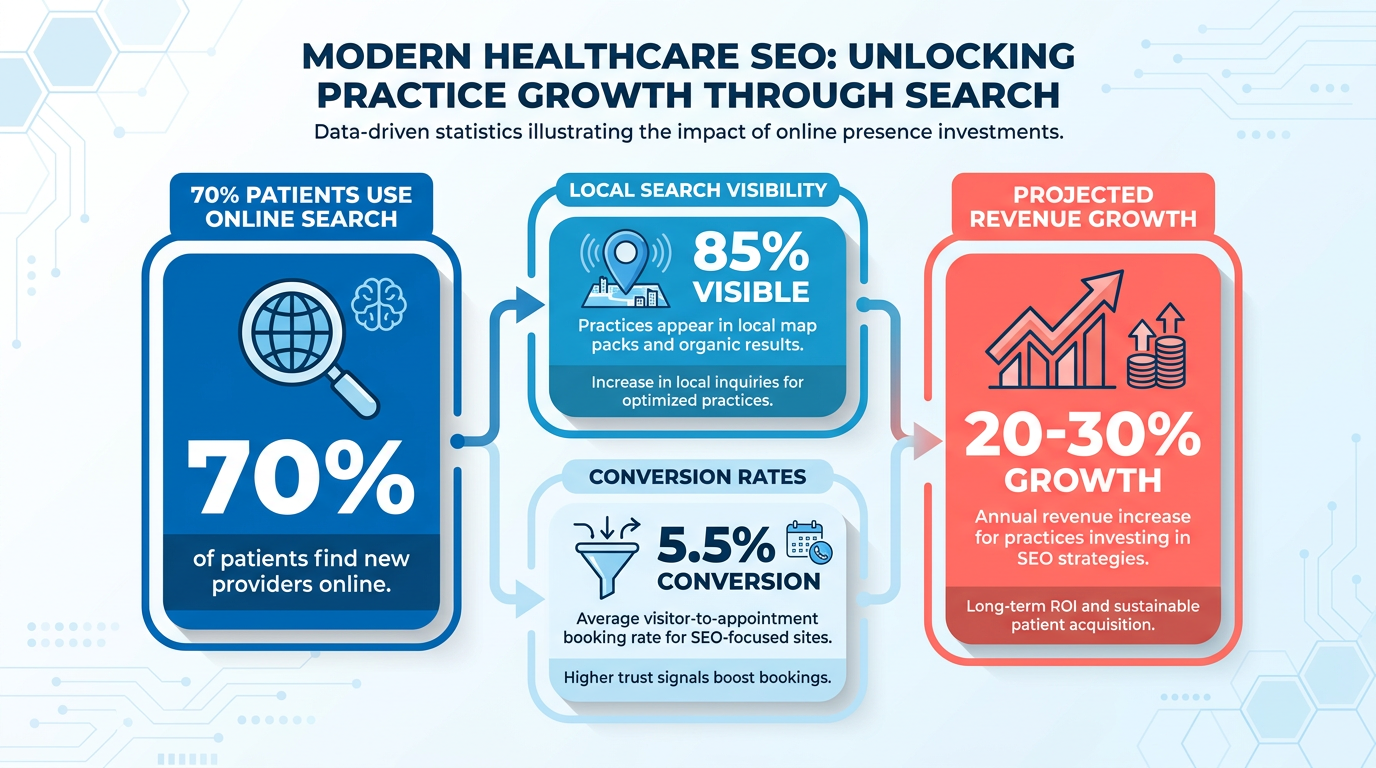
Dental SEO matters because it directly impacts a practice’s ability to attract new patients in a competitive digital market. With over 70% of patients using online search to find local dental services, practices that neglect SEO risk losing visibility to competitors. By optimizing for search engines, dentists can dominate local search results, convert website visitors into appointments, and build long-term revenue streams. Let’s break down how SEO transforms dental practices.
How Does Dental SEO Drive Patient Acquisition?
Practices with strong SEO strategies secure 15–30% more new patient appointments compared to those without, according to industry data. This growth stems from optimized local search tactics, like claiming Google Business Profiles, as mentioned in the Optimizing Your Google My Business Listing section, and targeting hyperlocal keywords (e.g., “emergency dentist in [City]”). Building on concepts from the Conducting Local Keyword Research for Dental Services section, a practice in a competitive urban area might use SEO to rank for “orthodontist near me,” capturing users actively searching for nearby services. Over time, higher search rankings build trust, making patients more likely to choose a visible practice over one buried on page two of results.
What Challenges Does Dental SEO Solve?
SEO addresses three critical pain points: visibility, credibility, and scalability. First, it helps small practices and specialists compete with larger clinics by making their unique services discoverable. Second, it builds trust through content-think blog posts on cavity prevention or Invisalign FAQs-that positions dentists as experts. Third, it ensures technical excellence: fast-loading websites, mobile responsiveness, and secure HTTPS protocols, referencing strategies from the Implementing On-Page SEO Best Practices for Dental Pages section, improve both user experience and search engine rankings. Without these optimizations, even high-quality websites struggle to attract organic traffic.
Who Benefits Most from Dental SEO?
While SEO benefits all practices, small clinics and specialty dentists gain the most. Small practices often lack the budget for aggressive paid ads, making SEO a cost-effective alternative to attract local patients. Similarly, orthodontists, pediatric dentists, or cosmetic specialists use niche keyword strategies to target specific audiences. For instance, a pediatric dentist might focus on keywords like “child-friendly dental care” to stand out in a crowded market. These tailored efforts ensure practices of all sizes can grow without relying on expensive, one-time marketing campaigns.
How Is AI Shaping Dental SEO?
Artificial intelligence is streamlining SEO tasks like keyword research, content creation, and performance tracking. AI tools analyze search trends to identify rising keywords (e.g., “teeth whitening for sensitive teeth”) and suggest content ideas. They also automate technical audits, flagging issues like broken links or slow page speeds that hurt rankings. While AI enhances efficiency, human expertise remains crucial-dentists must align SEO strategies with their unique patient needs and practice goals.
By investing in dental SEO, practices future-proof their visibility in a world where 92% of patients skip past page two of search results. For actionable steps to implement these strategies, explore Dental SEO: The Complete Guide to SEO for Dentists from Semrush or The Complete Dental SEO Guide for 2026 by Dentplicity.
Assessing Your Current Online Presence
To assess your dental practice’s online presence, start by auditing your website, social media, and local listings to identify strengths and gaps. This process reveals where to focus efforts for better visibility and patient engagement. Below are actionable steps to evaluate each component.
How Do You Conduct a Website Audit for Dental SEO?
A website audit checks technical health, content quality, and user experience. Begin by scanning for broken links, page speed issues, and mobile responsiveness using tools like Google PageSpeed Insights or SEMrush. Next, review on-page SEO: ensure service pages include keywords like “family dentistry” or “cosmetic dental treatments” and that meta descriptions entice clicks. As mentioned in the Implementing On-Page SEO Best Practices for Dental Pages section, optimizing meta titles with location-specific keywords improves local search visibility.
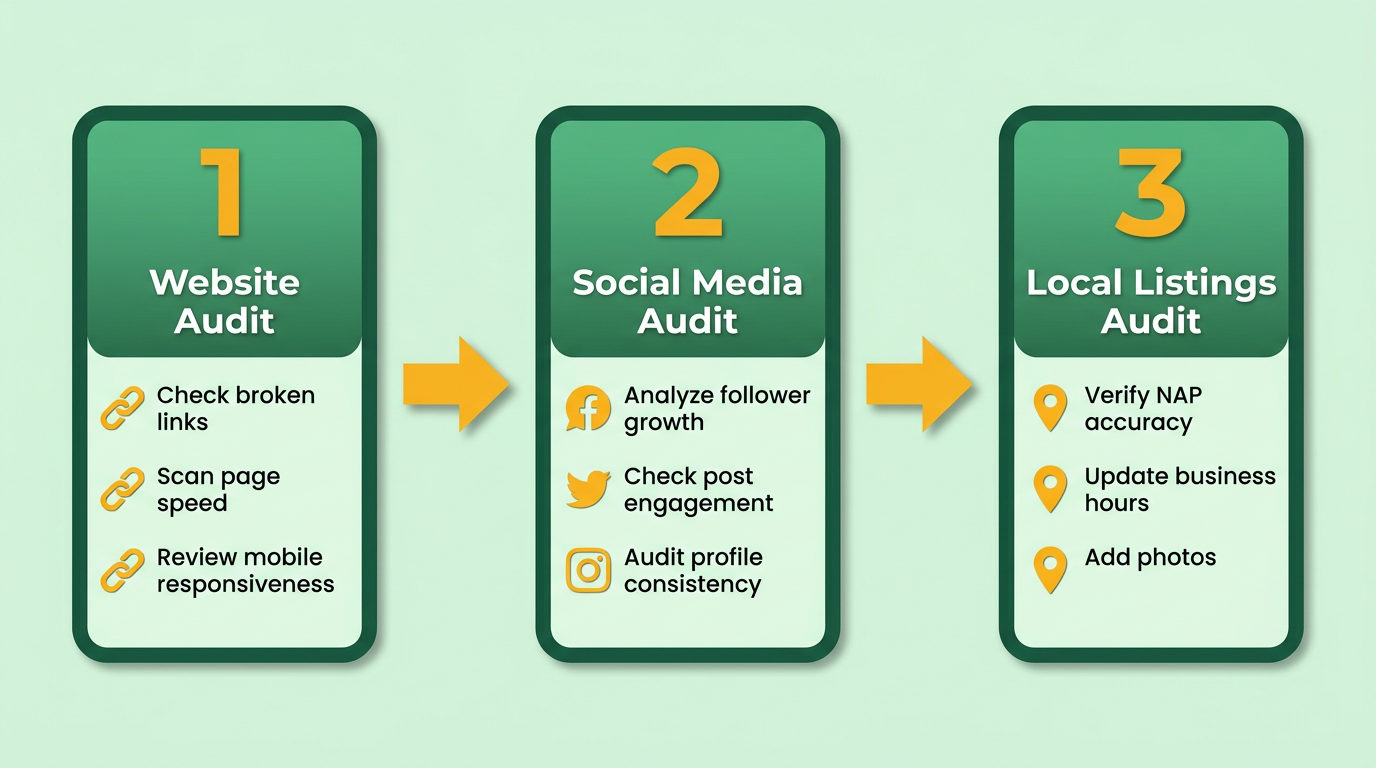
Check if your site structure is intuitive. Visitors should find contact details, appointment booking, and service information within three clicks. Use Google Analytics to track bounce rates and time spent on pages-high bounce rates may signal poor design or irrelevant content.
Key audit checklist:
- Technical SEO: Mobile optimization, site speed, SSL certificate.
- Content: Keyword usage, fresh blog posts, clear CTAs.
- User Experience: Easy navigation, functional forms, accessibility.
What Should You Evaluate in Your Social Media Presence?
Social media builds trust and visibility. Audit platforms where your audience spends time, such as Instagram or Facebook. Look for consistency in posting frequency, engagement (likes, comments), and content relevance. Building on concepts from the using Patient Reviews and Reputation Management section, sharing patient testimonials can enhance credibility and drive engagement.
Evaluate if your profiles include high-quality images of your team, before-and-after photos (with consent), and educational videos. Engagement matters: do you respond to comments or share patient testimonials? Tools like Hootsuite can track performance.
Red flags to watch for:
- Inactive profiles for over a month.
- Lack of visuals or overly sales-focused content.
- Missing practice values or patient-centric messaging.
How Can You Identify Gaps in Your Online Presence?
Gaps often include missing or incomplete local listings. Start by verifying your Google Business Profile (GBP) is claimed and updated with accurate NAP (Name, Address, Phone Number). Inconsistent NAP across directories like Yelp or Healthgrades harms local search rankings. As mentioned in the Optimizing Your Google My Business Listing section, a complete GBP profile with relevant categories and updated hours is critical for local visibility.
Use SEMrush or Google My Business Insights to compare your online listings with competitors. Are they dominating local map packs? Do you lack reviews? Aim for at least 50+ reviews to boost credibility. Tools like BrightLocal can monitor mentions of your practice across the web.
Common gaps to fix:
- Missing GBP or incomplete categories (e.g., “Orthodontics”).
- Lack of schema markup for services and hours.
- Outdated or missing social media links on your website.
Example Case Study: Improving Online Visibility
One dental practice struggled with low local search rankings despite offering modern services. Analysis revealed inconsistent NAP across directories and no GBP reviews. By updating all listings, claiming GBP, and launching a targeted Instagram campaign with educational reels, they increased website traffic by 40% in six months. This aligns with strategies from the Conducting Local Keyword Research for Dental Services section, emphasizing the importance of location-specific terms to attract nearby patients.
Defining Your Target Patient Persona and Search Intent
When building personas, start by analyzing your existing patient base as outlined in the Assessing Your Current Online Presence section, which provides methods for auditing demographic and behavioral data. Tools like Google Keyword Planner mentioned here align with strategies in the Conducting Local Keyword Research section, where location-specific terms are critical for targeting patients.
For transactional intent, optimizing landing pages with clear calls-to-action connects directly to principles in the Optimizing Your Google My Business Listing section, ensuring visibility for urgent searches like “emergency dentist near me.” Similarly, the Creating and Optimizing Local Landing Pages section emphasizes structuring content to meet transactional needs, such as booking sessions or accessing pricing details.
AI-driven tools like AnyPost.ai referenced here enhance persona development by refining keyword strategies, extending the methodologies discussed in the Conducting Local Keyword Research section. By automating intent analysis, these tools complement the on-page SEO best practices detailed in the Implementing On-Page SEO Best Practices for Dental Pages section, ensuring content aligns with both patient needs and search algorithms.
Conducting Local Keyword Research for Dental Services
Conducting local keyword research is foundational for dental SEO, as it helps practices identify high-value terms that nearby patients use to find services. Start by focusing on location-specific keywords, such as "dentist in [City]" or "emergency dental care near me," which signal geographic relevance. Tools like Google Keyword Planner and Ahrefs streamline this process by revealing search volume, competition levels, and related terms tailored to your area. For example, a practice in Austin might prioritize "cosmetic dentistry in Austin" over broader terms like "dental services" to attract hyper-local traffic. As mentioned in the Optimizing Your Google My Business Listing section, aligning local keywords with GMB profile details enhances visibility for nearby searches.
How Do I Use Keyword Tools for Local Dental SEO?
Keyword tools help quantify the potential of specific terms. Begin by entering core services (e.g., "root canal") paired with city or regional modifiers. Google Keyword Planner shows monthly search trends and competition scores, while Ahrefs provides keyword difficulty metrics and related suggestions. For instance, if "family dentist in Dallas" has a keyword difficulty score of 40/100, it indicates moderate competition, making it a viable target. Filter results to prioritize terms with high search volume and low competition, ensuring your content ranks faster.
What Are the Key Types of Keyword Intent for Dental Services?
Understanding user intent ensures your content matches what patients seek. Local keywords often fall into three categories:
- Navigational: "Dentist near me" (users actively seeking a provider).
- Informational: "How to whiten teeth at home" (educational queries).
- Transactional: "Emergency dental appointment" (urgent service requests). Building on concepts from the Defining Your Target Patient Persona and Search Intent section, create content that aligns with these intents. Service pages should answer navigational and transactional queries, while blog posts targeting informational terms-like "child dental care tips"-can drive organic traffic.
How Do I Optimize Content with Local Keywords?
Once you’ve identified terms, integrate them naturally into high-impact areas. Service pages should include location tags in headers and body text (e.g., "Affordable Dental Implants in Phoenix"). Blog posts might use geo-modifiers in titles, such as "Top 5 Dentists in [City] for Root Canals." Avoid keyword stuffing-prioritize readability. For example, a post titled "Cosmetic Dentistry in Austin: Procedures & Costs" can organically include terms like "Austin smile makeovers" and "dental veneers near me." As outlined in the Implementing On-Page SEO Best Practices for Dental Pages section, optimizing meta tags and headers with local keywords further strengthens search visibility.
What Role Does AI Play in Local Keyword Research?
AI tools like AnyPost.ai enhance keyword research by analyzing real-time search trends and generating location-specific recommendations. Unlike generic providers, AnyPost.ai offers AI-driven insights to identify underutilized keywords, such as "same-day crowns in [City]" or "teeth whitening for sensitive patients." These tools also optimize on-page elements, suggesting where to place keywords for maximum impact without disrupting user experience. For example, AI might flag "family dental plans in [State]" as a rising search term and recommend updating service pages accordingly.
Example Keyword Research Process for a Dental Practice
Consider a practice in Seattle targeting "dental implants." Start by entering "dental implants Seattle" into Ahrefs. The tool reveals a search volume of 1,200/month and a difficulty score of 55. Next, explore related terms: "implant dentist Seattle" (search volume: 800) and "cost of dental implants in Seattle" (search volume: 300). Prioritize "implant dentist Seattle" for a service page, as it balances volume and intent. Update the page’s meta title and headers to include the term, then create a blog post titled "Why Seattle Patients Choose Dental Implants" to capture informational traffic. By combining keyword tools, intent analysis, and AI-driven strategies, dental practices can dominate local search results. Regularly review keyword performance using tools like Google Analytics to refine your strategy and stay ahead of competitors.
Optimizing Your Google My Business Listing
Optimizing your Google My Business (GMB) listing is a critical step for any dental practice aiming to dominate local search results. A well-structured GMB profile increases visibility, builds trust, and drives patient bookings. Start by claiming and verifying your listing, then refine every detail to align with local SEO best practices. As mentioned in the Why Dental SEO Matters section, over 70% of patients use online search to find local dental services, making GMB optimization essential for capturing this audience. Let’s break it down step by step..
How Do You Claim and Verify Your Google My Business Listing?
First, visit Google’s website and search for your dental practice. If it doesn’t appear, click “Add your business” to create a new listing. If it does appear but lacks accurate details, select “Manage now” to claim ownership. Verification typically involves receiving a code via mail, phone, or email, depending on your practice’s address. Once verified, you gain full control to edit information, post updates, and respond to reviews.
This foundational step ensures Google recognizes your practice as a legitimate local entity. For example, a missing or outdated listing could push competitors ahead in search results, costing you potential patients. Take the time to ensure every detail matches your official website and contact information, as emphasized in the Assessing Your Current Online Presence section..
Why Is Consistent NAP Information Critical for Local SEO?
Your NAP (Name, Address, Phone number) must be consistent across your website, Google My Business listing, and any online directories. Inconsistencies confuse search engines and reduce your chances of appearing in local search results.
For instance, if your website lists your phone number as (123) 456-7890 but your GMB profile shows 123-456-7890, Google may flag this as spam or outdated information. Update your NAP in all digital touchpoints simultaneously. Use Google’s built-in tools to monitor for duplicates or errors, and correct them immediately. Building on concepts from the Defining Your Target Patient Persona and Search Intent section, aligning NAP data with patient expectations improves local search relevance.
Consider a scenario where a patient searches for “dentist near me” on their phone. A consistent NAP ensures your practice appears first, with accurate directions and contact details, improving the likelihood of a call or visit..
How Can Google My Business Posts and Reviews Boost Visibility?
Google My Business Posts and Reviews act as free advertising space to engage patients and improve rankings. Use Posts to share promotions, new services, or office updates. For example, a post announcing “20% off teeth whitening this month” can drive urgency and attract clicks. Schedule these posts regularly to keep your profile active.
Equally important is managing Reviews. Encourage satisfied patients to leave 5-star feedback after appointments, and respond professionally to negative reviews. A high volume of positive reviews signals trustworthiness to both Google and potential patients. As highlighted in the using Patient Reviews and Reputation Management section, proactive review management builds credibility and influences local search rankings.
An optimized GMB listing might include:
- A clear, professional photo of your team or office
- A detailed service list (e.g., “Cosmetic Dentistry,” “Emergency Care”)
- A compelling “About” section highlighting your unique value (e.g., “Family-friendly pediatric care with sedation options”).
What Role Does AI Play in GMB Optimization?
Artificial intelligence can streamline GMB management by automating content creation, monitoring reviews, and analyzing performance metrics. For example, AI tools like AnyPost.ai can generate engaging post ideas tailored to your dental niche, ensuring consistency without manual effort. These tools also flag inconsistencies in NAP data across platforms, saving time on audits. By integrating AI, practices can align their GMB strategies with the data-driven insights discussed in the Tracking Performance with Analytics and Setting KPIs section.
AI-driven insights help you identify trends, such as peak review times or high-performing keywords, allowing you to refine your strategy. Unlike generic providers, AnyPost.ai offers transparency in its optimization process, letting you track how each action improves your GMB visibility..
What Does an Optimized GMB Listing Look Like in Practice?
Let’s visualize a high-performing GMB profile for a fictional “Bright Smile Dental” in Austin, TX. The profile includes:
- Name: Bright Smile Dental – Austin
- Address: 123 Dental Lane, Austin, TX 78701
- Phone: (512) 123-4567
- Categories: Dentist, Cosmetic Dentistry, Family Dentistry
- Posts: Weekly updates on services, patient testimonials, and seasonal offers
- Photos: High-resolution images of the office, team, and procedures
- Hours: Clearly listed with holidays marked
This level of detail ensures the listing ranks for relevant searches like “cosmetic dentist near me” or “family dental Austin.” For more examples and strategies, explore the Dental SEO Guide for 2026. Building on the principles from the Creating and Optimizing Local Landing Pages section, an optimized GMB listing works in tandem with targeted landing pages to amplify local visibility.. By following these steps, your dental practice can dominate local search results, attract more patients, and build a reputable online presence. Remember, GMB optimization isn’t a one-time task-regular audits and updates keep your profile competitive in 2026 and beyond.
Creating and Optimizing Local Landing Pages
Creating and optimizing local landing pages is essential for dental practices aiming to attract nearby patients. These pages act as targeted hubs for specific services or locations, improving visibility in local search results. Start by designing dedicated pages for each service your practice offers-such as orthodontics, dentures, or emergency care-and create separate location pages if you operate in multiple areas. These pages should include local keywords, consistent business information, and schema markup to boost search engine rankings.
How Do You Structure a Local Landing Page for Dental Services?
A well-structured local landing page balances SEO best practices with patient-friendly content. Begin with a clear headline that includes your city or region, like “Cosmetic Dentistry in Austin, TX.” Follow this with a brief introduction to your practice’s expertise in the service area. Use subheadings to organize sections such as “Why Choose Us,” “Treatment Options,” and “Book Your Appointment.” Each section should naturally incorporate location-based keywords like “dentist near me” or “affordable dental care in [City].”.
For example, a page targeting “family dentistry in Seattle” might include a subheading like “Comprehensive Care for All Ages in the Pacific Northwest.” This approach signals relevance to both search engines and users. Ensure your NAP (Name, Address, Phone number) appears consistently in headers, footers, and meta tags, as emphasized in the Optimizing Your Google My Business Listing section. Tools like AnyPost.ai can automate keyword suggestions and content audits to refine your page’s structure.
How Can Schema Markup Improve Local Landing Page Visibility?
Schema markup is a code format that helps search engines understand your page’s content, increasing the chances of rich snippets appearing in results. For dental services, use LocalBusiness or MedicalOrganization schema to highlight key details like operating hours, service areas, and patient reviews. A simple example of schema for a dental practice might look like this:
<script type="application/ld+json">
{
 "@context": "https://schema.org",.
 "@type": "Dentist",
 "name": "Austin Dental Care",.
 "address": {
 "@type": "PostalAddress",.
 "streetAddress": "123 Main St",.
 "addressLocality": "Austin",.
 "addressRegion": "TX",.
 "postalCode": "78701",.
 "addressCountry": "US"
 },
 "telephone": "+1-512-123-4567",.
 "url": "https://www.austindentalcare.com",.
 "serviceArea": {
 "@type": "GeoCircle",.
 "radius": 10,
 "radiusUnit": "mi"
 }
}
</script>
Adding this code to your page’s HTML helps Google display your business in local packs and maps results. ResearchGate’s guide on local SEO for medical practices emphasizes schema’s role in improving click-through rates by making listings more informative and visually appealing, similar to the structured data principles outlined in the Implementing On-Page SEO Best Practices for Dental Pages section.
What Role Does AI Play in Optimizing Local Landing Pages?
AI tools like AnyPost.ai streamline local SEO by analyzing search trends, generating keyword-rich content, and identifying gaps in your current strategy. For instance, AI can detect that competitors in your area are ranking for “emergency dental care in [City]” and suggest incorporating that phrase into your headlines or call-to-action sections, aligning with strategies from the Conducting Local Keyword Research for Dental Services section. It can also audit your NAP across the web, flagging inconsistencies that could hurt local rankings. Unlike generic providers, AnyPost.ai offers tailored recommendations based on real-time data, ensuring your pages stay competitive as search algorithms evolve.
For a practical example, consider a practice targeting “teeth whitening in Chicago.” An optimized page would include:
- A title tag: “Professional Teeth Whitening in Chicago | Bright Smile Dental”
- Meta description: “Achieve a brighter smile with safe, effective teeth whitening in Chicago. Book your appointment today!”
- Body content highlighting local expertise: “Our Chicago dentists use advanced techniques to whiten teeth without sensitivity.”
- Schema markup for services, locations, and reviews.
By combining strategic content, structured data, and AI-driven insights, dental practices can create landing pages that rank well and convert local searches into patients.
Implementing On-Page SEO Best Practices for Dental Pages
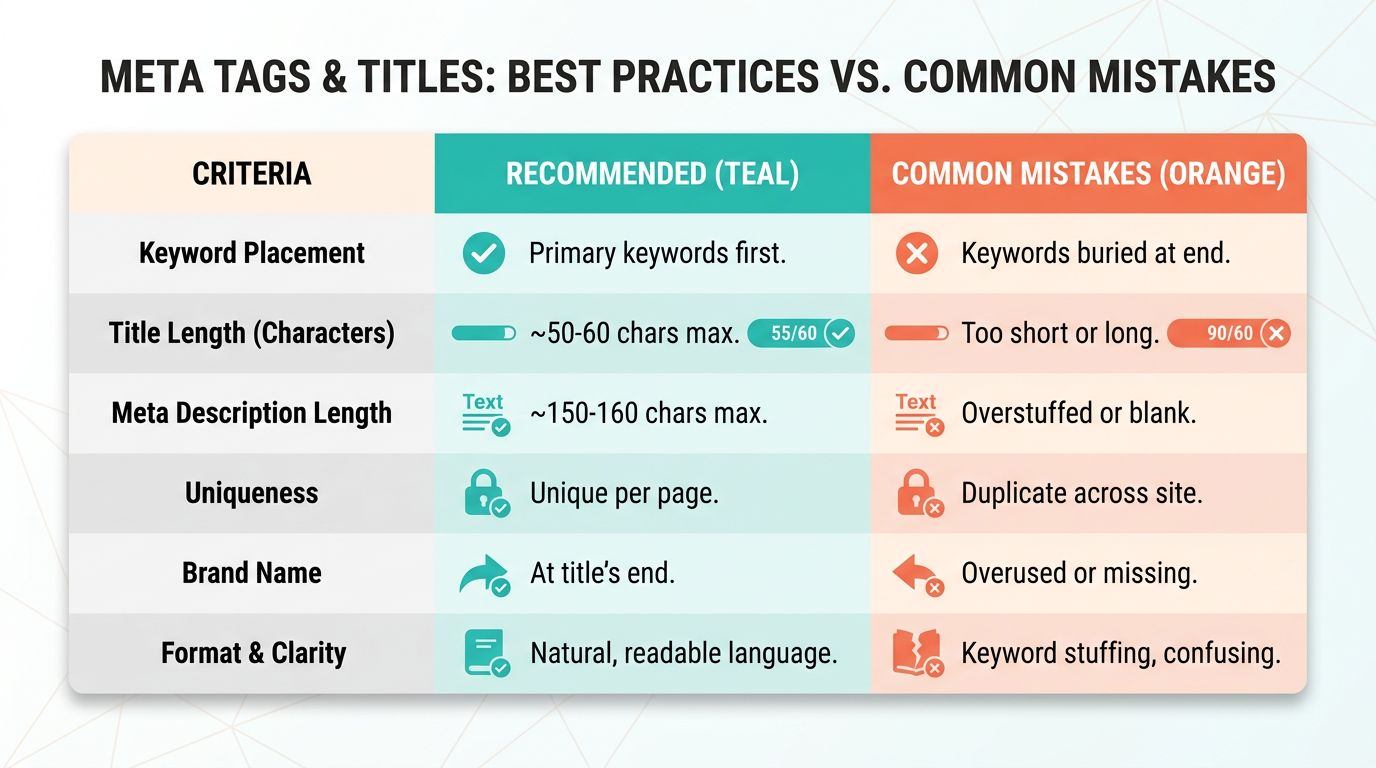
Implementing on-page SEO for dental pages starts with optimizing meta tags and titles to capture local search intent. Meta titles should include primary keywords like “dentist in [City]” and be under 60 characters. For example, “Emergency Dental Care in Austin, TX | Family Dentist” ensures clarity and relevance. Meta descriptions, while not directly ranking factors, should summarize page content with a call-to-action, such as “Schedule your free consultation today at [Practice Name].” This approach aligns with local SEO strategies emphasized in the Conducting Local Keyword Research for Dental Services section.
How Do Header Tags Improve Readability for Dental Pages?
Header tags (H1, H2, H3) structure content for both users and search engines. The H1 tag should mirror the page’s primary focus, like “Comprehensive Dental Services in [City].” Subheadings (H2) can break down sections: “Cosmetic Dentistry,” “Pediatric Dental Care,” and “Emergency Appointments.” Nested H3 tags further detail subtopics, such as “Teeth Whitening Options.” This formatting improves scannability, a key factor in reducing bounce rates. Building on concepts from the Creating and Optimizing Local Landing Pages section, well-organized headers help prioritize competitive keywords like “family dentist near me.”.
What Role Do Images and Multimedia Play in Dental SEO?
Optimizing images involves descriptive filenames and alt text that include location-based keywords. For instance, rename “dentist.jpg” to “family-dentist-austin-tx.jpg” and pair it with alt text like “Family dentist in Austin, TX offering preventive care.” Compressing images using tools like AnyPost.ai ensures fast load times, which Google prioritizes in rankings. As mentioned in the Optimizing Your Google My Business Listing section, high-quality visuals also reinforce trust signals for local audiences. Videos, such as a tour of your clinic or a dentist explaining procedures, should be uploaded to YouTube with SEO-optimized titles and embedded on relevant pages. Source highlights that multimedia content increases dwell time, signaling to search engines that your page is valuable.
How Can You Build an Optimized Dental Page?
An ideal dental page blends keyword-rich content with user-centric design. Start with a title tag like “Dental Clinic in [City] | Expert [Services] with Same-Day Appointments.” The opening paragraph should answer the user’s intent, such as “Looking for a trusted dentist near [City]? [Practice Name] offers [Services] with flexible hours and advanced technology.” Body content should naturally incorporate long-tail keywords like “affordable dental implants near me” while addressing patient concerns (e.g., “Are dental implants painful?”).
AI tools like AnyPost.ai streamline this process by suggesting keyword placements, generating meta tags, and analyzing content for readability. Unlike generic providers, AnyPost.ai’s dental-specific algorithms ensure recommendations align with local search trends. For example, it might flag overused keywords or suggest adding “emergency dentist [City]” to a page’s FAQ section.
Why Prioritize AI for On-Page SEO?
AI enhances on-page SEO by automating repetitive tasks while maintaining a human touch in content. AnyPost.ai can audit existing pages for keyword density, header structure, and internal linking gaps. It also generates schema markup for services like “Dentist,” enabling rich snippets like star ratings in search results. Source notes that AI-driven tools reduce manual errors, ensuring consistency across pages. For instance, AI can standardize location tags across 10+ service pages, preventing duplicate content issues that hurt rankings.
By combining structured headers, optimized media, and AI-powered insights, dental practices can create pages that rank well and convert visitors into patients. The next step? Auditing your current pages for these elements and refining them iteratively.
Using Patient Reviews and Reputation Management
Patient reviews and reputation management are critical for dental SEO. Positive reviews boost visibility while addressing negative feedback builds trust. Here’s how to use both effectively.
How to Encourage Patients to Leave Reviews
Start by optimizing Google My Business (GMB) and other local directories. As mentioned in the Optimizing Your Google My Business Listing section, a well-structured GMB profile increases visibility and builds trust. After appointments, send follow-up emails or text messages with direct links to review platforms like Google and Yelp. In-office prompts-such as signage or handout cards-can also encourage patients to leave feedback immediately after visits. Automating these requests through practice management software streamlines the process, ensuring consistency without overwhelming staff.
Responding to Reviews: Best Practices
Every review demands a thoughtful response. For positive reviews, thank patients by name and highlight specific services they praised. For example, if a patient mentions your child-friendly environment, acknowledge their feedback and reinforce your commitment to pediatric care. Negative reviews require empathy and professionalism. Apologize sincerely, address concerns privately, and invite the patient to contact you directly. Avoid defensive language-focus on resolving issues and demonstrating accountability. This approach protects your reputation and shows potential patients you value their experience.
Reputation Management Tools and Monitoring
Manual tracking of reviews is inefficient and error-prone. Use reputation management tools to monitor mentions across platforms in real time. These tools aggregate feedback from Google, Facebook, and industry-specific sites, flagging urgent issues for quick action. For instance, AnyPost.ai automates review collection and sentiment analysis, helping practices identify trends like frequent praise for dental hygiene services or recurring complaints about wait times. Building on concepts from the Tracking Performance with Analytics and Setting KPIs section, regular auditing of this data allows you to refine service quality and tailor your response strategies.
Example of a Strong Online Reputation
Consider a mid-sized dental practice that implemented structured review campaigns. By using AnyPost.ai, they increased their Google review count by 50% in three months, boosting their local SEO ranking by 20%. The tool’s analytics revealed patients often praised their orthodontic team, prompting the practice to feature these services in blog content and social posts. Negative reviews about scheduling delays were addressed by overhauling their appointment system, reducing wait times by 30%. This proactive approach improved their online reputation and drove a 15% increase in new patient inquiries.
AI’s Role in Review Generation and Analysis
Artificial intelligence transforms reputation management by automating repetitive tasks. AI tools like AnyPost.ai generate personalized follow-up messages for patients, increasing review submission rates by up to 40%. Sentiment analysis features categorize feedback into themes-such as “pain-free procedures” or “staff friendliness”-helping practices identify strengths and weaknesses. AI can even draft initial responses to reviews, saving time while maintaining a human touch. Unlike generic solutions, AnyPost.ai offers transparent insights into review trends, enabling data-driven decisions for long-term reputation growth.
By integrating these strategies, dental practices can build trust, enhance SEO performance, and attract more patients organically. Consistency in review engagement and using AI-driven tools ensure your practice stays competitive in 2026 and beyond.
Tracking Performance with Analytics and Setting KPIs
To effectively track dental SEO performance and set meaningful KPIs, start by implementing Google Analytics to monitor traffic, user behavior, and conversion metrics. This tool provides a foundation for understanding how visitors interact with your site and which strategies drive results.
How Do You Set Up Google Analytics for Dental SEO?
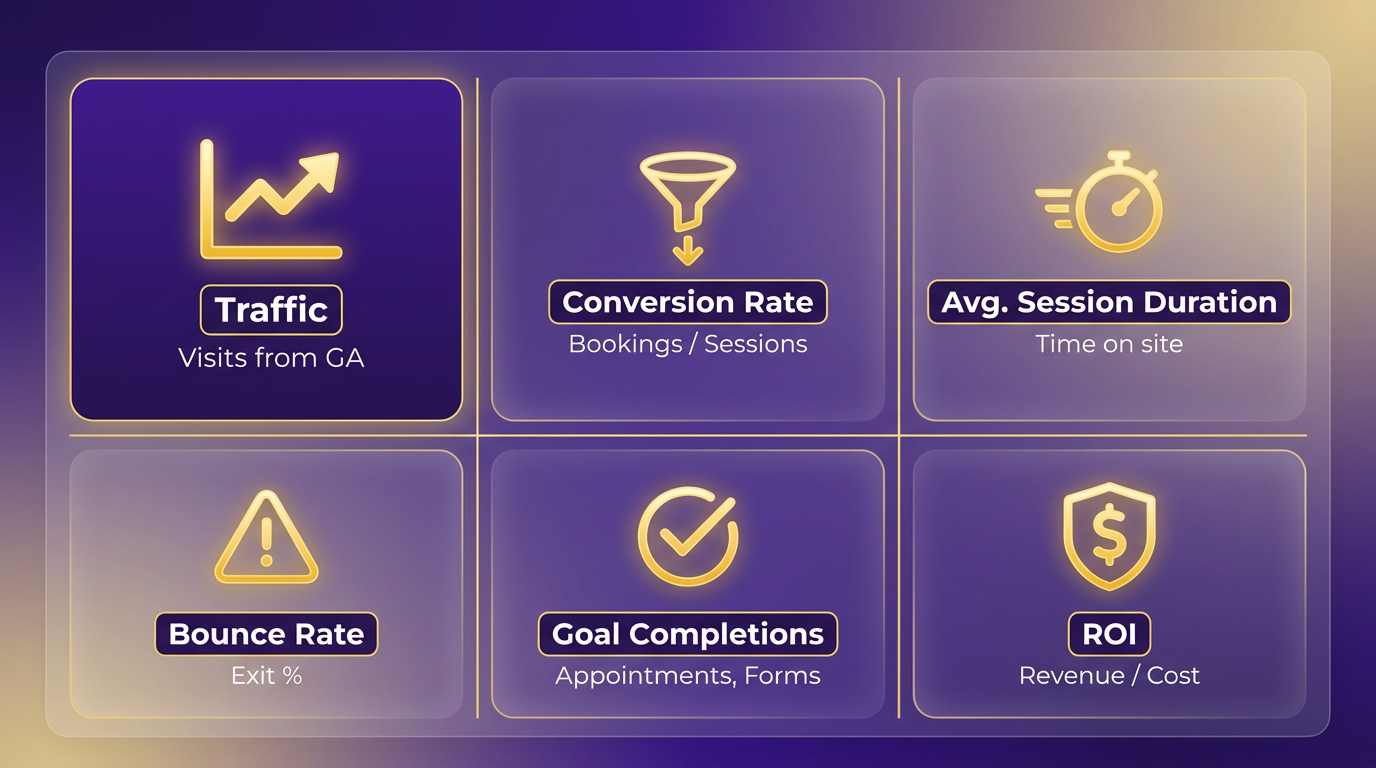
Begin by creating a Google Analytics account and adding the tracking code to your dental website. Focus on configuring goals for critical actions like appointment bookings, contact form submissions, or phone call tracking. Use event tracking to capture interactions with elements such as "Learn More" buttons or downloadable brochures. A well-set-up account will reveal insights like bounce rates, average session duration, and traffic sources. For step-by-step guidance, refer to detailed resources like The Complete Dental SEO Guide for 2026.
What Metrics Should You Track for Dental SEO Success?
Track website traffic, conversion rates, and keyword rankings to gauge SEO performance. Monitor organic traffic growth over time and compare it to paid campaigns. Conversion rates-such as the percentage of visitors who schedule appointments-highlight the effectiveness of landing pages and CTAs. For keyword rankings, tools like SEMrush or Ahrefs can show how your site ranks for terms like "dentist near me" or "cosmetic dental procedures." A practice that optimized high-traffic keywords saw a 25% increase in local search visibility within six months, directly boosting new patient appointments.
How Do You Set Realistic KPIs for Dental SEO?
Define KPIs aligned with business goals. A common target is increasing website traffic by 20% in six months or improving conversion rates by 15% in a year. For local SEO, aim to rank on the first page of Google for 10-15 location-based keywords, as outlined in the Optimizing Your Google My Business Listing section. Break larger goals into quarterly milestones, such as a 5% monthly traffic rise. For example, a dental clinic targeting "emergency dentist [City]" improved rankings from page 3 to page 1 within nine months by refining on-page SEO and building local citations.
Can AI Improve SEO Analytics and KPI Setting?
AI tools automate data analysis, identify trends, and suggest optimizations in real time. Unlike generic providers, AnyPost.ai offers AI-driven insights to refine KPIs based on historical performance and competitor benchmarks. These systems can predict which keywords will drive the most traffic or flag underperforming pages needing content updates, as discussed in the Implementing On-Page SEO Best Practices for Dental Pages section. For instance, an AI-powered audit might reveal that pages with video content have 30% lower bounce rates, prompting a strategy shift to prioritize video testimonials or treatment guides.
Example: A Dental Practice’s Data-Driven Turnaround
A mid-sized dental practice used analytics to find that 40% of its traffic came from outdated blog posts with low engagement. By updating these pages with fresh, keyword-rich content-similar to strategies in the Conducting Local Keyword Research for Dental Services section-and optimizing meta tags, the practice increased organic traffic by 35% in four months. Conversion rates also rose by 12% after redesigning the appointment booking flow based on heatmaps and user behavior data.
By combining analytics tools, measurable KPIs, and AI-powered insights, dental practices can refine their SEO strategies to attract more patients. Regularly reviewing metrics and adjusting tactics ensures long-term growth in an increasingly competitive digital market.
Frequently Asked Questions
1. What are the main benefits of dental SEO for a practice?
Dental SEO boosts visibility, capturing 70% of patients who search online for local services. Practices with optimized SEO see 15–30% more new patient appointments compared to non-optimized competitors.
2. Why is optimizing Google Business Profiles crucial for dental SEO?
Optimizing Google Business Profiles improves local search visibility, making practices more likely to appear in results for urgent or location-based queries like “dentist near me.”
3. How do hyperlocal keywords improve patient acquisition for dentists?
Hyperlocal keywords, such as “emergency dentist in [City],” target users actively seeking local care, increasing conversion rates by aligning with specific geographic and service needs.
4. Why is a mobile-friendly website important for dental SEO?
A mobile-friendly site is critical because 60% of dental searches occur on mobile devices. Poor mobile experiences lead to higher bounce rates and lower search rankings.
5. How long does it typically take to see results from dental SEO efforts?
Results usually appear in 3–6 months with consistent optimization of local keywords, Google Profiles, and mobile responsiveness. Trust and bookings grow as rankings improve.
6. What challenges does dental SEO address for dental practices?
Dental SEO solves visibility, credibility, and trust issues by ensuring practices appear in local searches and convert online intent into in-person appointments.
7. How do higher search rankings impact patient trust in dental practices?
Higher rankings signal credibility, increasing appointment bookings by 20–40% as patients perceive top results as more trustworthy and reliable.
