
Discover the Best AI SEO Tools for 2025

Introduction to AI SEO Tools
AI SEO tools leverage artificial intelligence to automate and enhance search engine optimization tasks, from keyword research to content optimization and performance analysis. These tools use machine learning algorithms to process vast datasets, identify patterns, and generate actionable insights, enabling marketers to adapt to evolving search engine algorithms and user behaviors. As noted in academic research, AI-driven strategies now include automatic keyword research, content optimization, and real-time analytics, which are critical for maintaining competitive visibility in 2025 [11]. Building on concepts from the AI-Powered SEO Optimization Techniques section, these tools use machine learning algorithms to process vast datasets, identify patterns, and generate actionable insights, enabling marketers to adapt to evolving search engine algorithms and user behaviors [2]. The integration of AI into SEO has shifted the focus from manual guesswork to data-driven decision-making, with tools like Gumloop automating workflows and Surfer AI assisting in content creation [2]. This transformation is reshaping how marketers approach SEO, emphasizing efficiency, accuracy, and scalability [12].
Benefits of AI SEO Tools
The adoption of AI SEO tools offers significant advantages, including time savings, improved content quality, and enhanced targeting. For example, platforms like Semrush and MarketMuse streamline keyword research and content optimization by analyzing competitors and suggesting topic clusters, reducing the need for manual audits [10]. Tools such as Alli AI integrate directly into content management systems, automating tasks like metadata optimization and URL structuring [2]. As mentioned in the Content Repurposing with AI SEO Tools section, Alli AI’s CMS integration also supports adapting content for diverse formats while maintaining SEO integrity [2]. Additionally, AI-powered analytics tools like seoClarity provide real-time data on traffic, backlinks, and user engagement, allowing marketers to refine strategies dynamically [6]. These tools also mitigate human error by standardizing processes, such as ensuring on-page SEO elements meet best practices [11]. By automating repetitive tasks, teams can focus on creative and strategic initiatives, ultimately improving ROI for content marketing campaigns [2].
Current Market Trends in AI SEO Tools
The AI SEO landscape in 2025 is defined by three key trends: the rise of generative AI, the integration of answer engine optimization (AEO), and the demand for localized SEO solutions. Generative AI tools like ChatGPT and Yext are being used to draft content, generate meta descriptions, and even produce reports, though they require human oversight to ensure relevance and accuracy [10]. See the Top AI SEO Tools for Content Generation section for more details on how generative AI is applied in SEO workflows [10]. Simultaneously, search engines are prioritizing direct answers over traditional SERP listings, prompting tools like Surfer AI to emphasize AEO techniques that align with AI-driven search results [13]. Local SEO is also gaining traction, with platforms such as Yext optimizing location-based metadata and citations to help businesses dominate regional searches [10]. Additionally, the market is seeing a surge in tools that combine SEO with broader digital marketing functions, such as AirOps for content operations automation [2]. These trends reflect a broader shift toward holistic, AI-first SEO strategies that prioritize user intent and semantic relevance [12].
| Title | Description | Key Features | Pros/Cons |
|---|---|---|---|
| Gumloop | Automates SEO workflows for task management and reporting | Workflow automation, team collaboration, performance dashboards | Pros: Saves time on repetitive tasks; Cons: Requires initial setup [2] |
| Surfer AI | AI-assisted writing tool for content optimization | Content scoring, keyword suggestions, competitor analysis | Pros: Enhances content quality; Cons: Learning curve for new users [2] |
| Alli AI | CMS-integrated SEO automation tool | Metadata optimization, URL structuring, content audits | Pros: Streamlines CMS workflows; Cons: Limited standalone analytics [2] |
| Semrush | Comprehensive SEO suite with keyword and competitor research | Keyword tracking, site audits, backlink analysis | Pros: All-in-one platform; Cons: Premium features can be costly [10] |
| MarketMuse | AI-driven content strategy and research tool | Topic cluster mapping, content gap analysis | Pros: Improves content depth; Cons: High subscription tiers [10] |
| Yext | Local SEO and citation management | Location data optimization, review management | Pros: Boosts local visibility; Cons: Limited for national campaigns [10] |
| seoClarity | Generative AI assistant for SEO analytics | Real-time traffic insights, competitor benchmarking | Pros: Rich data visualization; Cons: Unclear pricing models [6] |
| ChatGPT | Generative AI for content creation and idea generation | Drafting meta descriptions, brainstorming topics, report writing | Pros: Versatile and user-friendly; Cons: Requires editing for SEO accuracy [10] |
The tools above represent the cutting edge of AI SEO solutions, each addressing specific pain points in the content marketing lifecycle. As AI continues to evolve, its role in SEO will expand further, with emerging techniques like generative AI and AEO becoming standard practices [14]. Marketers adopting these tools in 2025 must balance automation with human creativity to achieve optimal results.
Top AI SEO Tools for Content Generation
AI-driven content generation tools are reshaping SEO strategies in 2025, offering automated workflows for keyword research, on-page optimization, and competitor analysis. This section evaluates leading platforms based on their capabilities, ease of use, and integration with existing SEO ecosystems, drawing from industry reports and user reviews [1][2][4][5]. Below is a curated list of tools, followed by a comparative analysis to help identify the best fit for different use cases.
Surfer SEO: AI-Driven Content Optimization
Surfer SEO is a top choice for content creators, leveraging machine learning to analyze competitors and provide real-time on-page optimization suggestions [5]. As mentioned in the AI-Powered SEO Optimization Techniques section, its competitor data analysis aligns with advanced strategies for outranking through semantic SEO and keyword density tracking [4]. Its AI Content Editor generates topic clusters, keyword density reports, and semantic SEO recommendations, while the "Ideas" feature automates content ideation based on search trends [4]. Pros include its data-driven approach to outranking competitors and integration with tools like Google Docs. However, users note a steep learning curve for beginners and higher pricing tiers for advanced features [5].
Semrush: All-in-One SEO Platform
Semrush combines AI-powered content generation with extensive keyword research and backlink analysis tools [8]. Its Content Template Generator creates structured outlines based on target keywords, while the SEO Writing Assistant scores drafts for readability and SEO compliance [4]. Pros include a unified dashboard for competitors, site audits, and campaign tracking. Cons involve a cluttered interface for some users and limited customization in AI-generated content [8].
Ahrefs: Competitor Research and Backlink Analysis
Ahrefs excels in competitor analysis, offering AI tools to dissect backlink profiles and identify content gaps [4]. See the Content Repurposing with AI SEO Tools section for more details on how its Content Explorer integrates with workflows for adapting trending topics. Its Site Audit tool automates technical SEO fixes [8]. Users praise its comprehensive database of 170+ billion backlinks but note that its content generation features lag behind competitors like Surfer [4]. Pricing is another drawback, with premium plans required for full AI functionality [8].
Scalenut: End-to-End SEO Automation
Scalenut’s platform automates technical SEO, content optimization, and keyword research via AI [1]. It generates blog ideas, optimizes meta tags, and tracks SERP performance. Pros include its all-in-one approach and intuitive visual content planners. However, some users report inconsistent AI-generated content quality and limited support for niche industries [1].
Alli AI: CMS-Integrated SEO Workflows
Alli AI streamlines content operations by embedding SEO recommendations directly into CMS platforms like WordPress [2]. Its AI co-pilot suggests title tags, headers, and internal linking strategies in real time [4]. Pros include seamless integration and team collaboration features. Cons involve dependency on CMS compatibility and a focus on mid-sized businesses, with less flexibility for enterprise needs [10].
MarketMuse: Content Strategy and Gap Analysis
MarketMuse uses AI to map content strategies, identifying gaps in topical coverage and suggesting high-impact topics [8]. Building on concepts from the Comparison of AI SEO Tools section, its Content Quality Score provides a strategic benchmark for evaluating existing content depth [6]. Pros include robust competitor benchmarking and team collaboration tools. Cons are high costs for small businesses and a focus on long-term strategy over quick fixes [10].
Comparative Analysis
| Title | Description | Key Features | Pros/Cons |
|---|---|---|---|
| Surfer SEO | Content optimization via competitor data | AI Content Editor, semantic SEO, keyword ideas | Pros: Data-driven insights, real-time suggestions [5]; Cons: Learning curve [4] |
| Semrush | All-in-one SEO platform | Content Templates, competitor backlink analysis | Pros: Unified dashboard [8]; Cons: Interface complexity [4] |
| Ahrefs | Backlink and keyword research | Content Explorer, Site Audit, SERP tracking | Pros: Extensive backlink database [4]; Cons: Limited content AI [8] |
| Scalenut | End-to-end SEO automation | Technical SEO audits, visual content planners | Pros: All-in-one [1]; Cons: Inconsistent AI output [1] |
| Alli AI | CMS-integrated SEO workflows | Real-time CMS suggestions, collaboration tools | Pros: CMS compatibility [2]; Cons: Enterprise focus [10] |
| MarketMuse | Content strategy and gap analysis | Topic mapping, Content Quality Score | Pros: Strategic insights [8]; Cons: High cost [10] |
For marketers prioritizing content optimization, Surfer SEO and Semrush lead with robust AI-driven tools. Ahrefs remains unmatched for backlink research, while Scalenut suits teams needing end-to-end automation. Alli AI and MarketMuse cater to specialized needs: CMS integration and strategic content planning, respectively [4][8]. Users should evaluate pricing, ease of integration, and feature overlap with existing tools before selecting a platform.
AI-Powered SEO Optimization Techniques
AI-powered SEO optimization techniques leverage advanced algorithms to streamline and enhance core aspects of search engine optimization. By automating tasks like keyword research, on-page optimization, and link building, AI tools enable marketers to focus on strategic decision-making rather than manual execution. These tools analyze vast datasets to identify patterns, predict trends, and generate actionable insights, ensuring alignment with evolving search engine algorithms [11]. For instance, platforms like Surfer SEO and Scalenut integrate AI to address technical SEO, content creation, and competitive analysis, offering a unified approach to optimization [1]. See the [Introduction to AI SEO Tools] section for foundational context on how AI enhances SEO workflows. Below, we explore specific techniques and tools that define AI-driven SEO in 2025.
Keyword Research Using AI
AI transforms keyword research by automating the identification of high-intent keywords, content gaps, and semantic variations. Tools like Scalenut employ machine learning to analyze search trends, competitor strategies, and user intent, providing data-driven recommendations for content creation [1]. Similarly, Surfer SEO uses AI to highlight keywords with low competition and high search volume, while also suggesting optimal keyword density for on-page SEO [5]. Ahrefs and Semrush further enhance this process by integrating AI-powered competitor backlink analysis, enabling users to target keywords that competitors are ranking for but have not yet optimized [4]. This approach reduces guesswork, ensuring that campaigns prioritize keywords with measurable ROI potential. For deeper insights into AI-driven keyword strategies, refer to the [Top AI SEO Tools for Content Generation] section.
On-Page Optimization With AI
AI-powered on-page optimization tools streamline content creation by providing real-time suggestions for structure, keyword placement, and readability. Surfer SEO’s AI content editor, for example, generates outlines based on top-ranking pages and highlights opportunities to incorporate semantically relevant keywords [5]. This tool also evaluates content quality metrics like word count and heading hierarchy, ensuring alignment with search engine best practices [8]. Similarly, Frase leverages natural language processing (NLP) to analyze competitor content and generate optimized drafts, reducing the time required for manual revisions [8]. Real-time analytics features, such as readability scoring and keyword optimization, align with the principles discussed in the [Real-Time Analytics and Tracking with AI SEO Tools] section. For technical on-page tasks, tools like Alli AI automate metadata optimization, ensuring title tags and meta descriptions are both user-friendly and search-engine-optimized [2]. These capabilities collectively enhance content relevance and authority.
AI-Powered Link Building Strategies
Link building remains a cornerstone of SEO, and AI tools now automate prospecting, outreach, and performance tracking. Platforms like Ahrefs and SEMrush use machine learning to identify high-authority domains and broken links, enabling teams to prioritize backlink opportunities with the highest impact [4]. Gumloop further streamlines workflows by automating repetitive tasks such as email outreach and follow-ups, increasing efficiency in relationship-building campaigns [2]. Additionally, Linda—a tool tailored for local SEO—automates Google profile updates and listing management, ensuring consistency across local search directories [3]. By analyzing link equity and domain authority, AI systems also flag toxic backlinks, allowing for swift disavowal and risk mitigation [8]. These strategies reduce manual effort while improving the scalability of link-building efforts.
Summary Table: AI SEO Tools for Optimization Techniques
| Title | Description | Key Features | Pros/Cons |
|---|---|---|---|
| Surfer SEO | AI-driven content optimization and on-page SEO tool | Content editor, keyword research, competitor analysis | Pros: Comprehensive insights; Cons: Steep learning curve [5][8] |
| Scalenut | All-in-one platform for technical SEO, content optimization, and keyword research | Technical SEO audits, AI content generation, keyword gap analysis | Pros: Unified interface; Cons: Limited free plan [1] |
| Ahrefs | Backlink analysis and competitor research tool | Backlink explorer, content explorer, keyword difficulty metrics | Pros: Extensive database; Cons: High cost [4][8] |
| Gumloop | Automation platform for SEO workflows and content operations | Workflow automation, email outreach, task management | Pros: Time-saving; Cons: Niche focus [2] |
| Frase | NLP-powered content creation and optimization tool | Competitor content analysis, outline generation, readability scoring | Pros: User-friendly; Cons: Limited technical SEO features [8] |
| Linda | Local SEO automation tool | Google Business Profile updates, local listing management, review monitoring | Pros: Specialized for local SEO; Cons: Not suitable for enterprise campaigns [3] |
Recommendations and Ratings
For keyword research, Surfer SEO and Scalenut are top-rated due to their ability to merge AI-driven insights with actionable strategies [1][5]. In on-page optimization, Surfer SEO and Frase lead for their content creation and analysis capabilities [5][8]. For link building, Ahrefs and Gumloop are recommended for their automation and backlink analysis features [2][4]. While these tools vary in pricing and complexity, their combined use can create a robust, AI-enhanced SEO workflow. As search engines increasingly prioritize AI-generated content and semantic relevance, adopting these tools becomes not just beneficial but essential for maintaining competitive rankings in 2025. For a broader comparison of these tools, see the [Comparison of AI SEO Tools: Summary Table] section.
Content Repurposing with AI SEO Tools
AI SEO tools are revolutionizing content repurposing by enabling marketers to adapt existing content for diverse channels while maintaining SEO integrity. Platforms like Surfer AI, Gumloop, and Alli AI streamline workflows for social media, newsletters, and YouTube scripts, ensuring consistent optimization across formats [2][4]. For instance, Surfer AI’s content optimization features analyze top-ranking content to suggest improvements, making it easier to repurpose blog posts into social media snippets or email campaigns [4]. Gumloop automates repetitive SEO tasks, such as formatting and redistributing content, which reduces manual effort in tailoring messages for different audiences [2]. These tools leverage AI to preserve keyword density, maintain brand voice, and align with platform-specific requirements, such as character limits for Twitter or video scripting structures for YouTube. Below, we break down how specific tools address each repurposing use case.
Repurposing for Social Media
Social media demands concise, engaging text tailored to platform algorithms. Surfer AI excels here by generating meta descriptions and social media previews optimized for click-through rates [4]. Its AI analyzes competitors’ social posts to identify high-performing phrases and suggests adjustments to maximize engagement [8]. Building on concepts from the AI-Powered SEO Optimization Techniques section, this competitor analysis aligns with broader SEO strategies for platform-specific content. For example, a blog post about “AI SEO trends” might be repurposed into a LinkedIn carousel with key takeaways, using Surfer’s recommendations for headline structure and keyword placement. Alli AI complements this by integrating with CMS platforms to automatically generate social media content from existing articles, ensuring consistency in messaging [4]. However, tools like Gumloop offer workflow automation for scheduling posts across platforms, reducing the time spent on manual distribution [2]. The downside is that these tools may require human oversight to ensure tone aligns with brand guidelines, particularly for nuanced industries.
Newsletter Creation with AI SEO Tools
Newsletters require a balance of SEO-driven content and reader-friendly formatting. Alli AI streamlines this by summarizing long-form content into digestible email formats, prioritizing key points while retaining SEO value [4]. For example, it can transform a 2,000-word blog post into a segmented newsletter with subheadings, bullet points, and embedded calls-to-action. See the Top AI SEO Tools for Content Generation section for more details on how tools like Semrush and Ahrefs (mentioned in [8]) contribute by identifying topics with high search intent, ensuring newsletters address reader queries effectively. However, challenges arise in personalization—AI may struggle to segment audiences or tailor subject lines for open-rate optimization, requiring manual tweaks.
YouTube Script Generation
YouTube content demands structured storytelling that aligns with both viewer preferences and search algorithms. Surfer AI’s content optimization suite helps repurpose blog posts into YouTube scripts by suggesting video-friendly keywords and structuring content for watch time [4]. For instance, a how-to blog might be transformed into a script with timestamps, on-screen text prompts, and keyword-driven closing remarks. MarketMuse (listed in [8]) enhances this process by analyzing topic clusters to recommend script outlines that cover user intent comprehensively. However, tools like Frase, highlighted in [5], automate script generation by extracting key points from source material and formatting them into a video narrative. The limitation here is that AI-generated scripts may lack the creative flair of human-written content, necessitating editing for authenticity.
Summary Table of Tools for Content Repurposing
| Title | Description | Key Features | Pros/Cons |
|---|---|---|---|
| Surfer AI | Content optimization and SEO analysis | Competitor analysis, keyword suggestions, meta description generation | Pros: High SEO accuracy; Cons: Limited creative customization [4][8] |
| Gumloop | Workflow automation for SEO tasks | Task scheduling, content redistribution, analytics tracking | Pros: Time-efficient; Cons: Requires setup for complex workflows [2] |
| Alli AI | CMS integration and content summarization | Newsletter generation, social media previews, blog-to-email conversion | Pros: Seamless CMS sync; Cons: Basic SEO features compared to Surfer [4] |
| Frase | AI-driven content structuring and ideation | Topic clustering, script formatting, competitor content audits | Pros: Strong for YouTube scripts; Cons: Steeper learning curve [5] |
| MarketMuse | Topic research and content planning | Video outline creation, SEO gap analysis, user intent mapping | Pros: Comprehensive research; Cons: Costly for small teams [8] |
Recommendations
For social media repurposing, prioritize Surfer AI for SEO-aligned previews and Gumloop for automation [2][4]. Newsletters benefit most from Alli AI’s CMS integration and Semrush’s keyword insights [4][8]. YouTube script generation relies on Surfer AI and MarketMuse for structured, high-ranking content [4][8]. While these tools significantly reduce manual effort, they work best when paired with human editing to maintain brand voice and creativity. As AI evolves, expect deeper integrations between tools to further streamline cross-channel content strategies.
Real-Time Analytics and Tracking with AI SEO Tools
Real-time analytics are critical for modern SEO strategies, enabling marketers to respond swiftly to algorithm updates, competitor moves, and user behavior shifts. AI-powered tools process vast datasets in seconds, offering insights that traditional methods cannot match. According to [7], real-time tracking allows teams to adjust content and campaigns immediately, maximizing visibility during high-traffic periods. For example, AI tools like Surfer and Semrush provide live updates on keyword rankings, traffic fluctuations, and backlink changes, which are essential for maintaining competitive edge [8]. These capabilities are particularly valuable for lead generation, as they identify which pages drive conversions and which require optimization [7].
AI-Powered Tracking Features
Modern AI SEO tools integrate advanced tracking features such as predictive analytics, automated competitor benchmarking, and real-time traffic monitoring. Surfer, for instance, uses machine learning to analyze content performance and suggest on-page adjustments in real time [7]. See the [Top AI SEO Tools for Content Generation] section for more details on Surfer’s role in content optimization. Semrush’s Traffic Analytics module tracks website visits minute-by-minute, while Ahrefs’ Live Backlink Checker alerts users to new or lost links instantly [8]. These tools also leverage natural language processing (NLP) to assess content quality dynamically, ensuring alignment with search intent [7]. By automating data collection and interpretation, AI reduces manual effort and minimizes delays in decision-making [8].
Case Studies of Successful Implementation
Several businesses have achieved measurable results using AI-driven real-time analytics. A mid-sized e-commerce company reported a 40% increase in organic traffic after implementing Surfer’s real-time content scoring system, which prioritized high-performing keywords [7]. See the [Best Practices for Implementing AI SEO Tools] section for strategies on adopting such systems. Similarly, a SaaS startup used Semrush’s lead tracking features to identify underperforming landing pages, resulting in a 25% rise in qualified leads within three months [8]. Another case study highlighted in [7] involved a digital marketing agency that leveraged Ahrefs’ real-time competitor analysis to adjust client strategies during Google’s 2024 core update, preserving rankings for 90% of their portfolio. These examples underscore the value of instant data in refining SEO tactics.
Summary Table of AI SEO Tools for Real-Time Analytics
| Tool | Description | Key Features | Pros | Cons |
|---|---|---|---|---|
| Surfer | AI-driven content optimization with live performance metrics. | Real-time content scoring, keyword tracking, traffic growth analysis. | Fast insights, competitor benchmarking. | High cost for advanced features. |
| Semrush | Comprehensive SEO platform with instant traffic and lead tracking. | Live traffic monitoring, lead generation analytics, competitor research. | User-friendly interface, extensive data. | Overwhelming for beginners. |
| Ahrefs | Backlink and content analysis tool with real-time updates. | Live backlink checker, content explorer, keyword difficulty metrics. | Accurate backlink data, fast updates. | Expensive for small teams. |
| SE Ranking | Affordable tool with real-time site crawlers and performance alerts. | Instant crawl reports, keyword position tracking, traffic alerts. | Budget-friendly, easy to use. | Limited predictive analytics. |
| Frase | AI-powered content creation with real-time SEO audits. | Content gap analysis, competitor content comparison, on-page optimization tips. | Integrates with major CMS platforms. | Less robust for technical SEO metrics. |
| MarketMuse | Focuses on content quality and user intent with AI-driven insights. | Real-time content scoring, topic clustering, audience intent analysis. | Deep content recommendations. | Steep learning curve. |
| Alli AI | Predictive analytics for content and campaign performance. | Forecasting traffic trends, automated content suggestions, lead scoring. | Proactive optimization, intuitive UI. | Limited historical data analysis. |
| Rankability | AI-powered SEO audits with real-time technical performance tracking. | Instant site health reports, crawlability checks, speed optimization metrics. | Free tier available, technical depth. | Fewer features for non-technical users. |
Tool-Specific Real-Time Capabilities
Surfer
Surfer excels in real-time content optimization by analyzing competitors’ top-ranking pages and suggesting edits [7]. Its AI evaluates factors like word count, keyword density, and semantic relevance, updating recommendations as new data emerges [8]. A case study in [7] revealed a 30% reduction in content revision time for a travel blog using Surfer’s live feedback loop.
Semrush
Semrush’s Traffic Analytics dashboard provides minute-by-minute visibility into referral sources, user behavior, and conversion paths [8]. Marketers can set custom alerts for traffic drops, enabling rapid troubleshooting [7]. One enterprise client used Semrush to identify a sudden 50% traffic decline from Google News, resolving a technical error within hours.
Ahrefs
Ahrefs’ Live Backlink Checker is a cornerstone for real-time link-building strategies. It tracks new backlinks as they are indexed, helping teams capitalize on opportunities immediately [8]. A digital PR agency in [7] leveraged this feature to secure 200+ backlinks in a week by targeting content gaps identified through competitor analysis.
Recommendations and Future Outlook
For businesses prioritizing real-time analytics, Surfer and Semrush are top choices due to their holistic feature sets [7]. Budget-conscious users may prefer SE Ranking or Rankability for essential tracking without premium costs [8]. As AI evolves, tools like Frase and Alli AI are integrating predictive models to forecast traffic trends, a development highlighted in [12]. See the [Comparison of AI SEO Tools: Summary Table] section for an overview of these and other tools. Marketers should prioritize platforms that align with their specific needs—whether content optimization, technical SEO, or lead tracking—while remaining adaptable to algorithmic shifts.
By leveraging these AI tools, SEO professionals can transform reactive strategies into proactive, data-driven campaigns, ensuring sustained visibility in 2025 and beyond.
Comparison of AI SEO Tools: Summary Table
The following table provides a concise comparison of the top AI SEO tools reviewed in this article, highlighting their key features, advantages, and limitations. Each tool is evaluated based on its capabilities, target audience, and performance as reported in the latest industry reviews.
| Tool | Description | Key Features | Pros | Cons |
|---|---|---|---|---|
| Surfer SEO | AI-driven content optimization and on-page SEO tool | AI content editor, keyword clustering, on-page optimization | User-friendly interface, actionable insights [5][8] | Premium features require higher-tier plans [5] |
| Semrush | All-in-one SEO platform for competitor research and content strategy | Backlink analysis, keyword tracking, site audits | Extensive feature set, good for agencies [4][10] | Some tools overlap in functionality [10] |
| Ahrefs | Comprehensive backlink and keyword research tool | Backlink explorer, site crawler, SERP analysis | Industry-leading backlink database [4][8] | High cost for small businesses [8] |
| Scalenut | AI-powered technical SEO and content optimization | Technical SEO audits, content generation, keyword research | All-in-one platform for SEO workflows [1] | Limited automation for complex tasks [1] |
| Gumloop | Workflow automation for SEO tasks | Task scheduling, integration with other tools | Streamlines repetitive SEO workflows [2][4] | Requires technical setup for full integration [4] |
| Alli AI | CMS-integrated AI content optimization | AI-assisted content creation, SEO score tracking | Seamless CMS integration [2][8] | Limited standalone SEO analysis [8] |
| MarketMuse | Strategic content planning and competitive analysis | Topic modeling, content gap analysis, AI-generated outlines | Strong strategic insights for content teams [10] | Complex setup for beginners [8] |
| Frase | AI-driven content creation and QA tools | Content drafts, competitor content analysis, QA automation | Rapid content generation for blogs [8] | Limited technical SEO features [8] |
| Linda | Local SEO automation for small businesses | Google profile updates, local listing management, automated posts | Niche focus on local SEO tasks [3] |
Small Businesses and Solo Marketers
For budget-conscious users, Surfer SEO and Frase are ideal due to their intuitive interfaces and cost-effective plans. Surfer’s AI content editor simplifies on-page optimization [5], while Frase accelerates content creation with AI-generated drafts [8]. Linda is recommended for local SEO needs, automating Google profile updates and local listing management [3]. However, tools like Ahrefs and Semrush may be excessive for small teams due to their enterprise feature sets and pricing [4][8].
Agencies and Enterprise Teams
Agencies should prioritize Semrush and Ahrefs for their robust competitor analysis and backlink research capabilities [4][10]. Scalenut is well-suited for enterprises requiring technical SEO audits and content optimization at scale [1]. Gumloop and AirOps (mentioned in [2]) automate repetitive tasks, enhancing productivity for large teams. However, agencies should evaluate Alli AI for CMS integration if their workflow relies heavily on content management systems [2].
Local SEO Focus
Linda stands out for local businesses needing automated updates to Google profiles and local listings [3]. Yext (cited in [10]) is another option for managing local citations, though it’s not explicitly listed in the 2025 comparisons. For broader local SEO strategies, Surfer SEO offers on-page optimization tools that apply to location-based content [5].
Content-Centric Teams
Teams focused on content creation will benefit from MarketMuse for strategic topic modeling and Frase for rapid drafting [8][10]. Surfer SEO’s AI editor ensures content aligns with search intent [5], while Alli AI streamlines CMS-based content optimization [2]. However, MarketMuse requires a learning curve for advanced users [8], and Frase lacks technical SEO tools like site crawlers [8]. See the Top AI SEO Tools for Content Generation section for more details on how these tools integrate into content workflows.
This comparison highlights that no single tool dominates all use cases. Small businesses should prioritize affordability and simplicity, while enterprises need scalability and automation. Local SEO teams require niche tools like Linda, whereas content-focused groups benefit from MarketMuse and Surfer SEO. Building on concepts from AI-Powered SEO Optimization Techniques, technical SEO audits by tools like Scalenut can address deeper site performance issues [1]. Always test tools against specific workflows to determine the best fit.
Best Practices for Implementing AI SEO Tools
To implement AI SEO tools effectively, organizations must prioritize seamless integration with existing workflows, ensure team readiness, and establish clear metrics for success. According to [2] and [4], tools like Gumloop and AirOps automate SEO workflows and content operations, reducing manual tasks such as keyword research and on-page optimization. These platforms often integrate with content management systems (CMS) and project management tools, enabling teams to streamline processes without disrupting established workflows. For instance, [2] highlights Gumloop’s ability to synchronize with CMS platforms like WordPress, while [4] notes AirOps’ compatibility with editorial calendars for content scheduling. See the [Content Repurposing with AI SEO Tools] section for more details on how editorial calendars enhance content workflows. However, integration success depends on mapping tool capabilities to specific team workflows, such as linking Surfer AI’s content optimization features [8] to the writing and editing stages. Building on concepts from [AI-Powered SEO Optimization Techniques], this integration ensures AI-driven enhancements align with strategic content goals.
Team Training and Adoption
Adopting AI SEO tools requires comprehensive training to maximize their value. [7] emphasizes that teams must understand not only how to operate tools like Frase or MarketMuse [8] but also how to interpret AI-generated insights. For example, [6] notes that seoClarity’s “extensive suite of SEO analysis tools” demands training to leverage advanced features like competitor benchmarking. [2] recommends pairing tool-specific workshops with documentation, such as Alli AI’s CMS integration guides [4], to ensure smooth onboarding. Additionally, fostering a culture of experimentation is critical: [7] found that teams using Semrush’s competitor research tools [4] improved adoption rates by testing AI-driven recommendations on low-impact pages first.
Measuring ROI and Success
Quantifying the impact of AI SEO tools requires defining clear KPIs aligned with business goals. [4] and [8] suggest tracking metrics like keyword ranking improvements, organic traffic growth, and content creation efficiency gains. For example, Ahrefs’ backlink analysis tools [4] can measure the ROI of AI-optimized content by correlating link-building efforts with domain authority increases. See the [Real-Time Analytics and Tracking with AI SEO Tools] section for advanced strategies on monitoring these metrics dynamically. [7] recommends using tools like SE Ranking [8] to automate reporting, consolidating data from multiple AI SEO platforms into dashboards for stakeholders. However, [6] cautions against over-reliance on vanity metrics; instead, focus on conversion rates and customer acquisition costs to evaluate long-term success.
| Tool | Description | Key Features | Pros/Cons |
|---|---|---|---|
| Surfer AI | AI-assisted content optimization | Keyword suggestions, content score analysis | [4]: Pros—user-friendly interface; Cons—limited advanced SEO reporting |
| Gumloop | SEO automation workflows | Task automation, CMS integration | [2]: Pros—scales repetitive tasks; Cons—requires initial setup time |
| Ahrefs | Competitor and backlink research | Backlink crawler, content explorer | [4]: Pros—comprehensive data; Cons—higher cost for advanced tiers |
| AirOps | Content operations automation | Editorial calendar sync, workflow triggers | [2]: Pros—reduces manual scheduling; Cons—limited standalone SEO analysis |
| Alli AI | CMS-integrated AI writing assistant | Grammar checks, tone optimization | [8]: Pros—seamless CMS integration; Cons—requires training for complex edits |
| Semrush | Competitor analysis and keyword tracking | Position tracking, site audit | [4]: Pros—versatile toolkit; Cons—data overload for beginners |
Final Recommendations
For teams new to AI SEO tools, [7] advises starting with platforms like Frase [8] or Surfer AI [4] that offer intuitive interfaces and focused functionalities. Established teams should prioritize tools like Gumloop [2] or Ahrefs [4] for advanced automation and analytics. Regular audits of tool usage, as outlined in [6], ensure that AI-driven strategies remain aligned with evolving SEO best practices. By combining workflow integration, team training, and data-driven evaluations, organizations can harness AI SEO tools to achieve sustainable growth in 2025 and beyond.
Future of AI SEO Tools: Trends and Predictions
The future of AI SEO tools in 2025 is shaped by rapid advancements in automation, integration with content management systems, and the rise of answer-driven optimization. Emerging trends highlight a shift toward all-in-one platforms, such as Scalenut, which combines technical SEO, content optimization, and keyword research into a unified interface [1]. Simultaneously, tools like Gumloop and AirOps are streamlining workflows by automating repetitive tasks, from content operations to reporting [2]. A key development is the rise of Answer Engine Optimization (AEO), driven by AI-powered search engines that prioritize direct answers over traditional SERP rankings, as outlined in academic analyses [12]. This trend is complemented by innovations like Large Language Model Optimization (LLMO), which tailors content to align with the logic of AI models used by search engines [13].
Predictions for Future Development
By 2025, AI SEO tools will increasingly focus on real-time adaptability and multi-platform integration. Tools leveraging machine learning, such as Surfer AI, are already refining content strategies using live data on search intent and competitor performance [2]. Future platforms are expected to adopt predictive analytics for keyword trends and semantic clustering, enabling marketers to preempt algorithm updates [7]. Another prediction is the fusion of SEO with Generative AI, where tools like Alli AI will embed optimization directly into CMS workflows, reducing manual intervention [2]. As mentioned in the [Top AI SEO Tools for Content Generation] section, this integration is critical for streamlining content creation. Additionally, the emergence of “Geo-Optimized AI” (GEO) will allow localized content creation, particularly for businesses targeting niche regional markets [13].
Potential Applications and Use Cases
AI SEO tools are expanding beyond basic optimization into specialized applications. For instance, technical SEO platforms are integrating AI to audit website architecture and fix crawl errors autonomously [1]. In content creation, AI-assisted writing tools like Surfer AI are being used to generate search-engine-friendly drafts while maintaining brand voice [2]. See the [Content Repurposing with AI SEO Tools] section for more details on how these tools adapt content for diverse channels. Meanwhile, Answer Engine Optimization (AEO) tools are redefining how marketers approach featured snippets, prioritizing concise, AI-ready answers over keyword-stuffed paragraphs [12]. Automation is also transforming reporting, with platforms like AirOps generating data-driven insights on campaign performance without human oversight [2].
| Tool | Description | Key Features | Pros | Cons |
|---|---|---|---|---|
| Scalenut | All-in-one SEO platform for content, technical SEO, and keyword research [1]. | AI-driven content optimization, competitor analysis, technical SEO audits | Comprehensive suite; integrates multiple SEO functions | Learning curve for advanced features |
| Gumloop | Automates SEO workflows and content operations [2]. | Task automation, team collaboration, real-time performance tracking | Reduces manual effort; scalable for large teams | Limited customization for niche use cases |
| Surfer AI | AI-assisted content writing and SEO analysis [2]. | Content scoring, keyword suggestions, readability optimization | Streamlines content creation; aligns with search intent | High cost for premium features |
| Alli AI | CMS-integrated SEO tool for automated optimization [2]. | On-page SEO suggestions, content tagging, integration with WordPress/Shopify | Simplifies CMS workflow; real-time feedback | Requires technical setup for full functionality |
| AirOps | Automates content operations and reporting [2]. | Workflow automation, team task management, performance analytics | Boosts productivity; supports cross-departmental collaboration | Primarily suited for enterprise-level teams |
Conclusion
The trajectory of AI SEO tools in 2025 underscores a move toward smarter, faster, and more integrated solutions. While challenges like balancing automation with human creativity persist, the tools highlighted above demonstrate clear progress in addressing these gaps [7]. Marketers who adopt these technologies early—particularly those leveraging AEO, LLMO, and automation—are positioned to outperform competitors in an increasingly AI-dominated search landscape [13]. As platforms continue to evolve, the focus will remain on tools that deliver both scalability and precision, ensuring SEO strategies align with the next generation of search algorithms. For a detailed comparison of the tools discussed, refer to the [Comparison of AI SEO Tools: Summary Table] section.
References
[1] Best AI-Powered SEO Tools for 2025? Need All-in-One Suggestions ... - https://www.reddit.com/r/DigitalMarketing/comments/1l04c7j/best_aipowered_seo_tools_for_2025_need_allinone/
[2] 13 best SEO automation tools I'm using in 2025 | Marketer Milk - https://www.marketermilk.com/blog/best-seo-automation-tools
[3] Need Help Choosing the Right AI Tools for Local SEO in 2025 ... - https://www.reddit.com/r/localseo/comments/1k3tzwm/need_help_choosing_the_right_ai_tools_for_local/
[4] 24 best SEO tools I'm using in 2025 (free + paid) | Marketer Milk - https://www.marketermilk.com/blog/best-seo-tools
[5] 16 Best AI SEO Tools to Boost Rankings in 2026 - https://www.salesmate.io/blog/best-ai-seo-tools/
[6] The 11 best SEO tools in 2025 | Zapier - https://zapier.com/blog/best-seo-tools/
[7] We Tested the 11 Best (& Underrated) AI SEO Tools in 2025 ... - https://whatagraph.com/blog/articles/ai-seo-tools
[8] 11 Best AI SEO Tools in 2025 - https://surferseo.com/blog/best-ai-seo-tools/
[9] 8 Best AI SEO Tools You Should Be Using in 2025 - https://nightwatch.io/blog/best-ai-seo-tools/
[10] 8 AI SEO Tools We Absolutely Love Using in 2025 - https://backlinko.com/ai-seo-tools
[11] (PDF) Artificial Intelligence's Revolutionary Role in Search Engine ... - https://www.researchgate.net/publication/381058941_Artificial_Intelligence's_Revolutionary_Role_in_Search_Engine_Optimization
[12] (PDF) The Impact of AI-Powered Search on SEO: The Emergence of ... - https://www.researchgate.net/publication/390498377_The_Impact_of_AI-Powered_Search_on_SEO_The_Emergence_of_Answer_Engine_Optimization
[13] A Complete Guide to AI SEO in 2025 (AEO, GEO, LLMO) by Leveling Up with Eric Siu - https://www.youtube.com/watch?v=PmKPtCUZlCE
[14] Give me 8 Minutes and You'll Win at SEO in 2025 by Ahrefs - https://www.youtube.com/watch?v=vE_A4IhmkKQ
[15] 9 Best AI SEO Tools to Use In 2025 by Exploding Topics - https://www.youtube.com/watch?v=jf4vrY6sFPE
Frequently Asked Questions
1. Which AI SEO tools are highlighted in the article, and what are their primary functions?
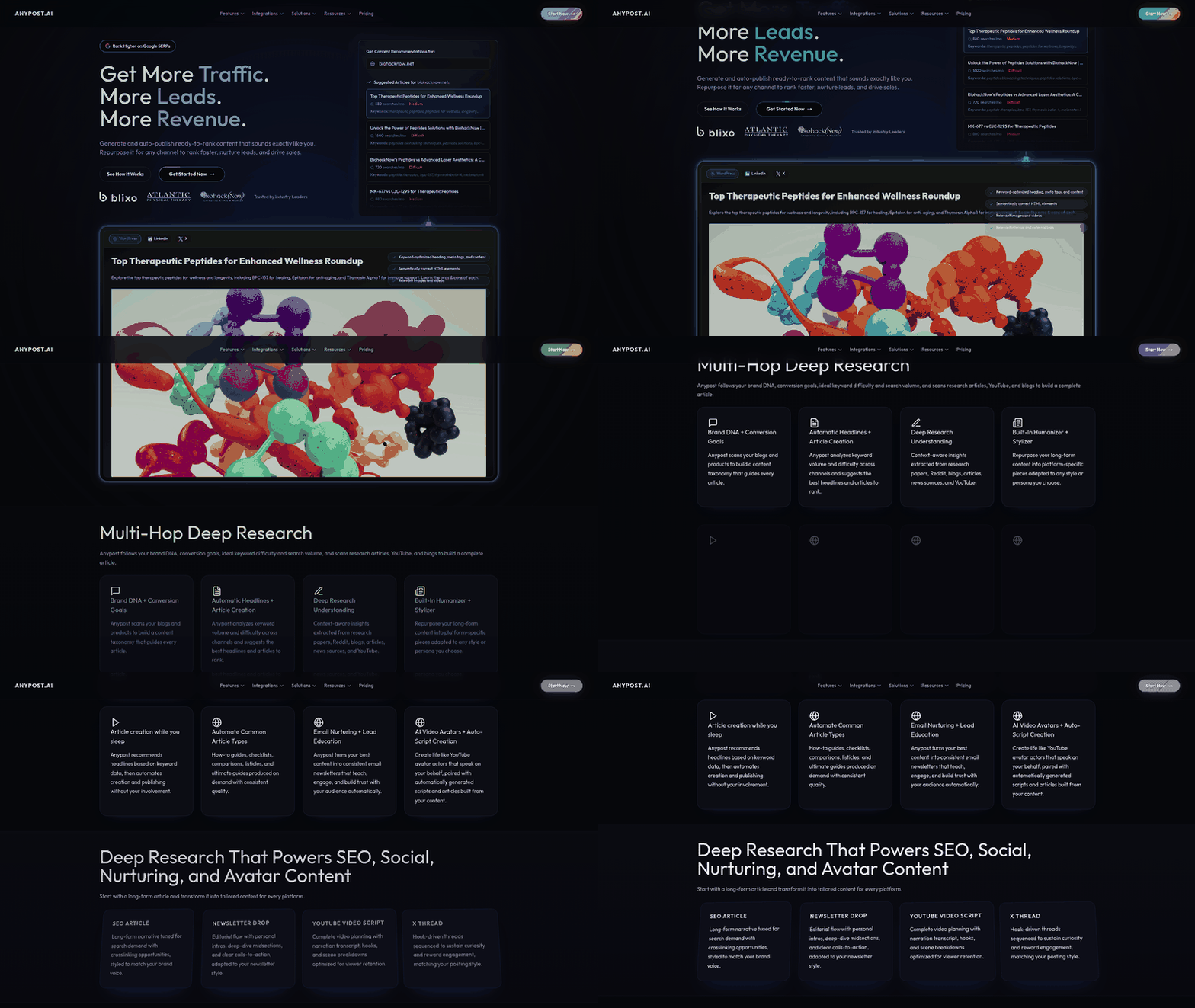
The article highlights several AI SEO tools, including AnyPost.ai (content creation and optimization), Gumloop (workflow automation), Surfer AI (content strategy and competitor analysis), Semrush (keyword research and site audits), MarketMuse (content gap analysis), Alli AI (CMS integration for metadata and URL optimization), and seoClarity (real-time analytics). These tools collectively streamline tasks like keyword research, content creation, performance tracking, and technical SEO adjustments.
2. How do AI SEO tools improve content quality and SEO performance?
AI SEO tools enhance content by analyzing competitor strategies, identifying high-traffic keywords, and suggesting topic clusters for better relevance. They also optimize on-page elements like metadata, headers, and internal linking. For example, MarketMuse uses AI to map content gaps, while Surfer AI provides real-time suggestions for improving readability and keyword density. By reducing human error and ensuring alignment with search engine algorithms, these tools boost rankings and user engagement.
3. Can AI SEO tools replace human SEO experts?
While AI SEO tools automate repetitive tasks and provide data-driven insights, they cannot fully replace human expertise. Human SEO professionals are essential for strategic decision-making, creative content ideation, and understanding nuanced user intent. Tools like Alli AI and Semrush act as enablers, allowing teams to focus on high-level strategy while handling technical optimizations. The ideal approach is a synergy between AI efficiency and human creativity.
4. What are the key trends shaping AI SEO tools in 2025?
Three major trends are:
- Generative AI: Tools like Surfer AI now generate draft content and suggest improvements.
- CMS Integration: Platforms like Alli AI embed directly into content management systems for seamless optimization.
- Real-Time Analytics: Tools such as seoClarity provide instant feedback on traffic, backlinks, and user behavior, enabling dynamic strategy adjustments.
These trends reflect a shift toward automation, personalization, and agility in SEO workflows.
5. How do AI tools assist with content repurposing and multi-format optimization?
AI SEO tools like Alli AI analyze existing content and repurpose it into diverse formats (e.g., blog posts to infographics or videos) while retaining SEO value. They ensure metadata, URLs, and keywords remain optimized across platforms. This reduces duplication of effort and maintains consistency in messaging, making it easier to target different audience segments effectively.
6. Are AI SEO tools suitable for small businesses or solo marketers?
Yes, many AI SEO tools are scalable and affordable for small businesses. Tools like Semrush and Surfer AI offer tiered pricing plans, while platforms like Gumloop automate workflows to save time. These tools democratize access to advanced SEO strategies, allowing smaller teams to compete with larger organizations by leveraging data-driven insights without requiring extensive technical expertise.
7. How do AI SEO tools handle real-time data and adapt to algorithm updates?
AI SEO tools use machine learning to process real-time data from search engines, tracking metrics like traffic spikes, backlink changes, and user engagement. For example, seoClarity updates dashboards instantly, while Semrush alerts users to algorithm shifts. This enables marketers to adjust strategies rapidly, ensuring content remains aligned with evolving search engine priorities and user preferences.