
Education and EdTech SEO: How to Rank for Course and Program Searches

Education and EdTech SEO: How to Rank When Everyone's Fighting for the Same Students

Key Takeaways
- The education technology industry is projected to hit $252 billion. That means more platforms competing for the same students through search.
- 80% of students use online resources to research courses before enrolling. If you're not on the first page, you're invisible.
- EdTech sites face a brutal combo: low domain authority against established universities and well-funded competitors.
- 50% of users abandon a site that takes more than three seconds to load. Page speed is a ranking factor and a conversion killer.
- 75% of users trust sites with expert-generated content. No credentialed authors? Damaged conversion rates.
- Structured data and schema markup can boost click-through rates by displaying course details directly in search results.
Why Education and EdTech SEO Isn't Optional
The online learning market is growing fast, and so is the competition. More institutions and EdTech companies are fighting for the same audience. SEO isn't a nice-to-have. It's how students find courses, programs, and platforms.
Students use search engines to make education decisions. Most prospective learners turn to Google to evaluate programs before committing. If your site doesn't appear on the first page for those searches, you're invisible to the majority of your potential audience. Search visibility is the single biggest factor in driving qualified traffic to your course listings.
What Makes EdTech SEO Harder Than Other Niches?
EdTech sites deal with low domain authority while competing against massive universities, review sites, and well-funded rivals. A new platform has little established trust with search engines. Meanwhile, it's going after terms like "data science certificate" or "online MBA" against institutions with decades of authority.
Technical and content gaps compound the problem. Many EdTech sites have slow load times, poor mobile experiences, and outdated course pages. Slow load times drive prospective students away directly. Modern users expect near-instant access. Generic content without expert authority fails to convert. Without clear signals of credibility like verified instructors or credentialed authors, platforms struggle to build trust. That lack of authority hurts conversion rates and signals to search engines that your content isn't the most reliable source.
How Does SEO Actually Drive Enrollment?
EdTech SEO isn't just about traffic. It's about converting that traffic into enrolled students. Sites with a structured SEO strategy can see a 20% increase in organic traffic and a 15% increase in conversions. Those gains come from matching search intent to the right content at each stage of the student journey.
Specific technical optimizations produce measurable results. Implementing structured data for course listings can boost search visibility by up to 30%. That markup helps search engines display rich results with pricing, start dates, and ratings directly in the search snippet. Regularly updating course pages can improve rankings by as much as 25%, signaling to search engines that the content is current.
Who Benefits From Strong EdTech SEO?
The benefits extend across the education ecosystem. Students find the right programs faster because they can compare options based on accurate, up-to-date information. Educators and institutions gain visibility without relying solely on expensive paid advertising. The whole funnel becomes more efficient.
Keyword research and intent mapping are the foundation. Data shows 60% of users employ specific, long-tail keywords when searching for courses. A student searching "part-time UX design bootcamp for career changers" has clear intent. Optimizing for those specific queries instead of broad terms attracts higher-quality leads who are ready to convert.
Building Authoritative Course Content That Ranks
Building course content that ranks requires more than keyword stuffing. You need to demonstrate real authority to both search engines and prospective students. Trust directly translates to higher click-through rates and better conversion on enrollment pages.
Start by identifying the subject matter experts within your institution. Professors, industry professionals, curriculum designers—their direct involvement signals credibility. When a course page includes a faculty bio, a video introduction from the instructor, or a detailed syllabus co-authored by an expert, Google's algorithms recognize that depth. Institutions using expert-driven content consistently see stronger visibility in search results for competitive program terms.
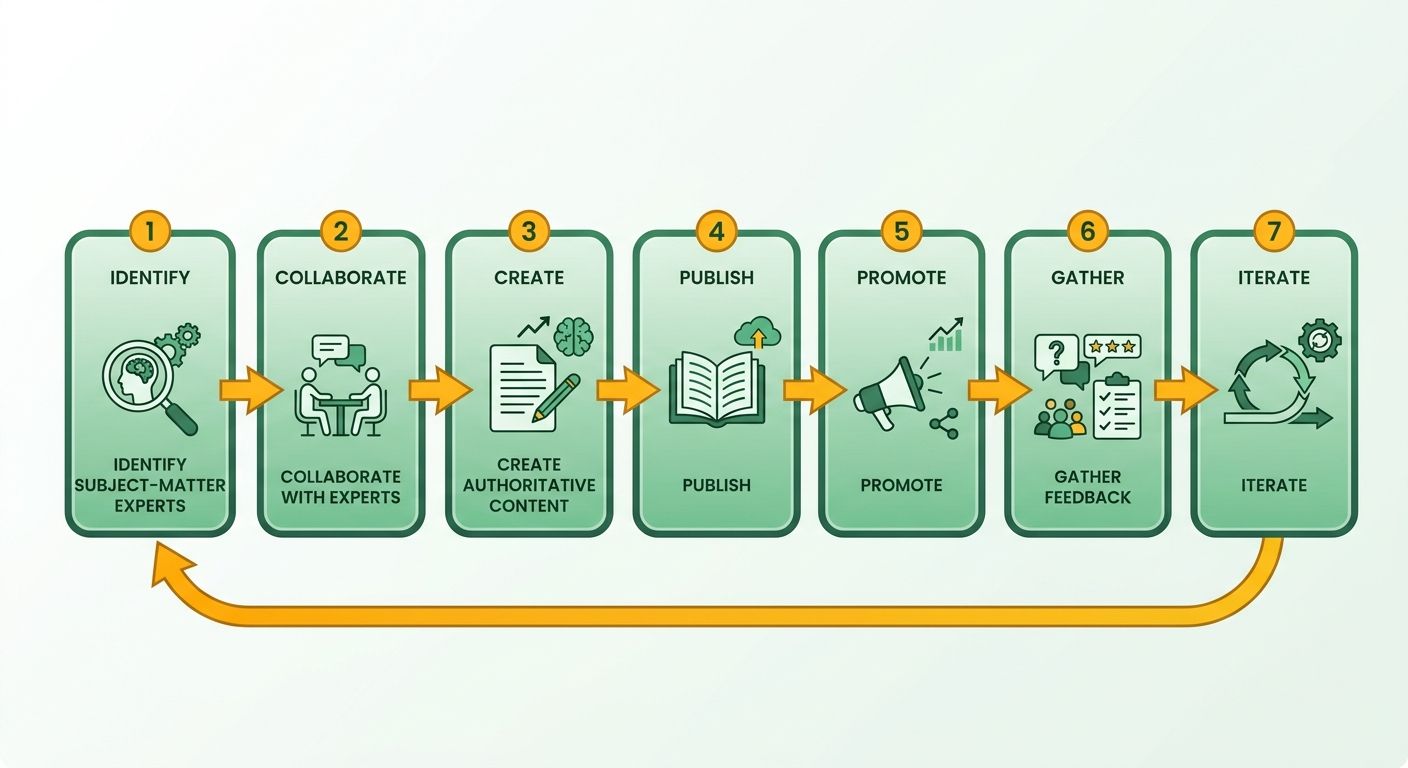
How Often Should You Refresh Course Content?
Refresh core course pages at least once per quarter. Search engines and users both favor up-to-date information. Stale course descriptions, outdated faculty lists, and old program start dates signal neglect.
Create a content audit calendar. Review each program page for accuracy on prerequisites, tuition costs, and application deadlines. Update faculty credentials when new research is published or instructors receive awards. If a professor publishes a notable paper, add that achievement to the course page. This keeps the page dynamic and gives search engines a reason to re-crawl it.
What Role Does Multimedia Play?
Multimedia content improves both engagement and retention for prospective students. Video introductions from faculty, virtual campus tours, and student testimonial clips keep users on the page longer. Longer dwell time signals relevance to search engines.
Embed short explainer videos that preview course modules. Include images of classroom settings or lab equipment. These visual elements break up text and make the page more scannable. But don't add media for its own sake. Every piece of multimedia should serve a purpose. A video of a professor explaining the course's real-world applications builds trust faster than a paragraph of text ever could.
Optimizing for User Experience at Scale
A fast, intuitive experience is essential when researching courses. If your pages load slowly or are hard to navigate on mobile, you lose that audience. Page speed, clear navigation, and mobile responsiveness are non-negotiable.
For EdTech sites producing content at scale, tools that automate expert-level content creation can help maintain quality without sacrificing volume. The key is balancing automation with human oversight. Use templates for consistency, but always have a subject matter expert review the final output. This hybrid approach lets you publish authoritative content faster while keeping the trust signals that drive rankings.
Using SEM and Advanced SEO Techniques for EdTech
Paid search and organic optimization work best together. SEM gives you immediate visibility while your SEO efforts build lasting authority. For EdTech platforms competing in crowded search results, this dual approach is the fastest path to consistent enrollment traffic.
Why SEM Deserves a Place in Your Strategy
Paid ads capture students who are ready to act. Branded and competitor search terms convert at higher rates than top-of-funnel queries, making them ideal for budget-conscious EdTech marketers. When a prospect searches for a specific program or compares your institution against a rival, an ad places you directly in their consideration set. For course and program searches where timing matters, SEM ensures you appear at the exact moment a student is comparing options.
The key is targeting high-intent keywords that signal enrollment readiness. Phrases like "online MBA programs" or "data science certification cost" indicate a user further along in their decision journey. Pair these with ad extensions that highlight start dates, tuition ranges, or accreditation badges. This gives prospects concrete details without requiring an extra click. Run small-budget tests on 10-15 terms, then double down on the ones that drive completed application forms.
Entity Optimization: The Advanced Technique That Matters Most
Entity optimization helps search engines understand your institution's real-world connections. Instead of treating your site as a collection of pages, Google's algorithms now map your programs, faculty, and research areas as interconnected entities. This shift means you need to explicitly link related content.
Start by creating topic clusters around each program area. A nursing degree page should link to faculty profiles, clinical partnership pages, and alumni success stories. Each internal link reinforces the entity relationship. Institutions with strong internal linking structures see measurable improvements in ranking for program-specific terms. Audit your site for orphaned pages. Every course page should connect to at least three related resources.
How Often Should You Refresh SEM and SEO Strategies?
Update your keyword targeting and ad copy every 30-60 days. Search behavior shifts with enrollment cycles. During back-to-school seasons, terms like "scholarship deadlines" spike. In summer, "online summer courses" dominates. Your strategy needs to mirror those shifts.
For SEO, conduct a quarterly content audit of your top 20 landing pages. Check for outdated tuition figures, discontinued programs, or broken faculty links. Pages that go more than six months without an update tend to slip in rankings as competitors publish fresher material. Use tools like Google Ads and Ahrefs to track which keywords are losing traction and which new terms are emerging. The institutions that treat SEO as a living strategy, not a one-time setup, consistently outrank competitors who let their pages stagnate.
Optimizing Mobile Experience and Technical SEO for EdTech
Mobile experience is no longer optional for EdTech platforms. Over half of all users access course and program pages on their phones. If your site loads slowly or displays poorly on a small screen, those prospective students leave and search elsewhere. Search engines also prioritize mobile-friendly sites, making this a direct ranking factor.
Why Page Speed Matters for Enrollment
Sixty percent of users expect a page to load in under three seconds. That expectation applies equally to course listings, program overviews, and enrollment forms. Every extra second of load time reduces the chance that a student completes an application. For EdTech platforms where the decision to enroll often happens on the go, speed is a conversion bottleneck.
Google PageSpeed Insights is a free tool that analyzes your site's performance and suggests specific fixes. It scores your pages on a scale of 0 to 100 and highlights issues like unoptimized images, render-blocking JavaScript, or slow server response times. Run this tool on your highest-traffic pages first—course search results and individual program pages. Addressing those issues can directly improve both user experience and search rankings.
Core Technical SEO Foundations
SSL certificates and XML sitemaps form the technical backbone of a well-optimized EdTech site. An SSL certificate encrypts data between your server and the user's browser. Search engines treat HTTPS as a positive ranking signal, and students expect to see the padlock icon before entering personal information on an application form.
An XML sitemap helps search engines find and index all your course pages, faculty bios, and program descriptions. For large EdTech sites with hundreds or thousands of course offerings, a sitemap ensures that new content gets crawled quickly. Submit your sitemap through search engine tools and update it whenever you add or remove programs. This simple step prevents valuable pages from remaining invisible in search results.
Regular Audits Keep Your Technical SEO Healthy
Technical SEO is not a one-time setup. It requires ongoing attention. Search engines update their algorithms, your site structure changes, and new pages get added. Schedule a quarterly technical audit to check for broken links, duplicate content, and crawl errors. Tools like Google Search Console provide reports on how search engines interact with your site, flagging issues like pages that return 404 errors or have blocked resources.
If you recently redesigned your course catalog, some old URLs might now redirect improperly. A quick audit catches those problems before they accumulate and drag down your overall site authority. Consistent maintenance ensures that your technical foundation supports your content and SEM efforts rather than undermining them.
Keyword Research and Intent Mapping for Education and EdTech
Keyword research for education and EdTech starts with understanding the exact phrases your prospective students type into a search bar. A student searching for "online MBA programs" has different intent than one searching for "how long does an MBA take." The first signals readiness to compare and enroll. The second signals early research. Tools like Google Keyword Planner and Ahrefs help you uncover these phrases, but the real work lies in mapping each keyword to a specific stage of the student journey.
How Do You Match Keywords to Student Intent?
Intent mapping means categorizing every search term by what the student wants next. Informational searches like "what is a data science degree" require content that educates, not a sales pitch. Transactional searches like "apply to nursing program online" need a direct path to an application form. Commercial investigation searches like "best EdTech platforms for coding bootcamps" demand comparison pages and testimonials.
Build three keyword buckets. The first is top-of-funnel keywords focused on career questions and industry overviews. The second is middle-of-funnel keywords comparing specific programs or institutions. The third is bottom-of-funnel keywords with terms like "enroll now," "tuition cost," and "program start dates." Each bucket dictates a different content format and call to action. Institutions ranking for all three intent stages see significantly higher overall enrollment traffic than those focusing only on bottom-funnel terms.
Why Long-Tail Keywords Work Better for EdTech
Long-tail keywords capture students who know exactly what they want and are closer to enrolling. A broad term like "online courses" is incredibly competitive and vague. A long-tail phrase like "accredited online data analytics certificate 12 weeks" signals a student who has already done preliminary research and is comparing specific options. These phrases convert at a higher rate because the intent is precise.
For EdTech platforms, long-tail keywords also reduce competition from large university domains. A small platform offering a specialized "Python for healthcare analytics course" can outrank a general university page on that specific phrase. Mine your own site search data, forum discussions, and question-based queries from tools like AnswerThePublic. Build content around those specific questions. One EdTech platform that shifted its content strategy to target 60 long-tail phrases in a single niche saw a measurable increase in organic leads within two quarters.
Using Keyword Clusters to Organize Your Content
Keyword clustering groups related terms into topic hubs, which signals topical authority to search engines. Instead of writing ten separate pages for "digital marketing course," "digital marketing certification," and "digital marketing bootcamp," create one comprehensive pillar page and link to supporting articles for each variation. This structure helps search engines understand that your site covers digital marketing education comprehensively.
Start by identifying a core topic like "UX design programs." List every related keyword: "UX design certificate online," "UX design portfolio requirements," "UX design salary after graduation," and "UX design curriculum overview." Group these into a single cluster. The pillar page covers the broad topic, and each supporting article dives deep into one subtopic. This approach also improves internal linking, which distributes page authority across your site. Sites that implement keyword clustering often see a 15–20% lift in organic traffic from clustered pages compared to standalone articles.
Implementing Structured Data for Education Pages
Schema markup helps search engines display your course information directly in search results, which increases click-through rates. For education sites, the most useful schema types are Course, EducationalOccupationalCredential, and Organization. Adding this structured data can make your listings appear with rich snippets that show course duration, rating, and provider name.
JSON-LD is the recommended format for most education sites because it's easier to implement and maintain than microdata. Use Google's Structured Data Markup Helper to generate the initial code. Place the JSON-LD block in the <head> section of your course pages. Include properties like name, description, provider, educationalCredentialAwarded, and timeRequired. Regularly test your markup using the Rich Results Test to catch errors before they affect visibility. One university that added Course schema to its program pages reported a 25% increase in organic click-through rates for degree-related searches within three months.
Measuring and Optimizing Education and EdTech SEO Performance
Your SEO work is only as good as your ability to measure it. Without tracking, you're guessing. Many EdTech sites invest heavily in content creation without ever checking whether that content actually moves the needle on enrollment or course discovery.
What Metrics Actually Matter for EdTech SEO?
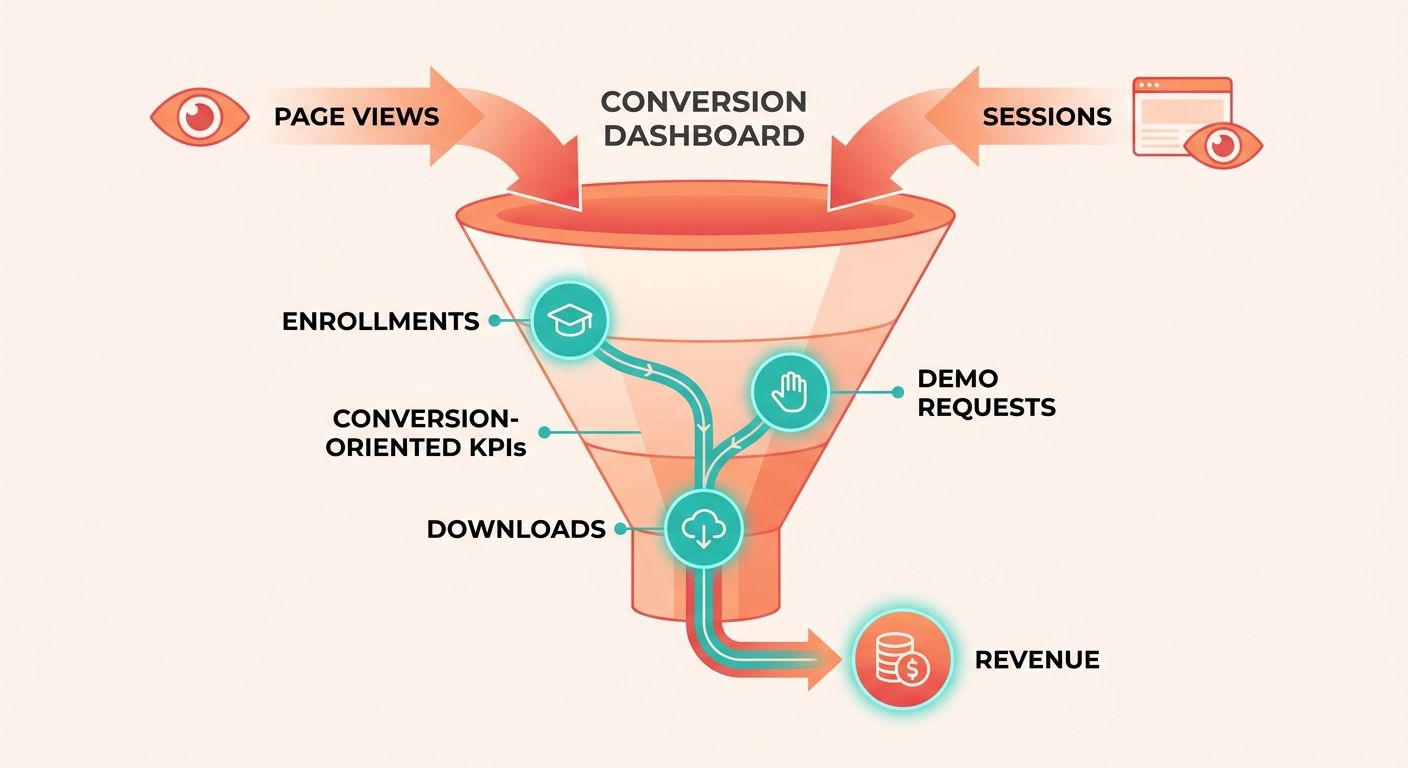
Focus on conversion-focused metrics, not vanity traffic. Page views and sessions tell you someone arrived. They don't tell you if that person enrolled, requested a demo, or downloaded a syllabus. The most useful metric for education sites is goal completion rate per keyword group. You want to know which search terms produce students who take action.
Google Search Console gives you the raw data. Look at average position and click-through rate together. A keyword ranking at position five with a 2% CTR may be less valuable than a keyword at position eight with a 6% CTR. The second one signals stronger intent alignment. If you see high impressions but low CTR on a course page, your title tag and meta description likely don't match what the searcher expects.
Skip tracking "branded search volume" for established programs. If your institution already has name recognition, branded searches will inflate your numbers without telling you anything about new student acquisition. Focus on non-branded, high-intent terms like "online data science certificate" or "MBA part-time evening schedule."
How Often Should You Revisit Your SEO Strategy?
Review your performance data monthly, but only make strategic changes quarterly. Weekly checks create noise. Algorithm fluctuations, seasonal enrollment cycles, and content indexing delays mean a single week of data can mislead you.
A recommended cadence is three parts. First, a monthly health check: look at crawl errors, index coverage, and any manual actions in Search Console. Second, a quarterly content audit: identify pages that have dropped in position or failed to gain traction after 90 days. Third, a biannual keyword refresh: update your keyword map based on new program offerings and shifts in student search behavior.
EdTech teams that update their foundation course pages every six months often see better ranking stability than teams that publish once and never return. Search engines reward freshness, especially for program details like tuition, start dates, and faculty.
When Should You Change Course Entirely?
If a page hasn't moved in position after six months with proper on-page optimization, it's time to reconsider the approach. Don't keep adding content to a page that targets a keyword you can't win. Sometimes the right move is to target a different search term entirely.
If "online MBA programs" is dominated by established universities with massive domain authority, shift your focus to a longer-tail variation like "online MBA for working professionals under 30" or "MBA programs with no GMAT requirement." The competition is lower, and the intent is often higher.
Skip this approach for brand-new course pages. New pages need at least three months of indexing and content maturation before you can judge their performance. Don't pull the plug early. Give Google time to understand your page's relevance.
Frequently Asked Questions
How long does it take to see SEO results for an EdTech site?
Typically 4-6 months for new sites, but established sites with existing authority can see improvements in 2-3 months. Competitive terms like "online MBA" take longer than niche programs.
What is the most important SEO factor for EdTech sites?
Content authority. Without expert-created content, technical SEO alone won't move the needle. Credentialed authors, faculty involvement, and accurate program information matter most.
How do I compete with universities that have higher domain authority?
Target long-tail keywords, build topic clusters, and focus on specific program niches. A specialized "Python for healthcare analytics" page can outrank a general university page on that specific term.
Should I use schema markup on all course pages?
Yes. Course schema is relatively easy to implement and directly improves how your listings appear in search results. Start with your highest-traffic program pages.
How often should I update my course pages?
At minimum, quarterly. Update tuition, start dates, faculty credentials, and program descriptions. Pages that go six months without updates tend to lose ranking position.
Is paid search worth it for EdTech SEO?
Yes, as a complement. SEM captures students ready to act while organic SEO builds long-term authority. Use paid search for high-intent terms and retargeting.
References
[1] Education and EdTech SEO: How to Rank for Course and Program Keywords - https://anypost.ai/blog/education-and-edtech-seo
Frequently Asked Questions
1. How do I choose between targeting broad degree terms versus niche program keywords?
Niche program keywords convert better for smaller EdTech platforms. Broad terms like "online MBA" are dominated by universities with high domain authority. Long-tail phrases—such as a specific software engineering bootcamp tailored for career transitioners—face less competition and attract students who are closer to making an enrollment decision.
2. What is the fastest way to improve an existing course page that isn't ranking?
Begin by auditing the page for outdated program details and refreshing the curriculum information. Search engines favor freshness, and stale details signal neglect. Incorporate engaging multimedia elements and implement schema markup to improve search engine comprehension. These changes, combined with strategic internal links from high-authority pages on your site, can boost rankings within 4-6 weeks.
3. Should I use microdata or JSON-LD for course schema markup?
JSON-LD is the industry standard and the format preferred by major search engines. Unlike microdata, which requires wrapping individual HTML elements, JSON-LD exists as a clean, standalone block of code. This separation makes it much simpler to deploy dynamically across thousands of program pages and significantly reduces the risk of breaking page layouts during updates.
4. How do I handle SEO for a brand-new course with no existing authority?
Target long-tail variations of the main keyword first. For a new "data analytics certificate," optimize for phrases like "data analytics certificate no experience required." Create a pillar page linking to supporting articles on prerequisites, career outcomes, and curriculum. Give the search crawlers ample time to discover, index, and establish the initial relevance of your new content hub.
5. What is the biggest technical SEO mistake EdTech sites make?
Ignoring mobile optimization and page speed is the most common error. When prospective students browse courses on their mobile devices, slow load times directly lead to high bounce rates and abandoned enrollment forms. To fix this, prioritize compressing heavy media assets, leveraging browser caching, and eliminating unnecessary scripts that delay the initial page render.
6. How do I measure if my SEO efforts are actually driving enrollments?
Set up custom conversion tracking in your analytics platform to monitor specific actions, such as syllabus downloads, contact form submissions, and completed applications. By attributing these actions back to organic landing pages, you can determine which content topics generate actual student interest rather than just passive traffic. This ensures your SEO budget is spent on high-converting themes.
7. When should I abandon a keyword and target a different one?
If a page's search ranking remains stagnant for half a year despite comprehensive on-page updates and internal linking, the keyword difficulty may simply be too high for your current domain authority. Instead of wasting resources, pivot to highly specific, long-tail variations where the search volume is lower but the competition is far more manageable. This allows you to capture qualified leads while building up your site's overall topical authority.