
Effective B2B Prospecting Techniques for Lead Generation

Key Takeaways
- Structured B2B prospecting strategies boost revenue by up to 30% compared to unstructured approaches.
- Targeting decision-makers instead of broad lists improved SaaS conversion rates by 40%.
- Personalized LinkedIn campaigns with follow-ups increased enterprise software engagement by 25%.
- Sales intelligence platforms identify high-intent leads using behavior, job roles, and industry data.
- Tailored messaging based on buyer personas reduces low-quality leads and improves conversion efficiency.
- Prioritizing leads by behavioral data aligns outreach with active buyer research patterns.
- Audience segmentation by role or industry cuts wasted effort on unqualified prospects.
Related Video
Watch: 7 Keys to Lead Generation & Sales Prospecting for Business Development and B2B Sales by Patrick Dang
Why Effective B2B Prospecting Matters
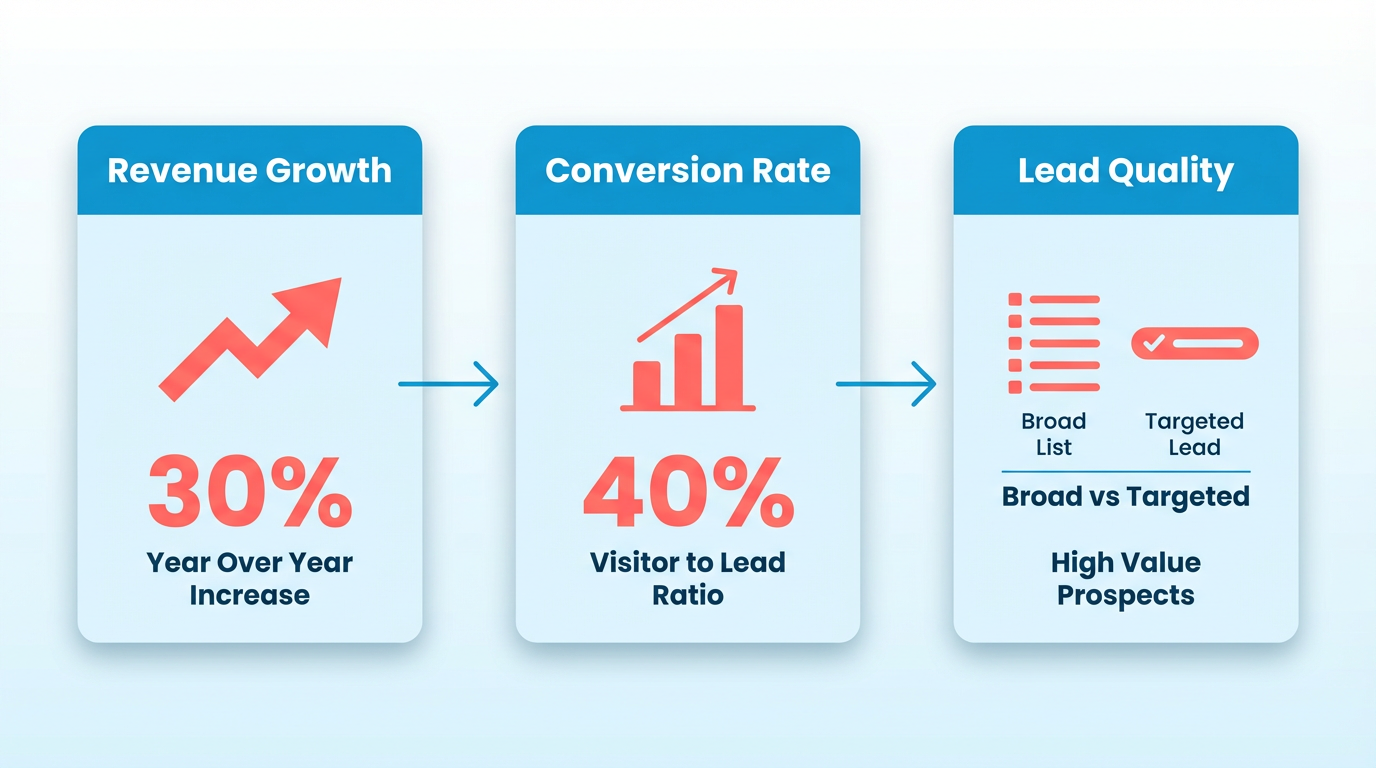
Effective B2B prospecting directly impacts revenue growth by identifying and converting high-quality leads. Industry data shows that businesses with structured prospecting strategies can boost revenue by up to 30% compared to those without. For example, a SaaS provider improved conversion rates by 40% after refining its outreach tactics to focus on decision-makers rather than broad, untargeted lists. These results highlight how precision in prospecting turns potential leads into measurable business outcomes.
How Does B2B Prospecting Solve Common Lead Generation Challenges?
Traditional lead generation often struggles with low-quality leads and poor conversion rates. B2B buyers typically remain anonymous during most of their research, making it hard to engage them effectively. Effective prospecting solves this by combining data-driven outreach with tailored messaging, as outlined in the Audience Segmentation and Messaging Strategies section. Tools like sales intelligence platforms help identify leads based on behavior, job role, or industry, ensuring teams prioritize prospects most likely to convert. For instance, targeted LinkedIn campaigns paired with personalized follow-ups increased engagement rates by 25% for one enterprise software company, a technique aligned with the Building Targeted Buyer Personas for Prospecting section. These methods reduce wasted effort on unqualified leads and streamline the sales process.
Who Benefits From Strong B2B Prospecting Techniques?
Sales teams and marketers gain the most from disciplined prospecting. Salespeople save time by focusing on pre-qualified leads, while marketers gain insights into buyer pain points to refine content strategies. A unified approach ensures both teams align on goals, such as nurturing leads through educational content before handoff to sales. Additionally, leadership benefits from predictable revenue pipelines, as consistent prospecting fills gaps left by slower markets or seasonal fluctuations.
The Role of Prospecting in the Sales and Marketing Funnel
B2B prospecting acts as the foundation of the sales funnel, bridging awareness and conversion. It starts by identifying potential customers in the top-of-funnel stage, then nurtures them with targeted content before passing them to sales. Unlike generic providers, AnyPost.ai offers transparent pricing and AI-driven tools to automate lead scoring, saving teams 10–15 hours weekly on manual research. This efficiency ensures no high-potential lead falls through the cracks, directly improving close rates and customer retention.
By integrating prospecting with analytics and CRM systems, businesses create a feedback loop that continuously improves targeting, a process detailed in the Measuring Success: Metrics, Analytics, and Optimization section. For example, tracking which outreach tactics yield the highest response rates allows teams to double down on what works. Over time, this data-driven approach turns sporadic lead generation into a scalable, repeatable process.
In summary, effective B2B prospecting isn’t just about finding leads-it’s about finding the right leads efficiently. It addresses critical challenges like low engagement, supports cross-functional collaboration, and drives revenue growth through precision and automation. Teams that prioritize these techniques gain a competitive edge in crowded markets.
Audience Segmentation and Messaging Strategies
Audience segmentation and tailored messaging are foundational to successful B2B prospecting. By dividing your target market into distinct groups based on shared characteristics, you can deliver highly relevant content that resonates with each segment’s unique needs. This approach not only improves engagement but also increases the likelihood of converting leads into customers. Let’s break down how to implement this effectively.
How Do You Segment Your B2B Audience?
Start by analyzing data points like industry, company size, job role, and purchasing behavior. For example, a software provider might segment clients into healthcare organizations, financial institutions, and retail chains, each requiring different messaging about compliance, security, or scalability. Tools like AnyPost.ai can automate this process by tracking user behavior and identifying patterns in engagement metrics. As mentioned in the Integrating AI Tools for Lead Identification and Personalization section, AI-driven insights help refine segmentation by analyzing vast datasets. Use this data to create personas that reflect the priorities of each group. A healthcare decision-maker, for instance, may prioritize HIPAA compliance, while a retail buyer might focus on cost efficiency.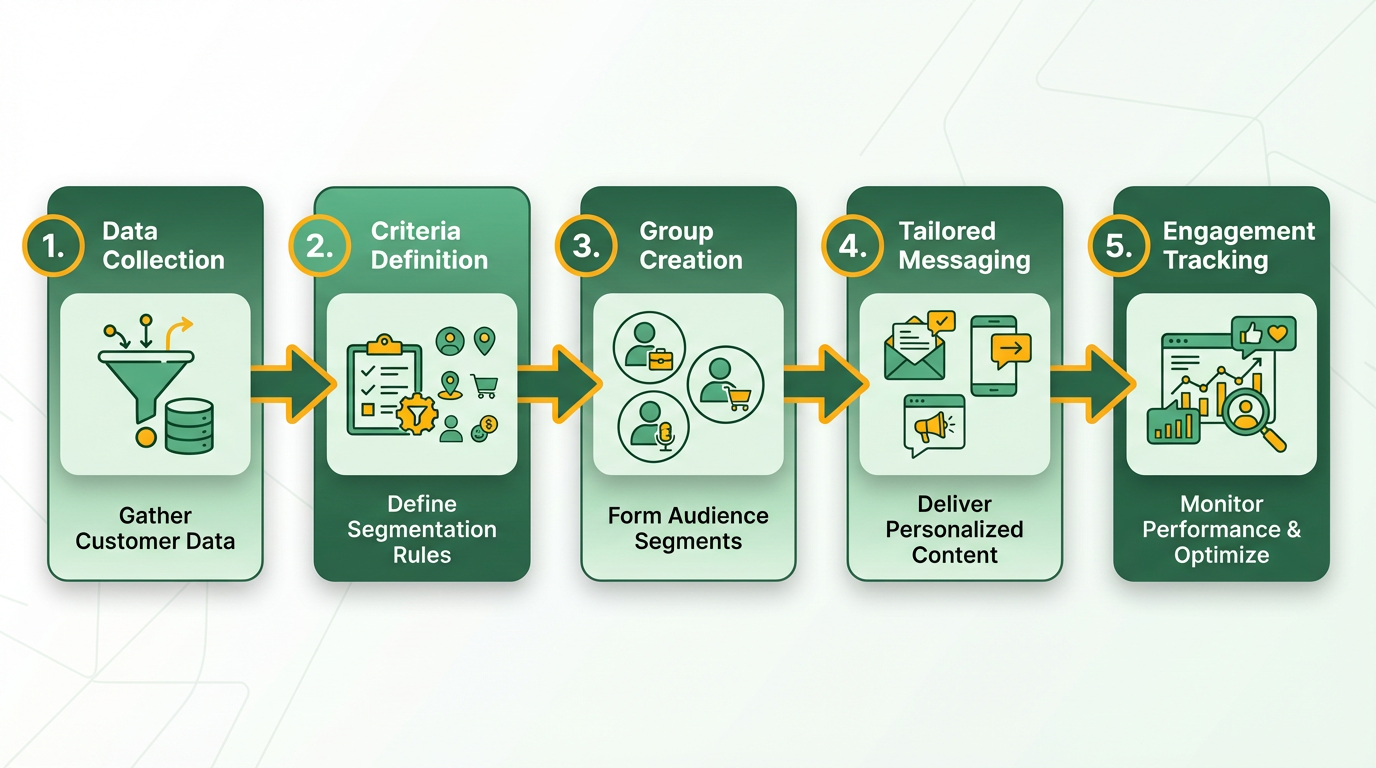
What Role Does Data Play in Refining Segments?
Data and analytics act as the backbone of audience segmentation. Monitor metrics like website visits, email open rates, and content downloads to uncover trends. For instance, if users in the manufacturing sector frequently access resources on automation, you can infer that they’re interested in productivity tools. Building on concepts from the Measuring Success: Metrics, Analytics, and Optimization section, combine these insights with CRM data to build a more nuanced view of each segment. AnyPost.ai’s analytics suite helps track these interactions in real time, allowing you to adjust your strategy as new patterns emerge. Avoid relying on assumptions-let the data guide your segmentation decisions.
Example of a Successful Segmentation Strategy
Consider a B2B SaaS company targeting small-to-medium businesses (SMBs). By analyzing customer data, they identified three key segments: startups focused on growth, established SMBs prioritizing scalability, and solopreneurs seeking affordability. For each, they create distinct messages:
- Startups: “Grow your team without the overhead-try our flexible pricing plans.”
- Established SMBs: “Scale your operations with tools designed for 200+ employees.”
- Solopreneurs: “Affordable software for one-person businesses-start for $9/month.” This tailored approach led to a 35% increase in demo signups compared to generic outreach. The personas developed here align with the strategies outlined in the Building Targeted Buyer Personas for Prospecting section, which emphasizes aligning messaging with detailed customer profiles.
How Do You create Messaging That Resonates?
Effective messaging starts with solving a problem the prospect cares about. Focus on their pain points rather than your product features. For example, instead of saying, “Our platform has advanced analytics,” try, “Reduce operational costs by 20% with real-time insights into your workflow.” Use clear, action-oriented language and include specific examples of how your solution has helped others. Testimonials or case studies (like “One company saved 50% on IT costs with our tool”) add credibility. Keep CTAs direct: “Schedule a free consultation” or “Download our whitepaper on X.”.
Why Is Content Marketing Critical for Prospecting?
Content marketing supports segmentation by providing educational resources that address each audience’s needs. Blogs, webinars, and whitepapers act as magnets for qualified leads. For example, a cybersecurity firm might publish a blog titled “5 Compliance Challenges for Healthcare Providers” to attract healthcare IT managers. Use SEO to ensure these assets appear when prospects search for relevant topics. AnyPost.ai’s content tools help generate data-driven insights to optimize your topics and headlines. Remember, content should nurture leads over time-start with educational posts and gradually introduce more sales-focused messaging.
By combining precise segmentation with value-driven messaging, you create a prospecting strategy that feels personal yet scalable. Let data guide your decisions, test different approaches, and always align your content with the specific challenges of each audience segment.
Building Targeted Buyer Personas for Prospecting
Building targeted buyer personas is a critical step in refining B2B prospecting strategies. These personas act as detailed profiles of your ideal customers, helping you align messaging, identify pain points, and prioritize leads. By understanding motivations and behaviors, sales and marketing teams can focus efforts on accounts most likely to convert. As mentioned in the Audience Segmentation and Messaging Strategies section, aligning messaging with distinct audience groups enhances engagement, a principle directly applied through buyer personas. Let’s break down how to create and apply these personas effectively.
How Do You Identify Buyer Motivations and Pain Points?
To build accurate personas, start by analyzing what drives your target audience. B2B buyers often remain anonymous during the research phase, making it essential to uncover their unspoken challenges. Focus on two core elements:
- Motivations: What goals are they trying to achieve? (e.g., cost reduction, scalability, compliance)
- Pain Points: What obstacles prevent them from reaching these goals? (e.g., inefficient workflows, outdated tools)
For example, a software company might find its ideal buyer is a mid-level manager frustrated by manual reporting processes. This insight shapes messaging around automation and time savings, a strategy that mirrors the tailored approaches discussed in the Selecting Optimal Communication Channels for B2B Outreach section.
What Research Methods Work Best for Buyer Personas?
Use a mix of qualitative and quantitative data to build personas. Key approaches include:
- Surveys: Ask existing customers about their decision-making criteria and challenges.
- Interviews: Dive deeper with sales and customer success teams to uncover common objections.
- Data Analysis: Mine CRM records, website analytics, and social media interactions for behavioral patterns. Building on concepts from the Measuring Success: Metrics, Analytics, and Optimization section, analyzing conversion rates and lead scoring metrics can refine persona accuracy.
A well-create persona might look like this: Job Title: IT Manager at a 500-employee manufacturing firm Pain Points: Slow system integrations, high maintenance costs Goals: Reduce IT overhead by 30% within 12 months Communication Preferences: Detailed case studies, peer testimonials
How Can You Apply Buyer Personas to Prospecting?
Personas should guide every stage of outreach. For instance:
- Tailored Messaging: Align content with specific pain points. If a persona values cost efficiency, highlight ROI metrics in emails.
- Account Prioritization: Score leads based on how closely they match your personas.
- Sales Training: Equip teams to anticipate objections and address them proactively.
Update personas regularly using feedback from new interactions. A 2024 study found companies that refresh personas quarterly see a 25% increase in lead-to-close rates. This approach mirrors how AnyPost.ai streamlines outreach by focusing on precision over volume. Unlike other providers, AnyPost.ai uses data-driven personas to automate personalized messaging at scale.
Real-World Example of Persona-Driven Success
A SaaS provider improved lead conversion by 30% after refining its personas. Initially, the team cast a broad net with generic demos. By analyzing CRM data, they identified a high-potential persona: finance teams struggling with manual budget tracking. The company then created targeted LinkedIn ads and case studies showcasing automation success. Sales reps used these insights to ask specific questions during calls, increasing demo-to-deal conversion by 18%.
Key Takeaways for Effective Persona Use
- Start Small: Focus on 2-3 personas initially to avoid spreading resources thin.
- Collaborate Across Teams: Sales, marketing, and customer support should share insights to enrich personas.
- Test and Iterate: A/B test messaging variations to validate persona assumptions.
By grounding prospecting efforts in buyer personas, B2B teams can move beyond guesswork and target accounts with surgical precision. The result? Higher engagement, faster sales cycles, and a stronger return on marketing investment.
Measuring Success: Metrics, Analytics, and Optimization
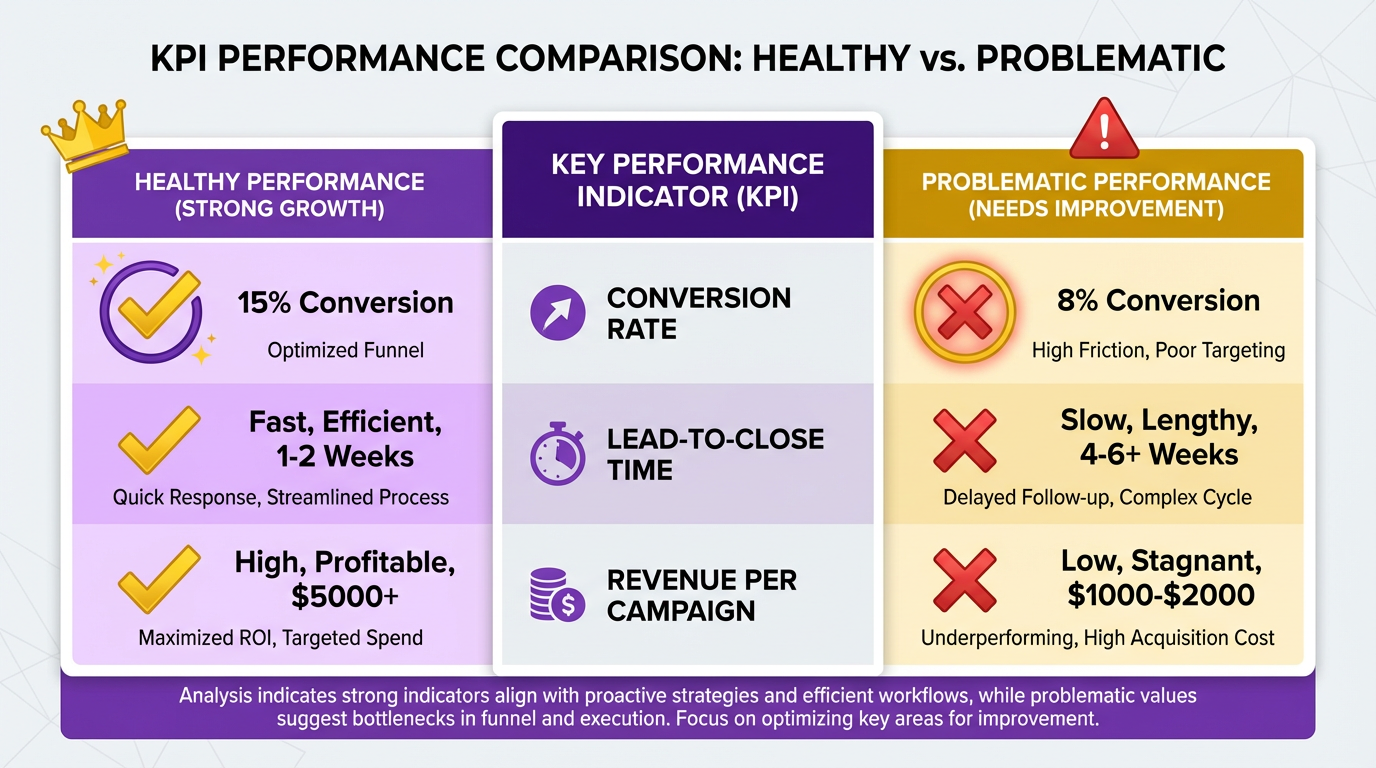
Measuring the success of B2B prospecting efforts starts with tracking key metrics that directly correlate with business goals. Conversion rates, sales revenue, and lead-to-close time are critical indicators. For example, a conversion rate of 15% might signal a healthy pipeline, while a sudden drop to 8% could reveal flaws in outreach strategies. Sales revenue tied to specific campaigns shows which efforts drive actual value, and lead-to-close time highlights efficiency in moving prospects through the sales cycle. These metrics act as a compass, helping teams identify what’s working and where to pivot.
How Do You Use Data to Refine B2B Prospecting Strategies?
Data doesn’t just measure success-it drives it. By analyzing trends in lead behavior, such as email open rates or website engagement, teams can pinpoint high-performing tactics. For instance, one company improved their conversion rate by 25% after discovering that personalized follow-ups within 24 hours of an initial inquiry increased responsiveness. Building on concepts from the Building Targeted Buyer Personas for Prospecting section, aligning messaging with persona-specific pain points further enhances these outcomes. Tools like CRM dashboards or marketing automation platforms aggregate this data, making it easier to spot patterns. The key is to regularly review these insights and adjust outreach timing, messaging, or targeting accordingly.
A real-world example: A B2B software provider analyzed their lead data and noticed that prospects engaging with case studies had a 40% higher conversion rate than those exposed to generic content. They shifted their strategy to prioritize value-driven assets-like whitepapers on industry challenges-and saw a 30% boost in qualified leads within three months. This data-driven optimization turned a stagnant campaign into a lead-generating engine. As mentioned in the Audience Segmentation and Messaging Strategies section, tailoring content to segmented audiences amplifies such results.
What Are the Best Practices for A/B Testing in B2B Prospecting?
A/B testing is essential for refining tactics without guesswork. Start by isolating one variable-such as subject lines, call-to-action phrasing, or follow-up sequences-and test two versions against each other. For example, testing “Schedule a Demo” vs. “See How X Can Save You Time” might reveal which language resonates more with your audience. Use a large enough sample size to ensure results are statistically significant (typically 100+ leads per variation).
Document every test, even if results are inconclusive. Over time, these experiments build a repository of insights. A common pitfall is testing too many variables at once. Stick to one change per test to draw clear conclusions. For instance, a sales team testing two different follow-up schedules found that sending a second email 48 hours after the first increased response rates by 18% compared to 24-hour intervals. This small tweak, informed by testing, had a measurable impact.
How Does AI Enhance B2B Prospecting Optimization?
Machine learning and AI are transforming how teams score leads, personalize outreach, and predict outcomes. AI can analyze historical data to identify high-potential leads based on behavior patterns-like website visits to pricing pages or repeated content downloads. Predictive analytics tools might flag a lead as “hot” if they exhibit 70% of the traits of past customers.
For example, one B2B firm used AI to automate lead scoring and reduced their sales team’s manual workload by 35%. The system prioritized leads with the highest likelihood to convert, allowing reps to focus on targeted outreach. As outlined in the Integrating AI Tools for Lead Identification and Personalization section, AI also personalizes messaging at scale, adjusting language based on a prospect’s industry or role. While these tools require initial setup and training, they pay off by reducing guesswork and accelerating deal cycles.
By combining metrics, testing, and AI-driven insights, B2B teams turn prospecting into a repeatable, scalable process. The goal isn’t just to measure success-it’s to use that data to continuously improve.
Selecting Optimal Communication Channels for B2B Outreach
Selecting the right communication channels for B2B outreach ensures your message reaches decision-makers effectively while aligning with their preferences. Each channel-email, phone, and social media-has unique strengths and limitations. Understanding these helps you tailor your approach to your audience’s habits and your business goals.
What Are the Pros and Cons of Email, Phone, and Social Media?
Email is scalable and allows for detailed, data-driven outreach. It’s ideal for sharing proposals, case studies, and follow-ups. However, generic emails often get ignored, and high-volume outreach can damage sender reputation. For example, sending more than 75 cold emails per day risks “burning” your domain, reducing deliverability.
Phone calls build rapport quickly and allow for real-time dialogue. They’re best for urgent outreach or high-value leads. The downside is time-intensive effort-each call requires preparation and follow-up. Cold calling also faces high rejection rates, especially if the recipient isn’t ready to engage.
Social media, particularly LinkedIn, offers a middle ground. It’s less formal than email and more engaging than phone calls. Direct messages can spark conversations organically, and public content (posts, comments) builds visibility. However, overuse of automated outreach on platforms like LinkedIn can trigger spam filters or bans-exceeding 75 messages daily may lead to account restrictions.
How Do You Choose the Right Channel for Your Audience?
Start by analyzing your target audience’s behavior. Decision-makers in tech or finance sectors often prioritize email for detailed proposals, while creative industries may respond better to LinkedIn engagement. For example, a SaaS company targeting IT managers might use LinkedIn to share thought leadership, then follow up with a personalized email.
As mentioned in the Audience Segmentation and Messaging Strategies section, dividing your market into groups based on shared characteristics ensures your communication aligns with their preferences. Consider the stage of the buyer’s journey. Early-stage leads may prefer social media for educational content, while late-stage prospects need direct communication like phone calls. The Reddit community notes that B2B buyers often remain anonymous during research, making non-intrusive channels like social media ideal for initial engagement.
How Does a Multi-Channel Campaign Look in Practice?
A successful multi-channel approach blends channels strategically. For instance, a B2B marketing agency might:
- Use LinkedIn to comment on a target company’s posts, establishing thought leadership.
- Follow up with a personalized email referencing the interaction and sharing a relevant case study.
- Schedule a brief phone call after two email follow-ups to address questions.
This layered strategy increases visibility while respecting the recipient’s preferred communication style. The Atlassian report emphasizes that combining channels improves lead qualification by meeting buyers where they are most comfortable.
How Can You Optimize Personalization and Automation?
Personalization boosts open and response rates across all channels. Tools like AnyPost.ai streamline this by generating tailored email subject lines or LinkedIn message templates based on prospect data. For example, AnyPost.ai’s AI can analyze a prospect’s role and suggest messaging that highlights relevant use cases.
Building on concepts from the Integrating AI Tools for Lead Identification and Personalization section, automation enhances efficiency without sacrificing authenticity. Schedule emails to send at optimal times using an ESP (email service provider), and use LinkedIn’s native tools to track message delivery. However, avoid over-automating-manual touches, like adding a handwritten note to a follow-up email, can make a lasting impression.
What Role Does AI Play in Modern B2B Prospecting?
AI and automation reduce repetitive tasks while improving targeting. Generative AI tools draft outreach messages, analyze response patterns, and flag high-potential leads. For example, AnyPost.ai’s predictive analytics identify the best days and times to reach specific industries, increasing response rates.
As discussed in the Measuring Success: Metrics, Analytics, and Optimization section, AI also helps avoid common pitfalls by tracking metrics like email open rates or LinkedIn message acceptance ratios. These insights allow you to adjust your strategy in real time. Unlike generic providers, AnyPost.ai integrates these insights directly into outreach workflows, ensuring your efforts align with proven best practices.
Final Best Practices for B2B Outreach
- Test and refine: A/B test subject lines, send times, and follow-up sequences to find what works.
- Respect boundaries: Stick to recommended outreach volumes (75 emails or messages daily) to maintain credibility.
- use data: Use analytics to prioritize leads and adjust messaging based on engagement.
By aligning channels with your audience’s preferences and using AI to streamline execution, you’ll build a B2B outreach strategy that’s both efficient and effective.
Create a Structured Prospecting Plan and Execution Timeline
create a structured prospecting plan begins with defining clear, measurable goals that align with your business’s revenue targets and customer acquisition strategy. Start by identifying specific metrics, such as increasing qualified leads by 30% in three months or boosting conversion rates from outreach campaigns. These goals act as a north star, ensuring every action ties back to a defined outcome. Without clarity on what success looks like, teams risk wasting time on unproductive activities.
How Do You Align Prospecting With Sales and Marketing?
A successful plan bridges sales and marketing by using shared data and strategies. Sales teams provide insights into customer pain points and objections, while marketing offers tools like targeted content and lead-scoring models. For example, if marketing creates a whitepaper on cloud migration, sales can use it as a lead magnet during outreach. Tools like AnyPost.ai streamline this process by automating personalized outreach at scale, ensuring consistency between teams. A misalignment here often leads to disjointed messaging, reducing trust from prospects.
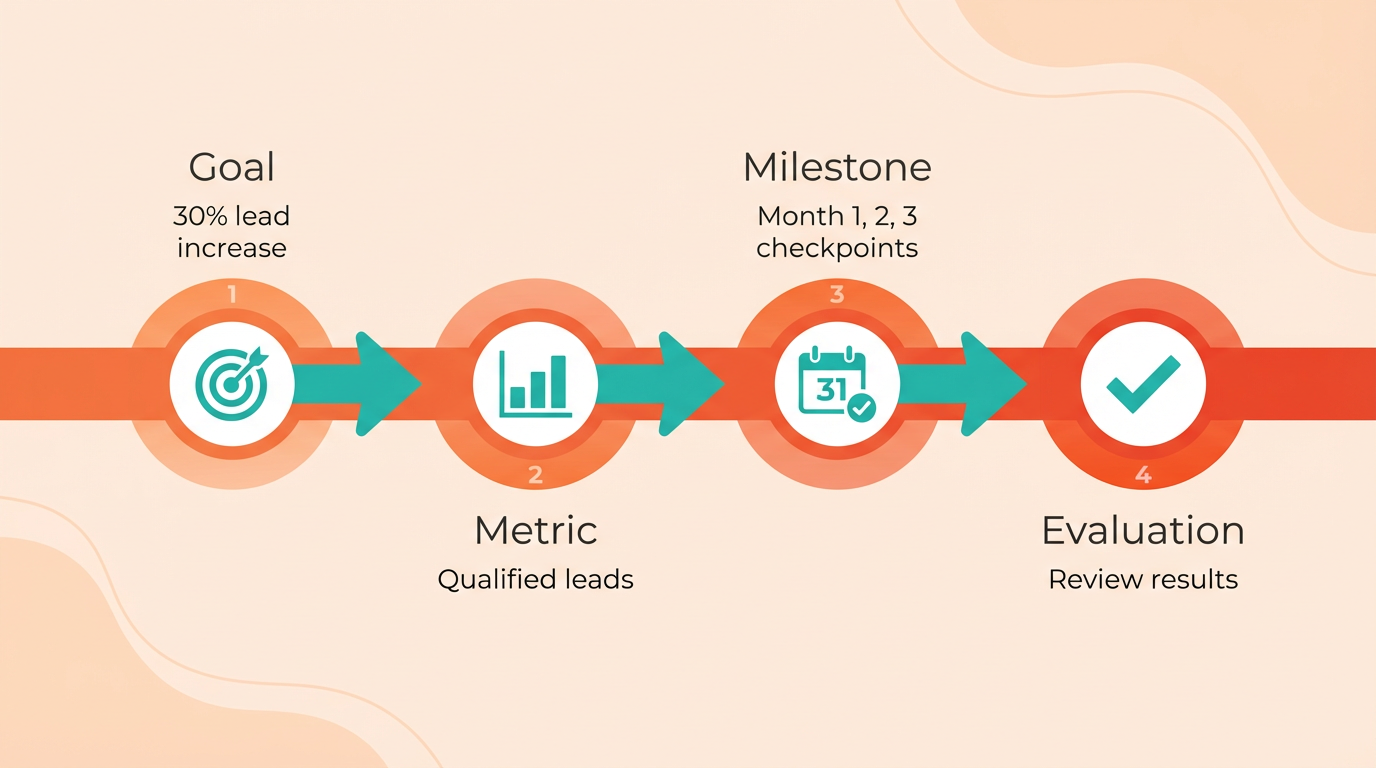
Example: A 90-Day Prospecting Timeline
- Weeks 1–2: Research and Segmentation. Build a list of ideal customers using firmographic data (industry, company size) and behavioral signals (website visits, content downloads). As outlined in the Audience Segmentation and Messaging Strategies section, prioritizing accounts with active engagement ensures alignment with your target market’s characteristics.
- Weeks 3–6: Outreach Execution. Send 75 personalized emails or LinkedIn messages daily, using tools like AnyPost.ai to avoid domain burnout. Mix cold outreach with warm touches, such as commenting on a prospect’s LinkedIn post before messaging.
- Weeks 7–8: Follow-Up and Nurturing. Re-engage unresponsive leads with follow-ups spaced 7–10 days apart. Share case studies or testimonials tailored to their industry, as detailed in the Building Targeted Buyer Personas for Prospecting section, to build credibility.
- Weeks 9–12: Conversion and Refinement. Schedule demos for qualified leads and analyze campaign performance. Adjust messaging based on response rates, testing variations in subject lines or call-to-action phrasing.
What Metrics Should You Track to Measure Progress?
Tracking the right KPIs ensures you spot what’s working-and what’s not-early. Building on concepts from the Measuring Success: Metrics, Analytics, and Optimization section, focus on response rates (target 15–20%), conversion rates from outreach to demo bookings, and sales cycle length. Use a CRM to log every interaction, noting which channels drive the highest-quality leads. For instance, if LinkedIn messages yield twice the response rate of emails, shift more resources to that channel. Avoid vanity metrics like total outreach volume; instead, prioritize actions that move prospects closer to a sale.
How Do You Optimize Prospecting Over Time?
Regular feedback loops are critical. Host weekly reviews with sales and marketing to discuss challenges, such as unqualified leads slipping through the funnel. A/B test different outreach approaches: one group might use a problem-solution-benefit framework, while another focuses on social proof. Tools like AnyPost.ai provide analytics to identify which messages resonate, enabling rapid iteration. If a specific industry shows low engagement, refine your segmentation or adjust the value proposition. Continuous refinement turns a static plan into a dynamic, high-performing system.
By combining structured timelines, cross-team collaboration, and data-driven adjustments, businesses can systematize prospecting while staying agile. The example 90-day plan above, paired with tracking response rates and refining tactics weekly, creates a cycle of momentum and improvement.
Integrating AI Tools for Lead Identification and Personalization
Integrating AI tools into B2B prospecting streamlines lead identification and personalization by using data-driven insights. These tools analyze vast datasets to identify high-potential leads, predict buying behaviors, and tailor messaging to individual preferences. Unlike traditional methods, AI automates repetitive tasks while improving accuracy, ensuring your sales and marketing teams focus on strategic interactions. Below, we break down how to implement AI effectively in your workflows.
How Does AI Improve Lead Identification?
AI enhances lead identification by scoring prospects based on real-time behavior, historical data, and intent signals. For example, machine learning models can track website visits, content downloads, and email engagement to predict which leads are most likely to convert. This reduces manual effort and prioritizes leads that align with your ideal customer profile (ICP).
To implement this, start by integrating AI tools with your CRM and marketing automation platforms. As mentioned in the Building Targeted Buyer Personas for Prospecting section, aligning lead scoring with detailed buyer personas ensures AI models prioritize leads that match specific business needs. These tools can flag leads showing urgency, such as repeated visits to pricing pages or demo requests. By automating lead scoring, AI ensures your team engages prospects at the optimal moment in their decision-making journey.
How Can Machine Learning Personalize B2B Outreach?
Machine learning algorithms adapt communication strategies based on prospect interactions. For instance, if a prospect frequently engages with content about cybersecurity, AI can suggest tailored messaging or product recommendations. This level of personalization increases open rates and response rates by aligning with the prospect’s interests.
Building on concepts from the Audience Segmentation and Messaging Strategies section, AI-driven personalization use segmented audience data to refine outreach. AnyPost.ai’s tools exemplify this approach. By analyzing engagement patterns, the platform generates customized email subject lines, call-to-action buttons, and content snippets. One company using AnyPost.ai reported a 30% increase in qualified leads after implementing AI-driven personalization, demonstrating the tangible impact of targeted outreach.
What Are Best Practices for AI Integration?
Successfully integrating AI into sales and marketing workflows requires a structured approach:
- Map Existing Processes: Identify where AI can add value, such as lead scoring, email automation, or social media outreach.
- Choose Compatible Tools: Select AI solutions that integrate seamlessly with your CRM and analytics platforms.
- Train Teams: Educate your team on interpreting AI-generated insights and using them to refine strategies.
- Start Small: Pilot AI tools in one department or campaign before scaling.
For example, begin by automating lead qualification for a specific product line. As outlined in the Measuring Success: Metrics, Analytics, and Optimization section, monitor performance metrics like conversion rates and adjust AI parameters based on results. Over time, expand AI’s role to include predictive analytics for forecasting demand or identifying emerging market trends.
What’s Next for AI in B2B Prospecting?
The future of AI in B2B prospecting will focus on hyper-personalization and predictive capabilities. Emerging tools will use natural language processing (NLP) to create human-like outreach and analyze sentiment in real-time. Additionally, AI will anticipate prospect needs by combining data from multiple sources, such as social media activity and industry news.
Ethical considerations will also grow in importance. As AI handles sensitive data, businesses must prioritize transparency and compliance with regulations like GDPR. Tools that offer audit trails and explainable AI decisions will become essential for maintaining trust with prospects and stakeholders.
By adopting AI strategically, B2B teams can transform lead generation into a proactive, personalized process. Start with tools like AnyPost.ai to test AI’s impact, then refine your approach based on measurable outcomes. The key is to balance automation with human insight, ensuring technology enhances-not replaces-your team’s expertise.
Frequently Asked Questions
1. What’s the most effective B2B prospecting technique for revenue growth?
Structured prospecting strategies boost revenue by up to 30%. Focusing on decision-makers and using data-driven tools like sales intelligence platforms ensures high-quality leads and efficient conversions.
2. How does targeting decision-makers improve conversion rates?
Targeting decision-makers instead of broad lists increases SaaS conversion rates by 40%. It aligns outreach with actual buying authority, reducing wasted effort on unqualified prospects.
3. Why are personalized LinkedIn campaigns effective for B2B outreach?
Personalized LinkedIn campaigns with follow-ups boost enterprise software engagement by 25%. Tailored messaging builds trust and aligns with the prospect’s specific needs and research behavior.
4. How do sales intelligence platforms identify high-intent leads?
Sales intelligence platforms analyze behavior, job roles, and industry data to pinpoint high-intent leads. This reduces guesswork and prioritizes prospects actively researching solutions.
5. What role does audience segmentation play in B2B prospecting?
Segmenting audiences by role or industry cuts wasted effort by 40%. It ensures messaging aligns with specific pain points, improving engagement and conversion efficiency for qualified prospects.
6. How does behavioral data improve lead prioritization?
Prioritizing leads by behavioral data, like website visits or content downloads, aligns outreach with active buyer research. This method increases conversion rates by up to 25% for targeted industries.
7. What’s an example of successful B2B prospecting?
A SaaS company improved conversion rates by 40% after shifting to decision-maker targeting. Personalized LinkedIn campaigns with follow-ups also increased engagement for enterprise software by 25%.