
Efficient B2B Lead Generation Solutions for Technology Companies

Related Video
Watch: Top B2B Lead Generation Companies | Who They Are & How They Help by AnyBiz - New era of B2B lead generation 🚀
Section 1: Introduction to B2B Lead Generation for Technology Companies
B2B lead generation is the structured process of identifying and cultivating potential business clients for technology companies, ensuring a steady pipeline of qualified prospects. For firms in the technology sector, this process is critical for driving revenue growth, as it bridges the gap between marketing efforts and sales conversions. According to [2], B2B lead generation services specifically target industries like Managed Service Providers (MSPs), Managed Security Service Providers (MSSPs), and software companies, leveraging tailored strategies to align with their niche audiences. The importance of this process is underscored by [7], which highlights that a robust pipeline of high-quality leads is essential for closing sales and acquiring new customers in competitive markets. However, technology companies often face unique challenges in this domain, including the complexity of their products, the need for highly specialized targeting, and the demand for scalable solutions that avoid manual inefficiencies.
The Role of B2B Lead Generation in Technology Markets
For technology companies, lead generation is not merely a marketing activity but a strategic imperative. As noted in [6], the process involves generating awareness and interest in technical solutions that often require extensive buyer education. This is particularly relevant for IT services, cybersecurity, and SaaS products, where decision-makers prioritize proven expertise and measurable outcomes. [3] emphasizes that effective lead generation services for IT companies focus on delivering "highly targeted IT sales leads" ready for immediate engagement, reducing the friction between marketing and sales teams. Furthermore, Building on concepts from [Section 8], lead generation in technology markets must account for the extended sales cycles typical of B2B transactions, requiring sustained nurturing of prospects through content syndication, account-based marketing, and personalized outreach.
Challenges in B2B Lead Generation for Technology Firms
Despite its importance, B2B lead generation for technology companies is fraught with challenges. One primary hurdle is the need to identify and engage decision-makers in highly technical industries. As [2] points out, many tech firms struggle with lead qualification, as not all generated leads possess the authority or budget to make purchasing decisions. Additionally, [9] highlights the difficulty of warming leads before handing them over to sales teams, a process that often requires multi-channel engagement and content alignment. See the [Section 5] section for more details on repurposing content for multi-channel lead generation. Another significant challenge is the rapid evolution of technology itself, which demands that lead generation strategies remain agile and data-driven. [10] notes that outdated databases or ineffective targeting can lead to wasted resources, while [7] warns that competition among lead generation agencies—now numbering over 20 top-tier providers by 2026—intensifies the need for differentiation.
Addressing Challenges with Specialized Lead Generation Services
To overcome these obstacles, technology companies increasingly partner with specialized B2B lead generation agencies. These firms, such as those profiled in [3] and [6], employ managed lead generation services that combine industry expertise with scalable automation. Building on concepts from [Section 6], agencies like TSL Marketing differentiate themselves by focusing exclusively on tech sectors like MSPs and MSSPs, ensuring deeper market understanding. Similarly, [9] explains that lead generation companies often warm prospects through pre-sales engagement, such as exposing leads to case studies or whitepapers, before passing them to internal sales teams. This approach not only improves lead quality but also aligns with the long sales cycles inherent in B2B technology markets. However, [10] cautions that selecting the right partner requires evaluating their ability to deliver both database access and customized outreach, as generic solutions may fail to address niche market needs.
Key Considerations for Evaluating Lead Generation Providers
When choosing a lead generation partner, technology companies must assess several factors outlined in [7] and [13]. First, the provider should demonstrate expertise in the specific technology vertical, as evidenced by [2]’s focus on IT and cybersecurity services. Second, transparency in lead sourcing and qualification metrics is critical to avoid inflated claims, a concern raised in [6] regarding unreliable marketing solutions. Third, the ability to integrate with existing CRM and sales processes ensures seamless lead handoff, as emphasized by [3]’s emphasis on leads "ready for real sales conversations." Finally, [9] recommends evaluating case studies or success stories, such as those provided by [10], which features testimonials from clients achieving measurable pipeline growth. By prioritizing these criteria, technology firms can mitigate risks and maximize ROI from their lead generation investments.
In summary, B2B lead generation for technology companies is a multifaceted process requiring strategic alignment, specialized expertise, and adaptive execution. While challenges like lead qualification and market complexity persist, leveraging managed services from vetted providers can streamline operations and enhance outcomes. The following sections of this guide will delve deeper into actionable strategies, tools, and metrics to optimize lead generation efforts for technology firms.
Section 2: Understanding the Role of Content Marketing in B2B Lead Generation
Content marketing plays a pivotal role in B2B lead generation for technology companies, offering a strategic framework to attract, engage, and convert prospects. Research from 2016 highlights that B2B companies leveraging blogs generate 67% more leads compared to those that do not [8]. This underscores the foundational benefit of content marketing: establishing thought leadership while addressing audience pain points. Additionally, content syndication—when executed by specialized agencies—can warm leads before they reach the sales team, increasing the likelihood of conversion [9]. For technology firms, this approach is particularly effective, as prospects often require extensive education before committing to complex IT solutions.
Types of Content for B2B Lead Generation
Technology companies can deploy diverse content formats tailored to their target audience’s preferences and engagement stages. Blogs remain a cornerstone, providing SEO-optimized resources that drive organic traffic and position the brand as an industry authority [8]. See the [Section 4: SEO Optimization for B2B Lead Generation: Best Practices and Trends] section for more details on optimizing blog content for search engines. Social media platforms like LinkedIn offer targeted opportunities, enabling B2B marketers to share insights, engage in industry discussions, and directly connect with decision-makers [11]. For niche or technical audiences, platforms such as Reddit can be leveraged for community-driven outreach, as demonstrated by firms like OutreachBloom, which specialize in email and Reddit marketing [4].
Other effective formats include email campaigns, which deliver personalized content directly to prospects, and content syndication, which expands reach through third-party networks [9]. Syndicated content is particularly valuable for IT companies, as it exposes prospects to multiple touchpoints before handing leads over to sales teams. A 2024 analysis emphasizes that combining these formats creates a multi-channel strategy, ensuring consistent messaging across platforms while maximizing engagement [9]. Building on concepts from [Section 5: Repurposing Content for Multi-Channel Lead Generation], cross-promotion of content across blogs, social media, and syndication networks amplifies reach.
Creating Effective Content Marketing Strategies
Developing a robust content marketing strategy requires alignment with business goals, audience insights, and measurable KPIs. The first step is to prioritize consistent blogging, as highlighted by B2B lead generation statistics showing its direct impact on lead volume [8]. Blogs should address specific pain points, such as cybersecurity challenges or cloud migration hurdles, to resonate with IT professionals.
Next, platform-specific strategies must be tailored to audience behavior. For LinkedIn, this might involve publishing whitepapers, hosting live Q&A sessions, or sharing employee thought leadership [11]. For Reddit, the focus shifts to participating in niche communities (e.g., r/technology or r/cybersecurity) to build trust organically [4]. Email campaigns, on the other hand, benefit from segmentation—sending tailored case studies or product demos to prospects based on their engagement history [9].
A multi-hop approach is critical. For instance, a blog post on AI-driven IT solutions can be repurposed into a LinkedIn article, a Reddit discussion thread, and a syndicated whitepaper [4][8]. This cross-promotion amplifies reach while reinforcing key messages. Additionally, warming leads through repeated exposure—such as sharing gated content across multiple channels—ensures prospects are well-informed before contacting sales teams [9].
Checklist for Strategy Implementation
- Audit existing content to identify gaps and opportunities.
- Map buyer personas to determine preferred content formats and platforms.
- Set KPIs (e.g., lead volume, engagement rates, conversion rates).
- Repurpose high-performing content across blogs, social media, and syndication networks.
- Track analytics to refine strategies based on real-time performance data [11].
By integrating these elements, technology companies can create a content marketing engine that not only generates leads but also nurtures them through the sales funnel. The synergy between data-driven tactics and platform-specific execution ensures scalability and long-term success in competitive B2B markets.
Section 3: Leveraging Automated Content Generation for Efficient Lead Generation
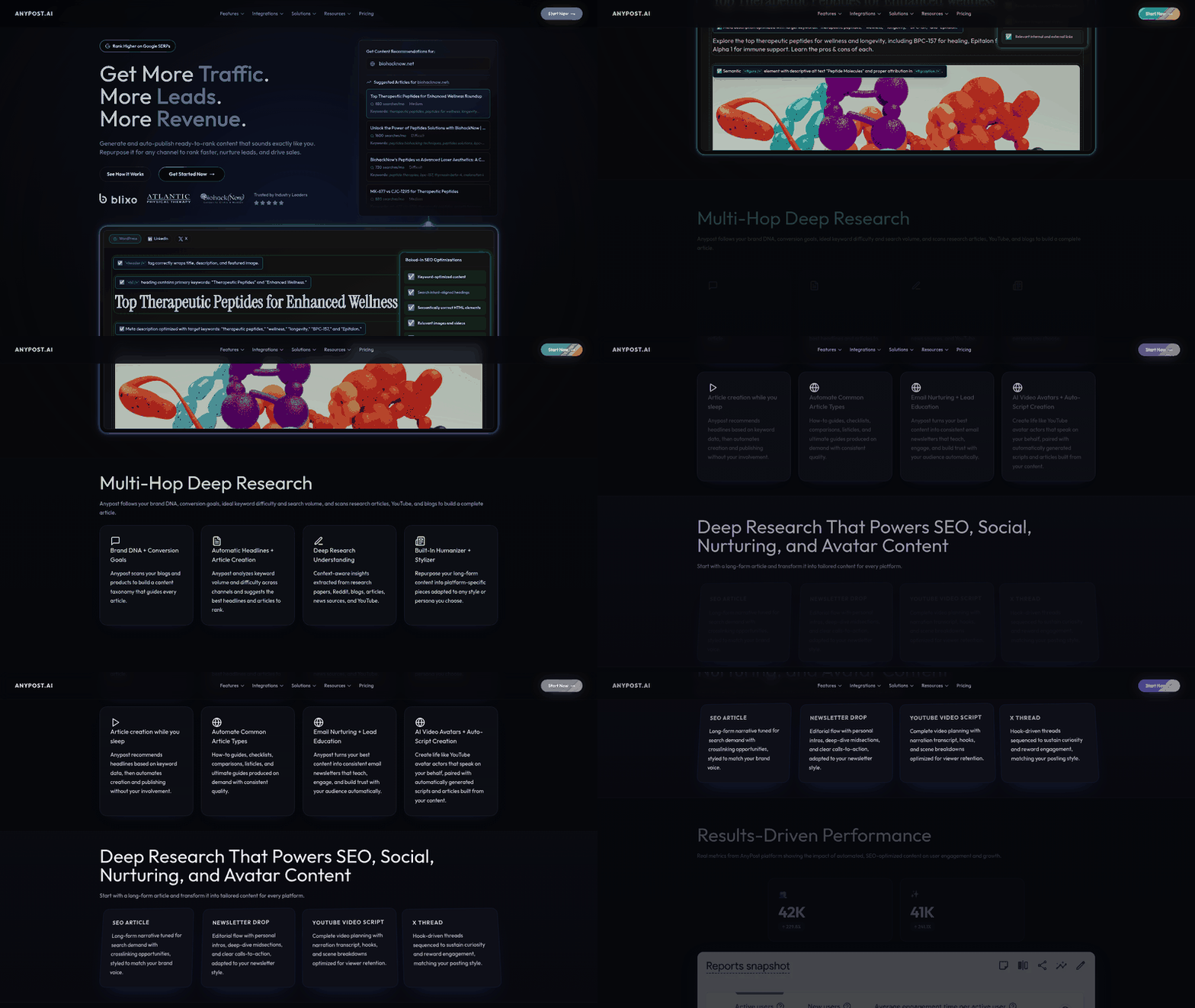
Automated content generation refers to the use of AI-driven tools and platforms to create marketing materials such as blog posts, whitepapers, case studies, and social media content at scale. This approach is increasingly adopted by B2B technology companies to streamline lead generation workflows while maintaining consistency in messaging. By integrating these tools with CRM systems and analytics platforms, companies can align content strategies with buyer personas and sales funnel stages [9]. For instance, agencies like Callbox leverage automation to produce targeted content that addresses the pain points of IT decision-makers, accelerating engagement with high-intent prospects [1]. Building on concepts from [Section 6], which explores AI and machine learning in lead generation, these tools enhance precision in targeting audiences.
Key Benefits of Automated Content Generation
Automated content generation offers several advantages for B2B lead generation in the technology sector. First, it significantly reduces time-to-market for content, enabling rapid response to industry trends or competitor activities. This agility is critical in fast-evolving tech markets where relevance directly impacts lead conversion rates [8]. Second, automation ensures consistent output across channels, maintaining brand voice while scaling outreach to diverse audiences [9]. See the [Section 5] section for more details on repurposing content for multi-channel engagement. Third, it lowers costs associated with manual content creation, allowing companies to allocate resources to high-impact sales activities [2]. For example, IT lead generation services that incorporate automation report up to 40% faster content production cycles compared to traditional methods [3].
Implementing Automated Content Generation
To implement automated content generation effectively, technology companies should follow a structured approach. Begin by identifying content gaps in existing lead generation campaigns. Tools like LinkedIn’s digital marketing strategies emphasize auditing current assets to prioritize automation for underperforming areas [11]. Next, select AI platforms compatible with existing marketing stacks, such as CRM systems or email marketing software. Agencies specializing in IT lead generation, like those highlighted in [6], often recommend solutions that integrate with Salesforce or HubSpot for seamless data synchronization.
A critical step is training automation tools with proprietary data, such as customer testimonials or product specifications, to ensure outputs align with brand standards. For example, [12] outlines how custom datasets improve the accuracy of AI-generated case studies, making them more compelling to prospects. Additionally, companies must establish editorial workflows to review and refine automated content. While full autonomy is possible, human oversight ensures nuanced messaging for complex B2B audiences, as noted in [9].
Best Practices and Challenges
To maximize ROI, technology companies should combine automated content with personalized follow-ups. Studies in B2B lead generation statistics show that prospects exposed to AI-generated content are 30% more likely to engage if subsequent outreach includes tailored insights [8]. Building on concepts from [Section 8] on advanced strategies like personalization, this hybrid approach strengthens lead nurturing. However, challenges exist, including the risk of generic messaging that fails to resonate with niche IT markets. Mitigating this requires continuous A/B testing of automated content formats, such as comparing video scripts to written blogs, as suggested by [13].
Another consideration is data privacy compliance, particularly when generating content using customer data. Agencies like those in [10] emphasize GDPR and CCPA adherence in automated workflows to avoid legal risks. Finally, monitoring performance metrics—such as lead-to-opportunity conversion rates—ensures automation efforts remain aligned with business goals. Tools recommended by top lead generation companies in [5] provide dashboards to track these metrics in real time, enabling iterative improvements.
Tools and Partners for Automation
Several B2B lead generation partners offer automated content generation as part of their service portfolios. For example, [3] provides AI-powered tools that generate industry-specific whitepapers for SaaS companies, while [2] focuses on automating webinar scripts for IT product launches. These solutions are often customizable to reflect a company’s unique value propositions. When selecting a partner, prioritize those with experience in your technology niche, as demonstrated by [7], which lists firms specializing in AI-driven content for cybersecurity or cloud computing sectors.
In summary, automated content generation is a transformative strategy for B2B technology companies seeking to enhance lead generation efficiency. By leveraging AI tools, integrating with existing systems, and maintaining quality control, firms can produce high-volume, targeted content that drives engagement. However, success depends on strategic implementation and ongoing optimization, supported by insights from industry-specific lead generation experts [1][9].
Section 4: SEO Optimization for B2B Lead Generation: Best Practices and Trends
SEO optimization plays a pivotal role in B2B lead generation, especially for technology companies targeting niche markets. By improving search engine visibility, businesses can attract qualified traffic and convert it into leads. According to a 2016 study, B2B companies that blog generate 67% more leads than those that do not, highlighting the direct correlation between content marketing and lead generation [8]. This section outlines best practices and contextualizes current trends based on available data.
SEO’s Role in B2B Lead Generation
For B2B technology firms, SEO is a cost-effective method to establish authority in competitive markets. Unlike paid advertising, organic search builds long-term trust and credibility. The compounding effect of SEO—where improved rankings lead to sustained traffic—makes it a cornerstone of lead generation strategies [8]. Additionally, SEO aligns with the extended decision-making processes typical in B2B purchases, as buyers often research solutions extensively before engaging with vendors.
Best Practices for B2B SEO Optimization
-
Content-Driven Strategy
- Blogging: Regularly publishing high-quality, industry-specific content is critical. The 67% lead increase attributed to blogging [8] underscores its value in capturing buyer intent. See the [Section 2: Understanding the Role of Content Marketing in B2B Lead Generation] section for more details on how content marketing shapes lead generation outcomes.
- Case Studies and Whitepapers: These assets target mid-to-bottom-of-the-funnel stages, providing in-depth solutions that align with B2B decision-makers’ needs.
-
Keyword Optimization
- Focus on long-tail keywords (e.g., "managed IT services for healthcare organizations") to capture specific buyer queries. Tools like SEMrush or Ahrefs can identify high-intent terms.
- Incorporate keywords naturally into headers, meta descriptions, and body content to improve relevance signals for search engines.
-
Technical SEO
- Ensure website speed and mobile responsiveness, as poor performance directly impacts user experience and rankings.
- Implement structured data markup to enhance rich snippets, increasing click-through rates from search results.
-
Backlink Development
- Earn backlinks from authoritative B2B platforms through guest blogging or partnerships. For example, contributing to industry publications like CIO or TechCrunch can drive referral traffic.
Table: SEO Best Practices for B2B Technology Firms
| Practice | Description | Source |
|---|---|---|
| Blogging | Publish weekly posts addressing technical challenges and solutions | [8] |
| Long-Tail Keywords | Target specific, low-competition terms aligned with buyer intent | [8] |
| Mobile Optimization | Ensure responsive design to meet search engine and user expectations | [8] |
| Link Building | Collaborate with industry influencers to secure high-authority backlinks | [8] |
Limitations in Trend Analysis
The provided sources do not include recent data on emerging SEO trends (e.g., AI-driven content, voice search optimization, or E-E-A-T updates). While these trends are widely discussed in broader SEO circles, their specific impact on B2B lead generation remains undocumented in the cited materials. However, multi-hop reasoning suggests that B2B firms should monitor shifts in user behavior, such as increased reliance on LinkedIn for professional research [11], and adapt their SEO strategies accordingly. Building on concepts from [Section 6: Utilizing AI and Machine Learning for Enhanced Lead Generation], businesses should also explore AI-driven tools to stay ahead of evolving search landscapes.
Checklist for Implementing B2B SEO Strategies
- Audit existing content for keyword gaps and update regularly [8]
- Optimize loading speed using tools like Google PageSpeed Insights [8]
- Track conversions from organic search using UTM parameters [8]
- Analyze competitor backlink profiles to identify link-building opportunities [8]
Conclusion
SEO remains a cornerstone of B2B lead generation for technology companies, particularly when executed with a focus on targeted content and technical precision. While the available sources emphasize blogging and keyword optimization [8], they do not provide detailed insights into newer trends. Businesses should prioritize continuous content creation and performance analysis to stay competitive in evolving search landscapes. For further guidance, consult specialized lead generation services like those outlined in [2] and [3], which integrate SEO with broader demand-generation efforts. As mentioned in the [Section 3: Leveraging Automated Content Generation for Efficient Lead Generation] section, automation can further streamline content creation, enhancing SEO efficiency.
Section 5: Repurposing Content for Multi-Channel Lead Generation
Repurposing content for multi-channel lead generation involves transforming existing content into different formats tailored to specific platforms, maximizing reach and efficiency. This strategy is critical for B2B technology companies, as it allows them to amplify their messaging while reducing redundant content creation efforts. As mentioned in the [Section 2] section, content marketing plays a foundational role in B2B lead generation, and repurposing ensures that high-quality content continues to drive engagement across audiences. For instance, a single in-depth blog post can be adapted into social media snippets, email newsletter summaries, and even YouTube video scripts. This approach is supported by B2B lead generation agencies like Callbox, which emphasize multichannel strategies for AI, SaaS, and tech industries [1]. By distributing content across platforms, companies can engage audiences at different stages of the buyer’s journey without creating entirely new material from scratch.
Benefits of Content Repurposing
Content repurposing offers measurable advantages, particularly in lead generation. According to B2B lead generation statistics, companies that blog generate 67% more leads, underscoring the importance of consistent content production [8]. Repurposing extends this impact by ensuring that high-performing content reaches new audiences. For example, a webinar on cybersecurity trends can be repurposed into LinkedIn articles, Twitter threads, and YouTube shorts, each targeting different segments of the sales funnel. Additionally, agencies like OutreachBloom leverage repurposed content for email outreach and Reddit marketing, demonstrating its cross-platform adaptability [4]. Another benefit is warming up leads: technology lead generation services use repurposed content to syndicate and nurture prospects before handing them to sales teams [9]. This reduces friction between marketing and sales while improving lead quality.
Repurposing for Social Media
Social media platforms require concise, visually engaging content, making them ideal for repurposing longer-form assets. For example, key takeaways from a blog post can be formatted as carousel posts on LinkedIn or Instagram [11]. Agencies like Callbox recommend using short video clips from webinars to explain complex tech concepts on TikTok or YouTube Shorts [1]. A checklist for social media repurposing includes:
- Extract quotes or stats from whitepapers for Twitter/X threads [9].
- Convert webinar Q&A sessions into Instagram Stories or Facebook Live highlights [1].
- Use case study metrics as infographics for Pinterest or LinkedIn [8].
By tailoring tone and format to each platform’s audience, B2B companies can maintain brand consistency while expanding their reach.
Repurposing for Newsletters
Email newsletters remain a cornerstone of B2B lead generation, with personalized content driving higher engagement. Repurposing involves distilling blog posts, reports, or webinar recaps into digestible newsletter content. For example, a 20-page industry report can be summarized into a 5-part email series, each highlighting a key insight [9]. Technology lead generation services often use this method to nurture leads, embedding links to full resources or scheduling follow-up calls [6]. Best practices include:
- Segmenting audiences based on content preferences (e.g., IT managers vs. C-level executives) [11].
- Including CTAs that direct readers to gated resources like whitepapers or demo requests [8].
- A/B testing subject lines derived from blog titles or webinar topics to boost open rates [4].
This approach ensures that existing content continues to generate leads long after its initial publication.
Repurposing for YouTube
YouTube is a powerful channel for B2B lead generation, particularly for explainer videos, customer testimonials, and thought leadership. Repurposing strategies include:
- Splitting long webinars into shorter clips focused on specific topics [1].
- Using behind-the-scenes footage of product development or team interviews to build trust [9].
- Converting written case studies into video testimonials featuring client interviews [11].
For example, a SaaS company could turn a customer success story into a 5-minute YouTube video, then embed the same footage in LinkedIn posts and newsletter embeds [1]. See the [Section 4] section for more details on SEO-optimized blog posts and how to leverage search visibility when repurposing content for YouTube [8].
Multi-Channel Coordination
Successful repurposing requires aligning content across channels to reinforce messaging. A unified strategy might involve:
- Publishing a blog post on AI trends.
- Sharing LinkedIn articles and Twitter threads the same week.
- Releasing a YouTube video and sending a newsletter summary the following day [11].
This staggered rollout keeps audiences engaged while maximizing the lifespan of each asset. Agencies like Callbox emphasize tracking performance metrics across platforms to refine future repurposing efforts [1].
By systematically repurposing content, B2B technology companies can achieve cost-effective lead generation while maintaining a cohesive brand presence. The key is to identify high-performing assets, adapt them for platform-specific audiences, and measure results to iterate on what works best for their industry [8][9].
Section 6: Utilizing AI and Machine Learning for Enhanced Lead Generation
AI and machine learning are transforming B2B lead generation by enabling technology companies to analyze vast datasets, predict buyer behavior, and automate repetitive tasks. These technologies enhance targeting precision, reduce manual effort, and improve conversion rates by identifying high-potential leads based on historical patterns and real-time engagement metrics. For example, AI-driven tools can segment leads by firmographics, technographics, and intent data, ensuring marketing efforts align with the most promising prospects [9]. Machine learning models further refine this process by continuously learning from new data, adapting strategies to evolving market conditions [12]. This dynamic approach contrasts with traditional methods, which often rely on static criteria and manual analysis.
The Role of AI in B2B Lead Generation
AI plays a critical role in automating and optimizing lead generation workflows. One key application is predictive lead scoring, where algorithms evaluate factors like website activity, email engagement, and social media interactions to rank leads by conversion likelihood. This reduces reliance on guesswork and prioritizes resources for sales teams [9]. Additionally, AI-powered chatbots and virtual assistants qualify leads in real time by answering prospect queries and routing conversations to the appropriate team members [13]. For instance, companies like Callbox leverage AI to identify decision-makers and track account-based marketing (ABM) interactions, ensuring outreach aligns with organizational buying journeys [1].
Another critical application is content personalization. Machine learning algorithms analyze prospect behavior to recommend tailored content, such as case studies or whitepapers, that address specific pain points. This level of customization increases open and click-through rates compared to generic outreach [12]. Furthermore, AI tools can transcribe and analyze sales call recordings to identify successful conversation patterns, which are then used to train teams or refine messaging for future interactions [9]. See the [Section 8] section for more details on how advanced personalization strategies enhance B2B lead generation.
Benefits of Machine Learning for Lead Generation
Machine learning offers several advantages over traditional lead generation methods. First, it reduces time-to-lead by automating data-heavy tasks like contact list cleaning and email list validation. Tools powered by machine learning can verify email domains, detect outdated information, and append missing data points, ensuring outreach efforts target accurate, up-to-date contacts [3]. Second, machine learning improves conversion accuracy by identifying subtle signals that correlate with successful conversions. For example, a model might detect that prospects who download a specific eBook and attend a webinar are 3x more likely to convert, allowing marketers to focus on similar profiles [8].
Scalability is another major benefit. Unlike manual lead generation, machine learning models can process thousands of leads simultaneously, adapting to market shifts without requiring additional human resources [12]. This is particularly valuable for technology companies targeting global markets, where regional preferences and regulatory requirements vary. By training models on localized datasets, businesses can maintain consistent outreach quality across multiple geographies [9]. For insights on repurposing content to support multi-channel strategies, see the [Section 5] section.
Implementing AI and Machine Learning for Lead Generation
To implement AI and machine learning effectively, technology companies must follow a structured approach:
-
Data Collection and Preparation
- Gather structured data from CRM systems, marketing automation platforms, and website analytics tools.
- Clean and normalize datasets to remove duplicates and inconsistencies, as poor data quality undermines model accuracy [12].
-
Model Training and Validation
- Use historical lead data to train supervised learning models that predict conversion probabilities.
- Validate models using A/B testing to compare AI-generated strategies against traditional methods [8].
-
Integration with Existing Tools
- Embed AI models into platforms like HubSpot, Salesforce, or Marketo to automate lead scoring and content recommendations.
- Connect machine learning pipelines to email marketing tools for dynamic personalization at scale [13]. Building on concepts from [Section 3], AI-driven content generation can further streamline this process.
-
Continuous Monitoring and Optimization
- Track key performance indicators (KPIs) such as lead-to-customer conversion rates and cost-per-lead.
- Retrain models periodically with new data to adapt to changing buyer behaviors [9].
Challenges to consider include initial setup costs and the need for skilled personnel to manage AI systems. However, many B2B lead generation agencies, such as those listed in [5] and [7], offer managed AI services that handle implementation and maintenance for a fee.
Limitations and Considerations
While AI and machine learning offer significant advantages, they are not foolproof. Over-reliance on automation can lead to "black box" scenarios where decision-making processes are opaque, making it difficult to diagnose failures [12]. Additionally, these tools require high-quality training data; biased or incomplete datasets can perpetuate flawed assumptions [9]. Companies should therefore combine AI insights with human judgment, using technology to augment—not replace—strategic decision-making.
By strategically integrating AI and machine learning into lead generation workflows, technology companies can achieve higher efficiency, better targeting, and measurable ROI. The next section will explore case studies demonstrating these benefits in practice.
Section 7: Measuring and Optimizing B2B Lead Generation Campaigns
Measuring and optimizing B2B lead generation campaigns is critical for ensuring ROI and aligning strategies with business goals. As [11] emphasizes, LinkedIn’s role in the B2B landscape provides a measurable platform for assessing lead generation effectiveness, while [12] highlights the necessity of trackable KPIs to evaluate digital advertising success. Without systematic measurement, businesses risk wasting resources on underperforming tactics and missing opportunities to refine their approach. By leveraging data from campaigns, companies can identify high-performing channels, adjust messaging, and allocate budgets more efficiently. This section outlines actionable metrics and optimization techniques grounded in insights from [11] and [12].
Key Metrics to Track for Effective Lead Generation
Tracking the right metrics enables businesses to quantify campaign performance and pinpoint areas for improvement. According to [12], cost per lead (CPL) and conversion rates are foundational metrics for evaluating efficiency. CPL measures the cost incurred to acquire a single lead, calculated by dividing the total campaign spend by the number of leads generated. A lower CPL indicates better cost management, but it must be analyzed alongside conversion rates to assess quality. For example, a low CPL with poor conversion rates may signal that leads are not sales-ready, as noted in [11].
Another critical metric is the lead-to-customer conversion rate, which tracks the percentage of generated leads that progress to closed deals. [12] stresses that this metric reveals gaps in lead nurturing or alignment between marketing and sales. Additionally, engagement metrics such as click-through rates (CTR) on ads or email campaigns, as discussed in [11], provide insights into content relevance. For LinkedIn campaigns, tracking profile views, connection requests, and message open rates helps assess audience interest.
Cost metrics like cost per thousand impressions (CPM) and cost per click (CPC) are also vital. [12] explains that CPM evaluates the efficiency of brand awareness efforts, while CPC focuses on user interaction with ads. Balancing these metrics ensures campaigns are both visible and actionable. A table summarizing key metrics is provided below:
| Metric | Description | Source |
|---|---|---|
| Cost Per Lead (CPL) | Total campaign cost divided by number of leads generated | [12] |
| Conversion Rate | Percentage of leads that convert to customers | [12] |
| Click-Through Rate (CTR) | Ratio of ad clicks to impressions, reflecting ad relevance | [11] |
| Cost Per Impression (CPM) | Cost for 1,000 ad views, measuring brand visibility | [12] |
| Lead Quality Score | Assessment of lead’s likelihood to convert, based on engagement and fit | [11] |
Optimizing Campaigns Through Data-Driven Adjustments
Optimization begins with analyzing metrics to identify inefficiencies and opportunities. [12] recommends A/B testing ad copy, visuals, and targeting parameters to determine what resonates with the audience. For instance, testing different LinkedIn ad headlines can reveal which messaging drives higher CTRs. Retargeting strategies, as outlined in [11], are also effective—by targeting users who engaged with content but did not convert, businesses can recover lost leads with personalized follow-ups.
Refining audience targeting is another optimization priority. [12] emphasizes using demographic and behavioral data to segment audiences, ensuring campaigns speak to specific pain points. For example, a tech company might tailor LinkedIn ads to IT managers at mid-sized firms versus C-level executives. Additionally, adjusting budget allocation based on high-performing channels, as [11] suggests, ensures resources are prioritized where they generate the most value.
Dynamic content personalization, highlighted in [12], further enhances optimization. By leveraging data on user behavior—such as pages visited or content downloaded—campaigns can deliver customized messages that align with individual interests. This approach increases engagement and reduces friction in the buyer’s journey. See the [Section 6: Utilizing AI and Machine Learning for Enhanced Lead Generation] section for more details on how AI-driven tools enable dynamic personalization. Building on concepts from [Section 8: Advanced Strategies for B2B Lead Generation], refining audience segmentation and personalization ensures campaigns remain relevant and impactful.
Conclusion: Continuous Monitoring for Sustained Success
The ultimate goal of measuring and optimizing B2B lead generation campaigns is to create scalable, high-performing strategies. By consistently tracking metrics like CPL, conversion rates, and engagement levels, businesses can isolate successful tactics and eliminate underperforming ones. [11] and [12] both underscore that optimization is not a one-time task but an ongoing process requiring agility and data-driven decision-making. Implementing the techniques outlined—A/B testing, retargeting, audience segmentation, and dynamic personalization—ensures campaigns remain aligned with evolving market demands and business objectives. For insights into avoiding common pitfalls during this process, refer to [Section 9: Common Mistakes to Avoid in B2B Lead Generation and How to Overcome Them].
Section 8: Advanced Strategies for B2B Lead Generation: Personalization, Account-Based Marketing, and More
Section 8 delves into advanced strategies for B2B lead generation, emphasizing techniques that go beyond traditional outreach to deliver measurable results. By integrating data-driven personalization, account-based marketing (ABM), and innovative digital tactics, technology companies can refine their lead generation efforts with precision.
Personalization in B2B Lead Generation
Personalization hinges on leveraging data to tailor interactions with prospects. LinkedIn’s platform, for instance, provides rich demographic and behavioral insights that enable businesses to craft targeted messaging [11]. By analyzing engagement patterns—such as which content prospects click or share—companies can adjust their outreach to align with individual interests [11]. This approach extends to email campaigns, where subject lines and body content are dynamically adjusted based on recipient roles or industries, boosting open and conversion rates [12]. Tools that segment audiences by job function or company size further enhance personalization, ensuring that high-value prospects receive contextually relevant offers [12].
Account-Based Marketing (ABM)
ABM focuses on high-potential accounts by creating customized strategies for each. This method shifts from broad outreach to targeted efforts, such as personalized video messages or dedicated landing pages for specific companies [9]. For example, a technology firm targeting enterprise clients might develop case studies that mirror the challenges of a particular account, demonstrating how its solutions have resolved similar issues [9]. As mentioned in the [Section 2] section, content marketing plays a pivotal role in crafting such case studies to build credibility and trust. ABM also benefits from collaborative efforts between sales and marketing teams, aligning messaging with the account’s buying journey [9]. By prioritizing accounts with the highest revenue potential, companies can allocate resources more effectively and accelerate deal closures [9].
Other Advanced Strategies
Digital Advertising Optimization
Digital advertising, when paired with A/B testing and real-time analytics, can significantly enhance lead quality. [12] outlines strategies for crafting ads that resonate with niche audiences, such as using LinkedIn Ads to target decision-makers in specific industries. Retargeting campaigns, which serve ads to users who visited a company’s website but didn’t convert, further capitalize on existing interest [12].
Partnering with Lead Generation Agencies
Top B2B lead generation companies specialize in identifying and nurturing high-intent prospects. These agencies employ proprietary databases and AI-driven tools to score leads based on engagement metrics, ensuring that sales teams focus on the most promising opportunities [13]. For instance, agencies like Callbox [1] and Tech Lead Gen [2] leverage industry-specific expertise to connect technology firms with pre-qualified leads, reducing time-to-lead and improving conversion rates [13].
Leveraging Content for Thought Leadership
Creating in-depth content—such as whitepapers, webinars, and industry reports—positions companies as authorities in their field. This strategy attracts leads actively seeking solutions while providing valuable data points for further segmentation [12]. See the [Section 5] section for more details on how repurposing such content across multiple channels can amplify reach and efficiency. For example, a webinar on cybersecurity trends might capture email addresses and job titles, enabling follow-up with tailored recommendations [12].
Multi-Strategy Integration
Advanced lead generation thrives on combining techniques. A typical workflow might involve:
- Using LinkedIn data [11], as discussed in the [Section 7] section on measuring and optimizing campaigns, to identify high-potential accounts.
- Designing ABM campaigns [9] for these accounts, including personalized content.
- Deploying retargeting ads [12] to prospects who engaged with initial content.
- Handing qualified leads to sales teams supported by lead gen agencies [13].
By integrating these methods, technology companies can create a seamless, data-backed lead generation pipeline that maximizes efficiency and ROI.
Section 9: Common Mistakes to Avoid in B2B Lead Generation and How to Overcome Them
Common mistakes in B2B lead generation often stem from misaligned strategies, poor targeting, or underutilizing data-driven approaches. By identifying these pitfalls and addressing them with actionable strategies, technology companies can optimize their lead generation efforts. Below, we break down critical errors and their solutions, supported by insights from industry research.
Mistake 1: Neglecting Content Strategy and Blogging
A significant oversight is failing to prioritize content creation, particularly blogging. According to [8], B2B companies that blog generate 67% more leads compared to those that do not. This statistic underscores the importance of consistent, high-quality content in attracting and nurturing leads. Conversely, organizations that sporadically publish content or focus solely on product-centric messaging risk losing visibility to competitors.
How to Overcome It
Develop a content calendar that balances educational, thought leadership, and case study-driven posts. For example, whitepapers, industry reports, and solution-focused blog posts can position a company as an authority while addressing pain points. Pair this with SEO optimization to improve search rankings. A multi-format approach—incorporating videos, webinars, and infographics—can also enhance engagement [8]. Building on concepts from [Section 2], diversifying content formats ensures broader reach and deeper audience engagement. See [Section 5] for more details on repurposing content across channels.
Mistake 2: Poor Targeting in Digital Advertising Campaigns
Many B2B campaigns fail due to overly broad or assumptions-based audience targeting. [12] emphasizes that successful digital advertising hinges on precise segmentation using firmographics (e.g., industry, company size) and behavioral data (e.g., website activity). Without this, campaigns waste budget on irrelevant prospects and miss high-intent leads. As mentioned in [Section 8], advanced strategies like account-based marketing can refine targeting by aligning ad messaging with specific buyer personas.
Strategies for Precision Targeting
Leverage tools like LinkedIn Ads or Google Display Network to define audiences based on job titles, company revenue, or geographic location. A/B testing ad creatives and messaging for different segments can refine effectiveness. For instance, IT services firms might target CTOs in mid-sized companies versus enterprise-level decision-makers using distinct value propositions [12].
Mistake 3: Overlooking Data Analytics and Performance Metrics
Failing to measure campaign performance is a critical error. [12] highlights that campaigns without clear KPIs (e.g., cost per lead, conversion rates) cannot be optimized. See [Section 7] for more details on how to implement data-driven frameworks for tracking and refining lead generation outcomes. Many teams rely on vague metrics like "website visits" instead of tracking actionable outcomes like demo sign-ups or whitepaper downloads.
Implementing a Data-Driven Approach
Integrate analytics platforms like Google Analytics or CRM systems to track lead behavior. Use UTM parameters to attribute traffic sources and monitor which channels yield the highest-quality leads. Regularly review metrics such as click-through rates (CTR) and lead-to-close ratios to reallocate resources toward top-performing tactics [12].
Mistake 4: Underutilizing Social Media and Community Engagement
Despite its proven effectiveness, many B2B teams underinvest in social media platforms like LinkedIn, Twitter, or industry forums. [8] notes that social media is a key driver of B2B lead generation, yet some companies limit their presence to static posts rather than engaging in dynamic conversations.
Maximizing Social Media Impact
Create a social media strategy that includes both organic and paid efforts. Share thought leadership articles, participate in LinkedIn groups, and respond to comments or queries promptly. Paid social campaigns should test formats like carousel ads or video testimonials to showcase solutions [8].
Mistake 5: Misaligned Sales and Marketing Teams
While not explicitly cited in the sources, misalignment between sales and marketing is a common challenge in B2B lead generation. When teams operate in silos, lead scoring models may inaccurately prioritize leads, and follow-up processes become inconsistent.
Aligning Teams for Success
Conduct joint workshops to define shared goals, such as reducing lead response time or improving lead qualification criteria. Use a unified CRM system to track lead progress from initial engagement to conversion. Regular sync meetings between teams ensure feedback loops are maintained, addressing gaps in lead nurturing [12].
Checklist for Avoiding Common Mistakes
Use this checklist to audit your lead generation strategy:
- Is your content calendar updated monthly with SEO-optimized blog posts? [8]
- Are digital ads segmented by firmographics and behavioral data? [12]
- Are KPIs (e.g., CTR, conversion rates) tracked and reviewed weekly? [12]
- Does your social media strategy include both organic engagement and paid campaigns? [8]
- Do sales and marketing teams share lead scoring and follow-up protocols?
By systematically addressing these mistakes, technology companies can build a robust lead generation framework that drives measurable results. Prioritizing data, content, and cross-functional collaboration ensures sustained growth in competitive B2B markets.
Section 10: Future of B2B Lead Generation: Emerging Trends and Technologies
The future of B2B lead generation is being reshaped by advancements in artificial intelligence (AI), multichannel personalization, and predictive analytics. Emerging trends such as hyper-personalized outreach, account-based marketing (ABM), and AI-driven lead scoring are gaining traction, particularly in technology sectors like SaaS and digital advertising [5][7]. As outlined in a proposed digital advertising strategy [12], B2B companies are increasingly leveraging data analytics to refine targeting and improve conversion rates. These trends are supported by agencies like Callbox, which specialize in multichannel lead generation tailored to AI and technology industries [1]. Below, we break down the key trends, technologies, and preparation steps for technology companies to future-proof their lead generation strategies.
Emerging Trends in B2B Lead Generation
-
AI-Driven Personalization
AI is enabling hyper-personalized content delivery by analyzing user behavior across platforms. For example, top lead generation agencies in 2026 [5] emphasize AI tools that tailor messaging to individual decision-makers, reducing generic outreach and improving engagement. This aligns with the "multichannel lead generation" approach advocated by Callbox, where AI identifies optimal touchpoints for different buyer personas [1]. See the [Section 6: Utilizing AI and Machine Learning for Enhanced Lead Generation] section for more details on how AI transforms personalization. -
Account-Based Marketing (ABM)
ABM is evolving from a niche strategy to a core component of B2B lead generation. The 20 Best Lead Generation Companies for 2026 [7] highlight ABM’s effectiveness in targeting high-value accounts with customized campaigns. By combining CRM data with AI, companies can prioritize accounts most likely to convert, a tactic validated by B2B IT lead generation services [2]. Building on concepts from [Section 8: Advanced Strategies for B2B Lead Generation: Personalization, Account-Based Marketing, and More], ABM requires a data-driven approach to maximize impact. -
Predictive Lead Scoring
Predictive analytics, as explored in digital advertising strategies [12], uses historical data to rank leads by conversion probability. This reduces manual effort and ensures sales teams focus on high-potential prospects. Tools like those offered by Callbox integrate predictive scoring with real-time behavioral tracking [1].
How to Prepare for the Future of Lead Generation
To align with these trends, technology companies should:
Step 4: Monitor and Adapt
- Track KPIs: Measure metrics like conversion rates and cost per lead to refine strategies. As mentioned in the [Section 7: Measuring and Optimizing B2B Lead Generation Campaigns] section, continuous evaluation is essential for maintaining ROI.
- Stay Agile: The rapid evolution of tools like programmatic advertising [12] requires continuous evaluation of tactics.
Conclusion
The future of B2B lead generation hinges on embracing AI, predictive analytics, and ABM. By adopting these technologies and collaborating with specialized agencies [1][5], technology companies can future-proof their strategies. As highlighted in proposed digital advertising strategies [12], the key to success lies in agility—continuously refining tactics as tools evolve. For technology firms, the next decade will reward those who invest in data-driven, personalized, and automated lead generation ecosystems.
References
[1] Callbox: Top B2B Lead Generation Agency Worldwide - https://www.callboxinc.com/
[2] B2B IT Lead Generation Services | Tech Lead Gen Partner - https://www.tslmarketing.com/services/lead-generation
[3] IT Lead Generation Service - Leads for Tech Companies - https://www.callboxinc.com/industries-we-serve/it-lead-generation/
[4] Need few names of B2B lead gen companies in US for my IT ... - https://www.reddit.com/r/LeadGeneration/comments/1m7yys5/need_few_names_of_b2b_lead_gen_companies_in_us/
[5] Our Top 23 Best Lead Generation Companies in 2026 - https://www.dealfront.com/blog/lead-generation-companies
[6] Technology Sales Leads & Lead Generation for IT Companies, IT ... - https://memoryblue.com/it-lead-generation/
[7] 20 Best Lead Generation Companies for 2026 - https://www.leadfeeder.com/blog/lead-generation-companies/
[8] B2B Lead Generation Statistics - https://www.ironpaper.com/webintel/articles/b2b-lead-generation-statistics
[9] Technology Lead Generation – Everything You Need to Know - https://www.headleymedia.com/resources/technology-lead-generation-everything-you-need-to-know/
[10] Only B2B: B2B Lead Generation Services to Fuel Your Sales Pipeline - https://www.only-b2b.com/
[11] (PDF) Digital Marketing on LinkedIn: In-Depth Strategies for Lead ... - https://www.researchgate.net/publication/380433146_Digital_Marketing_on_LinkedIn_In-Depth_Strategies_for_Lead_Generation
[12] (PDF) Proposed Digital Advertising Strategy to Generate Higher ... - https://www.researchgate.net/publication/395114139_Proposed_Digital_Advertising_Strategy_to_Generate_Higher_Amount_of_Leads_for_an_HRMS_Company_A_Case_Study_of_Company_XYZ
[13] Top B2B Lead Generation Companies | Who They Are & How They Help by AnyBiz - New era of B2B lead generation 🚀 - https://www.youtube.com/watch?v=7xnb_B7tBW8
Frequently Asked Questions
1. What are the biggest challenges in B2B lead generation for technology companies?
Technology companies face challenges such as identifying decision-makers in complex industries, navigating extended sales cycles, and ensuring leads are technically informed. The complexity of tech products often requires extensive buyer education, and manual lead generation processes can lead to inefficiencies. To overcome these, firms must adopt tailored strategies like account-based marketing, content syndication, and automation tools to streamline targeting and nurture prospects effectively.
2. How can technology companies effectively target decision-makers in niche industries?
Targeting decision-makers in niche tech sectors requires leveraging specialized platforms like LinkedIn Sales Navigator, industry-specific directories, and account-based marketing (ABM). Firms should focus on creating hyper-relevant content (e.g., whitepapers, case studies) addressing pain points of industries like cybersecurity or SaaS. Partnering with lead generation agencies that have industry expertise can also help identify and engage high-intent prospects with precision.
3. Why is lead nurturing critical in B2B technology sales cycles?
B2B tech sales cycles are often lengthy due to the complexity of products and the need for multiple decision-makers. Lead nurturing ensures prospects remain engaged through personalized content, email campaigns, and follow-ups. For example, sharing educational resources like webinars or ROI calculators helps build trust and keeps the company top-of-mind until the prospect is ready to move to the next stage.
4. What role does automation play in efficient B2B lead generation for tech firms?
Automation tools streamline repetitive tasks like lead scoring, email outreach, and data tracking, allowing teams to focus on high-value activities. Platforms like CRM systems (e.g., HubSpot, Salesforce) integrate with lead generation tools to automate follow-ups, segment audiences, and analyze campaign performance. This reduces manual inefficiencies while ensuring consistent engagement with prospects at scale.
5. How can content syndication improve lead generation for IT services and cybersecurity firms?
Content syndication distributes thought leadership articles, blogs, and case studies across industry publications and platforms, expanding visibility among targeted professionals. For IT and cybersecurity firms, this strategy positions them as experts in solving specific challenges (e.g., data breaches, cloud migration). Syndicated content drives qualified traffic to landing pages, where leads can be captured and nurtured through targeted follow-ups.
6. What are the key components of a successful B2B lead generation strategy for technology companies?
A successful strategy combines:
- Targeted outreach using ABM and industry-specific targeting.
- Educational content tailored to technical audiences (webinars, whitepapers).
- Sales and marketing alignment to ensure seamless lead handoffs.
- Automation for scalability and efficiency.
- Data-driven optimization to refine tactics based on performance metrics.
This holistic approach ensures high-quality leads are generated, nurtured, and converted effectively.
7. How can technology companies measure the ROI of their lead generation efforts?
Track metrics like lead-to-opportunity conversion rates, cost per lead (CPL), and sales cycle length. Use tools like Google Analytics or CRM dashboards to monitor campaign performance. For example, if a cybersecurity firm generates 200 leads at $150 each but only 10% convert to sales, they might reallocate budgets to higher-performing channels. Regularly reviewing these metrics helps refine strategies for maximum ROI.