Electrician SEO: A Complete Guide to Local Lead Generation
Key Takeaways
- 10% of consumers search “electrician near me” before calling, making local SEO essential for capturing high-intent leads.
- GBP listings updated with reviews and accurate details rank 50% higher in local “map pack” results, boosting visibility.
- A Texas electrician increased monthly leads by 300% after optimizing GBP with service pages and customer reviews.
- Google Business Profile optimization is foundational for aligning with urgent searches during service disruptions.
- Local SEO converts searchers into clients by ensuring businesses appear first when homeowners need immediate help.
- Detailed service pages on GBP clarify offerings, reducing customer confusion and improving conversion rates.
- Prioritizing local SEO ensures electricians dominate results when competitors neglect their digital presence.
Related Video
Watch: Electrician Lead Generation (2025): 5 Proven Ways to Book More Jobs by Daniel Dimsey
Why Electrician SEO Matters
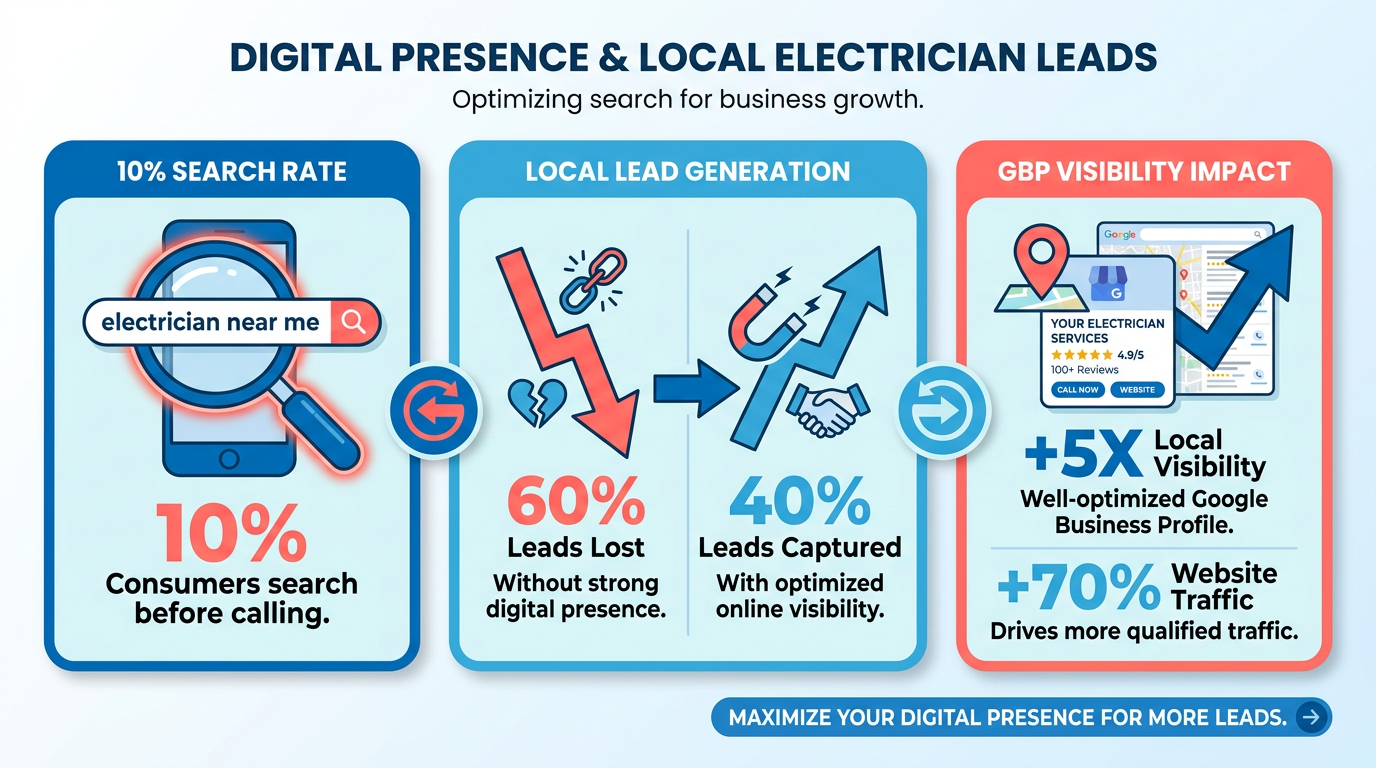
Electrician SEO is a critical strategy for local lead generation because modern consumers rely heavily on search engines to find urgent services. Studies show 10% of people search "electrician near me" before making a call, making local SEO the primary gateway to high-intent clients. Without a strong digital presence, electricians miss out on leads from neighbors actively seeking their expertise. This is especially vital in a competitive industry where Google Business Profile (GBP) listings updated with reviews and accurate details rank 50% higher in local "map pack" results, directly increasing visibility to potential customers. As mentioned in the Google My Business Optimization section, a well-structured GBP listing is foundational for capturing these high-intent searches.
How Does Electrician SEO Drive Revenue?
Local SEO converts searchers into paying clients by aligning your business with the moment they need help. For example, a homeowner with a broken circuit will prioritize electricians who appear first in local results. Optimized SEO ensures your business shows up when urgency matters, turning searches into phone calls and booked jobs. One real-world case saw a small electrical contractor in Texas boost monthly leads by 300% after refining their GBP with detailed service pages and customer reviews, demonstrating the tangible impact of targeted local strategies. As highlighted in the Keyword Research for Electrician Services section, focusing on hyper-specific keywords like "emergency outlet repair in [City Name]" can further amplify this effect by attracting highly relevant traffic.
What Challenges Does Electrician SEO Solve?
Traditional methods like word-of-mouth or print ads fall short in today’s digital-first market. Electrician SEO addresses three core challenges:
- Low online visibility: Competing for local search rankings without optimization pushes businesses to the bottom of search results.
- Missed high-intent leads: Over 70% of local searches lead to a call or website visit within a day, but unoptimized sites fail to capture these opportunities.
- Inconsistent customer trust: GBP reviews and backlinks from local directories act as social proof, reducing hesitation for first-time clients. As outlined in the Review Generation and Management section, actively managing and responding to reviews strengthens this trust and improves local search performance.
Small business owners and independent contractors benefit most from SEO, as it levels the playing field against larger firms with bigger budgets. A single electrician in a suburban area, for instance, can dominate local searches by targeting hyper-specific keywords instead of broad terms, a strategy detailed in the Keyword Research for Electrician Services section.
Why Google Business Profile Optimization Is Non-Negotiable
A Google Business Profile is the cornerstone of electrician SEO. Searchers evaluate listings within seconds, so incomplete profiles or outdated information lose credibility. Features like service categories, operating hours, and real-time response to reviews shape customer decisions. For example, a GBP with 10+ recent 5-star reviews sees 7x more visibility than a profile with no feedback. Updating posts about promotions or certifications keeps your listing dynamic, signaling reliability to both Google and users. As emphasized in the Google My Business Optimization section, maintaining an up-to-date GBP is essential for securing top positions in local "map pack" results.
Google My Business Optimization
Optimizing your Google My Business (GMB) listing is a critical step for electricians aiming to attract local leads. A well-structured GMB profile boosts visibility in local search results and builds trust with potential customers. Below is a step-by-step guide to ensure your profile is fully optimized.
How Do You Claim and Verify Your Google My Business Listing?
Start by claiming your GMB listing if you haven’t already. Visit Google’s business portal, enter your business name, address, and phone number, then verify ownership via postcard or phone. Verification confirms your legitimacy and enable full editing rights. Once verified, complete your profile with accurate details, including service hours, payment methods, and a link to your website.
Verification is non-negotiable. Listings with unverified addresses rank lower in local “map pack” results. For example, one company saved 50% on local ad costs after fixing their GMB verification status, showing how foundational this step is. As mentioned in the Why Electrician SEO Matters section, local visibility is crucial for capturing high-intent searches, making verification a priority.
What Should You Include in Your Services List and Categories?
List all services you offer, using keyword-rich titles like “Emergency Electrical Repairs” or “Residential Lighting Installation.” Avoid vague terms like “General Electrical Work.” Instead, break down services into specific, searchable categories. For example, separate “Outlets and Switches” from “Whole-House Rewiring.”.
Choose primary and secondary categories carefully. Primary categories like “Electrician” should align with your core business, while secondary categories like “Electrical Contractors” or “Home Services” expand your reach. Misclassifying your business can hide you from relevant searches. Building on concepts from the Keyword Research for Electrician Services section, precise keyword integration into service titles improves local search visibility.
How Can You Use Photos and Videos to Boost Visibility?
High-quality media improves trust and engagement. Upload 10–15 photos showcasing your work (e.g., completed projects, team in action, and office space). A 2025 study found that listings with 10+ photos receive 3x more inquiries than those with fewer than five.
Videos are equally impactful. Create a 60-second video explaining your services or a walkthrough of a recent job. For example, a video titled “How We Fix Circuit Breaker Issues” can appear in search results and answer customer questions upfront. As highlighted in the Local On-Page SEO and Technical Optimization section, aligning visual content with local search intent ensures your media addresses what customers are actively looking for.
Why Is Responding to Reviews and Using Q&A Important?
Customer reviews influence 92% of buyers’ decisions. Respond promptly to positive and negative feedback. For example, thank reviewers by name for positive reviews and apologize sincerely for complaints, offering to resolve issues privately.
Use the Q&A section to address common concerns. If someone asks, “Do you offer 24/7 emergency services?” answer directly and invite others to ask more questions. Preemptively answer frequent queries like “What’s your service radius?” to reduce back-and-forth communication. Building on concepts from the Review Generation and Management section, consistent review engagement builds trust and improves local search rankings.
What Does a Fully Optimized GMB Listing Look Like?
Consider an electrician’s listing with a verified address, 15 high-res photos of completed jobs, a detailed services list, and 50+ reviews with 4.5+ stars. The Q&A section preempts questions about payment options and service areas. The business also updates its posts weekly with promotions, like “5% off smart thermostat installations this month!”.
This example shows how consistent updates, media, and engagement drive visibility. By following these steps, electricians can dominate local search results without paid ads, using Google’s free tools to turn searches into booked jobs.
For ongoing optimization, revisit your GMB listing monthly to update photos, add new services, and respond to reviews. Pair this with AnyPost.ai’s tools for automated content scheduling, ensuring your profile stays fresh and competitive year-round.
Review Generation and Management
Review generation and management are critical for electricians aiming to dominate local search results and attract high-quality leads. Online reviews directly influence Google Business Profile (GBP) visibility, with updated listings and multiple reviews increasing the likelihood of appearing in the top local “map pack” results. A steady stream of recent reviews also signals trustworthiness to potential customers, making them more likely to choose your business over competitors. As mentioned in the Google My Business Optimization section, a well-structured GBP listing is foundational for local visibility, and reviews further reinforce this by validating your business’s credibility.
Why Reviews Matter for Electrician SEO
A strong review profile improves local SEO by validating your business’s credibility and relevance. Google prioritizes businesses with frequent, recent reviews, as this indicates active engagement and customer satisfaction. For electricians, who rely heavily on local clients, a GBP listing with 50+ reviews typically outperforms one with fewer than 10. Building on concepts from the Keyword Research for Electrician Services section, positive reviews rich with keywords like “prompt service” or “affordable repairs” can boost your visibility for specific search terms.
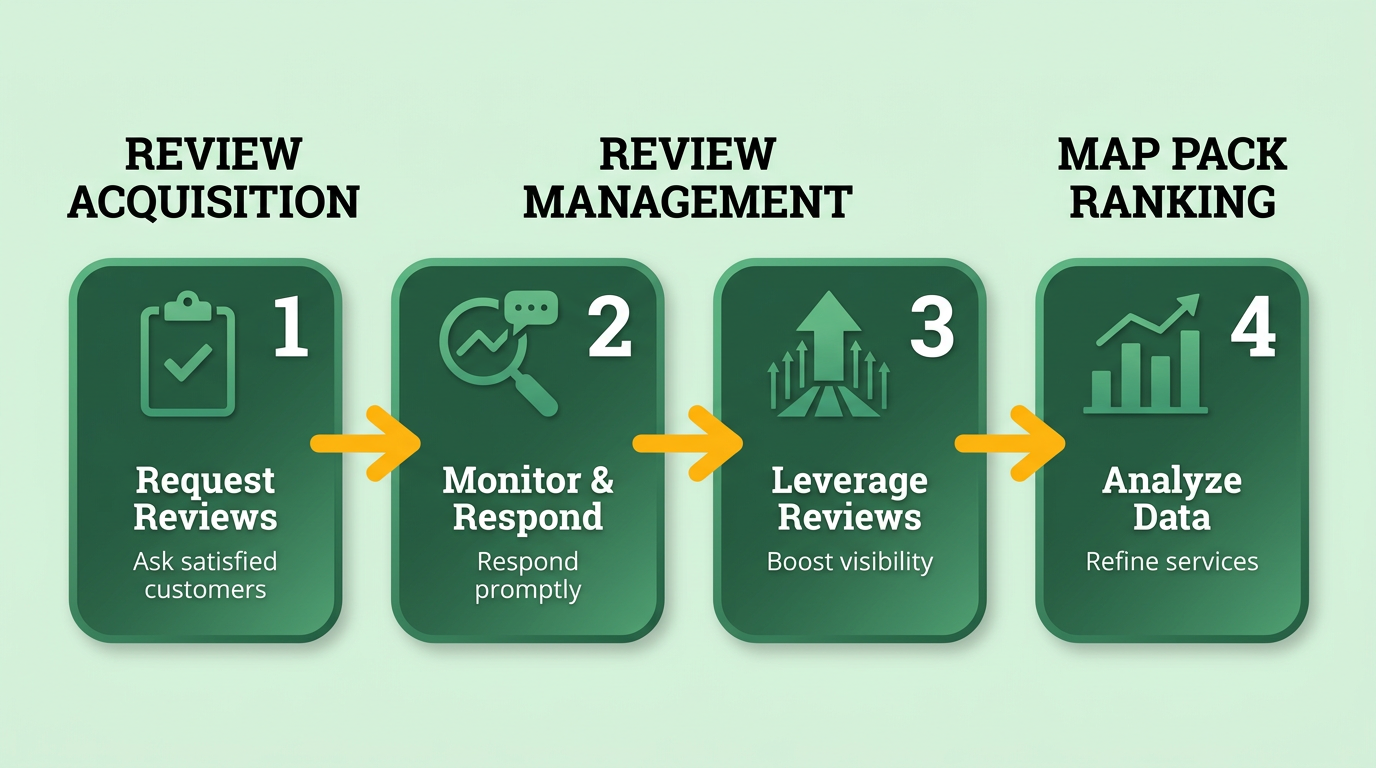
To maintain momentum, aim for at least 5–10 new reviews per month. Recency matters as much as volume-reviews from the past six months carry more weight than older ones. Tools like AnyPost.ai offer review tracking and automated follow-up systems to ensure consistent review generation without manual effort.
How to Generate Reviews Consistently
Proactive outreach is the most reliable way to build your review base. After completing a job, send a personalized follow-up email thanking the customer and requesting feedback. Use a simple template:
Hi [Name], thanks for letting us handle your [service type]! If you’re satisfied with our work, we’d appreciate a quick review on Google. It only takes 30 seconds and helps us serve your neighbors better.
In-person requests also work well. A quick, friendly prompt like, “If you’re happy with our service, would you mind leaving a review?” during or after the job can yield immediate results. Pair this with a QR code linking to your GBP page to simplify the process.
For larger campaigns, consider incentivizing reviews indirectly. Offer a discount on the next service for customers who leave feedback, ensuring the incentive complies with Google’s guidelines (no direct exchange for reviews). AnyPost.ai streamlines this process with customizable email campaigns and automated reminders.
Managing Review Volume and Recency
Review management isn’t just about collecting feedback-it’s about maintaining a steady flow of recent, positive content. Audit your reviews monthly to identify trends, such as recurring complaints about wait times or praise for technicians. Addressing pain points can improve future reviews while reinforcing strengths.
To boost recency, prioritize follow-ups within 24–48 hours of service completion. Customers are more likely to review immediately after a positive experience. Use a review management tool to track pending requests and set reminders for slow responders.
For example, a local electrician using AnyPost.ai’s review tracking increased their monthly review count from 3 to 15 in three months. By automating post-job emails and assigning team members to follow up on in-person visits, they maintained a 4.8-star rating and saw a 25% rise in local search inquiries.
Responding to Reviews Effectively
Every review-positive or negative-deserves a response. Public replies show you value customer feedback and are attentive to their needs. For positive reviews, keep it brief and grateful:
Thank you for the kind words, [Name]! We’re happy to help and look forward to serving you again.
For negative reviews, acknowledge the issue and offer to resolve it privately. Example:
We’re sorry to hear about your experience, [Name]. Please reach out to [email] so we can make things right.
This approach de-escalates conflicts while demonstrating accountability.
Regularly responding to reviews also improves your GBP performance. Google’s algorithms favor businesses that engage with customers, further boosting your local ranking.
By combining consistent outreach, strategic review management, and thoughtful responses, electricians can build a strong online reputation that drives local leads and long-term growth.
Ongoing Content Strategy and Measurement
Creating an ongoing content strategy for your electrician business requires planning, execution, and measurement. By aligning your blog posts and FAQs with local search intent and seasonal needs, you can attract consistent leads while building trust in your community. Let’s break down how to structure this strategy and track its success.
How Do You Plan a Content Calendar for Electricians?
Start by mapping your content to local demand. For example, publish blog posts on topics like “How to Prepare Your Home for Holiday Lighting” in December or “Storm Damage Electrical Repairs Near [City]” in spring. Pair these with FAQs addressing common questions, such as “How Much Does a Whole-House Generator Cost?” Use a spreadsheet to schedule posts monthly, ensuring coverage of both evergreen topics (e.g., electrical safety tips) and time-sensitive ones (e.g., summer air conditioning maintenance).
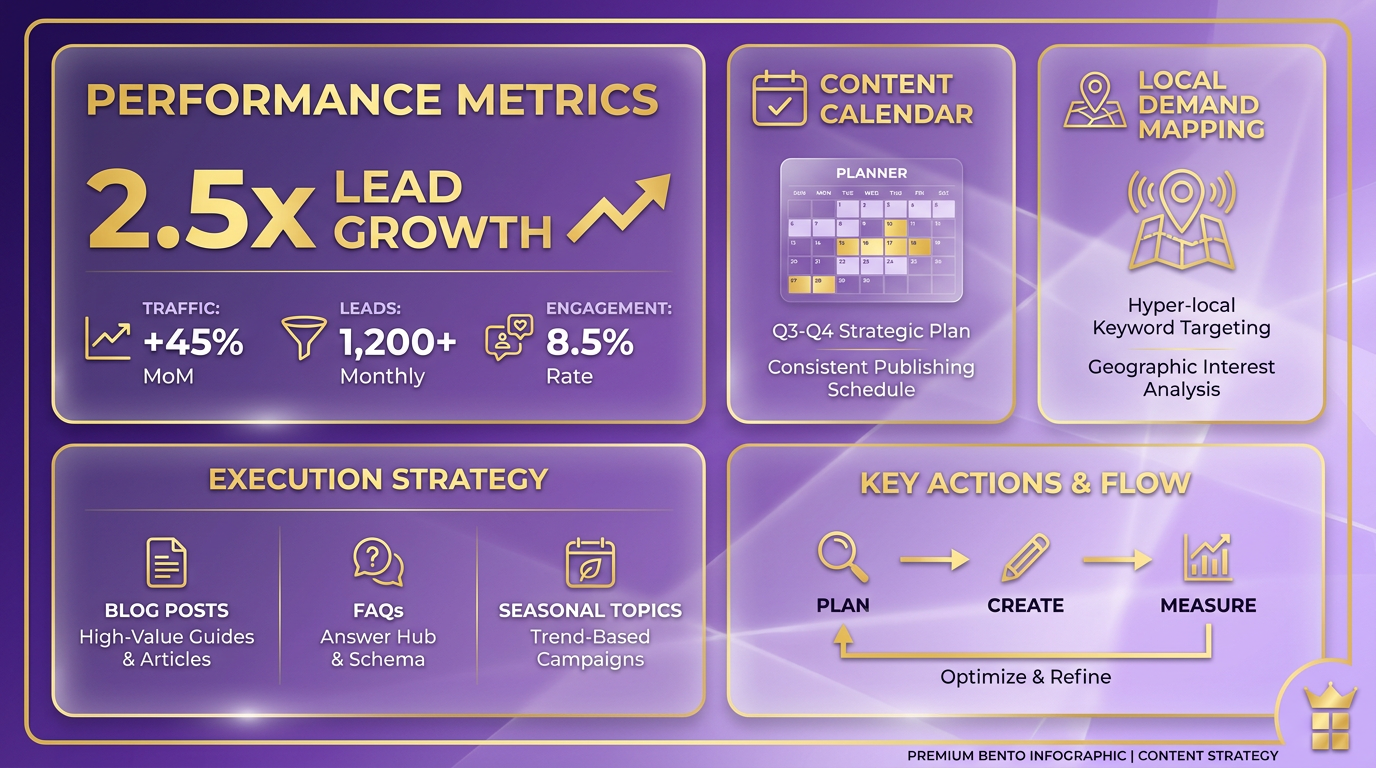
As mentioned in the Keyword Research for Electrician Services section, a content calendar also lets you batch-create posts. Write three to four articles per month, optimizing each for keywords like “emergency electrician [your city]” or “licensed electrician near me.” Tools like AnyPost.ai automate this process by generating drafts based on your keyword research, saving you time while maintaining SEO best practices.
What Metrics Should You Track for Content Success?
Use Google Analytics to monitor traffic and user behavior. Focus on metrics like:
- Pageviews: Measure how many people read your blog posts.
- Bounce rate: A high rate (e.g., 70%+) suggests your content isn’t engaging.
- Average session duration: Longer sessions indicate valuable content.
Building on concepts from the Local On-Page SEO and Technical Optimization section, pair this with Google Search Console to track how your content ranks. Check for keywords that generate impressions but no clicks-these may need title or meta description tweaks. Also, monitor crawl errors to ensure search engines can access your blog. For instance, a 404 error on a blog post about “Electrical Permits in [City]” could cost you local traffic.
How Can You Build a Winning Content Strategy?
Consider a real-world example: A plumbing and electrical services company increased local leads by 30% after publishing bi-weekly blog posts on home maintenance and seasonal safety. As highlighted in the Why Electrician SEO Matters section, this approach improved their Google rankings and visibility during peak search times. They paired these with FAQs on their website, answering questions like “How to Spot Electrical Fire Hazards.” By consistently adding new content and optimizing for keywords like “24/7 electrician [city],” they improved their Google rankings and visibility during peak search times.
Automation tools like AnyPost.ai streamline this process. Unlike generic content generators, AnyPost.ai creates electrician-specific posts tailored to local search intent, such as “Best Electrical Services for New Homeowners in [Your Area].” It also schedules posts automatically, ensuring your blog stays updated without manual effort.
Why Use AnyPost.ai for Content Generation?
Electricians often lack time to research and write content manually. AnyPost.ai solves this by generating SEO-optimized blog posts, FAQs, and even social media snippets based on your keyword list. For example, input “electrical panel replacement [city]” and the tool create a post targeting that phrase while linking to your service pages. It also uses local data-like nearby neighborhoods or common service requests-to make content more relevant.
One company saved 50% of their content creation time by switching to AnyPost.ai, allowing them to focus on client acquisition. The platform’s built-in analytics let you track which posts drive the most traffic, so you can refine your strategy continuously.
By combining a structured content calendar, data-driven adjustments, and automation, you can turn your electrician blog into a lead-generating machine. For deeper insights into local SEO tactics, explore this guide on electrician SEO strategies.
Keyword Research for Electrician Services
Keyword research is the foundation of electrician SEO, enabling businesses to target high-intent searches and attract local customers ready to hire. By focusing on commercial-intent keywords like “emergency electrician near me” or service-specific terms such as “outlet installation,” electricians can align their content with what users actively seek. This section breaks down how to identify these keywords, use tools effectively, and learn from real-world examples to dominate local search results. As mentioned in the Why Electrician SEO Matters section, 10% of users search “electrician near me” before making a call, making these terms critical for local lead generation.
How Do Electrician Businesses Identify High-Value Keywords?
The first step is understanding keyword intent. Searchers use different terms based on their needs: commercial intent (e.g., “book electrician service”), location-based queries (“electrician near me”), and emergency-specific terms (“24/7 electrical repair”). For example, 10% of users search “electrician near me” before making a call, making these terms critical for local lead generation. Start by brainstorming keywords tied to your services-think “wiring installation,” “breaker panel repair,” or “outlet upgrade”-and categorize them by intent.
Next, validate these ideas using tools like Google Keyword Planner and Ahrefs. Input your seed keywords to see search volume, competition metrics, and related terms. Ahrefs’ “Content Explorer” reveals what pages rank for your target terms, while Google Keyword Planner highlights commercial queries with high conversion potential. For instance, a search for “emergency electrician near me” might show a monthly volume of 2,000 searches with low competition, signaling an opportunity.
Why Should Electricians Prioritize Long-Tail Keywords?
Long-tail keywords are specific phrases with lower competition and higher conversion rates. Instead of targeting broad terms like “electrician services,” focus on hyper-specific queries such as “affordable electrical outlet installation in [City]” or “licensed electrician for kitchen remodel near me.” These terms attract users further along the buying journey, increasing the likelihood of conversions.
To find long-tail keywords, use Ahrefs’ “Keyword Explorer” or Google’s “Search Suggestions.” For example, typing “electrician for” into Google might generate results like “electrician for ceiling fan installation” or “electrician for home inspection.” Pair these with location modifiers like “near me” or city names to optimize for local search. A well-optimized page targeting “emergency electrical repair in [City]” could rank on the first page, capturing urgent leads when competitors aren’t available. Building on concepts from the Google My Business Optimization section, integrating location-based keywords into GBP listings enhances visibility for local searches.
How Can Electricians Outperform Competitors in Keyword Strategy?
Analyzing competitors’ keyword strategies uncovers gaps and opportunities. Use Ahrefs’ “Site Explorer” to see what keywords a local electrician provider ranks for, then identify terms they’re missing. For example, if a competitor targets “light fixture installation” but ignores “smart home wiring,” you can create content around the latter to capture niche traffic.
A successful case study involved an electrician business that focused on emergency-related keywords. By optimizing pages for terms like “24/7 electrician service” and “urgent electrical repair near me,” they increased local search visibility by 35% in six months. Pairing this with updated Google Business Profile (GBP) listings-complete with real-time updates, photos, and reviews-boosted their position in the local “map pack,” leading to a 40% rise in service calls. As highlighted in the Review Generation and Management section, positive reviews further reinforce trust and local search rankings for such targeted terms.
For electricians, keyword research isn’t just about volume-it’s about aligning with user intent, using long-tail phrases, and staying ahead of competitors. By integrating these strategies, you’ll attract high-intent leads and turn local searches into bookings.
Local On-Page SEO and Technical Optimization
Local on-page SEO and technical optimization are critical for electricians to attract local customers actively searching for their services. By structuring your website to align with local search intent and using technical tools like schema markup, you increase visibility in Google’s local pack and organic results. Below is a step-by-step guide to implementing these strategies effectively..
How Do You Create Dedicated Service Pages for Electricians?
Dedicated service pages help electricians target specific services like "residential wiring" or "emergency electrical repairs." Start by identifying your core services and creating individual pages for each. Each page should include:
- A clear title tag with the service name and location (e.g., "Residential Electrical Services in [City]").
- Service-specific keywords in headers and body text (e.g., "outlet installation," "circuit breaker repair"). Building on concepts from the Keyword Research for Electrician Services section, incorporate these keywords into headers and body text.
- Local modifiers in content to signal geographic relevance (e.g., "serving [City] and surrounding areas").
For example, a page for "Commercial Electrical Services in [City]" should explain the benefits of hiring a licensed electrician in that area, using phrases like "24/7 emergency service in [City]" to capture urgent searches. Pair this with LocalBusiness schema to define your services and operating hours clearly..
Why Are City/Location Pages Important for Local SEO?
City-specific landing pages help electricians dominate searches in multiple service areas. For each location:
- Use a URL structure like
yourwebsite.com/locations/city-name. - Include city names in headers and body text to reinforce local relevance.
- Add neighborhood or landmark references (e.g., "Serving downtown [City] and suburban [Neighborhood]").
For instance, an electrician operating in multiple cities might create pages like /locations/los-angeles and /locations/san-diego, each optimized with location-specific keywords. These pages should also feature NAP (Name, Address, Phone Number) consistently to build trust with both users and search engines..
How Do You Ensure Consistent NAP Across the Web?
Inconsistent contact details confuse search engines and customers. To maintain NAP consistency:
- Audit all online listings (Google Business Profile, Yelp, directories) for matching name, address, and phone number. As mentioned in the Google My Business Optimization section, ensure your NAP details match exactly across all platforms, including your GMB profile.
- Use tools like AnyPost.ai to automate NAP updates across platforms.
- Avoid slang or shorthand in addresses (e.g., "St." instead of "Street").
A mismatched phone number on Google vs. your website can lower local rankings. For example, if your Google listing shows (555) 123-4567, your website’s footer and invoices must reflect the same number exactly..
What Role Does Schema Markup Play in Technical SEO?
Schema markup helps search engines understand your business type and services. For electricians, use LocalBusiness and Electrician schema to highlight:
- Business name, address, and phone number.
- Service offerings (e.g., "Electrical Installation"). By aligning schema markup with the service terms identified in the Keyword Research for Electrician Services section, you reinforce relevance to local search queries.
- Customer reviews and ratings.
Here’s a simplified schema example for an electrician’s service page:
{
 "@type": "Electrician",.
 "name": "Your Electrician Name",.
 "address": {
 "@type": "PostalAddress",.
 "streetAddress": "123 Main St",.
 "addressLocality": "City",.
 "addressRegion": "CA",.
 "postalCode": "90210"
 },
 "telephone": "(555) 123-4567",.
 "service": {
 "@type": "Service",
 "serviceType": "Electrical Installation"
 }
}
This markup ensures Google displays rich snippets like operating hours or service areas, improving click-through rates..
Example of a Well-Optimized Service Page
A service page for "Generator Installation in Phoenix, AZ" might include:
- Title tag: "Generator Installation Services in Phoenix, AZ | [Company Name]"
- Meta description: "Reliable generator installation in Phoenix, AZ. 24/7 emergency service for residential and commercial clients."
- Header structure:
<h1>Generator Installation in Phoenix, AZ</h1><h2>Why Choose [Company Name] for Your Generator Needs?</h2>- Schema markup for Electrician and Service types.
By combining targeted content, local keywords, and structured data, this page signals authority to both users and search engines, driving higher local traffic and conversions.
Frequently Asked Questions
1. How does local SEO help electricians generate leads?
Local SEO captures high-intent leads by ensuring electricians appear first in searches like “electrician near me,” which 10% of consumers use before calling. Optimized listings rank 50% higher in local “map pack” results, increasing visibility to potential customers.
2. What is the most critical step in optimizing a Google Business Profile for electricians?
The most critical step is updating GBP with accurate details, service pages, and customer reviews. This optimization boosts rankings by 50% in local “map pack” results and clarifies offerings, improving conversion rates.
3. How do customer reviews impact an electrician’s local SEO performance?
Customer reviews significantly enhance local SEO by boosting GBP rankings and building trust. Businesses with updated reviews rank 50% higher in local searches, directly increasing visibility to potential customers in urgent need of services.
4. Can you provide an example of successful Electrician SEO implementation?
A Texas electrician increased monthly leads by 300% after optimizing GBP with service pages and reviews. This demonstrates how targeted local SEO strategies effectively convert high-intent searches into booked jobs.
5. What role does keyword research play in Electrician SEO?
Keyword research identifies hyper-local search terms like “emergency electrician near me,” aligning content with urgent needs. Targeting these terms ensures electricians appear in high-intent searches, driving direct leads from local customers.
6. How do detailed service pages improve an electrician’s online visibility?
Detailed service pages on GBP clarify offerings, reducing customer confusion. This specificity increases conversion rates and helps electricians rank higher in local searches by directly addressing user intent.
