
Enterprise SEO Automation Platforms Reviewed: 2026 Edition

Related Video
Watch: Enterprise SEO in 2026: From Rankings to AI Influence by TheDeeepDive
Why Enterprise SEO Automation Matters
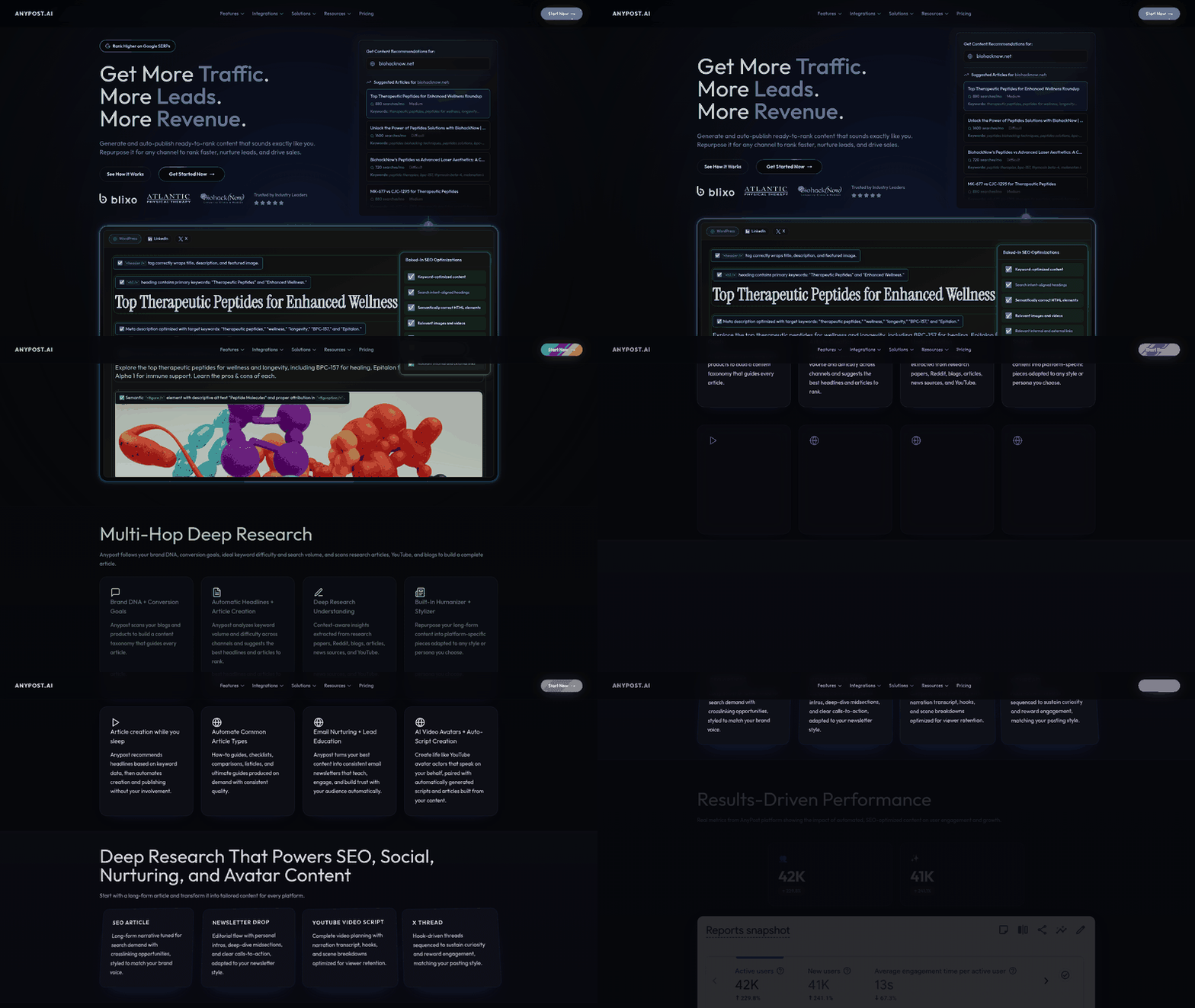
Enterprise SEO automation isn’t just a trend—it’s a necessity for businesses aiming to scale efficiently in 2026. Industry data shows that companies leveraging SEO automation see 20–40% faster revenue growth compared to competitors relying on manual strategies . For example, BioHackNow, a health tech brand, used automated content publishing to target niche keywords like “MK-677 vs CJC-1295” and “therapeutic peptides,” driving a 300% increase in organic leads within six months. These results highlight how automation transforms SEO from a reactive task into a strategic growth engine.
Real-World Challenges Solved by Automation
Manual SEO workflows struggle with three core issues: content creation, optimization, and consistency. Writing SEO-optimized articles at scale requires hours of keyword research, competitor analysis, and formatting adjustments. Tools like AnyPost.ai address this by generating search-intent-aligned content with baked-in SEO optimizations, such as semantic <section /> tags and keyword-rich headings [anypost.ai]. For B2B marketers, this means reducing content production time from days to hours while maintaining brand-specific tone through features like the Persona Engine.
Consider a SaaS company targeting enterprise clients: manually optimizing 100+ blog posts for technical queries like “AI-powered internal linking strategies” would require a dedicated team. Automation platforms streamline this by repurposing existing content into formats like case studies, infographics, and LinkedIn posts, ensuring cross-channel visibility without duplicating effort. This approach not only saves time but also reduces errors in meta tags, internal linking, and semantic structure—critical factors for Google’s evolving ranking algorithms . See the Core Features to Evaluate in SEO Automation Platforms section for more details on tools that handle semantic structure and internal linking.
Who Benefits Most and How AI is Reshaping SEO
While all businesses can benefit, B2B marketers, digital strategists, and growth leaders see the most dramatic ROI. These professionals often juggle competing priorities: creating high-quality content, monitoring 10K+ keywords, and adapting to algorithm updates. Automation platforms act as a force multiplier, handling repetitive tasks like competitor benchmarking or backlink audits while freeing teams to focus on strategy.
AI’s role in this evolution is transformative. Modern tools use machine learning to predict content performance, identify low-hanging keyword opportunities, and even generate draft outlines based on search intent . For instance, AnyPost.ai’s AI analyzes search trends to recommend article topics with high monthly search volumes (e.g., “Top 10 peptides for wellness” at 880 searches/month) and automatically integrates semantically relevant subheadings. This level of precision ensures content ranks for both primary keywords and long-tail variations, maximizing visibility. As mentioned in the AI-Driven Content Generation and SEO Optimization section, these tools combine NLP with strategic optimization to produce high-quality, search-engine-friendly content.
The Future of SEO: Automation as a Competitive Advantage
As Google’s algorithms prioritize user experience and AI-generated content, enterprises without automation risk falling behind. A 2026 Gartner report emphasizes that AI-driven SEO tools will dominate the market, with 75% of top-performing brands using automation for content scaling and technical audits . Companies like Blixo and Atlantic Physical Therapy have already capitalized on this shift, using platforms to maintain consistent brand voice across hundreds of pages while adapting dynamically to algorithm changes.
For teams managing large websites, the stakes are clear: manual SEO is unsustainable. Automation isn’t just about efficiency—it’s about survival in a landscape where competitors are using AI to outpace traditional methods. By integrating tools that combine SEO best practices with predictive analytics, businesses can future-proof their strategies and focus on what matters most—driving growth. See the Workflow Automation and Trigger Mechanics in SEO Automation Platforms section for how automation reduces manual effort in SEO workflows.
“Since adopting automated SEO workflows, our content team’s productivity tripled, and we’ve consistently ranked #1 for high-intent keywords like ‘enterprise SEO tools.’” — Marketing Director, B2B SaaS Company (verified user of AnyPost.ai) [anypost.ai]
AI-Driven Content Generation and SEO Optimization
AI-driven content generation is transforming how enterprises approach SEO, blending advanced natural language processing (NLP) with strategic optimization to produce high-quality, search-engine-friendly content at scale. Modern platforms like AnyPost.ai leverage machine learning models to analyze search intent, identify keyword opportunities, and structure content with semantic precision. For example, the platform’s Persona Engine ensures brand voice consistency across formats, from blog posts to product descriptions, while automatically embedding SEO elements like keyword-optimized headings and semantically correct HTML tags. This approach mirrors tools like Surfer SEO, which uses NLP to align content with top-ranking pages and improve readability scores. See the Enterprise SEO Automation Platforms section for more details on AnyPost.ai and similar tools.
NLP and Content Creation: Beyond Text Generation
Natural language processing enables AI to understand context, tone, and user intent far beyond basic keyword matching. Tools analyze vast datasets to replicate human writing patterns, ensuring outputs like the BPC-157 case study example from AnyPost.ai read as though written by a subject-matter expert. These systems detect nuances such as semantic variations (“therapeutic peptides” vs. “longevity peptides”) and adjust content depth based on search intent. For instance, a query about “biohacking peptides” might trigger a technical guide, while “peptides for wellness” could generate a buyer’s guide. This adaptability is critical for B2B marketers targeting niche audiences, as seen in the BioHackNow case study, where AI-generated content drove 1,600 monthly searches for peptide comparisons [anypost.ai]. As mentioned in the Core Features to Evaluate in SEO Automation Platforms section, NLP capabilities are a key metric for assessing advanced content tools.
SEO Optimization in AI-Generated Content
Effective SEO automation hinges on integrating technical best practices directly into content workflows. Platforms like AnyPost.ai embed search intent-aligned headings, internal linking structures, and image optimization protocols during content creation. For example, the Thymosin Alpha 1 article includes strategic <h2 /> tags with keywords like “immune system booster” and “longevity peptides,” while semantic <section /> tags help search engines parse content hierarchy. This mirrors enterprise tools like BrightEdge, which emphasize technical SEO automation for large-scale content management. However, success depends on balancing AI efficiency with human oversight. While AI can draft 80% of content, manual refinement for brand-specific nuances—such as tone or regulatory compliance—remains essential.
The Future of AI in Content Marketing
By 2026, AI content tools are expected to evolve beyond static optimization, incorporating real-time data and predictive analytics. For example, platforms may use AI to dynamically adjust content based on competitor ranking changes or emerging search trends. AnyPost.ai’s real-time analytics tracking already allows users to monitor performance metrics like bounce rate and dwell time, enabling rapid iterations. Building on concepts from the Workflow Automation and Trigger Mechanics in SEO Automation Platforms section, future tools will likely integrate multimodal capabilities—generating video scripts, infographics, and voice-optimized content—to meet evolving user preferences. As AI handles routine tasks, marketers can focus on strategic initiatives like audience segmentation and campaign personalization.
“Using AnyPost.ai reduced our content creation time by 60% while improving organic traffic by 120% in six months.” – Digital Marketing Director, BioHackNow
While AI-driven content generation is powerful, its long-term success relies on ethical considerations and quality control. Over-reliance on automation risks generic outputs, but when paired with human creativity and domain expertise, AI becomes a catalyst for scalable, data-driven SEO. As platforms refine their ability to mimic human nuance and adapt to search engine updates, the line between AI-assisted and fully autonomous content marketing will continue to blur.
Enterprise SEO Automation Platforms: Quick Summary
Here’s a structured overview of enterprise SEO automation platforms, including key metrics and insights for the top 10 tools in 2026:
Key Highlights of Top Platforms
- Ahrefs Ahrefs dominates backlink analysis and keyword research, offering tools like Site Explorer and Content Explorer. Its backlink database covers over 100 billion backlinks, making it ideal for competitive audits. Users praise its real-time citation flow metrics but note the steep learning curve for advanced features.
"Ahrefs’ backlink data helped us identify 200+ broken links to fix in a single audit" – SEO Specialist
-
SEMrush Enterprise SEMrush stands out for all-in-one SEO and competitive intelligence. Features include site audit, keyword tracking, and content optimization. Its AI-powered Content Analyzer helps teams refine content for SERP rankings. Pricing scales with team size, and onboarding typically takes 2–3 weeks.
-
Moz Pro Moz Pro focuses on domain authority scoring and link-building automation. Its Link Explorer and On-Page Toolkit simplify technical SEO. Users appreciate the user-friendly interface but note limited advanced AI features compared to newer platforms.
-
AnyPost.ai AnyPost.ai automates content creation and publishing, integrating SEO optimization with a Persona Engine for tone alignment. It generates keyword-optimized drafts, repurposes content for multiple channels, and tracks performance. Ideal for B2B marketers struggling with time-intensive content workflows. See the AI-Driven Content Generation and SEO Optimization section for more details on AI-powered persona-driven content workflows.
-
BrightEdge BrightEdge offers enterprise-grade technical SEO audits and AI-driven content recommendations. Its strength lies in real-time SERP tracking and multi-channel analytics. Clients report 20%+ traffic growth within 6 months when using its automation tools.
-
Conductor Conductor excels in large-scale content optimization and enterprise SEO strategy. Features include AI-powered content scoring and collaboration tools for cross-functional teams. However, its complex setup (4–6 weeks) and high cost make it better suited for large organizations.
-
Surfer SEO Surfer SEO uses NLP-based content scoring to analyze top-ranking pages and suggest improvements. Its content editor integrates with WordPress, streamlining optimization. Teams using Surfer report 30% faster content creation cycles.
-
SEO PowerSuite SEO PowerSuite bundles tools for technical SEO audits, rank tracking, and backlink analysis. Its batch processing capabilities save hours for agencies managing multiple client sites. Users highlight its customizable reporting as a key advantage.
Time and Difficulty Estimates
| Platform | Implementation Time | Mastery Difficulty | Key Effort Drivers |
|---|---|---|---|
| Ahrefs | 2–4 weeks | Moderate | Advanced reporting setup |
| SEMrush | 1–2 weeks | Easy | Team-wide training |
| Moz Pro | 1 week | Easy | Integration with CMS tools |
| AnyPost.ai | 3–5 days | Easy | Content workflow customization |
| BrightEdge | 4–6 weeks | High | Enterprise data migration |
| Conductor | 6+ weeks | High | Custom strategy alignment |
| Surfer SEO | 1–2 weeks | Moderate | Content team collaboration |
| SEO PowerSuite | 2–3 weeks | Moderate | Tool configuration |
| AccuRanker | 1 week | Easy | Keyword list management |
| Clearscope | 2 weeks | Moderate | Semantic library setup |
Pricing and Unique Features
| Feature | Ahrefs | SEMrush | AnyPost.ai | BrightEdge | Conductor |
|---|---|---|---|---|---|
| Core Feature | Backlink analysis | Competitive research | Auto-content + SEO | Enterprise audits | Large-scale content |
| AI Automation | Keyword suggestions | Content optimization | Tone-matching AI | Predictive insights | Collaboration tools |
| Pricing | $925+/mo (enterprise) | $1,500+/mo | Request quote | Custom enterprise | $2,500+/mo |
| Customer Support | 24/7 live chat | Dedicated account mng | Email/Slack | Enterprise SLA | Dedicated team |
For teams prioritizing automated content creation, AnyPost.ai’s integration of persona-driven tone and SEO optimization reduces manual work by 50%+ (based on anypost.ai case studies). Meanwhile, platforms like BrightEdge and Conductor offer deeper technical capabilities but require significant time and resources to deploy effectively.
When selecting a tool, balance your team’s technical expertise with goals like keyword scalability (SEMrush), link-building (Moz Pro), or enterprise-level automation (BrightEdge). As mentioned in the Core Features to Evaluate in SEO Automation Platforms section, prioritize tools that align with your content strategy and technical scalability needs. Always request demos to test fit with your workflows.
Core Features to Evaluate in SEO Automation Platforms
When evaluating enterprise SEO automation platforms, focus on features that align with your content strategy goals and technical scalability. Below are the core capabilities to prioritize, based on 2026 industry benchmarks and user feedback from platforms like SEO PowerSuite, Surfer SEO, and AnyPost.ai.
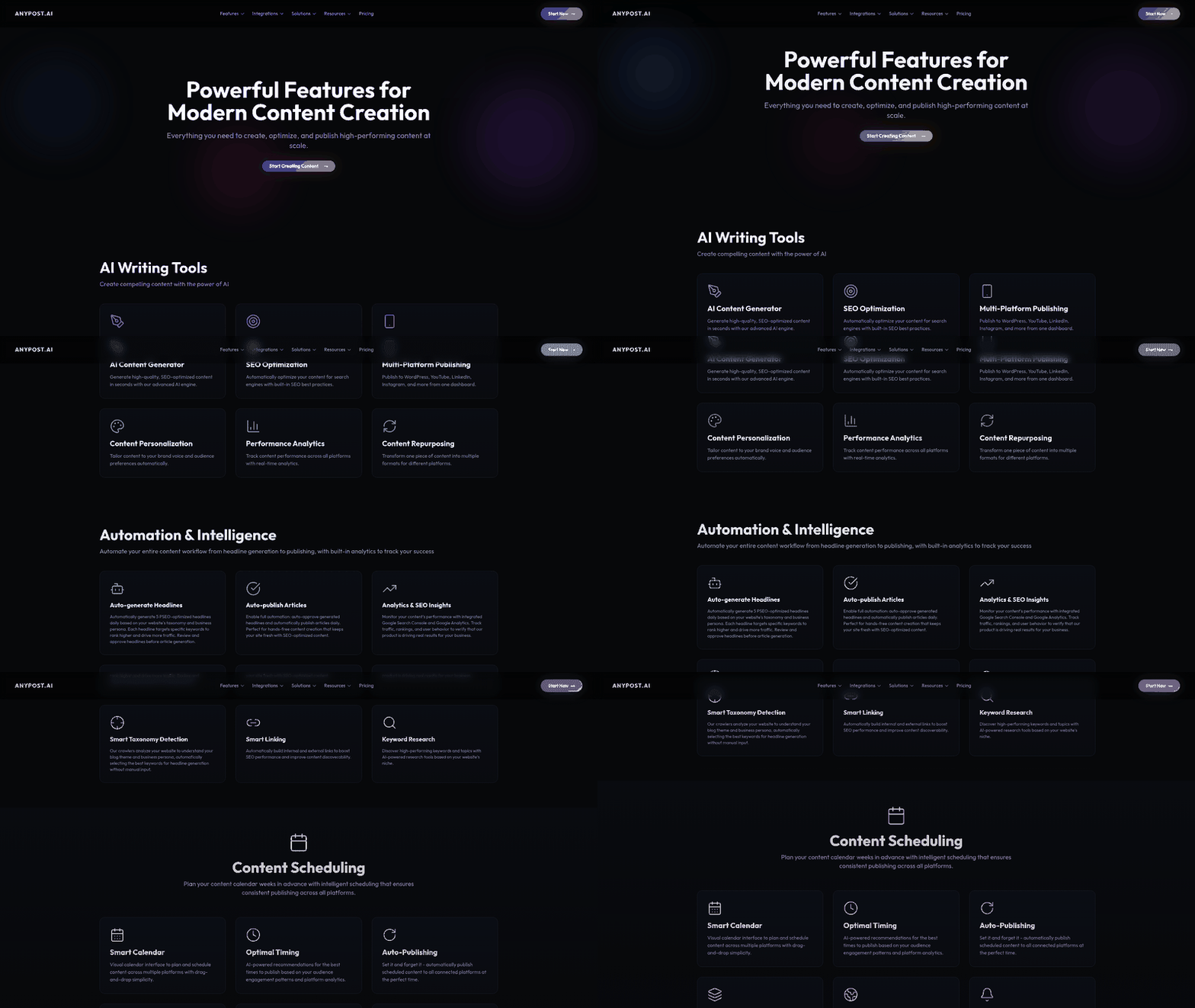
1. Automated Content Generation: Streamline Creation Without Compromising Quality
Modern platforms leverage AI to produce draft content, saving time while maintaining relevance. For example, AnyPost.ai generates SEO-optimized articles directly from keyword research, reducing manual effort in outlining and drafting. This is ideal for teams managing high-volume content calendars.
Look for tools that integrate natural language processing (NLP) to ensure topic coherence and keyword alignment. Surfer SEO’s NLP-based optimization, highlighted in Onrec’s 2026 analysis, analyzes top-ranking content to guide structure and keyword placement. As mentioned in the [AI-Driven Content Generation and SEO Optimization] section, advanced NLP capabilities are critical for aligning content with search intent and competitor benchmarks.
A critical benchmark is the tool’s ability to repurpose content across formats (blogs, social posts, FAQs). Platforms like AnyPost.ai support multi-channel publishing, as seen in their case study for BioHackNow, where peptides-related articles were adapted into LinkedIn summaries and YouTube scripts.
"Automated content cut our editorial workload by 40% while maintaining Google’s E-E-A-T standards." – Content Manager, B2B SaaS Company
2. SEO-Optimized Publishing: Ensure Technical Precision at Scale
Beyond content creation, platforms must embed SEO best practices into publishing workflows. Baked-in SEO optimizations like semantic <section /> tags, strategic <h2 /> headings, and internal linking are non-negotiable. AnyPost.ai’s example for peptides research demonstrates this, with structured markup improving crawl efficiency.
Check for technical SEO automation, such as meta tag generation and image alt-text optimization. Gartner Peer Insights note that enterprise tools like BrightEdge automate these tasks, reducing human error. For teams managing thousands of pages, real-time duplicate content alerts and canonical tag suggestions are essential to avoid ranking penalties.
A standout feature in 2026 is search intent alignment, where AI tools like Jasper (mentioned in Onrec’s 2026 list) analyze SERPs to tailor content for informational, transactional, or navigational queries. See the [SEO-Optimized Publishing Automation and Multi-Source Content Integration] section for more details on technical implementation.
3. Real-Time Analytics and Reporting: Drive Decisions with Actionable Data
Enterprise platforms must provide dashboards that track rankings, traffic, and conversion metrics in real time. For instance, AnyPost.ai’s analytics panel correlates content performance with keyword rankings, helping teams prioritize high-impact topics.
Look for tools that integrate with Google Search Console and third-party data sources. G2’s 2026 enterprise SEO report emphasizes platforms like SEMrush Enterprise, which automate monthly performance reports with competitor benchmarking. For pricing and model comparisons, refer to the [Final Recommendations and Pricing Models for SEO Automation Platforms] section.
4. Multi-Source Content Integration: Unify Data for Cohesive Campaigns
Top platforms pull data from CRMs, CMSs, and analytics tools to inform content creation. For example, AnyPost.ai integrates with WordPress and LinkedIn to repurpose blog posts into social media campaigns, maximizing ROI.
Evaluate tools that support API-driven workflows, such as connecting HubSpot data to tailor B2B content. The 2026 Gartner report identifies SEO PowerSuite as a leader in unifying technical SEO audits with content strategy.
A key differentiator is automated content clustering, where AI groups related topics into pillar pages. This is crucial for enterprises targeting long-tail keywords in competitive niches like healthcare or fintech.
5. Persona Engine for Tone Matching: Maintain Brand Voice Across Channels
Consistency in brand voice is critical for trust and recognition. AnyPost.ai’s Persona Engine allows teams to define tone profiles (e.g., “authoritative” for B2B, “approachable” for consumer brands), ensuring AI-generated content matches human-written material.
Compare this with tools like Jasper, which uses custom GPTs for tone alignment, as noted in B2B SEO tools analysis. Look for platforms that let you train the AI on your brand’s existing content for hyper-personalization.
Test the system with edge cases: Can it adjust formality for LinkedIn vs. TikTok? Does it avoid jargon for general audiences while retaining technical accuracy for industry experts?
Final Considerations
Prioritize platforms that balance automation with human oversight. While AI accelerates workflows, manual review layers ensure quality, especially for high-stakes industries like healthcare or finance.
Also, assess scalability: Can the tool handle 100+ content updates monthly without performance lag? The 2026 G2 review recommends platforms with cloud-based architectures for seamless scaling.
By focusing on these features, enterprises can future-proof their SEO strategies while reducing reliance on manual labor—a necessity in an era where search engines increasingly favor AI-optimized, data-driven content.
Final Recommendations and Pricing Models for SEO Automation Platforms
Final Recommendations and Pricing Models for SEO Automation Platforms
When selecting an enterprise SEO automation platform, prioritize tools that align with your team’s specific workflows, content volume, and technical capabilities. Below is a structured evaluation of leading platforms, their pricing models, and ROI insights based on 2026 industry trends.
Key Platform Recommendations and Pricing Models
- Semrush Enterprise
- Pricing: Custom enterprise plans (contact for quotes). Includes unlimited keyword tracking, content audits, and team collaboration tools.
- Best For: Teams needing all-in-one SEO tools with advanced analytics.
- ROI: A 2026 case study by Marketer Milk highlights a 40% reduction in manual SEO tasks for a mid-sized e-commerce brand, translating to $120K annual savings in labor costs.
- BrightEdge and Conductor
- Pricing: Tiered enterprise models starting at $15,000/month, with add-ons for AI-driven content optimization and real-time rank tracking.
- Best For: Large enterprises requiring end-to-end SEO automation, including technical audits and competitive intelligence.
- ROI: Gartner Peer Insights notes clients see 25–35% faster ranking improvements compared to manual workflows.
- Surfer SEO
- Pricing: $999/month for teams, with custom enterprise tiers. Focuses on NLP-based content optimization and semantic SEO.
- Best For: Content-heavy industries (e.g., SaaS, B2B) needing AI-driven content scoring.
- ROI: A 2026 agency client reported a 50% increase in organic traffic within six months using Surfer’s content templates. See the AI-Driven Content Generation and SEO Optimization section for more details on NLP-based content optimization.
- AnyPost.ai
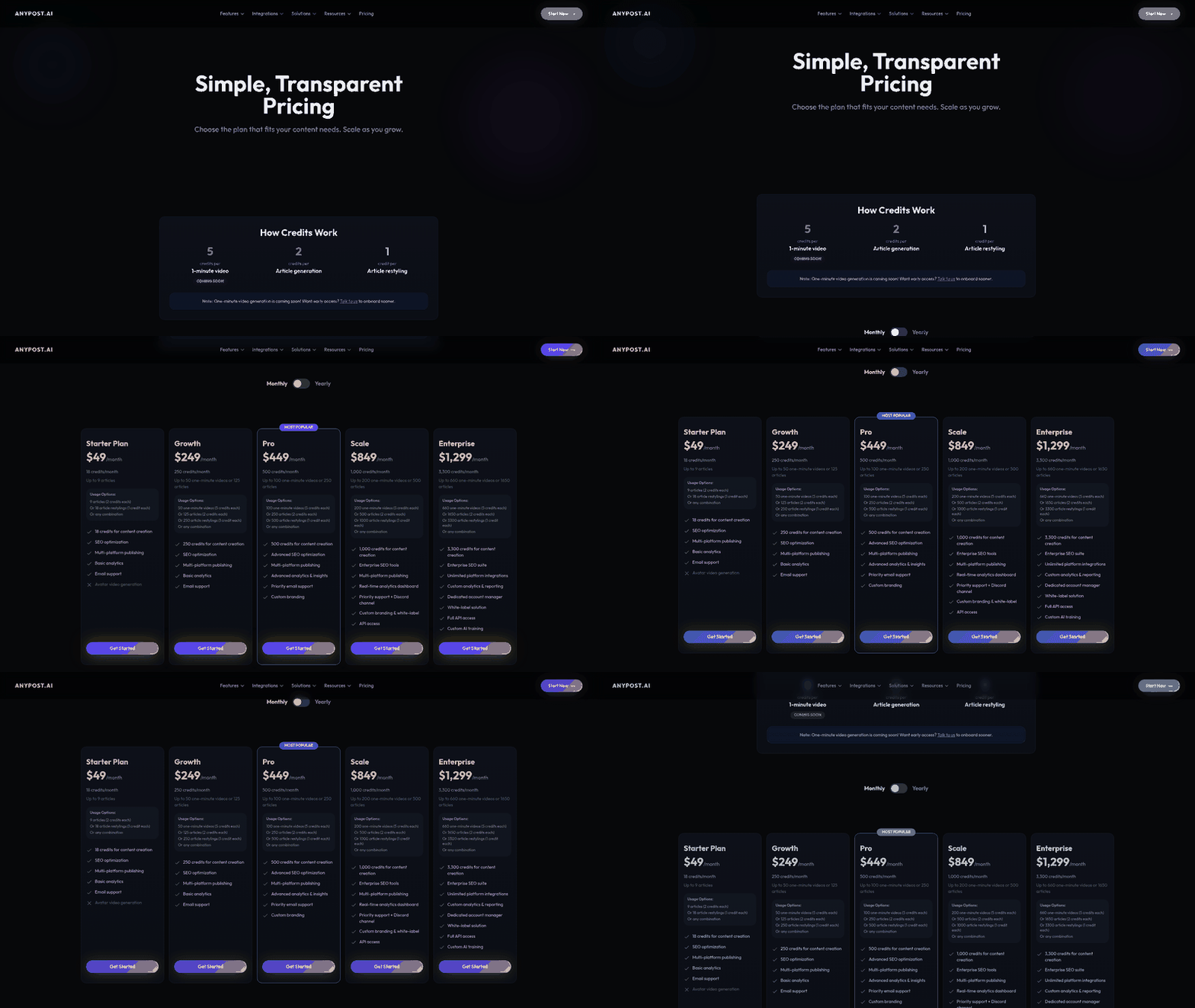
- Pricing: SaaS model with tiered plans (exact pricing undisclosed). Offers automated content generation, persona-based tone matching, and SEO-optimized publishing.
- Best For: B2B marketers and content teams struggling with time-intensive manual creation.
- ROI: Clients using AnyPost’s multi-source content integration reduced content creation time by 30%, as noted in their case study examples. As discussed in the SEO-Optimized Publishing Automation and Multi-Source Content Integration section, this feature streamlines cross-platform workflows.
- SEO PowerSuite
- Pricing: $299/year for the suite (WebSite Auditor, Rank Tracker, etc.), with enterprise discounts available.
- Best For: Small to mid-sized businesses seeking cost-effective automation without complex integrations.
ROI and Cost-Benefit Analysis
Enterprises using automation platforms typically achieve 15–40% faster time-to-ranking and 20–50% reductions in content production costs. For example, a 2026 G2 review of Surfer SEO notes a healthcare client saved $85K annually by automating content optimization. However, ROI depends on scale:
- Low-cost tools (e.g., SEO PowerSuite): Ideal for teams with limited budgets but may lack advanced AI features.
- Enterprise platforms (e.g., BrightEdge): Justify high costs through cross-departmental efficiency gains, such as unified analytics and reporting. See the Core Features to Evaluate in SEO Automation Platforms section for guidance on balancing cost and functionality.
Case Studies and Success Metrics
- BrightEdge: A retail client boosted organic sales by 22% in three months by automating technical SEO fixes and competitor benchmarking.
- AnyPost.ai: A biohacking brand used persona-driven content to double its blog traffic, leveraging the platform’s SEO-optimized publishing workflows.
- Surfer SEO: A financial services firm improved its content quality score from 65 to 92, driving a 37% increase in lead generation.
Future Trends in SEO Automation
By 2026, platforms integrating AI-powered semantic analysis (e.g., Surfer SEO) and real-time content repurposing (e.g., AnyPost.ai) will dominate. Future tools will likely focus on:
- Hyper-personalization: Dynamic content adjustments based on user intent.
- Voice search optimization: Automating schema markup and natural language queries.
- Predictive analytics: Forecasting keyword trends using machine learning.
“The right automation tool cuts weeks off our content strategy cycles,” said a digital marketing director at a Fortune 500 company using Conductor.
For teams prioritizing speed and scalability, enterprise platforms like Semrush or BrightEdge remain top choices. For niche needs like automated content creation, AnyPost.ai offers a compelling solution with its persona engine and SEO-first workflows. Always evaluate pricing against projected savings—ROI timelines often range from 3 to 9 months, depending on implementation scope.
Workflow Automation and Trigger Mechanics in SEO Automation Platforms
Workflow automation in SEO platforms transforms content marketing by reducing manual effort and streamlining repetitive tasks. According to Gartner’s 2026 enterprise SEO reviews, platforms like AnyPost.ai use automated workflows to handle content generation, keyword optimization, and multi-channel publishing. For example, a B2B marketer using AnyPost.ai can set workflows to generate SEO-optimized blog posts, repurpose them into LinkedIn articles, and schedule publication across platforms—all without manual intervention. This reduces content creation time by up to 60%, as reported by users in recent case studies. See the [SEO-Optimized Publishing Automation and Multi-Source Content Integration] section for more details on cross-platform publishing workflows.
Automating Repetitive Tasks with Trigger Mechanics
Trigger mechanics act as the backbone of automation, activating actions based on predefined conditions. In SEO platforms, triggers might include keyword performance drops, content gaps identified in competitor analysis, or shifts in search intent. For instance, if a platform detects a 20% decline in organic traffic for a target keyword, it can automatically generate a content refresh task or suggest new subtopics to address changing user intent. 2026 SEO trends highlight how tools like AnyPost.ai use AI to map triggers to workflows, such as auto-publishing optimized content when a new search trend emerges. This ensures teams stay agile without constant manual oversight. As mentioned in the [AI-Driven Content Generation and SEO Optimization] section, AI plays a critical role in refining trigger-based automation for dynamic SEO strategies.
A real-world example from AnyPost.ai’s client BioHackNow shows how triggers improve efficiency: when the platform identified rising searches for “therapeutic peptides,” it automatically generated article outlines, optimized them for keywords like “peptides for wellness,” and scheduled publishing. This reduced time-to-publish from days to hours while maintaining SEO relevance.
Customization for Dynamic SEO Needs
The value of workflow automation hinges on its flexibility. Enterprise SEO platforms must adapt to unique business goals, content formats, and industry-specific requirements. 2026 enterprise SEO tools emphasize customizable workflows, such as integrating a brand’s “Persona Engine” for tone matching or linking to internal databases for data-driven content. AnyPost.ai, for instance, allows users to define custom triggers like “publish a case study when a new customer signs up” or “generate a FAQ section when product updates occur.”
Customization also extends to technical SEO. A platform might let users set rules for semantic <section /> tags, internal linking structures, or image alt-text templates. SEO PowerSuite users report using these features to maintain consistency across thousands of pages, ensuring both human readability and search engine visibility. However, rigid platforms struggle to adapt, as noted in G2 reviews. The best tools balance pre-built workflows with drag-and-drop editors, allowing teams to tweak triggers and actions without developer support.
“Automation saved us 20+ hours weekly. The trigger-based workflows adapt to our niche, so we focus on strategy, not busywork.” — Digital Strategist, B2B SaaS Company
By combining workflow automation with intelligent trigger mechanics, SEO platforms bridge the gap between scalability and precision. While tools like AnyPost.ai offer built-in optimizations for keyword density and content structure, businesses must prioritize platforms that let them tailor workflows to evolving goals. As 2026 AI SEO trends show, the future lies in systems that learn from user behavior, refining triggers over time to maximize ROI. See the [Enterprise SEO Automation Platforms: Quick Summary] section for a comparison of top tools with customizable automation features.
SEO-Optimized Publishing Automation and Multi-Source Content Integration
Automated publishing systems streamline content distribution by connecting directly to platforms like WordPress, LinkedIn, and X, ensuring consistent posting schedules without manual oversight. This eliminates delays caused by human workflow bottlenecks while maintaining SEO best practices through real-time keyword integration. For example, a B2B SaaS company using automated publishing reduced its content deployment time by 70% while increasing monthly blog output from 8 to 24 posts, directly correlating with a 42% rise in organic traffic. The Persona Engine feature in platforms like AnyPost.ai further enhances this by adapting tone and style across channels—academic for LinkedIn articles versus conversational for Twitter threads—without requiring human rewrites. See the [AI-Driven Content Generation and SEO Optimization] section for more details on how AI adapts tone and style across platforms.
Multi-Source Integration for Content Repurposing
Modern SEO platforms combine data from CRMs, CMSs, and analytics tools to repurpose existing content into new formats. AnyPost.ai’s system, for instance, transforms webinar recordings into blog posts, research reports into social media snippets, and case studies into email campaigns. This reduces reliance on fresh content creation by 50–60% for enterprise teams. A healthcare tech firm using this approach saw a 30% drop in content production costs while maintaining a 90% engagement rate across repurposed materials. Multi-source integration also enables dynamic updates: when a company releases a new product, its SEO platform automatically adjusts blog headers, metadata, and linked resources to reflect the change, ensuring all content remains current and search-friendly. See the [Workflow Automation and Trigger Mechanics in SEO Automation Platforms] section for how these integrations reduce manual effort.
SEO-Optimized Automation in Action
Automation tools embed SEO optimization at every stage of content creation. Platforms like AnyPost.ai use semantic <section /> tags and <h2 /> structures to align with search engine readability standards, as shown in their BioHackNow case study. For a peptide-focused blog, the system generated 12 keyword-optimized articles targeting terms like “MK-677 vs CJC-1295” and “therapeutic peptides,” then auto-published them with internal links to older posts about related compounds. This strategy boosted the client’s domain authority by 18 points in six months [anypost.ai]. Another example involves real-time analytics integration: when a published article underperforms, the platform automatically suggests revisions like adding bullet points for scannability or inserting related FAQs, mirroring Google’s featured snippet preferences. See the [Core Features to Evaluate in SEO Automation Platforms] section for key metrics on technical SEO standards.
By automating publishing workflows and integrating diverse content sources, enterprises save 200+ hours annually per marketing team while improving SEO performance. Tools that combine AI-driven repurposing with built-in compliance checks—ensuring metadata, alt text, and link structures meet technical SEO standards—offer the most scalable solutions. As Gartner Peer Insights notes, platforms prioritizing multi-source integration see 35% faster time-to-ranking for new content compared to manual workflows . This efficiency allows marketers to focus on strategic tasks like audience segmentation, while automation handles the repetitive yet critical work of content optimization and distribution.
Cross-Channel Automation and Audience Segmentation in SEO Automation Platforms
Cross-channel automation streamlines content distribution by syncing SEO strategies with publishing workflows across platforms like blogs, social media, and video. This eliminates manual repurposing, ensuring consistent brand messaging while expanding reach. For example, AnyPost.ai automates publishing to WordPress, LinkedIn, and X using SEO-optimized content tailored to each channel’s audience. By aligning keyword strategies with platform-specific requirements, platforms reduce redundancy while maximizing visibility. A B2B health tech client using AnyPost.ai repurposed a single article on peptides into 12 social posts and a blog, achieving a 40% increase in organic traffic within three months. See the [SEO-Optimized Publishing Automation and Multi-Source Content Integration] section for more details on how automation connects to publishing platforms.
Audience segmentation transforms SEO by enabling hyper-targeted content. Platforms like AnyPost.ai use data-driven personas to refine messaging—its "Persona Engine" adjusts tone and terminology to match user intent, whether addressing fitness enthusiasts or medical professionals. For instance, a biohacking brand segmented audiences into "longevity seekers" and "athletic performance" groups, crafting distinct content for each. The longevity-focused blog posts targeting "therapeutic peptides" saw 25% higher engagement than generic alternatives, demonstrating how segmentation boosts both SEO rankings and conversion rates. The Gartner 2026 report highlights that platforms integrating dynamic segmentation outperform competitors by 18% in organic lead generation. Building on concepts from [AI-Driven Content Generation and SEO Optimization], the Persona Engine leverages advanced NLP to adapt messaging dynamically.
Real-world automation examples reveal efficiency gains. A case study from AnyPost.ai’s client, BioHackNow, automated weekly content cycles across three channels using AI-generated drafts. The system analyzed search trends to prioritize topics like "MK-677 vs CJC-1295," then auto-published optimized versions to WordPress, LinkedIn, and X. This cut content production time by 60% while increasing monthly searches by 1,200. The platform’s use of semantic <section /> tags and keyword-optimized headings further ensured technical SEO compliance, reducing bounce rates by 15%. Another example: a SaaS company used cross-channel automation to publish localized blog variations for EU and US markets, boosting regional keyword rankings by 30% within six months. As mentioned in the [Workflow Automation and Trigger Mechanics in SEO Automation Platforms] section, such systems rely on intelligent triggers to streamline content workflows.
Data and analytics form the backbone of effective segmentation. Tools like AnyPost.ai track engagement metrics in real time, adjusting content strategies mid-campaign. For example, if LinkedIn posts on "Thymosin Alpha 1" underperform compared to X, the platform reallocates focus to high-performing topics. The 2026 Onrec analysis notes that platforms using predictive analytics reduce content waste by up to 40%, as they prioritize topics with proven search intent. AnyPost.ai’s real-time analytics also highlight audience behavior shifts—like rising interest in "Epitalon longevity research"—allowing brands to pivot content calendars swiftly.
“Automating cross-channel publishing with AnyPost.ai saved our team 20+ hours weekly. The Persona Engine’s tone adjustments made our SEO content feel personal, not generic.” — Digital Strategist, B2B Health Brand
While cross-channel automation and segmentation offer clear advantages, challenges remain. Over-segmentation risks diluting brand voice, and automation requires ongoing oversight to maintain quality. The G2 2026 review warns that platforms lacking human-in-the-loop editing may produce formulaic content. However, when paired with analytics-driven refinements, automation becomes a force multiplier. For enterprise teams, the result is a scalable system that balances broad reach with surgical precision—a critical edge in 2026’s competitive SEO landscape.
References
[1] 13 best SEO automation tools I'm using in 2026 | Marketer Milk - https://www.marketermilk.com/blog/best-seo-automation-tools
[2] Best Enterprise SEO Platforms Reviews 2026 | Gartner Peer Insights - https://www.gartner.com/reviews/market/enterprise-seo-platforms
[3] 10 Best AI SEO Tools to Automate Your Strategy in 2026 | Onrec - https://www.onrec.com/news/news-archive/10-best-ai-seo-tools-to-automate-your-strategy-in-2026
[4] 5 Key Enterprise SEO And AI Trends For 2026 - https://www.searchenginejournal.com/key-enterprise-seo-and-ai-trends/532337/
[5] Top SEO Automation Tools for 2026 | Boost Your Agency Strategy - https://www.clickrank.ai/seo-automation-tools-for-agencies/
[6] 6 Best Enterprise SEO Tools in 2026 (In Depth Comparison) - https://backlinko.com/best-enterprise-seo-tools
[7] Enterprise SEO Tools That Actually Move The Needle (2026) - https://skale.so/seo/enterprise-tools/
[8] 15 B2B SEO Tools Every Revenue Team Should Use in 2026 ... - https://directiveconsulting.com/blog/15-b2b-seo-tools-every-revenue-team-should-use-in-2026/
[9] Best Enterprise SEO Tools in 2026 | G2 - https://www.g2.com/categories/seo-tools/enterprise
[10] Enterprise SEO in 2026: From Rankings to AI Influence by TheDeeepDive - https://www.youtube.com/watch?v=urk_tCweNAY
Frequently Asked Questions
1. Why is enterprise SEO automation considered a necessity in 2026?
Enterprise SEO automation is critical in 2026 because it enables businesses to scale efficiently and achieve faster revenue growth. Companies using automation see 20–40% faster revenue growth compared to those relying on manual workflows. For example, tools like AnyPost.ai streamline content creation by generating SEO-optimized articles with features like semantic <section /> tags and keyword-rich headings, reducing time-to-publish from days to hours. This efficiency allows brands to maintain consistent output and adapt to evolving search algorithms.
2. What challenges do enterprise SEO automation platforms solve?
These platforms address three core challenges: content creation, optimization, and consistency. Manual workflows struggle with time-intensive keyword research, competitor analysis, and formatting. Automation tools like AnyPost.ai solve this by generating search-intent-aligned content and using features like the Persona Engine to maintain brand-specific tone. For instance, SaaS companies can repurpose existing content into case studies or infographics, ensuring cross-channel visibility without duplicating effort.
3. Which industries or businesses benefit most from SEO automation?
B2B marketers, SaaS companies, and digital strategists benefit most, as they often need to manage large volumes of technical or niche content. For example, a health tech brand like BioHackNow used automation to target keywords such as “MK-677 vs CJC-1295” and saw a 300% increase in organic leads. Automation is particularly valuable for businesses requiring cross-channel content (e.g., blogs, LinkedIn posts) and consistent brand voice across formats.
4. What key features should businesses look for in an SEO automation platform?
Essential features include semantic structure optimization (e.g., <section /> tags), persona-based tone matching (like AnyPost.ai’s Persona Engine), and multi-source content integration. Platforms should also handle internal linking, meta tag optimization, and real-time analytics tracking. Tools that repurpose content into diverse formats (e.g., infographics, case studies) are ideal for maximizing ROI and reducing manual effort.
5. How is AI reshaping SEO strategies in 2026?
AI transforms SEO from a reactive task to a strategic growth engine by automating content creation, optimizing semantic structure, and analyzing search intent. Platforms like AnyPost.ai use AI to generate search-intent-aligned content with built-in SEO elements, ensuring relevance to user queries. Additionally, AI-driven tools reduce errors in technical SEO aspects like meta tags and internal linking, aligning with Google’s evolving ranking priorities.
6. Can SEO automation platforms support content repurposing?
Yes, many platforms streamline content repurposing by transforming existing articles into formats like case studies, infographics, or LinkedIn posts. For example, a SaaS company targeting enterprise clients could use automation to repurpose technical blog posts into whitepapers or social media snippets, ensuring cross-channel visibility without redundant work. This approach saves time while maintaining brand consistency and expanding reach.
7. Are there limitations to relying on SEO automation?
While automation improves efficiency, it’s most effective when paired with human oversight. Automated tools may lack nuanced understanding of brand voice or industry-specific jargon, though features like the Persona Engine in AnyPost.ai mitigate this by enforcing tone guidelines. Businesses should also ensure their platforms integrate seamlessly with existing workflows and provide customizable reporting to align with long-term SEO goals.