
Essential B2B SaaS Lead Generation Tactics Explained

Key Takeaways
- Effective B2B SaaS lead generation drives exponential growth, exemplified by ToutApp’s 300% annual revenue increase.
- Strategic lead generation enables efficient scaling, as seen in a SaaS provider targeting $500M ARR through targeted operations.
- Unoptimized sales funnels result in 70–80% of leads failing to convert, emphasizing poor conversion rate performance.
- Data-driven strategies reduce customer acquisition costs by up to 50%, optimizing marketing spend and ROI.
- Automated email nurture sequences maintain engagement, accelerating revenue cycles by sustaining prospect interest.
- Identifying and targeting ideal customer profiles aligns with high-intent prospects, improving lead quality and conversion rates.
- Personalized content and funnel optimization address low conversion challenges, transforming 30–40% of leads into qualified sales opportunities.
Related Video
Watch: 8 Best Lead Generation Tactics for Software/SaaS companies by TK Kader
Why B2B SaaS Lead Generation Matters
Effective B2B SaaS lead generation directly impacts revenue growth by ensuring a steady pipeline of qualified prospects. For example, companies that refine their lead generation strategies often see exponential scaling-ToutApp grew 300% in a single year, which helped secure a Series B funding round. Similarly, a SaaS provider targeting $500M ARR uses strategic lead generation to scale operations efficiently, a strategy that Building on concepts from the "Executing Email Nurture Sequences and Drip Campaigns" section, using automated follow-ups to maintain engagement. These examples highlight how prioritizing lead generation isn’t just about volume but about aligning with high-intent prospects who accelerate revenue cycles, as outlined in the "Identifying and Targeting Your Ideal Customer Profile (ICP)" section.
What Challenges Do Strong Lead Generation Strategies Solve?
Lead generation addresses critical pain points like low conversion rates and high customer acquisition costs (CAC). Without targeted efforts, B2B SaaS companies risk wasting resources on broad, ineffective outreach. For instance, unoptimized funnels often result in 70–80% of leads failing to convert. By contrast, data-driven strategies-such as personalized content and automated nurturing-reduce CAC by up to 50%, as noted in studies on funnel optimization highlighted in the "Measuring and Optimizing Lead Generation Success with Metrics and KPIs" section. These tactics also combat common issues like poor lead scoring and misaligned sales-marketing handoffs, ensuring teams focus on high-quality opportunities.
Who Benefits from B2B SaaS Lead Generation?
Multiple stakeholders gain from strong lead generation. Marketers benefit by refining audience targeting and measuring campaign ROI with precision, techniques detailed in the "Creating Targeted Content for SEO and Paid Ads" section. Sales teams receive pre-qualified leads, reducing the time spent on unqualified prospects. Business leaders see direct impacts on revenue forecasts and scalability. For example, a 2024 study found that companies using AI-driven lead scoring improved conversion rates by 30%, directly boosting leadership’s confidence in growth projections. This collaboration across roles ensures everyone works toward shared goals.
How Does Lead Generation Drive Long-Term Growth?
Sustainable scalability hinges on efficient lead generation. Early-stage SaaS companies that focus on 2–3 core tactics-like content marketing and account-based advertising-avoid spreading resources thin. The AIDA (Attention, Interest, Desire, Action) model, widely applied in B2B contexts, shows that nurturing leads through each stage increases lifetime value (LTV). For instance, a provider using automated email sequences reduced churn by 20% by keeping prospects engaged, a tactic explored in the "Executing Email Nurture Sequences and Drip Campaigns" section. Over time, these efforts compound, reducing reliance on costly paid ads and fostering organic growth through referrals.
Key Takeaways for B2B SaaS Teams
- Prioritize quality over quantity: High-intent leads convert faster and cost less to acquire.
- Use automation: Tools like marketing automation platforms streamline lead scoring and follow-ups.
- Align sales and marketing: Shared metrics and feedback loops improve lead handoffs and reduce friction.
By embedding lead generation into core operations, B2B SaaS companies transform it from a support function into a strategic lever for growth. This approach not only lowers costs but also builds a resilient revenue engine capable of scaling with market demands.
Creating Targeted Content for SEO and Paid Ads
Creating targeted content for SEO and paid ads in B2B SaaS requires a blend of strategic keyword research, high-quality content creation, and precise audience segmentation. By aligning these efforts with the needs of your target buyers, you can attract qualified leads and drive conversions. Below is a step-by-step guide to mastering this process.
How Do You Conduct Keyword Research for B2B SaaS?
Start by identifying the search terms your audience uses to find solutions like yours. Use tools like Google Keyword Planner or SEMrush to uncover low-competition, high-intent keywords. Focus on long-tail keywords that reflect specific pain points, such as “project management software for healthcare teams” or “automated invoicing tools for SaaS startups.”.
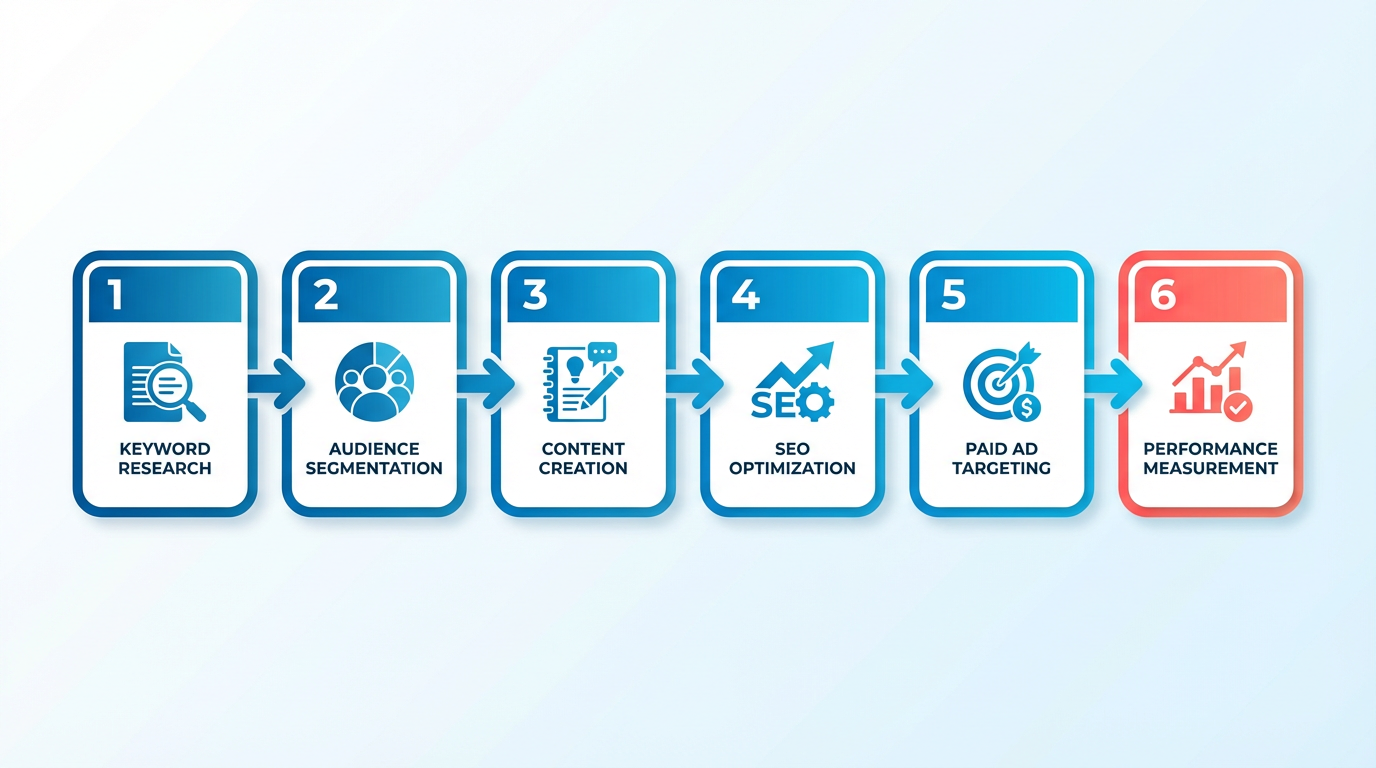
Once you’ve compiled a list, categorize keywords into themes. For example, prioritize industry-specific terms if your SaaS product serves niche markets. A company targeting healthcare providers might rank for “HIPAA-compliant patient scheduling software” by creating a dedicated blog post or whitepaper. This approach ensures your content addresses precise needs while aligning with SEO best practices, as outlined in the Identifying and Targeting Your Ideal Customer Profile (ICP) section.
What Makes Paid Ad Campaigns Effective for B2B SaaS?
Paid ads thrive on audience segmentation and tailored messaging. For Google Ads, create campaigns targeting keywords like “B2B SaaS lead generation tools” and use dynamic search ads to automatically match relevant landing pages. For LinkedIn Ads, segment audiences by job title (e.g., “VP of Sales”) and industry, then create ads highlighting case studies or ROI metrics.
Building on concepts from the using LinkedIn and Other Social Media Platforms for Lead Generation section, a SaaS provider offering CRM tools might run LinkedIn ads targeting sales managers in the financial sector. The ad copy could emphasize time savings-“Reduce manual data entry by 70%”-while linking to a free trial. A/B testing variations of this messaging helps identify top-performing creatives and headlines.
How Can You Optimize Landing Pages for Conversions?
Landing pages are the bridge between ad clicks and lead generation. Design them with a clear hierarchy: a bold headline, a concise value proposition, and a single, prominent call-to-action (CTA). For instance, if your ad promises a free eBook, the landing page should display the title prominently and require minimal form fields to download it.
As outlined in the Measuring and Optimizing Lead Generation Success with Metrics and KPIs section, use analytics to test different layouts-such as a video demo versus a feature list-to see what resonates. Prioritize mobile-first design and fast load times to reduce bounce rates. Incorporate trust signals like customer testimonials or security badges, especially for B2B buyers evaluating enterprise solutions.
What Role Does AI Play in Content Creation?
AI-generated content can streamline workflows but should never replace human oversight. Tools like AnyPost.ai help draft blog outlines, generate social media copy, or personalize outreach emails at scale. For example, AI can create 10 variations of a LinkedIn post promoting a webinar, which a marketer can refine for tone and brand voice.
However, quality remains critical. AI should supplement-not automate-your strategy. A SaaS company might use AI to draft a whitepaper on “AI in Supply Chain Management,” but human experts must review it for accuracy and industry relevance. This hybrid approach balances efficiency with credibility.
Final Tips for Success
- Prioritize quality over quantity: A well-researched blog post ranks better than 10 low-effort articles.
- Repurpose content: Turn webinar recordings into blog posts or social media snippets.
- Track performance: Use analytics to see which keywords and ad creatives drive the most leads.
By combining SEO, paid ads, and AI-driven efficiency, B2B SaaS companies can create a content engine that attracts and converts high-value leads.
Executing Email Nurture Sequences and Drip Campaigns
A well-designed email nurture sequence starts with a clear trigger event and focuses on delivering value at each stage. For example, when a lead downloads a whitepaper or signs up for a free trial, an automated sequence can guide them toward conversion. The first email should address their immediate need, while follow-ups build trust with educational content or case studies. Tools like an email automation tool help set up these workflows efficiently. As mentioned in the Identifying and Targeting Your Ideal Customer Profile (ICP) section, aligning trigger events with your ICP ensures you engage the right audience from the start.
Each email must include a strong call-to-action (CTA) that aligns with the lead’s intent. Avoid generic phrases like “Learn more” and instead use action-oriented language such as “Schedule a demo” or “Explore our pricing.” Personalization is also key-mentioning the recipient’s name or referencing their specific activity (e.g., “Thanks for downloading our guide on X”) increases engagement. According to B2B SaaS strategies, sequences with personalized content see 2–3 times higher open rates than generic ones.
Segmenting your email list ensures you send relevant messages to different audience groups. For instance, a marketing team might create separate sequences for finance professionals versus IT managers, tailoring the content to their unique pain points. Segmentation can also be based on behavior, such as leads who abandoned a demo versus those who engaged with multiple resources. This approach reduces spam complaints and improves conversion rates. Building on concepts from the Qualifying and Scoring Leads with Firmographic and Behavioral Criteria section, segmentation use firmographic and behavioral data to refine messaging precision.
Automation tools handle repetitive tasks like sending follow-up emails, tracking engagement, and updating lead scores based on behavior. For example, if a lead opens three emails about a specific feature, automation can trigger a personalized message offering a free consultation on that topic. This level of responsiveness mimics one-on-one interactions while scaling to thousands of leads. Advanced systems also use analytics to optimize sequences in real time. Regularly reviewing metrics like open rates and conversion rates helps identify underperforming steps. For instance, a SaaS company once raised its demo sign-up rate by 20% after shortening a three-step sequence to two high-impact emails.
Subject lines should be concise, specific, and include a sense of urgency or value. Examples: “Your Free Trial Expires in 24 Hours” or “See How [Your Product] Boosts ROI.” Avoid vague phrases like “Important Update” that might be ignored. CTAs must be direct and tied to the email’s goal. Use verbs like “Get Started,” “Book a Call,” or “Download the Report.” Place CTAs above the fold and repeat them in the body if the email is long.
Email body content should balance brevity with value. Use bullet points for readability and include links to resources like case studies or testimonials. For example, a follow-up email might say:
Hi [Name],Based on your interest in [Topic], here’s a case study showing how [Industry] companies reduced costs by 30% with [Your Product].[View Case Study] | [Schedule a Demo]
Testing different formats and tracking performance ensures your content resonates with your audience. As discussed in the Measuring and Optimizing Lead Generation Success with Metrics and KPIs section, continuous testing and metric analysis are essential to refine email effectiveness over time.
Identifying and Targeting Your Ideal Customer Profile (ICP)
Identifying your Ideal Customer Profile (ICP) is the foundation of effective B2B SaaS lead generation. Without a clear ICP, marketing efforts risk targeting the wrong audience, wasting resources, and missing growth opportunities. This section breaks down how to define your ICP, align it with buyer personas, and refine it using data and automation tools like AnyPost.ai.
How Do You Define Your ICP?
Start by analyzing demographics, firmographics, and behavioral traits. Demographics include job titles, seniority levels, and roles (e.g., CTOs or marketing managers). Firmographics focus on company size, industry, revenue, and location, as outlined in the Qualifying and Scoring Leads with Firmographic and Behavioral Criteria section. Behavioral traits involve pain points, purchasing habits, and engagement patterns. For example, a SaaS tool targeting mid-sized e-commerce businesses might prioritize companies with 50–500 employees in the retail sector that frequently seek automation solutions.
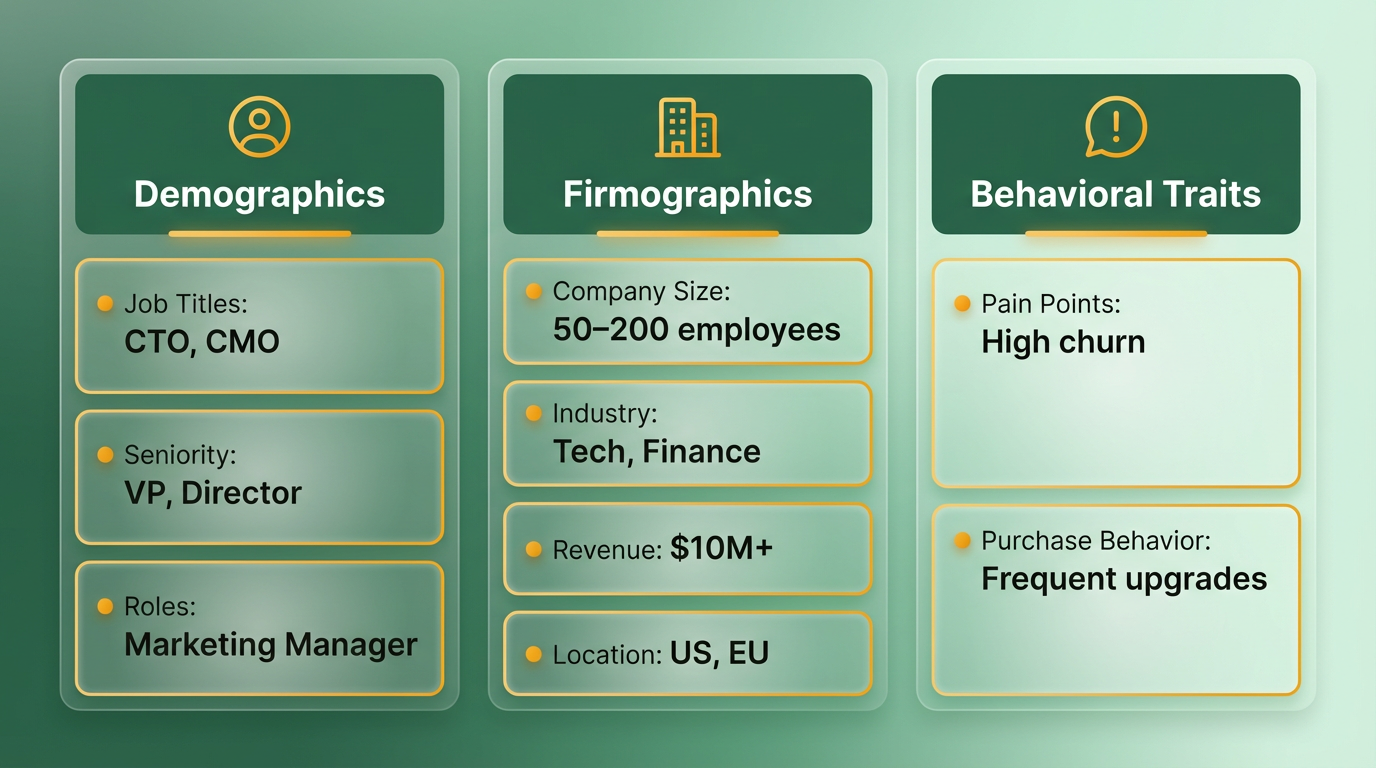
Begin by auditing your existing customer base. Use tools like LinkedIn to segment companies by industry and job function. Cross-reference this with CRM data to identify commonalities among high-value clients. If your best customers are in healthcare with annual revenues over $10M, build your ICP around those parameters.
What Role Do Buyer Personas Play in B2B SaaS?
Buyer personas humanize your ICP by mapping decision-makers’ challenges and goals. A persona for a procurement manager, for instance, might emphasize cost reduction and vendor management, while a CIO’s persona might prioritize scalability and security.
Create 2–4 personas per ICP to account for different stakeholders in the buying process. Use surveys and sales call transcripts to uncover motivations. For example, one SaaS company found that emphasizing ROI in messaging resonated with CFOs, while technical details mattered more to IT teams. Align content, email campaigns, and ad copy to address each persona’s priorities.
How Can You Refine Your ICP Using Data and AI?
Refining your ICP is an ongoing process. Analyze lead conversion rates, customer feedback, and engagement metrics to identify gaps, as discussed in the Measuring and Optimizing Lead Generation Success with Metrics and KPIs section. A/B testing ad copy and landing pages can reveal which messaging resonates. For instance, if leads from the education sector convert at 30% but others at 5%, adjust your targeting to focus on high-performing industries.
AI and automation tools like AnyPost.ai streamline this process by predicting which accounts are most likely to convert. Unlike generic providers, AnyPost.ai uses historical data to score leads based on behavior, such as website visits or email opens. One company improved lead quality by 40% after integrating AI-driven scoring, reducing sales team workload while boosting close rates.
What Are Proven Strategies for ICP Success?
Combine quantitative and qualitative insights:
- Segment ruthlessly: Exclude companies that don’t fit your ICP, even if they show initial interest, similar to the audience segmentation strategies in the Creating Targeted Content for SEO and Paid Ads section.
- Test and iterate: Run small campaigns to validate assumptions about your ICP before scaling.
- use social proof: Share case studies (e.g., “A SaaS provider increased sign-ups by 60% after targeting healthcare clients”) to build credibility.
A real-world example: A project management tool refined its ICP to focus on agencies with 10–50 employees. By tailoring LinkedIn ads and content to agency owners’ pain points (client onboarding, team collaboration), it saw a 200% increase in qualified leads within six months.
How Does AI Optimize ICP Targeting?
AI transforms ICP targeting by automating data analysis and personalization. Tools like AnyPost.ai track behavioral signals-such as demo requests or content downloads-to predict which leads are “hot.” They also identify lookalike accounts, expanding your reach while maintaining precision.
For example, a B2B SaaS company used AI to analyze 10K+ leads and discovered that firms using competitor tools for less than six months were twice as likely to convert. By prioritizing these accounts, the company reduced its sales cycle by 30%. Unlike manual methods, AI adapts in real time, ensuring your ICP evolves with market changes.
By defining a data-driven ICP, aligning with buyer personas, and using AI tools, B2B SaaS companies can focus efforts on high-intent leads. This approach not only improves conversion rates but also strengthens long-term customer relationships.
Measuring and Optimizing Lead Generation Success with Metrics and KPIs
Measuring and optimizing lead generation in B2B SaaS requires a clear focus on metrics like conversion rates, customer acquisition cost (CAC), and return on investment (ROI). These metrics act as a compass, guiding teams to refine strategies based on real-world performance. For example, LinkedIn campaigns with segmented messaging and A/B testing often yield higher conversion rates, as noted in the using LinkedIn and Other Social Media Platforms for Lead Generation section. Below, we break down actionable steps to track, analyze, and enhance lead generation efforts..
How Do You Track Key Lead Generation Metrics?
Start by defining core metrics: conversion rates, CAC, and ROI. Conversion rates measure how many leads become customers. For instance, a LinkedIn campaign might convert 5% of leads if messaging aligns with audience pain points. CAC calculates the cost to acquire each lead, while ROI compares revenue generated against marketing spend.
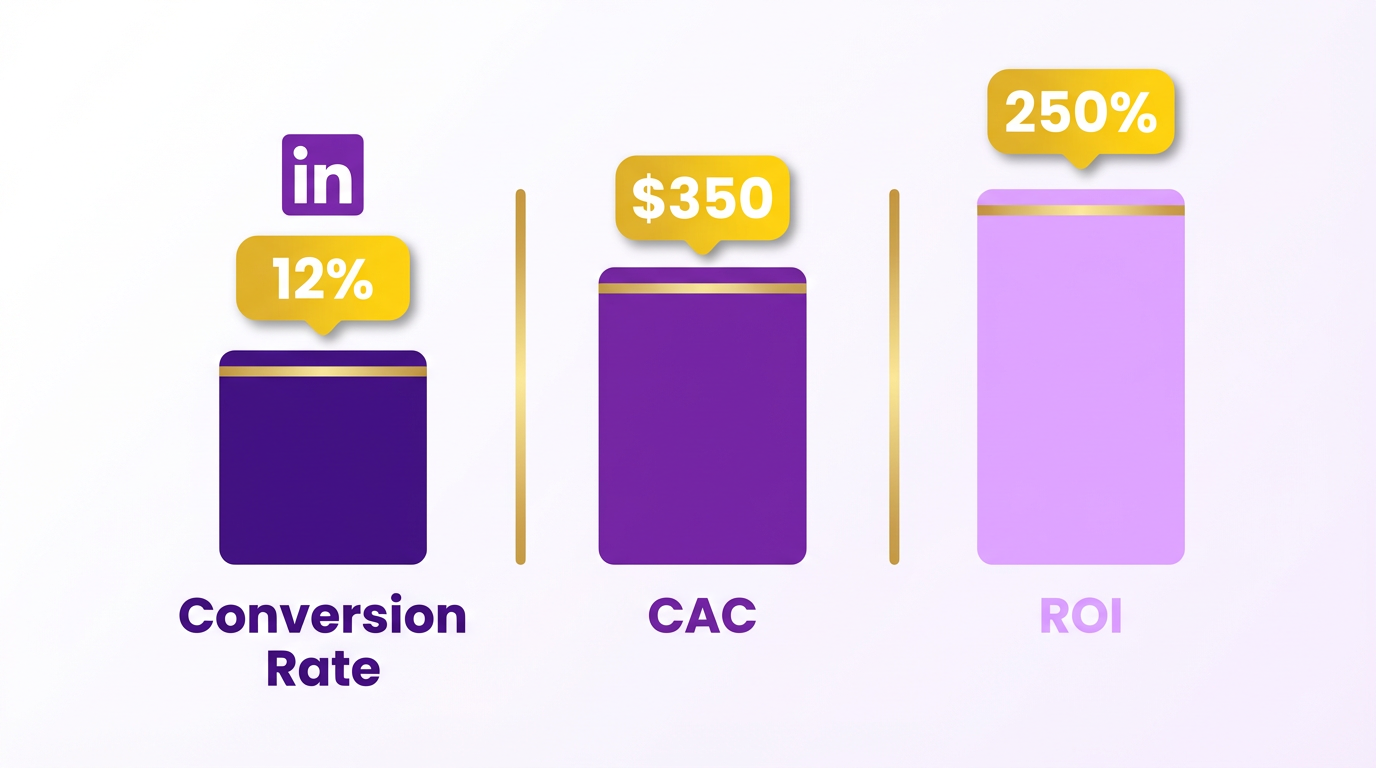
Track these metrics using tools like CRM dashboards or marketing automation platforms. For B2B SaaS, sources emphasize the importance of market segmentation-dividing audiences by industry or role reduces CAC by 20% or more, as outlined in the Identifying and Targeting Your Ideal Customer Profile (ICP) section. A/B testing ad copy or landing page designs can also reveal which tactics drive higher conversions..
What Role Does Data Analysis Play in Optimization?
Data analysis transforms raw numbers into actionable insights. For example, analyzing customer behavior patterns might show that leads engaging with blog content are 30% more likely to convert. Visualization tools like heatmaps or funnel analytics highlight drop-off points, such as a high exit rate on a pricing page.
Sources from 2025 stress the value of real-time dashboards for monitoring performance. A SaaS team using AnyPost.ai, for instance, might use AI-driven analytics to identify underperforming campaigns instantly. Unlike generic providers, AnyPost.ai integrates transparent data tracking, enabling teams to adjust strategies mid-campaign..
How Can Teams Refine Lead Generation Dashboards?
Create dashboards that focus on key KPIs: lead-to-customer conversion rate, cost per lead (CPL), and customer lifetime value (CLV). For example, a dashboard could show that leads from webinars have a 15% higher CLV than those from social media.
Best practices include:
- Simplify visualization: Use bar charts for monthly CAC trends and pie charts for traffic sources.
- Set benchmarks: Compare current metrics to past performance or industry averages.
- Automate reporting: Tools like AnyPost.ai can auto-generate weekly summaries, reducing manual workload.
Teams should review dashboards weekly, adjusting tactics for underperforming channels. A/B testing headlines or CTAs, can improve click-through rates (CTR) by 10–15% based on 2025 case studies..
What’s the Impact of AI and Automation?
AI enhances lead generation by predicting high-value prospects and personalizing outreach. For example, machine learning models might flag companies similar to existing customers, boosting qualification accuracy. Automation tools can then send tailored emails at optimal times, as discussed in the Executing Email Nurture Sequences and Drip Campaigns section.
Research from 2024 highlights that 60% of B2B SaaS teams using AI reduced their CAC by 25%. AnyPost.ai’s AI-driven insights, such as real-time content recommendations, outperform manual approaches. One company improved lead quality by 30% after adopting AI-based segmentation, according to industry reports..
Final Tips for Measuring Success
- Align metrics with goals: If your goal is brand awareness, track CTR and social shares; for conversions, focus on CPL and ROI.
- Test continuously: Run A/B tests on CTAs, landing pages, and ad creatives to identify top performers.
- Iterate based on feedback: Use surveys or CRM data to understand why leads drop off and refine messaging.
By combining these strategies, B2B SaaS teams can turn lead generation into a scalable, data-driven process. The key is to stay agile-adjusting tactics based on metrics ensures long-term growth without unnecessary spending.
Qualifying and Scoring Leads with Firmographic and Behavioral Criteria
To qualify and score B2B SaaS leads effectively, you must combine firmographic data (company size, industry, location) with behavioral triggers (website visits, content downloads, email engagement). This dual approach ensures you prioritize leads most likely to convert while filtering out unqualified traffic. Start by defining your ideal customer profile (ICP) using firmographic criteria, as outlined in the Identifying and Targeting Your Ideal Customer Profile (ICP) section, then layer behavioral data to assess engagement levels.
How Do You Build Effective Lead Qualification Criteria?
Effective lead qualification begins with aligning firmographic and behavioral data to your target audience. For example, a SaaS provider targeting mid-sized tech firms might assign higher scores to leads from companies with 50–500 employees in the software industry. Behavioral data adds nuance-such as assigning points for demo requests or whitepaper downloads. The goal is to create a scoring system that reflects both the fit of the lead and their interest level.
Start by segmenting your database using firmographic filters. Tools like AnyPost.ai automate this process by analyzing company data from LinkedIn or CRM integrations. Assign weights to attributes like annual revenue or geographic region based on your historical conversion data. Next, track behavioral triggers using marketing automation platforms. A lead that visits pricing pages multiple times or engages with case study content may receive a higher score than one with passive email opens, such as those analyzed in the Executing Email Nurture Sequences and Drip Campaigns section.
Why Lead Scoring Matters for B2B SaaS Growth
Lead scoring reduces wasted effort by prioritizing high-intent prospects. For instance, a B2B SaaS company using a 50-point scoring model found that leads scoring above 35 had a 70% higher conversion rate than those below 15. Behavioral triggers like webinar attendance or trial sign-ups often correlate strongly with purchase intent.
To implement this, create a weighted scoring system. Assign 10 points for firmographic alignment (e.g., target industry) and 15 points for key behavioral actions (e.g., a demo request). Adjust weights based on performance data-leads that convert frequently may share common traits worth amplifying. AnyPost.ai streamlines this by tracking user behavior across touchpoints and updating scores in real time, ensuring sales teams focus on the hottest prospects.
Best Practices for Refining Your Scoring Model
Refining your model requires continuous analysis of conversion data and customer feedback. Start by reviewing closed deals to identify patterns. Did successful leads share specific firmographic traits? Did certain behaviors (e.g., social media engagement) consistently precede conversions? Use this insight to adjust scoring thresholds, as detailed in the Measuring and Optimizing Lead Generation Success with Metrics and KPIs section.
Incorporate AI and automation to improve accuracy. Machine learning algorithms can analyze historical data to predict which leads are most likely to convert, reducing reliance on static rules. For example, one company trained an AI model on past conversions and boosted its sales-qualified lead volume by 40% within six months. AnyPost.ai’s tools simplify this by automating data collection and providing dashboards to monitor scoring effectiveness.
Test and iterate regularly. A/B test different scoring weights or behavioral triggers to see what drives results. For instance, a SaaS provider found that leads scoring highly on website activity but low on firmographic fit still converted at a 25% rate-prompting them to broaden their ICP. Combine these insights with customer feedback to refine your model continuously.
Real-World Examples of Lead Scoring Success
A B2B SaaS firm targeting e-commerce businesses implemented a scoring system that prioritized leads from companies with high website traffic and active content downloads. By scoring these leads as “hot,” their sales team reduced response time by 50%, leading to a 30% increase in closed deals. Another example: a project management tool provider assigned bonus points to leads visiting customer success stories, identifying high-intent users and boosting conversion rates by 20%.
Use these strategies to turn raw data into actionable insights. By aligning firmographic and behavioral metrics, you’ll not only qualify leads more accurately but also empower your sales team to focus on opportunities with the highest revenue potential.
Using LinkedIn and Other Social Media Platforms for Lead Generation
using social media for B2B SaaS lead generation starts with understanding platform-specific strategies. LinkedIn remains the most effective channel for B2B audiences, but Twitter, Facebook, and Instagram also offer opportunities when used strategically. A data-driven approach paired with high-quality content ensures consistent lead generation across platforms. As mentioned in the Identifying and Targeting Your Ideal Customer Profile (ICP) section, aligning your social media targeting with your ICP’s firmographic and behavioral traits amplifies campaign effectiveness.
How to Create Effective LinkedIn Ads
LinkedIn ads succeed when they align with the platform’s professional audience. Begin by defining targeting options like job titles, industries, company sizes, and seniority levels. For example, if your SaaS tool targets marketing directors in tech companies, narrow your audience to roles like “Marketing Manager” or “Director of Marketing” and industries like “Software & Technology.” Pair this with custom audiences based on website visitors or employees of target companies. Ad copy should highlight pain points and quick wins. Instead of generic claims, use phrases like “Reduce onboarding time by 40%” or “Automate repetitive tasks with 3 clicks.” A/B test multiple versions of headlines and visuals to identify what resonates. Source emphasizes the importance of out-of-the-box messaging, such as asking provocative questions (“What if your team could double productivity overnight?”) or offering free resources in exchange for contact details. LinkedIn Groups are another underutilized tool. Join or create groups aligned with your target audience’s interests (e.g., “Marketing Tech Innovators” or “SaaS Growth Hacks”). Share insights, answer questions, and subtly promote your SaaS solution. A group post like “How do you handle customer onboarding challenges?” followed by a link to your case study can drive qualified leads without feeling salesy.
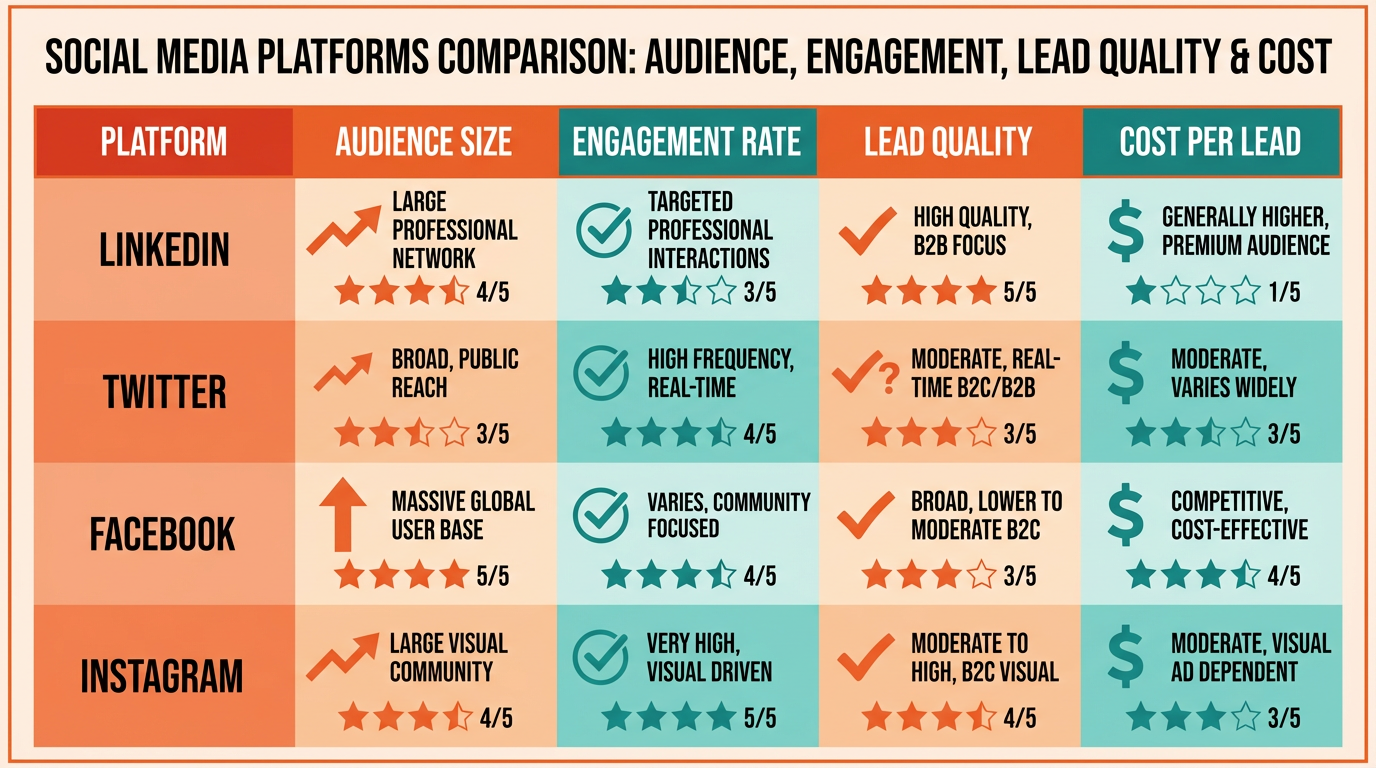
Examples of Social Media Campaigns on Competing Platforms
While LinkedIn dominates B2B, other platforms work well for specific goals. On Twitter, thought leadership campaigns thrive. For instance, a SaaS provider might host a weekly Twitter Space discussing industry trends, positioning the team as experts while collecting emails from attendees. Short, punchy polls (e.g., “What’s your biggest SaaS adoption challenge? A) Pricing B) Integration C) Training”) spark engagement and reveal audience needs. Facebook and Instagram suit B2B SaaS tools with visual appeal. A campaign could feature client testimonials in carousel ads, showcasing before-and-after metrics. For example, a slide might read: “Client X reduced support tickets by 50% in 2 months using our platform.” Instagram Stories can host quick demos or behind-the-scenes content, like “How we built [Feature],” which humanizes your brand.
Best Practices for Content and Analytics
High-quality content is non-negotiable. Video remains the most engaging format: LinkedIn reports 3x higher click-through rates on video ads compared to static images. Use tools like AnyPost.ai to create explainer videos that break down complex SaaS features into digestible clips. Podcasts also work well-host interviews with industry leaders or deep-dive episodes on topics like “Scaling SaaS Sales Teams.”. Analytics should guide every step. Track metrics like cost per lead (CPL), engagement rates, and conversion paths from social media to your website. As outlined in the Measuring and Optimizing Lead Generation Success with Metrics and KPIs section, refining these metrics ensures campaigns remain aligned with business goals. For example, if a LinkedIn ad drives traffic to a landing page but sees low conversions, test a different call-to-action (e.g., “Start Free Trial” vs. “Download Whitepaper”). Source notes that AI-powered analytics can automate A/B testing, helping teams optimize campaigns faster than manual methods. Avoid generic strategies. Instead of broad hashtags like #Innovation, use niche tags like #SaaSTools or #B2BMarketingTech to reach hyper-targeted audiences. Regularly audit your social media calendar to ensure consistency-post 3-5 times weekly on LinkedIn and 1-2 times daily on Twitter to maintain visibility without overwhelming followers.
By combining precise targeting, platform-specific tactics, and analytics-driven adjustments, B2B SaaS companies can turn social media into a scalable lead generation engine. The key is to balance promotion with value, ensuring every post or ad addresses a real problem for the audience.
Frequently Asked Questions
1. Why is B2B SaaS lead generation critical for revenue growth?
It ensures a steady pipeline of qualified prospects, directly driving exponential scaling. For example, ToutApp grew 300% in one year by prioritizing high-intent prospects, accelerating revenue cycles and securing funding.
2. What challenges do effective lead generation strategies solve?
They address low conversion rates (70–80% of leads fail to convert) and high customer acquisition costs. Data-driven tactics reduce CAC by 50%, optimizing marketing spend and improving ROI.
3. How do automated email nurture sequences benefit B2B SaaS companies?
They maintain prospect engagement and sustain interest, accelerating revenue cycles. Automated follow-ups ensure consistent communication, turning 30–40% of leads into qualified sales opportunities.
4. How does targeting ideal customer profiles (ICPs) improve lead quality?
Aligning with high-intent prospects increases conversion rates by 2–3x. For instance, a $500M ARR SaaS provider uses ICP targeting to focus efforts on accounts most likely to convert, reducing wasted resources.
5. What role do data-driven strategies play in optimizing lead generation?
They reduce customer acquisition costs by up to 50% by refining funnel efficiency. Personalized content and analytics help identify top-performing tactics, ensuring marketing efforts align with business goals.
6. How can companies measure lead generation success?
Track metrics like conversion rates, CAC, and lead-to-revenue timelines. For example, optimizing funnels can turn 30–40% of leads into sales-ready opportunities, indicating strong performance.