
Find LSI Keyword Ideas With WriterZen, Then Build SEO Content Clusters

The Short Version
- LSI keywords are commonly described as contextually related terms that share a topic with a primary keyword, like "engine" or "stick shift" for "cars," not synonyms.
- WriterZen and Surfer describe different views: one credits related terms with improving Google's context, while the other warns that treating LSI as a checklist can risk keyword-stuffing penalties.
- SEO Sherpa has described a header-tags post that runs past 6,000 words, folding in H2 and H3 sub-topics that can pull far more organic traffic than a narrow article.
- Google Keyword Planner's competition column reflects PPC bidding, not organic difficulty. That makes it unreliable for judging ranking difficulty.
- WriterZen describes its Golden Score as combining decent search volume, low competition, and commercial intent to flag terms that may be winnable without existing domain authority.
The term is a myth. The strategy isn't.
Chasing LSI keyword ideas for a topic is really chasing one thing: semantic breadth. The term itself is a mess, though. It's disputed, and plenty of SEO people will tell you that "LSI keywords," as the tools describe them, aren't a real ranking factor at all.
So why does the practice still hold up? Because the instinct behind it is right, even when the label is wrong. Cover a topic thoroughly, and you can feed search engines the context they often reward. Reframe the label, keep the depth, and you've captured the useful part while dropping the baggage.
Do LSI keywords actually exist?
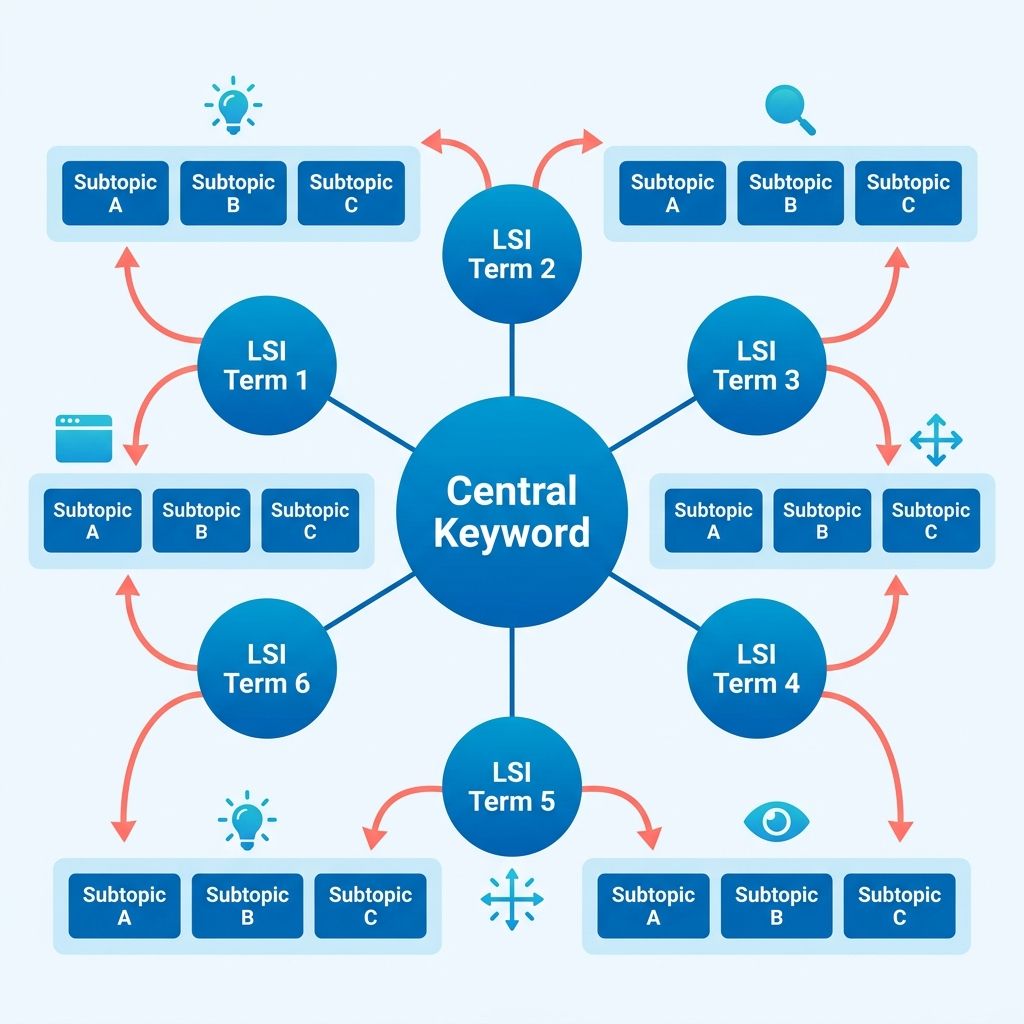
LSI keywords: contextually related terms that share a topic with your primary keyword, not synonyms of it. For "cars," that means "engine," "gas," and "stick shift" rather than "automobile."
This is where the sources split. WriterZen argues these related terms help Google understand page context and rank you higher. Surfer counters that latent semantic indexing was built for small, fixed document sets decades ago, and warns that LSI tools can nudge you toward keyword stuffing that risks penalties.
Both are right about different things. Many SEO practitioners say the mechanism Google uses is more sophisticated than classic LSI, so the term is dated. But the underlying habit of covering related terms is real and worth the effort. Call them contextually related terms, drop the stuffing, keep the coverage.
Why content clusters beat single-keyword pages
Clusters can win because search engines often reward depth over exact-match repetition. Keyword research is becoming more topical. It is no longer about finding one ideal keyword. Cover a topic well, and you may rank for terms you never typed into the page.
SEO Sherpa has described a header-tags post that runs over 6,000 words and folds in sub-topics like H2 tags and H3 tags, so it can rank for those extra queries and pull far more organic traffic than a tight, single-focus article would.
Clustering also fixes two chronic problems. Keyword cannibalization, where several thin pages fight over the same term. And thin content, where no single page fully answers the query. Grouping related terms into pillar and supporting pages can resolve both, and it can tighten your internal linking on the way.
Where automation changes the math
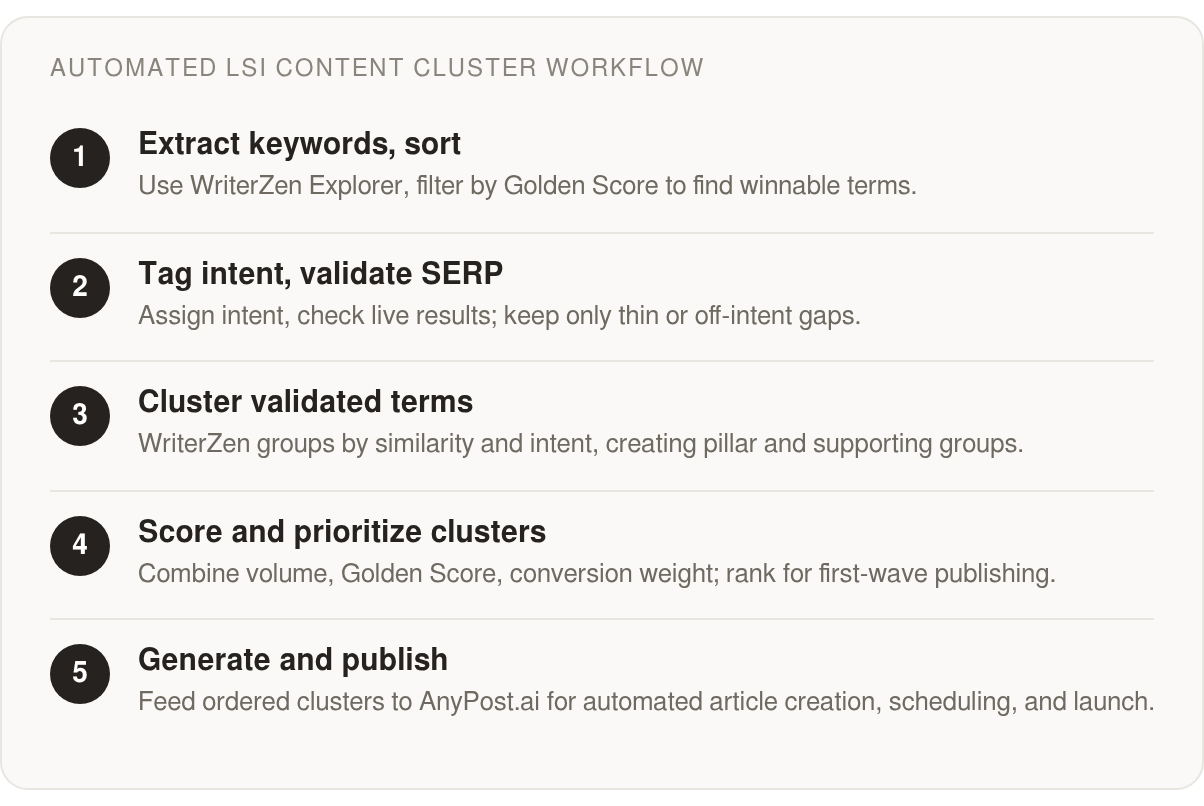
The LSI debate becomes less relevant once publishing is automated. If search engines reward topic coverage rather than term insertion, feeding a full keyword cluster into an automated engine can support broader topic coverage while reducing the manual stuffing Surfer warns against.
That's the angle this guide builds on. You can export a cluster of contextually related terms, then use a publishing platform such as AnyPost.ai to generate, schedule, and publish every page in the group. Research metadata like search intent and SERP type can be used to pre-assign each keyword to a pillar or supporting role before you write a word.
One caveat, stated plainly: skip clustering for a one-off announcement or a page with no related sub-topics. The payoff shows up when a topic has real depth. For SaaS, e-commerce, and local businesses with broad service pages, that's most of the time.
Pull high-value LSI keywords from WriterZen's Keyword Explorer
Start inside WriterZen's Keyword Explorer, not a spreadsheet. Enter a seed term, and the tool is designed to return a large set of contextually related phrases with the data you need to sort them. This is where you can find candidates worth building around, not just a raw dump of synonyms.
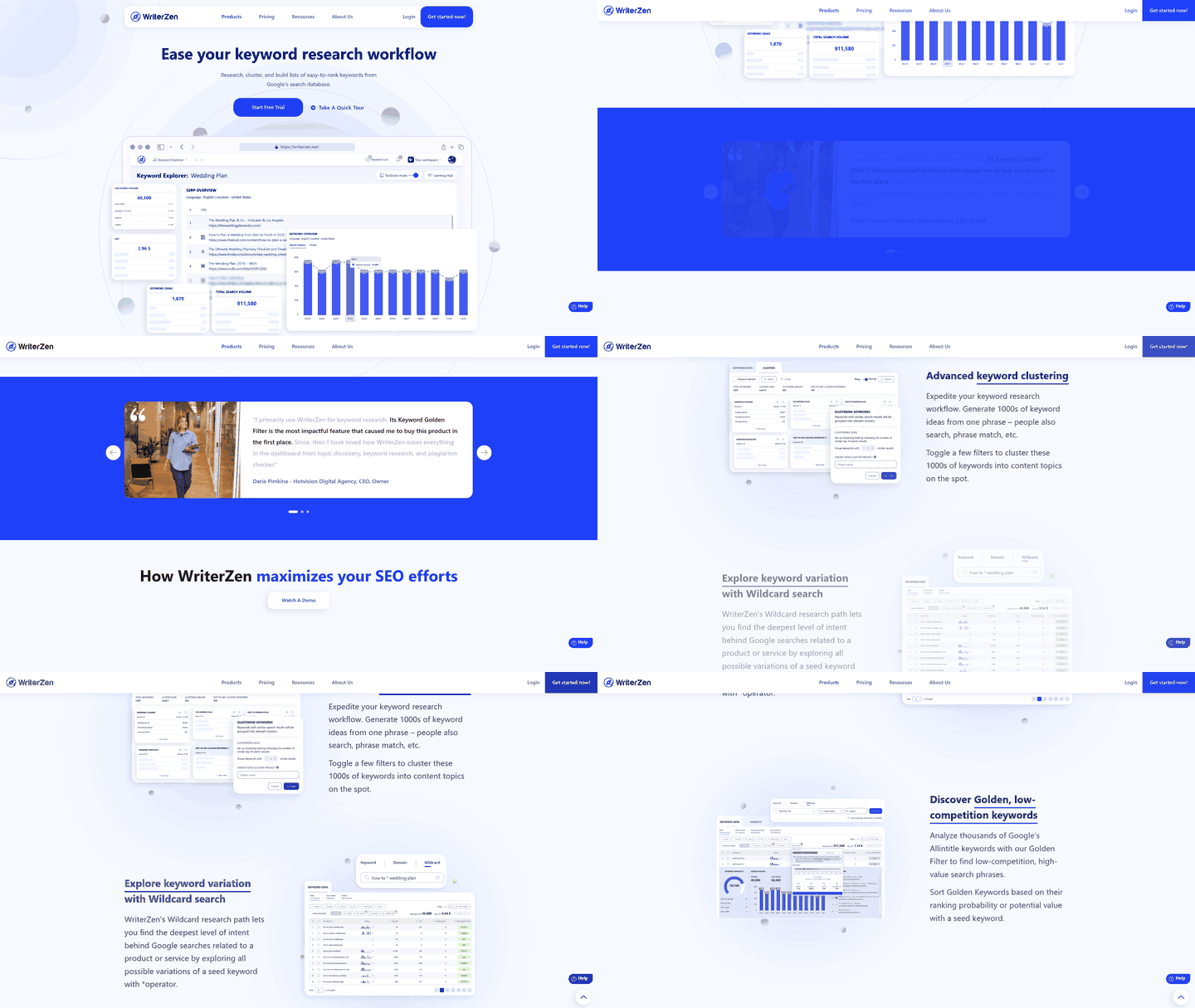
Watch the Golden Score first. WriterZen describes "Golden Keywords" as a sweet spot: decent search volume, low competition, and enough commercial intent to matter. Sort by that score before anything else. It can separate terms you may be able to win now from the ones that need domain authority you don't have yet.
Read intent before you write a word
WriterZen's advanced insights can tag each keyword with Keyword Intent, Buying Journey stage, and SERP Type, according to its product description. That metadata can be useful for planning. A term tagged transactional with commercial intent can become a supporting page aimed at conversion. An informational term at the top of the journey can become a pillar or a top-of-funnel explainer.
One caution on competition data. As the Mangools keyword guide points out, Google Keyword Planner's competition column reflects PPC bidding, not organic difficulty. A low PPC competition score doesn't mean an easy organic ranking. Consider WriterZen's own difficulty signals here instead.
Once you've tagged keywords by intent and journey stage, each one can be assigned a role: transactional terms can become conversion pages, informational terms can become explainers. Whatever format you land on, some publishing platforms include persona or brand-voice settings that can help keep tone consistent, so a beginner guide and a comparison page still sound like the same brand.
Why bother with wildcard searches
Seed terms only get you so far. Wildcard search features can widen the net with variations you'd never brainstorm alone, including long-tail phrases that carry real intent. Search keeps getting more conversational. Fewer people type "hiking boots" anymore. They ask about lightweight boots for a three-day autumn trip.
Wildcards can surface exactly those phrasings. You capture the long-tail variants, then let clustering group them into topics automatically. WriterZen is designed to move through large batches this way, and you can import your own keyword lists to work alongside the terms it surfaces.
Does this risk keyword stuffing?
This is where the old LSI debate usually quiets down. Surfer's guide is blunt that "there's no such thing as LSI keywords," and warns that LSI tools can push you toward stuffing related words off a list. Fair warning. Some SEO sources also cite a 2017 Google patent as evidence that Google uses word vector technology rather than the 1980s indexing method the term implies.
The risk is easier to manage once you stop inserting terms by hand. Platforms like AnyPost.ai can be configured to generate each article around a topic and wrap major sections in semantic HTML, rather than working through a checklist of words to sprinkle in. That can support broader topic coverage without the manual stuffing Surfer flags.
The practical payoff: keyword research can stop ending at a spreadsheet. The Golden Score can sort priority, intent tags can assign roles, and the cluster can become a publishing queue. The manual triage between finding keywords and shipping content can be reduced.
Validate your terms against the live SERP before you commit
A high Golden Score tells you a term looks winnable. It doesn't prove it. Before you commit a cluster, check each phrase against the live results page, because the difficulty a tool assigns and the reality of the top 10 rarely line up perfectly. This step can confirm whether the terms are worth the automated effort.
Worth naming the trap here. Google Keyword Planner's competition column only measures how many advertisers bid on a term. It says nothing about organic difficulty. Feed that number straight into an automated engine, and you'll mass-produce pages aimed at commercially crowded but organically unreachable clusters. When you've got candidates with strong volume, SERP validation is what stops the pipeline from scaling a bad bet across an entire cluster.
Read the top 10 before you queue a single page
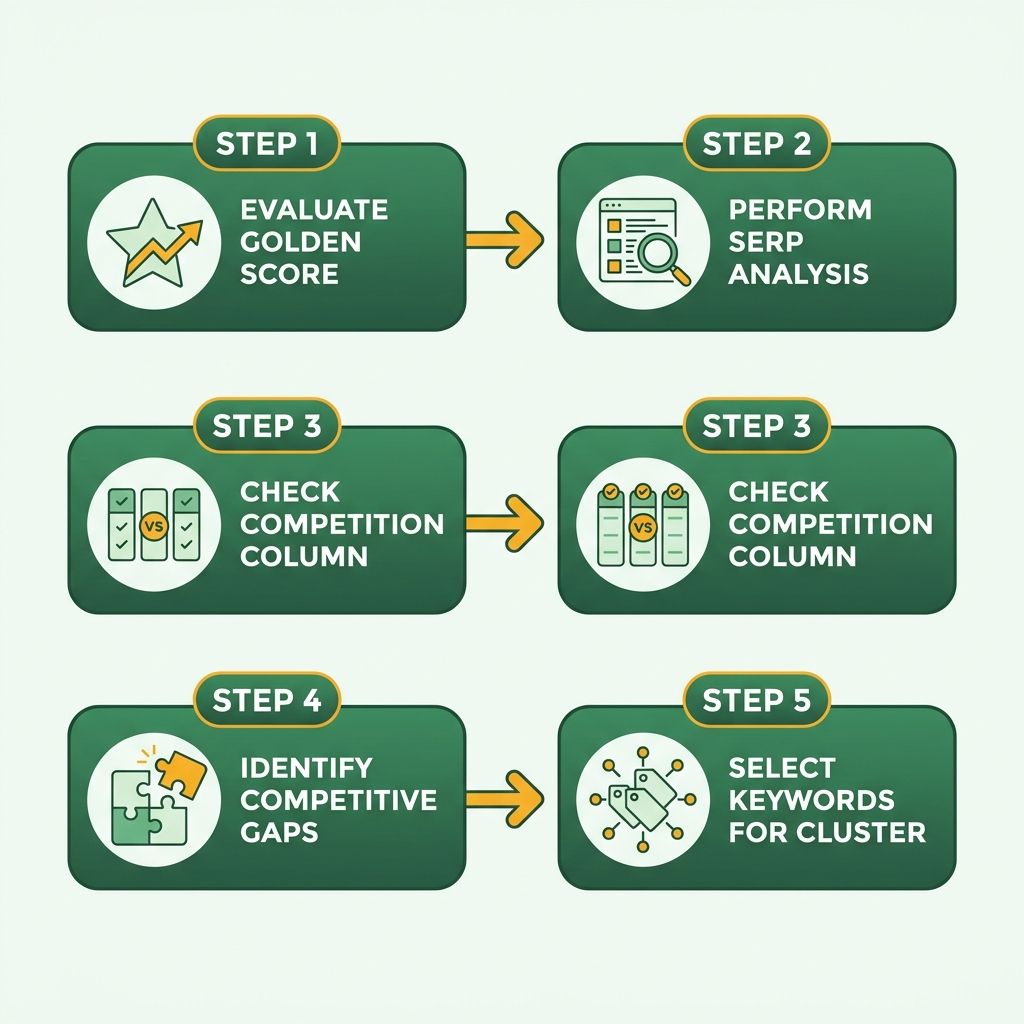
Open WriterZen's SERP view for each shortlisted term and study who already ranks. The SERP Type tag can tell you what format Google appears to reward for that query—informational, commercial, or a mix. If the first page is wall-to-wall high-authority domains, that term may need authority you don't have yet. Park it.
What you want is a page full of thin, dated, or off-intent results. That's where fresh, complete coverage can break in. Sort your validated list into two buckets: winnable now versus needs-authority-later. Only the first bucket goes into the queue.
Turn coverage gaps into a cluster map
Lay your target terms down one axis and the top competitors across the other. Mark which subtopics each competitor covers and which they skip. The empty cells are your gaps, and gaps are where a new page can earn rankings instead of fighting for them. For example, a flat list of "hiking boots" terms might become a pillar page on hiking boots and supporting pages for waterproof hiking boots, lightweight hiking boots, and hiking boots for wide feet.
This ties back to the broader principle around related terms. Cover a topic completely and you may surface for phrases you never explicitly wrote, more than the head term could pull alone. Which reframes the word-count argument. Length isn't the target. Complete coverage is, and length follows from it.
The matrix also settles the harder question: when a cluster of closely related terms shares one intent, merge it into a single deep page. When intent splits, break it into separate linked articles. Depth and intent variance drive the split, not an arbitrary one-keyword-per-post rule. For a wider view of how different tools surface these gaps, our roundup of web page keyword analysis tools is a good starting point.
Validated terms feed straight into the engine
Once a term clears SERP and gap checks, it can move into a publishing queue. You can configure a platform like AnyPost.ai to generate, schedule, and publish each page against its assigned intent. From there, analytics can track ranking movement per page, so you see which terms climb and which stall. That feedback can loop back into your matrix and point to where the next gap sits.
Group your validated terms into logical clusters
Raw keyword lists don't publish themselves. Once your candidates survive SERP validation, the next move is grouping them so an automated engine knows what to build first. Clustering is the bridge between a spreadsheet of validated terms and a live content architecture.
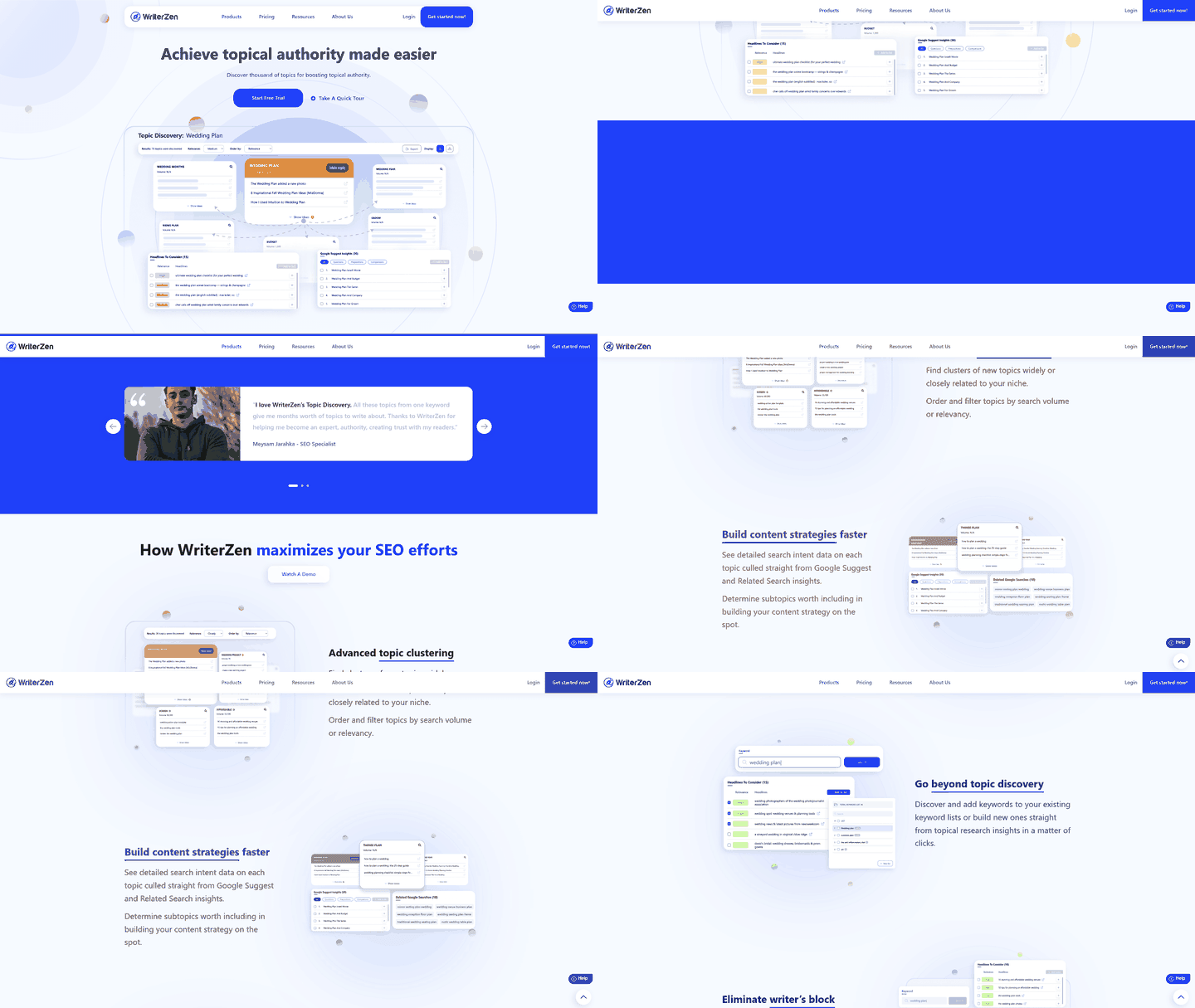
Good news: you're not sorting from scratch. WriterZen describes its Keyword Planner as being built to import, analyze, and cluster terms before you draft anything, so the grouping logic can live inside the tool instead of a manual tagging exercise. Cluster this way, and the groups can arrive with the qualitative signals already attached.
How similarity scoring groups terms
Similarity scoring answers one question: which terms belong in the same room? According to WriterZen, the tool groups keywords by shared search intent and topical overlap, so phrases that trigger similar results pages can land together on their own.
The tool leans on that mechanism to move you from a flat list to organized plans:
WriterZen's Keyword Planner lets you "import, analyze, cluster, and build your content plans effortlessly," replacing hours of manual keyword sorting and spreadsheets.
That's the practical payoff. Instead of eyeballing 300 terms and guessing which sit together, you get clusters organized by topical overlap. Terms with tight semantic overlap and reachable competition can rise to the top of the build queue.
Pillar page versus supporting page
Clusters can carry metadata, and that metadata can help assign roles. A broad, high-volume term with informational intent may become your pillar page. The narrower, more specific phrases in the same cluster may become supporting sub-pages that link back to it.
The signals you already pulled during research do the sorting. Intent tells you whether a term anchors a hub or answers a single question. SERP Type tells you the format the page needs before you write a word. Prioritization and structure both inherit the same data, no separate triage pass required.
This is why clustering beats a keyword-per-post approach. A single, deeply covered piece built around a validated cluster can rank for a whole stack of related sub-topics, not just its headline phrase. One well-clustered page can pull traffic across dozens of queries. That compounding effect is the whole reason to group terms before publishing.
How AnyPost.ai turns a cluster map into published content
This is where manual work can be reduced. Once you know which clusters anchor pillars and which terms feed supporting pages, platforms like AnyPost.ai describe content generation features that can create SEO-optimized articles at scale around those groupings. Some platforms also include programmatic SEO capabilities designed to generate large volumes of targeted pages for long-tail search traffic.
To make the move from export to publishing concrete, imagine a WriterZen export around a topic like "project management software." The broad head term could anchor the pillar, while modifiers like "for small teams," "for agencies," and "vs spreadsheet" become supporting pages. That mapped structure can then be passed to a platform like AnyPost.ai for generation and publishing.
A platform like AnyPost.ai can be configured to draft and publish across your channels and integrate with many websites, so publishing can run directly on your existing platform. Your job can stay focused on validating the clusters that feed the pipeline, so keyword research flows into a live content hub instead of a stalled backlog.
One caveat, stated plainly: don't automate a cluster you haven't validated. Sloppy grouping in, sloppy hub out. Clean the input first, then let the pipeline run.
Decide which cluster ships first
You've clustered your terms. Now comes the question that sets your whole publishing schedule: which cluster ships first? Not every group deserves the same priority, and guessing wrong can mean your engine spends its first cycles on pages that won't move.
This is where the metadata you gathered while clustering earns its keep. Signals such as Keyword Intent, Buying Journey stage, and SERP Type can become sorting inputs instead of nice-to-haves. Prioritization can stop being a gut call and turn into a scored decision.
Build a cluster scoring matrix
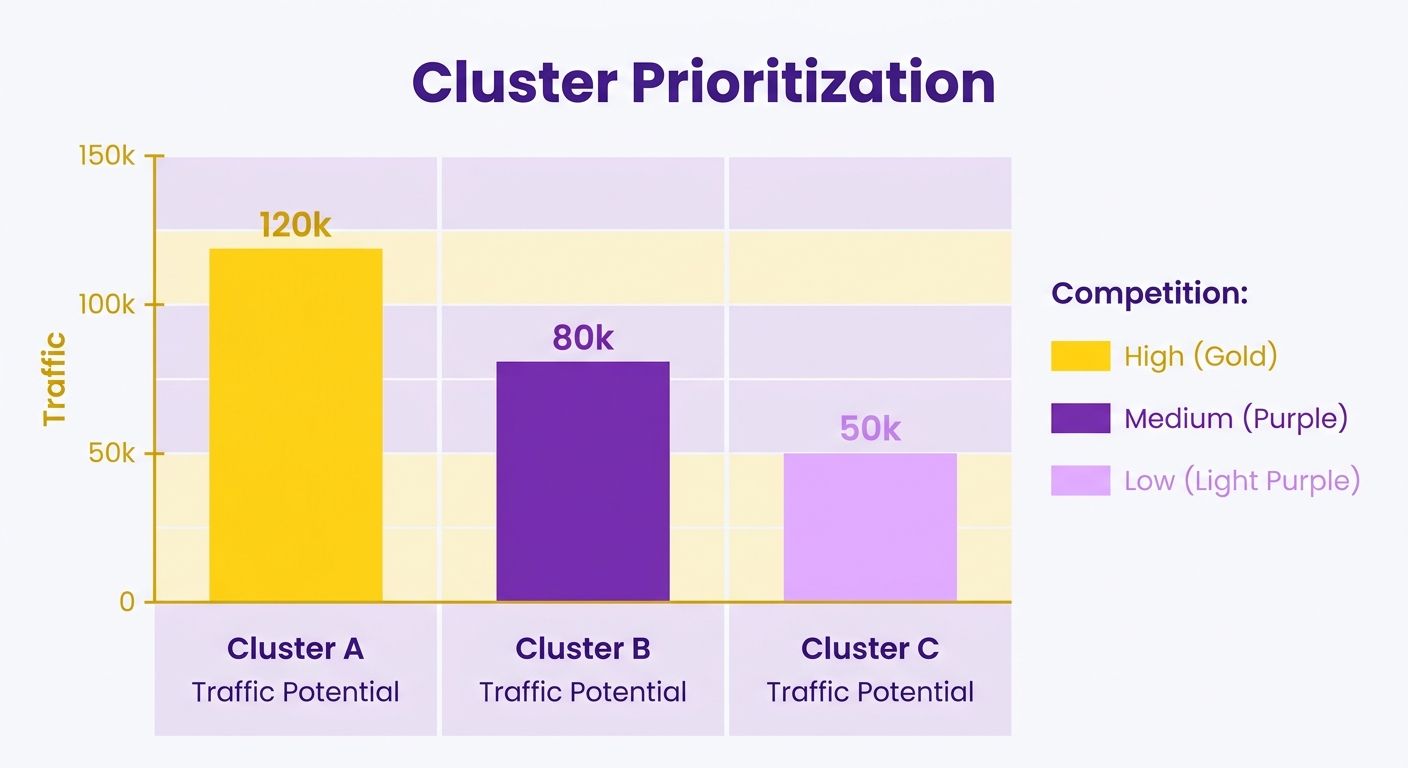
Three numbers can decide priority, and they're already in your WriterZen export. Pull aggregate search volume for the cluster, the average Golden Score, and a conversion weight you assign based on Buying Journey stage.
Score each cluster on a simple weighted formula. For example, one hypothetical weighting might be 40% Golden Score, 35% conversion potential, and 25% search volume. The reasoning is that a term you can actually rank for can beat a high-volume term you can't.
Why favor winnability over raw traffic? For example, a cluster with 30,000 monthly searches and a brutal SERP might return nothing for months; a cluster with 4,000 searches, a strong Golden Score, and bottom-of-funnel intent might start converting almost immediately. First-wave clusters should usually be the second kind.
To make the matrix concrete, suppose Cluster A has an aggregate search volume of 12,000, an average Golden Score of 72, and a conversion weight of 3/5. Cluster B has 20,000 searches, an average Golden Score of 45, and a conversion weight of 2/5. Under the hypothetical weighting, Cluster A might queue first even though its volume is lower.
Skip pure top-of-funnel informational clusters for your opening batch. They can build authority over time, but they rarely convert fast enough to justify going first. Queue them for wave two once your winnable pages are live and indexing.
Which clusters belong in the first wave
Rank your scored list high to low, then read the top against your calendar. The highest score isn't automatically first if the timing is wrong.
Align cluster priority with what your business is doing next. Launching a product feature this quarter? A commercially-intented cluster tied to that feature jumps the queue, even if a slightly higher-scoring one sits above it. Seasonal demand works the same way. Publish the cluster three or four weeks ahead of the peak so pages have time to index.
The pillar-versus-supporting split shapes order too. Publish the pillar first, then let supporting pages point back to it. That internal linking structure needs the anchor live before the spokes make sense.
Feeding priority order into the engine
Here's where manual scheduling can be reduced. Once each cluster carries a priority score and a target publish window, that ordered list can be used by an automated publishing platform to schedule and publish without you managing a calendar by hand.
Platforms like AnyPost.ai can be configured to take that ordered list and generate SEO-optimized articles in your brand voice, then publish them directly to your existing site and social channels. The pillar can go live, supporting pages can follow, and first-wave clusters can ship while later waves sit queued. Keyword research can become a pipeline, not a spreadsheet you keep reopening.
Automate creation and publishing for each cluster
Automate publishing and the LSI debate becomes less pressing. Some SEO sources say Google has moved to word vector technology rather than classic latent semantic indexing, and that it rewards topic coverage over exact-match term insertion. If that view holds, feeding a complete cluster into an automated engine can support broader topic coverage without manual term-stuffing.
That's the payoff of everything upstream. You spent effort to find the groups, validate them, and prioritize them. Now the finalized clusters can become the input for generation, and the manual workload can drop significantly.
Turn a cluster into a content brief
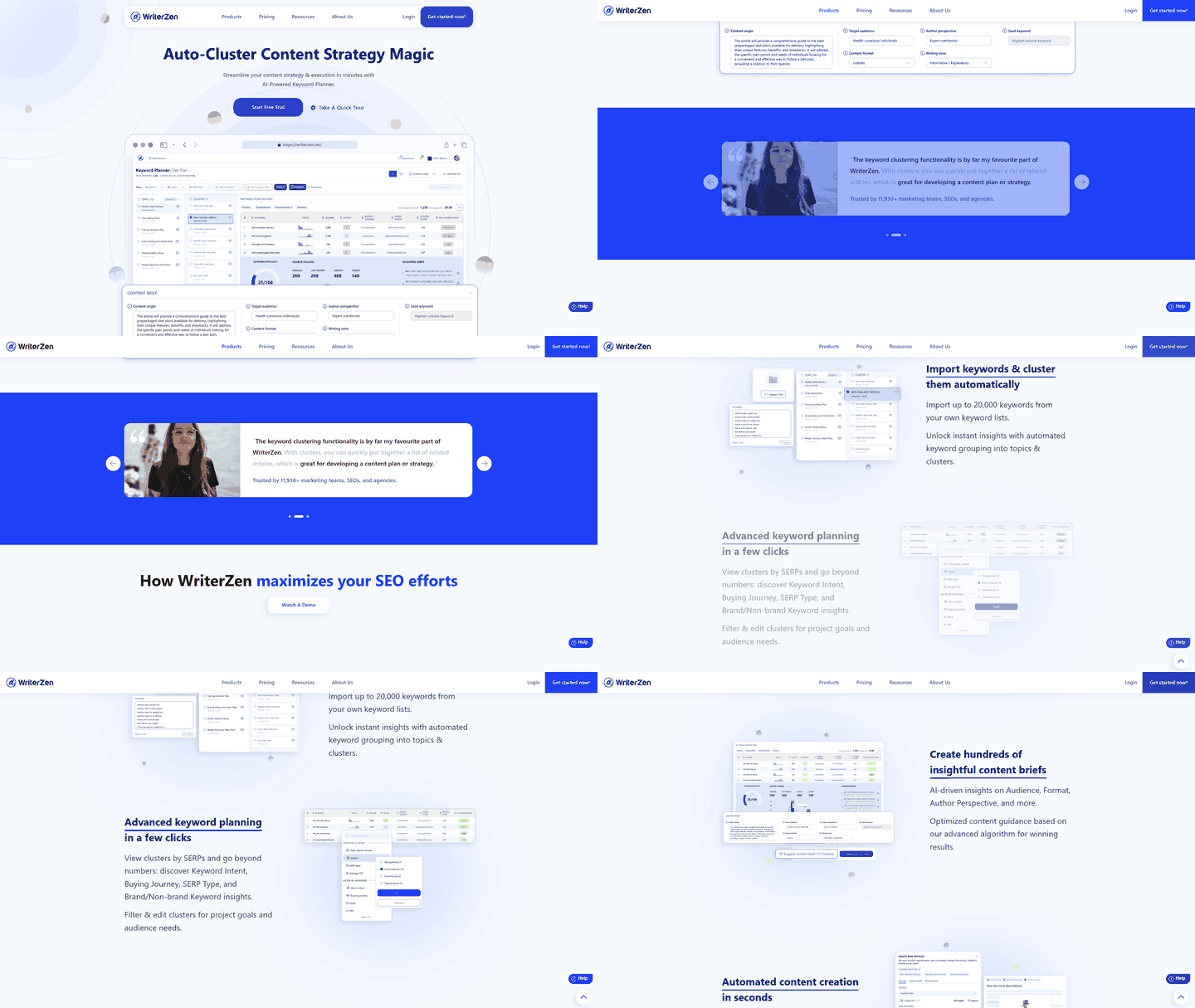
WriterZen describes its Content Creator as helping you research and structure articles around what's already ranking, rather than starting from a guess. Use it with a validated cluster and it can return a structured outline instead of a blank page.
According to WriterZen, the briefs can include AI-driven guidance on Audience, Format, and Author Perspective. Those signals can shape the piece before anyone writes. A cluster tagged for early Buying Journey intent may call for a different format than one built for a comparison SERP, and the brief can bake that in.
Worth naming the split: one cluster does not always equal one article. When a group covers a single deep topic, build one comprehensive page. When intent varies across the terms, break it into linked supporting pages under a pillar. Topic depth and intent variance drive that call, not a rigid one-keyword-one-post rule.
How AnyPost.ai drafts each page
Platforms like AnyPost.ai describe engines that work from your validated cluster and a business context graph built by crawling your site. They can capture your products, messaging, and audience, then draft SEO-optimized articles aligned to search intent rather than a loose prompt.
Brand voice is where most automated drafts fall apart. Some platforms include persona or brand-voice settings that can match tone to your defined voice, so a cluster of ten pages reads like one team wrote them. You review, not rewrite.
Internal linking can run in the same pass. As each cluster page publishes, internal links can wire it to the pillar and sibling pages automatically, which is the structure Google often reads as topical authority. If you're still mapping out that research layer, our guide to finding hidden keywords on Reddit pairs well with the work upstream.
What the full loop looks like
Seed term to published cluster can look like this, with fewer spreadsheet handoffs in between:
- Cluster in. Validated, prioritized WriterZen groups become the queue.
- Brief generated. Outline plus Audience, Format, and Perspective insights.
- Draft written. Tone settings can match your brand.
- Links built. Internal backlinks connect each page to the cluster.
- Published. Pushed across your channels on schedule.
Why this can beat manual production isn't speed alone. When the cluster already covers a topic in depth, automation can help scale that coverage without multiplying thin pages.
Your next move once the cluster is live
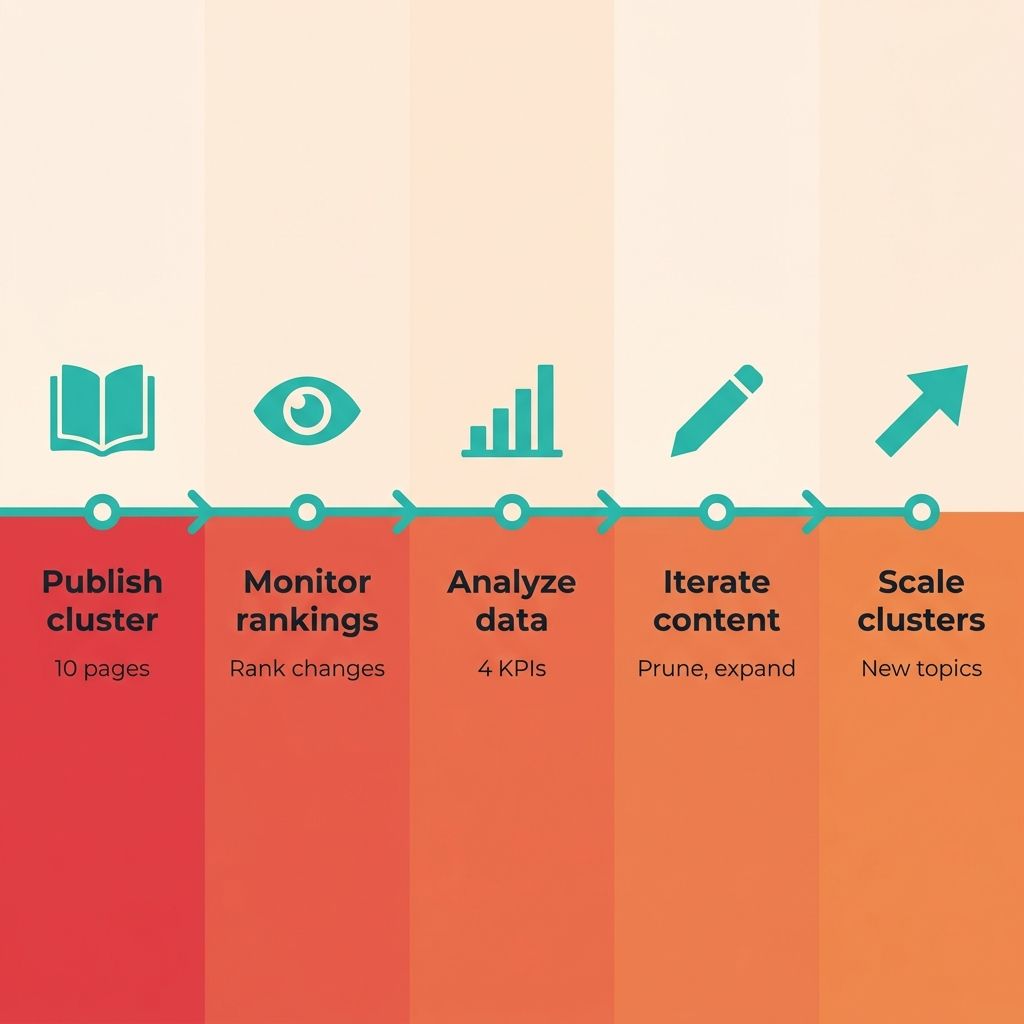
Publishing a cluster isn't the finish line. It's the moment your data starts talking back. Once pages go live, the same WriterZen inputs you used to build the groups become the yardstick you measure against. You know what you targeted, so you know exactly what to check.
The mistake most teams make: they treat a published cluster as done. It isn't. Clusters need watching, pruning, and expanding based on what actually ranks. That feedback loop is what turns a one-time publish into a growing content architecture.
Which KPIs actually tell you a cluster is working
Four numbers matter, and they map cleanly to the goals you set upstream.
- Organic traffic per cluster, not sitewide. If you grouped ten pages around one topic, track them as a unit so you can see the combined pull.
- Keyword rankings for the specific terms you validated. Watch average position move over weeks, not days.
- Conversion rate on cluster pages. Traffic that doesn't convert tells you the intent tagging was off, even when volume looks healthy.
- Backlink profile growth. Clusters that earn links naturally are the ones worth expanding first.
Google Search Console is your source of truth here. It shows impressions, clicks, and average position straight from Google, so you can watch a new cluster climb from invisible to page two to page one over its first months. Impressions usually move before clicks. That early impression lift is your signal the topic coverage is landing, before the traffic shows up.
How to feed performance back into your lists
This is where the loop closes. Pull the actual queries Search Console reports for each cluster, then compare them against the terms you originally targeted. The gap is gold.
Queries you're ranking for but never planned? Add them to the cluster's list and generate a supporting page. Terms you targeted that show zero impressions? Either the intent was wrong or the topic is thinner than you thought. Cut them or rework the angle.
The point is that your keyword research is never finished. Each reporting cycle hands you a fresh batch of real-world terms to run back through validation.
When to scale with programmatic SEO
Once a cluster proves out, the same workflow can scale sideways. Programmatic SEO takes a template and populates it across hundreds of long-tail variations, capturing search traffic that would take years to write by hand.
But scale a bad pattern and you multiply the mistake. So the rule is simple: only go programmatic on a cluster structure you've already validated with live data. Prove one topic converts, confirm the grouping holds up in Search Console, then replicate the pattern at volume.
Skip programmatic expansion entirely for topics that haven't earned a single ranking yet. Scaling unproven clusters just fills your site with pages Google has no reason to surface.
FAQ
Should I still worry about "LSI keywords" if Google says they aren't a real ranking factor?
The term itself is dated, and some SEO sources cite Google's 2017 patent as evidence that Google uses word vector technology rather than 1980s latent semantic indexing. What still matters is covering contextually related terms across a topic. Reframe "LSI keywords" as topic coverage, drop any manual term-stuffing, and you keep the benefit without chasing a myth.
When is content clustering not worth the effort?
Skip clustering for a one-off announcement or any page with no related sub-topics to cover. The payoff only appears when a topic has real depth. For SaaS, e-commerce, and local businesses with broad service pages, that depth usually exists, so clustering pays off most of the time.
Why shouldn't I trust the competition column in Google Keyword Planner?
That column measures how many advertisers bid on a term for PPC, not how hard the term is to rank organically. A low PPC score can still sit behind a wall of high-authority domains. Validate each term against the live SERP instead, and lean on WriterZen's own difficulty signals for organic judgment.
Does one keyword cluster always become one article?
No single rule applies. When a cluster covers one deep topic sharing a single intent, merge it into one comprehensive page. When intent splits across the terms, break it into separate supporting pages linked under a pillar. Topic depth and intent variance drive that decision, not an arbitrary one-keyword-per-post rule.
How do wildcard searches differ from just using a seed term?
Seed terms return the obvious related phrases, while wildcards can surface variations you'd never brainstorm alone, especially long-tail queries carrying real intent. As search grows more conversational, people ask about "lightweight boots for a three-day autumn trip" rather than "hiking boots." Wildcards capture that specific phrasing, then clustering groups the variants into topics automatically.